

The DOI matches its Crossref record; the references it cites are not checked yet; none of the 37 sources its claims cite is checked for support yet.
Biochemical and Biological Characterization of a Human Rac2 GTPase Mutant Associated with Phagocytic Immunodeficiency
Open accessAbstract
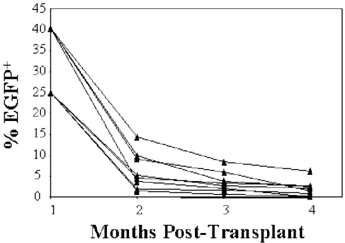
The Rho GTPase, Rac2, is expressed only in hematopoietic cell lineages, suggesting a specific cellular function in these cells. Genetic targeting studies in mice showed that Rac2 is an essential regulator of neutrophil chemotaxis, L-selectin capture and rolling, and superoxide production. Recently, a dominant negative mutation of Rac2, D57N, has been reported to be associated with a human phagocytic immunodeficiency. To understand further the cellular phenotypes associated with this D57N Rac2 mutant we examined its biochemical characteristics and functional effects when expressed in primary murine bone marrow cells. When compared with wild type (WT) Rac2, D57N Rac2 displayed approximately 10% GTP binding ability resulting from a markedly enhanced rate of GTP dissociation and did not respond to the guanine nucleotide exchange factors. These results suggest that D57N Rac2 may act in a dominant negative fashion in cells by sequestering endogenous guanine nucleotide exchange factors. When expressed in hematopoietic cells, D57N Rac2 reduced endogenous activities of not only Rac2, but also Rac1 and decreased cell expansion in vitro in the presence of growth factors due to increased cell apoptosis. Unexpectedly, D57N expression had no effect on proliferation. In contrast, expansion of cells transduced with WT Rac2 and a dominant active mutant, Q61L, was associated with significantly increased proliferation. Transplantation of transduced bone marrow cells into lethally irradiated recipients showed that the percentage of D57N-containing peripheral blood cells decreased markedly from 40% at 1 month to <5% by 3 months postinjection. Neutrophils derived in vitro from the transduced progenitor cells containing D57N demonstrated markedly impaired migration and O(2)(-) responses to formyl-methionyl-leucyl-phenylalanine, reflecting the same cellular phenotype in these differentiated cells as those described previously in patient cells. These data suggest that the phenotypic abnormalities associated with D57N Rac2 may involve not only neutrophil cellular functions, but also abnormal cell survival in other hematopoietic cells and that overexpression of Rac leads to increased proliferation of normal cells in vitro, whereas deficiency of Rac leads to increased apoptosis.
Overview
CoChat Summary
Written by AI from the paper’s full text.
TL;DR
The human Rac2 D57N mutant associated with phagocytic immunodeficiency has severely impaired GTP binding and rapid GTP dissociation, does not respond to GEF TrioN despite binding it, and acts dominantly to reduce Rac1 and Rac2 activity in hematopoietic cells. In primary murine bone marrow cells, D57N Rac2 impairs expansion and engraftment mainly by increasing apoptosis, while WT Rac2 or Q61L increases proliferation.
Key findings
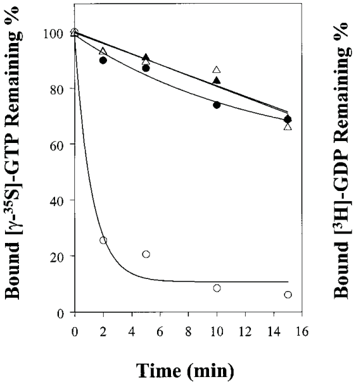
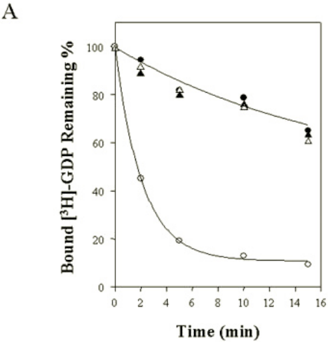
- D57N Rac2 bound GTP at only ~10% of normal, with rapid GTP dissociation reaching ~75% in 2 min, whereas WT Rac2 dissociated ~30% of GDP or GTP in 15 min; GDP dissociation was similar to WT.
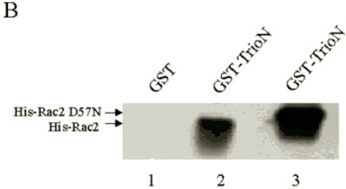
- D57N Rac2 did not respond to the Rac GEF TrioN, although GST-TrioN coprecipitated equally with WT and D57N Rac2; WT Rac2 exchanged ~90% to GTP-bound in 15 min with TrioN.
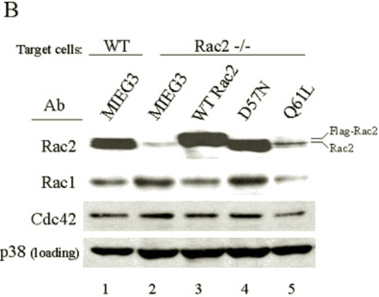
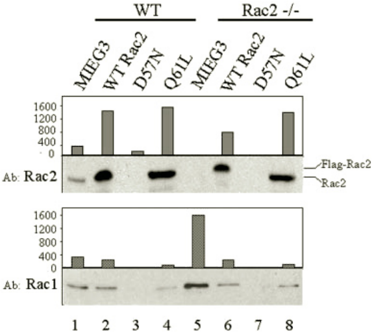
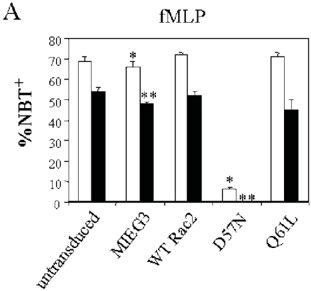
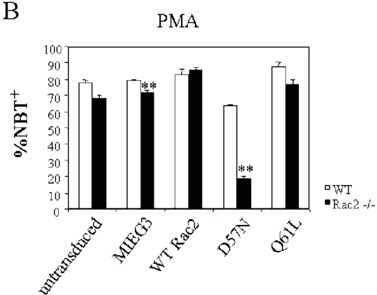
- In transduced bone marrow cells, D57N Rac2 eliminated detectable GTP-bound Rac2 and also prevented GTP binding to endogenous Rac1; D57N completely inhibited chemotaxis and abolished superoxide production in differentiated myeloid cells.
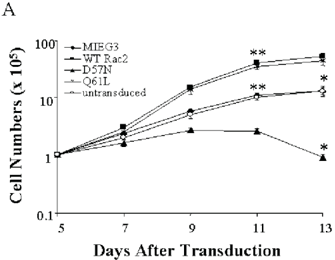
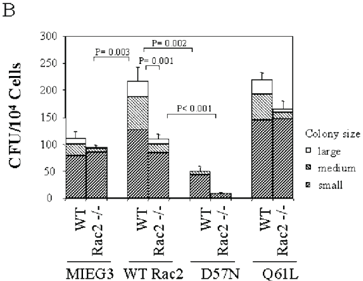
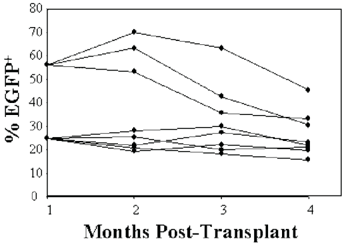
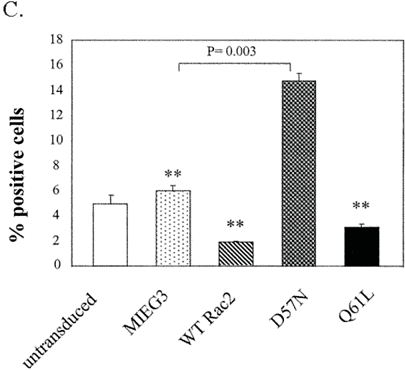
- D57N expression reduced cell expansion in vitro and long-term engraftment in vivo (peripheral blood D57N GFP+ cells fell from >25% to <10% at 1 month and <5% by 3 months in Results; abstract reports 40% at 1 month), associated with increased apoptosis (up to 90% annexin V+ at 13 days; TUNEL 14.8% vs 6.0% for MIEG3, p = 0.003) but no effect on DNA synthesis. WT Rac2 or Q61L increased proliferation (~4-fold in WT cells; 10-fold in Rac2−/− cells) and slightly reduced apoptosis.
Methods
- Recombinant human WT and D57N Rac2 proteins were expressed in E. coli and used for guanine nucleotide binding/dissociation assays and GST-TrioN exchange-factor binding assays.
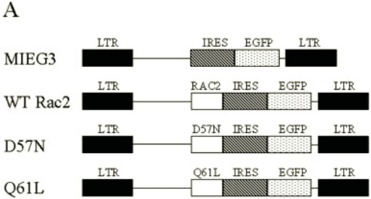
- WT, D57N, and Q61L Rac2 cDNAs were introduced via MIEG3 retroviral vectors into murine low-density bone marrow cells from WT and Rac2−/− mice; GFP+ cells were analyzed by Western blot, PAK1 PBD pull-down, growth/colony assays, thymidine incorporation, annexin V/PI/TUNEL, chemotaxis, and NBT superoxide assays.
- Transduced bone marrow cells were transplanted into lethally irradiated mice, and peripheral blood GFP+ cells were monitored monthly for engraftment.
Limitations
- The paper states that the role of Rac2 in pluripotent hematopoietic stem/progenitor cells and other lineages remains unclear, the basis of Rac2 functional specificity is unknown, and the D57N phenotype in humans requires more careful future analysis.
- The text notes that some results are “data not shown,” and Q61L transduction consistently gave only low gene transfer, limiting direct comparisons.
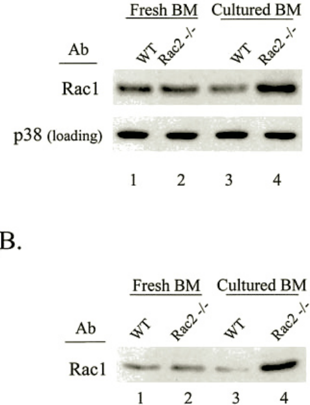
- Evident from the text: in vitro culture of Rac2−/− cells upregulated Rac1 activity >5-fold and partially rescued migration/superoxide phenotypes, so cultured-cell results may not fully reflect in vivo Rac2 function.
Model-written summary. Check it against the paper before relying on it.
Integrity signals
Registry
Cites
Statistics
Figures
Verification
Claims the paper makes
65 Own result · 25 Own interpretation · 17 No full text of the sources · 14 Not checked yet · 7 Own method · 2 Check pending
A result the paper reports from its own data — it cites no other source for it, so there is none to check. The quote shows it is in the paper.
In the paper
“GST-effector pull-down assays were performed on transduced myeloid cells and demonstrated loss of both Rac1 and Rac2 activities.”
§ Biochemical and Biological Characterization of a Human Rac2 GTPase Mutant Associated with Phagocytic Immunodeficiency* > Recently, Ambruso et al.
boostedstates a cause- Asserted: passes — The authors put it forward as true.
- Checkable: passes — It can be checked against evidence.
- Load-bearing: passes — The paper’s conclusions depend on it.
- Based: passes — The paper gives a reason why it holds.
A result the paper reports from its own data — it cites no other source for it, so there is none to check. The quote shows it is in the paper.
In the paper
“D57N Rac2, on the other hand, retained a similar rate of GDP dissociation”
§ Biochemical and Biological Characterization of a Human Rac2 GTPase Mutant Associated with Phagocytic Immunodeficiency* > Sequestration of GEF by the D57N Rac2
plain- Asserted: passes — The authors put it forward as true.
- Checkable: passes — It can be checked against evidence.
- Load-bearing: passes — The paper’s conclusions depend on it.
- Based: passes — The paper gives a reason why it holds.
A result the paper reports from its own data — it cites no other source for it, so there is none to check. The quote shows it is in the paper.
In the paper
“WT Rac2 has a comparable intrinsic dissociation rate for both [ 3 H]GDP and [␥- 35 S]GTP such that ϳ30% GDP or GTP has been dissociated in 15 min.”
§ Biochemical and Biological Characterization of a Human Rac2 GTPase Mutant Associated with Phagocytic Immunodeficiency* > Sequestration of GEF by the D57N Rac2
plain- Asserted: passes — The authors put it forward as true.
- Checkable: passes — It can be checked against evidence.
- Load-bearing: passes — The paper’s conclusions depend on it.
- Based: passes — The paper gives a reason why it holds.
None of the sources cited for this claim have been checked yet.
In the paper
“overexpression of Rac2 is associated with increased proliferation.”
§ Biochemical and Biological Characterization of a Human Rac2 GTPase Mutant Associated with Phagocytic Immunodeficiency* > Recently, Ambruso et al.
plainstates an association- Asserted: passes — The authors put it forward as true.
- Checkable: passes — It can be checked against evidence.
- Load-bearing: unclear — It is unclear whether the paper’s conclusions depend on it.
- Based: passes — The paper gives a reason why it holds.
A result the paper reports from its own data — it cites no other source for it, so there is none to check. The quote shows it is in the paper.
In the paper
“The mutant protein is also nonresponsive to GEF binding”
§ Biochemical and Biological Characterization of a Human Rac2 GTPase Mutant Associated with Phagocytic Immunodeficiency* > Recently, Ambruso et al.
plain- Asserted: passes — The authors put it forward as true.
- Checkable: passes — It can be checked against evidence.
- Load-bearing: passes — The paper’s conclusions depend on it.
- Based: passes — The paper gives a reason why it holds.
- Probably not a substantial claim. 13
- It may state two separate claims as one. 31
- The quote only partly states this claim. 1
Create a free account to see these claims.
Create a free account to see these assumptions.
84 more claims
Create a free account to see all 130 claims and to verify the 13 references still open.
Claims other papers make about this one
Each is checked against this paper’s own text: does it say what the citing paper says it does?
In the citing paper
“Generation of a Rac2-deficient mouse line helped to determine the broader hematopoietic phenotype and revealed the presence of a phagocytic immunodeficiency that was specifically associated with lack of Rac222,23,59.”
From Hematopoietic-specific Rho GTPases Rac2 and RhoH and human blood disorders (2013) · cites this paper as [59]
Self-check
Percentages, sums and reported differences re-computed from the paper’s own numbers.
Each contradiction between two passages listed here was confirmed by an independent check.
Rated major: it would touch a result — a value a result rests on, reported and recomputed p-values on opposite sides of the significance level, two passages that conflict with no sign which is right, or a cited work retracted before this paper was published.
In the paper
§ Biochemical and Biological Characterization of a Human Rac2 GTPase Mutant Associated with Phagocytic Immunodeficiency* > DISCUSSION
“the percentage of D57N-containing peripheral blood cells decreased markedly from 40% at 1 month to <5% by 3 months postinjection.”
§ Biochemical and Biological Characterization of a Human Rac2 GTPase Mutant Associated with Phagocytic Immunodeficiency* > Ectopic Expression of Rac2 Alters Rac Activation in BM Cells-To determine whether Q61L and D57N
“As shown in Fig. 6B, the percentage of D57N GFP ϩ cells dropped from more than 25% to less than 10% in 1 month and decreased to less than 5% by 3 months postinjection.”
Rated minor: it would not touch a result — a value no result rests on, a p-value that stays on the same side of the significance level, or a conflict that is clerical, resolved elsewhere in the paper, or outside its own findings.
In the paper
§ Biochemical and Biological Characterization of a Human Rac2 GTPase Mutant Associated with Phagocytic Immunodeficiency* > Guanine Nucleotide Binding and Exchange Assays-[␥-35 S]
“The titers of viral supernatants collected from different stable E86 clones were determined by fluorescence-activated cell sorting (FACS; Becton Dickinson, Mountain View, CA) analysis using the method reported by Felts et al. (48).”
§ Biochemical and Biological Characterization of a Human Rac2 GTPase Mutant Associated with Phagocytic Immunodeficiency* > References
“48. Pai, E. F., Kabsch, W., Krengel, U., Holmes, K. C., John, J., and Wittinghofer, A. (1989) Nature 341, 209 -214 49. Felts, K., Bauer, J. C., and Vaillancourt, P. (1999) strategies 12, 74 -77”
Rated minor: it would not touch a result — a value no result rests on, a p-value that stays on the same side of the significance level, or a conflict that is clerical, resolved elsewhere in the paper, or outside its own findings.
In the paper
§ Biochemical and Biological Characterization of a Human Rac2 GTPase Mutant Associated with Phagocytic Immunodeficiency* > Cell Growth, Cell Proliferation, and Cell Apoptosis
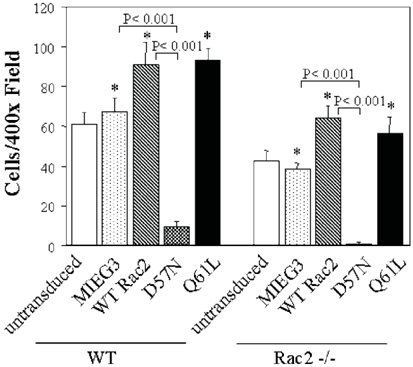
“The numbers of migrating cells were counted on the filter in six random 400 ϫ microscope fields.”
§ Biochemical and Biological Characterization of a Human Rac2 GTPase Mutant Associated with Phagocytic Immunodeficiency* > DISCUSSION
“The number of migrating cells on the filter was determined by counting five random 400ϫ microscope fields.”
Citations
The citation lists haven’t been fetched yet
References 48 · Cited by 100
Research works printed but not linked: 6
- Williams, 2000, Blood, 96, 1646
- Shirsat, 1990, Oncogene, 5, 769
- Moll, 1991, Oncogene, 6, 863
- Bjorgvinsdottir, 1997, Blood, 89, 41, 10.1182/blood.V89.1.41 · DOI
- Jung, 1994, Mol. Cell. Biol., 14, 3707
- Felts, 1999, strategies, 12, 74
Metadata
- Authors
- Gu, Y., Jia, B., Yang, F.-C., D'Souza, M., Harris, C. E., Derrow, C. W., Zheng, Y., & Williams, D. A.
- Affiliations
- Howard Hughes Medical Institute (US)
- University of Tennessee Health Science Center (US)
- Indiana University Indianapolis (US)
- Corresponding author
- Williams, David A.
- Venue
- Journal of Biological Chemistry
- Publisher
- Elsevier BV
- Published
- 2001-05
- Volume
- 276
- Issue
- 19
- Pages
- 15929-15938
- ISSN
- 0021-9258 (ISSN-L)
- OpenAlex
- W2033931111
- Semantic Scholar
- 341d6a480a29e5de7d5a412ddc9f6ceb84af8893
- Cited by
- 100
- References
- 48
- Citations by year
- 2026: 4 · 2023: 2 · 2022: 4 · 2021: 5 · 2020: 5 · 2019: 4 · 2018: 2 · 2017: 2 · 2016: 3 · 2015: 1 · 2014: 6 · 2013: 4 · 2012: 2
- FWCI
- 1.88
- Type
- journal article
- Language
- en
- Open access
- hybrid
- doi.org
- Licence
- Locations
- Journal of Biological Chemistry (publishedVersion, cc-by)
- PubMed (publishedVersion)
- Funders
- National Institutes of Health
- National Institute of General Medical Sciences (R01GM060523)
- Topics
- Life Sciences › Immunology and Microbiology › Immunology › Immunodeficiency and Autoimmune Disorders
- Life Sciences › Biochemistry, Genetics and Molecular Biology › Molecular Biology › Protein Kinase Regulation and GTPase Signaling
- Life Sciences › Immunology and Microbiology › Immunology › Neutrophil, Myeloperoxidase and Oxidative Mechanisms
- Keywords
- Rac2, Rho GTPases, dominant negative mutation, neutrophil chemotaxis, GTP binding, guanine nucleotide exchange factor, Rac1, apoptosis, cell proliferation, bone marrow transplantation, neutrophil migration, superoxide production, hematopoietic cells
- MeSH terms
- RAC2 GTP-Binding Protein, Animals, Bone Marrow Cells, Cell Division, Cell Line, Cell Survival, Cloning, Molecular, Guanosine Diphosphate, Guanosine Triphosphate, Hematopoietic Stem Cells, Humans, Immunologic Deficiency Syndromes, N-Formylmethionine Leucyl-Phenylalanine, Neutrophils, Phagocytosis, Phenotype, Recombinant Proteins, Superoxides, Transfection, Mice, Knockout, Hematopoietic Stem Cell Transplantation, Amino Acid Substitution, GTP Phosphohydrolases, rac GTP-Binding Proteins, Mice
About these checks
Registry, retraction, Cites and statistics results are computed, not judged, with one exception: a printed reference that no index lists is read once by a model before it counts as a citation error. Claims are extracted by a model and kept only when their quote appears verbatim in the text; each cited source is then checked, with a model’s help, for whether it says what the claim relies on. Those verdicts can be wrong — read the claim’s quote and the cited source before relying on one.
A language model drew the claims from the paper on 2026-11-12, under version 3 of the claim definition (model deepseek-v4.1-flash, prompt extract-v3).
A second model labelled each claim on 2026-11-12 (model jev-1.13-20260917, definition revision gold-guideline-v0.2).
Statistics and arithmetic are recomputed, not judged.
Confidence bands are shown only for fields calibrated on our annotated test set. None is calibrated yet, so no band is shown.
What counts as a claim ›How we measure confidence ›How we check this ›
Are you an author, or do you see a problem with this page? Request a review
How to cite
Cite CoChat for the checks on this page, and the paper for its own findings.
- This page
- CoChat. (2026). Citation check: Biochemical and Biological Characterization of a Human Rac2 GTPase Mutant Associated with Phagocytic Immunodeficiency. https://app.cochat.ai/papers/10.1074/jbc.m010445200
- The paper
- Gu, Y., Jia, B., Yang, F.-C., D'Souza, M., Harris, C. E., Derrow, C. W., Zheng, Y., & Williams, D. A. (2001). Biochemical and Biological Characterization of a Human Rac2 GTPase Mutant Associated with Phagocytic Immunodeficiency. Journal of Biological Chemistry. https://doi.org/10.1074/jbc.m010445200
