

The DOI matches its Crossref record; 68 of the 68 references it cites were found in a registry or an index.
Voltage-dependent Anion Channel 1-based Peptides Interact with Bcl-2 to Prevent Antiapoptotic Activity
Open accessAbstract
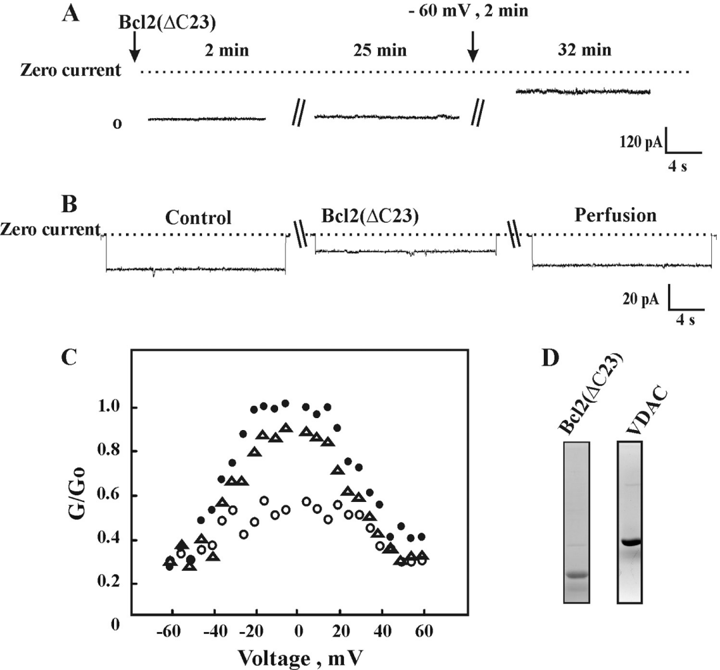
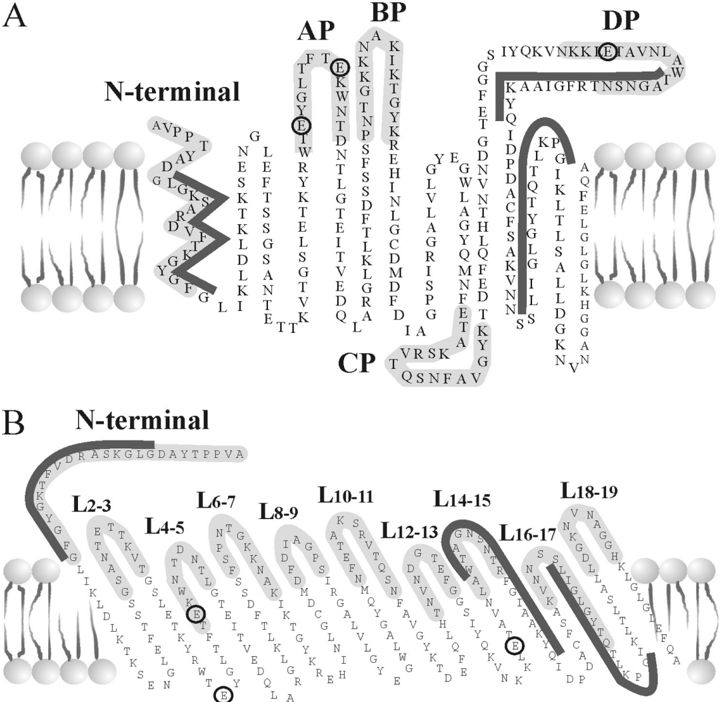
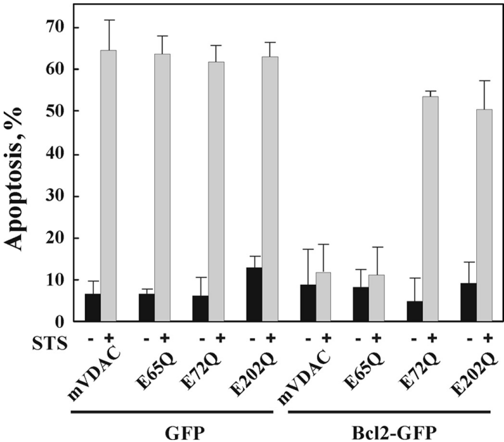
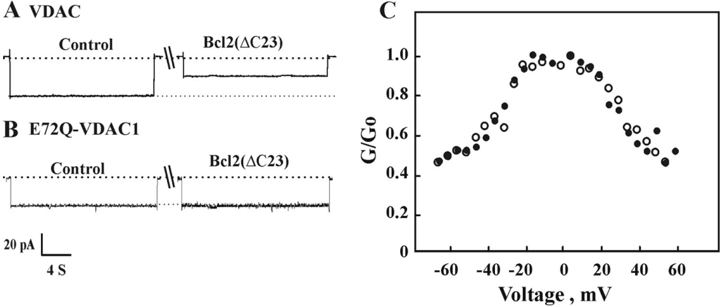
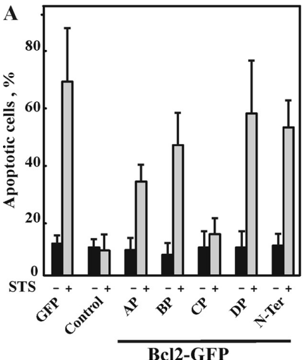
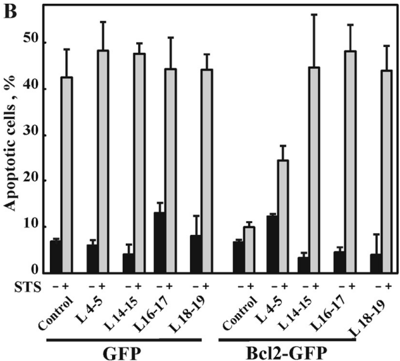
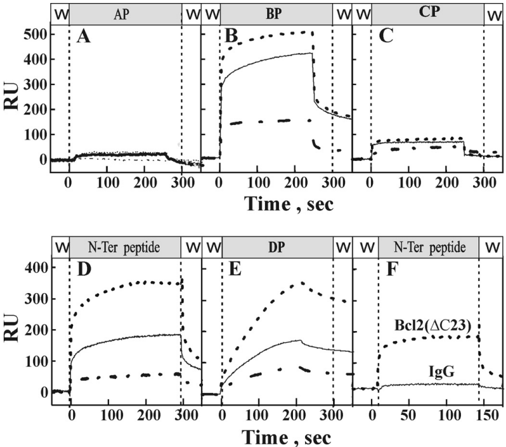
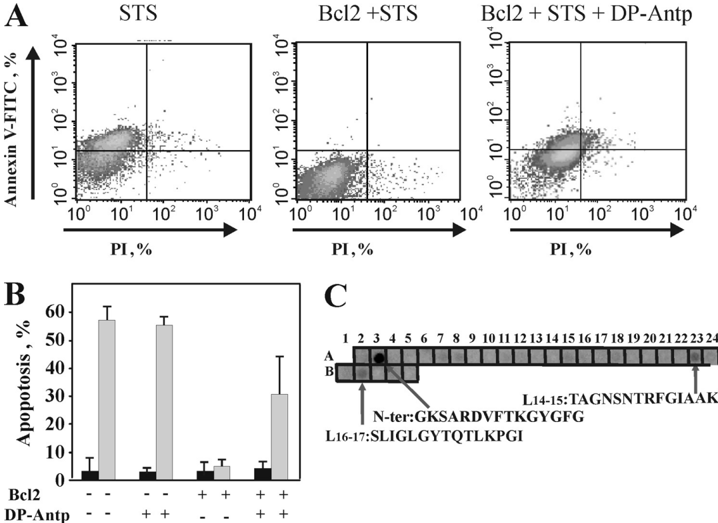
The antiapoptotic proteins of the Bcl-2 family are expressed at high levels in many types of cancer. However, the mechanism by which Bcl-2 family proteins regulate apoptosis is not fully understood. Here, we demonstrate the interaction of Bcl-2 with the outer mitochondrial membrane protein, voltage-dependent anion channel 1 (VDAC1). A direct interaction of Bcl-2 with bilayer-reconstituted purified VDAC was demonstrated, with Bcl-2 decreasing channel conductance. Expression of Bcl-2-GFP prevented apoptosis in cells expressing native but not certain VDAC1 mutants. VDAC1 sequences and amino acid residues important for interaction with Bcl-2 were defined through site-directed mutagenesis. Synthetic peptides corresponding to the VDAC1 N-terminal region and selected sequences bound specifically, in a concentration- and time-dependent manner, to immobilized Bcl-2, as revealed by the real-time surface plasmon resonance. Moreover, expression of the VDAC1-based peptides in cells over-expressing Bcl-2 prevented Bcl-2-mediated protection against staurosporine-induced apoptotic cell death. Similarly, a cell-permeable VDAC1-based synthetic peptide was also found to prevent Bcl-2-GFP-mediated protection against apoptosis. These results point to Bcl-2 as promoting tumor cell survival through binding to VDAC1, thereby inhibiting cytochrome c release and apoptotic cell death. Moreover, these findings suggest that interfering with the binding of Bcl-2 to mitochondria by VDAC1-based peptides may serve to potentiate the efficacy of conventional chemotherapeutic agents.
Overview
The claims and statistics of this paper haven’t been checked yet.
Run the check — free, no account needed. It reads the open-access text and checks the sources it cites.
Integrity signals
Registry
Cites
Statistics
Figures

Verification
Claims the paper makes
The claims and statistics of this paper haven’t been checked yet.
Run the check — free, no account needed. It reads the open-access text and checks the sources it cites.
Claims other papers make about this one
Each is checked against this paper’s own text: does it say what the citing paper says it does?
The source backs part of the claim, not all of it — or backs it for a different population, condition or comparison.
In the citing paper
“The N-terminal domain of VDAC1 interacts with several Bcl-2 family proteins that regulate apoptosis and is involved in gating the channel [96,97,98,99,100,101].”
From Mitochondrial Oxidative and Nitrosative Stress and Alzheimer Disease (2020) · cites this paper as [100]
Experimental — accuracy not yet measured
Self-check
Percentages, sums and reported differences re-computed from the paper’s own numbers.
The self-check needs the paper’s full text.
Citations
Cites
Cleavage of Structural Proteins during the Assembly of the Head of Bacteriophage T4
LAEMMLI, U. K. (1970) · Nature · doi:10.1038/227680a0 · Cited by 249,961
Green, D. R., & Reed, J. C. (1998) · Science · doi:10.1126/science.281.5381.1309 · Cited by 9,051
The BCL-2 protein family: opposing activities that mediate cell death
Youle, R. J., & Strasser, A. (2007) · Nature Reviews Molecular Cell Biology · doi:10.1038/nrm2308 · Cited by 4,806
Danial, N. N., & Korsmeyer, S. J. (2004) · Cell · doi:10.1016/s0092-8674(04)00046-7 · Cited by 4,651
The Bcl2 family: regulators of the cellular life-or-death switch
Cory, S., & Adams, J. M. (2002) · Nature Reviews Cancer · doi:10.1038/nrc883 · Cited by 4,032
BCL-2 family members and the mitochondria in apoptosisPreprint
Gross, A., McDonnell, J. M., & Korsmeyer, S. J. (1999) · Genes & Development · doi:10.1101/gad.13.15.1899 · Cited by 3,642
Mitochondrial membrane permeabilization in cell death
Kroemer, G., Galluzzi, L., & Brenner, C. (2007) · Physiological Reviews · doi:10.1152/physrev.00013.2006 · Cited by 3,598
The mitochondrial permeability transition pore and its role in cell death
CROMPTON, M. (1999) · Biochemical Journal · doi:10.1042/bj3410233 · Cited by 2,432
The Bcl-2 apoptotic switch in cancer development and therapy
Adams, J. M., & Cory, S. (2007) · Oncogene · doi:10.1038/sj.onc.1210220 · Cited by 2,256
Shimizu, S., Narita, M., Tsujimoto, Y., & Tsujimoto, Y. (1999) · Nature · doi:10.1038/20959 · Cited by 2,178
Cheng, E. H. Y., Wei, M. C., Weiler, S., Flavell, R. A., Mak, T. W., Lindsten, T., & Korsmeyer, S. J. (2001) · Molecular Cell · doi:10.1016/s1097-2765(01)00320-3 · Cited by 1,735
BAX and BAK Regulation of Endoplasmic Reticulum Ca 2+ : A Control Point for Apoptosis
Scorrano, L., Oakes, S. A., Opferman, J. T., Cheng, E. H. Y., Sorcinelli, M. D., Pozzan, T., & Korsmeyer, S. J. (2003) · Science · doi:10.1126/science.1081208 · Cited by 1,387
bcl-2 inhibits multiple forms of apoptosis but not negative selection in thymocytes
Sentman, C. L., Shutter, J. R., Hockenbery, D. M., Kanagawa, O., & Korsmeyer, S. J. (1991) · Cell · doi:10.1016/0092-8674(91)90361-2 · Cited by 1,188
Enforced dimerization of BAX results in its translocation, mitochondrial dysfunction and apoptosis
Gross, A., Jockel, J., Wei, M. C., & Korsmeyer, S. J. (1998) · The EMBO Journal · doi:10.1093/emboj/17.14.3878 · Cited by 1,095
BH3-Only Proteins—Essential Initiators of Apoptotic Cell Death
Huang, D. C. S., & Strasser, A. (2000) · Cell · doi:10.1016/s0092-8674(00)00187-2 · Cited by 1,044
Krajewski, S., Tanaka, S., Takayama, S., Schibler, M. J., Fenton, W. A., & Reed, J. C. (1993) · PubMed · Cited by 1,030
How do BCL-2 proteins induce mitochondrial outer membrane permeabilization?
Chipuk, J. E., & Green, D. R. (2008) · Trends in Cell Biology · doi:10.1016/j.tcb.2008.01.007 · Cited by 982
Bcl-2 oncoprotein blocks chemotherapy-induced apoptosis in a human leukemia cell line
Miyashita, T., & Reed, J. (1993) · Blood · doi:10.1182/blood.v81.1.151.151 · Cited by 878
Antisense oligonucleotides: basic concepts and mechanisms.
Dias, N., & Stein, C. A. (2002) · PubMed · Cited by 759
Solution structure of the integral human membrane protein VDAC-1 in detergent micelles
Hiller, S., Garces, R. G., Malia, T. J., Orekhov, V. Y., Colombini, M., & Wagner, G. (2008) · Science · doi:10.1126/science.1161302 · Cited by 667
Structure of the human voltage-dependent anion channel
Bayrhuber, M., Meins, T., Habeck, M., Becker, S., Giller, K., Villinger, S., Vonrhein, C., Griesinger, C., Zweckstetter, M., & Zeth, K. (2008) · Proceedings of the National Academy of Sciences · doi:10.1073/pnas.0808115105 · Cited by 588
Ujwal, R., Cascio, D., Colletier, J., Faham, S., Zhang, J., Toro, L., Ping, P., & Abramson, J. (2008) · Proceedings of the National Academy of Sciences · doi:10.1073/pnas.0809634105 · Cited by 566
VDAC: The channel at the interface between mitochondria and the cytosol
Colombini, M. (2003) · Molecular and Cellular Biochemistry · doi:10.1023/b:mcbi.0000009862.17396.8d · Cited by 500
Shimizu, S., Konishi, A., Kodama, T. S., & Tsujimoto, Y. (2000) · Proceedings of the National Academy of Sciences · doi:10.1073/pnas.97.7.3100 · Cited by 446
AZOULAY-ZOHAR, H., ISRAELSON, A., ABU-HAMAD, S., & SHOSHAN-BARMATZ, V. (2004) · Biochemical Journal · doi:10.1042/bj20031465 · Cited by 408
Self-citationGINCEL, D., ZAID, H., & SHOSHAN-BARMATZ, V. (2001) · Biochemical Journal · doi:10.1042/bj3580147 · Cited by 396
Essential Role of Voltage-Dependent Anion Channel in Various Forms of Apoptosis in Mammalian Cells
Shimizu, S., Matsuoka, Y., Shinohara, Y., Yoneda, Y., & Tsujimoto, Y. (2001) · The Journal of Cell Biology · doi:10.1083/jcb.152.2.237 · Cited by 368
Bcl-2 inhibitors: small molecules with a big impact on cancer therapy
Vogler, M., Dinsdale, D. D., Dyer, M. J. S., & Cohen, G. M. (2008) · Cell Death and Differentiation · doi:10.1038/cdd.2008.137 · Cited by 359
Halestrap, A. P., Doran, E., Gillespie, J. P., & O’Toole, A. (2000) · Biochemical Society Transactions · doi:10.1042/bst0280170 · Cited by 320
Shoshan‐Barmatz, V., Israelson, A., Brdiczka, D. G., & Sheu, S. (2006) · Current Pharmaceutical Design · doi:10.2174/138161206777585111 · Cited by 310
The voltage-dependent anion channel-1 modulates apoptotic cell death
Zaid, H., Abu‐Hamad, S., Israelson, A., Nathan, I., & Shoshan‐Barmatz, V. (2005) · Cell Death and Differentiation · doi:10.1038/sj.cdd.4401599 · Cited by 303
Structure-Based Design of Potent Small-Molecule Inhibitors of Anti-Apoptotic Bcl-2 Proteins
Wang, G., Nikolovska‐Coleska, Z., Yang, C., Wang, R., Tang, G., Guo, J., Shangary, S. K., Qiu, S., Gao, W., Yang, D., et al. (2006) · Journal of Medicinal Chemistry · doi:10.1021/jm060460o · Cited by 293
Abu-Hamad, S., Zaid, H., Israelson, A., Nahon, E., & Shoshan-Barmatz, V. (2008) · Journal of Biological Chemistry · doi:10.1074/jbc.m708216200 · Cited by 278
Shimizu, S., & Tsujimoto, Y. (2000) · Proceedings of the National Academy of Sciences · doi:10.1073/pnas.97.2.577 · Cited by 277
The Role of Environmental Carcinogens, Viruses, and Genetic
Powers, A. A., & Carbone, M. (2002) · Cancer Biology & Therapy · doi:10.4161/cbt.1.4.4 · Cited by 276
Leone, M., Zhai, D., Sareth, S., Kitada, S., Reed, J. C., & Pellecchia, M. (2003) · PubMed · Cited by 259
Holinger, E. P., Chittenden, T., & Lutz, R. J. (1999) · Journal of Biological Chemistry · doi:10.1074/jbc.274.19.13298 · Cited by 254
The voltage-dependent anion channel: an essential player in apoptosis
Tsujimoto, Y., & Shimizu, S. (2002) · Biochimie · doi:10.1016/s0300-9084(02)01370-6 · Cited by 249
The expression level of the voltage-dependent anion channel controls life and death of the cell
Abu‐Hamad, S., Sivan, S., & Shoshan‐Barmatz, V. (2006) · Proceedings of the National Academy of Sciences · doi:10.1073/pnas.0600103103 · Cited by 244
Shoshan‐Barmatz, V., & Gincel, D. (2003) · Cell Biochemistry and Biophysics · doi:10.1385/cbb:39:3:279 · Cited by 229
Abu-Hamad, S., Arbel, N., Calo, D., Arzoine, L., Israelson, A., Keinan, N., Ben-Romano, R., Friedman, O., & Shoshan-Barmatz, V. (2009) · Journal of Cell Science · doi:10.1242/jcs.040188 · Cited by 226
Hierarchical involvement of Bak, VDAC1 and Bax in cisplatin-induced cell death
Tajeddine, N., Galluzzi, L., Kepp, O., Hangen, E., Morselli, E., Senovilla, L., Araujo, N., Pinna, G., Larochette, N., Zamzami, N., et al. (2008) · Oncogene · doi:10.1038/onc.2008.63 · Cited by 217
Zheng, Y., Shi, Y., Tian, C., Jiang, C., Jin, H., Chen, J., Almasan, A., Tang, H., & Chen, Q. (2003) · Oncogene · doi:10.1038/sj.onc.1207205 · Cited by 206
Bid, but Not Bax, Regulates VDAC Channels
Rostovtseva, T. K., Antonsson, B. E., Suzuki, M., Youle, R. J., Colombini, M., & Bezrukov, S. M. (2004) · Journal of Biological Chemistry · doi:10.1074/jbc.m310593200 · Cited by 204
Uncovering the role of VDAC in the regulation of cell life and death
Shoshan‐Barmatz, V., Keinan, N., & Zaid, H. (2008) · Journal of Bioenergetics and Biomembranes · doi:10.1007/s10863-008-9147-9 · Cited by 186
Arzoine, L., Zilberberg, N., Ben-Romano, R., & Shoshan‐Barmatz, V. (2008) · Journal of Biological Chemistry · doi:10.1074/jbc.m803614200 · Cited by 178
The use of cell-penetrating peptides as a tool for gene regulation
Järver, P., & Langel, Ü. (2004) · Drug Discovery Today · doi:10.1016/s1359-6446(04)03042-9 · Cited by 175
Malia, T., & Wagner, G. (2006) · Biochemistry · doi:10.1021/bi061577h · Cited by 170
Shi, Y., Chen, J., Weng, C., Chen, R., Zheng, Y., Chen, Q., & Tang, H. (2003) · Biochemical and Biophysical Research Communications · doi:10.1016/s0006-291x(03)00871-4 · Cited by 158
Mohammad, R. M., Goustin, A. S., Aboukameel, A., Chen, B., Banerjee, S., Wang, G., Nikolovska‐Coleska, Z., Wang, S., & Al-Katib, A. M. (2007) · Clinical Cancer Research · doi:10.1158/1078-0432.ccr-06-1574 · Cited by 152
Verhaegen, M., Bauer, J. A., Martín de la Vega, C., Wang, G., Wolter, K. G., Brenner, J. C., Nikolovska-Coleska, Z., Bengtson, A., Nair, R., Elder, J. T., et al. (2006) · Cancer Research · doi:10.1158/0008-5472.can-06-1748 · Cited by 140
Activation of mitochondrial voltage-dependent anion channel by apro-apoptotic BH3-only protein Bim
Sugiyama, T., Shimizu, S., Matsuoka, Y., Yoneda, Y., & Tsujimoto, Y. (2002) · Oncogene · doi:10.1038/sj.onc.1205621 · Cited by 131
The published 3D structure of the VDAC channel: native or not?
Colombini, M. (2009) · Trends in Biochemical Sciences · doi:10.1016/j.tibs.2009.05.001 · Cited by 111
Subcellular localization of VDAC in mitochondria and ER in the cerebellum
Shoshan‐Barmatz, V., Zalk, R., Gincel, D., & Vardi, N. (2004) · Biochimica et Biophysica Acta (BBA) - Bioenergetics · doi:10.1016/j.bbabio.2004.02.009 · Cited by 109
On the Structure and Gating Mechanism of the Mitochondrial Channel, VDAC
Mannella, C. A. (1997) · Journal of Bioenergetics and Biomembranes · doi:10.1023/a:1022489832594 · Cited by 106
Popp, B., Court, D. A., Benz, R., Neupert, W., & Lill, R. (1996) · Journal of Biological Chemistry · doi:10.1074/jbc.271.23.13593 · Cited by 79
Structure of the voltage dependent anion channel: state of the art
Pinto, V. D., Reina, S., Guarino, F., & Messina, A. A. (2008) · Journal of Bioenergetics and Biomembranes · doi:10.1007/s10863-008-9140-3 · Cited by 75
Reymann, S., Flörke, H., Heiden, M., Jakob, C., Stadtmüller, U., Steinacker, P., Lalk, V. E., Pardowitz, I., & THINNES, F. P. (1995) · Biochemical and Molecular Medicine · doi:10.1006/bmme.1995.1011 · Cited by 73
Bacterial Expression and Characterization of the Mitochondrial Outer Membrane Channel
Koppel, D. A., Kinnally, K. W., Masters, P. S., Forte, M. A., Blachly‐Dyson, E., & Mannella, C. A. (1998) · Journal of Biological Chemistry · doi:10.1074/jbc.273.22.13794 · Cited by 72
Marchi, U. D., Campello, S., Szabó, I., Tombola, F., Martinou, J., & Zoratti, M. (2004) · Journal of Biological Chemistry · doi:10.1074/jbc.m314093200 · Cited by 72
Pinto, V. D., Messina, A. A., Accardi, R., Aiello, R., Guarino, F., Tomasello, M. F., Tommasino, M., Tasco, G., Casadio, R., Benz, R., et al. (2003) · PubMed · Cited by 68
Kim, R., Emi, M., Matsuura, K., & Tanabe, K. (2006) · Cancer Gene Therapy · doi:10.1038/sj.cgt.7700986 · Cited by 63
Schimmer, A. D., Hedley, D. W., Chow, S., Pham, N.-A., Chakrabartty, A., Bouchard, D., Mak, T. W., Trus, M., & Minden, M. D. (2001) · Cell Death and Differentiation · doi:10.1038/sj.cdd.4400870 · Cited by 59
Lemasters, J. J. (1999) · Cardiovascular Research · doi:10.1016/s0008-6363(99)00368-5 · Cited by 56
Mapping the ruthenium red-binding site of the voltage-dependent anion channel-1
Israelson, A., Zaid, H., Abu‐Hamad, S., Nahon, E., & Shoshan‐Barmatz, V. (2007) · Cell Calcium · doi:10.1016/j.ceca.2007.05.006 · Cited by 52
Vidal, L., Blagden, S. P., Attard, G., & Bono, J. S. D. (2005) · European Journal of Cancer · doi:10.1016/j.ejca.2005.06.029 · Cited by 44
Porin-type1 proteins in sarcoplasmic reticulum and plasmalemma of striated muscle fibres
Junankar, P. R., Dulhunty, A. F., Curtis, S. M., Pace, S. M., & THINNES, F. P. (1995) · Journal of Muscle Research and Cell Motility · doi:10.1007/bf00130241 · Cited by 39
Activation of Targeted Necrosis by a p53 Peptide
Dinnen, R. D., Drew, L., Petrylak, D. P., Mao, Y., Cassai, N. D., Szmulewicz, J., Brandt‐Rauf, P. W., & Fine, R. L. (2007) · Journal of Biological Chemistry · doi:10.1074/jbc.m701864200 · Cited by 22
Research works printed but not linked: 4
- Krajewski, 1993, Cancer Res., 53, 4701
- De Pinto, 2003, Ital. J. Biochem., 52, 17
- Dias, 2002, Mol. Cancer Ther., 1, 347
- Leone, 2003, Cancer Res., 63, 8118
Cited by
Sorted by citations
VDAC, a multi-functional mitochondrial protein regulating cell life and death
Shoshan‐Barmatz, V., Pinto, V. D., Zweckstetter, M., Raviv, Z., Keinan, N., & Arbel, N. (2010) · Molecular Aspects of Medicine · doi:10.1016/j.mam.2010.03.002 · Cited by 824
The endoplasmic reticulum–mitochondria connection: One touch, multiple functions
Marchi, S., Patergnani, S., & Pinton, P. (2014) · Biochimica et Biophysica Acta (BBA) - Bioenergetics · doi:10.1016/j.bbabio.2013.10.015 · Cited by 475
“The antiapoptotic protein Bcl-2 interacts with VDAC1 [118], decreasing channel conductance and likely limiting mitochondrial Ca2+ entry and ROS production.”
BackgroundInfluentialMitochondrial Channels: Ion Fluxes and More
Szabó, I., & Zoratti, M. (2014) · Physiological Reviews · doi:10.1152/physrev.00021.2013 · Cited by 330
Misfolded Mutant SOD1 Directly Inhibits VDAC1 Conductance in a Mouse Model of Inherited ALS
Israelson, A., Arbel, N., Cruz, S. D., Ilieva, H. S., Yamanaka, K., Shoshan‐Barmatz, V., & Cleveland, D. W. (2010) · Neuron · doi:10.1016/j.neuron.2010.07.019 · Cited by 329
“Taken together, our results establish a direct link between misfolded mutant SOD1 and mitochondrial dysfunction in this form of inherited ALS.”
BackgroundVDAC1, mitochondrial dysfunction, and Alzheimer’s disease
Shoshan-Barmatz, V., Nahon-Crystal, E., Shteinfer-Kuzmine, A., & Gupta, R. (2018) · Pharmacological Research · doi:10.1016/j.phrs.2018.03.010 · Cited by 286
Self-citation
Metadata
- Authors
- Arbel, N., & Shoshan-Barmatz, V.
- Affiliations
- Ben-Gurion University of the Negev (IL)
- Venue
- Journal of Biological Chemistry
- Publisher
- Elsevier BV
- Published
- 2010-02
- Volume
- 285
- Issue
- 9
- Pages
- 6053-6062
- ISSN
- 0021-9258 (ISSN-L)
- PMC
- PMC2825399
- OpenAlex
- W1998225262
- Cited by
- 168
- References
- 68
- Citations by year
- 2026: 5 · 2025: 8 · 2024: 8 · 2023: 5 · 2022: 8 · 2021: 11 · 2020: 14 · 2019: 8 · 2018: 18 · 2017: 18 · 2016: 11 · 2015: 9 · 2014: 15 · 2013: 9 · 2012: 11
- FWCI
- 2.82
- Type
- journal article
- Language
- en
- Open access
- hybrid
- doi.org
- Licence
- Locations
- Journal of Biological Chemistry (publishedVersion, cc-by)
- Europe PMC (PubMed Central) (publishedVersion)
- PubMed Central (publishedVersion)
- PubMed (publishedVersion)
- Funders
- Israel Science Foundation
- Topics
- Life Sciences › Biochemistry, Genetics and Molecular Biology › Molecular Biology › Cell death mechanisms and regulation
- Life Sciences › Biochemistry, Genetics and Molecular Biology › Molecular Biology › Mitochondrial Function and Pathology
- Health Sciences › Medicine › Cardiology and Cardiovascular Medicine › Cardiac Ischemia and Reperfusion
- Keywords
- VDAC1, Bcl-2, Bcl-2 family proteins, apoptosis, anti-apoptotic effects, mitochondrial outer membrane, cytochrome c release, staurosporine-induced apoptosis, tumor cell survival, chemosensitization, channel conductance
- MeSH terms
- Animals, Cell Line, Electric Conductivity, Electrophysiology, Humans, Mitochondria, Peptide Fragments, Protein Binding, Sheep, Mutagenesis, Site-Directed, Apoptosis, Proto-Oncogene Proteins c-bcl-2, Surface Plasmon Resonance, Voltage-Dependent Anion Channel 1
About these checks
Registry, retraction, Cites and statistics results are computed, not judged, with one exception: a printed reference that no index lists is read once by a model before it counts as a citation error. Claims are extracted by a model and kept only when their quote appears verbatim in the text; each cited source is then checked, with a model’s help, for whether it says what the claim relies on. Those verdicts can be wrong — read the claim’s quote and the cited source before relying on one.
Statistics and arithmetic are recomputed, not judged.
Confidence bands are shown only for fields calibrated on our annotated test set. None is calibrated yet, so no band is shown.
What counts as a claim ›How we measure confidence ›How we check this ›
Are you an author, or do you see a problem with this page? Request a review
