

The Roles of Cyclin-dependent Kinase 5 and Glycogen Synthase Kinase 3 in Tau Hyperphosphorylation
Open accessThe DOI matches its Crossref record; 54 of the 54 references it cites were found in a registry or an index.
Abstract
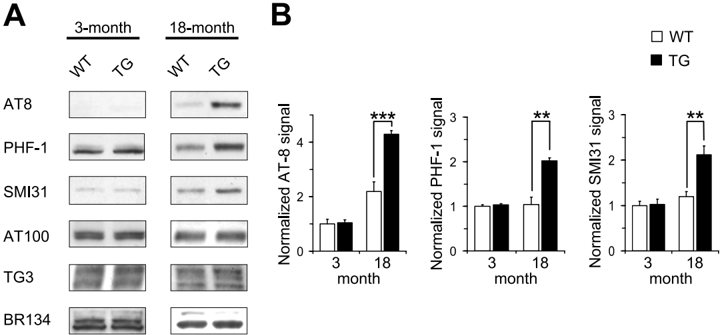
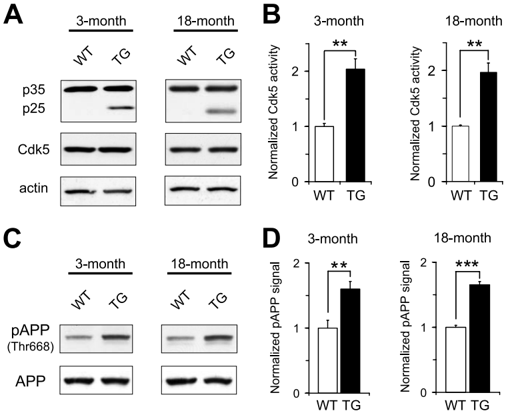
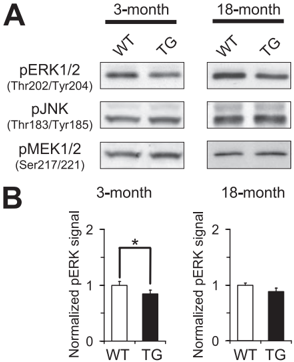
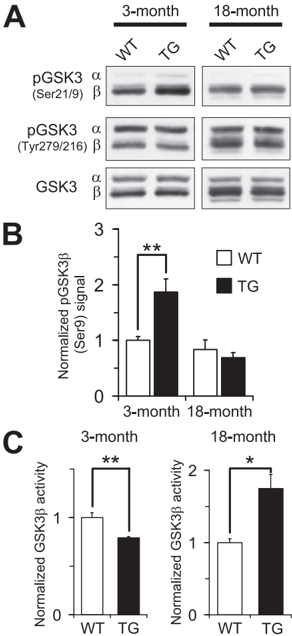
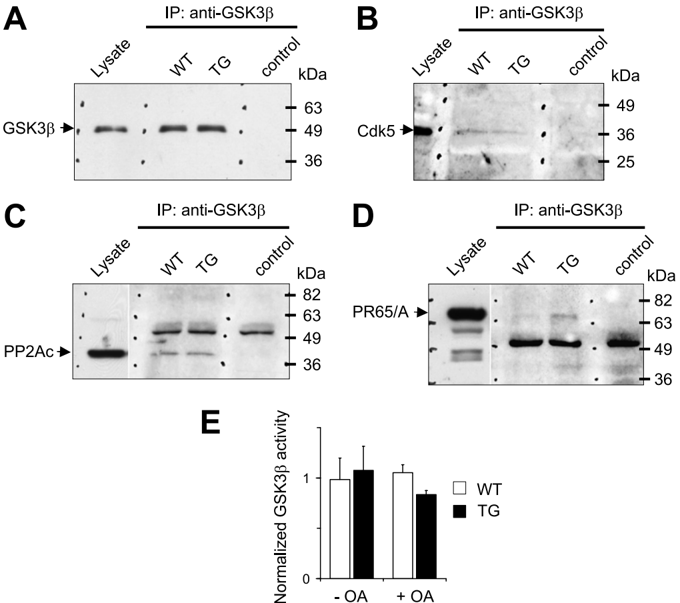
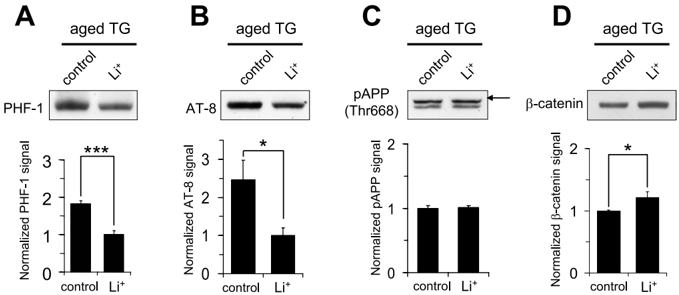
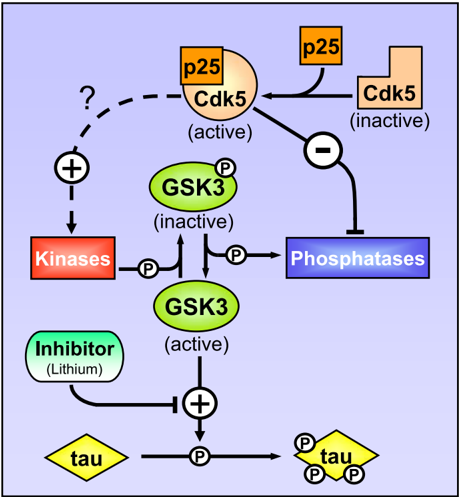
Hyperphosphorylation of the microtubule-associated protein tau is a characteristic feature of neurodegenerative tauopathies including Alzheimer disease. Over-activation of proline-directed kinases, such as cyclin-dependent kinase 5 (Cdk5) and glycogen synthase kinase 3 (GSK3), has been implicated in the aberrant phosphorylation of tau at proline-directed sites. In this study we tested the roles of Cdk5 and GSK3 in tau hyperphosphorylation in vivo using transgenic mice with p25-induced Cdk5 over-activation. We found that over-activation of Cdk5 in young transgenic animals does not induce tau hyperphosphorylation at sites recognized by the antibodies AT8, AT100, PHF-1, and TG3. In fact, we observed that Cdk5 over-activation leads to inhibition of GSK3. However, in old transgenic animals the inhibition of GSK3 is lost and results in increased GSK3 activity, which coincides with tau hyperphosphorylation at the AT8 and PHF-1 sites. Pharmacological inhibition of GSK3 in old transgenic mice by chronic treatment with lithium leads to a reduction of the age-dependent increase in tau hyperphosphorylation. Furthermore, we found that Cdk5, GSK3, and PP2A co-immunoprecipitate, suggesting a functional association of these molecules. Together, these results reveal the role of GSK3 as a key mediator of tau hyperphosphorylation, whereas Cdk5 acts as a modulator of tau hyperphosphorylation via the inhibitory regulation of GSK3. Furthermore, these findings suggest that disruption of regulation of GSK3 activity underlies tau hyperphosphorylation in neurodegenerative tauopathies. Hence, GSK3 may be a prime target for therapeutic intervention in tauopathies including Alzheimer disease.
Overview
The claims and statistics of this paper haven’t been checked yet.
Free: it reads the open-access text and checks the first 5 claims that cite a source we can check. Create a free account to check every claim.
Integrity signals
Registry
Cites
Statistics
Figures
Verification
Claims the paper makes
The claims and statistics of this paper haven’t been checked yet.
Free: it reads the open-access text and checks the first 5 claims that cite a source we can check. Create a free account to check every claim.
Claims other papers make about this one
Each is checked against this paper’s own text: does it say what the citing paper says it does?
The source backs part of the claim, not all of it — or backs it for a different population, condition or comparison.
In the citing paper
“Aβ accelerated the tau hyperphosphorylation by the activation of cyclin-dependent kinase 5 (CDK5) and glycogen synthase kinase 3 (GSK-3).116–118”
From Amyloid β-based therapy for Alzheimer’s disease: Challenges, successes and future (2023) · cites this paper as [116]
Experimental — accuracy not yet measuredThe cited source says what the claim attributes to it.
In the citing paper
“The AT8 sites are not only physiological phosphorylation sites (Kimura et al., 2007;Verwer et al., 2007) but also markers of hyperphosphorylation in Alzheimer's disease (Plattner et al., 2006).”
From Regulation of Mitochondrial Transport and Inter-Microtubule Spacing by Tau Phosphorylation at the Sites Hyperphosphorylated in Alzheimer's Disease (2012) · cites this paper as Plattner et al., 2006
Self-check
Percentages, sums and reported differences re-computed from the paper’s own numbers.
The self-check needs the paper’s full text.
Citations
Cites
Neuropathological stageing of Alzheimer-related changes.
Braak, H., & Braak, E. (1991) · Acta Neuropathologica · doi:10.1007/bf00308809 · Cited by 16,123
Lee, V. M.-Y., Goedert, M., & Trojanowski, J. Q. (2001) · Annual Review of Neuroscience · doi:10.1146/annurev.neuro.24.1.1121 · Cited by 2,480
A molecular mechanism for the effect of lithium on development.
Klein, P. S., & Melton, D. A. (1996) · Proceedings of the National Academy of Sciences · doi:10.1073/pnas.93.16.8455 · Cited by 2,301
Buée, L., Bussière, T., Buée-Scherrer, V., Delacourte, A., & Hof, P. R. (2000) · Brain Research Reviews · doi:10.1016/s0165-0173(00)00019-9 · Cited by 2,015
Conversion of p35 to p25 deregulates Cdk5 activity and promotes neurodegeneration
Patrick, G. N., Zukerberg, L., Nikolic, M., de la Monte, S., Dikkes, P., & Tsai, L.-H. (1999) · Nature · doi:10.1038/45159 · Cited by 1,545
The multifaceted roles of glycogen synthase kinase 3β in cellular signaling
Grimes, C. A., & Jope, R. S. (2001) · Progress in Neurobiology · doi:10.1016/s0301-0082(01)00011-9 · Cited by 1,423
Lithium inhibits glycogen synthase kinase-3 activity and mimics wingless signalling in intact cells
Stambolic, V., Ruel, L., & Woodgett, J. R. (1996) · Current Biology · doi:10.1016/s0960-9822(02)70790-2 · Cited by 1,321
Axonopathy and Transport Deficits Early in the Pathogenesis of Alzheimer’s Disease
Stokin, G. B., Lillo, C., Falzone, T. L., Brusch, R. G., Rockenstein, E., Mount, S. L., Raman, R., Davies, P., Masliah, E., Williams, D. S., et al. (2005) · Science · doi:10.1126/science.1105681 · Cited by 1,214
GSK-3α regulates production of Alzheimer's disease amyloid-β peptides
Phiel, C. J., Wilson, C. A., Lee, V. M.-Y., & Klein, P. S. (2003) · Nature · doi:10.1038/nature01640 · Cited by 1,196
Modulation of the dynamic instability of tubulin assembly by the microtubule-associated protein tau.
Drechsel, D. N., Hyman, A. A., Cobb, M. H., & Kirschner, M. W. (1992) · Molecular Biology of the Cell · doi:10.1091/mbc.3.10.1141 · Cited by 970
Protein phosphatase 1 – targeted in many directions
Cohen, P. T. W. (2002) · Journal of Cell Science · doi:10.1242/jcs.115.2.241 · Cited by 912
Bramblett, G. T., Goedert, M., Jakes, R., Merrick, S. E., Trojanowski, J. Q., & Lee, V. M. Y. (1993) · Neuron · doi:10.1016/0896-6273(93)90057-x · Cited by 903
Stamer, K., Vogel, R., Thies, E., Mandelkow, E., & Mandelkow, E.-M. (2002) · The Journal of Cell Biology · doi:10.1083/jcb.200108057 · Cited by 885
Biernat, J., Gustke, N., Drewes, G., Mandelkow, E., & Mandelkow, E. (1993) · Neuron · doi:10.1016/0896-6273(93)90279-z · Cited by 796
GSK3 inhibitors: development and therapeutic potential
Cohen, P., & Goedert, M. (2004) · Nature Reviews Drug Discovery · doi:10.1038/nrd1415 · Cited by 790
Hanger, D. P., Hughes, K., Woodgett, J. R., Brion, J.-P., & Anderton, B. H. (1992) · Neuroscience Letters · doi:10.1016/0304-3940(92)90774-2 · Cited by 737
Crystal Structure of Glycogen Synthase Kinase 3β
Dajani, R., Fraser, E., Roe, S. M., Young, N., Good, V., Dale, T. C., & Pearl, L. H. (2001) · Cell · doi:10.1016/s0092-8674(01)00374-9 · Cited by 674
Modulation of the glycogen synthase kinase-3 family by tyrosine phosphorylation.
Hughes, K., Nikolakaki, E., Plyte, S. E., Totty, N. F., & Woodgett, J. R. (1993) · The EMBO Journal · doi:10.1002/j.1460-2075.1993.tb05715.x · Cited by 629
Cruz, J. C., Tseng, H.-C., Goldman, J. A., Shih, H., & Tsai, L.-H. (2003) · Neuron · doi:10.1016/s0896-6273(03)00627-5 · Cited by 609
Mitogen inactivation of glycogen synthase kinase-3 β in intact cells via serine 9 phosphorylation
Stambolic, V, & Woodgett, J. R. (1994) · Biochemical Journal · doi:10.1042/bj3030701 · Cited by 581
Phosphorylation of DARPP-32 by Cdk5 modulates dopamine signalling in neurons
Bibb, J. A., Snyder, G. L., Nishi, A., Yan, Z., Meijer, L., Fienberg, A. A., Tsai, L.-H., Kwon, Y. T., Girault, J.-A., Czernik, A. J., et al. (1999) · Nature · doi:10.1038/45251 · Cited by 552
Glycogen synthase kinase‐3 and the Alzheimer‐like state of microtubule‐associated protein tau
Mandelkow, E.-M., Drewes, G., Biernat, J., Gustke, N., Van Lint, J., Vandenheede, J. R., & Mandelkow, E. (1992) · FEBS Letters · doi:10.1016/0014-5793(92)81496-9 · Cited by 515
Cdk5 Is a Key Factor in Tau Aggregation and Tangle Formation In Vivo
Noble, W., Olm, V., Takata, K., Casey, E., Mary, O., Meyerson, J., Gaynor, K., LaFrancois, J., Wang, L., Kondo, T., et al. (2003) · Neuron · doi:10.1016/s0896-6273(03)00259-9 · Cited by 509
Lithium Reduces Tau Phosphorylation by Inhibition of Glycogen Synthase Kinase-3
Hong, M., Chen, D. C. R., Klein, P. S., & Lee, V. M.-Y. (1997) · Journal of Biological Chemistry · doi:10.1074/jbc.272.40.25326 · Cited by 469
Glycogen synthase kinase 3: a drug target for CNS therapies
Bhat, R. V., Budd Haeberlein, S. L., & Avila, J. (2004) · Journal of Neurochemistry · doi:10.1111/j.1471-4159.2004.02422.x · Cited by 408
Nishimura, I., Yang, Y., & Lu, B. (2004) · Cell · doi:10.1016/s0092-8674(04)00170-9 · Cited by 324
Paudel, H. K., Lew, J., Ali, Z., & Wang, J. H. (1993) · Journal of Biological Chemistry · doi:10.1016/s0021-9258(19)49492-1 · Cited by 285
A novel CDK5‐dependent pathway for regulating GSK3 activity and kinesin‐driven motility in neurons
Morfini, G., Szebenyi, G., Brown, H., Pant, H. C., Pigino, G., DeBoer, S., Beffert, U., & Brady, S. T. (2004) · The EMBO Journal · doi:10.1038/sj.emboj.7600237 · Cited by 268
Glycogen Synthase Kinase 3β Phosphorylates Tau at Both Primed and Unprimed Sites
Cho, J.-H., & Johnson, G. V. W. (2003) · Journal of Biological Chemistry · doi:10.1074/jbc.m206236200 · Cited by 266
Ishiguro, K., Takamatsu, M., Tomizawa, K., Omori, A., Takahashi, M., Arioka, M., Uchida, T., & Imahori, K. (1992) · Journal of Biological Chemistry · doi:10.1016/s0021-9258(19)50102-8 · Cited by 247
MARK/PAR1 kinase is a regulator of microtubule-dependent transport in axons
Mandelkow, E.-M., Thies, E., Trinczek, B., Biernat, J., & Mandelkow, E. (2004) · The Journal of Cell Biology · doi:10.1083/jcb.200401085 · Cited by 236
Iijima, K., Ando, K., Takeda, S., Satoh, Y., Seki, T., Itohara, S., Greengard, P., Kirino, Y., Nairn, A. C., & Suzuki, T. (2000) · Journal of Neurochemistry · doi:10.1046/j.1471-4159.2000.0751085.x · Cited by 234
TCF: Lady Justice Casting the Final Verdict on the Outcome of Wnt Signalling
Brantjes, H., Barker, N., Es, J. V., & Clevers, H. (2002) · Biological Chemistry · doi:10.1515/bc.2002.027 · Cited by 203
Tau Becomes a More Favorable Substrate for GSK-3 When It Is Prephosphorylated by PKA in Rat Brain
Liu, S. J., Zhang, J. Y., Li, H. L., Fang, Z. Y., Wang, Q., Deng, H. M., Gong, C. X., Grundke-Iqbal, I., Iqbal, K., & Wang, J. Z. (2004) · Journal of Biological Chemistry · doi:10.1074/jbc.m406109200 · Cited by 186
Agarwal-Mawal, A., Qureshi, H. Y., Cafferty, P. W., Yuan, Z., Han, D., Lin, R., & Paudel, H. K. (2003) · Journal of Biological Chemistry · doi:10.1074/jbc.m211491200 · Cited by 174
Potentiation of GSK-3-catalyzed Alzheimer-like phosphorylation of human tau by cdk5
Sengupta, A., Wu, Q., Grundke-Iqbal, I., Iqbal, K., & Singh, T. J. (1997) · Molecular and Cellular Biochemistry · doi:10.1023/a:1006883924775 · Cited by 160
Lichtenberg-Kraag, B., Mandelkow, E. M., Biernat, J., Steiner, B., Schröter, C., Gustke, N., Meyer, H. E., & Mandelkow, E. (1992) · Proceedings of the National Academy of Sciences · doi:10.1073/pnas.89.12.5384 · Cited by 157
Phosphorylation of MEK1 by cdk5/p35 Down-regulates the Mitogen-activated Protein Kinase Pathway
Sharma, P., Veeranna, Sharma, M., Amin, N. D., Sihag, R. K., Grant, P., Ahn, N., Kulkarni, A. B., & Pant, H. C. (2002) · Journal of Biological Chemistry · doi:10.1074/jbc.m109324200 · Cited by 150
Cyclin‐dependent kinase‐5 in neurodegeneration
Shelton, S. B., & Johnson, G. V. W. (2004) · Journal of Neurochemistry · doi:10.1111/j.1471-4159.2003.02328.x · Cited by 145
Li, T., & Paudel, H. K. (2006) · Biochemistry · doi:10.1021/bi051634r · Cited by 140
Li, T., Hawkes, C., Qureshi, H. Y., Kar, S., & Paudel, H. K. (2006) · Biochemistry · doi:10.1021/bi051635j · Cited by 138
Cyclin‐dependent kinase 5 in synaptic plasticity, learning and memory
Angelo, M., Plattner, F., & Giese, K. P. (2006) · Journal of Neurochemistry · doi:10.1111/j.1471-4159.2006.04040.x · Cited by 133
Self-citationLiu, F., Su, Y., Li, B., Zhou, Y., Ryder, J., Gonzalez-DeWhitt, P., May, P. C., & Ni, B. (2003) · FEBS Letters · doi:10.1016/s0014-5793(03)00714-2 · Cited by 112
Hallows, J. L., Chen, K., DePinho, R. A., & Vincent, I. (2003) · The Journal of Neuroscience · doi:10.1523/jneurosci.23-33-10633.2003 · Cited by 112
Ishizawa, T., Sahara, N., Ishiguro, K., Kersh, J. S., McGowan, E. M., Lewis, J. M., Hutton, M. L., Dickson, D. W., & Yen, S.-H. C. (2003) · American Journal Of Pathology · doi:10.1016/s0002-9440(10)63465-7 · Cited by 100
Involvement of cyclin dependent kinase5 activator p25 on tau phosphorylation in mouse brain
Takashima, A., Murayama, M., Yasutake, K., Takahashi, H., Yokoyama, M., & Ishiguro, K. (2001) · Neuroscience Letters · doi:10.1016/s0304-3940(01)01864-x · Cited by 84
Vandebroek, T., Vanhelmont, T., Terwel, D., Borghgraef, P., Lemaire, K., Snauwaert, J., Wera, S., Van Leuven, F., & Winderickx, J. (2005) · Biochemistry · doi:10.1021/bi0506775 · Cited by 82
Angelo, M., Plattner, F., Irvine, E. E., & Giese, K. P. (2003) · European Journal of Neuroscience · doi:10.1046/j.1460-9568.2003.02746.x · Cited by 82
Self-citationCdk5 as a Drug Target for the Treatment of Alzheimer's Disease
Lau, L., Seymour, P. A., Sanner, M. A., & Schachter, J. B. (2002) · Journal of Molecular Neuroscience · doi:10.1385/jmn:19:3:267 · Cited by 76
Huang, D., Tani, M., Wang, J., Han, Y., He, T. T., Weaver, J., Charo, I. F., Tuohy, V. K., Rollins, B. J., & Ransohoff, R. M. (2002) · The Journal of Neuroscience · doi:10.1523/jneurosci.22-24-10633.2002 · Cited by 60
Nakamura, S., Kawamoto, Y., Nakano, S., Ikemoto, A., Akiguchi, I., & Kimura, J. (1997) · Neurology · doi:10.1212/wnl.48.1.267 · Cited by 54
Agarwal-Mawal, A., & Paudel, H. K. (2001) · Journal of Biological Chemistry · doi:10.1074/jbc.m010002200 · Cited by 53
Sexual dimorphisms in the effect of low‐level p25 expression on synaptic plasticity and memory
Ris, L., Angelo, M., Plattner, F., Capron, B., Errington, M. L., Bliss, T. V. P., Godaux, E., & Giese, K.-P. (2005) · European Journal of Neuroscience · doi:10.1111/j.1460-9568.2005.04137.x · Cited by 44
Self-citationIs there a role of the cyclin-dependent kinase 5 activator p25 in Alzheimer's disease?
Giese, K.-P., Ris, L., & Plattner, F. (2005) · Neuroreport · doi:10.1097/01.wnr.0000185019.67434.d2 · Cited by 34
Self-citation
Cited by
Amyloid β-based therapy for Alzheimer’s disease: Challenges, successes and future
Zhang, Y., Chen, H., Li, R., Sterling, K., & Song, W. (2023) · Signal Transduction and Targeted Therapy · doi:10.1038/s41392-023-01484-7 · Cited by 988
GSK-3β, a pivotal kinase in Alzheimer disease
Llorens-MarÃtin, M., Jurado, J., Hernández, F., & Ãvila, J. (2014) · Frontiers in Molecular Neuroscience · doi:10.3389/fnmol.2014.00046 · Cited by 451
Common pathological processes in Alzheimer disease and type 2 diabetes: A review
Li, L., & Hölscher, C. (2007) · Brain Research Reviews · doi:10.1016/j.brainresrev.2007.09.001 · Cited by 367
“A cell signaling pathway that has received increasing attention in the research of the dual pathogenicities underlying AD and T2DM is the Cdk5/P35/P25 signaling axis.”
BackgroundInfluentialGSK-3 Inhibitors: Preclinical and Clinical Focus on CNS
Eldar-Finkelman, H., & Martinez, A. (2011) · Frontiers in Molecular Neuroscience · doi:10.3389/fnmol.2011.00032 · Cited by 354
Liang, W. S., Dunckley, T., Beach, T. G., Grover, A., Mastroeni, D., Ramsey, K., Caselli, R. J., Kukull, W. A., McKeel, D., Morris, J. C., et al. (2008) · Physiological Genomics · doi:10.1152/physiolgenomics.00242.2007 · Cited by 309
Metadata
- Authors
- Plattner, F., Angelo, M., & Giese, K. P.
- Affiliations
- University College London (GB)
- Corresponding author
- Plattner, Florian
- Giese, K. Peter
- Venue
- Journal of Biological Chemistry
- Publisher
- Elsevier BV
- Published
- 2006-09
- Volume
- 281
- Issue
- 35
- Pages
- 25457-25465
- ISSN
- 0021-9258 (ISSN-L)
- OpenAlex
- W1992491411
- Cited by
- 340
- References
- 54
- Citations by year
- 2026: 3 · 2025: 9 · 2024: 10 · 2023: 15 · 2022: 11 · 2021: 11 · 2020: 15 · 2019: 21 · 2018: 15 · 2017: 12 · 2016: 17 · 2015: 16 · 2014: 24 · 2013: 18 · 2012: 17
- FWCI
- 17.01
- Type
- journal article
- Language
- en
- Open access
- hybrid
- doi.org
- Licence
- cc-by
- www.elsevier.com/tdm/userlicense/1.0/ (tdm)
- creativecommons.org/licenses/by/4.0/ (vor, 5158 d)
- Locations
- Journal of Biological Chemistry (publishedVersion, cc-by)
- PubMed (publishedVersion)
- UCL Discovery (University College London) (submittedVersion)
- Research Portal (King's College London) (submittedVersion, other-oa)
- Funders
- Alzheimer's Research Trust
- Imperial College London
- Ernst Schering Foundation
- University of Illinois at Urbana-Champaign
- Medical Research Council
- Topics
- Life Sciences › Neuroscience › Cellular and Molecular Neuroscience › Alzheimer's disease research and treatments
- Life Sciences › Biochemistry, Genetics and Molecular Biology › Molecular Biology › Protein Kinase Regulation and GTPase Signaling
- Health Sciences › Medicine › Psychiatry and Mental health › Dementia and Cognitive Impairment Research
- Keywords
- tau hyperphosphorylation, cyclin-dependent kinase 5, glycogen synthase kinase-3, tauopathy, Alzheimer's disease, lithium, protein phosphatase 2A, proline-directed phosphorylation, transgenic mice
- MeSH terms
- Animals, Epitopes, Gene Expression Regulation, Heterozygote, Hippocampus, Mice, Inbred C57BL, Mice, Transgenic, Phosphoproteins, Phosphorylation, Proline, tau Proteins, Glycogen Synthase Kinase 3, Cyclin-Dependent Kinase 5, Mice
About these checks
Registry, retraction, Cites and statistics results are computed, not judged, with one exception: a printed reference that no index lists is read once by a model before it counts as a citation error. Claims are extracted by a model and kept only when their quote appears verbatim in the text; each cited source is then checked, with a model’s help, for whether it says what the claim relies on. Those verdicts can be wrong — read the claim’s quote and the cited source before relying on one.
Statistics and arithmetic are recomputed, not judged.
Confidence bands are shown only for fields calibrated on our annotated test set. None is calibrated yet, so no band is shown.
What counts as a claim ›How we measure confidence ›How we check this ›
Are you an author, or do you see a problem with this page? Request a review
Data sources
Bibliographic data: Semantic Scholar, OpenAlex, Crossref.
Contains information from the Semantic Scholar Academic Graph Datasets, made available under the ODC Attribution License (ODC-BY 1.0).
Semantic Scholar’s data is described in: Kinney, R., et al. (2023). The Semantic Scholar Open Data Platform. arXiv:2301.10140.
