

Assembly of the Yeast Cell Wall
Open accessThe DOI matches its Crossref record; 41 of the 41 references it cites were found in a registry or an index.
Abstract
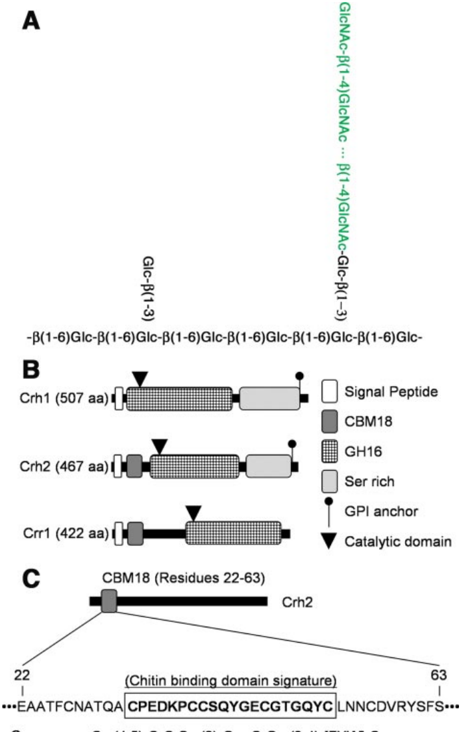
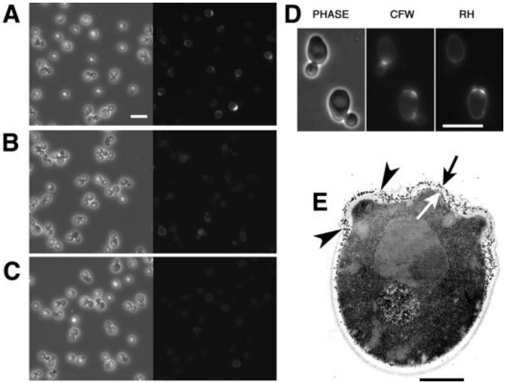
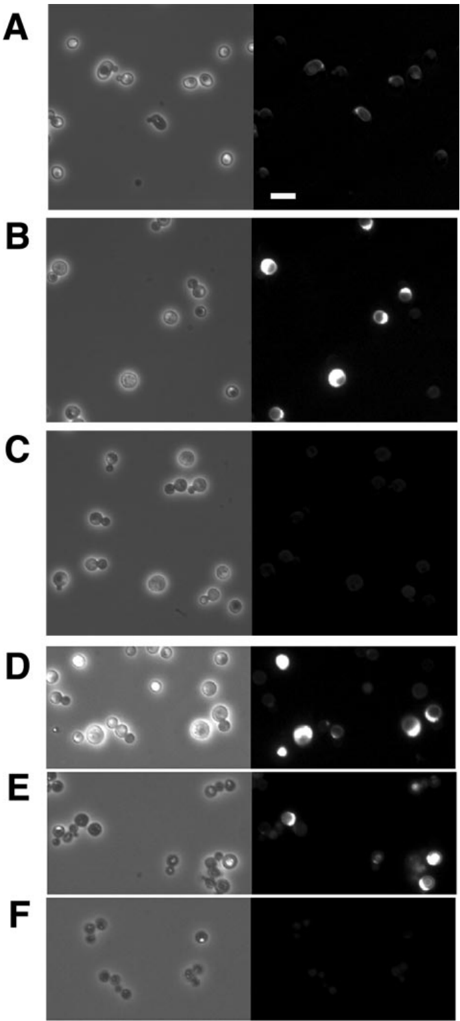
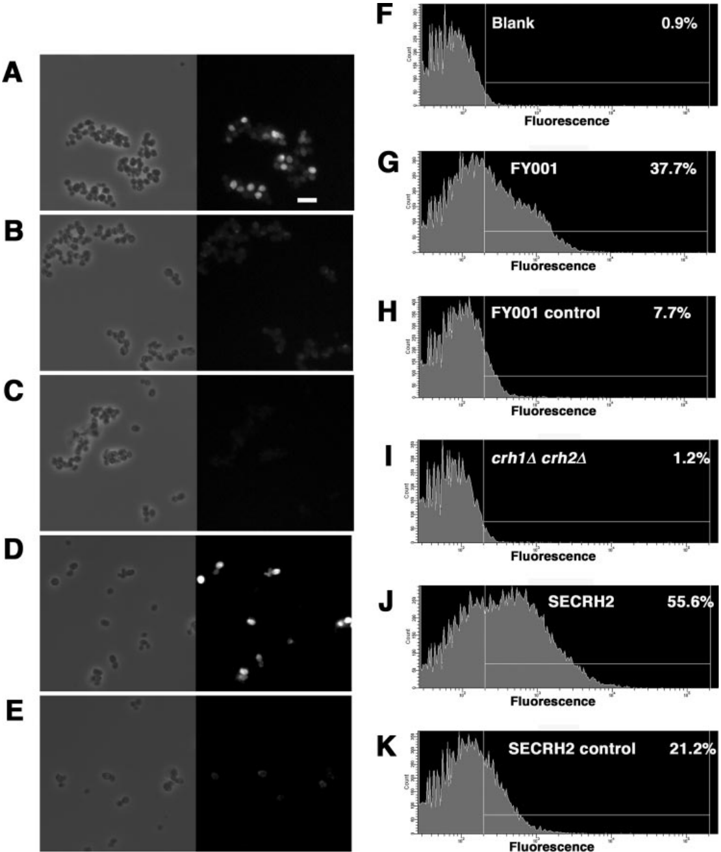
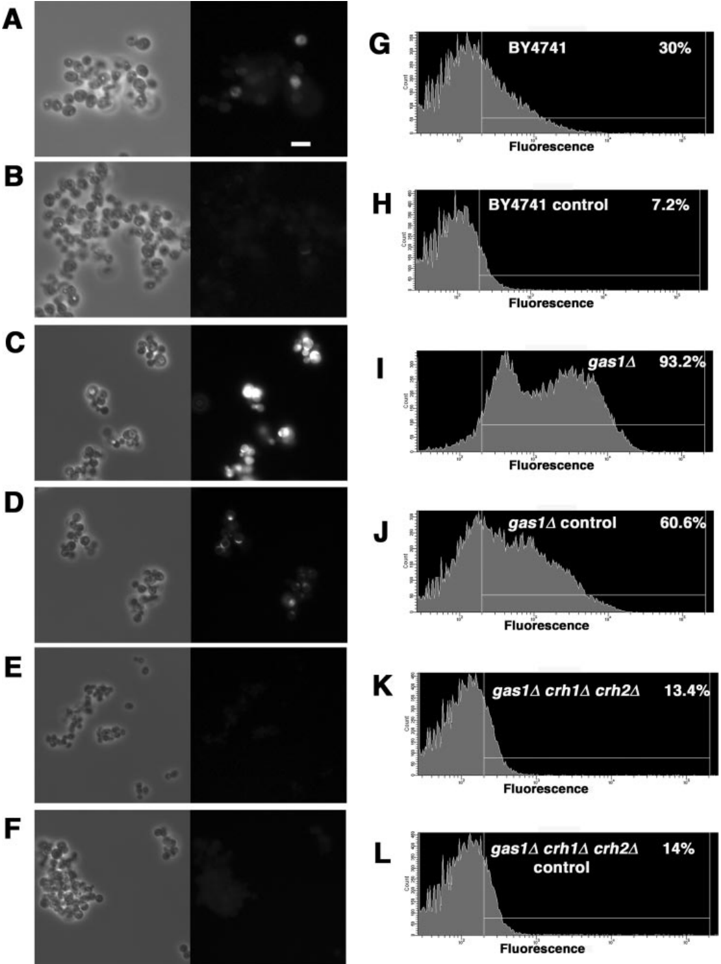
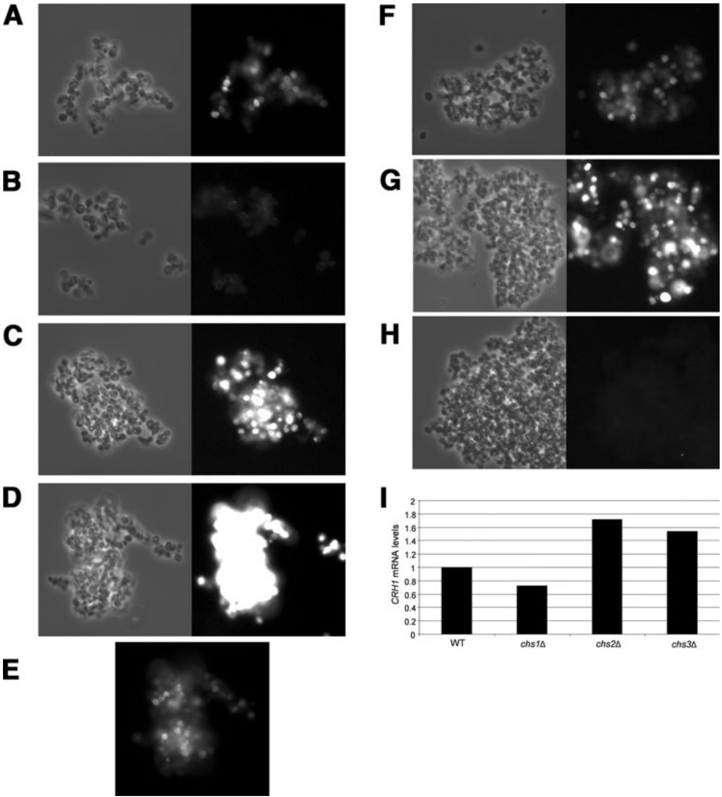
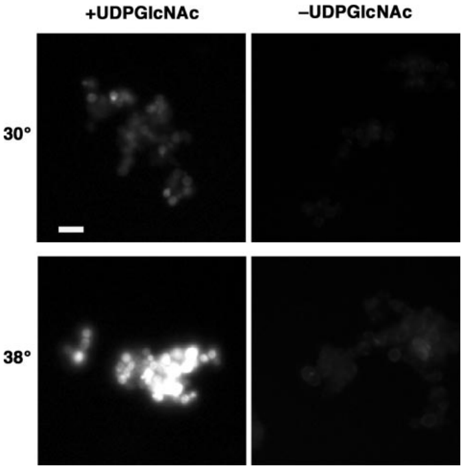
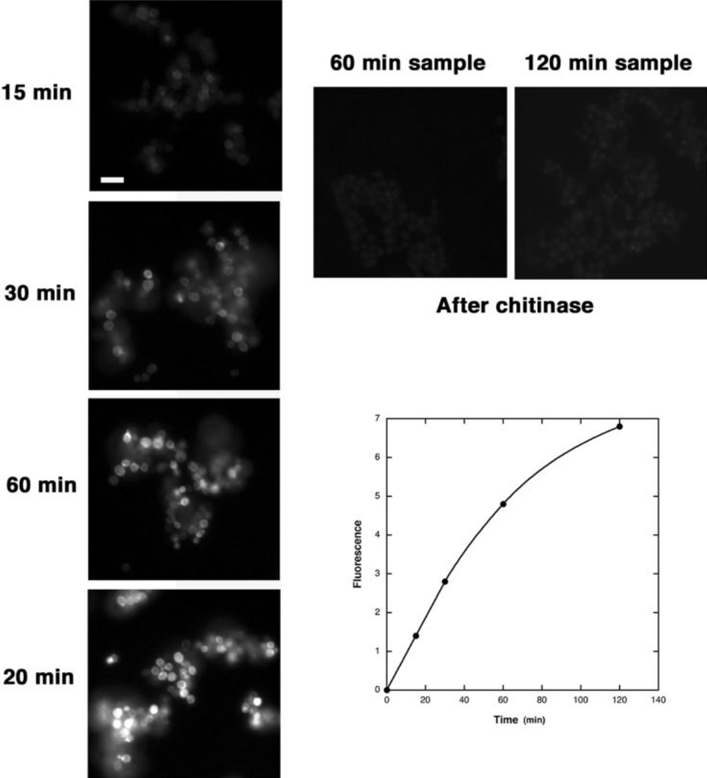
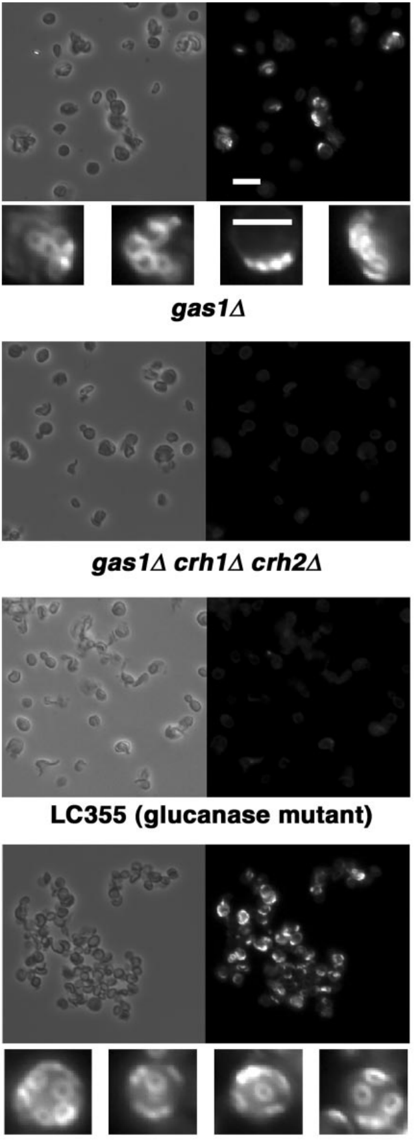
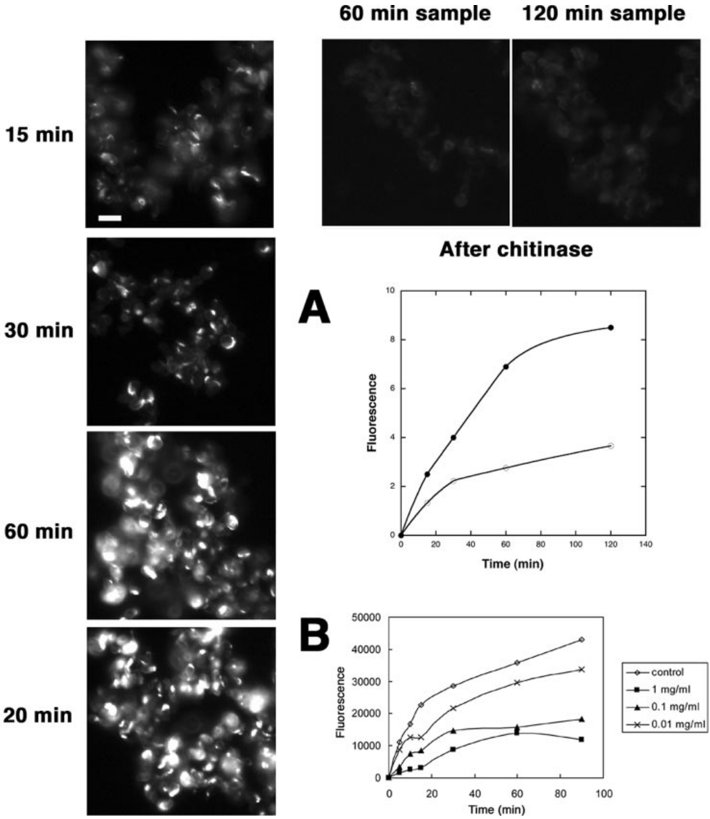
The cross-linking of polysaccharides to assemble new cell wall in fungi requires mechanisms by which a preexisting linkage is broken for each new one made, to allow for the absence of free energy sources outside the plasma membrane. Previous work showed that Crh1p and Crh2p, putative transglycosylases, are required for the linkage of chitin to beta(1-3)glucose branches of beta(1-6)glucan in the cell wall of budding yeast. To explore the linking reaction in vivo and in vitro, we used fluorescent sulforhodamine-linked laminari-oligosaccharides as artificial chitin acceptors. In vivo, fluorescence was detected in bud scars and at a lower level in the cell contour, both being dependent on the CRH genes. The linking reaction was also shown in digitonin-permeabilized cells, with UDP-N-acetylglucosamine as the substrate for nascent chitin production. Both the nucleotide and the Crh proteins were required here. A gas1 mutant that overexpresses Crh1p showed very high fluorescence both in intact and permeabilized cells. In the latter, fluorescence was still incorporated in patches in the absence of UDP-GlcNAc. Isolated cell walls of this strain, when incubated with sulforhodamine-oligosaccharide, also showed Crhp-dependent fluorescence in patches, which were identified as bud scars. In all three systems, binding of the fluorescent material to chitin was verified by chitinase digestion. Moreover, the cell wall reaction was inhibited by chitooligosaccharides. These results demonstrate that the Crh proteins act by transferring chitin chains to beta(1-6)glucan, with a newly observed high activity in the bud scar. The importance of transglycosylation for cell wall assembly is thus firmly established.
Overview
The claims and statistics of this paper haven’t been checked yet.
Free: it reads the open-access text and checks the first 5 claims that cite a source we can check. Create a free account to check every claim.
Integrity signals
Registry
Cites
Statistics
Figures

Verification
Claims the paper makes
The claims and statistics of this paper haven’t been checked yet.
Free: it reads the open-access text and checks the first 5 claims that cite a source we can check. Create a free account to check every claim.
Self-check
Percentages, sums and reported differences re-computed from the paper’s own numbers.
The self-check needs the paper’s full text.
Citations
Cites
Sikorski, R. S., & Hieter, P. (1989) · Genetics · doi:10.1093/genetics/122.1.19 · Cited by 8,664
Carbohydrate-binding modules: fine-tuning polysaccharide recognition
BORASTON, A. B., BOLAM, D. N., GILBERT, H. J., & DAVIES, G. J. (2004) · Biochemical Journal · doi:10.1042/bj20040892 · Cited by 2,030
A SUBMICRODETERMINATION OF GLUCOSE
Park, J. T., & Johnson, M. J. (1949) · Journal of Biological Chemistry · doi:10.1016/s0021-9258(18)56635-7 · Cited by 1,570
Cell Wall Assembly in Saccharomyces cerevisiae
Lesage, G., & Bussey, H. (2006) · Microbiology and Molecular Biology Reviews · doi:10.1128/mmbr.00038-05 · Cited by 849
Recent Advances in Carbohydrate Bioengineering
Gilbert, H. J. (1999) · Medical Entomology and Zoology · Cited by 786
Architecture of the Yeast Cell Wall
Kollár, R., Reinhold, B. B., Petráková, E., Yeh, H. J. C., Ashwell, G., Drgonová, J., Kapteyn, J. C., Klis, F. M., & Cabib, E. (1997) · Journal of Biological Chemistry · doi:10.1074/jbc.272.28.17762 · Cited by 644
Self-citationBacterial Cell Wall Synthesis: New Insights from Localization Studies
Scheffers, D.-J., & Pinho, M. G. (2005) · Microbiology and Molecular Biology Reviews · doi:10.1128/mmbr.69.4.585-607.2005 · Cited by 629
The function of chitin synthases 2 and 3 in the Saccharomyces cerevisiae cell cycle.
Shaw, J. A., Mol, P. C., Bowers, B., Silverman, S. J., Valdivieso, M. H., Durán, A., & Cabib, E. (1991) · The Journal of cell biology · doi:10.1083/jcb.114.1.111 · Cited by 443
Self-citationMouyna, I., Fontaine, T., Vai, M., Monod, M., Fonzi, W. A., Diaquin, M., Popolo, L., Hartland, R. P., & Latgé, J.-P. (2000) · Journal of Biological Chemistry · doi:10.1074/jbc.275.20.14882 · Cited by 353
Research works printed but not linked: 2
- Cabib, E., Bowers, B., Sburlati, A., and Silverman, S. J. (1988) Microbiol. Sci. 5, 370 -375
- Ait Mohand, F., and Farkas, V. (2006) Carbohydr. Res. 46, 478 -485
Cited by
The Fungal Cell Wall: Structure, Biosynthesis, and Function
Gow, N. A. R., Latge, J.-P., & Munro, C. A. (2017) · Microbiology Spectrum · doi:10.1128/microbiolspec.funk-0035-2016 · Cited by 1,423
Levin, D. E. (2011) · Genetics · doi:10.1534/genetics.111.128264 · Cited by 831
“Chitin is attached to both b-1,3-glucan and b-1,6glucan by the redundant Crh1 and Crh2 transglycosylases (Cabib et al. 2007, 2008; Cabib 2009).”
BackgroundArchitecture and Biosynthesis of the Saccharomyces cerevisiae Cell Wall
Orlean, P. (2012) · Genetics · doi:10.1534/genetics.112.144485 · Cited by 478
“Cross-linking of fluorescent b1,3gluco-oligosaccharides depended on the addition of UDPGlcNAc (Cabib et al. 2008).”
BackgroundInfluentialSporulation in the Budding Yeast Saccharomyces cerevisiae
Neiman, A. M. (2011) · Genetics · doi:10.1534/genetics.111.127126 · Cited by 375
“Several other vegetative/sporulation paralogs exist, including ECM33/SPS2 (or SPS22), CRH1/CRR1, and EXG1/SPR1 (Nebreda et al. 1986; Muthukumar et al. 1993; San Segundo et al. 1993; Terashima et al. 2003; Coluccio et al. 2004a; Gomez-Esquer et al. 2004; Cabib et al. 2008).”
BackgroundThe XTH Gene Family: An Update on Enzyme Structure, Function, and Phylogeny in Xyloglucan Remodeling
Eklöf, J. M., & Brumer, H. (2010) · Plant Physiology · doi:10.1104/pp.110.156844 · Cited by 363
“Within GH16, the XTH gene products are most closely related to bacterial b-1,3;1,4-glucan hydrolases and fungal CRH (for CONGO RED HYPERSENSITIVE) gene products implicated in cross-linking chitin to b-1,6- and b-1,3-glucans (Cabib et al., 2008; Fig.”
BackgroundA subfamily roadmap of the evolutionarily diverse glycoside hydrolase family 16 (GH16)
Viborg, A. H., Terrapon, N., Lombard, V., Michel, G., Czjzek, M., Henrissat, B., & Brumer, H. (2019) · Journal of Biological Chemistry · doi:10.1074/jbc.ra119.010619 · Cited by 203
“GH16 members are widely distributed across the domains of life, including bacteria (18), oomycetes (19), fungi (20, 21), plants (22, 23), and animals (terrestrial insects and marine invertebrates (24, 25)), in which they play manifold biological roles.”
BackgroundCovalently linked cell wall proteins of Candida albicans and their role in fitness and virulence
Klis, F. M., Sosinska, G. J., de Groot, P. W. J., & Brul, S. (2009) · FEMS Yeast Research · doi:10.1111/j.1567-1364.2009.00541.x · Cited by 165
“280-GPI N-terminal GH16z domain; transglycosylase (Pardini et al., 2006; Cabib et al., 2008)”
BackgroundInfluentialGarcía, R., Rodríguez-Peña, J. M., Bermejo, C., Nombela, C., & Arroyo, J. (2009) · Journal of Biological Chemistry · doi:10.1074/jbc.m808693200 · Cited by 165
Self-citationCell Wall β-(1,6)-Glucan of Saccharomyces cerevisiae
Aimanianda, V., Clavaud, C., Simenel, C., Fontaine, T., Delepierre, M., & Latgé, J.-P. (2009) · Journal of Biological Chemistry · doi:10.1074/jbc.m807667200 · Cited by 156
How carbohydrates sculpt cells: chemical control of morphogenesis in the yeast cell wall
Cabib, E., & Arroyo, J. (2013) · Nature Reviews Microbiology · doi:10.1038/nrmicro3090 · Cited by 188
Self-citationThe cell wall and the response and tolerance to stresses of biotechnological relevance in yeasts
Ribeiro, R. A., Bourbon-Melo, N., & Sá‐Correia, I. (2022) · Frontiers in Microbiology · doi:10.3389/fmicb.2022.953479 · Cited by 181
“The transglycosylases GPI proteins encoded by the CRH1-2 genes have a major role in the cross-linkage between chitin and glucans (Cabib et al., 2007, 2008; Cabib, 2009; Orlean, 2012; Blanco et al., 2015).”
BackgroundArroyo, J., Farkaš, V., Sanz, A. B., & Cabib, E. (2016) · Cellular Microbiology · doi:10.1111/cmi.12615 · Cited by 140
“Moreover, glucan–chitin transglycosylation, measured by incorporation of SR-labeled glucan oligosaccharides in vivo clearly increases in a gas1Δmutant in a Crh dependent manner (Cabib et al., 2008), as part of the chitin compensatory response in this mutant (Valdivieso et al., 2000).”
BackgroundMethodInfluentialSelf-citationβ-1,3-glucan modifying enzymes in Aspergillus fumigatus
Mouyna, I., Hartl, L., & Latgé, J.-P. (2013) · Frontiers in Microbiology · doi:10.3389/fmicb.2013.00081 · Cited by 136
“The CRH family proteins which are classified in GH16 were originally studied in S. cerevisiae and they have been suggested biochemically to be involved in the linkage between β-1,6-glucan and chitin (Cabib et al., 2007, 2008).”
Backgroundvan Leeuwe, T. M., Arentshorst, M., Ernst, T., Alazi, E., Punt, P. J., & Ram, A. F. J. (2019) · Fungal Biology and Biotechnology · doi:10.1186/s40694-019-0076-7 · Cited by 101
Cabib, E. (2009) · Eukaryotic Cell · doi:10.1128/ec.00228-09 · Cited by 89
“Note that the results described here do not invalidate our findings on transfer of chitin to (1-3)-linked fluorescent oligosaccharides (8).”
BackgroundResultSelf-citationChemical Organization of the Cell Wall Polysaccharide Core of Malassezia restricta
Stalhberger, T., Simenel, C., Clavaud, C., Eijsink, V. G. H., Jourdain, R., Delepierre, M., Latgé, J.-P., Breton, L., & Fontaine, T. (2014) · Journal of Biological Chemistry · doi:10.1074/jbc.m113.547034 · Cited by 88
“In yeast, -(1,6)glucans are also cross-linked to chitin and glycoproteins (40, 47).”
BackgroundMunro, C. A. (2013) · Advances in applied microbiology · doi:10.1016/b978-0-12-407678-5.00004-0 · Cited by 107
Chitin and chitosan remodeling defines vegetative development and Trichoderma biocontrol
Kappel, L., Münsterkötter, M., Sipos, G., Rodríguez, C. E., & Gruber, S. G. (2020) · PLoS Pathogens · doi:10.1371/journal.ppat.1008320 · Cited by 100
“cerevisiae [45]), represent critical players in fungal cell wall assembly [46].”
BackgroundFungal Cell Wall Proteins and Signaling Pathways Form a Cytoprotective Network to Combat Stresses
Ibe, C., & Munro, C. A. (2021) · Journal of Fungi · doi:10.3390/jof7090739 · Cited by 85
The Fungal Cell Wall: Structure, Biosynthesis, and Function
Gow, N. A. R., Latge, J.-P., & Munro, C. A. (2017) · The Fungal Kingdom · doi:10.1128/9781555819583.ch12 · Cited by 86
The plant secretory pathway for the trafficking of cell wall polysaccharides and glycoproteins
Kim, S., & Brandizzí, F. (2016) · Glycobiology · doi:10.1093/glycob/cww044 · Cited by 89
Plant Xyloglucan Xyloglucosyl Transferases and the Cell Wall Structure: Subtle but Significant
Stratilová, B., Kozmon, S., Stratilová, E., & Hrmová, M. (2020) · Molecules · doi:10.3390/molecules25235619 · Cited by 75
“galactomannan (GalMan-OS), and surprisingly with pustulan (Pu-OS) [123,149], which is found mostly in fungal CWs [3].”
Geoghegan, I. A., & Gurr, S. J. (2016) · PLoS Pathogens · doi:10.1371/journal.ppat.1005703 · Cited by 73
Cell wall synthesis is necessary for membrane dynamics during sporulation of Bacillus subtilis
Meyer, P., Gutierrez, J., Pogliano, K., & Dworkin, J. (2010) · Molecular Microbiology · doi:10.1111/j.1365-2958.2010.07155.x · Cited by 69
“, 2001) that, similar to peptidoglycan, are polymerized by transglycosylases (Cabib et al., 2008).”
BackgroundOn the evolution of fungal and yeast cell walls
Xie, X., & Lipke, P. N. (2010) · Yeast · doi:10.1002/yea.1787 · Cited by 64
“The CRH family transglycosylases cross-link chitin to β-glucans and are conserved in at least ascomycetes and basidiomycetes [6,7,16].”
BackgroundStructural and functional properties of the Trichosporon asahii glucuronoxylomannan
Fonseca, F. L., Frasés, S., Casadevall, A., Fischman-Gompertz, O., Nimrichter, L., & Rodrigues, M. L. (2009) · Fungal Genetics and Biology · doi:10.1016/j.fgb.2009.03.003 · Cited by 69
The Golgi ribbon structure facilitates anterograde transport of large cargoes
Lavieu, G., Dunlop, M. H., Lerich, A., Zheng, H., Bottanelli, F., & Rothman, J. E. (2014) · Molecular Biology of the Cell · doi:10.1091/mbc.e14-04-0931 · Cited by 63
“For instance, yeasts do not secrete collagen or, as far as we are aware, any similarly large polymeric cargo (note that chitin is secreted in a dispersed form and is assembled outside the cell; Cabib et al., 2008), and they harbor single Golgi cisternae.”
Kiarie, E. G., Leung, H., Kakhki, R. A. M., Patterson, R., & Barta, J. R. (2019) · Frontiers in Veterinary Science · doi:10.3389/fvets.2019.00473 · Cited by 69
Hetero‐trans‐β‐glucanase, an enzyme unique to Equisetum plants, functionalizes cellulose
Simmons, T. J., Mohler, K. E., Holland, C., Goubet, F., Franková, L., Houston, D. R., Hudson, A. D., Meulewaeter, F., & Fry, S. C. (2015) · The Plant Journal · doi:10.1111/tpj.12935 · Cited by 53
Huang, W., Shang, Y., Chen, P., Cen, K., & Wang, C. (2015) · Journal of Biological Chemistry · doi:10.1074/jbc.m114.630939 · Cited by 55
“The yeast chitin transglycosylase CRH1 acts to transfer chitin and cross-link it to -1,3- and -1,6-glucans in the cell wall (54), and GFA1 contributes to the first step of chitin biosynthesis (44).”
BackgroundArias, P., Díez-Muñiz, S., García, R., Nombela, C., Rodríguez-Peña, J. M., & Arroyo, J. (2011) · BMC Genomics · doi:10.1186/1471-2164-12-390 · Cited by 57
“These components must be correctly assembled in order to build a fully functional structure [6,8,9].”
BackgroundSelf-citationRolli, E., Ragni, E., Calderon, J., Porello, S., Fascio, U., & Popolo, L. (2009) · Molecular Biology of the Cell · doi:10.1091/mbc.e08-11-1155 · Cited by 49
“Recently, it has been demonstrated that the GPI-containing proteins Crh1 and Crh2 are responsible of the linkage of chitin to the side branches of (1-6)glucan (Cabib et al., 2008).”
BackgroundProteins involved in building, maintaining and remodeling of yeast cell walls
Teparić, R., & Mrša, V. (2013) · Current Genetics · doi:10.1007/s00294-013-0403-0 · Cited by 55
“The chitin synthesis and attachment to b-1,3-glucan could be reconstituted in permeabilized cells showing also that the reaction depended on the addition of UDP-N-acetylglucosamine (Cabib et al. 2008).”
BackgroundInfluentialSilva, A. D. O., Aliyeva‐Schnorr, L., Wirsel, S. G. R., & Deising, H. B. (2022) · Plants · doi:10.3390/plants11070849 · Cited by 58
“For example, members of the Crhp (Congo Red hypersensitive) protein family, originally discovered as required for the establishment of a linkage between chitin and β-1,6-glucan, have been identified as transglycosilases [72,73].”
BackgroundMechanisms of redundancy and specificity of the Aspergillus fumigatus Crh transglycosylases
Fang, W., Sanz, A. B., Bartual, S. G., Wang, B., Ferenbach, A. T., Farkaš, V., Hurtado‐Guerrero, R., Arroyo, J., & van Aalten, D. M. F. (2019) · Nature Communications · doi:10.1038/s41467-019-09674-0 · Cited by 51
Self-citationLiu, Z., Raj, S., van Rhijn, N., Fraczek, M. G., Michel, J., Sismeiro, O., Legendre, R., Varet, H., Fontaine, T., Bromley, M., et al. (2021) · mBio · doi:10.1128/mbio.00863-21 · Cited by 46
“come from studies on CRH yeast mutants, which are hypersensitive to Congo red (39, 42, 43).”
BackgroundGPI Anchored Proteins in Aspergillus fumigatus and Cell Wall Morphogenesis
Samalova, M., Carr, P. D., Bromley, M., Blatzer, M., Moya‐Nilges, M., Latgé, J., & Mouyna, I. (2020) · Current topics in microbiology and immunology · doi:10.1007/82_2020_207 · Cited by 47
Systematic Comparison of Cell Wall-Related Proteins of Different Yeasts
Lozančić, M., Žunar, B., Hrestak, D., Lopandić, K., Teparić, R., & Mrša, V. (2021) · Journal of Fungi · doi:10.3390/jof7020128 · Cited by 40
“chitin chains to the non-reducing ends of either β-1,3-, or β-1,6-glucan [51,52].”
Backgroundde Medina-Redondo, M., Arnáiz-Pita, Y., Clavaud, C., Fontaine, T., del Rey, F., Latgé, J. P., & Vázquez de Aldana, C. R. (2010) · PLoS ONE · doi:10.1371/journal.pone.0014046 · Cited by 39
“However, in vivo evidence of such mechanism has only been shown for the Saccharomyces cerevisiae Crh1 and Crh2 proteins, which are involved in the cross-linking of b(1,3)-glucan to chitin [17,18].”
BackgroundMuszkieta, L., Fontaine, T., Beau, R., Mouyna, I., Vogt, M. S., Trow, J., Cormack, B. P., Essen, L., Jouvion, G., & Latgé, J. (2019) · mSphere · doi:10.1128/msphere.00397-19 · Cited by 47
“cerevisiae is composed of three genes which are involved in the linkage of chitin to -(1,6)-glucan in the cell wall (9, 10).”
BackgroundGünal‐Köroğlu, D., Karabulut, G., Mohammadian, F., Can Karaca, A., Capanoglu, E., & Esatbeyoglu, T. (2025) · Comprehensive Reviews in Food Science and Food Safety · doi:10.1111/1541-4337.70161 · Cited by 37
“In addition, CRH1 and UTR2 encode chitin transglycosy-lases, which link chitin to β -1,6-glucan and β -1,3-glucan, further strengthening the yeast cell wall (Cabib, 2009; Cabib et al., 2008).”
Alkım, C., Benbadis, L., Yilmaz, U., Çakar, Z. P., & François, J. (2013) · Metallomics · doi:10.1039/c3mt00107e · Cited by 41
Crosslinks in the cell wall of budding yeast control morphogenesis at the mother–bud neck
Blanco, N., Reidy, M. J., Arroyo, J., & Cabib, E. (2012) · Journal of Cell Science · doi:10.1242/jcs.110460 · Cited by 33
“We previously found that chitin oligosaccharides inhibited the transfer of chitin to sulforhodamine-labeled b(1-3)-linked glucose oligosaccharides, presumably by interfering with Crh1 and Crh2 activity (Cabib et al., 2008).”
BackgroundSelf-citationStructural and functional analysis of yeast Crh1 and Crh2 transglycosylases
Blanco, N., Sanz, A. B., Rodríguez-Peña, J. M., Nombela, C., Farkaš, V., Hurtado‐Guerrero, R., & Arroyo, J. (2014) · FEBS Journal · doi:10.1111/febs.13176 · Cited by 36
Self-citationSecretome of fungus-infected aphids documents high pathogen activity and weak host response
Grell, M. N., Jensen, A. B., Olsen, P., Eilenberg, J., & Lange, L. (2010) · Fungal Genetics and Biology · doi:10.1016/j.fgb.2010.12.003 · Cited by 35
“cerevisiae Crh2p/Utr2p, a glycosylphosphatidylinositol (GPI)-anchored chitin transglycosidase that transfers chitin from chitin synthase 3 to b-1,6-glucan, to create cross-links during cell wall biosynthesis (Cabib et al., 2008).”
BackgroundYeo, C. C., Bakar, F. A., Chan, W. S., Espinosa, M., & Harikrishna, J. A. (2016) · Toxins · doi:10.3390/toxins8020049 · Cited by 33
“unknown although it could act to inhibit the synthesis of the yeast cell wall much like in bacteria, as UNAG is a component for the biosynthesis of chitin in yeast [45].”
BackgroundRecent advances in the biosynthesis of fungal glucan structural diversity
Liu, J.-J., Hou, Y.-K., Wang, X., Zhou, X., Yin, J., & Nie, S. (2024) · Carbohydrate Polymers · doi:10.1016/j.carbpol.2024.121782 · Cited by 33
Mazáň, M., Ragni, E., Popolo, L., & Farkaš, V. (2011) · Biochemical Journal · doi:10.1042/bj20110405 · Cited by 37
A Real-Time Fluorogenic Assay for the Visualization of Glycoside Hydrolase Activity in Planta
Ibatullin, F. M., Banasiak, A., Baumann, M. J., Greffe, L., Takahashi, J., Mellerowicz, E. J., & Brumer, H. (2009) · PLANT PHYSIOLOGY · doi:10.1104/pp.109.147439 · Cited by 29
“sulphorhodamine-oligosaccharide acceptor substrates (Vissenberg et al., 2000; Bourquin et al., 2002; Nishikubo et al., 2007; Cabib et al., 2008).”
Recent advances in yeast organelle and membrane proteomics
Premsler, T., Zahedi, R. P., Lewandrowski, U., & Sickmann, A. (2009) · PROTEOMICS · doi:10.1002/pmic.200900201 · Cited by 34
“in 2008 [38], validating the cross-linking function of the transglycosylases Crh1p and Crh2p during the assembly of new cell walls in S.”
BackgroundCharacterization of Glycoside Hydrolase Family 5 Proteins in Schizosaccharomyces pombe
Dueñas‐Santero, E., Martín-Cuadrado, A.-B., Fontaine, T., Latgé, J., del Rey, F., & de Aldana, C. R. V. (2010) · Eukaryotic Cell · doi:10.1128/ec.00187-10 · Cited by 30
“anism has been shown only for the Saccharomyces cerevisiae Crh1 and Crh2 proteins, which are involved in the cross-linking of (1,3)-glucan to chitin (8, 9).”
BackgroundLi, J., Mouyna, I., Henry, C., Moyrand, F., Malosse, C., Chamot‐Rooke, J., Janbon, G., Latgé, J., & Fontaine, T. (2018) · Journal of Fungi · doi:10.3390/jof4010019 · Cited by 30
“These β-1,3-glucanosyltransferase activities are essential for the biosynthesis of the fungal cell wall [6–8]; (ii) The Crh family (for congo red hypersensitive) contains putative transglucosidase activity involved in the β-glucan-chitin reticulation [9].”
BackgroundMazáň, M., Blanco, N., Kováčová, K., Firáková, Z., Řehulka, P., Farkaš, V., & Arroyo, J. (2013) · Biochemical Journal · doi:10.1042/bj20130354 · Cited by 26
Self-citationGhamrawi, S., Gastebois, A., Zykwinska, A., Vandeputte, P., Marot, A., Mabilleau, G., Cuenot, S., & Bouchara, J. (2015) · PLoS ONE · doi:10.1371/journal.pone.0128680 · Cited by 30
van Leeuwe, T. M., Wattjes, J., Niehues, A., Forn‐Cuní, G., Geoffrion, N., Mélida, H., Arentshorst, M., Molina, A., Tsang, A., Meijer, A. H., et al. (2020) · The Cell Surface · doi:10.1016/j.tcsw.2020.100039 · Cited by 28
Patel, P. K., & Free, S. J. (2022) · The Cell Surface · doi:10.1016/j.tcsw.2022.100073 · Cited by 23
Yammine, M., Bray, F., Flament, S., Picavet, A., Lacroix, J.-M., Poilpré, E., Mouly, I., & Rolando, C. H. (2022) · ACS Omega · doi:10.1021/acsomega.2c02176 · Cited by 22
Nakajima, M., Yamashita, T., Takahashi, M., Nakano, Y., & Takeda, T. (2012) · Applied and Environmental Microbiology · doi:10.1128/aem.00483-12 · Cited by 21
“Lam16A did not exhibit transglycosylation activity toward laminarioligosaccharides, unlike Eng2, possessing a GPI anchor signal peptide, a GH16 endo- -1,3(4)-glucanase with transglycosylation activity toward laminaritetraose (18), or Crh family proteins (7).”
BackgroundChitinases CtcB and CfcI modify the cell wall in sporulating aerial mycelium of Aspergillus niger
van Munster, J. M., Nitsche, B. M., Krijgsheld, P., van Wijk, A., Dijkhuizen, L., Wösten, H. A. B., Ram, A. F. J., & van der Maarel, M. J. E. C. (2013) · Microbiology · doi:10.1099/mic.0.067967-0 · Cited by 22
“Its homologue Chr1 in Saccharomyces cerevisiae covalently links chitin to b-1,3-glucan and b-1,6-glucan in the cell wall (Cabib et al., 2008; Cabib, 2009).”
BackgroundAraújo, D. S., Lima, P. D. S., Baeza, L. C., Parente, A. F. A., Bailão, A. M., Borges, C. L., & Soares, C. M. D. A. (2017) · Biochimica et Biophysica Acta (BBA) - Proteins and Proteomics · doi:10.1016/j.bbapap.2017.08.016 · Cited by 21
Cloning and Characterization of the Beer Foaming Gene CFG1from Saccharomyces pastorianus
Blasco, L., Veiga‐Crespo, P., Sánchez-Pérez, Á., & Villa, T. G. (2012) · Journal of Agricultural and Food Chemistry · doi:10.1021/jf3027974 · Cited by 17
Palliyil, S., Mawer, M., Alawfi, S. A., Fogg, L. G., Tan, T. H., Cesare, G. B. D., Walker, L. A., MacCallum, D. M., Porter, A. J., & Munro, C. A. (2022) · Antimicrobial Agents and Chemotherapy · doi:10.1128/aac.01957-21 · Cited by 20
“and chitin, as shown for the Saccharomyces cerevisiae orthologue Crh1, and is involved in cell wall remodeling and maintenance (17).”
Transcriptional Divergence Underpinning Sexual Development in the Fungal Class Sordariomycetes
Kim, W., Wang, Z., Kim, H., Pham, K., Tu, Y., Townsend, J. P., & Trail, F. (2022) · mBio · doi:10.1128/mbio.01100-22 · Cited by 18
“Little is known about the developmental roles of GH16 and asparaginase in filamentous fungi, but some GH16 enzymes are important for proper formation of yeast cell walls or ascospore walls in budding yeast (63, 64).”
BackgroundKang, L., Zhu, Y., Bai, Y., & Yuan, S. (2019) · FEMS Microbiology Letters · doi:10.1093/femsle/fnz083 · Cited by 17
Adhikari, H., & Cullen, P. J. (2015) · Eukaryotic Cell · doi:10.1128/ec.00013-15 · Cited by 17
FPG1, a gene involved in foam formation in Saccharomyces cerevisiae
Blasco, L., Veiga‐Crespo, P., & Villa, T. G. (2011) · Yeast · doi:10.1002/yea.1849 · Cited by 15
Maina, A. N., Thanabalan, A., Gasarabwe, J., Mohammadigheisar, M., Schulze, H., & Kiarie, E. G. (2022) · Poultry Science · doi:10.1016/j.psj.2022.102175 · Cited by 14
“Of particular interest in yeast are the functional components of cell contents such as peptides, enzymes, nucleotides, and cell wall constituents such as b-glucans, glycoproteins, a-mannans, and chitin (Cabib et al., 2008).”
BackgroundThe Cell Wall: Glycoproteins, Remodeling, and Regulation
Munro, C. A., & Richard, M. L. (2014) · ASM Press eBooks · doi:10.1128/9781555817176.ch14 · Cited by 14
Pérez, P., & Ribas, J. C. (2012) · Springer eBooks · doi:10.1007/978-1-4614-2356-0_12 · Cited by 20
Kiarie, E. G., Mohammadigheisar, M., & Schulze, H. (2022) · Poultry Science · doi:10.1016/j.psj.2022.101967 · Cited by 12
“Of particular interest in yeast are the functional components of cell contents such as peptides, enzymes, nucleotides, and cell wall constituents such as b-glucans, glycoproteins, mannans, and chitin (Koll ar et al., 1997; Cabib et al., 2008).”
BackgroundRevisiting Old Questions and New Approaches to Investigate the Fungal Cell Wall Construction
Blatzer, M., Beauvais, A., Henrissat, B., & Latgé, J. (2020) · Current topics in microbiology and immunology · doi:10.1007/82_2020_209 · Cited by 13
Degani, G., Ragni, E., Botias, P., Ravasio, D., Calderon, J., Pianezzola, E., Rodriguez-Peña, J. M., Vanoni, M. A., Arroyo, J., Fonzi, W. A., et al. (2016) · BMC Genomics · doi:10.1186/s12864-016-2853-5 · Cited by 10
“ScCrh1p acts in vitro and in vivo in the crosslinking of chitin chains to β(1,3)-and β(1,6)-glucan which in turn can be linked to GPI-mannoproteins yielding a more resistant wall [59, 60].”
BackgroundSelf-citationHrmová, M., & Fincher, G. B. (2009) · Elsevier eBooks · doi:10.1016/b978-0-12-373971-1.00004-2 · Cited by 13
Chitin and chitosan—important structural components in Trichoderma cell wall remodeling
Kappel, L., & Gruber, S. G. (2020) · Elsevier eBooks · doi:10.1016/b978-0-12-819453-9.00012-x · Cited by 19
Chapter 15 GPI Proteins in Biogenesis and Structure of Yeast Cell Walls
Gonzalez, M., Lipke, P. N., & Ovalle, R. (2009) · The Enzymes · doi:10.1016/s1874-6047(09)26015-x · Cited by 13
Candida albicans Cell Wall Mediated Virulence
Munro, C. A. (2009) · Springer eBooks · doi:10.1007/978-3-642-03150-2_4 · Cited by 11
Zemková, Z., Garajová, S., Flodrová, D., Řehulka, P., Zelko, I., Vadkertiová, R., Farkaš, V., & Stratilová, E. (2012) · Chemical Papers · doi:10.2478/s11696-012-0167-x · Cited by 7
“Amongst others, the proteins Crh1 and Crh2 (Cabib et al., 2007) were found to be serious candidates for catalysing transglycosylation by the formation of covalent linkages between chitin and pustulan (Cabib et al., 2008).”
BackgroundGilbert, N. M., Lodge, J. K., & Specht, C. A. (2014) · ASM Press eBooks · doi:10.1128/9781555816858.ch6 · Cited by 6
Pavale, S., Isembart, C., Shapaval, V., Tuveng, T. R., Rosa, S. L. L., & Eijsink, V. G. H. (2025) · Applied and Environmental Microbiology · doi:10.1128/aem.01727-25 · Cited by 6
“In Saccharomyces cerevisiae , CRH1 crosslinks β-1,3-glucan and β-1,6-glucan to chitin and localizes at sites of polarized growth, such as budding tips, reinforcing the cell wall under stress conditions (49, 50).”
Oh, H. J., Moon, H. Y., Cheon, S. A., Hahn, Y., & Kang, H. A. (2016) · The Journal of Microbiology · doi:10.1007/s12275-016-6401-4 · Cited by 4
New Cell Wall-Affecting Antifungal Antibiotics
Ribas, J. C., Durán, Á., & Cortés, J. C. G. (2013) · Springer eBooks · doi:10.1007/978-3-642-40444-3_9 · Cited by 7
“The linkages among the different components, which results in a tightly linked network, are generated by transglycosylation (Cabib et al., 2007, Cabib et al., 2008) and are responsible for the mechanical strength of the cell wall (Cabib and Kang, 1987, Kapteyn et al., 1997, Kollar et al., 1995,…”
BackgroundAmiodarone induces cell wall channel formation in yeast Hansenula polymorpha
Kalebina, T. S., Соколов, С. С., Selyakh, I., Vanichkina, D., & Severin, F. F. (2015) · SpringerPlus · doi:10.1186/s40064-015-1185-2 · Cited by 3
“These changes are caused by periplasmic or cell wall enzymes, most notably the glucan remodeling enzymes that remodel the β-glucans—the main constituents of the cell wall (Smits et al. 1999; Cabib et al. 2008).”
Structure of the fungal cell wall
Ruiz-Herrera, J. (2012) · CRC Press eBooks · doi:10.1201/b11873-7 · Cited by 3
Horváthová, Á., & Farkaš, V. (2021) · Folia Microbiologica · doi:10.1007/s12223-021-00933-6 · Cited by 3
“Immediately after being extruded to the cell exterior, the nascent polysaccharides are attacked by the GPI-anchored transglycosidases Crh1 and Crh2, which cut the single chitin chains and re-join them with other molecules of chitin or with adjacent molecules of β-1,3/β-1,6-glucan.”
BackgroundXiao, K., Li, Y., Gu, S., Liu, L., Zhang, G., Zhang, Y., Zhang, X., Liu, J., & Pan, H. (2025) · Journal of Agricultural and Food Chemistry · doi:10.1021/acs.jafc.5c04925 · Cited by 3
In Silico Identification of Glycosylphosphatidylinositol-Anchored Proteins in Paracoccidioides Spp.
Gonçales, R. A., Salamanca, A. L., Júnior, L. R., Silva, K. S. E., Vasconcelos, E. J. R., dos Reis, T. F., Castro, R. C., Ruy, P. D. C., Romagnoli, B., Ruiz, J. C., et al. (2021) · Future Microbiology · doi:10.2217/fmb-2020-0282 · Cited by 3
Kováčová, K., & Farkaš, V. (2016) · Applied Biochemistry and Biotechnology · doi:10.1007/s12010-015-1973-8 · Cited by 2
“cerevisiae enzymes ScCrh1 and ScCrh2 cleave β-1,4 linkages in chitin and transfer the newly created reducing-end fragments to β-1,3- and β-1,6 glucan as well as to chitin oligosaccharides, thus acting as both homo- and heterotransglycosylases [18, 19].”
BackgroundStructure of the fungal cell wall
(2012) · Mycology · doi:10.1201/b11873-4 · Cited by 1
The “weaken-fill-repair” model for cell budding: Linking cell wall biosynthesis with mechanics
Liu, Y., Liu, C., Tang, S., Xiao, H., Wu, X., Peng, Y., Wang, X., Que, L., Di, Z., Zhou, D., et al. (2024) · iScience · doi:10.1016/j.isci.2024.110981 · Cited by 1
“64,65 (4) Weakening of the cell wall activates a cell wall integrity pathway, leading to compensatory changes in the wall and a balance between the walldegradation andthebiosynthesis.”
Polysaccharide Transglycosylases: A Survey of Assay Methods
Farkaš, V., Vadinová, K., & Stratilová, E. (2018) · Journal of Plant Cell Development · doi:10.14302/issn.2832-5311.jpcd-18-2077 · Cited by 1
Mechanistic Insights into Keratin Degradation by Onygena corvinaPreprint
Pavale, S., Isembart, C., Shapaval, V., Tuveng, T. R., Rosa, S. L. L., & Eijsink, V. G. H. (2025) · bioRxiv (Cold Spring Harbor Laboratory) · doi:10.1101/2025.07.09.663871 · Cited by 1
A holistic approach to understanding CAZy families through reductionist methods
Eklöf, J. (2009) · KTH Publication Database DiVA (KTH Royal Institute of Technology) · Cited by 1
Sanz, A. G. (2011) · Gredos (University of Salamanca) · doi:10.14201/gredos.108980
On the engineering of proteins: methods and applications for carbohydrate-active enzymes
Gullfot, F. (2010) · KTH Publication Database DiVA (KTH Royal Institute of Technology)
In silico identification of GPI-anchored proteins in ParacoccidioidesPreprint
Júnior, L. R. B., Gonçales, R. A., Vasconcelos, E. J. R., dos Reis, T. F., Ruy, P. D. C., Ruiz, J. C., & Coelho, P. S. R. (2018) · bioRxiv (Cold Spring Harbor Laboratory) · doi:10.1101/347351
“Four GPI-proteins belong to the Crh (GH16) family which consists mainly of 1,3–β-glucanases and 1,3-1,4–β-glucanosyltransferases (Cabib et al., 2008).”
BackgroundLee, K. K., & Munro, C. A. (2014) · Springer eBooks · doi:10.1007/978-3-642-55013-3_7 · Cited by 1
(2009) · Yeast · doi:10.1002/yea.1620
Stratilová, B., Kozmon, S., Stratilová, E., & Hrmová, M. (2023) · Elsevier eBooks · doi:10.1016/b978-0-323-91805-3.00003-4
Structural evolution of a fungal cell wall protein family for β-glucan-binding and cell separation
Schöppner, P., Weitzel, V., Veelders, M., Korf, L., Andräs, J., Wolf, K., Brückner, S., Essen, L., & Mösch, H. (2026) · mBio · doi:10.1128/mbio.03535-25
“We therefore propose that the fungal-specific SUN domain family represents a unique class of single and triple-helical β-glucan binding proteins, which acquired their function through fusion of ancestral sushi-and thaumatin-like domains.”
Schiavone, M. (2014) · theses.fr (ABES) · doi:10.70675/8d8138d0zec90z4678zae5azea3e22f1f96c · Cited by 1
“…cross-linking/wall assembly GH16 (Blanco et al., 2012; Cabib, 2009; Cabib et al., 2007, 2008) CRH2 Chitin cross-linking/wall assembly GH16 (Blanco et al., 2012; Cabib, 2009; Cabib et al., 2007, 2008) CRR1 Chitin cross-linking/spore wall assembly GH16 (Gómez-Esquer et al., 2004) Chapter I 52 4.3.”
BackgroundInfluential
Metadata
- Authors
- Cabib, E., Farkas, V., Kosík, O., Blanco, N., Arroyo, J., & McPhie, P.
- Affiliations
- National Institutes of Health (US)
- Universidad Complutense de Madrid (ES)
- Corresponding author
- Cabib, Enrico
- Venue
- Journal of Biological Chemistry
- Publisher
- Elsevier BV
- Published
- 2008-10
- Volume
- 283
- Issue
- 44
- Pages
- 29859-29872
- ISSN
- 0021-9258 (ISSN-L)
- PMC
- PMC2573080
- OpenAlex
- W2019149262
- Cited by
- 100
- References
- 40
- Citations by year
- 2026: 1 · 2025: 4 · 2024: 2 · 2023: 1 · 2022: 8 · 2021: 5 · 2020: 6 · 2019: 6 · 2018: 3 · 2017: 3 · 2016: 7 · 2015: 5 · 2014: 7 · 2013: 8 · 2012: 8
- FWCI
- 3.56
- Type
- journal article
- Language
- en
- Open access
- hybrid
- doi.org
- Licence
- cc-by
- www.elsevier.com/tdm/userlicense/1.0/ (tdm)
- creativecommons.org/licenses/by/4.0/ (vor, 4370 d)
- Locations
- Journal of Biological Chemistry (publishedVersion, cc-by)
- PubMed Central (publishedVersion)
- PubMed (publishedVersion)
- Funders
- Comunidad de Madrid
- European Commission
- Ministerio de Economía y Competitividad
- Vedecká Grantová Agentúra MŠVVaŠ SR a SAV
- National Institutes of Health
- National Institute of Diabetes and Digestive and Kidney Diseases
- Topics
- Life Sciences › Biochemistry, Genetics and Molecular Biology › Molecular Biology › Fungal and yeast genetics research
- Life Sciences › Biochemistry, Genetics and Molecular Biology › Molecular Biology › Studies on Chitinases and Chitosanases
- Life Sciences › Agricultural and Biological Sciences › Plant Science › Polysaccharides and Plant Cell Walls
- Keywords
- chitin, β-1,3-glucan, transglycosylation, bud scars, UDP-N-acetylglucosamine, chitooligosaccharides, Saccharomyces cerevisiae
- MeSH terms
- Cell Wall, Chitin, Chitinases, Digitonin, Fluorescent Dyes, Fungal Proteins, Glycoside Hydrolases, Glycosylation, Microscopy, Fluorescence, Models, Biological, Models, Genetic, Oligosaccharides, Permeability, Time Factors, Saccharomyces cerevisiae Proteins, In Vitro Techniques
About these checks
Registry, retraction, Cites and statistics results are computed, not judged, with one exception: a printed reference that no index lists is read once by a model before it counts as a citation error. Claims are extracted by a model and kept only when their quote appears verbatim in the text; each cited source is then checked, with a model’s help, for whether it says what the claim relies on. Those verdicts can be wrong — read the claim’s quote and the cited source before relying on one.
Statistics and arithmetic are recomputed, not judged.
Confidence bands are shown only for fields calibrated on our annotated test set. None is calibrated yet, so no band is shown.
What counts as a claim ›How we measure confidence ›How we check this ›
Are you an author, or do you see a problem with this page? Request a review
Data sources
Bibliographic data: Semantic Scholar, OpenAlex, Crossref.
Contains information from the Semantic Scholar Academic Graph Datasets, made available under the ODC Attribution License (ODC-BY 1.0).
Semantic Scholar’s data is described in: Kinney, R., et al. (2023). The Semantic Scholar Open Data Platform. arXiv:2301.10140.
