

The Early Bronze IV — Middle Bronze I transition in the southern Levant: analysis and assessment
Open accessThe DOI matches its Crossref record; 51 of the 51 references it cites were found in a registry or an index; none of the 38 sources its claims cite is checked for support yet.
Abstract
The transition between the Early Bronze Age IV and the Middle Bronze Age in the southern Levant remains poorly understood, stemming in part from traditional approaches to the problem that frame it in terms of exogenous cultural origins and disjuncture versus indigenous growth and continuity of development. However, the growing range of diversity of data relating to both eras increasingly mitigates against such monocausal interpretations. Instead, assessment and analysis of different strands of evidence such as settlement patterns, subsistence practices and mortuary traditions, together with accompanying physical material culture, indicate that the transition between eras in the southern Levant was a complex and variable process that included considerable inter-regional variation, and incorporated both external influence and internal developments.
Overview
CoChat Summary
TL;DR
The paper argues that the EB IV–MB I transition in the southern Levant was a complex, variable, and regional process that incorporated both external influence and internal development, rather than a single exogenous or indigenous cause. It synthesizes terminology, chronology, settlement, subsistence, mortuary traditions, ceramics, and fortifications to show mixed continuity and disjuncture.
Key findings
- No scholarly consensus exists for nomenclature or chronology. The paper uses EB IV, MB I, and MB II/III; it notes EB IV spans of c. 2500–2000 BCE under the “New Chronology” versus an earlier c. 350-year span, with a possible early/late split at c. 2300 BCE. For MB I’s start, competing dates include c. 2000 BCE, c. 1900 BCE (Tell ed-Daba), and radiocarbon-backed 2000/1950 BCE; the paper adopts 2000/1950 BCE.
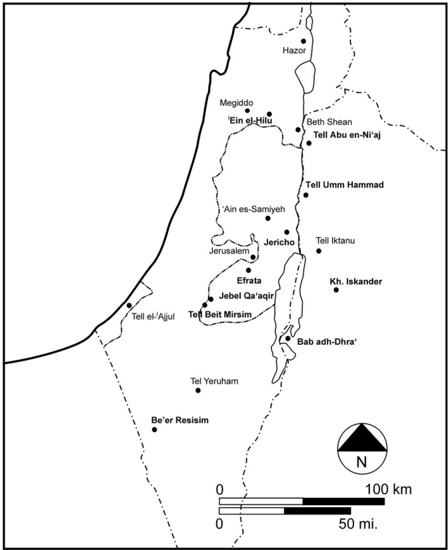
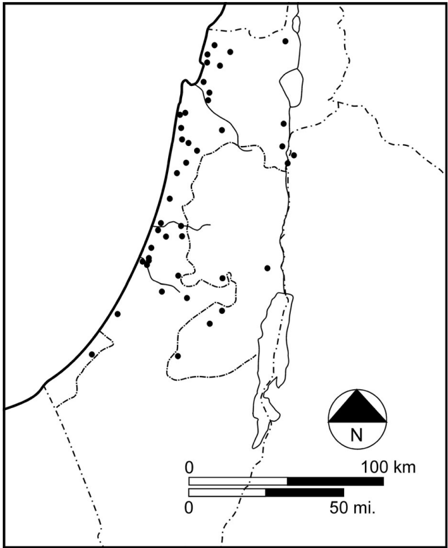
- Settlement patterns initially suggest disjunction: few sites show occupational continuity; EB IV concentrations are in the central/northern Jordan Valley as smaller rural sites, while MB I settlement is most notable on the coastal plain, in the north, and along east–west routes with larger urban and fortified sites. Marginal areas such as the Dead Sea Plain and Negev were abandoned after EB IV. Updated data show southern Palestine and Transjordan were not empty in early MB I, revealing two contemporaneous MB I patterns: inland Jordan Valley dense smaller sites with regional continuity, and coastal/northern discontinuous, externally oriented larger fortified centres. Pollen data indicate EB IV moderate conditions, MB I considerably drier, and MB II/III comparably wetter.
- Subsistence evidence shows little major difference between EB IV and MB I: faunal and floral remains indicate continuity in animal economies and diet, with regional variation linked to environment rather than era; all sites relied on caprine herding with additional cattle and pigs, though pig frequency varies by location. Greater differences appear between EB IV and MB II/III than between EB IV and MB I.
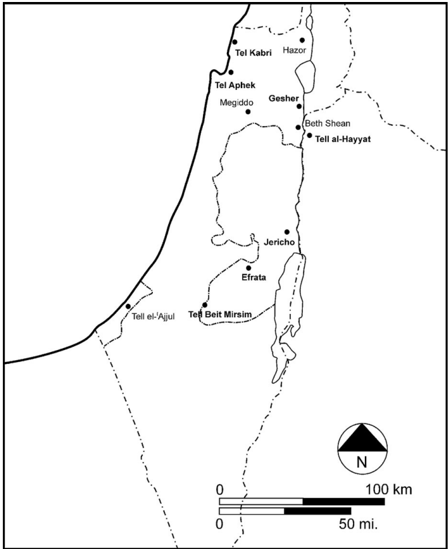
- Mortuary practices mix continuity and change: food offerings and “warrior burials” cross EB IV–MB I boundaries, while drinking-related material culture (cups and teapots) declines in MB I and shows northern external influence. Ceramics mostly suggest discontinuity, but transitional forms occur at Tell Umm Hammad, Khirbet Iskander, Gesher, and Tell el-Hayyat Phase 5; MB fortifications provide clear evidence of external influence and social/political restructuring. The paper concludes that not all data categories change, that many differences follow regional/economic lines, and that the greatest distinctions are between EB IV and MB II/III rather than EB IV and MB I.
Methods
- Design: synthetic and interpretive assessment of the EB IV–MB I transition, not a new excavation report; it examines multiple strands of evidence—terminology, chronology, settlement/occupation, subsistence, mortuary traditions, ceramics, and fortifications.
- Data or sample: published archaeological evidence from the southern Levant, with site examples including Khirbet Iskander, Tell Umm Hammad, Tell el-Hayyat, Tel Kabri, Tel Aphek, Zahrat adh-Dhra‘1, Be’er Resisim, Gesher, Jebel Qa‘aqir, Jericho, and Efrata, alongside pollen and radiocarbon studies.
- Main analysis: comparative qualitative synthesis across data categories, emphasizing regional variation and rejecting monocausal exogenous or indigenous explanations; it uses “sloping horizons” and radiocarbon-backed dates of 2000/1950 BCE for MB I.
Limitations
- Stated in the paper: no consensus on nomenclature or chronology; ongoing excavation continually adds data; floral data are extremely limited for both EB IV and MB I; insufficient data exist to evaluate the beverage-strainer hypothesis; precise chronological identification is difficult in the northern Negev due to sparse and generic material culture; full ceramic analysis is beyond the article’s scope.
- Stated in the paper: faunal remains from the Kabri palace are likely not representative of the site’s general population; the proposed 1–5-year corvée construction estimate for fortifications assumes a fixed population and other social/political prerequisites not necessarily universally applicable.
- Evident from the text: as a synthesis, the conclusions depend on published datasets with uneven regional coverage and no new primary data; chronological uncertainty—up to a century depending on schema—limits precise dating of the transition.
Model-written summary. Check it against the paper before relying on it.
Integrity signals
Registry
Cites
Statistics
Figures


Verification
Claims the paper makes
0 Valid · 2 Not valid · 23 Not checked · 47 Own results and interpretations
None of the sources cited for this claim have been checked yet.
In the paper
“At the same time, both EB IV and MB I ceramics also exhibit external, northern influences (e.g., Cohen and Bonfil 2007: 97-99;Kennedy 2020;Richard 2010).”
§ The Early Bronze IV -Middle Bronze I transition in the southern Levant: analysis and assessment > Cohen The Early Bronze IV -Middle Bronze I transition in the southern Levant: analysis and assessment
What the sources say
- Not matchedcites Cohen and Bonfil 2007
An author–year citation the paper’s reference list doesn’t settle. We don’t search these by name.
- Not matchedcites Kennedy 2020
An author–year citation the paper’s reference list doesn’t settle. We don’t search these by name.
- Not checked yetcites Richard 2010
plainstates an association- Asserted: passes — The authors put it forward as true.
- Checkable: passes — It can be checked against evidence.
- Load-bearing: unclear — It is unclear whether the paper’s conclusions depend on it.
- Based: passes — The paper gives a reason why it holds.
- Not matched
A result the paper reports from its own data — it cites no other source for it, so there is none to check. The quote shows it is in the paper.
In the paper
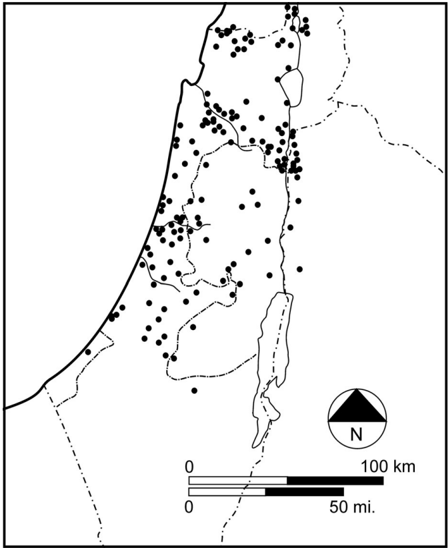
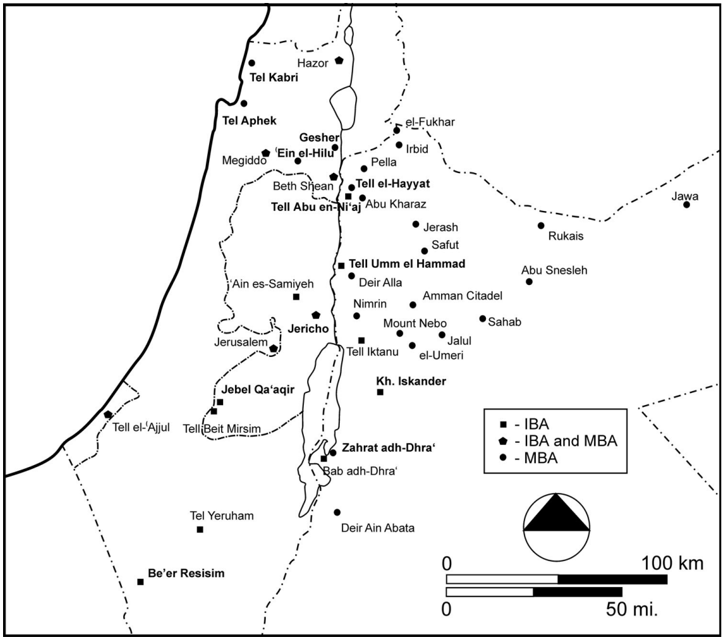
“However, while much of the MB I ceramic corpus indeed suggests clear discontinuity and shows fewif anysimilarities with earlier EB IV pottery, some of the ceramics from those same regions that show occupational continuation, such as the northern and central Jordan Valley (see Figs 3 and 4), do exhibit different patterns.”
§ The Early Bronze IV -Middle Bronze I transition in the southern Levant: analysis and assessment > Ceramics
plainstates an association- Asserted: passes — The authors put it forward as true.
- Checkable: passes — It can be checked against evidence.
- Load-bearing: passes — The paper’s conclusions depend on it.
- Based: passes — The paper gives a reason why it holds.
The paper states this without a source or data behind it here, so there is nothing to check it against. The quote shows it is in the paper.
In the paper
“Likewise, the fortifications of the Middle Bronze Age clearly exhibit external influences in form, and suggest significant disjuncture or restructuring in political concerns and social and economic organization throughout the EB IV-MB I transition.”
§ The Early Bronze IV -Middle Bronze I transition in the southern Levant: analysis and assessment > Discussionphysical material culture
boostedstates an association- Asserted: passes — The authors put it forward as true.
- Checkable: passes — It can be checked against evidence.
- Load-bearing: passes — The paper’s conclusions depend on it.
- Based: unclear — It is unclear why the paper says it holds.
A result the paper states — it cites no source for it, so there is none to check. The quote shows it is in the paper.
In the paper
“Likewise, burial patterns exhibit a mix of both continuity and cultural change, with the former seen in commonality of the so-called 'warrior burials' together with the basic practice of interment of both the human body and the accompanying material culture, of providing food, and the associated belief(s) accompanying these actions, while the decline of such distinctive ceramic forms as cups and”
§ The Early Bronze IV -Middle Bronze I transition in the southern Levant: analysis and assessment > Summary and conclusions
plain- Asserted: passes — The authors put it forward as true.
- Checkable: passes — It can be checked against evidence.
- Load-bearing: passes — The paper’s conclusions depend on it.
- Based: passes — The paper gives a reason why it holds.
A result the paper states — it cites no source for it, so there is none to check. The quote shows it is in the paper.
In the paper
“The strongest evidence for ceramic continuity appears in the same regions that exhibit occupational continuity (e.g., the northern and central Jordan Valley) (see Figs 3 and 4), while the ceramic corpus that suggests the most difference predominates in those areas with more visible breaks in settlement patterns (e.g., coastal regions, urban centres on major transportation routes).”
§ The Early Bronze IV -Middle Bronze I transition in the southern Levant: analysis and assessment > Discussionphysical material culture
plainstates an association- Asserted: passes — The authors put it forward as true.
- Checkable: passes — It can be checked against evidence.
- Load-bearing: passes — The paper’s conclusions depend on it.
- Based: passes — The paper gives a reason why it holds.
32 more claims
Create a free account to see all 72 claims and to verify the 19 references still open.
- It may state two separate claims as one. 28
- Probably not a substantial claim. 15
- The quote only partly states this claim. 1
Claims other papers make about this one
Each is checked against this paper’s own text: does it say what the citing paper says it does?
In the citing paper
“This phenomenon is seen elsewhere in the southern Levant (Cohen 2022, 225).”
From The Beginning of the Middle Bronze Age in the Levant: New Evidence from Megiddo (2026) · cites this paper as Cohen 2022
In the citing paper
“The 'sloping horizon' (for the term, see Cohen 2022; 2019) of 2050/2000 for the end of the IBA and the beginning of MB I in the Coastal Plain and Jezreel Valley proposed here does not require any modification of stratigraphic or ceramic sequences and contradicts no historical synchronisation or radiocarbon indicators.”
From The Beginning of the Middle Bronze Age in the Levant: New Evidence from Megiddo (2026) · cites this paper as Cohen 2022
Citations
Cites
The Archaeology of Society in the Holy Land
Routledge, B., & Levy, T. E. (1998) · The Classical World · doi:10.2307/4352203 · Cited by 636
Archaeology of the land of the Bible, 10,000-586 B.C.E
(1990) · Choice Reviews Online · doi:10.5860/choice.28-2322 · Cited by 235
Chronology of the Early Bronze Age in the Southern Levant: New Analysis for a High Chronology
Regev, J., De Miroschedji, P., Greenberg, R., Braun, E., Greenhut, Z., & Boaretto, E. (2012) · Radiocarbon · doi:10.1017/s003382220004724x · Cited by 233 · cited 2×
“2500–2000 BCE, for the EB IV (Regev et al. 2012), rather than a shorter span of c.”
BackgroundDevelopment and Decline in the Mediterranean Bronze Age
Mathers, C., & Stoddart, S. K. F. (1994) · OpenGrey (Institut de l'Information Scientifique et Technique) · Cited by 198
The Oxford handbook of the archaeology of the Levant: c. 8000-332 BCE
(2014) · Choice Reviews Online · doi:10.5860/choice.52-0926 · Cited by 137
Studies in the Archaeology of Israel and Neighboring Lands in Memory of Douglas L. Esse
Wolff, S. R. (2001) · doi:10.83354/7q5s-v629 · Cited by 118
The Archaeology of the Bronze Age Levant
Greenberg, R. (2019) · doi:10.1017/9781316275993 · Cited by 110
Early Urbanizations in the Levant: A Regional Narrative
Greenberg, R. (2002) · Cited by 107
Langgut, D., Neumann, F. H., Stein, M., Wagner, A., Kagan, E. J., Boaretto, E., & Finkelstein, I. (2014) · Palynology · doi:10.1080/01916122.2014.906001 · Cited by 103
Seeds of Civilization: Bronze Age Rural Economy and Ecology in the Southern Levant
Fall, P. L., Lines, L., & Falconer, S. E. (1998) · Annals of the Association of American Geographers · doi:10.1111/1467-8306.00087 · Cited by 85
Research works printed but not linked: 30
- Albright, W. F. 1933. The Excavations of Tel Beit Mirsim IA: The Bronze Age Pottery of the Fourth Campaign. Annual of the American Schools of Oriental Research 13. New Haven, CT: ASOR.
- ---1938. The Excavations of Tel Beit Mirsim II: The Bronze Age. Annual of the American Schools of Oriental Research 17. New Haven, CT: ASOR.
- Beck, P. 2000a. Area B: pottery. In, Kochavi, M., Beck, P. and Yadin, Y. (eds), Aphek-Antipatris I. Excavation of Areas A and B. The 1972- 1976 Seasons: 93-133. Monograph Series No. 19. Tel Aviv: Emery and Claire Yass Publications in Archaeology.
- ---2000b. Area A: Middle Bronze Age IIA pottery. In, Kochavi, M., Beck, P. and Yadin, Y. (eds), Aphek-Antipatris I. Excavation of Areas A and B. The 1972-1976 Seasons: 173-238. Monograph Cohen The Early Bronze IV -Middle Bronze I transition in the southern Levant: analysis and assessment Levant 2022 Series No. 19. Tel Aviv: Emery and Claire Yass Publications in Archaeology.
- ---2000c. The Middle Bronze Age IIA pottery repertoire: a com- parative study. In, Kochavi, M., Beck, P and Yadin, Y. (eds), Aphek-Antipatris I. Excavation of Areas A and B. The 1972-1976 Seasons: 239-54. Monograph Series No. 19. Tel Aviv: Emery and Claire Yass Publications in Archaeology.
- ---2012. Weaponry and warrior burials: patterns of disposal and social change in the southern Levant. In, Matthews, R. and Curtis, J. (eds), The 7th International Congress on the Archaeology of the Ancient Near East, 12-16 April 2010: 307-19. London: The British Museum and University College London.
- Cohen, S. and Bonfil, R. 2007. Chapter 5-The pottery. In, Garfinkel, Y. and Cohen, S. (eds), The MB IIA Cemetery at Gesher: Final Report: 77-99. Annual of the American Schools of Oriental Research 62. Boston: American Schools of Oriental Research.
- ---2014a. The Southern Levant in Early Bronze IV: Issues and Perspectives in the Pottery Evidence. Contributi e Materiali di Archeologia Orientale XVII. Rome: Università degli Studi di Roma La Sapienza.
- ---2014b. 'Townships or villages?' Remarks on the Middle Bronze IA in the southern Levant. In, Bielin ´ski, P., Gawlikowski, M., Kolin ´ski, R., Ławecka D. Sołtysiak, A. and Wygnan ´ska, Z. (ed), Proceedings of the 8th ICAANE, 30 April-4 May 2012, University of Warsaw. Vol. I: 151-72. Wiesbaden: Harrassowitz.
- ---2020. About stratigraphy, pottery, and relative chronology: some considerations for a refinement of the archaeological periodization of the southern Levantine Early Bronze Age IV. In, Richard, S. (ed.), New Horizons in the Study of the Early Bronze III and Early Bronze IV of the Levant: 376-416. University Park, PA: Eisenbrauns.
- ---2021. Urbanism, collapse and transitions: considerations on the EB III/V and the EB IV/MB I nexuses in the southern Levant. In, Dever, W. G. and Long, J. (eds), Transitions, Urbanism, and Collapse in the Bronze Age. Essays in Honor of Suzanne Richard: 27-50. Sheffield: Equinox.
- Dever, W. G. and Long, J. C. (eds). 2021. Transitions, Urbanism, and Collapse in the Bronze Age. Essays in Honor of Suzanne Richard. Sheffield: Equinox.
- ---2021. EB IV settlement, chronology and society along the Jordan Rift. In, Dever, W. G. and Long, J. (eds), Transitions, Urbanism, and Collapse in the Bronze Age. Essays in Honor of Suzanne Richard: 187-200. Sheffield: Equinox.
- Falconer, S. and Magness-Gardiner, B. 1989. Bronze Age village life in the Jordan Valley: archaeological investigations at Tell el- Hayyat and Tell Abu en-Ni'aj. National Geographic Research 5: 335-47.
- Fall, P. L. and Metzger, M. 2006. Chapter 5: economy and subsistence at Tell el-Hayyat. In, Falconer, S. E. and Fall, P. L. (eds), Bronze Age Rural Ecology and Village Life at Tell el-Hayyat, Jordan: 65-82. BAR International Series 1586. Oxford: Archaeopress.
- Grosvenor Ellis, A. and Westley, B. 1965. Preliminary report on the animal remains in the Jericho tombs. In, Kenyon, K. (ed.), Excavations at Jericho II. The Tombs excavated in 1955-58: 694-701. London. British School of Archaeology in Jerusalem.
- Hausleiter, A., D'Andrea, M., and Zur, A. 2018. The transition from Early to Middle Bronze Age in northwest Arabia: bronze weapons from burial contexts at Tayma, Arabia and comparative evidence from the Levant. Zeitschrift für Orient-Archäologie 11: 412-36.
- Hellwing, S. 2000. Faunal remains. In, Kochavi, M., Beck, P. and Yadin, E. (eds), Aphek-Antipatris I. Excavation of Areas A and B. The 1972-1976 Seasons: 293-314. Monograph Series No. 19. Institute of Archaeology, Tel Aviv University. Tel Aviv: Emery and Claire Yass Publications in Archaeology.
- ---2007. The faunal remains. In, Garfinkel, Y. and Cohen, S. (eds), The Excavations at the MB IIA Cemetery at Gesher: Final Report: 125-29. Annual of the American Schools of Oriental Research 62. Boston: American Schools of Oriental Research.
- Horwitz, L. and Mienis, H. 2002. Archaeozoological remains. Animal bones. In, Kempinski, A. (ed.), Tel Kabri. The 1986-1993 Excavations Seasons: 395-440. Monograph Series No. 20. Institute of Archaeology, Tel Aviv University. Tel Aviv: Emery and Claire Yass Publications in Archaeology.
- Ilan, D. and Marcus, E. 2019. Middle Bronze Age IIA. In, Gitin, S. (ed.), The Ancient Pottery of Israel and Its Neighbors from the Middle Bronze Age through the Late Bronze Age: 9-75. Jerusalem: Israel Exploration Society.
- ---2020. Horizons of cultural connectivity: north-south inter- actions and interconnections during the Early Bronze Age IV. In, Richard, S. (ed.), New Horizons in the Study of the Early Bronze III and Early Bronze IV of the Levant: 327-46. University Park, PA: Eisenbrauns.
- Kenyon, K. 1960. Excavations at Jericho. Vol. I: The Tombs Excavated in 1952-54. British School of Archaeology in Jerusalem. London: Harrison.
- Kletter, R. and Levy, Y. 2016. Rishon Le-Zion. Vol. I. The Middle Bronze Age II Cemeteries. Volume I/2: Finds and Conclusions. Ägypten und Altes Testament 88. Münster: Zaphon.
- MacDonald, B. 2021. A survey of the EB IV presence in Jordan. In, Dever, W. G. and Long, J. (eds), Transitions, Urbanism, and Collapse in the Bronze Age. Essays in Honor of Suzanne Richard: 259-72. Sheffield: Equinox.
- Maeir, A. 2007. Chapter 9 -The bone beverage strainers. In, Garfinkel, Y. and Cohen, S. (eds), The MB IIA Cemetery at Gesher: Final Report: 119-23. Annual of the American Schools of Oriental Research 62. Boston: American Schools of Oriental Research.
- Mazar, A. 1990. Archaeology of the Land of the Bible 10,000-586 BCE. New York: Doubleday.
- Metzger, M. 2010. Faunal remains from Area C. In, Richard, S., Long, J., Holdorf, P. and Peterman, G. (eds), Khirbat Iskandar: Final Report on the Early Bronze IV Area C 'Gateway' and Cemeteries: 141-43. Archaeological Expedition to Khirbat Iskandar and Its Environs, Jordan, Vol. 1. American Schools of Oriental Research Archaeological Reports 14. Boston: American Schools of Oriental Research.
- Richard, S. 2010. The Area C Early Bronze IV ceramic assemblage. In, Richard, S., Long, J., Holdorf, P. and Peterman, G. (eds), Khirbat Iskandar: Final Report on the Early Bronze IVArea C 'Gateway' and Cemeteries: 69-111. Archaeological Expedition to Khirbat Iskandar and its Environs, Jordan, Vol. 1. American Schools of Oriental Research Archaeological Reports 14. Boston: American Schools of Oriental Research.
- Vacca, A. and D'Andrea, M. 2020. The connections between the north- ern and southern Levant during Early Bronze Age III: re-evalu- ations and new vistas in the light of new data and higher chronologies. In, Richard, S. (ed.), New Horizons in the Study of the Early Bronze III and Early Bronze IV of the Levant: 120-45. University Park, PA: Eisenbrauns.
Cited by
Megiddo in the Middle Bronze Age: Chronology, Urbanization, and Population
Adams, M. J., Martin, M. A. S., Dunseth, Z. C., Yasur‐Landau, A., & Finkelstein, I. (2025) · Near Eastern Archaeology · doi:10.1086/735561 · Cited by 3
Erftenbeck, H., & Chesson, M. S. (2025) · Journal of Anthropological Archaeology · doi:10.1016/j.jaa.2025.101687 · Cited by 2
Diachronic changes in dental health of Bronze Age rural populations from Nahal Refaim, Israel
Chocholová, E., Smith, P., Eisenberg, E., Horwitz, L. K., & Drozdová, E. (2024) · International Journal of Osteoarchaeology · doi:10.1002/oa.3319 · Cited by 1
115From Vine to Wine: The Royal Economy of Tel Shimron during the Middle Bronze Age
Covello-Paran, K. (2025) · De Gruyter eBooks · doi:10.1515/9783111411330-005 · Cited by 1
The Beginning of the Middle Bronze Age in the Levant: New Evidence from Megiddo
Yasur-Landau, A., Piasetzky, E., Adams, M. J., Roth, H., Dunseth, Z., & Finkelstein, I. (2026) · Palestine Exploration Quarterly · doi:10.1080/00310328.2026.2736989
Ancestral origins: northern Levantine Funerary Palaces in the Middle Bronze Age
Winter, H. A. (2024) · Levant · doi:10.1080/00758914.2024.2414580
Ripamonti, C. (2026) · IRIS Research product catalog (Sapienza University of Rome)
Metadata
- Authors
- Cohen, S. L.
- Affiliations
- Montana State University (US)
- Corresponding author
- Cohen, Susan L.
- Venue
- Levant
- Publisher
- Informa UK Limited
- Published
- 2022-05-04
- Volume
- 54
- Issue
- 2
- Pages
- 217-229
- ISSN
- 0075-8914 (ISSN-L)
- 1756-3801
- OpenAlex
- W4282593304
- Cited by
- 7
- References
- 51
- Citations by year
- 2026: 2 · 2025: 3 · 2024: 2
- FWCI
- 3.07
- Type
- journal article
- Language
- en
- Open access
- hybrid
- doi.org
- Licence
- Locations
- Levant (publishedVersion, cc-by-nc-nd)
- Montana State University ScholarWorks (Montana State University) (submittedVersion)
- Topics
- Social Sciences › Arts and Humanities › Archeology (arts and humanities) › Ancient Mediterranean Archaeology and History
- Social Sciences › Arts and Humanities › Archeology (arts and humanities) › Ancient and Medieval Archaeology Studies
- Social Sciences › Arts and Humanities › Religious studies › Biblical Studies and Interpretation
- Keywords
- Early Bronze Age IV, Middle Bronze Age, Bronze Age transition, Southern Levant, settlement patterns, subsistence strategies, mortuary traditions, material culture, cultural continuity and change, external influence, interregional variation
About these checks
Registry, retraction, Cites and statistics results are computed, not judged, with one exception: a printed reference that no index lists is read once by a model before it counts as a citation error. Claims are extracted by a model and kept only when their quote appears verbatim in the text; each cited source is then checked, with a model’s help, for whether it says what the claim relies on. Those verdicts can be wrong — read the claim’s quote and the cited source before relying on one.
A language model drew the claims from the paper on 2026-11-24, under version 3 of the claim definition (model deepseek-v4.1-flash, prompt extract-v3).
A second model labelled each claim on 2026-11-24 (model jev-1.13-20260917, definition revision gold-guideline-v0.2).
Statistics and arithmetic are recomputed, not judged.
Confidence bands are shown only for fields calibrated on our annotated test set. None is calibrated yet, so no band is shown.
What counts as a claim ›How we measure confidence ›How we check this ›
Are you an author, or do you see a problem with this page? Request a review
Data sources
Bibliographic data: Semantic Scholar, OpenAlex, Crossref.
Contains information from the Semantic Scholar Academic Graph Datasets, made available under the ODC Attribution License (ODC-BY 1.0).
Semantic Scholar’s data is described in: Kinney, R., et al. (2023). The Semantic Scholar Open Data Platform. arXiv:2301.10140.
