

A scoping review of artificial intelligence in medical education: BEME Guide No. 84
Open accessThe DOI matches its Crossref record; 305 of the 310 references it cites were found in a registry or an index; 12 of the 157 sources its claims cite were checked for support.
Abstract
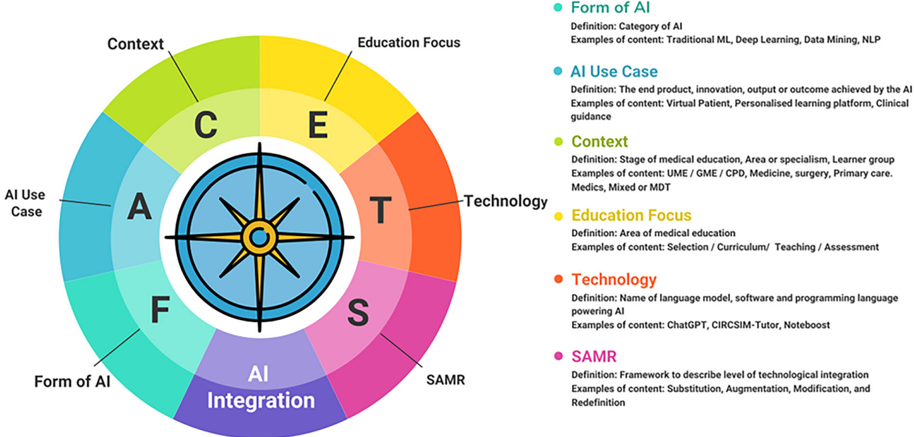
BACKGROUND: Artificial Intelligence (AI) is rapidly transforming healthcare, and there is a critical need for a nuanced understanding of how AI is reshaping teaching, learning, and educational practice in medical education. This review aimed to map the literature regarding AI applications in medical education, core areas of findings, potential candidates for formal systematic review and gaps for future research. METHODS: This rapid scoping review, conducted over 16 weeks, employed Arksey and O'Malley's framework and adhered to STORIES and BEME guidelines. A systematic and comprehensive search across PubMed/MEDLINE, EMBASE, and MedEdPublish was conducted without date or language restrictions. Publications included in the review spanned undergraduate, graduate, and continuing medical education, encompassing both original studies and perspective pieces. Data were charted by multiple author pairs and synthesized into various thematic maps and charts, ensuring a broad and detailed representation of the current landscape. RESULTS: The review synthesized 278 publications, with a majority (68%) from North American and European regions. The studies covered diverse AI applications in medical education, such as AI for admissions, teaching, assessment, and clinical reasoning. The review highlighted AI's varied roles, from augmenting traditional educational methods to introducing innovative practices, and underscores the urgent need for ethical guidelines in AI's application in medical education. CONCLUSION: The current literature has been charted. The findings underscore the need for ongoing research to explore uncharted areas and address potential risks associated with AI use in medical education. This work serves as a foundational resource for educators, policymakers, and researchers in navigating AI's evolving role in medical education. A framework to support future high utility reporting is proposed, the FACETS framework.
Overview
CoChat Summary
TL;DR
This BEME scoping review maps 278 publications on artificial intelligence in medical education, finding a publication surge since 2018 and diverse applications across admissions, teaching, assessment, clinical reasoning, and large language model exam performance. It proposes the FACETS framework and calls for ethical guidelines and further research.
Key findings
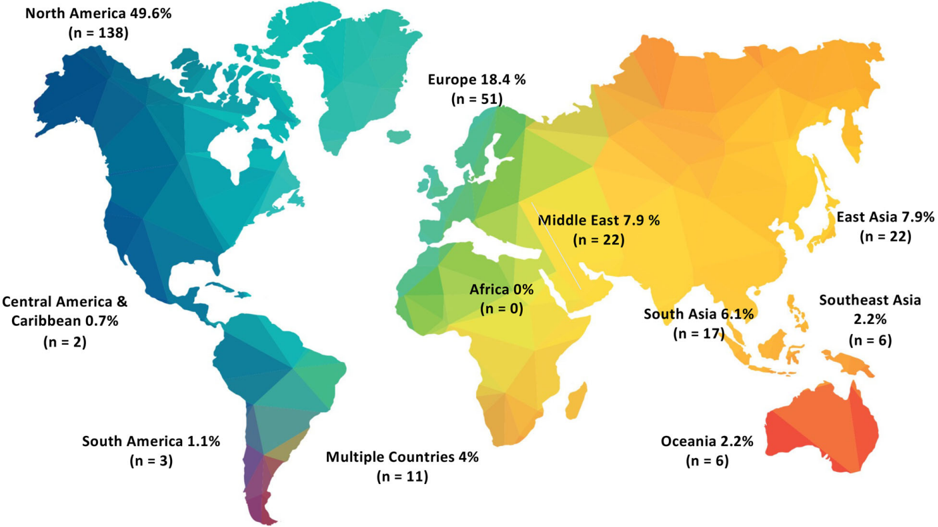
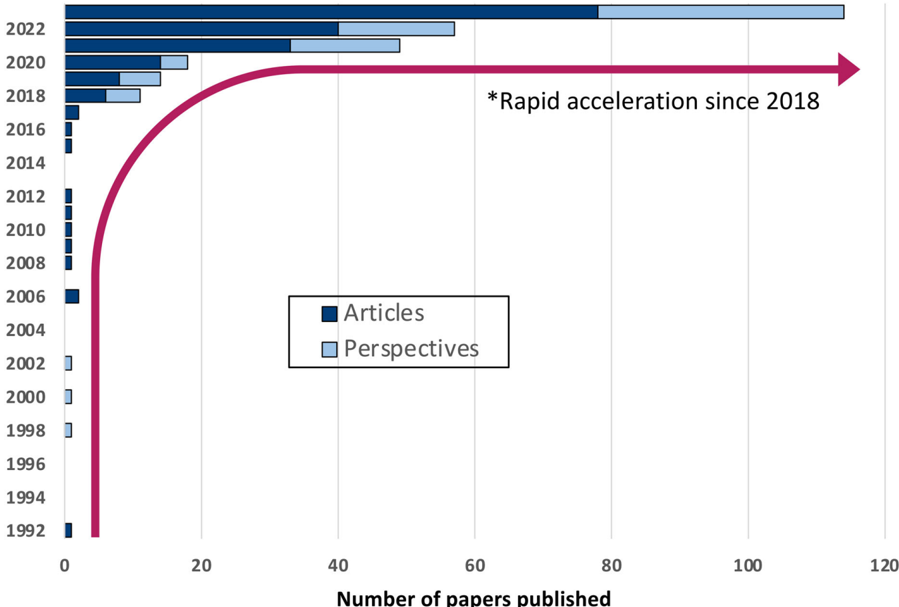
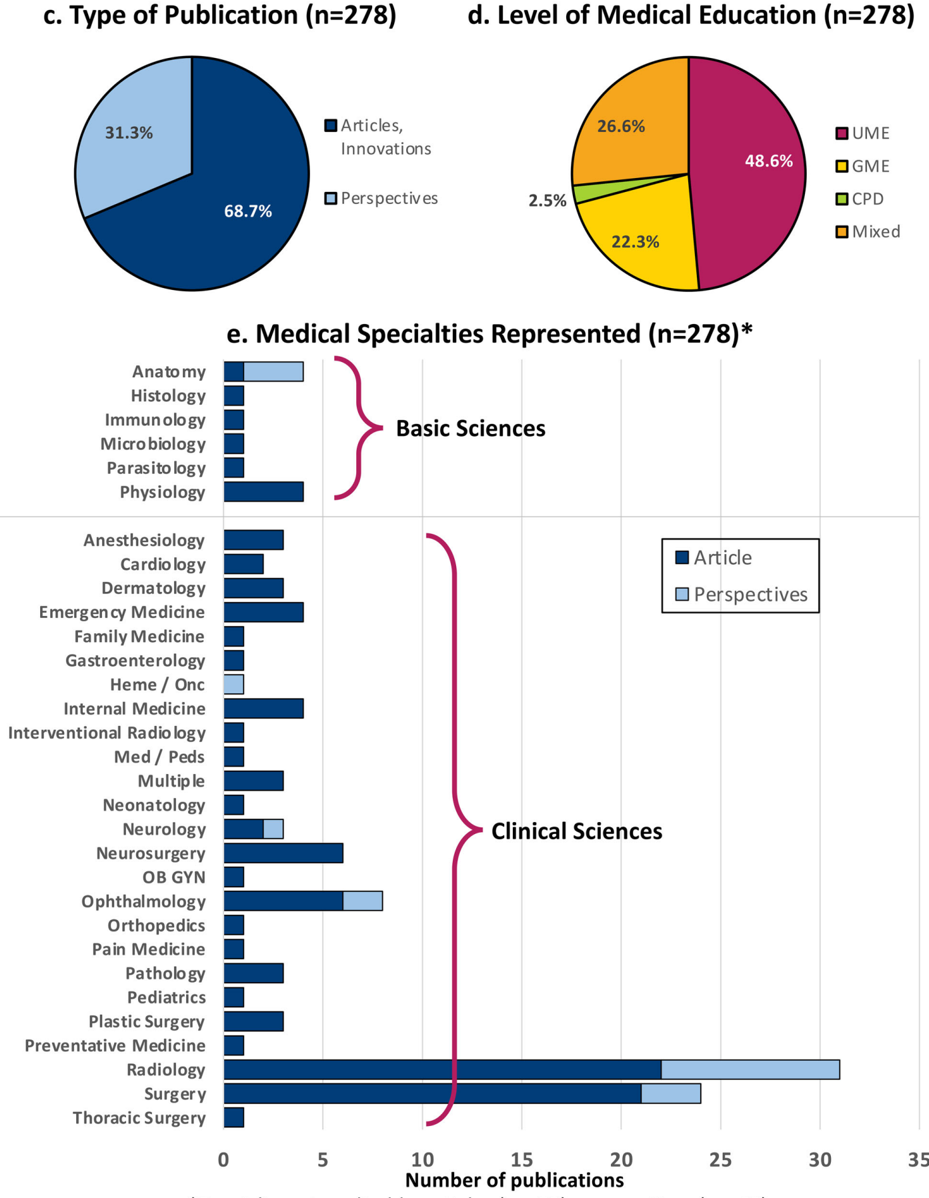
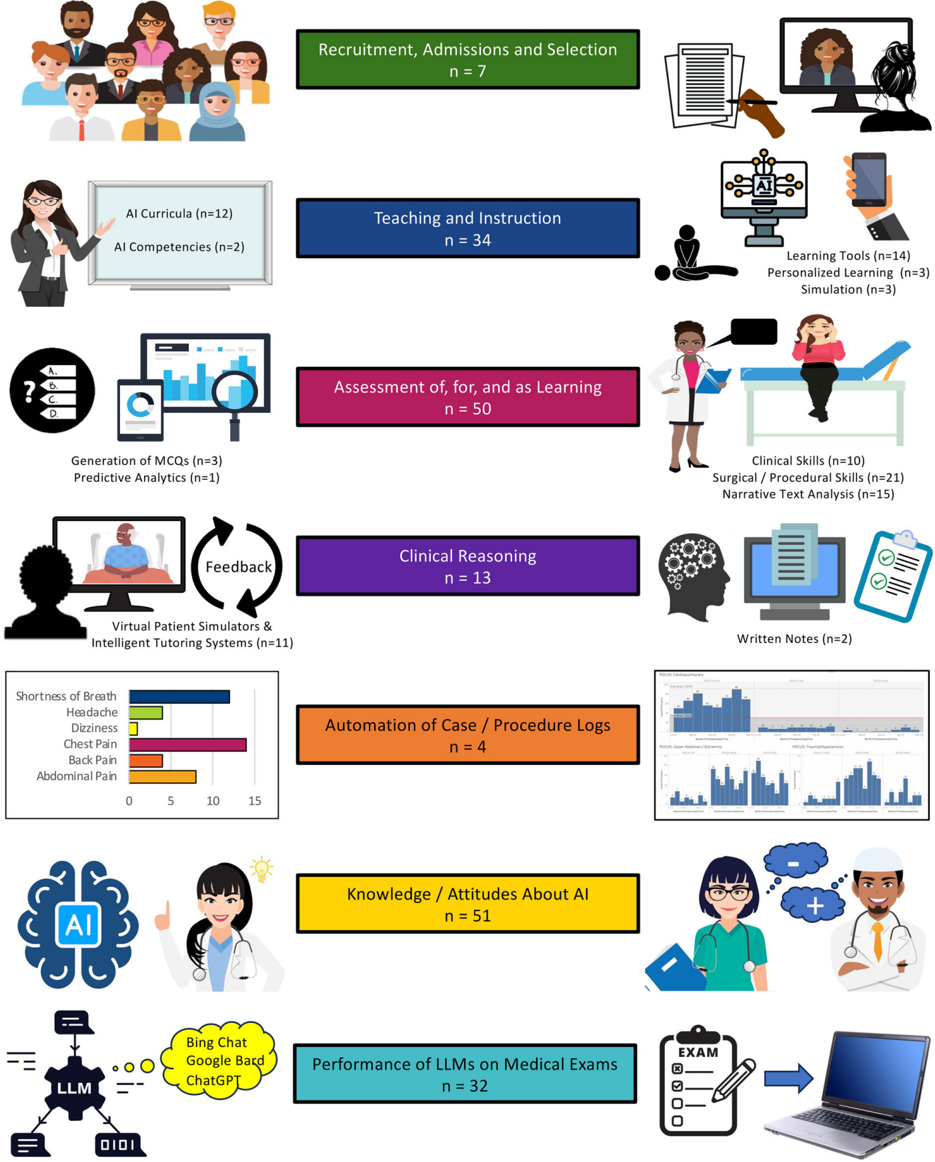
- The review included 278 publications: 191 (68.7%) articles/innovations and 87 (31.3%) perspectives. Geographic distribution was predominantly Anglo-North American (n = 138, 49.6%) and European (n = 51, 18.4%); no studies were identified from Africa. The earliest publication was in 1992, with a surge from 2018 onward and 114 publications as of August 2023.
- AI applications included assessment (n = 50, 26.2%), knowledge/attitudes about AI (n = 51, 26.7%), teaching about AI or AI-augmented instruction (n = 34, 17.8%), LLM performance on medical exams (n = 32, 16.8%), clinical reasoning (n = 13, 6.8%), admissions/selection (n = 7, 3.6%), and automation of case/procedure logs (n = 4, 2.1%).
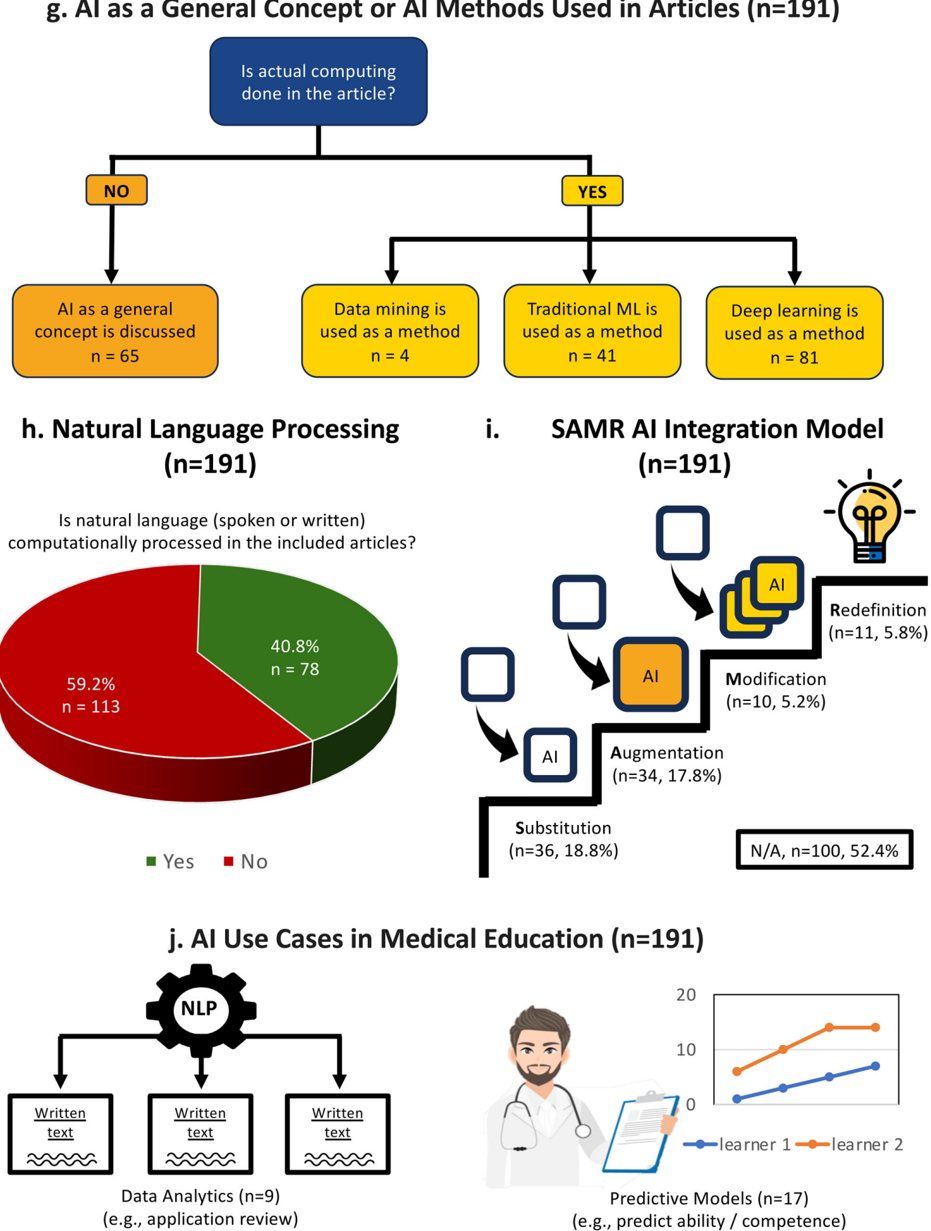
- Technical use varied: AI was treated as a general concept without computation in 65 studies (34%); traditional ML in 41 (21.5%), deep learning in 81 (42.4%), NLP in 78 (40.8%), and data mining in 4 (2.1%). Under SAMR, AI was substitution in 36 (18.8%), augmentation in 34 (17.8%), modification in 10 (5.2%), redefinition in 11 (5.8%), and not applicable in 100 (52.4%).
- LLM performance was variable: models scored at or above passing thresholds on some local, national, and specialty licensure exams but performed modestly or poorly on others; newer models generally outperformed older ones, though not universally, and performance was often better on English or translated questions (e.g., 22% accuracy in French vs. 73% in Italian). The review proposes the FACETS framework for future reporting.
Methods
- Rapid scoping review conducted over 16 weeks, guided by Arksey and O’Malley’s framework refined by Levac et al., and reported per STORIES, BEME guidance, and PRISMA-ScR.
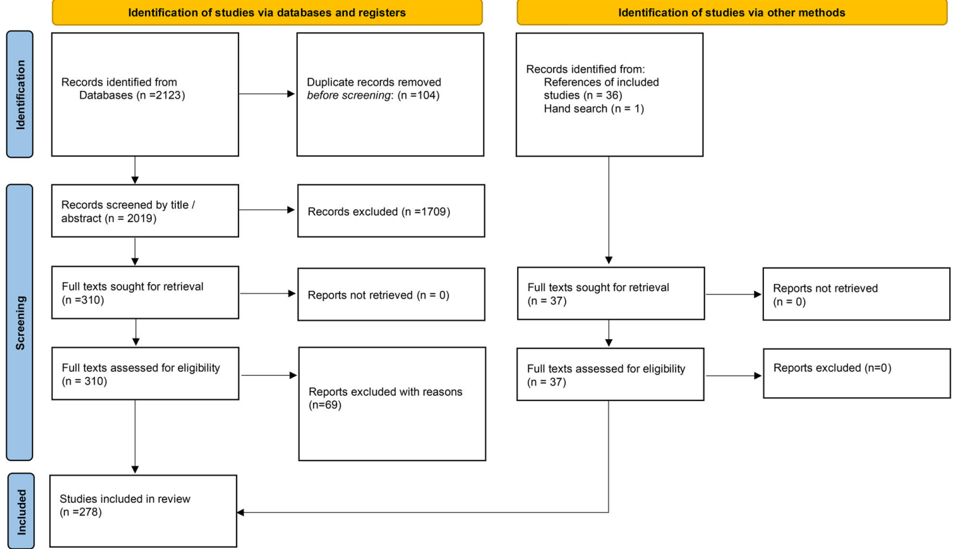
- Searched PubMed/MEDLINE, EMBASE, and MedEdPublish without date or language restrictions. The database search yielded 2,123 publications; after duplicate removal, 2,019 remained; title/abstract screening narrowed to 310; full-text review excluded 70; 241 were included; hand-searching added 37, yielding 278 total. Screening was by author pairs with discrepancies resolved by consensus or third author; inter-rater reliability was j = 0.86.
- Data were charted by multiple author pairs using a piloted extraction form. Articles/innovations and perspectives were charted separately and synthesized into thematic maps, charts, and narrative accounts; perspectives were categorized into five groups.
Limitations
- The paper states that the scoping tradition does not synthesize evidence; there was subjectivity in categorizing studies; terminology was inconsistent; the search was iterated and studies may have been missed; inclusion of perspective articles may be perceived as diluting empirical strength; and the sixth stage of the Arksey and O’Malley framework (external expert consultation) was not performed, though author-team experts fulfilled this role.
- The text also makes evident that the rapid 16-week timeframe and evolving AI literature may have limited comprehensiveness, and no studies were identified from Africa, indicating a geographic evidence gap.
Model-written summary. Check it against the paper before relying on it.
Integrity signals
Registry
Cites
Statistics
Figures



Verification
Claims the paper makes
9 Valid · 7 Not valid · 81 Not checked · 98 Own results and interpretations
A result the paper reports from its own data — it cites no other source for it, so there is none to check. The quote shows it is in the paper.
In the paper
“Other regions produced only a handful of studies and no studies were identified from Africa.”
§ A scoping review of artificial intelligence in medical education: BEME Guide No. 84 > Overview
plain- Asserted: passes — The authors put it forward as true.
- Checkable: passes — It can be checked against evidence.
- Load-bearing: unclear — It is unclear whether the paper’s conclusions depend on it.
- Based: passes — The paper gives a reason why it holds.
A result the paper reports from its own data — it cites no other source for it, so there is none to check. The quote shows it is in the paper.
In the paper
“A substantial portion (n ¼ 51, 26.7%) investigated knowledge or attitudes about AI in medicine (A109-A159), and the performance of large language models (LLMs) on medical questions or exams was evaluated in 32 (16.8%) of the studies (A160-A191.”
§ A scoping review of artificial intelligence in medical education: BEME Guide No. 84 > Articles and innovations included in the review
plain- Asserted: passes — The authors put it forward as true.
- Checkable: passes — It can be checked against evidence.
- Load-bearing: unclear — It is unclear whether the paper’s conclusions depend on it.
- Based: passes — The paper gives a reason why it holds.
A result the paper reports from its own data — it cites no other source for it, so there is none to check. The quote shows it is in the paper.
In the paper
“Most included publications fall under the category of articles or innovations (n ¼ 191, 68.7%), as defined above, with the remainder being perspectives (n ¼ 87, 31.3%).”
§ A scoping review of artificial intelligence in medical education: BEME Guide No. 84 > Overview
plainn = 191- Asserted: passes — The authors put it forward as true.
- Checkable: passes — It can be checked against evidence.
- Load-bearing: unclear — It is unclear whether the paper’s conclusions depend on it.
- Based: passes — The paper gives a reason why it holds.
In the paper
“Another study (A3) compared faculty scoring of medical student performance evaluations (MSPEs) to a machine learning (ML) model's scores.The ML model was unable to successfully rank MSPEs using commercially available sentiment analysis programs, largely because all MSPEs were highly positive.”
§ A scoping review of artificial intelligence in medical education: BEME Guide No. 84 > AI use in admissions and selection for medical school and residency
What the sources say
- Not matchedcites A3
This doesn’t read as a citation we can look up.
plainstates a cause- Asserted: passes — The authors put it forward as true.
- Checkable: passes — It can be checked against evidence.
- Load-bearing: unclear — It is unclear whether the paper’s conclusions depend on it.
- Based: passes — The paper gives a reason why it holds.
- Not matched
In the paper
“A total of thirty-three articles addressed teaching about or instruction with AI (A8-41).”
§ A scoping review of artificial intelligence in medical education: BEME Guide No. 84 > Teaching about AI and AI-augmented instruction
What the sources say
- Not matchedcites A8-41
This doesn’t read as a citation we can look up.
plain- Asserted: passes — The authors put it forward as true.
- Checkable: passes — It can be checked against evidence.
- Load-bearing: unclear — It is unclear whether the paper’s conclusions depend on it.
- Based: passes — The paper gives a reason why it holds.
- Not matched
55 more claims
Create a free account to see all 195 claims and to verify the 4 references still open.
- Probably not a substantial claim. 86
- It may state two separate claims as one. 84
- The quote only partly states this claim. 2
Claims other papers make about this one
Each is checked against this paper’s own text: does it say what the citing paper says it does?
The cited source doesn’t support the claim as written.
In the citing paper
“In fact, 161 reports on the use of AI in UGME were published from 2023 until April 2024, none of which were part of Gordon et al.’s analysis.”
From Artificial intelligence in undergraduate medical education: an updated scoping review (2025) · cites this paper as [8]
Checked by a reasoning model — may be wrong.
Experimental — accuracy not yet measuredThe source backs part of the claim, not all of it — or backs it for a different population, condition or comparison.
In the citing paper
“Concurrently, the scholarly literature concerning its application in medical education has expanded substantially, thereby fueling the demand for its integration into medical curricula [8, 9].”
From Artificial intelligence in undergraduate medical education: an updated scoping review (2025) · cites this paper as [8]
Experimental — accuracy not yet measuredThe source backs part of the claim, not all of it — or backs it for a different population, condition or comparison.
In the citing paper
“There is an increasing recognition that AI-related skills—such as computational thinking, data ethics, and interdisciplinary collaboration—cannot be taught as optional extras. They must be integrated into the fundamental structure of medical training [8–10].”
From Institutionalizing convergence education for medical artificial intelligence (2025) · cites this paper as [9]
Experimental — accuracy not yet measuredThe source backs part of the claim, not all of it — or backs it for a different population, condition or comparison.
In the citing paper
“Reviews and guidance documents on AI implementation in medical education consistently point to fragmented efforts and limited evidence.”
From Principles for Responsible AI in Health Professions Education, Research, and Care: Health CARE-AI (Contextual, Accountable, Responsible, and Equitable Artificial Intelligence) Framework Delphi Consensus Study (2026) · cites this paper as [2]
Experimental — accuracy not yet measuredThe cited source says what the claim attributes to it.
In the citing paper
“Despite enthusiasm about integrating AI in HPE and the increased amount of research on this topic, there is a lack of basic literacy and understanding of AI technology among HPE students [6, 17–20].”
From Shaping the future: perspectives on the Integration of Artificial Intelligence in health profession education: a multi-country survey (2024) · cites this paper as [18]
13 more claims about this paper
Create a free account to see every claim other papers make about this one.
Self-check
Percentages, sums and reported differences re-computed from the paper’s own numbers.
Each contradiction between two passages listed here was confirmed by an independent check.
Rated minor: it would not touch a result — a value no result rests on, a p-value that stays on the same side of the significance level, or a conflict that is clerical, resolved elsewhere in the paper, or outside its own findings.
In the paper
“East Asian (n ¼ 22, 7.9%), Middle Eastern (n ¼ 22, 7.6%), and South Asian (n ¼ 17, 6.1%)”
§ A scoping review of artificial intelligence in medical education: BEME Guide No. 84 > Overview
Reported 7.6 · recomputed 7.913669
Rated minor: it would not touch a result — a value no result rests on, a p-value that stays on the same side of the significance level, or a conflict that is clerical, resolved elsewhere in the paper, or outside its own findings.
In the paper
§ A scoping review of artificial intelligence in medical education: BEME Guide No. 84 > Articles and innovations included in the review
“34 (17.8%)focused on teaching about AI or AI-augmented instruction (A8-A41)”
§ A scoping review of artificial intelligence in medical education: BEME Guide No. 84 > Teaching about AI and AI-augmented instruction
“A total of thirty-three articles addressed teaching about or instruction with AI (A8-41).Of these, 12 focused on AI as a learning tool, 11 on curriculum development, three on AI use for personalized education, five on the use of AI in medical simulation, and two on AI educational competencies.”
Citations
Cites
PRISMA Extension for Scoping Reviews (PRISMA-ScR): Checklist and Explanation
Tricco, A. C., Lillie, E., Zarin, W., O'Brien, K. K., Colquhoun, H., Levac, D., Moher, D., Peters, M. D. J., Horsley, T., Weeks, L., et al. (2018) · Annals of Internal Medicine · doi:10.7326/m18-0850 · Cited by 43,565 · cited 1×
“We also conformed to the PRISMA-ScR reporting standards (Tricco et al. 2018), drawing on support from Peters et al. (2020, 2022) to offset the absence of specialized reporting standards for scoping reviews in health professions education.”
MethodScoping studies: towards a methodological framework
Arksey, H., & O'Malley, L. (2005) · International Journal of Social Research Methodology · doi:10.1080/1364557032000119616 · Cited by 36,742 · cited 2×
“Our methodology was guided by Arksey and O ’ Malley ’ s (2005) scoping review framework, which was refined by Levac et al. (2010).”
BackgroundMethodScoping studies: advancing the methodology
Levac, D., Colquhoun, H., & O'Brien, K. K. (2010) · Implementation Science · doi:10.1186/1748-5908-5-69 · Cited by 15,268 · cited 3×
“Our methodology was guided by Arksey and O ’ Malley ’ s (2005) scoping review framework, which was refined by Levac et al. (2010).”
BackgroundMethodUpdated methodological guidance for the conduct of scoping reviews
Peters, M. D. J., Marnie, C., Tricco, A. C., Pollock, D., Munn, Z., Alexander, L., McInerney, P., Godfrey, C. M., & Khalil, H. (2020) · JBI Evidence Synthesis · doi:10.11124/jbies-20-00167 · Cited by 9,046 · cited 1×
“We also conformed to the PRISMA-ScR reporting standards (Tricco et al. 2018), drawing on support from Peters et al. (2020, 2022) to offset the absence of specialized reporting standards for scoping reviews in health professions education.”
MethodKung, T. H., Cheatham, M., Medenilla, A., Sillos, C., De Leon, L., Elepaño, C., Madriaga, M., Aggabao, R., Diaz-Candido, G., Maningo, J., et al. (2023) · PLOS Digital Health · doi:10.1371/journal.pdig.0000198 · Cited by 4,115
Kung, T. H., Cheatham, M., ChatGPT, Medenilla, A., Sillos, C., De Leon, L., Elepaño, C., Madriaga, M., Aggabao, R., Diaz-Candido, G., et al. (2022) · doi:10.1101/2022.12.19.22283643 · Cited by 4,115
Teaching thematic analysis: Overcoming challenges and developing strategies for effective learning
Clarke, V., & Braun, V. (2013) · UWE Research Repository (UWE Bristol) · Cited by 2,820
Cultural Shock: Adjustment to New Cultural Environments
Oberg, K. (1960) · Practical Anthropology · doi:10.1177/009182966000700405 · Cited by 2,706
Gilson, A., Safranek, C. W., Huang, T., Socrates, V., Chi, L., Taylor, R. A., & Chartash, D. (2023) · JMIR Medical Education · doi:10.2196/45312 · Cited by 2,078
Best practice guidance and reporting items for the development of scoping review protocols
Peters, M. D. J., Godfrey, C., McInerney, P., Khalil, H., Larsen, P., Marnie, C., Pollock, D., Tricco, A. C., & Munn, Z. (2022) · JBI Evidence Synthesis · doi:10.11124/jbies-21-00242 · Cited by 1,444
Cited by
Feigerlova, E., Hani, H., & Hothersall-Davies, E. (2025) · BMC Medical Education · doi:10.1186/s12909-025-06719-5 · Cited by 166
Mapping the use of artificial intelligence in medical education: a scoping review
Rincón, E. H. H., Jimenez, D., Aguilar, L. A. C., Flórez, J. M. P., Tapia, Á. E. R., & Peñuela, C. L. J. (2025) · BMC Medical Education · doi:10.1186/s12909-025-07089-8 · Cited by 145
“…and Natural Language Processing to grade and provide feedback on clinical cases, and AI-powered Chatbots that help students review medical literature, prepare for exams like the United States Medical Licensing Examination (USMLE), and develop critical thinking and communication skills [14].”
Pham, T. D., Karunaratne, N., Exintaris, B., Liu, D., Lay, T., Yuriev, E., & Lim, A. (2025) · Medical Education · doi:10.1111/medu.15746 · Cited by 100
“2,18,19 22 GenAI has disrupted traditional educational approaches, necessitating their reassessment to ensure effective and responsible use of GenAI.”
Ahsan, Z. (2025) · BMC Medical Education · doi:10.1186/s12909-025-07744-0 · Cited by 143
“Techniques like machine learning, natural language processing (NLP), neural networks, and large language models (LLMs) are being utilized to create virtual patient simulations, automate assessments, provide personalized learning feedback, and predict learner outcomes [2].”
Izquierdo-Condoy, J. S., Arias-Intriago, M., Tello-De-la-Torre, A., Busch, F., & Ortiz-Prado, E. (2025) · Journal of Medical Internet Research · doi:10.2196/76340 · Cited by 87
Duan, S., Liu, C., Rong, T., Zhao, Y., & Liu, B. (2025) · BMC Medical Education · doi:10.1186/s12909-025-07177-9 · Cited by 85
Artificial Intelligence in Health Professions Education assessment: AMEE Guide No. 178
Masters, K., MacNeil, H., Benjamin, J., Carver, T., Nemethy, K., Valanci-Aroesty, S., Taylor, D. C. M., Thoma, B., & Thesen, T. (2025) · Medical Teacher · doi:10.1080/0142159x.2024.2445037 · Cited by 80
Issa, W. B., Shorbagi, A., Al-Sharman, A., Rababa, M., Al-Majeed, K., Radwan, H., Refaat Ahmed, F., Al-Yateem, N., Mottershead, R., Abdelrahim, D. N., et al. (2024) · BMC Medical Education · doi:10.1186/s12909-024-06076-9 · Cited by 78
“…is an urgent need to enhance theoretical and practical knowledge about AI technology through formal, structured, and standardized courses that are delivered by experts to equip future healthcare professionals with AI competencies to meet the evolving demands of the healthcare industry [6, 18, 30].”
BackgroundÇiçek, F. E., Ülker, M., Özer, M., & Kıyak, Y. S. (2025) · Postgraduate Medical Journal · doi:10.1093/postmj/qgae170 · Cited by 66
Artificial intelligence in undergraduate medical education: an updated scoping review
Simoni, J., Urtubia-Fernandez, J., Mengual, E., Simoni, D. A., Royo, M., Egaña-Yin, D., Hertog, O. L. A., López-Ortiz, L., Muñoz-Tomás, A., Santiago-Martínez, P., et al. (2025) · BMC Medical Education · doi:10.1186/s12909-025-08188-2 · Cited by 62
“Our review also refines the UGME-specific implications of Gordon et al.’s study, which evaluates the whole spectrum of medical education [8].”
InfluentialShaw, K., Henning, M. A., & Webster, C. S. (2025) · Medical Science Educator · doi:10.1007/s40670-025-02373-0 · Cited by 58
“For example, Tozsin et al. [72] conducted a systematic review with a search period until March of 2023 and Gordon et al. [73] conducted a scoping review including articles until August 2023.”
Wang, P., Jing, Y., & Shen, S. (2025) · The Internet and Higher Education · doi:10.1016/j.iheduc.2025.100996 · Cited by 123
ChatGPT versus a customized AI chatbot (Anatbuddy) for anatomy education: A comparative pilot study
Arun, G., Perumal, V., Urias, F. P. J. B., Ler, Y. E., Tan, B. W. T., Vallabhajosyula, R., Tan, E., Ng, O., Ng, K. B., & Mogali, S. R. (2024) · Anatomical Sciences Education · doi:10.1002/ase.2502 · Cited by 58
Generative artificial intelligence in graduate medical education
Janumpally, R., Nanua, S., Ngo, A., & Youens, K. (2025) · Frontiers in Medicine · doi:10.3389/fmed.2024.1525604 · Cited by 54
Borg, A., Georg, C., Jobs, B., Huss, V., Waldenlind, K., Ruiz, M., Edelbring, S., Skantze, G., & Parodis, I. (2025) · Journal of Medical Internet Research · doi:10.2196/63312 · Cited by 51
“The emergence of large language models (LLMs) and their application in dialogue systems and social robots have introduced novel possibilities within this field [16,17].”
Li, J., Yin, K., Wang, Y., Jiang, X., & Chen, D. (2025) · BMC Medical Education · doi:10.1186/s12909-025-07750-2 · Cited by 65
“At the same time, the establishment of a practical framework for AI literacy in medical education is imperative for guiding the design, implementation, and evaluation of curriculum content, resource allocation, and intended learning outcomes [44].”
Masters, K., Herrmann-Werner, A., Festl-Wietek, T., & Taylor, D. (2024) · Medical Teacher · doi:10.1080/0142159x.2024.2387802 · Cited by 46
“…currently still so focused on formulating and implementing responses to GenAI, and the relevant scholarship is so focused on using GenAI in teaching and assessment [2,15,16], that we are ignoring a new, and more powerful wave that is about to break upon us: Artificial General Intelligence (AGI).”
InfluentialTran, M., Balasooriya, C. D., Jonnagaddala, J., Leung, G., Mahboobani, N. R., Ramani, S., Rhee, J., Schuwirth, L., Najafzadeh-Tabrizi, N. S., Semmler, C., et al. (2025) · npj Digital Medicine · doi:10.1038/s41746-025-01721-z · Cited by 72
Boscardin, C., Abdulnour, R.-E. E., & Gin, B. C. (2025) · Academic Medicine · doi:10.1097/acm.0000000000006107 · Cited by 69
McCoy, L., Ganesan, N., Rajagopalan, V., McKell, D., Niño, D. F., & Swaim, M. C. (2025) · Journal of Medical Education and Curricular Development · doi:10.1177/23821205251339226 · Cited by 40
Gin, B. C., O’Sullivan, P., Hauer, K. E., Abdulnour, R.-E. E., Mackenzie, M. E., ten Cate, O., & Boscardin, C. (2024) · Academic Medicine · doi:10.1097/acm.0000000000005930 · Cited by 56
Si, J. (2025) · BMC Medical Education · doi:10.1186/s12909-025-07766-8 · Cited by 57
“Similarly, Gordon et al.’s [1] scoping review on attitudes toward the application of AI in clinical medicine reported the coexistence of support for and concerns about AI among healthcare learners.”
Torre, D. M., & Schuwirth, L. (2024) · Medical Teacher · doi:10.1080/0142159x.2024.2409936 · Cited by 42
“GenAI-based assessment of clinical skills, clinical reasoning, written notes have been described [113].”
Almalki, M., Alkhamis, M. A., Khairallah, F. M., & Choukou, M.-A. (2025) · BMC Medical Education · doi:10.1186/s12909-025-06995-1 · Cited by 61
“For students to apply their understanding effectively in clinical settings, curricula must include practical exercises, simulations, and opportunities for interprofessional collaboration [3, 33]”
InfluentialMaaß, L., Grab‐Kroll, C., Koerner, J., Öchsner, W., Schön, M., Messerer, D. A. C., Boeckers, T. M., & Böckers, A. (2024) · Journal of CME · doi:10.1080/28338073.2024.2437293 · Cited by 48
Roveta, A., Castello, L. M., Massarino, C., Francese, A., Ugo, F., & Maconi, A. (2025) · AI · doi:10.3390/ai6090227 · Cited by 62
“AI technologies, particularly machine learning (ML), deep learning (DL), and natural language processing (NLP), are revolutionizing medical training through the introduction of data-driven, adaptive, and interactive learning methods [1,2].”
Zhang, Q., Huang, Z., Huang, Y., Wang, G., Zhang, R., Yang, J., Cheng, Y., Chen, B., Wang, H., Qiu, K., et al. (2025) · BMC Medical Education · doi:10.1186/s12909-025-08085-8 · Cited by 53
“These models can be applied to curriculum development, personalized learning, medical simulation training, and the generation of clinical case scenarios with MCQs, among other educational applications [7].”
Shahrani, A. S. A., Alhumaidan, N. I., Alhindawi, Z., Althobaiti, A., Aloufi, K., Almughamisi, R. H., & Aldalbahi, A. (2024) · Healthcare · doi:10.3390/healthcare12242504 · Cited by 41
“To effectively integrate AI training into medical education, institutions should adopt a multi-faceted approach that addresses curriculum design, faculty development, and resource allocation [50].”
Quality assurance and validity of AI-generated single best answer questions
Ahmed, A., Kerr, E., & O’Malley, A. (2025) · BMC Medical Education · doi:10.1186/s12909-025-06881-w · Cited by 48
“Due to their human-like text understanding and generation, Ope-nAI’s LLMs offer potential solutions to healthcare education [18, 19].”
The feasibility of using generative artificial intelligence for history taking in virtual patients
Yi, Y., & Kim, K.-J. (2025) · BMC Research Notes · doi:10.1186/s13104-025-07157-8 · Cited by 28
“There has been growing interest in using generative artificial intelligence (AI) technology, such as ChatGPT, for medical education [1], yet its research and practice are just beginning to emerge.”
Pohn, B., Mehnen, L., Fitzek, S., Choi, K., Braun, R. J., & Hatamikia, S. (2025) · Frontiers in Education · doi:10.3389/feduc.2025.1570389 · Cited by 41
Li, Z., & Xiao, Y. (2025) · BMC Medical Education · doi:10.1186/s12909-025-07669-8 · Cited by 39
“Students encounter significant hurdles in acquiring AI knowledge, largely due to inadequate resources, time constraints, and insufficient practical exposure [40, 131].”
ChatGPT in healthcare education: a double-edged sword of trends, challenges, and opportunities
Adarkwah, M. A., Badu, S. A., Osei, E. A., Adu-Gyamfi, E., Odame, J., & Schneider, K. (2025) · Discover Education · doi:10.1007/s44217-024-00393-3 · Cited by 44
“Higher education institutions are integrating AI tools to advance healthcare education, aiming to reduce errors, optimize patient care, and ensure data integrity among healthcare professionals [8].”
Developing AI literacy in healthcare education: bridging the gap in competency assessment
Ang, C. (2025) · Discover Education · doi:10.1007/s44217-025-00812-z · Cited by 33
“It would also enhance the methodological rigour of healthcare education research by establishing consistent criteria for participant profiling and facilitating cross-institutional comparison of findings [11].”
Izquierdo‐Condoy, J. S., Arias-Intriago, M., Corrales, L. M., & Ortiz‐Prado, E. (2026) · JMIR Medical Education · doi:10.2196/77127 · Cited by 47
Exploring the integration of artificial intelligence in radiology education: A scoping review
Hui, M. L., Sacoransky, E., Chung, A., & Kwan, B. Y. (2024) · Current Problems in Diagnostic Radiology · doi:10.1067/j.cpradiol.2024.10.012 · Cited by 31
Self-citationThe Role of AI in Reshaping Medical Education: Opportunities and Challenges
Ali, M. (2025) · The Clinical Teacher · doi:10.1111/tct.70040 · Cited by 43
“A primary concern is the establishment of comprehensive regulatory frameworks that can keep pace with rapidly evolving AI technologies while ensuring educational quality and patient safety [14].”
Generative AI Governance Model in Educational Research
de Pinho, I. G., Costa, A. P., & Pinho, C. S. B. (2025) · Frontiers in Education · doi:10.3389/feduc.2025.1594343 · Cited by 47
Arráez‐Aybar, L. A. (2025) · Anatomia · doi:10.3390/anatomia4020009 · Cited by 32
“AI-based tools can assist in diagnostics, provide real-time feedback, and offer virtual tutoring, collectively improving student engagement with anatomical material [37].”
Genovese, A., Borna, S., Gomez-Cabello, C. A., Haider, S. A., Prabha, S., Trabilsy, M., & Forte, A. J. (2025) · Journal of Surgical Education · doi:10.1016/j.jsurg.2025.103519 · Cited by 21
Alli, S. R., Hossain, S. Q., Das, S., & Upshur, R. E. G. (2024) · JMIR Medical Education · doi:10.2196/51446 · Cited by 28
“AI applications are currently being developed, for example, to improve case-based learning and decision-making skills [45,46].”
BackgroundPeng, J., Zhang, H., Tu, X., Zhang, X., Wu, Q., Wang, Y., & Deng, X. (2025) · BMC Medical Education · doi:10.1186/s12909-025-07770-y · Cited by 28
From AI Literacy to Leadership: Milestones for Faculty Development in Health Professions Education
Khamis, N., Ungaretti, T., Tackett, S., & Chen, B. (2025) · Medical Science Educator · doi:10.1007/s40670-025-02438-0 · Cited by 22
“We report on our use of AI according to the FACETS framework proposed for AI innovations in medical education [1] (Fig.”
Siebielec, J., Ordak, M., Oskroba, A., Dworakowska, A. M., & Bujalska‐Zadrożny, M. (2024) · Healthcare · doi:10.3390/healthcare12161637 · Cited by 22
“Overall, AI tools are becoming valuable assets in medical education, offering novel methods to support learning and exam preparation [5].”
BackgroundKıyak, Y. S. (2024) · Medical Science Educator · doi:10.1007/s40670-024-02146-1 · Cited by 28
“A recent scoping review [1] on the use of AI in medical education found that there are critical gaps in reporting the studies.”
Evolution of Artificial Intelligence in Medical Education From 2000 to 2024: Bibliometric Analysis
(4631), R. L., & Wu, T. (2025) · Interactive Journal of Medical Research · doi:10.2196/63775 · Cited by 28
“AIME has witnessed a remarkable evolution from the initial enthusiasm phase to the current acceptance situation [2].”
Twelve tips for developing and implementing AI curriculum for undergraduate medical education
Kim, D.-H., Kang, Y. J., & Lee, Y. (2025) · Medical Education Online · doi:10.1080/10872981.2025.2585637 · Cited by 32
“The literature emphasizes that experiential learning, particularly through hands-on engagement with AI tools, is essential to preparing students for these transitions [2,12].”
Elzayyat, M., Mohammad, J. N., & Zaqout, S. (2025) · Medical Education Online · doi:10.1080/10872981.2025.2554678 · Cited by 22
“Moreover, questions around academic integrity, ethical considerations, and student attitudes toward AI-generated assessments remain important areas for future inquiry [30,31].”
Berikol, G. B., Kanbakan, A., İlhan, B., & Doğanay, F. (2025) · Turkish Journal of Emergency Medicine · doi:10.4103/tjem.tjem_45_25 · Cited by 29
“[211,212] In the development of medical education, determining the learning styles and habits of medical students and trainees undergoing specialization training, and developing educational approaches in line with these identified needs, holds significant importance.”
InfluentialCan ChatGPT play a significant role in anatomy education? A scoping review
Chytas, D., Noussios, G., Paraskevas, G., Vasiliadis, A. V., Giovanidis, G., & Troupis, T. G. (2025) · Morphologie · doi:10.1016/j.morpho.2025.100949 · Cited by 20
Kıyak, Y. S., Soylu, A., Çoşkun, Ö., Budakoğlu, I. İ., & Peker, T. (2025) · Clinical Anatomy · doi:10.1002/ca.24271 · Cited by 24
Atkins, R., Brown, K. M., Mudd, S. S., Ghobadi, K., Baker, D. J., & Szanton, S. (2025) · Nursing Outlook · doi:10.1016/j.outlook.2025.102582 · Cited by 15
Kaya, M., Sönmez, E., Halıcı, A., Yıldırım, H., & Çoşkun, A. (2025) · BMC Medical Education · doi:10.1186/s12909-025-07528-6 · Cited by 25
Rasouli, S., Alkurdi, D., & Jia, B. (2024) · medRxiv · doi:10.1101/2024.07.25.24311022 · Cited by 22
“AI-based methods are revolutionizing the way medical professionals learn, practice, and perfect their skills [7, 8, 9].”
Educational Technology and AI: Bridging Cognitive Load and Learner Engagement for Effective Learning
Na, M., Deli, M. M., & Rauf, U. A. A. (2025) · SAGE Open · doi:10.1177/21582440251395930 · Cited by 43
“Instructor buy-in is therefore critical: a North American faculty survey revealed that professional development covering AI pedagogy raised adoption intent from 41% to 77% (Gordon et al., 2024).”
Birks, S., Gray, J., & Darling-Pomranz, C. (2024) · Medical Teacher · doi:10.1080/0142159x.2024.2434101 · Cited by 20
“This technology has the potential to transform traditional teaching methods by enabling active student participation in the creation of learning materials [1].”
Enhancing risk management in hospitals: leveraging artificial intelligence for improved outcomes
Guerra, R. (2024) · Italian Journal of Medicine · doi:10.4081/itjm.2024.1721 · Cited by 25
Singaram, V. S., Pillay, R., & Kapche, E. L. M. (2024) · Systematic Reviews · doi:10.1186/s13643-024-02705-y · Cited by 22
Perspectives and experiences of health sciences academics regarding ChatGPT: A qualitative study
Güner, S. G., Yiğit, S., Berşe, S., & Dіrgar, E. (2024) · Medical Teacher · doi:10.1080/0142159x.2024.2413425 · Cited by 20
“The authors also emphasized that there is an urgent need for ethical guidelines in the implementation of AI in medical education [68].”
Zahrani, E. M. A., Elsafi, S. H., Musallam, L. A., Alharbi, A. H., Aldossari, H. M., Alomar, A. M., & Alkharraz, Z. S. (2025) · Frontiers in Medicine · doi:10.3389/fmed.2025.1663741 · Cited by 23
“The rising agreement in the literature that advocates the AI’s inclusion in medical curricula is being supported by the current findings that 85.6% of participants favored AI’s inclusion in the medical studies curricula (20, 23).”
InfluentialJong, M. (2024) · Annals of the Academy of Medicine Singapore · doi:10.47102/annals-acadmedsg.2024242 · Cited by 27
Tyrrell, E. G., Sandhu, S., Berry, K., Ghannam, S. F., Lewis, S., Crowfoot, D., Sahota, G. S., Carson, J. A., Wilson, E. E., & Taggar, J. (2025) · JMIR Formative Research · doi:10.2196/71667 · Cited by 32
“…interactive computer simulations of real-life clinical scenarios for the purpose of health professions training, education, or assessment [17]) may provide solutions to increasing training capacity while reducing variability through delivering scalable and asynchronous simulated learning [18-21].”
Almarzouki, A. F., Alem, A., Shrourou, F., Kaki, S., Khushi, M., Mutawakkil, A., Bamabad, M., Fakharani, N., Alshehri, M., & Binibrahim, M. (2025) · BMC Medical Education · doi:10.1186/s12909-024-06446-3 · Cited by 19
The curriculum: The heart and soul of a medical school
Harden, R. M., Lilley, P., & Yıldız, S. (2024) · Medical Teacher · doi:10.1080/0142159x.2024.2416307 · Cited by 12
Ensign, D., Nisly, S. A., & Pardo, C. O. (2024) · Journal of CME · doi:10.1080/28338073.2024.2437288 · Cited by 16
AI-Standardized Clinical Examination Training on OSCE Performance
Lavigne, E., Lopez, A., Frandon, J., Blaizot, G., Gabellier, L., Adham, S., Bedoya, J. U., Charriot, J., Thieblemont, T., Badreddine, M., et al. (2025) · NEJM AI · doi:10.1056/aioa2500066 · Cited by 28
More intelligent faculty development: Integrating GenAI in curriculum development programs
Khamis, N., Chen, B., Egan, C., Gaglani, S., & Tackett, S. (2025) · Medical Teacher · doi:10.1080/0142159x.2025.2473606 · Cited by 12
Angkurawaranon, S., Inmutto, N., Bannangkoon, K., Wonghan, S., Kham-ai, T., Khumma, P., Daengpisut, K., Thabarsa, P., & Angkurawaranon, C. (2024) · BMC Medical Education · doi:10.1186/s12909-024-06150-2 · Cited by 18
“However, most studies were conducted in developed countries, and a recent review suggested that insights from developing countries are still required [16, 21].”
BackgroundInfluentialA Symbolic AI Approach to Medical Training
Bottrighi, A., Grosso, F., Ghiglione, M., Maconi, A., Nera, S., Piovesan, L., Raina, E., Roveta, A., & Terenziani, P. (2025) · Journal of Medical Systems · doi:10.1007/s10916-024-02139-y · Cited by 17
Villena, F., Véliz, C., García-Huidobro, R., & Aguayo, S. D. (2025) · Dentistry Review · doi:10.1016/j.dentre.2025.100160 · Cited by 31
“With these tools it is possible to promote self-directed learning, by providing materials and resources that adapt to the individual needs of each student [17, 18, 33].”
InfluentialRos‐Arlanzón, P., Gutarra-Ávila, R., Esteban, V. I. A., Bertomeu‐González, V., Blasco, L., Masiá, M., Navarro-Cantó, L., Nieto-Navarro, J. A., Abarca-Olivas, J., & Sempere, Á. P. (2025) · Medical Education Online · doi:10.1080/10872981.2025.2592430 · Cited by 17
“A recent scoping review maps AI across the education continuum, from admissions to teaching and learning (intelligent tutoring systems, adaptive platforms, chatbots, and virtual patient simulators) and assessment [2].”
Lymar, L. V., Kuchyn, I. L., Bielka, K., & Puljak, L. (2025) · BMC Medical Education · doi:10.1186/s12909-025-08100-y · Cited by 39
“Several recent reviews confirm the widespread adoption of AI tools in medical education and research, emphasizing both their pedagogical benefits and the risks to academic integrity if misused [8, 9, 21–25].”
Su, J., Hsu, S., Fang, T., & Wang, P.-C. (2024) · Computers in Biology and Medicine · doi:10.1016/j.compbiomed.2024.108765 · Cited by 12
Chen, Y., Sun, Z., Lin, W., Xv, Z., & Su, Q. (2024) · Journal of Cancer Education · doi:10.1007/s13187-024-02502-0 · Cited by 15
“In addition, guidelines like EMBE also emphasize that AI can be used for admissions, assessments, and clinical reasoning [4].”
Novel Blended Learning on Artificial Intelligence for Medical Students: Qualitative Interview Study
Oftring, Z. S., Deutsch, K., Tolks, D., Jungmann, F., & Kühn, S. (2025) · JMIR Medical Education · doi:10.2196/65220 · Cited by 22
“According to a recent review by Gordon et al [32], a growing number of medical schools are addressing AI throughout medical studies, but this is limited by the fact that only 2 of the 278 included studies focused on educational competencies in AI.”
Evaluating AI-driven characters in extended reality (XR) healthcare simulations: A systematic review
Dasa, D., Michèle Board, Rolfe, U. T., Dolby, T., & Tang, W. Y. (2025) · Artificial Intelligence in Medicine · doi:10.1016/j.artmed.2025.103270 · Cited by 10
Fąferek, J., Kononowicz, A. A., Bogutska, N., Da Silva Domingues, V., Davydova, N., Frankowska, A., Iguacel, I., Mayer, A., Morin, L., Pavlyukovich, N., et al. (2025) · BMC Medical Education · doi:10.1186/s12909-025-08006-9 · Cited by 10
“To review and refine ChatGPT-generated VPs, they still need training and experience in creating and reviewing VPs, which could be lost by relying on Chat-GPT [64].”
Using large language models (LLMs) to apply analytic rubrics to score post-encounter notes
Runyon, C. (2025) · Medical Teacher · doi:10.1080/0142159x.2025.2504106 · Cited by 17
Hunt, V. M., Sprehe, L. K., de Lomba, W. C., Gameiro, R. R., Woite, N. L., Wade, C. G., Chen, J. H., Rougas, S. C., Fraser, H. S. F., Sullivan, A. M., et al. (2026) · npj Digital Medicine · doi:10.1038/s41746-026-02761-9 · Cited by 10
“…Lee et al. and Simoni et al. found that most publications describe general content areas rather than detailed competency-based outcomes 23,31 24 – 27, 32, Building on this foundation, the present review moves from broad themes to speci fi c outcomes by treating competency and learning…”
Perspectives on the Current and Future State of Artificial Intelligence in Medical Genetics
Solomon, B. D., Cheatham, M., de Guimarães, T. A. C., Duong, D., Haendel, M. A., Hsieh, T., Javanmardi, B., Johnson, B. A., Krawitz, P. M., Kruszka, P. S., et al. (2025) · American Journal of Medical Genetics Part A · doi:10.1002/ajmg.a.64118 · Cited by 10
“While AI methods have been successfully used in many clinical specialties for educational purposes, particularly radiology and surgery (Gordon et al. 2024), these approaches are not yet in mainstream use in medical genetics.”
What Are the Opportunities and Challenges of Using AI in Medical Education in Vietnam?
Nguyen, T. A., Nguyen, T. B., Nguyen, D. C., Vu, A. D., Dang, K. L., Le, N. Q., Ngo, D. A., Nguyen, D. K., Hoang, V. T., & Ngo, T. B. (2025) · JMIR Medical Education · doi:10.2196/77817 · Cited by 16
“These cross-disciplinary programs embed AI competence and proficiency within undergraduate, postgraduate, and continuing education courses [6,7].”
Alsahafi, Z., & Baashar, A. (2025) · Cureus · doi:10.7759/cureus.83437 · Cited by 18
Li, C., Tsuei, S. H., & Wu, H. (2026) · JMIR Medical Education · doi:10.2196/80604 · Cited by 14
Navigating digital assessments in medical education: Findings from a scoping review
Ang, C., Ito, S., & Cleland, J. (2024) · Medical Teacher · doi:10.1080/0142159x.2024.2425033 · Cited by 11
“Additionally, the influence of artificial intelligence (AI) is becoming increasingly significant, offering avenues for personalized learning and immediate feedback [130].”
Bignami, E. G., Semeraro, F. F., Bellini, V., & Cascella, M. (2024) · Anesthesia & Analgesia · doi:10.1213/ane.0000000000007344 · Cited by 9
Al‐Riyami, A. Z., Gammon, R. R., Seheult, J. N., Arora, S., & Goel, R. (2025) · Vox Sanguinis · doi:10.1111/vox.13793 · Cited by 14
“…when AI is used, uphold-ing academic integrity, ensuring accountability for the accuracy of information, protecting data and privacy, risk of violation of intellectual property rights, providing proper mentorship to students, and exercising caution when using AI for evaluations [14, 15].”
Ma, X., Pan, W., & Yu, X. (2025) · BMC Medical Education · doi:10.1186/s12909-025-07706-6 · Cited by 17
Fear Factor: Faculty Perceptions of Artificial Intelligence in Physician Associate Education
Alexander, L. M., Bowser, J., Caruthers, K. L., Sekhon, L., Statler, M., Straker, H. O., Rizzolo, D., Rosa, H. D. L., & Simeon, D. T. (2025) · The Journal of Physician Assistant Education · doi:10.1097/jpa.0000000000000667 · Cited by 8
Sheth, U., Lo, M., McCarthy, J., Baath, N., Last, N., Guo, E., Monteiro, S., & Sibbald, M. (2025) · International Medical Education · doi:10.3390/ime4040039 · Cited by 11
How AI Is Transforming Medical Education: Bibliometric Analysis
Wang, Y., Chang, C., Shi, W., Liu, H., Huang, X., & Jiao, Y. (2025) · JMIR Medical Education · doi:10.2196/75911 · Cited by 9
“This disparity suggests significant potential for expanding AI integration into both graduate and continuing medical education [30].”
Sourial, M., & Hagler, J. C. (2025) · American Journal of Pharmaceutical Education · doi:10.1016/j.ajpe.2025.101455 · Cited by 10
Al-Saadawi, A., Tehranchi, S., Ahmed, S. S., & Nzeako, O. (2025) · Cureus · doi:10.7759/cureus.81671 · Cited by 11
How Data Analytics Can Be Leveraged to Enhance Graduate Clinical Skills Education
Garibaldi, B. T., Hollon, M., Knopp, M. I., Winkel, A. F., Burk‐Rafel, J., & Caretta‐Weyer, H. A. (2025) · Journal of Graduate Medical Education · doi:10.4300/jgme-d-24-00776.1 · Cited by 9
Generative AI in Healthcare: Insights from Health Professions Educators and Students
Dong, C., Aw, D. C., Lee, W. C., Low, S. C., & Yan, C. C. K. (2025) · International Medical Education · doi:10.3390/ime4020011 · Cited by 18
Qiu, Y., & Liu, C. (2025) · Global Medical Education · doi:10.1515/gme-2024-0021 · Cited by 16
Safadi, S., Amirahmadi, R., Tlimat, A., Rovinski, R., Sun, J., Lee, B. W., Seam, N., Tlimat, A., Staitieh, B., Clark, B. J., et al. (2025) · CHEST Journal · doi:10.1016/j.chest.2025.07.005 · Cited by 11
Anatomy exam model for the circulatory and respiratory systems using GPT-4: a medical school study
ORHA, A. T., Karamus, N. F., & Çolak, T. (2025) · Surgical and Radiologic Anatomy · doi:10.1007/s00276-025-03667-z · Cited by 11
Zhang, R., Cai, Q., Sartori, A., Gayed, N., & Collette, H. (2025) · Cureus · doi:10.7759/cureus.90212 · Cited by 11
“Large language models (LLMs) such as ChatGPT (GPT) and DeepSeek (DS) are increasingly being used as study aids by providing simplified explanations, clinical correlations, and diagnostic reasoning [1].”
Nair, B., van Loon, J., van Lierop, M., & Govaerts, M. (2024) · Advances in Medical Education and Practice · doi:10.2147/amep.s465259 · Cited by 7
Metadata
- Authors
- Gordon, M., Daniel, M., Ajiboye, A., Uraiby, H., Xu, N. Y., Bartlett, R., Hanson, J., Haas, M., Spadafore, M., Grafton-Clarke, C., Gasiea, R. Y., Michie, C., Corral, J., Kwan, B., Dolmans, D., & Thammasitboon, S.
- Affiliations
- University of Lancashire (GB)
- University of California San Diego (US)
- University Hospitals of Leicester NHS Trust (GB)
- Washington University in St. Louis (US)
- University of Michigan (US)
- University of East Anglia
- Blackpool Teaching Hospitals NHS Foundation Trust (GB)
- University of Nevada, Reno (US)
- Maastricht University (NL)
- Baylor College of Medicine (US)
- Corresponding author
- Gordon, Morris
- ORCID
- Venue
- Medical Teacher
- Publisher
- Informa UK Limited
- Published
- 2024-02-29
- Volume
- 46
- Issue
- 4
- Pages
- 446-470
- ISSN
- 0142-159X (ISSN-L)
- 1466-187X
- OpenAlex
- W4392769984
- Semantic Scholar
- a222625d335b1ff3beda12ff8d029df8702c9861
- Cited by
- 679
- References
- 306
- Citations by year
- 2026: 395 · 2025: 238 · 2024: 43
- FWCI
- 12.88
- Type
- journal article
- Language
- en
- Open access
- hybrid
- doi.org
- Licence
- Locations
- Medical Teacher (publishedVersion, cc-by-nc-nd)
- PubMed (publishedVersion)
- CLOK (University of Central Lancashire) (submittedVersion)
- Digital Commons-TMC (Texas Medical Center) (submittedVersion)
- Digital Commons@Becker (Washington University School of Medicine) (submittedVersion, cc-by-nc-nd)
- Research Publications (Maastricht University) (submittedVersion, cc-by-nc-nd)
- eScholarship (California Digital Library) (submittedVersion)
- Topics
- Health Sciences › Medicine › Health Informatics › Artificial Intelligence in Healthcare and Education
- Social Sciences › Education › Innovations in Medical Education
- Social Sciences › Education › Artificial Intelligence in Education
- Keywords
- artificial intelligence, medical education, AI-assisted assessment, clinical reasoning, AI ethics, reporting framework, continuing medical education, undergraduate medical education, graduate medical education
- MeSH terms
- Artificial Intelligence, Education, Medical, Humans, Learning, Teaching
About these checks
Registry, retraction, Cites and statistics results are computed, not judged, with one exception: a printed reference that no index lists is read once by a model before it counts as a citation error. Claims are extracted by a model and kept only when their quote appears verbatim in the text; each cited source is then checked, with a model’s help, for whether it says what the claim relies on. Those verdicts can be wrong — read the claim’s quote and the cited source before relying on one.
The claim verdicts this report counts are experimental: their accuracy is not yet measured.
A language model drew the claims from the paper on 2026-10-05, under version 3 of the claim definition (model deepseek-v4.1-flash, prompt extract-v3).
A second model labelled each claim on 2026-10-05 (model jev-1.13-20260917, definition revision gold-guideline-v0.2).
Statistics and arithmetic are recomputed, not judged.
Confidence bands are shown only for fields calibrated on our annotated test set. None is calibrated yet, so no band is shown.
What counts as a claim ›How we measure confidence ›How we check this ›
Are you an author, or do you see a problem with this page? Request a review
Data sources
Bibliographic data: Semantic Scholar, OpenAlex, Crossref.
Contains information from the Semantic Scholar Academic Graph Datasets, made available under the ODC Attribution License (ODC-BY 1.0).
Semantic Scholar’s data is described in: Kinney, R., et al. (2023). The Semantic Scholar Open Data Platform. arXiv:2301.10140.
