

A literature review of critical thinking in engineering education
Open accessThe DOI matches its Crossref record; 43 of the 43 references it cites were found in a registry or an index.
Abstract
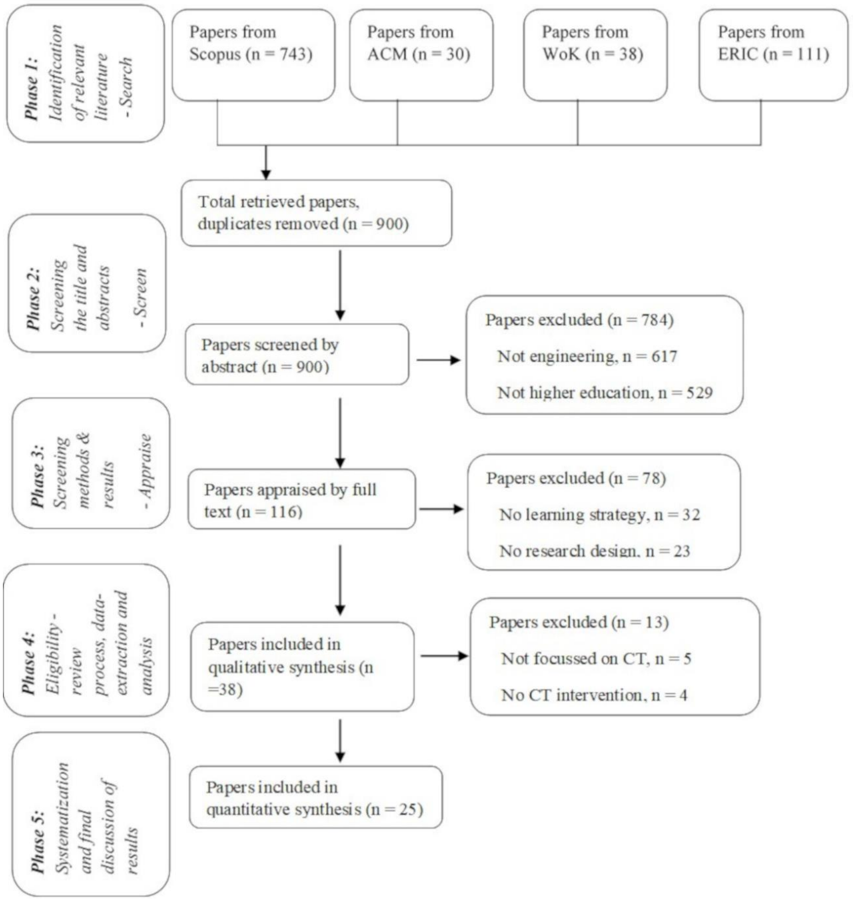
Developing optimum solutions to engineering problems typically relies on structured and complex thought processes that require evaluation, interpretation and opinion. Well-developed critical thinking (CT) skills are essential for dealing with the multi-dimensional nature of these problems. CT in an engineering context is well reported in teaching and learning academic literature. However, much of this is framed within theoretical and conceptual frameworks. Practical approaches of how CT skills are best promoted in engineering curricula are less common. A state-of-art review of practical interventions that target the development of CT in engineering students is presented. The review draws on 25 selected peer-reviewed journal articles in established engineering databases and focusses on teaching strategies where their effects in promoting CT skills in students are measured. Considerable variability in the reviewed literature was apparent. CT interventions and strategies are often reported, but metrics of their success in enhancing students’ CT is often limited to qualitative, subjective inferences. To more robustly and holistically ensure that CT is clearly embedded in university curricula, there needs to be well-funded research programmes that allow different methods to be developed and trialled over extended periods in higher education engineering programmes.
Overview
The claims and statistics of this paper haven’t been checked yet.
Free: it reads the open-access text and checks the first 5 claims that cite a source we can check. Create a free account to check every claim.
Integrity signals
Registry
Cites
Statistics
Figures
Verification
Claims the paper makes
The claims and statistics of this paper haven’t been checked yet.
Free: it reads the open-access text and checks the first 5 claims that cite a source we can check. Create a free account to check every claim.
Claims other papers make about this one
Each is checked against this paper’s own text: does it say what the citing paper says it does?
The source backs part of the claim, not all of it — or backs it for a different population, condition or comparison.
In the citing paper
“These risks are particularly pressing in higher education, where CT is not merely a desirable attribute but a foundational skill for professional practice and innovation [1,16].”
From A Systematic Literature Review on the Pedagogical Implications and Impact of GenAI on Students' Critical Thinking (2026) · cites this paper as [1]
Experimental — accuracy not yet measuredThe source backs part of the claim, not all of it — or backs it for a different population, condition or comparison.
In the citing paper
“Critical Thinking (CT) is widely recognized as an essential skill for professional readiness, innovation, and ethical decision-making in higher education [1,2].”
From A Systematic Literature Review on the Pedagogical Implications and Impact of GenAI on Students' Critical Thinking (2026) · cites this paper as [1]
Experimental — accuracy not yet measuredIn the citing paper
“Researchers, teachers, employers, and public policymakers around the world have long ranked the development of critical thinking (CT) abilities as one of the highest educational priorities and public needs in modern democratic societies (Ahern et al. 2019; Dumitru et al. 2018; Pasquinelli et al. 2021).”
From Creativity, Critical Thinking, Communication, and Collaboration: Assessment, Certification, and Promotion of 21st Century Skills for the Future of Work and Education (2023) · cites this paper as Ahern et al. 2019
In the citing paper
“The executive functions underlying general critical thinking, the ability to overcome bias (Houdé 2000; Houdé and Borst 2014), and meta-cognitive processes (i.e., meta information about our cognitive strategies) can all be trained and enhanced by educational programs (Abrami et al. 2015; Ahern et al. 2019; Alsaleh 2020; Bellaera et al. 2021; Uribe-Enciso et al. 2017; Popil 2011; Pasquinelli and Br”
From Creativity, Critical Thinking, Communication, and Collaboration: Assessment, Certification, and Promotion of 21st Century Skills for the Future of Work and Education (2023) · cites this paper as Ahern et al. 2019
Self-check
Percentages, sums and reported differences re-computed from the paper’s own numbers.
The self-check needs the paper’s full text.
Citations
Cites
Reliability and Predictive Validity of the Motivated Strategies for Learning Questionnaire (Mslq)
Pintrich, P. R., Smith, D. A. F., Garcia, T., & Mckeachie, W. J. (1993) · Educational and Psychological Measurement · doi:10.1177/0013164493053003024 · Cited by 3,646
Critical Thinking: What It Is and Why It Counts
Facione, P. A. (2011) · Cited by 2,252
Critical Thinking and Subject Specificity: Clarification and Needed Research
Ennis, R. H. (1989) · Educational Researcher · doi:10.2307/1174885 · Cited by 1,055
Abrami, P. C., Bernard, R. M., Borokhovski, E., Wade, A., Surkes, M. A., Tamim, R., & Zhang, D. (2008) · Review of Educational Research · doi:10.3102/0034654308326084 · Cited by 977 · cited 1×
“(Abrami et al. 2008), which require monitoring to evaluate the quality of thinking, and capacity for self-correction (Behar-Horenstein and Niu 2011).”
BackgroundStrategies for Teaching Students to Think Critically: A Meta-Analysis
Abrami, P. C., Bernard, R. M., Borokhovski, E., Waddington, D. I., Wade, C. A., & Persson, T. (2015) · Review of Educational Research · doi:10.3102/0034654314551063 · Cited by 932 · cited 3×
“The developed rubric was informed by Abrami et al. (2008); Tiruneh, Verburgh, and Elen (2014) and Abrami et al.”
MethodInfluentialEveryday Problem Solving in Engineering: Lessons for Engineering Educators
Jonassen, D., Strobel, J., & Lee, C. B. (2006) · Journal of Engineering Education · doi:10.1002/j.2168-9830.2006.tb00885.x · Cited by 913
An integrated critical thinking framework for the 21st century
Dwyer, C. P., Hogan, M. J., & Stewart, I. (2014) · Thinking Skills and Creativity · doi:10.1016/j.tsc.2013.12.004 · Cited by 765 · cited 2×
“The approach developed was based on the systematic review method by Borrego, Foster, and Froyd (2014; 2015) adapted to the purpose of this paper presented through the acronym PICO: P – Population: Students in Higher Education Institutions (1st and 2nd cycles) in Engineering programmes; I – Intervention: CT-related lea…”
MethodFacione, N. C., Facione, P. A., & Sanchez, C. A. (1994) · Journal of Nursing Education · doi:10.3928/0148-4834-19941001-05 · Cited by 626
Systematic Literature Reviews in Engineering Education and Other Developing Interdisciplinary Fields
Borrego, M., Foster, M. J., & Froyd, J. E. (2014) · Journal of Engineering Education · doi:10.1002/jee.20038 · Cited by 620
(2018) · doi:10.1007/s11245-016-9401-4 · Cited by 568
Research works printed but not linked: 19
- 15. Elder, L. and R. Paul. 2003. "Critical Thinking: Teaching Students how to Study and Learn." Journal of Developmental Education 27 (2): 36-38.
- 17. Ennis, R. 1996. Critical Thinking. Upper Saddle River, NJ: Prentice Hall.
- 19. Ennis, R., J. Millman and T. Tomko. 1985. Cornell Critical Thinking Test, Level X & Level Z. Pacific Grove, CA: Midwest Publications.
- 20. Facione, P. A. 1990. The California Critical Thinking Skills Test -College Leve. Technical Report #1: Experimental Validation and Content Validity. Millbrae: California Academic Press.
- 22. Facione, P.A. and Facione, N.C.1992. The California Critical Thinking Disposition Inventory. Millbrae, CA: The California Academic Press.
- 24. Facione, P. A., N. C. Facione and C. A. F. Giancarlo. 2001. California Critical Thinking Disposition Inventory: CCTDI. California Academic Press.
- 26. Halpern, D. F. 1993. "Assessing Effectiveness of Critical Thinking Instruction." The Journal of General Education 42 (4): 238-254.
- 28. Itabashi-Campbell, R., Perelli, S., and Gluesing, J. 2011. "Engineering problem solving and knowledge creation: An epistemological perspective." In Technology Management Conference (ITMC), 2011 IEEE International: 777-789.
- 35. Saiz, C. and S. Rivas. 2008. "Assessment in Critical Thinking: A Proposal for Differentiating Ways of Thinking." Ergo Nueva Epoca 22-23, 25-66.
- 39. Watson, G. and E. M. Glaser. 1964. Watson-Glaser Critical Thinking Appraisal Manual: Forms. New York, NY: Harcourt, Brace, and World. References Rubrics (25 papers) ID Reference
- 40. ID2_E Barroso, L.R. and J.R. Morgan. 2012. "Developing a Dynamics and Vibrations Course for Civil Engineering Students Based on Fundamental- Principles." Advances in Engineering Education 3 (1): 1-35.
- 43. ID13_S Dekhane, S., X. Xu and M.Y. Tsoi. 2013. "Mobile App Development to Increase Student Engagement and Problem-Solving Skills." Journal of Information Systems Education 24 (4): 299-308.
- 44. Dominguez, C., M. Nascimento, R. Payan-Carreira, G. Cruz, H. Silva, J. Lopes, M. F.A. Morais and E. Morais. 2015. "Adding Value to the Learning Process by Online Peer Review Activities: Towards the Elaboration of a Methodology to Promote Critical Thinking in Future Engineers." European Journal of Engineering Education 40 (5): 573-591. doi: 10.1080/03043797.2014.987649. · DOI · Paper page
- 46. Godfrey, P., R. Deakin Crick and S. Huang. 2014. "Systems Thinking, Systems Design and Learning Power in Engineering Education." International Journal of Engineering Education 30 (1): 112-127.
- 51. ID46 Pan, W. and J. Allison. 2010. "Exploring Project Based and Problem Based Learning in Environmental Building Education by Integrating Critical Thinking." International Journal of Engineering Education 26 (3): 547-553.
- 54. ID16 Ralston, P.A. and C.L Bays. 2015. "Critical Thinking Development in Undergraduate Engineering Students from Freshman Through Senior Year: A 3-Cohort Longitudinal Study." American Journal of Engineering Education 6 (2): 85-98.
- 57. ID19_E Senra, M. and H.S. Fogler. 2014. "Teaching Creative Thinking and Transitioning Students to the Workplace in an Academic Setting." Chemical Engineering Education 48(1): 9-16
- 60. Stolk, J. D. and R. Martello. 2015. "Can Disciplinary Integration Promote Students' Lifelong Learning Attitudes and Skills in Project-Based Engineering Courses?" International Journal of Engineering Education 31 (1): 434-449.
- 63. ID14 Yusof, Y., R. Roddin, H. Awang and M. Ibrahim Mukhtar. 2017. "Metacognitive Strategies in Promoting the Development of Generic Competences in High TVE in Malaysia." Pertanika Journal of Social Science and Humanities 25 (S): 247 -256.
Cited by
Thornhill-Miller, B., Camarda, A., Mercier, M., Burkhardt, J.-M., Morisseau, T., Bourgeois-Bougrine, S., Vinchon, F., El Hayek, S., Augereau-Landais, M., Mourey, F., et al. (2023) · Journal of Intelligence · doi:10.3390/jintelligence11030054 · Cited by 768
An Evaluative Review of Barriers to Critical Thinking in Educational and Real-World Settings
Dwyer, C. P. (2023) · Journal of Intelligence · doi:10.3390/jintelligence11060105 · Cited by 75
“CT instruction is delivered (e.g., Abrami et al. 2008, 2015; Ahern et al. 2019; Cáceres et al. 2020; Byerly 2019; Dwyer and Eigenauer 2017), along with additional considerations for and the barriers to such education, faced by teachers and students alike (e.”
Andreucci-Annunziata, P., Riedemann, A., Cortés, S., Mellado, A., del Río, M. T., & Vega-Muñoz, A. (2023) · Frontiers in Education · doi:10.3389/feduc.2023.1141686 · Cited by 206
“Finally, the remaining revisions informed methodological limitations of the studies they selected and/or did not report specific statistical tests from the studies (Ahern et al., 2019; Puig et al., 2019; Tuononen et al., 2022).”
BackgroundMethodInfluentialTraits of Complex Thinking: A Bibliometric Review of a Disruptive Construct in Education
Rojas, J. J. B., Soledad, M., Mazo-Cuervo, D. M., & López-Caudana, E. O. (2022) · Journal of Intelligence · doi:10.3390/jintelligence10030037 · Cited by 55
Lin, X., Zhang, J., Ding, Y., Sun, G., Wei, Z., Philbin, S. P., & Guo, B. H. W. (2022) · Frontiers in Psychology · doi:10.3389/fpsyg.2022.974574 · Cited by 60
“More importantly, the ability to critically approach their hypotheses and inferences, as well as communicate and argue in a way becomes an important outcome (Ahern et al., 2019).”
BackgroundRole of gamification in Engineering Education: A systematic literature review
Yasin, A. A., & Abbas, A. (2021) · IEEE Global Engineering Education Conference (EDUCON) · doi:10.1109/educon46332.2021.9454038 · Cited by 47
“Theoretical and disciplined based knowledge should be supported by interdisciplinary and soft skill centered pedagogic approaches [5, 4, 6].”
BackgroundKoehler, J., Pierrakos, O., Lamb, M., Demaske, A., Santos, C. E. D. S., Gross, M., & Brown, D. (2020) · ASEE Annual Conference & Exposition · doi:10.18260/1-2--35497 · Cited by 47
“Projectbased learning presents students with the challenge of solving a real-world problem and is thought to promote critical thinking because of the open-ended nature of the activity [30].”
BackgroundInfluentialPertiwi, N. P., Saputro, S., Yamtinah, S., & Kamari, A. (2024) · Journal of Baltic Science Education · doi:10.33225/jbse/24.23.739 · Cited by 86
Enhancing Students’ Critical Thinking Through Mathematics in Higher Education: A Systemic Review
Wang, Q., & Abdullah, A. H. (2024) · SAGE Open · doi:10.1177/21582440241275651 · Cited by 103
“These modes describe the methods instructors use to teach CT, and selecting the appropriate approach is a vital issue (Ahern et al., 2019).”
Styve, A., Virkki, O. T., & Naeem, U. (2024) · 2024 IEEE Global Engineering Education Conference (EDUCON) · doi:10.1109/educon60312.2024.10578746 · Cited by 32
“[35], [36].”
Dong, M., Li, F., & Chang, H. (2023) · Heliyon · doi:10.1016/j.heliyon.2023.e16934 · Cited by 75
“suggested that WOS was the most appropriate online database for conducting a bibliometric analysis [12].”
BackgroundBoon, M., Orozco, M., & Sivakumar, K. (2022) · European Journal for Philosophy of Science · doi:10.1007/s13194-022-00447-z · Cited by 65
“Moreover, teachers often claim that students lack a critical and investigative attitude towards scientific research (Ahern et al., 2019).”
BackgroundIgwe, P. A., Hack‐Polay, D., Mendy, J., Fuller, T., & Lock, D. (2019) · Studies in Higher Education · doi:10.1080/03075079.2019.1698534 · Cited by 47
“The reform or reengineering discourses in higher education policy (Ahern et al. 2019) have come from several education stakeholders – e.”
BackgroundLavi, R., & Marti, D. (2023) · Journal of Science Education and Technology · doi:10.1007/s10956-022-10017-w · Cited by 47
“Design problems tend to have multiple potential solutions and non-prescribed paths to solving them, requiring creativity (Jonassen, 2000) and critical thinking (Ahern et al., 2019).”
BackgroundSaroyan, A. (2022) · OECD education working papers · doi:10.1787/09b1cb3b-en · Cited by 62
Virtual Reality in Engineering Education: A Scoping Review
Λαμπρόπουλος, Γ., Fernández‐Arias, P., del Bosque, A., & Vergara, D. (2025) · Education Sciences · doi:10.3390/educsci15081027 · Cited by 49
Conceptualising critical thinking and its research in teacher education: A systematic review
Huang, J., & Sang, G. (2023) · Teachers and Teaching · doi:10.1080/13540602.2023.2212364 · Cited by 62
“Furthermore, the metrics of their success in enhancing students’ CT are usually limited to qualitative and subjective inferences (Ahern et al., 2019), which may not provide a comprehensive understanding of the interven-tions’ effectiveness for different types of research.”
BackgroundElaby, M. F., Elwishy, H. M., Moatamed, S. F., Abdelwahed, M. A., & Rashiedy, A. E. (2022) · Ain Shams Engineering Journal · doi:10.1016/j.asej.2022.101780 · Cited by 37
Ming, X., van der Veen, J. T., & MacLeod, M. (2024) · European Journal of Engineering Education · doi:10.1080/03043797.2024.2397419 · Cited by 36
“Such transferable competencies are applicable to a much broader range of professions and settings than engineering alone, and are increasingly valued by industrial employers (Ahern et al. 2019; Boelt, Kolmos, and Hol-gaard 2022).”
Li, Y., Li, X., Zhu, D., & Guo, H. (2020) · IEEE Access · doi:10.1109/access.2020.3025079 · Cited by 34
“Well-developed CT skills are essential for dealing with the multi-dimensional nature of these problems [4].”
Barak, M., & Shahab, C. (2022) · Journal of Science Education and Technology · doi:10.1007/s10956-022-09999-4 · Cited by 29
“Secondly, reported interventions in higher education lack reference to international mobility and cultural differences among students (e.g., Ahern et al., 2019; Avsec & Savec, 2019).”
BackgroundInfluentialRathnayaka, C., Ganapathi, J., Kickbusch, S., Dawes, L. A., & Brown, R. (2023) · European Journal of Engineering Education · doi:10.1080/03043797.2023.2204813 · Cited by 27
“This typically depends on structured and complex thought processes that demand evaluation, interpretation and opinion (Ahern et al. 2019).”
BackgroundChatbot Development Using LangChain: A Case Study to Foster Critical Thinking and Creativity
Farinetti, L., & Canale, L. (2024) · Proceedings of the 2024 on Innovation and Technology in Computer Science Education V. 1 · doi:10.1145/3649217.3653557 · Cited by 16
“One of the most interesting challenges is to exploit generative AI to foster fundamental skills such as creativity and critical thinking, which represent key competences for the jobs of tomorrow [1, 17, 20].”
BackgroundKhodadad, D. (2023) · International Journal of Engineering Pedagogy (iJEP) · doi:10.3991/ijep.v13i8.41755 · Cited by 42
“Engaging in problem-solving exercises develops critical thinking skills, encouraging students to analyze, evaluate, and find innovative solutions to complex problems [28, 33].”
BackgroundTechnology-Enhanced CT: A Systematic Review
Sönmez, E. (2021) · Thinking Skills and Creativity · doi:10.1016/j.tsc.2021.100913 · Cited by 23
Balart, T., Díaz, B., & Shryock, K. (2026) · Algorithms · doi:10.3390/a19030179 · Cited by 29
Cossu, R., Awidi, I. T., & Nagy, J. (2023) · Education for Chemical Engineers · doi:10.1016/j.ece.2023.10.004 · Cited by 26
Silva, H., Lopes, J. P., Cruz, G., Dominguez, C. E., & Morais, E. (2022) · Higher Education Research & Development · doi:10.1080/07294360.2022.2057448 · Cited by 25
“Thereby, CCT skills have not been systematically taught across the university curricula (Ahern et al., 2019; Payan-Carreira et al., 2019; Puig et al., 2019), and supportive faculty professional development initiatives for that purpose remain scarce (Cruz et al., 2019; Janssen et al., 2019).”
BackgroundSelf-citationEvaluation of Critical Thinking in Online Software Engineering Teaching: A Systematic Mapping Study
Ancán, Ó., Díaz, J., & Olivares-Rodríguez, C. (2021) · IEEE Access · doi:10.1109/access.2021.3135245 · Cited by 18
“Critical thinking is considered an essential skill in the training of future engineers and generally in the 21st century [5].”
BackgroundHeru, N., Wagiran, W., & Daryono, R. W. (2021) · Journal of Education Technology · doi:10.23887/jet.v5i4.40534 · Cited by 13
“Critical thinking skills involve several assumptions that must be solved and develop a design problem (Adair & Jaeger, 2016; Ahern et al., 2019).”
BackgroundOff-campus but hands-on: Mail out practicals with synchronous online activities during COVID-19
Honig, C. D. F., Sutton, C. C. R., & Bacal, D. M. (2022) · Education for Chemical Engineers · doi:10.1016/j.ece.2022.03.004 · Cited by 15
Marcos-Vílchez, J. M., Sánchez-Martín, M., & Velázquez, J. A. M. (2024) · Thinking Skills and Creativity · doi:10.1016/j.tsc.2024.101474 · Cited by 30
Technology enhanced learning of quantitative critical thinking
Lim, E. W. C. (2021) · Education for Chemical Engineers · doi:10.1016/j.ece.2021.04.001 · Cited by 21
Assessment and Attainment of Course Outcomes and Program Outcomes
Lavanya, C., & Murthy, J. N. (2022) · Journal of Engineering Education/Journal of engineering education transformations/Journal of engineering education transformation · doi:10.16920/jeet/2022/v35i4/22109 · Cited by 11
“Viewing puzzles as two-faced: theoretical and practical implications for Puzzle-based Learning”
Fontes, M. M., Morgado, L. C., Pestaña, P., Pedrosa, D., & Cravino, J. (2024) · Thinking Skills and Creativity · doi:10.1016/j.tsc.2024.101470 · Cited by 15
Self-citationA Critical Approach to ChatGPT: An Experience in SQL Learning
Farinetti, L., & Cagliero, L. (2025) · ACM Technical Symposium on Computer Science Education (SIGCSE) · doi:10.1145/3641554.3701932 · Cited by 23
“The fruitful use of generative AI requires a critical attitude, so LLMs can serve as a precious tool in education for fostering critical thinking, one of the key competences students have to acquire for their future [1, 27, 28].”
Cruz, G., & Dominguez, C. E. (2020) · IEEE Global Engineering Education Conference (EDUCON) · doi:10.1109/educon45650.2020.9125288 · Cited by 11
“And even knowing that the acquisition of CT skills is not an automatic learning outcome in engineering higher education and that it calls for explicit and continuous instruction, many interventions aimed at developing engineering students’ CT are limited to implicit approaches within short-term periods [4].”
BackgroundInfluentialSelf-citationThe impacts of peer assessment on critical thinking competence: An epistemic network analysis
Tang, J., Liu, G., Bai, J., & Jiang, J. (2024) · Journal of Hospitality Leisure Sport & Tourism Education · doi:10.1016/j.jhlste.2024.100515 · Cited by 17
Lopes, A. P. C. E. (2023) · European Journal of Engineering Education · doi:10.1080/03043797.2023.2203082 · Cited by 13
“According to Ahern et al. (2019), there must be a connection between theory and practice for the sake of critical education, and to achieve this, the process needs to take place in a tangible, practical, and understandable way.”
BackgroundCognitive Biases and the Cultural Disconnect between Engineers and Decision-makers
Booker, N. K., Gates, J. D., & Knights, P. F. (2021) · Technium Social Sciences Journal · doi:10.47577/tssj.v17i1.2752 · Cited by 13
“An attribute valued by employers is the ability to solve both technical and interpersonal problems in the workplace [70].”
Teo, C., Wang, X., Tan, S. C., & Lee, J. W. Y. (2023) · Higher Education Pedagogies · doi:10.1080/23752696.2023.2216388 · Cited by 21
Analysis of Critical Thinking Skills of Prospective Elementary School Teacher Student
Julianto, J., Wiryanto, W., Suprayitno, S., Asri Susetyo, R., Hidayati, F., & Rahmawati, E. (2023) · IJORER International Journal of Recent Educational Research · doi:10.46245/ijorer.v4i3.302 · Cited by 16
Student Learning Throughout Engineering Design Education: Review and Recommendations
Fazelpour, M., Joshi, S., Mocko, G. M., Morkos, B. W., Mozaffar, F., Murphy, A. R., Patel, A., Ramnath, S., Renu, R. S., Righter, J. A., et al. (2025) · Journal of Mechanical Design · doi:10.1115/1.4069128 · Cited by 7
Engineering Judgment and Education: An Arendtian Account
Palmås, K. (2024) · Engineering Studies · doi:10.1080/19378629.2024.2333239 · Cited by 7
21st Century Skills in the Context of Education
Todorova, S. (2024) · Cultural and Historical Heritage Preservation Presentation Digitalization · doi:10.55630/kinj.2024.100109 · Cited by 6
King, C., & Lopour, B. A. (2025) · Biomedical Engineering Education · doi:10.1007/s43683-025-00192-8 · Cited by 11
“Therefore, there is a need to teach students to critically evaluate the information provided by these tools [5, 13]; such critical-thinking skills support both short-term learning gains and long-term engineering career success [14].”
How STEM students think: an AI-powered systematic review of thinking skills in STEM higher education
Vermehren, J. A. V. (2025) · Discover Education · doi:10.1007/s44217-025-00936-2 · Cited by 10
Lim, H., Choi, D., Choi, D., Nam, S., & Hong, H. (2025) · International Journal of Human-Computer Studies · doi:10.1016/j.ijhcs.2025.103687 · Cited by 9
Jiménez, C. A. R., Lokker, C., Ibhawoh, B., & Schwartz, L. J. (2026) · Discover Public Health · doi:10.1186/s12982-026-01568-z · Cited by 7
Tecnologico de Monterrey, M., Vázquez‐Villegas, P., Garay-Rondero, C. L., Tecnologico de Monterrey, M., Deng, B., Mejía‐Manzano, L. A., Tecnologico de Monterrey, M., Chen, D., Membrillo‐Hernández, J., & Corresponding author, T. D. M. (2023) · International Journal of Instruction · doi:10.29333/iji.2023.16452a · Cited by 9
Cruz, G., Dominguez, C. E., & Cerveira, A. (2021) · International Conference of the Portuguese Society for Engineering Education (CISPEE) · doi:10.1109/cispee47794.2021.9507213 · Cited by 6
Self-citationHow to Improve Critical Thinking in Physics Learning? A Systematic Literature Review
Ubaidillah, M., Hartono, H., Marwoto, P., Wiyanto, W., & Subali, B. (2023) · Journal of Educational Cultural and Psychological Studies (ECPS Journal) · doi:10.7358/ecps-2023-028-ubai · Cited by 36
Virtual Reality Critical Thinking Training of Engineers in the Vertical Transportation Industry
Jarrah-Nezhad, Y., Paipa-Galeano, L. A., Torres, C. A. B., Garzón, W., Delghans-Jacome, Y., & Páez-Caicedo, A. F. (2024) · IEEE Access · doi:10.1109/access.2024.3457885 · Cited by 7
“Development of CT skills is important in this context [21].”
Li, T. (2024) · Culture and Education · doi:10.1177/11356405241268982 · Cited by 6
“Desde esta perspectiva, diversos autores tienen cuidado de no vincular los conceptos pen-samiento ‘crítico’ y ‘creativo’ (Ahern et al., 2019).”
Is Critical Thinking a Skill or a Way to Develop Skills? An Overview in Engineering Education
Leão, C. P., & Ferreira, A. C. (2022) · Lecture notes in mechanical engineering · doi:10.1007/978-3-031-09382-1_24 · Cited by 38
Lim, H., Choi, D., & Hong, H. (2024) · ACM Conference on Computer Supported Cooperative Work (CSCW) · doi:10.1145/3678884.3681912 · Cited by 12
“Educational strategies such as Problem-based Learning (PBL) [9], role-play [2], and peer review [9] were suggested to motivate students and instill a critical attitude.”
Augmented Reality in Engineering Education: A Bibliometric Review
Λαμπρόπουλος, Γ., del Bosque, A., Fernández‐Arias, P., & Vergara, D. (2025) · Information · doi:10.3390/info16100859 · Cited by 9
“…applications [9], it is becoming increasingly important for engineering students to develop their critical thinking, reasoning, and soft skills [10–12] as well as to acquire hands-on experience in problem-based and practice-oriented learning experiences that simulate closely real-world problems…”
A Gamified Learning Framework to Cultivate Critical Thinking Skills in Students
Srinivasa, K. G., Singh, A. K., & Chauhan, K. K. S. (2024) · IEEE Transactions on Education · doi:10.1109/te.2024.3431872 · Cited by 9
Energy under debate: Fostering critical thinking in chemical engineering through in-class debates
Mesa, M. D. M., Valor, D., Montes, A., & García-Casas, I. (2025) · Education for Chemical Engineers · doi:10.1016/j.ece.2025.03.002 · Cited by 9
Stimulating Critical Thinking in a Web Programming Module with Generative AI Tools
Naeem, U., Styve, A. G., & Virkki, O. T. (2025) · IEEE Global Engineering Education Conference (EDUCON) · doi:10.1109/educon62633.2025.11016298 · Cited by 8
“According to reviews, most papers on CT in the software engineering context did not provide any instrument for evaluating CT [16], [20].”
InfluentialPhusavat, K., Ongkunaruk, P., & Anussornnitisarn, P. (2025) · Studies in Higher Education · doi:10.1080/03075079.2025.2531841 · Cited by 18
Carvajal, S. A., Imbert, M. M., Navarro, T., & Cadevilla, K. A. (2022) · Revista de Estudios y Experiencias en Educación · doi:10.21703/0718-5162.v21.n46.2022.013 · Cited by 24
“Sin embargo, algunos estudios han advertido que la habilidad de pensamiento crítico en ingenieros graduados es menor a la que se espera en contextos reales (Ahern et al., 2019; Domínguez, 2018).”
BackgroundPensamiento crítico como horizonte formativo en el currículum de ingeniería
Giuliano, H. G., & Abate, S. M. (2023) · Revista Educación en Ingeniería · doi:10.26507/rei.v18n35.1247 · Cited by 8
Habilidades blandas para el emprendimiento en Ingeniería
Jaimes-Acero, Y.-C., Granados-Comba, A., & León, R. (2022) · Revista Facultad de Ingeniería · doi:10.19053/01211129.v31.n59.2022.14167 · Cited by 4
Mistry, H., Laila, D. S., & Foo, M. F. L. (2023) · International Journal of Mechanical Engineering Education · doi:10.1177/03064190231190052 · Cited by 6
“It is vital to equip the next generation of engineers with a high-level of critical thinking and creativity 1 to enable them to contribute to global societal development, 2 which is why this article is centred around bridging the gap between current engineering education and practical applications…”
Díaz-Durán, F. A. (2025) · Lecture notes on data engineering and communications technologies · doi:10.1007/978-981-97-9255-9_37 · Cited by 6
Critical thinking in higher education: Identifying the pedagogical practices and modes of engagement
Shahab, C., & Barak, M. (2025) · Thinking Skills and Creativity · doi:10.1016/j.tsc.2025.102041 · Cited by 18
Integrating Industry 5.0 Competencies: A Learning Factory Based Framework
Agbomemewa, L., Daniele, F., Foletti, M., Confalonieri, M., & Pedrazzoli, P. (2024) · IFIP advances in information and communication technology · doi:10.1007/978-3-031-65894-5_29 · Cited by 3
The Evaluation of Ignation Pedadogical Paradigm Framework to Engineering Ethics Education
Victor, G., Abdullah, S., & Affandi, H. M. (2022) · Jurnal Kejuruteraan · doi:10.17576/jkukm-2022-si5(2)-07 · Cited by 4
Oliveri, M. E., & Poe, M. (2025) · Journal of Research on Technology in Education · doi:10.1080/15391523.2025.2568515 · Cited by 3
“Engineering educators and researchers also are developing practical critical thinking, active learning strategies, and design-based learning in engineering classrooms (Ahern et al., 2019; Gómez Puente et al., 2011; Hernández-de-Menéndez et al., 2019).”
Sivakumar, K., & Boon, M. (2026) · European Journal of Engineering Education · doi:10.1080/03043797.2025.2609749 · Cited by 10
Evaluating the Impacts of Community Service on Student Learning Outcomes
Benning, J. L., & Oakes, W. C. (2020) · ASEE Annual Conference & Exposition · doi:10.18260/1-2--34600 · Cited by 2
“Formalized, quantitative assessments of the impacts of service learning on students’ professional development skills, such as critical thinking[8, 9] and intercultural competence are still needed.”
BackgroundGAMIFICATION STRATEGIES IN HIGHER EDUCATION: LEVERAGING PAST IN THE ERA OF PANDEMIC
Yasin, A. A. (2021) · International conference on education · doi:10.17501/24246700.2021.7105 · Cited by 3
Factors influencing civil engineering university students’ decision making
Lester, D. (2022) · European Journal of Engineering Education · doi:10.1080/03043797.2022.2052810 · Cited by 8
“However, the observation that the intervention improves students’ critical thinking skills is unsurprising as the development of such skills, in an engineering context, is well reported in teaching and learning academic literature, although much of this is framed within theoretical and conceptual frameworks (Ahern et…”
BackgroundWorking on Critical Thinking skills using the computer lab works of an Engineering subject
Giner‐Navarro, J., Sonseca, Á., Martínez‐Casas, J., & Carballeira, J. (2022) · Multidisciplinary Journal for Education Social and Technological Sciences · doi:10.4995/muse.2022.17908 · Cited by 3
Alkan, B. T., & Seferoğlu, S. S. (2023) · Çukurova Üniversitesi Sosyal Bilimler Enstitüsü Dergisi · doi:10.35379/cusosbil.1252889 · Cited by 3
Brown, J. R., Long, L., Mitchell, T., & Rohrbacher, C. M. (2024) · ASEE Annual Conference & Exposition · doi:10.18260/1-2--41178 · Cited by 2
Cruz, J., Nuñez, E., & Carrell, J. (2024) · Studies in Engineering Education · doi:10.21061/see.120 · Cited by 2
A Critical Thinking Paradigm for Materials and Manufacturing Education
Qamar, S. Z., Arunachalam, R. M., & Qamar, S. Z. (2021) · ASEE Annual Conference & Exposition · doi:10.18260/1-2--36572 · Cited by 2
Riznyk, V. (2023) · Professional Education Methodology Theory and Technologies · doi:10.31470/2415-3729-2023-18-174-191 · Cited by 2
Para‐González, L., Cubillas‐Para, C., & Mascaraque‐Ramírez, C. (2023) · Studies in Higher Education · doi:10.1080/03075079.2023.2199322 · Cited by 1
“Among these studies, PBL has been applied in fields such as mathematics, engineering, social studies, literacy, environmental sciences, history, science, technology and language, being very useful in engineering studies (Ahern et al. 2019).”
MethodMio, C., & DOMBI, E. R. (2023) · Open Scholarship of Teaching and Learning · doi:10.56230/osotl.50 · Cited by 2
“These problem-based and project-based activities will require higher cognitive skills, such as critical thinking and creativity (Ahern et al., 2019).”
BackgroundKatzman, S. D., Carrion, C. A., & Hurst-Kennedy, J. (2024) · Trends in Higher Education · doi:10.3390/higheredu3030041 · Cited by 3
Altunışık, M., & Aktürk, A. O. (2025) · Participatory Educational Research · doi:10.17275/per.25.29.12.2 · Cited by 1
Critical Thinking Skills and Computer Simulations of Free Rigid Body Motion
Lozovenko, O., Minaiev, Y. P., & Datsenko, I. (2025) · Lecture notes in networks and systems · doi:10.1007/978-3-031-85649-5_22 · Cited by 1
Development of an MEB Novice Chatbot to Improve Chemical Engineering Critical Thinking
Chen, C. V. H.-H., & Ratanalert, S. (2025) · ASEE Annual Conference & Exposition · doi:10.18260/1-2--56281 · Cited by 4
Assessing the Critical Thinking and Deep Analysis in Medical Education Among Instructional Practices
Alhassan, A. I. (2023) · Advances in Medical Education and Practice · doi:10.2147/amep.s417649 · Cited by 1
Mohammadi, Y., Vinnervik, P., & Khodadad, D. (2024) · Education Sciences · doi:10.3390/educsci14060631 · Cited by 7
Need Analysis for Development of Inquiry-Based STEM Materials to Improve Critical Thinking Skills
Fitri, N. J., & Syafriani, S. (2024) · Jurnal Penelitian Pendidikan IPA · doi:10.29303/jppipa.v10i8.7309 · Cited by 3
“They have placed improving critical thinking skills as a top priority in education and society (Ahern et al., 2019; Pasquinelli et al., 2021).”
BackgroundPujadas, P., & Aidarov, S. (2024) · Education Sciences · doi:10.3390/educsci14090969 · Cited by 1
Deng, Z., Du, T., Deng, K., Lin, L., Li, S., & Wang, Z. (2024) · Higher Education Research · doi:10.11648/j.her.20240906.15 · Cited by 1
Hussain, A., Yeong, E., & Foo, M. F. L. (2025) · International Journal of Mechanical Engineering Education · doi:10.1177/03064190251356612 · Cited by 1
“A key attribute that engineering students should develop through education is the ability to think critically and creatively, 1,2 as these skills are essential for contributing to global societal development.”
Удовенко, Е. В. (2025) · Management of Education · doi:10.25726/g1842-5638-3189-x · Cited by 1
Critical Thinking in Software Engineering and Virtual Classrooms: What are we doing?
Díaz, J., Ancán, Ó., & Olivares-Rodríguez, C. (2021) · International Conference on Virtual Campus (JICV) · doi:10.1109/jicv53222.2021.9600385 · Cited by 1
A New Course Development in Usability Engineering: Hands-On Learning Based on Research Work
Aref, E., & Fredericks, T. K. (2021) · ASEE Annual Conference & Exposition · doi:10.18260/1-2--36599 · Cited by 3
(2023) · Education and new developments · doi:10.36315/2023v2end028 · Cited by 2
“The systematic review of English language literature was conducted according to the method designed by Ahern et al. (2019), who analyzed CT in engineering education. Ahern’s procedure is an adaptation of the general method proposed by Borrego, Foster and Froid (2014) for systematics reviews in engineering education.”
BackgroundMethodInfluentialFrom Topic to Thesis: Critical Engagement with Generative AI in Thesis Preparation
Virkki, O. T., Naeem, U., & Styve, A. (2026) · 2026 IEEE Global Engineering Education Conference (EDUCON) · doi:10.1109/educon67543.2026.11574181
“According to a study among employers, engineering graduates demonstrated strong technical competencies but inadequate CT skills [14].”
Importance of Communication Skills and the Needs of Engineering Students from Rural Areas
Ramya, D. R. D., & Saranya Devi, P. (2020) · Innovations in Information and Communication Technology Series · doi:10.46532/978-81-950008-1-4_041 · Cited by 2
“The findings state that motivation improves success but, it is not fixed but it is strongly improved and affected by feedback from the environment which is associated with the learners [12].”
BackgroundFrancis, R. A., & Ferguson, J. (2024) · ASEE Middle Atlantic Section Spring Conference · doi:10.18260/1-2--45726
Kavale, S., Jordan, S. S., & Carberry, A. R. (2024) · Research in Engineering Education Symposium (REES) · doi:10.52202/073963-0004
Metadata
- Authors
- Ahern, A., Dominguez, C., McNally, C., O’Sullivan, J. J., & Pedrosa, D.
- Affiliations
- University College Dublin (IE)
- University of Trás-os-Montes and Alto Douro (PT)
- School of Civil Engineering, University College Dublin, Dublin, Ireland
- Corresponding author
- Ahern, Aoife
- Venue
- Studies in Higher Education
- Publisher
- Informa UK Limited
- Published
- 2019-03-08
- Volume
- 44
- Issue
- 5
- Pages
- 816-828
- ISSN
- 0307-5079 (ISSN-L)
- 1470-174X
- OpenAlex
- W2921586224
- Semantic Scholar
- 060a0434a07bc9adca5a7d7006cb883add3d1674
- Cited by
- 127
- References
- 34
- Citations by year
- 2026: 18 · 2025: 27 · 2024: 28 · 2023: 22 · 2022: 15 · 2021: 11 · 2020: 5 · 2019: 1
- FWCI
- 21.61
- Type
- journal article
- Language
- en
- Open access
- green
- hdl.handle.net
- Licence
- cc-by-nc-nd
- Locations
- Studies in Higher Education (publishedVersion)
- Arrow@dit (Dublin Institute of Technology) (acceptedVersion)
- Portuguese National Funding Agency for Science, Research and Technology (RCAAP Project by FCT) (submittedVersion, cc-by-nc-nd)
- Research Repository UCD (University College Dublin) (submittedVersion, cc-by-nc-nd)
- Portuguese National Funding Agency for Science, Research and Technology (RCAAP Project by FCT) (submittedVersion, cc-by)
- Funders
- ERASMUS+ Programme [European Commission/EACEA] (2016-1-PT01-KA203-022808)
- Topics
- Social Sciences › Education › Education and Critical Thinking Development
- Social Sciences › Education › Engineering Education and Curriculum Development
- Physical Sciences › Engineering › Mechanical Engineering › Design Education and Practice
- Keywords
- critical thinking, engineering education, engineering curriculum, teaching methods, engineering students, higher education, curriculum development
About these checks
Registry, retraction, Cites and statistics results are computed, not judged, with one exception: a printed reference that no index lists is read once by a model before it counts as a citation error. Claims are extracted by a model and kept only when their quote appears verbatim in the text; each cited source is then checked, with a model’s help, for whether it says what the claim relies on. Those verdicts can be wrong — read the claim’s quote and the cited source before relying on one.
Statistics and arithmetic are recomputed, not judged.
Confidence bands are shown only for fields calibrated on our annotated test set. None is calibrated yet, so no band is shown.
What counts as a claim ›How we measure confidence ›How we check this ›
Are you an author, or do you see a problem with this page? Request a review
Data sources
Bibliographic data: Semantic Scholar, OpenAlex, Crossref.
Contains information from the Semantic Scholar Academic Graph Datasets, made available under the ODC Attribution License (ODC-BY 1.0).
Semantic Scholar’s data is described in: Kinney, R., et al. (2023). The Semantic Scholar Open Data Platform. arXiv:2301.10140.
