

Psyllium seed husk regulates the gut microbiota and improves mucosal barrier injury in the colon to attenuate renal injury in 5/6 nephrectomy rats
Open accessThe DOI matches its Crossref record; 40 of the 41 references it cites were found in a registry or an index.
Abstract
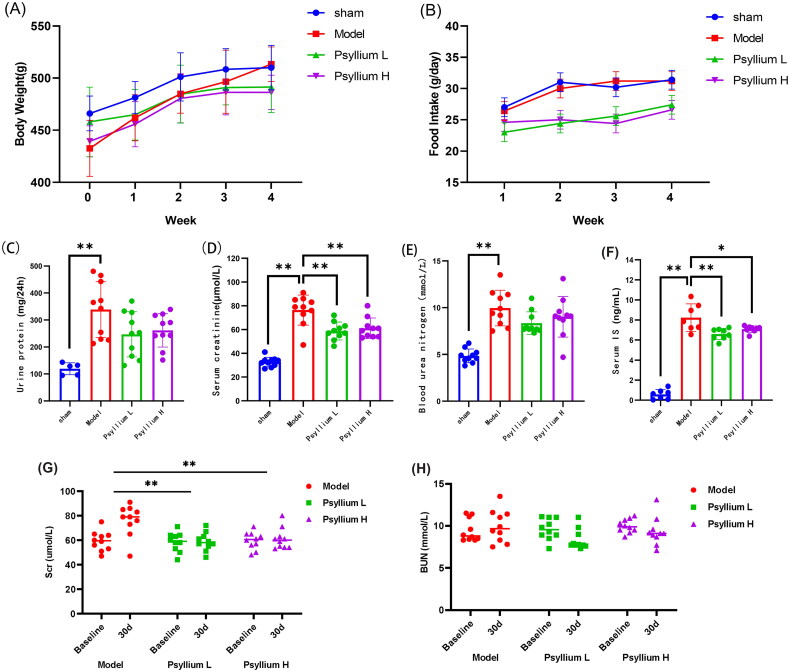
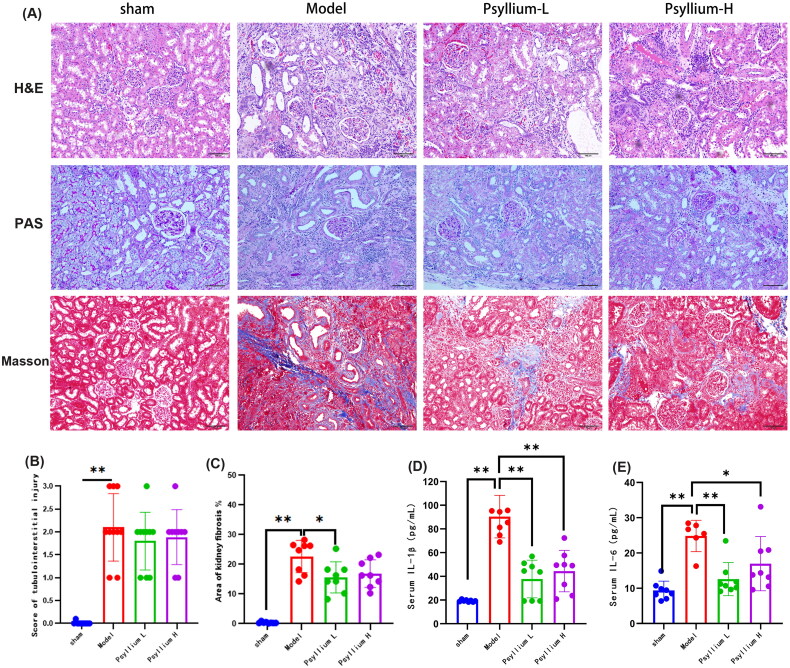
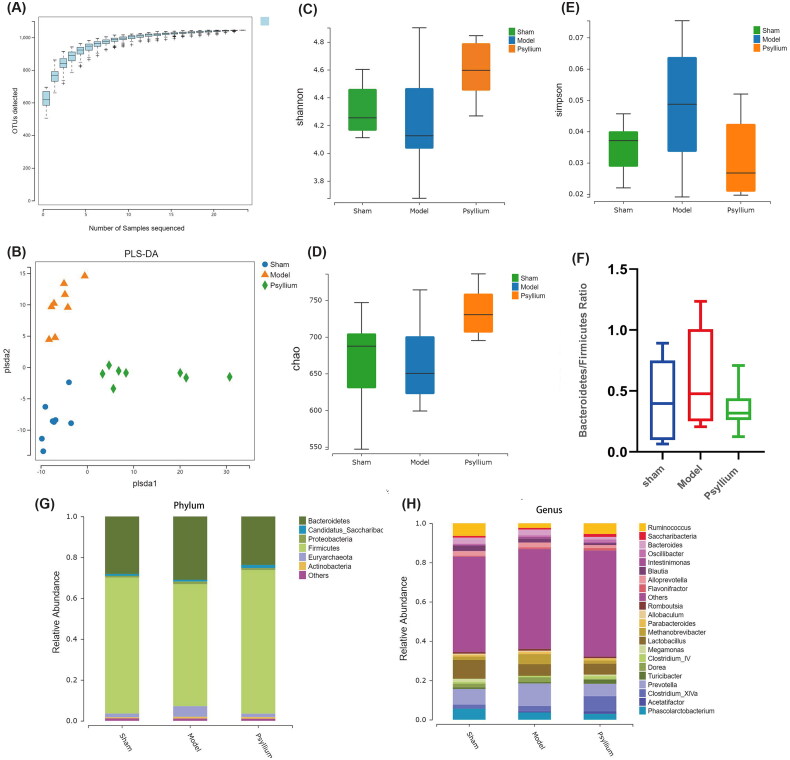
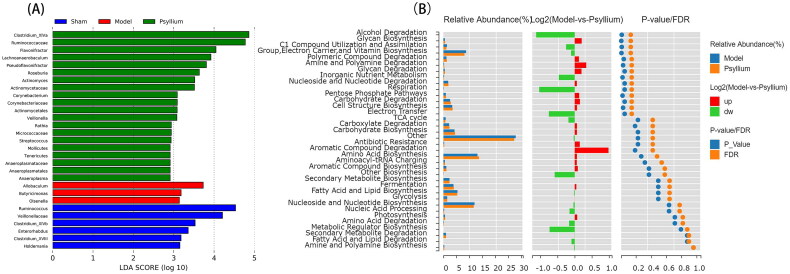
Chronic kidney disease (CKD) can cause gut microbiota dysbiosis and thus impair intestinal barrier function. Disruption of intestinal homeostasis facilitates the production of enterogenic toxins, which exacerbate CKD-induced uremic toxicity and inflammation. Dietary fiber, by targeting the gut–kidney axis, could be used for CKD treatment. Psyllium seed husk (PSH) extracted from the seeds of Plantago ovata contains highly branched, gel-forming arabinoxylan. Positive effects of PSH on host physiology have been demonstrated but whether it also acts on the microbial ecosystem in CKD patients is unknown. In this study, the effects of dietary PSH on the gut microbiota, intestinal barrier function, systemic inflammation, uremic toxins, and renal injury were investigated in 5/6 nephrectomy (5/6Nx) CKD rats. Blood, feces, and kidney and colon tissues were collected from PSH-treated and control rats and subjected to biochemical and histological analyses, enzyme-linked immunosorbent assays, and 16SrRNA sequencing. PSH supplementation reduced serum creatinine and blood urea nitrogen levels, and attenuated renal tubular interstitial injury, in 5/6Nx rats. 16SrRNA sequencing showed that PSH improved the gut microbiota and intestinal barrier function in addition to down-regulating serum interleukin (IL)-1, IL-6, and indoxyl sulfate levels. Together, these results demonstrate the potential of PSH supplementation for treating CKD, including by improving intestinal microecology, reducing uremic toxin levels and systemic inflammation, and delaying disease progression.
Overview
The claims and statistics of this paper haven’t been checked yet.
Free: it reads the open-access text and checks the first 5 claims that cite a source we can check. Create a free account to check every claim.
Integrity signals
Registry
Cites
Statistics
Figures
Verification
Claims the paper makes
The claims and statistics of this paper haven’t been checked yet.
Free: it reads the open-access text and checks the first 5 claims that cite a source we can check. Create a free account to check every claim.
Claims other papers make about this one
Each is checked against this paper’s own text: does it say what the citing paper says it does?
The source backs part of the claim, not all of it — or backs it for a different population, condition or comparison.
In the citing paper
“Thus, specific probiotics may support endogenous GLP-1 signaling and potentially complement GLP-1RAs by visceral fat, body weight, and waist circumference reduction [143,144,257]”
From Nutritional Approaches to Enhance GLP-1 Analogue Therapy in Obesity: A Narrative Review (2025) · cites this paper as [257]
Experimental — accuracy not yet measuredIn the citing paper
“In a 12-week randomized placebo-controlled trial, overweight adults (BMI 25-35) receiving L. gasseri BNR17 (10 billion CFU/day) had a ~22 cm 2 decrease in visceral adiposity and reduced waist circumference versus placebo”
From Nutritional Approaches to Enhance GLP-1 Analogue Therapy in Obesity: A Narrative Review (2025) · cites this paper as [257]
Self-check
Percentages, sums and reported differences re-computed from the paper’s own numbers.
The self-check needs the paper’s full text.
Citations
Cites
Dethlefsen, L., Huse, S., Sogin, M. L., & Relman, D. A. (2008) · PLoS Biology · doi:10.1371/journal.pbio.0060280 · Cited by 2,361 · cited 1×
“A number of drug-based therapies have thus been proposed to modify gut microbial metabolism, including a-glucosidase inhibitors [23] and antibiotics [24].”
BackgroundHow glycan metabolism shapes the human gut microbiota
Koropatkin, N. M., Cameron, E. A., & Martens, E. C. (2012) · Nature Reviews Microbiology · doi:10.1038/nrmicro2746 · Cited by 1,419 · cited 1×
“The arabinose and butyrate produced by PSH degradation may also act as active components [32], as 8 D.”
BackgroundTang, W. H. W., Wang, Z., Kennedy, D. J., Wu, Y., Buffa, J. A., Agatisa-Boyle, B., Li, X. S., Levison, B. S., & Hazen, S. L. (2015) · Circulation Research · doi:10.1161/circresaha.116.305360 · Cited by 1,223
Sonnenburg, E. D., & Sonnenburg, J. L. (2014) · Cell Metabolism · doi:10.1016/j.cmet.2014.07.003 · Cited by 861
The Gut Microbiome, Kidney Disease, and Targeted Interventions
Ramezani, A., & Raj, D. S. (2014) · Journal of the American Society of Nephrology · doi:10.1681/asn.2013080905 · Cited by 743
Wong, J., Piceno, Y. M., DeSantis, T. Z., Pahl, M., Andersen, G. L., & Vaziri, N. D. (2014) · American Journal of Nephrology · doi:10.1159/000360010 · Cited by 638
Burger-van Paassen, N., Vincent, A., Puiman, P. J., van der Sluis, M., Bouma, J., Boehm, G., van Goudoever, J. B., van Seuningen, I., & Renes, I. B. (2009) · Biochemical Journal · doi:10.1042/bj20082222 · Cited by 611
Clark, A., & Mach, N. (2016) · Journal of the International Society of Sports Nutrition · doi:10.1186/s12970-016-0155-6 · Cited by 583 · cited 1×
“Turicibacter is involved in fermentation [34], Oscillibacter produces SCFAs [35], and Saccharibacter may reduce SCr levels and increase estimated glomerular filtration rates [36].”
BackgroundThe global burden of chronic kidney disease: estimates, variability and pitfalls
Glassock, R. J., Warnock, D. G., & Delanaye, P. (2017) · Nature Reviews Nephrology · doi:10.1038/nrneph.2016.163 · Cited by 511
Thingholm, L. B., Rühlemann, M. C., Koch, M., Fuqua, B., Laucke, G., Boehm, R., Bang, C., Franzosa, E. A., Hübenthal, M., Rahnavard, A., et al. (2019) · Cell Host & Microbe · doi:10.1016/j.chom.2019.07.004 · Cited by 451
Raj Krishnamurthy, V. M., Wei, G., Baird, B. C., Murtaugh, M., Chonchol, M. B., Raphael, K. L., Greene, T., & Beddhu, S. (2012) · Kidney International · doi:10.1038/ki.2011.355 · Cited by 409 · cited 2×
“The decrease in intestinal urea levels protects TJ proteins in the intestinal tract [9].”
BackgroundVaziri, N. D., Zhao, Y.-Y., & Pahl, M. V. (2016) · Nephrology Dialysis Transplantation · doi:10.1093/ndt/gfv095 · Cited by 394
Vaziri, N. D., Yuan, J., & Norris, K. (2013) · American Journal of Nephrology · doi:10.1159/000345969 · Cited by 381
Llewellyn, S. R., Britton, G. J., Contijoch, E. J., Vennaro, O. H., Mortha, A., Colombel, J.-F., Grinspan, A., Clemente, J. C., Merad, M., & Faith, J. J. (2018) · Gastroenterology · doi:10.1053/j.gastro.2017.11.030 · Cited by 364 · cited 2×
“Among the nutritional benefits of PSH are reductions in the glycemic index, the risk of cardiovascular disease, cholesterol levels, and constipation, as well as positive effects on the gut microbiota [14, 31].”
BackgroundMucosal Ecological Network of Epithelium and Immune Cells for Gut Homeostasis and Tissue Healing
Kurashima, Y., & Kiyono, H. (2017) · Annual Review of Immunology · doi:10.1146/annurev-immunol-051116-052424 · Cited by 329
Vaziri, N. D., Yuan, J., Rahimi, A., Ni, Z., Said, H., & Subramanian, V. S. (2012) · Nephrology Dialysis Transplantation · doi:10.1093/ndt/gfr624 · Cited by 308
Evenepoel, P., Poesen, R., & Meijers, B. (2017) · Pediatric Nephrology · doi:10.1007/s00467-016-3527-x · Cited by 305 · cited 1×
“Several studies [2,3] have demonstrated a bidirec-”
Chronic kidney disease and the gut microbiome
Hobby, G. P., Karaduta, O., Dusio, G. F., Singh, M., Zybailov, B. L., & Arthur, J. M. (2019) · American Journal of Physiology-Renal Physiology · doi:10.1152/ajprenal.00298.2018 · Cited by 267
Andersen, K., Kesper, M. S., Marschner, J. A., Konrad, L., Ryu, M., Kumar VR, S., Kulkarni, O. P., Mulay, S. R., Romoli, S., Demleitner, J., et al. (2017) · Journal of the American Society of Nephrology · doi:10.1681/asn.2015111285 · Cited by 266
Alterations of intestinal barrier and microbiota in chronic kidney disease
Sabatino, A., Regolisti, G., Brusasco, I., Cabassi, A., Morabito, S., & Fiaccadori, E. (2015) · Nephrology Dialysis Transplantation · doi:10.1093/ndt/gfu287 · Cited by 227
The effect of psyllium husk on intestinal microbiota in constipated patients and healthy controls
Jalanka, J., Major, G., Murray, K., Singh, G., Nowak, A., Kurtz, C., Silos-Santiago, I., Johnston, J. M., de Vos, W. M., & Spiller, R. (2019) · International Journal of Molecular Sciences · doi:10.3390/ijms20020433 · Cited by 219 · cited 2×
“It is a highly branched, gel-forming arabinoxylan and polymer rich in arabinose and xylose [13].”
BackgroundBach Knudsen, K. E. (2015) · Advances in Nutrition · doi:10.3945/an.114.007450 · Cited by 186
Xu, F., Fu, Y., Sun, T., Jiang, Z., Miao, Z., Shuai, M., Gou, W., Ling, C.-W., Yang, J., Wang, J., et al. (2020) · Microbiome · doi:10.1186/s40168-020-00923-9 · Cited by 168
Dietary fibre, physicochemical properties and their relationship to health
Blackwood, A. D., Salter, J., Dettmar, P. W., & Chaplin, M. F. (2000) · Journal of the Royal Society for the Promotion of Health · doi:10.1177/146642400012000412 · Cited by 167
Psyllium: a useful functional ingredient in food systems
Belorio, M., & Gómez, M. (2020) · Critical Reviews in Food Science and Nutrition · doi:10.1080/10408398.2020.1822276 · Cited by 166
Li, Y., Xu, B., Xu, M. Q., Chen, D., Xiong, Y., Lian, M., Sun, Y., Tang, Z., Wang, L., Jiang, C., et al. (2017) · Pharmacological Research · doi:10.1016/j.phrs.2017.01.026 · Cited by 161
Su, B., Liu, H., Li, J., Sunli, Y., Liu, B., Liu, D., Zhang, P., & Meng, X. (2015) · Journal of Diabetes · doi:10.1111/1753-0407.12232 · Cited by 137
Howlett, J., Betteridge, V., Champ, M., Craig, S. S., Meheust, A., & Jones, J. M. (2010) · Food & Nutrition Research · doi:10.3402/fnr.v54i0.5750 · Cited by 125
Honzawa, Y., Nakase, H., Matsuura, M., & Chiba, T. (2011) · Inflammatory Bowel Diseases · doi:10.1002/ibd.21588 · Cited by 121
Nutrition Prescription to Achieve Positive Outcomes in Chronic Kidney Disease: A Systematic Review
Ash, S., Campbell, K. L., Bogard, J., & Millichamp, A. (2014) · Nutrients · doi:10.3390/nu6010416 · Cited by 111
Major Cereal Grain Fibers and Psyllium in Relation to Cardiovascular Health
Bernstein, A., Titgemeier, B., Kirkpatrick, K., Golubic, M., & Roizen, M. (2013) · Nutrients · doi:10.3390/nu5051471 · Cited by 109
Jones, J. M. (2013) · Advances in Nutrition · doi:10.3945/an.112.002907 · Cited by 108
Gut Microbiome Composition Associated With Major Depressive Disorder and Sleep Quality
Zhang, Q., Yun, Y., An, H., Zhao, W., Ma, T., Wang, Z., & Yang, F. (2021) · Frontiers in Psychiatry · doi:10.3389/fpsyt.2021.645045 · Cited by 88
The Kidney–Gut Axis: Implications for Nutrition Care
Rossi, M., Johnson, D. W., & Campbell, K. L. (2015) · Journal of Renal Nutrition · doi:10.1053/j.jrn.2015.01.017 · Cited by 72
The gut‐kidney axis in chronic renal failure: A new potential target for therapy
Khoury, T., Tzukert, K., Abel, R., Rmeileh, A. A., Levi, R., & Ilan, Y. (2016) · Hemodialysis International · doi:10.1111/hdi.12486 · Cited by 69
Fermentable Carbohydrate Supplementation Alters Nitrogen Excretion in Chronic Renal Failure
Younes, H., Egret, N., Hadj-Abdelkader, M., Rémésy, C., Demigné, C., GUERET, C., Deteix, P., & Alphonse, J.-C. (2006) · Journal of Renal Nutrition · doi:10.1053/j.jrn.2005.10.007 · Cited by 64
Meng, Y., Zhang, Y., Liu, M., Huang, Y. K., Zhang, J., Yao, Q., Zhao, Y. L., & Xiong, J. (2016) · Anti-Cancer Agents in Medicinal Chemistry · doi:10.2174/1871520615666150812125955 · Cited by 37
Lu, Z., Zeng, Y., Lu, F., Liu, X., & Zou, C. (2015) · PLoS ONE · doi:10.1371/journal.pone.0144726 · Cited by 30
Self-citationZou, C., Lu, Z., Wu, Y., Yang, L., Su, G., Jie, X., & Liu, X. (2013) · Chinese Journal of Integrative Medicine · doi:10.1007/s11655-013-1351-8 · Cited by 24
Self-citationDietary Protein and Fiber in End Stage Renal Disease
Sirich, T. L. (2014) · Seminars in Dialysis · doi:10.1111/sdi.12315 · Cited by 22
Liu, W., Tang, N., & Zhang, Q. (2009) · Chinese Medical Journal · doi:10.3760/cma.j.issn.0366-6999.2009.02.017 · Cited by 16
Self-citation
Cited by
The roles of gut microbiota and its metabolites in diabetic nephropathy
Zhao, H., Yang, C.-E., Liu, T., Zhang, M., Niu, Y., Wang, M., & Yu, J. Q. (2023) · Frontiers in Microbiology · doi:10.3389/fmicb.2023.1207132 · Cited by 70
Jiang, H., Wang, X., Zhou, W., Huang, Z., & Zhang, W. (2025) · Frontiers in Endocrinology · doi:10.3389/fendo.2025.1661037 · Cited by 45
Sun, Y., Yao, J., Gao, R., Hao, J., Liu, Y., & Liu, S. (2025) · International Journal of Biological Macromolecules · doi:10.1016/j.ijbiomac.2025.139664 · Cited by 23
Chen, J., Jiang, F., Xu, N., Dong, G., Jiang, J., Wang, M., Li, C., & Li, R. (2024) · Journal of Medicinal Food · doi:10.1089/jmf.2023.k.0247 · Cited by 16
Ma, H., Shen, L., Zhao, L., & Ji, H. (2025) · Food & Function · doi:10.1039/d5fo02694f · Cited by 11
Metadata
- Authors
- Hu, D., Liu, W., Yu, W., Huang, L., Ji, C., Liu, X., & Lu, Z.
- Affiliations
- Guangzhou University of Chinese Medicine (CN)
- Corresponding author
- Liu, Xusheng
- Lu, Zhaoyu
- Venue
- Renal Failure
- Publisher
- Informa UK Limited
- Published
- 2023-04-05
- Volume
- 45
- Issue
- 1
- Pages
- 2197076-2197076
- ISSN
- 0886-022X (ISSN-L)
- 1525-6049
- PMC
- PMC10078125
- OpenAlex
- W4362602154
- Cited by
- 21
- References
- 41
- Citations by year
- 2026: 5 · 2025: 9 · 2024: 6 · 2023: 1
- FWCI
- 1.87
- Type
- journal article
- Language
- en
- Open access
- gold
- doi.org
- Licence
- Locations
- Renal Failure (publishedVersion, cc-by)
- PubMed Central (publishedVersion, cc-by)
- PubMed (publishedVersion)
- DOAJ (DOAJ: Directory of Open Access Journals) (submittedVersion, cc-by-sa)
- Funders
- National Natural Science Foundation of China (82174308, 82104779)
- Specific Fund of State Key Laboratory of Dampness Syndrome of Chinese Medicine (SZ2021ZZ1004)
- Topics
- Life Sciences › Biochemistry, Genetics and Molecular Biology › Molecular Biology › Gut microbiota and health
- Health Sciences › Medicine › Nephrology › Dialysis and Renal Disease Management
- Health Sciences › Medicine › Nephrology › Chronic Kidney Disease and Diabetes
- Keywords
- Plantago ovata, arabinoxylan, dietary fiber, chronic kidney disease, 5/6 nephrectomy, gut microbiota, intestinal barrier function, uremic toxins, indoxyl sulfate, systemic inflammation, interleukin-6, interleukin-1, gut-kidney axis
- MeSH terms
- Gastrointestinal Microbiome, Animals, Colon, Inflammation, Kidney, Nephrectomy, Psyllium, Ecosystem, Rats, Renal Insufficiency, Chronic
About these checks
Registry, retraction, Cites and statistics results are computed, not judged, with one exception: a printed reference that no index lists is read once by a model before it counts as a citation error. Claims are extracted by a model and kept only when their quote appears verbatim in the text; each cited source is then checked, with a model’s help, for whether it says what the claim relies on. Those verdicts can be wrong — read the claim’s quote and the cited source before relying on one.
Statistics and arithmetic are recomputed, not judged.
Confidence bands are shown only for fields calibrated on our annotated test set. None is calibrated yet, so no band is shown.
What counts as a claim ›How we measure confidence ›How we check this ›
Are you an author, or do you see a problem with this page? Request a review
Data sources
Bibliographic data: Semantic Scholar, OpenAlex, Crossref.
Contains information from the Semantic Scholar Academic Graph Datasets, made available under the ODC Attribution License (ODC-BY 1.0).
Semantic Scholar’s data is described in: Kinney, R., et al. (2023). The Semantic Scholar Open Data Platform. arXiv:2301.10140.
