

Combinability of epcoritamab CD20-targeting T-cell engager and CD20 antibody-targeted therapies in B-cell non-Hodgkin lymphoma
Open accessThe DOI matches its Crossref record; 30 of the 30 references it cites were found in a registry or an index.
Abstract
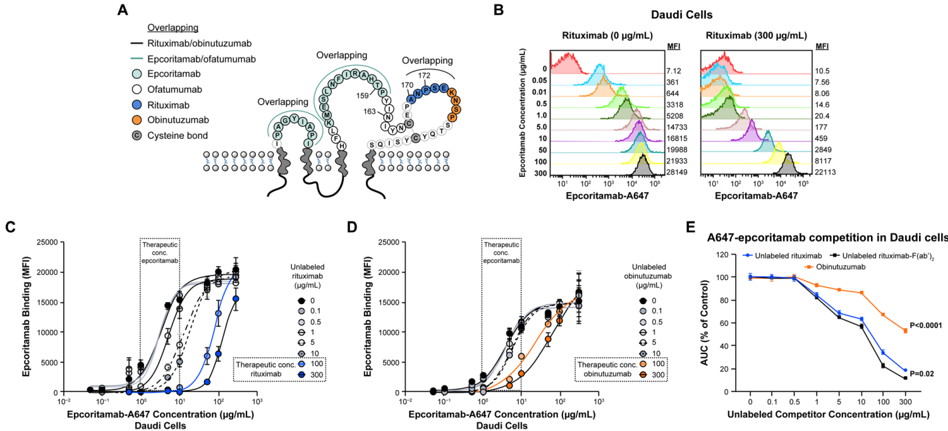
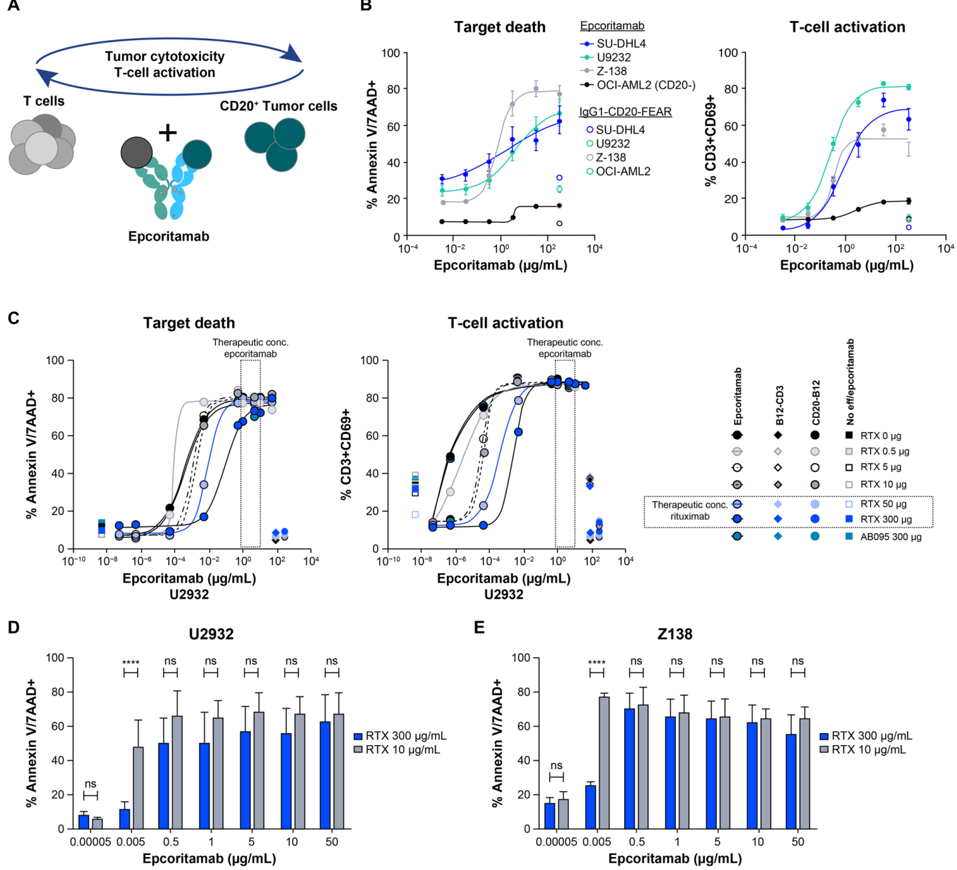
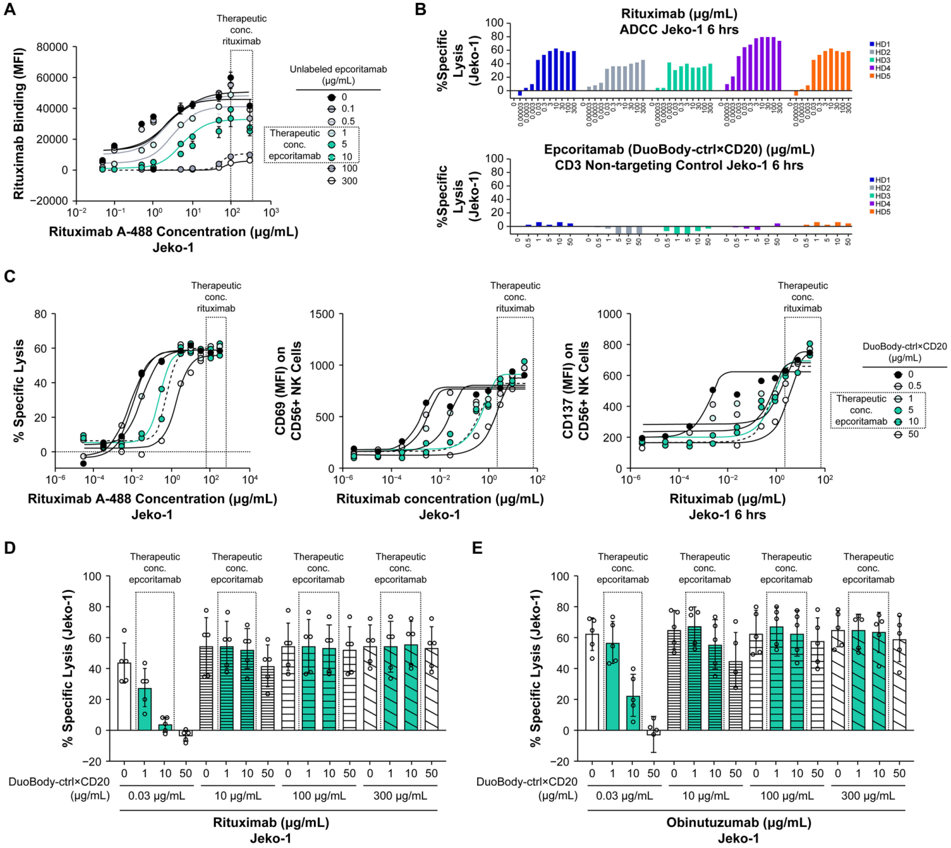
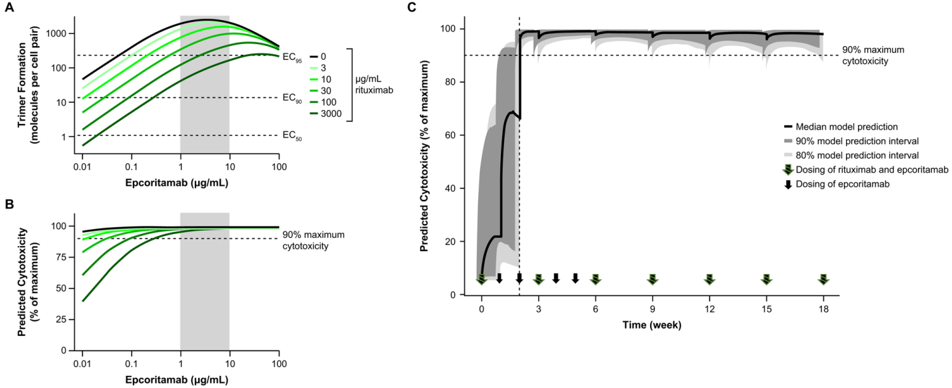
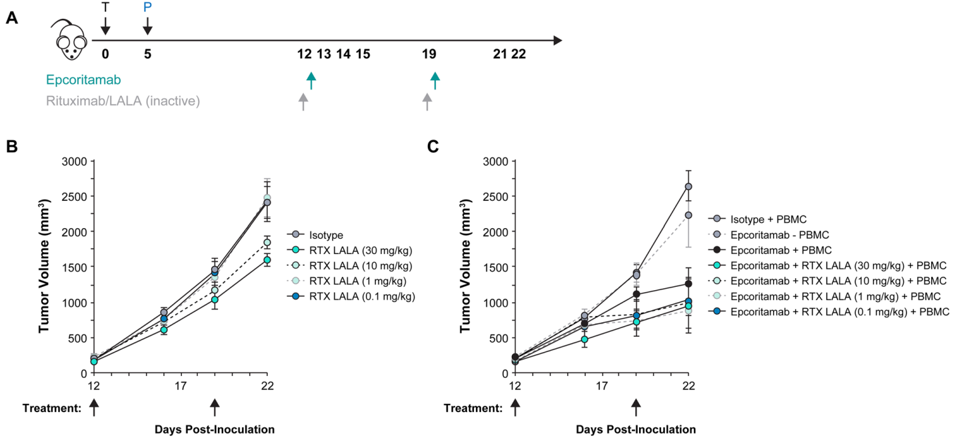
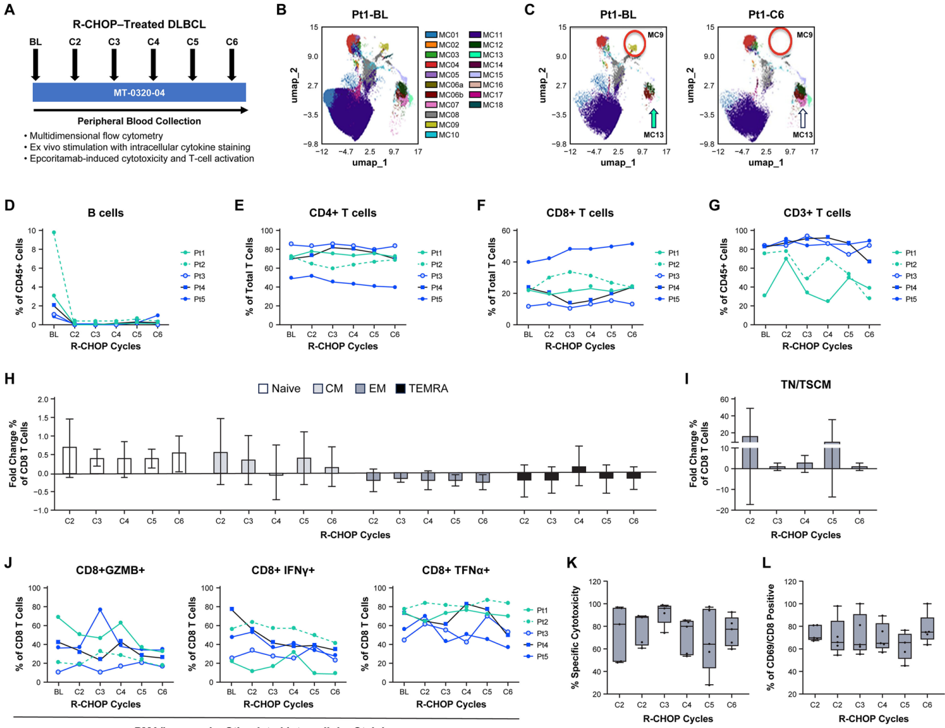
Epcoritamab, a subcutaneous CD3xCD20 bispecific antibody approved for relapsed/refractory diffuse large B-cell lymphoma (DLBCL) and follicular lymphoma, is being evaluated in regimens containing CD20-targeted monoclonal antibodies (e.g. rituximab plus cylophosphamide, doxorubicin, vincristine, and prednisone [R-CHOP]). To demonstrate combinability of epcoritamab with CD20 monoclonal antibodies (mAbs), potential interference of rituximab or obinutuzumab with epcoritamab was investigated. While there was dose-dependent binding interference between CD20 mAbs and epcoritamab through steric hindrance, ex vivo assays using tumor cell lines, R-CHOP-treated patient samples, and an animal model showed this did not impair tumor cell killing. In a pharmacokinetic model, >90% maximal cytotoxicity was predicted after the first full epcoritamab dose in the presence of therapeutic rituximab concentrations due to effective tumor-epcoritamab-T-cell trimer formation. Immunoprofiling of R-CHOP-treated DLBCL patient samples showed emergence of less-differentiated CD8 memory T cells, further supporting the feasibility of the combination in ongoing studies of epcoritamab with rituximab-containing chemoimmunotherapy.
Overview
The claims and statistics of this paper haven’t been checked yet.
Free: it reads the open-access text and checks the first 5 claims that cite a source we can check. Create a free account to check every claim.
Integrity signals
Registry
Cites
Statistics
Figures


Verification
Claims the paper makes
The claims and statistics of this paper haven’t been checked yet.
Free: it reads the open-access text and checks the first 5 claims that cite a source we can check. Create a free account to check every claim.
Self-check
Percentages, sums and reported differences re-computed from the paper’s own numbers.
The self-check needs the paper’s full text.
Citations
Cites
Guide for the Care and Use of Laboratory Animals: Eighth Edition
(2011) · doi:10.17226/12910 · Cited by 16,199
Siddiqui, I., Schaeuble, K., Chennupati, V., Fuertes Marraco, S. A., Calderon-Copete, S., Pais Ferreira, D., Carmona, S. J., Scarpellino, L., Gfeller, D., Pradervand, S., et al. (2019) · Immunity · doi:10.1016/j.immuni.2018.12.021 · Cited by 1,679
The making of bispecific antibodies
Brinkmann, U., & Kontermann, R. E. (2017) · mAbs · doi:10.1080/19420862.2016.1268307 · Cited by 923 · cited 1×
“Epcoritamab overcomes several concerns common to bispecific antibodies, including manufacturing-related liabilities, such as aggregation, production difficulties, low antibody yield, light chain–pairing issues, and/or increased immunogenicity from extensive engineering [30,31].”
The Biological Activity of Human CD20 Monoclonal Antibodies Is Linked to Unique Epitopes on CD20
Teeling, J. L., Mackus, W. J. M., Wiegman, L. J. J. M., van den Brakel, J. H. N., Beers, S. A., French, R. R., van Meerten, T., Ebeling, S., Vink, T., Slootstra, J. W., et al. (2006) · The Journal of Immunology · doi:10.4049/jimmunol.177.1.362 · Cited by 609 · cited 1×
“Rituximab and obinutuzumab bind to partially overlapping epitopes ( 170 ANPSE 174 ) in the ECL2 region of CD20, which are different from epcoritamab epitopes in the ECL1 and ECL2 loops [17,18].”
A unique cell surface antigen identifying lymphoid malignancies of B cell origin.
Nadler, L. M., Ritz, J., Hardy, R., Pesando, J. M., Schlossman, S. F., & Stashenko, P. (1981) · Journal of Clinical Investigation · doi:10.1172/jci110005 · Cited by 399 · cited 1×
“CD20 ( MS4A ) is highly expressed in most circulating B cells and malignant NHL compared with hematopoietic stem cells or plasma cells [7,8], making CD20 a valuable molecular target for bsAbs (e.g. epcoritamab) and monoclonal antibodies (mAbs; e.g. rituximab and obinutuzumab).”
Klein, C., Lammens, A., Schäfer, W., Georges, G., Schwaiger, M., Mössner, E., Hopfner, K.-P., Umaña, P., & Niederfellner, G. (2013) · mAbs · doi:10.4161/mabs.22771 · Cited by 392 · cited 2×
“Rituximab and obinutuzumab bind to partially overlapping epitopes ( 170 ANPSE 174 ) in the ECL2 region of CD20, which are different from epcoritamab epitopes in the ECL1 and ECL2 loops [17,18].”
Susanibar‐Adaniya, S., & Barta, S. K. (2021) · American Journal of Hematology · doi:10.1002/ajh.26151 · Cited by 388 · cited 1×
“R-CHOP (rituximab, cyclophosphamide, hydroxy-daunorubicin [doxorubicin], oncovin [vincristine], and prednisone), a standard first-line therapy for DLBCL [12], is only effective in 60–70% of patients [13].”
Hutchings, M., Mous, R., Clausen, M. R., Johnson, P., Linton, K. M., Chamuleau, M. E. D., Lewis, D. J., Sureda Balari, A., Cunningham, D., Oliveri, R. S., et al. (2021) · The Lancet · doi:10.1016/s0140-6736(21)00889-8 · Cited by 337 · cited 2×
“Epcoritamab binds to CD20 and CD3, forming a T-cell receptor (CD3)/epcoritamab/tumor cell (CD20) trimer [1,3,24,25].”
Self-citationDiffuse large B-cell lymphoma: R-CHOP failure—what to do?
Coiffier, B., & Sarkozy, C. (2016) · Hematology · doi:10.1182/asheducation-2016.1.366 · Cited by 292 · cited 1×
“R-CHOP (rituximab, cyclophosphamide, hydroxy-daunorubicin [doxorubicin], oncovin [vincristine], and prednisone), a standard first-line therapy for DLBCL [12], is only effective in 60–70% of patients [13].”
Friedrich, M. J., Neri, P., Kehl, N., Michel, J., Steiger, S., Kilian, M., Leblay, N., Maity, R., Sankowski, R., Lee, H., et al. (2023) · Cancer Cell · doi:10.1016/j.ccell.2023.02.008 · Cited by 285
Arcangeli, S., Bove, C., Mezzanotte, C., Camisa, B., Falcone, L., Manfredi, F., Bezzecchi, E., El Khoury, R., Norata, R., Sanvito, F., et al. (2022) · Journal of Clinical Investigation · doi:10.1172/jci150807 · Cited by 251 · cited 1×
“In general, these populations of T cells are associated with improved outcomes for T-cell immunotherapies, including manufacturing benefits for chimeric antigen receptor T-cell expansion and persistence [27], response to checkpoint blockade [28], and activity of CD3 bispecific antibodies [29].”
Wang, K. S., Frank, D. A., & Ritz, J. (2000) · Blood · doi:10.1182/blood.v95.10.3183 · Cited by 241
Structure of CD20 in complex with the therapeutic monoclonal antibody rituximab
Rougé, L., Chiang, N., Steffek, M., Kugel, C., Croll, T. I., Tam, C., Estevez, A., Arthur, C. P., Koth, C. M., Ciferri, C., et al. (2020) · Science · doi:10.1126/science.aaz9356 · Cited by 190 · cited 1×
“CD20 has 4 transmembrane helices with 2 extracellular loops, ECL1 and ECL2 [16].”
Engelberts, P. J., Hiemstra, I. H., de Jong, B., Schuurhuis, D. H., Meesters, J., Beltran Hernandez, I., Oostindie, S. C., Neijssen, J., van den Brink, E. N., Horbach, G. J., et al. (2020) · EBioMedicine · doi:10.1016/j.ebiom.2019.102625 · Cited by 172 · cited 7×
“Epcoritamab binds to CD20 and CD3, forming a T-cell receptor (CD3)/epcoritamab/tumor cell (CD20) trimer [1,3,24,25].”
InfluentialAzzaoui, I., Uhel, F., Rossille, D., Pangault, C., Dulong, J., Le Priol, J., Lamy, T., Houot, R., Le Gouill, S., Cartron, G., et al. (2016) · Blood · doi:10.1182/blood-2015-08-662783 · Cited by 168 · cited 1×
“In addition to the possibility of competition between CD20 mAb and epcoritamab, T cells from DLBCL patients may exhibit functional defects that hinder responses to bispecific antibodies with individual components of R-CHOP chemotherapy [14,23].”
The structural basis of T-cell receptor (TCR) activation: An enduring enigma
Mariuzza, R. A., Agnihotri, P., & Orban, J. (2020) · Journal of Biological Chemistry · doi:10.1016/s0021-9258(17)49904-2 · Cited by 168
Immunogenicity assessment of bispecific antibody-based immunotherapy in oncology
Zhou, Y., Penny, H. L., Kroenke, M. A., Bautista, B., Hainline, K. M., Chea, L. S., Parnes, J. R., & Mytych, D. T. (2022) · Journal for ImmunoTherapy of Cancer · doi:10.1136/jitc-2021-004225 · Cited by 99 · cited 1×
“Epcoritamab overcomes several concerns common to bispecific antibodies, including manufacturing-related liabilities, such as aggregation, production difficulties, low antibody yield, light chain–pairing issues, and/or increased immunogenicity from extensive engineering [30,31].”
TURNER, M. W., Bennich, H., & Natvig, J. B. (1970) · PubMed · Cited by 93
van der Horst, H. J., de Jonge, A. V., Hiemstra, I. H., Gelderloos, A. T., Berry, D. R. A. I., Hijmering, N. J., van Essen, H. F., de Jong, D., Chamuleau, M. E. D., Zweegman, S., et al. (2021) · Blood Cancer Journal · doi:10.1038/s41408-021-00430-6 · Cited by 86
Tomita, A. (2016) · Journal of the Japan Society of the Reticuloendothelial System · doi:10.3960/jslrt.56.89 · Cited by 58 · cited 1×
“CD20 ( MS4A ) is highly expressed in most circulating B cells and malignant NHL compared with hematopoietic stem cells or plasma cells [7,8], making CD20 a valuable molecular target for bsAbs (e.g. epcoritamab) and monoclonal antibodies (mAbs; e.g. rituximab and obinutuzumab).”
T Cell Bispecific Antibodies: An Antibody-Based Delivery System for Inducing Antitumor Immunity
Kamakura, D., Asano, R., & Yasunaga, M. (2021) · Pharmaceuticals · doi:10.3390/ph14111172 · Cited by 40 · cited 2×
“Epcoritamab binds to CD20 and CD3, forming a T-cell receptor (CD3)/epcoritamab/tumor cell (CD20) trimer [1,3,24,25].”
Wang, Z., Yin, C., Lum, L. G., Simons, A. L., & Weiner, G. J. (2021) · Journal of Hematology & Oncology · doi:10.1186/s13045-021-01216-w · Cited by 27
Influence of R-CHOP Therapy on Immune System Restoration in Patients with B-Cell Lymphoma
Ito, K., Okamoto, M., Inaguma, Y., Okamoto, A., Ando, M., Ando, Y., Tsuge, M., Tomono, A., Kakumae, Y., Hayashi, T., et al. (2016) · Oncology · doi:10.1159/000449251 · Cited by 25 · cited 1×
“Moreover, the CHOP component of this regimen targets rapidly dividing cells, including T cells and NK cells, which may lead to a reduction in immune function [19,20].”
Falchi, L., Offner, F. C., de Vos, S., Brody, J., Córdoba, R., Linton, K., Snauwaert, S., Clausen, M. R., Oki, T., Steele, A. J., et al. (2024) · Blood · doi:10.1182/blood-2024-198023 · Cited by 17
T cell-dependent bispecific therapy enhances innate immune activation and antibody-mediated killing
Besla, R., Penuel, E., Del Rosario, G., Cosino, E., Myrta, S., Dillon, M., Lazar, G. A., Nickles, D., Spiess, C., Yu, S.-F., et al. (2024) · Cancer Immunology Research · doi:10.1158/2326-6066.cir-23-0072 · Cited by 13 · cited 1×
“In turn, bsAbs induce local T-cell interleukin-2 cytokine production, thereby synergistically enhancing the viability and function of NK cells to promote ADCC [9–11].”
Epcoritamab + R2 regimen and responses in high-risk follicular lymphoma, regardless of POD24 status.
Merryman, R. W., Belada, D., Sureda, A. M., Leppä, S., Vermaat, J. S. P., Holte, H., Hutchings, M., Lugtenburg, P. J., de Vos, S., Abrisqueta, P., et al. (2023) · Journal of Clinical Oncology · doi:10.1200/jco.2023.41.16_suppl.7506 · Cited by 10 · cited 1×
“Previous reports examining the combination therapy of epcoritamab and rituximab have shown promising efficacy in patients with DLBCL and FL [32,33].”
Ogura, M., Ishida, T., Tsukasaki, K., Takahashi, T., & Utsunomiya, A. (2016) · Cancer Chemotherapy and Pharmacology · doi:10.1007/s00280-016-3070-2 · Cited by 9 · cited 1×
“Moreover, the CHOP component of this regimen targets rapidly dividing cells, including T cells and NK cells, which may lead to a reduction in immune function [19,20].”
Chiu, C. W., Hiemstra, I. H., ten Hagen, W., Snijdewint-Nkairi, R., de Jong, B., Oliveri, R. S., Elliot, B., Szafer‐Glusman, E., Schuurhuis, D. H., Blædel, J., et al. (2021) · Cancer Research · doi:10.1158/1538-7445.am2021-1574 · Cited by 7
Self-citationFalchi, L., Offner, F. C., Belada, D., Brody, J., Linton, K., Karimi, Y. H., Córdoba, R., Snauwaert, S., Abbas, A., Wang, L., et al. (2022) · Clinical Lymphoma Myeloma & Leukemia · doi:10.1016/s2152-2650(22)01542-7 · Cited by 2
Zhang, J., Si, H., Wielgos-Bonvallet, M., Soong, D., Szafer‐Glusman, E., Ghesquières, H., Cheah, C. Y., Falchi, L., Brody, J., Sacchi, M., et al. (2023) · Cancer Research · doi:10.1158/1538-7445.am2023-3248 · Cited by 2
Self-citation
Research works printed but not linked: 3
- Epkinly [package insert]. Plainsboro, NJ, USA: Genmab US, Inc; 2024.
- Tepkinly [summary of product characteristics]. Ludwigshafen, Germany: AbbVie Deutschland GmbH & Co. KG; 2024.
- Epkinly [Japan package insert]. Minato-Ku, Tokyo, Japan: AbbVie GK, Genmab K.K; 2025.
Cited by
Falchi, L., Nijland, M., Huang, H., Linton, K. M., Seymour, J. F., Tao, R., Kwiatek, M., Costa, A., Vassilakopoulos, T. P., Greil, R., et al. (2026) · The Lancet · doi:10.1016/s0140-6736(25)02360-8 · Cited by 41
Vitolo, U., Falchi, L., Andersson, P., Nijland, M., Offner, F. C., Snauwaert, S., Christensen, J. H., Clausen, M. R., Fosså, A., Gómez‐Prieto, P., et al. (2026) · HemaSphere · doi:10.1002/hem3.70443 · Cited by 1
“20,23 Instead, epcoritamab enhances rituximab ‐ mediated cytotoxicity and demonstrates mechanistic potentiation of cytotoxicity, 21 highlighting the combination of epcoritamab with BR as an attractive potential treatment option in FL.”
Kawczak, P., & Bączek, T. (2026) · Journal of Clinical Medicine · doi:10.3390/jcm15124425
Falchi, L., Vermaat, J. S. P., Brody, J., Leslie, L. A., Offner, F., Christensen, J. H., Nijland, M., Belada, D., Wahlin, B. E., Drott, K., et al. (2026) · The Lancet Haematology · doi:10.1016/s2352-3026(26)00198-5 · Cited by 1
Güijosa, A., Tsakmaklis, N., Dhe‐Paganon, S., Garbicz, F., Carrasco, D. R., Hatcher, J. M., Ramirez‐Gamero, A., Pizzarella, D., Kofides, A., Liu, S., et al. (2026) · HemaSphere · doi:10.1002/hem3.70468
“14 Similarly, mosunetu-zumab and glofitamab (CD20/CD3 TCEs) bind epitopes overlapping rituximab (including the critical ECL2 170 ‐ ANPSE ‐ 174 region) and obinutuzumab (ECL2 172 – 178), respectively.”
Metadata
- Authors
- Dandamudi, D. B., Konieczna, I. M., Calabrese, K. M., Wielgos-Bonvallet, M., Kweekel, C., Gresnigt-van den Heuvel, E., Iyer, R., Ellis, P., Rodriguez, L., Parikh, A., Li, T., Paauwe, M., Cosgrove, C., Chervin, A. S., Reilly, E. B., Epling-Burnette, P., & Szafer-Glusman, E.
- Affiliations
- AbbVie (United States) (US)
- Genmab (United States) (US)
- Genmab
- AbbVie Inc
- ORCID
- Venue
- Leukemia & Lymphoma
- Publisher
- Informa UK Limited
- Published
- 2025-06-18
- Volume
- 66
- Issue
- 9
- Pages
- 1688-1699
- ISSN
- 1026-8022 (ISSN-L)
- 1042-8194
- 1029-2403
- OpenAlex
- W4411429251
- Semantic Scholar
- 39d98ce28eff1b16a47efd03cef1e4f0bb1ed786
- Cited by
- 5
- References
- 30
- Citations by year
- 2026: 4 · 2025: 1
- FWCI
- 3.30
- Type
- journal article
- Language
- en
- Open access
- hybrid
- doi.org
- Licence
- Locations
- Leukemia & lymphoma/Leukemia and lymphoma (publishedVersion, cc-by)
- PubMed (publishedVersion)
- Funders
- AbbVie
- Topics
- Health Sciences › Medicine › Pathology and Forensic Medicine › Lymphoma Diagnosis and Treatment
- Life Sciences › Immunology and Microbiology › Immunology › Monoclonal and Polyclonal Antibodies Research
- Health Sciences › Medicine › Hematology › Chronic Lymphocytic Leukemia Research
- Keywords
- epcoritamab, CD3xCD20 bispecific antibody, T-cell engagers, rituximab, obinutuzumab, diffuse large B-cell lymphoma, follicular lymphoma, R-CHOP, steric hindrance, pharmacokinetic modeling, memory CD8+ T cells, combination therapy, relapsed/refractory lymphoma
- MeSH terms
- Rituximab, Antineoplastic Agents, Immunological, Animals, Antineoplastic Combined Chemotherapy Protocols, Cyclophosphamide, Doxorubicin, Humans, Prednisone, T-Lymphocytes, Vincristine, Lymphoma, B-Cell, Lymphoma, Large B-Cell, Diffuse, Antibodies, Bispecific, Antigens, CD20, Xenograft Model Antitumor Assays, Cell Line, Tumor, Mice, Antibodies, Monoclonal, Humanized
About these checks
Registry, retraction, Cites and statistics results are computed, not judged, with one exception: a printed reference that no index lists is read once by a model before it counts as a citation error. Claims are extracted by a model and kept only when their quote appears verbatim in the text; each cited source is then checked, with a model’s help, for whether it says what the claim relies on. Those verdicts can be wrong — read the claim’s quote and the cited source before relying on one.
Statistics and arithmetic are recomputed, not judged.
Confidence bands are shown only for fields calibrated on our annotated test set. None is calibrated yet, so no band is shown.
What counts as a claim ›How we measure confidence ›How we check this ›
Are you an author, or do you see a problem with this page? Request a review
Data sources
Bibliographic data: Semantic Scholar, OpenAlex, Crossref.
Contains information from the Semantic Scholar Academic Graph Datasets, made available under the ODC Attribution License (ODC-BY 1.0).
Semantic Scholar’s data is described in: Kinney, R., et al. (2023). The Semantic Scholar Open Data Platform. arXiv:2301.10140.
