

Bioactive, antioxidant, industrial, and nutraceutical applications of banana peel
Open accessThe DOI matches its Crossref record; 63 of the 64 references it cites were found in a registry or an index; 49 of the 124 sources its claims cite were checked for support.
Abstract
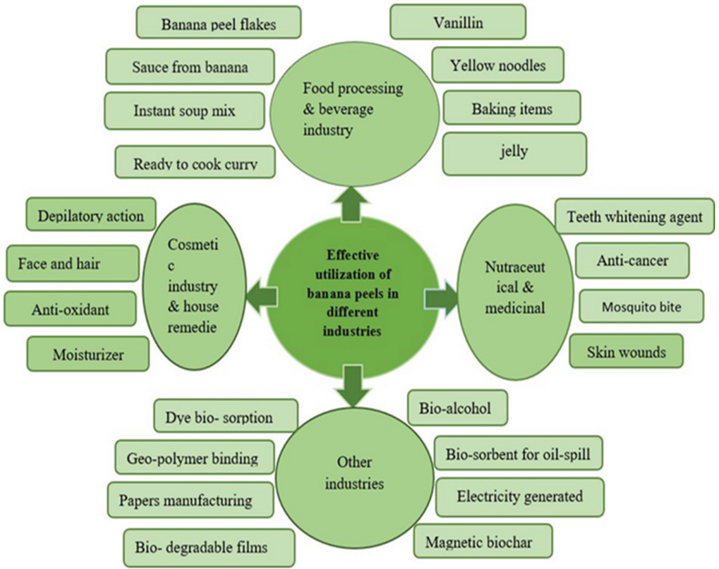
People usually waste or discard the numerous benefits of banana peel due to a lack of awareness. Banana peel is a rich source of many bioactive compounds like carotenoids, biogenic amines, polyphenols, phytosterols, and antioxidants. It also contains minerals like iron, calcium, sodium, phosphorus, magnesium, and good levels of dietary fiber. The use of antioxidants present in banana peels can help reduce the risk of diseases like cancer. Antioxidants play a crucial role in the removal of toxins from the human body. One complete banana comprises about 30–40% peel, and the rest is the pulp portion. Banana peels are used in a wide range of industries like cosmetics, medicine, food processing, beverages, textiles, energy resources, paper manufacture, bio-absorbents, biofuel production, and the agricultural sector. An epic transformation in different industrial sectors can be seen because of the versatile nature of banana peel. In agricultural sectors, banana peel can be used as fertilizer to enhance the soil's physical properties, crop quality, and yield due to potassium. Even fiber-rich banana peels can be used to treat constipation problems. Banana peel carries anti-inflammatory properties that can be used in daily life as a first-aid at home to control, reduce, and cure inflammation and infections. Banana is commonly available in our homes, and thus it can be known as a zero-budget organic cosmetic product. Industrial products like paper, fiber, and textiles can be manufactured from banana peels.
Overview
CoChat Summary
TL;DR
This review summarizes bioactive compounds in banana peel and its uses across nutraceutical, cosmetic, food, agricultural, and industrial sectors. It reports antioxidant, antimicrobial, biosorbent, and extraction-related findings from cited studies, but is a narrative review without primary data.
Key findings
- Banana peel is described as rich in carotenoids, biogenic amines, polyphenols, phytosterols, antioxidants, minerals (Fe, Ca, Na, P, Mg), dietary fiber, omega-3/6 fatty acids, tannins, anthocyanins, gallic acid, epicatechin, catechin, and 18 amino acids; one banana is about 30–40% peel, and about 114.08 million metric tons of banana peel waste are generated worldwide.
- Nutraceutical/medicinal uses include cancer-related activity: MCF-7 cell viability reduced from 91.14% to 24.7% when Nendran banana peel extract concentration increased from 20 to 200 g/ml; peel extract is also described for heel fissures, wound care, mosquito bites, and teeth whitening.
- Cosmetic/food/industrial examples include antioxidant lotion pH 5.0–5.5, moisturizer shelf life of 4–5 months, cream antioxidant activity above 80% and sun protection factor above 15, 81% rhodamine-B adsorption, banana peel flakes with five times higher nutritional composition than banana pulp, and instant soup mix with a 3-month shelf life.
- Extraction findings include optimal microwave-assisted extraction at pH 1, 2:100 g/mL, 6 minutes irradiation, and 960 W, yielding 50.55 mg phenolics from 1 g dried peel; “Xiem” peel optimum conditions were 60% solvent, 76:1 solvent-to-solid ratio, 68°C, and 48 min, giving TPC 62.41 mgGAE/g and TFC 6.98 mgQE/g; MAE pectin yield was predicted 12.8% versus actual 14.2%.
Methods
- Narrative review compiling literature on banana peel bioactive compounds, antioxidant activity, and applications in nutraceutical, cosmetic, food/beverage, agricultural, and other industries.
- Sources include cited studies and tables on extraction methods, cosmetic products, industrial uses, and food products; no primary experimental data are reported.
- The paper states that the study does not involve human or animal trials.
Limitations
- The paper does not state explicit limitations.
- Evident: it is a narrative review without described systematic search, inclusion criteria, or quality assessment, so findings depend on selected cited studies.
- Evident: cited studies use different banana varieties, extraction methods, and conditions, limiting direct quantitative comparison; some reported values or units appear inconsistent in the text.
Model-written summary. Check it against the paper before relying on it.
Integrity signals
Registry
Cites
Statistics
Figures


Verification
Claims the paper makes
28 Valid · 19 Not valid · 61 Not checked · 6 Own results and interpretations
The cited sources that could be checked couldn’t confirm or dispute this claim.
In the paper
“Banana peel is a rich source of many bioactive compounds like carotenoids, biogenic amines, polyphenols, phytosterols, and antioxidants.”
§ Bioactive, antioxidant, industrial, and nutraceutical applications of banana peel > Abstract
What the sources say
- Not checked — no full text of the sourcecites [9] 9. Zaini, H. M.; Roslan, J.; Saallah, S.; Munsu, E.; Sulaiman, N. S.; Pindi, W. Banana Peels as a Bioactive Ingredient and Its Potential Application in the Food Industry. J. Funct. Foods. 2022, 92, 105054. DOI: 10.1016/j.jff.2022.105054. source
- Not matchedcites [10] 10. Tsado, A. N.; Okoli, N. R.; Jiya, A. G.; Gana, D.; Saidu, B.; Zubairu, R.; Salihu, I. Z. Proximate, Minerals, and Amino Acid Compositions of Banana and Plantain Peels. J. Biomed. Sci. 2021, 1(01), 032-042.
Its entry has no title and year that we can search by.
- Could not verifycites [11] 11. Awuchi, C. G.; Chukwu, C. N.; Iyiola, A. O.; Noreen, S.; Morya, S.; Adeleye, A. O.; Twinomuhwezi, H.; Leicht, K.; Mitaki, N. B.; Okpala, C. O. R. Bioactive Compounds and Therapeutics from Fish: Revisiting Their Suitability in Functional Foods to Enhance Human Wellbeing. Biomed Res. Int. 2022a, 2022(3661866), 18. DOI: 10.1155/2022/ 3661866. sourceExperimental — accuracy not yet measured
Section 3.4 describes carotenoids in fish, and Section 4 discusses fish-derived antioxidants; neither addresses banana peel. Searches for “banana peel” and the claimed compound list found no passage about banana peel in our copy. (LLM, conf=0.78)
plain- Asserted: passes — The authors put it forward as true.
- Checkable: passes — It can be checked against evidence.
- Load-bearing: passes — The paper’s conclusions depend on it.
- Based: passes — The paper gives a reason why it holds.
The cited sources that could be checked couldn’t confirm or dispute this claim.
In the paper
“It is used to prepare jelly, give it jelly a body and texture, give it firmness, and hold it in a shape.[20]”
§ Bioactive, antioxidant, industrial, and nutraceutical applications of banana peel > Musa acuminata × Musa balbisiana 'Pisang Awak'
What the sources say
- Could not verifycites [20] 20. Radzi, H. Incorporation of Banana Peel Fiber in Jelly as a Functional Food Precursor; Malaysian Academic Library Institutional Repository: 2020. DOI: 10.3390/foods10071486. sourceExperimental — accuracy not yet measured
The Introduction discusses banana peel as a food ingredient, and the Methods describe making peel flour, but neither addresses pectin extracted from peels. Searches for pectin and jelly found no passage about using peel pectin to give jelly texture, firmness, or shape. The paper instead studies banana flour in chorizo. (LLM, conf=0.76)
plainstates a cause- Asserted: passes — The authors put it forward as true.
- Checkable: passes — It can be checked against evidence.
- Load-bearing: unclear — It is unclear whether the paper’s conclusions depend on it.
- Based: passes — The paper gives a reason why it holds.
- Could not verify
The cited sources that could be checked couldn’t confirm or dispute this claim.
In the paper
“Tea made from banana peels reduces weight loss.[25]”
§ Bioactive, antioxidant, industrial, and nutraceutical applications of banana peel > Introduction
What the sources say
- Could not verifycites [25] 25. Martins, A. N. A.; Pasquali, M. A. D. B.; Schnorr, C. E.; Martins, J. J. A.; de Araújo, G. T.; Rocha, A. P. T. Development and Characterization of Blends Formulated with Banana Peel and Banana Pulp for the Production of Blends Powders Rich in Antioxidant Properties. J. Food Sci. Technol. 2019, 56(12), 5289-5297. DOI: 10.1007/ s13197-019-03999-w. sourceExperimental — accuracy not yet measured
The Introduction and Discussion describe banana-peel-and-pulp powder blends for food products, including their antioxidant properties and water retention. Our copy does not address banana-peel tea or its effect on weight loss (searched: “tea made from banana peels reduces weight loss” and “tea weight loss body weight banana peel”). The indexed passages provide no page numbers. (LLM, conf=0.76)
plainstates a cause- Asserted: passes — The authors put it forward as true.
- Checkable: passes — It can be checked against evidence.
- Load-bearing: unclear — It is unclear whether the paper’s conclusions depend on it.
- Based: passes — The paper gives a reason why it holds.
- Could not verify
The cited sources support only part of this claim — read each source’s verdict below.
In the paper
“About 60% of banana biomass is wasted from post-harvest operations like transporting, marketing, and lack of storage systems.[4]”
§ Bioactive, antioxidant, industrial, and nutraceutical applications of banana peel > Introduction
What the sources say
- Partly supportedcites [4] 4. Alzate Acevedo, S.; Díaz Carrillo, Á. J.; Flórez-López, E.; Grande-Tovar, C. D. Recovery of Banana Waste Loss from Production and Processing: A Contribution to a Circular Economy. Molecules. 2021, 26(17), 5282. DOI: 10. 3390/molecules26175282. sourceExperimental — accuracy not yet measured
The Abstract (page unavailable) states that almost 60% of banana biomass is left as waste after harvest. Section 3, “Banana Processing” (page unavailable), describes post-harvest rejection of fruit, but the copy does not attribute the 60% figure to transporting, marketing, or a lack of storage systems. (LLM, conf=0.87)
plainstates a cause- Asserted: passes — The authors put it forward as true.
- Checkable: passes — It can be checked against evidence.
- Load-bearing: unclear — It is unclear whether the paper’s conclusions depend on it.
- Based: passes — The paper gives a reason why it holds.
- Partly supported
The cited sources support only part of this claim — read each source’s verdict below.
In the paper
“It is a rich source of vitamin B6, sugars, proteins, phosphorus, vitamin C, saponins, and tannins.”
§ Bioactive, antioxidant, industrial, and nutraceutical applications of banana peel > Banana peels' effective usage in cosmetic industry
What the sources say
- Partly supportedcites [43] 43. Wahyuni, D. F.; Mustary, M.; Syafruddin, S.; Deviyanti, D. Formulasi Masker Gel Peel off Dari Kulit Pisang Ambon (Musa Paradisiaca Var): Peel off Mask Formulation from Ambon Banana Peel (Musa Paradisiaca var). J. Sains. Kes. 2022, 4(1), 48-55. DOI: 10.25026/jsk.v4i1.875. sourceExperimental — accuracy not yet measured
The Data availability passage lists vitamin B6, carbohydrates, phosphorus, protein, vitamin C, tannins, and saponins in Ambon banana peel, which the study uses to make a peel-off gel mask. It says carbohydrates rather than sugars, and does not establish that the finished mask is a rich source of these substances. (LLM, conf=0.84)
plain- Asserted: passes — The authors put it forward as true.
- Checkable: passes — It can be checked against evidence.
- Load-bearing: unclear — It is unclear whether the paper’s conclusions depend on it.
- Based: passes — The paper gives a reason why it holds.
- Partly supported
58 more claims · 17 with their cited sources checked
Create a free account to see all 114 claims and to verify the 13 references still open.
- Probably not a substantial claim. 17
- It may state two separate claims as one. 36
- Borderline: one of the tests for a substantial claim is unclear. 1
- The quote only partly states this claim. 3
Claims other papers make about this one
Each is checked against this paper’s own text: does it say what the citing paper says it does?
The source backs part of the claim, not all of it — or backs it for a different population, condition or comparison.
In the citing paper
“For example, as shown in Fig. 7, banana peels have been applied to promote wound healing caused by burns [2].”
From Unlocking the potential of banana peel bioactives: extraction methods, benefits, and industrial applications (2025) · cites this paper as [2]
Experimental — accuracy not yet measuredThe source backs part of the claim, not all of it — or backs it for a different population, condition or comparison.
In the citing paper
“Consistently, skin performance assessments of the banana peel moisturizing cream indicated effective dryness inhibition and potential for consumer acceptability implying prospects of upcycling agro-waste such as banana peels in value-added cosmetic ingredients [8].”
From Formulation development, physical stability, and preliminary safety screening of cosmetic emulsions containing banana peel extract (2026) · cites this paper as [8]
Experimental — accuracy not yet measuredThe source backs part of the claim, not all of it — or backs it for a different population, condition or comparison.
In the citing paper
“Moreover, it is a rich source of polyunsaturated omega-3 and omega-6 fatty acids, namely linoleic and linolenic acids [114].”
From Use of Waste from the Food Industry and Applications of the Fermentation Process to Create Sustainable Cosmetic Products: A Review (2024) · cites this paper as [114]
Experimental — accuracy not yet measuredThe source backs part of the claim, not all of it — or backs it for a different population, condition or comparison.
In the citing paper
“The banana peel extract also contains minerals such as iron, calcium, sodium, phosphorus, and magnesium.”
From Use of Waste from the Food Industry and Applications of the Fermentation Process to Create Sustainable Cosmetic Products: A Review (2024) · cites this paper as [114]
Experimental — accuracy not yet measuredThe cited source says what the claim attributes to it.
In the citing paper
“Studies have demonstrated that banana peels contain significant amounts of phenolic acids and flavonoids, which contribute to its potential antioxidant and skin-moisturizing properties [6 - 8].”
From Formulation development, physical stability, and preliminary safety screening of cosmetic emulsions containing banana peel extract (2026) · cites this paper as [8]
Self-check
Percentages, sums and reported differences re-computed from the paper’s own numbers.
Each contradiction between two passages listed here was confirmed by an independent check.
Rated minor: it would not touch a result — a value no result rests on, a p-value that stays on the same side of the significance level, or a conflict that is clerical, resolved elsewhere in the paper, or outside its own findings.
In the paper
§ Bioactive, antioxidant, industrial, and nutraceutical applications of banana peel > Banana peels' effective usage in cosmetic industry
“It was an oil-in-water type of emulsion with 4-5 months of shelf life.[37]”
§ Bioactive, antioxidant, industrial, and nutraceutical applications of banana peel > Banana peels' effective usage in other industries
“Whitish-yellow colour, banana aroma, oil type emulsion in water, 12 weeks shelf life Cendana et al. [37]”
Rated minor: it would not touch a result — a value no result rests on, a p-value that stays on the same side of the significance level, or a conflict that is clerical, resolved elsewhere in the paper, or outside its own findings.
In the paper
§ Bioactive, antioxidant, industrial, and nutraceutical applications of banana peel > Introduction
“There are 18 different types of amino acids present in banana peels at different concentrations”
§ Bioactive, antioxidant, industrial, and nutraceutical applications of banana peel > Introduction
“(leucine, lysine, isoleucine, phenylalanine, norleucine, tryptophan, valine, methionine, proline, arginine, tyrosine, histidine, cystine, alanine, glutamic acid, glycine, threonine, serine, and aspartic acid)”
Citations
Cites
Use of a Free Radical Method to Evaluate Antioxidant Activity
Brand-Williams, W., Cuvelier, M. E., & Berset, C. (1995) · LWT - Food Science and Technology · doi:10.1016/s0023-6438(95)80008-5 · Cited by 25,994 · cited 1×
“[ 71 ] B a s k a r e t a l .”
The taxonomy and origins of the cultivated bananas.
Simmonds, N. W., & Shepherd, K. (1955) · Journal of the Linnean Society of London, Botany · doi:10.1111/j.1095-8339.1955.tb00015.x · Cited by 530
González-Montelongo, R., Gloria Lobo, M., & González, M. (2010) · Food Chemistry · doi:10.1016/j.foodchem.2009.08.012 · Cited by 429
Phenolic compounds within banana peel and their potential uses: A review
Vu, H. T., Scarlett, C. J., & Vuong, Q. V. (2018) · Journal of Functional Foods · doi:10.1016/j.jff.2017.11.006 · Cited by 381 · cited 1×
“[16] Utilization of banana peels in food processing and beverage industries About 114.08 million metric tons of banana peels were generated as waste around the world.”
BackgroundInfluentialRecovery of Banana Waste-Loss from Production and Processing: A Contribution to a Circular Economy
Alzate Acevedo, S., Díaz Carrillo, Á. J., Flórez-López, E., & Grande-Tovar, C. D. (2021) · Molecules · doi:10.3390/molecules26175282 · Cited by 277 · cited 2×
“[4] The banana crop is considered a golden treasure of nature.”
BackgroundMethodBanana peels as a bioactive ingredient and its potential application in the food industry
Mohd Zaini, H., Roslan, J., Saallah, S., Munsu, E., Sulaiman, N. S., & Pindi, W. (2022) · Journal of Functional Foods · doi:10.1016/j.jff.2022.105054 · Cited by 259
Banana peel as a biosorbent for the decontamination of water pollutants. A review
Akpomie, K. G., & Conradie, J. (2020) · Environmental Chemistry Letters · doi:10.1007/s10311-020-00995-x · Cited by 239 · cited 1×
“[44,45] Heavy metal percentages were [36] Moisturizer Flavonoids, alkaloids, tannins/polyphenols saponins, and triterpenoids”
BackgroundBiosynthesis and industrial applications of α-amylase: a review
Farooq, M. A., Ali, S., Hassan, A., Tahir, H. M., Mumtaz, S., & Mumtaz, S. (2021) · Archives of Microbiology · doi:10.1007/s00203-020-02128-y · Cited by 209 · cited 1×
“Thereby, amylase is used in the preparation of cakes, cookies, beer, juice, and digestive syrups.([26]) It has been proven that banana peels are a good source of cellulase.”
BackgroundOladipo, A. A., Ahaka, E. O., & Gazi, M. (2019) · Environmental Science and Pollution Research · doi:10.1007/s11356-019-06321-5 · Cited by 187
Singh, A., Bajar, S., Devi, A., & Pant, D. (2021) · Bioresource Technology Reports · doi:10.1016/j.biteb.2021.100652 · Cited by 185 · cited 1×
“[27] Banana peels act as a substrate for the production of amylase and cellulase.”
Background
Research works printed but not linked: 9
- 1. Shepherd, K. (1988, September). Observations on Musa Taxonomy Identification of genetic diversity in the genus Musa: Proceedings of an International Workshop Held at Los Baos, Philippines, 5-10 September 1988 (pp. 158-165)
- 3. Singh, J.; Sengar, R. S.; Kumar, M.; Vaishali.;Yadav, M. K.; Pooranchand.Evaluation of Sterilant Effect on in vitro Culture Establishment in Banana Genotype Grand Naine (Musa Spp.). J. Pharm. Innov. 2022, 11(8), 1127-1133.
- 15. Awuchi, C. G.; Twinomuhwezi, H.2021.The Medical, Pharmaceutical, and Nutritional Biochemistry and Uses of Some Common Medicinal Plants.Medicinal and Aromatic Plants of the WorldAmeenah G.F.B., in Encyclopedia of Life Support Systems (EOLSS), Developed under the Auspices of UNESCO, Ed.In Ozturk, M.ELOSS Publishers, Paris, France,Available at https://www.eolss.net/Sample-Chapters/C03/E6-79a-14.pdf .
- 23. Dhake, K.; Jain, S. K.; Lakhawat, S. S. Value Addition in Green Banana for Rural Employment Generation. Food Eng. Rev. 2019, 59(1), 1-11.
- 33. Rathinamoorthy, R.; Keerthana, S. Design and Development of Anti-Heel Crack Band Using Banana Peel Extract. International Journal of Mechanical. 2021, 6(3), 0974-5823.
- 35. Prashanthi, D.; Chaitanya, M. A Review on Multiple Uses of Banana Peel. Int. J. Sci. Res. 2020, 5(3), 120-122.
- 39. Broto, W.; Arifan, F.; Wardani, O. K.; Faisal, M. M.; Nugraheni, A. Shampoo Formulation Based on Banana Extract Using the Maceration Method. Waste Technol. 2022, 10(2), 67-70. DOI: 10.14710/10.2.67-70. · doi:10.14710/10.2.67-70
- 49. Kurniawan, B.; Risdiana, R.; Watanabe, I. Eds. In Trans Tech Publications Ltd, 2019; 966, 204-209.
- 71. Gene, E. Banana Peel Extract Composition and Method for Extraction (US Patent No. 5972344). US Patent and Trade Mark Office. 1999. https://patents.google.com/patent/US5972344A/en .
Cited by
Bekavac, N., Krog, K., Stanić, A., Šamec, D., Šalić, A., Benković, M., Jurina, T., Kljusurić, J. G., Valinger, D., & Tušek, A. J. (2025) · Antioxidants · doi:10.3390/antiox14060714 · Cited by 87
Wani, K. M., & Dhanya, M. (2025) · Discover Food · doi:10.1007/s44187-025-00276-y · Cited by 51
“India is the world’s largest producer of bananas, with an estimated 29.2 million tons produced annually [2].”
InfluentialValorisation of fruit waste for harnessing the bioactive compounds and its therapeutic application
Ritika, Rizwana, Shukla, S., Sondhi, A., Tripathi, A. D., Lee, J.-K., Patel, S. K. S., & Agarwal, A. (2023) · Trends in Food Science & Technology · doi:10.1016/j.tifs.2023.104302 · Cited by 62
Krzyżostan, M., Wawrzyńczak, A., & Nowak, I. (2024) · Sustainability · doi:10.3390/su16072757 · Cited by 47
“Among the peels of many fruits, such as orange, mango, banana, and pineapple that were subjected to lactic fermentation by Lactoctobacillus plantarum as the starter culture, the highest amount of lactic acid (10.08 g/L) was obtained from the mango peel [112].”
InfluentialDietary fiber: an unmatched food component for sustainable health
Suresh, A., Shobna, Salaria, M., Morya, S., Khalid, W., Afzal, F. A., Khan, A. A., Safdar, S., Khalid, M. Z., & Kasongo, E. L. M. (2024) · Food and Agricultural Immunology · doi:10.1080/09540105.2024.2384420 · Cited by 68
“Fibre-rich foods such as fruits and vegetables are packed with antioxidants and anti-inflammatory compounds that can help reduce inflammation in the body (Bhavani et al., 2023).”
Self-citationSachcha, I. H., Paddar, K., Minar, M. M., Rahman, L., Hasan, S. M. K., Akhtaruzzaman, M., Billah, M. T., & Yasmin, S. (2024) · Heliyon · doi:10.1016/j.heliyon.2024.e29070 · Cited by 37
“Almost all the parts of the banana plants are useable, like fruits are nutritious for our health [3], peels are used as antioxidant [4], leaves are used for wrapping [5], and pseudo stems are used for making specialized and high-quality sanitary products such as baby pampers [6], stalks are used as…”
BackgroundEvaluation of scarless wound healing through nanohydrogel infused with selected plant extracts
Sofini, P. S. S., Mercy, D. J., Raghavan, V., Isaac, J. B., Deepika, B., Udayakumar, S., Janani, G., Devi, T. S., Kiran, V., Harini, A. L., et al. (2024) · Journal of Drug Delivery Science and Technology · doi:10.1016/j.jddst.2024.106118 · Cited by 38
Banana Pseudostem: An Undiscovered Fiber Enriched Sustainable Functional Food
Pillai, G. S., Morya, S., Khalid, W., Khalid, M. Z., Almalki, R. S., & Siddeeg, A. (2024) · Journal of Natural Fibers · doi:10.1080/15440478.2024.2304004 · Cited by 41
“Interestingly, in the food industry, potent bioactive compounds present in banana biowastes (leaves, pseudostems, fruit peels, and pith) are recycled and used as coloring agents, livestock feed, flavoring agents, and nutraceutical agents (Bhavani et al. 2023; Padam et al. 2014).”
Self-citationKhamsaw, P., Sommano, S. R., Wongkaew, M., Willats, W. G. T., Bakshani, C. R., Sirilun, S., & Sunanta, P. (2024) · Plants · doi:10.3390/plants13050593 · Cited by 40
“Banana peel (BP) is abundant in dietary fibre and rich in bioactive compounds, making it a valuable resource [9–11].”
BackgroundPanda, J., Amrit, R., Mishra, A. K., Chakraborty, A., Rustagi, S., Nath, P. C., Sarabandi, K., Sarma, H., Wagh, M. S., & Mohanta, Y. K. (2025) · Waste and Biomass Valorization · doi:10.1007/s12649-025-02937-6 · Cited by 36
Shahada, C., Morya, S., & Awuchi, C. G. (2024) · Cogent Food & Agriculture · doi:10.1080/23311932.2024.2306017 · Cited by 35
“These components influence insulin secretion and improve insulin function, contributing to the maintenance of normal blood glucose levels and lowering the risk of diabetes (Rehman et al., 2021; Bhavani et al., 2023).”
Self-citationBanana waste valorisation and the development of biodegradable biofilms
Kumari, S., Debbarma, R., Habibi, M., Haque, S., & Suprasanna, P. (2025) · Waste Management Bulletin · doi:10.1016/j.wmb.2025.100213 · Cited by 42
Boyle, O., Xiao, B., & Mangwandi, C. (2025) · Materials · doi:10.3390/ma18051084 · Cited by 28
“These diverse applications highlight the potential of banana waste to contribute to a more sustainable future [26].”
Valorisation of banana peel and mango peel as functional ingredients in baked products: a review
Ismail, S., Dubey, P. K., Mishra, A. A., & Ashka, F. (2024) · International Journal of Food Science & Technology · doi:10.1111/ijfs.17395 · Cited by 28
Rahaman, M. T., & Moshwan, M. M. (2025) · Hybrid Advances · doi:10.1016/j.hybadv.2025.100581 · Cited by 16
Qamar, O. A., Jamil, F., Inayat, A., Akhter, P., & Hussain, M. (2023) · Fuel · doi:10.1016/j.fuel.2023.129516 · Cited by 15
Yadav, V. K., Sharma, A. K., Gacem, A., Pandit, J., Wany, A., Kumar, A., Arshad, M., Alreshidi, M. A., Punetha, V. D., Mesfer, M. K. A., et al. (2025) · Waste and Biomass Valorization · doi:10.1007/s12649-025-03002-y · Cited by 22
Banana peels-derived shape-regulated nanocellulose for effective adsorption of Nile blue A dye
Patel, D. K., Won, S.-Y., & Han, S. S. (2024) · International Journal of Biological Macromolecules · doi:10.1016/j.ijbiomac.2024.139384 · Cited by 17
Yadhav, P. M., Morya, S., & Sharma, M. (2024) · Biomass Conversion and Biorefinery · doi:10.1007/s13399-024-06090-3 · Cited by 20
Self-citationValorization of Fruit Waste Through Reutilization Approach: A Comprehensive Review
Kaushik, R., Morya, S., Bashir, O., Bhadha, J. H., & Kasankala, L. M. (2025) · eFood · doi:10.1002/efd2.70073 · Cited by 23
Self-citationRaveena, N. K., Rajan, S., Priya, S., Lankalapalli, R. S., & Reshma, M. V. (2024) · Food Chemistry Advances · doi:10.1016/j.focha.2024.100700 · Cited by 15
Antioxidant potential and bioactive compounds in banana peel: A review
Rawat, N., Das, S., Wani, A. W., Javeed, K., Qureshi, S., & ., Z. (2024) · International Journal of Research in Agronomy · doi:10.33545/2618060x.2024.v7.i7sa.968 · Cited by 9
Mantiniotou, M., Athanasiadis, V., Kalompatsios, D., Bozinou, E., Ntourtoglou, G., Dourtoglou, V. G., & Lalas, S. I. (2025) · Foods · doi:10.3390/foods14183233 · Cited by 11
“In another study [41], the presence of isorhamnetin– 3-”
Ashka, P. F., Dubey, K., Kumar, S., & Dubey, P. K. (2023) · Journal of Food Chemistry and Nanotechnology · doi:10.17756/jfcn.2023-s1-073 · Cited by 15
“Mosquitoes and bug bites cause scratching; thus, banana peel endocarp should be applied right away before using an ointment; it works well and concurrently reduces inflammation and itching [49].”
BackgroundJagadale, M., Jose, N., Ray, D. P., Jadhav, M., Basak, S., Debnath, S., Shakyawar, D. B., & Sarangi, P. K. (2025) · Biomass and Bioenergy · doi:10.1016/j.biombioe.2025.108496 · Cited by 12
Aravind, S. M., Maatshe, R. K. S., Prasanna, P., Saran, S. P., Dharanesh, D. S., Kumar, S. R., & Kishore, A. (2025) · Food and Humanity · doi:10.1016/j.foohum.2025.100683 · Cited by 9
Asha, S., Zahid, M. A., & Parvin, R. (2025) · Applied Food Research · doi:10.1016/j.afres.2025.100930 · Cited by 5
Hemp Seed and Its Milk Analog: A Review on Specialties, Significance and Emerging Needs
Thakur, A., Morya, S., & Kasankala, L. M. (2025) · Journal of Natural Fibers · doi:10.1080/15440478.2025.2474136 · Cited by 8
“Bioactive chemicals are substances that can have a therapeutic effect on calorie intake while also lowering pro-inflammatory states, oxidative stress, and metabolic diseases (Bhavani et al. 2023).”
Self-citationParamitasari, D., Pramana, Y. S., Suparman, S., Putra, O. N., Musa, M., Pudjianto, K., Triwiyono, B., Supriyanti, A., Elisa, S., Singgih, B., et al. (2024) · Journal of Food Measurement & Characterization · doi:10.1007/s11694-024-02928-6 · Cited by 5
“Bhavani et al. stated that banana peel contains abundant phenolic compounds, such as tannins, anthocyanins, gallic acid, epicatechin, and catechin, as well as essential minerals, including calcium, iron, magnesium, zinc, sodium, potassium, phosphorus, and copper [13 ].”
Future prospectives in plantain agro-chain by foresight-by-scenarios and Delphi analysis
Sossa, J. W. Z., Posada, N. G., Monsalve, A. M. Z., Grisales, L. V., Becerra, E. H., Mendoza, G. L. O., Piedrahíta, J. C. P., Gómez, C. A. G., & Sarta, J. F. M. (2024) · foresight · doi:10.1108/fs-03-2024-0043 · Cited by 5
Banana peel waste: An emerging cellulosic material for packaging applications
Paudel, S., Regmi, S., Bhattarai, S., & Janaswamy, S. (2026) · Elsevier eBooks · doi:10.1016/b978-0-443-38329-8.00009-8 · Cited by 3
Blicharz‐Kania, A., Iwanek, M., & Pecyna, A. (2025) · Molecules · doi:10.3390/molecules30244687 · Cited by 3
“The antibacterial properties of ethanolic banana peel extract against both Gram-positive and Gram-negative bacteria, such as Salmonella typhi , Bacillus subtilis , and Staphylococcus aureus , have also been confirmed [11–13].”
Kezer, G., Yusufoğlu, B., Namlı, S., Zhao, T., Ziora, Z. M., & Esatbeyoglu, T. (2025) · Applied Food Research · doi:10.1016/j.afres.2025.101421 · Cited by 8
Kumar, P. S., Birundha, M. K., Pushpavalli, S., Arthee, R., Shuprajhaa, T., & Wakchaure, G. C. (2025) · Discover Food · doi:10.1007/s44187-025-00544-x · Cited by 9
“This decline was attributed to the presence of cellulose and pectin in BPP, which possess high water absorption and holding capacities [19, 20].”
Abdulfattah, A. M., Alsulaimani, F., Basri, A. M., Alqahtani, N. K., Uguru, H., Eboibi, O., Edafiadhe, D. E., Sami, R., & Helal, M. M. K. (2025) · Frontiers in Sustainable Food Systems · doi:10.3389/fsufs.2025.1602014 · Cited by 3
Zaini, N. S. M., Yaacob, J. S., Gengatharan, A., Dahlal, N. M., Azman, E. M., Mohsin, A. Z., Wan‐Mohtar, W. A. A. Q. I., & Rahim, M. H. A. (2025) · Scientia Agricola · doi:10.1590/1678-992x-2025-0029 · Cited by 9
Kumar, P., Morya, S., Mehdizadeh, M., Sharma, N., & Mugabi, R. (2026) · Circular Economy and Sustainability · doi:10.1007/s43615-026-00881-8 · Cited by 1
Self-citationUtami, M., Sholidhyawati, I., Musawwa, M. M., Wijaya, K., Kim, S. S., Chandrasekaran, M., Ovi, D., & Alarifi, S. A. (2026) · Carbon letters · doi:10.1007/s42823-026-01031-8 · Cited by 1
Adeyi, O., Dzarma, G. W., Princewill‐Ogbonna, I. L., Oke, E. O., Okolo, B. I., Okechukwu, O. O., Alenezi, H., Chee‐Yuen, G., & Olalere, O. A. (2025) · The Canadian Journal of Chemical Engineering · doi:10.1002/cjce.25773 · Cited by 3
Iskandar, K. G., Safrida, S., Muhibbuddin, M., Iswadi, I., & Hamid, Y. H. (2024) · Indonesian Food Science and Technology Journal · doi:10.22437/ifstj.v8i1.36678 · Cited by 1
“Banana peel vinegar is a promising product with multiple health benefits, largely due to the bioactive compounds found in banana peels, such as carotenoids, polyphenols, and dietary fiber [18] [19].”
Functional attributes and bio-prospects of fruit peel waste
Himanshu, H., Kumar, N., & Khangwal, I. (2024) · Foods and raw materials · doi:10.21603/2308-4057-2026-1-660 · Cited by 8
Toxicity Evaluation of Nutraceuticals
Morya, S., Menaa, F., & Vichare, S. A. (2024) · Wiley eBooks · doi:10.1002/9781394241576.ch19 · Cited by 4
Self-citationAnti-microbial and cytotoxic activities of green and ripe banana peel.
Kawila, A., Hameed, H., Hasan, A., & Attia, H. (2024) · Biological and Biomedical Journal · doi:10.21608/bbj.2024.258225.1015 · Cited by 1
“BPs are used in the production of enzymes like amylase and cellulose which play a crucial role in the hydrolyzing of complex compounds like starch into simpler units as glucose in the food, beverage, and baking industries, while cellulose help in hydrolysis (Bhavani et al., 2023).”
BackgroundAlhemaid, W. A., Babiker, E. E., Ahmed, I. A. M., Juhaimi, F. A., & Al-Quh, H. (2026) · Ultrasonics Sonochemistry · doi:10.1016/j.ultsonch.2026.108042
“…uses for banana peels in food is desirable in order to help the environment by utilizing secondary processing products, and to create a new outlook for consumers and producers in terms of generating value-added food products, in addition to adding nutritional value to food products [29].”
Sowmiya, K. C., & Vijayalakshmi, K. A. (2026) · Journal of Materials Science Materials in Electronics · doi:10.1007/s10854-026-17814-8
Banana Peel Biofiller Loaded Polyvinyl Alcohol/Gelatin Ecofriendly Films
Terzioğlu, P., Kaya, B. B., Baş, E., & İşman, N. Y. (2026) · Erzincan Üniversitesi Fen Bilimleri Enstitüsü Dergisi · doi:10.18185/erzifbed.1632976
Walking on Cracks: A Study of Heel Fissures and Their Management
Bhattacharya, S., Bhattacharya, K., Bhattacharya, N., et al. (2026) · International Journal of Aesthetic Plastic Surgery · doi:10.1177/30499240261418783
Utilization of kepok banana peels and red guava in the production of jelly drink
Sinaga, H., Zahratusafara, HUTABARAT, M. P., & Mahfuzhah, N. (2026) · IOP Conference Series Earth and Environmental Science · doi:10.1088/1755-1315/1583/1/012065
“Furthermore, its abundant pectin content can enhance the firmness and texture of jelly-based products [11].”
Patil, S. (2026) · SSRN Electronic Journal · doi:10.2139/ssrn.7512115
Determination of the total polyphenol content and antioxidant activity in banana and oranges waste
Dumitru, M., & Gănescu, A. (2025) · Annals of the University of Craiova Series Chemistry · doi:10.52846/aucchem.2025.1.06
Novel ice cream fortified with nano-powders of some fruit wastes
Ameen, M. A., Taha, S. H., & Elshaghabee, F. M. F. (2025) · Journal of Dairy Research · doi:10.1017/s0022029925101210
“Bananapeel(BP),whichisdiscardedaswaste(114.08millionmetrictonsannuallyworld-wide),containsavarietyofbioactivecomponentsformanagementofinsulinresistanceand enhancingbloodlipidprofilethatfacilitateitsincorporationinfoodprocessingandbeverage industry(Bhavani et al. , 2023).”
Yogitha, P. S., & Suchitra, M. R. (2025) · Computational Biology and Chemistry · doi:10.1016/j.compbiolchem.2025.108739
Evaluation of Banana Peels Nanoparticles for the Production of Beauveria bassiana Biopesticide
Zaki, A., Raslan, M., Mahmoud, E., El-Syied, H., & Farghali, A. A. (2025) · Waste and Biomass Valorization · doi:10.1007/s12649-025-03194-3 · Cited by 2
Mahdy, R. R. Z., Momen, S., El-Bar, M. M. A., Barakat, E., & Radwan, M. H. (2025) · Current Applied Science and Technology · doi:10.55003/cast.2025.263854
Nair, B. R., Viji, J. M., Shahina, S., Navya, T. B., Kurup, A. B., & Parvathy, S. (2025) · Waste and Biomass Valorization · doi:10.1007/s12649-025-03013-9
Mekawey, A. A. I., Alqhtani, A. H., Ali, A., & Yosri, M. (2025) · Brazilian Journal of Biology · doi:10.1590/1519-6984.288774 · Cited by 3
Some current highlights of banana, avocado and mango wastes utilization: A brief overview
Zhivkova, V. (2024) · E3S Web of Conferences · doi:10.1051/e3sconf/202454801005
Pimsee, P., Meenongwa, A., Rattanabun, W., Warinthip, N., Panomai, P., Keawbankrud, W., Sanseera, D., Khangkham, S., Kraipiyaset, P., Nakyai, W., et al. (2026) · Creative Science · doi:10.55674/cs.v18i3.265827
Metadata
- Authors
- Bhavani, M., Morya, S., Saxena, D., & Awuchi, C. G.
- Affiliations
- Lovely Professional University (IN)
- Kampala International University (UG)
- Corresponding author
- Morya, Sonia
- Awuchi, Chinaza Godswill
- Venue
- International Journal of Food Properties
- Publisher
- Informa UK Limited
- Published
- 2023-05-14
- Volume
- 26
- Issue
- 1
- Pages
- 1277-1289
- ISSN
- 1094-2912 (ISSN-L)
- 1532-2386
- OpenAlex
- W4382313347
- Semantic Scholar
- 488a684dc2550f01554917dd4e1eef8e93c8ec5f
- Cited by
- 57
- References
- 61
- Citations by year
- 2026: 10 · 2025: 26 · 2024: 18 · 2023: 3
- FWCI
- 8.33
- Type
- journal article
- Language
- en
- Open access
- gold
- doi.org
- Licence
- Locations
- International Journal of Food Properties (publishedVersion, cc-by)
- DOAJ (DOAJ: Directory of Open Access Journals) (submittedVersion, cc-by-sa)
- Funders
- funding was received
- Topics
- Health Sciences › Medicine › Biochemistry (medical) › Phytochemicals and Antioxidant Activities
- Life Sciences › Agricultural and Biological Sciences › Food Science › Agricultural and Biological Research
- Life Sciences › Agricultural and Biological Sciences › Plant Science › Medicinal Plant Research
- Keywords
- banana peel, bioactive compounds, antioxidants, polyphenols, carotenoids, phytosterols, dietary fiber, anti-inflammatory activity, nutraceuticals, industrial applications, biofuels, cosmetics, food processing
About these checks
Registry, retraction, Cites and statistics results are computed, not judged, with one exception: a printed reference that no index lists is read once by a model before it counts as a citation error. Claims are extracted by a model and kept only when their quote appears verbatim in the text; each cited source is then checked, with a model’s help, for whether it says what the claim relies on. Those verdicts can be wrong — read the claim’s quote and the cited source before relying on one.
The claim verdicts this report counts are experimental: their accuracy is not yet measured.
A language model drew the claims from the paper on 2026-10-07, under version 3 of the claim definition (model deepseek-v4.1-flash, prompt extract-v3).
A second model labelled each claim on 2026-10-07 (model jev-1.13-20260917, definition revision gold-guideline-v0.2).
Cited sources are checked with a language model’s help (gpt-6-sol).
Statistics and arithmetic are recomputed, not judged.
Confidence bands are shown only for fields calibrated on our annotated test set. None is calibrated yet, so no band is shown.
What counts as a claim ›How we measure confidence ›How we check this ›
Are you an author, or do you see a problem with this page? Request a review
Data sources
Bibliographic data: Semantic Scholar, OpenAlex, Crossref.
Contains information from the Semantic Scholar Academic Graph Datasets, made available under the ODC Attribution License (ODC-BY 1.0).
Semantic Scholar’s data is described in: Kinney, R., et al. (2023). The Semantic Scholar Open Data Platform. arXiv:2301.10140.
