

Using Data Linkage to Investigate Inconsistent Reporting of Self-Harm and Questionnaire Non-Response
Open accessThe DOI matches its Crossref record; 36 of the 36 references it cites were found in a registry or an index.
Abstract
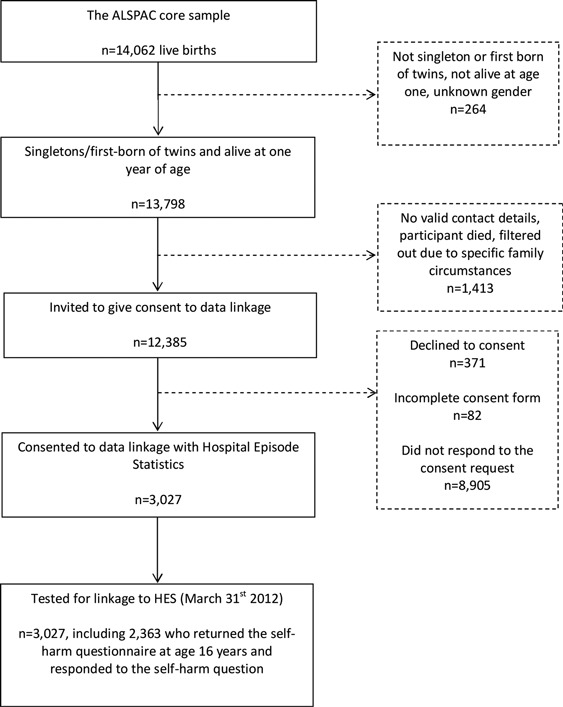
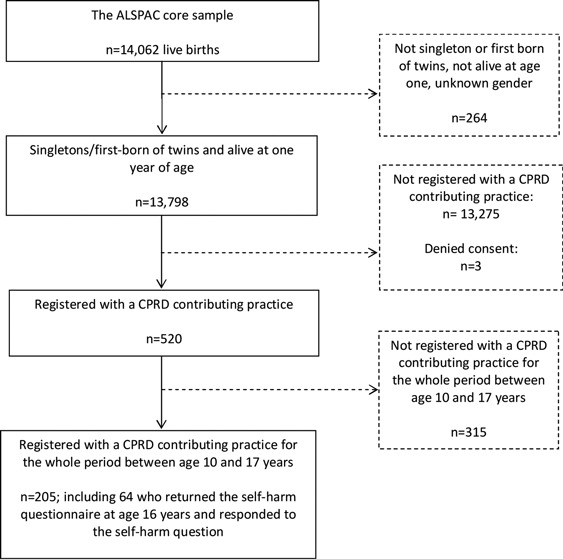
The objective of this study was to examine agreement between self-reported and medically recorded self-harm, and investigate whether the prevalence of self-harm differs in questionnaire responders vs. non-responders. A total of 4,810 participants from the Avon Longitudinal Study of Parents and Children (ALSPAC) completed a self-harm questionnaire at age 16 years. Data from consenting participants were linked to medical records (number available for analyses ranges from 205-3,027). The prevalence of self-harm leading to hospital admission was somewhat higher in questionnaire non-responders than responders (2.0 vs. 1.2%). Hospital attendance with self-harm was under-reported on the questionnaire. One third reported self-harm inconsistently over time; inconsistent reporters were less likely to have depression and fewer had self-harmed with suicidal intent. Self-harm prevalence estimates derived from self-report may be underestimated; more accurate figures may come from combining data from multiple sources.
Overview
The claims and statistics of this paper haven’t been checked yet.
Free: it reads the open-access text and checks the first 5 claims that cite a source we can check. Create a free account to check every claim.
Integrity signals
Registry
Cites
Statistics
Figures
Verification
Claims the paper makes
The claims and statistics of this paper haven’t been checked yet.
Free: it reads the open-access text and checks the first 5 claims that cite a source we can check. Create a free account to check every claim.
Claims other papers make about this one
Each is checked against this paper’s own text: does it say what the citing paper says it does?
The source backs part of the claim, not all of it — or backs it for a different population, condition or comparison.
In the citing paper
“Indeed, suicidal ideation in particular may be subject to mis-reporting (Mars et al., 2016)”
From From ideation to action: Differentiating between those who think about suicide and those who attempt suicide in a national study of young adults (2018) · cites this paper as Mars et al., 2016
Experimental — accuracy not yet measuredThe source backs part of the claim, not all of it — or backs it for a different population, condition or comparison.
In the citing paper
“we used health record and hospital representation data in the first instance, based on findings that these may provide more realistic estimates (Mars 2016).”
From Prevention of self-harm and suicide in young people up to the age of 25 in education settings (2024) · cites this paper as Mars 2016
Experimental — accuracy not yet measured
Self-check
Percentages, sums and reported differences re-computed from the paper’s own numbers.
The self-check needs the paper’s full text.
Citations
Cites
Boyd, A., Golding, J., Macleod, J., Lawlor, D. A., Fraser, A., Henderson, J., Molloy, L., Ness, A., Ring, S., & Davey Smith, G. (2013) · International Journal of Epidemiology · doi:10.1093/ije/dys064 · Cited by 2,996 · cited 3×
“The ALSPAC core enrolled sample consists of 14,541 pregnant women resident in the former county of Avon in South West England (United Kingdom), with expected delivery dates between April 1, 1991 and December 31, 1992 (Boyd et al., 2013).”
BackgroundMethodInfluentialSelf-citationBias and causal associations in observational research
Grimes, D. A., & Schulz, K. F. (2002) · The Lancet · doi:10.1016/s0140-6736(02)07451-2 · Cited by 1,553
Lewis, G., Pelosi, A. J., Araya, R., & Dunn, G. (1992) · Psychological Medicine · doi:10.1017/s0033291700030415 · Cited by 1,487
Self-citationDeliberate self harm in adolescents: self report survey in schools in England
Hawton, K., Rodham, K., Evans, E., & Weatherall, R. (2002) · BMJ · doi:10.1136/bmj.325.7374.1207 · Cited by 1,008 · cited 4×
“Most have focused on suicide attempts, which comprise only a portion of episodes (Hawton et al., 2002; Kidger et al., 2012; Muehlenkamp & Gutierrez, 2004).”
BackgroundInfluentialSelf-citationA Study of the Frequency of Self-Mutilation in a Community Sample of Adolescents
Ross, S., & Heath, N. (2002) · Journal of Youth and Adolescence · doi:10.1023/a:1014089117419 · Cited by 787 · cited 5×
“…to ask additional clarification questions could help to eliminate false positives that arise from inaccurate self-reports (Hawton et al., 2002; Ross & Heath, 2002; Velting et al., 1998), but it is also possible that the loss of anonymity found with interview assessments may result in…”
BackgroundMethodInfluentialMadge, N., Hewitt, A., Hawton, K., Wilde, E. J. D., Corcoran, P., Fekete, S., Heeringen, K. V., Leo, D. D., & Ystgaard, M. (2008) · Journal of Child Psychology and Psychiatry · doi:10.1111/j.1469-7610.2008.01879.x · Cited by 750 · cited 1×
“The self-harm questions used in the age 16 self-report questionnaire were based on those used in the CASE B. Mars et al. ARCHIVES OF SUICIDE RESEARCH 123 study (Madge et al., 2008).”
MethodSelf-citationNock, M. K., & Kessler, R. C. (2006) · Journal of Abnormal Psychology · doi:10.1037/0021-843x.115.3.616 · Cited by 680
Selective drop-out in longitudinal studies and non-biased prediction of behaviour disorders
Wolke, D., Waylen, A., Samara, M., Steer, C., Goodman, R., Ford, T., & Lamberts, K. (2009) · British Journal of Psychiatry · doi:10.1192/bjp.bp.108.053751 · Cited by 628 · cited 2×
“It is also important to note that while selective non-participation of those with self-harm and inconsistent reporting could result in distorted prevalence estimates, this does not necessarily lead to biased estimates of associations between self-harm and exposure variables (Wolke et al., 2009).”
BackgroundMental illness stigma and ethnocultural beliefs, values, and norms: An integrative review
Abdullah, T., & Brown, T. L. (2011) · Clinical Psychology Review · doi:10.1016/j.cpr.2011.05.003 · Cited by 625 · cited 1×
“The degree of stigma associated with mental illness and self-harm varies around the world (Abdullah & Brown, 2011; Evans-Lacko, Brohan, Mojtabai, & Thornicroft, 2012; Reynders, Kerkhof, Molenberghs, & Van Audenhove, 2014), therefore findings from our study may not be generalizable outside a UK…”
BackgroundThe Prevalence of Suicidal Phenomena in Adolescents: A Systematic Review of Population‐Based Studies
Evans, E., Hawton, K., Rodham, K., Psychol, C., & Deeks, J. (2005) · Suicide and Life-Threatening Behavior · doi:10.1521/suli.2005.35.3.239 · Cited by 549
Self-citation
Cited by
Interventions for self-harm in children and adolescents
Hawton, K., Witt, K. G., Taylor Salisbury, T. L., Arensman, E., Gunnell, D., Townsend, E., van Heeringen, K., & Hazell, P. (2015) · Cochrane Database of Systematic Reviews · doi:10.1002/14651858.cd012013 · Cited by 261
Self-citationCausal inference with observational data: the need for triangulation of evidence
Hammerton, G., & Munafò, M. R. (2021) · Psychological Medicine · doi:10.1017/s0033291720005127 · Cited by 262
“…used in the context of mental health (Christensen, Ekholm, Gray, Glumer, & Juel, 2015; Cornish et al., 2015; Gorman et al., 2014; Gray et al., 2013; Mars et al., 2016) to examine the extent of biases from selective non-response by providing data on those that did and did not respond to assessments…”
MethodWitt, K., Spittal, M. J., Carter, G., Pirkis, J., Hetrick, S., Currier, D., Robinson, J., & Milner, A. (2017) · BMC Psychiatry · doi:10.1186/s12888-017-1458-0 · Cited by 179
“Between studies, however, outcome measure definition may have affected our results in light of research findings suggesting that self-reported self-harm underestimates hospitaltreated self-harm [68].”
ResultMars, B., Heron, J., Klonsky, E. D., Moran, P., O'Connor, R. C., Tilling, K., Wilkinson, P., & Gunnell, D. (2019) · Journal of Child Psychology and Psychiatry · doi:10.1111/jcpp.12878 · Cited by 185
Self-citationInterventions for self-harm in children and adolescents
Witt, K. G., Hetrick, S. E., Rajaram, G., Hazell, P., Taylor Salisbury, T. L., Townsend, E., & Hawton, K. (2021) · Cochrane Database of Systematic Reviews · doi:10.1002/14651858.cd013667.pub2 · Cited by 149
Self-citationIdentification of Suicide Attempt Risk Factors in a National US Survey Using Machine Learning
de la Garza, Á. G., Blanco, C., Olfson, M., & Wall, M. M. (2021) · JAMA Psychiatry · doi:10.1001/jamapsychiatry.2020.4165 · Cited by 160
Wetherall, K., Cleare, S., Eschle, S., Ferguson, E., O'Connor, D. B., O'Carroll, R. E., & O'Connor, R. C. (2018) · Journal of Affective Disorders · doi:10.1016/j.jad.2018.07.074 · Cited by 131
“Indeed, suicidal ideation in particular may be subject to mis-reporting (Mars et al., 2016), and as the former was assessed using a single item, we were not able to tap the intensity or severity of thoughts.”
Batty, G. D., Kivimäki, M., Bell, S., Gale, C. R., Shipley, M., Whitley, E., & Gunnell, D. (2018) · Translational Psychiatry · doi:10.1038/s41398-017-0072-8 · Cited by 136
Self-citation20-year outcomes in adolescents who self-harm: a population-based cohort study
Borschmann, R., Becker, D., Coffey, C., Spry, E., Moreno-Betancur, M., Moran, P., & Patton, G. C. (2017) · The Lancet Child & Adolescent Health · doi:10.1016/s2352-4642(17)30007-x · Cited by 135
Prevalence, Onset, and Course of Suicidal Behavior Among Adolescents and Young Adults in Germany
Voss, C., Ollmann, T. M., Miché, M., Venz, J., Hoyer, J., Pieper, L., Höfler, M., & Beesdo-Baum, K. (2019) · JAMA Network Open · doi:10.1001/jamanetworkopen.2019.14386 · Cited by 129
Suicide attempts and non-suicidal self-harm: national prevalence study of young adults
O'Connor, R. C., Wetherall, K., Cleare, S., Eschle, S., Drummond, J., Ferguson, E., O'Connor, D. B., & O'Carroll, R. E. (2018) · BJPsych Open · doi:10.1192/bjo.2018.14 · Cited by 112
Carson, N. J., Mullin, B., Sanchez, M. J., Lu, F., Yang, K., Menezes, M., & Cook, B. L. (2019) · PLOS ONE · doi:10.1371/journal.pone.0211116 · Cited by 109
Voss, C., Hoyer, J., Venz, J., Pieper, L., & Beesdo‐Baum, K. (2020) · Acta Psychiatrica Scandinavica · doi:10.1111/acps.13237 · Cited by 98
On the genetic and environmental relationship between suicide attempt and death by suicide
Edwards, A. C., Ohlsson, H., Mościcki, E., Crump, C., Sundquist, J., Lichtenstein, P., Kendler, K. S., & Sundquist, K. (2021) · American Journal of Psychiatry · doi:10.1176/appi.ajp.2020.20121705 · Cited by 86
Favril, L., Laenen, F. V., Vandeviver, C., & Audenaert, K. (2017) · International Journal of Law and Psychiatry · doi:10.1016/j.ijlp.2017.10.005 · Cited by 111
“In addition to the common caveats of self-reportmeasures (Mars et al., 2016), it is possible that the sensitivity of several variables may have led to underreporting.”
BackgroundLongitudinal trends in self-reported anxiety. Effects of age and birth cohort during 25 years
Calling, S., Midlöv, P., Johansson, S.-E., Sundquist, K., & Sundquist, J. (2017) · BMC Psychiatry · doi:10.1186/s12888-017-1277-3 · Cited by 95
“As non-response has been reported to be associated with poorer mental health [31], it is likely that the prevalence of anxiety is higher among non-responders, although this bias would be similar in all assessments.”
ResultPrevalence and risk factors for suicide attempts in prison
Favril, L., Shaw, J. J., & Fazel, S. (2022) · Clinical Psychology Review · doi:10.1016/j.cpr.2022.102190 · Cited by 87
Biased reporting of past self-injurious thoughts and behaviors: A literature review
Klimes‐Dougan, B., Mirza, S. A., Babkin, E., & Lanning, C. (2022) · Journal of Affective Disorders · doi:10.1016/j.jad.2022.04.073 · Cited by 70
Russell, A. E., Heron, J., Gunnell, D., Ford, T., Hemani, G., Joinson, C., Moran, P., Relton, C., Suderman, M., & Mars, B. (2019) · Journal of Child Psychology and Psychiatry · doi:10.1111/jcpp.13100 · Cited by 61
“Self-harm was self-reported by young people at 16 and 21 yo and may be subject to misreporting (Mars et al., 2016).”
BackgroundSelf-citationPritchard, C. W., Iqbal, W., & Dray, R. (2020) · BJPsych Open · doi:10.1192/bjo.2020.38 · Cited by 65
Krahe, M. A., Milligan, E., & Reilly, S. (2019) · Journal of Biomedical Informatics · doi:10.1016/j.jbi.2019.103222 · Cited by 47
Timing of menarche and self-harm in adolescence and adulthood: a population-based cohort study
Roberts, E., Fraser, A., Gunnell, D., Joinson, C. J., & Mars, B. (2019) · Psychological Medicine · doi:10.1017/s0033291719002095 · Cited by 50
“A second limitation is the possibility for measurement error in the self-harm variable, which was assessed via self-report (Mars et al., 2016).”
MethodSelf-citationYoung people’s views about consenting to data linkage: findings from the PEARL qualitative study
Audrey, S., Brown, L., Campbell, R. M., Boyd, A., & Macleod, J. (2016) · BMC Medical Research Methodology · doi:10.1186/s12874-016-0132-4 · Cited by 47
“Information available through linkage may be difficult to collect in other ways, such as participant self-report, or if self-reported may be subject to bias [7].”
BackgroundSelf-citationHafferty, J. D., Navrady, L. B., Adams, M. J., Howard, D. M., Campbell, A., Whalley, H. C., Lawrie, S. M., Nicodemus, K. K., Porteous, D. J., Deary, I. J., et al. (2019) · Social Psychiatry and Psychiatric Epidemiology · doi:10.1007/s00127-019-01725-7 · Cited by 45
Borschmann, R., Young, J. T., Moran, P., Spittal, M. J., Snow, K., Mok, K., & Kinner, S. A. (2017) · CMAJ Open · doi:10.9778/cmajo.20170058 · Cited by 34
Police and hospital data linkage for traffic injury surveillance: A systematic review
Soltani, A., Harrison, J., Ryder, C., Flavel, J., & Watson, A. (2024) · Accident Analysis & Prevention · doi:10.1016/j.aap.2023.107426 · Cited by 45
Xu, Y., Ma, Y., & Rahman, Q. (2023) · Clinical Psychology Review · doi:10.1016/j.cpr.2023.102334 · Cited by 40
Grobe, T., Kleine‐Budde, K., Bramesfeld, A., Thom, J., Bretschneider, J., & Hapke, U. (2018) · Das Gesundheitswesen · doi:10.1055/a-0652-5424 · Cited by 30
Junker, A., Bjørngaard, J. H., & Bjerkeset, O. (2017) · Child and Adolescent Psychiatry and Mental Health · doi:10.1186/s13034-017-0161-8 · Cited by 25
“Most studies are also based on self-reported self-harm; limited by non-response and misreporting, and possible underestimation of self-harm prevalence [18].”
BackgroundThinking about suicidal thinking
House, A. O., Kapur, N., & Knipe, D. W. (2020) · The Lancet Psychiatry · doi:10.1016/s2215-0366(20)30263-7 · Cited by 37
Data Resource Profile: Cohort and Longitudinal Studies Enhancement Resources (CLOSER)
O’Neill, D., Benzeval, M., Boyd, A., Calderwood, L., Cooper, C. C., Corti, L., Dennison, E. M., Fitzsimons, E., Goodman, A. T., Hardy, R., et al. (2019) · International Journal of Epidemiology · doi:10.1093/ije/dyz004 · Cited by 30
Self-citationWetherall, K., Cleare, S., Eschle, S., Ferguson, E., O'Connor, D. B., O’Carroll, R. E., & O’Connor, R. C. (2021) · Psychological Medicine · doi:10.1017/s0033291720005255 · Cited by 37
“Indeed, there is evidence that suicidal ideation in particular can be under-reported (Mars et al., 2016).”
BackgroundPrediction Models for Suicide Attempts among Adolescents Using Machine Learning Techniques
Lim, J. S., Yang, C.-M., Baek, J.-W., Lee, S.-Y., & Kim, B.-N. (2022) · Clinical Psychopharmacology and Neuroscience · doi:10.9758/cpn.2022.20.4.609 · Cited by 32
“In line with this, the possibility of the limited test − retest reliability of SA in the prospective design and inconsistent reporting over time could have led to a performance difference with our results [30,35].”
Russell, K., Rasmussen, S. A., & Hunter, S. C. (2020) · International Journal of Environmental Research and Public Health · doi:10.3390/ijerph17186771 · Cited by 37
“This has been reported in previous research [59] and is not surprising given that young people who engage in self-harm are more likely to be absent or truant from school [60].”
ResultChikwava, F., Cordier, R., Ferrante, A. M., O’Donnell, M., Speyer, R., & Parsons, L. (2021) · PLoS ONE · doi:10.1371/journal.pone.0249088 · Cited by 28
“validation of self-reported information from longitudinal surveys with administrative data [26, 38, 50, 51]; ii) reducing data incompleteness and biases inherent in longitudinal data as reported earlier [40, 52, 53]; and iii) overcoming high attrition rates common in longitudinal data [52, 54, 55].”
BackgroundO’Connor, R. C., Smillie, S., McClelland, H., Lundy, J.-M., Stewart, C., Syrett, S., Gavigan, M., McConnachie, A., Stanley, B., Smith, M. J., et al. (2022) · Pilot and Feasibility Studies · doi:10.1186/s40814-022-01081-5 · Cited by 30
“The prevalence of all forms of self-harm or suicidal behaviour is likely to be underrepresented as not all individuals who self-harm present to hospital, and those who do do not necessarily report that their injuries were self-inflicted [3, 5].”
BackgroundMaternal Emotion Socialization of Adolescent Girls Engaging in Non-Suicidal Self-Injury
White, H. V., Silamongkol, T., Wiglesworth, A., Labella, M. H., Goetz, E. R., Cullen, K. R., & Klimes‐Dougan, B. (2021) · Research on Child and Adolescent Psychopathology · doi:10.1007/s10802-020-00758-w · Cited by 23
“While variability of NSSI episodes in the sample is greater for lifetime than past year, lifetime recall of self-harm is subject to underreporting bias (Mars et al., 2016).”
BackgroundLow Level of Agreement Between Self-Report and Clinical Assessment of Passive Suicidal Ideation
Vera-Varela, C., Mirón, P. C. M., Barrigón, M. L., Álvarez-García, R., Portillo, P. A., Chamorro-Delmo, J., MEmind Study Group, & Baca‐García, E. (2021) · Archives of Suicide Research · doi:10.1080/13811118.2021.1945984 · Cited by 22
“However, this question has recently attracted the interest of researchers (Deming et al., 2021; Gratch et al., 2021; Lungu, Wilks, Coyle, & Linehan, 2018; Mars et al., 2016).”
BackgroundShafti, M., Taylor, P. J., Forrester, A., Handerer, F., & Pratt, D. (2023) · Frontiers in Psychiatry · doi:10.3389/fpsyt.2023.1083271 · Cited by 30
“A further concern is that self-reports of harmful behaviours have been found to be underreported and differ from medically and informant recorded data (79).”
ResultCameron, C. M., Osborne, J. M., Spinks, A. B., Davey, T. M., Sipe, N., & McClure, R. (2017) · BMJ Open · doi:10.1136/bmjopen-2016-015584 · Cited by 21
Waller, G., Newbury‐Birch, D., Simpson, D., Armstrong, E., James, B., Chapman, L., Ahmed, F., & Ferguson, J. (2023) · BMC Public Health · doi:10.1186/s12889-023-15046-7 · Cited by 23
Wright-Hughes, A. M., Graham, L., Cottrell, D. J., & Farrin, A. J. (2018) · Clinical Trials · doi:10.1177/1740774517751381 · Cited by 23
Haghish, E. F., Czajkowski, N. O., Walby, F. A., Qin, P., & Laeng, B. (2024) · Journal of Affective Disorders · doi:10.1016/j.jad.2024.03.133 · Cited by 23
Ross, E., O’Reilly, D., O’Hagan, D., & Maguire, A. (2023) · Journal of Child Psychology and Psychiatry · doi:10.1111/jcpp.13784 · Cited by 26
“True estimates of self-harm vary substantially due to differences in study design, self-report biases and the classification systems used to define self-harm (Gillies et al., 2018; Lim et al., 2019; Mars et al., 2016; Muehlenkamp, Claes, Havertape, & Plener, 2012).”
MethodAbramsky, T., Harvey, S. E., Mosha, N. R., Mtolela, G. J., Gibbs, A., Mshana, G. H., Lees, S. S., Kapiga, S., & Stöckl, H. (2022) · BMC Women s Health · doi:10.1186/s12905-022-01697-y · Cited by 22
“Our findings concord with other analyses of inconsistencies in reporting of IPV[35], and with those of a study looking at inconsistent reporting of self-harm, in which inconsistent reporters were less likely than consistent reporters to have depression[58].”
ResultPalmer, C., Connor, C., Channa, S., Lavis, A., Leung, N., Parsons, N., & Birchwood, M. J. (2018) · Suicide and Life-Threatening Behavior · doi:10.1111/sltb.12512 · Cited by 26
Knipe, D. W., Gunnell, D., Pieris, R., Priyadarshana, C., Weerasinghe, M., Pearson, M., Jayamanne, S. F., Hawton, K., Konradsen, F., Eddleston, M., et al. (2019) · Social Psychiatry and Psychiatric Epidemiology · doi:10.1007/s00127-019-01672-3 · Cited by 22
Self-citationTang, W., Kang, Y., Xu, J., & Li, T. (2020) · Community Mental Health Journal · doi:10.1007/s10597-019-00523-4 · Cited by 16
Interventions for youth suicide and suicide-related behaviour: An update to a systematic review
Bailey, E., Robinson, J., & Witt, K. (2023) · Australasian Psychiatry · doi:10.1177/10398562231187972 · Cited by 16
“For most trials, there were also concerns relating to outcome measurement, often due to reliance on self-report instruments which may underestimate the prevalence of selfharm.(50) Additionally, despite consumer involvement increasingly considered best-practice in research,(9,10,51) Australasian Psychiatry 31(4)”
BackgroundBye, A., Carter, B., Leightley, D., Trevillion, K., Liakata, M., Branthonne‐Foster, S., Cross, S., Zenasni, Z., Carr, E., Williamson, G., et al. (2024) · PLoS ONE · doi:10.1371/journal.pone.0299059 · Cited by 13
“Self-report data can be subject to recall and response bias [42,46].”
Audrey, S., Brown, L., Campbell, R., Boyd, A., & Macleod, J. (2016) · BMC Medical Ethics · doi:10.1186/s12910-016-0133-1 · Cited by 12
“These data may be easier to access and more accurate than, for example, information collected in self-report questionnaires [8].”
MethodSelf-citationPrevention of self-harm and suicide in young people up to the age of 25 in education settings
Sharma, V., Marshall, D., Fortune, S., Prescott, A. E., Boggiss, A., Macleod, E., Mitchell, C., Clarke, A., Robinson, J., Witt, K. G., et al. (2024) · Cochrane Database of Systematic Reviews · doi:10.1002/14651858.cd013844.pub2 · Cited by 11
Self-citationShafti, M., Steeg, S., Beurs, D. P. D., Pratt, D., Forrester, A., Webb, R. T., & Taylor, P. J. (2022) · Frontiers in Psychiatry · doi:10.3389/fpsyt.2022.953764 · Cited by 15
Percy, A., Agus, A. M., Cole, J. C., Doherty, P., Foxcroft, D., Harvey, S. A., McKay, M. T., Murphy, L., & Sumnall, H. R. (2019) · Prevention Science · doi:10.1007/s11121-019-0981-2 · Cited by 10
Baiden, P., Onyeaka, H., Aneni, K., Wood, B. M., LaBrenz, C. A., Hagedorn, A., Muoghalu, C., Gobodzo, E. C., Baiden, J. F., Adeku, Y., et al. (2023) · Journal of Psychiatric Research · doi:10.1016/j.jpsychires.2023.09.015 · Cited by 11
Same-Sex Marriage and Common Mental Health Diagnoses: A Sibling Comparison and Adoption Approach
Xu, Y., Rahman, Q., Hiyoshi, A., & Montgomery, S. (2022) · The Journal of Sex Research · doi:10.1080/00224499.2022.2120597 · Cited by 9
“The agreement between self-reported data on self-harm and medical records is low, and the self-harm rate derived from the self-reported data is likely to be underreported compared with medical records (Mars et al., 2016).”
ResultMoreno‐Betancur, M., Moran, P., Becker, D., Patton, G. C., & Carlin, J. B. (2021) · Statistical Methods in Medical Research · doi:10.1177/0962280221998409 · Cited by 51
Johnson, D., Skinner, R., Cappelli, M., Zemek, R. L., McFaull, S. R., Langill, C., & Cloutier, P. (2018) · Canadian Journal of Public Health · doi:10.17269/s41997-018-0139-1 · Cited by 7
Halstead, I. N., Heron, J., Svob, C., & Joinson, C. J. (2024) · Social Science & Medicine · doi:10.1016/j.socscimed.2024.117342 · Cited by 7
Self-citationRobinson, K., Grey, I., Broodryk, T., Hove, L. V., & Wilson, M. (2025) · Australian & New Zealand Journal of Psychiatry · doi:10.1177/00048674241312797 · Cited by 6
“Although some individuals may forget or come to reinter-pret their self-injury overtime (e.g. Mars et al., 2016), these potential memory effects are unlikely to completely account for the effect of age on lifetime NSSI.”
Claréus, B., Wångby‐Lundh, M., Lundh, L., Rådman, G., Bjärehed, J., & Daukantaité, D. (2025) · European Child & Adolescent Psychiatry · doi:10.1007/s00787-025-02785-8 · Cited by 9
“Nevertheless, as registry data from ALPAC [6] suggested a higher rate of hospital admissions relating to self-harm (including suicidal behaviours) and mental health diagnoses among non-responders, there might still be bias in unobserved variables that could impact generalizability.”
Wiglesworth, A., Ostrand, C., Mirza, S. A., Xu, M., Mueller, B. A., Fiecas, M. J. A., Luciana, M. M., Cullen, K. R., & Klimes‐Dougan, B. (2025) · Journal of Psychopathology and Clinical Science · doi:10.1037/abn0001014 · Cited by 4
Épidémiologie descriptive du risque suicidaire dans le système médical français de médecine générale
Ducher, J.-L., Llorca, P., Callahan, S., & de Chazeron, I. (2020) · The Canadian Journal of Psychiatry · doi:10.1177/0706743720961741 · Cited by 5
“Sexe Homme Femme 36,2 63,8 274 483 Classe d’âge, Années [18-24] [25-34] [35-44 [45-54] [55-64] [65-74] >74 8,6 13,0 15,7 21,4 21,8 12,5 7,0 65 98 119 162 165 95 53 Statut marital Célibataire En concubinage Marié Divorcé / Séparé Veuf 17,2 17,0 48,8 11,5 5,5 130 129 369 87 42 Statut professionnel Étudiant Sans travail…”
InfluentialPrevention of self-harm and suicide in young people up to the age of 25 in education settings
Fortune, S. A., Sharma, V., Bowden, L., Hobbs, L., Marshall, D. C., Mitchell, C., Clarke, A., Robinson, J., Shave, R., Macleod, E., et al. (2021) · Cochrane Database of Systematic Reviews · doi:10.1002/14651858.cd013844 · Cited by 4
Self-citationAlbury, E. A., Hom, M. A., Stanley, I. H., & Joiner, T. E. (2021) · Archives of Suicide Research · doi:10.1080/13811118.2021.1885535 · Cited by 4
“Denial, reinterpretation, and/or misinterpretation of the study questions or the event itself may also result in differential SA history reporting (Mars et al., 2016).”
BackgroundClinical applications of big data to child and adolescent mental health care
Wickersham, A., & Downs, J. M. (2022) · Elsevier eBooks · doi:10.1016/b978-0-323-91709-4.00005-6 · Cited by 7
Jaggers, J. W., Modrowski, C. A., Kerig, P. K., Kilshaw, R. E., Cambron, C., & Allen, A. K. (2023) · Youth Violence and Juvenile Justice · doi:10.1177/15412040231153116 · Cited by 3
Brocklesby, M. (2017) · Open Access Victoria University of Wellington | Te Herenga Waka (Figshare) · doi:10.26686/wgtn.17065352.v1 · Cited by 5
Robinson, K., & Wilson, M. (2019) · PsyArXiv (OSF Preprints) · doi:10.31234/osf.io/75z2w · Cited by 5
ALHO, J. S., Webb, R. T., Gutvilig, M., Niemi, R., Komulainen, K., Suokas, K., Böckerman, P., Elovainio, M. J., Kapur, N., & Hakulinen, C. A. (2025) · The Lancet Regional Health - Europe · doi:10.1016/j.lanepe.2025.101517 · Cited by 5
Robinson, K. (2021) · Open Access Victoria University of Wellington | Te Herenga Waka (Figshare) · doi:10.26686/wgtn.16960195.v1 · Cited by 2
Janssens, J. J., Myin‐Germeys, I., Lafit, G., Achterhof, R., Hagemann, N., Hermans, K. S. F. M., Hiekkaranta, A. P., Lecei, A., & Kirtley, O. J. (2022) · doi:10.31234/osf.io/v9wn6 · Cited by 2
The Aarhus bereavement study (TABstudy)
Marello, M. M., Möller, S., Denckla, C. A., Lundorff, M., Greve, L. T., & O’Connor, M. (2026) · European Journal of Epidemiology · doi:10.1007/s10654-026-01397-z · Cited by 1
“The linkage between survey responses and register data will provide opportunities for cross-validation of exposures and outcomes [67], the ability to proxy missing data [68], and increase methodological rigor, which is needed in bereavement literature [24, 69].”
Claréus, B., & Daukantaité, D. (2026) · Journal of Affective Disorders · doi:10.1016/j.jad.2026.122169 · Cited by 1
Gunther, O. E., Garneau, M., Geoffroy, M., Martin‐Storey, A., Latimer, E. A., Déry, M., & Temcheff, C. E. (2024) · Brain Injury · doi:10.1080/02699052.2024.2381046 · Cited by 1
“…data in comparison to medical records, a population-based study using self-report data from Canadian adult participants discovered that approximately 75% of those recorded to have accessed mental health services, according to medical records did not self-report using mental health services (29).”
Clements, C., Farooq, B., Bickley, H., & Kapur, N. (2019) · Journal of Affective Disorders · doi:10.1016/j.jad.2019.10.052 · Cited by 1
“This is consistent with previous work that found people with no current psychopathology were less likely to report previous suicidal behaviour (Mars et al., 2016).”
BackgroundResultPredictors of self-harm and emergency department attendance for self-harm in deprived communities
McCarthy, M., Saini, P., Nathan, R., & Mcintyre, J. (2023) · International Journal of Injury Control and Safety Promotion · doi:10.1080/17457300.2023.2204474 · Cited by 3
Defining mediation effects for multiple mediators using the concept of the target randomized trialPreprint
Moreno‐Betancur, M., Moran, P., Becker, D., Patton, G. C., & Carlin, J. B. (2019) · arXiv (Cornell University) · Cited by 1
Marchant, A. L. (2020) · Cronfa (Swansea University) · doi:10.23889/suthesis.56821
Eikelenboom, M., Horsfall, M., Draisma, S., & Smit, J. H. (2022) · Quality & Quantity · doi:10.1007/s11135-022-01432-7 · Cited by 1
“Other research has shown that assessing the LTH of SA through interviews or selfreport questionnaires results in the underreporting of the LTH of SA, in comparison to using data-linkage techniques to view the medical records of these same participants (Mars et al. 2016).”
ResultSuicidality in Depression and Anxiety: Studies on methodological aspects and risk factors
Eikelenboom, M. (2023) · doi:10.5463/thesis.318 · Cited by 9
Abramsky, T., Harvey, S. E., Mosha, N. R., Mtolela, G. J., Gibbs, A., Mshana, G. H., Lees, S., Kapiga, S., & Stöckl, H. (2022) · Figshare · doi:10.6084/m9.figshare.19607448
Abramsky, T., Harvey, S. E., Mosha, N. R., Mtolela, G. J., Gibbs, A., Mshana, G. H., Lees, S., Kapiga, S., & Stöckl, H. (2022) · Figshare · doi:10.6084/m9.figshare.19607445
Abramsky, T., Harvey, S. E., Mosha, N. R., Mtolela, G. J., Gibbs, A., Mshana, G. H., Lees, S., Kapiga, S., & Stöckl, H. (2022) · Figshare · doi:10.6084/m9.figshare.19607451
Dooley, N., Aghedo, B., Harrington, S. M., Johnson, A., Kirby, J., Owens, N., Solan, I., Staunton, G.-M., McEvoy, D., Cannon, M., et al. (2026) · Social Psychiatry and Psychiatric Epidemiology · doi:10.1007/s00127-025-03026-8
“For instance, only half of adolescents with a probable mental disorder seek formal support from a healthcare professional [20, 21] and hospital records of self-harm and suicide attempts only capture the most severe injuries [22, 23].”
Matias, O., Bakou, A. E., Barnicot, K., & McCabe, R. (2026) · The Lancet Regional Health - Europe · doi:10.1016/j.lanepe.2026.101606 · Cited by 1
“70 Furthermore, hospital re-attendance would suggest more serious self-harm.”
Xiao, J., Wetherall, K., Cleare, S., Ernst, M., Robb, K. A., & O'Connor, D. B. (2026) · Suicide and Life-Threatening Behavior · doi:10.1111/sltb.70081 · Cited by 1
“Consistent with other non-clinical suicide studies, the single measure of suicidal ideation may lead to errors in the data (Mars et al. 2016).”
Meaning in life in emerging adults from a UK birth cohort: Predictors and mental health outcomes
Halstead, I. N., Heron, J. E., Haworth, C. M. A., von Gontard, A., & Joinson, C. J. (2026) · Journal of Affective Disorders · doi:10.1016/j.jad.2026.121646 · Cited by 1
Self-citationValidation of a Risk‐Prediction Model in the Presence of Outcome Misclassification
Zou, R., Williamson, B. D., Shortreed, S. M., & Coley, R. Y. (2026) · Statistics in Medicine · doi:10.1002/sim.70377 · Cited by 2
Suicide Risk Among Youth Who Choose “No Response” on Emergency Department Suicide Risk Screenings
Boyd, S. D., King, C. A., Brent, D. A., Casper, T. C., Bridge, J. A., Webb, M., Hatkevich, C. E., Hengehold, T., & Grupp‐Phelan, J. (2026) · Suicide and Life-Threatening Behavior · doi:10.1111/sltb.70102
Lin, T., Shariyf, L. R., Kautz, M. M., Baker, J. C., Khazem, L. R., Bryan, C. J., & Brown, L. A. (2026) · Journal of Affective Disorders · doi:10.1016/j.jad.2026.122133
Brisson, R. (2026) · Journal of Adolescence · doi:10.1002/jad.70270
Haregu, T., Whyte, E., Krishnamoorthy, S., Batterham, P. J., Pitman, A., & Armstrong, G. (2026) · Psychiatry Research · doi:10.1016/j.psychres.2026.117467
FAIRsharing record for: CLOSER Discovery
FAIRsharing Team, Lister, A., & Johnson, J. (2018) · FAIRsharing.org · doi:10.25504/fairsharing.l9uwam
Metadata
- Authors
- Mars, B., Cornish, R., Heron, J., Boyd, A., Crane, C., Hawton, K., Lewis, G., Tilling, K., Macleod, J., & Gunnell, D.
- Corresponding author
- Mars, Becky
- ORCID
- Venue
- Archives of Suicide Research
- Publisher
- Informa UK Limited
- Published
- 2016-01-20
- Volume
- 20
- Issue
- 2
- Pages
- 113-141
- ISSN
- 1381-1118 (ISSN-L)
- 1543-6136
- PMC
- PMC4841016
- OpenAlex
- W2280892688
- Cited by
- 96
- References
- 36
- Citations by year
- 2026: 11 · 2025: 4 · 2024: 6 · 2023: 9 · 2022: 13 · 2021: 14 · 2020: 7 · 2019: 12 · 2018: 8 · 2017: 9 · 2016: 2
- FWCI
- 14.28
- Type
- journal article
- Language
- en
- Open access
- hybrid
- doi.org
- Licence
- Locations
- Archives of Suicide Research (publishedVersion, cc-by)
- Europe PMC (PubMed Central) (publishedVersion, cc-by)
- PubMed Central (publishedVersion, cc-by)
- PubMed (publishedVersion)
- UCL Discovery (University College London) (submittedVersion)
- Bristol Research (University of Bristol) (submittedVersion, cc-by)
- Explore Bristol Research (submittedVersion, cc-by)
- Funders
- Wellcome Trust (102215)
- Medical Research Council (MR/J012661/1, MC_PC_15018, MR/K023233/1)
- Topics
- Social Sciences › Psychology › Clinical Psychology › Suicide and Self-Harm Studies
- Social Sciences › Sociology and Political Science › Survey Methodology and Nonresponse
- Social Sciences › Sociology and Political Science › Homicide, Infanticide, and Child Abuse
- Keywords
- self-harm, data linkage, underreporting, hospitalization, depression, suicidal intent, adolescent self-harm, Avon Longitudinal Study of Parents and Children, self-report accuracy
- MeSH terms
- Adolescent, Depression, Emergency Service, Hospital, Female, United Kingdom, Hospitalization, Humans, Longitudinal Studies, Male, Surveys and Questionnaires, Suicide, Attempted, Prevalence, Information Storage and Retrieval, Self-Injurious Behavior, Self Report, Suicidal Ideation
About these checks
Registry, retraction, Cites and statistics results are computed, not judged, with one exception: a printed reference that no index lists is read once by a model before it counts as a citation error. Claims are extracted by a model and kept only when their quote appears verbatim in the text; each cited source is then checked, with a model’s help, for whether it says what the claim relies on. Those verdicts can be wrong — read the claim’s quote and the cited source before relying on one.
Statistics and arithmetic are recomputed, not judged.
Confidence bands are shown only for fields calibrated on our annotated test set. None is calibrated yet, so no band is shown.
What counts as a claim ›How we measure confidence ›How we check this ›
Are you an author, or do you see a problem with this page? Request a review
Data sources
Bibliographic data: Semantic Scholar, OpenAlex, Crossref.
Contains information from the Semantic Scholar Academic Graph Datasets, made available under the ODC Attribution License (ODC-BY 1.0).
Semantic Scholar’s data is described in: Kinney, R., et al. (2023). The Semantic Scholar Open Data Platform. arXiv:2301.10140.
