

The DOI matches its Crossref record; 68 of the 68 references it cites were found in a registry or an index; none of the 6 sources its claims cite is checked for support yet.
Modelling Prehistoric Topography and Vegetation in the Lower Thames Valley, UK: Palaeoenvironmental Context for Wetland Archaeology and Evidence for Neolithic Landnám from North Woolwich
Open accessAbstract
Multi-proxy investigations at 2 Pier Road, North Woolwich, London, UK, have revealed deposits spanning the Middle-Late Holocene from the late Mesolithic (c. 4360 cal BC) onwards. Pollen data show an Elm Decline at c. 4210–3950 cal BC followed by landnám clearances at c. 4210–3910 cal BC and c. 3710–3030 cal BC and the first appearance of cereal at c. 3540–3030 cal BC. These events are potentially contemporary with the construction of nearby Neolithic trackways, providing indirect evidence for agriculture and settlement. REVEALS modelling shows the first significant reduction in woodland cover is coincident with the Neolithic Elm decline, but the main step-change to open conditions occurred in the Early Bronze Age, following a decline in lime at c. 2110–1630 cal BC. Palaeo-topographic modelling of the region shows that although the trend towards increasing openness coincides with gradual wetland expansion, the shift to open vegetation cover cannot be explained by this and is probably the result of human activity. This study highlights the value of combining deposit and vegetation cover modelling to contextualise wetland archaeology and shows that together these provide useful proxies for landscape-scale human activity that can identify ephemeral signals of prehistoric activity.
Overview
AI snapshot
Written from the paper’s full text.
TL;DR
Multi-proxy work at 2 Pier Road, North Woolwich, reconstructs Middle–Late Holocene environments and finds Neolithic Elm Decline/landnám signals, later Bronze Age woodland opening, and wetland expansion in the Lower Thames Valley. Combining deposit and vegetation-cover modelling contextualises nearby prehistoric trackways and suggests later prehistoric openness was mainly human-driven.
Key findings
- Pollen data span the late Mesolithic from c.4360 cal BC, with an Elm Decline at c.4210–3950 cal BC, landnám clearances at c.4210–3910 cal BC and c.3710–3030 cal BC, and first cereal pollen at c.3540–3030 cal BC.
- REVEALS modelling shows mixed deciduous trees and shrubs dominated in the Late Mesolithic and persisted through the Neolithic; grassland expanded in the Early Neolithic mainly through Ulmus reduction (15% to 7%), with cultivation first apparent in 3500–3000 BC.
- The main step-change to open vegetation (>60% grasses/herbs) occurs from c.2000 BC in the Early Bronze Age, with a sharp Tilia reduction (23% to 5%); this follows the Lime Decline dated to c.2110–1630 cal BC.
- Palaeo-topographic flooding models show gradual wetland expansion, and known trackways plot close to modelled marginal wetlands; the shift to open vegetation cannot be explained by wetland expansion alone and is probably due to human activity.
Methods
- Museum of London Archaeology geoarchaeological investigations at a 0.17 ha site; four windowless boreholes (BH01–BH04) reached the base of the Holocene sequence, with BH03 sampled for plant macrofossils, radiocarbon dating, pollen, diatoms, ostracods, foraminifera and testate amoebae, and BH01/BH04 bulk samples for insects.
- Seven AMS radiocarbon dates from BH03 were calibrated using OxCal 4.3 and IntCal13; a Bayesian age-depth model used Bacon, and a deposit model of the pre-Holocene surface used Kriging constrained by LIDAR.
- Regional vegetation cover was reconstructed with REVEALS via REVEALSINR in DISQOVER, using 500-year time-slices; wetland expansion was modelled by “flooding” the Early Holocene surface using the site age-depth model and existing Lower Thames relative sea-level models.
Limitations
- Stated: precise sea-level index points are scarce, so the relative sea-level models used for flooding are provisional and schematic; the age-depth model has a mean uncertainty of 386 calendar years (s.d. = 92), ranging from 567 years at 7.80 m b.g.l. to 211 years near the top.
- Stated: a possible outlier date (SUERC-88163) is largely excluded by the age-depth model; a hiatus is inferred between c.1312–967 cal BC and c.151 cal BC–cal AD 188, and the period 1000 BC–AD 1 was not modelled due to this hiatus.
- Stated: pollen counts were sometimes limited, with totals of 200–350 total land pollen grains; evident from the text, the main multiproxy sequence relies on a single core (BH03), and prehistoric occupation evidence in the region is described as fragmentary due to later urban truncation.
Model-written summary. Check it against the paper before relying on it.
Integrity signals
Registry
Cites
Statistics
Figures
Verification
Claims the paper makes
28 Own result · 21 Own interpretation · 6 No basis given · 5 Not checked yet · 2 No full text of the sources · 1 Sources not found · 1 Own method
A result the paper reports from its own data — it cites no other source for it, so there is none to check. The quote shows it is in the paper.
In the paper
“At a broader spatial scale, the relationship between trackway construction and evidence for increased woodland clearance and agriculture also holds true, with the increased number and spatial spread of trackways in the Bronze Age coinciding with modelled decline of woodland cover from about 2000 BC onwards.”
§ Modelling Prehistoric Topography and Vegetation in the Lower Thames Valley, UK: Palaeoenvironmental Context for Wetland Archaeology and Evidence for Neolithic Landnám from North Woolwich > Contextualising Prehistoric Human Activity in East London
plaincorrelational- Asserted: passes — The authors put it forward as true.
- Checkable: passes — It can be checked against evidence.
- Load-bearing: unclear — It is unclear whether the paper’s conclusions depend on it.
- Based: passes — The paper gives a reason why it holds.
- Rests on an assumption: The modelled vegetation cover accurately represents past vegetation cover in the study area.
A result the paper reports from its own data — it cites no other source for it, so there is none to check. The quote shows it is in the paper.
In the paper
“Palaeo-topographic modelling of the region shows that although the trend towards increasing openness coincides with gradual wetland expansion”
§ Modelling Prehistoric Topography and Vegetation in the Lower Thames Valley, UK: Palaeoenvironmental Context for Wetland Archaeology and Evidence for Neolithic Landnám from North Woolwich > Abstract
plaincorrelational- Asserted: passes — The authors put it forward as true.
- Checkable: passes — It can be checked against evidence.
- Load-bearing: passes — The paper’s conclusions depend on it.
- Based: passes — The paper gives a reason why it holds.
A result the paper reports from its own data — it cites no other source for it, so there is none to check. The quote shows it is in the paper.
In the paper
“The 'flooding model' for the study area shows that known trackways tend to occur at the edge of wetlands, where there is a broad 'ecotonal' zone”
§ Modelling Prehistoric Topography and Vegetation in the Lower Thames Valley, UK: Palaeoenvironmental Context for Wetland Archaeology and Evidence for Neolithic Landnám from North Woolwich > Conclusions and Future Work
plaincorrelational- Asserted: passes — The authors put it forward as true.
- Checkable: passes — It can be checked against evidence.
- Load-bearing: passes — The paper’s conclusions depend on it.
- Based: passes — The paper gives a reason why it holds.
- Rests on an assumption: The modelled extent of marginal wetlands accurately represents the actual extent of wetlands at the relevant time-slices.
A result the paper reports from its own data — it cites no other source for it, so there is none to check. The quote shows it is in the paper.
In the paper
“The onset of peat formation (7.55 m b.g.l.) is estimated to date to 3353-2881 cal BC (95% probability) during the Neolithic.”
§ Modelling Prehistoric Topography and Vegetation in the Lower Thames Valley, UK: Palaeoenvironmental Context for Wetland Archaeology and Evidence for Neolithic Landnám from North Woolwich > Lithostratigraphy and Chronology
hedged- Asserted: passes — The authors put it forward as true.
- Checkable: passes — It can be checked against evidence.
- Load-bearing: passes — The paper’s conclusions depend on it.
- Based: passes — The paper gives a reason why it holds.
The paper states this without a source or data behind it here, so there is nothing to check it against. The quote shows it is in the paper.
In the paper
“A broadly consistent sediment sequence was observed across all four boreholes at the site.”
§ Modelling Prehistoric Topography and Vegetation in the Lower Thames Valley, UK: Palaeoenvironmental Context for Wetland Archaeology and Evidence for Neolithic Landnám from North Woolwich > Lithostratigraphy and Chronology
plain- Asserted: passes — The authors put it forward as true.
- Checkable: passes — It can be checked against evidence.
- Load-bearing: passes — The paper’s conclusions depend on it.
- Based: passes — The paper gives a reason why it holds.
A result the paper reports from its own data — it cites no other source for it, so there is none to check. The quote shows it is in the paper.
In the paper
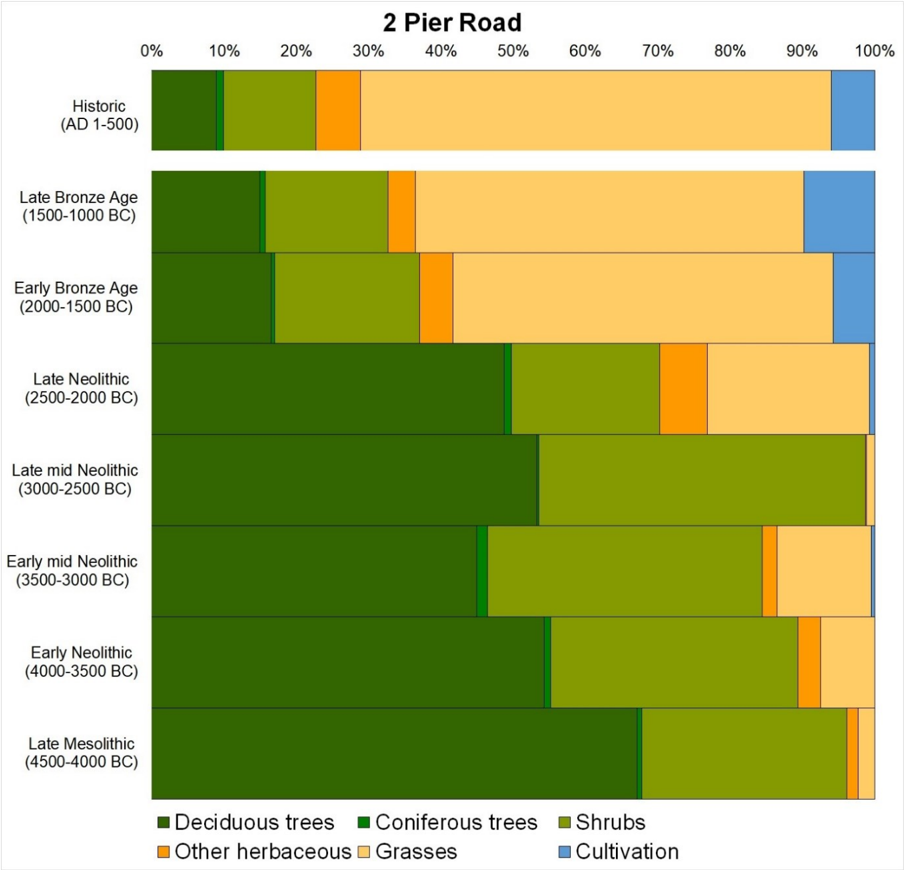
“Grassland cover began to expand in the Early Neolithic, almost entirely as a result of the reduction in Ulmus (from 15% to 7%)”
§ Modelling Prehistoric Topography and Vegetation in the Lower Thames Valley, UK: Palaeoenvironmental Context for Wetland Archaeology and Evidence for Neolithic Landnám from North Woolwich > Regional Vegetation Cover Modelling
plaindirect- Asserted: passes — The authors put it forward as true.
- Checkable: passes — It can be checked against evidence.
- Load-bearing: unclear — It is unclear whether the paper’s conclusions depend on it.
- Based: passes — The paper gives a reason why it holds.
- Rests on an assumption: The assumptions of the REVEALS model are met for the Pier Road pollen data after excluding autochthonous taxa such as Alnus and Cyperaceae.
A result the paper reports from its own data — it cites no other source for it, so there is none to check. The quote shows it is in the paper.
In the paper
“In spite of the evidence for disturbance, woodland remained dominant in this zone, dominated by Quercus, Corylus and Tilia.”
§ Modelling Prehistoric Topography and Vegetation in the Lower Thames Valley, UK: Palaeoenvironmental Context for Wetland Archaeology and Evidence for Neolithic Landnám from North Woolwich > Palynology
plain- Asserted: passes — The authors put it forward as true.
- Checkable: passes — It can be checked against evidence.
- Load-bearing: passes — The paper’s conclusions depend on it.
- Based: passes — The paper gives a reason why it holds.
A result the paper reports from its own data — it cites no other source for it, so there is none to check. The quote shows it is in the paper.
In the paper
“A sample from the base of the minerogenic floodplain alluvium, facies 4, (5.81 m b.g.l.) contained a single charred Triticum spelta (spelt) grain dated to the Roman period (cal AD 80-220, 95% probability, BETA-515736).”
§ Modelling Prehistoric Topography and Vegetation in the Lower Thames Valley, UK: Palaeoenvironmental Context for Wetland Archaeology and Evidence for Neolithic Landnám from North Woolwich > Biostratigraphy
plainSingle case- Asserted: passes — The authors put it forward as true.
- Checkable: passes — It can be checked against evidence.
- Load-bearing: unclear — It is unclear whether the paper’s conclusions depend on it.
- Based: passes — The paper gives a reason why it holds.
A result the paper reports from its own data — it cites no other source for it, so there is none to check. The quote shows it is in the paper.
In the paper
“but the main step-change to open conditions occurred in the Early Bronze Age, following a decline in lime at c. 2110-1630 cal BC.”
§ Modelling Prehistoric Topography and Vegetation in the Lower Thames Valley, UK: Palaeoenvironmental Context for Wetland Archaeology and Evidence for Neolithic Landnám from North Woolwich > Abstract
plaincorrelationalSingle case- Asserted: passes — The authors put it forward as true.
- Checkable: passes — It can be checked against evidence.
- Load-bearing: passes — The paper’s conclusions depend on it.
- Based: passes — The paper gives a reason why it holds.
- Rests on an assumption: The assumptions of the REVEALS model are met for the Pier Road pollen data after excluding autochthonous taxa such as Alnus and Cyperaceae.
A result the paper reports from its own data — it cites no other source for it, so there is none to check. The quote shows it is in the paper.
In the paper
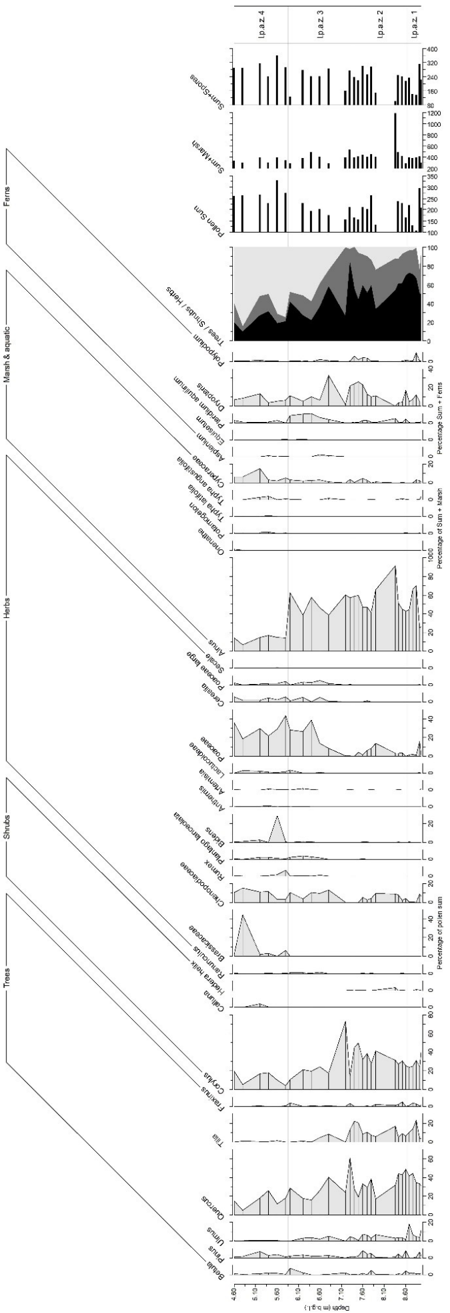
“Four local pollen assemblage zones (l.p.a.z.) have been recognised, summarised in Table 3 and Figure 5.”
§ Modelling Prehistoric Topography and Vegetation in the Lower Thames Valley, UK: Palaeoenvironmental Context for Wetland Archaeology and Evidence for Neolithic Landnám from North Woolwich > Palynology
plain- Asserted: passes — The authors put it forward as true.
- Checkable: passes — It can be checked against evidence.
- Load-bearing: passes — The paper’s conclusions depend on it.
- Based: passes — The paper gives a reason why it holds.
A result the paper reports from its own data — it cites no other source for it, so there is none to check. The quote shows it is in the paper.
In the paper
“landnám clearances at c. 4210-3910 cal BC”
§ Modelling Prehistoric Topography and Vegetation in the Lower Thames Valley, UK: Palaeoenvironmental Context for Wetland Archaeology and Evidence for Neolithic Landnám from North Woolwich > Abstract
plainSingle case- Asserted: passes — The authors put it forward as true.
- Checkable: passes — It can be checked against evidence.
- Load-bearing: passes — The paper’s conclusions depend on it.
- Based: passes — The paper gives a reason why it holds.
A result the paper reports from its own data — it cites no other source for it, so there is none to check. The quote shows it is in the paper.
In the paper
“landnám clearances at c. 4210-3910 cal BC and c. 3710-3030 cal BC”
§ Modelling Prehistoric Topography and Vegetation in the Lower Thames Valley, UK: Palaeoenvironmental Context for Wetland Archaeology and Evidence for Neolithic Landnám from North Woolwich > Abstract
plainSingle case- Asserted: passes — The authors put it forward as true.
- Checkable: passes — It can be checked against evidence.
- Load-bearing: passes — The paper’s conclusions depend on it.
- Based: passes — The paper gives a reason why it holds.
In the paper
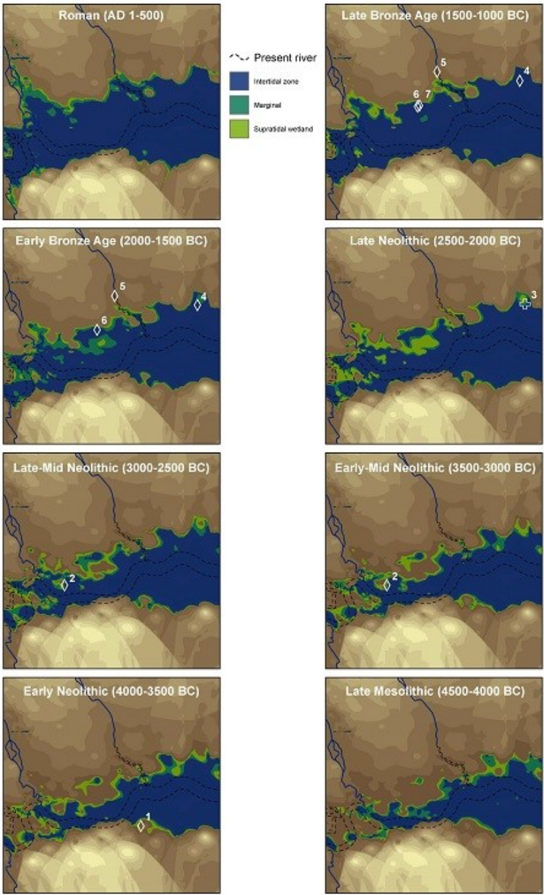
“The only known trackways on the southern margins of the floodplain, those at Belmarsh West (Hart et al. 2015), appear to be constructed at a time when marginal and supratidal wetlands began to expand around a small area of higher ground in present day Thamesmead;”
§ Modelling Prehistoric Topography and Vegetation in the Lower Thames Valley, UK: Palaeoenvironmental Context for Wetland Archaeology and Evidence for Neolithic Landnám from North Woolwich > Contextualising Prehistoric Human Activity in East London
What the sources say
- Not checked — no full text of the sourcecites Hart et al. 2015 source
hedgedcorrelationalSingle case- Asserted: passes — The authors put it forward as true.
- Checkable: passes — It can be checked against evidence.
- Load-bearing: passes — The paper’s conclusions depend on it.
- Based: passes — The paper gives a reason why it holds.
- Rests on an assumption: The modelled extent of marginal wetlands accurately represents the actual extent of wetlands at the relevant time-slices.
A result the paper reports from its own data — it cites no other source for it, so there is none to check. The quote shows it is in the paper.
In the paper
“the first appearance of cereal at c. 3540-3030 cal BC”
§ Modelling Prehistoric Topography and Vegetation in the Lower Thames Valley, UK: Palaeoenvironmental Context for Wetland Archaeology and Evidence for Neolithic Landnám from North Woolwich > Abstract
plainSingle case- Asserted: passes — The authors put it forward as true.
- Checkable: passes — It can be checked against evidence.
- Load-bearing: passes — The paper’s conclusions depend on it.
- Based: passes — The paper gives a reason why it holds.
The paper states this without a source or data behind it here, so there is nothing to check it against. The quote shows it is in the paper.
In the paper
“there is a small overlap in the date ranges for these structures and the first possible landnám event at c. 4210-3910 cal BC (95% probability)”
§ Modelling Prehistoric Topography and Vegetation in the Lower Thames Valley, UK: Palaeoenvironmental Context for Wetland Archaeology and Evidence for Neolithic Landnám from North Woolwich > Contextualising Prehistoric Human Activity in East London
plaincorrelational- Asserted: passes — The authors put it forward as true.
- Checkable: passes — It can be checked against evidence.
- Load-bearing: passes — The paper’s conclusions depend on it.
- Based: passes — The paper gives a reason why it holds.
A result the paper reports from its own data — it cites no other source for it, so there is none to check. The quote shows it is in the paper.
In the paper
“otherwise it is notable that trackway construction seems to have been more prevalent along the northern fringes of the floodplain, where more extensive and broken areas of marginal wetlands are shown in the model.”
§ Modelling Prehistoric Topography and Vegetation in the Lower Thames Valley, UK: Palaeoenvironmental Context for Wetland Archaeology and Evidence for Neolithic Landnám from North Woolwich > Contextualising Prehistoric Human Activity in East London
hedgedcorrelational- Asserted: passes — The authors put it forward as true.
- Checkable: passes — It can be checked against evidence.
- Load-bearing: passes — The paper’s conclusions depend on it.
- Based: passes — The paper gives a reason why it holds.
A result the paper reports from its own data — it cites no other source for it, so there is none to check. The quote shows it is in the paper.
In the paper
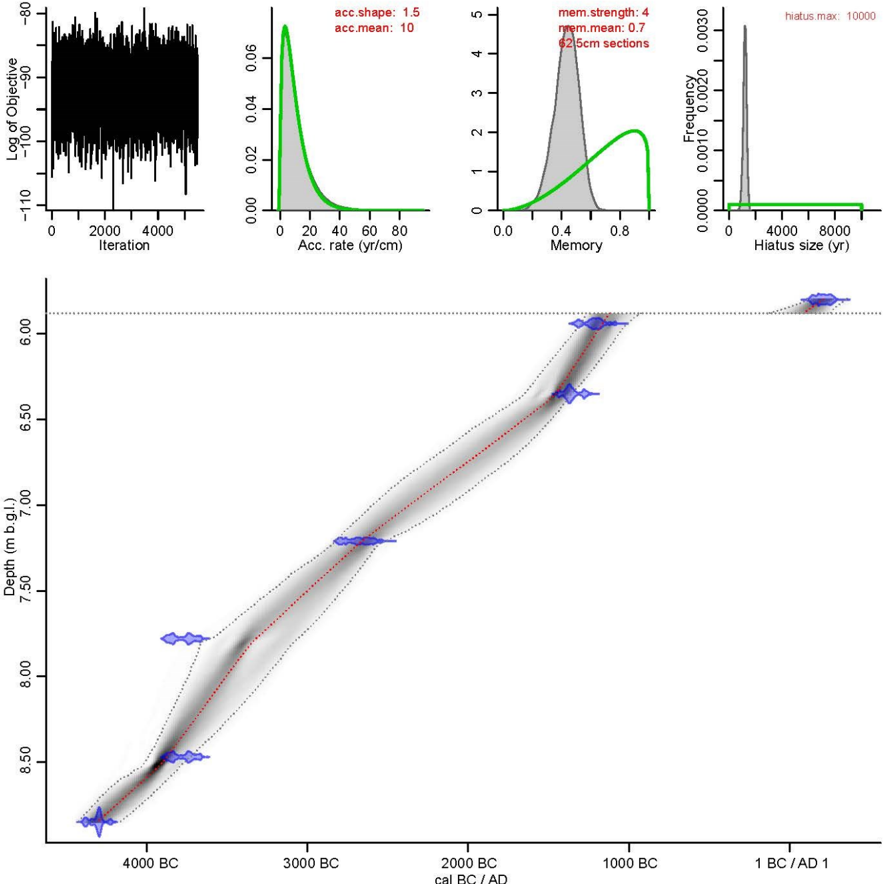
“A Bayesian age depth model, generated using the Bacon package (Blaauw and Christen 2011), see Figure 3, indicates a mean accumulation rate of approximately 14 yrs cm-1 through the sequence as a whole.”
§ Modelling Prehistoric Topography and Vegetation in the Lower Thames Valley, UK: Palaeoenvironmental Context for Wetland Archaeology and Evidence for Neolithic Landnám from North Woolwich > Lithostratigraphy and Chronology
hedged- Asserted: passes — The authors put it forward as true.
- Checkable: passes — It can be checked against evidence.
- Load-bearing: unclear — It is unclear whether the paper’s conclusions depend on it.
- Based: passes — The paper gives a reason why it holds.
None of the sources cited for this claim have been checked yet.
In the paper
“L.p.a.z. 3 is characterised by declining values in Tilia starting from 7.36 m bgl (c.3100-2700 cal BC, 95% confidence) and reaching a minimum at 6.40 m bgl (c.1770-1440 cal BC, 95% confidence), representing a typical Bronze Age Lime Decline (Turner 1962;Grant, Waller, and Groves 2011).”
§ Modelling Prehistoric Topography and Vegetation in the Lower Thames Valley, UK: Palaeoenvironmental Context for Wetland Archaeology and Evidence for Neolithic Landnám from North Woolwich > Palynology
plaincorrelational- Asserted: passes — The authors put it forward as true.
- Checkable: passes — It can be checked against evidence.
- Load-bearing: unclear — It is unclear whether the paper’s conclusions depend on it.
- Based: passes — The paper gives a reason why it holds.
The paper states this without a source or data behind it here, so there is nothing to check it against. The quote shows it is in the paper.
In the paper
“The Belmarsh West structures post-date the Elm Decline event at c. 4270-3950 cal BC (95% probability)”
§ Modelling Prehistoric Topography and Vegetation in the Lower Thames Valley, UK: Palaeoenvironmental Context for Wetland Archaeology and Evidence for Neolithic Landnám from North Woolwich > Contextualising Prehistoric Human Activity in East London
plain- Asserted: passes — The authors put it forward as true.
- Checkable: passes — It can be checked against evidence.
- Load-bearing: passes — The paper’s conclusions depend on it.
- Based: passes — The paper gives a reason why it holds.
A result the paper reports from its own data — it cites no other source for it, so there is none to check. The quote shows it is in the paper.
In the paper
“Multi-proxy investigations at 2 Pier Road, North Woolwich, London, UK, have revealed deposits spanning the Middle-Late Holocene from the late Mesolithic (c.4360 cal BC) onwards.”
§ Modelling Prehistoric Topography and Vegetation in the Lower Thames Valley, UK: Palaeoenvironmental Context for Wetland Archaeology and Evidence for Neolithic Landnám from North Woolwich > Abstract
plainSingle case- Asserted: passes — The authors put it forward as true.
- Checkable: passes — It can be checked against evidence.
- Load-bearing: passes — The paper’s conclusions depend on it.
- Based: passes — The paper gives a reason why it holds.
A result the paper reports from its own data — it cites no other source for it, so there is none to check. The quote shows it is in the paper.
In the paper
“as well as the general correspondence between increased trackway construction and vegetation clearance in the Bronze Age.”
§ Modelling Prehistoric Topography and Vegetation in the Lower Thames Valley, UK: Palaeoenvironmental Context for Wetland Archaeology and Evidence for Neolithic Landnám from North Woolwich > Conclusions and Future Work
plaincorrelational- Asserted: passes — The authors put it forward as true.
- Checkable: passes — It can be checked against evidence.
- Load-bearing: passes — The paper’s conclusions depend on it.
- Based: passes — The paper gives a reason why it holds.
- Rests on an assumption: The modelled vegetation cover accurately represents past vegetation cover in the study area.
A result the paper reports from its own data — it cites no other source for it, so there is none to check. The quote shows it is in the paper.
In the paper
“REVEALS modelling shows the first significant reduction in woodland cover is coincident with the Neolithic Elm decline”
§ Modelling Prehistoric Topography and Vegetation in the Lower Thames Valley, UK: Palaeoenvironmental Context for Wetland Archaeology and Evidence for Neolithic Landnám from North Woolwich > Abstract
plaincorrelational- Asserted: passes — The authors put it forward as true.
- Checkable: passes — It can be checked against evidence.
- Load-bearing: passes — The paper’s conclusions depend on it.
- Based: passes — The paper gives a reason why it holds.
- Rests on an assumption: The assumptions of the REVEALS model are met for the Pier Road pollen data after excluding autochthonous taxa such as Alnus and Cyperaceae.
A result the paper reports from its own data — it cites no other source for it, so there is none to check. The quote shows it is in the paper.
In the paper
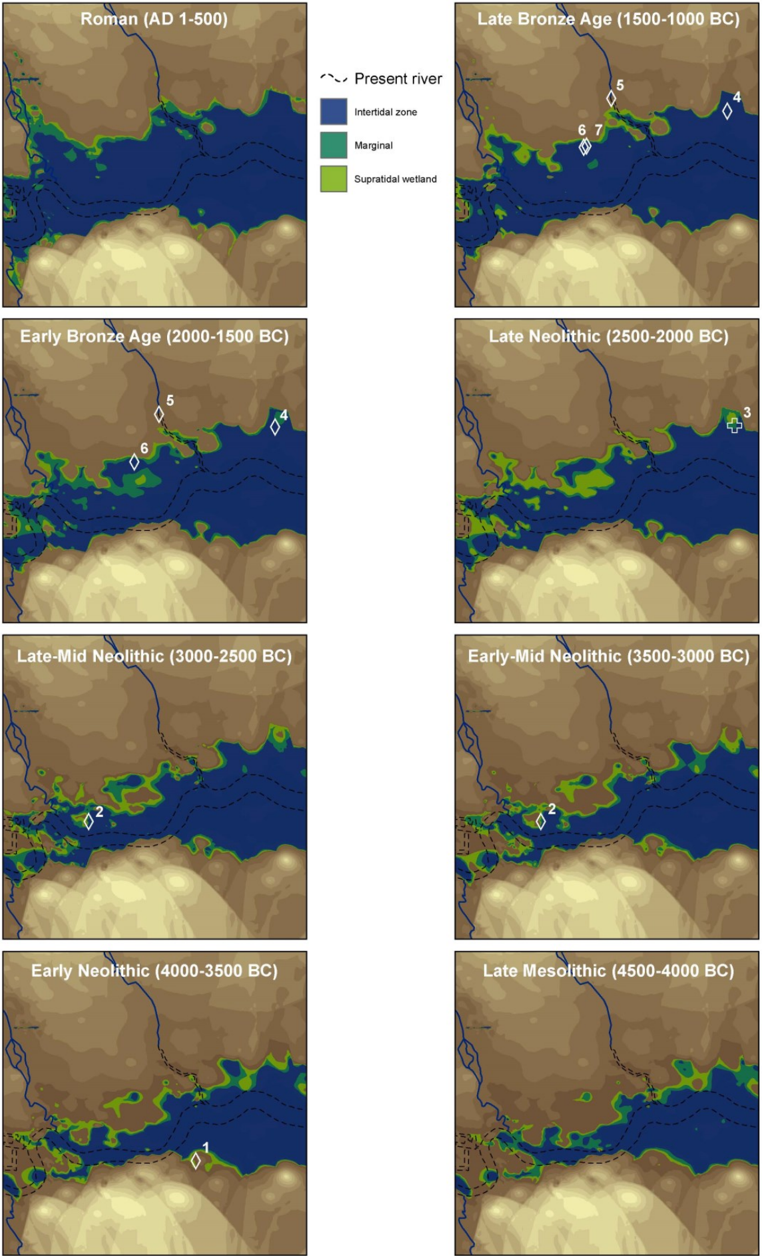
“The wetland features have been plotted in the appropriate time-slices on Figure 6 (nos.1-7), showing a close correspondence between their position and the modelled extent of marginal wetlands.”
§ Modelling Prehistoric Topography and Vegetation in the Lower Thames Valley, UK: Palaeoenvironmental Context for Wetland Archaeology and Evidence for Neolithic Landnám from North Woolwich > Contextualising Prehistoric Human Activity in East London
plaincorrelational- Asserted: passes — The authors put it forward as true.
- Checkable: passes — It can be checked against evidence.
- Load-bearing: passes — The paper’s conclusions depend on it.
- Based: passes — The paper gives a reason why it holds.
A result the paper reports from its own data — it cites no other source for it, so there is none to check. The quote shows it is in the paper.
In the paper
“Pollen data show an Elm Decline at c. 4210-3950 cal BC”
§ Modelling Prehistoric Topography and Vegetation in the Lower Thames Valley, UK: Palaeoenvironmental Context for Wetland Archaeology and Evidence for Neolithic Landnám from North Woolwich > Abstract
plainSingle case- Asserted: passes — The authors put it forward as true.
- Checkable: passes — It can be checked against evidence.
- Load-bearing: passes — The paper’s conclusions depend on it.
- Based: passes — The paper gives a reason why it holds.
A result the paper reports from its own data — it cites no other source for it, so there is none to check. The quote shows it is in the paper.
In the paper
“These results indicate that alluvial deposition on the site began during the Late Mesolithic period, soon before 4450-4270 cal BC (95% probability, SUERC-88164).”
§ Modelling Prehistoric Topography and Vegetation in the Lower Thames Valley, UK: Palaeoenvironmental Context for Wetland Archaeology and Evidence for Neolithic Landnám from North Woolwich > Lithostratigraphy and Chronology
hedged- Asserted: passes — The authors put it forward as true.
- Checkable: passes — It can be checked against evidence.
- Load-bearing: passes — The paper’s conclusions depend on it.
- Based: passes — The paper gives a reason why it holds.
The paper states this without a source or data behind it here, so there is nothing to check it against. The quote shows it is in the paper.
In the paper
“The facies 3 wood peats mark the lateral expansion of the alder carr onto the study site at c. 3100 cal BC (5060 cal BP).”
§ Modelling Prehistoric Topography and Vegetation in the Lower Thames Valley, UK: Palaeoenvironmental Context for Wetland Archaeology and Evidence for Neolithic Landnám from North Woolwich > The on-site Environment
plaindirect- Asserted: passes — The authors put it forward as true.
- Checkable: passes — It can be checked against evidence.
- Load-bearing: passes — The paper’s conclusions depend on it.
- Based: passes — The paper gives a reason why it holds.
A result the paper reports from its own data — it cites no other source for it, so there is none to check. The quote shows it is in the paper.
In the paper
“These flooding models show the gradual expansion of wetlands in the study area from the end of the Mesolithic period onwards occurring mostly to the north of the site (the southern parts of the present day London Borough of Newham).”
§ Modelling Prehistoric Topography and Vegetation in the Lower Thames Valley, UK: Palaeoenvironmental Context for Wetland Archaeology and Evidence for Neolithic Landnám from North Woolwich > Modelling Wetland Expansion in the Lower Thames Valley
plain- Asserted: passes — The authors put it forward as true.
- Checkable: passes — It can be checked against evidence.
- Load-bearing: passes — The paper’s conclusions depend on it.
- Based: passes — The paper gives a reason why it holds.
A result the paper reports from its own data — it cites no other source for it, so there is none to check. The quote shows it is in the paper.
In the paper
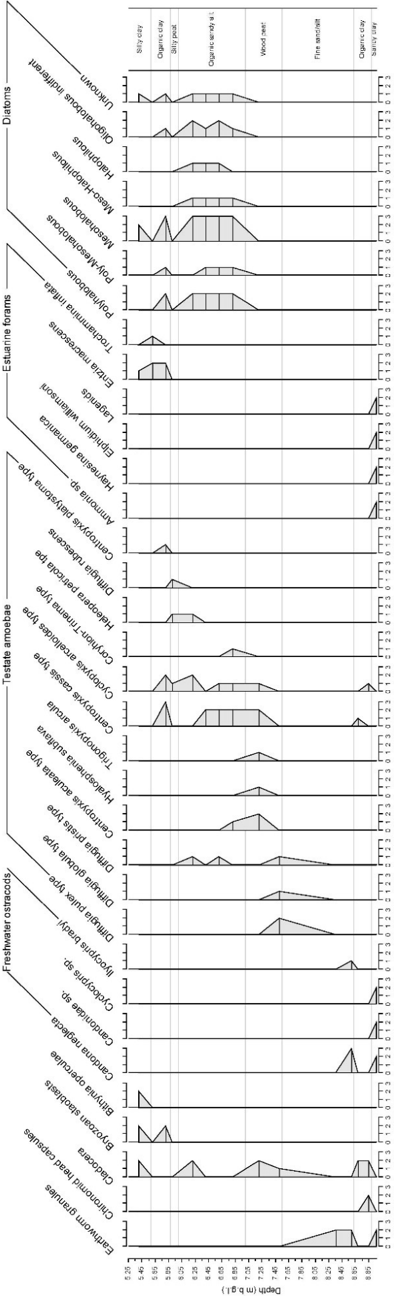
“Testate amoebae assemblages were more diverse in the wood peat strata (facies 3) than in the other facies, including a range of taxa (e.g.Difflugia pulex, Hyalosphenia subflava and Trigonopyxis arcula) typically associated with relatively dry mire surface conditions”
§ Modelling Prehistoric Topography and Vegetation in the Lower Thames Valley, UK: Palaeoenvironmental Context for Wetland Archaeology and Evidence for Neolithic Landnám from North Woolwich > Biostratigraphy
plaincorrelational- Asserted: passes — The authors put it forward as true.
- Checkable: passes — It can be checked against evidence.
- Load-bearing: passes — The paper’s conclusions depend on it.
- Based: passes — The paper gives a reason why it holds.
A claim is checked only against the cited paper’s full text, never its abstract, and none is available for its sources.
In the paper
“The possible trackway at Fort Street (Crockett, Allen, and Scaife 2002) has previously been thought to be unusual in that it is located away from the present edge of the floodplain (Hart et al. 2015, 216), however this model indicates that this site would have been at the edge of the floodplain at the time of construction during the Neolithic.”
§ Modelling Prehistoric Topography and Vegetation in the Lower Thames Valley, UK: Palaeoenvironmental Context for Wetland Archaeology and Evidence for Neolithic Landnám from North Woolwich > Contextualising Prehistoric Human Activity in East London
What the sources say
hedgedcorrelationalSingle case- Asserted: passes — The authors put it forward as true.
- Checkable: passes — It can be checked against evidence.
- Load-bearing: passes — The paper’s conclusions depend on it.
- Based: passes — The paper gives a reason why it holds.
- Rests on an assumption: The modelled extent of marginal wetlands accurately represents the actual extent of wetlands at the relevant time-slices.
A conclusion the paper draws from its own results — it cites no other source for it, so there is none to check. The quote shows it is in the paper.
In the paper
“This would appear to confirm the association between prehistoric trackway construction and ecotonal environments”
§ Modelling Prehistoric Topography and Vegetation in the Lower Thames Valley, UK: Palaeoenvironmental Context for Wetland Archaeology and Evidence for Neolithic Landnám from North Woolwich > Contextualising Prehistoric Human Activity in East London
hedgedcorrelational- Asserted: passes — The authors put it forward as true.
- Checkable: passes — It can be checked against evidence.
- Load-bearing: passes — The paper’s conclusions depend on it.
- Based: passes — The paper gives a reason why it holds.
- Rests on an assumption: The modelled extent of marginal wetlands accurately represents the actual extent of wetlands at the relevant time-slices.
A conclusion the paper draws from its own results — it cites no other source for it, so there is none to check. The quote shows it is in the paper.
In the paper
“This chronological correspondence demonstrates a probable relationship between trackway construction and nearby agriculture and settlement”
§ Modelling Prehistoric Topography and Vegetation in the Lower Thames Valley, UK: Palaeoenvironmental Context for Wetland Archaeology and Evidence for Neolithic Landnám from North Woolwich > Contextualising Prehistoric Human Activity in East London
hedgedcorrelational- Asserted: passes — The authors put it forward as true.
- Checkable: passes — It can be checked against evidence.
- Load-bearing: passes — The paper’s conclusions depend on it.
- Based: passes — The paper gives a reason why it holds.
A conclusion the paper draws from its own results — it cites no other source for it, so there is none to check. The quote shows it is in the paper.
In the paper
“Given the apparently sharp change in accumulation rate coincident with the switch from peat formation to mineral alluvium deposition and marked changes in pollen assemblage, a hiatus, probably representing a phase of erosion followed by further sedimentation, has been inferred at 5.88 m b.g.l.(dashed horizontal line in Figure 3) between c. 1312-967 cal BC (95% probability) and c. 151 cal BC-cal AD”
§ Modelling Prehistoric Topography and Vegetation in the Lower Thames Valley, UK: Palaeoenvironmental Context for Wetland Archaeology and Evidence for Neolithic Landnám from North Woolwich > Lithostratigraphy and Chronology
hedgedconditional- Asserted: passes — The authors put it forward as true.
- Checkable: passes — It can be checked against evidence.
- Load-bearing: unclear — It is unclear whether the paper’s conclusions depend on it.
- Based: passes — The paper gives a reason why it holds.
A conclusion the paper draws from its own results — it cites no other source for it, so there is none to check. The quote shows it is in the paper.
In the paper
“The minor peaks of Betula at 8.60 m bgl (c.4210-3910 cal BC, 95% confidence) and 7.80 m bgl (c.3710-3130 cal BC, 95% confidence) may represent secondary regeneration of ephemeral clearances, reflecting a pattern typical of Neolithic landnám cultivation (Iversen 1941;Pilcher et al. 1971;Caseldine and Fyfe 2006).”
§ Modelling Prehistoric Topography and Vegetation in the Lower Thames Valley, UK: Palaeoenvironmental Context for Wetland Archaeology and Evidence for Neolithic Landnám from North Woolwich > Palynology
hedgedconditionalSingle case- Asserted: passes — The authors put it forward as true.
- Checkable: passes — It can be checked against evidence.
- Load-bearing: passes — The paper’s conclusions depend on it.
- Based: passes — The paper gives a reason why it holds.
A conclusion the paper draws from its own results — it cites no other source for it, so there is none to check. The quote shows it is in the paper.
In the paper
“although it is probable that this event also pre-dates the structures.”
§ Modelling Prehistoric Topography and Vegetation in the Lower Thames Valley, UK: Palaeoenvironmental Context for Wetland Archaeology and Evidence for Neolithic Landnám from North Woolwich > Contextualising Prehistoric Human Activity in East London
hedged- Asserted: passes — The authors put it forward as true.
- Checkable: passes — It can be checked against evidence.
- Load-bearing: unclear — It is unclear whether the paper’s conclusions depend on it.
- Based: passes — The paper gives a reason why it holds.
A conclusion the paper draws from its own results — it cites no other source for it, so there is none to check. The quote shows it is in the paper.
In the paper
“Individual traces of activity such as the construction of timber trackways or short-lived clearance and cultivation of a patch of woodland may be ephemeral, but modelling allows them to be put into a wider, and more understandable context.”
§ Modelling Prehistoric Topography and Vegetation in the Lower Thames Valley, UK: Palaeoenvironmental Context for Wetland Archaeology and Evidence for Neolithic Landnám from North Woolwich > Conclusions and Future Work
plaindirect- Asserted: passes — The authors put it forward as true.
- Checkable: unclear — It is unclear whether it could be checked against evidence.
- Load-bearing: passes — The paper’s conclusions depend on it.
- Based: passes — The paper gives a reason why it holds.
A conclusion the paper draws from its own results — it cites no other source for it, so there is none to check. The quote shows it is in the paper.
In the paper
“At a broader spatial scale, the relationship between trackway construction and evidence for increased woodland clearance and agriculture also holds true”
§ Modelling Prehistoric Topography and Vegetation in the Lower Thames Valley, UK: Palaeoenvironmental Context for Wetland Archaeology and Evidence for Neolithic Landnám from North Woolwich > Contextualising Prehistoric Human Activity in East London
plaincorrelational- Asserted: passes — The authors put it forward as true.
- Checkable: passes — It can be checked against evidence.
- Load-bearing: passes — The paper’s conclusions depend on it.
- Based: passes — The paper gives a reason why it holds.
- Rests on an assumption: The modelled vegetation cover accurately represents past vegetation cover in the study area.
A conclusion the paper draws from its own results — it cites no other source for it, so there is none to check. The quote shows it is in the paper.
In the paper
“This study has shown that the combination of deposit modelling and vegetation cover modelling has the potential to draw together evidence to form a wider understanding of prehistoric landscapes in the Lower Thames Valley”
§ Modelling Prehistoric Topography and Vegetation in the Lower Thames Valley, UK: Palaeoenvironmental Context for Wetland Archaeology and Evidence for Neolithic Landnám from North Woolwich > Conclusions and Future Work
hedgedconditional- Asserted: passes — The authors put it forward as true.
- Checkable: passes — It can be checked against evidence.
- Load-bearing: passes — The paper’s conclusions depend on it.
- Based: passes — The paper gives a reason why it holds.
A conclusion the paper draws from its own results — it cites no other source for it, so there is none to check. The quote shows it is in the paper.
In the paper
“The surface of facies 3 is marked by a hiatus, probably representing erosion of the peat surface by tidal scour.”
§ Modelling Prehistoric Topography and Vegetation in the Lower Thames Valley, UK: Palaeoenvironmental Context for Wetland Archaeology and Evidence for Neolithic Landnám from North Woolwich > The on-site Environment
hedgedconditional- Asserted: passes — The authors put it forward as true.
- Checkable: passes — It can be checked against evidence.
- Load-bearing: unclear — It is unclear whether the paper’s conclusions depend on it.
- Based: passes — The paper gives a reason why it holds.
None of the sources cited for this claim have been checked yet.
In the paper
“perhaps affording easier access through and into these areas, which are notable for their diverse range of resources (e.g.Coles and Coles 1989;O'Sullivan 2007)”
§ Modelling Prehistoric Topography and Vegetation in the Lower Thames Valley, UK: Palaeoenvironmental Context for Wetland Archaeology and Evidence for Neolithic Landnám from North Woolwich > Contextualising Prehistoric Human Activity in East London
What the sources say
- Not matchedcites Coles and Coles 1989
Couldn’t be matched to a paper in Crossref, so it can’t be checked.
- Not checked — no full text of the sourcecites O'Sullivan 2007 source
hedgedconditional- Asserted: passes — The authors put it forward as true.
- Checkable: passes — It can be checked against evidence.
- Load-bearing: unclear — It is unclear whether the paper’s conclusions depend on it.
- Based: passes — The paper gives a reason why it holds.
- Not matched
A conclusion the paper draws from its own results — it cites no other source for it, so there is none to check. The quote shows it is in the paper.
In the paper
“The earliest time-slice model suggests that by the end of the Mesolithic period at 4000 BC, estuarine influence may have extended as far upstream as the present day Greenwich peninsula and the confluence of the River Thames and River Lea.”
§ Modelling Prehistoric Topography and Vegetation in the Lower Thames Valley, UK: Palaeoenvironmental Context for Wetland Archaeology and Evidence for Neolithic Landnám from North Woolwich > Modelling Wetland Expansion in the Lower Thames Valley
hedged- Asserted: passes — The authors put it forward as true.
- Checkable: passes — It can be checked against evidence.
- Load-bearing: passes — The paper’s conclusions depend on it.
- Based: passes — The paper gives a reason why it holds.
A conclusion the paper draws from its own results — it cites no other source for it, so there is none to check. The quote shows it is in the paper.
In the paper
“As such, it would appear that the opening of the vegetation cover around the study site in later prehistory was largely driven by human activity.”
§ Modelling Prehistoric Topography and Vegetation in the Lower Thames Valley, UK: Palaeoenvironmental Context for Wetland Archaeology and Evidence for Neolithic Landnám from North Woolwich > Regional Vegetation Cover Modelling
hedgeddirect- Asserted: passes — The authors put it forward as true.
- Checkable: passes — It can be checked against evidence.
- Load-bearing: passes — The paper’s conclusions depend on it.
- Based: passes — The paper gives a reason why it holds.
- Rests on an assumption: The assumptions of the REVEALS model are met for the Pier Road pollen data after excluding autochthonous taxa such as Alnus and Cyperaceae.
A conclusion the paper draws from its own results — it cites no other source for it, so there is none to check. The quote shows it is in the paper.
In the paper
“Even if the Elm Decline was not solely caused by human activity (Parker et al. 2002;Batchelor et al. 2014), it would seem that Neolithic farmers close to the Pier Road site took advantage of the clearances and engaged in shifting landnám agriculture.”
§ Modelling Prehistoric Topography and Vegetation in the Lower Thames Valley, UK: Palaeoenvironmental Context for Wetland Archaeology and Evidence for Neolithic Landnám from North Woolwich > Regional Vegetation Cover Modelling
hedgedconditional- Asserted: passes — The authors put it forward as true.
- Checkable: passes — It can be checked against evidence.
- Load-bearing: passes — The paper’s conclusions depend on it.
- Based: passes — The paper gives a reason why it holds.
- Rests on an assumption: The assumptions of the REVEALS model are met for the Pier Road pollen data after excluding autochthonous taxa such as Alnus and Cyperaceae.
A conclusion the paper draws from its own results — it cites no other source for it, so there is none to check. The quote shows it is in the paper.
In the paper
“This shows that these data in combination can be useful proxies for patterns of prehistoric settlement and activity.”
§ Modelling Prehistoric Topography and Vegetation in the Lower Thames Valley, UK: Palaeoenvironmental Context for Wetland Archaeology and Evidence for Neolithic Landnám from North Woolwich > Conclusions and Future Work
plaincorrelational- Asserted: passes — The authors put it forward as true.
- Checkable: passes — It can be checked against evidence.
- Load-bearing: passes — The paper’s conclusions depend on it.
- Based: passes — The paper gives a reason why it holds.
- Rests on an assumption: The modelled vegetation cover accurately represents past vegetation cover in the study area.
- It may state two separate claims as one. 18
- Probably not a substantial claim. 5
The paper states this without a source or data behind it here, so there is nothing to check it against. The quote shows it is in the paper.
In the paper
“In spite of occasional inundation during the highest tides, the on-site vegetation cover was characterised by dense alder carr woodland that persisted at least until c. 1170 cal BC (1320-960, 95% probability).”
§ Modelling Prehistoric Topography and Vegetation in the Lower Thames Valley, UK: Palaeoenvironmental Context for Wetland Archaeology and Evidence for Neolithic Landnám from North Woolwich > The on-site Environment
plain- Asserted: passes — The authors put it forward as true.
- Checkable: passes — It can be checked against evidence.
- Load-bearing: passes — The paper’s conclusions depend on it.
- Based: passes — The paper gives a reason why it holds.
It may state two separate claims as one.
The paper states this without a source or data behind it here, so there is nothing to check it against. The quote shows it is in the paper.
In the paper
“The Fort Street structure may potentially have been contemporary with either a second landnám event at c. 3710-3130 cal BC (95% probability) or the first appearance of cereal pollen at c. 3540-3030 cal BC (95% probability).”
§ Modelling Prehistoric Topography and Vegetation in the Lower Thames Valley, UK: Palaeoenvironmental Context for Wetland Archaeology and Evidence for Neolithic Landnám from North Woolwich > Contextualising Prehistoric Human Activity in East London
hedgedcorrelational- Asserted: passes — The authors put it forward as true.
- Checkable: passes — It can be checked against evidence.
- Load-bearing: passes — The paper’s conclusions depend on it.
- Based: passes — The paper gives a reason why it holds.
It may state two separate claims as one.
None of the sources cited for this claim have been checked yet.
In the paper
“Ulmus values decline sharply at 8.64 m bgl at the base of l.pa.z. 2, representing a clear Neolithic Elm Decline event (Smith and Pilcher 1973;Scaife 1988;Parker et al. 2002;Batchelor et al. 2014), dated here to c. 4270-3950 cal BC (95% confidence).”
§ Modelling Prehistoric Topography and Vegetation in the Lower Thames Valley, UK: Palaeoenvironmental Context for Wetland Archaeology and Evidence for Neolithic Landnám from North Woolwich > Palynology
boostedcorrelationalSingle case- Asserted: passes — The authors put it forward as true.
- Checkable: passes — It can be checked against evidence.
- Load-bearing: passes — The paper’s conclusions depend on it.
- Based: passes — The paper gives a reason why it holds.
It may state two separate claims as one.
None of the sources cited for this claim have been checked yet.
In the paper
“Mesohalobous diatoms continued to dominate into the upper minerogenic strata (facies 4), accompanied by the brackish foraminifera Entzia macrescens and Trochammina inflata (MOLA 2019).”
§ Modelling Prehistoric Topography and Vegetation in the Lower Thames Valley, UK: Palaeoenvironmental Context for Wetland Archaeology and Evidence for Neolithic Landnám from North Woolwich > Biostratigraphy
plaincorrelational- Asserted: passes — The authors put it forward as true.
- Checkable: passes — It can be checked against evidence.
- Load-bearing: passes — The paper’s conclusions depend on it.
- Based: passes — The paper gives a reason why it holds.
It may state two separate claims as one.
A result the paper reports from its own data — it cites no other source for it, so there is none to check. The quote shows it is in the paper.
In the paper
“After a probable hiatus in sedimentation or an erosional event, l.p.a.z 4 represents the Roman period (cal AD 80-220, 95% confidence, BETA-515736) onwards during which the pollen catchment became larger and portrays a more open and herb-dominated habitat.”
§ Modelling Prehistoric Topography and Vegetation in the Lower Thames Valley, UK: Palaeoenvironmental Context for Wetland Archaeology and Evidence for Neolithic Landnám from North Woolwich > Palynology
hedgedcorrelational- Asserted: passes — The authors put it forward as true.
- Checkable: passes — It can be checked against evidence.
- Load-bearing: unclear — It is unclear whether the paper’s conclusions depend on it.
- Based: passes — The paper gives a reason why it holds.
It may state two separate claims as one.
A result the paper reports from its own data — it cites no other source for it, so there is none to check. The quote shows it is in the paper.
In the paper
“but the stepchange to predominantly open vegetation (grasses and herbaceous taxa >60%) coincides with the beginning of the Bronze Age, from c. 2000 BC, with a sharp reduction in Tilia (from 23% to 5%) and the expansion of grassland and cultivation gradually increasing thereafter.”
§ Modelling Prehistoric Topography and Vegetation in the Lower Thames Valley, UK: Palaeoenvironmental Context for Wetland Archaeology and Evidence for Neolithic Landnám from North Woolwich > Regional Vegetation Cover Modelling
plaincorrelational- Asserted: passes — The authors put it forward as true.
- Checkable: passes — It can be checked against evidence.
- Load-bearing: passes — The paper’s conclusions depend on it.
- Based: passes — The paper gives a reason why it holds.
It may state two separate claims as one.
- Rests on an assumption: The assumptions of the REVEALS model are met for the Pier Road pollen data after excluding autochthonous taxa such as Alnus and Cyperaceae.
A result the paper reports from its own data — it cites no other source for it, so there is none to check. The quote shows it is in the paper.
In the paper
“The mean uncertainty (95% probability) of the age depth model from the site was 386 calendar years (s.d.= 92 years), and these values ranged from a maximum of 567 years at 7.80 m b.g.l., influenced by the possible outlier date at 7.78 m b.g.l.(SUERC-88163), to a minimum of 211 years towards the top of the sequence.”
§ Modelling Prehistoric Topography and Vegetation in the Lower Thames Valley, UK: Palaeoenvironmental Context for Wetland Archaeology and Evidence for Neolithic Landnám from North Woolwich > Modelling Wetland Expansion in the Lower Thames Valley
plain- Asserted: passes — The authors put it forward as true.
- Checkable: passes — It can be checked against evidence.
- Load-bearing: passes — The paper’s conclusions depend on it.
- Based: passes — The paper gives a reason why it holds.
It may state two separate claims as one.
A result the paper reports from its own data — it cites no other source for it, so there is none to check. The quote shows it is in the paper.
In the paper
“Instead, the main reductions in woodland cover occur largely as a result of declines in specific taxa: the decline in Ulmus in the early Neolithic (Elm Decline dated to c. 4270-3950 cal BC, 95% probability) and then the decline in Tilia in the Bronze Age (Lime Decline dated to c. 2110-1630 cal BC, 95% probability), the latter event accounting for the step-change to open conditions.”
§ Modelling Prehistoric Topography and Vegetation in the Lower Thames Valley, UK: Palaeoenvironmental Context for Wetland Archaeology and Evidence for Neolithic Landnám from North Woolwich > Regional Vegetation Cover Modelling
plaindirect- Asserted: passes — The authors put it forward as true.
- Checkable: passes — It can be checked against evidence.
- Load-bearing: passes — The paper’s conclusions depend on it.
- Based: passes — The paper gives a reason why it holds.
It may state two separate claims as one.
- Rests on an assumption: The assumptions of the REVEALS model are met for the Pier Road pollen data after excluding autochthonous taxa such as Alnus and Cyperaceae.
A result the paper reports from its own data — it cites no other source for it, so there is none to check. The quote shows it is in the paper.
In the paper
“Anthropogenic inclusions within the floodplain sediments show the persistent and growing influence of human occupation around the site from the Roman period (charred spelt wheat grain) up until the post-medieval period (coal, charcoal and brick and tile), culminating in the deliberate dumping of made ground (facies 5) on the site as the area was reclaimed for development in the nineteenth century.”
§ Modelling Prehistoric Topography and Vegetation in the Lower Thames Valley, UK: Palaeoenvironmental Context for Wetland Archaeology and Evidence for Neolithic Landnám from North Woolwich > The on-site Environment
plaindirect- Asserted: passes — The authors put it forward as true.
- Checkable: passes — It can be checked against evidence.
- Load-bearing: unclear — It is unclear whether the paper’s conclusions depend on it.
- Based: passes — The paper gives a reason why it holds.
It may state two separate claims as one.
A result the paper reports from its own data — it cites no other source for it, so there is none to check. The quote shows it is in the paper.
In the paper
“REVEALS data from Pier Road show an overwhelming dominance of mixed deciduous trees and shrubs in the Late Mesolithic that persisted throughout the Neolithic.”
§ Modelling Prehistoric Topography and Vegetation in the Lower Thames Valley, UK: Palaeoenvironmental Context for Wetland Archaeology and Evidence for Neolithic Landnám from North Woolwich > Regional Vegetation Cover Modelling
boostedSingle case- Asserted: passes — The authors put it forward as true.
- Checkable: passes — It can be checked against evidence.
- Load-bearing: unclear — It is unclear whether the paper’s conclusions depend on it.
- Based: passes — The paper gives a reason why it holds.
It may state two separate claims as one.
- Rests on an assumption: The assumptions of the REVEALS model are met for the Pier Road pollen data after excluding autochthonous taxa such as Alnus and Cyperaceae.
None of the sources cited for this claim have been checked yet.
In the paper
“In the vicinity of the study site at Pier Road, within a 7 km radius, are seven known prehistoric timber trackways and one wooden anthropomorphic figure (Coles 1990;Beasley 1993;Divers 1994aDivers , 1994b;;Meddens 1996;Crockett, Allen, and Scaife 2002;Hart et al. 2015); see Table 5.”
§ Modelling Prehistoric Topography and Vegetation in the Lower Thames Valley, UK: Palaeoenvironmental Context for Wetland Archaeology and Evidence for Neolithic Landnám from North Woolwich > Contextualising Prehistoric Human Activity in East London
plain- Asserted: passes — The authors put it forward as true.
- Checkable: passes — It can be checked against evidence.
- Load-bearing: fails — The paper’s conclusions may not depend on it.
- Based: passes — The paper gives a reason why it holds.
Probably not a substantial claim. The paper’s conclusions may not depend on it. It may state two separate claims as one.
A conclusion the paper draws from its own results — it cites no other source for it, so there is none to check. The quote shows it is in the paper.
In the paper
“Although the broad trend towards increasing openness through the Middle and Late Holocene occurs alongside a gradual expansion in wetlands in the Lower Thames (Figure 6), the step-change to open conditions in the Early Bronze Age does not coincide with a proportionate change in the rate of wetland expansion.”
§ Modelling Prehistoric Topography and Vegetation in the Lower Thames Valley, UK: Palaeoenvironmental Context for Wetland Archaeology and Evidence for Neolithic Landnám from North Woolwich > Regional Vegetation Cover Modelling
plain- Asserted: passes — The authors put it forward as true.
- Checkable: passes — It can be checked against evidence.
- Load-bearing: unclear — It is unclear whether the paper’s conclusions depend on it.
- Based: passes — The paper gives a reason why it holds.
It may state two separate claims as one.
- Rests on an assumption: The assumptions of the REVEALS model are met for the Pier Road pollen data after excluding autochthonous taxa such as Alnus and Cyperaceae.
A conclusion the paper draws from its own results — it cites no other source for it, so there is none to check. The quote shows it is in the paper.
In the paper
“The Lime Decline, by contrast, is less ambiguous, and almost certainly appears to have been driven by the expansion of agriculture (Turner 1962;Greig 1989;Grant, Waller, and Groves 2011).”
§ Modelling Prehistoric Topography and Vegetation in the Lower Thames Valley, UK: Palaeoenvironmental Context for Wetland Archaeology and Evidence for Neolithic Landnám from North Woolwich > Regional Vegetation Cover Modelling
hedgeddirect- Asserted: passes — The authors put it forward as true.
- Checkable: passes — It can be checked against evidence.
- Load-bearing: passes — The paper’s conclusions depend on it.
- Based: passes — The paper gives a reason why it holds.
It may state two separate claims as one.
- Rests on an assumption: The assumptions of the REVEALS model are met for the Pier Road pollen data after excluding autochthonous taxa such as Alnus and Cyperaceae.
A conclusion the paper draws from its own results — it cites no other source for it, so there is none to check. The quote shows it is in the paper.
In the paper
“that could be applied to other similar wetland/estuarine landscapes.”
§ Modelling Prehistoric Topography and Vegetation in the Lower Thames Valley, UK: Palaeoenvironmental Context for Wetland Archaeology and Evidence for Neolithic Landnám from North Woolwich > Conclusions and Future Work
hedgedSingle case- Asserted: passes — The authors put it forward as true.
- Checkable: fails — It may be too vague to check against evidence.
- Load-bearing: passes — The paper’s conclusions depend on it.
- Based: passes — The paper gives a reason why it holds.
Probably not a substantial claim. It may be too vague to check against evidence.
A conclusion the paper draws from its own results — it cites no other source for it, so there is none to check. The quote shows it is in the paper.
In the paper
“the shift to open vegetation cover cannot be explained by this and is probably the result of human activity.”
§ Modelling Prehistoric Topography and Vegetation in the Lower Thames Valley, UK: Palaeoenvironmental Context for Wetland Archaeology and Evidence for Neolithic Landnám from North Woolwich > Abstract
hedgedconditional- Asserted: passes — The authors put it forward as true.
- Checkable: passes — It can be checked against evidence.
- Load-bearing: passes — The paper’s conclusions depend on it.
- Based: passes — The paper gives a reason why it holds.
It may state two separate claims as one.
What the paper did — it cites no source for this, so there is none to check. The quote shows it is in the paper.
In the paper
“Given the present shortage of precise sea level index points (van de Plassche 1986; Shennan and Horton 2002), these models remain subject to uncertainty, and should be regarded as provisional and schematic, nevertheless, further data may lead to their future refinement.”
§ Modelling Prehistoric Topography and Vegetation in the Lower Thames Valley, UK: Palaeoenvironmental Context for Wetland Archaeology and Evidence for Neolithic Landnám from North Woolwich > Modelling Wetland Expansion in the Lower Thames Valley
plaindirect- Asserted: passes — The authors put it forward as true.
- Checkable: passes — It can be checked against evidence.
- Load-bearing: fails — The paper’s conclusions may not depend on it.
- Based: passes — The paper gives a reason why it holds.
Probably not a substantial claim. The paper’s conclusions may not depend on it. It may state two separate claims as one.
In the paper
“as well as being significant areas for ritual deposition during later prehistory (Bradley 2000).”
§ Modelling Prehistoric Topography and Vegetation in the Lower Thames Valley, UK: Palaeoenvironmental Context for Wetland Archaeology and Evidence for Neolithic Landnám from North Woolwich > Contextualising Prehistoric Human Activity in East London
What the sources say
- Not matchedcites Bradley 2000
Couldn’t be matched to a paper in Crossref, so it can’t be checked.
plaincorrelational- Asserted: passes — The authors put it forward as true.
- Checkable: passes — It can be checked against evidence.
- Load-bearing: fails — The paper’s conclusions may not depend on it.
- Based: passes — The paper gives a reason why it holds.
Probably not a substantial claim. The paper’s conclusions may not depend on it.
- Not matched
A conclusion the paper draws from its own results — it cites no other source for it, so there is none to check. The quote shows it is in the paper.
In the paper
“These events are potentially contemporary with the construction of nearby Neolithic trackways, providing indirect evidence for agriculture and settlement.”
§ Modelling Prehistoric Topography and Vegetation in the Lower Thames Valley, UK: Palaeoenvironmental Context for Wetland Archaeology and Evidence for Neolithic Landnám from North Woolwich > Abstract
hedgedcorrelationalSingle case- Asserted: passes — The authors put it forward as true.
- Checkable: passes — It can be checked against evidence.
- Load-bearing: passes — The paper’s conclusions depend on it.
- Based: passes — The paper gives a reason why it holds.
It may state two separate claims as one.
A conclusion the paper draws from its own results — it cites no other source for it, so there is none to check. The quote shows it is in the paper.
In the paper
“Together, the wetland archaeology and the pollen data show that by the Bronze Age this part of the Lower Thames Valley was extensively cultivated and settled.”
§ Modelling Prehistoric Topography and Vegetation in the Lower Thames Valley, UK: Palaeoenvironmental Context for Wetland Archaeology and Evidence for Neolithic Landnám from North Woolwich > Contextualising Prehistoric Human Activity in East London
plain- Asserted: passes — The authors put it forward as true.
- Checkable: passes — It can be checked against evidence.
- Load-bearing: passes — The paper’s conclusions depend on it.
- Based: passes — The paper gives a reason why it holds.
It may state two separate claims as one.
- Rests on an assumption: The modelled vegetation cover accurately represents past vegetation cover in the study area.
A conclusion the paper draws from its own results — it cites no other source for it, so there is none to check. The quote shows it is in the paper.
In the paper
“which may both have been a physical barrier to movement, as well as a draw in terms of resources.”
§ Modelling Prehistoric Topography and Vegetation in the Lower Thames Valley, UK: Palaeoenvironmental Context for Wetland Archaeology and Evidence for Neolithic Landnám from North Woolwich > Conclusions and Future Work
hedgedconditional- Asserted: passes — The authors put it forward as true.
- Checkable: passes — It can be checked against evidence.
- Load-bearing: passes — The paper’s conclusions depend on it.
- Based: passes — The paper gives a reason why it holds.
It may state two separate claims as one.
- Rests on an assumption: The modelled extent of marginal wetlands accurately represents the actual extent of wetlands at the relevant time-slices.
A conclusion the paper draws from its own results — it cites no other source for it, so there is none to check. The quote shows it is in the paper.
In the paper
“this type of modelling may also be a useful tool for predicting the likely location of further, as yet undiscovered, wetland archaeological features.”
§ Modelling Prehistoric Topography and Vegetation in the Lower Thames Valley, UK: Palaeoenvironmental Context for Wetland Archaeology and Evidence for Neolithic Landnám from North Woolwich > Conclusions and Future Work
hedgedconditional- Asserted: passes — The authors put it forward as true.
- Checkable: fails — It may be too vague to check against evidence.
- Load-bearing: passes — The paper’s conclusions depend on it.
- Based: passes — The paper gives a reason why it holds.
Probably not a substantial claim. It may be too vague to check against evidence.
- Rests on an assumption: The modelled extent of marginal wetlands accurately represents the actual extent of wetlands at the relevant time-slices.
The paper relies on this without support.
The assumptions of the REVEALS model are met for the Pier Road pollen data after excluding autochthonous taxa such as Alnus and Cyperaceae.
“Autochthonous plant taxa such as Alnus (alder) and Cyperaceae (sedges) were excluded from the model to avoid violating the assumptions of the REVEALS model”
The paper relies on this without support.
The modelled extent of marginal wetlands accurately represents the actual extent of wetlands at the relevant time-slices.
“this model indicates that this site would have been at the edge of the floodplain at the time of construction during the Neolithic.”
The paper relies on this without support.
The modelled vegetation cover accurately represents past vegetation cover in the study area.
“with the increased number and spatial spread of trackways in the Bronze Age coinciding with modelled decline of woodland cover from about 2000 BC onwards.”
Self-check
Percentages, sums and reported differences re-computed from the paper’s own numbers.
Each contradiction between two passages listed here was confirmed by an independent check.
Rated minor: it would not touch a result — a value no result rests on, a p-value that stays on the same side of the significance level, or a conflict that is clerical, resolved elsewhere in the paper, or outside its own findings.
In the paper
§ Modelling Prehistoric Topography and Vegetation in the Lower Thames Valley, UK: Palaeoenvironmental Context for Wetland Archaeology and Evidence for Neolithic Landnám from North Woolwich > Abstract
“an Elm Decline at c. 4210-3950 cal BC”
§ Modelling Prehistoric Topography and Vegetation in the Lower Thames Valley, UK: Palaeoenvironmental Context for Wetland Archaeology and Evidence for Neolithic Landnám from North Woolwich > Palynology
“Elm Decline event (Smith and Pilcher 1973;Scaife 1988;Parker et al. 2002;Batchelor et al. 2014), dated here to c. 4270-3950 cal BC”
Rated minor: it would not touch a result — a value no result rests on, a p-value that stays on the same side of the significance level, or a conflict that is clerical, resolved elsewhere in the paper, or outside its own findings.
In the paper
§ Modelling Prehistoric Topography and Vegetation in the Lower Thames Valley, UK: Palaeoenvironmental Context for Wetland Archaeology and Evidence for Neolithic Landnám from North Woolwich > Biostratigraphy
“cal AD 80-220, 95% probability, BETA-515736”
§ Modelling Prehistoric Topography and Vegetation in the Lower Thames Valley, UK: Palaeoenvironmental Context for Wetland Archaeology and Evidence for Neolithic Landnám from North Woolwich > Conclusions and Future Work
“BETA-515736 Charred Triticum spelta grain -22.2 1860±30 cal AD 80-230 (95%)”
Rated minor: it would not touch a result — a value no result rests on, a p-value that stays on the same side of the significance level, or a conflict that is clerical, resolved elsewhere in the paper, or outside its own findings.
In the paper
§ Modelling Prehistoric Topography and Vegetation in the Lower Thames Valley, UK: Palaeoenvironmental Context for Wetland Archaeology and Evidence for Neolithic Landnám from North Woolwich > Abstract
“c. 3710-3030 cal BC”
§ Modelling Prehistoric Topography and Vegetation in the Lower Thames Valley, UK: Palaeoenvironmental Context for Wetland Archaeology and Evidence for Neolithic Landnám from North Woolwich > Palynology
“c.3710-3130 cal BC, 95% confidence”
Citations
Cites
IntCal13 and Marine13 radiocarbon age calibration curves 0–50,000 years cal BP
Reimer, P. J., Bard, E., Bayliss, A., Beck, J. W., Blackwell, P. G., Ramsey, C. B., Buck, C. E., Cheng, H., Edwards, R. L., Friedrich, M., et al. (2013) · Radiocarbon · doi:10.2458/azu_js_rc.55.16947 · Cited by 14,591
Flexible paleoclimate age-depth models using an autoregressive gamma process
Blaauw, M., & Christen, J. A. (2011) · Bayesian Analysis · doi:10.1214/ba/1339616472 · Cited by 4,621
Radiocarbon Calibration and Analysis of Stratigraphy: The OxCal Program
Bronk Ramsey, C. (1995) · Radiocarbon · doi:10.1017/s0033822200030903 · Cited by 2,409
Development of the Radiocarbon Calibration Program
Ramsey, C. B. (2001) · Radiocarbon · doi:10.1017/s0033822200038212 · Cited by 2,021
The geology of fluvial deposits: sedimentary facies, basin analysis, and petroleum geology
(1996) · Choice Reviews Online · doi:10.5860/choice.34-2173 · Cited by 1,827
Smol, J. P., & Birks, H. J. B. (2001) · Cited by 1,305
Methods for Summarizing Radiocarbon Datasets
Ramsey, C. B. (2017) · Radiocarbon · doi:10.1017/rdc.2017.108 · Cited by 1,179
Sugita, S. (2007) · The Holocene · doi:10.1177/0959683607075837 · Cited by 794
Diatom flora of marine coasts I
Witkowski, A., Lange‐Bertalot, H., & Metzeltin, D. (2000) · Cited by 581
Holocene land‐ and sea‐level changes in Great Britain
Shennan, I., & Horton, B. P. (2002) · Journal of Quaternary Science · doi:10.1002/jqs.710 · Cited by 528
Research works printed but not linked: 28
- Bates J., 1999, London Archaeologist, 8, 325
- Bates M., 2004, Towards a New Stone Age: Aspects of the Neolithic in South-East England, 50
- Bennett K. D., 1994, Quaternary Newsletter, 73, 1
- BGS, 1998, Dartford. England and Wales Sheet 271. Solid and Drift Geology, 1:50,000
- Bridgland D. R., 2014, The Quaternary of the Lower Thames & Eastern Essex
- Carew T., 2009, London and Middlesex Archaeological Society Transactions, 60, 1
- Carey C., 2018, Deposit Modelling and Archaeology, 3
- Chapman H., 2013, Modelling Archaeology and Palaeoenvironments in Wetlands: The Hidden Landscape Archaeology of Hatfield and Thorne Moors, Eastern England
- Charman D. J., 2000, The Identification of Testate Amoebae (Protozoa:Rhizopoda) in Peats
- Coles B., 1989, People of the Wetlands
- Devoy R. J. N., 2000, Coastal Change During Sea-Level Highstands: The Thames Estuary, 40
- Divers D., 1994, Archaeological Excavation of the Former Beckton Nursery.
- Divers D., 1994, Archaeological Investigations of Hays Storage Services Ltd, Pooles Lane, Ripple Road, Dagenham, Essex.
- Godwin H., 1975, The History of the British Flora
- Hartley B., 1996, An Atlas of British Diatoms
- Hustedt F., 1953, Sv. Bot. Tidskr, 47, 509
- Hustedt F., 1957, Ab. Naturw. Ver. Bremen, 34, 181
- Iversen J., 1941, Danm. Geol. Unders, 11, 1
- Jessop L., 1986, Dung Beetles and Chafers. Coleoptera: Scarabaeoidea, Part 11. ed, RES Handbooks for the Identification of British Insects.
- Jones A. P., 1999, The Description and Analysis of Quaternary Stratigraphic Field Sections., 27
- Krammer K., 1991, Bacillariophyceae
- Merriman N., 1987, London Archaeologist, 5, 318
- MOLA, 2019, 2 Pier Road, North Woolwich, London E16: Geoarchaeological Post-Excavation Assessment and Updated Project Design, Unpublished Report
- Moore P. D., 1991, Pollen Analysis
- Raftery B., 1996, Trackway Excavations in the Mountdillon Bogs, Co. Longford, 1985–1991
- Stafford E., 2012, Landscape and Prehistory of the East London Wetlands: Investigations Along the A13 DBFO Roadscheme, Tower Hamlets, Newham and Barking and Dagenham, 2000–2003
- 10.3318/priac.2020.120.02 · DOI
- White I. M., 1982, Psylloidea (Nymphal Stages) Hemiptera, Homoptera, Part 5 (b). ed, RES Handbooks for the Identification of British Insects.
Cited by
Sorted by citations
Crabb, N., Carey, C., Howard, A. J., & Brolly, M. (2023) · Geoarchaeology · doi:10.1002/gea.21959 · Cited by 10
Innés, J. B., Chinn, S. J., Ryan, P. A., & Orton, C. (2026) · Vegetation History and Archaeobotany · doi:10.1007/s00334-026-01110-w · Cited by 2
Stastney, P., Scaife, R., Giorgi, J., & Whittaker, J. E. (2021) · Landscapes · doi:10.1080/14662035.2021.2042050
Self-citation
Metadata
- Authors
- Stastney, P., Scaife, R., Carretero, L. G., Whittaker, J. E., Cameron, N., & Allison, E.
- Affiliations
- Museum of London Archaeology (GB)
- University of Southampton (GB)
- Museum of London Archaeology (MOLA), London, UK
- Natural History Museum (GB)
- University College London (GB)
- Canterbury Archaeological Trust (GB)
- Corresponding author
- Stastney, Phil
- Venue
- Environmental Archaeology
- Publisher
- Informa UK Limited
- Published
- 2021-02-11
- Volume
- 28
- Issue
- 3
- Pages
- 133-149
- ISSN
- 1461-4103 (ISSN-L)
- 1749-6314
- OpenAlex
- W3131620238
- Cited by
- 3
- References
- 68
- Citations by year
- 2026: 1 · 2023: 1 · 2021: 1
- FWCI
- 1.18
- Type
- journal article
- Language
- en
- Open access
- Licence
- cc-by-nc
- Locations
- Environmental Archaeology (publishedVersion)
- Apollo (University of Cambridge) (submittedVersion, cc-by-nc)
- RePEc: Research Papers in Economics (submittedVersion)
- ePrints Soton (University of Southampton) (submittedVersion)
- Apollo
- Funders
- Higgins Construction Ltd
- Topics
- Social Sciences › Archeology › Archaeology and ancient environmental studies
- Life Sciences › Agricultural and Biological Sciences › Soil Science › Soil and Environmental Studies
- Social Sciences › Arts and Humanities › Archeology (arts and humanities) › Archaeological and Geological Studies
- Keywords
- elm decline, wetland archaeology, paleotopography, paleovegetation, pollen analysis, woodland clearance, cereal cultivation, Early Bronze Age
About these checks
Registry, retraction, Cites and statistics results are computed, not judged, with one exception: a printed reference that no index lists is read once by a model before it counts as a citation error. Claims are extracted by a model and kept only when their quote appears verbatim in the text; each cited source is then checked, with a model’s help, for whether it says what the claim relies on. Those verdicts can be wrong — read the claim’s quote and the cited source before relying on one.
A language model drew the claims from the paper on 2026-11-10, under version 3 of the claim definition (model deepseek-v4.1-flash, prompt extract-v3).
A second model labelled each claim on 2026-11-10 (model jev-1.13-20260917, definition revision gold-guideline-v0.2).
Statistics and arithmetic are recomputed, not judged.
Confidence bands are shown only for fields calibrated on our annotated test set. None is calibrated yet, so no band is shown.
What counts as a claim ›How we measure confidence ›How we check this ›
Are you an author, or do you see a problem with this page? Request a review
