

The management of sleep disturbances in children with attention-deficit/hyperactivity disorder (ADHD): an update of the literature
Open accessThe DOI matches its Crossref record; 45 of the 45 references it cites were found in a registry or an index.
Abstract
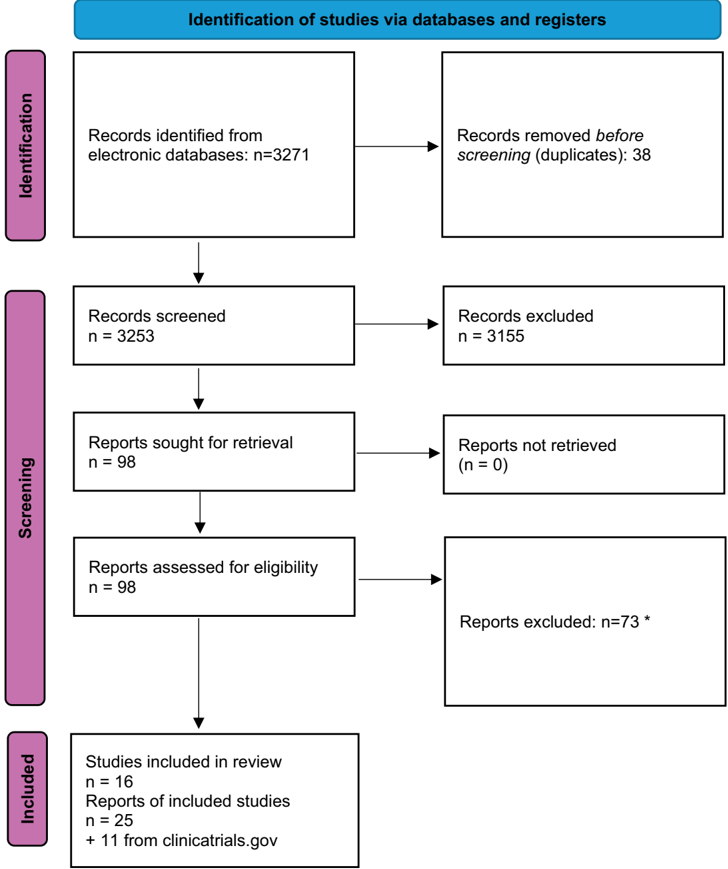
INTRODUCTION: Sleep disorders represent an important comorbidity in individuals with ADHD. While the links between ADHD and sleep disturbances have been extensively investigated, research on the management of sleep disorders in individuals with ADHD is relatively limited, albeit expanding. AREAS COVERED: The authors searched PubMed, Medline, PsycInfo, Embase+Embase Classic, Web of Sciences databases, and clinicaltrials.gov up to 4 January 2024, for randomized controlled trials (RCTs) of any intervention for sleep disorders associated with ADHD. They retained 16 RCTs (eight on pharmacological and eight on non-pharmacological interventions), supporting behavioral intervention and melatonin, and nine ongoing RCTs registered on clinicaltrials.gov. EXPERT OPINION: The pool of RCTs testing interventions for sleep disorders in individuals with ADHD is expanding. However, to inform clinical guidelines, there is a need for additional research in several areas, including 1) RCTs based on a precise phenotyping of sleep disorders; 2) pragmatic RCTs recruiting neurodevelopmental populations representative of those seen in clinical services; 3) trials testing alternative interventions (e.g. suvorexant or light therapy) or ways to deliver them (e.g. online); 4) sequential and longer-term RCTs; 5) studies testing the impact of sleep interventions on outcomes other than sleep; 6) and implementation of advanced evidence synthesis and precision medicine approaches.
Overview
The claims and statistics of this paper haven’t been checked yet.
Free: it reads the open-access text and checks the first 5 claims that cite a source we can check. Create a free account to check every claim.
Integrity signals
Registry
Cites
Statistics
Figures


Verification
Claims the paper makes
The claims and statistics of this paper haven’t been checked yet.
Free: it reads the open-access text and checks the first 5 claims that cite a source we can check. Create a free account to check every claim.
Claims other papers make about this one
Each is checked against this paper’s own text: does it say what the citing paper says it does?
The cited source says what the claim attributes to it.
In the citing paper
“Preschoolers, school-aged children, and teens who experience challenges with emotion regulation (social anxiety, mood conditions, stress), executive function, and impulsivity such as ADHD212 or social interactions (autism) are already more likely to have sleep disturbances compared with those with neurotypical development.”
From Digital Ecosystems, Children, and Adolescents: Technical Report (2026) · cites this paper as [212]
Self-check
Percentages, sums and reported differences re-computed from the paper’s own numbers.
The self-check needs the paper’s full text.
Citations
Cites
Diagnostic and Statistical Manual of Mental Disorders
American Psychiatric Association (2022) · doi:10.1176/appi.books.9780890425787 · Cited by 23,476
Diagnostic and Statistical Manual of Mental Disorders.
Widiger, T. A. (2000) · Encyclopedia of Psychology, Vol. 3. · doi:10.1037/10518-009 · Cited by 19,744
Diagnostic and Statistical Manual of Mental Disorders
&NA; (1988) · Alzheimer Disease & Associated Disorders · doi:10.1097/00002093-198802020-00022 · Cited by 12,526
Diagnostic and Statistical Manual of Mental Disorders
(2010) · Handbook of Disease Burdens and Quality of Life Measures · doi:10.1007/978-0-387-78665-0_5485 · Cited by 10,169
International Statistical Classification of Diseases and Related Health Problems
(2011) · Encyclopedia of Clinical Neuropsychology · doi:10.1007/978-0-387-79948-3_3055 · Cited by 4,151
Pliszka, S. (2007) · Journal of the American Academy of Child & Adolescent Psychiatry · doi:10.1097/chi.0b013e318054e724 · Cited by 1,765 · cited 1×
“Likewise, previous clinical guidelines/guidance documents, such as the 2007 ADHD Practice Parameters of the American Academy of Child and Adolescent Psychiatry (AACAP) [14], overlooked the association between ADHD and sleep problems.”
Wolraich, M. L., Hagan, J. F., Allan, C., Chan, E., Davison, D., Earls, M., Evans, S. W., Flinn, S. K., Froehlich, T., Frost, J., et al. (2019) · Pediatrics · doi:10.1542/peds.2019-2528 · Cited by 1,562 · cited 1×
“…rise in empirical studies demonstrating a link between ADHD and sleep, and the relevance of assessing sleep in individuals with ADHD has been highlighted in more recent classification systems (e.g. DSM-5) and guidelines, e.g. the 2019 guidelines of the American Pediatric Association (APA) [15].”
Faraone, S. V., Banaschewski, T., Coghill, D., Zheng, Y., Biederman, J., Bellgrove, M. A., Newcorn, J. H., Gignac, M., Al Saud, N. M., Manor, I., et al. (2021) · Neuroscience & Biobehavioral Reviews · doi:10.1016/j.neubiorev.2021.01.022 · Cited by 1,545 · cited 1×
“If untreated, ADHD increases the risk of a series of negative outcomes, including impaired school, emotional and social functioning, lower quality of life, as well as increased risk of accidental injuries, substance misuse, criminal acts, premature death, and suicide [6].”
Self-citationSleep hygiene and melatonin treatment for children and adolescents with ADHD and initial insomnia.
Weiss, M. D., Wasdell, M. B., Bomben, M. M., Rea, K., & Fréeman, R. D. (2006) · PubMed · doi:10.1097/01chi.0000205706.78818.ef · Cited by 1,216
Song, P., Zha, M., Yang, Q., Zhang, Y., Li, X., & Rudan, I. (2021) · Journal of Global Health · doi:10.7189/jogh.11.04009 · Cited by 896 · cited 2×
“Attention-deficit/hyperactivity disorder (ADHD) is the most common neurodevelopmental disorder, affecting around 5% of school age children [1] and at least 2.5% of adults [2] worldwide.”
InfluentialCortese, S., Faraone, S. V., Konofal, E., & Lecendreux, M. (2009) · Journal of the American Academy of Child & Adolescent Psychiatry · doi:10.1097/chi.0b013e3181ac09c9 · Cited by 637 · cited 1×
“Importantly, a large body of evidence has been statistically pooled in several meta-analyses, confirming the cross-sectional association between ADHD and alterations in subjective as well as, to a less extent, objective sleep parameters (e.g [16,17]).”
BackgroundSelf-citationFishman (2006) · doi:10.1097/01 · Cited by 547
Hyperkinetic behavior syndrome in children
Laufer, M. W., & Denhoff, E. (1957) · The Journal of Pediatrics · doi:10.1016/s0022-3476(57)80257-1 · Cited by 463 · cited 1×
“In 1957, Laufer and Denhoff [9] stated that ‘‘ Generally, the parents of hyperkinetic children [who would currently be referred to as children with ADHD] are so desperate over the night problems that the day-time ones pale in significance .””
BackgroundEffect of Melatonin on Sleep, Behavior, and Cognition in ADHD and Chronic Sleep-Onset Insomnia
VAN der HEIJDEN, K. B., SMITS, M. G., VAN SOMEREN, E. J. W., RIDDERINKHOF, K. R., & GUNNING, W. B. (2007) · Journal of the American Academy of Child & Adolescent Psychiatry · doi:10.1097/01.chi.0000246055.76167.0d · Cited by 378 · cited 3×
“However, at the time, the number of randomized controlled trials (RCTs) was limited: two RCTs [20,21] of melatonin for sleep onset delay and one RCT [22] of L-Dopa for restless legs syndrome (RLS).”
Attention-deficit/hyperactivity disorder
Faraone, S. V., Bellgrove, M. A., Brikell, I., Cortese, S., Hartman, C. A., Hollis, C., Newcorn, J. H., Philipsen, A., Polanczyk, G. V., Rubia, K., et al. (2024) · Nature Reviews Disease Primers · doi:10.1038/s41572-024-00495-0 · Cited by 355
Self-citationHiscock, H., Sciberras, E., Mensah, F., Gerner, B., Efron, D., Khano, S., & Oberklaid, F. (2015) · BMJ · doi:10.1136/bmj.h68 · Cited by 288
Cortese, S., Song, M., Farhat, L. C., Yon, D. K., Lee, S. W., Kim, M. S., Park, S., Oh, J. W., Lee, S., Cheon, K.-A., et al. (2023) · Molecular Psychiatry · doi:10.1038/s41380-023-02228-3 · Cited by 246
Self-citationAssessment and Management of Sleep Problems in Youths With Attention-Deficit/Hyperactivity Disorder
Cortese, S., Brown, T. E., Corkum, P., Gruber, R., O’Brien, L. M., Stein, M., Weiss, M., & Owens, J. (2013) · Journal of the American Academy of Child & Adolescent Psychiatry · doi:10.1016/j.jaac.2013.06.001 · Cited by 242 · cited 1×
“In 2013, a group of North American experts in ADHD and sleep published a guidance paper [19] proving recommendations for the management of sleep disorders in children and adolescents with ADHD.”
Self-citationSuvorexant for the treatment of primary insomnia: A systematic review and meta-analysis
Kuriyama, A., & Tabata, H. (2016) · Sleep Medicine Reviews · doi:10.1016/j.smrv.2016.09.004 · Cited by 155 · cited 1×
“In terms of pharmacological interventions, to our knowledge (based on our additional search in clinicaltrials.gov), suvorexant, a dual orexin receptor antagonist approved by the FDA for the treatment of insomnia in adults [42], has not been tested yet in children with ADHD.”
Owens, J. A. (2009) · Europe PMC (PubMed Central) · Cited by 134
Becker, S. P., Epstein, J. N., Tamm, L., Tilford, A. A., Tischner, C. M., Isaacson, P. A., Simon, J. O., & Beebe, D. W. (2019) · Journal of the American Academy of Child & Adolescent Psychiatry · doi:10.1016/j.jaac.2018.09.439 · Cited by 132 · cited 1×
“Furthermore, given the proven causal role of sleep disturbance in contributing to ADHD symptoms [44], it would be important to test whether treatment of sleep disorders in early childhood could reduce the chances of developing ADHD in preschoolers with ADHD traits.”
Sleep in adults with ADHD: Systematic review and meta-analysis of subjective and objective studies
Díaz-Román, A., Mitchell, R., & Cortese, S. (2018) · Neuroscience & Biobehavioral Reviews · doi:10.1016/j.neubiorev.2018.02.014 · Cited by 129 · cited 1×
“Importantly, a large body of evidence has been statistically pooled in several meta-analyses, confirming the cross-sectional association between ADHD and alterations in subjective as well as, to a less extent, objective sleep parameters (e.g [16,17]).”
Self-citationPapadopoulos, N., Sciberras, E., Hiscock, H., Mulraney, M., McGillivray, J., & Rinehart, N. (2019) · Journal of Attention Disorders · doi:10.1177/1087054714568565 · Cited by 114 · cited 2×
“Of note, we found only one sub-analysis [34] of an RCT [31] focusing on participants with comorbid ADHD and autism.”
Corkum, P., Lingley-Pottie, P., Davidson, F., McGrath, P., Chambers, C. T., Mullane, J., Laredo, S., Woodford, K., & Weiss, S. K. (2016) · Journal of Pediatric Psychology · doi:10.1093/jpepsy/jsw031 · Cited by 108 · cited 1×
“Another Canadian RCT in children [35] [38].”
Managing sleep problems in school aged children with ADHD: A pilot randomised controlled trial
Sciberras, E., Fulton, M., Efron, D., Oberklaid, F., & Hiscock, H. (2011) · Sleep Medicine · doi:10.1016/j.sleep.2011.02.006 · Cited by 101 · cited 1×
“Two ongoing RCTs [23,24] of behavioral intervention were also identified.”
Blumer, J. L., Findling, R. L., Shih, W. J., Soubrane, C., & Reed, M. D. (2009) · Pediatrics · doi:10.1542/peds.2008-2945 · Cited by 95 · cited 1×
“Finally, we found two negative (i.e. with negative results on the primary outcome) RCTs in children on the primary outcome, for eszopiclone [29] and zolpidem [30], both in terms of reduction in latency to persistent sleep measured by polysomnography.”
Sciberras, E., Mulraney, M., Mensah, F. K., Oberklaid, F., Efron, D., & Hiscock, H. (2019) · Psychological Medicine · doi:10.1017/s0033291718004063 · Cited by 84 · cited 1×
“Additional analyses of [31] showed that this behavioral sleep intervention was also effective at the 12-month evaluation [33] and in a subsample of children with ADHD and comorbid autism [34].”
BackgroundEngland, S. J., Picchietti, D. L., Couvadelli, B. V., Fisher, B. C., Siddiqui, F., Wagner, M. L., Hening, W. A., Lewin, D., Winnie, G., Cohen, B., et al. (2011) · Sleep Medicine · doi:10.1016/j.sleep.2011.01.008 · Cited by 79 · cited 3×
“A trial in children found L-dopa improved Restless Legs Syndrome/Periodic Limb Movements in Sleep (RLS/PLMS) symptoms severity compared with placebo, but had no significant effect on other sleep parameters [22].”
Salanitro, M., Wrigley, T., Ghabra, H., de Haan, E. H. F., Hill, C. M., Solmi, M., & Cortese, S. (2022) · Neuroscience & Biobehavioral Reviews · doi:10.1016/j.neubiorev.2022.104723 · Cited by 57 · cited 1×
“Until now, only one meta-analysis [45] focused exclusively on RCTs of interventions for ADHD but it could only include the two RCTs of melatonin mentioned above.”
Self-citationSchein, J., Adler, L. A., Childress, A., Gagnon-Sanschagrin, P., Davidson, M., Kinkead, F., Cloutier, M., Guérin, A., & Lefebvre, P. (2022) · Journal of Managed Care & Specialty Pharmacy · doi:10.18553/jmcp.2021.21290 · Cited by 56 · cited 1×
“ADHD results in substantial societal costs, with excess cost attributable to ADHD of $122.8 billion ($14,092 per adult) in the U.S.A. [7] and similar burden in other countries.”
InfluentialEszopiclone for Insomnia Associated With Attention-Deficit/Hyperactivity Disorder
Sangal, R. B., Blumer, J. L., Lankford, D. A., Grinnell, T., & Huang, H. (2014) · PEDIATRICS · doi:10.1542/peds.2013-4221 · Cited by 43 · cited 1×
“Finally, we found two negative (i.e. with negative results on the primary outcome) RCTs in children on the primary outcome, for eszopiclone [29] and zolpidem [30], both in terms of reduction in latency to persistent sleep measured by polysomnography.”
Hiscock, H., Mulraney, M., Heussler, H., Rinehart, N., Schuster, T., Grobler, A. C., Gold, L., Bohingamu Mudiyanselage, S., Hayes, N., & Sciberras, E. (2019) · Journal of Child Psychology and Psychiatry · doi:10.1111/jcpp.13083 · Cited by 41 · cited 1×
“Among the RCTs identified on non-pharmacological interventions, two [31,32] the proportion of children with moderate-to-severe sleep problems, as rated by parents/caregivers.”
Dodds, M., Dona, S. W. A., Gold, L. H., Coghill, D., & Le, H. (2023) · Value in Health · doi:10.1016/j.jval.2023.11.002 · Cited by 39 · cited 1×
“[8].”
Rugino, T. A. (2018) · Journal of Attention Disorders · doi:10.1177/1087054714554932 · Cited by 38 · cited 1×
“…vs methylphenidate in adults: NCT03015636: adjusted CBT-i); one RCT with results but not statistics available (NCT02638168: evening dose of methylphenidate); and one RCT that was terminated (original enrollment estimated: n = 40; actual enrollment: n = 29) (the study is also reported in [25]).”
Ahlberg, R., Garcia-Argibay, M., Taylor, M., Lichtenstein, P., D'Onofrio, B. M., Butwicka, A., Hill, C., Cortese, S., Larsson, H., & Du Rietz, E. (2023) · BMJ Mental Health · doi:10.1136/bmjment-2023-300809 · Cited by 29 · cited 1×
“A recent study [18] leveraging data from the Swedish registries found that among individuals with ADHD ( N = 145 490, 2.25% of the total cohort), 7.5% had a diagnosis of a sleep disorder diagnosis, and 47.5% had been prescribed a pharmacological treatment for sleep.”
InfluentialSelf-citationvan Andel, E., Bijlenga, D., Vogel, S. W. N., Beekman, A. T. F., & Kooij, J. J. S. (2022) · Journal of Biological Rhythms · doi:10.1177/07487304221124659 · Cited by 28 · cited 2×
“As non-pharmacological option, we found only one study on bright light therapy (combined with melatonin) in adults with ADHD [26], and we look forward to RCTs of light therapy specifically in children.”
Mehri, M., Chehrzad, M. M., Mardani, A., Maleki, M., Dianatinasab, M., Kousha, M., & Assari, S. (2020) · Archives of Psychiatric Nursing · doi:10.1016/j.apnu.2020.04.001 · Cited by 25
Setting the Foundations of Developmental Precision Psychiatry for ADHD
Cortese, S. (2021) · American Journal of Psychiatry · doi:10.1176/appi.ajp.2021.21050549 · Cited by 23 · cited 1×
“It is also hoped that progress in precision medicine approaches, which are now starting to be tested in the field of ADHD [47], will inform individualized care of those with ADHD and sleep disorders.”
Self-citationLönn, M., Svedberg, P., Nygren, J., Jarbin, H., Aili, K., & Larsson, I. (2024) · Journal of Sleep Research · doi:10.1111/jsr.13990 · Cited by 20 · cited 1×
“We also found an RCT in children [39] showing that weighted blankets had a significantly more positive effect than light control blankets on total sleep time (Cohen’s d = 0.24), sleep efficiency (d = 0.23) and wake after sleep onset (d = −0.27), but not on sleep-onset latency.”
InfluentialMombelli, S., Bacaro, V., Curati, S., Berra, F., Sforza, M., Castronovo, V., Ferini‐Strambi, L., Galbiati, A., & Baglioni, C. (2023) · Sleep Medicine Reviews · doi:10.1016/j.smrv.2023.101806 · Cited by 18 · cited 1×
“Notably, the only currently available NMA related to the treat-ment of sleep disorders was limited to melatonin and non-pharmacological approaches in children who had sleep problems but were otherwise healthy [46].”
Ashkenasi, A. (2011) · Pediatric Neurology · doi:10.1016/j.pediatrneurol.2011.09.003 · Cited by 17 · cited 1×
“In their RCT in children, Ashkenasi et al. [28] noted a marginally significant trend toward better sleep quality with longer patch wear times of methylphenidate.”
Shokravi, F. A., Shooshtari, M. H., & Shahhatami, H. (2016) · DOAJ (DOAJ: Directory of Open Access Journals) · doi:10.22038/ijp.2016.7285 · Cited by 17 · cited 1×
“Another Canadian RCT in children [35] [38].”
Yazdanbakhsh, K., Aivazy, S., & Moradi, A. (2018) · Journal of Kermanshah University of Medical Sciences · doi:10.5812/jkums.77114 · Cited by 14 · cited 1×
“Finally, Yazdanbakhsh et al. [40] reported that response inhibition cognitive rehabilitation using the Captain’s Log MindPower builder was more efficacious, compared to no therapy, in reducing sleep disturbance severity in children with ADHD.”
Ramelteon for Insomnia Related to Attention-Deficit/Hyperactivity Disorder (ADHD)
Fargason, R. E., Gamble, K. L., Avis, K. T., Besing, R. C., Jackson, C. W., Cates, M. E., & May, R. (2025) · Psychopharmacology Bulletin · doi:10.64719/pb.4063 · Cited by 11
A Study on Effect of Sleep Training Program in Children with ADHD: A Comparative Prospective Study
Shah, H. R., & Dani, A. (2023) · Journal of Indian Association for Child and Adolescent Mental Health · doi:10.1177/09731342231184438 · Cited by 8
Research works printed but not linked: 2
- 11. Association Psychiatric Association (APA). Diagnostic and statistical manual of mental disorders. 3rd ed. Washinghton (DC): American Psychiatric Association; 1980.
- 25. Corkum PD, Lingley-Pottie P, et al. Behavioral treatment for diag- nosed pediatric insomnia in school-aged children. In: Fifth Annual Conference on Pediatric Sleep Medicine; Denver. CO; 2009 Oct 3.
Cited by
Digital Ecosystems, Children, and Adolescents: Technical Report
Munzer, T., Milkovich, L. M., Madigan, S., Tomopoulos, S., Parga-Belinkie, J., Ajumobi, T., Cross, C., Gerwin, R., Council on Communications and Media, Radesky, J., et al. (2026) · Pediatrics · doi:10.1542/peds.2025-075321 · Cited by 14
Sleep dysregulation in ADHD children: a systematic review and meta-analysis
Xian, P., Sheng, X., Liu, S., Liu, Z., & Guo, X. (2025) · Psychological Medicine · doi:10.1017/s0033291725102158 · Cited by 13
Lok, R., Deshpande, N. R., Nair, S., Andrillon, T., Gatera, G., Hill, C. M., Cortese, S., & Chellappa, S. L. (2025) · The Lancet Child & Adolescent Health · doi:10.1016/s2352-4642(25)00211-1 · Cited by 18
Self-citationJiang, Z., Chan, A. Y. L., Lum, D. H., Wong, K. H. T. W., Leung, J. C. N., Ip, P., Coghill, D., Wong, R. S. M., Ngai, E. C. ‐., & Wong, I. C. K. (2024) · JAACAP Open · doi:10.1016/j.jaacop.2024.11.003 · Cited by 10
“21 Additionally, comorbid conditions such as obesity 22 and sleep disorders, 23 alongside side effects from ADHD medications, 24,25 can affect overall activity levels.”
Dolapoğlu, N., Kirkan, T. S., & Tulacı, R. G. (2025) · BMC Psychiatry · doi:10.1186/s12888-025-06875-4 · Cited by 11
“ADHD is often accompanied by comorbidities, and sleep disorders are among the most common [3].”
Metadata
- Authors
- Cortese, S., Fusetto Veronesi, G., Gabellone, A., Margari, A., Marzulli, L., Matera, E., Petruzelli, M. G., Piarulli, F. M., Tarantino, F., Bellato, A., Parlatini, V., Rietz, E. D., Larsson, H., Hornsey, S., Hill, C., & Margari, L.
- Affiliations
- Solent NHS Trust (GB)
- Southern Health NHS Foundation, Trust, Southampton, UK
- University of Bari Aldo Moro (IT)
- University of Nottingham (GB)
- Karolinska Institutet (SE)
- Örebro University (SE)
- University of Southampton (GB)
- Corresponding author
- Cortese, Samuele
- ORCID
- Venue
- Expert Review of Neurotherapeutics
- Publisher
- Informa UK Limited
- Published
- 2024-05-13
- Volume
- 24
- Issue
- 6
- Pages
- 585-596
- ISSN
- 1473-7175 (ISSN-L)
- 1744-8360
- OpenAlex
- W4396862791
- Cited by
- 34
- References
- 45
- Citations by year
- 2026: 16 · 2025: 16 · 2024: 2
- FWCI
- 2.53
- Type
- journal article
- Language
- en
- Open access
- hybrid
- doi.org
- Licence
- Locations
- Expert Review of Neurotherapeutics (publishedVersion, cc-by-nc-nd)
- PubMed (publishedVersion)
- ePrints Soton (University of Southampton) (acceptedVersion)
- CINECA IRIS Institutional Research Information System (University of Bari Aldo Moro) (submittedVersion, cc-by-nc-nd)
- CINECA IRIS Institutional Research Information System (University of Bari Aldo Moro) (submittedVersion)
- Funders
- Research Executive Agency
- Topics
- Social Sciences › Psychology › Experimental and Cognitive Psychology › Sleep and related disorders
- Health Sciences › Medicine › Psychiatry and Mental health › Attention Deficit Hyperactivity Disorder
- Life Sciences › Neuroscience › Endocrine and Autonomic Systems › Circadian rhythm and melatonin
- Keywords
- attention deficit hyperactivity disorder, sleep disorders, sleep disorders comorbidity, melatonin, behavioral interventions, non-pharmacological treatment, pharmacological interventions, suvorexant, phototherapy, children, sleep interventions
- MeSH terms
- Attention Deficit Disorder with Hyperactivity, Behavior Therapy, Child, Humans, Melatonin, Sleep Wake Disorders, Randomized Controlled Trials as Topic
About these checks
Registry, retraction, Cites and statistics results are computed, not judged, with one exception: a printed reference that no index lists is read once by a model before it counts as a citation error. Claims are extracted by a model and kept only when their quote appears verbatim in the text; each cited source is then checked, with a model’s help, for whether it says what the claim relies on. Those verdicts can be wrong — read the claim’s quote and the cited source before relying on one.
Statistics and arithmetic are recomputed, not judged.
Confidence bands are shown only for fields calibrated on our annotated test set. None is calibrated yet, so no band is shown.
What counts as a claim ›How we measure confidence ›How we check this ›
Are you an author, or do you see a problem with this page? Request a review
Data sources
Bibliographic data: Semantic Scholar, OpenAlex, Crossref.
Contains information from the Semantic Scholar Academic Graph Datasets, made available under the ODC Attribution License (ODC-BY 1.0).
Semantic Scholar’s data is described in: Kinney, R., et al. (2023). The Semantic Scholar Open Data Platform. arXiv:2301.10140.
