

Safety of long-term creatine supplementation in women's football players: a real-world in-season study
Open accessThe DOI matches its Crossref record; 33 of the 33 references it cites were found in a registry or an index; 6 of the 14 sources its claims cite were checked for support.
Abstract
This real-world, longitudinal single-arm study assessed the safety of creatine supplementation during a competitive season in 71 female athletes from youth and professional football teams. Participants received 20 g/day for 7 days, followed by 5 g/day for the remainder of the season. No adverse effects were observed on renal or hepatic function.
Overview
CoChat Summary
TL;DR
In a 32-week single-arm in-season study of 71 female football players, creatine monohydrate supplementation (20 g/day for 7 days, then 5 g/day) was not associated with clinically meaningful changes in biochemical safety markers. Most analytes remained within reference ranges, except creatine phosphokinase (CPK), whose fluctuations likely reflected training load rather than supplementation.
Key findings
- Adherence was 100%; the cohort included 71 female players from U17 (n = 13), U20 (n = 25), and professional (n = 33) categories, with biochemical sample sizes of 71 at baseline, 67 at mid-season (week 16), and 66 at end-season (week 32).
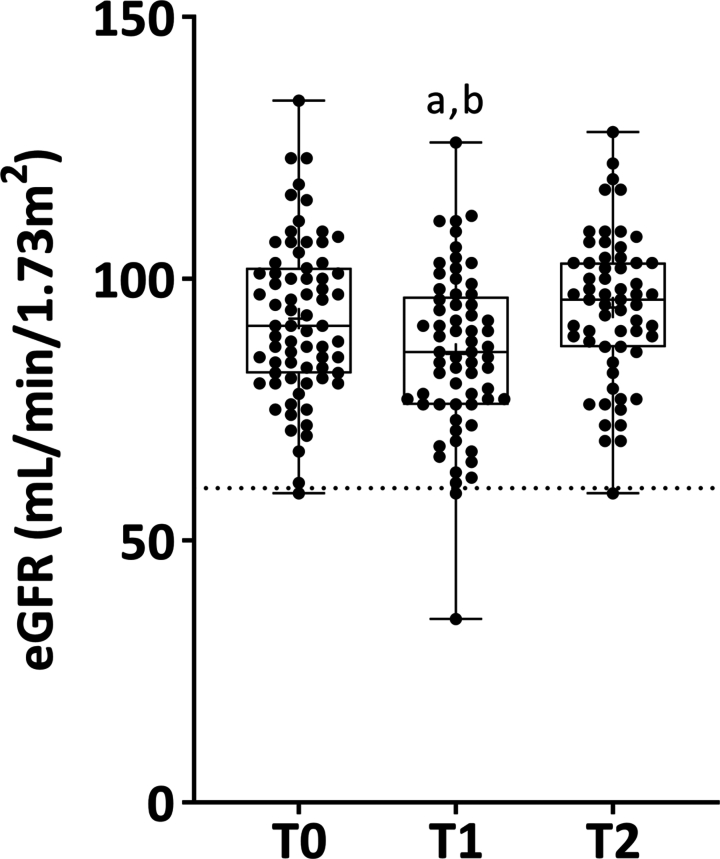
- The abstract reports that 8 out of 18 biochemical markers showed statistically significant but clinically minor fluctuations; the results text reports a main effect of time for seven out of 17 analytes (all p ≤ 0.001), with eGFR also analyzed. All analytes except CPK remained within reference ranges.
- eGFR was 90.34 mL/min/1.73m² at baseline, 83.57 at mid-season, and 91.58 at end-season; it decreased at mid-season (T0 × T1: p < 0.0001) and returned to baseline by end-season (T0 × T2: p = 1.000). Creatinine showed a similar pattern, while albuminuria decreased over time (T0 × T2: p < 0.001).
- CPK increased at mid-season (T0 × T1: p = 0.04) and decreased by end-season (T1 × T2: p < 0.0001), with no baseline-to-end-season difference (T0 × T2: p = 0.13); no adverse effects were observed on renal (eGFR, creatinine, urea, albuminuria) or hepatic (ALT, AST) function.
Methods
- Real-world, longitudinal, single-arm pre-to-post study conducted in-season across the Brazilian Women’s Football Championship in 71 female football players from one club; participants received 20 g/day creatine monohydrate for 7 days followed by 5 g/day for the remainder of the season.
- Dietary assessments and blood/urine biochemical exams were performed at baseline, week 16, and week 32; blood was collected after a 10-h overnight fast, and a comprehensive panel of hematological, renal, and hepatic biomarkers was assessed, with eGFR calculated using the 2021 CKD-EPI creatinine equation.
- Linear mixed models with repeated measures were used under an intention-to-treat approach, adjusted for age, body mass index, menstrual status, contraceptive use, category, player position, and baseline values, with Bonferroni post-hoc adjustment and significance set at p ≤ 0.05.
Limitations
- The paper states that a randomized placebo-controlled trial was not feasible due to challenges of implementing such interventions with high-performance athletes and widespread creatine use among football players; because CKD-EPI relies on serum creatinine, which is expected to rise after creatine intake, changes in eGFR may not accurately reflect actual renal function.
- The paper also states that the statistical model could not be adjusted for other potential confounders (e.g., habitual diet, training load and periodization, psychological state, and sleep quality) due to limited data availability.
- Evident from the text: the single-arm design cannot attribute observed changes to creatine versus seasonal/training effects; dietary intake was assessed only in U17 and U20 athletes (n = 34), not professional players; and missing data occurred due to scheduling conflicts, national team call-ups, injuries, and transfers.
Model-written summary. Check it against the paper before relying on it.
Integrity signals
Registry
Cites
Statistics
Figures
Verification
Claims the paper makes
5 Valid · 0 Not valid · 6 Not checked · 34 Own results and interpretations
Every source the paper cites for this claim was checked and supports it.
In the paper
“Supporting these findings, a systematic review and meta-analysis concluded that creatine has a large and significant positive impact on anaerobic performance in football players [5]”
§ Safety of long-term creatine supplementation in women's football players: a real-world in-season study > Introduction
What the sources say
- Supportedcites [5] Mielgo-Ayuso J, Calleja-Gonzalez J, Marques-Jimenez D, et al. Effects of creatine supplementation on athletic performance in soccer players: a systematic review and meta-analysis. Nutrients. 2019; 31(4): 11. doi: 10.3390/nu1104075 PMC6520963 30935142 source
The Results (§3.5) report a large, statistically significant effect of creatine supplementation on tests mainly related to anaerobic performance in soccer players (SMD 1.23; p < 0.001). The claim accurately paraphrases that pooled finding, although the same section notes that the effect on repeated-sprint performance was not significant. (LLM, conf=0.94)
boostedstates a cause- Asserted: passes — The authors put it forward as true.
- Checkable: passes — It can be checked against evidence.
- Load-bearing: passes — The paper’s conclusions depend on it.
- Based: passes — The paper gives a reason why it holds.
- Supported
Every source the paper cites for this claim was checked and supports it.
In the paper
“Notably, the relative intake of key macronutrients, such as CHO and PTN, was well below the recommended (and prescribed) for football players (e.g. CHO: 4–8 g/kg/day; PRO: 1.6–2.2 g/kg/day) [18].”
§ Safety of long-term creatine supplementation in women's football players: a real-world in-season study > Discussion
What the sources say
- Supportedcites [18] Collins J, Maughan RJ, Gleeson M, et al. UEFA expert group statement on nutrition in elite football. Current evidence to inform practical recommendations and guide future research. Br J Sports Med. 2021; 55(8): 416– 416. doi: 10.1136/bjsports-2019-101961 33097528 source
The training carbohydrate intake table gives a suggested range of 4–8 g/kg body mass for preseason training, and “Protein recommendations for training” gives 1.6–2.2 g/kg body mass/day for protein. The citing authors’ statement that their observed intakes were below recommendations is their own finding; this citation supports the recommendation ranges, not that observation. (LLM, conf=0.90)
boosted- Asserted: passes — The authors put it forward as true.
- Checkable: passes — It can be checked against evidence.
- Load-bearing: passes — The paper’s conclusions depend on it.
- Based: passes — The paper gives a reason why it holds.
- Supported
Every source the paper cites for this claim was checked and supports it.
In the paper
“Since the CKD-EPI equation relies on serum creatinine, which is expected to rise after creatine intake, changes in eGFR may not accurately reflect actual renal function [17].”
§ Safety of long-term creatine supplementation in women's football players: a real-world in-season study > Discussion
What the sources say
- Supportedcites [17] Longobardi I, Gualano B, Seguro AC. Is it time for a requiem for creatine supplementation-induced kidney failure? A narrative review. Nutrients. 2023; 18(6): 15. doi: 10.3390/nu15061466 PMC10054094 36986197 source
Section 2 explains that creatine intake can raise serum creatinine without kidney damage and that estimates based only on serum creatinine can therefore misrepresent kidney function in supplement users. The paper does not name CKD-EPI in the passages retrieved, but it supports the claim’s point about creatinine-based eGFR. (LLM, conf=0.88)
hedgedstates a possible cause- Asserted: passes — The authors put it forward as true.
- Checkable: passes — It can be checked against evidence.
- Load-bearing: passes — The paper’s conclusions depend on it.
- Based: passes — The paper gives a reason why it holds.
- Supported
A result the paper reports from its own data — it cites no other source for it, so there is none to check. The quote shows it is in the paper.
In the paper
“In the present study, no changes were observed in AST or ALT levels, extending this body of literature to female football players.”
§ Safety of long-term creatine supplementation in women's football players: a real-world in-season study > Discussion
plain- Asserted: passes — The authors put it forward as true.
- Checkable: passes — It can be checked against evidence.
- Load-bearing: passes — The paper’s conclusions depend on it.
- Based: passes — The paper gives a reason why it holds.
A result the paper reports from its own data — it cites no other source for it, so there is none to check. The quote shows it is in the paper.
In the paper
“Albuminuria decreased over time (T0 × T1: p = 0.016; T0 × T2: p < 0.001; T1 × T2: p < 0.001).”
§ Safety of long-term creatine supplementation in women's football players: a real-world in-season study > Results
plainstates a cause- Asserted: passes — The authors put it forward as true.
- Checkable: passes — It can be checked against evidence.
- Load-bearing: unclear — It is unclear whether the paper’s conclusions depend on it.
- Based: passes — The paper gives a reason why it holds.
15 more claims
Create a free account to see all 45 claims and to verify the 1 reference still open.
- Probably not a substantial claim. 15
- It may state two separate claims as one. 14
Claims other papers make about this one
Each is checked against this paper’s own text: does it say what the citing paper says it does?
The cited source doesn’t support the claim as written.
In the citing paper
“These comprised three randomized controlled trials and two observational cohort studies encompassing pediatric, adolescent, and young adult populations [12-16].”
From Evaluating the Safety of Creatine Monohydrate in Adolescents: A Systematic Review of Renal, Hepatic, and Cardiometabolic Outcomes (2026) · cites this paper as [16]
Checked by a reasoning model — may be wrong.
Experimental — accuracy not yet measuredThe source backs part of the claim, not all of it — or backs it for a different population, condition or comparison.
In the citing paper
“Interventional study durations ranged from six to 32 weeks [12-14,16].”
From Evaluating the Safety of Creatine Monohydrate in Adolescents: A Systematic Review of Renal, Hepatic, and Cardiometabolic Outcomes (2026) · cites this paper as [16]
Experimental — accuracy not yet measuredThe source backs part of the claim, not all of it — or backs it for a different population, condition or comparison.
In the citing paper
“Long-term observational data similarly did not demonstrate increased cardiometabolic risk associated with creatine-containing supplement use initiated during adolescence [15,16].”
From Evaluating the Safety of Creatine Monohydrate in Adolescents: A Systematic Review of Renal, Hepatic, and Cardiometabolic Outcomes (2026) · cites this paper as [16]
Experimental — accuracy not yet measuredThe source backs part of the claim, not all of it — or backs it for a different population, condition or comparison.
In the citing paper
“Overall, across the five included studies, creatine monohydrate supplementation in pediatric, adolescent, and young adult populations was not associated with clinically meaningful renal, hepatic, hematologic, or cardiometabolic safety concerns during the reported follow-up periods [12-16].”
From Evaluating the Safety of Creatine Monohydrate in Adolescents: A Systematic Review of Renal, Hepatic, and Cardiometabolic Outcomes (2026) · cites this paper as [16]
Experimental — accuracy not yet measuredThe cited source says what the claim attributes to it.
In the citing paper
“Similarly, in an athletic cohort of youth and young adult female football players, renal biomarkers remained within reference ranges throughout the competitive season, and no creatine-related renal adverse events were reported [16].”
From Evaluating the Safety of Creatine Monohydrate in Adolescents: A Systematic Review of Renal, Hepatic, and Cardiometabolic Outcomes (2026) · cites this paper as [16]
9 more claims about this paper
Create a free account to see every claim other papers make about this one.
Self-check
Percentages, sums and reported differences re-computed from the paper’s own numbers.
Each contradiction between two passages listed here was confirmed by an independent check.
Rated major: it would touch a result — a value a result rests on, reported and recomputed p-values on opposite sides of the significance level, two passages that conflict with no sign which is right, or a cited work retracted before this paper was published.
In the paper
§ Safety of long-term creatine supplementation in women's football players: a real-world in-season study > Conclusion
“all biomarkers remained within clinical reference values during long-term creatine supplementation.”
§ Safety of long-term creatine supplementation in women's football players: a real-world in-season study > Results
“CPK, U/L† | 34–145 | 124.4(101.8; 151.9) | 152.4(126.0; 184.3)* | 105.5 (85.9;129.5)#”
Rated minor: it would not touch a result — a value no result rests on, a p-value that stays on the same side of the significance level, or a conflict that is clerical, resolved elsewhere in the paper, or outside its own findings.
In the paper
§ Safety of long-term creatine supplementation in women's football players: a real-world in-season study > Results
“T1 × T2: p = 0.0007”
§ Safety of long-term creatine supplementation in women's football players: a real-world in-season study > Results
“T1 × T2: p = 1.000”
Rated minor: it would not touch a result — a value no result rests on, a p-value that stays on the same side of the significance level, or a conflict that is clerical, resolved elsewhere in the paper, or outside its own findings.
In the paper
§ Safety of long-term creatine supplementation in women's football players: a real-world in-season study > Discussion
“seven out of 18 biochemical markers showed minor changes within clinical reference values, except for CPK.”
§ Safety of long-term creatine supplementation in women's football players: a real-world in-season study > Abstract
“8 out of 18 biochemical markers showed statistically significant though clinically minor fluctuations throughout the season.”
Rated minor: it would not touch a result — a value no result rests on, a p-value that stays on the same side of the significance level, or a conflict that is clerical, resolved elsewhere in the paper, or outside its own findings.
In the paper
“Defender, n (%) | 25 (35) | 5 (38) | 10 (4) | 10 (31)”
§ Safety of long-term creatine supplementation in women's football players: a real-world in-season study > Results
Reported 4 · recomputed 40
Citations
Cites
New creatinine- and cystatin C-based equations to estimate GFR without race
Inker, L. A., Eneanya, N. D., Coresh, J., Tighiouart, H., Wang, D., Sang, Y., Crews, D. C., Doria, A., Estrella, M. M., Froissart, M., et al. (2021) · New England Journal of Medicine · doi:10.1056/nejmoa2102953 · Cited by 4,695 · cited 1×
“Estimated glomerular filtration rate (eGFR) was calculated using the 2021 CKD-EPI creatinine equation adjusted for body surface area [20].”
Creatine and Creatinine Metabolism
Wyss, M., & Kaddurah-Daouk, R. (2000) · Physiological Reviews · doi:10.1152/physrev.2000.80.3.1107 · Cited by 2,950 · cited 4×
“Due to its osmotic properties, creatine could influence hydration status by promoting water uptake into muscle fibers through a sodium-dependent creatine transporter [25].”
InfluentialElevation of creatine in resting and exercised muscle of normal subjects by creatine supplementation
Harris, R. C., Söderlund, K., & Hultman, E. (1992) · Clinical Science · doi:10.1042/cs0830367 · Cited by 1,168 · cited 1×
“Since the seminal work by Harris et al. [2], demonstrating that creatine supplementation increases intramuscular creatine levels, it has become one of the most extensively studied dietary supplements both at the clinical and athletic performance setting.”
Kreider, R. B., Kalman, D. S., Antonio, J., Ziegenfuss, T. N., Wildman, R., Collins, R., Candow, D. G., Kleiner, S. M., Almada, A. L., & Lopez, H. L. (2017) · Journal of the International Society of Sports Nutrition · doi:10.1186/s12970-017-0173-z · Cited by 1,057 · cited 2×
“A growing body of literature supports the benefits of creatine across a wide range of clinical conditions and sports [3,4], including football [5].”
Biochemical markers of muscular damage
Brancaccio, P., Lippi, G., & Maffulli, N. (2010) · cclm · doi:10.1515/cclm.2010.179 · Cited by 839
Collins, J., Maughan, R. J., Gleeson, M., Bilsborough, J., Jeukendrup, A., Morton, J. P., Phillips, S. M., Armstrong, L., Burke, L. M., Close, G. L., et al. (2021) · British Journal of Sports Medicine · doi:10.1136/bjsports-2019-101961 · Cited by 303 · cited 2×
“Notably, the relative intake of key macronutrients, such as CHO and PTN, was well below the recommended (and prescribed) for football players (e.g. CHO: 4–8 g/kg/day; PRO: 1.6–2.2 g/kg/day) [18].”
InfluentialImpact of menstrual blood loss and diet on iron deficiency among women in the UK
Harvey, L. J., Armah, C. N., Dainty, J. R., Foxall, R. J., Lewis, D. J., Langford, N. J., & Fairweather-Tait, S. J. (2005) · British Journal of Nutrition · doi:10.1079/bjn20051493 · Cited by 217 · cited 1×
“Although changes in MCV, MCHC, and RDW could also be attributed to alterations in iron status resulting from menstrual blood loss [33,34], this explanation seems unlikely since ferritin levels remained stable throughout the study and menstrual status was included as a covariate in the Results from…”
Sex Hormone Effects on Body Fluid Regulation
Stachenfeld, N. S. (2008) · Exercise and Sport Sciences Reviews · doi:10.1097/jes.0b013e31817be928 · Cited by 211 · cited 1×
“Moreover, female sex hormones also influence fluid dynamics and electrolyte balance [14], with potential implications for cardiovascular and renal function [15].”
In sickness and in health: the widespread application of creatine supplementation
Gualano, B., Roschel, H., Lancha, A. H., Brightbill, C. E., & Rawson, E. S. (2012) · Amino Acids · doi:10.1007/s00726-011-1132-7 · Cited by 172 · cited 2×
“A growing body of literature supports the benefits of creatine across a wide range of clinical conditions and sports [3,4], including football [5].”
Self-citationLanden, S., Hiam, D., Voisin, S., Jacques, M., Lamon, S., & Eynon, N. (2023) · The Journal of Physiology · doi:10.1113/jp279499 · Cited by 137 · cited 1×
“This is a critical gap, as sex-specific hormonal, metabolic, and physiological factors may influence both the efficacy and safety of creatine supplementation in this population [11,12].”
International society of sports nutrition position stand: nutritional concerns of the female athlete
Sims, S. T., Kerksick, C. M., Smith-Ryan, A. E., Janse de Jonge, X. A. K., Hirsch, K. R., Arent, S. M., Hewlings, S. J., Kleiner, S. M., Bustillo, E., Tartar, J. L., et al. (2023) · Journal of the International Society of Sports Nutrition · doi:10.1080/15502783.2023.2204066 · Cited by 129 · cited 1×
“Although creatine supplementation is highly recommended for female athletes [10] due to its well-established ergogenic benefits, a lack of long-term, real-world studies evaluating its safety profile, particularly among female athletes still remains.”
Ramírez-Campillo, R., González-Jurado, J. A., Martínez, C., Nakamura, F. Y., Peñailillo, L., Meylan, C. M. P., Caniuqueo, A., Cañas-Jamet, R., Moran, J., Alonso-Martínez, A. M., et al. (2016) · Journal of Science and Medicine in Sport · doi:10.1016/j.jsams.2015.10.005 · Cited by 118 · cited 1×
“Similarly, Ramírez-Campillo et al. [8] reported that amateur female football players undergoing plyometric training experienced greater improvements in jumping and repeated sprint performance with creatine supplementation (20 g/day for one week, followed by 5 g/day for five weeks) compared to…”
Cox, G., Mujika, I., Tumilty, D., & Burke, L. (2002) · International Journal of Sport Nutrition and Exercise Metabolism · doi:10.1123/ijsnem.12.1.33 · Cited by 110 · cited 1×
“Furthermore, Cox et al. [7] found that six days of creatine supplementation (20 g/day) improved repeated sprint ability Supplemental data for this article can be accessed online at https://doi.org/10.1080/15502783.2025.2591782. and agility in elite female football players from the Australian…”
InfluentialPhysiological responses to short-term exercise in the heat after creatine loading
VOLEK, J. S., MAZZETTI, S. A., FARQUHAR, W. B., BARNES, B. R., GÓMEZ, A. L., & KRAEMER, W. J. (2001) · Medicine & Science in Sports & Exercise · doi:10.1097/00005768-200107000-00006 · Cited by 105 · cited 1×
“These findings align with previous studies that found no changes in plasma volume [30,31], hematocrit [32], or electrolytes levels (e.g. Na + and K + ) [30] after creatine supplementation.”
Creatine kinase: An enzyme with a central role in cellular energy metabolism
Wallimann, T., Dolder, M., Schlattner, U., Eder, M., Hornemann, T., Kraft, T., & Stolz, M. (1998) · Magnetic Resonance Materials in Physics Biology and Medicine · doi:10.1007/bf02660927 · Cited by 96 · cited 1×
“Creatine is a naturally occurring guanidine compound that plays a central role in cellular energy metabolism [1].”
Studies on the safety of creatine supplementation
Kim, H. J., Kim, C. K., Carpentier, A., & Poortmans, J. R. (2011) · Amino Acids · doi:10.1007/s00726-011-0878-2 · Cited by 94 · cited 1×
“In contrast, the safety of creatine supplementation in humans with respect to liver function is further supported by several findings, as previously reviewed [29].”
Mielgo-Ayuso, J., Calleja-Gonzalez, J., Marqués-Jiménez, D., Caballero-García, A., Córdova, A., & Fernández-Lázaro, D. (2019) · Nutrients · doi:10.3390/nu11040757 · Cited by 91 · cited 3×
“A growing body of literature supports the benefits of creatine across a wide range of clinical conditions and sports [3,4], including football [5].”
Dietary creatine intake and depression risk among U.S. adults
Bakian, A. V., Huber, R. S., Scholl, L., Renshaw, P. F., & Kondo, D. (2020) · Translational Psychiatry · doi:10.1038/s41398-020-0741-x · Cited by 90
The concentration of creatine in meat, offal and commercial dog food
Harris, R. C., Lowe, J. A., Warnes, K., & ORME, C. E. (1997) · Research in Veterinary Science · doi:10.1016/s0034-5288(97)90181-8 · Cited by 83
High-intensity Actions in Elite Soccer: Current Status and Future Perspectives
Fílter, A., Olivares, J., Dos’Santos, T., Madruga, M., Lozano, J. M. O., Molina‐Molina, A., Santalla, A., Requena, B., & Loturco, I. (2023) · International Journal of Sports Medicine · doi:10.1055/a-2013-1661 · Cited by 79 · cited 1×
“…findings, a systematic review and meta-analysis concluded that creatine has a large and significant positive impact on anaerobic performance in football players [5], which is particularly relevant given the primary physical demands of the sport (e.g. sprinting, jumping, and changing direction) [9].”
Creatine monohydrate supplementation on lower-limb muscle power in Brazilian elite soccer players
Claudino, J. G., Mezêncio, B., Amaral, S., Zanetti, V., Benatti, F., Roschel, H., Gualano, B., Amadio, A. C., & Serrão, J. C. (2014) · Journal of the International Society of Sports Nutrition · doi:10.1186/1550-2783-11-32 · Cited by 78 · cited 1×
“Claudino et al. [6], in a randomized placebo-controlled trial, demonstrated that creatine supplementation (20 g/day for one week, followed by 5 g/day for six weeks) prevented declines in lower-limb muscle power in elite soccer players during the pre-season.”
Self-citationTarnopolsky, M. A., Bourgeois, J. M., Snow, R., Keys, S., Roy, B. D., Kwiecien, J. M., & Turnbull, J. (2003) · American Journal of Physiology-Regulatory, Integrative and Comparative Physiology · doi:10.1152/ajpregu.00270.2003 · Cited by 67 · cited 1×
“Some studies in rodent models have shown that animals supplemented with creatine developed chronic hepatitis [26,27] and exhibited elevated levels of AST and ALT [28].”
Urine Albumin Measurements in Clinical Diagnostics
Seegmiller, J. C., & Bachmann, L. M. (2024) · Clinical Chemistry · doi:10.1093/clinchem/hvad174 · Cited by 62 · cited 1×
“Urinary albumin (i.e. albuminuria) was determined by immunoturbidimetry from first-morning samples as recommended [19].”
Monitoring Blood Biomarkers and Training Load Throughout a Collegiate Soccer Season
Huggins, R. A., Fortunati, A. R., Curtis, R. M., Looney, D. P., West, C. A., Lee, E. C., Fragala, M. S., Hall, M. L., & Casa, D. J. (2019) · Journal of Strength and Conditioning Research · doi:10.1519/jsc.0000000000002622 · Cited by 46 · cited 1×
“Thus, these observations are likely due to random variation or normal physiological load-related fluctuations during the season [35].”
Creatinine, creatine and protein in cooked meat products
del Campo, G., Gallego, B., Berregi, I., & Casado, J. A. F. (1998) · Food Chemistry · doi:10.1016/s0308-8146(98)00034-x · Cited by 45
Variation in serum biomarkers with sex and female hormonal status: implications for clinical tests
Ramsey, J. M., Cooper, J. D., Penninx, B. W. J. H., & Bahn, S. (2016) · Scientific Reports · doi:10.1038/srep26947 · Cited by 45 · cited 1×
“For instance, serum concentrations of several analytes related to endocrine, immune, metabolic, and other biological processes have been linked to sex and female hormonal status [13].”
Ellery, S. J., Walker, D. W., & Dickinson, H. (2016) · Amino Acids · doi:10.1007/s00726-016-2199-y · Cited by 39 · cited 1×
“This is a critical gap, as sex-specific hormonal, metabolic, and physiological factors may influence both the efficacy and safety of creatine supplementation in this population [11,12].”
Is It Time for a Requiem for Creatine Supplementation-Induced Kidney Failure? A Narrative Review
Longobardi, I., Gualano, B., Seguro, A. C., & Roschel, H. (2023) · Nutrients · doi:10.3390/nu15061466 · Cited by 31 · cited 3×
“Since creatine supplementation directly affects creatinine metabolism [17], it remains unclear whether such fluctuations stay within reference ranges in female athletes using creatine.”
InfluentialSelf-citationSaidi, K., Abderrahman, A. B., Hackney, A. C., Bideau, B., Zouita, S., Granacher, U., & Zouhal, H. (2021) · Sports Medicine · doi:10.1007/s40279-021-01522-w · Cited by 28 · cited 2×
“Therefore, various contextual factors, including pre-and in-season training load, periodization, session duration, and the competition schedule could have caused CPK levels to change over time [37].”
InfluentialEkroos, S., Karregat, J. H. M., Toffol, E., Castrén, J., Arvas, M., & van den Hurk, K. (2024) · Acta Obstetricia Et Gynecologica Scandinavica · doi:10.1111/aogs.14890 · Cited by 26 · cited 1×
“Although changes in MCV, MCHC, and RDW could also be attributed to alterations in iron status resulting from menstrual blood loss [33,34], this explanation seems unlikely since ferritin levels remained stable throughout the study and menstrual status was included as a covariate in the Results from…”
(2006) · PubMed · Cited by 19
Effect of the menstrual cycle on creatinine clearance in normally cycling women*1
PHIPPS, W. (1998) · Obstetrics & Gynecology · doi:10.1016/s0029-7844(98)00241-5 · Cited by 14 · cited 1×
“In addition, different phases of the menstrual cycle have been associated with subtle variations in creatinine clearance [16].”
THE EFFECTS OF LONG-TERM CREATINE SUPPLEMENTATION ON LIVER ARCHITECTURE IN MICE
Keys, S., Tymiński, M., Davis, J., Bacon, C., Bengiovanni, J., & Hossain, A. (2001) · Medicine & Science in Sports & Exercise · doi:10.1097/00005768-200105001-01162 · Cited by 6 · cited 1×
“Some studies in rodent models have shown that animals supplemented with creatine developed chronic hepatitis [26,27] and exhibited elevated levels of AST and ALT [28].”
Research works printed but not linked: 4
- Silverthorn DU, Johnson BR, Ober WC, et al. Human physiology: An integrated approach. London, UK: Pearson; 2019.
- Polacow VO, Scagliusi FB, Lancha Junior AH. Validation of a portion-size measurement aid in a brazilian sample. International Conference on Dietary Assessment Methods - Expanding the Horizon: Dietary Assessment in a Multi-Cultural World: Institute of Nutrition. 2003.
- Duarte J, Neuparth M, Soares J, et al. Oral creatine supplementation and liver metabolism. 1999; 20: S50.
- Kern M, Podewils LJ, Vukovich M, et al. Physiological response to exercise in the heat following creatine supplementation. 2001; 4(2).
Cited by
Farfán-Díaz, Á., Fuentes-Hinojosa, C., Andrade-Oyarzun, M., Garcia-Carrillo, E., Molina-Márquez, I., Yáñez-Sepúlveda, R., Castillo-Paredes, A., Barrera-González, D., & Montalva-Valenzuela, F. (2026) · Adolescents · doi:10.3390/adolescents6040059 · Cited by 1
“Two studies required a specific tool-assignment decision: Garcia et al. [32] is a single-arm in-season cohort without a concurrent non-supplemented comparison group and was therefore appraised with the quasi-experimental checklist rather than the cohort checklist, which assumes comparison between…”
InfluentialRubinchuk, A., Dulkoski, Z., Persaud, N. A., & Wallen, M. (2026) · Cureus · doi:10.7759/cureus.106808
Kick, Sweat, Protect: Kidney Health Through the Lens of Soccer (Football)
Jhaveri, D., Wanchoo, A., Izzedine, H., & Gudsoorkar, P. (2026) · Kidney Medicine · doi:10.1016/j.xkme.2026.101469 · Cited by 1
Lin, Y., Zhu, W., & Hong, B. (2026) · Frontiers in Nutrition · doi:10.3389/fnut.2026.1921827 · Cited by 1
“Supplement-use patterns and safety observations in female athletes add practical context (26–28).”
Metadata
- Authors
- Garcia, M. P., Longobardi, I., Saito, T., Miranda, M. S., Roschel, H., & Gualano, B.
- Affiliations
- Universidade de São Paulo (BR)
- Sport Club Corinthians Paulista (BR)
- Corresponding author
- Gualano, Bruno
- Venue
- Journal of the International Society of Sports Nutrition
- Publisher
- Informa UK Limited
- Published
- 2025-09-30
- Volume
- 22
- Issue
- sup1
- Pages
- 2591782-2591782
- ISSN
- 1550-2783 (ISSN-L)
- PMC
- PMC12673977
- OpenAlex
- W4416946941
- Semantic Scholar
- 1ed469bed9cc342ac672d47065ae034e6b65cfe0
- Cited by
- 4
- References
- 31
- Citations by year
- 2026: 4
- FWCI
- 1.98
- Type
- journal article
- Language
- en
- Update notices
- correction (2025-12-27)
- Open access
- gold
- doi.org
- Licence
- Locations
- Journal of the International Society of Sports Nutrition (publishedVersion, cc-by)
- PubMed (publishedVersion)
- DOAJ (DOAJ: Directory of Open Access Journals) (submittedVersion, cc-by-sa)
- Funders
- Conselho Nacional de Desenvolvimento Científico e Tecnológico (#308307/2021-6)
- Fundação de Amparo à Pesquisa do Estado de São Paulo (#2021/13580-1)
- Fundacao de Amparo a Pesquisa do Estado de Sao Paulo (2017/13552-2)
- Topics
- Health Sciences › Nursing › Nutrition and Dietetics › Muscle metabolism and nutrition
- Health Sciences › Medicine › Orthopedics and Sports Medicine › Sports Performance and Training
- Health Sciences › Medicine › Physiology (medical) › Biochemical effects in animals
- Keywords
- creatine supplementation, creatine monohydrate, long-term safety, female athletes, women's football, renal function, liver function, creatine kinase, training load, sex differences
- MeSH terms
- Adolescent, Creatine, Creatine Kinase, Creatinine, Female, Humans, Longitudinal Studies, Soccer, Biomarkers, Dietary Supplements, Athletic Performance, Young Adult, Athletes, Sports Nutritional Physiological Phenomena
About these checks
Registry, retraction, Cites and statistics results are computed, not judged, with one exception: a printed reference that no index lists is read once by a model before it counts as a citation error. Claims are extracted by a model and kept only when their quote appears verbatim in the text; each cited source is then checked, with a model’s help, for whether it says what the claim relies on. Those verdicts can be wrong — read the claim’s quote and the cited source before relying on one.
A language model drew the claims from the paper on 2026-10-10, under version 3 of the claim definition (model deepseek-v4.1-flash, prompt extract-v3).
A second model labelled each claim on 2026-10-10 (model jev-1.13-20260917, definition revision gold-guideline-v0.2).
Cited sources are checked with a language model’s help (gpt-6-sol).
Statistics and arithmetic are recomputed, not judged.
Confidence bands are shown only for fields calibrated on our annotated test set. None is calibrated yet, so no band is shown.
What counts as a claim ›How we measure confidence ›How we check this ›
Are you an author, or do you see a problem with this page? Request a review
Data sources
Bibliographic data: Semantic Scholar, OpenAlex, Crossref.
Contains information from the Semantic Scholar Academic Graph Datasets, made available under the ODC Attribution License (ODC-BY 1.0).
Semantic Scholar’s data is described in: Kinney, R., et al. (2023). The Semantic Scholar Open Data Platform. arXiv:2301.10140.
