

The DOI matches its Crossref record; 99 of the 99 references it cites were found in a registry or an index.
Cholesterol impairs autophagy-mediated clearance of amyloid beta while promoting its secretion
Open accessAbstract
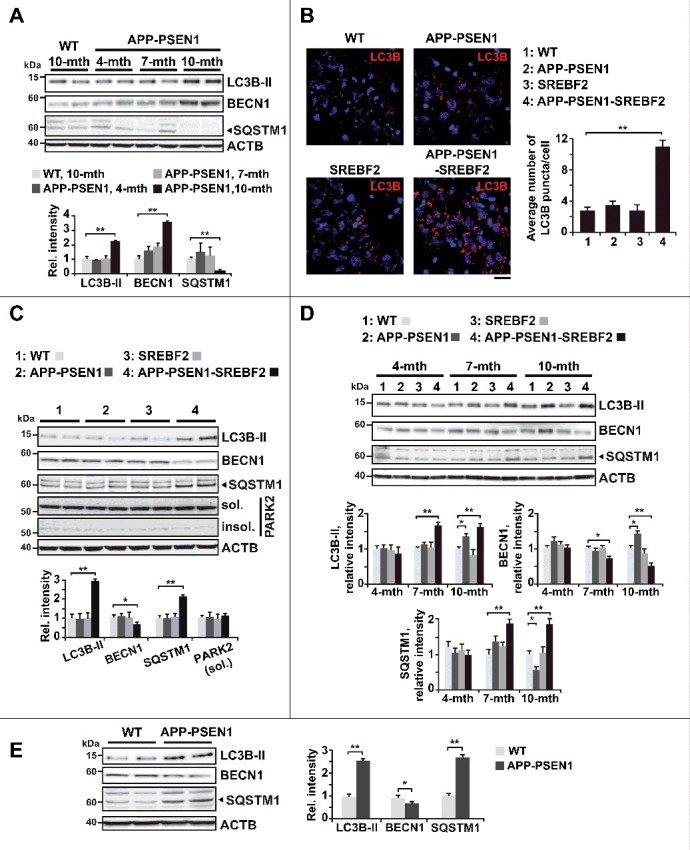
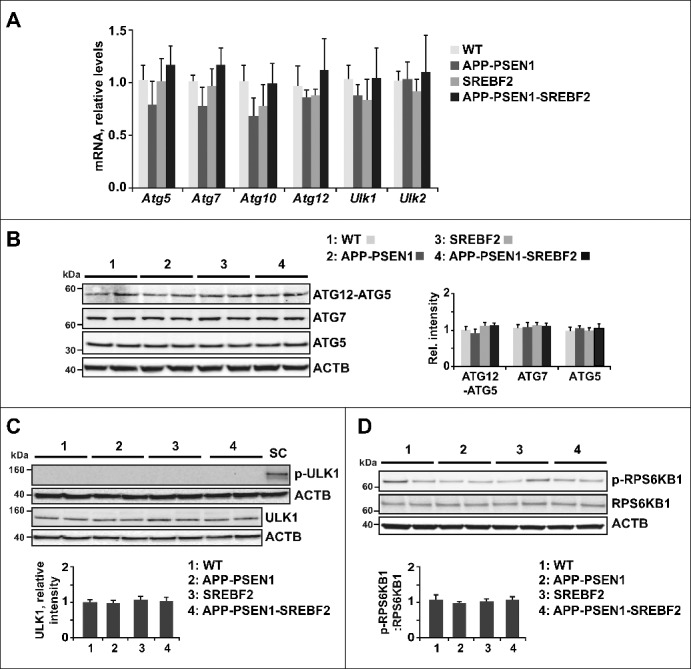
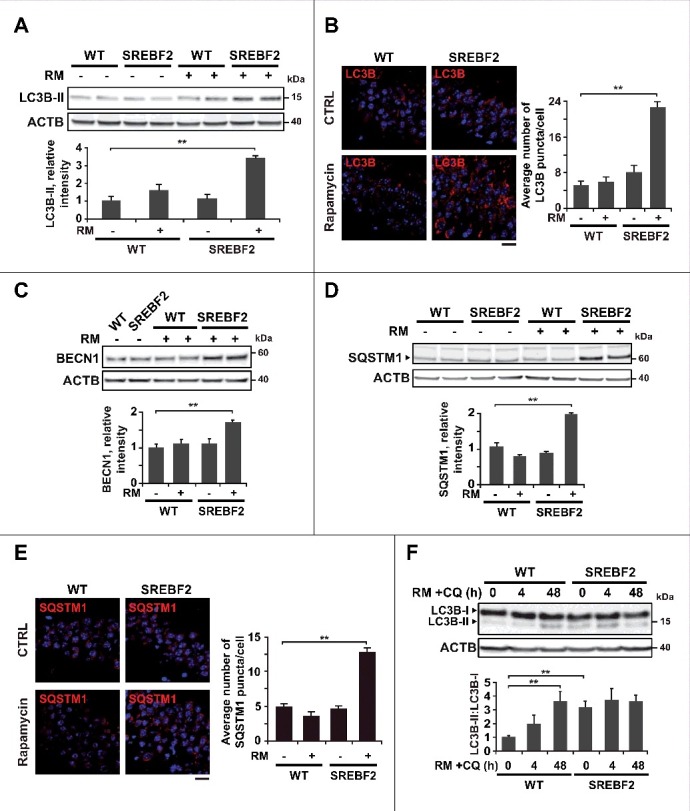
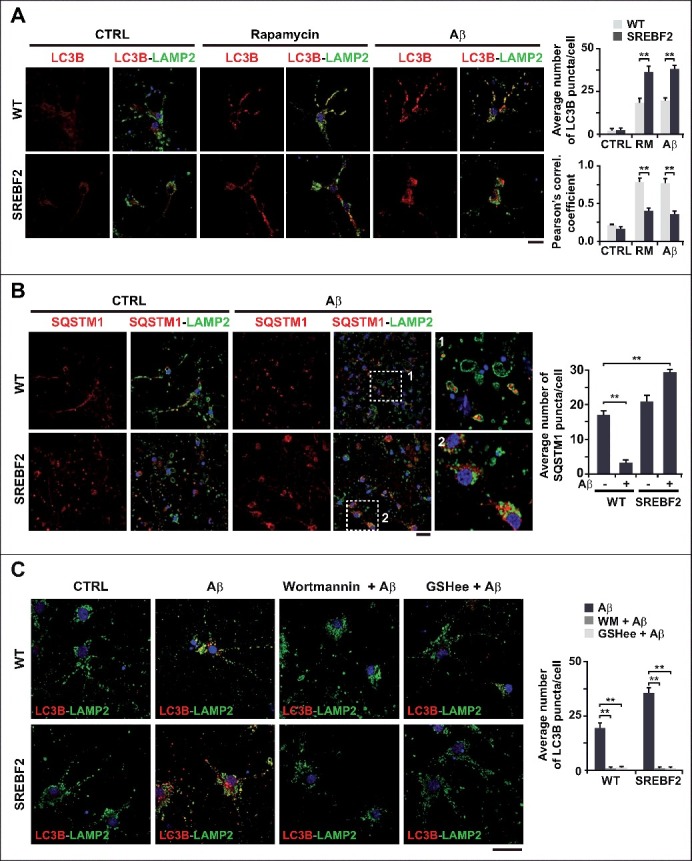
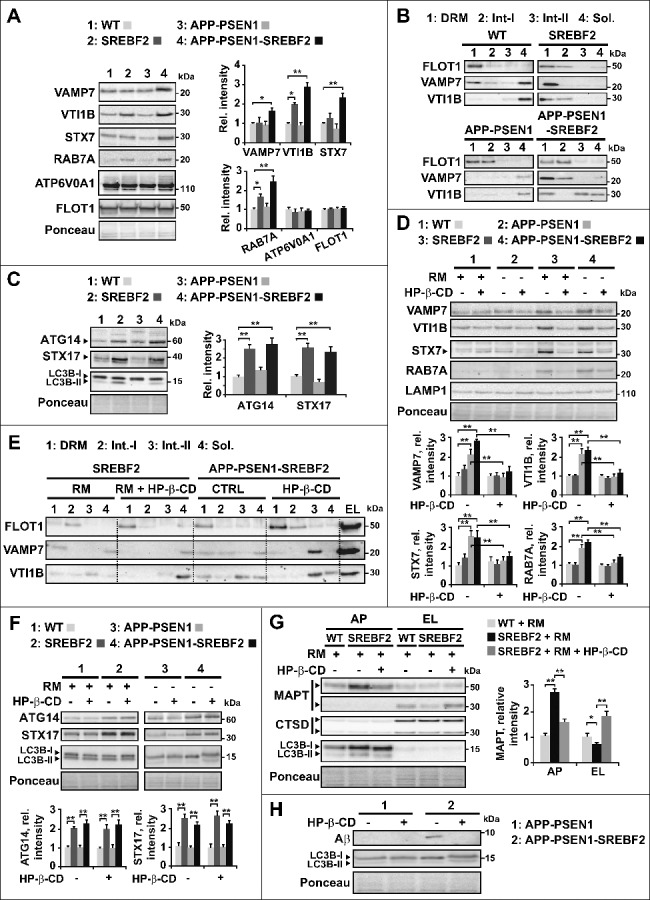
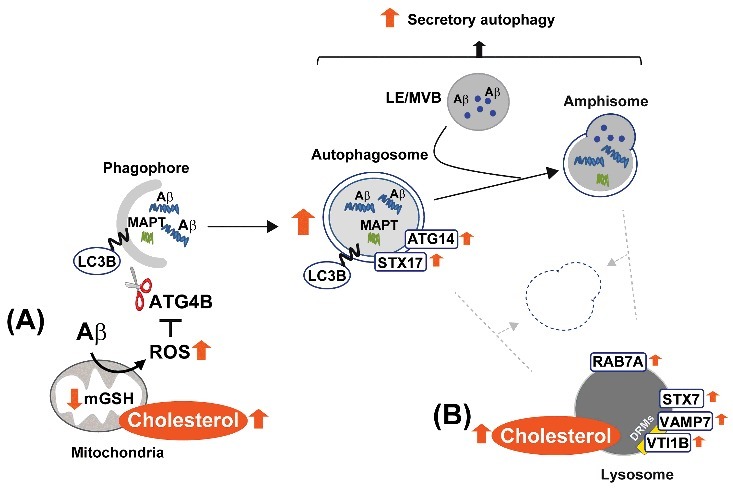
Macroautophagy/autophagy failure with the accumulation of autophagosomes is an early neuropathological feature of Alzheimer disease (AD) that directly affects amyloid beta (Aβ) metabolism. Although loss of presenilin 1 function has been reported to impair lysosomal function and prevent autophagy flux, the detailed mechanism leading to autophagy dysfunction in AD remains to be elucidated. The resemblance between pathological hallmarks of AD and Niemann-Pick Type C disease, including endosome-lysosome abnormalities and impaired autophagy, suggests cholesterol accumulation as a common link. Using a mouse model of AD (APP-PSEN1-SREBF2 mice), expressing chimeric mouse-human amyloid precursor protein with the familial Alzheimer Swedish mutation (APP695swe) and mutant presenilin 1 (PSEN1-dE9), together with a dominant-positive, truncated and active form of SREBF2/SREBP2 (sterol regulatory element binding factor 2), we demonstrated that high brain cholesterol enhanced autophagosome formation, but disrupted its fusion with endosomal-lysosomal vesicles. The combination of these alterations resulted in impaired degradation of Aβ and endogenous MAPT (microtubule associated protein tau), and stimulated autophagy-dependent Aβ secretion. Exacerbated Aβ-induced oxidative stress in APP-PSEN1-SREBF2 mice, due to cholesterol-mediated depletion of mitochondrial glutathione/mGSH, is critical for autophagy induction. In agreement, in vivo mitochondrial GSH recovery with GSH ethyl ester, inhibited autophagosome synthesis by preventing the oxidative inhibition of ATG4B deconjugation activity exerted by Aβ. Moreover, cholesterol-enrichment within the endosomes-lysosomes modified the levels and membrane distribution of RAB7A and SNAP receptors (SNAREs), which affected its fusogenic ability. Accordingly, in vivo treatment with 2-hydroxypropyl-β-cyclodextrin completely rescued these alterations, making it a potential therapeutic tool for AD.
Overview
The claims and statistics of this paper haven’t been checked yet.
Run the check — free, no account needed. It reads the open-access text and checks the sources it cites.
Integrity signals
Registry
Cites
Statistics
Figures
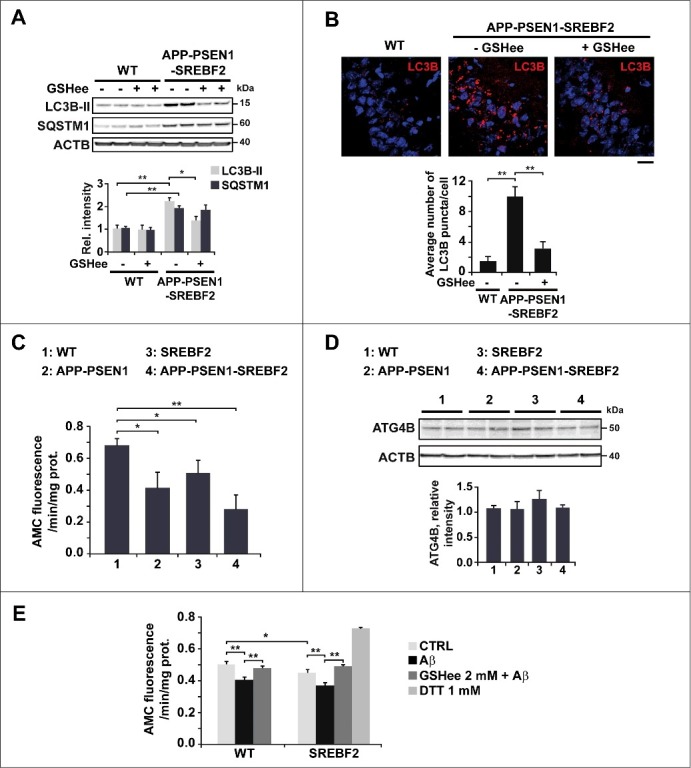
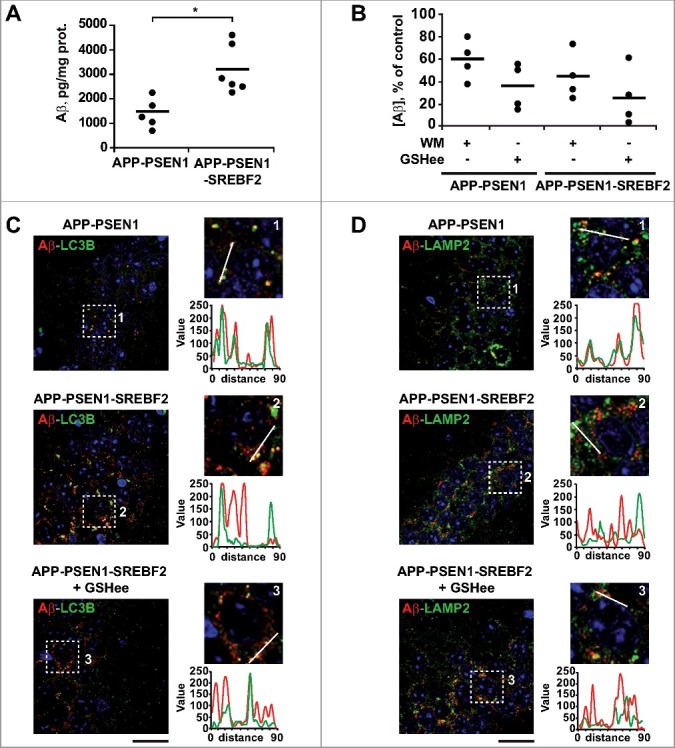
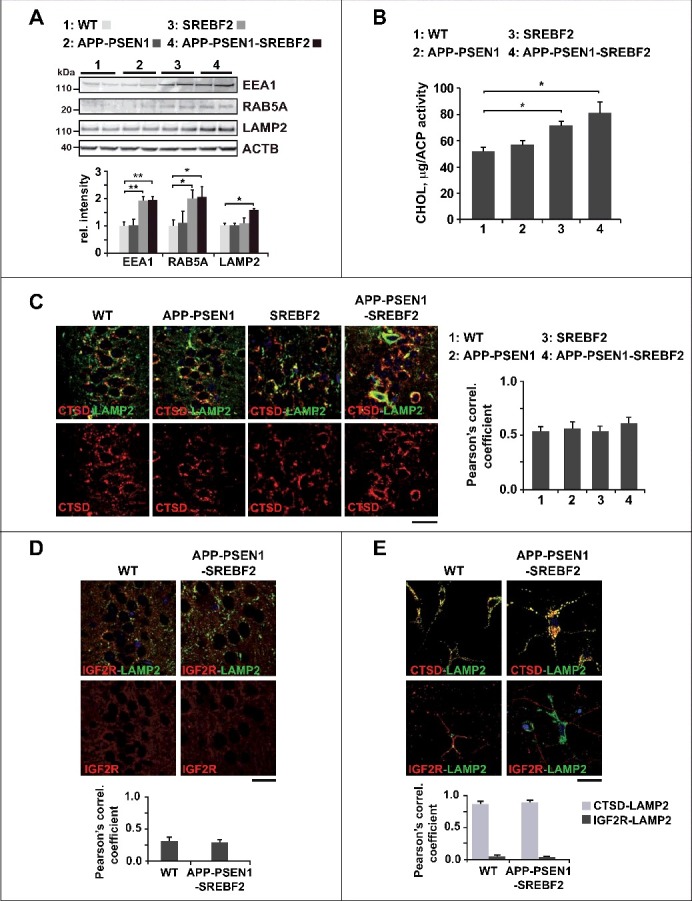
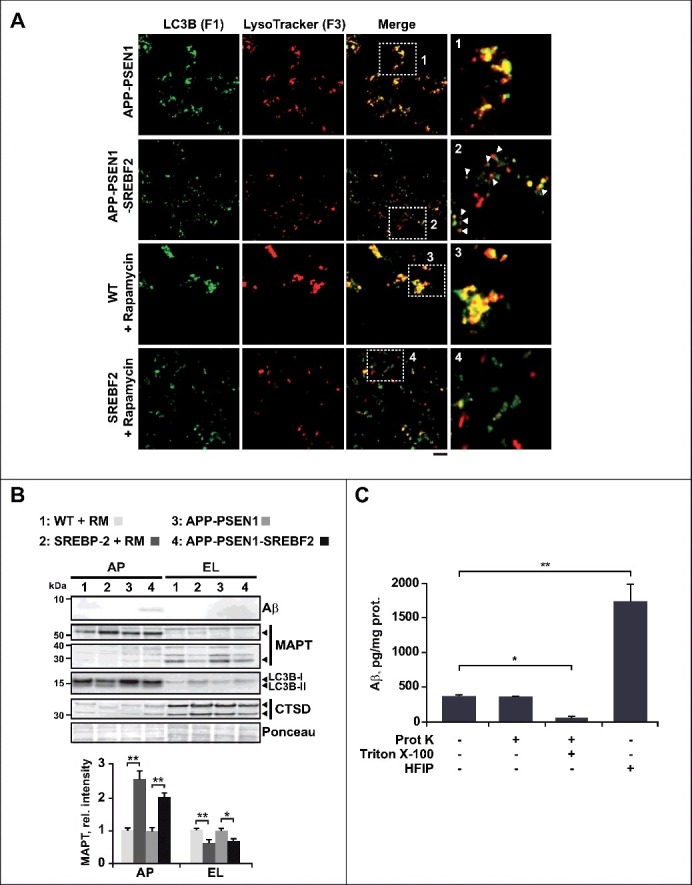
Verification
Claims the paper makes
The claims and statistics of this paper haven’t been checked yet.
Run the check — free, no account needed. It reads the open-access text and checks the sources it cites.
Claims other papers make about this one
Each is checked against this paper’s own text: does it say what the citing paper says it does?
The cited source says what the claim attributes to it.
In the citing paper
“which is consistent with previous studies suggesting cholesterol changes may alter autophagy73.”
From GRAMD1B is a regulator of lipid homeostasis, autophagic flux and phosphorylated tau (2025) · cites this paper as [73]
The check wasn’t confident either way, so it gives no verdict — never disputed.
In the citing paper
“Similarly, several genes reported to be involved in Aβ catabolism, such as RAB5A, RAB11A, CLU, and LRP2 (49–53), were also down-regulated in AD monocytes, suggesting the impaired Aβ catabolism in AD monocytes.”
From Understanding monocyte-driven neuroinflammation in Alzheimer’s disease using human cortical organoid microphysiological systems (2025) · cites this paper as [50]
Experimental — accuracy not yet measured
Self-check
Percentages, sums and reported differences re-computed from the paper’s own numbers.
The self-check needs the paper’s full text.
Citations
Cites
NIH Image to ImageJ: 25 years of image analysis
Schneider, C. A., Rasband, W. S., & Eliceiri, K. W. (2012) · Nature Methods · doi:10.1038/nmeth.2089 · Cited by 64,638
Loss of autophagy in the central nervous system causes neurodegeneration in mice
Komatsu, M., Waguri, S., Chiba, T., Murata, S., Iwata, J.-I., Tanida, I., Ueno, T., Koike, M., Uchiyama, Y., Kominami, E., et al. (2006) · Nature · doi:10.1038/nature04723 · Cited by 3,500
Reactive oxygen species are essential for autophagy and specifically regulate the activity of Atg4
Scherz‐Shouval, R., Shvets, E., Fass, E., Shorer, H., Gil, L., & Elazar, Z. (2007) · The EMBO Journal · doi:10.1038/sj.emboj.7601623 · Cited by 2,101 · cited 1×
“describe a local rise in H2O2, upon starvation-induced autophagy, which transiently oxidizes and inactivates ATG4B allowing the conjugation of lipidated Atg8-family proteins to the phagophore membranes [47].”
BackgroundDecreased Clearance of CNS β-Amyloid in Alzheimer’s Disease
Mawuenyega, K. G., Sigurdson, W., Ovod, V., Munsell, L., Kasten, T., Morris, J. C., Yarasheski, K. E., & Bateman, R. J. (2010) · Science · doi:10.1126/science.1197623 · Cited by 2,078
Autophagosomes form at ER–mitochondria contact sites
Hamasaki, M., Furuta, N., Matsuda, A., Nezu, A., Yamamoto, A., Fujita, N., Oomori, H., Noda, T., Haraguchi, T., Hiraoka, Y., et al. (2013) · Nature · doi:10.1038/nature11910 · Cited by 1,683
Extensive Involvement of Autophagy in Alzheimer Disease: An Immuno-Electron Microscopy Study
Nixon, R. A., Wegiel, J., Kumar, A., Yu, W. H., Peterhoff, C., Cataldo, A., & Cuervo, A. M. (2005) · Journal of Neuropathology & Experimental Neurology · doi:10.1093/jnen/64.2.113 · Cited by 1,588
Jankowsky, J. L., Fadale, D. J., Anderson, J., Xu, G. M., Gonzales, V., Jenkins, N. A., Copeland, N. G., Lee, M. K., Younkin, L. H., Wagner, S. L., et al. (2004) · Human Molecular Genetics · doi:10.1093/hmg/ddh019 · Cited by 1,575
Mullan, M., Crawford, F., Axelman, K., Houlden, H., Lilius, L., Winblad, B., & Lannfelt, L. (1992) · Nature Genetics · doi:10.1038/ng0892-345 · Cited by 1,513
Role of AMPK-mTOR-Ulk1/2 in the regulation of autophagy: cross talk, shortcuts, and feedbacks
Alers, S., Löffler, A. S., Wesselborg, S., & Stork, B. (2012) · Molecular and Cellular Biology · doi:10.1128/mcb.06159-11 · Cited by 1,483
The autophagosome: origins unknown, biogenesis complex
Lamb, C. A., Yoshimori, T., & Tooze, S. A. (2013) · Nature Reviews Molecular Cell Biology · doi:10.1038/nrm3696 · Cited by 1,371
Research works printed but not linked: 5
- Tanzi RE, 2004, Neuron, 43, 605
- Pickford F, 2008, J Clin Invest, 118, 2190
- McGuinness B, 2014, Cochrane Database Syst Rev, 8:CD007514
- 10.1091/mbc.E11-04-0332R · DOI · Paper page
- Maulik M, 2015, Hum Mol Genet, 24, 7132
Cited by
Sorted by citations
Guidelines for the use and interpretation of assays for monitoring autophagy (4th edition) 1
Klionsky, D. J., Abdel-Aziz, A. K., Abdelfatah, S., Abdellatif, M., Abdoli, A., Abel, S., Abeliovich, H., Abildgaard, M. H., Abudu, Y. P., Acevedo-Arozena, A., et al. (2021) · Autophagy · doi:10.1080/15548627.2020.1797280 · Cited by 2,897
Self-citationvan Rheenen, W., van der Spek, R. A. A., Bakker, M. K., van Vugt, J. J. F. A., Hop, P. J., Zwamborn, R. A. J., de Klein, N., Westra, H.-J., Bakker, O. B., Deelen, P., et al. (2021) · Nature Genetics · doi:10.1038/s41588-021-00973-1 · Cited by 542
Modifiable Risk Factors for Alzheimer’s Disease
Edwards III, G. A., Gamez, N., Escobedo Jr., G., Calderon, O., & Moreno-Gonzalez, I. (2019) · Frontiers in Aging Neuroscience · doi:10.3389/fnagi.2019.00146 · Cited by 253
Mitochondrial Glutathione: Recent Insights and Role in Disease
Marı́, M., de Gregorio, E., de Dios, C., Agujetas, V. R., Cucarull, B., Tutusaus, A., Morales, A., & Colell, A. (2020) · Antioxidants · doi:10.3390/antiox9100909 · Cited by 183
Self-citationRecent Insights into the Mitochondrial Role in Autophagy and Its Regulation by Oxidative Stress
Agujetas, V. R., de Dios, C., Pinilla, L. L., Marı́, M., Morales, A., & Colell, A. (2019) · Oxidative Medicine and Cellular Longevity · doi:10.1155/2019/3809308 · Cited by 153
Self-citation
Metadata
- Authors
- Barbero-Camps, E., Roca-Agujetas, V., Bartolessis, I., de Dios, C., Fernández-Checa, J. C., Marí, M., Morales, A., Hartmann, T., & Colell, A.
- Affiliations
- Department of Cell Death and Proliferation, Institut d'Investigacions Biomèdiques de Barcelona, Consejo Superior de Investigaciones Científicas (CSIC), Institut d'Investigacions Biomèdiques August Pi i Sunyer (IDIBAPS), Barcelona, Spain
- Consejo Superior de Investigaciones Científicas (ES)
- Saarland University (DE)
- Corresponding author
- Colell, Anna
- ORCID
- Venue
- Autophagy
- Publisher
- Informa UK Limited
- Published
- 2018-06-04
- Volume
- 14
- Issue
- 7
- Pages
- 1129-1154
- ISSN
- 1554-8627 (ISSN-L)
- 1554-8635
- PMC
- PMC6103708
- OpenAlex
- W2805481194
- Cited by
- 125
- References
- 99
- Citations by year
- 2026: 8 · 2025: 19 · 2024: 10 · 2023: 12 · 2022: 13 · 2021: 19 · 2020: 20 · 2019: 18 · 2018: 5
- FWCI
- 10.66
- Type
- journal article
- Language
- en
- Open access
- hybrid
- doi.org
- Licence
- cc-by-nc-nd
- Locations
- Autophagy (publishedVersion, cc-by-nc-nd)
- Europe PMC (PubMed Central) (publishedVersion, cc-by-nc-nd)
- PubMed Central (publishedVersion, cc-by-nc-nd)
- PubMed (publishedVersion)
- DIGITAL.CSIC (Spanish National Research Council (CSIC)) (submittedVersion, cc-by-nc-nd)
- Funders
- Ministerio de Economía y Competitividad (SAF2013-47246-R, SAF2015-66515-R, SAF2015-69944-R)
- FEDER
- Fundació La Marató de TV3 (2014-0930)
- Instituto de Salud Carlos III (PI13/00374, PI16/00930)
- US NIAAA (P50-AA-11999)
- AGAUR (2014-SGR785)
- Topics
- Life Sciences › Neuroscience › Cellular and Molecular Neuroscience › Alzheimer's disease research and treatments
- Life Sciences › Biochemistry, Genetics and Molecular Biology › Cell Biology › Autophagy in Disease and Therapy
- Life Sciences › Neuroscience › Neurology › Neuroinflammation and Neurodegeneration Mechanisms
- Keywords
- cholesterol, amyloid-beta, Alzheimer's disease, presenilin 1, autophagosome-lysosome fusion, amyloid-beta secretion, oxidative stress, mitochondrial glutathione, ATG4B, Rab7, snares, hydroxypropyl-β-cyclodextrin, Niemann-Pick disease type C
- MeSH terms
- Autophagosomes, Autophagy-Related Proteins, Beclin-1, Sequestosome-1 Protein, 2-Hydroxypropyl-beta-cyclodextrin, Animals, Autophagy, Cholesterol, Cysteine Endopeptidases, Lysosomes, Membrane Fusion, Membrane Proteins, Mitochondria, Endosomes, Signal Transduction, Amyloid beta-Peptides, tau Proteins, Sirolimus, Mice, Sterol Regulatory Element Binding Protein 2, Presenilin-1, TOR Serine-Threonine Kinases
About these checks
Registry, retraction, Cites and statistics results are computed, not judged, with one exception: a printed reference that no index lists is read once by a model before it counts as a citation error. Claims are extracted by a model and kept only when their quote appears verbatim in the text; each cited source is then checked, with a model’s help, for whether it says what the claim relies on. Those verdicts can be wrong — read the claim’s quote and the cited source before relying on one.
Statistics and arithmetic are recomputed, not judged.
Confidence bands are shown only for fields calibrated on our annotated test set. None is calibrated yet, so no band is shown.
What counts as a claim ›How we measure confidence ›How we check this ›
Are you an author, or do you see a problem with this page? Request a review
