

A novel Atg5-shRNA mouse model enables temporal control of Autophagy in vivo
Open accessThe DOI matches its Crossref record; 31 of the 31 references it cites were found in a registry or an index.
Abstract
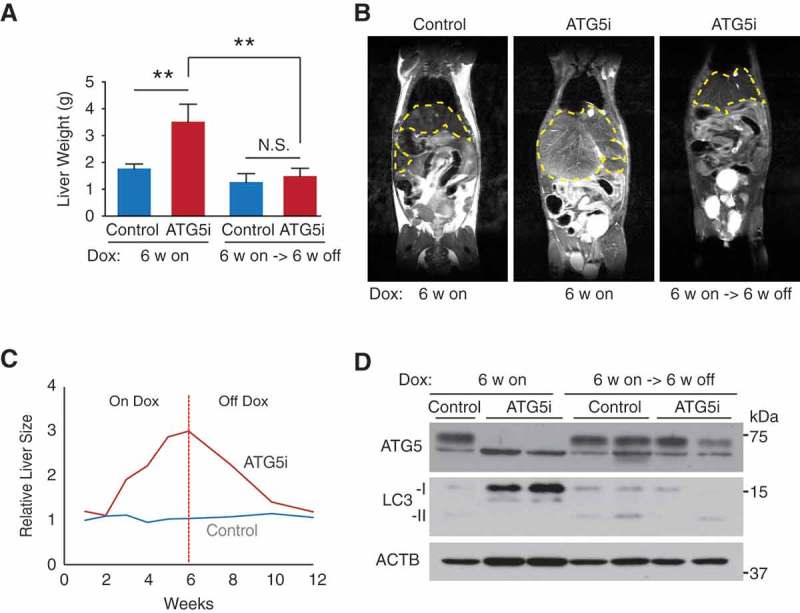
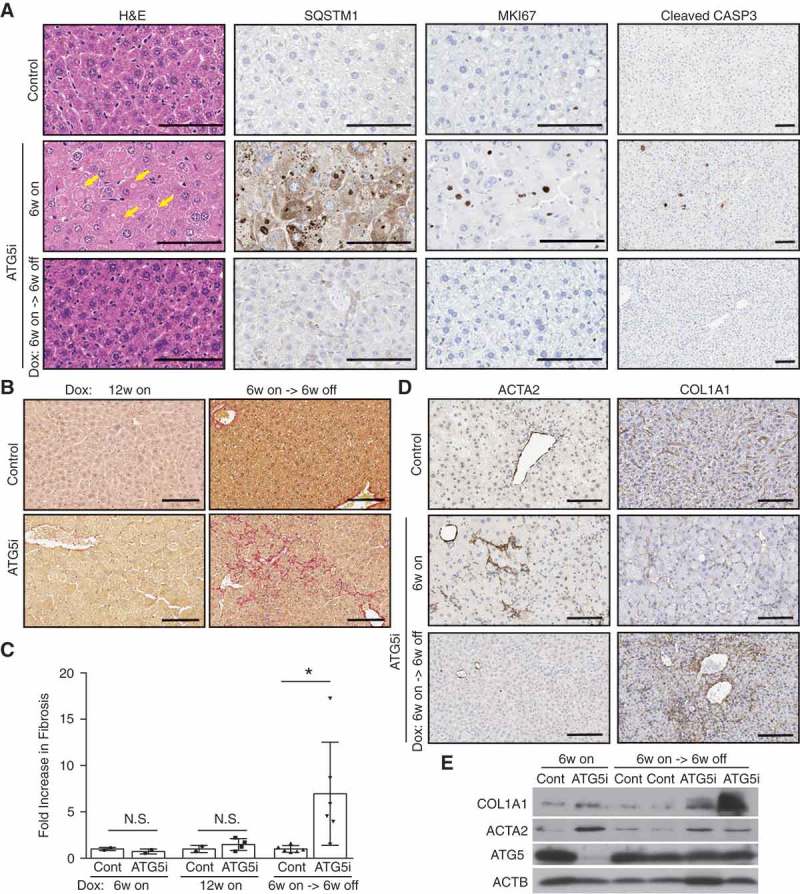
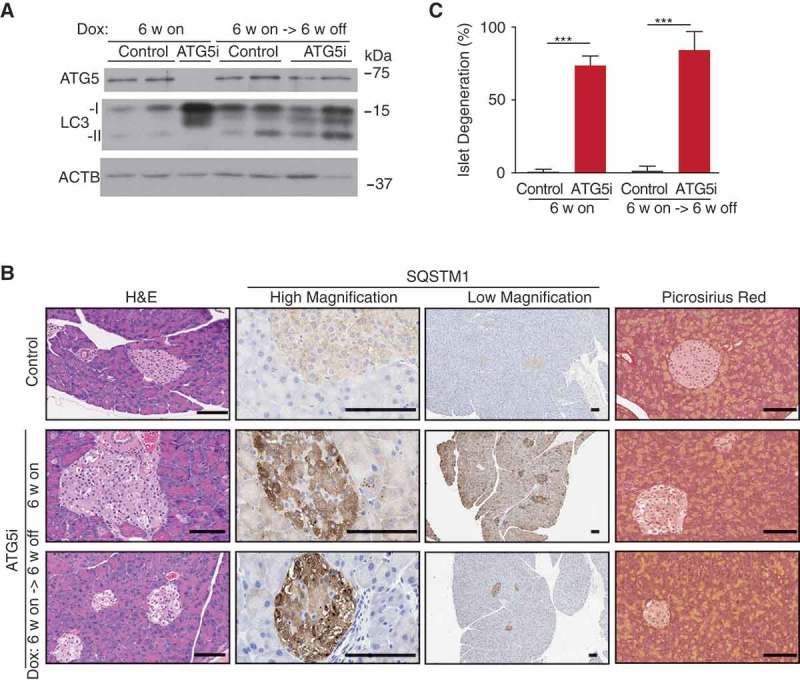
Macroautophagy/autophagy is an evolutionarily conserved catabolic pathway whose modulation has been linked to diverse disease states, including age-associated disorders. Conventional and conditional whole-body knockout mouse models of key autophagy genes display perinatal death and lethal neurotoxicity, respectively, limiting their applications for in vivo studies. Here, we have developed an inducible shRNA mouse model targeting Atg5, allowing us to dynamically inhibit autophagy in vivo, termed ATG5i mice. The lack of brain-associated shRNA expression in this model circumvents the lethal phenotypes associated with complete autophagy knockouts. We show that ATG5i mice recapitulate many of the previously described phenotypes of tissue-specific knockouts. While restoration of autophagy in the liver rescues hepatomegaly and other pathologies associated with autophagy deficiency, this coincides with the development of hepatic fibrosis. These results highlight the need to consider the potential side effects of systemic anti-autophagy therapies.
Overview
The claims and statistics of this paper haven’t been checked yet.
Free: it reads the open-access text and checks the first 5 claims that cite a source we can check. Create a free account to check every claim.
Integrity signals
Registry
Cites
Statistics
Figures
Verification
Claims the paper makes
The claims and statistics of this paper haven’t been checked yet.
Free: it reads the open-access text and checks the first 5 claims that cite a source we can check. Create a free account to check every claim.
Claims other papers make about this one
Each is checked against this paper’s own text: does it say what the citing paper says it does?
The source backs part of the claim, not all of it — or backs it for a different population, condition or comparison.
In the citing paper
“| Acute liver failure | Conditional whole‐body deletion of Atg5 | Development of hepatomegaly and hepatic cell swelling | Cassidy et al (2018) |”
From Autophagy in major human diseases (2021) · cites this paper as Cassidy et al, 2018
Experimental — accuracy not yet measuredThe source backs part of the claim, not all of it — or backs it for a different population, condition or comparison.
In the citing paper
“The genetic suppression of basal autophagy in hepatocytes leads to hepatomegaly and exacerbated liver injury (Komatsu et al, 2005; Ni et al, 2012b; Cassidy et al, 2018).”
From Autophagy in major human diseases (2021) · cites this paper as Cassidy et al, 2018
Experimental — accuracy not yet measured
Self-check
Percentages, sums and reported differences re-computed from the paper’s own numbers.
The self-check needs the paper’s full text.
Citations
Cites
Loss of autophagy in the central nervous system causes neurodegeneration in mice
Komatsu, M., Waguri, S., Chiba, T., Murata, S., Iwata, J.-I., Tanida, I., Ueno, T., Koike, M., Uchiyama, Y., Kominami, E., et al. (2006) · Nature · doi:10.1038/nature04723 · Cited by 3,500
The role of autophagy during the early neonatal starvation period
Kuma, A., Hatano, M., Matsui, M., Yamamoto, A., Nakaya, H., Yoshimori, T., Ohsumi, Y., Tokuhisa, T., & Mizushima, N. (2004) · Nature · doi:10.1038/nature03029 · Cited by 2,865 · cited 3×
“Consistent with embryonic atg5 KO mice, ATG5i mice were born at close-to-expected Mendelian ratios (observed 40%; expected 50%) [8].”
BackgroundImpairment of starvation-induced and constitutive autophagy in Atg7 -deficient mice
Komatsu, M., Waguri, S., Ueno, T., Iwata, J., Murata, S., Tanida, I., Ezaki, J., Mizushima, N., Ohsumi, Y., Uchiyama, Y., et al. (2005) · The Journal of Cell Biology · doi:10.1083/jcb.200412022 · Cited by 2,331 · cited 2×
“This coincides with a period of metabolic stress wherein neonates must adapt and engage the autophagic machinery to mobilise their own food stores [8,9].”
BackgroundAutophagy in mammalian development and differentiation
Mizushima, N., & Levine, B. (2010) · Nature Cell Biology · doi:10.1038/ncb0910-823 · Cited by 1,555 · cited 1×
“Due to these limitations, there has been a reliance on tissue-specific knockouts to provide insight into the role of basal autophagy in tissue development and homeostasis [11].”
BackgroundAutophagy modulation as a potential therapeutic target for diverse diseases
Rubinsztein, D. C., Codogno, P., & Levine, B. (2012) · Nature Reviews Drug Discovery · doi:10.1038/nrd3802 · Cited by 1,437 · cited 1×
“In the clinical setting, autophagy-modulating therapies have garnered interest for life- and health-span modulation, as well as in the field of oncology [2,26,27].”
BackgroundSelf-citationAutophagy maintains stemness by preventing senescence
García-Prat, L., Martínez-Vicente, M., Perdiguero, E., Ortet, L., Rodríguez-Ubreva, J., Rebollo, E., Ruiz-Bonilla, V., Gutarra, S., Ballestar, E., Serrano, A. L., et al. (2016) · Nature · doi:10.1038/nature16187 · Cited by 1,355
Autophagy-deficient mice develop multiple liver tumors
Takamura, A., Komatsu, M., Hara, T., Sakamoto, A., Kishi, C., Waguri, S., Eishi, Y., Hino, O., Tanaka, K., & Mizushima, N. (2011) · Genes & Development · doi:10.1101/gad.2016211 · Cited by 1,342 · cited 1×
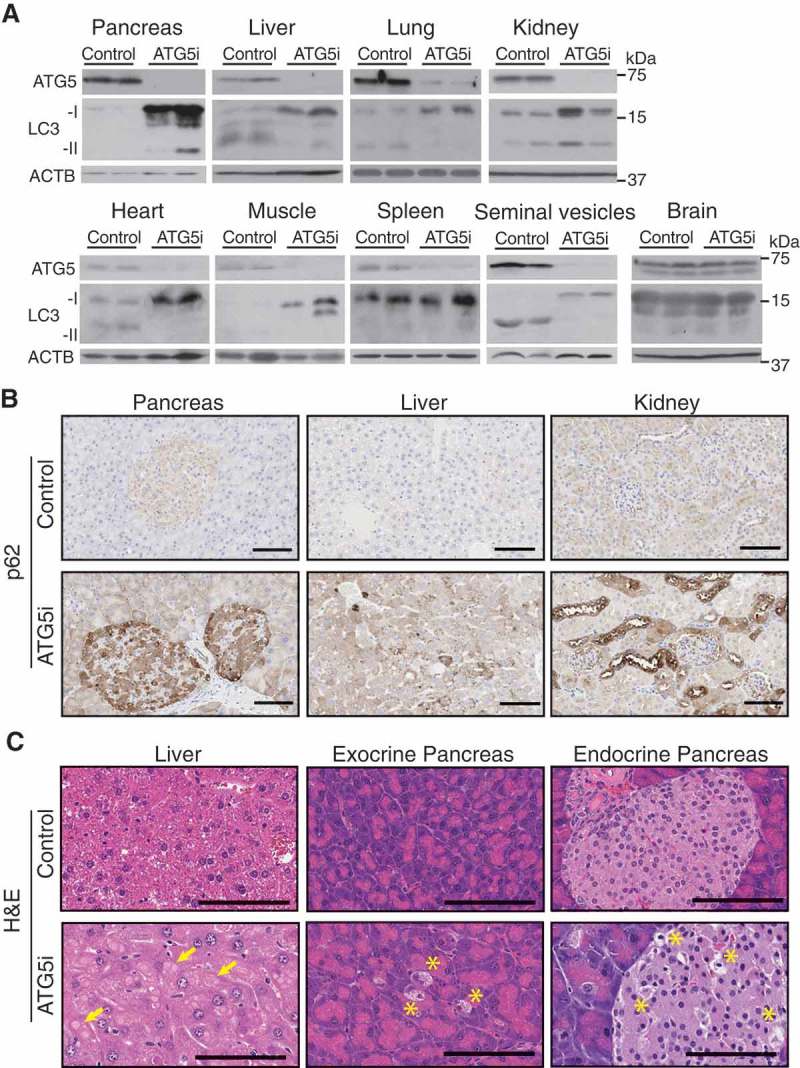
“Additionally, the histopathological alterations associated with autophagy deficiency, such as swollen hepatocytes and increased proliferation and apoptosis [5], were absent in the Atg5 reconstituted livers (Figure 6(a) and Figure S6A and B).”
BackgroundThe role for autophagy in cancer
White, E. (2015) · Journal of Clinical Investigation · doi:10.1172/jci73941 · Cited by 1,332
Autophagy is required to maintain muscle mass.
Masiero, E., Agatea, L., Mammucari, C., Blaauw, B., Loro, E., Komatsu, M., Metzger, D., Reggiani, C., Schiaffino, S., & Sandri, M. (2009) · Cell Metabolism · doi:10.1016/j.cmet.2009.10.008 · Cited by 1,282 · cited 1×
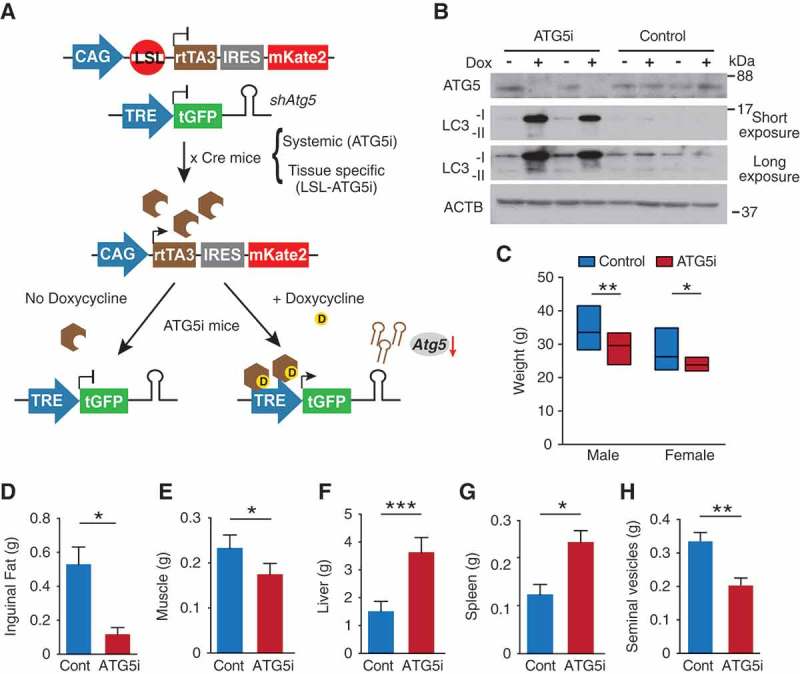
“Anatomical inspection revealed, as in the whole-body somatic atg7 KO mice and/or atg5 and atg7 KO mice, a reduction of fat [16] and muscle tissues (Figures 1(d,e)) [17], with the presence of hepatomegaly [9], splenomegaly, and seminal vesicle atrophy (Figure 1(fh)) [18].”
BackgroundAutophagy mediates the mitotic senescence transition
Young, A. R. J., Narita, M., Ferreira, M., Kirschner, K., Sadaie, M., Darot, J. F. J., Tavaré, S., Arakawa, S., Shimizu, S., Watt, F. M., et al. (2009) · Genes & Development · doi:10.1101/gad.519709 · Cited by 1,078
Self-citation
Cited by
Autophagy in major human diseases
Klionsky, D. J., Petroni, G., Amaravadi, R. K., Baehrecke, E. H., Ballabio, A., Boya, P., Bravo‐San Pedro, J. M., Cadwell, K., Cecconi, F., Choi, A. M. K., et al. (2021) · The EMBO Journal · doi:10.15252/embj.2021108863 · Cited by 1,585
Self-citationAutophagy in liver diseases: Time for translation?
Allaire, M., Rautou, P.-E., Codogno, P., & Lotersztajn, S. (2019) · Journal of Hepatology · doi:10.1016/j.jhep.2019.01.026 · Cited by 378
Autophagy in liver diseases: A review
Qian, H., Chao, X., Williams, J., Fulte, S., Li, T., Yang, L., & Ding, W.-X. (2021) · Molecular Aspects of Medicine · doi:10.1016/j.mam.2021.100973 · Cited by 373
Temporal inhibition of autophagy reveals segmental reversal of ageing with increased cancer risk
Cassidy, L. D., Young, A. R. J., Young, C. N. J., Soilleux, E. J., Fielder, E., Weigand, B. M., Lagnado, A., Brais, R., Ktistakis, N. T., Wiggins, K. A., et al. (2020) · Nature Communications · doi:10.1038/s41467-019-14187-x · Cited by 108
Self-citationHu, Y., Xuefeng, Y., Shandong, W., & Jianhua, X. (2020) · Clinica Chimica Acta · doi:10.1016/j.cca.2020.03.024 · Cited by 109
Autophagy at the intersection of aging, senescence, and cancer
Cassidy, L. D., & Narita, M. (2022) · Molecular Oncology · doi:10.1002/1878-0261.13269 · Cited by 84
Self-citationAutophagy promotes cell survival by maintaining NAD levels
Kataura, T., Sedlackova, L., Otten, E. G., Kumari, R., Shapira, D., Scialò, F., Stefanatos, R. K. A., Ishikawa, K., Kelly, G., Seranova, E., et al. (2022) · Developmental Cell · doi:10.1016/j.devcel.2022.10.008 · Cited by 83
Autophagy in the cancer-immunity dialogue
Yamazaki, T., Pedro, J. M. B., Galluzzi, L., Kroemer, G., & Pietrocola, F. (2020) · Advanced Drug Delivery Reviews · doi:10.1016/j.addr.2020.12.003 · Cited by 87
Self-eating: friend or foe? The emerging role of autophagy in fibrotic diseases
Li, Y., Liu, R., Wu, J., & Li, X. (2020) · Theranostics · doi:10.7150/thno.47826 · Cited by 72
“In contrast with Atg5 knockdown results from Cassidy [12], Ni et al.”
MethodResultInfluentialUrsodeoxycholic acid alleviates experimental liver fibrosis involving inhibition of autophagy
Ye, H., Zhang, J., Chen, X., Wu, P., Chen, L., & Guo, Z. (2019) · Life Sciences · doi:10.1016/j.lfs.2019.117175 · Cited by 64
On ATG4B as Drug Target for Treatment of Solid Tumours—The Knowns and the Unknowns
Agrotis, A., & Ketteler, R. (2019) · Cells · doi:10.3390/cells9010053 · Cited by 48
“In a mouse model with doxycycline‐inducible shRNA‐mediated depletion of ATG5, hepatomegaly and liver damage was observed [35].”
BackgroundFGF21 alleviates acute liver injury by inducing the SIRT1‐autophagy signalling pathway
Yang, X., Jin, Z., Lin, D., Shen, T., Zhang, J., Li, D., Wang, X., Zhang, C., Lin, Z., Li, X., et al. (2022) · Journal of Cellular and Molecular Medicine · doi:10.1111/jcmm.17144 · Cited by 44
NAD Depletion Mediates Cytotoxicity in Human Neurons With Autophagy Deficiency
Sun, C., Seranova, E., Cohen, M. A., Chipara, M., Roberts, J., Astuti, D., Palhegyi, A. M., Acharjee, A., Sedlackova, L., Kataura, T., et al. (2022) · Cell Reports · doi:10.1016/j.celrep.2023.112372 · Cited by 45
Autophagy is a novel pathway for neurofilament protein degradation in vivo
Rao, M. V., Darji, S., Stavrides, P. H., Goulbourne, C. N., Kumar, A. R., Yang, D., Yoo, L., Peddy, J., Lee, J., Yuan, A., et al. (2022) · Autophagy · doi:10.1080/15548627.2022.2124500 · Cited by 33
“The lowered levels of MAP1LC3-II and the ratio of MAP1LC3: MAP1LC3-I in ATG5-depleted N2a cells is consistent with the blockage of AP formation and slowdown of autophagy [26] in N2a cells, thus implicating autophagy in NF protein degradation.”
BackgroundTransient Systemic Autophagy Inhibition Is Selectively and Irreversibly Deleterious to Lung Cancer
Khayati, K., Bhatt, V. D., Lan, T., Alogaili, F., Wang, W., Lopez, E., Hu, Z. S., Gokhale, S., Cassidy, L. D., Narita, M., et al. (2022) · Cancer Research · doi:10.1158/0008-5472.can-22-1039 · Cited by 28
Self-citationArtificial tethering of LC3 or p62 to organelles is not sufficient to trigger autophagy
Loos, F., Xie, W., Sica, V., Pedro, J. M. B., Souquère, S., Pierron, G., Lachkar, S., Sauvat, A., Petrazzuolo, A., Jiménez, A. J., et al. (2019) · Cell Death and Disease · doi:10.1038/s41419-019-2011-5 · Cited by 25
Autophagy and senescence, converging roles in pathophysiology as seen through mouse models
(2021) · Advances in Cancer Research · doi:10.1016/bs.acr.2021.02.001 · Cited by 20
Self-citationThe role of autophagy in hepatic fibrosis.
Sun, M., Tan, L., & Hu, M. (2021) · American Journal of Translational Research · Cited by 28
Magnesium Isoglycyrrhizinate Ameliorates Concanavalin A-Induced Liver Injury by Inhibiting Autophagy
Fan, Z., Li, Y., Chen, S., Xu, L., Tian, Y., Cao, Y., Pan, Z., Zhang, X., Chen, Y., & Ren, F. (2022) · Frontiers in Pharmacology · doi:10.3389/fphar.2021.794319 · Cited by 17
“Studies have shown that the loss of autophagy can promote spontaneous hepatomegaly and liver injury in an Atg5-shRNA mouse model but that liver damage can be significantly alleviated after intervention with autophagy activators (Cassidy et al., 2018).”
BackgroundKong, Y.-L., Pan, B., Liang, J., Zhu, H., Wang, L., Xia, Y., Wu, J., Fan, L., Li, J., & Xu, W. (2020) · Aging · doi:10.18632/aging.103536 · Cited by 15
“of key autophagy gene ATG5 according to published researches conducted in CLL [22, 23].”
BackgroundYuan, J., Yuan, X., Wu, K., Gao, J., & Li, L. (2021) · Frontiers in Oncology · doi:10.3389/fonc.2021.658254 · Cited by 19
Autophagy across tissues of aging mice
Carosi, J. M., Martin, A., Hein, L. K., Hassiotis, S., Hattersley, K. J., Turner, B. J., Fourrier, C., Bensalem, J., & Sargeant, T. J. (2025) · PLoS ONE · doi:10.1371/journal.pone.0325505 · Cited by 14
ICG and Sunitinib-loaded NH2-MOFs for Folate-mediated Hepatocellular Carcinoma Dual-modal Therapy
Zhang, Z., Liu, C., Akakuru, O. U., Xu, W., Wu, A., & Zhang, Y. (2021) · Chemical Research in Chinese Universities · doi:10.1007/s40242-021-1206-3 · Cited by 10
Autophagy promotes cell and organismal survival by maintaining NAD(H) poolsPreprint
Sedlackova, L., Otten, E. G., Scialò, F., Shapira, D., Kataura, T., Carroll, B., Seranova, E., Rabanal‐Ruiz, Y., Kelly, G., Stefanatos, R. K. A., et al. (2020) · bioRxiv (Cold Spring Harbor Laboratory) · doi:10.1101/2020.01.31.928424 · Cited by 10
Mainz, L., Sarhan, M. A. F. E., Roth, S., Sauer, U., Kalogirou, C., Eckstein, M., Hartmann, E., Seibert, H.-D., Voelker, H.-U., Geppert, C. I., et al. (2022) · Autophagy · doi:10.1080/15548627.2022.2052588 · Cited by 8
“Subsequently, Pgk1Cre was bred out and animals were kept on a mixed C57BL/6 x 129 background [9].”
BackgroundMethodResultInfluentialWolska, W., Gutowska, I., Wszołek, A., & Żwierełło, W. (2025) · International Journal of Molecular Sciences · doi:10.3390/ijms26104742 · Cited by 13
“However, mutations in essential genes regulating autophagy, such as Ambra1 [32], ATG5 [33], and ATG7 [34], may promote the onset of tumorigenesis by impairing the mechanisms that eliminate damaged cells.”
RAB18 modulates autophagy in human stellate cells
BasuRay, S. (2019) · Journal of clinical lipidology · doi:10.1016/j.jacl.2019.07.006 · Cited by 10
König, J., Grune, T., & Ott, C. (2019) · Current Opinion in Clinical Nutrition & Metabolic Care · doi:10.1097/mco.0000000000000579 · Cited by 6
Role of autophagy in liver diseases
Morishita, H., & Komatsu, M. (2022) · Current Opinion in Physiology · doi:10.1016/j.cophys.2022.100594 · Cited by 6
Liu, Y., Chen, L., Liu, X., Tao, R. N., Dong, R., Wang, X., Luo, J., Li, H., Zheng, Y., Qiang, L., et al. (2025) · Phytomedicine · doi:10.1016/j.phymed.2025.157053 · Cited by 5
Reversible suppression of autophagy in a mouse model reveals neuronal resilience
Eguchi, T., Abe, M., Tomita, T., Morishita, H., Saeki, Y., Sakimura, K., Tanaka, K. F., & Mizushima, N. (2026) · Science · doi:10.1126/science.ady3911 · Cited by 5
Mainz, L., Sarhan, M. A. F. E., Roth, S., Sauer, U., Maurus, K., Hartmann, E., Seibert, H.-D., Rosenwald, A., Diefenbacher, M. E., & Rosenfeldt, M. T. (2022) · Frontiers in Cell and Developmental Biology · doi:10.3389/fcell.2022.785252 · Cited by 3
“GEMMs that allow deletion of the essential autophagy regulating genes Atg5 or Atg7 have been instrumental in deciphering the complex relation of wild-type Trp53 and autophagy in de novo tumor development from healthy embryonic tissue.”
BackgroundDynamic modulation of autophagy: implications for aging and cancer
Cassidy, L. D., & Narita, M. (2020) · Molecular & Cellular Oncology · doi:10.1080/23723556.2020.1754723 · Cited by 3
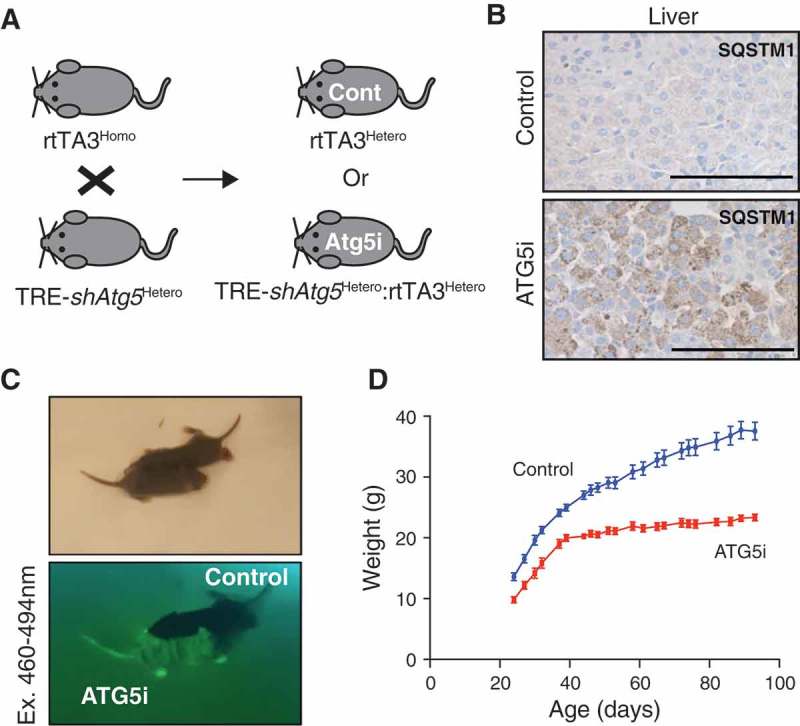
“A major caveat of our inducible system is that doxycycline is poorly permeable across the blood-brain-barrier and as such the system shows no activation in the brain, leaving autophagy intact in this organ.(8) We realized that this discrepancy of system activation provided us with a unique opportunity to perform long-…”
BackgroundSelf-citationMarkby, G. R., & Sakamoto, K. (2021) · Elsevier eBooks · doi:10.1016/b978-0-12-822003-0.00019-x · Cited by 1
Jaulim, A., Cassidy, L. D., Young, A. R. J., Chan, A. S. L., Warren, A. Y., TAYLOR, A. E. R., Arlt, W., Lan, G., Blayney, M. L., Davidson, O., et al. (2023) · bioRxiv (Cold Spring Harbor Laboratory) · doi:10.1101/2023.07.21.549845 · Cited by 1
“Materials and Methods Mice The generation and initial characterisation of the Atg5i transgenic mice was previously described (Cassidy et al. 2018).”
BackgroundMethodInfluentialSelf-citationTemporal inhibition of autophagy reveals segmental reversal of aging with increased cancer riskPreprint
Cassidy, L. D., Young, A. R. J., Young, C., Soilleux, E. J., Fielder, E., Weigand, B. M., Brais, R. J., Wiggins, K. A., Clarke, M. C. H., Jurk, D., et al. (2019) · bioRxiv (Cold Spring Harbor Laboratory) · doi:10.1101/528984
Self-citationGene Manipulation Protocols in Autophagy
Liu, R., Guo, R., & Rong, Y. (2021) · Advances in experimental medicine and biology · doi:10.1007/978-981-16-2830-6_10
Autophagy promotes cell survival by maintaining NAD(H) levelsPreprint
Sedlackova, L., Kataura, T., Seranova, E., Sun, C., Otten, E. G., Cohen, M. A., Chipara, M., Palhegyi, A. M., Shapira, D., Scialò, F., et al. (2021) · Research Square · doi:10.21203/rs.3.rs-659023/v1
A Time and Place for Inhibiting Autophagy
Gan, B. (2022) · Cancer Research · doi:10.1158/0008-5472.can-22-3024
Metadata
- Authors
- Cassidy, L. D., Young, A. R., Pérez-Mancera, P. A., Nimmervoll, B., Jaulim, A., Chen, H.-C., McIntyre, D. J. O., Brais, R., Ricketts, T., Pacey, S., De La Roche, M., Gilbertson, R. J., Rubinsztein, D. C., & Narita, M.
- Affiliations
- University of Cambridge (GB)
- Cambridge University Hospitals NHS Foundation Trust (GB)
- Cancer Research UK Cambridge Institute, University of Cambridge, Cambridge, UK
- Corresponding author
- Narita, Masashi
- ORCID
- Venue
- Autophagy
- Publisher
- Informa UK Limited
- Published
- 2018-07-03
- Volume
- 14
- Issue
- 7
- Pages
- 1256-1266
- ISSN
- 1554-8627 (ISSN-L)
- 1554-8635
- PMC
- PMC6103714
- OpenAlex
- W2788593479
- Cited by
- 40
- References
- 31
- Citations by year
- 2026: 1 · 2025: 3 · 2023: 1 · 2022: 11 · 2021: 10 · 2020: 7 · 2019: 7
- FWCI
- 4.68
- Type
- journal article
- Language
- en
- Open access
- hybrid
- doi.org
- Licence
- Locations
- Autophagy (publishedVersion, cc-by)
- Europe PMC (PubMed Central) (publishedVersion, cc-by)
- PubMed Central (publishedVersion, cc-by)
- PubMed (publishedVersion)
- Apollo (University of Cambridge) (submittedVersion)
- Apollo
- Funders
- Cancer Research UK (C20/A20976)
- Wellcome Trust Principal Research Fellowship (095317/Z/11/Z)
- Wellcome Trust Strategic Grant to Cambridge Institute for Medical Research (100140/Z/12/Z)
- Wellcome Trust and the Royal Society (107609)
- CRUK Early Detection Pump Priming Awards (C20/A20976)
- Medical Research Council (MR/M013049/1)
- Wellcome Trust<Q13/> (095317/Z/11/Z)
- Cancer Research UK<Q9/> (C14303/A17197)
- Cancer Research UK Cambridge Institute Core (C14303/A17197)
- MRC (MRC/MC/UU/12012/5)
- Wellcome Trust<Q12/> (107609)
- Royal Society (107609)
- Wellcome Trust (100140/Z/12/Z)
- Topics
- Life Sciences › Biochemistry, Genetics and Molecular Biology › Cell Biology › Autophagy in Disease and Therapy
- Life Sciences › Biochemistry, Genetics and Molecular Biology › Aging › Genetics, Aging, and Longevity in Model Organisms
- Life Sciences › Biochemistry, Genetics and Molecular Biology › Molecular Biology › RNA Interference and Gene Delivery
- Keywords
- ATG5, shRNA knockdown, conditional knockout mouse model, hepatomegaly, liver fibrosis
- MeSH terms
- Autophagy-Related Protein 5, Animals, Animals, Newborn, Autophagy, Liver Cirrhosis, Phenotype, Time Factors, Down-Regulation, Models, Animal, RNA, Small Interfering
About these checks
Registry, retraction, Cites and statistics results are computed, not judged, with one exception: a printed reference that no index lists is read once by a model before it counts as a citation error. Claims are extracted by a model and kept only when their quote appears verbatim in the text; each cited source is then checked, with a model’s help, for whether it says what the claim relies on. Those verdicts can be wrong — read the claim’s quote and the cited source before relying on one.
Statistics and arithmetic are recomputed, not judged.
Confidence bands are shown only for fields calibrated on our annotated test set. None is calibrated yet, so no band is shown.
What counts as a claim ›How we measure confidence ›How we check this ›
Are you an author, or do you see a problem with this page? Request a review
Data sources
Bibliographic data: Semantic Scholar, OpenAlex, Crossref.
Contains information from the Semantic Scholar Academic Graph Datasets, made available under the ODC Attribution License (ODC-BY 1.0).
Semantic Scholar’s data is described in: Kinney, R., et al. (2023). The Semantic Scholar Open Data Platform. arXiv:2301.10140.
