

Potential of additive manufacturing for upstream automotive supply chains
Open accessThe DOI matches its Crossref record; 58 of the 60 references it cites were found in a registry or an index, and 2 are not checked yet.
Abstract
The COVID-19 pandemic impact on the global supply systems is continuously on the rise creating an increasing ripple effect across the automotive supply chain network. In this disruptive setting, Additive manufacturing (AM) is perceived by many supply chain professionals as well as by many global automakers amongst best options to handle the disruptions and boost the automotive supply chain resilience. This research is dedicated to analysis up to which extent Additive manufacturing (AM) is a miraculous remedy to automotive supply chain disruptions. To this end, we use the Indian automotive industry as case-model to identify major barriers towards AM wide deployment and derive recommendations on how AM can be successfully used to cope with automotive supply chain disruptions.
Overview
The claims and statistics of this paper haven’t been checked yet.
Free: it reads the open-access text and checks the first 5 claims that cite a source we can check. Create a free account to check every claim.
Integrity signals
Registry
Cites
Statistics
Figures


Verification
Claims the paper makes
The claims and statistics of this paper haven’t been checked yet.
Free: it reads the open-access text and checks the first 5 claims that cite a source we can check. Create a free account to check every claim.
Claims other papers make about this one
Each is checked against this paper’s own text: does it say what the citing paper says it does?
The cited source says what the claim attributes to it.
In the citing paper
“The COVID-19 pandemic highlighted the vulnerabilities of global supply chains, emphasizing the need for innovative solutions [110].”
From Transformative Procurement Trends: Integrating Industry 4.0 Technologies for Enhanced Procurement Processes (2023) · cites this paper as [110]
Self-check
Percentages, sums and reported differences re-computed from the paper’s own numbers.
The self-check needs the paper’s full text.
Citations
Cites
Tranfield, D., Denyer, D., & Smart, P. (2003) · British Journal of Management · doi:10.1111/1467-8551.00375 · Cited by 15,386
The SAGE handbook of organizational research methods
Buchanan, D., & Bryman, A. E. (2009) · Cited by 2,559
(2021) · Encyclopedia of the UN Sustainable Development Goals · doi:10.1007/978-3-319-95963-4_300069 · Cited by 1,569
Rifkin, J. (2011) · Cited by 1,321
Luthra, S., & Mangla, S. K. (2018) · Process Safety and Environmental Protection · doi:10.1016/j.psep.2018.04.018 · Cited by 909
Systematic Review and Evidence Synthesis as a Practice and Scholarship Tool
Briner, R. B., & Denyer, D. (2012) · The Oxford Handbook of Evidence-Based Management · doi:10.1093/oxfordhb/9780199763986.013.0007 · Cited by 835
Fourth Industrial Revolution: Towards University Teaching Based on Values
Guerra, A. G., & Sánchez de Gómez, L. (2019) · Advances in Higher Education and Professional Development · doi:10.4018/978-1-5225-5837-8.ch009 · Cited by 814
Weller, C., Kleer, R., & Piller, F. T. (2015) · International Journal of Production Economics · doi:10.1016/j.ijpe.2015.02.020 · Cited by 783
Additive manufacturing: A framework for implementation
Mellor, S., Hao, L., & Zhang, D. (2014) · International Journal of Production Economics · doi:10.1016/j.ijpe.2013.07.008 · Cited by 777
Proceedings of the 50th Hawaii International Conference on System Sciences (2017)
(2017) · Proceedings of the Annual Hawaii International Conference on System Sciences · doi:10.24251/hicss.2017.000 · Cited by 737
The cost of additive manufacturing: machine productivity, economies of scale and technology-push
Baumers, M., Dickens, P., Tuck, C., & Hague, R. (2016) · Technological Forecasting and Social Change · doi:10.1016/j.techfore.2015.02.015 · Cited by 658 · cited 5×
“Since the procurement stage requires high production volume, the AM process’s less volume capacity may be an essential obstacle for AM implementation (Baumers et al. 2016; Dwivedi, Srivastava, and Srivastava 2017; Shukla, Todorov, and Kapletia 2018).”
BackgroundInfluentialModeling agility of supply chain
Agarwal, A., Shankar, R., & Tiwari, M. K. (2007) · Industrial Marketing Management · doi:10.1016/j.indmarman.2005.12.004 · Cited by 649
Design Principles for Industrie 4.0 Scenarios: A Literature Review
Pentek, M., & Otto, B. (2015) · Cited by 646
Yadav, G., Luthra, S., Jakhar, S. K., Mangla, S. K., & Rai, D. P. (2020) · Journal of Cleaner Production · doi:10.1016/j.jclepro.2020.120112 · Cited by 637 · cited 1×
“(Yadav et al. 2020) has provided a framework to overcome the challenges in managing a sustainable supply chain with solution measures of Industry 4.0 and circular economy.”
BackgroundInfluentialThe impact of Industry 4.0 implementation on supply chains
Ghadge, A., Er Kara, M., Moradlou, H., & Goswami, M. (2020) · Journal of Manufacturing Technology Management · doi:10.1108/jmtm-10-2019-0368 · Cited by 511 · cited 1×
“A conceptual model is proposed for the practical application of Industry 4.0 in future supply chains, after analysing the barriers and driving forces with a system dynamics model (Ghadge et al. 2020).”
BackgroundInfluentialNúñez-Merino, M., Maqueira-Marín, J. M., Moyano-Fuentes, J., & Martínez-Jurado, P. J. (2020) · International Journal of Production Research · doi:10.1080/00207543.2020.1743896 · Cited by 382 · cited 1×
“A systematic literature review conducted by (Núñez-Merino et al. 2020) has exposed the interrelationships between Industry 4.0 technologies and lean supply chain management.”
BackgroundInfluentialAn introduction to the application of interpretive structural modeling
Malone, D. W. (1975) · Proceedings of the IEEE · doi:10.1109/proc.1975.9765 · Cited by 349 · cited 1×
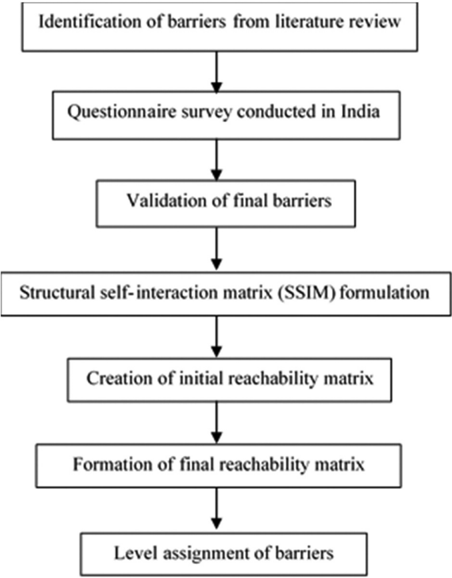
“A theory-based graph ISM method was suitable for this purpose (Malone 1975).”
MethodDelic, M., & Eyers, D. R. (2020) · International Journal of Production Economics · doi:10.1016/j.ijpe.2020.107689 · Cited by 325
Ozkan-Ozen, Y. D., Kazancoglu, Y., & Kumar Mangla, S. (2020) · Resources, Conservation and Recycling · doi:10.1016/j.resconrec.2020.104986 · Cited by 263 · cited 1×
“(Ozkan-Ozen, Kazancoglua, and Mangla 2020) have conducted a barrier analysis for supply chain transformation by simultaneously considering Industry 4.0 and circular supply chain; synchronised barriers were prioritised by using fuzzy Analytical Network Process (ANP).”
MethodInfluentialAgrawal, P., Narain, R., & Ullah, I. (2019) · Journal of Modelling in Management · doi:10.1108/jm2-03-2019-0066 · Cited by 237 · cited 1×
“Similarly, every row with ‘1ʹ in the specified column of barriers constitutes that barrier’s antecedent set (Agrawal, Narain, and Ullah 2019).”
BackgroundThe barriers to the progression of additive manufacture: Perspectives from UK industry
Thomas-Seale, L. E. J., Kirkman-Brown, J. C., Attallah, M. M., Espino, D. M., & Shepherd, D. E. T. (2018) · International Journal of Production Economics · doi:10.1016/j.ijpe.2018.02.003 · Cited by 235 · cited 5×
“…has been conducted on AM’s manufacturing and technological aspects in the automotive industry, as shown by the literature (Ford 2014; Giffi, Gangula, and Illinda 2014; Holmström et al. 2016; Dwivedi, Srivastava, and Srivastava 2017; Shukla, Todorov, and Kapletia 2018; Thomas-Seale et al. 2018).”
BackgroundMethodInfluentialDynamic capabilities and institutional theories for Industry 4.0 and digital supply chain
Gupta, S., Modgil, S., Gunasekaran, A., & Bag, S. (2020) · Supply Chain Forum: An International Journal · doi:10.1080/16258312.2020.1757369 · Cited by 226 · cited 1×
“Similarly, a survey has been conducted among Indian manufacturing industry professionals to test the developed theoretical framework, using institutional theory and dynamic capabilities (Gupta et al. 2020).”
BackgroundThe direct digital manufacturing (r)evolution: definition of a research agenda
Holmström, J., Holweg, M., Khajavi, S. H., & Partanen, J. (2016) · Operations Management Research · doi:10.1007/s12063-016-0106-z · Cited by 223 · cited 2×
“…has been conducted on AM’s manufacturing and technological aspects in the automotive industry, as shown by the literature (Ford 2014; Giffi, Gangula, and Illinda 2014; Holmström et al. 2016; Dwivedi, Srivastava, and Srivastava 2017; Shukla, Todorov, and Kapletia 2018; Thomas-Seale et al. 2018).”
BackgroundMethodThe impact of additive manufacturing on supply chains
Durach, C. F., Kurpjuweit, S., & Wagner, S. M. (2017) · International Journal of Physical Distribution & Logistics Management · doi:10.1108/ijpdlm-11-2016-0332 · Cited by 221 · cited 1×
“A methodology similar to the Delphi technique was used for this purpose (Durach, Kurpjuweit, and Wagner 2017).”
MethodLuthra, S., Garg, D., & Haleem, A. (2015) · Production Planning & Control · doi:10.1080/09537287.2014.904532 · Cited by 209
3D printing services: classification, supply chain implications and research agenda
Rogers, H., Baricz, N., & Pawar, K. S. (2016) · International Journal of Physical Distribution & Logistics Management · doi:10.1108/ijpdlm-07-2016-0210 · Cited by 208 · cited 2×
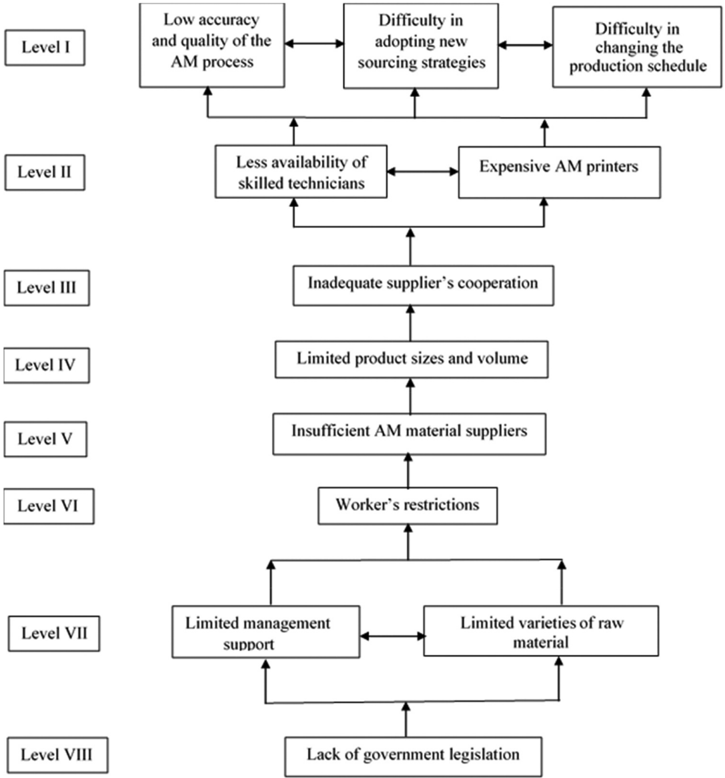
“…from experts; Uffhausen 2020 7 Inadequate supplier’s cooperation Suggestion from experts; ThomasSeale et al. 2018 8 Lack of government legislation Rogers, Baricz, and Pawar 2016; Widmer and Rajan 2016; Dwivedi, Srivastava, and Srivastava 2017; Shukla, Todorov, and Kapletia 2018 9 Low accuracy…”
BackgroundTechnology transfer in the supply chain oriented to industry 4.0: a literature review
da Silva, V. L., Kovaleski, J. L., & Pagani, R. N. (2019) · Technology Analysis & Strategic Management · doi:10.1080/09537325.2018.1524135 · Cited by 197 · cited 1×
“A review of the various Industry 4.0 technologies, based on the supply chain perspective, has been carried out by (Da Silva, Kovaleski, and Pagani 2019), and it is primarily focused on the stages of supply, manufacturing, and use by the final consumer.”
MethodInfluentialSindhu, S., Nehra, V., & Luthra, S. (2016) · Renewable and Sustainable Energy Reviews · doi:10.1016/j.rser.2016.04.033 · Cited by 191
Additive Manufacturing Technology: Potential Implications for U.S. Manufacturing CompetitivenessPreprint
Ford, S. L. N. (2014) · SSRN Electronic Journal · Cited by 190
Analysis of barriers to implement additive manufacturing technology in the Indian automotive sector
Dwivedi, G., Srivastava, S. K., & Srivastava, R. K. (2017) · International Journal of Physical Distribution & Logistics Management · doi:10.1108/ijpdlm-07-2017-0222 · Cited by 167 · cited 15×
“…has been conducted on AM’s manufacturing and technological aspects in the automotive industry, as shown by the literature (Ford 2014; Giffi, Gangula, and Illinda 2014; Holmström et al. 2016; Dwivedi, Srivastava, and Srivastava 2017; Shukla, Todorov, and Kapletia 2018; Thomas-Seale et al. 2018).”
BackgroundMethodInfluentialImpact of additive manufacturing on business competitiveness: a multiple case study
Khorram Niaki, M., & Nonino, F. (2017) · Journal of Manufacturing Technology Management · doi:10.1108/jmtm-01-2016-0001 · Cited by 150 · cited 3×
“As the procurement stage requires more auto components, the AM process’s low accuracy and quality (Holmström, Liotta, and Chaudhuri 2017; Niaki and Nonino 2017; Dwivedi, Srivastava, and Srivastava 2017; Shukla, Todorov, and Kapletia 2018) may act as one of the significant barriers for AM adoption…”
BackgroundDelić, M., Eyers, D. R., & Mikulić, J. (2019) · Supply Chain Management An International Journal · doi:10.1108/scm-12-2017-0406 · Cited by 150 · cited 1×
“This research found that the adoption of AM directly influences the performance of the automotive supply chain and the firm, while supply chain integration indirectly assists in performance improvements (Delic, Eyers, and Mikulic 2019).”
BackgroundInternational Journal of Lean Six Sigma
(2023) · International Journal of Lean Six Sigma · doi:10.1108/ijlss · Cited by 137
Verboeket, V., & Krikke, H. R. (2019) · Computers in Industry · doi:10.1016/j.compind.2019.07.003 · Cited by 131 · cited 1×
“Literature reviews were carried out to analyse AM’s impacts on a firm’s supply chain and its design (Varsha Shree et al. 2020; Verboeket and Krikke 2019).”
BackgroundHolmström, J., Liotta, G., & Chaudhuri, A. (2017) · Journal of Cleaner Production · doi:10.1016/j.jclepro.2017.03.092 · Cited by 128
Industrie 4.0 - Volkswirtschaftliches Potenzial für Deutschland
Bauer, W., & Horváth, P. (2015) · Controlling · doi:10.15358/0935-0381-2015-8-9-515 · Cited by 93 · cited 1×
“Bitkom, Germany’s digital association, has defined Industry 4.0 by stating ‘Central to Industry 4.0 is the possibility to connect people, machines, objects, and ICT-systems intelligently and in realtime to manage complex systems dynamically’ (Bauer and Horvath 2015).”
BackgroundInfluentialShukla, M., Todorov, I., & Kapletia, D. (2018) · Production Planning & Control · doi:10.1080/09537287.2018.1474395 · Cited by 89
Mendes, L., & Machado, J. (2014) · International Journal of Production Research · doi:10.1080/00207543.2014.993772 · Cited by 87
Operations, Logistics and Supply Chain Management
Laan, E., Zijm, H., Klumpp, M., Regattieri, A., & Heragu, S. (2018) · Lecture notes in logistics · doi:10.1007/978-3-319-92447-2 · Cited by 85
Improving effectiveness of spare parts supply by additive manufacturing as dual sourcing option
Knofius, N., van der Heijden, M. C., Sleptchenko, A., & Zijm, W. H. M. (2020) · OR Spectrum · doi:10.1007/s00291-020-00608-7 · Cited by 77
Effect of 3D printing on supply chain management
Shree, M. V., Veeman, D., Rajkumar, V., Ram, P. M. B., Vijayakumar, M. D., & Sathish, T. (2019) · Materials Today Proceedings · doi:10.1016/j.matpr.2019.09.060 · Cited by 72 · cited 1×
“Literature reviews were carried out to analyse AM’s impacts on a firm’s supply chain and its design (Varsha Shree et al. 2020; Verboeket and Krikke 2019).”
BackgroundSensing-Driven Energy Purchasing in Smart Grid Cyber-Physical System
Tham, C., & Luo, T. (2013) · IEEE Transactions on Systems Man and Cybernetics Systems · doi:10.1109/tsmca.2012.2224337 · Cited by 70
3-D Printing in the Spare Parts Supply Chain: An Explorative Study in the Automotive Industry
Savastano, M., Amendola, C., D’Ascenzo, F., & Massaroni, E. (2016) · Lecture notes in information systems and organisation · doi:10.1007/978-3-319-40265-9_11 · Cited by 67 · cited 1×
“However, there are fewer attempts to consider AM in context of the automotive supply chain (Savastano et al. 2016; Beiderberk, Deradjat, and Minshall 2018; Zijm, Knofius, and van der Heijden 2019).”
BackgroundEbrahimi, M., Baboli, A., & Rother, E. (2019) · IFAC-PapersOnLine · doi:10.1016/j.ifacol.2019.10.021 · Cited by 61 · cited 1×
“(Ebrahimi, Baboli, and Rother 2019) classified the main characteristics of Industry 4.0 into six design principles: interoperability, real-time capability, decentralisation, virtualisation, modularity, and human aspects; these principles will guide the companies in implementing supply chain…”
BackgroundInfluentialImpacts of Additive Manufacturing on Supply Chain Flow: A Simulation Approach in Healthcare Industry
Özceylan, E., Çetinkaya, C., Demirel, N., & Sabırlıoğlu, O. (2017) · Logistics · doi:10.3390/logistics2010001 · Cited by 57
Zanoni, S., Ashourpour, M., Bacchetti, A., Zanardini, M., & Perona, M. (2019) · The International Journal of Advanced Manufacturing Technology · doi:10.1007/s00170-019-03430-w · Cited by 57 · cited 1×
“Similarly, (Zanoni et al. 2019) conducted three industrial case studies and quantitative analyses, and they found that the integration of AM with the firm’s supply chain resulted in increased market responsiveness and the facilitation of the logistics network.”
BackgroundSustainability in the Aerospace, Naval, and Automotive Supply Chain 4.0: Descriptive Review
Ramírez-Peña, M., Mayuet, P. F., Vázquez, J., & Batista, M. (2020) · Materials · doi:10.3390/ma13245625 · Cited by 53 · cited 1×
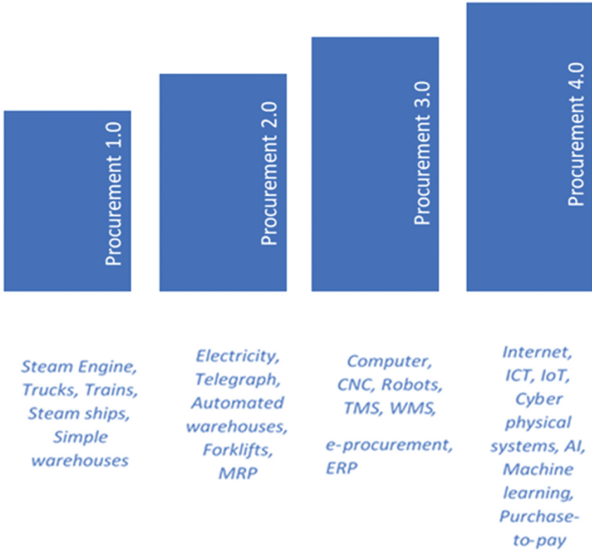
“The Third Industrial Revolution started in 1969, with the evolution of computer and computer-based machines and equipment, such as CNC and robots (Rifkin 2011).”
BackgroundKhan, H. U., Talib, F., & Faisal, M. N. (2015) · Journal of Systems and Information Technology · doi:10.1108/jsit-12-2014-0073 · Cited by 52 · cited 1×
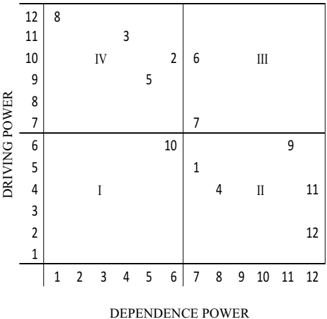
“The third quadrant consists of ‘linkage barriers’, which possess high driving and high dependent powers (Khan, Talib, and Faisal 2015).”
BackgroundTsolakis, N., Bechtsis, D., & Srai, J. S. (2018) · Business Process Management Journal · doi:10.1108/bpmj-11-2017-0330 · Cited by 46 · cited 1×
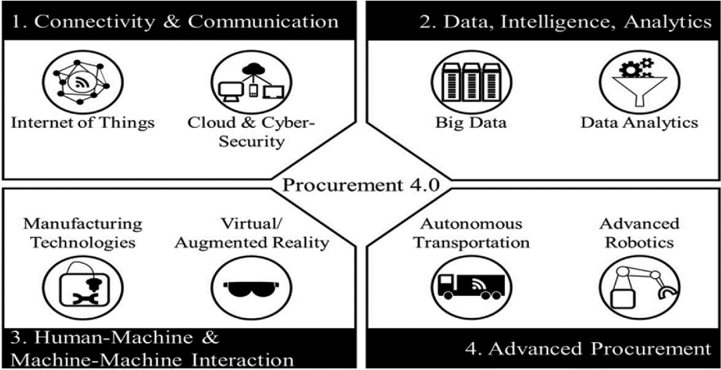
“The Procurement 4.0 version may replace the forklifts with AGVs and robots for the internal transport of products or items in a workstation or warehouse (Tsolakis, Bechtsis, and Srai 2019).”
MethodInfluentialAdditive Manufacturing and Its Impact on the Supply Chain
Zijm, W. H. M., Knofius, N., & van der Heijden, M. (2018) · Lecture notes in logistics · doi:10.1007/978-3-319-92447-2_23 · Cited by 45
Additive Manufacturing Technologies: Technology Introduction and Business Implications
Stucker, B. E. (2011) · Cited by 32
Nicoletti, B. (2020) · doi:10.1007/978-3-030-35979-9 · Cited by 29 · cited 5×
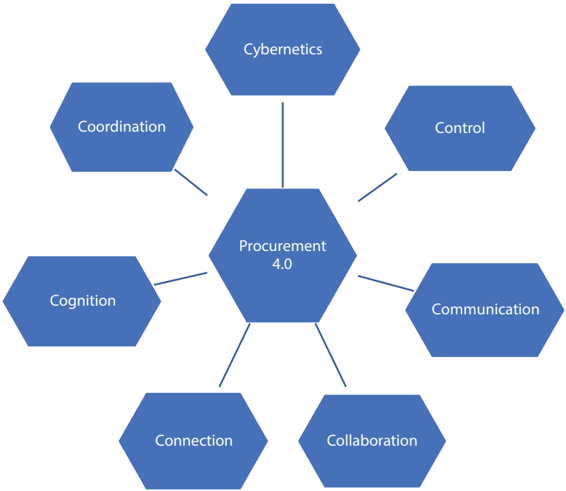
“With smart systems’ help, the demand for an item or material can be recognised by Procurement 4.0 solutions, and subsequently, an order can be generated to meet this requirement (Nicoletti 2020).”
BackgroundMethodInfluentialThe Impact of Additive Manufacturing Technologies on Industrial Spare Parts Strategies
Beiderbeck, D., Deradjat, D., & Minshall, T. (2018) · Apollo (University of Cambridge) · doi:10.17863/cam.21296 · Cited by 23
Sharma, V., Sahay, B. S., & Sardana, G. D. (2008) · Supply Chain Forum an International Journal · doi:10.1080/16258312.2008.11517188 · Cited by 12 · cited 1×
“The ongoing border crisis between India and China has worsened the relations between the two countries and has ultimately created a significant interruption in the supply of auto components to the Indian automotive industry (Sharma, Sahay, and Sardana 2008).”
BackgroundAnalysis of the Automotive Sector’s Inbound Supply Chain
Couzin, T., Dumesnil, F., Imaz, I., Pélicart, I., Wegmann, S., Gannac, S., Hobbs, S., & Estampe, D. (2001) · Supply Chain Forum an International Journal · doi:10.1080/16258312.2001.11517077 · Cited by 8 · cited 1×
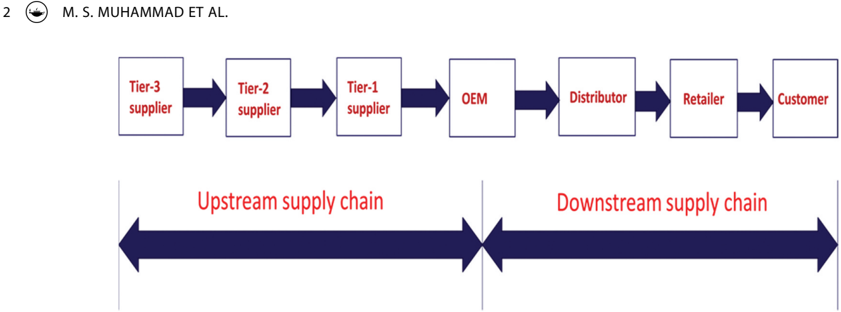
“Due to the complex nature of the automotive upstream supply chain (Couzin et al. 2001), the global automotive industry is more vulnerable to any disruptions caused by natural disasters, geopolitical crises, and infectious diseases, such as SARS and COVID-19.”
BackgroundIdentifying future 3D printing related services: insights from Denmark and Germany
Chaudhuri, A., Rogers, H., Søberg, P. V., Pawar, K. S., & Baricz, N. (2017) · VBN Forskningsportal (Aalborg Universitet) · Cited by 8
Najar, T., & Amami, M. (2012) · Supply Chain Forum an International Journal · doi:10.1080/16258312.2012.11517295 · Cited by 4
To Find the Effectiveness of Barriers in Reverse Logistics by Using ISM
Tiwari, D., Shukla, K. K., & Khan, U. A. (2020) · Lecture notes in mechanical engineering · doi:10.1007/978-981-15-4565-8_8 · Cited by 4
Early Industrialization in England and Wales, 1760–1814
McNabb, D. E. (2016) · Palgrave Macmillan US eBooks · doi:10.1057/9781137503268_4 · Cited by 1
Barbero (2014) · doi:10.1016/j · Cited by 1
Research works printed but not linked: 3
- Giffi, C. A., B. Gangula, and P. Illinda. 2014. 3D Opportunity for the Automotive Industry , 28. Deloitte Univ. Press. available at: https://www2.deloitte.com/content/dam/insights/us/ articles/additive-manufacturing-3d-opportunity-in-auto motive/DUP\_707-3D-Opportunity-Auto-Industry\_ MASTER.pdf
- Nicoletti B, 2014, Inbound Logistics
- Widmer, M., and V. Rajan (2016), '3D Opportunity and Intellectual Property', Deloitte University Press,22 January, available at: http://dupress.com/articles/3d-printingintellectual-property-risks (accessed 27 April 2016).
Cited by
Big data, machine learning, and digital twin assisted additive manufacturing: A review
Jin, L., Zhai, X., Wang, K., Zhang, K., Wu, D., Nazir, A., Jiang, J., & Liao, W.-H. (2024) · Materials & Design · doi:10.1016/j.matdes.2024.113086 · Cited by 208
Kechagias, J., Chaidas, D., Vidakis, N., Salonitis, K., & Vaxevanidis, N. M. (2022) · Materials and Manufacturing Processes · doi:10.1080/10426914.2022.2032144 · Cited by 193
Althabatah, A., Yaqot, M., Menezes, B., & Kerbache, L. (2023) · Logistics · doi:10.3390/logistics7030063 · Cited by 108
“The COVID-19 pandemic highlighted the vulnerabilities of global supply chains, emphasizing the need for innovative solutions [110].”
BackgroundSelf-citationKey Enabling Technologies for Smart Factory in Automotive Industry: Status and Applications
Lee, J., Chua, P. C., Chen, L., Ng, P. H. N., Kim, Y., Wu, Q., Jeon, S., Jung, J., Chang, S., & Moon, S. K. (2023) · International Journal of Precision Engineering and Manufacturing-Smart Technology · doi:10.57062/ijpem-st.2022.0017 · Cited by 80
Priyadarshini, J., Singh, R. K., Mishra, R., & Bag, S. (2022) · Operations Management Research · doi:10.1007/s12063-022-00259-7 · Cited by 77
Metadata
- Authors
- Muhammad, M. S., Kerbache, L., & Elomri, A.
- Affiliations
- Division of Engineering Management and Decision Sciences, College of Science and Engineering, Hamad Bin Khalifa University (Hbku), Education City, Qatar Foundation, Doha, Qatar
- Hamad bin Khalifa University (QA)
- Corresponding author
- Elomri, Adel
- Venue
- Supply Chain Forum: An International Journal
- Publisher
- Informa UK Limited
- Published
- 2021-09-08
- Volume
- 23
- Issue
- 1
- Pages
- 1-19
- ISSN
- 1624-6039 (ISSN-L)
- 1625-8312
- OpenAlex
- W3198369345
- Cited by
- 65
- References
- 58
- Citations by year
- 2026: 6 · 2025: 18 · 2024: 14 · 2023: 17 · 2022: 10
- FWCI
- 9.15
- Type
- journal article
- Language
- en
- Open access
- hybrid
- doi.org
- Licence
- Locations
- Supply Chain Forum an International Journal (publishedVersion, other-oa)
- Figshare (submittedVersion, cc-by-nc-nd)
- Topics
- Social Sciences › Business, Management and Accounting › Strategy and Management › Supply Chain Resilience and Risk Management
- Physical Sciences › Engineering › Industrial and Manufacturing Engineering › Additive Manufacturing and 3D Printing Technologies
- Social Sciences › Business, Management and Accounting › Strategy and Management › Sustainable Supply Chain Management
- Keywords
- additive manufacturing, automotive supply chain, supply chain disruption, supply chain resilience, COVID-19 pandemic, barriers to adoption, Indian automobile industry, upstream supply chain
About these checks
Registry, retraction, Cites and statistics results are computed, not judged, with one exception: a printed reference that no index lists is read once by a model before it counts as a citation error. Claims are extracted by a model and kept only when their quote appears verbatim in the text; each cited source is then checked, with a model’s help, for whether it says what the claim relies on. Those verdicts can be wrong — read the claim’s quote and the cited source before relying on one.
Statistics and arithmetic are recomputed, not judged.
Confidence bands are shown only for fields calibrated on our annotated test set. None is calibrated yet, so no band is shown.
What counts as a claim ›How we measure confidence ›How we check this ›
Are you an author, or do you see a problem with this page? Request a review
Data sources
Bibliographic data: Semantic Scholar, OpenAlex, Crossref.
Contains information from the Semantic Scholar Academic Graph Datasets, made available under the ODC Attribution License (ODC-BY 1.0).
Semantic Scholar’s data is described in: Kinney, R., et al. (2023). The Semantic Scholar Open Data Platform. arXiv:2301.10140.
