

The DOI matches its Crossref record; 50 of the 50 references it cites were found in a registry or an index.
Machine learning prediction of antibody aggregation and viscosity for high concentration formulation development of protein therapeutics
Open accessAbstract
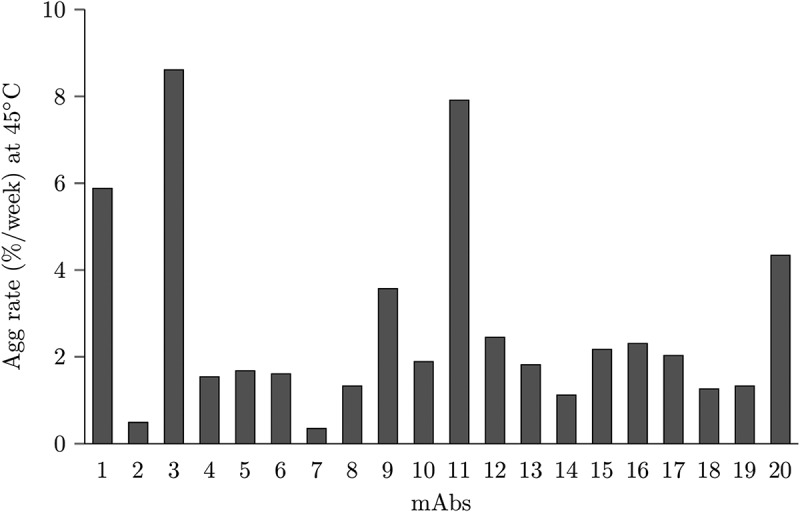
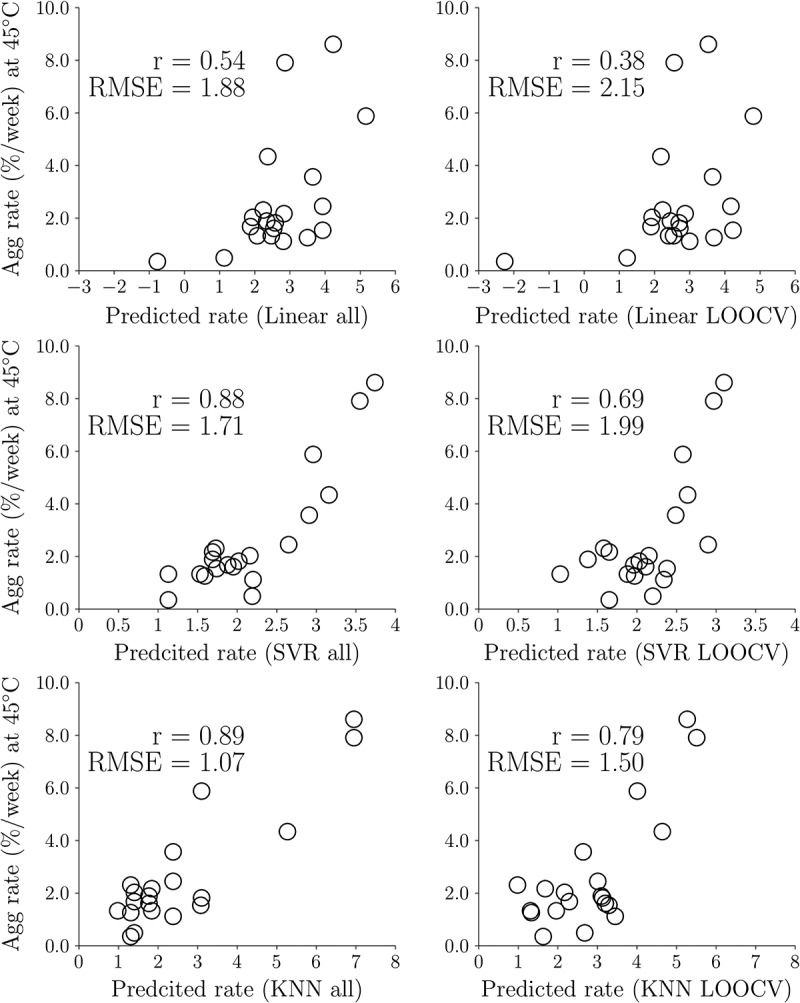
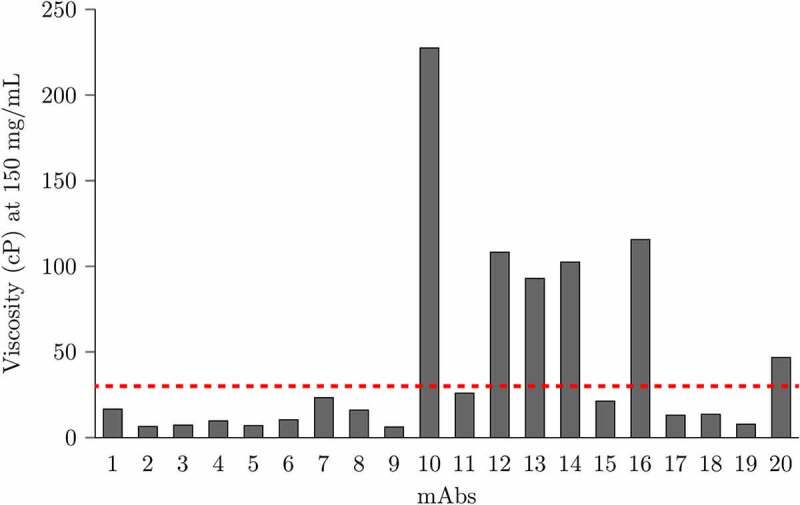
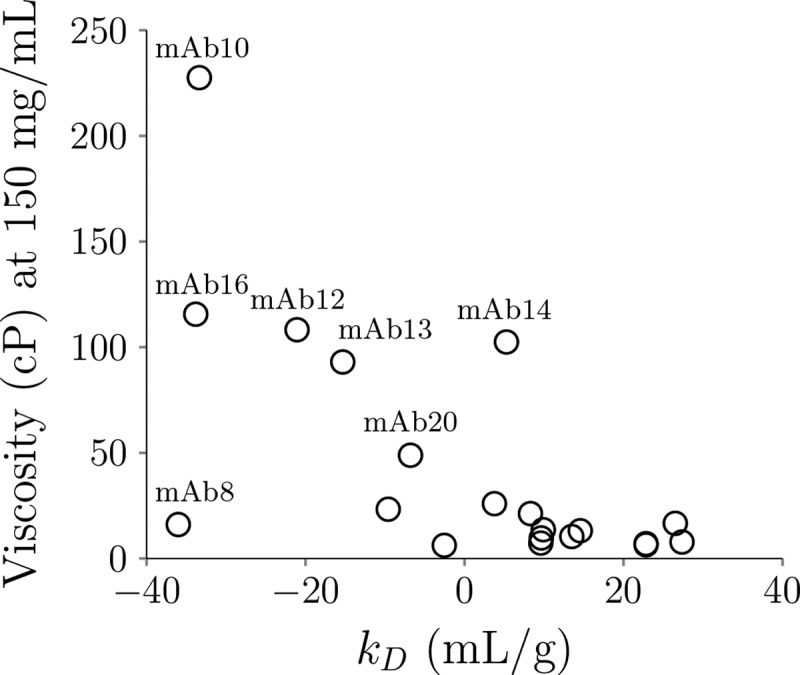
Machine learning has been recently used to predict therapeutic antibody aggregation rates and viscosity at high concentrations (150 mg/ml). These works focused on commercially available antibodies, which may have been optimized for stability. In this study, we measured accelerated aggregation rates at 45°C and viscosity at 150 mg/ml for 20 preclinical and clinical-stage antibodies. Features obtained from molecular dynamics simulations of the full-length antibody and sequences were used for machine learning model construction. We found a k-nearest neighbors regression model with two features, spatial positive charge map on the CDRH2 and solvent-accessible surface area of hydrophobic residues on the variable fragment, gives the best performance for predicting antibody aggregation rates (r = 0.89). For the viscosity classification model, the model with the highest accuracy is a logistic regression model with two features, spatial negative charge map on the heavy chain variable region and spatial negative charge map on the light chain variable region. The accuracy and the area under precision recall curve of the classification model from validation tests are 0.86 and 0.70, respectively. In addition, we combined data from another 27 commercial mAbs to develop a viscosity predictive model. The best model is a logistic regression model with two features, number of hydrophobic residues on the light chain variable region and net charges on the light chain variable region. The accuracy and the area under precision recall curve of the classification model are 0.85 and 0.6, respectively. The aggregation rates and viscosity models can be used to predict antibody stability to facilitate pharmaceutical development.
Overview
The claims and statistics of this paper haven’t been checked yet.
Run the check — free, no account needed. It reads the open-access text and checks the sources it cites.
Integrity signals
Registry
Cites
Statistics
Figures
Verification
Claims the paper makes
The claims and statistics of this paper haven’t been checked yet.
Run the check — free, no account needed. It reads the open-access text and checks the sources it cites.
Claims other papers make about this one
Each is checked against this paper’s own text: does it say what the citing paper says it does?
In the citing paper
“Furthermore, there are some ML models that predict aggregation propensity using antibody sequences or structures [27,28].”
From Computational and artificial intelligence-based methods for antibody development (2023) · cites this paper as [27]
Self-check
Percentages, sums and reported differences re-computed from the paper’s own numbers.
The self-check needs the paper’s full text.
Citations
Cites
Scikit-learn: Machine Learning in Python
Pedregosa, F., Varoquaux, G., Gramfort, A., Michel, V., Thirion, B., Grisel, O., Blondel, M., Müller, A., Nothman, J., Louppe, G., et al. (2012) · arXiv · doi:10.48550/arxiv.1201.0490 · Cited by 71,016
VMD: visual molecular dynamics
Humphrey, W., Dalke, A., & Schulten, K. (1996) · Journal of Molecular Graphics · doi:10.1016/0263-7855(96)00018-5 · Cited by 66,952
Comparison of simple potential functions for simulating liquid water
Jorgensen, W. L., Chandrasekhar, J., Madura, J., Impey, R., & Klein, M. (1983) · The Journal of Chemical Physics · doi:10.1063/1.445869 · Cited by 38,397
A smooth particle mesh Ewald method
Essmann, U., Perera, L., Berkowitz, M., Darden, T., Lee, H.-C., & Pedersen, L. (1995) · The Journal of Chemical Physics · doi:10.1063/1.470117 · Cited by 21,378
Scalable molecular dynamics with NAMD
Phillips, J. C., Braun, R., Wang, W., Gumbart, J., Tajkhorshid, E., Villa, E., Chipot, C., Skeel, R. D., Kalé, L., & Schulten, K. (2005) · Journal of Computational Chemistry · doi:10.1002/jcc.20289 · Cited by 16,914
CHARMM36m: an improved force field for folded and intrinsically disordered proteins
Huang, J., Rauscher, S., Nawrocki, G., Ran, T., Feig, M., de Groot, B. L., Grubmüller, H., & MacKerell, A. D. (2016) · Nature Methods · doi:10.1038/nmeth.4067 · Cited by 7,334
PROPKA3: Consistent Treatment of Internal and Surface Residues in Empirical p K a Predictions
Olsson, M. H. M., Søndergaard, C. R., Rostkowski, M., & Jensen, J. H. (2011) · Journal of Chemical Theory and Computation · doi:10.1021/ct100578z · Cited by 4,425
Update of the CHARMM all-atom additive force field for lipids: Validation on six lipid types
Klauda, J. B., Venable, R., Freites, J. A., O'Connor, J. W., Tobias, D., Mondragon-Ramirez, C., Vorobyov, I., MacKerell, A. D., & Pastor, R. (2010) · Journal of Physical Chemistry B · doi:10.1021/jp101759q · Cited by 4,369
Protein aggregation and its inhibition in biopharmaceutics
Wang, W. (2005) · International Journal of Pharmaceutics · doi:10.1016/j.ijpharm.2004.11.014 · Cited by 1,023
Anatomy of the antibody molecule
PADLAN, E. A. (1994) · Molecular Immunology · doi:10.1016/0161-5890(94)90001-9 · Cited by 915
Cited by
Sorted by citations
Computational and artificial intelligence-based methods for antibody development
Kim, J., McFee, M., Fang, Q., Abdin, O., & Kim, P. M. (2023) · Trends in Pharmacological Sciences · doi:10.1016/j.tips.2022.12.005 · Cited by 178
High concentration formulation developability approaches and considerations
Zarzar, J., Khan, T. A., Bhagawati, M., Weiche, B., Sydow-Andersen, J., & Sreedhara, A. (2023) · mAbs · doi:10.1080/19420862.2023.2211185 · Cited by 94
Khuat, T. T., Bassett, R., Otte, E. A., Grevis-James, A., & Gabryś, B. (2024) · Computers & Chemical Engineering · doi:10.1016/j.compchemeng.2024.108585 · Cited by 102
Blueprint for antibody biologics developability
Mieczkowski, C., Zhang, X., Lee, D., Nguyen, K., Lv, W., Wang, Y., Zhang, Y., Way, J., & Gries, J. (2023) · mAbs · doi:10.1080/19420862.2023.2185924 · Cited by 65
Puranik, A., Dandekar, P. P., & Jain, R. D. (2022) · Biotechnology Progress · doi:10.1002/btpr.3291 · Cited by 63
Bai, G., Sun, C., Guo, Z., Wang, Y., Zeng, X., Su, Y., Zhao, Q., & Ma, B. (2023) · Seminars in Cancer Biology · doi:10.1016/j.semcancer.2023.06.005 · Cited by 57
Dewaker, V., Morya, V. K., Kim, Y. H., Park, S. T., Kim, H. S., & Koh, Y. H. (2025) · Biomarker Research · doi:10.1186/s40364-025-00764-4 · Cited by 62
Accelerating therapeutic protein design with computational approaches toward the clinical stage
Chen, Z., Wang, X., Chen, X., Huang, J., Wang, C., Wang, J., & Wang, Z. (2023) · Computational and Structural Biotechnology Journal · doi:10.1016/j.csbj.2023.04.027 · Cited by 49
Makowski, E. K., Wang, T., Zupancic, J. M., Huang, J., Wu, L., Schardt, J. S., Groot, A. S. D., Elkins, S. L., Martin, W. D., & Tessier, P. M. (2023) · Nature Biomedical Engineering · doi:10.1038/s41551-023-01074-6 · Cited by 55
Artificial intelligence and machine learning guided optimization in drug delivery
Ros, H., Chan, N., Cook, M. T., & Shorthouse, D. (2026) · Advanced Drug Delivery Reviews · doi:10.1016/j.addr.2026.115781 · Cited by 52
Understanding and controlling the molecular mechanisms of protein aggregation in mAb therapeutics
Pang, K. T., Yang, Y., Zhang, W., Ho, Y. S., Sormanni, P., Michaels, T. C. T., Walsh, I., & Chia, S. (2023) · Biotechnology Advances · doi:10.1016/j.biotechadv.2023.108192 · Cited by 42
Stability of Protein Pharmaceuticals: Recent Advances
Manning, M. C., Holcomb, R. E., Payne, R. W., Stillahn, J. M., Connolly, B. D., Katayama, D. S., Liu, H., Matsuura, J. E., Murphy, B. M., Henry, C. S., et al. (2024) · Pharmaceutical Research · doi:10.1007/s11095-024-03726-x · Cited by 45
Lai, P. (2022) · Computational and Structural Biotechnology Journal · doi:10.1016/j.csbj.2022.04.035 · Cited by 39
Reduction of monoclonal antibody viscosity using interpretable machine learning
Makowski, E. K., Chen, H.-T., Wang, T., Wu, L., Huang, J., Mock, M. L., Underhill, P. T., Pelegri-O’Day, E. M., Maglalang, E., Winters, D., et al. (2024) · mAbs · doi:10.1080/19420862.2024.2303781 · Cited by 37
Park, E., & Izadi, S. (2024) · mAbs · doi:10.1080/19420862.2024.2362788 · Cited by 32
The Application of Machine Learning on Antibody Discovery and Optimization
Zheng, J., Wang, Y., Liang, Q., Cui, L., & Wang, L. (2024) · Molecules · doi:10.3390/molecules29245923 · Cited by 34
Mock, M. L., Jacobitz, A. W., LANGMEAD, C. J., Sudom, A. M., Yoo, D., Humphreys, S. C., Alday, M., Alekseychyk, L., Angell, N., Bi, V., et al. (2023) · mAbs · doi:10.1080/19420862.2023.2256745 · Cited by 29
Biophysical Determinants for the Viscosity of Concentrated Monoclonal Antibody Solutions
Mosca, I., Pounot, K., Beck, C., Colin, L., Matsarskaia, O., Grapentin, C., Seydel, T., & Schreiber, F. (2023) · Molecular Pharmaceutics · doi:10.1021/acs.molpharmaceut.3c00440 · Cited by 27
DeepSP: Deep learning-based spatial properties to predict monoclonal antibody stability
Kalejaye, L. A., Wu, I.-E., Terry, T., & Lai, P. (2024) · Computational and Structural Biotechnology Journal · doi:10.1016/j.csbj.2024.05.029 · Cited by 26
Schmitt, J., Razvi, A., & Grapentin, C. (2023) · mAbs · doi:10.1080/19420862.2023.2169440 · Cited by 26
How can we discover developable antibody-based biotherapeutics?
Bauer, J., Rajagopal, N., Gupta, P., Gupta, P. K., Nixon, A. E., & Kumar, S. (2023) · Frontiers in Molecular Biosciences · doi:10.3389/fmolb.2023.1221626 · Cited by 28
Harnessing computational technologies to facilitate antibody–drug conjugate development
Croitoru, A., Orr, A. A., & MacKerell, A. D. (2025) · Nature Chemical Biology · doi:10.1038/s41589-025-01950-z · Cited by 22
Recent advances in generative biology for biotherapeutic discovery
Mock, M. L., LANGMEAD, C. J., Grandsard, P. J., Edavettal, S. C., & Russell, A. J. (2024) · Trends in Pharmacological Sciences · doi:10.1016/j.tips.2024.01.003 · Cited by 20
Wu, I.-E., Kalejaye, L. A., & Lai, P. (2024) · Molecular Pharmaceutics · doi:10.1021/acs.molpharmaceut.4c00804 · Cited by 20
Li, B., Luo, S., Wang, W., Xu, J., Liu, D., Shameem, M., Mattila, J., Franklin, M. C., Hawkins, P. G., & Atwal, G. S. (2025) · mAbs · doi:10.1080/19420862.2025.2474521 · Cited by 20
Frank, M., Ni, P., Jensen, M., & Gerstein, M. (2024) · Proceedings of the National Academy of Sciences · doi:10.1073/pnas.2320510121 · Cited by 19
Vitharana, S., Stillahn, J. M., Katayama, D. S., Henry, C. S., & Manning, M. C. (2023) · Journal of Pharmaceutical Sciences · doi:10.1016/j.xphs.2023.08.003 · Cited by 18
Innovations and trends in antibody repertoire analysis
Townsend, D. R., Towers, D. M., Lavinder, J. J., & Ippolito, G. C. (2024) · Current Opinion in Biotechnology · doi:10.1016/j.copbio.2024.103082 · Cited by 17
Armstrong, G. B., Shah, V., Sanches, P., Patel, M. K., Casey, R., Jamieson, C. J., Burley, G. A., Lewis, W., & Rattray, Z. (2024) · Computational and Structural Biotechnology Journal · doi:10.1016/j.csbj.2024.05.041 · Cited by 15
Skomski, D., Ji, A. J., Kuzman, D., Clénet, D., Hieb, A. R., Roberts, S. W., Berry, J., Lentes, C., Weusten, J. J. A. M., MacArthur, K., et al. (2025) · Journal of Pharmaceutical Sciences · doi:10.1016/j.xphs.2025.103873 · Cited by 14
ProtT5 and random forests-based viscosity prediction method for therapeutic mAbs
Hao, X., & Fan, L. (2024) · European Journal of Pharmaceutical Sciences · doi:10.1016/j.ejps.2024.106705 · Cited by 13
DOTAD: A Database of Therapeutic Antibody Developability
Li, W., Lin, H., Huang, Z., Xie, S., Zhou, Y., Gong, R., Jiang, Q., Xiang, C., & Huang, J. H. (2024) · Interdisciplinary Sciences Computational Life Sciences · doi:10.1007/s12539-024-00613-2 · Cited by 12
Leveraging multi-modal feature learning for predictions of antibody viscosity
Anapindi, K. D. B., Liu, K., Wang, W., Yao, Y. Q., He, Y., Hsieh, E. J., Huang, Y., & Tomazela, D. M. (2025) · mAbs · doi:10.1080/19420862.2025.2490788 · Cited by 11
Wang, Y., Williams, H. D., Dikicioǧlu, D., & Dalby, P. A. (2024) · Molecular Pharmaceutics · doi:10.1021/acs.molpharmaceut.4c00859 · Cited by 9
Armstrong, G. B., Roche, A., Lewis, W., & Rattray, Z. (2024) · mAbs · doi:10.1080/19420862.2024.2438172 · Cited by 9
Prediction of aggregation in monoclonal antibodies from molecular surface curvature
Knez, B., Erzin, L., Kos, Ž., Kuzman, D., & Ravnik, M. (2025) · Scientific Reports · doi:10.1038/s41598-025-13527-w · Cited by 10
Rathore, A. S., Metya, S., Sharma, R., & Nitika, N. (2026) · Advanced Drug Delivery Reviews · doi:10.1016/j.addr.2026.115812 · Cited by 11
Cheung, A., Liu, Y., Chenoweth, A. M., Montaseri, H., Esapa, B., Chudasama, V., Baker, J. R., Thurston, D. E., & Karagiannis, S. N. (2026) · Physiological Reviews · doi:10.1152/physrev.00039.2025 · Cited by 12
Forder, J. K., Ilott, A. J., Şahin, E., & Roberts, C. J. (2022) · AIChE Journal · doi:10.1002/aic.17965 · Cited by 9
Protein stability and viscosity in molecularly crowded high-concentration biologics
Zheng, Z., Renawala, H., Wuelfing, W. P., Buist, N., Raheem, I. T., Cote, A. S., Givand, J. C., Gabelli, S. B., Burlage, R., Templeton, A. C., et al. (2026) · Advanced Drug Delivery Reviews · doi:10.1016/j.addr.2026.115854 · Cited by 9
Gao, K., Lian, H.-X., Xue, C.-F., Zhou, J., & Yan, X.-M. (2022) · Analytical Chemistry · doi:10.1021/acs.analchem.2c04382 · Cited by 7
Sequence-Based Viscosity Prediction for Rapid Antibody Engineering
Estes, B., Jain, M., Jia, L., Whoriskey, J. S., Bennett, B. D., & Hsu, H. (2024) · Biomolecules · doi:10.3390/biom14060617 · Cited by 7
Artificial intelligence in therapeutic antibody design: Advances and future prospects
Park, S., Jeong, W., Kim, Y., Lee, C., & Seok, C. (2025) · Current Opinion in Structural Biology · doi:10.1016/j.sbi.2025.103084 · Cited by 7
Türkdoğan, A., Alloush, T., & Demiralp, B. (2026) · Scientia Pharmaceutica · doi:10.3390/scipharm94020038 · Cited by 10
Yang, D., & Walker, L. M. (2022) · Journal of Pharmaceutical Sciences · doi:10.1016/j.xphs.2022.12.011 · Cited by 7
Electrostatics and viscosity are strongly linked in concentrated antibody solutions
Camerin, F., Polimeni, M., Stradner, A., Zaccarelli, E., & Schurtenberger, P. (2025) · Proceedings of the National Academy of Sciences · doi:10.1073/pnas.2425974122 · Cited by 6
Armstrong, G. B., Lewis, A., Shah, V., Taylor, P., Jamieson, C., Burley, G. A., Lewis, W., & Rattray, Z. (2024) · ACS Pharmacology & Translational Science · doi:10.1021/acsptsci.4c00271 · Cited by 7
Lefevre, T. J., Caldwell, J. G., Gallegos, A. S., Du, Q., Houston, E., Kaplan, G., & Esfandiary, R. (2025) · mAbs · doi:10.1080/19420862.2025.2543771 · Cited by 5
Molecular Modeling and machine learning for predicting high-concentration antibody viscosity
Baizhigitova, D., Wu, I.-E., Kalejaye, L. A., & Lai, P. (2026) · Advanced Drug Delivery Reviews · doi:10.1016/j.addr.2026.115839 · Cited by 5
Deep learning framework for peak detection at the intact level of therapeutic proteins
Nikita, S., Bhattacharya, S., Manocha, K., & Rathore, A. S. (2024) · Journal of Separation Science · doi:10.1002/jssc.202400051 · Cited by 5
Chattaraj, K. G., Ferreira, J., Myerson, A. S., & Trout, B. L. (2025) · Molecular Systems Design & Engineering · doi:10.1039/d4me00187g · Cited by 5
Sequential Sampling Methods for Finding Classification Boundaries in Engineering Applications
Bhat, M., & Kitchin, J. R. (2023) · Industrial & Engineering Chemistry Research · doi:10.1021/acs.iecr.3c02362 · Cited by 5
Harrison, M. C., & Lai, P. (2024) · Molecular Pharmaceutics · doi:10.1021/acs.molpharmaceut.4c00879 · Cited by 5
Ponduri, T. K., Guntupalli, C., Jeganathan, B., & Malothu, N. (2026) · ACS Chemical Neuroscience · doi:10.1021/acschemneuro.5c00718 · Cited by 4
Wang, X., Liu, Z., Lin, X., Hong, Y., Shen, L., & Zhao, L. (2025) · Journal of Industrial Information Integration · doi:10.1016/j.jii.2025.100796 · Cited by 4
Metcalf, K. J., Wo, G., Zaragoza, J. P. T., Raoufi, F., Baker, J., Chen, D., Derebe, M. G., Hogan, J. M., Hsu, A. H.-M., Kofman, E., et al. (2025) · mAbs · doi:10.1080/19420862.2025.2502127 · Cited by 4
Computational Modelling for Formulation Design
Ponduri, T. K., Budha, R. R., Paliwal, D., Siripurapu, K., Alavala, R. R., & Rao, G. K. (2025) · Springer eBooks · doi:10.1007/978-981-96-4154-3_2 · Cited by 4
Armstrong, G. B., Shah, V., Sanches, P., Patel, M. K., Casey, R., Jamieson, C. J., Burley, G. A., Lewis, W. J., & Rattray, Z. (2024) · bioRxiv (Cold Spring Harbor Laboratory) · doi:10.1101/2024.03.07.583917 · Cited by 4
Molecular Modeling Methods in the Development of Affine and Specific Protein-Binding Agents
Nasaev, S. S., Mukanov, A. R., Mishkorez, I. V., Kuznetsov, I. I., Leibin, I. V., Dolgusheva, V. A., Pavlyuk, G. A., Manasyan, A. L., & Veselovsky, A. V. (2024) · Biochemistry (Moscow) · doi:10.1134/s0006297924080066 · Cited by 3
Biophysical Analysis of Therapeutic Antibodies in the Early Development Pipeline
Willis, L. F., Kapur, N., Radford, S. E., & Brockwell, D. J. (2024) · Biologics · doi:10.2147/btt.s486345 · Cited by 6
Heisler, J. C., Hofmann, J. L., Tan, Z., Zarzar, J., Izadi, S., & Carter, P. J. (2026) · Proceedings of the National Academy of Sciences · doi:10.1073/pnas.2526550123 · Cited by 3
Reinau, M. E., & Åsberg, D. (2024) · Journal of Chromatography A · doi:10.1016/j.chroma.2024.464652 · Cited by 3
Hyperbox Mixture Regression for process performance prediction in antibody production
Nik-Khorasani, A., Khuat, T. T., & Gabryś, B. (2025) · Digital Chemical Engineering · doi:10.1016/j.dche.2025.100221 · Cited by 3
Automation and Active Learning for the Multi‐Objective Optimization of Antibody Formulations
Radford, D. C., Tamasi, M., Mare, E. D., & Gormley, A. J. (2026) · Advanced Science · doi:10.1002/advs.76551 · Cited by 2
Forder, J. K., Şahin, E., & Roberts, C. J. (2025) · Molecular Pharmaceutics · doi:10.1021/acs.molpharmaceut.5c01398 · Cited by 2
Arsiccio, A., Mutschler, H., Pedro, A. S., Pabstmann, T., Helbig, C., Brandstetter, D., Cerasoli, E., Hawe, A., & Menzen, T. (2026) · Journal of Pharmaceutical Sciences · doi:10.1016/j.xphs.2026.104196 · Cited by 2
Structure-based calculation of excipient effects on the viscosity of concentrated antibody solutions
Shelley, J. C., Chai, Q., Wu, L., Vafaei, S., Shelley, M. Y., Feyfant, E., Feng, J., Woldeyes, M. A., Babin, V., & Jou, J. (2026) · mAbs · doi:10.1080/19420862.2026.2645310 · Cited by 2
Golzarijalal, M., Aickelin, U., & Otte, E. A. (2026) · Biotechnology and Bioengineering · doi:10.1002/bit.70213 · Cited by 2
Varol, T. Ö., & Varol, M. (2026) · Cancer Medicine · doi:10.1002/cam4.72193 · Cited by 2
Herrán, M., & Anaya, J. (2025) · Current Opinion in Immunology · doi:10.1016/j.coi.2025.102606 · Cited by 2
Hybrid Mass Spectrometry Applied across the Production of Antibody Biotherapeutics
Christofi, E., O’Hanlon, M., Curtis, R., Barman, A., Keen, J. N., Nagy, T., & Barran, P. E. (2024) · Journal of the American Society for Mass Spectrometry · doi:10.1021/jasms.4c00253 · Cited by 2
AI Models for Biopharmaceutical Property Prediction
Yingngam, B. (2024) · doi:10.1002/9781394234196.ch13 · Cited by 2
A Review on the Use of Machine Learning for Pharmaceutical Formulations
Pestana, H., Bonacin, R., Rosa, F. D. F., & Dametto, M. (2024) · Advances in intelligent systems and computing · doi:10.1007/978-3-031-56599-1_44 · Cited by 1
Cohrs, M., Koak, S., Lee, Y., Sung, Y. J., Neve, W. D., Svilenov, H. L., & Özbulak, U. (2025) · Lecture notes in computer science · doi:10.1007/978-3-031-77786-8_9 · Cited by 1
Panjwani, S., Wei, H., & Mason, J. (2025) · Biotechnology Progress · doi:10.1002/btpr.70089 · Cited by 3
Physics-based surface patch analysis for prediction of hydrophobic contribution to viscosity of mAbs
Knez, B., Ravnik, M., & Zidar, M. (2026) · mAbs · doi:10.1080/19420862.2026.2614767 · Cited by 1
From molecule to absorption: a multiscale framework for subcutaneous biologic delivery
de Lucio, M., Sree, V. D., Shi, G. H., Collins, D. S., Veilleux, J.-C., Gomez, H., & Vlachos, P. P. (2026) · Advanced Drug Delivery Reviews · doi:10.1016/j.addr.2026.115857 · Cited by 2
Guo, J., Xi, L., & Gao, H. (2026) · Journal of Manufacturing Systems · doi:10.1016/j.jmsy.2026.04.014 · Cited by 1
Tam, Y. T. (2026) · AAPS Open · doi:10.1186/s41120-026-00160-8 · Cited by 1
Ma, J. (2026) · European Journal of Pharmaceutics and Biopharmaceutics · doi:10.1016/j.ejpb.2026.115178 · Cited by 1
Kubra, K., & Shaik, M. A. (2026) · mAbs · doi:10.1080/19420862.2026.2706886 · Cited by 1
Gaikwad, A. S., & B.Pawar, S. (2026) · Discover Artificial Intelligence · doi:10.1007/s44163-026-01927-4 · Cited by 2
Armstrong, G. B., Lewis, A., Shah, V., Taylor, P., Jamieson, C. J., Burley, G. A., Lewis, W., & Rattray, Z. (2024) · bioRxiv (Cold Spring Harbor Laboratory) · doi:10.1101/2024.04.29.591602 · Cited by 1
Chiang, V. S., Lipkin, S., McCusker, C., & Park, J. (2022) · bioRxiv (Cold Spring Harbor Laboratory) · doi:10.1101/2022.12.08.519640
“IgG’s: contending with aggregating circumstances”
Toran, P. T., Arvidson, L., Vachon, A., & Wojchowski, D. M. (2024) · International Journal of Molecular Biology Open Access · doi:10.15406/ijmboa.2024.07.00163
DoggifAI: A transformer based approach for antibody caninisation
Grabarczyk, D., Kocikowski, M., Parys, M., Houston, D. R., Hupp, T. R., Alfaro, J. A., & Cohen, S. B. (2025) · ImmunoInformatics · doi:10.1016/j.immuno.2025.100064
AI in the discovery and development of antibody therapeutics
Peckner, R., Visweswaraiah, J., & Higginson-Scott, N. (2025) · Elsevier eBooks · doi:10.1016/b978-0-443-29808-0.00034-0
Beyond the magic bullet: Programming delivery systems to overcome the antibody specificity paradox
Ma, Y., Zhou, Y., Xu, C., Gao, P., Gao, H., Luo, L., & Gao, X. (2026) · Journal of Controlled Release · doi:10.1016/j.jconrel.2026.114744
Deng, J., Huang, Q., Lv, J., Yang, Y. L., Ye, Z., Chu, Y., Wu, Y., Zhao, Q., Fang, W., & Ouyang, D. (2026) · International Journal of Pharmaceutics · doi:10.1016/j.ijpharm.2026.126703
Baran, K., & Podgórski, R. (2026) · International Journal of Molecular Sciences · doi:10.3390/ijms27042064
Kim, M., Yang, J., Lee, C., Yoon, J. Y., Oh, D. Y., & Um, J. (2026) · Journal of Korean Institute of Industrial Engineers · doi:10.7232/jkiie.2026.52.1.041
Predicting Agitation Stability of Monoclonal Antibodies during Developability Assessment
Cohrs, M., Pagureva, N., Özbulak, U., Neve, W. D., Braeckmans, K., Smedt, S. C. D., Tcholakova, S. S., Vinarov, Z., & Svilenov, H. L. (2026) · Molecular Pharmaceutics · doi:10.1021/acs.molpharmaceut.6c00092
Advances in Computational Approaches for Biopharmaceutical Formulation
Lai, P. (2025) · Springer handbooks · doi:10.1007/978-3-032-01636-2_4
“Too soon to tell”? The potential of tools like AggrescanAI for novel drug discovery and development
Marino‐Buslje, C., & Ventura, S. (2026) · Expert Opinion on Drug Discovery · doi:10.1080/17460441.2026.2686257
AI-Driven Design Platforms of Next-Generation Antibody Therapeutics
Wang, Y., Saba, A., Ran, Y., Shehzadi, K., Zhang, Q., Jianhua, L., & Yu, M. (2026) · Topics in Current Chemistry · doi:10.1007/s41061-026-00554-y
Fedorko, A., Grynyuk, I., & Urich, J. A. A. (2026) · Therapeutic Innovation & Regulatory Science · doi:10.1007/s43441-026-01023-w
Jiang, Q., Guan, J., Yu, D., Singh, P., Pelekos, G., Lo, E. C. M., & Wang, J. (2026) · Antibody Therapeutics · doi:10.1093/abt/tbag039
Montefusco-Pereira, C. V. (2026) · Entropic and Disordered Matter · doi:10.3390/edm1010003
Schneider, N., Frank, T., Müller, A., & Meier, C. (2025) · International Journal Of Pharmaceutical Research And Allied Sciences · doi:10.51847/zjqeltofid
Quantifying molecular specificity in excipient-driven antibody solubilization
Han, Z., Erkamp, N. A., Scrutton, R. M., Licari, G., Predeina, O., Evers, A., Sormanni, P., & Knowles, T. P. J. (2026) · mAbs · doi:10.1080/19420862.2026.2722444
Metadata
- Authors
- Lai, P.-K., Gallegos, A., Mody, N., Sathish, H. A., & Trout, B. L.
- Affiliations
- Stevens Institute of Technology (US)
- AstraZeneca (United States) (US)
- Massachusetts Institute of Technology (US)
- Corresponding author
- Trout, Bernhardt L.
- Venue
- mAbs
- Publisher
- Informa UK Limited
- Published
- 2022-01-25
- Volume
- 14
- Issue
- 1
- Pages
- 2026208-2026208
- ISSN
- 1942-0862 (ISSN-L)
- 1942-0870
- PMC
- PMC8794240
- OpenAlex
- W4207044828
- Cited by
- 103
- References
- 50
- Citations by year
- 2026: 34 · 2025: 22 · 2024: 28 · 2023: 13 · 2022: 6
- FWCI
- 5.63
- Type
- journal article
- Language
- en
- Open access
- gold
- doi.org
- Licence
- Locations
- mAbs (publishedVersion, cc-by-nc)
- PubMed Central (publishedVersion, cc-by-nc)
- PubMed (publishedVersion)
- DSpace@MIT (Massachusetts Institute of Technology) (submittedVersion, cc-by-nc)
- DOAJ (DOAJ: Directory of Open Access Journals) (submittedVersion, cc-by-sa)
- Funders
- The author(s) reported there is no funding associated with the work featured in this article
- Topics
- Life Sciences › Biochemistry, Genetics and Molecular Biology › Molecular Biology › Protein purification and stability
- Life Sciences › Immunology and Microbiology › Immunology › Monoclonal and Polyclonal Antibodies Research
- Life Sciences › Biochemistry, Genetics and Molecular Biology › Molecular Biology › Protein Structure and Dynamics
- Keywords
- antibody aggregation, viscosity prediction, high-concentration formulations, therapeutic proteins, monoclonal antibodies, k-nearest neighbors regression, logistic regression, hydrophobic residues, solvent accessible surface area, antibody stability, drug formulation development
- MeSH terms
- Machine Learning, Antibodies, Monoclonal, Humans, Viscosity, Molecular Dynamics Simulation, Protein Aggregates
About these checks
Registry, retraction, Cites and statistics results are computed, not judged, with one exception: a printed reference that no index lists is read once by a model before it counts as a citation error. Claims are extracted by a model and kept only when their quote appears verbatim in the text; each cited source is then checked, with a model’s help, for whether it says what the claim relies on. Those verdicts can be wrong — read the claim’s quote and the cited source before relying on one.
Statistics and arithmetic are recomputed, not judged.
Confidence bands are shown only for fields calibrated on our annotated test set. None is calibrated yet, so no band is shown.
What counts as a claim ›How we measure confidence ›How we check this ›
Are you an author, or do you see a problem with this page? Request a review
