

The DOI matches its Crossref record; 70 of the 70 references it cites were found in a registry or an index.
Gut Akkermansia muciniphila ameliorates metabolic dysfunction-associated fatty liver disease by regulating the metabolism of L-aspartate via gut-liver axis
Open accessAbstract
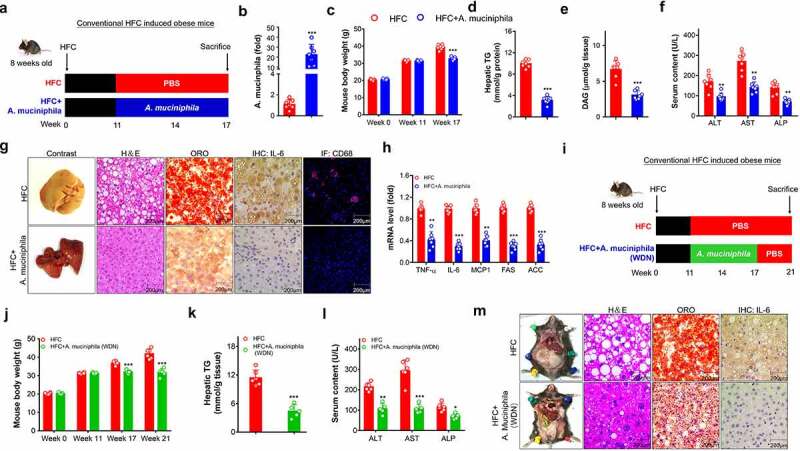
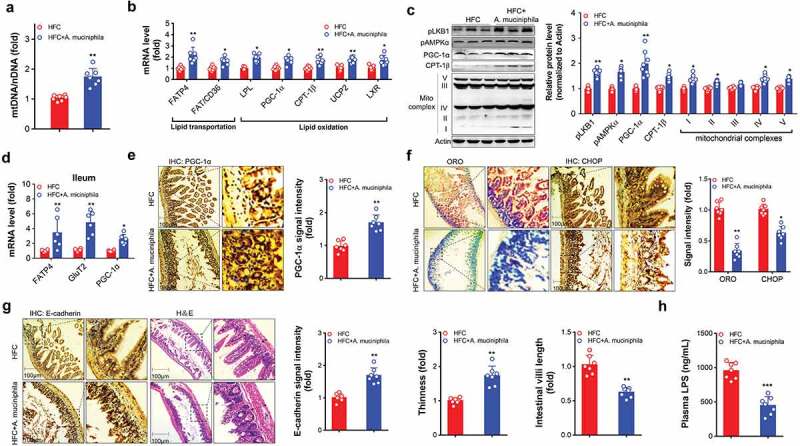
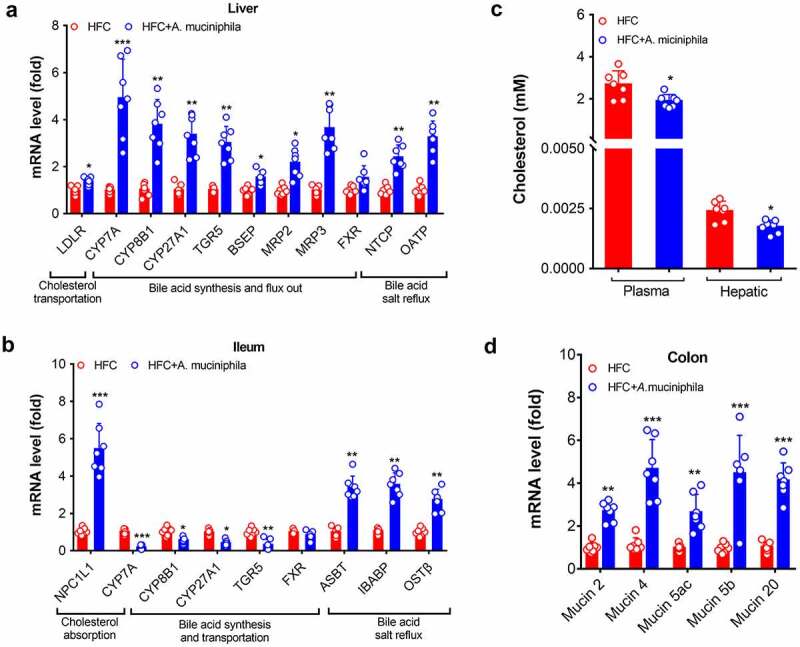
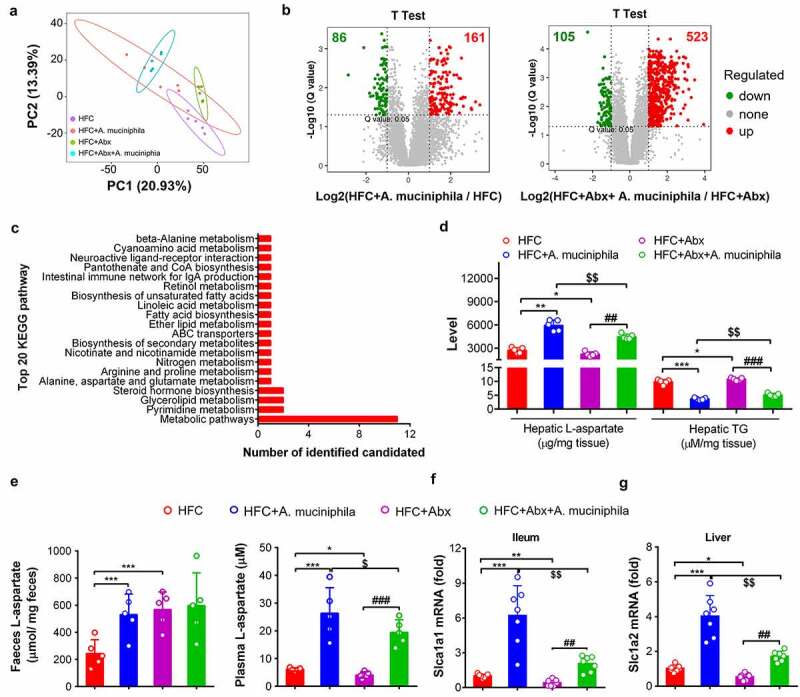
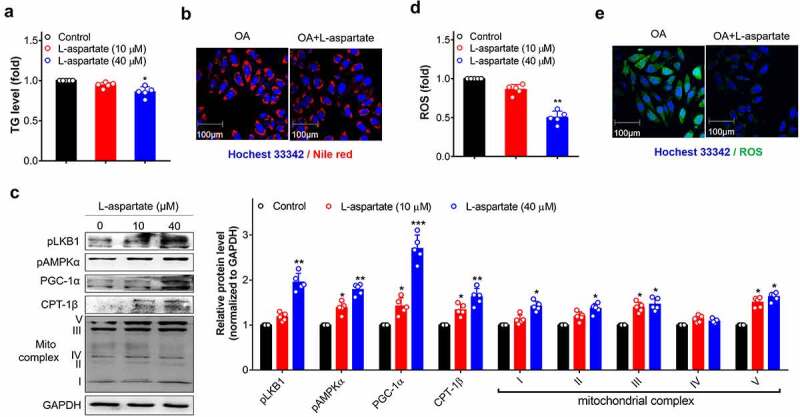
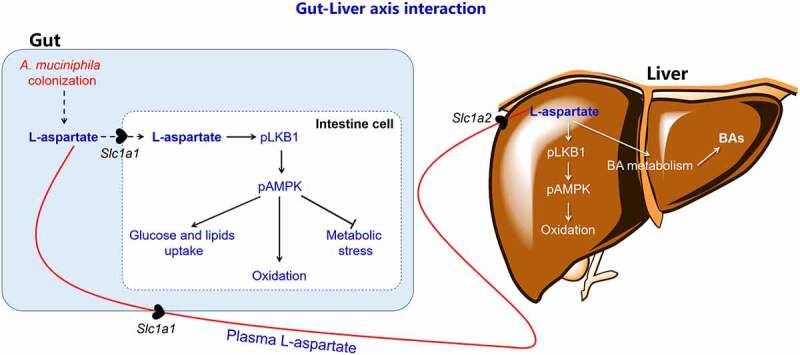
The gut bacterium Akkermansia muciniphila has been increasingly recognized for its therapeutic potential in treating metabolic disorders, including obesity, diabetes, and metabolicdysfunction-associated fatty liver disease (MAFLD). However, its underlying mechanism involved in its well-known metabolic actions needs further evaluation. The present study explored the therapeutic effect and mechanism of A. muciniphila in intervening MAFLD by using a high-fat and high-cholesterol (HFC) diet induced obese mice model. Mice treated with A. muciniphila efficiently reversed MAFLD in the liver, such as hepatic steatosis, inflammatory, and liver injury. These therapeutic effects persisted after long-term drug withdrawal and were slightly weakened in the antibiotics-treated obese mice. A. muciniphila treatment efficiently increased mitochondrial oxidation and bile acid metabolism in the gut-liver axis, ameliorated oxidative stress-induced cell apoptosis in gut, leading to the reshaping of the gut microbiota composition. These metabolic improvements occurred with increased L-aspartate levels in the liver that transported from the gut. The administration of L-aspartate in vitro or in mice displayed the similar beneficial metabolic effects mentioned above and efficiently ameliorated MAFLD. Together, these data indicate that the anti-MAFLD activity of A. muciniphila correlated with lipid oxidation and improved gut–liver interactions through regulating the metabolism of L-aspartate. A. muciniphila could be a potential agent for clinical intervention in MAFLD.
Overview
The claims and statistics of this paper haven’t been checked yet.
Run the check — free, no account needed. It reads the open-access text and checks the sources it cites.
Integrity signals
Registry
Cites
Statistics
Figures
Verification
Claims the paper makes
The claims and statistics of this paper haven’t been checked yet.
Run the check — free, no account needed. It reads the open-access text and checks the sources it cites.
Claims other papers make about this one
Each is checked against this paper’s own text: does it say what the citing paper says it does?
The source backs part of the claim, not all of it — or backs it for a different population, condition or comparison.
In the citing paper
“Recent research found that A. muciniphila increases mitochondrial oxidation and bile acid metabolism in the gut–liver axis, leading to the reshaping of gut microbiota (Rao et al., 2021).”
From Akkermansia muciniphila alleviates high‐fat‐diet ‐related metabolic‐associated fatty liver disease by modulating gut microbiota and bile acids (2023) · cites this paper as Rao et al., 2021
Experimental — accuracy not yet measured
Self-check
Percentages, sums and reported differences re-computed from the paper’s own numbers.
The self-check needs the paper’s full text.
Citations
Cites
Trimmomatic: a flexible trimmer for Illumina sequence data
Bolger, A. M., Lohse, M., & Usadel, B. (2014) · Bioinformatics · doi:10.1093/bioinformatics/btu170 · Cited by 65,548
Cross-talk between Akkermansia muciniphila and intestinal epithelium controls diet-induced obesity
Everard, A., Belzer, C., Geurts, L., Ouwerkerk, J. P., Druart, C., Bindels, L. B., Guiot, Y., Derrien, M., Muccioli, G. G., Delzenne, N. M., et al. (2013) · Proceedings of the National Academy of Sciences · doi:10.1073/pnas.1219451110 · Cited by 4,511
Mechanisms of NAFLD development and therapeutic strategies
Friedman, S. L., Neuschwander-Tetri, B. A., Rinella, M., & Sanyal, A. J. (2018) · Nature Medicine · doi:10.1038/s41591-018-0104-9 · Cited by 4,354
Animal research: Reporting in vivo experiments: The ARRIVE guidelines
Kilkenny, C., Browne, W., Cuthill, I. C., Emerson, M., & Altman, D. G. (2010) · British Journal of Pharmacology · doi:10.1111/j.1476-5381.2010.00872.x · Cited by 3,625
Byrne, C. D., & Targher, G. (2015) · Journal of Hepatology · doi:10.1016/j.jhep.2014.12.012 · Cited by 3,162
Intestinal Crosstalk between Bile Acids and Microbiota and Its Impact on Host Metabolism
Wahlstrom, A. M., Sayin, S. I., Marschall, H., & Bäckhed, F. (2016) · Cell Metabolism · doi:10.1016/j.cmet.2016.05.005 · Cited by 2,969
Depommier, C., Everard, A., Druart, C., Plovier, H., Van Hul, M., Vieira-Silva, S., Falony, G., Raes, J., Maiter, D., Delzenne, N. M., et al. (2019) · Nature Medicine · doi:10.1038/s41591-019-0495-2 · Cited by 2,357
Plovier, H., Everard, A., Druart, C., Depommier, C., Van Hul, M., Geurts, L., Chilloux, J., Ottman, N., Duparc, T., Lichtenstein, L., et al. (2017) · Nature Medicine · doi:10.1038/nm.4236 · Cited by 2,204
The gut-liver axis in liver disease: Pathophysiological basis for therapy
Albillos, A., de Gottardi, A., & Rescigno, M. (2020) · Journal of Hepatology · doi:10.1016/j.jhep.2019.10.003 · Cited by 2,166
Animal Research: Reporting in vivo Experiments—The ARRIVE Guidelines
Kilkenny, C., Browne, W., Cuthill, I. C., Emerson, M., & Altman, D. G. (2011) · Journal of Cerebral Blood Flow & Metabolism · doi:10.1038/jcbfm.2010.220 · Cited by 2,012
Cited by
Sorted by citations
Gut symbionts alleviate MASH through a secondary bile acid biosynthetic pathway
Nie, Q., Luo, X., Wang, K., Ding, Y., Jia, S., Zhao, Q., Li, M., Zhang, J., Zhuo, Y., Lin, J., et al. (2024) · Cell · doi:10.1016/j.cell.2024.03.034 · Cited by 356
Jia, B., Zou, Y., Han, X., Bae, J., & Jeon, C. O. (2022) · Trends in Microbiology · doi:10.1016/j.tim.2022.08.003 · Cited by 220
The Role of Gut–Liver Axis in Gut Microbiome Dysbiosis Associated NAFLD and NAFLD-HCC
Song, Q., & Zhang, X. (2022) · Biomedicines · doi:10.3390/biomedicines10030524 · Cited by 154
Yan, J., Pan, Y., Shao, W., Wang, C., Wang, R., He, Y., Zhang, M., Wang, Y., Li, T., Wang, Z., et al. (2022) · Microbiome · doi:10.1186/s40168-022-01390-0 · Cited by 150
Wu, W., Kaicen, W., Bian, X., Yang, L., Ding, S., Li, Y., Li, S., Zhuge, A., & Li, L. (2023) · Microbial Biotechnology · doi:10.1111/1751-7915.14293 · Cited by 129
Metadata
- Authors
- Rao, Y., Kuang, Z., Li, C., Guo, S., Xu, Y., Zhao, D., Hu, Y., Song, B., Jiang, Z., Ge, Z., Liu, X., Li, C., Chen, S., Ye, J., Huang, Z., & Lu, Y.
- Affiliations
- Sun Yat-sen University (CN)
- Sun Yat-sen University
- RMIT University
- Corresponding author
- Rao, Yong
- Lu, Yongjun
- ORCID
- Venue
- Gut Microbes
- Publisher
- Informa UK Limited
- Published
- 2021-01-01
- Volume
- 13
- Issue
- 1
- Pages
- 1-19
- ISSN
- 1949-0976 (ISSN-L)
- 1949-0984
- PMC
- PMC8158032
- OpenAlex
- W3165210923
- Cited by
- 356
- References
- 70
- Citations by year
- 2026: 65 · 2025: 112 · 2024: 67 · 2023: 51 · 2022: 46 · 2021: 14
- FWCI
- 13.97
- Type
- journal article
- Language
- en
- Open access
- gold
- doi.org
- Licence
- Locations
- Gut Microbes (publishedVersion, cc-by)
- PubMed Central (publishedVersion, cc-by)
- PubMed (publishedVersion)
- RMIT Research Repository (RMIT University Library) (submittedVersion)
- DOAJ (DOAJ: Directory of Open Access Journals) (submittedVersion, cc-by-sa)
- Figshare (submittedVersion)
- Funders
- National Natural Science Foundation of China (81930098 to ZSH, 21672265 and 81872732 to ZSH, 81703336 to YR)
- Science and Technology Program of Guangzhou (201704020104 to ZSH)
- Science and Technology Development in Guangdong Province (2016A020217004 to ZSH)
- Natural Science Foundation of Guangdong Province (2017A030308003 to ZSH)
- Guang Dong Cheung Kong Philanthropy Foundation to YJL
- Fundamental Research Funds for the Central Universities
- Guang Dong Cheung Kong Philanthropy Foundation
- Outstanding Talents of Guangdong Special Plan (2019JC05Y456)
- the Science and Technology Program of Guangzhou (201704020104)
- Special Fund for Science and Technology Development in Guangdong Province (2016A020217004)
- the Natural Science Foundation of Guangdong Province (2017A030308003)
- Guangdong key areas R & D projects (2018B020205002)
- Key projects of National Natural Science Foundation of China (81930098)
- Topics
- Life Sciences › Biochemistry, Genetics and Molecular Biology › Molecular Biology › Gut microbiota and health
- Health Sciences › Medicine › Hepatology › Liver Disease Diagnosis and Treatment
- Health Sciences › Medicine › Endocrinology, Diabetes and Metabolism › Diet, Metabolism, and Disease
- Keywords
- Akkermansia muciniphila, non-alcoholic fatty liver disease, L-aspartic acid, gut-liver axis, bile acid metabolism, hepatic steatosis, oxidative stress, apoptosis, gut microbiota, high-fat high-cholesterol diet, obesity, mitochondrial oxidation, antibiotic-treated mice
- MeSH terms
- Gastrointestinal Microbiome, Akkermansia, Animals, Aspartic Acid, Bacteria, Fatty Liver, Humans, Liver, Male, Mice, Inbred C57BL, Gastrointestinal Tract, Mice, Diet, High-Fat
About these checks
Registry, retraction, Cites and statistics results are computed, not judged, with one exception: a printed reference that no index lists is read once by a model before it counts as a citation error. Claims are extracted by a model and kept only when their quote appears verbatim in the text; each cited source is then checked, with a model’s help, for whether it says what the claim relies on. Those verdicts can be wrong — read the claim’s quote and the cited source before relying on one.
Statistics and arithmetic are recomputed, not judged.
Confidence bands are shown only for fields calibrated on our annotated test set. None is calibrated yet, so no band is shown.
What counts as a claim ›How we measure confidence ›How we check this ›
Are you an author, or do you see a problem with this page? Request a review
