

Bifidobacterium longum mediated tryptophan metabolism to improve atopic dermatitis via the gut-skin axis
Open accessThe DOI matches its Crossref record; 44 of the 44 references it cites were found in a registry or an index.
Abstract
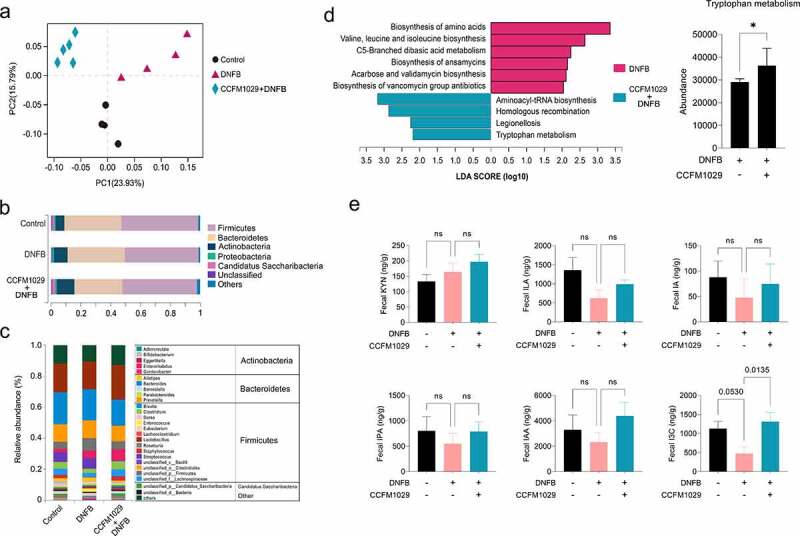
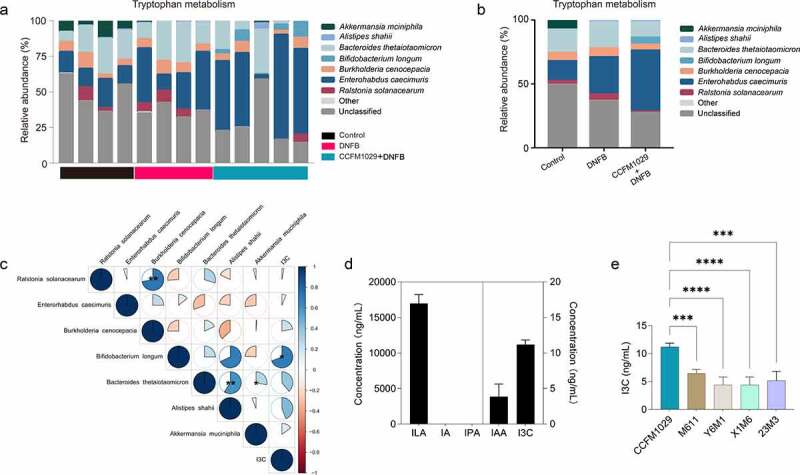
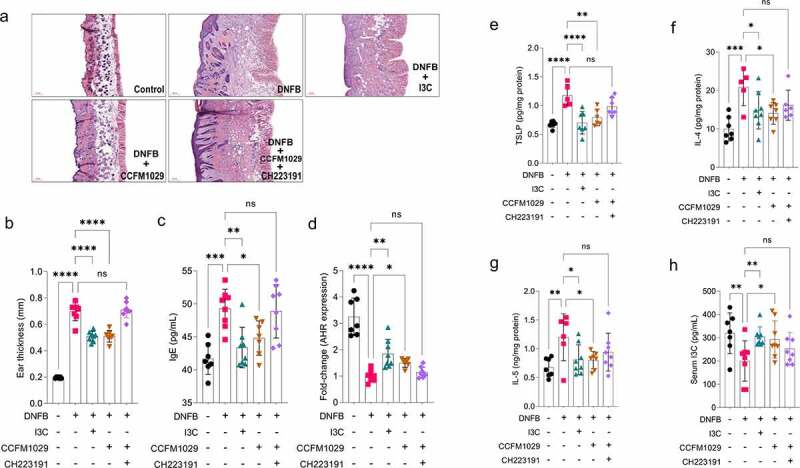
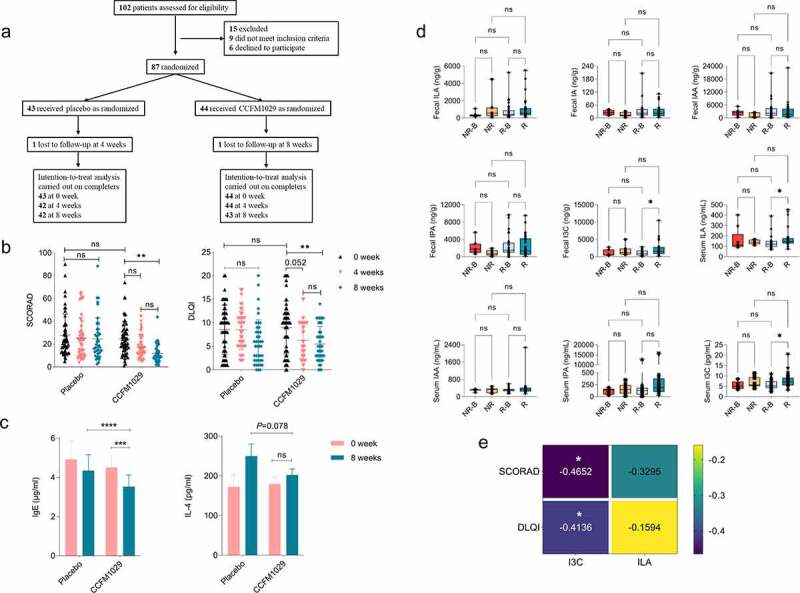
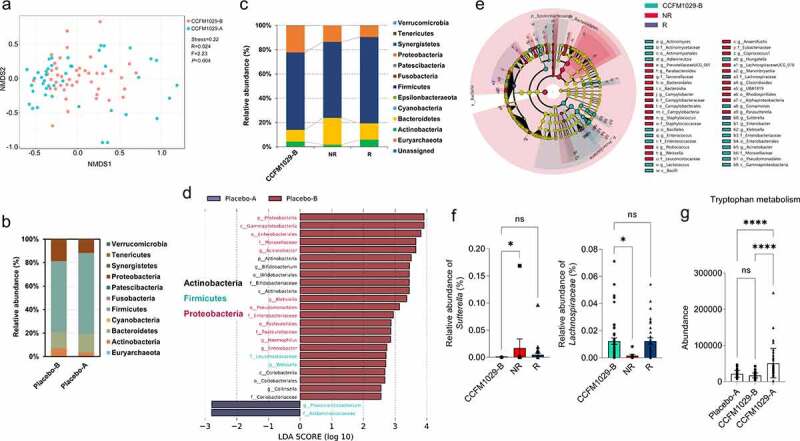
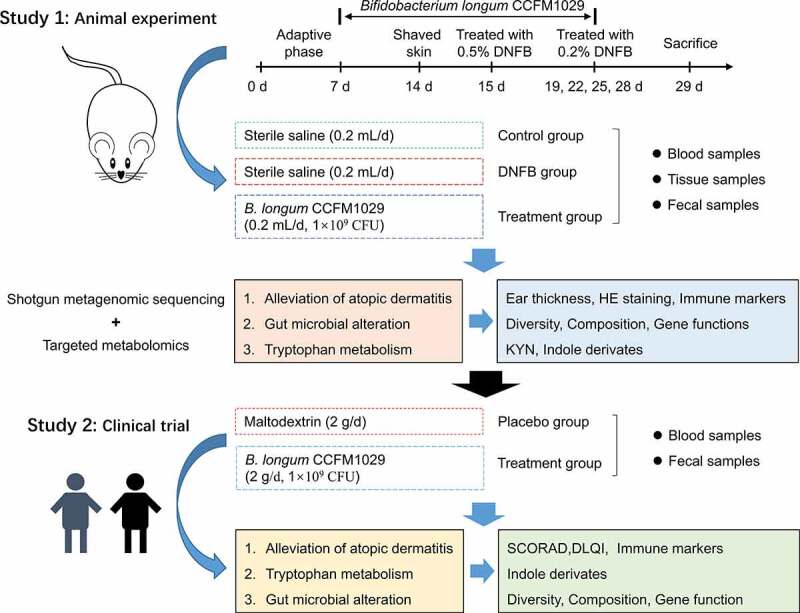
Gut microbial disturbance affects allergic diseases including asthma, atopic dermatitis (AD) via the aberrant immune response. Some Bifidobacterial species and strains have been reported to improve AD via modulating immune-microbe interactions in patients. However, the effective metabolites and mechanism of alleviating AD in bifidobacteria remain to be elucidated. This study aimed to explore the microbial metabolite and mechanism of Bifidobacterium longum to improve AD. Based on shotgun metagenomic sequencing and UHPLC Q-Exactive-MS targeted metabolic experiments in vitro and in vivo, we focused on tryptophan metabolism and indole derivatives, which are endogenous ligands for aryl hydrocarbon receptor (AHR). Indole-3-carbaldehyde (I3C), a tryptophan metabolite of B. longum CCFM1029 activated AHR-mediated immune signaling pathway to improve AD symptoms in animal and clinical experiments. B. longum CCFM1029 upregulated tryptophan metabolism and increased I3C to suppress aberrant T helper 2 type immune responses, but these benefits were eliminated by AHR antagonist CH223191. Furthermore, B. longum CCFM1029 reshaped gut microbial composition in AD patients, increased fecal and serum I3C, and maintained the abundance of Lachnospiraceae related to tryptophan metabolism of gut microbiota. The results suggested that based on the interactions of the gut-skin axis, B. longum CCFM1029 upregulated tryptophan metabolism and produced I3C to activate AHR-mediated immune response, alleviating AD symptoms. Indole derivates, microbial metabolites of tryptophan, may be the potential metabolites of bifidobacteria to alleviate AD via the AHR signaling pathway.
Overview
The claims and statistics of this paper haven’t been checked yet.
Free: it reads the open-access text and checks the first 5 claims that cite a source we can check. Create a free account to check every claim.
Integrity signals
Registry
Cites
Statistics
Figures
Verification
Claims the paper makes
The claims and statistics of this paper haven’t been checked yet.
Free: it reads the open-access text and checks the first 5 claims that cite a source we can check. Create a free account to check every claim.
Claims other papers make about this one
Each is checked against this paper’s own text: does it say what the citing paper says it does?
The source backs part of the claim, not all of it — or backs it for a different population, condition or comparison.
In the citing paper
“Some of the bacteria from these and other genera, such as B. helveticus, B. longum, B. animalis, Bacillus subtilis and Enterococcus faecium, have been reported to produce or promote the synthesis of neurotransmitters in the gut18–24, consequently modulating MGBA pathways and affecting behavior25–29.”
From Exploring the impact of probiotics on adult ADHD management through a double-blind RCT (2024) · cites this paper as [18]
Experimental — accuracy not yet measured
Self-check
Percentages, sums and reported differences re-computed from the paper’s own numbers.
The self-check needs the paper’s full text.
Citations
Cites
Predictive functional profiling of microbial communities using 16S rRNA marker gene sequences
Langille, M. G. I., Zaneveld, J., Caporaso, J. G., McDonald, D., Knights, D., Reyes, J. A., Clemente, J. C., Burkepile, D. E., Vega Thurber, R. L., Knight, R., et al. (2013) · Nature Biotechnology · doi:10.1038/nbt.2676 · Cited by 9,116 · cited 1×
“The functional genes of microbiota were evaluated using the phylogenetic investigation of communities by reconstruction of unobserved states (PICRUSt).(42)”
MethodGut Microbiota Regulation of Tryptophan Metabolism in Health and Disease
Agus, A., Planchais, J., & Sokol, H. (2018) · Cell Host & Microbe · doi:10.1016/j.chom.2018.05.003 · Cited by 3,180 · cited 2×
“AHR signaling plays an important role in immune modulation at barrier sites, such as skin and gut, through the interaction with various immune cells including dendritic cells and innate lymphoid cells.(11) Recent studies have demonstrated that catabolites from microbial tryptophan metabolism alleviate colitis and prot…”
BackgroundAtopic Dermatitis: Global Epidemiology and Risk Factors
Nutten, S. (2015) · Annals of Nutrition and Metabolism · doi:10.1159/000370220 · Cited by 3,055
Zelante, T., Iannitti, R. G., Cunha, C., De Luca, A., Giovannini, G., Pieraccini, G., Zecchi, R., D’Angelo, C., Massi-Benedetti, C., Fallarino, F., et al. (2013) · Immunity · doi:10.1016/j.immuni.2013.08.003 · Cited by 2,614 · cited 2×
“Although the ILA was significantly elevated in the R subgroup compared with that in the R-B subgroup, I3C was much more sensitive to AHR than ILA.13 Based on the correlation analysis, I3C, but not ILA, had a significant negative correlation to SCORAD and DLQI (Figure 4e), and thus I3C might be the effective metabolite…”
ResultSpecies-level functional profiling of metagenomes and metatranscriptomes
Franzosa, E. A., McIver, L. J., Rahnavard, G., Thompson, L. R., Schirmer, M., Weingart, G., Lipson, K. S., Knight, R., Caporaso, J. G., Segata, N., et al. (2018) · Nature Methods · doi:10.1038/s41592-018-0176-y · Cited by 1,693
Tryptophan metabolism as a common therapeutic target in cancer, neurodegeneration and beyond
Platten, M., Nollen, E. A. A., Röhrig, U. F., Fallarino, F., & Opitz, C. A. (2019) · Nature Reviews Drug Discovery · doi:10.1038/s41573-019-0016-5 · Cited by 1,586 · cited 1×
“Tryptophan metabolism is a therapeutic target in diseases such as cancer and neurodegeneration through the kynurenine pathway, 5-hydroxytryptophan pathway, and microbial metabolism pathway.(21,22) Indole and indole derivatives are catabolites from microbial metabolism of tryptophan.”
BackgroundLamas, B., Richard, M. L., Leducq, V., Pham, H.-P., Michel, M.-L., Da Costa, G., Bridonneau, C., Jegou, S., Hoffmann, T. W., Natividad, J. M., et al. (2016) · Nature Medicine · doi:10.1038/nm.4102 · Cited by 1,482
Impact of the Gut Microbiota on Intestinal Immunity Mediated by Tryptophan Metabolism
Gao, J., Xu, K., Liu, H., Liu, G., Bai, M., Peng, C., Li, T., & Yin, Y. (2018) · Frontiers in Cellular and Infection Microbiology · doi:10.3389/fcimb.2018.00013 · Cited by 1,298 · cited 1×
“Tryptophan is one of the essential amino acids and participates in gut immune regulation.(9) Metabolites from the direct metabolism of tryptophan by gut microbiota include indole and its derivatives, such as indole-3-acrylic acid (IA), indole acetic acid (IAA), indole-3-lactic acid (ILA), indole-3-propionic acid (IPA)…”
BackgroundAllergy development and the intestinal microflora during the first year of life
Björkstén, B., Sepp, E., Julge, K., Voor, T., & Mikelsaar, M. (2001) · Journal of Allergy and Clinical Immunology · doi:10.1067/mai.2001.118130 · Cited by 1,203
Microglial control of astrocytes in response to microbial metabolites
Rothhammer, V., Borucki, D. M., Tjon, E. C., Takenaka, M. C., Chao, C.-C., Ardura-Fabregat, A., de Lima, K. A., Gutiérrez-Vázquez, C., Hewson, P., Staszewski, O., et al. (2018) · Nature · doi:10.1038/s41586-018-0119-x · Cited by 1,051 · cited 1×
“Tryptophan metabolism is a therapeutic target in diseases such as cancer and neurodegeneration through the kynurenine pathway, 5-hydroxytryptophan pathway, and microbial metabolism pathway.(21,22) Indole and indole derivatives are catabolites from microbial metabolism of tryptophan.”
Background
Cited by
Bifidobacterium mechanisms of immune modulation and tolerance
Gavzy, S. J., Kensiski, A., Lee, Z. L., Mongodin, E. F., Ma, B., & Bromberg, J. S. (2023) · Gut Microbes · doi:10.1080/19490976.2023.2291164 · Cited by 343
Gut microbiota bridges dietary nutrients and host immunity
Fan, L., Xia, Y., Wang, Y., Han, D., Liu, Y., Li, J., Fu, J., Wang, L., Gan, Z., Liu, B., et al. (2023) · Science China Life Sciences · doi:10.1007/s11427-023-2346-1 · Cited by 189
“For example, B . longum CCFM1029 converts Trp into indole-3-carbaldehyde (I3C) to suppress AhR-mediated aberrant T helper 2 type immune responses, alleviating atopic dermatitis symptoms (Fang et al., 2022).”
BackgroundSelf-citationMolecular mechanisms and therapeutic significance of Tryptophan Metabolism and signaling in cancer
Yan, J., Chen, D., Ye, Z., Zhu, X., Li, X., Jiao, H., Duan, M., Zhang, C., Cheng, J., Xu, L., et al. (2024) · Molecular Cancer · doi:10.1186/s12943-024-02164-y · Cited by 176
“These metabolites serve as key signaling molecules that interact with the aryl hydrocarbon receptor (AHR), which regulates genes crucial for maintaining intestinal barrier integrity, modulating immune cell differentiation, and promoting anti-inflammatory responses [88–91].”
BackgroundXu, L., Zhang, Y., Li, X., Li, C., Hu, H., Hu, J., Liu, M., Yang, Q. Z., Gu, P., Li, J., et al. (2025) · iMeta · doi:10.1002/imt2.270 · Cited by 154
Li, Y., Li, Q., Yuan, R., Wang, Y., Guo, C., & Wang, L. (2024) · Theranostics · doi:10.7150/thno.92350 · Cited by 123
“Recently, the anti-inflammatory properties of Bifidobacterium and its associated metabolites, contributing to immune function and development, have been verified [15, 22].”
BackgroundMa, L., Lyu, W., Song, Y., Chen, K., Lv, L., Yang, H., Wang, W., & Xiao, Y. (2023) · Molecular Nutrition & Food Research · doi:10.1002/mnfr.202200884 · Cited by 135
Microbiota-derived tryptophan metabolism: Impacts on health, aging, and disease
Gupta, S. K., Vyavahare, S. S., Blanes, I. L. D., Berger, F. G., Isales, C. M., & Fulzele, S. (2023) · Experimental Gerontology · doi:10.1016/j.exger.2023.112319 · Cited by 100
Bacterial Metabolites: A Link between Gut Microbiota and Dermatological Diseases
Stec, A., Sikora, M., Maciejewska, M., Paralusz-Stec, K., Michalska, M. N., Sikorska, E., & Rudnicka, L. (2023) · International Journal of Molecular Sciences · doi:10.3390/ijms24043494 · Cited by 95
“The following parts of the experiment confirmed the results in the mouse model and revealed that oral administration of I3A attenuated the activity of disease measured in the reduction in skin thickness, IgE levels, and concentrations of interleukins associated with the Th2 axis (TSLP, IL-4, IL-5) [97].”
MethodResultInfluentialProbiotics: Protecting Our Health from the Gut
Varela-Trinidad, G. U., Domínguez-Díaz, C., Solórzano-Castanedo, K., Íñiguez-Gutiérrez, L., Hernández-Flores, T. D. J., & Fafutis‐Morris, M. (2022) · Microorganisms · doi:10.3390/microorganisms10071428 · Cited by 85
“longum inhibits the expression of TSLP, which promotes the differentiation of these lymphocytes and is involved in the pathogenesis of AD [156,157].”
BackgroundInfluentialPan, T., Pei, Z., Fang, Z., Wang, H., Zhu, J., Zhang, H., Zhao, J., Chen, W., & Lu, W. (2023) · Frontiers in Cellular and Infection Microbiology · doi:10.3389/fcimb.2023.1154346 · Cited by 79
“Bifidobacterium longum could produce 3indolealdehyde (IAld) to relieve symptoms of patients with atopic dermatitis by activating AhR (Fang et al., 2022).”
BackgroundInfluentialSelf-citationThe therapeutic value of bifidobacteria in cardiovascular disease
Tang, J., Wei, Y., Pi, C., Zheng, W., Zuo, Y., Shi, P., Chen, J., Xiong, L., Chen, T., Liu, H., et al. (2023) · npj Biofilms and Microbiomes · doi:10.1038/s41522-023-00448-7 · Cited by 76
Fang, Z., Pan, T., Wang, H., Zhu, J., Zhang, H., Zhao, J., Chen, W., & Lu, W. (2022) · International Journal of Molecular Sciences · doi:10.3390/ijms23147735 · Cited by 72
“longum CCFM1029 or skin bacteria, reduced TSLP levels and further reduced Th2 cytokine levels in AD-like mice [30,43].”
BackgroundSelf-citationUnraveling the gut-skin axis in atopic dermatitis: exploiting insights for therapeutic strategies
Rios-Carlos, M., Cervantes‐García, D., Córdova-Dávalos, L. E., Bermúdez‐Humarán, L. G., & Salinas, E. (2024) · Gut Microbes · doi:10.1080/19490976.2024.2430420 · Cited by 72
Beneficial Effects of Plant-Based Diets on Skin Health and Inflammatory Skin Diseases
Flores-Balderas, X., Peña-Peña, M., Rada, K. M., Alvarez-Alvarez, Y. Q., Guzmán-Martín, C. A., Sánchez-Gloria, J. L., Huang, F., Ruiz-Ojeda, D., Morán‐Ramos, S., Springall, R., et al. (2023) · Nutrients · doi:10.3390/nu15132842 · Cited by 69
“To illustrate, the consumption of whole grains or cereal fibers can induce a higher abundance of Bifidobacterium, which is decreased in distinct pathologies, including atopic dermatitis [67,68].”
BackgroundLian, Z., Xu, Y., Wang, C., Chen, Y., Li, Y., Liu, Z., Liu, Y., He, P., Cai, Z., & Zhao, J. (2023) · Pharmacological Research · doi:10.1016/j.phrs.2023.106714 · Cited by 66
Self-citationWang, Z., Yuan, X., Zhu, Z., Pang, L., Ding, S., Li, X., Kang, Y., Hei, G., Zhang, L., Zhang, X., et al. (2023) · Schizophrenia Bulletin · doi:10.1093/schbul/sbad026 · Cited by 57
Zhao, Y., Yu, C., Zhang, J., Yao, Q., Zhu, X. M., & Zhou, X. (2025) · International Journal of Molecular Medicine · doi:10.3892/ijmm.2025.5651 · Cited by 62
“Fang et al (82) showed that Bifidobacterium CCFM16 and Lactobacillus plantar CCFM8610 specifically improve AD by altering gut microbiota composition and func‑ tion (Table I).”
A cross talk between microbial metabolites and host immunity: Its relevance for allergic diseases
Losol, P., Wolska, M., Wypych, T. P., Yao, L., O’Mahony, L., & Sokołowska, M. (2024) · Clinical and Translational Allergy · doi:10.1002/clt2.12339 · Cited by 56
“162 These findings suggest that microbial ‐ derived metabolite IAlD has potent protection against AD.”
BackgroundYan, T., Shi, L. S., Liu, T., Zhang, X., Yang, M., Peng, W., Sun, X., Yan, L. L., Dai, X., & Yang, X. (2022) · Food Research International · doi:10.1016/j.foodres.2022.112179 · Cited by 50
From Birth to Weaning: A Window of Opportunity for Microbiota
Biagioli, V., Volpedo, G., Riva, A., Mainardi, P., & Striano, P. (2024) · Nutrients · doi:10.3390/nu16020272 · Cited by 53
“An excessive delay in the colonization of the intestinal microbiota even once weaning has begun may derive from contexts of food insecurity, malnutrition, and infections, with a negative impact on the health and nutritional status of the child [70,71].”
BackgroundHu, X., Han, Z., Zhou, R., Su, W., Gong, L., Yang, Z., Song, X., Zhang, S., Shu, H., & Wu, D. (2023) · Frontiers in Cellular and Infection Microbiology · doi:10.3389/fcimb.2023.1127369 · Cited by 52
“Supplementation with Bifidobacterium longum has shown promising benefits for many diseases, such as irritable bowel syndrome, atopic dermatitis, and obesity (Schellekens et al., 2021; Fang et al., 2022; Sabaté and Iglicki, 2022).”
BackgroundHoskinson, C., Medeleanu, M., Reyna, M. E., Dai, D. L., Chowdhury, B., Moraes, T. J., Mandhane, P. J., Simons, E., Kozyrskyj, A. L., Azad, M. B., et al. (2024) · Journal of Allergy and Clinical Immunology · doi:10.1016/j.jaci.2024.03.025 · Cited by 53
Gut microbial metabolites: Shaping future diagnosis and treatment against gastrointestinal cancer
Gou, H., Zeng, R., Lau, H. C.-H., & Yu, J. Q. (2024) · Pharmacological Research · doi:10.1016/j.phrs.2024.107373 · Cited by 51
Mao, R., Yu, Q., & Li, J. (2023) · Frontiers in Immunology · doi:10.3389/fimmu.2023.1231848 · Cited by 48
Cencicchio, M. A., Montini, F., Palmieri, V., Massimino, L., Nobili, A., Conte, M. L., Finardi, A., Mandelli, A., Asnicar, F., Pavlovic, R., et al. (2025) · Cell Reports Medicine · doi:10.1016/j.xcrm.2025.102028 · Cited by 56
“29,30 Next, to test whether the reduced relative abundance of BAM-producing species resulted in decreased levels of secondary BAMs, we performed metabolomic profiling on stools of RRMS patients and HCs focusing on the biliary network.”
Huo, R., Yang, W., Liu, Y., Liu, T., Li, T., Wang, C.-Y., Wang, B., Wang, B.-L., & Guo, W. (2023) · Phytomedicine · doi:10.1016/j.phymed.2023.155225 · Cited by 50
Chen, Y., Fang, H., Chen, H., Liu, X., Zhao, J., Stanton, C., Ross, R. P., Chen, W., & Yang, B. (2025) · Gut Microbes · doi:10.1080/19490976.2025.2464945 · Cited by 44
Self-citationHou, J., Ma, A.-H., & Qin, Y. (2023) · Frontiers in Cellular and Infection Microbiology · doi:10.3389/fcimb.2023.1279172 · Cited by 47
“Bi fi dobacterium longum CCFM1029 reshaped the gut microbial composition in atopic dermatitis patients, and activated the AHR-mediated immune response, alleviating related symptoms (Fang et al., 2022).”
BackgroundWang, H., He, Y., Dang, D., Zhao, Y., Zhao, J., & Lu, W. (2024) · Foods · doi:10.3390/foods13091336 · Cited by 47
“Bifidobacterium longum , which produces indole-3-carbaldehyde (I3C), can effectively alleviate allergic symptoms in mice with atopic dermatitis [35].”
BackgroundSelf-citationChen, Y., Ma, W., Zhao, J., Stanton, C., Ross, R. P., Zhang, H., Chen, W., & Yang, B. K. (2024) · Journal of Agricultural and Food Chemistry · doi:10.1021/acs.jafc.4c02824 · Cited by 44
Self-citationZhou, Y., Han, W., Feng, Y., Wang, Y., Sun, T., & Xu, J. (2024) · International Journal of Oncology · doi:10.3892/ijo.2024.5661 · Cited by 43
Intestinal Lactobacillus murinus -derived small RNAs target porcine polyamine metabolism
Fan, L., Liu, B., Wang, Y., Tang, B., Xu, T., Fu, J., Wang, C., Liu, Y., Ge, L., Wei, H., et al. (2024) · Proceedings of the National Academy of Sciences · doi:10.1073/pnas.2413241121 · Cited by 40
Uberoi, A., Murga-Garrido, S. M., Bhanap, P., Campbell, A. E., Knight, S. A. B., Wei, M. H., Chan, A., Senay, T. E., Tegegne, S., White, E. K., et al. (2025) · Cell chemical biology · doi:10.1016/j.chembiol.2024.12.007 · Cited by 41
Wang, Y., Ji, X., Zhao, M., Li, J., Yin, H., Jin, J., & Zhao, L. (2023) · Carbohydrate Polymers · doi:10.1016/j.carbpol.2023.121180 · Cited by 36
Zhong, Y., Fan, W., Meng, X., & Zhou, L. (2024) · Frontiers in Immunology · doi:10.3389/fimmu.2024.1297240 · Cited by 37
“With further research on the gut – skin axis, the alteration in the component and diversity of the GM can in fl uence differentiation and metabolism in skin (9).”
BackgroundWang, Z., Zhang, J., Yuan, J., Min, F., Gao, J., Liu, W., Huang, M., Wu, Y., & Chen, H. (2024) · Food & Function · doi:10.1039/d3fo05300h · Cited by 33
Luan, M., Niu, M., Yang, P., Han, D., Zhang, Y., Li, W., He, Q., Zhao, Y., Mao, B., Chen, J., et al. (2023) · BMC Microbiology · doi:10.1186/s12866-023-03020-7 · Cited by 36
“A study found that gut-derived Bifidobacterium mediated tryptophan metabolism to attenuate atopic dermatitis via the gut-skin axis; thus, microbial metabolites from tryptophan may be the means by which Bifidobacteria alleviate atopic dermatitis via the aryl hydrocarbon receptor signaling pathway [13].”
BackgroundAtopic dermatitis and food allergy: More than sensitization
Davis, K. L., Claudio-Etienne, E., & Frischmeyer‐Guerrerio, P. A. (2024) · Mucosal Immunology · doi:10.1016/j.mucimm.2024.06.005 · Cited by 33
Zeng, J., He, Z., Wang, G., Ma, Y., & Zhang, F. (2025) · MedComm · doi:10.1002/mco2.70265 · Cited by 34
Effect of gut microbiome on serotonin metabolism: a personalized treatment approach
Potter, K., Gayle, E. J., & Deb, S. (2023) · Naunyn-Schmiedeberg s Archives of Pharmacology · doi:10.1007/s00210-023-02762-5 · Cited by 32
“For example, Bifidobacterium can stimulate serotonin production via upregulation of tryptophan metabolism (Fang et al. 2022; Tian et al. 2022).”
Immune cell trafficking: a novel perspective on the gut-skin axis
Zhang, J., & Yao, Z. (2024) · Inflammation and Regeneration · doi:10.1186/s41232-024-00334-5 · Cited by 33
Microbiota-dependent metabolites – New engine for T cell warriors
Tang, Y., Fu, A., Wang, L., & Ge, Q. (2025) · Gut Microbes · doi:10.1080/19490976.2025.2523815 · Cited by 31
“96,97”
Psychobiotics for Mitigation of Neuro‐Degenerative Diseases: Recent Advancements
Dhyani, P., Goyal, C., Dhull, S. B., Chauhan, A. K., Saharan, B. S., Harshita, Duhan, J. S., & Gökşen, G. (2023) · Molecular Nutrition & Food Research · doi:10.1002/mnfr.202300461 · Cited by 33
Atopic Dermatitis and Psoriasis: Similarities and Differences in Metabolism and Microbiome
Chen, Y., Peng, C., Zhu, L., Wang, J., Cao, Q., Chen, X., & Li, J. (2024) · Clinical Reviews in Allergy & Immunology · doi:10.1007/s12016-024-08995-3 · Cited by 30
“Oral supplementation with Bifido-bacterium longum can upregulate tryptophan metabolism and suppress type 2 inflammation in an AD mouse model [173].”
How the early life microbiome shapes immune programming in childhood asthma and allergies
Hoskinson, C., Petersen, C., & Turvey, S. E. (2024) · Mucosal Immunology · doi:10.1016/j.mucimm.2024.12.005 · Cited by 30
Gut microbiome-based strategies for host health and disease
Wang, C., Bai, J., Chen, X., Song, J., Zhang, Y., Wang, H., & Suo, H. (2023) · Critical Reviews in Food Science and Nutrition · doi:10.1080/10408398.2023.2176464 · Cited by 29
Self-citationLee, G., Park, J., Lee, H., Kim, K. S., Park, J. H., Kyung, S. Y., Kim, H. S., Yang, H. O., & Jung, B. H. (2023) · Phytomedicine · doi:10.1016/j.phymed.2023.154818 · Cited by 29
Sun, D., Bian, G., Zhang, K., Liu, N., Yin, Y., Hou, Y., Xie, F., Zhu, W., Mao, S., & Liu, J. (2024) · Genome biology · doi:10.1186/s13059-024-03205-x · Cited by 30
Yang, J., Li, D., Sun, S., Liu, D., Wang, Y., Liu, X., Zhou, B., Nie, W., Li, L., Wang, Y., et al. (2024) · International Immunopharmacology · doi:10.1016/j.intimp.2024.111867 · Cited by 30
Self-citationHashikura, N., Murakami, R., Sakurai, T., Horigome, A., Toda, K., Xiao, J., & Odamaki, T. (2022) · Food Research International · doi:10.1016/j.foodres.2022.112308 · Cited by 28
Gut Dysbiosis and Adult Atopic Dermatitis: A Systematic Review
Díez-Madueño, K., de la Cueva, P., Torres‐Rojas, I., Fernández-Gosende, M., Hidalgo-Cantabrana, C., & Coto‐Segura, P. (2024) · Journal of Clinical Medicine · doi:10.3390/jcm14010019 · Cited by 28
“Some Bifidobacterium species produce indoles that may lead to improvements in AD [32].”
Pérez‐Martínez, G., Giner-Pérez, L., & Castillo‐Romero, K. F. (2023) · Frontiers in Microbiology · doi:10.3389/fmicb.2023.1165202 · Cited by 30
“In contrast, EVs from probiotic bacteria have beneficial health properties, similar to the bacteria producing them, and these properties are related to their protein cargo, membrane-bound proteins, and lipoteichoic acids (LTA; Al-Nedawi et al., 2015; Domínguez Rubio et al., 2017; Grande et al., 2017; Bäuerl et al., 20…”
BackgroundDu, B., Shama, A., Zhang, Y., Chen, B., Bu, Y., Chen, P.-A., Lin, C., Liu, J., Zheng, J., Li, Z., et al. (2025) · World Allergy Organization Journal · doi:10.1016/j.waojou.2024.101017 · Cited by 26
Jalili, C., Hosseinkhani, F., Dayer, D., Tabandeh, M. R., Abbasi, A., & Nasta, T. Z. (2025) · The Journal of Steroid Biochemistry and Molecular Biology · doi:10.1016/j.jsbmb.2025.106877 · Cited by 27
Pan, R., Guo, M., Chen, Y., Lin, G., Tian, P., Wang, L., Zhao, J., Chen, W., & Wang, G. (2024) · Nutrients · doi:10.3390/nu16040483 · Cited by 26
“…was performed on a MiSeq platform (Illumina, San Diego, CA, USA) following established procedures, including the following experimental steps [16]: (1) genomic DNA was extracted using a FastDNA Spin Kit (MP Biomedical, Irvine, CA, USA); (2) the V3–V4 region was amplified by polymerase chain…”
MethodSelf-citationYang, J. J., Ren, H., Cao, J., Fu, J., Wang, J., Su, Z., Lu, S., Sheng, K., & Wang, Y. (2025) · International Journal of Biological Macromolecules · doi:10.1016/j.ijbiomac.2025.142815 · Cited by 30
Cui, S., Zhou, W., Tang, X., Zhang, Q., Yang, B. K., Zhao, J., Mao, B., & Zhang, H. (2022) · International Journal of Molecular Sciences · doi:10.3390/ijms232113500 · Cited by 23
“Bifidobacterium longum is an important intestinal probiotic that has been added to many foods and health products to improve atopic dermatitis [2], lactose intolerance [3], and irritable bowel syndrome [4].”
BackgroundSelf-citationWang, A., Guan, C., Wang, T., Mu, G., & Tuo, Y. (2024) · Food & Function · doi:10.1039/d4fo02230k · Cited by 23
Tamayo, M., Agustí, A., Molina-Mendoza, G. V., Rossini, V., Francés‐Cuesta, C., Tolosa-Enguís, V., & Sanz, Y. (2024) · Brain Behavior and Immunity · doi:10.1016/j.bbi.2024.12.028 · Cited by 23
Wu, S., Gao, S., Lin, D., Bekhit, A. E. A., & Chen, Y. (2025) · Food Research International · doi:10.1016/j.foodres.2025.116799 · Cited by 26
Liu, A., Shen, H., Li, Q., He, J., Wang, B., Du, W., Li, G., Zhang, M., & Zhang, X. (2023) · Scientific Reports · doi:10.1038/s41598-023-44335-9 · Cited by 27
Huang, X. J., Wang, J., Liu, R., Yang, C., Shao, Y., Wang, X., Yi, H., & Lü, Y. (2024) · Food Hydrocolloids · doi:10.1016/j.foodhyd.2024.110217 · Cited by 23
Feng, L., Chen, G., Guo, Z., Yao, W., Li, X., Mu, G., & Zhu, X. (2024) · Food & Function · doi:10.1039/d4fo00105b · Cited by 22
Fang, W., Jin, M., Qi, W., Kong, C., Song, G., Peng, W., & Wang, Y. (2024) · International Journal of Biological Macromolecules · doi:10.1016/j.ijbiomac.2024.131683 · Cited by 23
Association Between Atopic Dermatitis and Aging: Clinical Observations and Underlying Mechanisms
Chen, P., Shen, M., Cai, S., & Tang, Z. (2024) · Journal of Inflammation Research · doi:10.2147/jir.s467099 · Cited by 22
“114 This suggests that future research could benefit from exploring the specific metabolic pathways and metabolites of the gut microbiota to better understand the intricate dynamics among gut microbiota, AD, and the aging process.”
BackgroundWyatt, M., Choudhury, A., Dohlen, G. V., Heileson, J. L., Forsse, J. S., Rajakaruna, S., Zec, M. M., Tfaily, M., & Greathouse, K. L. (2024) · Microbiology Spectrum · doi:10.1128/spectrum.00083-24 · Cited by 23
“Interestingly, all of these metabolites have been known to be produced by human host-associated Bifidobacterium , which we also observed to be enriched in our treatment group (90–95).”
Gut microbiota modulation: a key determinant of atopic dermatitis susceptibility in children
Tang, H., Li, W., Xu, Y., Zhou, Y., Hamblin, M. R., & Wen, X. (2025) · Frontiers in Microbiology · doi:10.3389/fmicb.2025.1549895 · Cited by 22
“Additionally, B. longum can also increase the β -diversity of the gut microbiota (Fang et al., 2022).”
InfluentialUnderstanding the probiotic health benefits of Bifidobacterium animalis subsp. lactis, BB-12™
Collins, F. W. J., Vera-Jimenéz, N. I., & Wellejus, A. (2025) · Frontiers in Microbiology · doi:10.3389/fmicb.2025.1605044 · Cited by 22
Shao, H., Min, F., Bai, T., Wang, Z., Liu, Y., Yang, F., Li, Z., Di, C., Min, L., Li, X., et al. (2025) · Allergy · doi:10.1111/all.16684 · Cited by 21
Li, L., Liang, H., Zhao, T., Liu, Y., Yan, S., & Zhu, W. (2022) · Chemico-Biological Interactions · doi:10.1016/j.cbi.2022.110149 · Cited by 22
Self-citationLi, M., Yang, H., Shao, C., Liu, Y., Shu, W., & Tang, L. (2023) · Microorganisms · doi:10.3390/microorganisms11122854 · Cited by 20
Advances in research on gut microbiota and allergic diseases in children
Ke, H., Yao, H., & Wei, P. (2025) · Current Research in Microbial Sciences · doi:10.1016/j.crmicr.2025.100362 · Cited by 26
Turning Microbial AhR Agonists into Therapeutic Agents via Drug Delivery Systems
Puccetti, M., Pariano, M., Wojtylo, P., Schoubben, A., Giovagnoli, S., & Ricci, M. (2023) · Pharmaceutics · doi:10.3390/pharmaceutics15020506 · Cited by 21
“For instance, 3IAld production was reduced in patients with atopic dermatitis [42,44], inflammatory bowel disease [45], and celiac disease [46] and in hematologic patients with fungal pneumonia [47].”
BackgroundWu, Y., Zhang, G., Wang, Y., Wei, X., Liu, H., Zhang, L., & Zhang, L. (2023) · Nutrients · doi:10.3390/nu15112483 · Cited by 20
“longum CCFM1029, on the other hand, can alleviate allergic symptoms in mice by upregulating tryptophan metabolism and producing I3C to activate AHR-mediated immune responses and suppress abnormal TH2-type immune responses [90].”
BackgroundGeng, R., Kang, S., Huang, K., & Tong, T. (2024) · Nutrients · doi:10.3390/nu16040481 · Cited by 195
“Bifidobacterium , the most common probiotic, was demonstrated to improve skin barrier dysfunction, delay skin aging, and alleviate atopic dermatitis by regulating gut–skin axis homeostasis [37,38].”
BackgroundYang, L., & Xia, J.-N. (2025) · International Journal of General Medicine · doi:10.2147/ijgm.s550152 · Cited by 20
Wang, X., Zhou, J., Jiang, T., & Xu, J. L. (2024) · Phytomedicine · doi:10.1016/j.phymed.2024.155584 · Cited by 19
Wan, H., Lu, Y., Yang, J., Wan, H., Yu, L., Fanɡ, N., He, Y. T., & Li, C. (2024) · Phytomedicine · doi:10.1016/j.phymed.2024.155662 · Cited by 20
Wang, H., He, Y., Dang, D., Feng, L., Huang, L., Zhao, J., Lu, S., & Lu, W. (2024) · Food & Function · doi:10.1039/d4fo01079e · Cited by 18
Self-citationBoulanger, N., Insonere, J.-L.-M., Blerk, S. V., Barthel, C., Serres, C., Rais, O., Roulet, A., Servant, F., Duron, O., & Lelouvier, B. (2023) · Microbiome · doi:10.1186/s40168-023-01696-7 · Cited by 18
“To be noted that several bacterial families dramatically reduced by the tick bite, such as Lachnospiraceae or Muribaculaceae are bacteria usually reported as beneficial for health in mice or humans (in skin or gut) [66–69].”
Characteristics of the Gut Microbiota in Regard to Atopic Dermatitis and Food Allergies of Children
Nekrasova, A. I., Kalashnikova, I., Bobrova, M. M., Korobeinikova, A. V., Bakoev, S. Y., Ashniev, G. A., Petriaikina, E. S., Nekrasov, A. S., Zagainova, A. V., Lukashina, M. V., et al. (2024) · Biomedicines · doi:10.3390/biomedicines12030553 · Cited by 18
“Microbial intestinal disorders affect the pathogenesis of allergic diseases, including asthma, FA, and AD, through an aberrant immune response [39].”
BackgroundWang, Q., Fang, Z., Xiao, Y., Wang, H., Zhang, P., Lu, W., Zhang, H., & Zhou, X. (2023) · Nutrients · doi:10.3390/nu15163659 · Cited by 17
“1 × 100 mm), and the mass spectra were acquired using a Vanquish UHPLC Q-Exactive plus mass spectrometer [22] (Thermo Fisher, San Jose, CA, USA).”
MethodSelf-citationXu, J., Zhang, Y., Fang, X., Liu, Y., Huang, Y., Ke, Z., Zhang, Y., Zhang, Y., Zhang, Y., Zhou, J., et al. (2023) · Annals of Clinical Microbiology and Antimicrobials · doi:10.1186/s12941-023-00646-3 · Cited by 17
Exploring the impact of probiotics on adult ADHD management through a double-blind RCT
Levy Schwartz, M., Magzal, F., Yehuda, I., & Tamir, S. (2024) · Scientific Reports · doi:10.1038/s41598-024-73874-y · Cited by 15
Clostridium butyricum MIYAIRI 588 alleviates periodontal bone loss in mice with diabetes mellitus
Zhang, Y., Lu, M., Zhang, Y., Yuan, X., Zhou, M., Xu, X., Zhang, T., & Song, J. (2023) · Annals of the New York Academy of Sciences · doi:10.1111/nyas.15058 · Cited by 15
Wang, P., Yang, L., Chen, L., Huang, X., Lin, Z., Li, Y., Qi, C., Xu, T., Zhang, J., Qi, M., et al. (2025) · Allergy · doi:10.1111/all.16644 · Cited by 16
“According to recent evidence, indole metabolites are known to be effective in protecting AD [20, 21].”
Wang, Q., Huang, Y., Meng, K., Zhang, H., Han, Y., Zhang, R., Han, X., Liu, G., Cai, H., & Yang, P. (2025) · Nutrients · doi:10.3390/nu17142346 · Cited by 16
“Traditional strains like Lactobacillus and Bifidobacterium can alleviate metabolic disorders through various mechanisms [20,21].”
Self-citationFecal fermentation behavior and immunomodulatory activity of arabinoxylan from wheat bran
Zhang, J., He, Z., He, Y., Xie, J., Yang, G., Niu, Z., Shen, T., & Fu, L. (2023) · International Journal of Biological Macromolecules · doi:10.1016/j.ijbiomac.2023.128283 · Cited by 17
The Role of Skin-Gut-Lung Microbiome in Allergic Diseases
Yang, L., Lin, Z., Gao, T., Wang, P., & Wang, G. (2025) · The Journal of Allergy and Clinical Immunology In Practice · doi:10.1016/j.jaip.2025.04.041 · Cited by 15
Jiang, Z., Zhu, J., Shen, Z., Gao, L., Chen, Z., Zhang, L., & Wang, Q. (2025) · Nutrients · doi:10.3390/nu17182925 · Cited by 13
“The gut microbiota contributes to skin health by producing bioactive signaling molecules, such as SCFAs (e.g., butyrate and propionate) and tryptophan metabolites, which are known to regulate immune tolerance and inflammatory processes [48].”
Self-citationWu, J., Zhang, F., Yu, H., Qi, S., Wu, Y. C., & Xiao, W. (2023) · International Journal of Molecular Sciences · doi:10.3390/ijms241612810 · Cited by 14
“longum CCFM1029 mediates tryptophan metabolism to improve atopic dermatitis via the gut–skin axis [24].”
BackgroundGuo, S., Sun, Y., Wu, T., Kwok, L., Wang, J., & Zhang, H. (2024) · Food Bioscience · doi:10.1016/j.fbio.2024.103758 · Cited by 13
Self-citationWang, Y., Zhang, K., Chen, W., Mao, J., Wang, X., Shao, Y., Tu, Z., & Liu, J. (2024) · Journal of Agricultural and Food Chemistry · doi:10.1021/acs.jafc.4c01545 · Cited by 13
Self-citationThe changes of intestinal flora and metabolites in atopic dermatitis mice
Wang, F., Wang, Z., & Qu, L. (2024) · Frontiers in Microbiology · doi:10.3389/fmicb.2024.1462491 · Cited by 14
Structure and microbial-modulating evaluation of a sulfhydryl-modified pectin
Hou, L., Yu, C., Zhang, L., Zhang, F., Linhardt, R. J., Chen, S., Ye, X., & Hou, Z. (2023) · Food Hydrocolloids · doi:10.1016/j.foodhyd.2023.108977 · Cited by 12
Guo, Z., Yang, S., Qi, L., Xinming, M., Wang, Y., Li, B., & He, J. (2025) · Food & Function · doi:10.1039/d4fo05280c · Cited by 13
Yao, Y., Ye, Y., & Zheng, C. (2025) · American Journal of Reproductive Immunology · doi:10.1111/aji.70121 · Cited by 12
“Bifidobacterium contributes to vitamin synthesis, and its decrease may lead to vitamin deficiencies, impairing metabolic processes [42].”
B.uniformis IM01-derived IAA alleviates asthma via AhR/NLRP3 pathways in mice
He, Y., Yang, T., Mi, J., He, S., Yang, Z., Lu, S., Yue, K., Huang, Y., Song, L., Xiao, Y., et al. (2025) · Cellular and Molecular Life Sciences · doi:10.1007/s00018-025-05910-7 · Cited by 15
“Distant effects of gut microbiota have been confirmed in diseases such as atopic dermatitis, colitis, and cancer [ 36, 37 ].”
Microbial Metabolites in Allergic Diseases: Beyond Short-Chain Fatty Acids
Morillas-Armenta, J., Macías‐Camero, A., Rzetecka, N., Zubeldia‐Varela, E., Barker‐Tejeda, T. C., Escribese, M. M., Pérez‐Gordo, M., Barber, D., & Villaseñor, A. (2025) · Current Allergy and Asthma Reports · doi:10.1007/s11882-025-01231-8 · Cited by 12
Lin, Z., Feng, Y., Chen, L., Wang, J., Wang, Q., Cao, H., Gao, Y., Wang, L., Zhang, Y., Jiang, J., et al. (2025) · Nature Microbiology · doi:10.1038/s41564-025-02176-4 · Cited by 13
Metadata
- Authors
- Fang, Z., Pan, T., Li, L., Wang, H., Zhu, J., Zhang, H., Zhao, J., Chen, W., & Lu, W.
- Affiliations
- Jiangnan University (CN)
- Corresponding author
- Lu, Wenwei
- Venue
- Gut Microbes
- Publisher
- Informa UK Limited
- Published
- 2022-03-03
- Volume
- 14
- Issue
- 1
- Pages
- 2044723-2044723
- ISSN
- 1949-0976 (ISSN-L)
- 1949-0984
- PMC
- PMC8903757
- OpenAlex
- W4214851298
- Cited by
- 273
- References
- 44
- Citations by year
- 2026: 68 · 2025: 82 · 2024: 74 · 2023: 41 · 2022: 7
- FWCI
- 17.47
- Type
- journal article
- Language
- en
- Open access
- gold
- doi.org
- Licence
- doi.org/10.1080/policies-text-data-mining (tdm)
- Locations
- Gut Microbes (publishedVersion)
- PubMed Central (publishedVersion, cc-by-nc)
- PubMed (publishedVersion)
- DOAJ (DOAJ: Directory of Open Access Journals) (submittedVersion, cc-by-sa)
- Funders
- the National Natural Science Foundation of China (31820103010, 32021005)
- 111project
- Project 111 (BP0719028)
- the Postdoctoral Research Funding Scheme of Jiangsu Province (2021K018A)
- Topics
- Life Sciences › Biochemistry, Genetics and Molecular Biology › Molecular Biology › Gut microbiota and health
- Health Sciences › Medicine › Dermatology › Dermatology and Skin Diseases
- Life Sciences › Agricultural and Biological Sciences › Food Science › Probiotics and Fermented Foods
- Keywords
- Bifidobacterium longum, atopic dermatitis, tryptophan metabolism, indole-3-carboxaldehyde, aryl hydrocarbon receptor, gut-skin axis, Th2 immune response, Lachnospiraceae, gut microbiota, microbial metabolites, CH223191
- MeSH terms
- Gastrointestinal Microbiome, Bifidobacterium longum, Animals, Bifidobacterium, Dermatitis, Atopic, Humans, Indoles, Tryptophan, Receptors, Aryl Hydrocarbon
About these checks
Registry, retraction, Cites and statistics results are computed, not judged, with one exception: a printed reference that no index lists is read once by a model before it counts as a citation error. Claims are extracted by a model and kept only when their quote appears verbatim in the text; each cited source is then checked, with a model’s help, for whether it says what the claim relies on. Those verdicts can be wrong — read the claim’s quote and the cited source before relying on one.
Statistics and arithmetic are recomputed, not judged.
Confidence bands are shown only for fields calibrated on our annotated test set. None is calibrated yet, so no band is shown.
What counts as a claim ›How we measure confidence ›How we check this ›
Are you an author, or do you see a problem with this page? Request a review
Data sources
Bibliographic data: Semantic Scholar, OpenAlex, Crossref.
Contains information from the Semantic Scholar Academic Graph Datasets, made available under the ODC Attribution License (ODC-BY 1.0).
Semantic Scholar’s data is described in: Kinney, R., et al. (2023). The Semantic Scholar Open Data Platform. arXiv:2301.10140.
