

Bifidobacterium longum mediated tryptophan metabolism to improve atopic dermatitis via the gut-skin axis
Open accessThe DOI matches its Crossref record; 44 of the 44 references it cites were found in a registry or an index.
Abstract
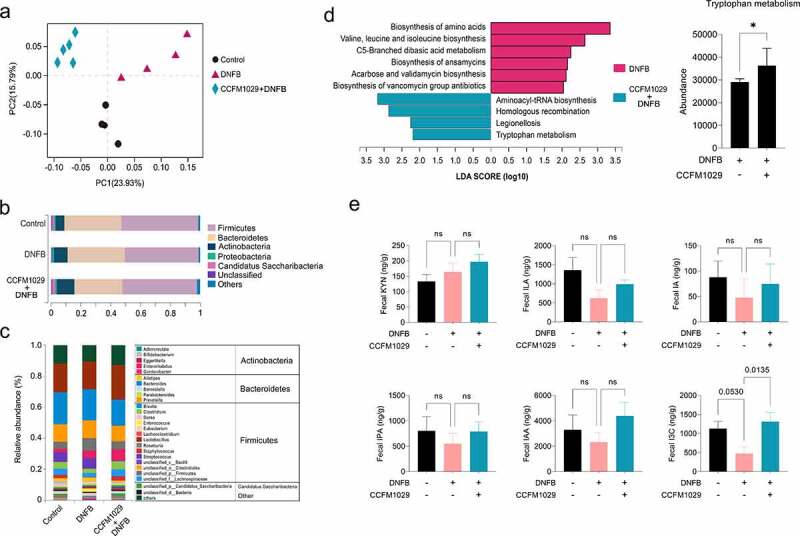
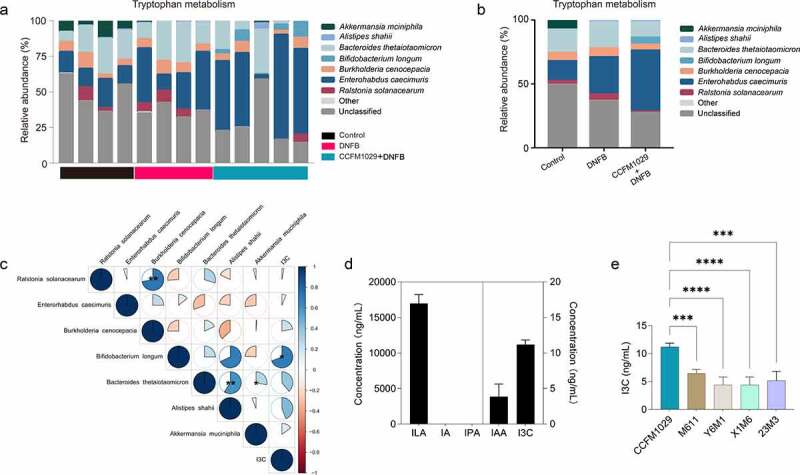
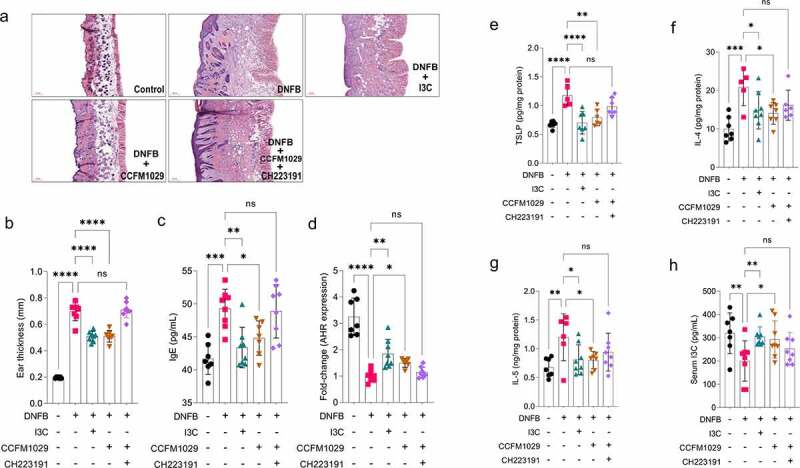
Gut microbial disturbance affects allergic diseases including asthma, atopic dermatitis (AD) via the aberrant immune response. Some Bifidobacterial species and strains have been reported to improve AD via modulating immune-microbe interactions in patients. However, the effective metabolites and mechanism of alleviating AD in bifidobacteria remain to be elucidated. This study aimed to explore the microbial metabolite and mechanism of Bifidobacterium longum to improve AD. Based on shotgun metagenomic sequencing and UHPLC Q-Exactive-MS targeted metabolic experiments in vitro and in vivo, we focused on tryptophan metabolism and indole derivatives, which are endogenous ligands for aryl hydrocarbon receptor (AHR). Indole-3-carbaldehyde (I3C), a tryptophan metabolite of B. longum CCFM1029 activated AHR-mediated immune signaling pathway to improve AD symptoms in animal and clinical experiments. B. longum CCFM1029 upregulated tryptophan metabolism and increased I3C to suppress aberrant T helper 2 type immune responses, but these benefits were eliminated by AHR antagonist CH223191. Furthermore, B. longum CCFM1029 reshaped gut microbial composition in AD patients, increased fecal and serum I3C, and maintained the abundance of Lachnospiraceae related to tryptophan metabolism of gut microbiota. The results suggested that based on the interactions of the gut-skin axis, B. longum CCFM1029 upregulated tryptophan metabolism and produced I3C to activate AHR-mediated immune response, alleviating AD symptoms. Indole derivates, microbial metabolites of tryptophan, may be the potential metabolites of bifidobacteria to alleviate AD via the AHR signaling pathway.
Overview
The claims and statistics of this paper haven’t been checked yet.
Free: it reads the open-access text and checks the first 5 claims that cite a source we can check. Create a free account to check every claim.
Integrity signals
Registry
Cites
Statistics
Figures
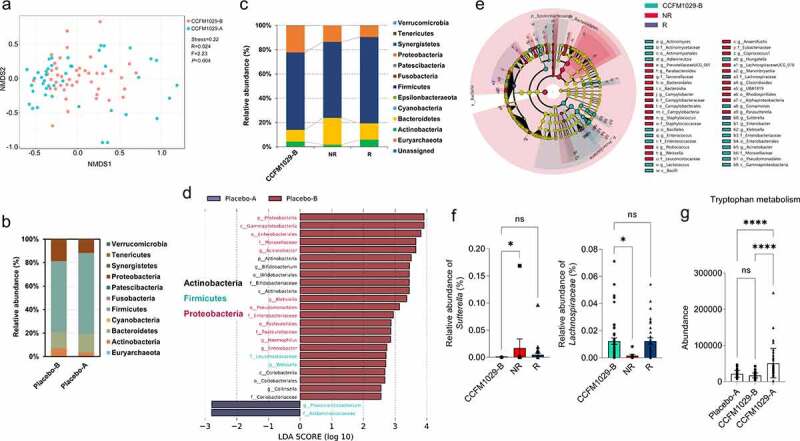
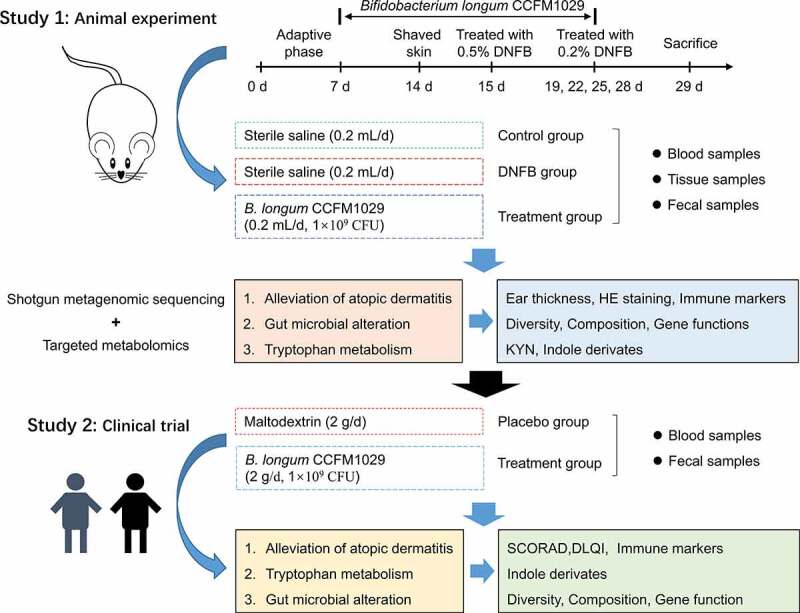
Verification
Claims the paper makes
The claims and statistics of this paper haven’t been checked yet.
Free: it reads the open-access text and checks the first 5 claims that cite a source we can check. Create a free account to check every claim.
Claims other papers make about this one
Each is checked against this paper’s own text: does it say what the citing paper says it does?
The source backs part of the claim, not all of it — or backs it for a different population, condition or comparison.
In the citing paper
“Some of the bacteria from these and other genera, such as B. helveticus, B. longum, B. animalis, Bacillus subtilis and Enterococcus faecium, have been reported to produce or promote the synthesis of neurotransmitters in the gut18–24, consequently modulating MGBA pathways and affecting behavior25–29.”
From Exploring the impact of probiotics on adult ADHD management through a double-blind RCT (2024) · cites this paper as [18]
Experimental — accuracy not yet measured
Self-check
Percentages, sums and reported differences re-computed from the paper’s own numbers.
The self-check needs the paper’s full text.
Citations
Cites
Predictive functional profiling of microbial communities using 16S rRNA marker gene sequences
Langille, M. G. I., Zaneveld, J., Caporaso, J. G., McDonald, D., Knights, D., Reyes, J. A., Clemente, J. C., Burkepile, D. E., Vega Thurber, R. L., Knight, R., et al. (2013) · Nature Biotechnology · doi:10.1038/nbt.2676 · Cited by 9,116 · cited 1×
“The functional genes of microbiota were evaluated using the phylogenetic investigation of communities by reconstruction of unobserved states (PICRUSt).(42)”
MethodGut Microbiota Regulation of Tryptophan Metabolism in Health and Disease
Agus, A., Planchais, J., & Sokol, H. (2018) · Cell Host & Microbe · doi:10.1016/j.chom.2018.05.003 · Cited by 3,180 · cited 2×
“AHR signaling plays an important role in immune modulation at barrier sites, such as skin and gut, through the interaction with various immune cells including dendritic cells and innate lymphoid cells.(11) Recent studies have demonstrated that catabolites from microbial tryptophan metabolism alleviate colitis and prot…”
BackgroundAtopic Dermatitis: Global Epidemiology and Risk Factors
Nutten, S. (2015) · Annals of Nutrition and Metabolism · doi:10.1159/000370220 · Cited by 3,055
Zelante, T., Iannitti, R. G., Cunha, C., De Luca, A., Giovannini, G., Pieraccini, G., Zecchi, R., D’Angelo, C., Massi-Benedetti, C., Fallarino, F., et al. (2013) · Immunity · doi:10.1016/j.immuni.2013.08.003 · Cited by 2,614 · cited 2×
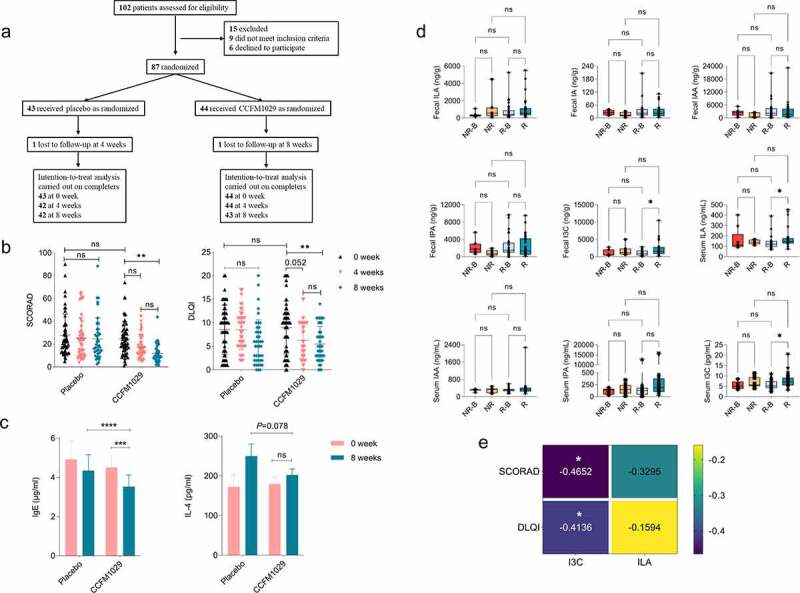
“Although the ILA was significantly elevated in the R subgroup compared with that in the R-B subgroup, I3C was much more sensitive to AHR than ILA.13 Based on the correlation analysis, I3C, but not ILA, had a significant negative correlation to SCORAD and DLQI (Figure 4e), and thus I3C might be the effective metabolite…”
ResultSpecies-level functional profiling of metagenomes and metatranscriptomes
Franzosa, E. A., McIver, L. J., Rahnavard, G., Thompson, L. R., Schirmer, M., Weingart, G., Lipson, K. S., Knight, R., Caporaso, J. G., Segata, N., et al. (2018) · Nature Methods · doi:10.1038/s41592-018-0176-y · Cited by 1,693
Tryptophan metabolism as a common therapeutic target in cancer, neurodegeneration and beyond
Platten, M., Nollen, E. A. A., Röhrig, U. F., Fallarino, F., & Opitz, C. A. (2019) · Nature Reviews Drug Discovery · doi:10.1038/s41573-019-0016-5 · Cited by 1,586 · cited 1×
“Tryptophan metabolism is a therapeutic target in diseases such as cancer and neurodegeneration through the kynurenine pathway, 5-hydroxytryptophan pathway, and microbial metabolism pathway.(21,22) Indole and indole derivatives are catabolites from microbial metabolism of tryptophan.”
BackgroundLamas, B., Richard, M. L., Leducq, V., Pham, H.-P., Michel, M.-L., Da Costa, G., Bridonneau, C., Jegou, S., Hoffmann, T. W., Natividad, J. M., et al. (2016) · Nature Medicine · doi:10.1038/nm.4102 · Cited by 1,482
Impact of the Gut Microbiota on Intestinal Immunity Mediated by Tryptophan Metabolism
Gao, J., Xu, K., Liu, H., Liu, G., Bai, M., Peng, C., Li, T., & Yin, Y. (2018) · Frontiers in Cellular and Infection Microbiology · doi:10.3389/fcimb.2018.00013 · Cited by 1,298 · cited 1×
“Tryptophan is one of the essential amino acids and participates in gut immune regulation.(9) Metabolites from the direct metabolism of tryptophan by gut microbiota include indole and its derivatives, such as indole-3-acrylic acid (IA), indole acetic acid (IAA), indole-3-lactic acid (ILA), indole-3-propionic acid (IPA)…”
BackgroundAllergy development and the intestinal microflora during the first year of life
Björkstén, B., Sepp, E., Julge, K., Voor, T., & Mikelsaar, M. (2001) · Journal of Allergy and Clinical Immunology · doi:10.1067/mai.2001.118130 · Cited by 1,203
Microglial control of astrocytes in response to microbial metabolites
Rothhammer, V., Borucki, D. M., Tjon, E. C., Takenaka, M. C., Chao, C.-C., Ardura-Fabregat, A., de Lima, K. A., Gutiérrez-Vázquez, C., Hewson, P., Staszewski, O., et al. (2018) · Nature · doi:10.1038/s41586-018-0119-x · Cited by 1,051 · cited 1×
“Tryptophan metabolism is a therapeutic target in diseases such as cancer and neurodegeneration through the kynurenine pathway, 5-hydroxytryptophan pathway, and microbial metabolism pathway.(21,22) Indole and indole derivatives are catabolites from microbial metabolism of tryptophan.”
Background
Cited by
Items 201–300 of 306
Eggerthella lenta down regulated flavone and flavonol biosynthesis promoted Kawasaki disease
Yeh, Y., Chen, K.-D., Huang, C., Tsai, J.-R., & Kuo, H. (2025) · Virulence · doi:10.1080/21505594.2025.2512401 · Cited by 3
“Moreover, Bifidobacterium longum and Bifidobacterium bifidum have been considered probiotics in several diseases, such as obesity [49], inflammatory bowel disease [50], atopic dermatitis [51], and cardiovascular diseases [52].”
Atopic Dermatitis: Updated Insights Into Pathophysiology and Emerging Therapies
Xie, M., Kong, L., Li, G., Chen, Y., Hou, L., & Hou, J. (2025) · Drug Development Research · doi:10.1002/ddr.70161 · Cited by 3
“The imbalance is related to severity and progression of AD, and pruritus symptoms (Fang et al. 2022; Moniaga et al. 2022; Rios ‐ Carlos et al. 2024).”
Zhang, T., Xiao, Y., Wang, H., Zhu, J., Lu, W., Zhang, H., & Chen, W. (2024) · Food & Function · doi:10.1039/d4fo01294a · Cited by 3
Self-citationLiu, K., Zhang, Z., Su, Y., Ma, X., Wang, J., Yang, Q., Nie, Q., Mo, Z., Zhou, H., Zouboulis, C. C., et al. (2026) · Journal of Nanobiotechnology · doi:10.1186/s12951-026-04291-8 · Cited by 2
“And Fang et al.. reported that B. longum can improve atopic dermatitis by regulating tryptophan and indole derivative metabolic pathways [92].”
Role of sn-2 palmitate on the development of the infant gut microbiome: A metagenomic insight
Wang, S., Zheng, C., Bu, C., Guo, D., Zhang, C., Xie, Q., Pan, J., Sun, J., Chen, W., Jiang, S., et al. (2025) · Food Research International · doi:10.1016/j.foodres.2025.116488 · Cited by 3
Self-citationRen, M., Li, S., Li, S., Tan, Z., & Shi, J. Y. (2025) · Journal of Inflammation Research · doi:10.2147/jir.s512868 · Cited by 2
Liu, F., Dong, B., Wang, Z., Lin, D., Xu, H., Ke, B., Kang, W., Jin, Y., Huang, X., Lu, H., et al. (2025) · Microbiology Spectrum · doi:10.1128/spectrum.02861-24 · Cited by 2
Lactobacillus crispatus KBL693 alleviates atopic dermatitis symptoms through immune modulation
Song, S., Kim, J.-H., Jang, S. J., Jo, E. J., Lim, S. K., & Ko, G. (2025) · The Journal of Microbiology · doi:10.71150/jm.2509005 · Cited by 2
“…such as Lactobacillus acidophilus , Lacticaseibacillus paracasei (formerly L. paracasei ), Limosilactobacillus fermentum (formerly L. fermentum ), and Bifidobacterium longum , has been shown to alleviate AD in animal models (Fang et al., 2022; Kim et al., 2019, 2020, 2024; Won et al., 2011).”
Metabolomics reveals pro-inflammatory effects of 12R-HETE and ALOX12B in maternal allergic asthma
Wang, L., Wang, X., Wang, W., Sun, Z., Fang, H., Chang, Q., Lin, W., Lin, L., Xie, T., Shen, C., et al. (2025) · Communications Biology · doi:10.1038/s42003-025-08979-9 · Cited by 2
Cao, F., Liu, A., Tong, J., Guo, C. X., Zhang, H., Pang, Y., Tang, K., Yu, Q., & Guo, J. (2025) · mSystems · doi:10.1128/msystems.01403-25 · Cited by 2
Self-citationYang, L., Jiang, Z., Yu, Z., Huang, T., Gui, W., Wang, Z., Li, F., Xiao, P., Li, C., & Eh, L. (2026) · Chinese Journal of Natural Medicines · doi:10.1016/s1875-5364(26)61077-1 · Cited by 2
Huang, Q., Liang, Z., Cui, Y., Diao, J., Zhou, T., Shi, L., Deng, Z., Wang, R., Yuan, H., Chen, K., et al. (2026) · Biomaterials Research · doi:10.34133/bmr.0342 · Cited by 2
“For example, Bifidobacterium longum CCFM1029 enhances tryptophan metabolism, promoting indole-3-carbinol production that activates aryl hydrocarbon receptor-mediated immune responses, thereby ameliorating atopic dermatitis [ 43 ].”
Lan, K., Bai, D., Yuan, L., Luo, H., Jin, J., Li, S.-C., Wu, L., Sun, X.-S., Liu, S. G., Chen, Q. X., et al. (2026) · Gut · doi:10.1136/gutjnl-2026-338223 · Cited by 3
Chen, M., Zhao, Q., Peng, L., Chen, Z., Lv, S., Zhuang, Z., Zheng, S., Ye, J., He, J., Lu, Y.-X., et al. (2026) · Cell Death and Disease · doi:10.1038/s41419-026-08869-w · Cited by 2
“For AHR inhibition, seven-day-old pups were intraperitoneally injected with 4 μ g/ day CH-223191 (Selleck, Houston, TX, USA) dissolved in DMSO once daily during NEC induction; control pups were injected with an equivalent volume of vehicle [59].”
The dual role of the microbiome in chronic wound management
Deng, R., Qian, J., Liu, Y., Bu, Q., 曹廷军, Gao, M., & Huang, Z. (2026) · Cell Communication and Signaling · doi:10.1186/s12964-026-02937-6 · Cited by 2
“…longum CCFM1029 converts tryptophan into indole-3-carbox-aldehyde, activating aryl hydrocarbon receptor (AhR) signaling to suppress Th2-skewed immune responses and ameliorate atopic dermatitis-like pathology, while concurrently promoting ceramide synthesis and barrier repair [109, 110].”
Le, D., Heidari, M. H., Zhu, S., Luo, Y., Li, C., Li, Y., Yang, B., & Wang, X. (2026) · Gut Microbes · doi:10.1080/19490976.2026.2701386 · Cited by 2
Wei, T., & Ding, Y. (2026) · Journal of International Medical Research · doi:10.1177/03000605261469397 · Cited by 2
“11 Despite this strong mechanistic foundation, the translation into consistent clinical bene fi t has proven remarkably heterogeneous, and results from clinical trials have remained inconclusive.”
Xiao, X., Wang, J., Ma, A., Chen, Z., Xia, J., Yao, K., & Jia, Y. (2025) · Food Science and Human Wellness · doi:10.26599/fshw.2025.9250566 · Cited by 2
Agmatine ameliorates sepsis-related intestinal injury via the AhR-STAT3-IL-10 pathway
Pan, J., Gan, L., Chen, Y., Zhong, L., Deng, H., Huang, L., & Liang, H. (2025) · Molecular Immunology · doi:10.1016/j.molimm.2025.06.004 · Cited by 2
Haiming, C., Yijing, L. I., Tang, B., Ma, X., Hailun, L., Meiting, D., Li, Z., Zheng, X., Yujie, Y., Zuqing, S., et al. (2025) · Carbohydrate Polymers · doi:10.1016/j.carbpol.2025.124143 · Cited by 5
Lee, E., Sim, W., & Lim, T. (2025) · Journal of Microbiology and Biotechnology · doi:10.4014/jmb.2507.07020 · Cited by 2
Batbileg, L., Baasanjav, S., Tulgaa, K., Byambasukh, O., Nyamdavaa, K., Yadamsuren, E., & Biziya, B. (2024) · Journal of Clinical Medicine · doi:10.3390/jcm14010112 · Cited by 1
Zhou, M., He, X., Xue, Q., Naveed, M., Rui, B., Ye, W., Liu, Y., & Ming, L. (2025) · Food Science and Human Wellness · doi:10.26599/fshw.2024.9250431 · Cited by 1
Du, Q., Fu, R., Zhao, M., & Xu, M. (2025) · Foods · doi:10.3390/foods14152557 · Cited by 5
“…the abundance of Bifidobacterium and multiple members of Lactobacillaceae (Figure 3C,D), which are beneficial SCFA-producing bacteria that inhibit the growth of harmful bacteria, improve immune function [42], modulate oxidative stress and inflammation [43], and support gut barrier integrity [44].”
Geng, R., Kang, S., Huang, K., & Tong, T. (2025) · Journal of Future Foods · doi:10.1016/j.jfutfo.2025.09.033 · Cited by 1
Shi, Y., He, S., Li, C., Chan, H., Liu, Z., Yang, B., & Li, Q. (2026) · Advanced Science · doi:10.1002/advs.202518588 · Cited by 1
Dimmers, F., Reichert, D., Nguyen, T. N., Lück, N., Ramachandran, H., Bremges, A., Schild, J., Humbek, M., Grether‐Beck, S., Rossi, A., et al. (2026) · Skin Pharmacology and Physiology · doi:10.1159/000551043 · Cited by 2
Wang, Q. D., Yuan, X., Feng, Q., Qiao, Z., Wang, T., Pan, H., Zhong, Y., & Zhuang, Y. (2026) · Journal of Agricultural and Food Chemistry · doi:10.1021/acs.jafc.5c14462 · Cited by 1
Li, Y., Li, H., Zhang, Q., Cui, S., Zhai, Q., Stanton, C., Ross, P. M., Zhao, J., Chen, W., & Yang, B. (2026) · Food & Function · doi:10.1039/d5fo05688h · Cited by 1
Self-citationShi, J., Gao, Y., Liu, S., Zhang, Z., Hu, H., Gao, H., Zhu, T., Xiong, L., & Liu, H. (2026) · International Journal of Biological Macromolecules · doi:10.1016/j.ijbiomac.2026.152383 · Cited by 1
Tan, Y., Peng, G., Abudouwanli, A., Zhao, W., Sun, Q., Yang, M., Ogawa, H., Okumura, K., & Niyonsaba, F. (2026) · Clinical Reviews in Allergy & Immunology · doi:10.1007/s12016-026-09172-4 · Cited by 1
Zeng, Y., & Feng, Y. (2026) · Frontiers in Immunology · doi:10.3389/fimmu.2026.1837198 · Cited by 1
Delaroque, C., O’Mahony, L., Krohn, I. K., Mortz, C. G., Ollert, M. W., & Desai, M. S. (2026) · Allergy · doi:10.1111/all.70426 · Cited by 3
“IPA has been shown to reduce food allergy severity in murine models, while microbial indole derivatives promote protective RORγt + Treg cells, a process disrupted by high levels of goblet- cell-derived RELMβ [55, 134–136].”
Hu, Y., Chen, J., Zeng, Q., Jiang, L., Hu, Y., Zhu, S., Fu, C., & Lei, L. (2026) · Clinical Cosmetic and Investigational Dermatology · doi:10.2147/ccid.s611710 · Cited by 1
Postbiotics as Emerging Therapeutics for Allergic Diseases: A Novel Approach Beyond Live Biologics
El‐Sehrawy, A. A. M. A., Farhan, A. F., Alghamdi, M. A., AL-Ghamdi, H. S., Choubisa, H., Sharma, C., Angel, B., Panigrahi, R., Chennakesavulu, K., & Basunduwah, T. S. (2026) · Probiotics and Antimicrobial Proteins · doi:10.1007/s12602-026-11108-5 · Cited by 2
Zhao, Y., Gao, Q., Li, G., Zhou, Q., Yang, F., & Zhu, X. (2026) · Frontiers in Immunology · doi:10.3389/fimmu.2026.1873455 · Cited by 1
“…weeks of treatment, 70.5% of participants (31/44) were classi fi ed as responders (de fi ned by a decrease in SCORAD), who also exhibited increased serum I3C levels that were negatively correlated with SCORAD ( r = – 0.4652, p < 0.05 ); non-responders showed no signi fi cant changes in serum I3C (50).”
InfluentialPan, C., Zhou, T., Ye, L., Yang, C., Li, Q., Liu, H., Tang, F., Aili, G., Zhou, S., & Gan, Y. (2026) · Cell Host & Microbe · doi:10.1016/j.chom.2026.09.011 · Cited by 1
Skin Microbiota, Immune Cell, and Skin Fibrosis: A Comprehensive Mendelian Randomization Study
Zhao, Z., Rong, Y., Yin, R. H., Zeng, R., Xu, Z., Lv, D., Hu, Z., Cao, X., & Tang, B. (2024) · Biomedicines · doi:10.3390/biomedicines12102409 · Cited by 1
de Comboyes, J. (1802) · RiuNet (Universitat Politècnica de València)
Luan, M., Niu, M., Yang, P., Han, D., Zhang, Y., Li, W., He, Q., Zhao, Y., Mao, B., Chen, J., et al. (2023) · Figshare · doi:10.6084/m9.figshare.24186185
Unravelling the Complexities and Recent Advances in the Management of Atopic Dermatitis
Pandey, V. P., Punniyamoorthy, S., Pradhan, S., Umar, M., Bano, U., Pokharel, Y. R., Karwasra, R., Umar, T., & Kumar, P. (2024) · Current Drug Therapy · doi:10.2174/0115748855299561240802111649
Treatment of atopic dermatitis considering assessment of neurotransmitters in blood
Mukhacheva, D. A., Raznatovsky, K. I., & Sobolev, A. V. (2024) · Russian Journal of Clinical Dermatology and Venereology · doi:10.17116/klinderma202423041368
The Impact of Alcohol on the Gut Microbiota: A literature review
Sikora, J., Knychalska, K., Łabuda, M., Królikowska, K., Słojewska, A., Kotkowiak, A., Sowińska, T., Mentel, O., Bogucka, A., & Szema, A. (2025) · Journal of Education Health and Sport · doi:10.12775/jehs.2025.80.60045
“Bifidobacterium longum, thanks to its regulation of tryptophan metabolism and production of Indole-3-carbaldehyde (I3C), participates in the interaction of the gut-skin axis, which helps alleviate atopic dermatitis [24].”
Wang, W., Fan, Z., Pan, T., Yan, Q., Qiu, Y., Wang, J., Li, B., Lu, W., & Fang, Z. (2025) · Food Science and Human Wellness · doi:10.26599/fshw.2025.9250616
Self-citationXu, J., Zhang, Y., Fang, X.-H., Liu, Y., Huang, Y.-B., Ke, Z.-L., Wang, Y., Zhang, Y. Y., Zhang, Y., Zhou, J., et al. (2024) · Figshare · doi:10.6084/m9.figshare.26637837
Xu, J., Zhang, Y., Fang, X.-H., Liu, Y., Huang, Y.-B., Ke, Z.-L., Wang, Y., Zhang, Y. Y., Zhang, Y., Zhou, J., et al. (2024) · Figshare · doi:10.6084/m9.figshare.26637843
Xu, J., Zhang, Y., Fang, X.-H., Liu, Y., Huang, Y.-B., Ke, Z.-L., Wang, Y., Zhang, Y. Y., Zhang, Y., Zhou, J., et al. (2024) · Figshare · doi:10.6084/m9.figshare.26637846
Xu, J., Zhang, Y., Fang, X.-H., Liu, Y., Huang, Y.-B., Ke, Z.-L., Wang, Y., Zhang, Y. Y., Zhang, Y., Zhou, J., et al. (2024) · Figshare · doi:10.6084/m9.figshare.26637849
Sun, D., Bian, G., Zhang, K., Liu, N., Yin, Y., Hou, Y., Xie, F., Zhu, W., Mao, S., & Liu, J. (2024) · Figshare · doi:10.6084/m9.figshare.26688368
Sun, D., Bian, G., Zhang, K., Liu, N., Yin, Y., Hou, Y., Xie, F., Zhu, W., Mao, S., & Liu, J. (2024) · Figshare · doi:10.6084/m9.figshare.25341262
Sun, D., Bian, G., Zhang, K., Liu, N., Yin, Y., Hou, Y., Xie, F., Zhu, W., Mao, S., & Liu, J. (2024) · Figshare · doi:10.6084/m9.figshare.26688371
Sun, D., Bian, G., Zhang, K., Liu, N., Yin, Y., Hou, Y., Xie, F., Zhu, W., Mao, S., & Liu, J. (2024) · Figshare · doi:10.6084/m9.figshare.26688374
Sun, D., Bian, G., Zhang, K., Liu, N., Yin, Y., Hou, Y., Xie, F., Zhu, W., Mao, S., & Liu, J. (2024) · Figshare · doi:10.6084/m9.figshare.26688365
Sun, D., Bian, G., Zhang, K., Liu, N., Yin, Y., Hou, Y., Xie, F., Zhu, W., Mao, S., & Liu, J. (2024) · Figshare · doi:10.6084/m9.figshare.26688356
Sun, D., Bian, G., Zhang, K., Liu, N., Yin, Y., Hou, Y., Xie, F., Zhu, W., Mao, S., & Liu, J. (2024) · Figshare · doi:10.6084/m9.figshare.25341386
Sun, D., Bian, G., Zhang, K., Liu, N., Yin, Y., Hou, Y., Xie, F., Zhu, W., Mao, S., & Liu, J. (2024) · Figshare · doi:10.6084/m9.figshare.26688359
Sun, D., Bian, G., Zhang, K., Liu, N., Yin, Y., Hou, Y., Xie, F., Zhu, W., Mao, S., & Liu, J. (2024) · Figshare · doi:10.6084/m9.figshare.26688362
Sun, D., Bian, G., Zhang, K., Liu, N., Yin, Y., Hou, Y., Xie, F., Zhu, W., Mao, S., & Liu, J. (2024) · Figshare · doi:10.6084/m9.figshare.26688347
Xu, J., Zhang, Y., Fang, X.-H., Liu, Y., Huang, Y.-B., Ke, Z.-L., Wang, Y., Zhang, Y. Y., Zhang, Y., Zhou, J., et al. (2024) · Figshare · doi:10.6084/m9.figshare.26637840
Sun, D., Bian, G., Zhang, K., Liu, N., Yin, Y., Hou, Y., Xie, F., Zhu, W., Mao, S., & Liu, J. (2024) · Figshare · doi:10.6084/m9.figshare.26688350
Sun, D., Bian, G., Zhang, K., Liu, N., Yin, Y., Hou, Y., Xie, F., Zhu, W., Mao, S., & Liu, J. (2024) · Figshare · doi:10.6084/m9.figshare.26688353
Kim, G. (2024) · MacSphere (McMaster University) · doi:10.71548/7730
Research Advances in Spleen-Stomach System-Targeted Therapies for Inflammatory Skin Diseases
曾, 园. (2025) · Traditional Chinese Medicine · doi:10.12677/tcm.2025.149575
Research Progress on the Correlation between Gut Microbiota and Atopic Dermatitis
何, 通. (2026) · Advances in Clinical Medicine · doi:10.12677/acm.2026.162601
Jung, M., Kim, S., Song, J., Kim, H. J., Kim, M., Lee, M. H., Kyung, Y., Kim, M., Shin, S.-H., Jang, S., et al. (2026) · Food Science of Animal Resources · doi:10.1007/s44463-025-00040-x
“These findings are supported by animal models demonstrat - ing JAK-STAT-mediated Th1/Th2 regulation (Ding et al., 2024 ; Fang et al., 2022 ).”
Medeleanu, M. (2024) · TSpace (University of Toronto) · Cited by 1
Microbial and metabolic profiles in autism spectrum disorder with atopic dermatitis in children
Dong, X., Zhang, T., Tang, B., Zeng, Q., Hu, Z., Huang, P. H., Xiong, X., Wang, X., Dong, W., & Cai, Y. (2026) · AMB Express · doi:10.1186/s13568-026-02037-1
“AD children had a lower diversity of gut microbial compared with healthy individuals (Fang et al. 2022).”
zhu, X., Pei, Z., Wang, Y., Yu, R., Zhuang, Q., Chen, Y., Li, X., Lei, X., Zhai, Q., Zhang, H., et al. (2026) · Food Science and Human Wellness · doi:10.26599/fshw.2026.9251081
Self-citationGao, X., Liu, Y., Yu, J., Wang, A., Mu, G., & Tuo, Y. (2026) · Food Science and Human Wellness · doi:10.26599/fshw.2025.9250889
Ma, J., Tong, P., Yang, K., Jia, Y., Liu, Z., Zhao, M., Liu, J., & Long, F. (2026) · Probiotics and Antimicrobial Proteins · doi:10.1007/s12602-026-11039-1
“AhR signaling is known to attenuate aber - rant Th2-type immune response [ 41].”
Luo, J., Wei, Y., Chai, Y., Fan, Z., Li, B., Xiaoqian, C., Xing, Z., Qiu, Y., Pei, Z., Lu, W., et al. (2026) · Research Square · doi:10.21203/rs.3.rs-9147716/v1
Self-citationGross, G., Bobeldijk‐Pastorova, I., Ouwens, A. M. T., van der Wurff, M., Simmons, R., van Tol, E. A. F., & Keijser, B. J. F. (2026) · Beneficial Microbes · doi:10.1163/18762891-bja00122
Yu, P., Lin, X., Lin, L., Xue, K., Yang, J., Xiaohan, D., 徐洪涛, Ren, Y., Yuan, R., 安月鹏, et al. (2026) · Archives of Dermatological Research · doi:10.1007/s00403-026-04631-6
Che, Y., Wu, X., Sun, L., Zhang, Z., Mao, X., Hang, F., Lu, W., Zhai, Q., Chen, W., Wang, G., et al. (2026) · Food Science and Human Wellness · doi:10.26599/fshw.2026.9251166
Self-citationLi, Z., Deng, C., Lu, B., Chen, F., Cao, X., Fan, J., & Song, Y. (2026) · Frontiers in Medicine · doi:10.3389/fmed.2026.1840065
Luo, H., Zhang, H., Xu, L., Hong, L., Tang, H., & Wang, C. (2026) · Journal of Visualized Experiments · doi:10.3791/71199
Self-citationWang, A., Mu, G., Tang, J., & Tuo, Y. (2026) · Food Science and Human Wellness · doi:10.26599/fshw.2026.9251093
How to Apply Microbiome Products for Precision Prevention?
Shin, N., Park, S., Son, W., & Yang, M. (2026) · Food Supplements and Biomaterials for Health · doi:10.52361/fsbh.2026.6.e12
Ishihara, S., Nishimura, T., Mishima, R., Mitsuyama, E., Sen, A., Kaneko, H., Hishida, Y., Tanaka, M., & Odamaki, T. (2026) · iScience · doi:10.1016/j.isci.2026.116583
Meng, L., Huang, L. H., Lu, E., Chai, Z., Lu, Z., Pang, S., Wei, X., Chen, M., Xiao, G., Lin, Y., et al. (2026) · Frontiers in Nutrition · doi:10.3389/fnut.2026.1852156
“Fang et al. (9) found that Bifidobacterium longum CCFM1029 could alleviate atopic dermatitis by mediating tryptophan metabolism.”
Gut microbial metabolites in cutaneous inflammation: shared mechanisms and therapeutic opportunities
Hu, B., Du, L., Chu, D., Kou, E., Zhao, H., Dong, B., Wang, B., & Zhu, Y. (2026) · Frontiers in Immunology · doi:10.3389/fimmu.2026.1850282
Tryptophan–Kynurenine Pathway Metabolites in Women Undergoing Caesarean Delivery
Ziętek, M., Bieleninik, A., Szczuko, M., Zagrodnik, E., Safranow, K., Ułan, M., Czerny, B., & Uzar, I. (2026) · Life · doi:10.3390/life16071166 · Cited by 1
“Antibiotic therapy in pregnancy often reflects an underlying infection or inflammatory process rather than a pharmacological effect alone, and such processes may influence tryptophan metabolism through immune-mediated activation of the kynurenine pathway [16].”
Teng, C., He, M., Tang, Y., Zhang, Q., Song, Z., Xu, Y., Du, H., An, X., Yang, Y., & Feng, L. (2026) · International Journal of Nanomedicine · doi:10.2147/ijn.s602330
“19 This cross-system interplay occurs across multiple biological scales: molecular (microbial metabolites, inflammatory mediators), cellular (immune cell activation, keratinocyte dysfunction), tissue and organ levels (intestinal mucosal integrity, epidermal barrier function).”
Hu, L., Hou, B., Yan, S., Tai, W., Xia, Y., Wu, J., Li, D., & Shi, B. (2026) · npj Science of Food · doi:10.1038/s41538-026-00974-6
Huang, Z., Zhang, Q., Zhao, J., Stanton, C., Ross, R. P., Chen, W., & Yang, B. K. (2026) · Journal of Agricultural and Food Chemistry · doi:10.1021/acs.jafc.6c02316
Self-citationYan, Z., Wang, Y., Jia, Y., Sun, J. Y., Yue, T., & Long, F. (2026) · Food & Function · doi:10.1039/d6fo01781a
Xiong, Y., Huang, P., Wang, J., Zhao, Y., Zhang, J., Wang, D., & Zhang, H. (2026) · Frontiers in Medicine · doi:10.3389/fmed.2026.1847003
“In parallel, microbial tryptophan metabolites such as indole derivatives can activate the aryl hydrocarbon receptor (AhR), a pathway increasingly recognized as relevant to skin barrier function and cutaneous immune regulation (11, 28).”
Self-citationMapping tryptophan metabolism: Unraveling its pathogenesis and therapeutic opportunities in asthma
Sheng, X., Zhao, R., Wang, Y., Zheng, Q., Yang, Q., Sang, X., & Cao, G. (2026) · Journal of Pharmaceutical Analysis · doi:10.1016/j.jpha.2026.101748
Li, X., Huang, D., Chen, Z., Cui, L., Wang, S., Wang, T., Liu, B., & Liu, Y. (2026) · FEMS Microbiology Reviews · doi:10.1093/femsre/fuag045
“Indole, a tryptophan-derived small molecule produced predominantly by the gut microbiota, including species from Bac-teroidetes , Bifidobacterium and commensal E. coli via the tnaA - encoded tryptophanase (Li and Young 2013 , Fang et al. 2022 ).”
Zhu, Z., Zhang, H., Lin, S., Zheng, W., Li, X., Xu, X., & Yang, R. (2026) · Advanced Science · doi:10.1002/advs.77526
“Additionally, Bifidobacterium longum improves atopic dermatitis by regulating tryptophan metabolism [ 17 ].”
Self-citationBlautia wexlerae ameliorates ulcerative colitis via metabolic remodeling of the gut microbiota
Chen, Y., Long, B., Liu, M., Xu, X., Mu, Y., Peng, M., Gao, J., Wang, C., Xia, L., Wang, R., et al. (2026) · Cell Reports · doi:10.1016/j.celrep.2026.117977
Gao, X., Liu, B., Ye, H., Xie, J., Chen, Y., Gong, C., Zhou, Q., Li, J., Hu, X., & Yu, Q. (2026) · Food & Function · doi:10.1039/d6fo03116a
Giovannuzzi, S., Ammara, A., Carradori, S., Luca, V. D., Gallorini, M., Iacovozzi, D., Cataldi, A., D’Agostino, I., Moi, D., Onnis, V., et al. (2026) · Archiv der Pharmazie · doi:10.1002/ardp.70333
“In Table 5, the activation constants ( K A ) of compounds ( 25–43 ) against the target enzyme BloCAβ, as well as hCAs I and II, are shown for comparison.”
InfluentialDyszkiewicz, M., Cudowska, B., Omeljaniuk, W. J., Marcinkiewicz-Rybołowicz, S., & Lebensztejn, D. M. (2026) · Biomedicines · doi:10.3390/biomedicines14102140
“Bifidobacterium longum improves experimental AD via tryptophan metabolism acting through the gut–skin axis [45], and Limosilactobacillus reuteri attenuates AD through comparable changes in indole derivatives [86]; kynurenine itself, when supplied as a probiotic-derived metabolite, has similarly…”
Zhong, T., Shi, M., Chen, J., Luo, F., Yang, X., Ma, Y., Liu, J., Tang, L., & Fan, Y. (2026) · Fitoterapia · doi:10.1016/j.fitote.2026.107510
Interactions between lactobacillus and yeast: A recent update
Chen, Y., Liu, M., Li, M., 岳志云, Mu, Y., Wang, C., Xia, L., Gao, J., Peng, M., Wang, R., et al. (2026) · Food biomacromolecules. · doi:10.1002/fob2.70101
Jang, Y. S., Na, H., Lee, H.-J., Bang, Y., Jae-Sang, R., Kim, H., 서다혜, Sim, I., Suh, D. H., Jung, E. S., et al. (2026) · Frontiers in Immunology · doi:10.3389/fimmu.2026.1915780
Wang, A., Mu, G., Ma, C., & Tuo, Y. (2026) · Journal of the Science of Food and Agriculture · doi:10.1002/jsfa.71143
Shi, B., Shi, H., Shi, T., Wang, Q., Shi, Q., Chen, X., & Chen, L. (2026) · Food and Agricultural Immunology · doi:10.1080/09540105.2026.2751802
Metadata
- Authors
- Fang, Z., Pan, T., Li, L., Wang, H., Zhu, J., Zhang, H., Zhao, J., Chen, W., & Lu, W.
- Affiliations
- Jiangnan University (CN)
- Corresponding author
- Lu, Wenwei
- Venue
- Gut Microbes
- Publisher
- Informa UK Limited
- Published
- 2022-03-03
- Volume
- 14
- Issue
- 1
- Pages
- 2044723-2044723
- ISSN
- 1949-0976 (ISSN-L)
- 1949-0984
- PMC
- PMC8903757
- OpenAlex
- W4214851298
- Cited by
- 273
- References
- 44
- Citations by year
- 2026: 68 · 2025: 82 · 2024: 74 · 2023: 41 · 2022: 7
- FWCI
- 17.47
- Type
- journal article
- Language
- en
- Open access
- gold
- doi.org
- Licence
- doi.org/10.1080/policies-text-data-mining (tdm)
- Locations
- Gut Microbes (publishedVersion)
- PubMed Central (publishedVersion, cc-by-nc)
- PubMed (publishedVersion)
- DOAJ (DOAJ: Directory of Open Access Journals) (submittedVersion, cc-by-sa)
- Funders
- the National Natural Science Foundation of China (31820103010, 32021005)
- 111project
- Project 111 (BP0719028)
- the Postdoctoral Research Funding Scheme of Jiangsu Province (2021K018A)
- Topics
- Life Sciences › Biochemistry, Genetics and Molecular Biology › Molecular Biology › Gut microbiota and health
- Health Sciences › Medicine › Dermatology › Dermatology and Skin Diseases
- Life Sciences › Agricultural and Biological Sciences › Food Science › Probiotics and Fermented Foods
- Keywords
- Bifidobacterium longum, atopic dermatitis, tryptophan metabolism, indole-3-carboxaldehyde, aryl hydrocarbon receptor, gut-skin axis, Th2 immune response, Lachnospiraceae, gut microbiota, microbial metabolites, CH223191
- MeSH terms
- Gastrointestinal Microbiome, Bifidobacterium longum, Animals, Bifidobacterium, Dermatitis, Atopic, Humans, Indoles, Tryptophan, Receptors, Aryl Hydrocarbon
About these checks
Registry, retraction, Cites and statistics results are computed, not judged, with one exception: a printed reference that no index lists is read once by a model before it counts as a citation error. Claims are extracted by a model and kept only when their quote appears verbatim in the text; each cited source is then checked, with a model’s help, for whether it says what the claim relies on. Those verdicts can be wrong — read the claim’s quote and the cited source before relying on one.
Statistics and arithmetic are recomputed, not judged.
Confidence bands are shown only for fields calibrated on our annotated test set. None is calibrated yet, so no band is shown.
What counts as a claim ›How we measure confidence ›How we check this ›
Are you an author, or do you see a problem with this page? Request a review
Data sources
Bibliographic data: Semantic Scholar, OpenAlex, Crossref.
Contains information from the Semantic Scholar Academic Graph Datasets, made available under the ODC Attribution License (ODC-BY 1.0).
Semantic Scholar’s data is described in: Kinney, R., et al. (2023). The Semantic Scholar Open Data Platform. arXiv:2301.10140.
