

Bifidobacterium longum mediated tryptophan metabolism to improve atopic dermatitis via the gut-skin axis
Open accessThe DOI matches its Crossref record; 44 of the 44 references it cites were found in a registry or an index.
Abstract
Gut microbial disturbance affects allergic diseases including asthma, atopic dermatitis (AD) via the aberrant immune response. Some Bifidobacterial species and strains have been reported to improve AD via modulating immune-microbe interactions in patients. However, the effective metabolites and mechanism of alleviating AD in bifidobacteria remain to be elucidated. This study aimed to explore the microbial metabolite and mechanism of Bifidobacterium longum to improve AD. Based on shotgun metagenomic sequencing and UHPLC Q-Exactive-MS targeted metabolic experiments in vitro and in vivo, we focused on tryptophan metabolism and indole derivatives, which are endogenous ligands for aryl hydrocarbon receptor (AHR). Indole-3-carbaldehyde (I3C), a tryptophan metabolite of B. longum CCFM1029 activated AHR-mediated immune signaling pathway to improve AD symptoms in animal and clinical experiments. B. longum CCFM1029 upregulated tryptophan metabolism and increased I3C to suppress aberrant T helper 2 type immune responses, but these benefits were eliminated by AHR antagonist CH223191. Furthermore, B. longum CCFM1029 reshaped gut microbial composition in AD patients, increased fecal and serum I3C, and maintained the abundance of Lachnospiraceae related to tryptophan metabolism of gut microbiota. The results suggested that based on the interactions of the gut-skin axis, B. longum CCFM1029 upregulated tryptophan metabolism and produced I3C to activate AHR-mediated immune response, alleviating AD symptoms. Indole derivates, microbial metabolites of tryptophan, may be the potential metabolites of bifidobacteria to alleviate AD via the AHR signaling pathway.
Overview
The claims and statistics of this paper haven’t been checked yet.
Free: it reads the open-access text and checks the first 5 claims that cite a source we can check. Create a free account to check every claim.
Integrity signals
Registry
Cites
Statistics
Figures
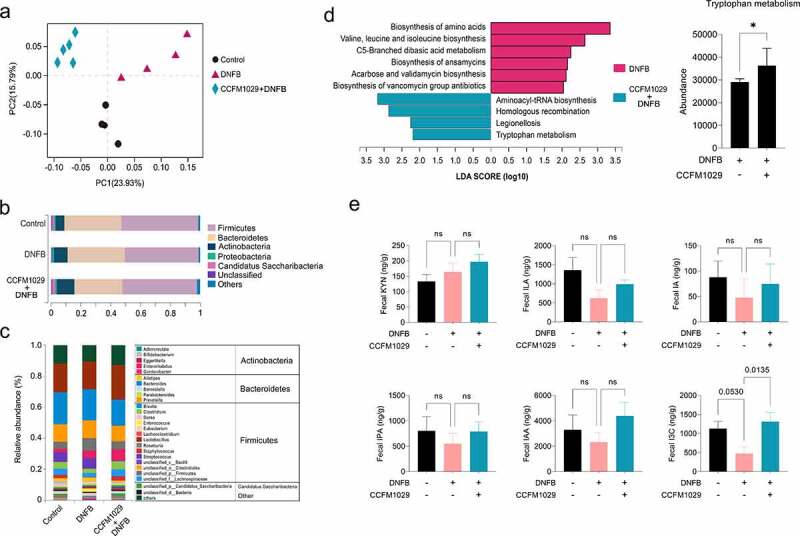
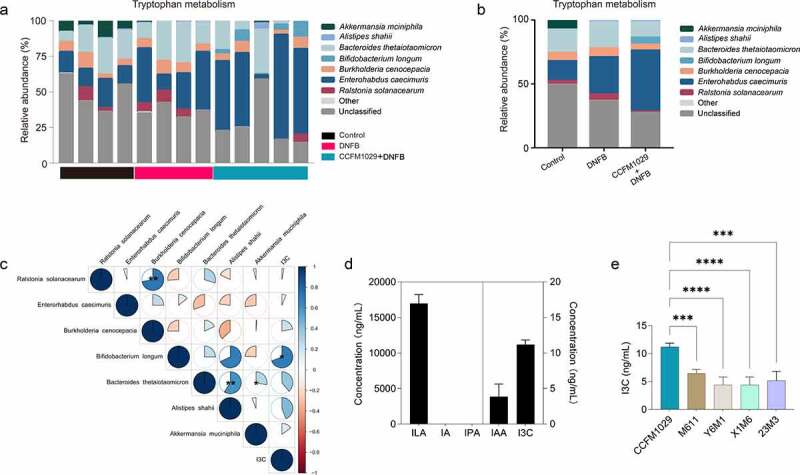
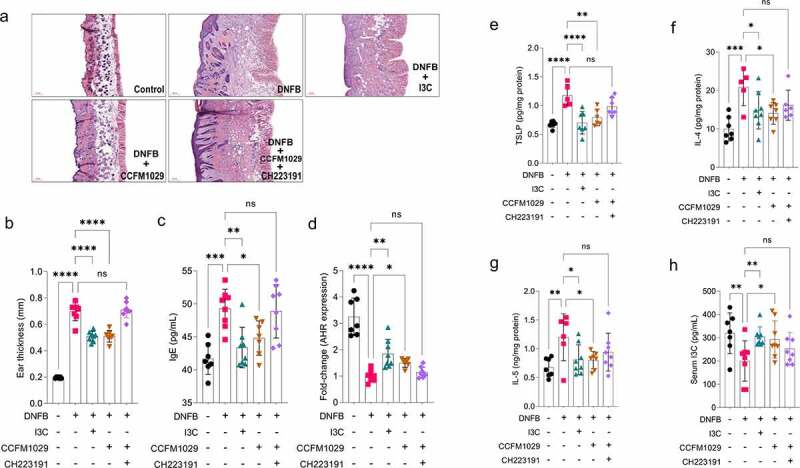
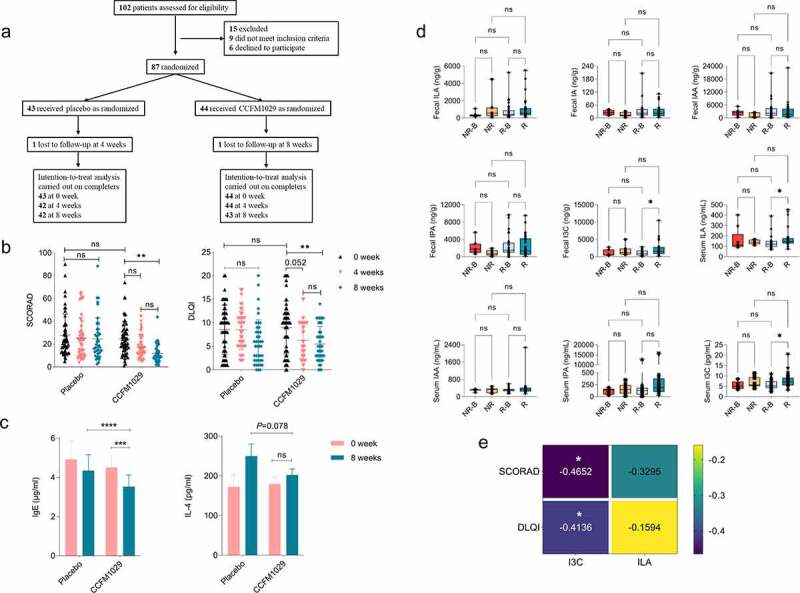
Verification
Claims the paper makes
The claims and statistics of this paper haven’t been checked yet.
Free: it reads the open-access text and checks the first 5 claims that cite a source we can check. Create a free account to check every claim.
Claims other papers make about this one
Each is checked against this paper’s own text: does it say what the citing paper says it does?
The source backs part of the claim, not all of it — or backs it for a different population, condition or comparison.
In the citing paper
“Some of the bacteria from these and other genera, such as B. helveticus, B. longum, B. animalis, Bacillus subtilis and Enterococcus faecium, have been reported to produce or promote the synthesis of neurotransmitters in the gut18–24, consequently modulating MGBA pathways and affecting behavior25–29.”
From Exploring the impact of probiotics on adult ADHD management through a double-blind RCT (2024) · cites this paper as [18]
Experimental — accuracy not yet measured
Self-check
Percentages, sums and reported differences re-computed from the paper’s own numbers.
The self-check needs the paper’s full text.
Citations
Cites
Predictive functional profiling of microbial communities using 16S rRNA marker gene sequences
Langille, M. G. I., Zaneveld, J., Caporaso, J. G., McDonald, D., Knights, D., Reyes, J. A., Clemente, J. C., Burkepile, D. E., Vega Thurber, R. L., Knight, R., et al. (2013) · Nature Biotechnology · doi:10.1038/nbt.2676 · Cited by 9,116 · cited 1×
“The functional genes of microbiota were evaluated using the phylogenetic investigation of communities by reconstruction of unobserved states (PICRUSt).(42)”
MethodGut Microbiota Regulation of Tryptophan Metabolism in Health and Disease
Agus, A., Planchais, J., & Sokol, H. (2018) · Cell Host & Microbe · doi:10.1016/j.chom.2018.05.003 · Cited by 3,180 · cited 2×
“AHR signaling plays an important role in immune modulation at barrier sites, such as skin and gut, through the interaction with various immune cells including dendritic cells and innate lymphoid cells.(11) Recent studies have demonstrated that catabolites from microbial tryptophan metabolism alleviate colitis and prot…”
BackgroundAtopic Dermatitis: Global Epidemiology and Risk Factors
Nutten, S. (2015) · Annals of Nutrition and Metabolism · doi:10.1159/000370220 · Cited by 3,055
Zelante, T., Iannitti, R. G., Cunha, C., De Luca, A., Giovannini, G., Pieraccini, G., Zecchi, R., D’Angelo, C., Massi-Benedetti, C., Fallarino, F., et al. (2013) · Immunity · doi:10.1016/j.immuni.2013.08.003 · Cited by 2,614 · cited 2×
“Although the ILA was significantly elevated in the R subgroup compared with that in the R-B subgroup, I3C was much more sensitive to AHR than ILA.13 Based on the correlation analysis, I3C, but not ILA, had a significant negative correlation to SCORAD and DLQI (Figure 4e), and thus I3C might be the effective metabolite…”
ResultSpecies-level functional profiling of metagenomes and metatranscriptomes
Franzosa, E. A., McIver, L. J., Rahnavard, G., Thompson, L. R., Schirmer, M., Weingart, G., Lipson, K. S., Knight, R., Caporaso, J. G., Segata, N., et al. (2018) · Nature Methods · doi:10.1038/s41592-018-0176-y · Cited by 1,693
Tryptophan metabolism as a common therapeutic target in cancer, neurodegeneration and beyond
Platten, M., Nollen, E. A. A., Röhrig, U. F., Fallarino, F., & Opitz, C. A. (2019) · Nature Reviews Drug Discovery · doi:10.1038/s41573-019-0016-5 · Cited by 1,586 · cited 1×
“Tryptophan metabolism is a therapeutic target in diseases such as cancer and neurodegeneration through the kynurenine pathway, 5-hydroxytryptophan pathway, and microbial metabolism pathway.(21,22) Indole and indole derivatives are catabolites from microbial metabolism of tryptophan.”
BackgroundLamas, B., Richard, M. L., Leducq, V., Pham, H.-P., Michel, M.-L., Da Costa, G., Bridonneau, C., Jegou, S., Hoffmann, T. W., Natividad, J. M., et al. (2016) · Nature Medicine · doi:10.1038/nm.4102 · Cited by 1,482
Impact of the Gut Microbiota on Intestinal Immunity Mediated by Tryptophan Metabolism
Gao, J., Xu, K., Liu, H., Liu, G., Bai, M., Peng, C., Li, T., & Yin, Y. (2018) · Frontiers in Cellular and Infection Microbiology · doi:10.3389/fcimb.2018.00013 · Cited by 1,298 · cited 1×
“Tryptophan is one of the essential amino acids and participates in gut immune regulation.(9) Metabolites from the direct metabolism of tryptophan by gut microbiota include indole and its derivatives, such as indole-3-acrylic acid (IA), indole acetic acid (IAA), indole-3-lactic acid (ILA), indole-3-propionic acid (IPA)…”
BackgroundAllergy development and the intestinal microflora during the first year of life
Björkstén, B., Sepp, E., Julge, K., Voor, T., & Mikelsaar, M. (2001) · Journal of Allergy and Clinical Immunology · doi:10.1067/mai.2001.118130 · Cited by 1,203
Microglial control of astrocytes in response to microbial metabolites
Rothhammer, V., Borucki, D. M., Tjon, E. C., Takenaka, M. C., Chao, C.-C., Ardura-Fabregat, A., de Lima, K. A., Gutiérrez-Vázquez, C., Hewson, P., Staszewski, O., et al. (2018) · Nature · doi:10.1038/s41586-018-0119-x · Cited by 1,051 · cited 1×
“Tryptophan metabolism is a therapeutic target in diseases such as cancer and neurodegeneration through the kynurenine pathway, 5-hydroxytryptophan pathway, and microbial metabolism pathway.(21,22) Indole and indole derivatives are catabolites from microbial metabolism of tryptophan.”
Background
Cited by
Items 101–200 of 306
Cui, S., Pan, M., Tang, X., Liu, G., Mao, B., Zhao, J., & Yang, K. (2023) · Frontiers in Cellular and Infection Microbiology · doi:10.3389/fcimb.2023.1210724 · Cited by 12
Self-citationGenomic insights into probiotic metabolism of dietary carbohydrates, proteins, and fats
Li, B., Ye, L., Chen, Y., & Zhang, H. (2024) · Current Opinion in Food Science · doi:10.1016/j.cofs.2024.101241 · Cited by 12
Self-citationMiao, Y., Wang, M., Sun, H. X., Zhang, Y., Zhou, W., Yang, W., Duan, L., Niu, L., Li, Z., Chen, J., et al. (2024) · Inflammation · doi:10.1007/s10753-024-02211-2 · Cited by 11
The Mechanism and Research Progress of Skin Microbiota in Pathogenesis of Acne
Li, X., & Jin, J. (2025) · Dermatology Research and Practice · doi:10.1155/drp/9910076 · Cited by 16
“Preliminary clinical observations have also identifed associations between gut dysbiosis and acne occurrence [80], and several small-scale studies have reported that probiotic interventions can ameliorate skin symptoms [81, 82].”
Chen, X., Xu, J., Zhang, L., Xie, B., Ren, J., He, J., Liu, T., Liu, Q., Dong, Y., He, X., et al. (2025) · Microbiome · doi:10.1186/s40168-025-02202-x · Cited by 11
The Emerging Role of Gut Microbiota in Inflammatory Skin Diseases: A Systematic Review
Malgesini, A., Marsiglia, M. D., Borghi, E., Marzano, A. V., & Nazzaro, G. (2026) · Experimental Dermatology · doi:10.1111/exd.70234 · Cited by 12
“It has been shown to upregulate tryptophan metabolism and increase the production of indole- 3-carbaldehyde (I3C), which activates the aryl hydrocarbon receptor (AhR) pathway to suppress aberrant Th2 immune responses [55].”
Andrzejczak, K., Kucharczyk, E., Sternak, A., Busłowicz, T., & Ponikowska, M. (2026) · Cells · doi:10.3390/cells15070594 · Cited by 12
Chen, X., Ishfaq, M., Hu, F., Zheng, Q., Hu, X., Jian, W., & Huo, N. (2023) · Poultry Science · doi:10.1016/j.psj.2023.102824 · Cited by 12
Nanovesicular Mediation of the Gut–Brain Axis by Probiotics: Insights into Irritable Bowel Syndrome
Santonocito, R., Paladino, L., Vitale, A. M., D’Amico, G., Zummo, F. P., Pirrotta, P., Raccosta, S., Manno, M., Accomando, S., D’Arpa, F., et al. (2024) · Biology · doi:10.3390/biology13050296 · Cited by 12
“Recently, significant attention has been directed towards the role of tryptophan metabolism as a metabolite through which gut microbes affect the metabolic pathways of the host [36,37].”
BackgroundWang, Y., Wang, B., Sun, S., & Wang, Z. (2024) · Frontiers in Microbiology · doi:10.3389/fmicb.2024.1400657 · Cited by 12
Tang, R., Qin, Y., & Luo, Y. (2024) · International Journal of Food Microbiology · doi:10.1016/j.ijfoodmicro.2024.110974 · Cited by 11
Li, Y., Li, J., Jia, D. T., Gao, S., Guo, Y., Liu, J., Wang, J., Guan, G., Luo, J., Yin, H., et al. (2023) · The Journal of Immunology · doi:10.4049/jimmunol.2300090 · Cited by 10
Xiong, L., Huang, Y.-X., Mao, L., Xu, Y., & Deng, Y. (2025) · World Journal of Diabetes · doi:10.4239/wjd.v16.i5.98788 · Cited by 10
Critical Role of Skin in Pathogenesis: Bidirectional Crosstalk Between Skin and Multiple Organs
Deng, W., Liu, J., Tang, C., Li, Z., Qiu, Y., Zhou, H., Yang, L., & Li, T. (2025) · MedComm – Future Medicine · doi:10.1002/mef2.70020 · Cited by 10
Xu, J., Chen, X., Ren, J., Xu, J., Zhang, L., Yan, F., Liu, T., Zhang, G., Huws, S., Yao, J., et al. (2025) · Genome biology · doi:10.1186/s13059-025-03789-y · Cited by 10
“In the previous studies, B. adolescentis has been suggested as having the capacity to reduce the gut inflammation by inhibiting NF-κB activation and lipopolysaccharide production by gut microbiome [67].”
Microbial perspective on the skin–gut axis and atopic dermatitis
Qü, B., Zhang, X., Feng, H., Yan, B., Bai, Y., Liu, S., & He, Y. (2024) · Open Life Sciences · doi:10.1515/biol-2022-0782 · Cited by 11
Lundberg, L. E., Mishra, P. P., Liu, P., Forsberg, M. M., Sverremark‐Ekström, E., Grompone, G., Håkansson, S., Linninge, C., & Roos, S. (2024) · Applied and Environmental Microbiology · doi:10.1128/aem.00247-24 · Cited by 13
Yao, Z., Liang, S., Chen, J., Zhang, H., Chen, W., & Li, H. (2024) · Journal of Agricultural and Food Chemistry · doi:10.1021/acs.jafc.4c06899 · Cited by 10
Self-citationWang, N., Pei, Z., Wang, H., Zhao, J., Fang, Z., & Lu, W. (2025) · Food Bioscience · doi:10.1016/j.fbio.2025.106083 · Cited by 11
Self-citationLee, S. M., Keum, H. L., & Sul, W. J. (2023) · The Journal of Microbiology · doi:10.1007/s12275-022-00002-8 · Cited by 11
“longum can decrease skin sensitivity by their tryptophan metabolite indole-3-carbaldehyde which activates the AHR-mediated immune signaling pathway based on the interactions of the gut-skin axis (Fang et al., 2022; Liu et al., 2022).”
BackgroundGut microbiota-associated metabolites in metabolic diseases and their impact from food processing
Huang, A., Wu, Q., Thanuphol, P., da Cruz, L. L., Xie, Z., Chen, M., Zhang, F., Zhu, Z., & Ding, Y. (2024) · Food Innovation and Advances · doi:10.48130/fia-0024-0038 · Cited by 9
Mun, D., Ryu, S., Choi, H., Kwak, M., Oh, S., & Kim, Y. (2025) · Drug Delivery and Translational Research · doi:10.1007/s13346-025-01875-z · Cited by 9
“Notably, certain gut-derived metabolites, such as indole derivatives from tryptophan metabolism, activate the aryl hydrocarbon receptor, leading to the attenuation of AD symptoms [53 – 55].”
The Interplay of Cross‐Organ Immune Regulation in Inflammation and Cancer
Dou, J., Jiang, J., Xue, Y., Jiang, X., Jiang, Y., Xiao, P., & Xu, J. (2025) · MedComm · doi:10.1002/mco2.70249 · Cited by 10
“The mechanism may involve upregulating tryptophan metabolism and producing indole-3-carboxyaldehyde, thereby activating an aromatic hydrocarbon receptor-mediated immune response [57].”
Gut microbiome alterations and hepatic encephalopathy post-TIPS in liver cirrhosis patients
Li, S., Xu, Z., Diao, H., Zhou, A., Tu, D., Wang, S., Feng, Y., Feng, X., Lai, Y., Yang, S., et al. (2025) · Journal of Translational Medicine · doi:10.1186/s12967-025-06774-y · Cited by 9
Peng, M., Fu, J., Song, Y., Lu, M., & Zhang, B. (2025) · Journal of Agricultural and Food Chemistry · doi:10.1021/acs.jafc.5c08004 · Cited by 10
Zou, X., Zhou, X., Wang, C., Zheng, Y., Li, Y., & Suo, H. (2025) · Food & Function · doi:10.1039/d5fo02271a · Cited by 9
Liu, D., Ren, Y., Peng, Y., Zhong, S., & Xu, B. (2025) · Food Research International · doi:10.1016/j.foodres.2025.117521 · Cited by 9
Pan, R., Chen, Y., Lin, G., Wang, H., Xu, X., Wang, L., Tian, P., Zhao, J., Chen, W., & Wang, G. (2024) · Food Bioscience · doi:10.1016/j.fbio.2024.103852 · Cited by 9
Self-citationDual intervention on the gut and skin microbiota attenuates facial cutaneous aging
Zhang, L., Yu, S., Guan, Y., Wang, D., Yang, J., Li, J., Zhao, W., & Zhang, F. (2024) · Food & Function · doi:10.1039/d3fo05473j · Cited by 11
Yang, L., Wu, Y., Zhao, X., Liang, T., Li, L., Yang, J., Jiang, T., Zhang, T., Zhang, J., Zhong, H., et al. (2024) · Probiotics and Antimicrobial Proteins · doi:10.1007/s12602-024-10267-7 · Cited by 10
Self-citationKang, S.-H., Park, Y., Seong, H., Hwang, C.-Y., & Kim, C.-S. (2024) · Journal of Functional Foods · doi:10.1016/j.jff.2024.106428 · Cited by 9
Wu, P., Zhang, Y., Shan, Q., Wang, Z., Cheng, S., Wang, L., Liu, B., Li, W., Chen, Z., Luo, J., et al. (2024) · Food Microbiology · doi:10.1016/j.fm.2024.104697 · Cited by 10
Park, H. J., Yu, D., Hong, S., Lee, J., Park, S.-J., Park, M. S., Lee, H., Kim, M., Cheon, Y., Lee, S., et al. (2024) · Immune Network · doi:10.4110/in.2024.24.e41 · Cited by 8
Yang, C., Zha, M., Li, L., Qiao, J., Kwok, L. Y., Wang, D., & Chen, Y. (2024) · Journal of Dairy Science · doi:10.3168/jds.2024-25614 · Cited by 9
Self-citationZhang, Y., Zhang, D., Bai, X., Chen, Y., Qiu, Q., Shang, X., Deng, Y., Yang, H., Fang, X., Zhi-min, Y., et al. (2022) · Frontiers in Microbiology · doi:10.3389/fmicb.2022.980082 · Cited by 9
“Many microorganisms have positive (or conditionally positive) benefits to human health, including Lactobacillus_johnsonii (Lim et al., 2017), Parasutterella_excrementihominis (Fart et al., 2020), Bacteroides_vulgatus (You et al., 2019), Parabacteroides_distasonis (Wang et al., 2019), Parabacteroides_goldsteinii (Wu et…”
BackgroundZhao, H., Ma, X., Song, J., Jiang, J., Fei, X., Luo, Y., Ru, Y., Luo, Y., Gao, C., Kuai, L., et al. (2023) · Food & Function · doi:10.1039/d3fo02455e · Cited by 8
Zhang, B., Wang, L., Tian, P., Jin, X., Liang, M., Chen, Z., Zhao, J., Zhang, H., & Wang, G. (2024) · Food Science and Human Wellness · doi:10.26599/fshw.2024.9250191 · Cited by 8
Self-citationWang, Y., Quan, L., Zheng, X., Hu, Q., Huang, X., Pu, Y., Xie, G., & Peng, Q. (2025) · npj Science of Food · doi:10.1038/s41538-025-00404-z · Cited by 7
Probiotics supplements for the prevention of atopic dermatitis in children: an umbrella review
Zhong, L., Su, J., Zhou, X., & Wan, H. (2025) · Frontiers in Nutrition · doi:10.3389/fnut.2025.1587348 · Cited by 7
Serotonin and the gut microbiome: Pathways, functions, and health implications
Abubaker, S., Miri, S., & Hammami, R. (2026) · The Microbe · doi:10.1016/j.microb.2026.100668 · Cited by 8
Leghari, A., Khand, F. M., Laghari, S., & Lakho, S. A. (2026) · International Journal of Biological Macromolecules · doi:10.1016/j.ijbiomac.2026.151123 · Cited by 9
Liu, X., Xu, B., Xu, X., Wang, Z., Luo, Y., Gao, Y., Ling, S., Wang, A., Zhou, Y., Wang, X., et al. (2023) · Cell Reports Medicine · doi:10.1016/j.xcrm.2023.101340 · Cited by 9
“37–39 Fang et al. 40,41 reported that the oral administration of Bifidobacterium longum and Limosilactobacillus reuteri attenuated AD-related inflammation by remodeling gut microbial composition and inducing the production of tryptophan metabolites.”
BackgroundSkin Rejuvenation in Aged Mice by Fecal Transplantation Microbiota from Young Mice Feces
Yu, S., Li, Z., Zhang, X., Zhang, Q., Zhang, L., Zhao, L., Liu, P., Guo, J., Chen, J., Zhang, C., et al. (2024) · Engineering · doi:10.1016/j.eng.2024.08.005 · Cited by 8
Identification of disease-specific gut microbial markers in vitiligo
Dou, Y., Niu, Y., Shen, H., Wang, L., Lv, Y., Liu, S., Xie, X., Feng, A., & Liu, X. (2025) · Frontiers in Microbiology · doi:10.3389/fmicb.2025.1499035 · Cited by 9
Exploring the influence of gut microbiota metabolites on vitiligo through the gut-skin axis
Yuan, C., Liu, L., Zeng, D., Yuan, J., Guo, L., & Zhang, J. (2025) · Frontiers in Microbiology · doi:10.3389/fmicb.2025.1566267 · Cited by 8
Innovative microbial strategies in atopic dermatitis
Ma, J., Fang, Y., Hu, J., Li, S., Zeng, L., Chen, S., Li, Z., Meng, R., Yang, X., Zhang, F., et al. (2025) · Frontiers in Immunology · doi:10.3389/fimmu.2025.1605434 · Cited by 7
Li, M. D., Li, M., Dai, Y., Li, D., Yu, H., Liu, J., Gao, H., Zhong, Y., Huang, M., Lin, J., et al. (2023) · Frontiers in Microbiology · doi:10.3389/fmicb.2023.1215884 · Cited by 8
“In recent years, a lot of studies have raised a concept of the gut-skin axis aiming to discover the relationship between gut microbiota and skin (Salem et al., 2018; Fang et al., 2022; Mahmud et al., 2022), previous studies revealed that there may be a positive feedback loop between dysbiosis of intestinal microbiota…”
BackgroundLee, J., Choi, H., Shin, H. S., & Kim, G.-D. (2024) · Molecules · doi:10.3390/molecules29245951 · Cited by 9
“These metabolites suppress aberrant Th2 immune responses and reshape the gut microbiota composition, further enhancing their therapeutic potential [78].”
Zhou, Y., Zhang, L., Lin, L., Liu, Y., Liu, Y., Zhao, Y., & Zhao, Y. (2025) · Journal of Hazardous Materials · doi:10.1016/j.jhazmat.2025.137250 · Cited by 8
Yang, Y., Gu, X., Liu, C., Zou, L., Xie, L., Liu, Y., Zhao, P., Tian, Y., & Cai, S. (2025) · Frontiers in Nutrition · doi:10.3389/fnut.2025.1626169 · Cited by 6
“This finding aligns with the results of this study, as g-Blautia is a genus within the Lachnospiraceae family (30).”
Liu, S., Chen, Q., Gu, Y., Lei, H., Li, B., & Qin, Q. (2025) · Clinical Reviews in Allergy & Immunology · doi:10.1007/s12016-025-09112-8 · Cited by 7
Zhang, J., Zhao, M., Yu, Y., Zeng, Y., Sun, M., Wu, C., Guo, T., Lin, L., Liu, Z., & Xie, H. (2025) · Frontiers in Microbiology · doi:10.3389/fmicb.2025.1702518 · Cited by 6
Alia, K., Khan, H., Muzaffar, H., Perveen, N., Alrashedi, S., Dhaheri, Y. A., Waheed, Y., Alam, M. T., Naseem, M., & Muhammad, K. (2026) · Frontiers in Microbiology · doi:10.3389/fmicb.2026.1829876 · Cited by 6
“These compounds function as natural ligands for the AHR, a transcription factor involved in immune regulation and epithelial homeostasis (Sun et al., 2020; Fang et al., 2022).”
InfluentialPahirah, N., Narkwichean, A., Taweechotipatr, M., Wannaiampikul, S., Duang-Udom, C., & Laosooksathit, W. (2024) · BioMed Research International · doi:10.1155/bmri/8302361 · Cited by 7
Wang, Y., Pei, Z., Li, X., Lei, X., Wang, H., & Lu, W. (2025) · Food Bioscience · doi:10.1016/j.fbio.2025.106188 · Cited by 6
Self-citationSeong, H. J., Park, Y. M., Kim, B. S., Yoo, H. J., Kim, T., Yoon, S. M., Kim, J., Lee, S., Lee, Y. K., Lee, D., et al. (2025) · npj Biofilms and Microbiomes · doi:10.1038/s41522-025-00714-w · Cited by 6
“interactions along the gut-skin axis associated with tryptophan metabolism 15 .”
Song, W., Liu, J., Yang, J., Chen, T., Zhu, J., & Liu, X. (2025) · Frontiers in Microbiology · doi:10.3389/fmicb.2025.1547964 · Cited by 6
Self-citationZhang, Y., Xu, H., Tang, Y., Li, Y., & Zheng, F. (2024) · Scientific Reports · doi:10.1038/s41598-024-74522-1 · Cited by 6
Melatonin’s Role in Hair Follicle Growth and Development: A Cashmere Goat Perspective
Zheng, Z., Su, Z., & Zhang, W. (2025) · International Journal of Molecular Sciences · doi:10.3390/ijms26072844 · Cited by 6
“Additionally, a growing body of research in recent years has highlighted that disturbances in the gut microbiome or gut health profoundly influence the skin barrier [30,31].”
Different intestinal ecological niches drive the divergent evolution of probiotics in the gut
Han, Z., Huang, D., Liu, X., Ma, W., Cui, W., Jiang, S., Zheng, D., & Zhang, J. (2025) · ISME Communications · doi:10.1093/ismeco/ycaf023 · Cited by 5
“…primarily colonize the distal small intestine [8], where they ferment simple carbohydrates to enhance nutrient absorption, while Bifidobacterium species reside in the large intestine [3,8], metabolizing complex carbohydrates to produce short-chain fatty acids that regulate immune responses [9].”
Therapeutic Mechanism of Kynurenine, a Metabolite of Probiotics, on Atopic Dermatitis in Mice
Li, Y., Li, M., Ren, Q., Ai, C., Li, S., Zhao, S., Li, H., Sui, D., & Ren, X. (2025) · Foods · doi:10.3390/foods14101816 · Cited by 5
“SCFAs, particularly butyrate, propionate, and acetate, are key microbial metabolites known to modulate host immunity, maintain epithelial barrier function, and suppress inflammatory signaling [47–49].”
Cui, Y. J., Yue, Y., Ji, M., Wang, M., Kong, W., Kong, J., & Guo, T. (2025) · Journal of Agricultural and Food Chemistry · doi:10.1021/acs.jafc.5c03309 · Cited by 6
Toward indole postbiotics precision therapy via AI-powered drug delivery technologies
Puccetti, M., Pariano, M., Anna, W. P., Maurizio, R., & Giovagnoli, S. (2025) · Current Opinion in Immunology · doi:10.1016/j.coi.2025.102692 · Cited by 6
Tang, X., Wu, J., Hu, Z., Tang, M., Chen, F., Yao, Y., Chen, G., Xiong, X., Zhou, B., Gao, Y., et al. (2025) · The Innovation Life · doi:10.59717/j.xinn-life.2026.100177 · Cited by 6
Tamarind Seed-Derived Xyloglucan Attenuates Insulin Resistance in Mice through Gut Microbiota
Yang, J., Tan, H., Peng, X., & Nie, S. (2025) · Journal of Agricultural and Food Chemistry · doi:10.1021/acs.jafc.5c07829 · Cited by 5
Sun, X., Wang, Z., Qiu, D., Yan, D., Cao, K., Jun-Ichi, S., Imazato, S., Qin, X., & Xiaojuan, S. (2025) · Journal of Oral Microbiology · doi:10.1080/20002297.2025.2599607 · Cited by 5
“Ultimately, our findings may offer a novel micro-ecological strategy for the prevention and treatment of periodontitis [13,14].”
Tian, Y., Ni, Y., Zhang, T., Cao, Y., Zhao, C., & Zhou, M. (2025) · International Journal of Biological Macromolecules · doi:10.1016/j.ijbiomac.2025.149823 · Cited by 6
Wang, J., Zhang, Y., Yuan, S., Zhang, M., Zhang, X., Chen, J., Dou, H., Cheng, H., & Ding, X. (2026) · Nano Research · doi:10.26599/nr.2026.94908421 · Cited by 5
Yu, L., Peng, S., Chen, X., Wu, T., Dong, L., Luo, J., Xu, S., Zhou, J., Zhao, X., Zheng, L., et al. (2026) · Immunity · doi:10.1016/j.immuni.2026.03.019 · Cited by 5
Wen, Y. (2026) · Frontiers in Veterinary Science · doi:10.3389/fvets.2026.1807477 · Cited by 6
Bifidobacteria in disease: from head to toe
Zhang, W., Jia, Q., Han, M., Zhang, X., Guo, L., Sun, S., Yin, W., Bo, C., Han, R., & Sai, L. (2023) · Folia Microbiologica · doi:10.1007/s12223-023-01087-3 · Cited by 5
“B. longum CCFM1029 can regulate tryptophan metabolism to alleviate AD symptoms by increasing the content of I3C, an indole derivative (Fang et al. 2022b).”
Wang, N., Pei, Z., Wang, H., Zhao, J., & Lu, W. (2025) · Probiotics and Antimicrobial Proteins · doi:10.1007/s12602-025-10486-6 · Cited by 5
Self-citationKou, R., Li, A., Yu, M., Wang, J., Hu, Y., Zhang, B., Liu, J., & Wang, S. (2025) · npj Science of Food · doi:10.1038/s41538-025-00590-w · Cited by 5
Wu, S., Zhang, Q., Huang, Z., Cui, S., Stanton, C., Ross, R. P., Zhao, J., Chen, W., & Yang, B. K. (2026) · Food Bioscience · doi:10.1016/j.fbio.2026.108466 · Cited by 4
Self-citationGut microbiota and macrophage crosstalk: implications for colitis-associated colorectal cancer
Lyu, W., Zhang, Z., Liu, L., Sun, Y., Wang, B., Zhou, C., Liu, Z., & Feng, B. (2026) · Frontiers in Cellular and Infection Microbiology · doi:10.3389/fcimb.2026.1778244 · Cited by 5
Chen, Z., Zhang, W., Deng, Y., Zhang, Y., Su, G., Wang, Y., & Yang, P. (2026) · Journal of Neuroinflammation · doi:10.1186/s12974-026-03765-8 · Cited by 4
Ling, G.-C., Chen, S. R. W., Li, Z.-L., Yang, S., Xiao, Y.-Y., Xiao, M., Zhang, Y., Zhong, H.-J., Zhang, J. I.-X., Li, Y., et al. (2026) · Phytomedicine · doi:10.1016/j.phymed.2026.158089 · Cited by 5
Huang, L., Wang, J., Li, Q., He, R., Qi, W., Gao, Q., Zuo, Y., & Yan, Q. (2026) · npj Biofilms and Microbiomes · doi:10.1038/s41522-026-00963-3 · Cited by 5
“These inconsistencies highlight the need for deeper exploration of microbiota-derived tryptophan metabolites and their precise mechanisms in feeding control 31,68 .”
InfluentialDecoding the gut microbiota-immune dialogue: from bidirectional axis to therapeutic applications
Liu, Y., Chen, C., Liu, H., Wang, W., Zhou, X., Guo, M., Zhao, J., Zeng, Z., & Xu, L. (2026) · Journal of Nanobiotechnology · doi:10.1186/s12951-026-04376-4 · Cited by 4
“Moreover, this bacterial strain can upregulate tryptophan metabolism in the gut via the “gut-skin axis”, produce I3C, and activate the AHR-mediated immune response, thereby alleviating symptoms of atopic dermatitis [216].”
Self-citationZhou, H., Pei, Z., Wang, N., Fang, Z., Hu, W., Wang, H., Lu, W., Zhang, H., & Chen, W. (2026) · Food Bioscience · doi:10.1016/j.fbio.2026.108930 · Cited by 4
Self-citationLi, D., Li, M., Gao, H., Hu, K., Xie, R., Fan, J., Huang, M., Liao, C., Han, C. W., Guo, Z., et al. (2024) · Frontiers in Microbiology · doi:10.3389/fmicb.2024.1475984 · Cited by 5
Yang, W., Xu, X., Xie, R., Lin, J., Hou, Z., Zhong, X., Cao, X., & Shi, T. (2025) · Journal of Endocrinological Investigation · doi:10.1007/s40618-025-02593-6 · Cited by 5
“These metabolites, such as IAA, IA and ILA, affect immune responses through the AhR [ 38, 39].”
Fan, X., Liu, Z., Liu, W., Li, D., Zhao, T., Wen, D., Li, X., Wang, Q., Li, B., & Huang, X. (2025) · Food Science and Human Wellness · doi:10.26599/fshw.2025.9250677 · Cited by 4
He, X., Chen, W., Wang, Y., Chen, H., Xu, X., Zhao, X., Zhou, D., Yue, M., Wei, J., & Chen, T. (2024) · Beneficial Microbes · doi:10.1163/18762891-bja00020 · Cited by 4
Self-citationMicrobiome in Atopic Dermatitis: Is It All About Staphylococcus aureus?
Gómez‐Casado, C., Unger, Z., Oláh, P., & Homey, B. (2023) · Current Treatment Options in Allergy · doi:10.1007/s40521-023-00350-9 · Cited by 5
“Moreover, B. longum CCFM1029 treatment was able to restore gut microbiota composition and to upregulate functional genes related to Trp metabolism [85].”
Lyu, X., Liu, Y., Li, H., Wu, Z., Sun, Y., Jiang, X., Wu, S., Wu, S., Tang, R., Yue, G., et al. (2025) · Frontiers in Immunology · doi:10.3389/fimmu.2025.1565972 · Cited by 3
Li, M., Mao, B., Ren, B., Chen, B., Tang, X., Zhang, Q., Zhao, J., Chen, W., & Cui, S. (2025) · International Journal of Biological Macromolecules · doi:10.1016/j.ijbiomac.2025.148671 · Cited by 4
Self-citationProbiotics for constipation relief in infants and young children: efficacy and mechanisms
Lv, S., Qiao, W., Wang, Y., Zhao, J., Man, C., & Chen, L. (2025) · Journal of Future Foods · doi:10.1016/j.jfutfo.2025.08.026 · Cited by 3
Self-citationLi, A., Ju, Z., Zhang, X., Wang, M., Xing, J., Liu, G., & Qin, X. (2025) · Phytomedicine · doi:10.1016/j.phymed.2025.157610 · Cited by 3
Abdelbadiee, S., Yoon, G., Pearman, K., Kumar, A., & Harvey, P. (2025) · Biomedicines · doi:10.3390/biomedicines13122916 · Cited by 4
“B. longum is also involved in tryptophan metabolism [149].”
Skin-lung axis in the atopic march: The immune link from skin to lungs
Zhu, M., Liu, X., Jing, Q., Lei, Y., & Yao, X. (2025) · Chinese Medical Journal - Pulmonary and Critical Care Medicine · doi:10.1016/j.pccm.2025.11.002 · Cited by 3
Lashus, C., Gomez, A., Hummel, T. R., Jacobs, L. F., Majid, A., Raju, R. M., Smith, C. J., Williams, J., & Bratman, G. N. (2025) · Environmental Research · doi:10.1016/j.envres.2025.123582 · Cited by 3
“Members of the genus produce tryptophan metabolites (e.g., indole-3-propionic acid (IPA) and indole-3-carbaldehyde (I3C)) that can bind to aryl hydrocarbon receptors in mucosal sites and trigger protective immunomodulatory responses (Alexeev et al., 2017; Fang et al., 2022).”
Xu, Y., An, L., Xie, J., Luo, C., Zhang, H., Zhang, Q., & Luo, G. (2026) · BMC Pharmacology and Toxicology · doi:10.1186/s40360-025-01059-y · Cited by 3
Self-citationLiu, W., Zhang, H., Chen, X., Xiao, Y., & Su, J. (2026) · Clinical Reviews in Allergy & Immunology · doi:10.1007/s12016-025-09127-1 · Cited by 3
“For instance, gut-resident Bifidobacterium longum and Limosilactobacillus reuteri attenuate IgE, TSLP, and Th2 cytokine expression via upregulation of indole derivatives [281 , 359].”
Self-citationZhang, J., Li, Y., Cai, M., Xiao, J., Liu, Y., Wu, B., Qianrige, Ma, Z., Xiang, H., Feng, X., et al. (2026) · Foods · doi:10.3390/foods15040636 · Cited by 3
Zhang, Z., Li, C., Tang, Y., Liu, B., Wang, J., Kong, L., Bao, W., Lai, H., Chen, T., & Li, J. (2026) · Research · doi:10.34133/research.1267 · Cited by 4
“…endogenous ligand for the AHR, ICAld promotes the formation of the AHR–aryl hydrocarbon receptor nuclear translocator complex upon activation, which binds to xenobiotic response elements and directly regulates the transcription of metabolic enzyme genes such as CYP1A1 and CYP1B1 [ 39 – 41 ].”
Atopic dermatitis: Multi-omics insights into microbiota-driven modulation of the gut–skin axis
Xie, M., Kong, L., Hou, L., Chen, Y., & Hou, J. (2026) · Microbial Pathogenesis · doi:10.1016/j.micpath.2026.108504 · Cited by 3
Unlocking healthy aging through gut microbial tryptophan metabolism
Xu, L., Valencak, T. G., Wang, L., Wang, X., Li, X., & Sun, H. (2026) · Pharmacological Research · doi:10.1016/j.phrs.2026.108229 · Cited by 3
Silva, M. C. G. D. S., Pietro, L. D., Cataldo, C. R. S., Bisaccia, A., Nuccio, F., Pomi, F. L., & Gangemi, S. (2026) · International Journal of Molecular Sciences · doi:10.3390/ijms27114656 · Cited by 3
“In fact, B. longum has been shown to likely alleviate AD symptoms by increasing the metabolism of tryptophan and indole-3-carbaldehyde (I3C), thereby activating the AHR pathway and suppressing Th2 immune responses [99].”
Peng, Q., Zheng, H., Quan, L., Li, S., Huang, J., Li, J., & Xie, G. (2024) · Journal of Agricultural and Food Chemistry · doi:10.1021/acs.jafc.4c06203 · Cited by 3
Metadata
- Authors
- Fang, Z., Pan, T., Li, L., Wang, H., Zhu, J., Zhang, H., Zhao, J., Chen, W., & Lu, W.
- Affiliations
- Jiangnan University (CN)
- Corresponding author
- Lu, Wenwei
- Venue
- Gut Microbes
- Publisher
- Informa UK Limited
- Published
- 2022-03-03
- Volume
- 14
- Issue
- 1
- Pages
- 2044723-2044723
- ISSN
- 1949-0976 (ISSN-L)
- 1949-0984
- PMC
- PMC8903757
- OpenAlex
- W4214851298
- Cited by
- 273
- References
- 44
- Citations by year
- 2026: 68 · 2025: 82 · 2024: 74 · 2023: 41 · 2022: 7
- FWCI
- 17.47
- Type
- journal article
- Language
- en
- Open access
- gold
- doi.org
- Licence
- doi.org/10.1080/policies-text-data-mining (tdm)
- Locations
- Gut Microbes (publishedVersion)
- PubMed Central (publishedVersion, cc-by-nc)
- PubMed (publishedVersion)
- DOAJ (DOAJ: Directory of Open Access Journals) (submittedVersion, cc-by-sa)
- Funders
- the National Natural Science Foundation of China (31820103010, 32021005)
- 111project
- Project 111 (BP0719028)
- the Postdoctoral Research Funding Scheme of Jiangsu Province (2021K018A)
- Topics
- Life Sciences › Biochemistry, Genetics and Molecular Biology › Molecular Biology › Gut microbiota and health
- Health Sciences › Medicine › Dermatology › Dermatology and Skin Diseases
- Life Sciences › Agricultural and Biological Sciences › Food Science › Probiotics and Fermented Foods
- Keywords
- Bifidobacterium longum, atopic dermatitis, tryptophan metabolism, indole-3-carboxaldehyde, aryl hydrocarbon receptor, gut-skin axis, Th2 immune response, Lachnospiraceae, gut microbiota, microbial metabolites, CH223191
- MeSH terms
- Gastrointestinal Microbiome, Bifidobacterium longum, Animals, Bifidobacterium, Dermatitis, Atopic, Humans, Indoles, Tryptophan, Receptors, Aryl Hydrocarbon
About these checks
Registry, retraction, Cites and statistics results are computed, not judged, with one exception: a printed reference that no index lists is read once by a model before it counts as a citation error. Claims are extracted by a model and kept only when their quote appears verbatim in the text; each cited source is then checked, with a model’s help, for whether it says what the claim relies on. Those verdicts can be wrong — read the claim’s quote and the cited source before relying on one.
Statistics and arithmetic are recomputed, not judged.
Confidence bands are shown only for fields calibrated on our annotated test set. None is calibrated yet, so no band is shown.
What counts as a claim ›How we measure confidence ›How we check this ›
Are you an author, or do you see a problem with this page? Request a review
Data sources
Bibliographic data: Semantic Scholar, OpenAlex, Crossref.
Contains information from the Semantic Scholar Academic Graph Datasets, made available under the ODC Attribution License (ODC-BY 1.0).
Semantic Scholar’s data is described in: Kinney, R., et al. (2023). The Semantic Scholar Open Data Platform. arXiv:2301.10140.
