

Effects of dietary fibers or probiotics on functional constipation symptoms and roles of gut microbiota: a double-blinded randomized placebo trial
Open accessThe DOI matches its Crossref record; 35 of the 35 references it cites were found in a registry or an index; 11 of the 19 sources its claims cite were checked for support.
Abstract
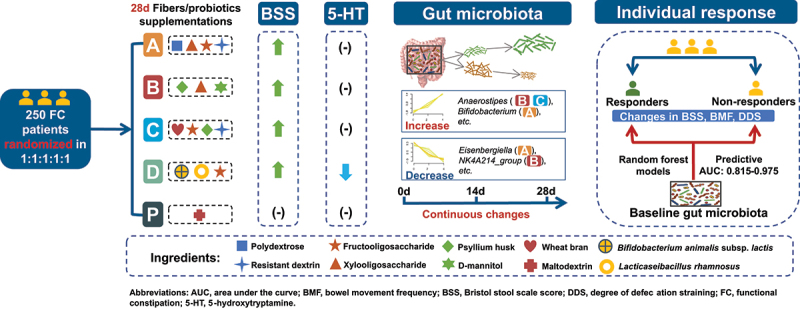
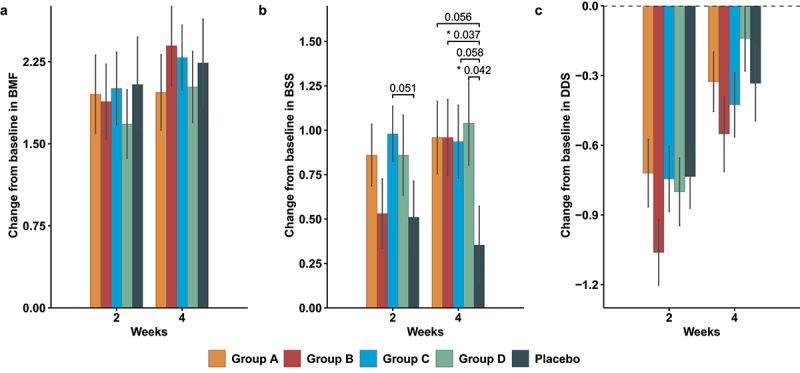
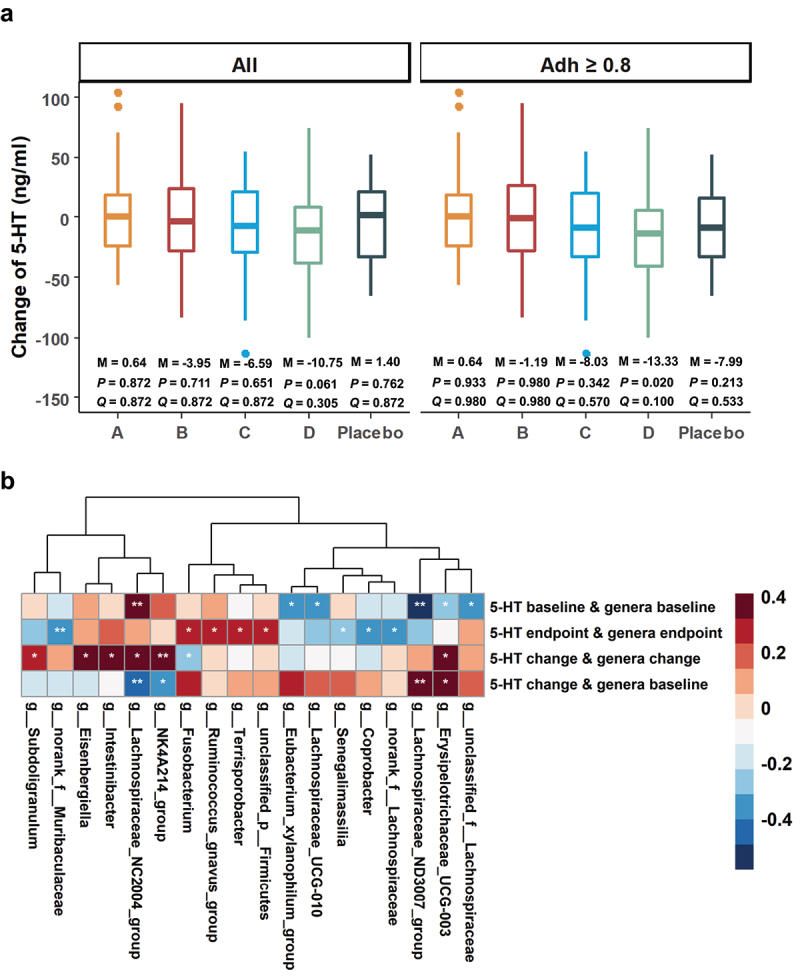
Dietary fibers/probiotics may relieve constipation via optimizing gut microbiome, yet with limited trial-based evidences. We aimed to evaluate the effects of formulas with dietary fibers or probiotics on functional constipation symptoms, and to identify modulations of gut microbiota of relevance. We conducted a 4-week double-blinded randomized placebo-controlled trial in 250 adults with functional constipation. Intervention: A: polydextrose; B: psyllium husk; C: wheat bran + psyllium husk; D: Bifidobacterium animalis subsp. lactis HN019 + Lacticaseibacillus rhamnosus HN001; Placebo: maltodextrin. Oligosaccharides were also included in group A to D. 16S rRNA sequencing was used to assess the gut microbiota at weeks 0, 2, and 4. A total of 242 participants completed the study. No time-by-group effect was observed for bowel movement frequency (BMF), Bristol stool scale score (BSS), and degree of defecation straining (DDS), while BSS showed mean increases of 0.95–1.05 in group A to D (all P < 0.05), but not significantly changed in placebo (P = 0.170), and 4-week change of BSS showed similarly superior effects of the interventions as compared placebo. Group D showed a marginal reduction in plasma 5-hydroxytryptamine. Group A resulted in a higher Bifidobacterium abundance than placebo at week 2 and 4. Fourteen genera showed intervention-specific increasing or decreasing trends continuously, among which Anaerostipes showed increasing trends in groups B and C, associated with BMF increase. Random forest models identified specific baseline microbial genera panels predicting intervention responders. In conclusion, we found that the dietary fibers or probiotics may relieve hard stool, with intervention-specific changes in gut microbiota relevant to constipation relief. Baseline gut microbiota may predispose the intervention responsiveness. ClincialTrials.gov number, NCT04667884.
Overview
CoChat Summary
TL;DR
In a 4-week double-blinded randomized placebo-controlled trial among 250 Chinese adults with functional constipation, dietary fiber or probiotic formulas improved hard stool (BSS) but did not show time-by-group effects for bowel movement frequency or straining. Intervention-specific gut microbiota changes and baseline microbial panels were associated with constipation relief and predicted intervention responsiveness.
Key findings
- No time-by-group effect was observed for BMF, BSS, or DDS (all interaction P > 0.05); all groups, including placebo, had within-group increases in BMF and decreases in DDS (all P < 0.05).
- BSS increased significantly in all four intervention groups (all P < 0.001) but not in placebo (P = 0.170); 4-week BSS change versus placebo had P values of 0.056, 0.037, 0.058, and 0.042 for groups A–D, with mean BSS increases of 0.95–1.05.
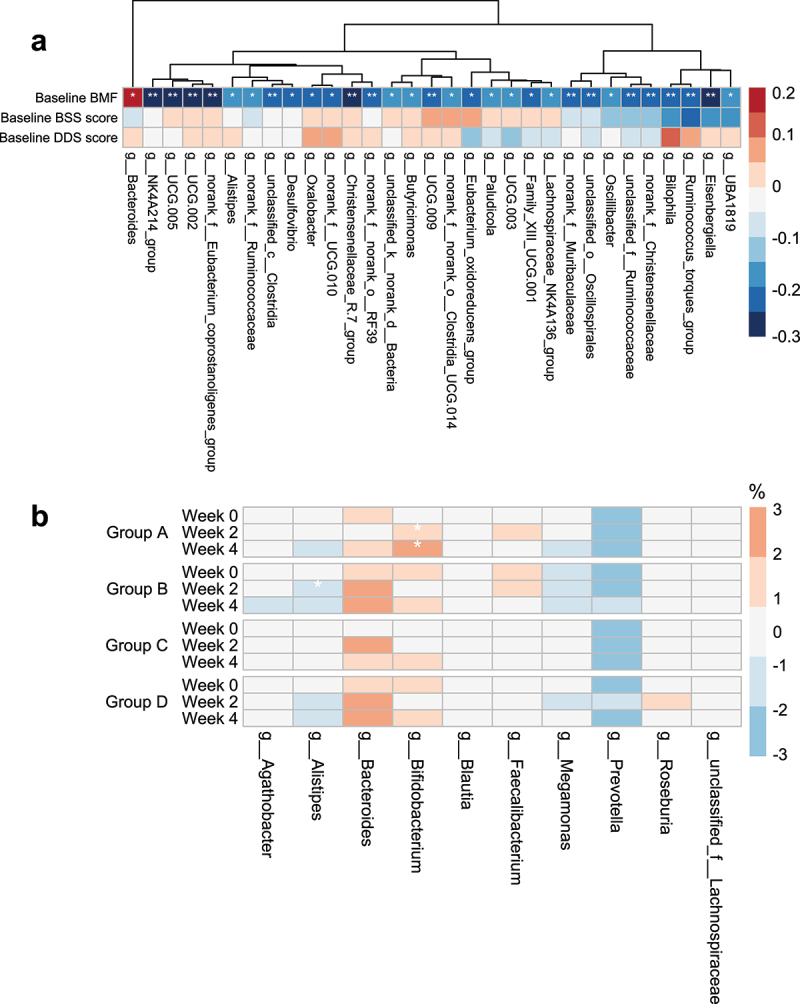
- Group A had higher Bifidobacterium abundance than placebo at week 2 (difference 1.780%, FDR P = 0.027) and week 4 (2.930%, FDR P = 0.049); group B had lower Alistipes at week 2 (1.967%, FDR P = 0.020).
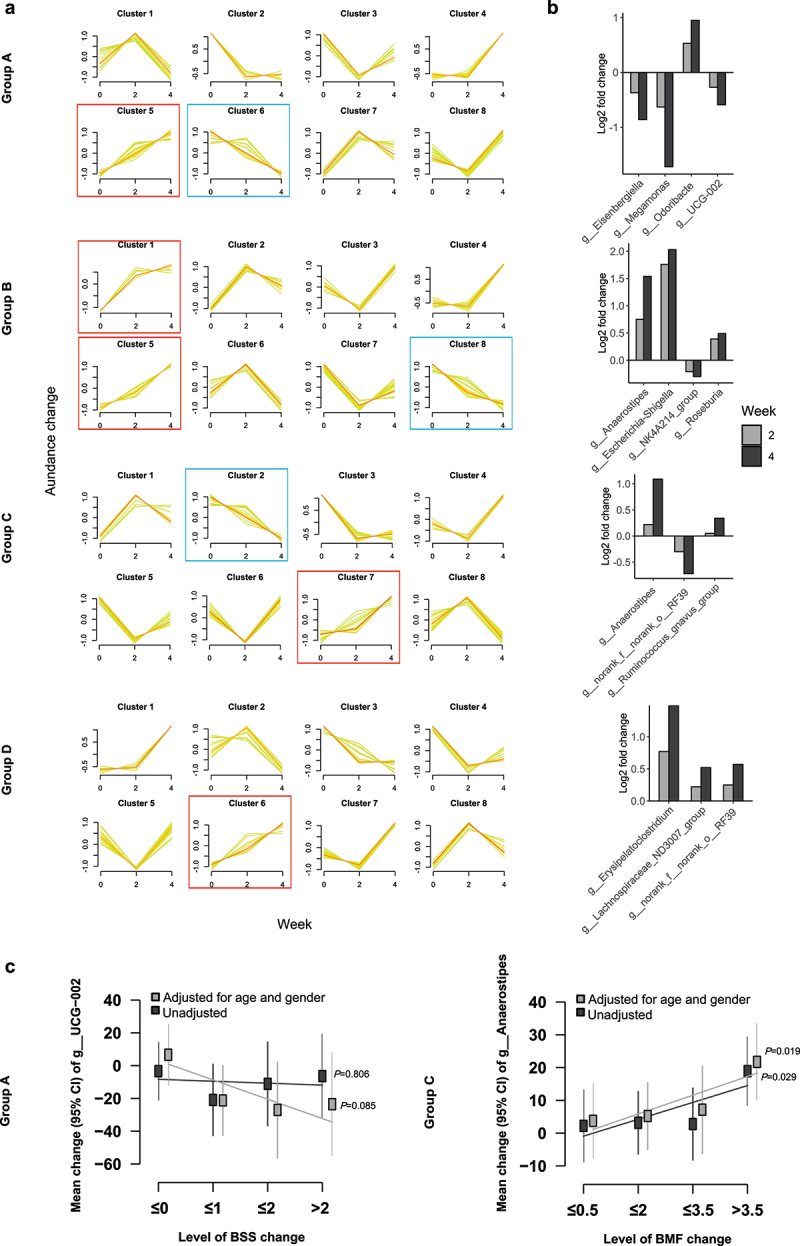
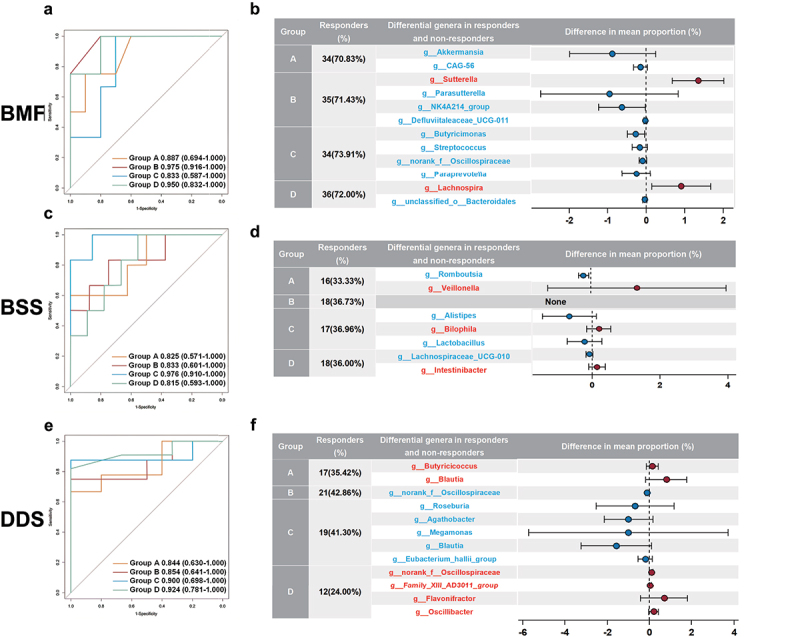
- Fourteen genera showed continuous intervention-specific trends; Anaerostipes increased in groups B and C and was positively correlated with BMF change. Random forest models using baseline genera predicted responders with mean AUC > 0.8, including AUC 0.975 for ≥1-unit BMF increase in group B and 0.976 for ≥1-unit BSS increase in group C.
Methods
- Double-blind, randomized, placebo-controlled trial in 250 adults with Rome IV functional constipation; 242 completed. Five groups (n = 50 each): A polydextrose + oligosaccharides + resistant dextrin; B psyllium husk + oligosaccharides + D-mannitol; C wheat bran + psyllium husk + oligosaccharides + resistant dextrin; D Bifidobacterium animalis subsp. lactis HN019 + Lacticaseibacillus rhamnosus HN001 + oligosaccharides; placebo maltodextrin.
- Primary outcome was BMF; secondary outcomes included BSS, DDS, fasting glucose, lipids, plasma 5-HT, and gut microbiome profiles. 16S rRNA sequencing assessed microbiota at weeks 0, 2, and 4.
- Analyses used GEE adjusted for age and sex, Wilcoxon rank-sum tests, partial Spearman correlations, soft clustering with Mfuzz, PICRUSt2 for KEGG inference, and random forest models for predicting responders.
Limitations
- Stated by the authors: no constipation sub-categorization, so effects by constipation type (e.g., dyssynergic defecation) could not be detected; no microbial metabolite data; wide age range may increase gut microbiota variability; KEGG annotations from 16S rRNA have limited resolution.
- Evident from the text: the primary symptom BMF and DDS showed no significant time-by-group effects, and placebo also improved BMF and DDS, limiting attribution of those improvements to the interventions.
- Evident from the text: several microbiota–symptom and 5-HT correlations did not sustain FDR adjustment, and BSS comparisons with placebo were marginal for some groups.
Model-written summary. Check it against the paper before relying on it.
Integrity signals
Registry
Cites
Statistics
Figures
Verification
Claims the paper makes
7 Valid · 0 Not valid · 5 Not checked · 66 Own results and interpretations
Every source the paper cites for this claim was checked and supports it.
In the paper
“the capability that gut microbiota modulate gut functions via metabolite production, such as short-chain fatty acids (SCFA) and bile acid, and indirect enteric neuroendocrine regulation in animals14.”
§ Effects of dietary fibers or probiotics on functional constipation symptoms and roles of gut microbiota: a double-blinded randomized placebo trial > Introduction
What the sources say
- Supportedcites [14] Wang JK, Yao SK, Ağagündüz D. Roles of gut microbiota and metabolites in pathogenesis of functional constipation. Evid Based Complement Alternat Med. 2021; 2021: 5560310. doi: 10.1155/2021/5560310. 34603471 PMC8481049 source
Section 4, “Possible Roles of Microbial Metabolites in FC,” states that gut microbiota can modulate gut functions through bacterial metabolites or intestinal neuroendocrine factors. It identifies SCFAs and bile acids as common metabolites and says much of the evidence comes from animal studies. (LLM, conf=0.93)
plainstates a cause- Asserted: passes — The authors put it forward as true.
- Checkable: passes — It can be checked against evidence.
- Load-bearing: passes — The paper’s conclusions depend on it.
- Based: passes — The paper gives a reason why it holds.
- Supported
Every source the paper cites for this claim was checked and supports it.
In the paper
“Growing evidence has pointed to the pathological role of gut microbiota disturbance in functional constipation”
§ Effects of dietary fibers or probiotics on functional constipation symptoms and roles of gut microbiota: a double-blinded randomized placebo trial > Introduction
What the sources say
- Supportedcites [14] Wang JK, Yao SK, Ağagündüz D. Roles of gut microbiota and metabolites in pathogenesis of functional constipation. Evid Based Complement Alternat Med. 2021; 2021: 5560310. doi: 10.1155/2021/5560310. 34603471 PMC8481049 source
Section 3, “Alterations of Gut Microbiota in FC,” says that changes in gut microbiota may contribute to dysfunction, and the Conclusions report a role for microbial dysbiosis and metabolites in FC. The paper cautions that evidence remains sparse on whether microbiota changes are a cause or consequence of FC, consistent with the citing sentence’s cautious wording. (LLM, conf=0.88)
hedgedstates a cause- Asserted: passes — The authors put it forward as true.
- Checkable: passes — It can be checked against evidence.
- Load-bearing: passes — The paper’s conclusions depend on it.
- Based: passes — The paper gives a reason why it holds.
- Supported
The cited sources support only part of this claim — read each source’s verdict below.
In the paper
“Dietary fibers/probiotics may relieve constipation via optimizing gut microbiome, yet with limited trial-based evidences.”
- Also stated in: § Introduction · hedged
“Dietary fibers, such as psyllium husk11, polydextrose15, xylooligosaccharide16, or probiotic supplementations17, were reported to be effective in modulating gut microbiota”
§ Effects of dietary fibers or probiotics on functional constipation symptoms and roles of gut microbiota: a double-blinded randomized placebo trial > Abstract
What the sources say
- Partly supportedcites [11] Yang C, Liu S, Li H, Bai X, Shan S, Gao P, Dong X. The effects of psyllium husk on gut microbiota composition and function in chronically constipated women of reproductive age using 16S rRNA gene sequencing analysis. Aging (Albany NY). 2021; 13(11): 15366– 15383. doi: 10.18632/aging.203095. 34081625 PMC8221300 sourceExperimental — accuracy not yet measured
The Introduction says psyllium, a dietary fiber, can relieve constipation and that probiotics have been used to relieve its symptoms. The Results report symptom improvement with psyllium, while the Introduction says this was accompanied by gut-microbiota changes. However, the paper says the microbiota’s role in the effect remains unclear; it does not establish microbiome optimization as the mechanism for both fibers and probiotics or substantiate the sentence’s claim of limited trial-based evidence. (LLM, conf=0.82)
- Partly supportedcites [15] Ibarra A, Pelipyagina T, Rueffer M, Evans M, Ouwehand AC. Efficacy of polydextrose supplementation on colonic transit time, bowel movements, and gastrointestinal symptoms in adults: a double-blind, randomized, placebo-controlled trial. Nutr. 2019; 11(2): 11. doi: 10.3390/nu11020439. PMC6412485 30791557 sourceExperimental — accuracy not yet measured
The Introduction (page unavailable) says fiber is a dietary means to relieve constipation and that studies of polydextrose’s effect on transit time are few and inconclusive. It does not say that relief occurs by optimizing the gut microbiome or establish a similar benefit for probiotics; the limited-evidence statement is specific to polydextrose and transit time. (LLM, conf=0.87)
- Partly supportedcites [16] Finegold SM, Li Z, Summanen PH, Downes J, Thames G, Corbett K, Dowd S, Krak M, Heber D. Xylooligosaccharide increases bifidobacteria but not lactobacilli in human gut microbiota. Food Funct. 2014; 5(3): 436– 445. doi: 10.1039/c3fo60348b. 24513849 sourceExperimental — accuracy not yet measured
Our copy supports only the microbiome-modulation half of the claim: the Abstract (p. 1) reports that in a double-blind, randomized, placebo-controlled trial in 32 healthy adults the prebiotic xylooligosaccharide raised Bifidobacterium counts (and total anaerobic and B. fragilis group counts at 2.8 g/day), and the Introduction frames prebiotic benefits as including 'improved digestion and gut function'. However, no passage in our copy addresses constipation or its relief — the trial enrolled healthy subjects, measured stool pH, SCFA, microbiota counts and tolerability, and the only bowel-frequency statement is the Tolerance section's note that no subject had diarrhea (>3 stools/day). The constipation-relief element attributed to this source is therefore absent (searched: constipation/laxation/transit time, fiber/prebiotic gut function, fecal moisture). (LLM, conf=0.72)
hedgedstates a possible causen = 242- Asserted: passes — The authors put it forward as true.
- Checkable: passes — It can be checked against evidence.
- Load-bearing: passes — The paper’s conclusions depend on it.
- Based: passes — The paper gives a reason why it holds.
- Also stated in: § Introduction · hedged
The sources with a verdict support this claim; the rest weren’t checked yet, have no full text we could read, or their verdicts aren’t rated yet.
In the paper
“yet human observational studies showed mixed associations between dietary fibers and constipation symptoms6,7.”
§ Effects of dietary fibers or probiotics on functional constipation symptoms and roles of gut microbiota: a double-blinded randomized placebo trial > Introduction
What the sources say
- Not checked — no full text of the sourcecites [6] Shen L, Huang C, Lu X, Xu X, Jiang Z, Zhu C. Lower dietary fibre intake, but not total water consumption, is associated with constipation: a population-based analysis. J Hum Nutr Diet. 2019; 32(4): 422– 431. doi: 10.1111/jhn.12589. 31087475 source
- Supportedcites [7] Markland AD, Palsson O, Goode PS, Burgio KL, Busby-Whitehead J, Whitehead WE. Association of low dietary intake of fiber and liquids with constipation: evidence from the national health and nutrition examination survey. Am J Gastroenterol. 2013; 108(5): 796– 803. doi: 10.1038/ajg.2013.73. 23567352 PMC3786707 source
The Introduction (page not provided) says earlier epidemiological studies supported an association between fiber and constipation. The Discussion (page not provided) reports that this study found an association before adjustment, but not after controlling for other factors. Together, these findings support the description of mixed observational associations. (LLM, conf=0.88)
plainstates an association- Asserted: passes — The authors put it forward as true.
- Checkable: passes — It can be checked against evidence.
- Load-bearing: passes — The paper’s conclusions depend on it.
- Based: passes — The paper gives a reason why it holds.
A result the paper reports from its own data — it cites no other source for it, so there is none to check. The quote shows it is in the paper.
In the paper
“Several genera that inversely associated with baseline BMF showed decreasing trends over the intervention, such as UCG.002, Eisenbergiella, and NK4A214_group.”
§ Effects of dietary fibers or probiotics on functional constipation symptoms and roles of gut microbiota: a double-blinded randomized placebo trial > Results > Constant microbiota changes over the intervention
plainstates an association- Asserted: passes — The authors put it forward as true.
- Checkable: passes — It can be checked against evidence.
- Load-bearing: unclear — It is unclear whether the paper’s conclusions depend on it.
- Based: passes — The paper gives a reason why it holds.
32 more claims
Create a free account to see all 78 claims and to verify the 1 reference still open.
- Probably not a substantial claim. 22
- It may state two separate claims as one. 25
Claims other papers make about this one
Each is checked against this paper’s own text: does it say what the citing paper says it does?
The check wasn’t confident either way, so it gives no verdict — never disputed.
In the citing paper
“Medications are extensively used in the management of chronic constipation, but require patients to have a high degree of compliance and a certain economic level [3,6,8].”
From Chronic constipation and gut microbiota: current research insights and therapeutic implications (2024) · cites this paper as [6]
Experimental — accuracy not yet measuredIn the citing paper
“For instance, SCFAs can reduce the pH value in the intestinal lumen, reduce inf lammation, and promote colonic movement [6,28];”
From Chronic constipation and gut microbiota: current research insights and therapeutic implications (2024) · cites this paper as [6]
In the citing paper
“However, some studies have found that the concentration of serotonin in the plasma of platelets in patients with functional constipation tends to increase.”
From Chronic constipation and gut microbiota: current research insights and therapeutic implications (2024) · cites this paper as [6]
In the citing paper
“A previous study in animal models also has shown that increased serotonin synthesis can trigger intestinal motility by regulating the production of metabolites in indigenous sporogenes, resulting in functional constipation [6].”
From Chronic constipation and gut microbiota: current research insights and therapeutic implications (2024) · cites this paper as [6]
In the citing paper
“Probiotic therapy acts through a mass effect, which alleviates symptoms of constipation by modulating the intestinal microenvironment, intestinal epithelial immune response, intestinal secretory function, and the neuroendocrine system that inf luences intestinal motility and secretion [6,22,26].”
From Chronic constipation and gut microbiota: current research insights and therapeutic implications (2024) · cites this paper as [6]
Self-check
Percentages, sums and reported differences re-computed from the paper’s own numbers.
Each contradiction between two passages listed here was confirmed by an independent check.
Rated minor: it would not touch a result — a value no result rests on, a p-value that stays on the same side of the significance level, or a conflict that is clerical, resolved elsewhere in the paper, or outside its own findings.
In the paper
§ Effects of dietary fibers or probiotics on functional constipation symptoms and roles of gut microbiota: a double-blinded randomized placebo trial > Results > Effects on gut microbiota diversity and composition
“the genera community richness (Chao1 estimators) and diversity (Shannon index, ACE estimators)”
§ Effects of dietary fibers or probiotics on functional constipation symptoms and roles of gut microbiota: a double-blinded randomized placebo trial > Methods > Statistical analyses
“the genus-level α-diversity indices of gut microbial community richness (the Ace and Chao1 estimators) and community diversity (the Shannon index)”
Citations
Cites
Indigenous bacteria from the gut microbiota regulate host serotonin biosynthesis
Yano, J. M., Yu, K., Donaldson, G. P., Shastri, G. G., Ann, P., Ma, L., Nagler, C. R., Ismagilov, R. F., Mazmanian, S. K., & Hsiao, E. Y. (2015) · Cell · doi:10.1016/j.cell.2015.02.047 · Cited by 3,614
Shekhar, C., Monaghan, P. J., Morris, J., Issa, B., Whorwell, P. J., Keevil, B. G., & Houghton, L. A. (2013) · Gastroenterology · doi:10.1053/j.gastro.2013.07.014 · Cited by 2,945
(2013) · Gastroenterology Research · doi:10.1053/j · Cited by 2,759
Mfuzz: A software package for soft clustering of microarray data
Kumar, L., & Futschik, M. E. (2007) · Bioinformation · doi:10.6026/97320630002005 · Cited by 1,986
Dietary fibre in gastrointestinal health and disease
Gill, S. K., Rossi, M., Bajka, B., & Whelan, K. (2021) · Nature Reviews Gastroenterology & Hepatology · doi:10.1038/s41575-020-00375-4 · Cited by 979
Review article: bifidobacteria as probiotic agents – physiological effects and clinical benefits
PICARD, C., FIORAMONTI, J., FRANCOIS, A., ROBINSON, T., NEANT, F., & MATUCHANSKY, C. (2005) · Alimentary Pharmacology & Therapeutics · doi:10.1111/j.1365-2036.2005.02615.x · Cited by 618
NOISE-ROBUST SOFT CLUSTERING OF GENE EXPRESSION TIME-COURSE DATA
FUTSCHIK, M. E., & CARLISLE, B. (2005) · Journal of Bioinformatics and Computational Biology · doi:10.1142/s0219720005001375 · Cited by 541
Wheat bran: Its composition and benefits to health, a European perspective
Stevenson, L., Phillips, F., O'sullivan, K., & Walton, J. (2012) · International Journal of Food Sciences and Nutrition · doi:10.3109/09637486.2012.687366 · Cited by 459
Management of functional constipation in children and adults
Vriesman, M. H., Koppen, I. J. N., Camilleri, M., Di Lorenzo, C., & Benninga, M. A. (2020) · Nature Reviews Gastroenterology & Hepatology · doi:10.1038/s41575-019-0222-y · Cited by 457 · cited 1×
“The current knowledge in the etiology of functional constipation involves intestinal motility disorders, intestinal secretion disorders, changes in visceral sensitivity, pelvic floor muscle dysfunction, enteric nervous system dysfunction, etc.(1).”
BackgroundBarberio, B., Judge, C., Savarino, E. V., & Ford, A. C. (2021) · The Lancet Gastroenterology & Hepatology · doi:10.1016/s2468-1253(21)00111-4 · Cited by 422
Research works printed but not linked: 3
- Chinese Nutrition Society. Dietary guidelines for Chinese residents. Beijing: Renmin Wei Sheng Chu Ban She; 2016.
- Gastrointestinal Dynamics Group of Gastroenterology Branch of Chinese Medical Association, Collaborative Group of Functional Gastrointestinal Diseases. Expert consensus on chronic constipation in China (2019, Guangzhou). Zhong Hua Xiao Hua Bing Za Zhi. 2019; 39: 577– 598.
- Zhang B, Baibing M, Wentao W, Guoshuai S, Suhang S, Yezhou L, Xiangyu GA, Shaonong DA, Xiangyu GA, Hong YA, et al. Application of research electronic data capture in an interactive online survey system for monitoring hypertension risk factors during pregnancy. Xi’an Jiao Tong da Xue Xue Bao Yi Xue Ban. 2020;41(4): 612-616.
Cited by
Items 101–200 of 202
Lan, W., Yang, H., Zhong, Z., Luo, C., Huang, Q., Liu, W., Yang, J., Xiang, H., Tang, Y., & Chen, T. (2024) · Food & Function · doi:10.1039/d4fo01471e · Cited by 5
Self-citationDigestive health: functional foods for a happy gut
Pathak, V. A., Deokar, G. S., Kshirsagar, S. J., Kulkarni, K. S., Sultanbawa, Y. F., & Nirmal, N. P. (2025) · Elsevier eBooks · doi:10.1016/b978-0-443-28862-3.00004-2 · Cited by 3
Wang, C., Liu, H., Li, X., Kong, W., Wu, H., & Huang, C. (2025) · Frontiers in Allergy · doi:10.3389/falgy.2025.1562832 · Cited by 4
Ong, S., Xu, L., Ang, C. W., Deng, X., Lu, H., & Xu, T. (2024) · Frontiers in Microbiology · doi:10.3389/fmicb.2024.1513723 · Cited by 5
Li, X., Wen, H., Ke, J., & Zhao, D. (2024) · Journal of Diabetes Investigation · doi:10.1111/jdi.14375 · Cited by 5
“Second, constipation is closely linked to dysbiosis of the gut microbiome 42,43 , which can adversely affect glucose homeostasis, exacerbate systemic in fl ammation, and disrupt energy metabolism, all of which are critical pathogenic factors in T2DM and its complications 14,44,45 .”
Influence of Dietary Quality on Neurogenic Bowel Dysfunction in Individuals With Spinal Cord Injury
Faber, W., Nachtegaal, J., Stolwijk-Swüste, J. M., Witteman, B. J. M., & Winkels, R. M. (2025) · Topics in Spinal Cord Injury Rehabilitation · doi:10.46292/sci24-00055 · Cited by 3
Wang, N., Wu, P., & Chen, X. D. (2025) · Foods · doi:10.3390/foods14081335 · Cited by 4
He, J., He, Y., Li, J., Ma, G., Li, Y., Xie, J., He, C., Feng, X., Jia, K., Li, W., et al. (2025) · Nutrition Metabolism and Cardiovascular Diseases · doi:10.1016/j.numecd.2025.104126 · Cited by 2
Self-citationZhao, Y., Liu, Y., Tao, J., Cao, J., Lin, Y., He, Q., Fang, X., Yun, S., Du, M., Su, S., et al. (2025) · Frontiers in Microbiology · doi:10.3389/fmicb.2025.1635639 · Cited by 4
Self-citationBo, Q., Li, Y., Wang, X., Wang, H., & Liu, H. (2025) · Frontiers in Aging Neuroscience · doi:10.3389/fnagi.2025.1607791 · Cited by 4
“…of spontaneous bowel movements (SBM) per week • Frequency of complete spontaneous bowel movements (CSBM) per week • Bristol Stool Scale (BSS) score (Lai et al., 2023) • Serum levels of gut-brain peptides including serotonin (5-HT), brain-derived neurotrophic factor (BDNF), vasoactive intestinal…”
InfluentialSelf-citationHuang, C., Wang, C., Wu, B., Kong, W., Wan, L., Wu, H., Huang, Y., Wang, X., Zeng, Y., & Liu, H. (2025) · Nutrition · doi:10.1016/j.nut.2025.112949 · Cited by 2
Self-citationGao, Y., Yu, L., Wu, J., Song, Y., Bi, J., Wang, L., Jiang, C., & Wang, M. (2025) · LWT · doi:10.1016/j.lwt.2025.118582 · Cited by 2
Xu, Y., Zhang, Y., Yue, F., Yu, X., Chen, Y., & Ma, X. (2025) · Medicine · doi:10.1097/md.0000000000046861 · Cited by 2
“[1] The occurrence and development of functional constipation is complicated, influencing by various factors, such as eating habits, water intake, mental stress, and some pathological effects.”
Wen, D., Liu, S., Wu, Y., Zhang, H., & Zhang, K. (2026) · Frontiers in Medicine · doi:10.3389/fmed.2026.1751593 · Cited by 3
Xiao, R., He, Y., Mao, X., Sun, L., Ao, L., Wang, L., Zhai, Q., Zhao, J., Chen, W., Wang, G., et al. (2026) · Clinical Nutrition · doi:10.1016/j.clnu.2026.106598 · Cited by 3
Self-citationDiet and Childhood Obesity: The Mediating Role of the Gut Microbiota
Zhang, S., Wang, B., Chen, Z., Lyu, J., Fan, F., & Han, F. (2026) · International Journal for Vitamin and Nutrition Research · doi:10.31083/ijvnr41881 · Cited by 2
Qiao, L., Wu, L., Xiao, Y., Qiu, J., Qiao, X., Dong, X., Lei, C., Wang, W., Zhao, Y., & Hua, Z. (2026) · Journal of Hematology & Oncology · doi:10.1186/s13045-026-01827-1 · Cited by 5
“Their hydrophilic termini can be functionalized with fluorescent dyes, targeting peptides, or bioorthogonal groups for subsequent modification [46, 69].”
Yang, X., Zhao, Q., Wang, X., Zhang, Y., Ma, J., Liu, Y., & Wang, H. (2025) · Technology and Health Care · doi:10.1177/09287329241301680 · Cited by 5
“29,30 Studies on animals and humans have shown that probiotics of different strains play important roles in various disease models.”
Self-citationHawryłkowicz, V., Stasiewicz, B., Korus, S., Krauze, W., Rachubińska, K., Grochans, E., & Stachowska, E. (2025) · Nutrients · doi:10.3390/nu17050800 · Cited by 3
“Four weeks of supplementation with fiber (polydextrose, oligosaccharides, psyllium husk, or wheat bran) or increasing its intake in consistently constipated individuals resulted in a significant increase in bowel movements frequency but not in the placebo group [62].”
Jin, Y.-J., Park, Y.-J., Choi, J., Kim, M.-S., Min, U.-G., Lim, J.-H., Kang, J., Lee, D. Y., & Kim, B. (2025) · Journal of Microbiology and Biotechnology · doi:10.4014/jmb.2412.12056 · Cited by 4
“Furthermore, treatment with B. lactis, L. rhamnosus and fructo-oligosaccharide in patients with functional constipation, as defined by the Rome IV criteria, has been shown to improve the BSS [35].”
Huang, X., Hu, L., Li, J., Meng, C., Xiao, X., & Liu, Y. (2025) · Scientific Reports · doi:10.1038/s41598-025-01122-y · Cited by 2
“They enhance motility in hypokinetic intestines induced by sedentarism, prevent dysbiosis-related barrier impairment, and reduce endotoxin translocation 24,25 .”
Self-citationZikela, L., Li, X., Zhou, H., Xu, H., Zhu, H., Yu, Z., Wang, D., Gao, J., Ma, Z., Gao, Y., et al. (2025) · The Journal of Nutritional Biochemistry · doi:10.1016/j.jnutbio.2025.110045 · Cited by 2
Risso, D. S., Laurie, I., Sarkkinen, E. S., & Karnik, K. (2023) · Functional Foods in Health and Disease · doi:10.31989/ffhd.v13i5.1099 · Cited by 4
Efeitos de alimentos/compostos funcionais na saúde: uma revisão integrativa
Silva, L. E. C. E., dos Santos, T. M., Ferriani, L. O., Silva, D. A., & Sena, G. G. S. (2024) · Brazilian Journal of Health Review · doi:10.34119/bjhrv7n4-066 · Cited by 1
Zhang, J., Shi, M., Zhang, Q., Chen, Y., Yin, X., Wang, X., & Zhang, Y. (2024) · Neuroepidemiology · doi:10.1159/000540955 · Cited by 2
“In addition, clinical trials have shown that supplementation with dietary fi ber or probiotics can effectively relieve constipation by regulating gut microbiota [34, 35].”
Self-citationWeis, C. M. S. C., Gomes, M. M., Vicenzi, B. G., Fabiano, G. A., Lopes, J. D. O., dos Santos, P. D. D. S., Tormen, L., Santos, O. O., Bezerra, R. M. N., Antunes, A. E. C., et al. (2024) · Fermentation · doi:10.3390/fermentation10110570 · Cited by 1
Comparative analysis of gut microbiota in healthy and diarrheic foals
Zhu, D., Li, S., Xu, Z., Kulyar, M. F., Bai, X., Wang, Y., Wang, B., Khateeb, E., Deng, D., Wang, L., et al. (2025) · Microbiology Spectrum · doi:10.1128/spectrum.00871-24 · Cited by 2
“Additionally, Bifidobacterium has been reported to effectively alleviate fat deposition, infant colic, and constipation (61–63).”
Self-citationCheng, M.-C., Chen, H.-M., Chang, T., Chen, M., Bai, B.-J., Chao, C., Hsieh, W.-Y., Lin, Y., Ni, C., Lu, M., et al. (2025) · Carbohydrate Polymer Technologies and Applications · doi:10.1016/j.carpta.2025.100808 · Cited by 2
Exploring the Flavor Substances in “Laocaifu” Based on UPLC‐MS Combined With GC‐MS
Cai, W.-F., Xiong, Z.-F., Liu, Y., Hu, R.-X., An, Y.-Y., Li, J., Shen, C., & Yi, Y. (2025) · Journal of Food Biochemistry · doi:10.1155/jfbc/6668787 · Cited by 2
Self-citationShi, X., Shi, L., Tian, Y., & Li, N. (2025) · Medicine · doi:10.1097/md.0000000000043835 · Cited by 1
“…the current study are not publicly available, but are available from the corresponding author on reasonable request. side effects of medications [8–10] Lifestyle adjustments, including increased dietary fiber intake and regular physical activity, may be effective for some patients but have…”
Self-citationNonpharmacologic treatment for elderly with constipation: a systematic review and meta-analysis
Xu, L., Leng, Y., Dai, P., Gao, H., Chu, Y., Chen, X., Yang, M., Li, X., & Yang, T. (2025) · Frontiers in Medicine · doi:10.3389/fmed.2025.1644609 · Cited by 5
Wang, H., Yan, M., Wang, H., He, L., & Zhang, Y. (2025) · Frontiers in Medicine · doi:10.3389/fmed.2025.1631466 · Cited by 1
Antibiotic-driven and microbiota-targeted therapy for advanced management of pulmonary hypertension
Xing, Y., Liu, C., Zhang, C., Zhou, D., Hu, B., Jiang, Q., Chen, J., Lin, Z., Wang, T., Yan, H., et al. (2025) · Respiratory Research · doi:10.1186/s12931-025-03362-y · Cited by 2
“Particularly, Lactobacillus and Anaerostipes , acknowledged as probiotic for the gut [12] and producers of short-chain fatty acids and enriched in the healthy control rats, were highly negatively correlated with RVSP and Fulton index.”
Quan, V., & Carey, S. (2025) · Clinical Nutrition ESPEN · doi:10.1016/j.clnesp.2025.102849 · Cited by 1
Li, J., He, Y., He, J., Xie, J., He, C., Jia, K., Wang, M., Wei, L., Feng, X., Ma, G., et al. (2026) · npj Science of Food · doi:10.1038/s41538-026-00708-8 · Cited by 1
“Thequestionnaireinformationwas collected using a Radcap-based online system 17 .”
Self-citationKumar, A., Patel, R., Yadav, S., Prajapati, B., Sharma, S., Batta, K., Kaushik, R., Kumar, S., Dudhat, K. R., & Rustagi, S. (2026) · Current Nutrition Reports · doi:10.1007/s13668-025-00727-z · Cited by 2
From Husks and Seeds to Health: an Inevitable Outcome Rather than a Fluke
Şanlıer, N., & Özler, E. (2026) · Current Nutrition Reports · doi:10.1007/s13668-025-00722-4 · Cited by 2
“Psyllium may have a positive effect on constipation by increasing bowel move - ments and stool water, facilitating defecation, and altering the colonic content [105, 106].”
Jia, Y., Guo, J., Shen, Y., Liao, C., Chen, S., Ding, K., & Yu, Z. (2026) · Foods · doi:10.3390/foods15060976 · Cited by 1
“The supplementation of probiotics in feed can alter the structure of the animal’s gut microbiota [54].”
Self-citationLiu, Y., Pan, J., Yu, L., Zhang, C., Zhang, C., Yao, Q., Chen, X., Wang, X., Zhao, J., Tian, F., et al. (2026) · Gut Microbes Reports · doi:10.1080/29933935.2026.2669712 · Cited by 5
“14,17,28,29 Both products were manufactured to food-grade standards and presented as powders with identical appearance and packaging.”
Self-citationLi, H., Feng, X., Zhong, F., & Luo, X. (2026) · Nutrients · doi:10.3390/nu18111658 · Cited by 1
“In summary, probiotics provide a physiologically sound natural intervention strategy for functional constipation by reshaping the gut microbiota balance and regulating the gut–brain axis signaling network [9,10].”
Liu, S., Luo, X., Zhou, J., Wang, L., Li, R., Luo, Z., Li, N., Xiao, S., & Zhang, P. (2026) · Frontiers in Microbiology · doi:10.3389/fmicb.2026.1801806 · Cited by 2
Jiang, C., Wang, K. Z., & Yao, Y. (2026) · Probiotics and Antimicrobial Proteins · doi:10.1007/s12602-026-11061-3 · Cited by 2
Gut microbiota in health and disease
Li, Y. N., Xiao, X., Jiang, X., Li, X., WANG, W., & Lin, R. (2026) · Molecular Biomedicine · doi:10.1186/s43556-026-00512-6 · Cited by 8
“In individuals with constipation or irregular bowel habits, certain prebiotic formulations may increase stool frequency and improve stool consistency [433].”
Self-citationMohamed, D. A., Mabrok, H. B., El-Sayed, H. S., Abdelgayed, S. S., & Mohammed, S. E. (2025) · Applied Microbiology · doi:10.3390/applmicrobiol5030072 · Cited by 1
Wei, S., Yu, S., Lan, Y., et al. (2024) · Research Square · doi:10.21203/rs.3.rs-4756235/v1 · Cited by 1
Cao, X., Zhao, H., Liang, Z., Cao, Y., & Min, M. (2023) · Open Medicine · doi:10.1515/med-2023-0869 · Cited by 1
“Oral administration of PT can alter the gut micro fl ora and downregulate 5-HT [15,31,32], thus being considered as an adjuvant therapy to reduce bacterial translocation and prevent sepsis [6,7].”
BackgroundExploring the mechanism of interaction between Muc2 and intestinal flora on functional constipation
Mengfei, K. (2023) · International Journal of Frontiers in Medicine · doi:10.25236/ijfm.2023.051202 · Cited by 2
Z, K., Wilson, W., & Tejoyuwono, A. A. T. (2024) · Jurnal Penyakit Dalam Indonesia · doi:10.7454/jpdi.v11i1.1529 · Cited by 3
Pan, Y.-F., Wu, M., & Lin, Q. (2024) · PubMed Central · doi:10.7499/j.issn.1008-8830.2401141 · Cited by 2
Yang, Z., Wang, C., Yang, W., Meng, D., Kong, W., Xu, L., Wu, B., & Huang, C. (2024) · Research Square · doi:10.21203/rs.3.rs-4493967/v1
Yang, C., Hong, Q., Wu, T., Fan, Y., Shen, X., & Dong, X. (2024) · Journal of Nutrition · doi:10.1016/j.tjnut.2024.08.025
Factors Affecting the Association between Dietary Live Microbes and Constipation
Tan, B. J., Chan, L. L., & Tan, E. (2024) · Journal of Nutrition · doi:10.1016/j.tjnut.2024.05.032
Chen, Y., & Ding, M. (2024) · Revista Española de Enfermedades Digestivas · doi:10.17235/reed.2024.10306/2024 · Cited by 1
Shi, Z., Wang, D., Yu, J. H., Zhou, M., Du, J., Qin, H., & Zhu, H. (2025) · Frontiers in Nutrition · doi:10.3389/fnut.2025.1509687
Yang, Z., Huang, L., Fu, Y., et al. (2025) · Research Square · doi:10.21203/rs.3.rs-6473670/v1
Ren, Q., Wang, Y., Han, X., Wang, Q., & Liang, G. (2025) · Lipids in Health and Disease · doi:10.1186/s12944-025-02567-w
“This network involves multiple factors, including demographic characteristics [16], neural regulation [17], dietary habits [18], gut microbiota [19], physical activity [20], and psychological state [21], all of which can influence BMF.”
Li, W., Wang, M., Xu, K., He, J., Feng, X., Ma, G., Li, Y., Lai, H., Tang, A., He, C., et al. (2025) · Molecular Nutrition & Food Research · doi:10.1002/mnfr.70155
“Recent studies, including ours, indicated altered gut microbiota features in patients with functional constipation; some of the genera, such as Ruminococcus and Anaerotruncus , were also related to dyslipidemia in the human body [5–7].”
Self-citationDong, X., Chen, M., Liu, H., Zhou, S., Sun, M., Wang, L., Li, Y., Zhang, H., Xu, C., Wang, B., et al. (2025) · Microbiological Research · doi:10.1016/j.micres.2025.128328 · Cited by 1
Self-citationSaleh, A. A., Sahili, M., Jrad, I., Mortada, F., Masri, J. E., Chaar, S. A., Shibli, F., Salameh, P., Ashraf, H., & Hazimeh, Y. (2025) · Obesity Surgery · doi:10.1007/s11695-025-08188-7 · Cited by 1
“Hao et al. conducted a 4-week double-blinded randomized clinical trial, showing that soluble fiber intake has increased the Bristol Stool Scale by 0.95–1.05 and improved bowel movements [33].”
InfluentialBaran, Ö., Kartal, M. E., Coşkun, A., Kurt, C. S., Dağ, B., Servi, N. N., Doğan, G., Yücecan, S., & Dağ, A. (2025) · Clinical and Experimental Health Sciences · doi:10.33808/clinexphealthsci.1700763
Tian, R., Hu, X., Yu, L., Tian, F., Zhao, J., Zhai, Q., & Chen, W. (2025) · Food Science and Human Wellness · doi:10.26599/fshw.2025.9250793 · Cited by 1
Zhang, Y., Wu, J., Yuan, Y., Huang, Y., & Han, H. (2025) · World Journal of Gastrointestinal Surgery · doi:10.4240/wjgs.v17.i11.111973
Aykut, M. K., Özbey, F., & Uzel, S. (2025) · Gümüşhane Üniversitesi Sağlık Bilimleri Dergisi · doi:10.37989/gumussagbil.1727742
Giannitrapani, L., Ferraro, M., Seidita, A., Licata, A., & Soresi, M. (2025) · World Journal of Hepatology · doi:10.4254/wjh.v17.i12.110076
A mediterranean-mimicking diet harnesses gut microbiota–derived 3-IAA to rejuvenate T cellPreprint
Yu, X., Li, W., Feng, H., Li, Z., Zheng, H., Sun, S., Li, J., Li, B., & Wu, Q. (2026) · bioRxiv (Cold Spring Harbor Laboratory) · doi:10.64898/2026.01.05.697620
Self-citationA mediterranean-mimicking diet harnesses gut microbiota–derived 3-IAA to rejuvenate T cellPreprint
Yu, X., Li, W., Feng, H., Li, Z., Zheng, H., Sun, S., Li, J., Li, B., & Wu, Q. (2026) · eLife · doi:10.7554/elife.110468.1
Self-citationA mediterranean-mimicking diet harnesses gut microbiota–derived 3-IAA to rejuvenate T cellPreprint
Yu, X., Li, W., Feng, H., Li, Z., Zheng, H., Sun, S., Li, J., Li, B., & Wu, Q. (2026) · eLife · doi:10.7554/elife.110468
Self-citationJudijanto, L. (2026) · European Journal of Medical and Health Research · doi:10.59324/ejmhr.2026.4(1).35
Immunological and periodontal benefits of prebiotic polydextrose in rats with induced periodontitis
Nassar, R. D. S. F., Ribeiro, M. C., Hernandes, A. C. P., Gianduzzo, L. Z., Pereira, V. D. P. S., Salvador, S. L. D. S., Ervolino, E., Sávio, D. D. S. F., Messora, M. R., & Furlaneto, F. A. C. (2026) · Journal of Periodontology · doi:10.1002/jper.70095 · Cited by 1
“17 In clinical studies, PDX has been shown to increase the production of SCFAs, 18 reduce intestinal pH and postprandial triglyceride response, 18,19 and significantly improve bowel function, 20 stool consistency, 20 and satiety.”
Rao, X., Luo, Q., Wei, W., Wei, B., Yang, X., Liu, Y., Wen, Y., Ma, Z., Wu, Z., Zhang, H., et al. (2026) · BMC Microbiology · doi:10.1186/s12866-026-04831-0
“Notably, several studies have demonstrated that probiotics alleviate constipation by reducing the relative abundance of intestinal pathogens [51–53], indicating that BGI-N2 may exert its probiotic effects through a similar mechanism.”
Liang, C., Deng, X., Wang, H., Hu, X., Cui, L., Huang, J., Xu, M., Hou, L., Xu, S., Zhou, L., et al. (2026) · Probiotics and Antimicrobial Proteins · doi:10.1007/s12602-026-10955-6
CFD protein deficiency induce slow transit constipation is correlated with gut microbial dysbiosis
Hu, S., Liu, H., Song, F., Huang, D., & Wei, Q. (2026) · Scientific Reports · doi:10.1038/s41598-026-41597-x
“Several studies have revealed that intestinal microbes are disrupted in individuals with constipation, but there is no consensus on exactly which microbiota plays a major role in the development of constipation 36,37 .”
The Role of Different Dietary Fibers in Modulating Human Gut Microbiota
Das, S., Fletcher, C., & Wu, Y. (2026) · Nutraceuticals · doi:10.3390/nutraceuticals6010018 · Cited by 5
“Oligosaccharides support beneficial bacteria like Bifidobacterium , aiding in stool consistency and overall gut function [158].”
Fan, Y., Qin, H., Liu, J., Abbas, M., Yang, C., Cheng, H., & Dong, X. (2026) · Frontiers in Nutrition · doi:10.3389/fnut.2026.1775405
“Numerous studies have demonstrated that probiotics can alleviate constipation in various ways, including altering the composition of the intestinal flora, improving intestinal environment, and maintaining microbial balance (6, 7).”
You, X., Guo, W., Huang, K., Zhong, C., Yang, L., & Jiang, Q. (2026) · European Journal of Nutrition · doi:10.1007/s00394-026-03944-6
Yang, P., Zhou, Q., Jia, M., Li, K., Qu, Q., Ren, W., Peng, X., Li, G., Xie, Y., Li, B., et al. (2026) · Probiotics and Antimicrobial Proteins · doi:10.1007/s12602-026-10988-x
Liu, S., Yang, Q., Du, L., Yang, Y., & Wu, Z. (2026) · International Journal of Biological Macromolecules · doi:10.1016/j.ijbiomac.2026.151532 · Cited by 1
Oral Microbiome and Constipation: A Causal Link Revealed by Mendelian Randomization
Zhao, Z., Ling, J., & Chen, J. (2026) · JGH Open · doi:10.1002/jgh3.70390
Xu, L., Luo, Y., Deng, P., Sangzhu, T., Myima, P., Ciren, D., Ren, Q., & Yang, M. (2026) · Bioactive Carbohydrates and Dietary Fibre · doi:10.1016/j.bcdf.2026.100527
Liu, X., Zhang, Y., Guo, X., Hu, L., Peili, H., Zhu, G., Yao, X., Li, J., & Yang, G. (2026) · Frontiers in Medicine · doi:10.3389/fmed.2026.1795679
“This highlights the advantageous role of fiber-rich foods in improving gastrointestinal function (46).”
Self-citationPrevalence and risk factors of constipation among psychiatric outpatients: A cross-sectional study
Xu, M., Guo, Y., Huang, H., & Yan, F. (2026) · Journal of Psychosomatic Research · doi:10.1016/j.jpsychores.2026.112872
Zhang, M., Qiao, H., Cui, P., Liu, K., Kwok, L. Y., & Zhang, W. (2026) · Food Microbiology · doi:10.1016/j.fm.2026.105175 · Cited by 1
Howard, C., Johnson, D. W., Hawley, C. M., Pegg, K., Mayr, H. L., Leary, D. R., Hale, R., Viecelli, A. K., Hamilton, J., Thomas, V., et al. (2026) · Peritoneal Dialysis International · doi:10.1177/08968608261429654 · Cited by 1
Kim, Y. W., Park, S.-Y., Kang, S. J., Lee, M. W., Choi, Y., Kim, B. Y., Choi, M., Shin, C. M., Kim, Y. S., Kim, N., et al. (2026) · Sex- and Gender-Specific Biomedicine · doi:10.65400/sgbm.2026.1.2.85
Management of constipation: A narrative review of evolving strategies and methodological challenges
Goyal, M. K., Brahmandam, G., Chowdhary, R., guna, S. D. S., Shah, D., Goyal, P., Vuthaluru, A. R., & Goyal, O. (2026) · World Journal of Methodology · doi:10.5662/wjm.118399
Wang, Z., Liu, Y., Zhu, C., Gao, Y., Xu, F., & Wang, J. (2026) · Journal of Nutrition · doi:10.1016/j.tjnut.2026.101626
Tang, A., Tian, T., Wei, L. I., LI, Y., Lai, H., Wang, M., He, J., Feng, X., Chen, H., He, Y., et al. (2026) · Nutrition · doi:10.1016/j.nut.2026.113284
Self-citationMou, J., Zeng, L., Li, Y., Sun, M., Li, Q., Hu, K., & Wang, Q. (2026) · Food & Function · doi:10.1039/d6fo00286b
Self-citationFrom mechanisms to therapy: Targeting the gut-brain axis in chronic gastrointestinal pain
Chen, X.-Y., Tan, B., Shao, G., Pan, J., Lu, L., Xiao, Z., Lin, Z., Ji, G., & Xu, H. (2026) · Pharmacological Research · doi:10.1016/j.phrs.2026.108329 · Cited by 1
Tang, A., Cao, Q., Wang, M., Li, W., Xu, H., Wang, Y., Niu, H., Wang, H., Ma, G., Jia, K., et al. (2026) · European Journal of Nutrition · doi:10.1007/s00394-026-04029-0
Self-citationHolmbäck, U. C., Grudén, S., Kuusk, S., Litorp, H., Englund, J., Söderhäll, A., Alderborn, G., & Forslund, A. (2026) · Scientific Reports · doi:10.1038/s41598-026-62003-6
Gao, J., Li, D., Liu, J., Liu, F., Wu, S., & Zhao, Y. (2026) · Frontiers in Public Health · doi:10.3389/fpubh.2026.1842474
Chen, Y., Duan, W., Du, M., Guo, M., & Sun, Y. (2026) · Frontiers in Microbiology · doi:10.3389/fmicb.2026.1817279 · Cited by 1
“Lai et al. (2023) reported that baseline SCFA levels in constipated patients were positively correlated with bowel movement frequency.”
Lin, S., Lin, J., Li, Y., Liu, X., Gu, D., Zhang, F., Wu, Y. C., Wang, Y., Fan, J., & 庄礼兴 (2026) · Frontiers in Neuroscience · doi:10.3389/fnins.2026.1840324
Self-citationBifidobacterium breve MYQQ-7 alleviates hypertriglyceridemia-induced acute pancreatitis via PPARγ
Zou, H., Liang, W., Tian, H., Yang, S., Pan, L., Yang, J. Q., & Sun, J. (2026) · Food Bioscience · doi:10.1016/j.fbio.2026.109385
Self-citationHu, J., Ma, X., Wang, Y., Liu, L., Tang, M., Tian, X., Liu, H., Gao, Y., & Lv, J. (2026) · Journal of Ethnopharmacology · doi:10.1016/j.jep.2026.122240 · Cited by 1
Sunflower-Derived Pectin Oligogalacturonides Promote Defecation in Mice
Gu, H., Qu, X., Sheng, X., Wang, X. J., Cai, Y., Geng, J., Cui, L., Mayo, K. H., Zhou, Y., Cheng, H., et al. (2026) · Foods · doi:10.3390/foods15152625
“In this regard, dietary fibers have attracted much attention due to their low toxicity and promising laxative effects [14,15].”
Self-citationZhong, J., Xu, Z., Chen, W., Jiang, Y., Ge, Q., Deng, Y., He, W., Mao, X., 朱雅碧, Sang, J., et al. (2026) · Journal of Gastroenterology and Hepatology · doi:10.1111/jgh.70672 · Cited by 1
“Recent randomized controlled trials have evaluated probiotic effects on gut health [9], including bowel movement regulation [6, 10], IBS symptoms [11, 12], and loose stools consistency improvement [6].”
Huang, Z., Zhang, Y., Li, L., Gao, Y., Gu, Z., Cheng, L., & Hong, Y. (2026) · Food Chemistry · doi:10.1016/j.foodchem.2026.150826
Metadata
- Authors
- Lai, H., Li, Y., He, Y., Chen, F., Mi, B., Li, J., Xie, J., Ma, G., Yang, J., Xu, K., Liao, X., Yin, Y., Liang, J., Kong, L., Wang, X., Li, Z., Shen, Y., Dang, S., Zhang, L., Wu, Q., Zeng, L., Shi, L., Zhang, X., Tian, T., & Liu, X.
- Affiliations
- Xi'an Jiaotong University (CN)
- First Affiliated Hospital of Xi'an Jiaotong University (CN)
- Tang Du Hospital (CN)
- BYHEALTH Institute of Nutrition & Health, Guangzhou, China
- Shaanxi Normal University (CN)
- Department of Nutrition, Xi’an Daxing Hospital, Xi’an, China
- Corresponding author
- Zhang, Xuguang
- Tian, Tian
- Liu, Xin
- ORCID
- Venue
- Gut Microbes
- Publisher
- Informa UK Limited
- Published
- 2023-04-20
- Volume
- 15
- Issue
- 1
- Pages
- 2197837-2197837
- ISSN
- 1949-0976 (ISSN-L)
- 1949-0984
- PMC
- PMC10120550
- OpenAlex
- W4366486302
- Cited by
- 208
- References
- 35
- Citations by year
- 2026: 60 · 2025: 88 · 2024: 48 · 2023: 12
- FWCI
- 59.00
- Type
- journal article
- Language
- en
- Open access
- gold
- doi.org
- Licence
- Locations
- Gut Microbes (publishedVersion, cc-by-nc)
- PubMed Central (publishedVersion, cc-by-nc)
- PubMed (publishedVersion)
- DOAJ (DOAJ: Directory of Open Access Journals) (submittedVersion, cc-by-sa)
- Funders
- Xi’an Jiaotong University (xjj2018146)
- BYHEALTH Nutrition and Health Research Foundation (TY0191118)
- National Natural Science Foundation of China (82173504)
- Topics
- Health Sciences › Medicine › Gastroenterology › Gastrointestinal motility and disorders
- Life Sciences › Biochemistry, Genetics and Molecular Biology › Molecular Biology › Gut microbiota and health
- Life Sciences › Agricultural and Biological Sciences › Food Science › Probiotics and Fermented Foods
- Keywords
- functional constipation, dietary fiber, probiotics, gut microbiota, polydextrose, psyllium husk, wheat bran, oligosaccharides, serotonin, Bifidobacterium, Anaerostipes, Bristol stool scale, stool frequency, defecation straining
- MeSH terms
- Gastrointestinal Microbiome, Bifidobacterium animalis, Adult, Constipation, Dietary Fiber, Double-Blind Method, Gastrointestinal Diseases, Humans, Psyllium, RNA, Ribosomal, 16S, Probiotics
About these checks
Registry, retraction, Cites and statistics results are computed, not judged, with one exception: a printed reference that no index lists is read once by a model before it counts as a citation error. Claims are extracted by a model and kept only when their quote appears verbatim in the text; each cited source is then checked, with a model’s help, for whether it says what the claim relies on. Those verdicts can be wrong — read the claim’s quote and the cited source before relying on one.
The claim verdicts this report counts are experimental: their accuracy is not yet measured.
A language model drew the claims from the paper on 2026-10-10, under version 3 of the claim definition (model deepseek-v4.1-flash, prompt extract-v3).
A second model labelled each claim on 2026-10-10 (model jev-1.13-20260917, definition revision gold-guideline-v0.2).
Cited sources are checked with a language model’s help (gpt-6-sol and qwen3.8-omni-flash).
Statistics and arithmetic are recomputed, not judged.
Confidence bands are shown only for fields calibrated on our annotated test set. None is calibrated yet, so no band is shown.
What counts as a claim ›How we measure confidence ›How we check this ›
Are you an author, or do you see a problem with this page? Request a review
Data sources
Bibliographic data: Semantic Scholar, OpenAlex, Crossref.
Contains information from the Semantic Scholar Academic Graph Datasets, made available under the ODC Attribution License (ODC-BY 1.0).
Semantic Scholar’s data is described in: Kinney, R., et al. (2023). The Semantic Scholar Open Data Platform. arXiv:2301.10140.
