

Breaking the barriers: the role of gut homeostasis in Metabolic-Associated Steatotic Liver Disease (MASLD)
Open accessThe DOI matches its Crossref record; 185 of the 185 references it cites were found in a registry or an index.
Abstract
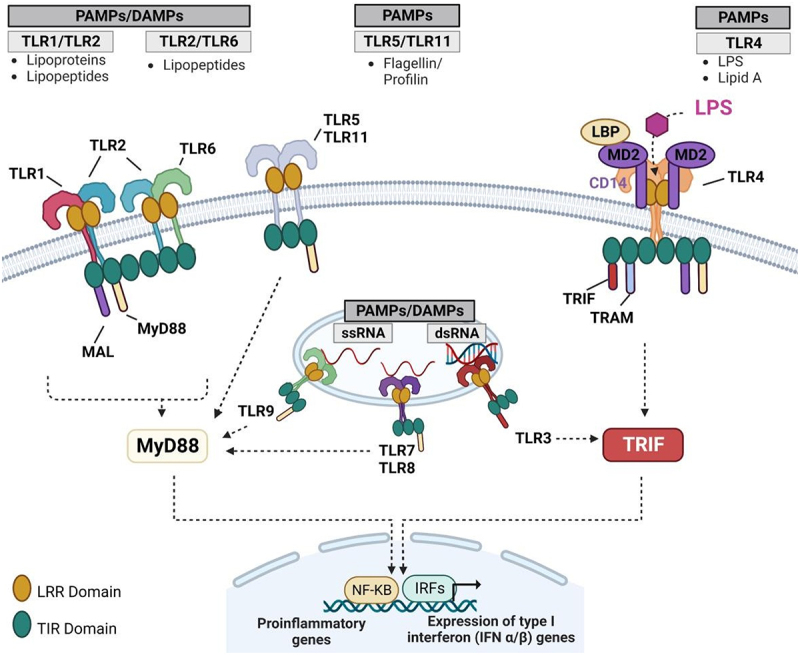
Obesity, insulin resistance (IR), and the gut microbiome intricately interplay in Metabolic-associated Steatotic Liver Disease (MASLD), previously known as Non-Alcoholic Fatty Liver Disease (NAFLD), a growing health concern. The complex progression of MASLD extends beyond the liver, driven by "gut-liver axis," where diet, genetics, and gut-liver interactions influence disease development. The pathophysiology of MASLD involves excessive liver fat accumulation, hepatocyte dysfunction, inflammation, and fibrosis, with subsequent risk of hepatocellular carcinoma (HCC). The gut, a tripartite barrier, with mechanical, immune, and microbial components, engages in a constant communication with the liver. Recent evidence links dysbiosis and disrupted barriers to systemic inflammation and disease progression. Toll-like receptors (TLRs) mediate immunological crosstalk between the gut and liver, recognizing microbial structures and triggering immune responses. The "multiple hit model" of MASLD development involves factors like fat accumulation, insulin resistance, gut dysbiosis, and genetics/environmental elements disrupting the gut-liver axis, leading to impaired intestinal barrier function and increased gut permeability. Clinical management strategies encompass dietary interventions, physical exercise, pharmacotherapy targeting bile acid (BA) metabolism, and microbiome modulation approaches through prebiotics, probiotics, symbiotics, and fecal microbiota transplantation (FMT). This review underscores the complex interactions between diet, metabolism, microbiome, and their impact on MASLD pathophysiology and therapeutic prospects.
Overview
The claims and statistics of this paper haven’t been checked yet.
Free: it reads the open-access text and checks the first 5 claims that cite a source we can check. Create a free account to check every claim.
Integrity signals
Registry
Cites
Statistics
Figures
Verification
Claims the paper makes
The claims and statistics of this paper haven’t been checked yet.
Free: it reads the open-access text and checks the first 5 claims that cite a source we can check. Create a free account to check every claim.
Claims other papers make about this one
Each is checked against this paper’s own text: does it say what the citing paper says it does?
In the citing paper
“MASLD is a progressively worsening liver condition characterized by pathological processes including fat accumulation, cell death, inflammation, and fibrosis within liver cells [68–70].”
From Constructing biomimetic microenvironments for liver regeneration (2025) · doi:10.1186/s12951-025-03729-9 · cites this paper as [68]
Self-check
Percentages, sums and reported differences re-computed from the paper’s own numbers.
The self-check needs the paper’s full text.
Citations
Cites
1 retracted
RETRACTED ARTICLE: Role of the gut microbiome in chronic diseases: a narrative review
Vijay, A., & Valdes, A. M. (2022) · European Journal of Clinical Nutrition · doi:10.1038/s41430-021-00991-6 · Cited by 361 · cited 1×
“66,67”
RetractedHuman gut microbes associated with obesity
Ley, R. E., Turnbaugh, P. J., Klein, S., & Gordon, J. I. (2006) · Nature · doi:10.1038/4441022a · Cited by 8,785 · cited 1×
“119,120 Other studies show that obese profiles might also exhibit low levels of SCFAs.”
BackgroundHuman gut microbiome viewed across age and geography
Yatsunenko, T., Rey, F. E., Manary, M. J., Trehan, I., Dominguez-Bello, M. G., Contreras, M., Magris, M., Hidalgo, G., Baldassano, R. N., Anokhin, A. P., et al. (2012) · Nature · doi:10.1038/nature11053 · Cited by 7,815 · cited 2×
“53 Human adult microbiota is composed of 100 trillion microorganisms that include commensal bacteria, pro-and anti-inflammatory, pathogenic, and nonpathogenic bacteria, fungi, and viruses that maintain gut homeostasis.”
BackgroundChanges of Intestinal Functions in Liver Cirrhosis
Fukui, H., & Wiest, R. (2016) · Inflammatory Intestinal Diseases · doi:10.1159/000444436 · Cited by 6,808
Metabolic Endotoxemia Initiates Obesity and Insulin Resistance
Cani, P. D., Amar, J., Iglesias, M. A., Poggi, M., Knauf, C., Bastelica, D., Neyrinck, A. M., Fava, F., Tuohy, K. M., Chabo, C., et al. (2007) · Diabetes · doi:10.2337/db06-1491 · Cited by 6,638 · cited 1×
“113,137 Dietary fiber plays a crucial role in creating an optimal gut environment that supports the flour-ishing of beneficial bacteria (eubiosis), resulting in beneficial physiological effects such as reduced plasma cholesterol and glucose levels.”
BackgroundLinking long-term dietary patterns with gut microbial enterotypes
Wu, G. D., Chen, J., Hoffmann, C., Bittinger, K., Chen, Y.-Y., Keilbaugh, S. A., Bewtra, M., Knights, D., Walters, W. A., Knight, R., et al. (2011) · Science · doi:10.1126/science.1208344 · Cited by 6,513 · cited 1×
“136 Balanced and healthy diet enhances the integrity of the gut barrier, increases mucus production, lowers luminal pH, and reduces the leakage of microbes into the bloodstream.”
BackgroundThe gut microbiota as an environmental factor that regulates fat storage
Bäckhed, F., Ding, H., Wang, T., Hooper, L. V., Koh, G. Y., Nagy, A., Semenkovich, C. F., & Gordon, J. I. (2004) · Proceedings of the National Academy of Sciences · doi:10.1073/pnas.0407076101 · Cited by 6,245 · cited 2×
“120 Therefore, the gut microbiota environment together with a specific diet can have an impact on host metabolism.”
BackgroundRevised Estimates for the Number of Human and Bacteria Cells in the Body
Sender, R., Fuchs, S., & Milo, R. (2016) · PLOS Biology · doi:10.1371/journal.pbio.1002533 · Cited by 5,425 · cited 1×
“54,55 The intestinal microbiota increases in density from the small intestine to the colon, where it reaches approximately 10 trillion cells per gram of colonic content.”
BackgroundGlobal burden of NAFLD and NASH: trends, predictions, risk factors and prevention
Younossi, Z., Anstee, Q. M., Marietti, M., Hardy, T., Henry, L., Eslam, M., George, J., & Bugianesi, E. (2018) · Nature Reviews Gastroenterology & Hepatology · doi:10.1038/nrgastro.2017.109 · Cited by 5,249
Obesity: global epidemiology and pathogenesis
Blüher, M. (2019) · Nature Reviews Endocrinology · doi:10.1038/s41574-019-0176-8 · Cited by 5,126
Cited by
Items 201–241 of 241
Zhou, Q., Yao, G.-Y., & Liu, T.-F. (2026) · World Journal of Gastroenterology · doi:10.3748/wjg.117348
Santiago, I. D. C., Lemos, J. D. A., Silva, I. M., Oliveira, A. E. M. D. F. M., & Ferreira, D. S. (2026) · Livers · doi:10.3390/livers6030048
“These molecules activate KCs via pattern recognition receptors, particularly TLRs, triggering inflammatory cascades mediated by cytokines and ROS [42].”
Liu, X., Che, Z., Hou, Y., Yu, W., & Deng, Y. (2026) · Scientific Reports · doi:10.1038/s41598-026-56068-6
“MASLD is closely linked to disruption of intestinal homeostasis involving the gut microbiota 28 .”
Zhang, Y., Duan, R., Zhang, Y., & Wei, L. (2026) · Frontiers in Nutrition · doi:10.3389/fnut.2026.1730461
Zhang, J.-J., Tan, Y.-S., Zhang, C.-L., Gui, Y., Yan, F.-Z., Hou, J., Xiang-xuan, L., Kong, H., Guo, M.-R., Cui, Y.-F., et al. (2026) · Chemical Engineering Journal · doi:10.1016/j.cej.2026.178787 · Cited by 1
Li, L., Wang, Z., 季英兰, Wang, R., Qi, X. H., Zhu, Y. Y., Wang, Y., Zhang, X., Li, M. T., & Jiang, Y. (2026) · Biochimica et Biophysica Acta (BBA) - Molecular Basis of Disease · doi:10.1016/j.bbadis.2026.168363
Zheng, M., Bai, Z., Hu, W., Hu, X., Bie, M., Chen, Z., Yang, L., & Shi, X. (2026) · IntechOpen eBooks · doi:10.5772/intechopen.1016773
Ciurea, N.-A., Shanmugam, H., Pantea, C. M., Grama, P., Kosovski, I.-B., Bataga, S. M., Ciaula, A. D., & Portincasa, P. (2026) · Medicina · doi:10.3390/medicina62071403
Wu, C., Miao, D., Wang, D., Chen, F., Liu, M., Wu, Z., Dong, C., Zhang, J., Shen, X., & Chen, T. (2026) · Journal of Hazardous Materials Advances · doi:10.1016/j.hazadv.2026.101432 · Cited by 1
Shen, X., Qu, Y.-N., Huang, Y.-X., Liang, C.-Y., Liu, S.-J., Liu, N., He, Z.-J., Su, S.-K., Sun, Q.-Z., An, T., et al. (2026) · Metabolites · doi:10.3390/metabo16080532
Wang, J., Zhang, Y., Sun, S., Hu, L., & Yang, D. (2026) · Frontiers in Pharmacology · doi:10.3389/fphar.2026.1877634
Yang, X., Zeng, F., Xu, J., Xiang, Y., Yi, F., Zhu, C., Zhang, P., Pan, W., Hu, M., He, C., et al. (2026) · International Immunopharmacology · doi:10.1016/j.intimp.2026.117199
Yang, Y., Feng, X., Deng, H., Dong, Z., Xu, L., Feng, S., Liao, B., Shao, C., Feng, P., Zhong, B., et al. (2026) · BMC Gastroenterology · doi:10.1186/s12876-026-05173-x
MASLD: Spatial Mechanisms and New Therapeutics
Stoess, C., Onyuru, J., Hu, Y., Jiang, Y., Xin, Z., Panchal, A., & Hartmann, P. (2026) · Biomolecules · doi:10.3390/biom16081129
“In contrast, acetate can be converted by acyl-CoA synthetase short-chain family member 2 (ACSS2) into acetyl-CoA and contribute to DNL and hepatic triglyceride accumulation [46,70].”
InfluentialZhang, L., Lin, S., Li, J., Wang, Z., Cui, H., Bao, F., Di, Y., Xu, C., 戴天斌, Yuan, H., et al. (2026) · Journal of Ethnopharmacology · doi:10.1016/j.jep.2026.122287
Ren, Y., Hu, D., Li, L., Wang, L., & Meng, X. (2026) · Frontiers in Endocrinology · doi:10.3389/fendo.2026.1911290
“’ In MASLD, saturated-fat-rich diets, obesity, altered bile acid signaling, dysbiosis, low-grade mucosal in fl ammation, medications, and neuroendocrine stress may impair mucus production, epithelial repair, tight-junction organization, and vascular containment (35, 36).”
Du, Y., Qi, L., Shi, Y., Huang, X., Shi, X., Liu, M., Fang, Y., & Hu, X. (2026) · Frontiers in Medicine · doi:10.3389/fmed.2026.1912000
“The supply of short-chain fatty acids and indole metabolites, together with mucus-layer integrity and tight junction status, affects intestinal barrier integrity and determines whether luminal metabolic events can be converted into gut-derived inflammatory input (44, 55).”
Chu, X., Zhang, S., Cui, M., Sun, X., Chen, X., Gao, L., Yuan, R., Wang, S., Huang, S., & Li, B. (2026) · International Journal of Molecular Sciences · doi:10.3390/ijms27167368 · Cited by 1
“Chronic inflammation and intestinal barrier dysfunction, driven by gut microbiota dysbiosis, are key factors in the pathogenesis of MASLD [38,39].”
Yang, Z., Fu, Y., Liu, S., Liu, J., Zhang, W. H., Feng, C., Man, X., Li, S., He, N., & Zhang, F. (2026) · Food & Function · doi:10.1039/d6fo02576e
Meinhardt, N., Geisler, A. R., Otto, L., Hupfer, Y., Hebecker, B., Perkowski, B. J., Werner, M., Lossow, K., Ebert, M., Burghoff, S., et al. (2026) · Journal of Trace Elements in Medicine and Biology · doi:10.1016/j.jtemb.2026.127948
Microbial exposure and host responses to infection reshape the disease trajectory of MASLD
Zhang, Y., Xun, Q., Liu, S., Zhuang, B., Zang, M., Tan, C., Cui, Y., Li, R., & Zhang, Q. (2026) · Frontiers in Cellular and Infection Microbiology · doi:10.3389/fcimb.2026.1932870
Zhao, Z., Gong, S., Liu, C., Wen, J., & Zhou, T. (2026) · Acupuncture and Herbal Medicine · doi:10.1097/hm9.0000000000000211
Александровна, П. В., Максимовна, М. Т., Doroshchuk, K. S., Fedorova, A. A., Karev, V. E., Samarich, A. S., Евгеньевич, К. В., Karelina, E. A., Muraveva, N. A., Pyatchenkov, M. O., et al. (2026) · Drug development & registration · doi:10.33380/2305-2066-2026-15-3-2389
Huang, D., Zhang, W., Wang, X., Gan, L., Liu, H., Liu, R., Yu, M., Qiu, J., Liu, H., Jiang, L., et al. (2026) · Toxicology · doi:10.1016/j.tox.2026.154581
Hu, H., Zhu, W., Sun, L., Ren, Y., Li, J., Jin, L., Ji, Y. H., Wang, X., Gu, W., Zhou, C., et al. (2026) · Biochimica et Biophysica Acta (BBA) - Molecular Basis of Disease · doi:10.1016/j.bbadis.2026.168454
Pan, Y., Zhang, R., & Chen, Y. (2026) · Food Science and Biotechnology · doi:10.1007/s10068-026-02283-w
Context-Dependent Roles of Liver Macrophages in MASH
Horn, P., & Tacke, F. (2026) · Seminars in Liver Disease · doi:10.1055/a-2954-5433
Li, J., Li, J., Chen, Y., Wang, M., Chen, Z., Yap, P., Lu, K. Q., & He, B. (2026) · ACS Nano · doi:10.1021/acsnano.6c12176
Riad, G. S., El-Sakaty, T. M., Raafat, K., Ibraheem, I. M., Eldamhogy, Y. N. M., & Youssef, M. G. (2026) · Egyptian Liver Journal · doi:10.1186/s43066-026-00557-w
“In such a setting, persistent exposure to microbial and inflammatory mediators may promote both hepatic injury and mucosal inflammation [10, 11].”
MASLD beyond the liver: decoding the gut–genetic–metabolic nexus
Attieh, P., Nassif, M., Maghzal, M., Bedran, A., Kassas, J., Othman, M., Sahyoun, F., Harb, F., Azar, S. T., & Ghadieh, H. E. (2026) · Frontiers in Gastroenterology · doi:10.3389/fgstr.2026.1824548
“Supplementation with IPA/IAA was shown to improve hepatic steatosis in MASLD patients (11).”
Xu, Y., Zhang, Y., Li, S., Yao, H., Yang, Y., Yu, C., & Zhang, S. (2026) · Frontiers in Pharmacology · doi:10.3389/fphar.2026.1953606
Targeting gut dysbiosis: a new frontier in MASLD management
Sharma, S., Pachauri, A., Nagar, H., Thakkar, V., & Patel, K. (2026) · Frontiers in Systems Biology · doi:10.3389/fsysb.2026.1937809
Liu, W., Lan, Y., Chen, X., Wei, H., Zhang, T., & Wang, Y. (2026) · Frontiers in Microbiology · doi:10.3389/fmicb.2026.1971785
Savytska, M., Ilkiv, Y., Baka, O., Манжалій, Е., Yerokhovych, V., Kyriienko, D., Falalyeyeva, T., Petakh, P., Halabitska, I., Kamyshnyi, O., et al. (2026) · Medicina · doi:10.3390/medicina62101893
Soulo, N., Laaroussi, H., Ousaaid, D., Bakour, M., Ferreira‐Santos, P., Khachchaf, K., Dabbagh, O., Lyoussi, B., & Ouaritini, Z. B. (2026) · Letters in Applied NanoBioScience · doi:10.33263/lianbs153.100
“It has been confirmed that hydrogen peroxide at elevated concentrations perturbs redox balance, which contributes to oxidative stress [25,26].”
Wang, D., Du, Z., Dai, S., Wang, M., Du, P., Zhang, J., Chen, Y., Song, M., Wang, X., Liu, X., et al. (2026) · Food Bioscience · doi:10.1016/j.fbio.2026.110172
Sun, Y., Liu, Y., Chen, X., 邓世洲, Zhang, N., Wu, F., Fan, D., Wang, Y., & Yang, Y. (2026) · Molecular Biomedicine · doi:10.1186/s43556-026-00607-0
“The “multiple-hit” hypothesis further highlights oxidative stress and mitochondrial injury as important contributors to MASH progression [17].”
Cai, W., Zeng, W., Luo, Y., Liu, Q., Jiang, C., Yi, Y., Chen, J., & Shen, C. (2026) · Phytotherapy Research · doi:10.1002/ptr.70478
Sun, H., Zhang, Y., Yu, Y., Chen, Y., Tan, C., Chen, J., Zhao, G., & Wang, Y. (2026) · Journal of Future Foods · doi:10.1016/j.jfutfo.2026.10.022
Zhang, Y., Zhang, C., & Zhou, Y. (2026) · Nutrition Metabolism and Cardiovascular Diseases · doi:10.1016/j.numecd.2026.105039
Zhong, J., Zheng, S., Zhao, X., Mei, C., Yang, Y., & Ye, Y. (2026) · Results in Chemistry · doi:10.1016/j.rechem.2026.103994
Metadata
- Authors
- Benedé-Ubieto, R., Cubero, F. J., & Nevzorova, Y. A.
- Affiliations
- Department of Immunology, Ophthalmology and ENT, Complutense University School of Medicine, Madrid, Spain
- Universidad Complutense de Madrid (ES)
- Corresponding author
- Nevzorova, Yulia A.
- Venue
- Gut Microbes
- Publisher
- Informa UK Limited
- Published
- 2024-03-21
- Volume
- 16
- Issue
- 1
- Pages
- 2331460-2331460
- ISSN
- 1949-0976 (ISSN-L)
- 1949-0984
- PMC
- PMC10962615
- OpenAlex
- W4393033456
- Cited by
- 242
- References
- 185
- Citations by year
- 2026: 106 · 2025: 106 · 2024: 30
- FWCI
- 15.90
- Type
- journal article
- Language
- en
- Open access
- gold
- doi.org
- Licence
- Locations
- Gut Microbes (publishedVersion, cc-by)
- PubMed Central (publishedVersion, cc-by)
- PubMed (publishedVersion)
- DOAJ (DOAJ: Directory of Open Access Journals) (submittedVersion, cc-by-sa)
- Funders
- MICINN (PID2020-117827RB-IOO/AEI/10.13039/501100011033)
- Comunidad de Madrid
- Universidad Complutense de Madrid (CT63/19)
- Topics
- Health Sciences › Medicine › Hepatology › Liver Disease Diagnosis and Treatment
- Life Sciences › Biochemistry, Genetics and Molecular Biology › Molecular Biology › Gut microbiota and health
- Health Sciences › Medicine › Gastroenterology › Gastrointestinal motility and disorders
- Keywords
- non-alcoholic fatty liver disease, gut-liver axis, gut dysbiosis, intestinal barrier function, intestinal permeability, insulin resistance, obesity, Toll-like receptors, liver inflammation, liver fibrosis, hepatocellular carcinoma, bile acid metabolism, prebiotics, probiotics, fecal microbiota transplantation, microbiota modulation, dietary intervention, physical activity
- MeSH terms
- Gastrointestinal Microbiome, Carcinoma, Hepatocellular, Homeostasis, Humans, Inflammation, Insulin Resistance, Liver Neoplasms, Dysbiosis
About these checks
Registry, retraction, Cites and statistics results are computed, not judged, with one exception: a printed reference that no index lists is read once by a model before it counts as a citation error. Claims are extracted by a model and kept only when their quote appears verbatim in the text; each cited source is then checked, with a model’s help, for whether it says what the claim relies on. Those verdicts can be wrong — read the claim’s quote and the cited source before relying on one.
Statistics and arithmetic are recomputed, not judged.
Confidence bands are shown only for fields calibrated on our annotated test set. None is calibrated yet, so no band is shown.
What counts as a claim ›How we measure confidence ›How we check this ›
Are you an author, or do you see a problem with this page? Request a review
Data sources
Bibliographic data: Semantic Scholar, OpenAlex, Crossref.
Contains information from the Semantic Scholar Academic Graph Datasets, made available under the ODC Attribution License (ODC-BY 1.0).
Semantic Scholar’s data is described in: Kinney, R., et al. (2023). The Semantic Scholar Open Data Platform. arXiv:2301.10140.
