

Histidine biosynthesis plays a crucial role in metal homeostasis and virulence of Aspergillus fumigatus
Open accessThe DOI matches its Crossref record; 52 of the 52 references it cites were found in a registry or an index.
Abstract
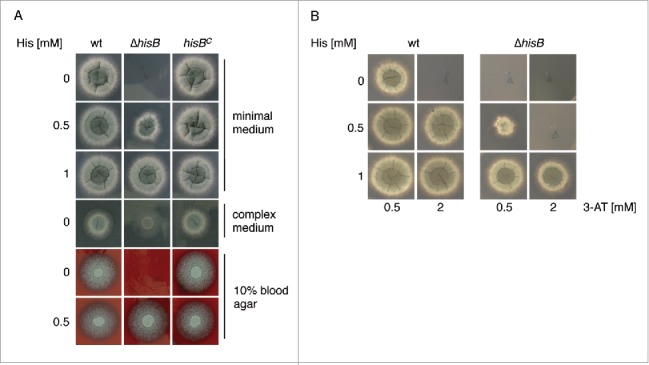
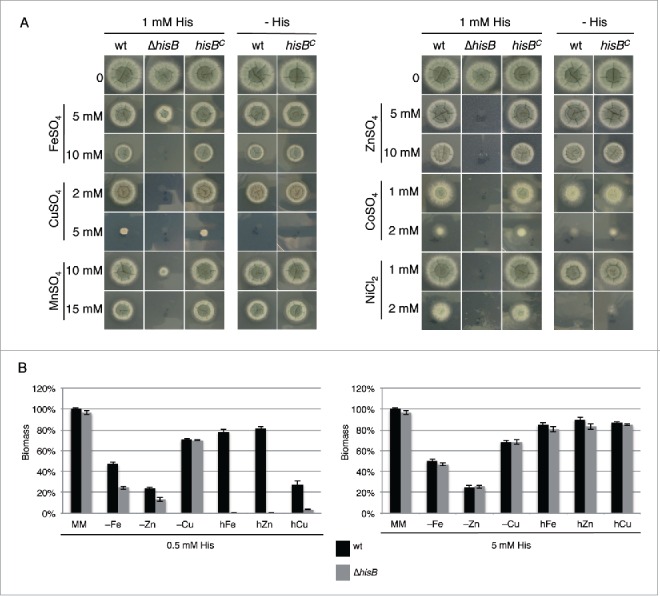
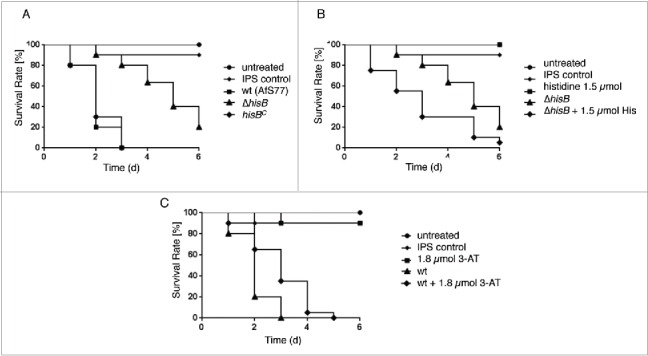
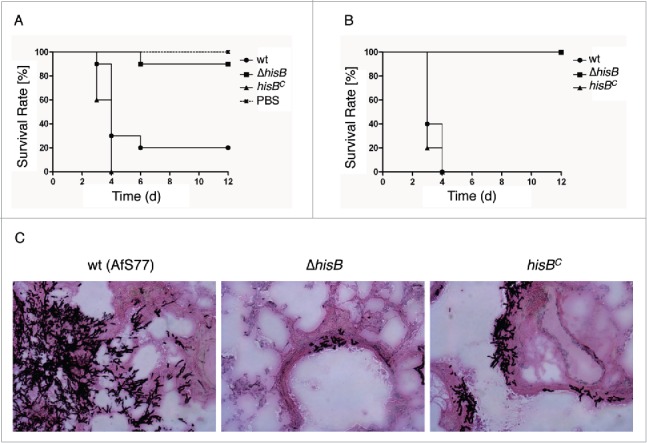
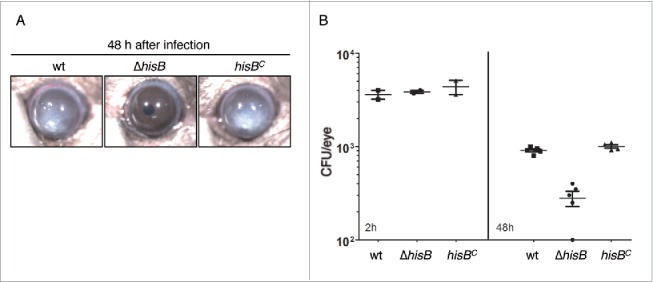
Aspergillus fumigatus is the most prevalent airborne fungal pathogen causing invasive fungal infections in immunosuppressed individuals. The histidine biosynthetic pathway is found in bacteria, archaebacteria, lower eukaryotes, and plants, but is absent in mammals. Here we demonstrate that deletion of the gene encoding imidazoleglycerol-phosphate dehydratase (HisB) in A. fumigatus causes (i) histidine auxotrophy, (ii) decreased resistance to both starvation and excess of various heavy metals, including iron, copper and zinc, which play a pivotal role in antimicrobial host defense, (iii) attenuation of pathogenicity in 4 virulence models: murine pulmonary infection, murine systemic infection, murine corneal infection, and wax moth larvae. In agreement with the in vivo importance of histidine biosynthesis, the HisB inhibitor 3-amino-1,2,4-triazole reduced the virulence of the A. fumigatus wild type and histidine supplementation partially rescued virulence of the histidine-auxotrophic mutant in the wax moth model. Taken together, this study reveals limited histidine availability in diverse A. fumigatus host niches, a crucial role for histidine in metal homeostasis, and the histidine biosynthetic pathway as being an attractive target for development of novel antifungal therapy approaches.
Overview
The claims and statistics of this paper haven’t been checked yet.
Free: it reads the open-access text and checks the first 5 claims that cite a source we can check. Create a free account to check every claim.
Integrity signals
Registry
Cites
Statistics
Figures
Verification
Claims the paper makes
The claims and statistics of this paper haven’t been checked yet.
Free: it reads the open-access text and checks the first 5 claims that cite a source we can check. Create a free account to check every claim.
Claims other papers make about this one
Each is checked against this paper’s own text: does it say what the citing paper says it does?
The source backs part of the claim, not all of it — or backs it for a different population, condition or comparison.
In the citing paper
“Other amino acids, such as lysine, tyrosine, phenylalanine, tryptophan, and histidine, are important for in vivo growth, even though mutants in their biosynthetic pathways are viable in vitro (343, 346).”
From Aspergillus fumigatus and Aspergillosis in 2019 (2019) · cites this paper as [346]
Experimental — accuracy not yet measuredIn the citing paper
“Genetic inactivation of HISB, being essential for histidine biosynthesis, displays increased sensitivity to limitation of various metals, including Mn, Cu, and Fe, along with attenuated virulence, indicating that histidine is required not only for protein biosynthesis but also for host and metal adaptation (346).”
From Aspergillus fumigatus and Aspergillosis in 2019 (2019) · cites this paper as [346]
Self-check
Percentages, sums and reported differences re-computed from the paper’s own numbers.
The self-check needs the paper’s full text.
Citations
Cites
Molecular Cloning: A Laboratory Manual
Sambrook, J., Fritsch, E., & Maniatis, T. (1989) · UCLA - Biblioteca de Ciencias de la Salud · Cited by 133,589
Molecular cloning: A laboratory manual
Deininger, P. (1990) · Analytical Biochemistry · doi:10.1016/0003-2697(90)90595-z · Cited by 84,682
The Genetics of Aspergillus nidulans
Pontecorvo, G., Roper, J. A., Chemmons, L. M., Macdonald, K. D., & Bufton, A. W. J. (1953) · Advances in Genetics · doi:10.1016/s0065-2660(08)60408-3 · Cited by 2,302
Free histidine as a metal chelator in plants that accumulate nickel
Krämer, U., Cotter-Howells, J. D., Charnock, J. M., Baker, A. J. M., & Smith, J. A. C. (1996) · Nature · doi:10.1038/379635a0 · Cited by 961 · cited 1×
“Moreover, an increased cellular histidine content was found to confer tolerance and hyperaccumulation of nickel in plants.(36,37) Taken together, these data indicate that the role of”
BackgroundTransformation of Aspergillus based on the hygromycin B resistance marker from Escherichia coli
Punt, P. J., Oliver, R. P., Dingemanse, M. A., Pouwels, P. H., & van den Hondel, C. A. M. J. J. (1987) · Gene · doi:10.1016/0378-1119(87)90164-8 · Cited by 937
Mycotic keratitis: epidemiology, diagnosis and management
Thomas, P. A., & Kaliamurthy, J. (2013) · Clinical Microbiology and Infection · doi:10.1111/1469-0691.12126 · Cited by 495 · cited 1×
“fumigatus is a common cause of visual impairment and blindness in immunocompetent patients.(23) To test whether disruption of histidine biosynthesis attenuates A.”
BackgroundSchrettl, M., Bignell, E., Kragl, C., Joechl, C., Rogers, T., Arst, H. N., Haynes, K., & Haas, H. (2004) · The Journal of Experimental Medicine · doi:10.1084/jem.20041242 · Cited by 493
Self-citationTransporters of ligands for essential metal ions in plants
Haydon, M. J., & Cobbett, C. S. (2007) · New Phytologist · doi:10.1111/j.1469-8137.2007.02051.x · Cited by 467 · cited 1×
“Moreover, histidine has a high affinity for binding metals, both as free amino acid and as metal-coordinating residues in proteins.(8) In agreement with a role in metal homeostasis, iron starvation was found to result in a fold9- increase in the cellular histidine content in A.”
BackgroundAspergillus fumigatus: saprophyte or pathogen?
Tekaia, F., & Latgé, J.-P. (2005) · Current Opinion in Microbiology · doi:10.1016/j.mib.2005.06.017 · Cited by 387 · cited 1×
“ease invasive aspergillosis, particularly in immunocompromised patients.(1) Depending on the immune status and other factors in the patients, mortality rates in con-”
BackgroundMetal ion ligands in hyperaccumulating plants
Callahan, D. L., Baker, A. J. M., Kolev, S. D., & Wedd, A. G. (2006) · JBIC Journal of Biological Inorganic Chemistry · doi:10.1007/s00775-005-0056-7 · Cited by 345
Cited by
Aspergillus fumigatus and Aspergillosis in 2019
Latgé, J.-P., & Chamilos, G. (2019) · Clinical Microbiology Reviews · doi:10.1128/cmr.00140-18 · Cited by 1,400
Contact killing and antimicrobial properties of copper
Vincent, M., Duval, R. E., Hartemann, P., & Engels‐Deutsch, M. (2018) · Journal of Applied Microbiology · doi:10.1111/jam.13681 · Cited by 694
“They demonstrated that deletion of the gene encoding imidazoleglycerol-phosphate dehydratase (HisB) reduces resistance of A. fumigatus to copper (Dietl et al. 2016).”
BackgroundInfluentialVitamin Biosynthesis as an Antifungal Target
Meir, Z., & Osherov, N. (2018) · Journal of Fungi · doi:10.3390/jof4020072 · Cited by 75
Tao, Q.-Q., Liu, L., Wang, P., Long, Q.-S., Zhao, Y., Jin, L., Xu, W.-M., Chen, Y., Li, Z., & Yang, S. (2019) · Journal of Agricultural and Food Chemistry · doi:10.1021/acs.jafc.9b02734 · Cited by 66
Cysteine: an overlooked energy and carbon source
Göbbels, L., Poehlein, A., Dumnitch, A., Egelkamp, R., Kröger, C., Haerdter, J., Hackl, T., Feld, A., Weller, H., Daniel, R., et al. (2021) · Scientific Reports · doi:10.1038/s41598-021-81103-z · Cited by 63
Menacing Mold: Recent Advances in Aspergillus Pathogenesis and Host Defense
Tischler, B. Y., & Hohl, T. M. (2019) · Journal of Molecular Biology · doi:10.1016/j.jmb.2019.03.027 · Cited by 60
Amino Acid Metabolism and Transport Mechanisms as Potential Antifungal Targets
McCarthy, M., & Walsh, T. J. (2018) · International Journal of Molecular Sciences · doi:10.3390/ijms19030909 · Cited by 53
“Dietl and colleagues recently exploited the histidine biosynthetic pathway to demonstrate its suitability as a potential antifungal target to treat aspergillosis [51].”
BackgroundBlatzer, M., & Latgé, J.-P. (2017) · Current Opinion in Microbiology · doi:10.1016/j.mib.2017.11.015 · Cited by 47
“A recent study found that genetic inactivation of HisB, being essential for histidine biosynthesis, displays increased sensitivity to limitation of various metals, including Mn, Cu and Fe, along with attenuated virulence, indicating that histidine is not only required for protein biosynthesis, but host and metal adapt…”
BackgroundWang, S., Li, C., Zhang, L., Sun, B., Cui, Y., & Sang, F. (2023) · Bioorganic & Medicinal Chemistry · doi:10.1016/j.bmc.2023.117454 · Cited by 55
Dietl, A., Meir, Z., Shadkchan, Y., Osherov, N., & Haas, H. (2018) · Virulence · doi:10.1080/21505594.2018.1482181 · Cited by 54
Self-citationAntsotegi-Uskola, M., Markina‐Iñarrairaegui, A., & Ugalde, U. (2017) · Frontiers in Microbiology · doi:10.3389/fmicb.2017.00912 · Cited by 48
“It is also important to underscore the crucial role of copper resistance for virulence of clinically important fungal pathogens as C. albicans (Mackie et al., 2016), Cryptococcus neoformans (Samanovic et al., 2012; Ding et al., 2013) and A. fumigatus (Dietl et al., 2016; Wiemann et al., 2017).”
BackgroundImmunity to pathogenic fungi in the eye
Abbondante, S., Leal, S. M., Clark, H., Ratitong, B., Sun, Y., Ma, L., & Pearlman, E. M. (2023) · Seminars in Immunology · doi:10.1016/j.smim.2023.101753 · Cited by 45
Self-citationZhou, Y., Xu, C., Yang, Y., Xing, X., Liu, X., Qu, Q., Ding, W., Bello-Onaghise, G., & Li, Y. (2018) · Frontiers in Microbiology · doi:10.3389/fmicb.2018.00665 · Cited by 43
“L-histidine is one amongst the 21 proteinogenic amino acids that can be synthesized de novo in lower eukaryotes and prokaryotes (Dietl et al., 2016).”
BackgroundInfluentialXu, C., Yang, Y., Zhou, Y., Hao, M.-Q., Ren, Y.-Z., Wang, X., Chen, J., Ishfaq, M., Wang, S., Liu, D., et al. (2017) · Frontiers in Pharmacology · doi:10.3389/fphar.2017.00543 · Cited by 39
“L-histidine is one of the 21 proteinogenic amino acids and an essential nutrient for animals but is synthesized by plants and microorganisms (Dietl et al., 2016).”
BackgroundNitrogen, Iron, and Zinc Acquisition: Key Nutrients to Aspergillus fumigatus Virulence
Perez‐Cuesta, U., Guruceaga, X., Cendon‐Sanchez, S., Pelegri‐Martinez, E., Hernando, F. L., Ramirez‐Garcia, A., Abad, A., & Rementería, A. (2021) · Journal of Fungi · doi:10.3390/jof7070518 · Cited by 36
“Imidazol-glycerol-phosphate dehydratase Afu6g04700 hisB Histidine auxotrophy Decreased [31] Homoaconitase Afu5g08890 lysF Lysine auxotrophy Decreased [32]”
BackgroundDiverse Effects of Amino Acids on Monascus Pigments Biosynthesis in Monascus purpureus
Yin, S., Zhu, Y., Zhang, B., Huang, B., & Jia, R. (2022) · Frontiers in Microbiology · doi:10.3389/fmicb.2022.951266 · Cited by 30
“Previous studies reported that histidine degradation and utilization played crucial roles in metal homeostasis management, nutritional flexibility, and virulence in fungi (Brunke et al., 2014; Dietl et al., 2016).”
BackgroundChen, X., Wang, X., Hao, M.-Q., Zhou, Y., Cui, W., Xing, X., Xu, C., Bai, J., & Li, Y. (2017) · Frontiers in Chemistry · doi:10.3389/fchem.2017.00098 · Cited by 31
“The imidazole glycerophosphate dehydratase (IGPD), one of the specific enzymes, catalyzes the dehydration of imidazoleglycerol phosphate (IGP) to imidazoleacetol phosphate (IAP) (Hawkes et al., 1995), which synthesize L-histidine in the synthesis pathway (Dietl et al., 2016).”
BackgroundSong, F., Zhang, G., Li, H., Ma, L., & Yang, N. (2022) · Ecotoxicology and Environmental Safety · doi:10.1016/j.ecoenv.2022.114056 · Cited by 26
Transcriptional response of Clostridium difficile to low iron conditions
Hastie, J. L., Hanna, P. C., & Carlson, P. E. (2018) · Pathogens and Disease · doi:10.1093/femspd/fty009 · Cited by 27
Amich, J., & Bignell, E. (2016) · Current Opinion in Microbiology · doi:10.1016/j.mib.2016.06.003 · Cited by 26
“The mutant was found to be unable to germinate in the lungs of neutropenic mice and was also avirulent in a systemic model of infection [13], suggesting that the amount of available histidine in the lung nor in serum is insufficient to support fungal growth.”
BackgroundSelf-citationHow to invade a susceptible host: cellular aspects of aspergillosis
Krappmann, S. (2016) · Current Opinion in Microbiology · doi:10.1016/j.mib.2016.10.002 · Cited by 27
Pre-epidemic evolution of the MRSA USA300 clade and a molecular key for classification
Bianco, C. M., Moustafa, A. M., O’Brien, K., Martin, M. A., Read, T. D., Kreiswirth, B. N., & Planet, P. J. (2023) · Frontiers in Cellular and Infection Microbiology · doi:10.3389/fcimb.2023.1081070 · Cited by 23
Lackner, M., Obermair, J., Naschberger, V., Raschbichler, L.-M., Kandelbauer, C., Pallua, J. D., Metzlaff, J., Furxer, S., Lass‐Flörl, C., & Binder, U. (2019) · Virulence · doi:10.1080/21505594.2019.1614382 · Cited by 24
“One study even illustrating similar outcome in 4 different model system: larval model, pulmonary and systemic murine model and a keratitis model [49].”
Self-citationDietl, A., Binder, U., Bauer, I., Shadkchan, Y., Osherov, N., & Haas, H. (2020) · Genes · doi:10.3390/genes11040423 · Cited by 25
Self-citationFeng, H., Meng, P., Zhang, S., Chen, W., Wang, H., & Wang, C. (2022) · Ecotoxicology and Environmental Safety · doi:10.1016/j.ecoenv.2022.114476 · Cited by 20
Zinc binding proteome of a phytopathogen Xanthomonas translucens pv. undulosa
Sharma, A., Sharma, D., & Verma, S. K. (2019) · Royal Society Open Science · doi:10.1098/rsos.190369 · Cited by 24
Maertens, L., Cherry, P., Tilquin, F., Houdt, R. V., & Matroule, J. (2021) · Microorganisms · doi:10.3390/microorganisms9061116 · Cited by 16
“While the specific role of histidine in the Cu stress response has not been studied in bacteria, in the fungal pathogen Aspergillus fumigatus, a strong relation between histidine biosynthesis and metal resistance has been shown [96].”
BackgroundQu, Q., Wang, J., Cui, W., Zhou, Y., Xing, X., Che, R., Liu, X., Chen, X., Bello-Onaghise, G., Dong, C., et al. (2019) · PLoS ONE · doi:10.1371/journal.pone.0226260 · Cited by 19
“Recent studies have shown that histidine is the product of an important nitrogen metabolism pathway in bacteria and imidazole glycerol phosphate dehydratase (IGPD) has been described as one of the key enzymes involved in its biosynthesis including acting as the first specific synthase in L-histidine synthesis pathway…”
BackgroundHisB as novel selection marker for gene targeting approaches in Aspergillus niger
Fiedler, M. R. M., Gensheimer, T., Kubisch, C., & Meyer, V. (2017) · BMC Microbiology · doi:10.1186/s12866-017-0960-3 · Cited by 17
Adaptation to Potassium-Limitation Is Essential forAcinetobacter baumanniiPneumonia Pathogenesis
Samir, R., Hussein, S. H., Elhosseiny, N. M., Khattab, M. S., Shawky, A., & Attia, A. S. (2016) · The Journal of Infectious Diseases · doi:10.1093/infdis/jiw476 · Cited by 15
Tang, Y., Davies, R. H., & Petrovska, L. (2019) · Frontiers in Veterinary Science · doi:10.3389/fvets.2019.00447 · Cited by 15
Amino acid biosynthetic pathways as antifungal targets for fungal infections
Alcázar‐Fuoli, L. (2016) · Virulence · doi:10.1080/21505594.2016.1169360 · Cited by 16
“need alternative mechanisms to get this amino acid from the host.(10) Previous investigations by the same research group have resulted in an extensive knowledge of how A.”
BackgroundInfluentialWang, Z., Li, Y., Gao, X., Xing, J., Wang, R., Zhu, D., & Shen, G. (2023) · International Microbiology · doi:10.1007/s10123-023-00356-y · Cited by 14
Thai, H.-D., Nguyen, B.-P. T., Nguyen, V.-M., Nguyen, Q. H., & Tran, V. (2021) · World Journal of Microbiology and Biotechnology · doi:10.1007/s11274-021-03060-z · Cited by 14
“Histidine biosynthesis controlled by a gene cluster is required for different cellular processes and has been well investigated in yeasts and filamentous fungi (Busch et al. 2001; Dietl et al. 2016; Pronk 2002; Seo et al. 2007).”
BackgroundTribolium castaneum gene expression changes after Paranosema whitei infection
Lopez‐Ezquerra, A., Mitschke, A., Bornberg‐Bauer, E., & Joop, G. (2018) · Journal of Invertebrate Pathology · doi:10.1016/j.jip.2018.02.009 · Cited by 12
Huang, J., Wang, L., Li, X., Zhang, Y., Dong, B., Hu, S., Liu, C., Fu, D., Shen, L., & Liu, G. (2025) · Food Bioscience · doi:10.1016/j.fbio.2025.106907 · Cited by 13
Kumar, D., Jha, B., Bhatia, I., Ashraf, A., Dwivedy, A., & Biswal, B. K. (2021) · Proteins Structure Function and Bioinformatics · doi:10.1002/prot.26181 · Cited by 11
Gallo, G., Presta, L., Perrin, E., Gallo, M., Marchetto, D., Puglia, A. M., Fani, R., & Baldi, F. (2018) · BMC Microbiology · doi:10.1186/s12866-018-1330-5 · Cited by 10
Yap, A., Talasz, H., Lindner, H., Würzner, R., & Haas, H. (2022) · Frontiers in Cellular and Infection Microbiology · doi:10.3389/fcimb.2022.847846 · Cited by 8
“Therefore, the avirulence caused by His auxotrophy (Dietl et al., 2016) might be a consequence not only of histidine shortage per se but also of metal mismanagement.”
BackgroundSelf-citationThai, H.-D., Do, L. T. B. X., Xuân, N. T., Vu, T. X., Tran, H. T. T., Nguyen, H. Q., & Tran, V. (2023) · Archives of Microbiology · doi:10.1007/s00203-023-03530-y · Cited by 7
Metal-ligand forms of iron and zinc in the human body
Notova, S. V., Казакова, Т. В., Marshinskaya, O. V., & Shoshina, O. V. (2022) · Kazan medical journal · doi:10.17816/kmj2022-259 · Cited by 9
“Менее 1% общего цинка плазмы образует низкомолекулярные комплексы с аминокислотами (гистидином и цистеином) [64, 65].”
Diseases Caused by Aspergillus fumigatus
Garcia‐Rubio, R., & Alcázar‐Fuoli, L. (2018) · Elsevier eBooks · doi:10.1016/b978-0-12-809633-8.12078-3 · Cited by 7
Wang, L., Liu, R., Li, F., Meng, Y., & Lu, H. (2020) · Journal of Molecular Liquids · doi:10.1016/j.molliq.2020.114992 · Cited by 5
Li, Y., Wang, Y., & Liu, J. (2022) · Frontiers in Microbiology · doi:10.3389/fmicb.2022.939406 · Cited by 5
“…found in M. curtisii strains, perhaps enabling them capacity of biosynthesis of histidine and a crucial role in metal homeostasis and virulence (Dietl et al., 2016); and the extra NAD+ de novo biosynthesis pathway in M. curtisii could also enhance their virulence during host infection (Dom and…”
BackgroundIdentification of Fungicide Targets in Pathogenic Fungi
Foster, A. J. (2018) · Springer eBooks · doi:10.1007/978-3-319-71740-1_9 · Cited by 10
Jun, J.-S., Kang, S. J., & Hong, K. (2025) · The Journal of Microbiology · doi:10.71150/jm.2411032 · Cited by 4
“Possible reasons for these metabolic changes include involvement of histidine biosynthetic enzymes in cellular division (Gibert and Casadesús, 1990) and the association of histidine biosynthesis with metal homeostasis and survival in low pH environments (Beetham et al., 2024; Dietl et al., 2016).”
Santander, R. D., & Aćimović, S. G. (2025) · Applied and Environmental Microbiology · doi:10.1128/aem.00334-25 · Cited by 4
Shi, X.-X., Chen, H., Guo, W., Wang, Z.-Z., Ye, Y., & Yang, G. (2025) · Journal of Agricultural and Food Chemistry · doi:10.1021/acs.jafc.5c01206 · Cited by 4
Li, Z., Li, Y., Xie, E., & Yuchun, S. (2024) · Frontiers in Plant Science · doi:10.3389/fpls.2024.1371818 · Cited by 7
Scott, J., & Amich, J. (2021) · Elsevier eBooks · doi:10.1016/b978-0-12-818731-9.00059-8 · Cited by 5
Self-citationGuo, W., Duan, X., Xiao, C., Fu, S., & Shen, L. (2025) · BMC Microbiology · doi:10.1186/s12866-025-04092-3 · Cited by 4
Brucella abortus histidine auxotrophs are copper sensitive
Focant, C., Roba, A., Wanlin, E., Poncin, K., & Bolle, X. D. (2026) · Journal of Bacteriology · doi:10.1128/jb.00492-25 · Cited by 3
Wang, L., Liu, C., & Geng, X. (2021) · Microbial Pathogenesis · doi:10.1016/j.micpath.2021.104749 · Cited by 3
Wang, L., Liu, R., Meng, Y., Li, F., & Lu, H. (2021) · Journal of Agricultural and Food Chemistry · doi:10.1021/acs.jafc.1c04282 · Cited by 3
Genetics and humoral responses of the immune system to Aspergillus fumigatus
Sanya, D. R. A., Jayachandran, K., & Onésime, D. (2025) · Molecular Immunology · doi:10.1016/j.molimm.2025.06.007 · Cited by 3
Raina, R., Kar, D., Singla, M., Tiwari, S., Kumari, S., Aneja, S., Kumar, V., Banerjee, S., Goyal, S., Pal, R. K., et al. (2025) · Acta Crystallographica Section F Structural Biology Communications · doi:10.1107/s2053230x25004595 · Cited by 2
Jordan, M. R., Dujovne, M. V., Capdevila, D. A., & Giedroc, D. P. (2022) · Elsevier eBooks · doi:10.1016/b978-0-12-823144-9.00161-8 · Cited by 2
Winum, J. (2023) · Elsevier eBooks · doi:10.1016/b978-0-12-823974-2.00020-6 · Cited by 2
Diseases Caused by Aspergillus fumigatus
Garcia‐Rubio, R., & Alcázar‐Fuoli, L. (2018) · Elsevier eBooks · doi:10.1016/b978-0-12-819990-9.12078-5 · Cited by 7
Cho, Y., Rhyu, H., Lee, S., Kim, D., Kim, D. S., Lee, J. H. J., & Han, S. (2025) · The Plant Pathology Journal · doi:10.5423/ppj.oa.03.2025.0036 · Cited by 1
“In addition, the histidine biosynthesis pathway plays an important role in pathogenicity not only in bacteria but also in Aspergillus fumigatus , an airborne human fungal pathogen (Dietl et al., 2016).”
Nascimento, J. D. F., Barisón, M. J., Montanaro, G. T., Marchese, L., Souza, R. O. O., da Silva, L. C. D. P. N., Guarneri, A. A., & Silber, A. M. (2025) · Microbial Cell · doi:10.15698/mic2025.06.853 · Cited by 1
Tiwari, S., Nain, V. K., Ahmad, M., Kumar, V. S., Kar, D., Kumari, S., Dwivedy, A., Pal, R. K., Mohapatra, A. K., Barik, V., et al. (2025) · ACS Infectious Diseases · doi:10.1021/acsinfecdis.5c00393 · Cited by 1
Möslinger, A., Weiner, A., Schäuble, S., Ramírez-Zavala, B., Jablonowski, N., Cseresnyés, Z., Schille, T. B., Figge, M. T., Panagiotou, G., Morschhäuser, J., et al. (2026) · mBio · doi:10.1128/mbio.01764-26 · Cited by 1
Current Promising Therapeutic Targets for Aspergillosis Treatment
Srivastava, S., Maurya, N. S., Kushwah, S., & Mani, A. (2021) · Journal of Pure and Applied Microbiology · doi:10.22207/jpam.15.2.09 · Cited by 2
TrLys9 participates in fungal development and lysine biosynthesis in Trichoderma reesei
Lan, J., Zhang, L., Gao, J., & He, R. (2023) · The Journal of General and Applied Microbiology · doi:10.2323/jgam.2023.01.002 · Cited by 2
Alharthi, R., Sueiro-Olivares, M., Storer, I. S. R., Shuraym, H. B., Scott, J., Al-Shidhani, R., Fortune‐Grant, R., Bignell, E., Tabernero, L., Bromley, M., et al. (2025) · Virulence · doi:10.1080/21505594.2024.2449075 · Cited by 1
“…been described as relevant for virulence in other studies were not identified as universally important in our analysis (for instance, AFUA_6G04700 -HisB-, AFUA_4G06530 -MetR- or AFUA_2G14210 - Ilv3A/ IlvC-[13,27,74]), implying that our approach is not able to detect all genes relevant to infection.”
Self-citationAlharthi, R., Sueiro-Olivares, M., Storer, I., Shuraym, H. B., Scott, J., Al-Shidhani, R., Fortune-Grant, R., Bignell, E., Tabernero, L., Bromley, M., et al. (2024) · bioRxiv · doi:10.1101/2024.03.08.582945 · Cited by 1
“Nevertheless, it also needs to be mentioned that several genes that have been described as relevant for virulence in other studies were not identified as universally important in our analysis (for instance, AFUA_6G04700 -HisB- , AFUA_4G06530 -MetR- or AFUA_2G14210 - Ilv3A/IlvC-[13, 26, 74]), implying that our approach…”
Self-citationAspergillus- Human Interactions: From the Environment to Clinical Significance
Thammahong, A. (2022) · IntechOpen eBooks · doi:10.5772/intechopen.98509 · Cited by 2
Pre-epidemic evolution of the USA300 clade and a molecular key for classificationPreprint
Bianco, C. M., Moustafa, A. M., O’Brien, K., Martin, M. A., Read, T. D., Kreiswirth, B. N., & Planet, P. J. (2022) · bioRxiv (Cold Spring Harbor Laboratory) · doi:10.1101/2022.12.05.519169
Chemical inhibition of histidine biosynthesis curtails M. tuberculosis infectionPreprint
Tiwari, S., Ahmad, M., Kumar, V., Kar, D., Kumari, S., Dwivedy, A., Pal, R. K., Mohapatra, A. K., Nain, V. K., Barik, V., et al. (2023) · bioRxiv (Cold Spring Harbor Laboratory) · doi:10.1101/2023.06.20.545697
DNA N6-methyladenine modifications of Acidithiobacillus ferrooxidans response to copper stress
Liu, J., Qiu, H., Tan, D., Zhang, Y., & Yang, Y. (2025) · PLoS ONE · doi:10.1371/journal.pone.0337584 · Cited by 1
Antifungal activity and potential mechanism of 3-phenylpropionic acid against pear Valsa canker
Yuan, H.-B., Hou, H., Liu, R., Huang, T., Li, X., Chen, Y., Wang, L., & Tu, H.-T. (2025) · Canadian journal of plant pathology · doi:10.1080/07060661.2025.2595616
“A series of studies have demonstrated that arginine, proline, tryptophan, phenylalanine, and histidine biosynthesis are essential for the growth and pathogenicity of pathogens (Law et al. 2008; Dietl et al. 2016; Christgen and Becker 2019; Liu et al. 2023).”
Martins, P. P., Silva, E., Prior, M. V. F., Ferreira, J. M. M., Santos, M. E. P., Patrício, F. R. A., Fill, T. P., & Mondego, J. M. C. (2026) · Journal of Basic Microbiology · doi:10.1002/jobm.70149
Ghosh, S., Saha, A., Chakraborty, J., Alam, P., Ganai, S., Mukherjee, P., Mahali, K., & Roy, S. (2026) · Chemical Thermodynamics and Thermal Analysis · doi:10.1016/j.ctta.2026.100290
Li, Y., Pan, X., Chen, J., Ding, H., & Shao, Y. (2026) · Environmental Microbiology Reports · doi:10.1111/1758-2229.70383
“AT, a competitive inhibitor of IGPD, to suppress histidine synthesis (Dietl et al. 2016; Ahangar et al. 2013).”
Sriram, N., Sadiq, S. P., Vilwanathan, R., Sivaraman, T., Govindhapriya, M., Trivedi, R. K., & Sureshan, M. (2026) · Journal of Molecular Modeling · doi:10.1007/s00894-026-06962-7
Metadata
- Authors
- Dietl, A.-M., Amich, J., Leal, S., Beckmann, N., Binder, U., Beilhack, A., Pearlman, E., & Haas, H.
- Affiliations
- Innsbruck Medical University (AT)
- University of Würzburg (DE)
- Case Western Reserve University (US)
- Corresponding author
- Haas, Hubertus
- ORCID
- Venue
- Virulence
- Publisher
- Informa UK Limited
- Published
- 2016-02-06
- Volume
- 7
- Issue
- 4
- Pages
- 465-476
- ISSN
- 2150-5594 (ISSN-L)
- 2150-5608
- PMC
- PMC4871644
- OpenAlex
- W2254822728
- Cited by
- 77
- References
- 52
- Citations by year
- 2026: 6 · 2025: 13 · 2024: 3 · 2023: 8 · 2022: 8 · 2021: 10 · 2020: 2 · 2019: 7 · 2018: 10 · 2017: 6 · 2016: 4
- Type
- journal article
- Language
- en
- Open access
- gold
- doi.org
- Licence
- Locations
- Virulence (publishedVersion, cc-by)
- Europe PMC (PubMed Central) (publishedVersion, cc-by)
- PubMed Central (publishedVersion, cc-by)
- PubMed (publishedVersion)
- eScholarship (California Digital Library) (submittedVersion, cc-by)
- eScholarship (California Digital Library) (submittedVersion)
- Research Explorer (The University of Manchester) (submittedVersion, cc-by)
- Funders
- Austrian Science Fund
- National Institutes of Health
- National Eye Institute (F31EY019841, R01EY018612, P30EY011373)
- Topics
- Life Sciences › Biochemistry, Genetics and Molecular Biology › Molecular Biology › Fungal and yeast genetics research
- Health Sciences › Medicine › Infectious Diseases › Antifungal resistance and susceptibility
- Health Sciences › Medicine › Infectious Diseases › Fungal Infections and Studies
- Keywords
- Aspergillus fumigatus, histidine biosynthesis, histidine auxotrophy, metal homeostasis, fungal virulence, antifungal drug targets, 3-amino-1,2,4-triazole, histidine supplementation, invasive fungal infections, heavy metal resistance, copper, zinc, corneal infection, wax moth larvae
- MeSH terms
- Amitrole, Animals, Aspergillosis, Aspergillus fumigatus, Copper, Cornea, Disease Models, Animal, Histidine, Homeostasis, Humans, Hydro-Lyases, Iron, Lung, Moths, Virulence, Zinc, Gene Expression Regulation, Fungal, Gene Deletion, Metals, Heavy, Mice
About these checks
Registry, retraction, Cites and statistics results are computed, not judged, with one exception: a printed reference that no index lists is read once by a model before it counts as a citation error. Claims are extracted by a model and kept only when their quote appears verbatim in the text; each cited source is then checked, with a model’s help, for whether it says what the claim relies on. Those verdicts can be wrong — read the claim’s quote and the cited source before relying on one.
Statistics and arithmetic are recomputed, not judged.
Confidence bands are shown only for fields calibrated on our annotated test set. None is calibrated yet, so no band is shown.
What counts as a claim ›How we measure confidence ›How we check this ›
Are you an author, or do you see a problem with this page? Request a review
Data sources
Bibliographic data: Semantic Scholar, OpenAlex, Crossref.
Contains information from the Semantic Scholar Academic Graph Datasets, made available under the ODC Attribution License (ODC-BY 1.0).
Semantic Scholar’s data is described in: Kinney, R., et al. (2023). The Semantic Scholar Open Data Platform. arXiv:2301.10140.
