

Histidine biosynthesis plays a crucial role in metal homeostasis and virulence of Aspergillus fumigatus
Open accessThe DOI matches its Crossref record; 52 of the 52 references it cites were found in a registry or an index.
Abstract
Aspergillus fumigatus is the most prevalent airborne fungal pathogen causing invasive fungal infections in immunosuppressed individuals. The histidine biosynthetic pathway is found in bacteria, archaebacteria, lower eukaryotes, and plants, but is absent in mammals. Here we demonstrate that deletion of the gene encoding imidazoleglycerol-phosphate dehydratase (HisB) in A. fumigatus causes (i) histidine auxotrophy, (ii) decreased resistance to both starvation and excess of various heavy metals, including iron, copper and zinc, which play a pivotal role in antimicrobial host defense, (iii) attenuation of pathogenicity in 4 virulence models: murine pulmonary infection, murine systemic infection, murine corneal infection, and wax moth larvae. In agreement with the in vivo importance of histidine biosynthesis, the HisB inhibitor 3-amino-1,2,4-triazole reduced the virulence of the A. fumigatus wild type and histidine supplementation partially rescued virulence of the histidine-auxotrophic mutant in the wax moth model. Taken together, this study reveals limited histidine availability in diverse A. fumigatus host niches, a crucial role for histidine in metal homeostasis, and the histidine biosynthetic pathway as being an attractive target for development of novel antifungal therapy approaches.
Overview
The claims and statistics of this paper haven’t been checked yet.
Free: it reads the open-access text and checks the first 5 claims that cite a source we can check. Create a free account to check every claim.
Integrity signals
Registry
Cites
Statistics
Figures
Verification
Claims the paper makes
The claims and statistics of this paper haven’t been checked yet.
Free: it reads the open-access text and checks the first 5 claims that cite a source we can check. Create a free account to check every claim.
Claims other papers make about this one
Each is checked against this paper’s own text: does it say what the citing paper says it does?
The source backs part of the claim, not all of it — or backs it for a different population, condition or comparison.
In the citing paper
“Other amino acids, such as lysine, tyrosine, phenylalanine, tryptophan, and histidine, are important for in vivo growth, even though mutants in their biosynthetic pathways are viable in vitro (343, 346).”
From Aspergillus fumigatus and Aspergillosis in 2019 (2019) · cites this paper as [346]
Experimental — accuracy not yet measuredIn the citing paper
“Genetic inactivation of HISB, being essential for histidine biosynthesis, displays increased sensitivity to limitation of various metals, including Mn, Cu, and Fe, along with attenuated virulence, indicating that histidine is required not only for protein biosynthesis but also for host and metal adaptation (346).”
From Aspergillus fumigatus and Aspergillosis in 2019 (2019) · cites this paper as [346]
Self-check
Percentages, sums and reported differences re-computed from the paper’s own numbers.
The self-check needs the paper’s full text.
Citations
Cites
Molecular Cloning: A Laboratory Manual
Sambrook, J., Fritsch, E., & Maniatis, T. (1989) · UCLA - Biblioteca de Ciencias de la Salud · Cited by 133,589
Molecular cloning: A laboratory manual
Deininger, P. (1990) · Analytical Biochemistry · doi:10.1016/0003-2697(90)90595-z · Cited by 84,682
The Genetics of Aspergillus nidulans
Pontecorvo, G., Roper, J. A., Chemmons, L. M., Macdonald, K. D., & Bufton, A. W. J. (1953) · Advances in Genetics · doi:10.1016/s0065-2660(08)60408-3 · Cited by 2,302
Free histidine as a metal chelator in plants that accumulate nickel
Krämer, U., Cotter-Howells, J. D., Charnock, J. M., Baker, A. J. M., & Smith, J. A. C. (1996) · Nature · doi:10.1038/379635a0 · Cited by 961 · cited 1×
“Moreover, an increased cellular histidine content was found to confer tolerance and hyperaccumulation of nickel in plants.(36,37) Taken together, these data indicate that the role of”
BackgroundTransformation of Aspergillus based on the hygromycin B resistance marker from Escherichia coli
Punt, P. J., Oliver, R. P., Dingemanse, M. A., Pouwels, P. H., & van den Hondel, C. A. M. J. J. (1987) · Gene · doi:10.1016/0378-1119(87)90164-8 · Cited by 937
Mycotic keratitis: epidemiology, diagnosis and management
Thomas, P. A., & Kaliamurthy, J. (2013) · Clinical Microbiology and Infection · doi:10.1111/1469-0691.12126 · Cited by 495 · cited 1×
“fumigatus is a common cause of visual impairment and blindness in immunocompetent patients.(23) To test whether disruption of histidine biosynthesis attenuates A.”
BackgroundSchrettl, M., Bignell, E., Kragl, C., Joechl, C., Rogers, T., Arst, H. N., Haynes, K., & Haas, H. (2004) · The Journal of Experimental Medicine · doi:10.1084/jem.20041242 · Cited by 493
Self-citationTransporters of ligands for essential metal ions in plants
Haydon, M. J., & Cobbett, C. S. (2007) · New Phytologist · doi:10.1111/j.1469-8137.2007.02051.x · Cited by 467 · cited 1×
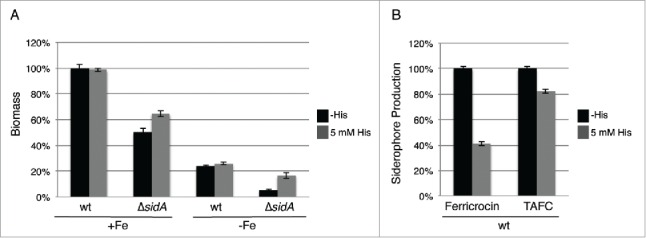
“Moreover, histidine has a high affinity for binding metals, both as free amino acid and as metal-coordinating residues in proteins.(8) In agreement with a role in metal homeostasis, iron starvation was found to result in a fold9- increase in the cellular histidine content in A.”
BackgroundAspergillus fumigatus: saprophyte or pathogen?
Tekaia, F., & Latgé, J.-P. (2005) · Current Opinion in Microbiology · doi:10.1016/j.mib.2005.06.017 · Cited by 387 · cited 1×
“ease invasive aspergillosis, particularly in immunocompromised patients.(1) Depending on the immune status and other factors in the patients, mortality rates in con-”
BackgroundMetal ion ligands in hyperaccumulating plants
Callahan, D. L., Baker, A. J. M., Kolev, S. D., & Wedd, A. G. (2006) · JBIC Journal of Biological Inorganic Chemistry · doi:10.1007/s00775-005-0056-7 · Cited by 345
Krappmann, S., Sasse, C., & Braus, G. H. (2006) · Eukaryotic Cell · doi:10.1128/ec.5.1.212-215.2006 · Cited by 287 · cited 2×
“fumigatus akuA::loxP strain derived from ATCC46645, (AfS77, termed wt here), largely lacking non-homologous recombination, was used.(11,12) To ascertain hisBspecific effects in the deletion mutant DhisB, the hisB gene was reinserted in single copy at the hisB locus, yielding strain hisB (see Material and Methods and F…”
MethodHapX-Mediated Adaption to Iron Starvation Is Crucial for Virulence of Aspergillus fumigatus
Schrettl, M., Beckmann, N., Varga, J., Heinekamp, T., Jacobsen, I. D., Jöchl, C., Moussa, T. A., Wang, S., Gsaller, F., Blatzer, M., et al. (2010) · PLoS Pathogens · doi:10.1371/journal.ppat.1001124 · Cited by 284 · cited 3×
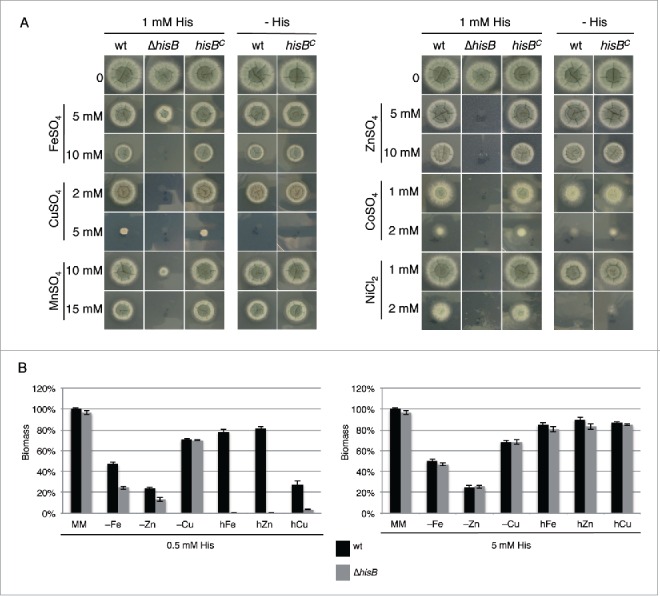
“fumigatus during iron starvation suggested a role of this amino acid in metal homeostasis.(9) In a first step, we analyzed the role of histidine biosynthesis in heavy metal resistance by comparing the growth of wt, DhisB and hisB strains on plates with 1 mM histidine supplementation (Fig.”
BackgroundMethodInfluentialSelf-citationCopper in Microbial Pathogenesis: Meddling with the Metal
Samanovic, M. I., Ding, C., Thiele, D. J., & Darwin, K. H. (2012) · Cell Host & Microbe · doi:10.1016/j.chom.2012.01.009 · Cited by 278 · cited 1×
“On the other hand, copper detoxification is an essential fungal virulence determinant.(40) Similarly, the host defense against Mycobacterium tuberculosis was shown to take advantage of copper and zinc toxicity.”
BackgroundHistidine biosynthetic pathway and genes: structure, regulation, and evolution
Alifano, P., Fani, R., Liò, P., Lazcano, A., Bazzicalupo, M., Carlomagno, M. S., & Bruni, C. B. (1996) · Microbiological Reviews · doi:10.1128/mr.60.1.44-69.1996 · Cited by 274
Köhler, S., Foulongne, V., Ouahrani-Bettache, S., Bourg, G., Teyssier, J., Ramuz, M., & Liautard, J.-P. (2002) · Proceedings of the National Academy of Sciences · doi:10.1073/pnas.232454299 · Cited by 270
Metal limitation and toxicity at the interface between host and pathogen
Becker, K. W., & Skaar, E. P. (2014) · FEMS Microbiology Reviews · doi:10.1111/1574-6976.12087 · Cited by 221 · cited 1×
“and zinc, a concept termed “nutritional immunity,” while concurrently flooding sites of infection such as the phagolysosome with antimicrobial concentrations of metals.(39) In response, pathogens developed a series of metal regulatory, acquisition, and detoxification systems”
BackgroundIron - a key nexus in the virulence of Aspergillus fumigatus
Haas, H. (2012) · Frontiers in Microbiology · doi:10.3389/fmicb.2012.00028 · Cited by 217 · cited 2×
“fumigatus as well as for other pathogens.(18,19) On the other hand, copper detoxification is an essential fungal virulence determinant.”
BackgroundSelf-citationPukkila-Worley, R., Peleg, A. Y., Tampakakis, E., & Mylonakis, E. (2009) · Eukaryotic Cell · doi:10.1128/ec.00163-09 · Cited by 192 · cited 1×
“Moreover, histidine auxotrophy does not alter virulence of Candida albicans in a Caenorhabditis elegans infection model.(31) Consequently, A.”
BackgroundMenacing Mold: The Molecular Biology of Aspergillus fumigatus
Brakhage, A. A., & Langfelder, K. (2002) · Annual Review of Microbiology · doi:10.1146/annurev.micro.56.012302.160625 · Cited by 183 · cited 1×
“nection with invasive aspergillosis range from 60–90%, largely due to poor therapeutic interventions and only limited specific diagnostic methods available.(2) Novel antifungal therapy approaches aim to target fungal-spe-”
BackgroundHypoxia and Fungal Pathogenesis: To Air or Not To Air?
Grahl, N., Shepardson, K. M., Chung, D., & Cramer, R. A. (2012) · Eukaryotic Cell · doi:10.1128/ec.00031-12 · Cited by 179
Distinct Roles for Dectin-1 and TLR4 in the Pathogenesis of Aspergillus fumigatus Keratitis
Leal, S. M., Cowden, S., Hsia, Y.-C., Ghannoum, M. A., Momany, M., & Pearlman, E. (2010) · PLoS Pathogens · doi:10.1371/journal.ppat.1000976 · Cited by 177 · cited 1×
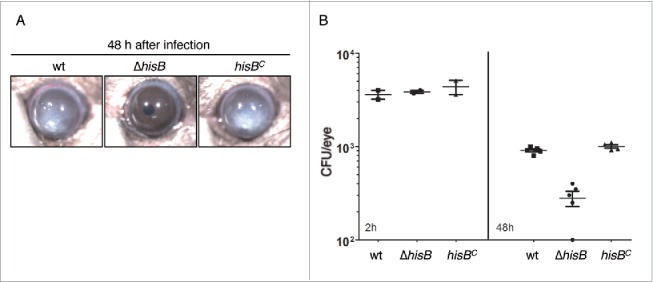
“fumigatus virulence in the cornea, we used a well established murine keratitis model.(24) Therefore, 4 £ 10(4) A.”
MethodSelf-citationBlatzer, M., Barker, B. M., Willger, S. D., Beckmann, N., Blosser, S. J., Cornish, E. J., Mazurie, A., Grahl, N., Haas, H., & Cramer, R. A. (2011) · PLoS Genetics · doi:10.1371/journal.pgen.1002374 · Cited by 175
Self-citationEfficient PCR-based gene targeting with a recyclable marker for Aspergillus nidulans
Nielsen, M. L., Albertsen, L., Lettier, G., Nielsen, J. B., & Mortensen, U. H. (2006) · Fungal Genetics and Biology · doi:10.1016/j.fgb.2005.09.005 · Cited by 160 · cited 1×
“For generating the hisB-deletion strain, the bipartite marker technique was used.(43) Therefore, the A.”
MethodBertuzzi, M., Schrettl, M., Alcazar-Fuoli, L., Cairns, T. C., Muñoz, A., Walker, L. A., Herbst, S., Safari, M., Cheverton, A. M., Chen, D., et al. (2014) · PLoS Pathogens · doi:10.1371/journal.ppat.1004413 · Cited by 158 · cited 1×
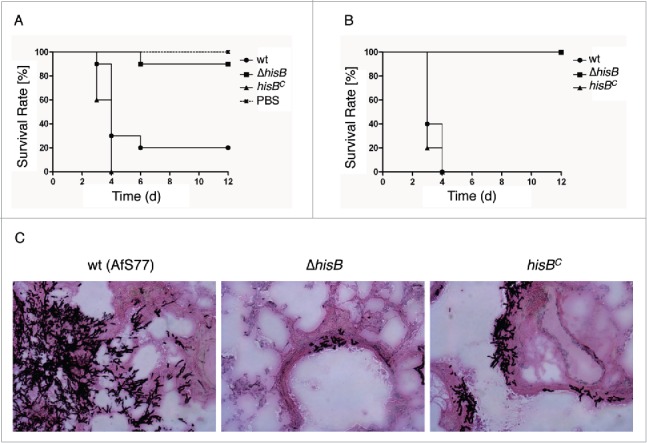
“fumigatus lung infection of leukopenic mice.(25) Mutant virulence studies serve to identify virulence”
BackgroundSelf-citationKrappmann, S., Bignell, E. M., Reichard, U., Rogers, T., Haynes, K., & Braus, G. H. (2004) · Molecular Microbiology · doi:10.1111/j.1365-2958.2004.04015.x · Cited by 133
Mowlds, P., & Kavanagh, K. A. (2007) · Mycopathologia · doi:10.1007/s11046-007-9069-9 · Cited by 124 · cited 1×
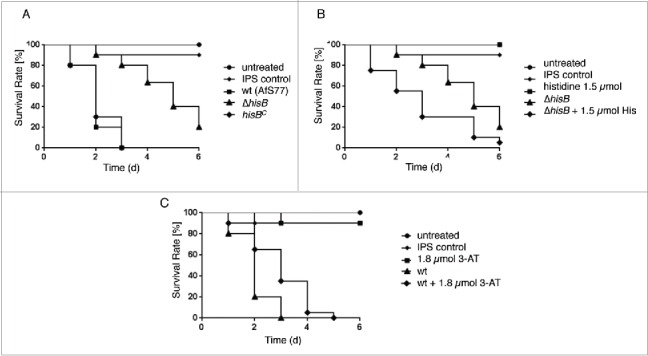
“Larvae were incubated at 30 C in the dark and monitored daily up to 6 d Incubation at 30 C was favored to avoid temperature-triggered effects on the larval immune response.(47) Significance of survival data was evaluated by using Kaplan-Meier survival curves, analyzed with the log-rank (Mantel Cox) test uti-”
MethodSmith, J. M., Tang, C. M., Van Noorden, S., & Holden, D. W. (1994) · Infection and Immunity · doi:10.1128/iai.62.12.5247-5254.1994 · Cited by 124
Hartmann, T., Dümig, M., Jaber, B. M., Szewczyk, E., Olbermann, P., Morschhäuser, J., & Krappmann, S. (2010) · Applied and Environmental Microbiology · doi:10.1128/aem.00882-10 · Cited by 120 · cited 1×
“fumigatus akuA::loxP strain derived from ATCC46645, (AfS77, termed wt here), largely lacking non-homologous recombination, was used.(11,12) To ascertain hisBspecific effects in the deletion mutant DhisB, the hisB gene was reinserted in single copy at the hisB locus, yielding strain hisB (see Material and Methods and F…”
MethodPearce, D. A., & Sherman, F. (1999) · Journal of Bacteriology · doi:10.1128/jb.181.16.4774-4779.1999 · Cited by 114
Iron and copper as virulence modulators in human fungal pathogens
Ding, C., Festa, R. A., Sun, T., & Wang, Z. (2014) · Molecular Microbiology · doi:10.1111/mmi.12653 · Cited by 103 · cited 1×
“The crucial role of metal homeostasis in fungal virulence makes histidine biosynthesis particularly interesting.(10) In this study, we characterized the role of IGPD and consequently histidine biosynthesis in metal homeostasis and virulence of A.”
BackgroundJacobsen, I. D., Brunke, S., Seider, K., Schwarzmüller, T., Firon, A., d'Enfért, C., Kuchler, K., & Hube, B. (2010) · Infection and Immunity · doi:10.1128/iai.01244-09 · Cited by 101 · cited 1×
“In contrast, persistence of Candida glabrata in mice was found to be unaffected by histidine auxotrophy.(30) Moreover, histidine auxotrophy does not alter virulence of Candida albicans in a Caenorhabditis elegans infection model.”
BackgroundFallon, J. P., Troy, N., & Kavanagh, K. (2011) · Virulence · doi:10.4161/viru.2.5.17811 · Cited by 100 · cited 2×
“For extraction of genomic DNA, mycelia were homogenized and DNA isolated according to Sambrook et al.45 Quantification of siderophore production Extra- and intracellular siderophores were isolated from culture supernatants and lyophilized mycelia, respectively, and analyzed as described previously.9 Galleria mellonell…”
MethodOne-step purification of recombinant proteins with the 6xHis tag and Ni-NTA resin
Crowe, J., Masone, B. S., & Ribbe, J. (1995) · Molecular Biotechnology · doi:10.1007/bf02779018 · Cited by 96
Histidine biosynthetic pathway and genes: structure, regulation, and evolution.
Alifano, P., Fani, R., Liò, P., Lazcano, A., Bazzicalupo, M., Carlomagno, M. S., & Bruni, C. B. (1996) · Microbiological Reviews · doi:10.1128/mmbr.60.1.44-69.1996 · Cited by 96 · cited 4×
“3 The first committed step, feedback-inhibited by histidine, is the condensation of 5-phosphoribosyl 1-pyrophosphate (PRPP) and ATP.3 The first 4 enzymes are not only essential for biosynthesis of histidine but are also involved in de novo biosynthesis of purines (Fig.”
BackgroundInfluentialAmich, J., Schafferer, L., Haas, H., & Krappmann, S. (2013) · PLoS Pathogens · doi:10.1371/journal.ppat.1003573 · Cited by 95 · cited 1×
“and intraperitoneal injection of 150 mg¢kg¡1 BW cyclophosphamide following a sequential protocol as previously described,(48) with the modification that 2 doses of cortisone on days ¡3 and ¡1 were applied.(49) Bacterial infections were prevented by adding 2 g¢l¡1 neomycin to the drinking water.”
MethodSelf-citationA Novel Class of Herbicides (Specific Inhibitors of Imidazoleglycerol Phosphate Dehydratase)
Mori, I., Fonné‐Pfister, R., Matsunaga, S., Tada, S., Kimura, Y., Iwasaki, G., Mano, J., Hatano, M., Nakano, T., Koizumi, S., et al. (1995) · PLANT PHYSIOLOGY · doi:10.1104/pp.107.3.719 · Cited by 70 · cited 1×
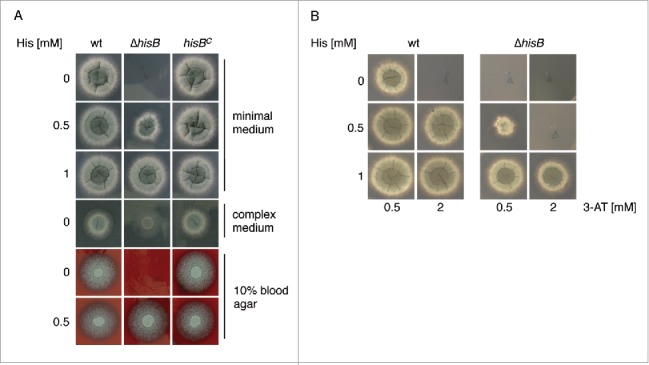
“Three-AT is a commercially available herbicide, targeting IGPD (HisB) activity and consequently biosynthesis of histidine.(6,16) Here we show that 3-AT is also active against A.”
BackgroundZinc Acquisition: A Key Aspect in Aspergillus fumigatus Virulence
Amich, J., & Calera, J. A. (2014) · Mycopathologia · doi:10.1007/s11046-014-9764-2 · Cited by 65 · cited 2×
“fumigatus as well as for other pathogens.(18,19) On the other hand, copper detoxification is an essential fungal virulence determinant.”
BackgroundSelf-citationSchöbel, F., Jacobsen, I. D., & Brock, M. (2010) · Eukaryotic Cell · doi:10.1128/ec.00020-10 · Cited by 64 · cited 1×
“penetration, but did not affect murine systemic infection, in which conidia are directly injected into the bloodstream.(26) The branched chain amino acid biosynthetic pathway (isoleucine, leucine, valine) was reported to be crucial for both pulmonary and systemic aspergillosis.”
BackgroundNeyrolles, O., Mintz, E., & Catty, P. (2013) · Frontiers in Cellular and Infection Microbiology · doi:10.3389/fcimb.2013.00089 · Cited by 56
Molecular Evolution of hisB Genes
Brilli, M., & Fani, R. (2004) · Journal of Molecular Evolution · doi:10.1007/s00239-003-2547-x · Cited by 48 · cited 1×
“IGPD activity-comprising protein is monofunctional, while in Enterobacteriaceae and some other bacteria, IGPD and histidinol-phosphate phosphatase domains have fused to form a bifunctional protein.(5) A competitive inhibitor of IGPD and consequently histidine biosynthesis, 3-amino-1,2,4 triazole (3-AT or amitrole), wa…”
Regulation of the Aspergillus nidulans hisB gene by histidine starvation
Busch, S., Hoffmann, B., Valerius, O., Starke, K., Düvel, K., & Braus, G. H. (2001) · Current Genetics · doi:10.1007/s002940000171 · Cited by 42 · cited 2×
“Aspergillus nidulans, deletion of the IGPD encoding gene, termed hisB, was shown to cause histidine auxotrophy.(4) In Archaea, Eukarya, and most bacteria, the”
BackgroundKroll, K., Pähtz, V., Hillmann, F., Vaknin, Y., Schmidt-Heck, W., Roth, M., Jacobsen, I. D., Osherov, N., Brakhage, A. A., & Kniemeyer, O. (2014) · Eukaryotic Cell · doi:10.1128/ec.00084-14 · Cited by 42 · cited 1×
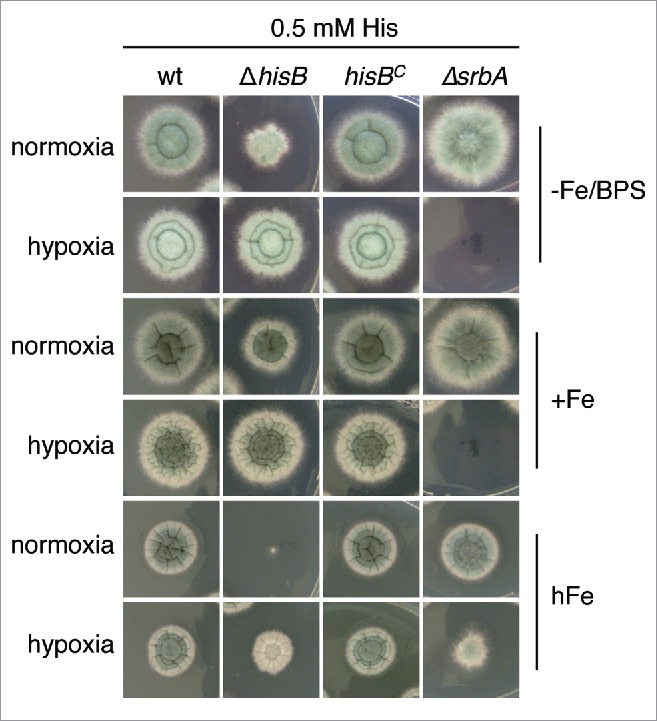
“finding that hypoxia leads to transcriptional upregulation of genes encoding amino acid transporters.(22)”
BackgroundThe Aspergillus fumigatus Dihydroxyacid Dehydratase Ilv3A/IlvC Is Required for Full Virulence
Oliver, J. D., Kaye, S. J., Tuckwell, D. S., Johns, A., Macdonald, D., Livermore, J., Warn, P. A., Birch, M., & Bromley, M. (2012) · PLoS ONE · doi:10.1371/journal.pone.0043559 · Cited by 40 · cited 1×
“The branched chain amino acid biosynthetic pathway (isoleucine, leucine, valine) was reported to be crucial for both pulmonary and systemic aspergillosis.(27) In contrast, arginine biosynthesis was found to be dispensable for virulence of A.”
BackgroundBeckmann, N., Schafferer, L., Schrettl, M., Binder, U., Talasz, H., Lindner, H., & Haas, H. (2013) · PLoS ONE · doi:10.1371/journal.pone.0067426 · Cited by 35
Self-citationAhangar, M. S., Vyas, R., Nasir, N., & Biswal, B. K. (2013) · Acta Crystallographica Section D Biological Crystallography · doi:10.1107/s0907444913022579 · Cited by 35 · cited 4×
“Nevertheless, these reports indicate that IGPD is a druggable target.(6) Moreover, histidine has a high affinity for binding metals, both as free amino acid and as metal-coordinating residues in proteins.”
BackgroundMethodInfluentialJadoun, J., Shadkchan, Y., & Osherov, N. (2004) · Current Genetics · doi:10.1007/s00294-003-0480-6 · Cited by 31
Crystal Structure of Imidazole Glycerol-phosphate Dehydratase
Sinha, S. C., Chaudhuri, B. N., Burgner, J. W., Yakovleva, G., Davisson, V. J., & Smith, J. L. (2003) · Journal of Biological Chemistry · doi:10.1074/jbc.m312733200 · Cited by 31
Ryuko, S., Ma, Y., Ma, N., Sakaue, M., & Kuno, T. (2012) · Molecular Genetics and Genomics · doi:10.1007/s00438-012-0705-9 · Cited by 31 · cited 1×
“Previously, histidine was found to play a role in resistance to cobalt, copper and nickel in Saccharomyces cerevisiae,(34) as well as to cobalt in Schizosaccharomyces pombe.(35) Moreover, an increased cellular histidine content was found to confer tolerance and hyperaccumulation of nickel in plants.”
BackgroundBlood amino acid compartmentation in mice bearing Lewis lung carcinoma.
Rivera, S., López-Soriano, F. J., Azcón‐Bieto, J., & Argilés, J. M. A. (1987) · PubMed · Cited by 22
Furukawa, A., Oikawa, S., Harada, K., Sugiyama, H., Hiraku, Y., Murata, M., Shimada, A., & Kawanishi, S. (2010) · Mutation research. Fundamental and molecular mechanisms of mutagenesis · doi:10.1016/j.mrfmmm.2010.08.004 · Cited by 16 · cited 1×
“A competitive inhibitor of IGPD and consequently histidine biosynthesis, 3-amino-1,2,4 triazole (3-AT or amitrole), was used as an herbicide, but is likely to be a human carcinogen.(6,7) Nevertheless, these reports indicate that IGPD is a druggable target.”
MethodSerum amino acid responses to three different exercise sessions in male power athletes.
Pitkänen, H., Mero, A. M. J., Ss, O., Komi, P. V., Pj, P., Saransaari, P., & Takala, T. (2002) · PubMed · Cited by 15
Bifunctionality and polarized infidelity at the hisB locus of Aspergillus nidulans
Ward, A. M. M., Reuser, J. A., Scheele, J. Y., LOHUIZEN, E. J. V., van Diepen, I. R. M. C. V. G., Klasen, E. A., & Bresser, M. (1984) · Molecular and General Genetics MGG · doi:10.1007/bf00330690 · Cited by 4 · cited 1×
“nidulans.(4,13) On minimal medium, histidine concentrations of 0 .”
Background
Cited by
Aspergillus fumigatus and Aspergillosis in 2019
Latgé, J.-P., & Chamilos, G. (2019) · Clinical Microbiology Reviews · doi:10.1128/cmr.00140-18 · Cited by 1,400
Contact killing and antimicrobial properties of copper
Vincent, M., Duval, R. E., Hartemann, P., & Engels‐Deutsch, M. (2018) · Journal of Applied Microbiology · doi:10.1111/jam.13681 · Cited by 694
“They demonstrated that deletion of the gene encoding imidazoleglycerol-phosphate dehydratase (HisB) reduces resistance of A. fumigatus to copper (Dietl et al. 2016).”
BackgroundInfluentialVitamin Biosynthesis as an Antifungal Target
Meir, Z., & Osherov, N. (2018) · Journal of Fungi · doi:10.3390/jof4020072 · Cited by 75
Tao, Q.-Q., Liu, L., Wang, P., Long, Q.-S., Zhao, Y., Jin, L., Xu, W.-M., Chen, Y., Li, Z., & Yang, S. (2019) · Journal of Agricultural and Food Chemistry · doi:10.1021/acs.jafc.9b02734 · Cited by 66
Cysteine: an overlooked energy and carbon source
Göbbels, L., Poehlein, A., Dumnitch, A., Egelkamp, R., Kröger, C., Haerdter, J., Hackl, T., Feld, A., Weller, H., Daniel, R., et al. (2021) · Scientific Reports · doi:10.1038/s41598-021-81103-z · Cited by 63
Metadata
- Authors
- Dietl, A.-M., Amich, J., Leal, S., Beckmann, N., Binder, U., Beilhack, A., Pearlman, E., & Haas, H.
- Affiliations
- Innsbruck Medical University (AT)
- University of Würzburg (DE)
- Case Western Reserve University (US)
- Corresponding author
- Haas, Hubertus
- ORCID
- Venue
- Virulence
- Publisher
- Informa UK Limited
- Published
- 2016-02-06
- Volume
- 7
- Issue
- 4
- Pages
- 465-476
- ISSN
- 2150-5594 (ISSN-L)
- 2150-5608
- PMC
- PMC4871644
- OpenAlex
- W2254822728
- Cited by
- 77
- References
- 52
- Citations by year
- 2026: 6 · 2025: 13 · 2024: 3 · 2023: 8 · 2022: 8 · 2021: 10 · 2020: 2 · 2019: 7 · 2018: 10 · 2017: 6 · 2016: 4
- Type
- journal article
- Language
- en
- Open access
- gold
- doi.org
- Licence
- Locations
- Virulence (publishedVersion, cc-by)
- Europe PMC (PubMed Central) (publishedVersion, cc-by)
- PubMed Central (publishedVersion, cc-by)
- PubMed (publishedVersion)
- eScholarship (California Digital Library) (submittedVersion, cc-by)
- eScholarship (California Digital Library) (submittedVersion)
- Research Explorer (The University of Manchester) (submittedVersion, cc-by)
- Funders
- Austrian Science Fund
- National Institutes of Health
- National Eye Institute (F31EY019841, R01EY018612, P30EY011373)
- Topics
- Life Sciences › Biochemistry, Genetics and Molecular Biology › Molecular Biology › Fungal and yeast genetics research
- Health Sciences › Medicine › Infectious Diseases › Antifungal resistance and susceptibility
- Health Sciences › Medicine › Infectious Diseases › Fungal Infections and Studies
- Keywords
- Aspergillus fumigatus, histidine biosynthesis, histidine auxotrophy, metal homeostasis, fungal virulence, antifungal drug targets, 3-amino-1,2,4-triazole, histidine supplementation, invasive fungal infections, heavy metal resistance, copper, zinc, corneal infection, wax moth larvae
- MeSH terms
- Amitrole, Animals, Aspergillosis, Aspergillus fumigatus, Copper, Cornea, Disease Models, Animal, Histidine, Homeostasis, Humans, Hydro-Lyases, Iron, Lung, Moths, Virulence, Zinc, Gene Expression Regulation, Fungal, Gene Deletion, Metals, Heavy, Mice
About these checks
Registry, retraction, Cites and statistics results are computed, not judged, with one exception: a printed reference that no index lists is read once by a model before it counts as a citation error. Claims are extracted by a model and kept only when their quote appears verbatim in the text; each cited source is then checked, with a model’s help, for whether it says what the claim relies on. Those verdicts can be wrong — read the claim’s quote and the cited source before relying on one.
Statistics and arithmetic are recomputed, not judged.
Confidence bands are shown only for fields calibrated on our annotated test set. None is calibrated yet, so no band is shown.
What counts as a claim ›How we measure confidence ›How we check this ›
Are you an author, or do you see a problem with this page? Request a review
Data sources
Bibliographic data: Semantic Scholar, OpenAlex, Crossref.
Contains information from the Semantic Scholar Academic Graph Datasets, made available under the ODC Attribution License (ODC-BY 1.0).
Semantic Scholar’s data is described in: Kinney, R., et al. (2023). The Semantic Scholar Open Data Platform. arXiv:2301.10140.
