

Set1-mediated H3K4 methylation is required for Candida albicans virulence by regulating intracellular level of reactive oxygen species
Open accessThe DOI matches its Crossref record; 47 of the 47 references it cites were found in a registry or an index.
Abstract
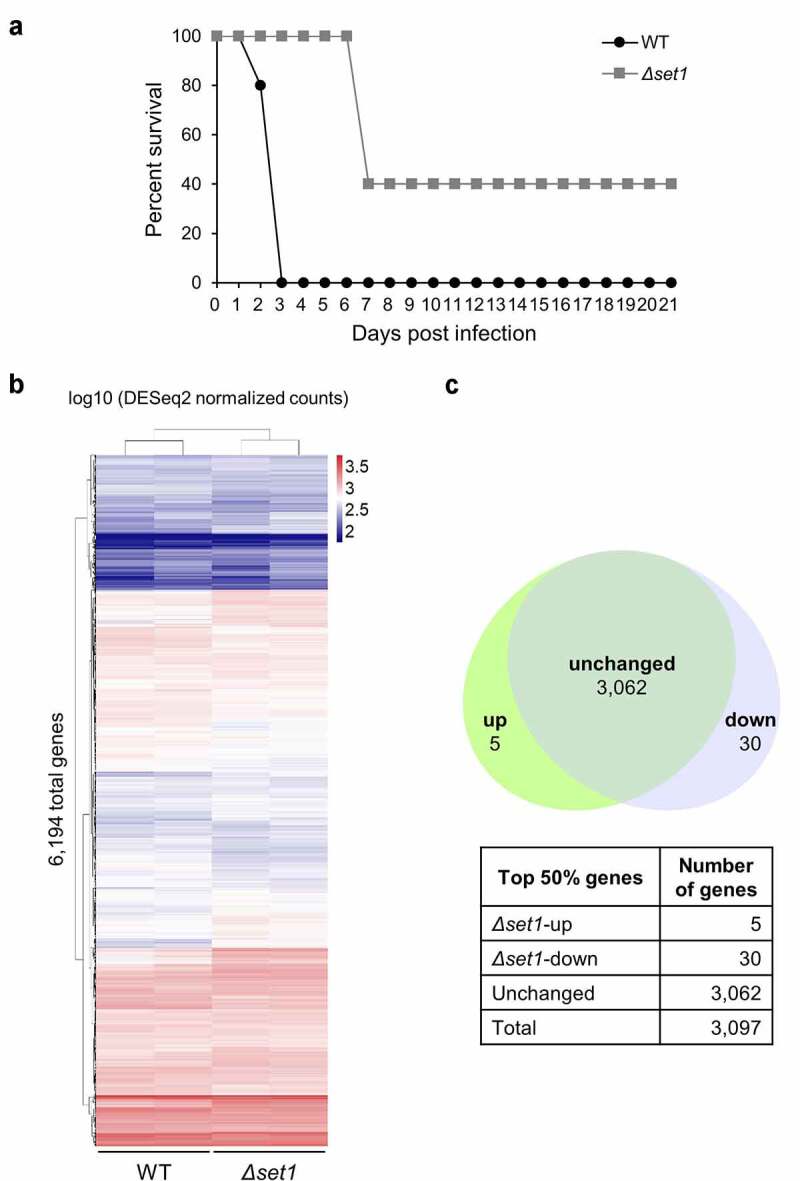
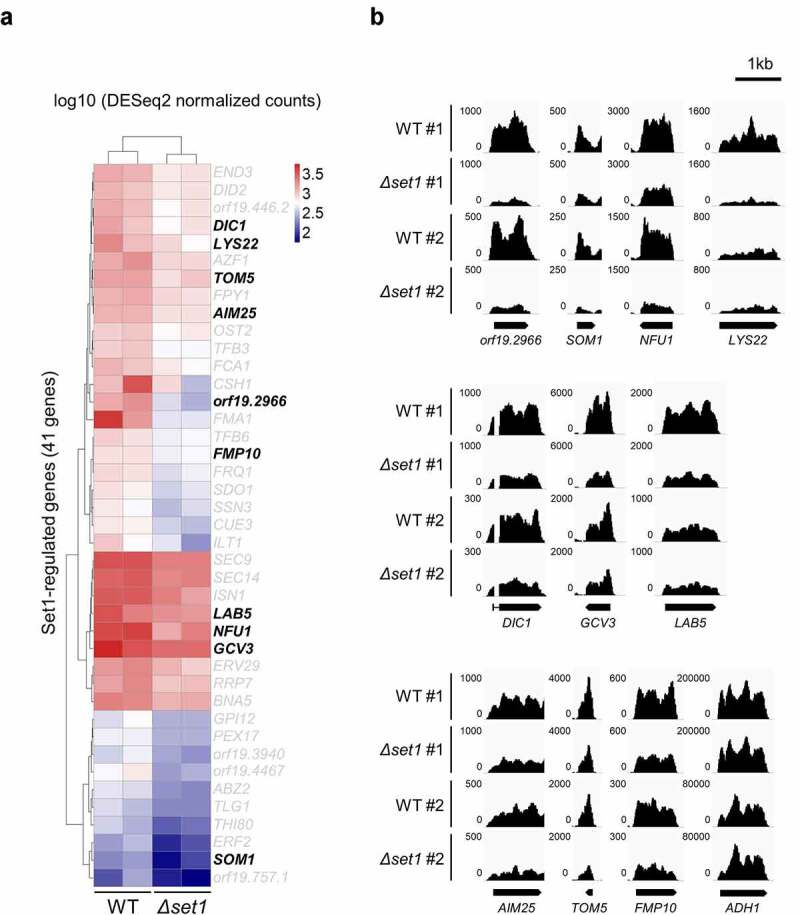
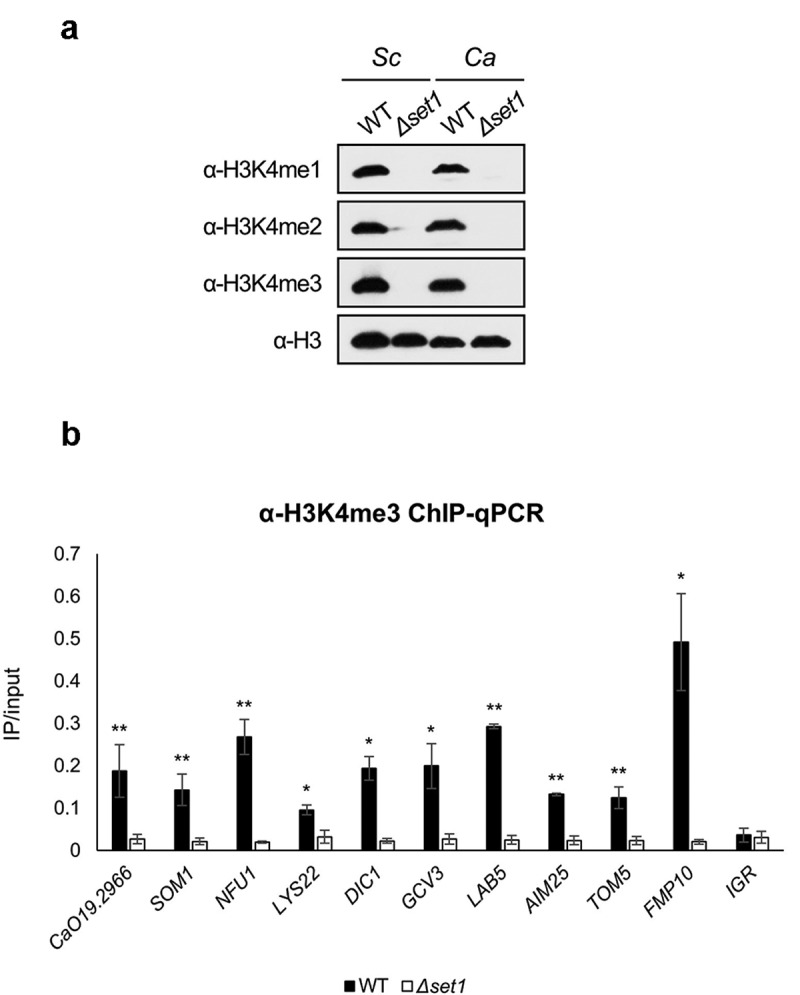
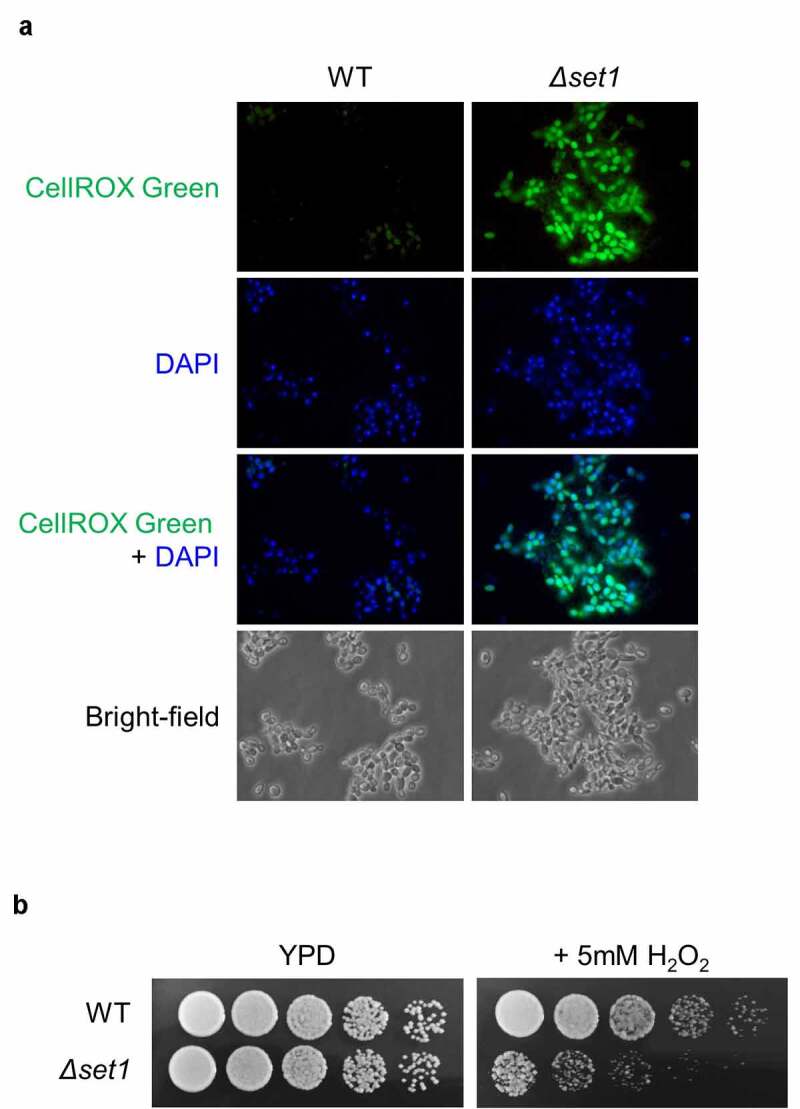
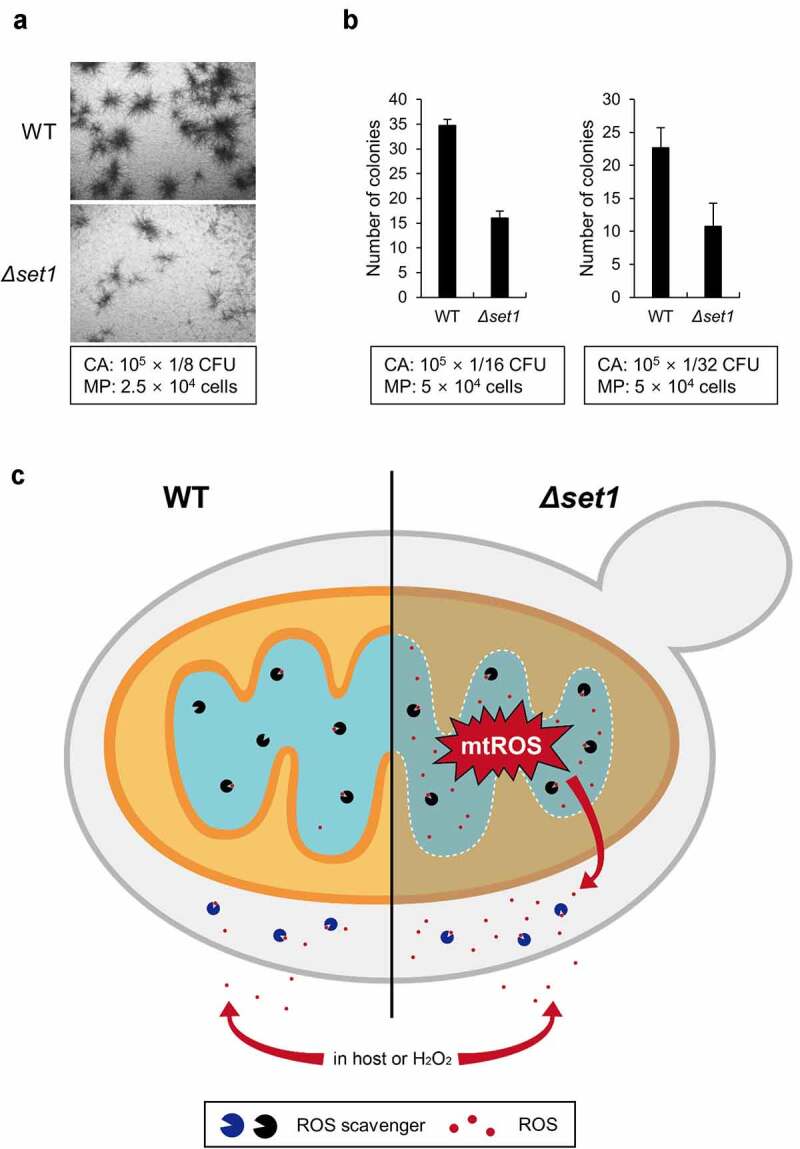
Candida albicans is an opportunistic human fungal pathogen that exists in normal flora but can cause infection in immunocompromised individuals. The transition to pathogenic C. albicans requires a change of various gene expressions. Because histone-modifying enzymes can regulate gene expression, they are thought to control the virulence of C. albicans. Indeed, the absence of H3 lysine 4 (H3K4) methyltransferase Set1 has been shown to reduce the virulence of C. albicans; however, Set1-regulated genes responsible for this attenuated virulence phenotype remain unknown. Here, we demonstrated that Set1 positively regulates the expression of mitochondrial protein genes by methylating H3K4. In particular, levels of cellular mitochondrial reactive oxygen species (ROS) were higher in Δset1 than in the wild-type due to the defect of those genes’ expression. Set1 deletion also increases H2O2 sensitivity and prevents proper colony formation when interacting with macrophage in vitro, consistent with its attenuated virulence in vivo. Together, these findings suggest that Set1 is required to regulate proper cellular ROS production by positively regulating the expression of mitochondrial protein genes and subsequently sustaining mitochondrial membrane integrity. Consequently, C. albicans maintains proper ROS levels via Set1-mediated transcriptional regulation, thus establishing a rapid defense against external ROS generated by the host.
Overview
The claims and statistics of this paper haven’t been checked yet.
Free: it reads the open-access text and checks the first 5 claims that cite a source we can check. Create a free account to check every claim.
Integrity signals
Registry
Cites
Statistics
Figures
Verification
Claims the paper makes
The claims and statistics of this paper haven’t been checked yet.
Free: it reads the open-access text and checks the first 5 claims that cite a source we can check. Create a free account to check every claim.
Claims other papers make about this one
Each is checked against this paper’s own text: does it say what the citing paper says it does?
The cited source says what the claim attributes to it.
In the citing paper
“Additionally, Set1 significantly influences C. albicans virulence in mouse models of invasive infections33,34.”
From Targeting epigenetic regulators to overcome drug resistance in the emerging human fungal pathogen Candida auris (2025) · cites this paper as [33]
Self-check
Percentages, sums and reported differences re-computed from the paper’s own numbers.
The self-check needs the paper’s full text.
Citations
Cites
Mitochondrial formation of reactive oxygen species
Turrens, J. F. (2003) · The Journal of Physiology · doi:10.1113/jphysiol.2003.049478 · Cited by 5,084
The Role of Chromatin during Transcription
Li, B., Carey, M., & Workman, J. L. (2007) · Cell · doi:10.1016/j.cell.2007.01.015 · Cited by 3,533
Active Genes Are Tri-Methylated at K4 of Histone H3
Santos-Rosa, H., Schneider, R., Bannister, A. J., Sherriff, J., Bernstein, B. E., Emre, N. C. T., Schreiber, S. L., Mellor, J., & Kouzarides, T. (2002) · Nature · doi:10.1038/nature01080 · Cited by 2,138 · cited 3×
“Previous studies have reported a positive correlation between H3K4 methylation mediated by Set1 and transcription [13,14,23]; therefore, we performed RNA-”
BackgroundMethodCandida albicans pathogenicity mechanisms
Mayer, F. L., Wilson, D., & Hube, B. (2013) · Virulence · doi:10.4161/viru.22913 · Cited by 1,848
Virulence factors of Candida albicans
Calderone, R. A., & Fonzi, W. A. (2001) · Trends in Microbiology · doi:10.1016/s0966-842x(01)02094-7 · Cited by 1,331 · cited 1×
“albicans to proliferate rapidly by neutralizing and resisting host attacks [2,6,10].”
BackgroundCandida albicans Secreted Aspartyl Proteinases in Virulence and Pathogenesis
Naglik, J. R., Challacombe, S. J., & Hube, B. (2003) · Microbiology and Molecular Biology Reviews · doi:10.1128/mmbr.67.3.400-428.2003 · Cited by 1,179
Scandalios, J. G. (2005) · Brazilian Journal of Medical and Biological Research · doi:10.1590/s0100-879x2005000700003 · Cited by 1,142
Ng, H. H., Robert, F., Young, R. A., & Struhl, K. (2003) · Molecular Cell · doi:10.1016/s1097-2765(03)00092-3 · Cited by 1,095
Candida albicans morphogenesis and host defence: discriminating invasion from colonization
Gow, N. A. R., van de Veerdonk, F. L., Brown, A. J. P., & Netea, M. G. (2012) · Nature Reviews Microbiology · doi:10.1038/nrmicro2711 · Cited by 888 · cited 2×
“albicans can cause opportunistic infection in response to environmental changes in the host [1].”
BackgroundMethylation of histone H3 Lys 4 in coding regions of active genes
Bernstein, B. E., Humphrey, E. L., Erlich, R. L., Schneider, R., Bouman, P., Liu, J. S., Kouzarides, T., & Schreiber, S. L. (2002) · Proceedings of the National Academy of Sciences · doi:10.1073/pnas.082249499 · Cited by 777
Research works printed but not linked: 1
- Murray SC, Lorenz P, Howe FS, et al. H3K4me3 is neither instructive for, nor informed by, transcription. bioRxiv. 2019; 709014. 10. 1101/709014
Cited by
Regulatory Roles of Histone Modifications in Filamentous Fungal Pathogens
Lai, Y., Wang, L., Zheng, W., & Wang, S. (2022) · Journal of Fungi · doi:10.3390/jof8060565 · Cited by 59
“In the human opportunistic pathogen Candida albicans, Set1-mediated H3K4me3 activates mitochondrial protein genes to establish defenses against oxidative stress from host cells during infection [18].”
BackgroundEpigenetic Regulation of Fungal Secondary Metabolism
Zhang, Y., Yu, W., Lü, Y., Wu, Y., Ouyang, Z., Tu, Y., & He, B. (2024) · Journal of Fungi · doi:10.3390/jof10090648 · Cited by 55
“In the light of Candida albicans , H3K4 methylation can change the expression of specific genes, the way of undermining its resistance [127–129].”
BackgroundZhang, Y., Zeng, L., Huang, X., Wang, Y., Chen, G., Moses, M., Zou, Y., Xiong, S., Xue, W., Dong, Y., et al. (2025) · Nature Communications · doi:10.1038/s41467-025-59898-6 · Cited by 33
“Additionally, Set1 signi fi cantlyin fl uences C. albicans virulence in mouse models of invasive infections 33,34 .”
Liu, R., Chen, X., Zhao, F., Jiang, Y., Lu, Z., Ji, H., Feng, Y., Li, J., Zhang, H., Zheng, J., et al. (2023) · Journal of Fungi · doi:10.3390/jof9060672 · Cited by 28
“In lower eukaryotes, H3K4 methylation has been shown to be required for morphogenesis, stress responses, secondary metabolism, and pathogenesis, particularly in pathogenic fungi [16,17,19,21,24,25,59].”
BackgroundXu, X., Chen, Y., Li, B., & Tian, S. (2023) · Microbiology Spectrum · doi:10.1128/spectrum.03545-22 · Cited by 14
“In Candida albicans, Set1 positively regulates the expression of mitochondrial protein genes through H3K4methylation, therebymaintaining normal cellular reactive oxygen species (ROS) production and regulating fungal virulence (28).”
Background
Metadata
- Authors
- Kim, J., Park, S., Kwon, S., Lee, E.-J., & Lee, J.-S.
- Affiliations
- Kangwon National University
- Kangwon National University (KR)
- Yonsei Institute of Pharmaceutical Sciences, Yonsei University
- Korea University (KR)
- Corresponding author
- Lee, Jung-Shin
- Venue
- Virulence
- Publisher
- Informa UK Limited
- Published
- 2021-10-26
- Volume
- 12
- Issue
- 1
- Pages
- 2648-2658
- ISSN
- 2150-5594 (ISSN-L)
- 2150-5608
- PMC
- PMC8555521
- OpenAlex
- W3208538083
- Cited by
- 13
- References
- 47
- Citations by year
- 2026: 1 · 2025: 2 · 2024: 3 · 2023: 5 · 2022: 2
- FWCI
- 0.78
- Type
- journal article
- Language
- en
- Open access
- gold
- doi.org
- Licence
- cc-by
- doi.org/10.1080/policies-text-data-mining (tdm)
- Locations
- Virulence (publishedVersion, cc-by)
- Europe PMC (PubMed Central) (publishedVersion, other-oa)
- PubMed Central (publishedVersion, cc-by)
- PubMed (publishedVersion)
- DOAJ (DOAJ: Directory of Open Access Journals) (submittedVersion, cc-by-sa)
- Funders
- National Research Foundation of Korea (NRF-2018R1D1A1A02048280, NRF-2015R1D1A1A02061)
- Topics
- Life Sciences › Biochemistry, Genetics and Molecular Biology › Molecular Biology › Fungal and yeast genetics research
- Health Sciences › Medicine › Infectious Diseases › Antifungal resistance and susceptibility
- Health Sciences › Medicine › Infectious Diseases › Fungal Infections and Studies
- Keywords
- Candida albicans, Set1, H3K4 methylation, histone methyltransferase, fungal virulence, reactive oxygen species, mitochondrial protein genes, mitochondrial membrane integrity, hydrogen peroxide sensitivity, macrophage interaction, transcriptional regulation, histone modifications
- MeSH terms
- Candida albicans, Hydrogen Peroxide, Methylation, Histone-Lysine N-Methyltransferase, Virulence, Reactive Oxygen Species, Mitochondrial Proteins, Saccharomyces cerevisiae Proteins
About these checks
Registry, retraction, Cites and statistics results are computed, not judged, with one exception: a printed reference that no index lists is read once by a model before it counts as a citation error. Claims are extracted by a model and kept only when their quote appears verbatim in the text; each cited source is then checked, with a model’s help, for whether it says what the claim relies on. Those verdicts can be wrong — read the claim’s quote and the cited source before relying on one.
Statistics and arithmetic are recomputed, not judged.
Confidence bands are shown only for fields calibrated on our annotated test set. None is calibrated yet, so no band is shown.
What counts as a claim ›How we measure confidence ›How we check this ›
Are you an author, or do you see a problem with this page? Request a review
How to cite
Cite CoChat for the checks on this page, and the paper for its own findings.
- This page
- CoChat. (2026). Citation check: Set1-mediated H3K4 methylation is required for Candida albicans virulence by regulating intracellular level of reactive oxygen species. https://app.cochat.ai/papers/10.1080/21505594.2021.1980988
- The paper
- Kim, J., Park, S., Kwon, S., Lee, E.-J., & Lee, J.-S. (2021). Set1-mediated H3K4 methylation is required for Candida albicans virulence by regulating intracellular level of reactive oxygen species. Virulence. https://doi.org/10.1080/21505594.2021.1980988
Data sources
Bibliographic data: Semantic Scholar, OpenAlex, Crossref.
Contains information from the Semantic Scholar Academic Graph Datasets, made available under the ODC Attribution License (ODC-BY 1.0).
Semantic Scholar’s data is described in: Kinney, R., et al. (2023). The Semantic Scholar Open Data Platform. arXiv:2301.10140.
