

The DOI matches its Crossref record; 57 of the 57 references it cites were found in a registry or an index.
Dual FOPID-neural network controller based on fast grey wolf optimizer: application to two-inputs two-outputs helicopter
Open accessAbstract
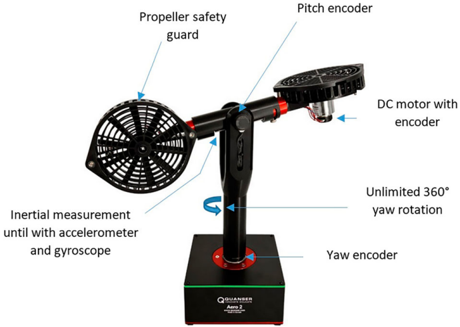
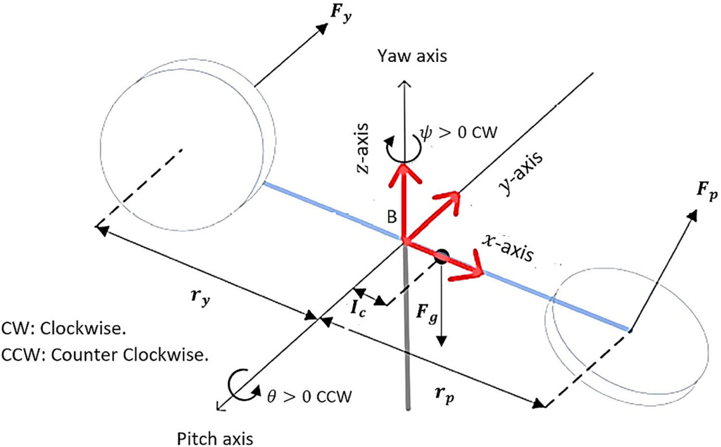
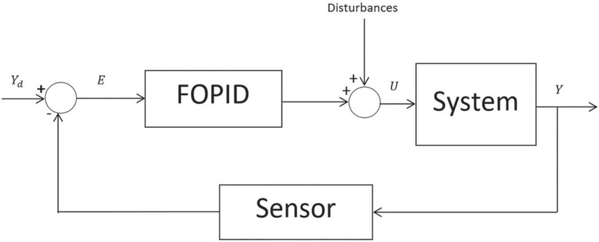
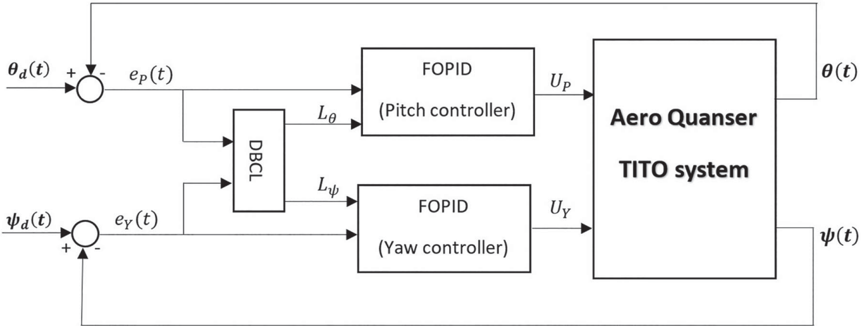
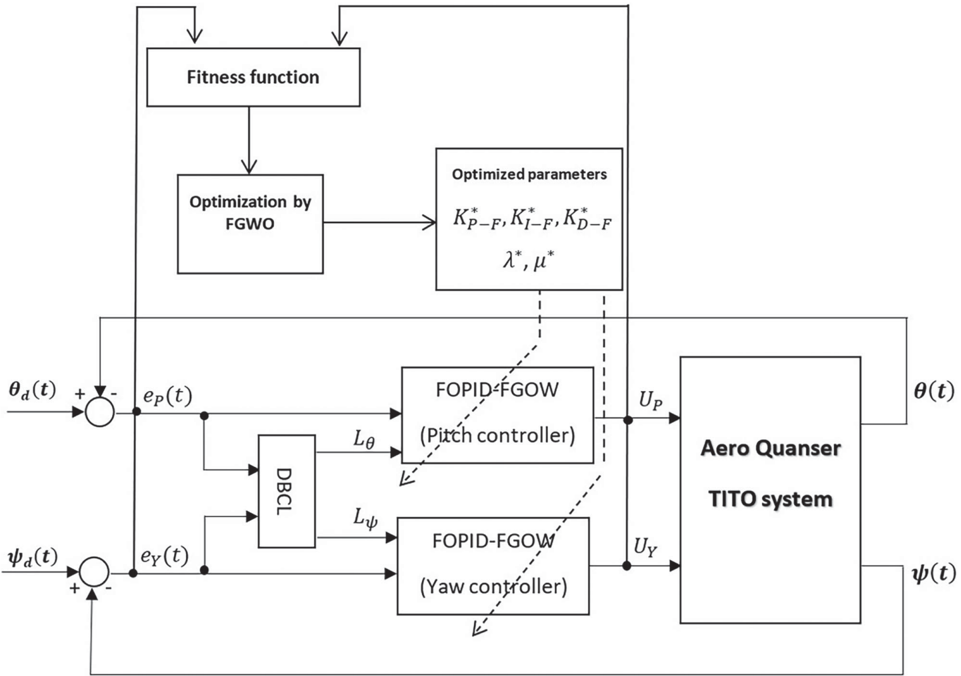
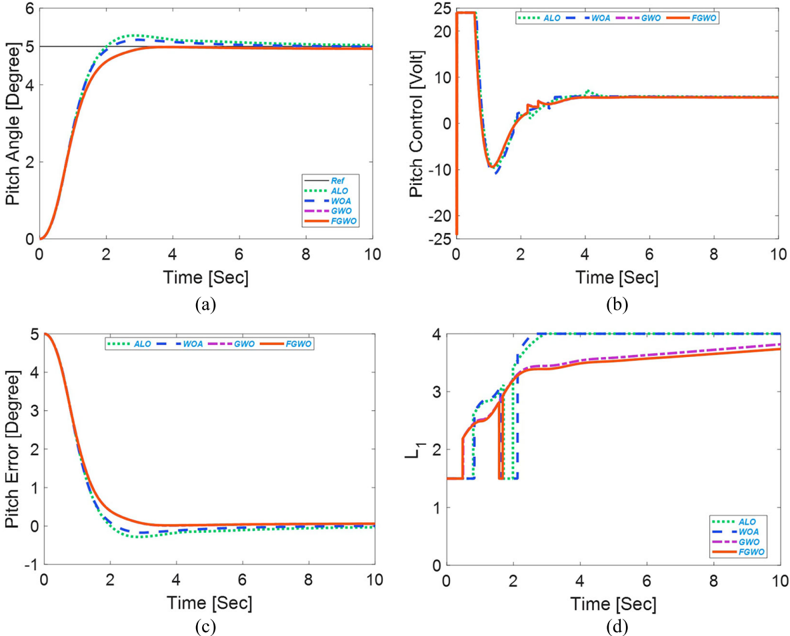
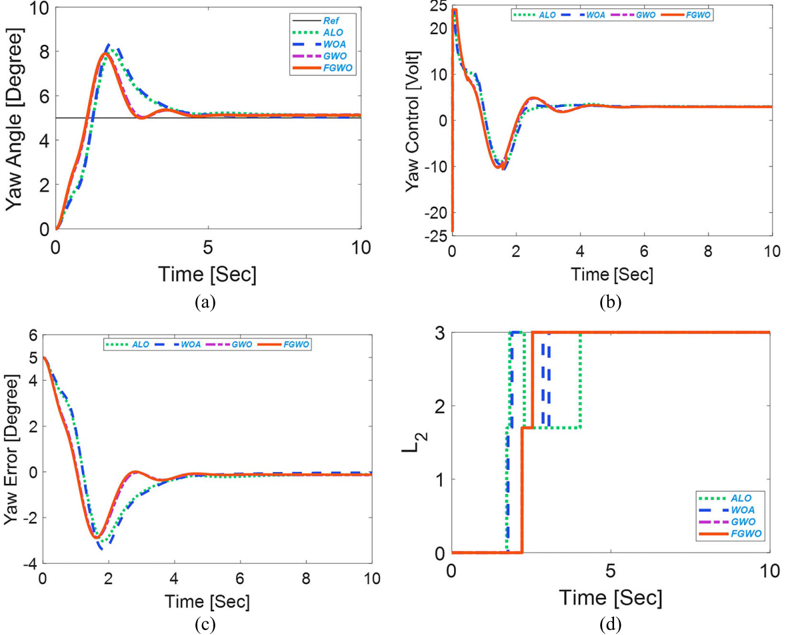
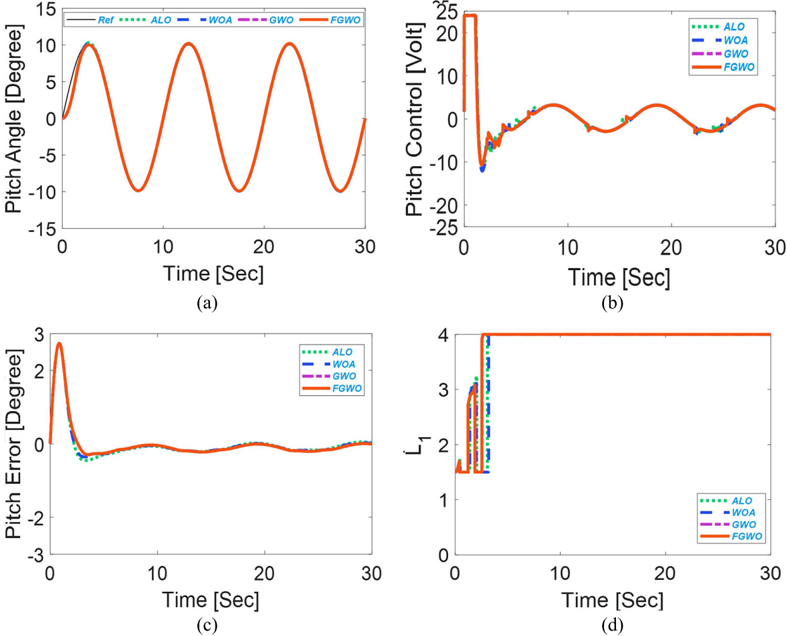
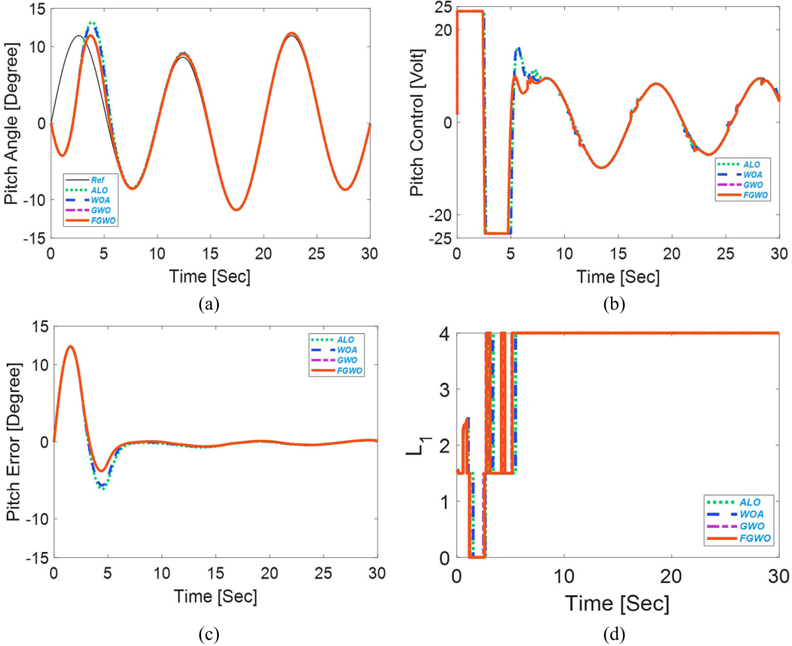
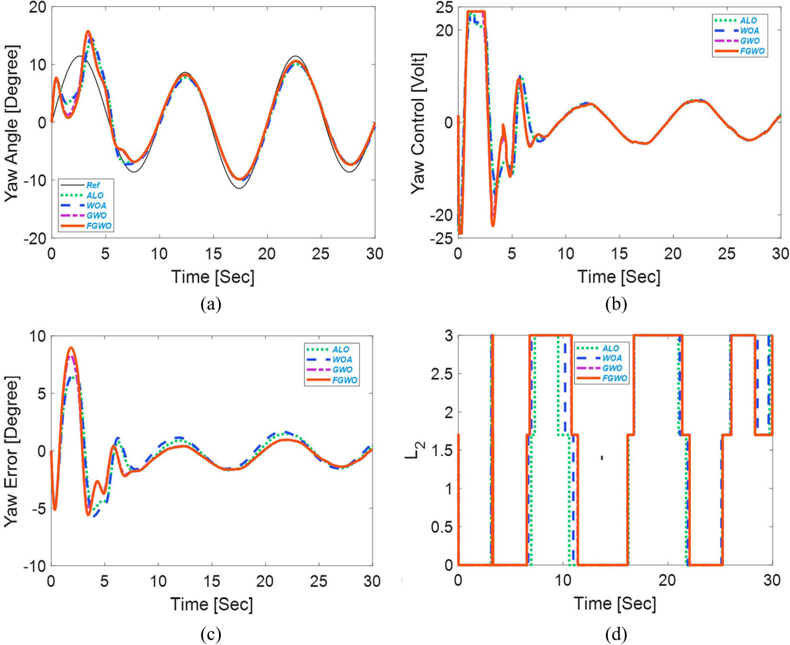
This research introduces a novel dual Fast Grey Wolf Optimizer (FGWO) combined with Radial Basis Function Neural Networks (RBFNN) for a Fractional-Order PID (FOPID) controller applied to a helicopter simulator. The proposed FGWO improves the standard Grey Wolf Optimizer (GWO) by enhancing hunting during the exploitation phase and increases robustness in convergence to the minimum value. FGWO optimizes the FOPID parameters using a novel objective function. The RBFNN is integrated to address the nonlinearities and uncertainties, while a dual block mitigates the coupling effects. The performance of the proposed controller is characterized by two simulation scenarios. The first scenario involved nine benchmark functions across thirty trials. Results demonstrated that the FGWO offered superior performance in terms of robustness and proximity to the global minimum compared to the GWO. The second scenario involved applying the controllers to the helicopter. Results evidenced that the dual-FOPID-FGWO (DRF-FG) controller achieved a 4.3363% faster response and 1.8199% higher precision than the GWO-based controller (DRF-G). The DRF-FG showed robustness in trajectory tracking compared to the controllers based on the Ant Lion Optimizer (DRF-A) and the Whale Optimization Algorithm (DRF-W). DRF-FG improved the average regulation performance by 1.702% and trajectory tracking by 0.152% compared with DRF-G.
Overview
The claims and statistics of this paper haven’t been checked yet.
Free: it reads the open-access text and checks the first 5 claims that cite a source we can check. Create a free account to check every claim.
Integrity signals
Registry
Cites
Statistics
Figures







Verification
Claims the paper makes
The claims and statistics of this paper haven’t been checked yet.
Free: it reads the open-access text and checks the first 5 claims that cite a source we can check. Create a free account to check every claim.
Claims other papers make about this one
Each is checked against this paper’s own text: does it say what the citing paper says it does?
The source backs part of the claim, not all of it — or backs it for a different population, condition or comparison.
In the citing paper
“These controllers are especially useful in scenarios where traditional control techniques may have difficulty adjusting to rapidly evolving conditions [282].”
From A Review of Modeling and Control Techniques for Unmanned Aerial Vehicles (2025) · cites this paper as [282]
Experimental — accuracy not yet measured
Self-check
Percentages, sums and reported differences re-computed from the paper’s own numbers.
The self-check needs the paper’s full text.
Citations
Cites
Mirjalili, S., Mirjalili, S. M., & Lewis, A. (2014) · Advances in Engineering Software · doi:10.1016/j.advengsoft.2013.12.007 · Cited by 19,343 · cited 3×
“In Mirjalili et al. (2014), the same result was obtained.”
The Whale Optimization Algorithm
Mirjalili, S., & Lewis, A. (2016) · Advances in Engineering Software · doi:10.1016/j.advengsoft.2016.01.008 · Cited by 14,581 · cited 1×
“The hunting behaviour of whales has been modelled in Mirjalili and Lewis (2016) using the Whale Optimization Algorithm (WOA).”
Qu, C., Gai, W., Zhong, M., & Zhang, J. (2020) · Applied Soft Computing · doi:10.1016/j.asoc.2020.106099 · Cited by 334 · cited 1×
“The second approach involves combining GWO with Artificial Intelligence (AI) based algorithms to address the inherent demerits of GWO by Jarray et al. (2022); Lv et al. (2022); Qu et al. (2020).”
PID control of quadrotor UAVs: A survey
Lopez-Sanchez, I., & Moreno-Valenzuela, J. (2023) · Annual Reviews in Control · doi:10.1016/j.arcontrol.2023.100900 · Cited by 271 · cited 2×
“FOPID was applied to UAV systems, as reviewed in Lopez-Sanchez and Moreno-Valenzuela (2023).”
Recent Advances in Grey Wolf Optimizer, its Versions and Applications: Review
Makhadmeh, S. N., Al-Betar, M. A., Doush, I. A., Awadallah, M. A., Kassaymeh, S., Mirjalili, S., & Zitar, R. A. (2024) · IEEE Access · doi:10.1109/access.2023.3304889 · Cited by 240 · cited 3×
“It is reported in Makhadmeh et al. (2024) that owing to its effective exploitation strategy, GWO often exhibits superior convergence properties, whereas other algorithms may require more iterations to converge.”
State of health estimation of lithium-ion battery with improved radial basis function neural network
Wu, J., Fang, L., Dong, G., & Lin, M. (2022) · Energy · doi:10.1016/j.energy.2022.125380 · Cited by 133 · cited 1×
“For the first context, interested readers are referred to notable recent works using GWO such as; Wu et al. (2023) estimated parameters in a lithium-ion battery indicating its state of health, Hussein and Al-Araji (2024) found opti-malparametersinahovercraftindicatingitsoptimalpath, Wang et al.…”
Adaptive bias RBF neural network control for a robotic manipulator
Liu, Q., Li, D., Ge, S. S., Ji, R., Ouyang, Z., & Tee, K. P. (2021) · Neurocomputing · doi:10.1016/j.neucom.2021.03.033 · Cited by 130 · cited 1×
“Relevant notable works on RBFNN include adaptive RBFNN for a robotic manipulator (Liu et al., 2021), adaptive PI and RBFNN PID for a permanent magnet synchronous motor (PMSM) drive (Zeng et al., 2022) and a quadrotor UAV (Guo et al., 2023).”
Tutsoy, O., Asadi, D., Ahmadi, K., Nabavi-Chashmi, S. Y., & Iqbal, J. (2024) · IEEE Transactions on Intelligent Transportation Systems · doi:10.1109/tits.2024.3367769 · Cited by 98 · cited 1×
“Unmanned Aerial Vehicles (UAVs) have been widely employed in military and civilian domains (Tutsoy et al., 2024).”
Self-citationEnhanced grey wolf optimizer with a model for dynamically estimating the location of the prey
Luo, K. (2019) · Applied Soft Computing · doi:10.1016/j.asoc.2019.01.025 · Cited by 84 · cited 2×
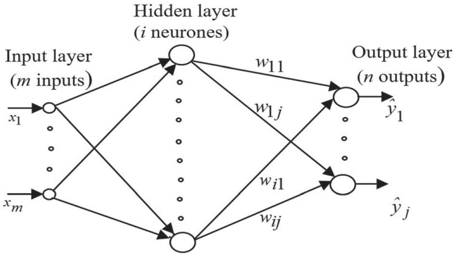
“In an n -dimensional network, the input is directly connected to a hidden layer, where each neuron is defined by an activation function that depends on the Euclidean distance between the input and a vector of dimension n (Luo, 2019).”
Wang, Y., Tian, Z., Cai, Z., Zhao, J. B., & Wu, K. H. (2020) · Chinese Journal of Aeronautics · doi:10.1016/j.cja.2020.04.028 · Cited by 83
Cited by
A Review of Modeling and Control Techniques for Unmanned Aerial Vehicles
Gedefaw, E. A., Abera, N. B., & Abdissa, C. M. (2025) · Engineering Reports · doi:10.1002/eng2.70215 · Cited by 54
Irfan, S., Zhao, L., Javaid, U., & Iqbal, J. (2025) · Guidance Navigation and Control · doi:10.1142/s2737480725500281 · Cited by 1
Self-citationPaul Nishanth, F., Dash, S. K., & Mahapatro, S. R. (2026) · International Journal of Dynamics and Control · doi:10.1007/s40435-026-02035-y · Cited by 1
Garg, P., & Mishra, B. (2025) · Chemical Product and Process Modeling · doi:10.1515/cppm-2025-0109
Adaptive evolutionary PID controller using SHADE and L-SHADE for TRIGA mark-II reactor
Lokman, G., İşcan, S., Çelik, E., Sharma, S., & Sharma, G. (2026) · Scientific Reports · doi:10.1038/s41598-026-73146-x
Metadata
- Authors
- Rezoug, A., Iqbal, J., & Nemra, A.
- Affiliations
- École Nationale Supérieure de Techniques Avancées (FR)
- University of Hull (GB)
- Ecole Militaire Polytechniques
- Corresponding author
- Iqbal, Jamshed
- Venue
- Systems Science & Control Engineering
- Publisher
- Informa UK Limited
- Published
- 2025-01-12
- Volume
- 13
- Issue
- 1
- ISSN
- 2164-2583 (ISSN-L)
- OpenAlex
- W4406292824
- Cited by
- 3
- References
- 55
- Citations by year
- 2026: 1 · 2025: 2
- FWCI
- 1.11
- Type
- journal article
- Language
- en
- Update notices
- correction (2025-02-03)
- Open access
- gold
- doi.org
- Licence
- Locations
- Systems Science & Control Engineering (publishedVersion, cc-by)
- Repository@Hull (Worktribe) (University of Hull) (publishedVersion, other-oa)
- DOAJ (DOAJ: Directory of Open Access Journals) (submittedVersion, cc-by-sa)
- Topics
- Physical Sciences › Engineering › Control and Systems Engineering › Advanced Control Systems Design
- Physical Sciences › Computer Science › Artificial Intelligence › Metaheuristic Optimization Algorithms Research
- Physical Sciences › Computer Science › Artificial Intelligence › Fuzzy Logic and Control Systems
- Keywords
- fractional order PID controller, radial basis function neural network, helicopter flight control, trajectory tracking, robustness to uncertainty, metaheuristic parameter tuning, MIMO
About these checks
Registry, retraction, Cites and statistics results are computed, not judged, with one exception: a printed reference that no index lists is read once by a model before it counts as a citation error. Claims are extracted by a model and kept only when their quote appears verbatim in the text; each cited source is then checked, with a model’s help, for whether it says what the claim relies on. Those verdicts can be wrong — read the claim’s quote and the cited source before relying on one.
Statistics and arithmetic are recomputed, not judged.
Confidence bands are shown only for fields calibrated on our annotated test set. None is calibrated yet, so no band is shown.
What counts as a claim ›How we measure confidence ›How we check this ›
Are you an author, or do you see a problem with this page? Request a review
How to cite
Cite CoChat for the checks on this page, and the paper for its own findings.
- This page
- CoChat. (2026). Citation check: Dual FOPID-neural network controller based on fast grey wolf optimizer: application to two-inputs two-outputs helicopter. https://app.cochat.ai/papers/10.1080/21642583.2024.2449156
- The paper
- Rezoug, A., Iqbal, J., & Nemra, A. (2025). Dual FOPID-neural network controller based on fast grey wolf optimizer: application to two-inputs two-outputs helicopter. Systems Science & Control Engineering. https://doi.org/10.1080/21642583.2024.2449156
Data sources
Bibliographic data: Semantic Scholar, OpenAlex, Crossref.
Contains information from the Semantic Scholar Academic Graph Datasets, made available under the ODC Attribution License (ODC-BY 1.0).
Semantic Scholar’s data is described in: Kinney, R., et al. (2023). The Semantic Scholar Open Data Platform. arXiv:2301.10140.
