

Green biologics: The algal chloroplast as a platform for making biopharmaceuticals
Open accessThe DOI matches its Crossref record; 36 of the 36 references it cites were found in a registry or an index.
Abstract
Most commercial production of recombinant pharmaceutical proteins involves the use of mammalian cell lines, E. coli or yeast as the expression host. However, recent work has demonstrated the potential of eukaryotic microalgae as platforms for light-driven synthesis of such proteins. Expression in the algal chloroplast is particularly attractive since this organelle contains a minimal genome suitable for rapid engineering using synthetic biology approaches; with transgenes precisely targeted to specific genomic loci and amenable to high-level, regulated and stable expression. Furthermore, proteins can be tightly contained and bio-encapsulated in the chloroplast allowing accumulation of proteins otherwise toxic to the host, and opening up possibilities for low-cost, oral delivery of biologics. In this commentary we illustrate the technology with recent examples of hormones, protein antibiotics and immunotoxins successfully produced in the algal chloroplast, and highlight possible future applications.
Overview
The claims and statistics of this paper haven’t been checked yet.
Free: it reads the open-access text and checks the first 5 claims that cite a source we can check. Create a free account to check every claim.
Integrity signals
Registry
Cites
Statistics
Figures
Verification
Claims the paper makes
The claims and statistics of this paper haven’t been checked yet.
Free: it reads the open-access text and checks the first 5 claims that cite a source we can check. Create a free account to check every claim.
Claims other papers make about this one
Each is checked against this paper’s own text: does it say what the citing paper says it does?
The source backs part of the claim, not all of it — or backs it for a different population, condition or comparison.
In the citing paper
“On-going efforts to develop chloroplast engi neering methodology for other GRAS species such as Chlorella vulgaris , Dunaliella salina and Haematococcus pluvialis will pave the way for exploiting these microalgae as functionalised foods, and as oral delivery systems for synthesised drugs (Taunt et al., 2018).”
From Cyanobacteria and microalgae in supporting human habitation on Mars (2022) · cites this paper as Taunt et al., 2018
Experimental — accuracy not yet measured
Self-check
Percentages, sums and reported differences re-computed from the paper’s own numbers.
The self-check needs the paper’s full text.
Citations
Cites
Biopharmaceutical benchmarks 2014
Walsh, G. (2014) · Nature Biotechnology · doi:10.1038/nbt.3040 · Cited by 1,008
Chloroplast genomes of photosynthetic eukaryotes
Green, B. R. (2011) · The Plant Journal · doi:10.1111/j.1365-313x.2011.04541.x · Cited by 390 · cited 1×
“Hence, genes are often arranged as operons, transcribed by a eubacterialtype RNA polymerase and the mRNA translated on 70S ribosomes.(13) Chloroplast transformation was first achieved using C.”
MethodOey, M., Lohse, M., Kreikemeyer, B., & Bock, R. (2009) · The Plant Journal · doi:10.1111/j.1365-313x.2008.03702.x · Cited by 358 · cited 1×
“chloroplasts of tobacco have been reported as high as 70% of total soluble protein.(30) In addition, protein productivity could be improved through genetic enhancement (“domestication”) of the chassis strains to improve their performance in photobioreactors.”
BackgroundEngineering Plastid Genomes: Methods, Tools, and Applications in Basic Research and Biotechnology
Bock, R. (2015) · Annual Review of Plant Biology · doi:10.1146/annurev-arplant-050213-040212 · Cited by 354
Dimitrov, D. S. (2012) · Methods in Molecular Biology · doi:10.1007/978-1-61779-921-1_1 · Cited by 347
Recombinant pharmaceuticals from microbial cells: a 2015 update
Sanchez-Garcia, L., Martín, L., Mangues, R., Ferrer-Miralles, N., Vázquez, E., & Villaverde, A. (2016) · Microbial Cell Factories · doi:10.1186/s12934-016-0437-3 · Cited by 339 · cited 1×
“Hamster Ovary cells, or microorganisms such as bacteria or yeasts.(3) Whilst these are highly advanced and successful technologies, there is a need for additional platforms that offer new opportunities for the production of therapeutic proteins.”
BackgroundRasala, B. A., & Mayfield, S. P. (2015) · Photosynthesis Research · doi:10.1007/s11120-014-9994-7 · Cited by 290 · cited 2×
“reinhardtii chloroplast as a protein factory through the addition of novel genes into the plastome to make valuable recombinant products.(11) Improvements in the transformation technology have helped to advance this field and we now are beginning to see the application of synthetic biology (synbio) principles.”
BackgroundBricks and blueprints: methods and standards for DNA assembly.
Casini, A., Storch, M., Baldwin, G. S., & Ellis, T. (2015) · Nature Reviews Molecular Cell Biology · doi:10.1038/nrm4014 · Cited by 286
The Potential for Microalgae as Bioreactors to Produce Pharmaceuticals
Yan, N., Fan, C., Chen, Y., & Hu, Z. (2016) · International Journal of Molecular Sciences · doi:10.3390/ijms17060962 · Cited by 254
Antimicrobial bacteriophage-derived proteins and therapeutic applications
Roach, D. R., & Donovan, D. M. (2015) · Bacteriophage · doi:10.1080/21597081.2015.1062590 · Cited by 245 · cited 1×
“Consequently, endolysins have potential as protein antibiotics, with recombinant forms shown to be highly effective when added to bacterial cultures or biofilms.(27) The chloroplast is a particularly attractive platform for recombinant production since it mimics the prokaryotic environment where endolysins are produce…”
BackgroundCazzaniga, S., Dall'Osto, L., Szaub, J., Scibilia, L., Ballottari, M., Purton, S., & Bassi, R. (2014) · Biotechnology for Biofuels · doi:10.1186/s13068-014-0157-z · Cited by 198 · cited 1×
“In addition, protein productivity could be improved through genetic enhancement (“domestication”) of the chassis strains to improve their performance in photobioreactors.(31)”
BackgroundSelf-citationProduction of unique immunotoxin cancer therapeutics in algal chloroplasts
Tran, M., Van, C., Barrera, D. J., Pettersson, P. L., Peinado, C. D., Bui, J., & Mayfield, S. P. (2013) · Proceedings of the National Academy of Sciences · doi:10.1073/pnas.1214638110 · Cited by 185 · cited 5×
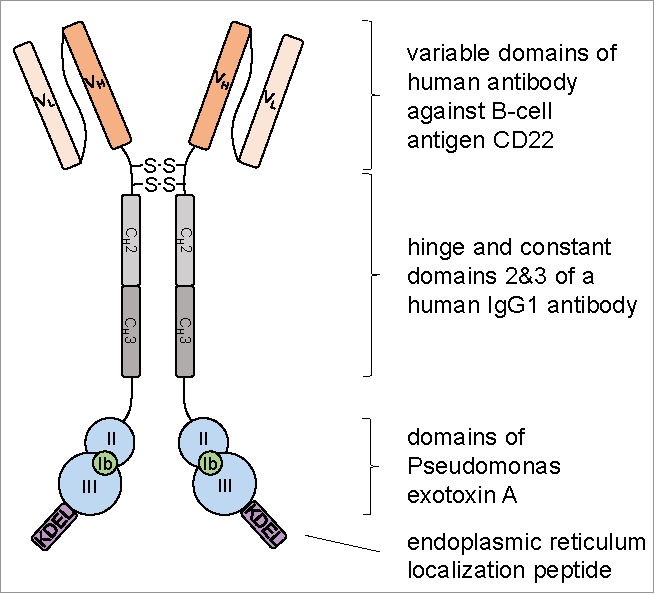
“Finally, the chloroplast compartment can serve as a safe sub-cellular site for hyper-accumulation of recombinant protein without affecting the biology of the rest of the cell.(12) The growing interest in exploitation of the algal chloroplast is now driving the development of synthetic biology tools by ourselves and ot…”
BackgroundMethodInfluentialFu, W., Gudmundsson, O., Feist, A. M., Herjolfsson, G., Brynjolfsson, S., & Palsson, B. Ø. (2012) · Journal of Biotechnology · doi:10.1016/j.jbiotec.2012.07.004 · Cited by 170 · cited 1×
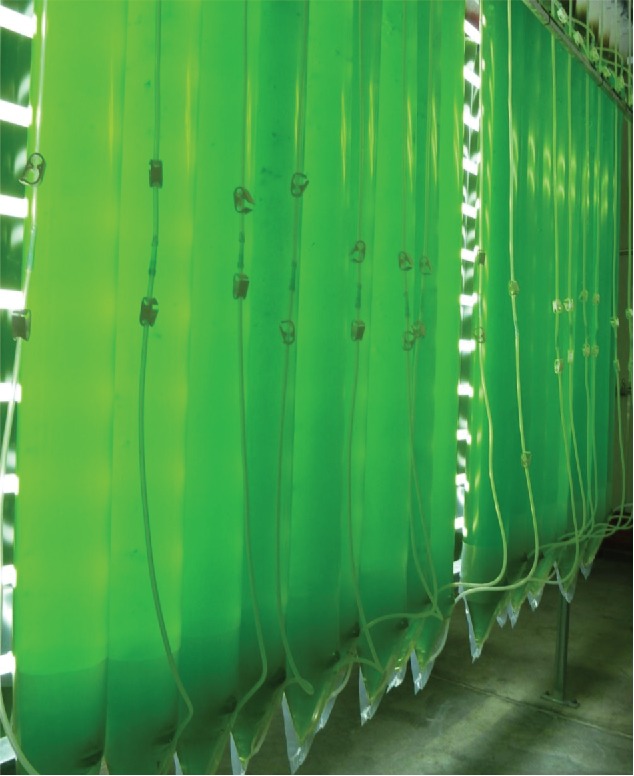
“Our on-going work on scale-up using the hanging bag system shows that this is a cost-effective and easily manageable cultivation method; and biomass productivity could be further improved through optimization of key parameters such as light, CO2 delivery, mixing and media composition.(28)”
BackgroundThe potential of plants as a system for the development and production of human biologics
Chen, Q., & Davis, K. R. (2016) · F1000Research · doi:10.12688/f1000research.8010.1 · Cited by 140
Wannathong, T., Waterhouse, J. C., Young, R. E. B., Economou, C. K., & Purton, S. (2016) · Applied Microbiology and Biotechnology · doi:10.1007/s00253-016-7354-6 · Cited by 114 · cited 2×
“Our chloroplast transformation protocol simply involves agitation of a cell/ DNA suspension in the presence of glass beads, rather than the use of expensive microparticle bombardment equipment, and we have developed a simple PCRbased method for confirming transgene insertion and homoplasmy of the plastome.(22) Our on-…”
BackgroundMethodSelf-citationPeriplasmic production via the pET expression system of soluble, bioactive human growth hormone
Sockolosky, J. T., & Szoka, F. C. (2013) · Protein Expression and Purification · doi:10.1016/j.pep.2012.11.002 · Cited by 100 · cited 1×
“coli is currently the preferred platform, although correct folding and bond formation requires export into the periplasm.(25) However, the demand for recombinant hGH is huge and growing, with a predicted global market of $4.”
BackgroundTreatment of growth hormone deficiency in children, adolescents and at the transitional age
Richmond, E. J., & Rogol, A. D. (2016) · Best Practice & Research Clinical Endocrinology & Metabolism · doi:10.1016/j.beem.2016.11.005 · Cited by 99 · cited 1×
“Deficiency of the hormone results in growth defects, but can be successfully treated by administration of recombinant hGH.(24) As the only post-translational steps required for biological activity are removal of the N-terminal methionine and formation of two Figure 2.”
BackgroundRasala, B. A., Muto, M., Sullivan, J., & Mayfield, S. P. (2011) · Plant Biotechnology Journal · doi:10.1111/j.1467-7652.2011.00620.x · Cited by 96
Tools and Techniques for Chloroplast Transformation of Chlamydomonas
Purton, S. (2008) · Advances in Experimental Medicine and Biology · doi:10.1007/978-0-387-75532-8_4 · Cited by 93 · cited 1×
“specific gene knockouts or site-directed changes introduced into the plastome through HR-mediated engineering.(14)”
BackgroundSelf-citationProduction of therapeutic proteins in the chloroplast of Chlamydomonas reinhardtii
Almaraz-Delgado, A. L., Flores-Uribe, J., Pérez-España, V. H., Salgado-Manjarrez, E., & Badillo-Corona, J. A. (2014) · AMB Express · doi:10.1186/s13568-014-0057-4 · Cited by 81 · cited 1×
“Emerging technologies include virus-mediate transient expression in insect cell lines(4) or in tobacco plants,(5) and stable expression in the chloroplasts of plants and algae.(6,7)”
BackgroundFundamentals of Baculovirus Expression and Applications
Kost, T. A., & Kemp, C. W. (2016) · Advances in experimental medicine and biology · doi:10.1007/978-3-319-27216-0_12 · Cited by 81
Genetic engineering of algal chloroplasts: progress and prospects
Purton, S., Szaub, J. B., Wannathong, T., Young, R., & Economou, C. K. (2013) · Russian Journal of Plant Physiology · doi:10.1134/s1021443713040146 · Cited by 74 · cited 1×
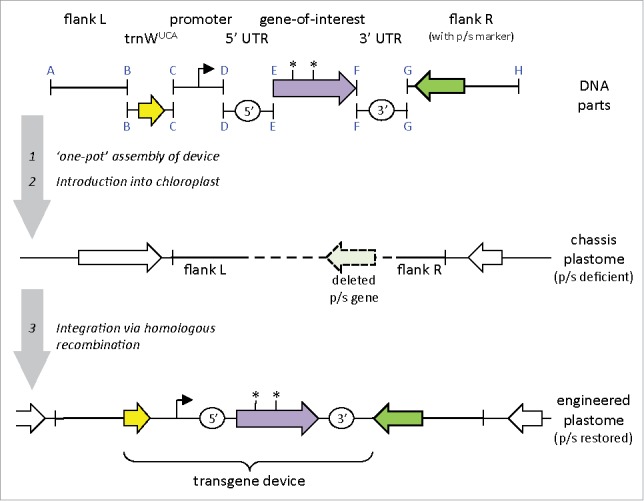
“These include gene design in silico using dedicated codon optimization software and validated cis elements such as promoters and untranslated regions.(15,16,17) Building the designed constructs in vitro is then aided by rapid assembly of standardized DNA parts using methods such as Golden Gate(18) that ensure the ‘one…”
MethodSelf-citationAn exogenous chloroplast genome for complex sequence manipulation in algae
O'Neill, B. M., Mikkelson, K. L., Gutierrez, N. M., Cunningham, J. L., Wolff, K. L., Szyjka, S. J., Yohn, C. B., Redding, K. E., & Mendez, M. J. (2012) · Nucleic Acids Research · doi:10.1093/nar/gkr1008 · Cited by 63 · cited 1×
“Accompanying this are methods for large-scale refactoring of the plastome and for regulating the expression of the transgenes.(19,20,21) Finally, the development of strategies for ‘marker-free’ generation of transgenic lines that avoid the use of antibiotic resistance markers,(22)”
MethodExpression and functional evaluation of biopharmaceuticals made in plant chloroplasts
Zhang, B., Shanmugaraj, B., & Daniell, H. (2017) · Current Opinion in Chemical Biology · doi:10.1016/j.cbpa.2017.02.007 · Cited by 60 · cited 1×
“Emerging technologies include virus-mediate transient expression in insect cell lines(4) or in tobacco plants,(5) and stable expression in the chloroplasts of plants and algae.(6,7)”
BackgroundMicroalgae as Solar-Powered Protein Factories
Hempel, F., & Maier, U. G. (2016) · Advances in experimental medicine and biology · doi:10.1007/978-3-319-27216-0_16 · Cited by 59 · cited 1×
“Recent surveys of the literature show that over 50 different biopharmaceuticals have been successfully produced in microalgae.(9,10) Although production using nuclear genetic engineering is reported for several freshwater and marine species of eukaryotic microalgae, the majority of the research has focused instead on…”
BackgroundGCE Special: Development of an RNAi based microalgal larvicide to control mosquitoes
Kumar, A., Wang, S., Ou, R., Samrakandi, M. M., & al., E. (2013) · MalariaWorld journal · doi:10.5281/zenodo.10894765 · Cited by 57
Young, R. E. B., & Purton, S. (2016) · Plant Biotechnology Journal · doi:10.1111/pbi.12490 · Cited by 52
Self-citationStoffels, L., Taunt, H. N., Charalambous, B., & Purton, S. (2017) · Plant Biotechnology Journal · doi:10.1111/pbi.12703 · Cited by 49
Self-citationDevelopment of phytase-expressing chlamydomonas reinhardtii for monogastric animal nutrition
Erpel, F., Restovic, F., & Arce-Johnson, P. (2016) · BMC Biotechnology · doi:10.1186/s12896-016-0258-9 · Cited by 44 · cited 1×
“Similarly, the GRAS status and nutritional value of various green algal species opens up the possibility of “functionalized feed” for poultry and livestock whereby dried algae formulated into the feed also contains beneficial vaccines, anti-microbials or dietary enzymes.(36)”
BackgroundSiripornadulsil, S., Dabrowski, K. R., & Sayre, R. T. (2008) · Advances in experimental medicine and biology · doi:10.1007/978-0-387-75532-8_11 · Cited by 44 · cited 1×
“reinhardtii strains have been proposed for oral delivery of toxins to insect pests such as mosquitoes,(33,34) or delivery of vaccines and growth hormones to farmed fish and shellfish.(35) Similarly, the GRAS status and nutritional value of various green algal species opens up the possibility of “functionalized feed” f…”
BackgroundSpecht, E. A., & Mayfield, S. P. (2013) · ACS Synthetic Biology · doi:10.1021/sb300069k · Cited by 40 · cited 1×
“These include gene design in silico using dedicated codon optimization software and validated cis elements such as promoters and untranslated regions.(15,16,17) Building the designed constructs in vitro is then aided by rapid assembly of standardized DNA parts using methods such as Golden Gate(18) that ensure the ‘one…”
MethodAlgae-Based Biopharmaceuticals
Rosales‐Mendoza, S. (2016) · Springer eBooks · doi:10.1007/978-3-319-32232-2 · Cited by 31
Gimpel, J. A., Nour‐Eldin, H. H., Scranton, M. A., Li, D. D., & Mayfield, S. P. (2015) · ACS Synthetic Biology · doi:10.1021/acssynbio.5b00076 · Cited by 27 · cited 1×
“Accompanying this are methods for large-scale refactoring of the plastome and for regulating the expression of the transgenes.(19,20,21) Finally, the development of strategies for ‘marker-free’ generation of transgenic lines that avoid the use of antibiotic resistance markers,(22)”
MethodRamundo, S., & Rochaix, J. (2014) · Methods in enzymology on CD-ROM/Methods in enzymology · doi:10.1016/bs.mie.2014.10.035 · Cited by 26 · cited 1×
“Accompanying this are methods for large-scale refactoring of the plastome and for regulating the expression of the transgenes.(19,20,21) Finally, the development of strategies for ‘marker-free’ generation of transgenic lines that avoid the use of antibiotic resistance markers,(22)”
MethodKang, S., ODOM, O. W., Thangamani, S., & Herrin, D. L. (2016) · Journal of Applied Phycology · doi:10.1007/s10811-016-1008-z · Cited by 20
Evaluating new isolates of microalgae from Kazakhstan for biodiesel production
Dyo, Y. M., Vonlanthen, S., Purton, S., & Zayadan, B. K. (2013) · Russian Journal of Plant Physiology · doi:10.1134/s1021443713040031 · Cited by 2 · cited 1×
“more robust native species of green algae such as Chlorella that are better suited to intensive commercial cultivation.(32)”
BackgroundSelf-citation
Cited by
Fabris, M., Abbriano, R. M., Pernice, M., Sutherland, D. L., Commault, A. S., Hall, C. C., Labeeuw, L., McCauley, J. I., Kuzhiuparambil, U., Ray, P., et al. (2020) · Frontiers in Plant Science · doi:10.3389/fpls.2020.00279 · Cited by 382
Plant Molecular Farming: A Viable Platform for Recombinant Biopharmaceutical Production
Shanmugaraj, B., I. Bulaon, C. J., & Phoolcharoen, W. (2020) · Plants · doi:10.3390/plants9070842 · Cited by 257
Algae biorefinery: Review on a broad spectrum of downstream processes and products
Khoo, C. G., Dasan, Y. K., Lam, M. K., & Lee, K. T. (2019) · Bioresource Technology · doi:10.1016/j.biortech.2019.121964 · Cited by 209
Structural insight into light harvesting for photosystem II in green algae
Sheng, X., Watanabe, A., Li, A., Kim, E., Song, C., Murata, K., Song, D., Minagawa, J., & Liu, Z. (2019) · Nature Plants · doi:10.1038/s41477-019-0543-4 · Cited by 191
Integrating plant molecular farming and materials research for next-generation vaccines
Chung, Y. H., Church, D. C., Koellhoffer, E. C., Osota, E. O., Shukla, S., Rybicki, E. P., Pokorski, J. K., & Steinmetz, N. F. (2021) · Nature Reviews Materials · doi:10.1038/s41578-021-00399-5 · Cited by 165
Metadata
- Authors
- Taunt, H. N., Stoffels, L., & Purton, S.
- Affiliations
- Algenuity, Eden Laboratory, Stewartby, United Kingdom
- Institute of Structural and Molecular Biology (GB)
- Corresponding author
- Purton, Saul
- Venue
- Bioengineered
- Publisher
- Informa UK Limited
- Published
- 2017-09-29
- Volume
- 9
- Issue
- 1
- Pages
- 48-54
- ISSN
- 2165-5979 (ISSN-L)
- 2165-5987
- PMC
- PMC5972929
- OpenAlex
- W2754622169
- Cited by
- 81
- References
- 36
- Citations by year
- 2026: 6 · 2025: 1 · 2024: 13 · 2023: 12 · 2022: 11 · 2021: 15 · 2020: 8 · 2019: 10 · 2018: 4 · 2017: 1
- Type
- journal article
- Language
- en
- Open access
- gold
- doi.org
- Licence
- Locations
- Bioengineered (publishedVersion, cc-by)
- Europe PMC (PubMed Central) (publishedVersion, cc-by)
- PubMed Central (publishedVersion, cc-by)
- PubMed (publishedVersion)
- UCL Discovery (University College London) (submittedVersion)
- Funders
- Biotechnology and Biological Sciences Research Council (BB/F016948/1, BB/L002957/1, BB/L013789/1)
- Topics
- Life Sciences › Biochemistry, Genetics and Molecular Biology › Biotechnology › Transgenic Plants and Applications
- Physical Sciences › Energy › Renewable Energy, Sustainability and the Environment › Algal biology and biofuel production
- Life Sciences › Biochemistry, Genetics and Molecular Biology › Molecular Biology › Plant biochemistry and biosynthesis
- Keywords
- recombinant protein expression, microalgae, biopharmaceuticals, chloroplast transformation, synthetic biology, protein encapsulation, oral drug delivery, immunotoxins, plant hormones
- MeSH terms
- Chlorophyta, Anti-Bacterial Agents, Immunotoxins, Biological Products, Chloroplasts, Genetic Engineering, Genetic Vectors, Recombinant Proteins, Transformation, Genetic, Gene Expression, Chlamydomonas reinhardtii, Transgenes, Human Growth Hormone, Dietary Supplements, Genome, Chloroplast, Microalgae, Synthetic Biology
About these checks
Registry, retraction, Cites and statistics results are computed, not judged, with one exception: a printed reference that no index lists is read once by a model before it counts as a citation error. Claims are extracted by a model and kept only when their quote appears verbatim in the text; each cited source is then checked, with a model’s help, for whether it says what the claim relies on. Those verdicts can be wrong — read the claim’s quote and the cited source before relying on one.
Statistics and arithmetic are recomputed, not judged.
Confidence bands are shown only for fields calibrated on our annotated test set. None is calibrated yet, so no band is shown.
What counts as a claim ›How we measure confidence ›How we check this ›
Are you an author, or do you see a problem with this page? Request a review
Data sources
Bibliographic data: Semantic Scholar, OpenAlex, Crossref.
Contains information from the Semantic Scholar Academic Graph Datasets, made available under the ODC Attribution License (ODC-BY 1.0).
Semantic Scholar’s data is described in: Kinney, R., et al. (2023). The Semantic Scholar Open Data Platform. arXiv:2301.10140.
