

Cabergoline possesses a beneficial effect on blood-brain barrier (BBB) integrity against lipopolysaccharide (LPS)
Open accessThe DOI matches its Crossref record; 46 of the 46 references it cites were found in a registry or an index.
Abstract
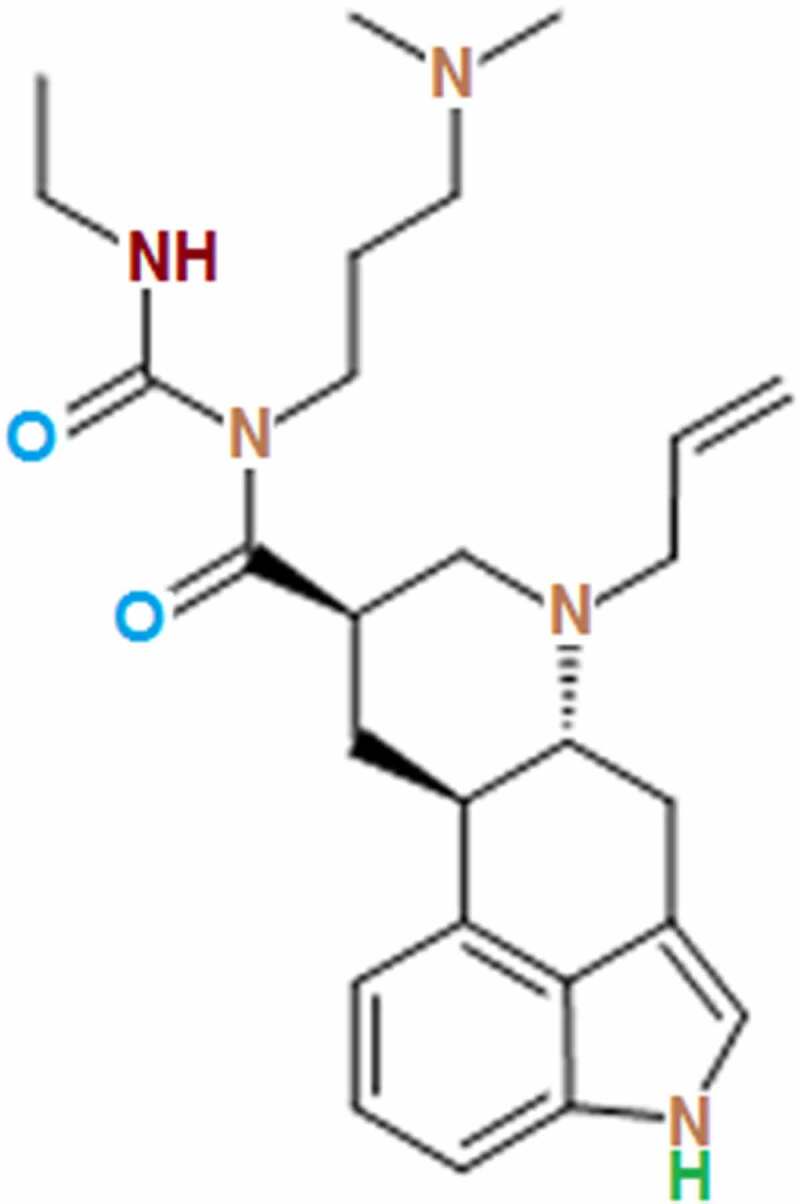
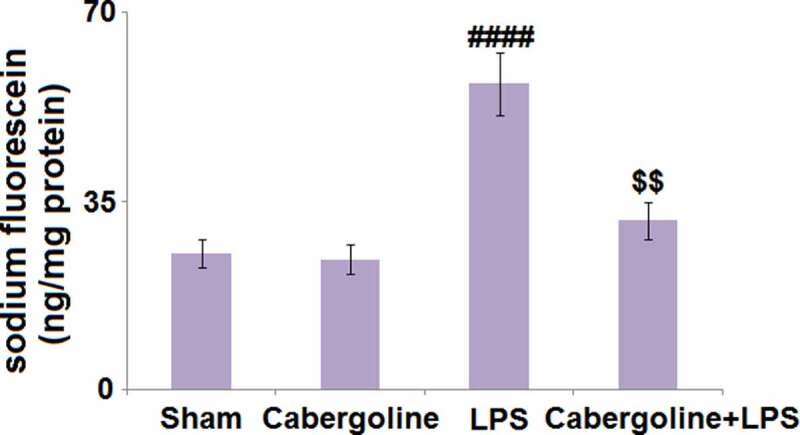
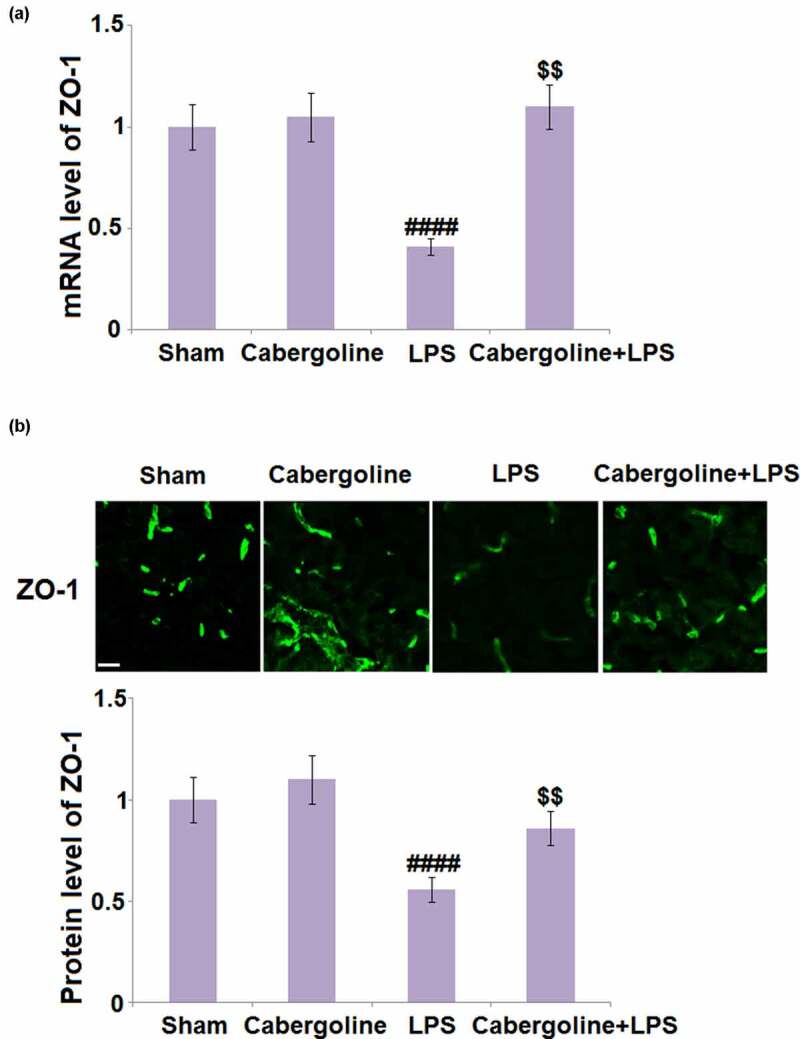
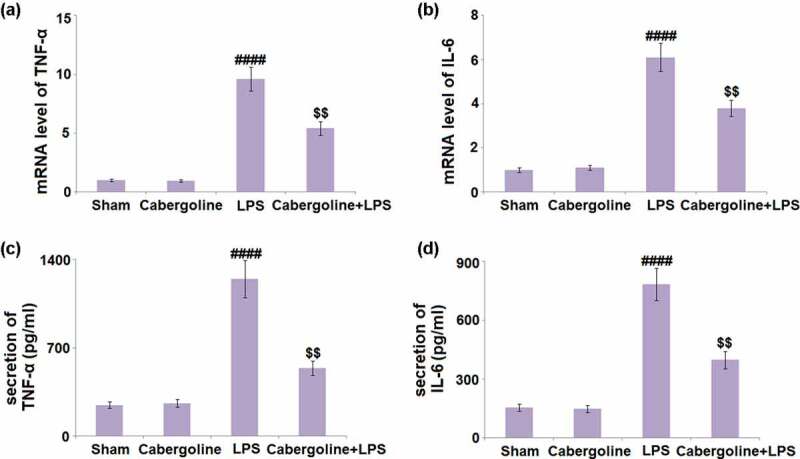
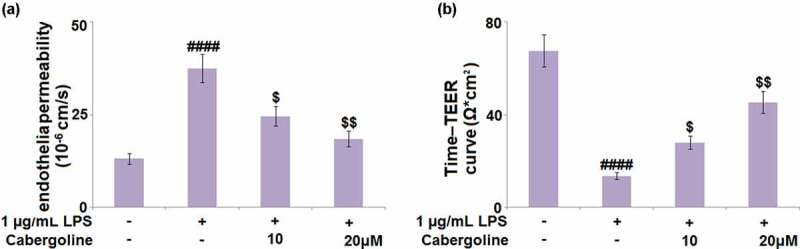
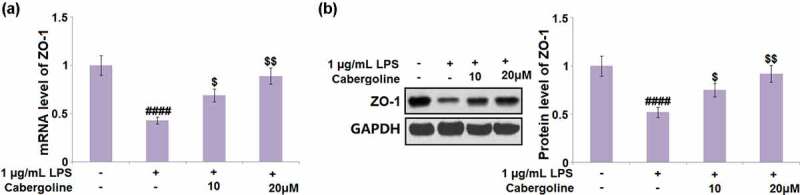
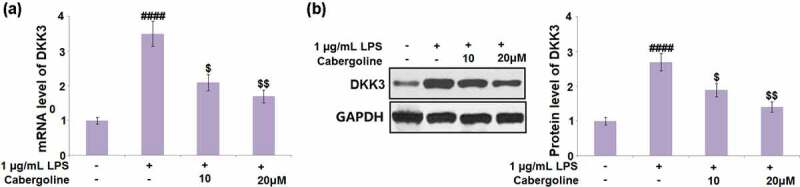
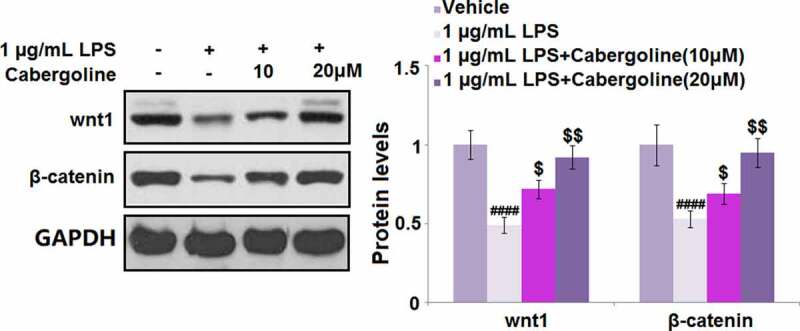
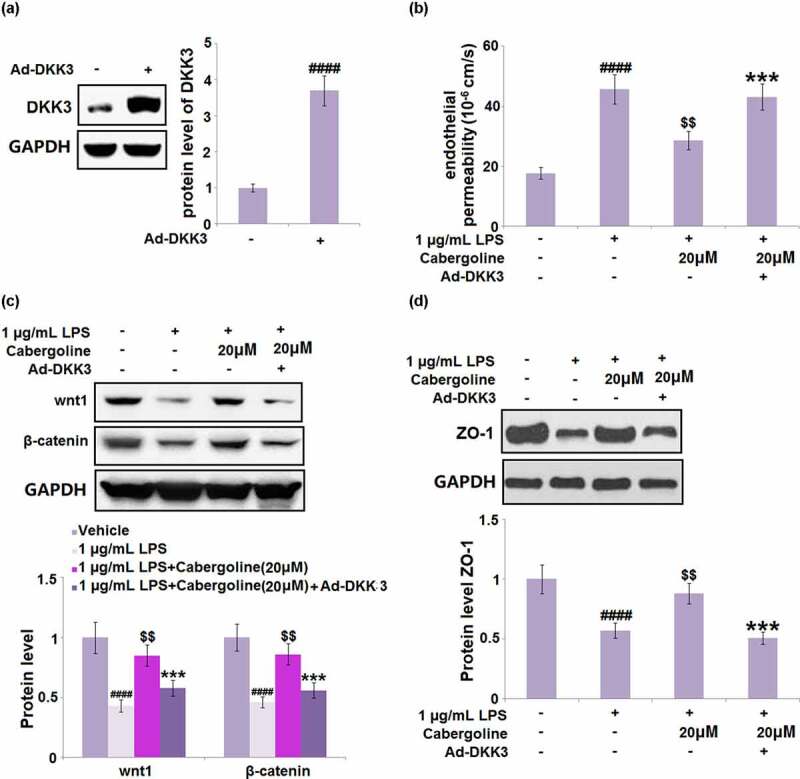
Sepsis is a disease induced by severe systemic inflammation and contributes to multiple acute organic dysfunctions. It is reported that disrupted blood-brain barrier (BBB) integrity is involved in sepsis-associated encephalopathy (SAE), which can be alleviated by repairing the damaged tight junction structure. Cabergoline is a specific dopamine D2 receptor agonist developed to treat Parkinson’s disease and hyperprolactinemia and is reported to exert promising anti-inflammatory properties. The present study aimed to explore the beneficial effect of Cabergoline for the treatment of sepsis. In the animal experiments, mice were separated into 4 groups: sham, LPS (5 mg/kg), Cabergoline (0.1 mg/kg/day), and Cabergoline+LPS. We found that the increased neurological deficits, disrupted BBB integrity, elevated production of inflammatory factors, and declined expression level of zonula occludens-1 (ZO-1) were observed in lipopolysaccharide (LPS)-treated mice, all of which were significantly reversed by the administration of Cabergoline. In the in vitro model, human brain microvascular endothelial cells (HBMECs) were challenged with 1 µg/mL LPS in the presence or absence of Cabergoline (10, 20 μM) for 24 hours. The elevated cell permeability Papp value of fluorescein disodium across the HBMECs monolayer and declined trans-endothelial electrical resistance (TEER) in the LPS-treated HBMECs were significantly alleviated by Cabergoline, accompanied by the upregulation of ZO-1. In addition, wnt1 and β-catenin were found downregulated, which was reversed by Cabergoline. Importantly, the protective benefits of Cabergoline were all abolished by the overexpression of Dickkopf 3 (DKK3). Taken together, our data reveal that Cabergoline possessed a protective effect on BBB integrity against LPS.
Overview
The claims and statistics of this paper haven’t been checked yet.
Free: it reads the open-access text and checks the first 5 claims that cite a source we can check. Create a free account to check every claim.
Integrity signals
Registry
Cites
Statistics
Figures
Verification
Claims the paper makes
The claims and statistics of this paper haven’t been checked yet.
Free: it reads the open-access text and checks the first 5 claims that cite a source we can check. Create a free account to check every claim.
Claims other papers make about this one
Each is checked against this paper’s own text: does it say what the citing paper says it does?
The cited source says what the claim attributes to it.
In the citing paper
“mirtazapine and cabergoline also show barrier-fortifying effects [52,53].”
From Research Advances in the Pathogenesis of Sepsis-Associated Encephalopathy (2026) · cites this paper as [53]
Self-check
Percentages, sums and reported differences re-computed from the paper’s own numbers.
The self-check needs the paper’s full text.
Citations
Cites
Surviving Sepsis Campaign: International Guidelines for Management of Severe Sepsis and Septic Shock
Dellinger, R. P., Levy, M. M., Rhodes, A., Annane, D., Gerlach, H., Opal, S. M., Sevransky, J. E., Sprung, C. L., Douglas, I. S., Jaeschke, R., et al. (2013) · Critical Care Medicine · doi:10.1097/ccm.0b013e31827e83af · Cited by 9,694
Intravenous Fluids and Acute Kidney Injury
Ding, X., Cheng, Z., & Qian, Q. (2017) · Blood Purification · doi:10.1159/000452702 · Cited by 6,827
Wnt/β-catenin signaling controls development of the blood–brain barrier
Liebner, S., Corada, M., Bangsow, T., Babbage, J., Taddei, A., Czupalla, C. J., Reis, M., Felici, A., Wolburg, H., Fruttiger, M., et al. (2008) · The Journal of Cell Biology · doi:10.1083/jcb.200806024 · Cited by 860
Sepsis definitions: time for change
Vincent, J.-L., Opal, S. M., Marshall, J. C., & Tracey, K. J. (2013) · The Lancet · doi:10.1016/s0140-6736(12)61815-7 · Cited by 734
Banks, W. A., Gray, A. M., Erickson, M. A., Salameh, T. S., Damodarasamy, M., Sheibani, N., Meabon, J. S., Wing, E. E., Morofuji, Y., Cook, D. G., et al. (2015) · Journal of Neuroinflammation · doi:10.1186/s12974-015-0434-1 · Cited by 636 · cited 1×
“In the present study, we found that in both the animal model and the in vitro endothelial monolayers model, LPS significantly increased permeability, which is consistent with previous reports [30,31].”
ResultNanomaterial-based blood-brain-barrier (BBB) crossing strategies
Xie, J., Shen, Z., Anraku, Y., Kataoka, K., & Chen, X. (2019) · Biomaterials · doi:10.1016/j.biomaterials.2019.119491 · Cited by 604 · cited 1×
“The BBB is a selective semipermeable membrane located between the brain tissues and the blood, which plays an important role in regulating brain homeostasis and maintaining normal brain function [13].”
BackgroundSankowski, R., Mader, S., & Valdés-Ferrer, S. I. (2015) · Frontiers in Cellular Neuroscience · doi:10.3389/fncel.2015.00028 · Cited by 351
The Neuropathology of Septic Shock
Sharshar, T., Annane, D., de la Gradmaison, G. L., Brouland, J. P., Hopkinson, N. S., & Gray, F. (2004) · Brain Pathology · doi:10.1111/j.1750-3639.2004.tb00494.x · Cited by 348
Blood–brain barrier breakdown in septic encephalopathy and brain tumours*
Davies, D. C. (2002) · Journal of Anatomy · doi:10.1046/j.1469-7580.2002.00065.x · Cited by 309 · cited 1×
“It is reported that significantly increased protein concentration in the cerebrospinal fluid and brain edema have been observed in sepsis patients [16,17], indicating severe BBB disruption.”
BackgroundTNFα disrupts blood brain barrier integrity to maintain prolonged depressive-like behavior in mice
Cheng, Y., Desse, S., Martinez, A., Worthen, R. J., Jope, R. S., & Beurel, E. (2018) · Brain, Behavior, and Immunity · doi:10.1016/j.bbi.2018.02.003 · Cited by 292
Cited by
Role of Dopamine in the Heart in Health and Disease
Neumann, J., Hofmann, B., Dhein, S., & Gergs, U. (2023) · International Journal of Molecular Sciences · doi:10.3390/ijms24055042 · Cited by 95
Sepsis-associated encephalopathy: Mechanisms, Diagnosis, and Treatments update
Li, J., Jia, Q., Yang, L., Wu, Y., Peng, Y., Du, L., Fang, Z., & Zhang, X. (2025) · International Journal of Biological Sciences · doi:10.7150/ijbs.102234 · Cited by 88
Wang, Y., Du, W., Hu, X., Yu, X., Guo, C., Jin, X., & Wang, W. (2023) · Acta Pharmaceutica Sinica B · doi:10.1016/j.apsb.2023.08.009 · Cited by 62
“In addition, it has been reported that LPS-damaged BBB could be repaired by cabergoline, a specific dopamine D2 receptor agonist 194 and phenylethylamine, a full dopamine receptor agonist produced by Morganella morganii strains, is capable of crossing the BBB 195 .”
BackgroundIqbal, M. K., Khan, B., Hifsa, H., YuXuan, G., Mujahid, M., Kiyani, M. M., Khan, H. R., & Bashir, S. (2024) · ACS Omega · doi:10.1021/acsomega.4c06546 · Cited by 38
“38,39 Additionally, cabergo-line, a dopamine D2 receptor agonist, protects BBB integrity against LPS-induced disruption by upregulating zonula occludens-1 (ZO-1).”
Gao, S., Shen, R., Li, J., Jiang, Y., Sun, H., Wu, X., Li, X., Miao, C., He, M., Wang, J., et al. (2024) · Proceedings of the National Academy of Sciences · doi:10.1073/pnas.2410564121 · Cited by 34
“Numerous studies have demonstrated the involvement of various neurotransmitter systems, such as the cholinergic ( 19 ), glutamatergic ( 20 , 21 ), dopaminergic ( 22 ), serotoninergic ( 22 ), and GABAergic system ( 23 , 24 ), in the development of SAE.”
Distinct post-sepsis induced neurochemical alterations in two mouse strains
Browne, C. A., Clarke, G. A., Fitzgerald, P., O’Sullivan, J. B., Dinan, T. G., & Cryan, J. F. (2022) · Brain Behavior and Immunity · doi:10.1016/j.bbi.2022.05.005 · Cited by 20
Alam, S. K., Pandit, A., Wang, L., Farsani, S. S. M., Thiele, B., Manoj, P., Aubry, M. C., Verma, V., Rudin, C. M., Lo, Y., et al. (2025) · Cell Death and Disease · doi:10.1038/s41419-025-07693-y · Cited by 19
The Role of Gut Microbiota in Blood–Brain Barrier Disruption after Stroke
Zeng, M., Peng, M., Liang, J., & Sun, H. (2023) · Molecular Neurobiology · doi:10.1007/s12035-023-03512-7 · Cited by 19
“Furthermore, IFN-γ, IL-1β, and TNF-α have been shown to decrease transendothelial resistance of human BMECs by increasing their TJ permeability [195].”
Shen, Q., Yu, Q., Chen, T., & Zhang, L. (2025) · European journal of medical research · doi:10.1186/s40001-025-02314-y · Cited by 15
“LPS has been shown to induce the production of reactive oxygen species (ROS) in SAE [16], causing disruption of intercellular TJs, downregulation of ZO-1 and occludin proteins, an increase in endothelial cell permeability, and resulting in CNS dysfunction [17].”
Gypenoside XLIX alleviates sepsis-associated encephalopathy by targeting PPAR-α
Zhao, P., Zhang, W., Zhou, X., Zhao, Y., Li, A., & Sun, Y. (2024) · Experimental Neurology · doi:10.1016/j.expneurol.2024.115027 · Cited by 7
Chumak, T., Jullienne, A., Ek, C. J., Ardalan, M., Svedin, P., Quan, R., Salehi, A., Salari, S., Obenaus, A., Vexler, Z. S., et al. (2024) · Journal of Neuroinflammation · doi:10.1186/s12974-024-03191-8 · Cited by 6
Zhong, D., Luo, C., Wang, N., & Lin, J. (2024) · The Journal of Toxicological Sciences · doi:10.2131/jts.49.289 · Cited by 3
Wang, S., Lü, H., Wang, L., Tian, M., Gao, J., Liu, Z., Wang, J., & Yu, Y. (2022) · PubMed · doi:10.12122/j.issn.1673-4254.2022.12.18 · Cited by 3
Zhang, X., Hu, M., Li, Y., Yao, W. A. N. G., Zhen, R. O. N. G., & Ma, J. (2025) · 世界针灸杂志:英文版 · doi:10.1016/j.wjam.2025.01.002 · Cited by 3
Research Advances in the Pathogenesis of Sepsis-Associated Encephalopathy
Tan, H., Su, W., & Niu, Z. (2026) · International Journal of Molecular Sciences · doi:10.3390/ijms27125390 · Cited by 1
“Intervention strategies targeting BBB remodeling include: strengthening tight junctions—dihydroartemisinin (DHA) stabilizes TJ protein expression by inhibiting SNAI1 [51]; mirtazapine and cabergoline also show barrier-fortifying effects [52,53].”
Wu, Y., Yang, Z., Liu, H., Li, J., Liu, R., Li, Y., Yu, C., & Su, B. (2026) · Experimental Neurology · doi:10.1016/j.expneurol.2026.115670 · Cited by 1
Brain microvascular endothelial cells: Beyond a barrier
Ou, J. T., Hou, K., Fu, Y., Luo, Y., Yu, Q., Shen, M., Jiang, S., Zhu, J., Wang, Y., Lin, K., et al. (2026) · Journal of Cerebral Blood Flow & Metabolism · doi:10.1177/0271678x261454263 · Cited by 1
“33,34 Furthermore, LPS activates the caspase-4/11-GSDMD pathway in BMECs, increasing plasma membrane permeability and facilitating the exchange of intra-and extracellular substances.”
Naseri, B., Masoumi, J., Abdolzadeh, S., Abedimanesh, S., Baghbani, E., Hatami‐Sadr, A., Heris, J. A., Shanehbandi, D., Akbari, M., Vaysi, S., et al. (2024) · Cell Biochemistry and Function · doi:10.1002/cbf.4067
“18 DC treatment with cabergoline has not been studied previously.”
Background
Metadata
- Authors
- You, L., & Jiang, H.
- Affiliations
- Chongqing Jiulongpo People's Hospital (CN)
- Chongqing Infectious Disease Medical Center
- Corresponding author
- Jiang, Haidong
- Venue
- Bioengineered
- Publisher
- Informa UK Limited
- Published
- 2021-01
- Volume
- 12
- Issue
- 1
- Pages
- 8358-8369
- ISSN
- 2165-5979 (ISSN-L)
- 2165-5987
- PMC
- PMC8806944
- OpenAlex
- W3204568078
- Semantic Scholar
- c6972eca0c5c8325b50a6fc49c5ea5b2f38f519f
- Cited by
- 17
- References
- 46
- Citations by year
- 2026: 2 · 2025: 4 · 2024: 6 · 2023: 3 · 2022: 2
- FWCI
- 1.10
- Type
- journal article
- Language
- en
- Open access
- gold
- doi.org
- Locations
- Bioengineered (publishedVersion, cc-by)
- PubMed Central (publishedVersion, cc-by)
- PubMed (publishedVersion)
- DOAJ (DOAJ: Directory of Open Access Journals) (submittedVersion)
- Funders
- Chongqing Infectious Disease Medical Center
- Topics
- Life Sciences › Neuroscience › Neurology › Barrier Structure and Function Studies
- Health Sciences › Medicine › Critical Care and Intensive Care Medicine › Sepsis Diagnosis and Treatment
- Life Sciences › Immunology and Microbiology › Microbiology › Bacterial Infections and Vaccines
- Keywords
- cabergoline, blood-brain barrier integrity, lipopolysaccharide, sepsis-associated encephalopathy, sepsis, tight junctions, zonula occludens-1, brain microvascular endothelial cells, Wnt/β-catenin signaling, Dickkopf-3, dopamine D2 receptor agonist, neuroprotection, transendothelial electrical resistance, brain permeability
- MeSH terms
- Cabergoline, Animals, Blood-Brain Barrier, Cell Line, Female, Humans, Lipopolysaccharides, Male, Permeability, Molecular Structure, Sepsis, Mice, Wnt Signaling Pathway, Zonula Occludens-1 Protein
About these checks
Registry, retraction, Cites and statistics results are computed, not judged, with one exception: a printed reference that no index lists is read once by a model before it counts as a citation error. Claims are extracted by a model and kept only when their quote appears verbatim in the text; each cited source is then checked, with a model’s help, for whether it says what the claim relies on. Those verdicts can be wrong — read the claim’s quote and the cited source before relying on one.
Statistics and arithmetic are recomputed, not judged.
Confidence bands are shown only for fields calibrated on our annotated test set. None is calibrated yet, so no band is shown.
What counts as a claim ›How we measure confidence ›How we check this ›
Are you an author, or do you see a problem with this page? Request a review
Data sources
Bibliographic data: Semantic Scholar, OpenAlex, Crossref.
Contains information from the Semantic Scholar Academic Graph Datasets, made available under the ODC Attribution License (ODC-BY 1.0).
Semantic Scholar’s data is described in: Kinney, R., et al. (2023). The Semantic Scholar Open Data Platform. arXiv:2301.10140.
