

Sprouty-related proteins with EVH1 domain (SPRED2) prevents high-glucose induced endothelial–mesenchymal transition and endothelial injury by suppressing MAPK activation
Open accessThe DOI matches its Crossref record; 43 of the 43 references it cites were found in a registry or an index.
Abstract
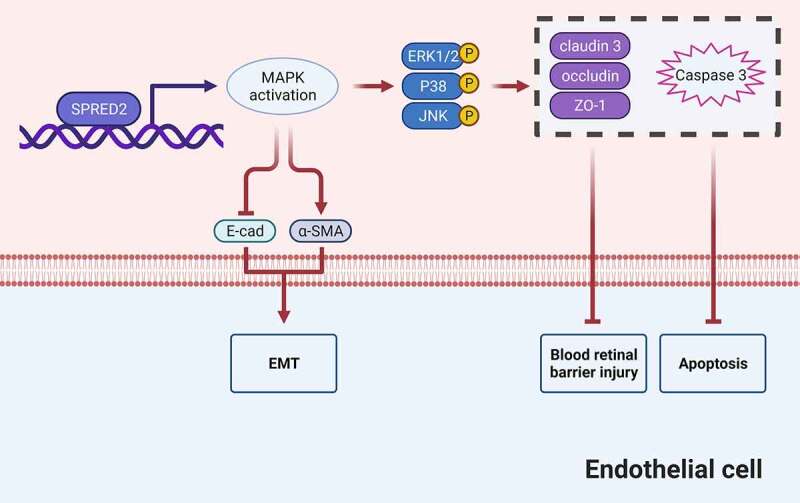
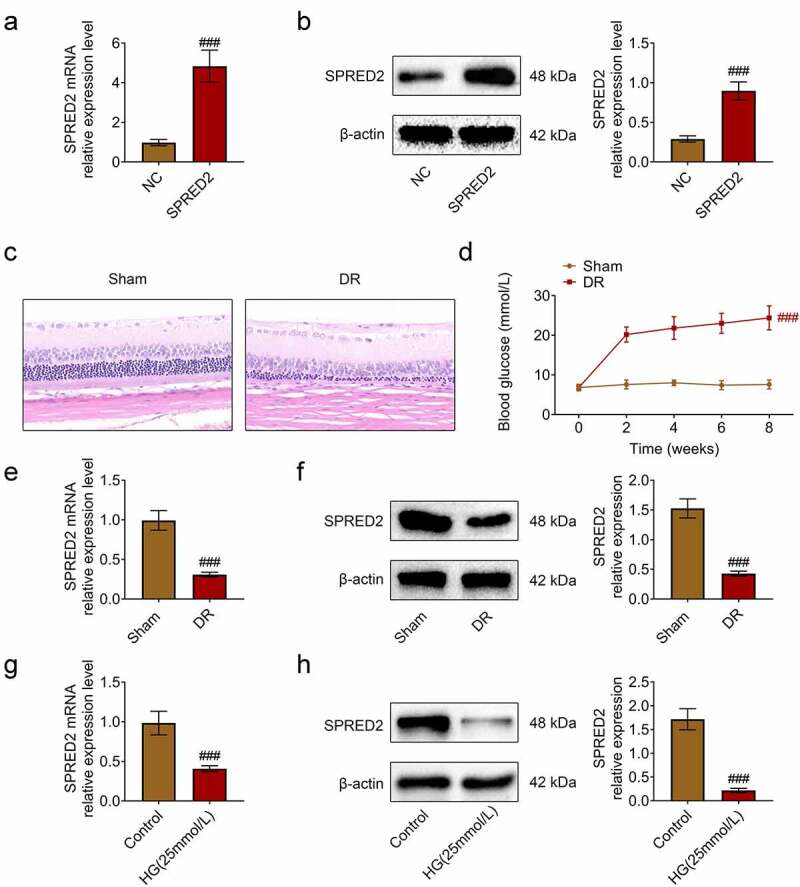
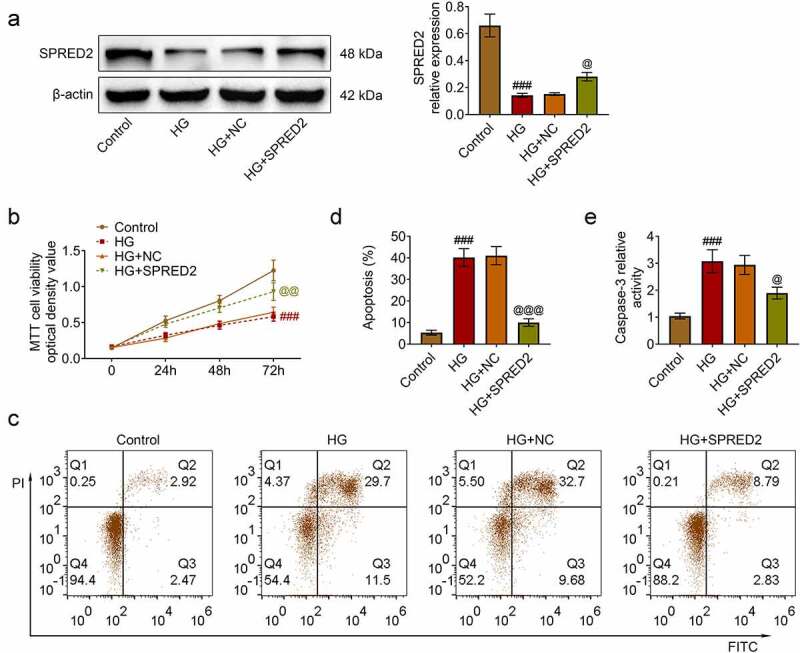
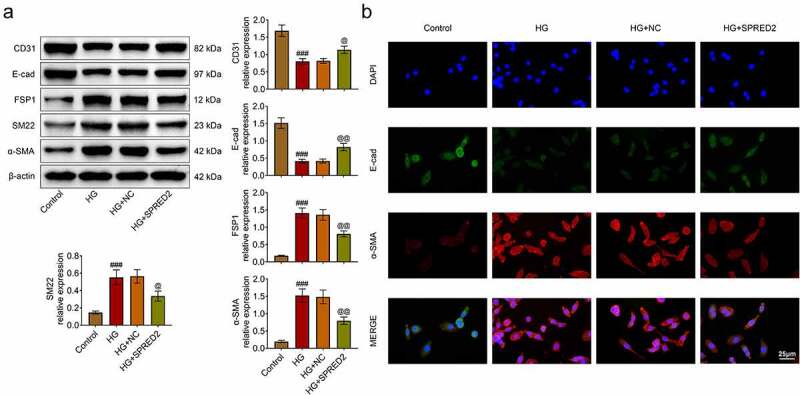
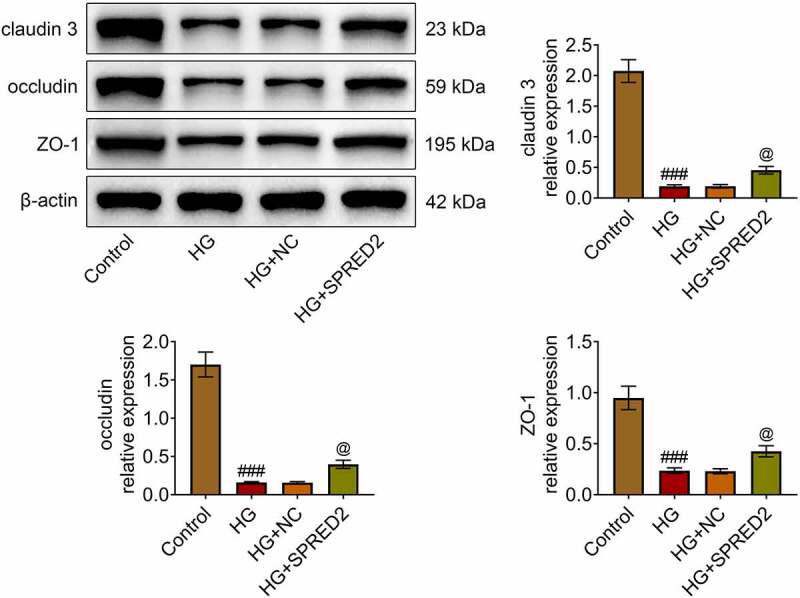
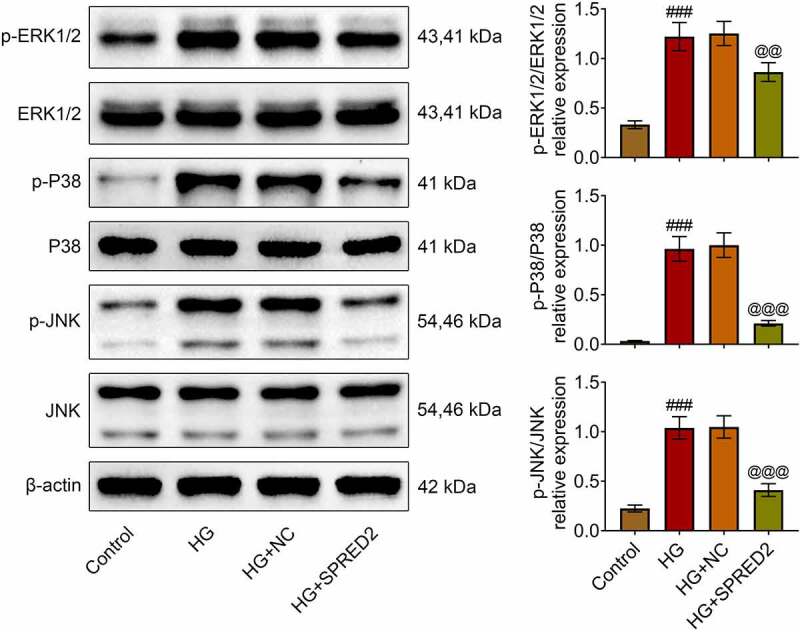
Diabetic retinopathy (DR) is a common complication of diabetes, and the leading cause of blindness in adults. Sprouty-related proteins with EVH1 domain (SPRED2) play an important role in diabetes and are closely related to the lens and eye morphogenesis. This study attempted to investigate the role and related mechanism of SPRED2 in DR. DR rat model was established by administration streptozocin. Human retinal endothelial cells (HRECs) were treated with high glucose (HG) to mimic DR. The results showed that SPRED2 expression was decreased in the retinal tissues of DR rats and HG-treated HRECs. MTT assay and flow cytometry data showed that SPRED2 overexpression reduced cell viability of HG-treated HRECs. SPRED2 overexpression enhanced Caspase-3 activity and promoted apoptosis of HG-treated HRECs. Furthermore, the expressions of endothelial cell markers CD31 and E-cad were down-regulated, whereas the expressions of mesenchymal cell markers FSP1, SM22, and α-SMA were up-regulated in the HG-treated HRECs. SPRED2 overexpression reversed HG-induced endothelial-mesenchymal transition in HRECs. The expressions of tight junction components claudin 3, occludin, and ZO-1 were increased in HG-treated HRECs following SPRED2 up-regulation. In addition, SPRED2 overexpression downregulated the expression of p-ERK1/2, p-p38, and p-JNK in the HG-treated HRECs. In conclusion, this study demonstrated that SPRED2 overexpression repressed endothelial-mesenchymal transition and endothelial injury in HG-treated HRECs by suppressing MAPK signaling pathway. These findings suggested that SPRED2 may be a novel potential therapeutic target implicated in DR progression.
Overview
The claims and statistics of this paper haven’t been checked yet.
Free: it reads the open-access text and checks the first 5 claims that cite a source we can check. Create a free account to check every claim.
Integrity signals
Registry
Cites
Statistics
Figures
Verification
Claims the paper makes
The claims and statistics of this paper haven’t been checked yet.
Free: it reads the open-access text and checks the first 5 claims that cite a source we can check. Create a free account to check every claim.
Claims other papers make about this one
Each is checked against this paper’s own text: does it say what the citing paper says it does?
The cited source says what the claim attributes to it.
In the citing paper
“while ERK and JNK phosphorylation is inversely correlated with the expression of tight junction components in human retinal endothelial cells in vitro [ 92 ].”
From MAPK Pathways in Ocular Pathophysiology: Potential Therapeutic Drugs and Challenges (2023) · cites this paper as [92]
Self-check
Percentages, sums and reported differences re-computed from the paper’s own numbers.
The self-check needs the paper’s full text.
Citations
Cites
2 retracted
Tian, M., Yang, J. H., Xia, Y., Cao, Y., Liu, Y., Lei, Y., & Lv, H. (2022) · Bioengineered · doi:10.1080/21655979.2022.2075306 · Cited by 16 · cited 1×
“7 mmol/L and maintained for more than 1 week, the rat DR model was considered to be successful [22,23].”
BackgroundRetractedWang, Y., & Li, C. (2022) · Computational and Mathematical Methods in Medicine · doi:10.1155/2022/8366569 · Cited by 10 · cited 1×
“Finally, the apoptotic cells were examined by flow cytometry (BD Biosciences, CA, USA) [28].”
MethodRetractedGlobal estimates of the prevalence of diabetes for 2010 and 2030
Shaw, J. E., Sicree, R. A., & Zimmet, P. Z. (2010) · Diabetes Research and Clinical Practice · doi:10.1016/j.diabres.2009.10.007 · Cited by 7,216 · cited 1×
“Epidemiological data show that the overall prevalence of DR in diabetic patients is as high as 35%, which is the leading cause of blindness among working-age people [3,4].”
BackgroundEpidemiology of diabetic retinopathy, diabetic macular edema and related vision loss
Lee, R., Wong, T. Y., & Sabanayagam, C. (2015) · Eye and Vision · doi:10.1186/s40662-015-0026-2 · Cited by 1,569
Ting, D. S. W., Cheung, G. C. M., & Wong, T. Y. (2016) · Clinical & Experimental Ophthalmology · doi:10.1111/ceo.12696 · Cited by 1,066 · cited 1×
“Epidemiological data show that the overall prevalence of DR in diabetic patients is as high as 35%, which is the leading cause of blindness among working-age people [3,4].”
BackgroundCunha-Vaz, J., Bernardes, R., & Lobo, C. (2011) · European Journal of Ophthalmology · doi:10.5301/ejo.2010.6049 · Cited by 539 · cited 2×
“Exposure to HG leads to endothelial cell dysfunction, aggravates BRB imbalance and damage, and increases vascular leakage, thereby exacerbating the progression of DR [10,11].”
BackgroundVEGF-initiated blood-retinal barrier breakdown in early diabetes.
Qaum, T., Xu, Q., Joussen, A. M., Clemens, M. W., Qin, W., Miyamoto, K., Hasséssian, H., Wiegand, S. J., Rudge, J. S., Yancopoulos, G. D., et al. (2001) · PubMed · Cited by 508
The pathology associated with diabetic retinopathy
Lechner, J., O'Leary, O. E., & Stitt, A. W. (2017) · Vision Research · doi:10.1016/j.visres.2017.04.003 · Cited by 474 · cited 2×
“SD rats were randomly divided into two groups (n = 5) [1]: DR group: rats were intraperitoneally injected with 60 mg/kg of streptozocin (STZ; dissolved in 0.”
BackgroundMethodPeng, W., Li, J., Chen, R., Gu, Q., Yang, P., Qian, W., Ji, D., Wang, Q., Zhang, Z., Tang, J., et al. (2019) · Journal of Experimental & Clinical Cancer Research · doi:10.1186/s13046-019-1408-4 · Cited by 373
lncRNA H19 prevents endothelial–mesenchymal transition in diabetic retinopathy
Thomas, A. A., Biswas, S., Feng, B., Chen, S., Gonder, J., & Chakrabarti, S. (2019) · Diabetologia · doi:10.1007/s00125-018-4797-6 · Cited by 213
Research works printed but not linked: 1
- 43. Zhang T, Ouyang H, Mei X, et al. Erianin alleviates diabetic retinopathy by reducing retinal inflammation initiated by microglial cells via inhibiting hyperglycemia-mediated ERK1/2-NF-κB signaling pathway. FASEB J. 2019;33(11):11776–11790. · DOI
Cited by
MAPK Pathways in Ocular Pathophysiology: Potential Therapeutic Drugs and Challenges
Moustardas, P., Aberdam, D., & Lagali, N. (2023) · Cells · doi:10.3390/cells12040617 · Cited by 63
“At the same time, a balanced p38/TXNIP/NFκB pathway inhibition is required for proper tight junctions in the inner blood–retinal barrier [87] and for the prevention of macular edema [88–91], while ERK and JNK phosphorylation is inversely correlated with the expression of tight junction components in human retinal endo…”
BackgroundFerroptosis: a novel mechanism of cell death in ophthalmic conditions
Yang, Y., Lin, Y., Han, Z., Wang, B., Zheng, W., & Wei, L. (2024) · Frontiers in Immunology · doi:10.3389/fimmu.2024.1440309 · Cited by 46
Mimouni, M., Lajoix, A., & Desmetz, C. (2023) · International Journal of Molecular Sciences · doi:10.3390/ijms25010382 · Cited by 17
“Finally, human retinal EC is used to study diabetic retinopathy [84–88].”
MethodEndothelial to mesenchymal cell transition in diabetic retinopathy: targets and therapeutics
Nijim, W., Moustafa, M., Humble, J., & Al‐Shabrawey, M. (2023) · Frontiers in Ophthalmology · doi:10.3389/fopht.2023.1230581 · Cited by 15
Redefining cell death: ferroptosis as a game-changer in ophthalmology
Wei, Y., Lin, Y., Li, Y., Liu, J., Yang, Y., Chen, H., Han, Z., Wang, K., Tao, Q., Ju, Y., et al. (2025) · Frontiers in Immunology · doi:10.3389/fimmu.2025.1709354 · Cited by 10
Wirasit, I., Udomkit, A., & Sathapondecha, P. (2023) · Fish & Shellfish Immunology · doi:10.1016/j.fsi.2023.109317 · Cited by 9
Yang, X., Yao, M., Huang, J., Cheng, Z., & Sun, T. (2025) · Archives of Medical Science · doi:10.5114/aoms/209547 · Cited by 5
“On a global scale, diabetes has become a daunting public health challenge, with its prevalence continuing to rise [3].”
Kawamura, S., Yoneyama, Y., Saiki, N., Wu, Y., Moriya, C., Ohmura, R., Maezawa, M., Shimada, Y., Wang, Y., Mori, K., et al. (2025) · Cell Reports Medicine · doi:10.1016/j.xcrm.2025.102433 · Cited by 4
“…signaling components ( TGFB2 , TGFBR3 , and SMAD3 ), 44 latent activators ( LRRC32 , THBS1 , and FBN1 ), 45–47 and pathway response markers ( ACTA2 , POSTN , and DDR2 ) 48–50 were upregulated in iLSECs, while noncanonical modulators ( SPRY2 and SPRED ) 51,52 were lower than in iAECs.”
Fu, X., He, F., Li, M.-H., Fu, C., & Chen, J. (2024) · Endocrine Journal · doi:10.1507/endocrj.ej23-0683 · Cited by 4
METTL3 blocked the progression of diabetic retinopathy through m6A-modified SOX2
Chen, X., Ling, Q., Xu, J., Ye, Y., & Dong, L. (2025) · Open Medicine · doi:10.1515/med-2025-1191
“For instance, Liu et al. demonstrated that the upregulation of SPRED2 suppresses EMT and endothelial injury in HRECs via the mitogen-activated protein kinases signaling pathway in DR [35].”
Association of polymorphisms in 17 loci with primary open-angle glaucoma in Chinese and Japanese
Chen, S. Y., Ling, A., Chan, P. P. M., Huang, C., Kawashima, R., Usui, S., Matsushita, K., Tam, P. O. S., Young, A. L., Yam, J. C. S., et al. (2025) · British Journal of Ophthalmology · doi:10.1136/bjo-2025-328041
Chen, L., Zhou, X., & 谭红保 (2026) · Journal of Molecular Neuroscience · doi:10.1007/s12031-026-02524-x
“It promotes autophagy to alleviate osteoarthritis progression by suppressing the p38 MAPK pathway (Wei et al. 2023 ), attenuates vascular dysfunction in diabetic retinopathy (Liu et al. 2022 ), and protects renal tubular epithelial cells under hyperglycemic conditions (Fu et al. 2022 ).”
Park, S., Joo, J. H., Kim, Y., Ku, H., Oh, J.-I., Cho, J. M., Cho, S., Lee, S., Koh, J. H., Kwon, S.-S., et al. (2026) · Kidney International Reports · doi:10.1016/j.ekir.2026.107014
“21 For each cell type, module scores were significantly lower in diseased samples than in controls, without differences in unrelated cell types (Supplementary Figure S2C).”
Kang, Q., Yin, L., Wu, C., Yan, W., Peng, S., Lu, J., & Zhang, D. (2026) · International Journal of Biological Sciences · doi:10.7150/ijbs.135844
Metadata
- Authors
- Liu, T., Zhao, J., & Lin, C.
- Affiliations
- First People’s Hospital of Jingmen (CN)
- Wenzhou Hospital of Traditional Chinese Medicine (CN)
- Corresponding author
- Lin, Chengmin
- Venue
- Bioengineered
- Publisher
- Informa UK Limited
- Published
- 2022-05-02
- Volume
- 13
- Issue
- 5
- Pages
- 13882-13892
- ISSN
- 2165-5979 (ISSN-L)
- 2165-5987
- PMC
- PMC9275976
- OpenAlex
- W4283020754
- Cited by
- 12
- References
- 43
- Citations by year
- 2026: 2 · 2025: 4 · 2024: 2 · 2023: 4
- FWCI
- 2.23
- Type
- journal article
- Language
- en
- Status
- Retracted
- Open access
- gold
- doi.org
- Licence
- cc-by-nc
- creativecommons.org/licenses/by-nc/4.0/ (unspecified)
- doi.org/10.1080/policies-text-data-mining (tdm)
- Locations
- Bioengineered (publishedVersion, cc-by-nc)
- PubMed Central (publishedVersion, cc-by-nc)
- PubMed (publishedVersion)
- DOAJ (DOAJ: Directory of Open Access Journals) (submittedVersion)
- Figshare (submittedVersion, cc-by)
- Figshare (cc-by)
- Funders
- reported
- Topics
- Health Sciences › Medicine › Ophthalmology › Retinal Diseases and Treatments
- Life Sciences › Biochemistry, Genetics and Molecular Biology › Molecular Biology › Angiogenesis and VEGF in Cancer
- Life Sciences › Biochemistry, Genetics and Molecular Biology › Clinical Biochemistry › Advanced Glycation End Products research
- Keywords
- SPRED2, diabetic retinopathy, endothelial-to-mesenchymal transition, high glucose, retinal endothelial cells, MAPK signaling, ERK1/2, p38 MAPK, JNK, endothelial injury, apoptosis, tight junctions, streptozotocin-induced diabetes, therapeutic target
- MeSH terms
- Animals, Diabetic Retinopathy, Glucose, Retina, Signal Transduction, Endothelial Cells, Rats
About these checks
Registry, retraction, Cites and statistics results are computed, not judged, with one exception: a printed reference that no index lists is read once by a model before it counts as a citation error. Claims are extracted by a model and kept only when their quote appears verbatim in the text; each cited source is then checked, with a model’s help, for whether it says what the claim relies on. Those verdicts can be wrong — read the claim’s quote and the cited source before relying on one.
Statistics and arithmetic are recomputed, not judged.
Confidence bands are shown only for fields calibrated on our annotated test set. None is calibrated yet, so no band is shown.
What counts as a claim ›How we measure confidence ›How we check this ›
Are you an author, or do you see a problem with this page? Request a review
Data sources
Bibliographic data: Semantic Scholar, OpenAlex, Crossref.
Contains information from the Semantic Scholar Academic Graph Datasets, made available under the ODC Attribution License (ODC-BY 1.0).
Semantic Scholar’s data is described in: Kinney, R., et al. (2023). The Semantic Scholar Open Data Platform. arXiv:2301.10140.
