

Decreased echinocandin susceptibility in Candida parapsilosis causing candidemia and emergence of a pan-echinocandin resistant case in China
Open accessThe DOI matches its Crossref record; 54 of the 54 references it cites were found in a registry or an index.
Abstract
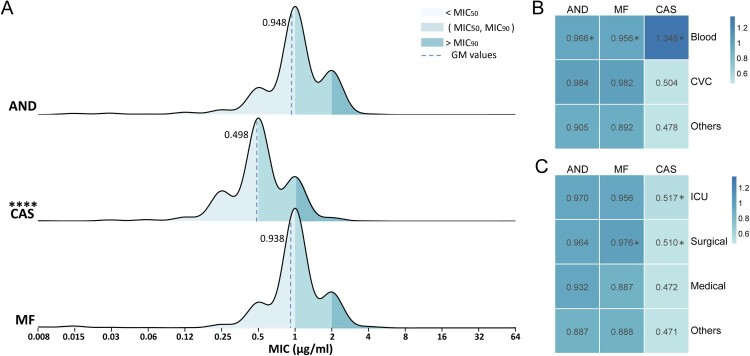
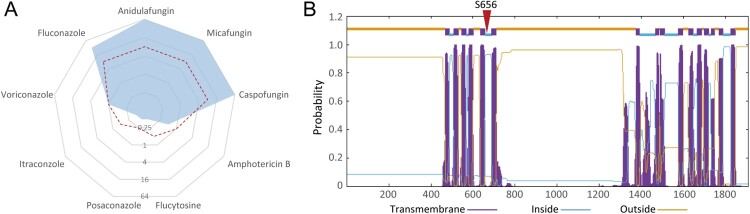
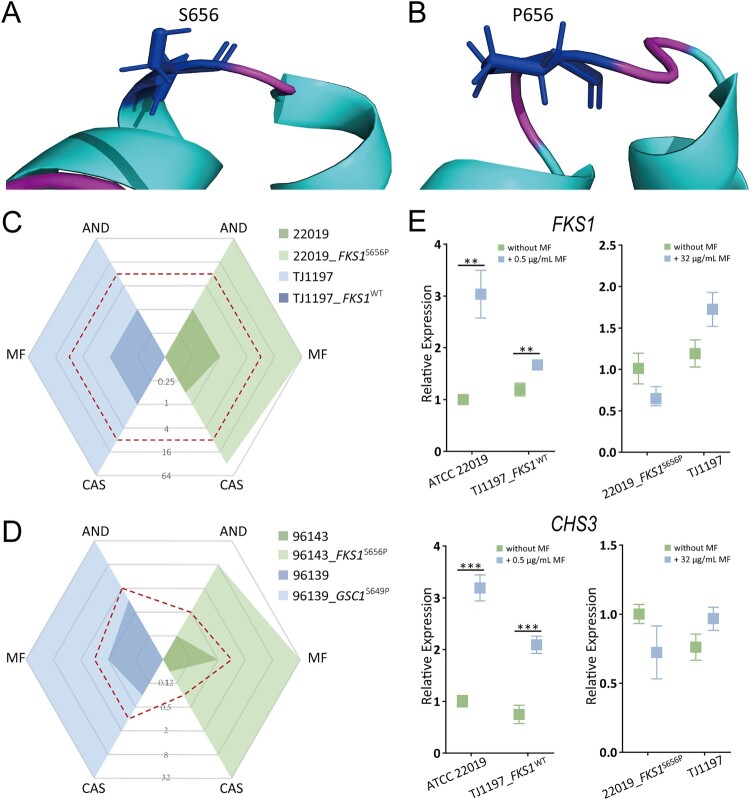
Candida parapsilosis is becoming a predominant non-albicans cause of invasive candidiasis (IC). Echinocandins are the preferred choice for IC treatment and prophylaxis. Resistance to echinocandins in C. parapsilosis has emerged in several countries, but little is known about the susceptibility profile in China or about mechanisms of resistance. Here, we investigated the echinocandin susceptibilities of 2523 C. parapsilosis isolates collected from China and further explored the resistance mechanism among echinocandin-resistant isolates. Anidulafungin exhibited the highest MICs (MIC50/90, 1 and 2 µg/mL; GM, 0.948 µg/mL), while caspofungin showed better activity (0.5 and 1 µg/mL; 0.498 µg/mL). Significantly higher echinocandin MICs were observed among blood-derived isolates compared to others, especially for caspofungin (GM, 1.348 µg/mL vs 0.478 µg/mL). Isolates from ICU and surgical wards also showed higher MICs. Twenty isolates showed intermediate phenotypes for at least one echinocandin. One was resistant to all three echinocandins, fluconazole and voriconazole, which caused breakthrough IC during long-term exposure to micafungin. WGS revealed this isolate carried a mutation S656P in hotspot1 region of Fks1. Bioinformatics analyses suggested that this mutation might lead to an altered protein conformation. CRISPR Cas9-mediated introduction of this mutation into a susceptible reference C. parapsilosis strain increased MICs of all echinocandins 64-fold, with similar results found in the subspecies, C. orthopsilosis and C. metapsilosis. This is the first report of a multi-azole resistant and pan-echinocandin resistant C. parapsilosis isolate, and the identification of a FKS1S656P conferring pan-echinocandin resistance. Our study underscores the necessity of rigorous management of antifungal use and of monitoring for antifungal susceptibility.
Overview
The claims and statistics of this paper haven’t been checked yet.
Free: it reads the open-access text and checks the first 5 claims that cite a source we can check. Create a free account to check every claim.
Integrity signals
Registry
Cites
Statistics
Figures
Verification
Claims the paper makes
The claims and statistics of this paper haven’t been checked yet.
Free: it reads the open-access text and checks the first 5 claims that cite a source we can check. Create a free account to check every claim.
Claims other papers make about this one
Each is checked against this paper’s own text: does it say what the citing paper says it does?
The source backs part of the claim, not all of it — or backs it for a different population, condition or comparison.
In the citing paper
“but there are also ample reports of individuals who experienced breakthrough infections while receiving an echinocandins.97,98”
From Epidemiology of Invasive Candidiasis (2024) · cites this paper as [98]
Experimental — accuracy not yet measured
Self-check
Percentages, sums and reported differences re-computed from the paper’s own numbers.
The self-check needs the paper’s full text.
Citations
Cites
Twelve years of SAMtools and BCFtools
Danecek, P., Bonfield, J. K., Liddle, J., Marshall, J., Ohan, V., Pollard, M. O., Whitwham, A., Keane, T., McCarthy, S. A., Davies, R. M., et al. (2021) · GigaScience · doi:10.1093/gigascience/giab008 · Cited by 15,343 · cited 1×
“4.3) [31,32].”
InfluentialCingolani, P., Platts, A., Wang, L. L., Coon, M., Nguyen, T., Wang, L., Land, S. J., Lu, X., & Ruden, D. M. (2012) · Fly · doi:10.4161/fly.19695 · Cited by 11,816
The I-TASSER Suite: protein structure and function prediction
Yang, J., Yan, R., Roy, A., Xu, D., Poisson, J., & Zhang, Y. (2015) · Nature Methods · doi:10.1038/nmeth.3213 · Cited by 5,596 · cited 1×
“The three-dimensional (3D) models for protein structures of the Fks1 variants were obtained by modelling using the I-TASSER online server [36].”
MethodVarScan 2: Somatic mutation and copy number alteration discovery in cancer by exome sequencing
Koboldt, D. C., Zhang, Q., Larson, D. E., Shen, D., McLellan, M. D., Lin, L., Miller, C. A., Mardis, E. R., Ding, L., & Wilson, R. K. (2012) · Genome Research · doi:10.1101/gr.129684.111 · Cited by 4,905 · cited 1×
“4.3) [31,32].”
InfluentialDeepTMHMM predicts alpha and beta transmembrane proteins using deep neural networks
Hallgren, J., Tsirigos, K. D., Pedersen, M. D., Almagro Armenteros, J. J., Marcatili, P., Nielsen, H., Krogh, A., & Winther, O. (2022) · bioRxiv (Cold Spring Harbor Laboratory) · doi:10.1101/2022.04.08.487609 · Cited by 1,499 · cited 1×
“Transmembrane helix predictions were performed with the DeepTHMMM bioinformatic tool [34].”
Antifungal agents: mechanisms of action
Odds, F. C., Brown, A. J. P., & Gow, N. A. R. (2003) · Trends in Microbiology · doi:10.1016/s0966-842x(03)00117-3 · Cited by 1,202 · cited 1×
“lence of this pathogenic fungus, treatment options are restricted to only a few antifungal drug classes [9].”
Pfaller, M. A., Diekema, D. J., Turnidge, J. D., Castanheira, M., & Jones, R. N. (2019) · Open Forum Infectious Diseases · doi:10.1093/ofid/ofy358 · Cited by 825 · cited 3×
“Other common Candida species, including C. albicans, C. tropicalis, C. glabrata and C. lusitaniae, generally were most susceptible to micafungin among the three echinocandins, while C. krusei and C. pelliculasa most susceptible to anidulafungin [41,43,44,47].”
Stimulation of Chitin Synthesis Rescues Candida albicans from Echinocandins
Walker, L. A., Munro, C. A., de Bruijn, I., Lenardon, M. D., McKinnon, A., & Gow, N. A. R. (2008) · PLoS Pathogens · doi:10.1371/journal.ppat.1000040 · Cited by 445 · cited 2×
“Previous studies have shown that Candida species can rapidly respond to echinocandin treatment with a compensatory elevation in chitin content; this response protects the yeast cells from cell wall damage that would occur due to the inhibition of β -1,3-D-glu-can synthesis [39,40].”
Pfaller, M. A., Boyken, L., Hollis, R. J., Kroeger, J., Messer, S. A., Tendolkar, S., & Diekema, D. J. (2008) · Journal of Clinical Microbiology · doi:10.1128/jcm.01901-07 · Cited by 387 · cited 1×
“Other common Candida species, including C. albicans, C. tropicalis, C. glabrata and C. lusitaniae, generally were most susceptible to micafungin among the three echinocandins, while C. krusei and C. pelliculasa most susceptible to anidulafungin [41,43,44,47].”
Current Concepts in Antifungal Pharmacology
Lewis, R. E. (2011) · Mayo Clinic Proceedings · doi:10.4065/mcp.2011.0247 · Cited by 377 · cited 1×
“Due to the large molecular weight and low oral bioavailability of echino-candins, they can only be administered intravenously, and this route of administration makes the blood the site of the highest drug concentration among human tissues [51].”
Cited by
Daneshnia, F., de Almeida Júnior, J. N., Ilkit, M., Lombardi, L., Perry, A. M., Gao, M., Nobile, C. J., Egger, M., Perlin, D. S., Zhai, B., et al. (2023) · The Lancet Microbe · doi:10.1016/s2666-5247(23)00067-8 · Cited by 257
Self-citationHoenigl, M., Arastehfar, A. A., Arendrup, M. C., Brüggemann, R. J. M., Carvalho, A., Chiller, T. M., Chen, W., Egger, M., Feys, S., Gangneux, J., et al. (2024) · Clinical Microbiology Reviews · doi:10.1128/cmr.00074-23 · Cited by 187
Branco, J., Miranda, I. M., & Rodrigues, A. G. (2023) · Journal of Fungi · doi:10.3390/jof9010080 · Cited by 166
Arendrup, M. C., Arikan-Akdagli, S., Jørgensen, K. M., Barac, A., Steinmann, J., Toscano, C., Arsenijevic, V. A., Sartor, A., Lass-Flörl, C., Hamprecht, A., et al. (2023) · Journal of Infection · doi:10.1016/j.jinf.2023.08.001 · Cited by 123
Epidemiology of Invasive Candidiasis
Bays, D., Jenkins, E., Lyman, M., Chiller, T., Strong, N., Ostrosky-Zeichner, L., Hoenigl, M., Pappas, P., & Thompson, G. (2024) · Clinical Epidemiology · doi:10.2147/clep.s459600 · Cited by 109
Candida parapsilosis complex in the clinical setting
Govrins, M. A., & Lass‐Flörl, C. (2023) · Nature Reviews Microbiology · doi:10.1038/s41579-023-00961-8 · Cited by 94
“The alteration F652S in the hot spot 1 region of FKS1 leads to pan-echinocandin resistance including rezafungin 103 , as did S656P 154 , and R658G leads to micafungin resistance 155 .”
BackgroundZhai, B., Liao, C., Jaggavarapu, S., Tang, Y., Rolling, T., Ning, Y., Sun, T., Bergin, S. A., Gjonbalaj, M., Miranda, E., et al. (2024) · Nature Medicine · doi:10.1038/s41591-024-03183-4 · Cited by 62
Self-citationBiofilm-Associated Candidiasis: Pathogenesis, Prevalence, Challenges and Therapeutic Options
Amann, V., Kissmann, A., Firacative, C., & Rosenau, F. (2025) · Pharmaceuticals · doi:10.3390/ph18040460 · Cited by 48
de Andrade, M. C. L., Neto, L. N. D. A., Buonafina, M. D. S., dos Santos, F. D. A. G., Alves, A. I. D. S., de Castro, M. C. A. B., Mori, E., de Lacerda, B. C. G. V., Araújo, I. M., Coutinho, H. D. M., et al. (2022) · Molecules · doi:10.3390/molecules27248884 · Cited by 35
“After the minimum inhibitory concentrations were determined in the antifungal sensitivity tests [20], samples were collected, washed with PBS, and labeled with 10 μL of the marker at a concentration of 10 μg/mL.”
MethodVena, A., Tiseo, G., Falcone, M., Bartalucci, C., Marelli, C., Cesaretti, M., Pilato, V. D., Escribano, P., Forniti, A., Giacobbe, D. R., et al. (2025) · Clinical Infectious Diseases · doi:10.1093/cid/ciae603 · Cited by 28
Candida parapsilosis Sensu Stricto Antifungal Resistance Mechanisms and Associated Epidemiology
Franconi, I., Rizzato, C., Poma, N. V., Tavanti, A., & Lupetti, A. (2023) · Journal of Fungi · doi:10.3390/jof9080798 · Cited by 29
“Target change V595I non-HS1-FKS1 ◦ ECT §, CS-I [105] Target change F1386S non-HS2-FKS1 # ECT §, ANF-R, MYC-I [105] Loss of function G111R ERG3 ANF-I, MYC-I/R [99] Target change R658G HS1-FKS1 MYC-R [106] Target change E1393G non-HS2-FKS1 # ECT § [100] Target change A1422G non-HS2-FKS1 # ECT § [107] Target change M1328…”
BackgroundResultInfluentialÜnal, N., Spruijtenburg, B., Arastehfar, A. A., Gümral, R., de Groot, T., Meijer, E. F. J., Dağı, H. T., Bırıncı, A., Polat, S. H., Meis, J. F. G. M., et al. (2024) · Mycoses · doi:10.1111/myc.70000 · Cited by 25
Daneshnia, F., Polat, S. H., İlkit, M., Fuentes, D., Lombardi, L., Binder, U., Scheler, J., Hagen, F., Mansour, M. K., Butler, G., et al. (2023) · Journal of Antimicrobial Chemotherapy · doi:10.1093/jac/dkad112 · Cited by 27
Daneshnia, F., Floyd, D. J., Ryan, A. P., Ghahfarokhy, P. M., Ebadati, A., Jusuf, S., Munoz, J., Jeffries, N. E., Yvanovich, E., Apostolopoulou, A., et al. (2024) · Emerging Microbes & Infections · doi:10.1080/22221751.2024.2322655 · Cited by 23
Daneshnia, F., Arastehfar, A. A., Lombardi, L., Binder, U., Scheler, J., Vahedi‐Shahandashti, R., Hagen, F., Lass‐Flörl, C., Mansour, M. K., Butler, G., et al. (2023) · International Journal of Antimicrobial Agents · doi:10.1016/j.ijantimicag.2023.106831 · Cited by 31
Self-citationEsmaeili, A., Saleh, I., & Abu‐Dieyeh, M. H. (2025) · Phytochemistry Reviews · doi:10.1007/s11101-025-10093-x · Cited by 39
“Point mutations in the FKS1 and FKS2 genes, particularly in two highly conserved ‘‘hotspot’’ regions, reduce enzyme susceptibility to echinocandins, leading to elevated MICs and resistance (Ning et al. 2023; Sanguinetti et al. 2015).”
McTaggart, L. R., Eshaghi, A., Hota, S. S., Poutanen, S. M., Johnstone, J., Luca, D. G. D., Bharat, A., Patel, S. N., & Kus, J. V. (2023) · Journal of Clinical Microbiology · doi:10.1128/jcm.01161-23 · Cited by 25
“Furthermore, recent reports of infections caused by echinocandin-resistant C. parapsilosis have intensified the concern over the potential for outbreaks caused by multidrug-resistant (MDR) strains (16–19).”
BackgroundNing, Y., Sun, T., Dai, R., Luo, Z.-Y., Yu, S.-Y., Zhang, G., Mei, Y., Lin, Y., Hasi, C., Chen, S. C.-A., et al. (2023) · Journal of Antimicrobial Chemotherapy · doi:10.1093/jac/dkad356 · Cited by 17
Self-citationGabaldón, T. (2024) · Microbiology and Molecular Biology Reviews · doi:10.1128/mmbr.00029-23 · Cited by 19
Motta, J. C., Rivas-Pinedo, P., & Oñate, J. (2025) · Journal of Fungi · doi:10.3390/jof11090609 · Cited by 15
“Clinically, echinocandins usually clear candidemia, but elevated MICs or FKS1-mutant strains may cause persistent or breakthrough infections, for which amphotericin B is the preferred alternative [85,90,91].”
Emerging antifungal resistance in Candida parapsilosis: the end of the innocence
Guinea, J., Escribano, P., Cadeau, M., Lombardi, L., & Morio, F. (2025) · npj Antimicrobials and Resistance · doi:10.1038/s44259-025-00173-5 · Cited by 18
Khalifa, H. O., Watanabe, A., & Kamei, K. (2024) · Mycopathologia · doi:10.1007/s11046-024-00847-0 · Cited by 11
ElFeky, D. S., El-Wakil, D. M., Mwafy, M. M., Atia, M. M. A., & Gohar, N. M. (2025) · BMC Infectious Diseases · doi:10.1186/s12879-024-10435-8 · Cited by 11
Antifungal Resistance and Genotyping of Clinical Candida parapsilosis Complex in Japan
Khalifa, H. O., Watanabe, A., & Kamei, K. (2023) · Journal of Fungi · doi:10.3390/jof10010004 · Cited by 10
“%) to echinocandins [30].”
BackgroundResultŠtefánek, M., Garaiová, M., Valček, A., Jordao, L., & Bujdáková, H. (2023) · Cells · doi:10.3390/cells12121579 · Cited by 7
Glushakova, A. M., Rodionova, E., & Качалкин, А. В. (2024) · Biologia · doi:10.1007/s11756-024-01643-3 · Cited by 8
“Better treatment of candidiasis should include echinocandins (although resistance to echinocandins has already emerged in opportunistic Candida species in several countries (Ning et al. 2023), followed by downgrading to azoles when appropriate.”
Insight into Virulence and Mechanisms of Amphotericin B Resistance in the Candida haemulonii Complex
Huang, Y., Su, Y., Chen, X., Xiao, M., & Xu, Y. (2024) · Journal of Fungi · doi:10.3390/jof10090615 · Cited by 8
“The potential existence of resistance to echinocandin may be linked to mutations in the FSK gene [31], as has been demonstrated in C. parapsilosis [33].”
BackgroundSelf-citationZhai, B., Liao, C., Jaggavarapu, S., Tang, Y., Rolling, T., Ning, Y., Sun, T., Bergin, S. A., Gjonbalaj, M., Miranda, E., et al. (2022) · medRxiv · doi:10.1101/2022.05.29.22275734 · Cited by 7
Self-citationClinical impact of fluconazole-resistant Candida parapsilosis : a narrative review
Bartalucci, C., Vena, A., Giacobbe, D. R., & Bassetti, M. (2025) · Future Microbiology · doi:10.1080/17460913.2025.2544443 · Cited by 9
Levi, O., Zuchman, R., Sleman, N., Koren, R. N., Khamaisi, H., & Horwitz, B. A. (2025) · mBio · doi:10.1128/mbio.01909-25 · Cited by 8
Overcoming antifungal resistance in Candida albicans via RNA interference: a therapeutic perspective
Mundhe, A. K., & Rajkumari, R. (2025) · Frontiers in Cellular and Infection Microbiology · doi:10.3389/fcimb.2025.1675921 · Cited by 9
Screening a 681-membered yeast collection for the secretion of proteins with antifungal activity
Valero, A. M., Tabatabaeifar, F., & Billerbeck, S. (2025) · New Biotechnology · doi:10.1016/j.nbt.2025.01.008 · Cited by 9
Early Candida colonisation impact on patients and healthcare professionals in an intensive care unit
Dalben, Y. R., Pimentel, J., Maifrede, S. B., de Carvalho, J. A., Bessa‐Neto, F. O., Gomes, J. F. S., Leite, G. R., Rodrigues, A. M., Cayô, R., Velloso, T. R. G., et al. (2024) · Mycoses · doi:10.1111/myc.13786 · Cited by 6
Evaluation of the Eazyplex® Candida ID LAMP Assay for the Rapid Diagnosis of Positive Blood Cultures
Berlau, A., Stoll, S., Edel, B., Löffler, B., & Rödel, J. (2024) · Diagnostics · doi:10.3390/diagnostics14192125 · Cited by 6
“On the other hand, depending on geographic regions, an increase in isolates with reduced susceptibility against echinocandins has already been reported, such as for C. parapsilosis [23].”
BackgroundSaeed, N. K., Almusawi, S., & Al‐Beltagi, M. (2024) · World Journal of Virology · doi:10.5501/wjv.v13.i4.98839 · Cited by 6
Vahedi‐Shahandashti, R., Moroder, E., & Lass‐Flörl, C. (2025) · Antimicrobial Agents and Chemotherapy · doi:10.1128/aac.00241-25 · Cited by 5
“Unlike relatively common azole resistance (9), echinocandin resistance in C. parapsilo sis has historically been rare; however, recently identified cases of echinocandin-resistant strains pose an alarming threat (24, 32).”
Li, S., Yang, L., Feng, X., Peng, X., Zhang, J., Liu, M., & Li, K. (2025) · European Journal of Clinical Microbiology & Infectious Diseases · doi:10.1007/s10096-025-05324-0 · Cited by 6
“%) represented the most commonly isolated species, but the proportion of non-albicans species exceeded that of C. albicans to become the most common among patients infected with candidemia, in contrast to some multicenter studies from the Northeast China and Iran [ 21, 22].”
Self-citationNarayanan, A., Shaji, A. A., Pullepu, D., Bhattacharya, J., & Sanyal, K. (2025) · ACS Infectious Diseases · doi:10.1021/acsinfecdis.5c00081 · Cited by 3
Vena, A., Bartalucci, C., Muccio, M., Tiseo, G., Muñóz, P., Cesaretti, M., Pilato, V. D., Marchese, A. E., Barbieri, R., Forniti, A., et al. (2025) · Antimicrobial Agents and Chemotherapy · doi:10.1128/aac.00355-25 · Cited by 3
Trends in Pediatric Invasive Candidiasis: Shifting Species Distribution and Improving Outcomes
Aykaç, K., Anac, E. G., Seyrek, B. E., Karaman, A., Demir, O. O., Ünalan-Altıntop, T., Gülmez, D., Arıkan-Akdağlı, S., Avci, H., Cengiz, A. B., et al. (2025) · Mycopathologia · doi:10.1007/s11046-025-01022-9 · Cited by 3
Omics and Multiomics-Based Diagnostics for Invasive Candidiasis: Toward Precision Medicine
Pitarch, A., Arribas, V., & Gil, C. (2025) · Molecular & Cellular Proteomics · doi:10.1016/j.mcpro.2025.101463 · Cited by 3
Prevalent fungal pathogens and antifungal resistance in Lebanon: A scoping review
Khachab, Y., Ghader, M. B., Tahesh, V., Khoumassi, R., & Sokhn, E. S. (2025) · Journal of Infection and Public Health · doi:10.1016/j.jiph.2025.103062 · Cited by 2
Luo, Z., Ning, Y., Dai, R., Ainiwaer, A., Li, Y., Zhang, R., Xiao, M., Wang, X., Yang, Y., Huang, Y., et al. (2025) · International Journal of Medical Microbiology · doi:10.1016/j.ijmm.2025.151689 · Cited by 3
Self-citationDaneshnia, F., Cai, L., Gunasekaran, D., Gautam, I., Perry, A. M., Ghahfarokhy, P. M., Ebadati, A., Munoz, J., Padilla, D., Hilmioglu-Polat, S., et al. (2026) · Microbiology Spectrum · doi:10.1128/spectrum.03043-25 · Cited by 4
Self-citationRezai, M. S., & Ahangarkani, F. (2023) · The Lancet Infectious Diseases · doi:10.1016/s1473-3099(23)00046-4 · Cited by 3
da Silva, C. M., de Lima-Neto, R. G., de Carvalho, A. M. R., Macêdo, D. P. C., Melo, A. S. D. A., & Neves, R. P. (2024) · Letters in Applied Microbiology · doi:10.1093/lambio/ovae044 · Cited by 2
Atalay, S., Çağlayan, D., Arkalı, E., Sönmez, U., & Şamlıoğlu, P. (2024) · Mycoses · doi:10.1111/myc.13717 · Cited by 3
Conventional approaches for diagnosis and treatment of fungal diseases
Samanta, R., Gajbhiye, K. R., Rajput, A., & Gajbhiye, V. (2025) · Elsevier eBooks · doi:10.1016/b978-0-443-29273-6.00009-6 · Cited by 2
Exploring New Antifungal Agents for the Treatment of Candida Infections in the Era of Resistance
Bhatol, J., Dwivedi, S., Jain, V. K., Sisodiya, N., & Darwhekar, G. N. (2025) · Biosciences Biotechnology Research Asia · doi:10.13005/bbra/3448 · Cited by 1
da Silva, B. V., de Oliveira, D. B. C., Felix, I. T. J., de Oliveira, R. T., Bezerra, R. D. O., Nascentes, G. A. N., & Andrade, A. A. (2025) · Microbial Pathogenesis · doi:10.1016/j.micpath.2025.108117 · Cited by 1
Doorley, L. A. (2023) · doi:10.21007/etd.cghs.2023.0620 · Cited by 1
The antifungal capacity of a 681-membered collection of environmental yeast isolatesPreprint
Valero, A. M., Tabatabaeifar, F., & Billerbeck, S. (2024) · bioRxiv (Cold Spring Harbor Laboratory) · doi:10.1101/2024.07.29.605670 · Cited by 1
Schikora-Tamarit, M. À., López‐Peralta, E., Roldán, A., de Armentia, C., Torres-Cano, A., Alcázar‐Fuoli, L., CAPAR Study Group, Zaragoza, O., & Gabaldón, T. (2026) · bioRxiv (Cold Spring Harbor Laboratory) · doi:10.64898/2026.05.18.725882 · Cited by 1
Nunez‐Rodriguez, J. C., Biriukov, V. V., Redondo-Río, Á., Parmar, M., Schikora-Tamarit, M. À., Ahaik, I., del Olmo, V., & Gabaldón, T. (2026) · bioRxiv (Cold Spring Harbor Laboratory) · doi:10.64898/2026.05.19.725100 · Cited by 2
Surveillance of pathogenic yeasts in hospital environments in Taiwan in 2020
Tsai, D.-J., Hsieh, L.-Y., Chung, P., Chen, Y.-Z., Jhou, Y.-J., Tseng, K., Yang, C., Yeh, Y.-C., Lin, S.-Y., Lee, S. S., et al. (2024) · Journal of Microbiology Immunology and Infection · doi:10.1016/j.jmii.2024.08.011
Bolshakova, H., Мінухін, В. В., Zhuravlova, I. V., Голубка, О. В., Частій, Т. В., Kuchma, I. Y., Savinova, T. V., & Shevchenko, Y. (2025) · Regulatory Mechanisms in Biosystems · doi:10.15421/0225068 · Cited by 1
Kapmaz, M., Doğan, Ö., İrkören, P., Çam, K., Tanrıverdi, E. S., Genç, Z., Taş, E., Otlu, B., Tekin, S., & Ergönül, Ö. (2025) · Journal of Hospital Infection · doi:10.1016/j.jhin.2025.10.013
CAN-ANDA: Multicenter Study of Invasive Candidiasis in Children and Neonates in Andalusia, Spain
León, N. D. V. D., Carazo‐Gallego, B., Vecchi-Burastero, M., Andrade-Ruiz, H. A., Guzman-Vizcaino, M. D. M., SALMERÓN-FERNÁNDEZ, M. J., Rosa, I. G.-D. L., Manzanares, S., Lozano-Durán, D., Mora-Loro, M., et al. (2025) · The Pediatric Infectious Disease Journal · doi:10.1097/inf.0000000000005128
Résistance aux antifongiques : détection, mécanismes et épidémiologie
Pasquier, G., & Charif, D. L. (2026) · Revue Francophone des Laboratoires · doi:10.1016/s1773-035x(26)76541-2
Liu, J., Han, M., Yang, F., Gao, S., Zhou, W., Shen, H., Cao, X., & Zhang, Y. (2026) · Frontiers in Microbiology · doi:10.3389/fmicb.2026.1773098
“Although all isolates in our cohort remained within CLSI WT ranges, reports from China have described increasing echinocandin MICs and sporadic pan-echinocandin– resistant strains, highlighting a potential emerging concern (Ordaya et al., 2023; Ning et al., 2023; Sang et al., 2025).”
Martín‐Loeches, I., & Yu, Y. (2026) · Expert Review of Anti-infective Therapy · doi:10.1080/14787210.2026.2726965
Heathcote, A., Bird, M., Jeong, H., Li, X., Kozak, R., & Weckman, N. E. (2026) · medRxiv · doi:10.64898/2026.09.01.26361059
Non-albicans Candida Species: Epidemiology and Antifungal Resistance
Bosan, M. A., Durrani, A. D., Faiz, A., Farooqi, J. Q., & Jabeen, K. (2026) · Current Fungal Infection Reports · doi:10.1007/s12281-026-00542-1
“Its capacity for healthcare-associated transmission, environmental persistence, misidentification by conventional methods, and multidrug resistance has [33 , 34 ].”
Metadata
- Authors
- Ning, Y., Xiao, M., Perlin, D. S., Zhao, Y., Lu, M., Li, Y., Luo, Z., Dai, R., Li, S., Xu, J., Liu, L., He, H., Liu, Y., Li, F., Guo, Y., Chen, Z., Xu, Y., Sun, T., & Zhang, L.
- Affiliations
- Chinese Academy of Medical Sciences & Peking Union Medical College (CN)
- Hackensack Meridian Health (US)
- Zhejiang Chinese Medical University (CN)
- Affiliated Hospital of Qingdao University (CN)
- Second Military Medical University (CN)
- First Hospital of China Medical University (CN)
- Liaoning Provincial People's Hospital (CN)
- Tongji Hospital (CN)
- Corresponding author
- Chen, Zhongju
- Xu, Yingchun
- Sun, Tianshu
- Zhang, Li
- ORCID
- Venue
- Emerging Microbes & Infections
- Publisher
- Informa UK Limited
- Published
- 2022-12-24
- Volume
- 12
- Issue
- 1
- Pages
- 2153086-2153086
- ISSN
- 2222-1751 (ISSN-L)
- PMC
- PMC9793909
- OpenAlex
- W4310184775
- Semantic Scholar
- 9dd290eb3e4fbe6e903aba0b0e0f0d8f6c17f4be
- Cited by
- 63
- References
- 54
- Citations by year
- 2026: 8 · 2025: 24 · 2024: 16 · 2023: 13 · 2022: 2
- FWCI
- 6.71
- Type
- journal article
- Language
- en
- Open access
- gold
- doi.org
- Licence
- Locations
- Emerging Microbes & Infections (publishedVersion, cc-by)
- PubMed Central (publishedVersion, cc-by)
- PubMed (publishedVersion)
- DOAJ (DOAJ: Directory of Open Access Journals) (submittedVersion, cc-by-sa)
- Funders
- the Chinese Academy of Medical Sciences Innovation Fund for Medical Sciences (2021-I2M-1-044)
- National High Level Hospital Clinical Research Funding (2022-PUMCH-A-137)
- National Natural Science Foundation of China
- National Key R&D Program of China
- Beijing Key Clinical Specialty for Laboratory Medicine-Excellent Project
- Topics
- Health Sciences › Medicine › Infectious Diseases › Antifungal resistance and susceptibility
- Life Sciences › Agricultural and Biological Sciences › Plant Science › Fungal Plant Pathogen Control
- Life Sciences › Biochemistry, Genetics and Molecular Biology › Molecular Biology › Fungal and yeast genetics research
- Keywords
- Candida parapsilosis, echinocandin resistance, candidemia, invasive candidiasis, caspofungin, anidulafungin, micafungin, antifungal susceptibility, CRISPR/Cas9 mutagenesis, Candida orthopsilosis, Candida metapsilosis
- MeSH terms
- Candida parapsilosis, Caspofungin, Antifungal Agents, Candidiasis, China, Humans, Microbial Sensitivity Tests, Drug Resistance, Fungal, Echinocandins, Candidemia
About these checks
Registry, retraction, Cites and statistics results are computed, not judged, with one exception: a printed reference that no index lists is read once by a model before it counts as a citation error. Claims are extracted by a model and kept only when their quote appears verbatim in the text; each cited source is then checked, with a model’s help, for whether it says what the claim relies on. Those verdicts can be wrong — read the claim’s quote and the cited source before relying on one.
Statistics and arithmetic are recomputed, not judged.
Confidence bands are shown only for fields calibrated on our annotated test set. None is calibrated yet, so no band is shown.
What counts as a claim ›How we measure confidence ›How we check this ›
Are you an author, or do you see a problem with this page? Request a review
Data sources
Bibliographic data: Semantic Scholar, OpenAlex, Crossref.
Contains information from the Semantic Scholar Academic Graph Datasets, made available under the ODC Attribution License (ODC-BY 1.0).
Semantic Scholar’s data is described in: Kinney, R., et al. (2023). The Semantic Scholar Open Data Platform. arXiv:2301.10140.
