

Decreased echinocandin susceptibility in Candida parapsilosis causing candidemia and emergence of a pan-echinocandin resistant case in China
Open accessThe DOI matches its Crossref record; 54 of the 54 references it cites were found in a registry or an index.
Abstract
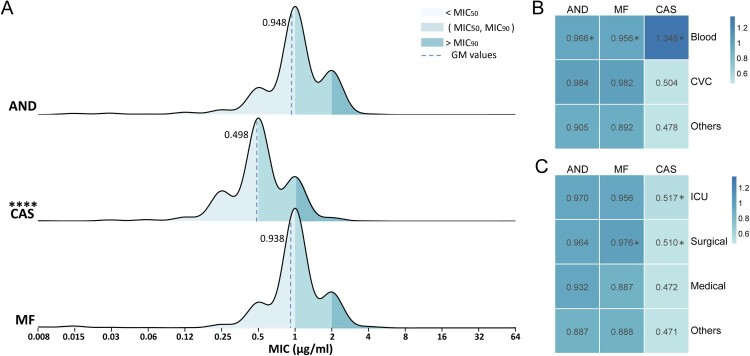
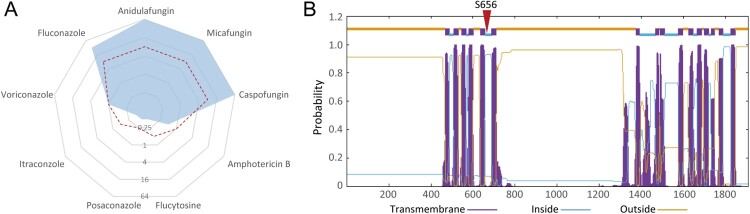
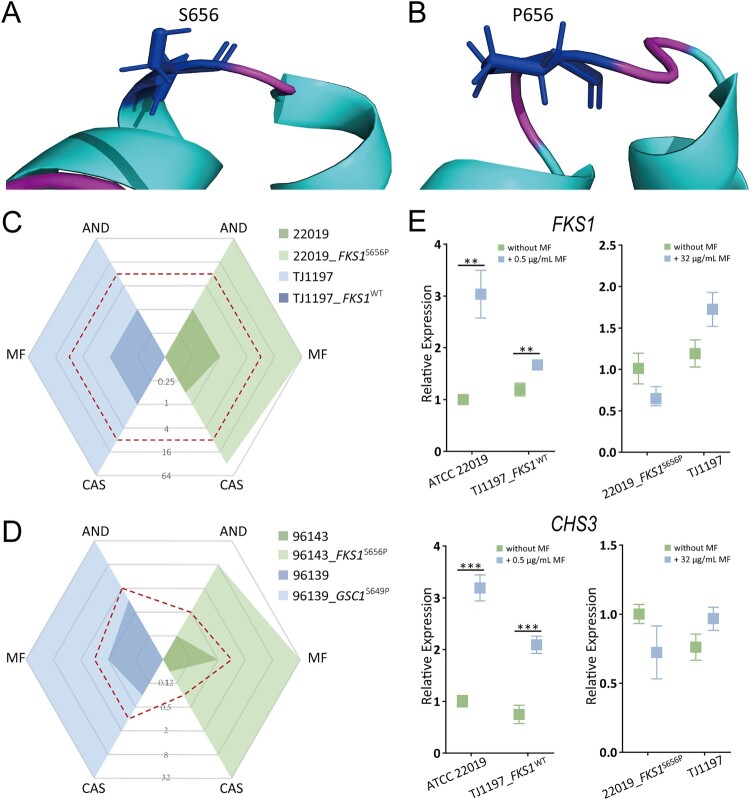
Candida parapsilosis is becoming a predominant non-albicans cause of invasive candidiasis (IC). Echinocandins are the preferred choice for IC treatment and prophylaxis. Resistance to echinocandins in C. parapsilosis has emerged in several countries, but little is known about the susceptibility profile in China or about mechanisms of resistance. Here, we investigated the echinocandin susceptibilities of 2523 C. parapsilosis isolates collected from China and further explored the resistance mechanism among echinocandin-resistant isolates. Anidulafungin exhibited the highest MICs (MIC50/90, 1 and 2 µg/mL; GM, 0.948 µg/mL), while caspofungin showed better activity (0.5 and 1 µg/mL; 0.498 µg/mL). Significantly higher echinocandin MICs were observed among blood-derived isolates compared to others, especially for caspofungin (GM, 1.348 µg/mL vs 0.478 µg/mL). Isolates from ICU and surgical wards also showed higher MICs. Twenty isolates showed intermediate phenotypes for at least one echinocandin. One was resistant to all three echinocandins, fluconazole and voriconazole, which caused breakthrough IC during long-term exposure to micafungin. WGS revealed this isolate carried a mutation S656P in hotspot1 region of Fks1. Bioinformatics analyses suggested that this mutation might lead to an altered protein conformation. CRISPR Cas9-mediated introduction of this mutation into a susceptible reference C. parapsilosis strain increased MICs of all echinocandins 64-fold, with similar results found in the subspecies, C. orthopsilosis and C. metapsilosis. This is the first report of a multi-azole resistant and pan-echinocandin resistant C. parapsilosis isolate, and the identification of a FKS1S656P conferring pan-echinocandin resistance. Our study underscores the necessity of rigorous management of antifungal use and of monitoring for antifungal susceptibility.
Overview
The claims and statistics of this paper haven’t been checked yet.
Free: it reads the open-access text and checks the first 5 claims that cite a source we can check. Create a free account to check every claim.
Integrity signals
Registry
Cites
Statistics
Figures
Verification
Claims the paper makes
The claims and statistics of this paper haven’t been checked yet.
Free: it reads the open-access text and checks the first 5 claims that cite a source we can check. Create a free account to check every claim.
Claims other papers make about this one
Each is checked against this paper’s own text: does it say what the citing paper says it does?
The source backs part of the claim, not all of it — or backs it for a different population, condition or comparison.
In the citing paper
“but there are also ample reports of individuals who experienced breakthrough infections while receiving an echinocandins.97,98”
From Epidemiology of Invasive Candidiasis (2024) · cites this paper as [98]
Experimental — accuracy not yet measured
Self-check
Percentages, sums and reported differences re-computed from the paper’s own numbers.
The self-check needs the paper’s full text.
Citations
Cites
Twelve years of SAMtools and BCFtools
Danecek, P., Bonfield, J. K., Liddle, J., Marshall, J., Ohan, V., Pollard, M. O., Whitwham, A., Keane, T., McCarthy, S. A., Davies, R. M., et al. (2021) · GigaScience · doi:10.1093/gigascience/giab008 · Cited by 15,343 · cited 1×
“4.3) [31,32].”
InfluentialCingolani, P., Platts, A., Wang, L. L., Coon, M., Nguyen, T., Wang, L., Land, S. J., Lu, X., & Ruden, D. M. (2012) · Fly · doi:10.4161/fly.19695 · Cited by 11,816
The I-TASSER Suite: protein structure and function prediction
Yang, J., Yan, R., Roy, A., Xu, D., Poisson, J., & Zhang, Y. (2015) · Nature Methods · doi:10.1038/nmeth.3213 · Cited by 5,596 · cited 1×
“The three-dimensional (3D) models for protein structures of the Fks1 variants were obtained by modelling using the I-TASSER online server [36].”
MethodVarScan 2: Somatic mutation and copy number alteration discovery in cancer by exome sequencing
Koboldt, D. C., Zhang, Q., Larson, D. E., Shen, D., McLellan, M. D., Lin, L., Miller, C. A., Mardis, E. R., Ding, L., & Wilson, R. K. (2012) · Genome Research · doi:10.1101/gr.129684.111 · Cited by 4,905 · cited 1×
“4.3) [31,32].”
InfluentialDeepTMHMM predicts alpha and beta transmembrane proteins using deep neural networks
Hallgren, J., Tsirigos, K. D., Pedersen, M. D., Almagro Armenteros, J. J., Marcatili, P., Nielsen, H., Krogh, A., & Winther, O. (2022) · bioRxiv (Cold Spring Harbor Laboratory) · doi:10.1101/2022.04.08.487609 · Cited by 1,499 · cited 1×
“Transmembrane helix predictions were performed with the DeepTHMMM bioinformatic tool [34].”
Antifungal agents: mechanisms of action
Odds, F. C., Brown, A. J. P., & Gow, N. A. R. (2003) · Trends in Microbiology · doi:10.1016/s0966-842x(03)00117-3 · Cited by 1,202 · cited 1×
“lence of this pathogenic fungus, treatment options are restricted to only a few antifungal drug classes [9].”
Pfaller, M. A., Diekema, D. J., Turnidge, J. D., Castanheira, M., & Jones, R. N. (2019) · Open Forum Infectious Diseases · doi:10.1093/ofid/ofy358 · Cited by 825 · cited 3×
“Other common Candida species, including C. albicans, C. tropicalis, C. glabrata and C. lusitaniae, generally were most susceptible to micafungin among the three echinocandins, while C. krusei and C. pelliculasa most susceptible to anidulafungin [41,43,44,47].”
Stimulation of Chitin Synthesis Rescues Candida albicans from Echinocandins
Walker, L. A., Munro, C. A., de Bruijn, I., Lenardon, M. D., McKinnon, A., & Gow, N. A. R. (2008) · PLoS Pathogens · doi:10.1371/journal.ppat.1000040 · Cited by 445 · cited 2×
“Previous studies have shown that Candida species can rapidly respond to echinocandin treatment with a compensatory elevation in chitin content; this response protects the yeast cells from cell wall damage that would occur due to the inhibition of β -1,3-D-glu-can synthesis [39,40].”
Pfaller, M. A., Boyken, L., Hollis, R. J., Kroeger, J., Messer, S. A., Tendolkar, S., & Diekema, D. J. (2008) · Journal of Clinical Microbiology · doi:10.1128/jcm.01901-07 · Cited by 387 · cited 1×
“Other common Candida species, including C. albicans, C. tropicalis, C. glabrata and C. lusitaniae, generally were most susceptible to micafungin among the three echinocandins, while C. krusei and C. pelliculasa most susceptible to anidulafungin [41,43,44,47].”
Current Concepts in Antifungal Pharmacology
Lewis, R. E. (2011) · Mayo Clinic Proceedings · doi:10.4065/mcp.2011.0247 · Cited by 377 · cited 1×
“Due to the large molecular weight and low oral bioavailability of echino-candins, they can only be administered intravenously, and this route of administration makes the blood the site of the highest drug concentration among human tissues [51].”
Candida parapsilosis: from genes to the bedside
Tóth, R., Nosek, J., Mora-Montes, H. M., Gabaldon, T., Bliss, J. M., Nosanchuk, J. D., Turner, S. A., Butler, G., Vágvölgyi, C., & Gácser, A. (2019) · Clinical Microbiology Reviews · doi:10.1128/cmr.00111-18 · Cited by 327 · cited 3×
“Patients under total parenteral nutrition or with invasive medically implanted devices and low-birth-weight neonates are among those at the highest risk of infections by this species [8].”
Garcia-Effron, G., Katiyar, S. K., Park, S., Edlind, T. D., & Perlin, D. S. (2008) · Antimicrobial Agents and Chemotherapy · doi:10.1128/aac.00262-08 · Cited by 323 · cited 3×
“High MICs have been attributed to the natural mutation P660A occurring in HS1 of Fks1 protein [23].”
Self-citationGarcia-Effron, G., Lee, S., Park, S., Cleary, J. D., & Perlin, D. S. (2009) · Antimicrobial Agents and Chemotherapy · doi:10.1128/aac.00443-09 · Cited by 323 · cited 1×
“Similarly, the homologous mutation S629 of Fks2 confers the highest MICs in C. glabrata [15,56].”
Self-citationMechanisms of echinocandin antifungal drug resistance
Perlin, D. S. (2015) · Annals of the New York Academy of Sciences · doi:10.1111/nyas.12831 · Cited by 313 · cited 6×
“It is well known that mutations in FKS genes confer echinocandin resistance in Candida species, and these typically occur in two speci fi c and highly conserved regions of the Fks1 protein, called HS1 and HS2 [15].”
InfluentialSelf-citationThe French Mycosis Study Group, Lortholary, O., Renaudat, C., Sitbon, K., Madec, Y., Denoeud-Ndam, L., Wolff, M., Fontanet, A., Bretagne, S., & Dromer, F. (2014) · Intensive Care Medicine · doi:10.1007/s00134-014-3408-3 · Cited by 312 · cited 1×
“Indeed, approximately 35% to 51% of invasive candidiasis (IC) cases occurred in intensive care units (ICU), resulting in a mortality rate between 40% and 51% [1,2].”
Current Perspectives on Echinocandin Class Drugs
Perlin, D. S. (2011) · Future Microbiology · doi:10.2217/fmb.11.19 · Cited by 274 · cited 1×
“Since echinocandins have low renal or hepatic toxicity and few serious drug – drug interactions, they are recommended as a fi rst-line therapy for IC and as prophylaxis for patients undergoing hematopoietic stem cell transplantation [16].”
Self-citationMoudgal, V., Little, T., Boikov, D., & Vazquez, J. A. (2005) · Antimicrobial Agents and Chemotherapy · doi:10.1128/aac.49.2.767-769.2005 · Cited by 242
Pfaller, M. A., Messer, S. A., Woosley, L. N., Jones, R. N., & Castanheira, M. (2013) · Journal of Clinical Microbiology · doi:10.1128/jcm.00308-13 · Cited by 237 · cited 4×
“Other common Candida species, including C. albicans, C. tropicalis, C. glabrata and C. lusitaniae, generally were most susceptible to micafungin among the three echinocandins, while C. krusei and C. pelliculasa most susceptible to anidulafungin [41,43,44,47].”
InfluentialCornely, O. A., Hoenigl, M., Lass‐Flörl, C., Chen, S. C. ‐., Kontoyiannis, D. P., Morrissey, C. O., Thompson, G. R., & for the Mycoses Study Group Education and Research Consortium (MSG‐ERC) and the European Confederation of Medical Mycology (ECMM) (2019) · Mycoses · doi:10.1111/myc.12960 · Cited by 215 · cited 1×
“Cornely et al. have attributed the occurrence of breakthrough invasive fungal infections (IFI) to three aspects: individual host characteristics, fungal characteristics, and iatrogenic factors [53].”
Elevated Chitin Content Reduces the Susceptibility of Candida Species to Caspofungin
Walker, L. A., Gow, N. A. R., & Munro, C. A. (2013) · Antimicrobial Agents and Chemotherapy · doi:10.1128/aac.01486-12 · Cited by 214 · cited 1×
“Previous studies have shown that Candida species can rapidly respond to echinocandin treatment with a compensatory elevation in chitin content; this response protects the yeast cells from cell wall damage that would occur due to the inhibition of β -1,3-D-glu-can synthesis [39,40].”
Weems, J. J., Chamberland, M. E., Ward, J., Willy, M., Padhye, A. A., & Solomon, S. L. (1987) · Journal of Clinical Microbiology · doi:10.1128/jcm.25.6.1029-1032.1987 · Cited by 181 · cited 1×
“Meanwhile, C. parapsilosis is known to grow rapidly in total parenteral nutrition, increasing proportion of this organism in the gut microbiome [8,55].”
Echinocandins in antifungal pharmacotherapy
Patil, A., & Majumdar, S. (2017) · Journal of Pharmacy and Pharmacology · doi:10.1111/jphp.12780 · Cited by 145
Thomaz, D. Y., de Almeida, J. N., Lima, G. M. E., Nunes, M. D. O., Camargo, C. H., Grenfell, R. D. C., Benard, G., & Del Negro, G. M. B. (2018) · Frontiers in Microbiology · doi:10.3389/fmicb.2018.02997 · Cited by 124
Fernández-Ruiz, M., Aguado, J. M., Almirante, B., Lora-Pablos, D., Padilla, B., Puig-Asensio, M., Montejo, M., García-Rodríguez, J., Pemán, J., Ruiz Pérez de Pipaón, M., et al. (2014) · Clinical Infectious Diseases · doi:10.1093/cid/ciu158 · Cited by 122 · cited 1×
“Importantly, multiple studies have demonstrated that echinocandins represent an e ffi cacious remedy for the treatment of azole-resistant C. parapsilosis isolates [17,18].”
Xiao, M., Fan, X., Chen, S. C.-A., Wang, H., Sun, Z.-Y., Liao, K., Chen, S.-L., Yan, Y., Kang, M., Hu, Z.-D., et al. (2015) · Journal of Antimicrobial Chemotherapy · doi:10.1093/jac/dku460 · Cited by 122 · cited 1×
“Among non-albicans Candida spp., C. parapsilosis is of particular concern clinically, and depending on geography, patient age and other factors, it may rank as the fi rst or second-leading cause of IC [4,6,7].”
Self-citationXiao, M., Chen, S. C.-A., Kong, F., Xu, X.-L., Yan, L., Kong, H.-S., Fan, X., Hou, X., Cheng, J.-W., Zhou, M.-L., et al. (2020) · The Journal of Infectious Diseases · doi:10.1093/infdis/jiz573 · Cited by 115 · cited 2×
“Other common Candida species, including C. albicans, C. tropicalis, C. glabrata and C. lusitaniae, generally were most susceptible to micafungin among the three echinocandins, while C. krusei and C. pelliculasa most susceptible to anidulafungin [41,43,44,47].”
Self-citationArastehfar, A., Daneshnia, F., Hilmioğlu-Polat, S., Fang, W., Yaşar, M., Polat, F., Metin, D. Y., Rigole, P., Coenye, T., Ilkit, M., et al. (2020) · Antimicrobial Agents and Chemotherapy · doi:10.1128/aac.01001-20 · Cited by 110
Self-citationDa Matta, D., Souza, A., & Colombo, A. (2017) · Journal of Fungi · doi:10.3390/jof3020024 · Cited by 104
Sadeghi, G., Ebrahimi-Rad, M., Mousavi, S. F., Shams-Ghahfarokhi, M., & Razzaghi-Abyaneh, M. (2018) · Journal de Mycologie Médicale · doi:10.1016/j.mycmed.2017.12.008 · Cited by 96 · cited 1×
“Candida albicans accounts for the majority of IC worldwide; however the combined incidence of invasive non-albicans IC has risen markedly in recent decades [3 – 5].”
Zhou, X., Sumrow, L., Tashiro, K., Sutherland, L., Liu, D., Qin, T., Kato, M., Liszczak, G., & McKnight, S. L. (2022) · Science · doi:10.1126/science.abn5582 · Cited by 96 · cited 1×
“This structural rigidity becomesa large kinetic barrier between cis and trans conformations of the peptide bond [57].”
Goemaere, B., Becker, P., Van Wijngaerden, E., Maertens, J., Spriet, I., Hendrickx, M., & Lagrou, K. (2018) · Mycoses · doi:10.1111/myc.12714 · Cited by 91 · cited 1×
“Candida albicans accounts for the majority of IC worldwide; however the combined incidence of invasive non-albicans IC has risen markedly in recent decades [3 – 5].”
Choi, Y. J., Kim, Y.-J., Yong, D., Byun, J.-H., Kim, T. S., Chang, Y. S., Choi, M. J., Byeon, S. A., Won, E. J., Kim, S. H., et al. (2018) · Emerging Infectious Diseases · doi:10.3201/eid2409.180625 · Cited by 88 · cited 2×
“Unfortunately, a surge of azole resistance in C. parapsilosis has complicated antifungal treatment options, and echinocandins have become the preferred choice for treatment of IC and antifungal prophylaxis [10 – 15].”
Fekkar, A., Blaize, M., Bouglé, A., Normand, A.-C., Raoelina, A., Kornblum, D., Kamus, L., Piarroux, R., & Imbert, S. (2021) · Antimicrobial Agents and Chemotherapy · doi:10.1128/aac.02036-20 · Cited by 85
Rolling, T., Zhai, B., Gjonbalaj, M., Tosini, N., Yasuma-Mitobe, K., Fontana, E., Amoretti, L. A., Wright, R. J., Ponce, D. M., Perales, M. A., et al. (2021) · Nature Microbiology · doi:10.1038/s41564-021-00989-7 · Cited by 83 · cited 2×
“Thus, the use of echinocandins could promote expansion of C. parapsilosis species through reducing commensal micro fl ora, thus increasing the frequency of breakthrough infections [42,54].”
Martini, C., Torelli, R., de Groot, T., De Carolis, E., Morandotti, G. A., De Angelis, G., Posteraro, B., Meis, J. F., & Sanguinetti, M. (2020) · Frontiers in Cellular and Infection Microbiology · doi:10.3389/fcimb.2020.00232 · Cited by 82 · cited 1×
“In the last fi ve years, this predicament has been exacerbated by the increasing surge of C. parapsilosis resistant to azoles, which have been widely used for the treatment of IC and for prophylaxis in many countries [10 – 14].”
Puerta‐Alcalde, P., & García‐Vidal, C. (2021) · Journal of Fungi · doi:10.3390/jof7100848 · Cited by 72 · cited 1×
“among patients receiving echinocandin therapy [52].”
Khan, Z., Ahmad, S., Al-Sweih, N., Mokaddas, E., Al-Banwan, K., Alfouzan, W., Al-Obaid, I., Al-Obaid, K., Asadzadeh, M., Jeragh, A., et al. (2019) · PLOS ONE · doi:10.1371/journal.pone.0216250 · Cited by 65 · cited 1×
“Among non-albicans Candida spp., C. parapsilosis is of particular concern clinically, and depending on geography, patient age and other factors, it may rank as the fi rst or second-leading cause of IC [4,6,7].”
Pfaller, M. A., Messer, S. A., Jones, R. N., & Castanheira, M. (2015) · The Journal of Antibiotics · doi:10.1038/ja.2015.29 · Cited by 64 · cited 1×
“Of note, caspofungin showed signi fi cantly better in vitro activity against the C. parapsilosis isolates tested in our study than both micafungin and anidulafungin (Figure 1A), consistent with reports from global surveillance programmes [43 – 46].”
Yazar, M., & Özbek, P. (2021) · OMICS A Journal of Integrative Biology · doi:10.1089/omi.2020.0141 · Cited by 64 · cited 1×
“The biological e ff ects of the protein mutation were predicted by the PROVEAN tool, and protein stability changes were predicted with the VAPOR tool [35].”
Plasmid-Based CRISPR-Cas9 Gene Editing in Multiple Candida Species
Lombardi, L., Oliveira-Pacheco, J., & Butler, G. (2019) · mSphere · doi:10.1128/msphere.00125-19 · Cited by 63 · cited 2×
“To perform that, the wild-type base (T) was introduced into the echinocandin pan-resistant clinical isolate TJ1197 to create the homozygous mutant strain TJ1197_ FKS1 WT utilizing a plasmid based CRISPR-Cas9 system [37].”
Rybak, J. M., Dickens, C. M., Parker, J. E., Caudle, K. E., Manigaba, K., Whaley, S. G., Nishimoto, A. T., Luna-Tapia, A., Roy, S., Zhang, Q., et al. (2017) · Antimicrobial Agents and Chemotherapy · doi:10.1128/aac.00651-17 · Cited by 53 · cited 1×
“parapsilosis [21], we did not identify any mutations in ERG3 gene in this isolate.”
Arastehfar, A., Daneshnia, F., Hilmioglu-Polat, S., Ilkit, M., Yasar, M., Polat, F., Metin, D. Y., Dokumcu, Ü. Z., Pan, W., Hagen, F., et al. (2021) · Journal of Antimicrobial Chemotherapy · doi:10.1093/jac/dkaa419 · Cited by 52 · cited 4×
“However, the alarming emergence of echinocandin-resistant C. parapsilosis clinical isolates has been reported in Iran, Turkey, America, and Spain [19 – 22].”
InfluentialSelf-citationYi, Q., Xiao, M., Fan, X., Zhang, G., Yang, Y., Zhang, J., Duan, S., Cheng, J., Li, Y., Zhou, M., et al. (2021) · Frontiers in Cellular and Infection Microbiology · doi:10.3389/fcimb.2021.628828 · Cited by 51 · cited 1×
“Clinical isolates were made available by the China Hospital Invasive Fungal Surveillance Net (CHIF-NET 2015 – 2019, August 2014 to July 2019) project, and identi fi ed to subspecies level by DNA sequencing of the internal transcribed spacer region [25”
Self-citationPapp, C., Kocsis, K., Tóth, R., Bodai, L., Willis, J. R., Ksiezopolska, E., Lozoya-Pérez, N. E., Vágvölgyi, C., Mora Montes, H., Gabaldón, T., et al. (2018) · mSphere · doi:10.1128/msphere.00547-18 · Cited by 50 · cited 2×
“This strain exhibited echi-nocandin resistance pro fi les similar to that of our clinical isolate, in that both strains had MICs of greater than 8 µg/mL to the three echinocandins [50].”
Cantón, E., Pemán, J., Hervás, D., Iñiguez, C., Navarro, D., Echeverría, J., Martínez-Alarcón, J., Fontanals, D., Gomila-Sard, B., Buendía, B., et al. (2012) · Journal of Clinical Microbiology · doi:10.1128/jcm.01730-12 · Cited by 48 · cited 1×
“MIC values were interpreted according to CLSI M27M44S and M57S, supplemented by the reported of Canton ’ s study [27 – 29].”
Chiotos, K., Vendetti, N., Zaoutis, T. E., Baddley, J., Ostrosky-Zeichner, L., Pappas, P., & Fisher, B. T. (2016) · Journal of Antimicrobial Chemotherapy · doi:10.1093/jac/dkw305 · Cited by 48 · cited 1×
“Importantly, multiple studies have demonstrated that echinocandins represent an e ffi cacious remedy for the treatment of azole-resistant C. parapsilosis isolates [17,18].”
Implication of Candida parapsilosis FKS1 and FKS2 Mutations in Reduced Echinocandin Susceptibility
Martí-Carrizosa, M., Sánchez-Reus, F., March, F., Cantón, E., & Coll, P. (2015) · Antimicrobial Agents and Chemotherapy · doi:10.1128/aac.04922-14 · Cited by 46 · cited 3×
“However, the alarming emergence of echinocandin-resistant C. parapsilosis clinical isolates has been reported in Iran, Turkey, America, and Spain [19 – 22].”
Sasso, M., Roger, C., Sasso, M., Poujol, H., Barbar, S. D., Lefrant, J., & Lachaud, L. (2017) · Mycoses · doi:10.1111/myc.12661 · Cited by 43 · cited 1×
“Indeed, approximately 35% to 51% of invasive candidiasis (IC) cases occurred in intensive care units (ICU), resulting in a mortality rate between 40% and 51% [1,2].”
Siopi, M., Papadopoulos, A., Spiliopoulou, A., Paliogianni, F., Abou‐Chakra, N., Arendrup, M. C., Damoulari, C., Tsioulos, G., Giannitsioti, E., Frantzeskaki, F. G., et al. (2022) · Journal of Fungi · doi:10.3390/jof8090931 · Cited by 39 · cited 2×
“…fi ed speci fi cally in an pan-echinocandin C. parapsilosis clinical isolate but not in any susceptible isolates, while R658G speci fi cally in micafungin mono-resistant isolates, and one heterozygous mutation, F1386S outside of HS, in an anidulafungin mono-resistant clinical isolate [19,22,24].”
Davari, A., Haghani, I., Hassanmoghadam, F., Nabili, M., Shokohi, T., Hedayati, M. T., Shabanzadeh, S., & Moazeni, M. (2020) · Journal of Global Antimicrobial Resistance · doi:10.1016/j.jgar.2020.06.025 · Cited by 25 · cited 3×
“Quantitative PCR was performed using TB Green® Premix Dimer-Eraser ™ (Takara, Shiga, Japan) to measure expression levels of the FKS1 gene, with the ACT1 gene serving as an internal control [20].”
Phenotypic Variability in a Coinfection With Three Independent Candida parapsilosis Lineages
Gómez-Molero, E., Willis, J. R., Dudakova, A., Carreté, L., Weig, M., Groß, U., Gácser, A., Gabaldón, T., & Bader, O. (2020) · Frontiers in Microbiology · doi:10.3389/fmicb.2020.01994 · Cited by 18 · cited 1×
“Bio fi lm formation was analyzed as previously described, and other phenotypical analyses were performed essentially as described but with minor modi fi - cations [30].”
Sakamoto, Y., Kawabe, K., Suzuki, T., Sano, K., Ide, K., Nishigaki, T., Enoki, Y., Taguchi, K., Koike, H., Kato, H., et al. (2021) · Journal of Fungi · doi:10.3390/jof7080596 · Cited by 17
Ke, W., Xie, Y., Hu, Y., Ding, H., Fan, X., Huang, J., Tian, X., Zhang, B., Xu, Y., Liu, X., et al. (2022) · mLife · doi:10.1002/mlf2.12011 · Cited by 11 · cited 1×
“These samples were incubated at 37°C with agitation at 200 rpm for 4 h. RNA was extracted as previously described [38].”
Self-citationKhan, Z., Ahmad, S., Joseph, L., Chandy, R. G., & Theyyathel, A. (2011) · Journal of Chemotherapy · doi:10.1179/joc.2011.23.2.97 · Cited by 3
Cited by
Daneshnia, F., de Almeida Júnior, J. N., Ilkit, M., Lombardi, L., Perry, A. M., Gao, M., Nobile, C. J., Egger, M., Perlin, D. S., Zhai, B., et al. (2023) · The Lancet Microbe · doi:10.1016/s2666-5247(23)00067-8 · Cited by 257
Self-citationHoenigl, M., Arastehfar, A. A., Arendrup, M. C., Brüggemann, R. J. M., Carvalho, A., Chiller, T. M., Chen, W., Egger, M., Feys, S., Gangneux, J., et al. (2024) · Clinical Microbiology Reviews · doi:10.1128/cmr.00074-23 · Cited by 187
Branco, J., Miranda, I. M., & Rodrigues, A. G. (2023) · Journal of Fungi · doi:10.3390/jof9010080 · Cited by 166
Arendrup, M. C., Arikan-Akdagli, S., Jørgensen, K. M., Barac, A., Steinmann, J., Toscano, C., Arsenijevic, V. A., Sartor, A., Lass-Flörl, C., Hamprecht, A., et al. (2023) · Journal of Infection · doi:10.1016/j.jinf.2023.08.001 · Cited by 123
Epidemiology of Invasive Candidiasis
Bays, D., Jenkins, E., Lyman, M., Chiller, T., Strong, N., Ostrosky-Zeichner, L., Hoenigl, M., Pappas, P., & Thompson, G. (2024) · Clinical Epidemiology · doi:10.2147/clep.s459600 · Cited by 109
Metadata
- Authors
- Ning, Y., Xiao, M., Perlin, D. S., Zhao, Y., Lu, M., Li, Y., Luo, Z., Dai, R., Li, S., Xu, J., Liu, L., He, H., Liu, Y., Li, F., Guo, Y., Chen, Z., Xu, Y., Sun, T., & Zhang, L.
- Affiliations
- Chinese Academy of Medical Sciences & Peking Union Medical College (CN)
- Hackensack Meridian Health (US)
- Zhejiang Chinese Medical University (CN)
- Affiliated Hospital of Qingdao University (CN)
- Second Military Medical University (CN)
- First Hospital of China Medical University (CN)
- Liaoning Provincial People's Hospital (CN)
- Tongji Hospital (CN)
- Corresponding author
- Chen, Zhongju
- Xu, Yingchun
- Sun, Tianshu
- Zhang, Li
- ORCID
- Venue
- Emerging Microbes & Infections
- Publisher
- Informa UK Limited
- Published
- 2022-12-24
- Volume
- 12
- Issue
- 1
- Pages
- 2153086-2153086
- ISSN
- 2222-1751 (ISSN-L)
- PMC
- PMC9793909
- OpenAlex
- W4310184775
- Semantic Scholar
- 9dd290eb3e4fbe6e903aba0b0e0f0d8f6c17f4be
- Cited by
- 63
- References
- 54
- Citations by year
- 2026: 8 · 2025: 24 · 2024: 16 · 2023: 13 · 2022: 2
- FWCI
- 6.71
- Type
- journal article
- Language
- en
- Open access
- gold
- doi.org
- Licence
- Locations
- Emerging Microbes & Infections (publishedVersion, cc-by)
- PubMed Central (publishedVersion, cc-by)
- PubMed (publishedVersion)
- DOAJ (DOAJ: Directory of Open Access Journals) (submittedVersion, cc-by-sa)
- Funders
- the Chinese Academy of Medical Sciences Innovation Fund for Medical Sciences (2021-I2M-1-044)
- National High Level Hospital Clinical Research Funding (2022-PUMCH-A-137)
- National Natural Science Foundation of China
- National Key R&D Program of China
- Beijing Key Clinical Specialty for Laboratory Medicine-Excellent Project
- Topics
- Health Sciences › Medicine › Infectious Diseases › Antifungal resistance and susceptibility
- Life Sciences › Agricultural and Biological Sciences › Plant Science › Fungal Plant Pathogen Control
- Life Sciences › Biochemistry, Genetics and Molecular Biology › Molecular Biology › Fungal and yeast genetics research
- Keywords
- Candida parapsilosis, echinocandin resistance, candidemia, invasive candidiasis, caspofungin, anidulafungin, micafungin, antifungal susceptibility, CRISPR/Cas9 mutagenesis, Candida orthopsilosis, Candida metapsilosis
- MeSH terms
- Candida parapsilosis, Caspofungin, Antifungal Agents, Candidiasis, China, Humans, Microbial Sensitivity Tests, Drug Resistance, Fungal, Echinocandins, Candidemia
About these checks
Registry, retraction, Cites and statistics results are computed, not judged, with one exception: a printed reference that no index lists is read once by a model before it counts as a citation error. Claims are extracted by a model and kept only when their quote appears verbatim in the text; each cited source is then checked, with a model’s help, for whether it says what the claim relies on. Those verdicts can be wrong — read the claim’s quote and the cited source before relying on one.
Statistics and arithmetic are recomputed, not judged.
Confidence bands are shown only for fields calibrated on our annotated test set. None is calibrated yet, so no band is shown.
What counts as a claim ›How we measure confidence ›How we check this ›
Are you an author, or do you see a problem with this page? Request a review
Data sources
Bibliographic data: Semantic Scholar, OpenAlex, Crossref.
Contains information from the Semantic Scholar Academic Graph Datasets, made available under the ODC Attribution License (ODC-BY 1.0).
Semantic Scholar’s data is described in: Kinney, R., et al. (2023). The Semantic Scholar Open Data Platform. arXiv:2301.10140.
