

Reflections on the data protection compliance of AI systems under the EU AI Act
Open accessThe DOI matches its Crossref record; 30 of the 34 references it cites were found in a registry or an index, and 1 are not checked yet; 8 of the 78 sources its claims cite were checked for support.
Abstract
The European Union’s Artificial Intelligence Act (AI Act) establishes a novel regulatory framework for AI systems, with far-reaching implications for data protection compliance. This study critically analyses the regulatory environment created by the Act and its interaction with the General Data Protection Regulation (GDPR), addressing whether it provides clearer compliance pathways or introduces additional burdens for developers. Using comparative legal analysis, the research finds that the AI Act supplements the GDPR through a risk-based approach that subjects high-risk AI systems to specific obligations. Key concerns include algorithmic opacity, bias, and legal uncertainty in profiling and automated decision-making. The analysis shows that the AI Act attempts to mitigate these risks by strengthening requirements on risk assessment, human oversight, and data governance. While the Act broadly aligns with GDPR principles such as transparency, fairness, and accountability, it also introduces new procedural and documentation duties that may increase compliance complexity. Overall, the study concludes that the AI Act constitutes a complementary yet stricter regulatory layer for AI-driven data processing, balancing innovation with fundamental rights protection and requiring joint interpretation with the GDPR to ensure coherent application.
Verified 2026-11-22 · 1 reference not checked yet
Overview
CoChat Summary
TL;DR
The paper argues that the EU AI Act supplements the GDPR through a risk-based approach, imposing specific obligations mainly on high-risk AI systems while leaving lower-risk systems outside many of those requirements. It concludes that the AI Act is a complementary but stricter regulatory layer for AI-driven data processing, requiring joint interpretation with the GDPR to balance innovation and fundamental rights.
Key findings
- The AI Act adopts a horizontal, risk-based approach and addresses data protection concerns through provisions such as risk management (Art. 9), technical documentation (Art. 11), record-keeping (Art. 12), transparency (Art. 13), human oversight (Art. 14), accuracy/cybersecurity (Art. 15), data governance (Art. 10), and fundamental rights impact assessment (Art. 27); these AI-related requirements apply exclusively to high-risk AI systems, and compliance is not mandatory for lower-risk systems.
- Core tensions remain between GDPR principles and Big Data-driven AI: purpose limitation, data minimization, and storage limitation are difficult to enforce, while algorithmic opacity (the black box phenomenon), algorithmic bias, and legal uncertainty in profiling and automated decision-making create compliance challenges.
- Article 22 GDPR is described as the closest connection to AI systems, imposing a complex and strict framework for automated decision-making and related profiling; the paper notes exceptions under Art. 22(2) and safeguards such as human intervention, expressing a viewpoint, and contesting the decision.
- Civil society critiques identified five key shortcomings of the AI Act: definitional ambiguities and exceptions may weaken prohibitions; risk assessments rely primarily on self-assessment; fundamental rights impact assessments lack robustness; national security uses face overly lenient rules; and civil society lacks meaningful enforcement involvement. The Dutch SyRI case is used to illustrate risks: the District Court of The Hague ruled in 2020 that SyRI violated Article 8 ECHR.
Methods
- Comparative legal analysis and systemic interpretation of the EU AI Act and the GDPR, examining their interaction and whether the AI Act provides clearer compliance pathways or adds burdens for developers.
- The study reviews regulatory models (EU, US, China), societal critiques, data protection concerns, and relevant AI Act provisions, using the Dutch SyRI case as an illustrative example.
- No empirical dataset was used; the paper states that no data deposition was required and there is no dataset associated with the study.
Limitations
- The paper does not include a dedicated limitations section. It states that no dataset is associated with the study and no data deposition was required.
- Evident from the text: the analysis is doctrinal and comparative rather than empirical, relying on legal texts, secondary sources, and case illustration; it does not test compliance outcomes or measure regulatory effects.
- The paper notes that many AI Act requirements it discusses apply only to high-risk AI systems, so its findings on those provisions do not extend to lower-risk AI systems.
Model-written summary. Check it against the paper before relying on it.
Integrity signals
Registry
Cites
Statistics
Figures



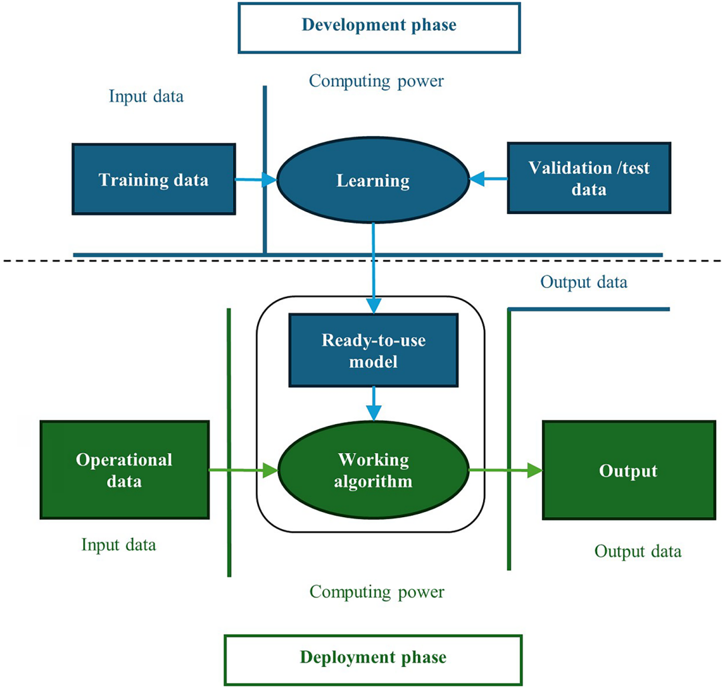
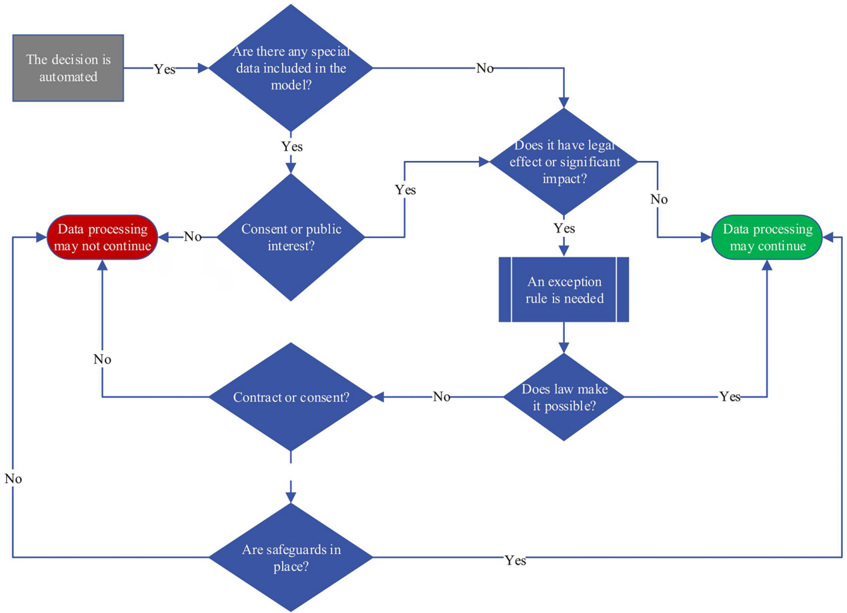
Verification
Claims the paper makes
7 Valid · 7 Not valid · 64 Not checked · 131 Own results and interpretations
The cited sources support only part of this claim — read each source’s verdict below.
In the paper
“Based on societal feedback, european civil society formulated expectations for a high standard of fundamental rights protection, akin to those embodied in the general Data Protection regulation (thomaidou & Limniotis, 2025).”
§ Reflections on the data protection compliance of AI systems under the EU AI Act > 3. Societal critiques of the AI Act from a data protection perspective
What the sources say
- Partly supportedcites thomaidou & Limniotis, 2025 matched to “Navigating Through Human Rights in AI: Exploring the Interplay Between GDPR and Fundamental Rights Impact Assessment” (2025) sourceExperimental — accuracy not yet measured
The Introduction describes increasing demand for AI oversight, and §1.6.1 calls the GDPR a standard for data-protection legislation. But the paper does not say that European civil society formulated expectations for fundamental-rights protection based on societal feedback; its mention of civil society concerns difficulty obtaining information about a Dutch risk-classification system. Page numbers are unavailable in our copy. (LLM, conf=0.78)
plain- Asserted: passes — The authors put it forward as true.
- Checkable: passes — It can be checked against evidence.
- Load-bearing: unclear — It is unclear whether the paper’s conclusions depend on it.
- Based: passes — The paper gives a reason why it holds.
- Partly supported
The cited sources support only part of this claim — read each source’s verdict below.
In the paper
“For instance, countries with stringent cross-border data restrictions-like certain high-restrictiveness jurisdictions in China-see ai innovation inhibited by more than half compared to those without such constraints (sun & trefler, 2023).”
§ Reflections on the data protection compliance of AI systems under the EU AI Act > 2.1. The introduction of AI Act
What the sources say
- Partly supportedcites sun & trefler, 2023 matched to “The Impact of AI and Cross-Border Data Regulation on International Trade in Digital Services: A Large Language Model” (2023) sourceExperimental — accuracy not yet measured
Section 5, “Result 2: Restrictions on Cross-Border Data Flows” (page not supplied), reports that data restrictions reduce AI’s effectiveness at increasing foreign users and describes the impact as halved under high restrictions. It does not measure AI innovation or establish a reduction of more than half; although it describes China’s restrictive laws, the quantified comparison is not a China-specific finding. (LLM, conf=0.90)
plainstates a cause- Asserted: passes — The authors put it forward as true.
- Checkable: passes — It can be checked against evidence.
- Load-bearing: unclear — It is unclear whether the paper’s conclusions depend on it.
- Based: passes — The paper gives a reason why it holds.
- Partly supported
Every source the paper cites for this claim was checked and supports it.
In the paper
“however, especially when using historical datasets (edwards & Veale, 2018), ai systems may amplify long-standing but previously unrecognized discriminatory patterns embedded in societal or institutional practices.”
§ Reflections on the data protection compliance of AI systems under the EU AI Act > 4.1. General concerns
What the sources say
- Supportedcites edwards & Veale, 2018 matched to “Enslaving the Algorithm: From a “Right to an Explanation” to a “Right to Better Decisions”?” (2018) source
The Introduction (p. 1) says algorithms trained on historical data risk replicating past unfairness or discrimination. It also describes discriminatory patterns embedded in ML systems but invisible to casual users, supporting the claim that such patterns may go unrecognized. (LLM, conf=0.93)
hedgedstates a possible cause- Asserted: passes — The authors put it forward as true.
- Checkable: passes — It can be checked against evidence.
- Load-bearing: unclear — It is unclear whether the paper’s conclusions depend on it.
- Based: passes — The paper gives a reason why it holds.
- Supported
A conclusion the paper draws from its own results — it cites no other source for it, so there is none to check. The quote shows it is in the paper.
In the paper
“the research finds that the ai act supplements the gDPr through a risk-based approach that subjects high-risk ai systems to specific obligations.”
- Also stated in: § Abstract · plain
“the ai act supplements the gDPr through a risk-based approach that subjects high-risk ai systems to specific obligations.”
§ Reflections on the data protection compliance of AI systems under the EU AI Act > Abstract
plainstates a cause- Asserted: passes — The authors put it forward as true.
- Checkable: passes — It can be checked against evidence.
- Load-bearing: passes — The paper’s conclusions depend on it.
- Based: passes — The paper gives a reason why it holds.
- Rests on an assumption not shown here.
- Also stated in: § Abstract · plain
A conclusion the paper draws from its own results — it cites no other source for it, so there is none to check. The quote shows it is in the paper.
In the paper
“it also introduces new procedural and documentation duties that may increase compliance complexity.”
§ Reflections on the data protection compliance of AI systems under the EU AI Act > Abstract
hedgedstates a possible cause- Asserted: passes — The authors put it forward as true.
- Checkable: passes — It can be checked against evidence.
- Load-bearing: passes — The paper’s conclusions depend on it.
- Based: passes — The paper gives a reason why it holds.
- Rests on an assumption not shown here.
65 more claims
Create a free account to see all 209 claims and every source verdict.
- Probably not a substantial claim. 93
- It may state two separate claims as one. 77
- Borderline: one of the tests for a substantial claim is unclear. 1
Self-check
Percentages, sums and reported differences re-computed from the paper’s own numbers.
Each contradiction between two passages listed here was confirmed by an independent check.
Rated minor: it would not touch a result — a value no result rests on, a p-value that stays on the same side of the significance level, or a conflict that is clerical, resolved elsewhere in the paper, or outside its own findings.
In the paper
§ Reflections on the data protection compliance of AI systems under the EU AI Act > 1. Introduction
“according to the eu artificial intelligence act of 2024, article 5(1), such a system infers from the input it receives how to generate outputs-such as predictions, content, recommendations, or decisions-serving explicit or implicit objectives that may influence physical or virtual environments.”
§ Reflections on the data protection compliance of AI systems under the EU AI Act > 2.1. The introduction of AI Act
“the introduced concepts are extensive, elaborated across 68 points in article 3 of the ai act.among these definitions, one finds the definition of the ai system itself”
Citations
Cites
Pandora's Hope: Essays on the Reality of Science Studies
Casper, M. J., & Latour, B. (2000) · Contemporary Sociology · doi:10.2307/2655272 · Cited by 5,049
Big data: a revolution that will transform how we live, work, and think
Armstrong, K. (2014) · Information, Communication & Society · doi:10.1080/1369118x.2014.923482 · Cited by 1,629
Dataset Shift in Machine Learning
(2008) · doi:10.7551/mitpress/9780262170055.001.0001 · Cited by 1,553 · cited 1×
“…based on artificial neural networks (including supervised, unsupervised, reinforcement, and deep learning), as they provide the necessary input data (Quiñonero-Candela et al., 2009). the relationship with data protection arises when these datasets contain personal data. while this is not…”
Pandora’s Hope: Essays on the Reality of Science Studies
(1999) · Choice Reviews Online · doi:10.5860/choice.37-1511 · Cited by 1,428
Counterfactual explanations without opening the black box: automated decisions and the GDPR
Wachter, S., Mittelstadt, B., & Russell, C. (2017) · SSRN Electronic Journal · doi:10.2139/ssrn.3063289 · Cited by 1,061 · cited 2×
“…operation of an ai system is—unsurprisingly—difficult for laypersons to understand, making fairness challenging to achieve even with the best intentions (wachter et al., 2017). recital 71 of the gDPr makes fairness an obligation of the controller, yet unfair processing may remain hidden even from…”
Data Cleaning: Overview and Emerging Challenges
Chu, X., Ilyas, I. F., Krishnan, S., & Wang, J. (2016) · Proceedings of the 2016 International Conference on Management of Data · doi:10.1145/2882903.2912574 · Cited by 488 · cited 1×
“…its presence certainly necessitates stricter legal compliance—but rather in the source and precise knowledge of the data itself. trends indicate that datasets for ai training largely originate from Big Data—vast collections of previously accumulated information (Chu et al., 2016).”
Mayer-Schönberger, V. (2014) · ICI Events · doi:10.25620/e140428 · Cited by 391
(2013) · Scholarly Commons - George Washington University Law School (George Washington University) · Cited by 330
Methods to Avoid Over-Fitting and Under-Fitting in Supervised Machine Learning (Comparative Study)
Jabbar, H. K., & Khan, R. Z. (2014) · Computer Science, Communication and Instrumentation Devices · doi:10.3850/978-981-09-5247-1_017 · Cited by 326 · cited 1×
“Validation data: Data used to evaluate the trained ai system and to configure its non-learnable parameters and learning process, including the prevention of underfitting or overfitting (Jabbar & Khan, 2014).”
Mejias, U. A., & Couldry, N. (2019) · Internet Policy Review · doi:10.14763/2019.4.1428 · Cited by 316 · cited 1×
“Datafication is a phenomenon describing the process of converting real-world events into data—predominantly digital data (mejias & Couldry, 2019)—at an accelerating rate (mayer-schönberger & Cukier, 2013, pp. 91–99). this process is influenced by the proliferation of iot devices, but it is also a…”
Strengthening legal protection against discrimination by algorithms and artificial intelligence
Zuiderveen Borgesius, F. J. (2020) · The International Journal of Human Rights · doi:10.1080/13642987.2020.1743976 · Cited by 267 · cited 1×
“numerous attempts have been made to clarify the status of highly algorithmic systems at international, eu, and national levels (Zuiderveen Borgesius, 2020). almost all have taken the form of soft law—guide-lines or recommendations—such as the eu Commission’s White Paper on Artificial Intelligence…”
Data Protection and the Role of Fairness
Clifford, D., & Ausloos, J. (2018) · Yearbook of European Law · doi:10.1093/yel/yey004 · Cited by 212
Bottom-up data Trusts: disturbing the ‘one size fits all’ approach to data governance
Delacroix, S., & Lawrence, N. D. (2019) · International Data Privacy Law · doi:10.1093/idpl/ipz014 · Cited by 179
Enslaving the Algorithm: From a “Right to an Explanation” to a “Right to Better Decisions”?
Edwards, L., & Veale, M. (2018) · IEEE Security & Privacy · doi:10.1109/msp.2018.2701152 · Cited by 141 · cited 1×
“…in dataset composition. in many cases, such biases are unintentional on the part of developers. however, especially when using historical datasets (edwards & Veale, 2018), ai systems may amplify long-standing but previously unrecognized discriminatory patterns embedded in societal or…”
Mejías, U., Couldry, N., & Bächle, T. (2019) · Human Rights in the Age of Platforms · doi:10.7551/mitpress/11304.003.0005 · Cited by 140
Self-Determination: A Human Rights Approach
Mccorquodale, R. (1994) · International and Comparative Law Quarterly · doi:10.1093/iclqaj/43.4.857 · Cited by 138 · cited 1×
“Data law, through data protection, safeguards the fundamental human right to personal data protection (mccorquodale, 1994) and influences technological and societal processes in multiple ways.”
Risk Management in the Artificial Intelligence Act
Schuett, J. (2024) · European Journal of Risk Regulation · doi:10.1017/err.2023.1 · Cited by 132
Trigueros-Preciado, S., González, D. P., & Solana-González, P. (2013) · Electronic Markets · doi:10.1007/s12525-012-0120-4 · Cited by 130
The EU's AI act: A framework for collaborative governance
Cancela-Outeda, C. (2024) · Internet of Things · doi:10.1016/j.iot.2024.101291 · Cited by 129 · cited 1×
“the adoption of the ai act was preceded by significant public anticipation within the european union (Cancela-outeda, 2024).”
Lehrig, S., Eikerling, H., & Becker, S. (2015) · International ACM SIGSOFT Conference on Quality of Software Architectures (QoSA) · doi:10.1145/2737182.2737185 · Cited by 118 · cited 1×
“…recommendations. another noteworthy concept is cloud computing, which refers to the outsourcing of necessary hardware resources and their internet-based accessibility (Lehrig et al., 2015, pp. 83–92). in practice, this often takes the form of external storage services and capacity outsourcing.”
Time, Consumption and the Coordination of Everyday Life
Southerton, D. (2020) · Palgrave Macmillan UK eBooks · doi:10.1057/978-1-349-60117-2 · Cited by 112
The use of AI in public services: results from a preliminary mapping across the EU
Misuraca, G., van Noordt, C., & Boukli, A. (2020) · Proceedings of the 13th International Conference on Theory and Practice of Electronic Governance · doi:10.1145/3428502.3428513 · Cited by 108
AI Systems Under Criminal Law: a Legal Analysis and a Regulatory Perspective
Lagioia, F., & Sartor, G. (2020) · Philosophy & Technology · doi:10.1007/s13347-019-00362-x · Cited by 75 · cited 8×
“…with Big Data-driven ai systems. rather, resolving this conflict requires careful case-by-case analysis to balance compliance with innovation (sartor & Lagioia, 2020, pp. 44–45). another structural concern that pervades ai systems is the so-called black box phenomenon, an intrinsic…”
InfluentialThe End of an Era: from Self-Regulation to Hard Law for the Digital Industry
Floridi, L. (2021) · Philosophy & Technology · doi:10.1007/s13347-021-00493-0 · Cited by 58 · cited 1×
“…the first of its kind in the world in this form, although not the only such initiative (european Parliament, 2023). the so-called ‘Brussels effect’ (Floridi, 2021), which describes the global influence of eu legislation, has already impacted south Korea, where a regulatory framework aligned with…”
High tech and legal challenges: Artificial intelligence-caused damage regulation
Alqodsi, E. M., & Gura, D. A. (2023) · Cogent Social Sciences · doi:10.1080/23311886.2023.2270751 · Cited by 57 · cited 1×
“…detail later, ai refers to a machine-based system designed to operate at varying levels of autonomy and, after deployment, may exhibit adaptability (alqodsi & gura, 2023). according to the eu artificial intelligence act of 2024, article 5(1), such a system infers from the input it receives how to…”
Sun, R., & Trefler, D. (2023) · doi:10.3386/w31925 · Cited by 19
Chiappetta, A. (2023) · Internet Policy Review · doi:10.14763/2023.4.1733 · Cited by 15 · cited 1×
“…accountability. another point of contention concerns the lack of effective safeguards against algorithmic discrimination. although the ai act requires providers to ensure data quality and minimize bias, critics argue that these provisions lack specificity and enforceability (Chiappetta, 2023).”
Blind transparency: a critical discourse analysis of the EU AI Act
Svitych, O. (2025) · Critical Policy Studies · doi:10.1080/19460171.2025.2496193 · Cited by 13 · cited 1×
“…argue that the regulatory framework adheres too closely to a product safety logic, at the expense of a human rights–based approach (accessnow, 2024; svitych, 2025). this raises the risk that companies might comply in a purely formalistic, ‘check-the-box’ manner, without implementing meaningful…”
Thomaidou, A., & Limniotis, K. (2025) · Journal of Cybersecurity and Privacy · doi:10.3390/jcp5010007 · Cited by 11 · cited 1×
“Based on societal feedback, european civil society formulated expectations for a high standard of fundamental rights protection, akin to those embodied in the general Data Protection regulation (thomaidou & Limniotis, 2025).”
EU–US Data Privacy Framework: A First Legal Assessment
Batlle, S., & WAEYENBERGE, A. V. (2023) · European Journal of Risk Regulation · doi:10.1017/err.2023.67 · Cited by 7 · cited 1×
“…attempts to maintain data exchanges under clearer legal standards, though debates persist over its adequacy in protecting eu citizens’ data privacy (Batlle & van waeyenberge, 2024). overall, these regulatory divergences risk fragmenting global data governance, hindering ai collaboration, and…”
(2017) · Journal of legislation · Cited by 5
Big Data and Algorithms in the Public Sector and Their Impact on the Transparency of Decision-Making
Szőke, G. L. (2018) · Central and Eastern European eDem and eGov Days · doi:10.24989/ocg.v331.25 · Cited by 1
Maierà, A. (2023) · GDPR Requirements for Biobanking Activities Across Europe · doi:10.1007/978-3-031-42944-6_9 · Cited by 1
Research works printed but not linked: 5
- 1. accessnow (2024, march 13). The EU AI Act: A failure for human rights, a victory for industry and law enforcement. https://www.accessnow.org/press-release/ai-act-failure-for-human-rights-victory-for-industry-and-law- enforcement/#:~:text=to%20protect%20people%e2%80%99s%20rights%2C%20the,most%20dangerous%20 uses%20of%20ai accessnow, algorithmwatch, amnesty international, article 19, Bits of Freedom, european Disability Forum, eDri (2024, april 3). EU's AI Act fails to set gold standard for human rights. https://edri.org/wp-content/uploads/2024/04/ eus-ai-act-fails-to-set-gold-standard-for-human-rights.pdf
- 13. Cohen, J. e. (2013). what privacy is for. Harvard Law Review, 126(7), 1904-1933.
- 10.1057/978-1-349- · doi:10.1057/978-1-349-
- 40. tóth, a. (2024). A digitális átalakulás szabályozása az Európai Unióban [Regulating digital transformation in the European Union] (pp. 5-15). oraC.
- 43. Zarsky, t. Z. (2013). transparent predictions. University of Illinois Law Review, 2013(4), 1503-1569.
Cited by
AI as a Strategic Driver in Foreign Direct Investment Flows: Evidence of OECD Countries
Grigoriadi, D. (2025) · Thunderbird International Business Review · doi:10.1002/tie.70057 · Cited by 6
Pal, K. (2026) · Advances in computational intelligence and robotics book series · doi:10.4018/979-8-3373-7087-3.ch006
Nguyen, T. P. C. (2026) · Knowledge and Performance Management · doi:10.21511/kpm.10(3).2026.05
Atef, R. (2026) · Journal of Creating Value · doi:10.1177/23949643261472688
Drozd, D., & Sloka, B. (2026) · Business and management · doi:10.3846/bm.2026.2423
Metadata
- Authors
- Hohmann, B., & Kollár, G.
- Affiliations
- University of Pecs (HU)
- Corresponding author
- Hohmann, Balázs
- Venue
- Cogent Social Sciences
- Publisher
- Informa UK Limited
- Published
- 2025-09-17
- Volume
- 11
- Issue
- 1
- ISSN
- 2331-1886 (ISSN-L)
- OpenAlex
- W4414291849
- Cited by
- 10
- References
- 28
- Citations by year
- 2026: 9 · 2025: 1
- FWCI
- 61.31
- Type
- journal article
- Language
- en
- Open access
- gold
- doi.org
- Licence
- Locations
- Cogent Social Sciences (publishedVersion, cc-by)
- DOAJ (DOAJ: Directory of Open Access Journals) (submittedVersion, cc-by-sa)
- Funders
- National Research, Development and Innovation Fund (STARTING 150399)
- Hungarian Ministry of Culture and Innovation (NKKP STARTING_24)
- Topics
- Social Sciences › Law › Digitalization, Law, and Regulation
- Physical Sciences › Computer Science › Artificial Intelligence › Ethics and Social Impacts of AI
- Physical Sciences › Computer Science › Artificial Intelligence › Law, AI, and Intellectual Property
- Keywords
- EU AI Act, General Data Protection Regulation, data protection compliance, AI regulation, high-risk AI systems, risk-based regulation, algorithmic opacity, algorithmic bias, automated decision-making, profiling, human oversight, data governance, transparency and accountability, fundamental rights
About these checks
Registry, retraction, Cites and statistics results are computed, not judged, with one exception: a printed reference that no index lists is read once by a model before it counts as a citation error. Claims are extracted by a model and kept only when their quote appears verbatim in the text; each cited source is then checked, with a model’s help, for whether it says what the claim relies on. Those verdicts can be wrong — read the claim’s quote and the cited source before relying on one.
The claim verdicts this report counts are experimental: their accuracy is not yet measured.
A language model drew the claims from the paper on 2026-10-05, under version 3 of the claim definition (model deepseek-v4.1-flash, prompt extract-v3).
A second model labelled each claim on 2026-10-05 (model jev-1.13-20260917, definition revision gold-guideline-v0.2).
Cited sources are checked with a language model’s help (gpt-6-sol).
Statistics and arithmetic are recomputed, not judged.
Confidence bands are shown only for fields calibrated on our annotated test set. None is calibrated yet, so no band is shown.
What counts as a claim ›How we measure confidence ›How we check this ›
Are you an author, or do you see a problem with this page? Request a review
Data sources
Bibliographic data: Semantic Scholar, OpenAlex, Crossref.
Contains information from the Semantic Scholar Academic Graph Datasets, made available under the ODC Attribution License (ODC-BY 1.0).
Semantic Scholar’s data is described in: Kinney, R., et al. (2023). The Semantic Scholar Open Data Platform. arXiv:2301.10140.
