

The DOI matches its Crossref record; 52 of the 52 references it cites were found in a registry or an index.
Muscle inactivation of mTOR causes metabolic and dystrophin defects leading to severe myopathy
Open accessAbstract
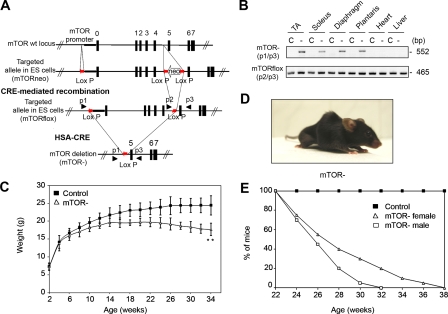
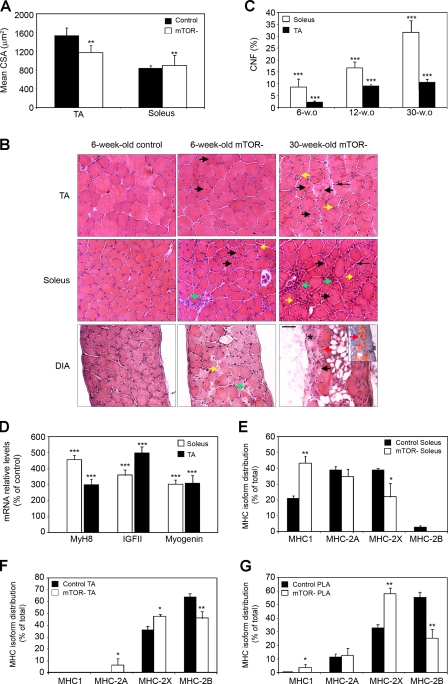
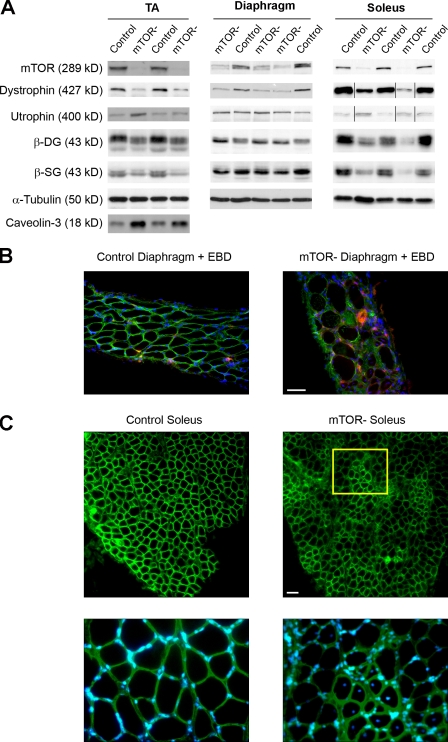
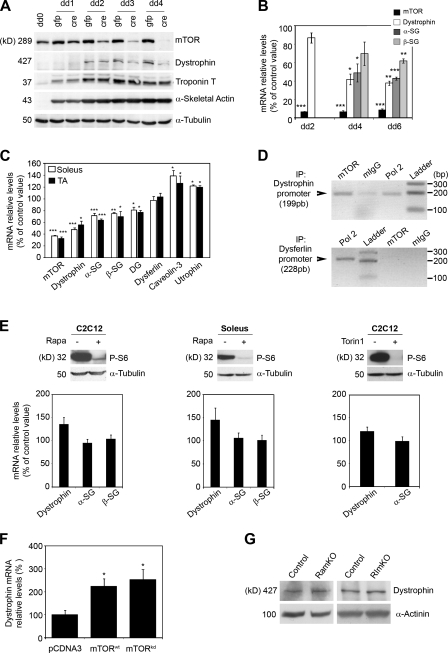
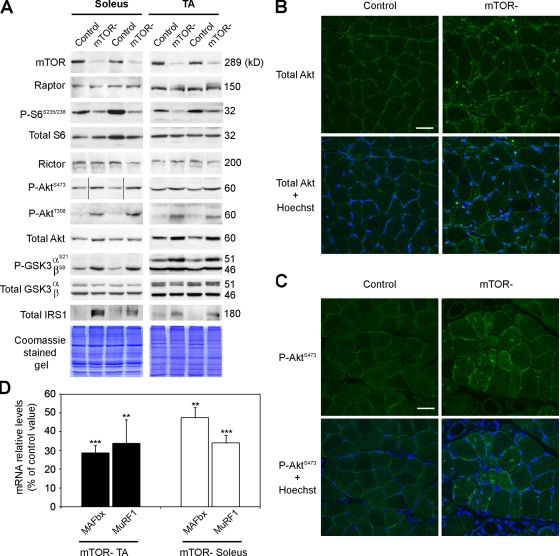
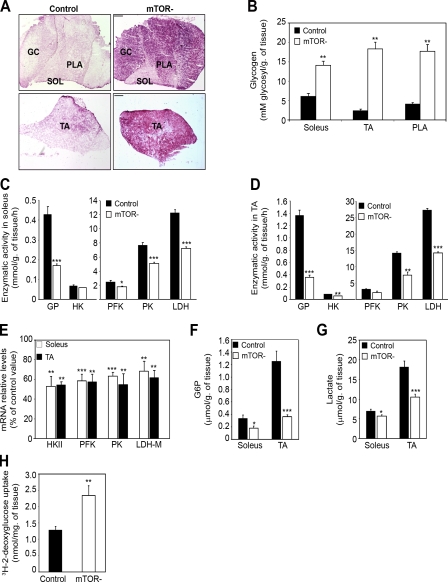
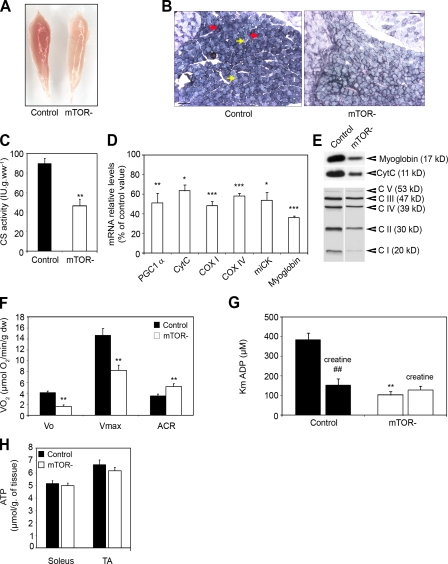
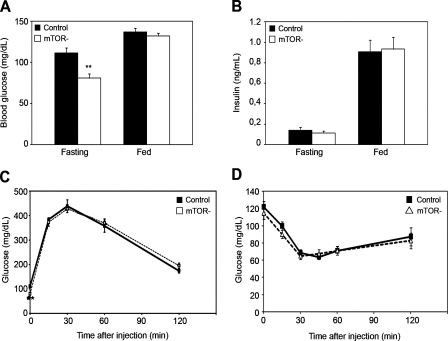
Mammalian target of rapamycin (mTOR) is a key regulator of cell growth that associates with raptor and rictor to form the mTOR complex 1 (mTORC1) and mTORC2, respectively. Raptor is required for oxidative muscle integrity, whereas rictor is dispensable. In this study, we show that muscle-specific inactivation of mTOR leads to severe myopathy, resulting in premature death. mTOR-deficient muscles display metabolic changes similar to those observed in muscles lacking raptor, including impaired oxidative metabolism, altered mitochondrial regulation, and glycogen accumulation associated with protein kinase B/Akt hyperactivation. In addition, mTOR-deficient muscles exhibit increased basal glucose uptake, whereas whole body glucose homeostasis is essentially maintained. Importantly, loss of mTOR exacerbates the myopathic features in both slow oxidative and fast glycolytic muscles. Moreover, mTOR but not raptor and rictor deficiency leads to reduced muscle dystrophin content. We provide evidence that mTOR controls dystrophin transcription in a cell-autonomous, rapamycin-resistant, and kinase-independent manner. Collectively, our results demonstrate that mTOR acts mainly via mTORC1, whereas regulation of dystrophin is raptor and rictor independent.
Overview
The claims and statistics of this paper haven’t been checked yet.
Run the check — free, no account needed. It reads the open-access text and checks the sources it cites.
Integrity signals
Registry
Cites
Statistics
Figures
Verification
Claims the paper makes
The claims and statistics of this paper haven’t been checked yet.
Run the check — free, no account needed. It reads the open-access text and checks the sources it cites.
Claims other papers make about this one
Each is checked against this paper’s own text: does it say what the citing paper says it does?
In the citing paper
“While muscle-specific Rictor knockout mice do not show any overt phenotype conversely, Raptor- and mTOR-deficient mice display reduced postnatal growth, due to the reduced size of fast but not slow muscle fibers and a progressive muscular dystrophy phenotype11,12.”
From Mechanisms of muscle atrophy and hypertrophy: implications in health and disease (2021) · cites this paper as [12]
In the citing paper
“Surprisingly, autophagy is not hyperactivated in these mice, as might be expected to occur following inhibition of the mTORC1 complex (Fig. 1), but instead is impaired and this inhibition greatly contributes to the pathological features of these animals12,14.”
From Mechanisms of muscle atrophy and hypertrophy: implications in health and disease (2021) · cites this paper as [12]
In the citing paper
“However, both conditional mTOR knockout and mTOR catalytical inactive transgenic mice show myofiber degeneration and myopathic phenotype, suggesting an important pro-survival role of mTOR.”
From Mechanisms of muscle atrophy and hypertrophy: implications in health and disease (2021) · cites this paper as [12]
Self-check
Percentages, sums and reported differences re-computed from the paper’s own numbers.
The self-check needs the paper’s full text.
Citations
Cites
TOR signaling in growth and metabolism
Wullschleger, S., Loewith, R., & Hall, M. N. (2006) · Cell · doi:10.1016/j.cell.2006.01.016 · Cited by 5,787
Bodine, S. C., Stitt, T. N., Gonzalez, M., Kline, W. O., Stover, G. L., Bauerlein, R., Zlotchenko, E., Scrimgeour, A., Lawrence, J. C., Glass, D. J., et al. (2001) · Nature Cell Biology · doi:10.1038/ncb1101-1014 · Cited by 2,752
Sarbassov, D. D., Ali, S. M., Kim, D.-H., Guertin, D. A., Latek, R. R., Erdjument-Bromage, H., Tempst, P., & Sabatini, D. M. (2004) · Current Biology · doi:10.1016/j.cub.2004.06.054 · Cited by 2,665
Prolonged Rapamycin Treatment Inhibits mTORC2 Assembly and Akt/PKB
Sarbassov, D. D., Ali, S. M., Sengupta, S., Sheen, J.-H., Hsu, P. P., Bagley, A. F., Markhard, A. L., & Sabatini, D. M. (2006) · Molecular Cell · doi:10.1016/j.molcel.2006.03.029 · Cited by 2,365
Mammalian TOR complex 2 controls the actin cytoskeleton and is rapamycin insensitive
Jacinto, E., Loewith, R., Schmidt, A., Lin, S., Rüegg, M. A., Hall, A., & Hall, M. N. (2004) · Nature Cell Biology · doi:10.1038/ncb1183 · Cited by 2,097
Self-citationStitt, T. N., Drujan, D., Clarke, B. A., Panaro, F., Timofeyva, Y., Kline, W. O., Gonzalez, M., Yancopoulos, G. D., & Glass, D. J. (2004) · Molecular Cell · doi:10.1016/s1097-2765(04)00211-4 · Cited by 1,964
Thoreen, C. C., Kang, S. A., Chang, J. W., Liu, Q., Zhang, J., Gao, Y., Reichling, L. J., Sim, T., Sabatini, D. M., & Gray, N. S. (2009) · Journal of Biological Chemistry · doi:10.1074/jbc.m900301200 · Cited by 1,803
Rommel, C., Bodine, S. C., Clarke, B. A., Rossman, R., Nunez, L., Stitt, T. N., Yancopoulos, G. D., & Glass, D. J. (2001) · Nature Cell Biology · doi:10.1038/ncb1101-1009 · Cited by 1,583
mTOR controls mitochondrial oxidative function through a YY1–PGC-1α transcriptional complex
Cunningham, J. T., Rodgers, J. T., Arlow, D. H., Vazquez, F., Mootha, V. K., & Puigserver, P. (2007) · Nature · doi:10.1038/nature06322 · Cited by 1,488
Majumder, P. K., Febbo, P. G., Bikoff, R., Berger, R., Xue, Q., McMahon, L. M., Manola, J., Brugarolas, J., McDonnell, T. J., Golub, T. R., et al. (2004) · Nature Medicine · doi:10.1038/nm1052 · Cited by 964
Cited by
Sorted by citations
Items 201–300 of 378
Lin, Y., Li, Y., Chang, Y.-C., Hsu, M., & Chen, S. (2021) · Scientific Reports · doi:10.1038/s41598-021-89039-0 · Cited by 23
Mitochondrial Stress Tests Using Seahorse Respirometry on Intact Dictyostelium discoideum Cells
Lay, S. T., Sanislav, O., Annesley, S. J., & Fisher, P. R. (2016) · Methods in molecular biology · doi:10.1007/978-1-4939-3480-5_4 · Cited by 22
González‐Fernández, E., Jeong, H., Fukaya, M., Kim, H., Khawaja, R. R., Srivastava, I. N., Waisman, A., Son, Y., & Kang, S. H. (2018) · eLife · doi:10.7554/elife.32021 · Cited by 22
UCHL1 regulates muscle fibers and mTORC1 activity in skeletal muscle
Gao, H., Freeling, J., Wu, P., Liang, A. P., Wang, X., & Li, Y. (2019) · Life Sciences · doi:10.1016/j.lfs.2019.116699 · Cited by 23
Ma, J., Wang, H., Liu, R., Jin, L. G., Tang, Q., Wang, X., Jiang, A., Hu, Y., Li, Z., Zhu, L., et al. (2015) · International Journal of Molecular Sciences · doi:10.3390/ijms16059635 · Cited by 21
Ginsenoside Rg5 promotes muscle regeneration via p38MAPK and Akt/mTOR signaling
Kim, R., Kim, J. W., Choi, H., Oh, J., Kim, T. H., Go, G.-Y., Lee, S.-J., & Bae, G. (2023) · Journal of Ginseng Research · doi:10.1016/j.jgr.2023.06.004 · Cited by 21
mTORC1 and mTORC2 expression in inner retinal neurons and glial cells
Losiewicz, M. K., Elghazi, L., Fingar, D. C., Rajala, R. V. S., Lentz, S. I., Fort, P. E., Abcouwer, S. F., & Gardner, T. W. (2020) · Experimental Eye Research · doi:10.1016/j.exer.2020.108131 · Cited by 20
Villegas-Méndez, A., Khandelwal, G., McGowan, L. M., Dookie, R. S., Haley, M., George, C. L., Sims, D., Lord, G. M., Sinclair, L. V., Jenner, R. G., et al. (2020) · The Journal of Immunology · doi:10.4049/jimmunol.2000450 · Cited by 22
Effects of thyroid hormones in skeletal muscle protein turnover
Nappi, A., Moriello, C., Morgante, M., Fusco, F., Crocetto, F., & Miro, C. (2024) · Journal of Basic and Clinical Physiology and Pharmacology · doi:10.1515/jbcpp-2024-0139 · Cited by 24
Cormerais, Y., Lapp, S. C., Kalafut, K. C., Cissé, M. Y., Shin, J., Stefadu, B., Personnaz, J., Schrötter, S., Freed, J., D’Amore, A., et al. (2024) · Developmental Cell · doi:10.1016/j.devcel.2025.05.008 · Cited by 24
Pirani, H., Soltany, A., Rezaei, M. H., Fard, A. K., Nikooie, R., Khoramipoor, K., Chamari, K., & Khoramipour, K. (2024) · Scientific Reports · doi:10.1038/s41598-023-50589-0 · Cited by 20
Moorwood, C., Philippou, Α., Spinazzola, J. M., Keyser, B., Macarak, E. J., & Barton, E. R. (2014) · Skeletal Muscle · doi:10.1186/2044-5040-4-13 · Cited by 20
Edgett, B. A., Fortner, M. L., Bonen, A., & Gurd, B. J. (2013) · Applied Physiology, Nutrition, and Metabolism · doi:10.1139/apnm-2012-0405 · Cited by 20
Zargar, S., Moreira‐Lucas, T., Samimi-Seisan, H., Jeganathan, S., Kakade, D., Islam, N., Campbell, J. E., & Adegoke, O. A. J. (2011) · American Journal of Physiology-Endocrinology and Metabolism · doi:10.1152/ajpendo.00642.2010 · Cited by 19
Hou, G., & Zhang, Z. (2017) · Frontiers in Cellular Neuroscience · doi:10.3389/fncel.2017.00353 · Cited by 20
High-intensity eccentric training ameliorates muscle wasting in colon 26 tumor-bearing mice
Tatebayashi, D., Himori, K., Yamada, R., Ashida, Y., Miyazaki, M., & Yamada, T. (2018) · PLoS ONE · doi:10.1371/journal.pone.0199050 · Cited by 19
Hall, A. J., Fontelonga, T. M., Wright, A., Gwilt, K. B., Widrick, J. J., Pasut, A., Villa, F., Miranti, C. K., Gibbs, D. E., Jiang, E., et al. (2020) · Skeletal Muscle · doi:10.1186/s13395-020-00252-3 · Cited by 19
CL316,243, a β3-adrenergic receptor agonist, induces muscle hypertrophy and increased strength
Puzzo, D., Raiteri, R., Castaldo, C., Capasso, R., Pagano, E., Tedesco, M., Gulisano, W., Drozd, L., Lippiello, P., Palmeri, A., et al. (2016) · Scientific Reports · doi:10.1038/srep37504 · Cited by 20
David, S.-A., Piégu, B., Hennequet‐Antier, C., Pannetier, M., Aguirre-Lavin, T., Crochet, S., Bordeau, T., Couroussé, N., Brionne, A., Bigot, Y., et al. (2017) · Biological Procedures Online · doi:10.1186/s12575-017-0059-0 · Cited by 19
Reciprocity Between Skeletal Muscle AMPK Deletion and Insulin Action in Diet-Induced Obese Mice
Admin, A., Lantier, L., Williams, I. M., Williams, I. M., Guérin, A., Bracy, D. P., Goelzer, M., Foretz, M., Viollet, B., Hughey, C. C., et al. (2020) · Diabetes · doi:10.2337/db19-1074 · Cited by 21
Liao, C., Anderson, S. S., Chicoine, N. H., Mayfield, J., Garrett, B., Kwok, C. S., Academia, E. C., Hsu, Y.-M., Miller, D. M., Bair, A. M., et al. (2017) · Cell Discovery · doi:10.1038/celldisc.2017.39 · Cited by 19
Boccanegra, B., Verhaart, I. E. C., Cappellari, O., Vroom, E., & Luca, A. D. (2020) · Pharmacological Research · doi:10.1016/j.phrs.2020.104917 · Cited by 18
Conjard‐Duplany, A., Osseni, A., Lamboux, A., Mouradian, S., Picard, F., Moncollin, V., Angleraux, C., Dorel-Dubois, T., Puccio, H. M., Leblanc, P., et al. (2025) · Cellular and Molecular Life Sciences · doi:10.1007/s00018-025-05695-9 · Cited by 16
Self-citationmTOR regulates GPVI-mediated platelet activation
Wang, L., Liu, G., Wu, N., Dai, B., Han, S., Liu, Q., Huang, F., Chen, Z., Xu, W., Xia, D., et al. (2021) · Journal of Translational Medicine · doi:10.1186/s12967-021-02756-y · Cited by 17
Interactions of the super complexes: When mTORC1 meets the proteasome
Adegoke, O. A. J., Beatty, B., Kimball, S. R., & Wing, S. S. (2019) · The International Journal of Biochemistry & Cell Biology · doi:10.1016/j.biocel.2019.105638 · Cited by 19
Muscle atrophy induced by overexpression of ALAS2 is related to muscle mitochondrial dysfunction
Peng, Y., Li, J., Luo, D., Zhang, S., Li, S., Wang, D., Wang, X., Zhang, Z., Wang, X., Sun, C., et al. (2021) · Skeletal Muscle · doi:10.1186/s13395-021-00263-8 · Cited by 18
Muscle inactivation of mTOR causes metabolic and dystrophin defects leading to severe myopathy
Risson, V., Mazelin, L., Roceri, M., Sanchez, H., Moncollin, V., Corneloup, C., Richard‐Bulteau, H., Vignaud, A., Baas, D., Defour, A., et al. (2009) · The Journal of Experimental Medicine · doi:10.1084/jem20613oia33 · Cited by 17
Self-citationLigand-induced rapid skeletal muscle atrophy in HSA-Fv2E-PERK transgenic mice
Miyake, M., Kuroda, M., Kiyonari, H., Takehana, K., Hisanaga, S., Morimoto, M., Zhang, J., Oyadomari, M., Sakaue, H., & Oyadomari, S. (2017) · PLoS ONE · doi:10.1371/journal.pone.0179955 · Cited by 17
Late-onset megaconial myopathy in mice lacking group I Paks
Joseph, G. A., Hung, M., Goel, A. J., Hong, M., Rieder, M.-K., Beckmann, N. D., Serasinghe, M. N., Chipuk, J. E., Devarakonda, P. M., Goldhamer, D. J., et al. (2019) · Skeletal Muscle · doi:10.1186/s13395-019-0191-4 · Cited by 13
Interferon-γ causes myogenic cell dysfunction and senescence in immune myopathies
Hou, C., Periou, B., Gervais, M., Martin, L., Berthier, J., Baba‐Amer, Y., Souvannanorath, S., Lechapt, E., Malfatti, E., Gherardi, R. K., et al. (2025) · Brain · doi:10.1093/brain/awaf153 · Cited by 16
Rheb1-Independent Activation of mTORC1 in Mammary Tumors Occurs through Activating Mutations in mTOR
Xiao, B., Zuo, D., Hirukawa, A., Cardiff, R. D., Lamb, R. F., Sonenberg, N., & Muller, W. J. (2020) · Cell Reports · doi:10.1016/j.celrep.2020.107571 · Cited by 16
Wang, D., Song, M., Shen, L.-F., Han, L., Zhu, P., Xu, J., Shang, G., Cao, Y., Zhang, W. Y., Zhong, M., et al. (2022) · Frontiers in Physiology · doi:10.3389/fphys.2021.786895 · Cited by 16
Zhao, M., Danneskiold‐Samsøe, N. B., Uličná, L., Nguyen, Q., Coassolo, L., Lee, D. E., White, J. P., Jiang, Z., Cuthbert, N., Paramasivam, S., et al. (2022) · eLife · doi:10.7554/elife.80014 · Cited by 17
Mechanisms of Ovarian Cancer-Associated Cachexia
Callaway, C. S., Mouchantat, L. M., Bitler, B. G., & Bonetto, A. (2023) · Endocrinology · doi:10.1210/endocr/bqad176 · Cited by 16
GCN5 maintains muscle integrity by acetylating YY1 to promote dystrophin expression
Addicks, G. C., Zhang, H., Ryu, D., Vasam, G., Green, A. E., Marshall, P. L., Patel, S., Kang, B. E., Kim, D., Katsyuba, E., et al. (2021) · The Journal of Cell Biology · doi:10.1083/jcb.202104022 · Cited by 16
A role for Galgt1 in skeletal muscle regeneration
Singhal, N., & Martin, P. T. (2015) · Skeletal Muscle · doi:10.1186/s13395-014-0028-0 · Cited by 16
Bacquer, O. L., Combe, K., Montaurier, C., Salles, J., Giraudet, C., Patrac, V., Domingues-Faria, C., Guillet, C., Louche, K., Boirie, Y., et al. (2017) · Molecular Nutrition & Food Research · doi:10.1002/mnfr.201700128 · Cited by 16
Jing, F., Yang, F., Cui, F., Chen, Z., Li, L., & Huang, X. (2017) · Bioscience Reports · doi:10.1042/bsr20170767 · Cited by 16
Baraldo, M., Zorzato, S., Dondjang, A. H. T., Geremia, A., Nogara, L., Dumitras, A. G., Canato, M., Marcucci, L., Nolte, H., & Blaauw, B. (2022) · The Journal of Physiology · doi:10.1113/jp283686 · Cited by 17
Zhang, C., Cao, J., Liang, Y., Li, Y., Zhang, H., Zhu, Y., Geng, J., Yang, L., Feng, S.-W., Yang, J., et al. (2016) · Neural Regeneration Research · doi:10.4103/1673-5374.193244 · Cited by 14
Jayawardena, T. U., Kim, S., & Jeon, Y. (2021) · Critical Reviews in Food Science and Nutrition · doi:10.1080/10408398.2021.1969889 · Cited by 15
Sato, Y., Sato, Y., Suzuki, R., Obeng, K. A., & Yoshizawa, F. (2018) · Experimental Cell Research · doi:10.1016/j.yexcr.2018.02.002 · Cited by 15
Parathyroid Hormone‐Loaded Microneedle Promotes Tendon Healing Through Activation of mTOR
Yao, Z., Xue, T., Cai, C., Li, J., Lu, M., Liu, X., Jin, T., Wu, F., Liu, S., & Fan, C. (2020) · Advanced Therapeutics · doi:10.1002/adtp.202000025 · Cited by 13
Mann, G., Riddell, M. C., & Adegoke, O. A. J. (2022) · Diabetology · doi:10.3390/diabetology3030032 · Cited by 16
Deliberation on debilitating condition of cancer cachexia: Skeletal muscle wasting
Dave, S., & Patel, B. M. (2023) · Fundamental and Clinical Pharmacology · doi:10.1111/fcp.12931 · Cited by 12
Differential control of ageing and lifespan by isoforms and splice variants across the mTOR network
Navas, P. R., & Thedieck, K. (2017) · Essays in Biochemistry · doi:10.1042/ebc20160086 · Cited by 13
Li, Y., Zhou, Y., Cao, J., Lin, Z.-B., Tong, M., & Zhang, Y. (2019) · Asian Journal of Andrology · doi:10.4103/aja.aja_14_19 · Cited by 12
C-KIT Expression Distinguishes Fetal from Postnatal Skeletal Progenitors
He, D. D., Tang, X. T., Dong, W., Cui, G., Peng, G., Yin, X., Chen, Y., Jing, N., & Zhou, B. O. (2020) · Stem Cell Reports · doi:10.1016/j.stemcr.2020.03.001 · Cited by 12
Heparin-Mimicking Polymer-Based In Vitro Platform Recapitulates In Vivo Muscle Atrophy Phenotypes
Kim, H., Jeong, J. H., Fendereski, M., Lee, H., Kang, D. Y., Hur, S. S., Amirian, J., Kim, Y., Pham, N. T., Suh, N., et al. (2021) · International Journal of Molecular Sciences · doi:10.3390/ijms22052488 · Cited by 12
López, R., Mosca, B., Treves, S., Maj, M., Bergamelli, L., Calderón, J. C., Bentzinger, C. F., Romanino, K., Hall, M. N., Rüegg, M. A., et al. (2014) · Biochemical Journal · doi:10.1042/bj20140935 · Cited by 12
Self-citationMolinaro, M., Torrente, Y., Villa, C., & Farini, A. (2024) · International Journal of Molecular Sciences · doi:10.3390/ijms25010631 · Cited by 11
Kalim, K. W., Zhang, S., Chen, X., Li, Y., Yang, J., Zheng, Y., & Guo, F. (2017) · PLoS ONE · doi:10.1371/journal.pone.0183266 · Cited by 11
Rial, D., Puighermanal, E., Chazalon, M., Valjent, E., Schiffmann, S. N., & d’Exaerde, A. D. K. (2020) · Biological Psychiatry · doi:10.1016/j.biopsych.2020.05.029 · Cited by 11
Zheng, H., Li, Q., Li, S., Li, Z., Brotto, M. A. P., Weiss, D., Prosdocimo, D. A., Xu, C., Reddy, A., Puchowicz, M., et al. (2023) · eLife · doi:10.7554/elife.86944 · Cited by 10
Adult-Onset Myopathy with Constitutive Activation of Akt following the Loss of hnRNP-U
Bagchi, D., Mason, B. D., Baldino, K., Li, B., Lee, E. H., Zhang, Y., Chu, L. K., Raheb, S. E., Sinha, I., & Neppl, R. L. (2020) · iScience · doi:10.1016/j.isci.2020.101319 · Cited by 10
Nie, X., Zheng, J., Cruciger, M., Yang, P., & Mao, J. J. (2020) · Developmental Biology · doi:10.1016/j.ydbio.2020.08.010 · Cited by 10
Baek, K., Jung, Y., Park, J. S., Kim, J., Hah, Y., Kim, S.-J., & Yoo, J. (2021) · Journal of Bone Metabolism · doi:10.11005/jbm.2021.28.3.179 · Cited by 10
mTORC1 regulates high levels of protein synthesis in retinal ganglion cells of adult mice
Fort, P. E., Losiewicz, M. K., Elghazi, L., Kong, D., CRAS-MÉNEUR, C. M. H., Fingar, D. C., Kimball, S. R., Rajala, R. V. S., Smith, A. J., Ali, R. R., et al. (2022) · Journal of Biological Chemistry · doi:10.1016/j.jbc.2022.101944 · Cited by 12
Васильевна, М. Г., Shilovsky, G. A., & Khokhlov, A. N. (2021) · Biochemistry (Moscow) · doi:10.1134/s0006297921100151 · Cited by 9
Mudunuri, A., Chandrakanth, M., Khan, S., Sura, C., Kumar, N., & Tung, S. (2024) · Ecology and Evolution · doi:10.1002/ece3.10976 · Cited by 11
Cotton, J. L., Dang, K., Hu, L., Sun, Y., Singh, A., Rajurkar, M., Li, Q., Wu, X., & Mao, J. (2022) · Cell Reports · doi:10.1016/j.celrep.2022.111125 · Cited by 9
Functional Nutrients to Ameliorate Neurogenic Muscle Atrophy
Moresi, V., Renzini, A., Cavioli, G., Seelaender, M. C. L., Coletti, D., Gigli, G., & Cedola, A. (2022) · Metabolites · doi:10.3390/metabo12111149 · Cited by 10
Succinate dehydrogenase in Parkinson’s disease
Farshbaf, M. J. (2017) · Frontiers in Biology · doi:10.1007/s11515-017-1450-6 · Cited by 10
Feng, R., Chen, L., & Chen, K. (2021) · Ecotoxicology · doi:10.1007/s10646-021-02478-3 · Cited by 10
Rapamycin Exacerbates Staphylococcus aureus Pneumonia by Inhibiting mTOR-RPS6 in Macrophages
Yu, F., Zheng, K., Wu, Y., Gao, S., Weng, Q., Zhu, C., Wu, Y., Li, M., Qin, Z., Lou, J.-F., et al. (2023) · Journal of Inflammation Research · doi:10.2147/jir.s434483 · Cited by 8
Beta-lapachone attenuates immobilization-induced skeletal muscle atrophy in mice
Park, S., Shin, M., Kim, J., & Park, S. (2019) · Experimental Gerontology · doi:10.1016/j.exger.2019.110711 · Cited by 8
The Target of Rapamycin: Structure and Functions
Wu, C., Chou, P., & Jacinto, E. (2012) · InTech eBooks · doi:10.5772/37927 · Cited by 8
Aldosterone Modulates the Mechanistic Target of Rapamycin Signaling in Male Mice
Brooks, D. L. P., Garza, A., Katayama, I. A., Romero, J. R., Adler, G. K., Pojoga, L. H., & Williams, G. H. (2019) · Endocrinology · doi:10.1210/en.2018-00989 · Cited by 8
Nie, X., Ricupero, C. L., Jiao, K., Yang, P., & Mao, J. J. (2021) · Developmental Biology · doi:10.1016/j.ydbio.2021.05.011 · Cited by 9
Yang, Q., Li, C., & Chen, Q. (2022) · Frontiers in Cardiovascular Medicine · doi:10.3389/fcvm.2022.789331 · Cited by 8
Parunyakul, K., Srisuksai, K., Santativongchai, P., Pongchairerk, U., Ampawong, S., Tulayakul, P., & Fungfuang, W. (2022) · Veterinary World · doi:10.14202/vetworld.2022.986-997 · Cited by 8
Activation of mTOR for the loss of skeletal muscle in a hindlimb-suspended rat model
Yoo, Y., Park, J. H., Seo, D.-H., Eom, S., Jung, Y., Kim, T., Han, T.-Y., & Kim, H. S. (2015) · International Journal of Precision Engineering and Manufacturing · doi:10.1007/s12541-015-0130-1 · Cited by 8
RNA signaling in skeletal muscle: the central role of microRNAs and exosomal microRNAs
Liu, S., & Dong, H. (2025) · Frontiers in Cell and Developmental Biology · doi:10.3389/fcell.2025.1639123 · Cited by 10
Saredi, S., Cauley, E. S., Ruggieri, A., Spivey, T. M., Ardissone, A., Mora, M., Moroni, I., & Manzini, M. C. (2020) · Muscle & Nerve · doi:10.1002/mus.26907 · Cited by 7
Fuzheng Xiaoai Decoction 1 ameliorated cancer cachexia-induced muscle atrophy via Akt-mTOR pathway
Cheng, Q.-Q., Mao, S., Yang, L., Chen, L., Zhu, J.-Z., Liu, X., Hou, A., & Zhang, R. (2022) · Journal of Ethnopharmacology · doi:10.1016/j.jep.2022.115944 · Cited by 7
Negative regulation of initial steps in skeletal myogenesis by mTOR and other kinases
Wilson, R. A., Liu, J., Xu, L., Annis, J. E., Helmig, S. E., Moore, G., Timmerman, C., Grandori, C., Zheng, Y., & Skapek, S. X. (2016) · Scientific Reports · doi:10.1038/srep20376 · Cited by 7
Maeda, N., Abdullahi, A., Beatty, B., Dhanani, Z., & Adegoke, O. A. J. (2017) · Physiological Reports · doi:10.14814/phy2.13395 · Cited by 6
Tanaka, M., Yoshino, Y., Takeda, S., Toda, K., Shimoda, H., Tsuruma, K., Shimazawa, M., & Hara, H. (2017) · Journal of Medicinal Food · doi:10.1089/jmf.2016.3906 · Cited by 7
Gokuladhas, S., Schierding, W. S., Cameron‐Smith, D., Wake, M. A., Scotter, E. L., & O'Sullivan, J. M. (2020) · Frontiers in Genetics · doi:10.3389/fgene.2020.00393 · Cited by 7
Mtor-Fanconi Anemia DNA Damage Repair Pathway in Cancer
Guo, F. (2014) · Journal of Oncobiomarkers · doi:10.13188/2325-2340.1000008 · Cited by 6
Schreiber, K. H., O’Leary, M. N., & Kennedy, B. K. (2015) · Elsevier eBooks · doi:10.1016/b978-0-12-411596-5.00002-2 · Cited by 7
Hou, C., Periou, B., Gervais, M., Berthier, J., Baba‐Amer, Y., Souvannanorath, S., Malfatti, E., Relaix, F., Bencze, M., & Authier, F. (2021) · bioRxiv (Cold Spring Harbor Laboratory) · doi:10.1101/2021.12.16.472927 · Cited by 7
Starvation-induced metabolic rewiring affects mTORC1 composition in vivo
Kaade, E., Mausbach, S., Nina, E., Sylvester, M., Shakeri, F., Jachimowicz, R. D., Gieselmann, V., & Thelen, M. (2024) · Scientific Reports · doi:10.1038/s41598-024-78873-7 · Cited by 8
Therapeutic targeting of GDF11 in muscle atrophy: Insights and strategies
Wang, C., Liu, X., Hu, X., Wu, T., & Duan, R. (2024) · International Journal of Biological Macromolecules · doi:10.1016/j.ijbiomac.2024.135321 · Cited by 6
mTORC1 in the Control of Myogenesis and Adult Skeletal Muscle Mass
Wallace, M. A., Hughes, D. C., & Baar, K. (2016) · Elsevier eBooks · doi:10.1016/b978-0-12-802733-2.00025-6 · Cited by 9
Physiological aspects of muscular adaptations to training translated to neuromuscular diseases.
Berardinelli, A. L., & D’Antona, G. (2019) · Europe PMC (PubMed Central) · Cited by 6
Anjum, S., Srivastava, S., Panigrahi, L., Ansari, U. A., Trivedi, A. K., & Ahmed, S. (2023) · International Journal of Biological Macromolecules · doi:10.1016/j.ijbiomac.2023.126907 · Cited by 6
Genetic Variants Within MTORC1 Genes Predict Gastric Cancer Prognosis in Chinese Populations
Xue, W., Wang, M., Zhang, L., Gu, J. H., Zhu, X., Wang, Y., Wang, R., Wang, L., Wang, W., Wang, X., et al. (2018) · Journal of Cancer · doi:10.7150/jca.23566 · Cited by 6
mTOR as a Marker of Exercise and Fatigue in Octopus vulgaris Arm
Maiole, F., Giachero, S., Fossati, S. M., Rocchi, A., & Zullo, L. (2019) · Frontiers in Physiology · doi:10.3389/fphys.2019.01161 · Cited by 7
Periche-Tomas, E., Cattaneo, A., Cattane, N., Bone, C., Tibble, J. A., Bullmore, E. T., Pariante, C. M., & Harrison, N. A. (2024) · Brain Behavior and Immunity · doi:10.1016/j.bbi.2024.09.038 · Cited by 5
Burghardt, K., Burghardt, P. R., Howlett, B. H., Dass, S. E., Zahn, B., Imam, A., Mallisho, A., Msallaty, Z., Seyoum, B., & Yi, Z.-P. (2024) · Biomedicines · doi:10.3390/biomedicines12051057 · Cited by 4
Recent advances of the mammalian target of rapamycin signaling in mesenchymal stem cells
Cai, H., Wang, Z., Tang, W., Ke, X., & Zhao, E. (2022) · Frontiers in Genetics · doi:10.3389/fgene.2022.970699 · Cited by 5
Polycystin-2 Is Required for Starvation- and Rapamycin-Induced Atrophy in Myotubes
Kretschmar, C., Peña‐Oyarzún, D., Hernando, C., Hernández, N., Molina‐Berríos, A., Hernández‐Cáceres, M. P., Lavandero, S., Budini, M., Morselli, E., Parra, V., et al. (2019) · Frontiers in Endocrinology · doi:10.3389/fendo.2019.00280 · Cited by 5
Physiological Regulation of Skeletal Muscle Mass
Pérez‐Schindler, J., & Handschin, C. (2018) · Elsevier eBooks · doi:10.1016/b978-0-12-810422-4.00011-7 · Cited by 4
Urine-derived stem cells genetically modified with IGF1 improve muscle regeneration
Yi, H. (2024) · American Journal of Clinical and Experimental Urology · doi:10.62347/qskh2686 · Cited by 4
Molecular basis of muscle hypertrophy and atrophy: Potential therapy for muscular dystrophy
Ito, N., Miyagoe‐Suzuki, Y., & Takeda, S. (2013) · The Journal of Physical Fitness and Sports Medicine · doi:10.7600/jpfsm.2.179 · Cited by 4
Cessation of electrically-induced muscle contraction activates autophagy in cultured myotubes
Yoshioka, K., Sasai, N., Kurogi, Y., Hayakawa, K., Itoh, Y., Agata, N., Murakami, T., Inoue‐Miyazu, M., Sokabe, M., & Kawakami, K. (2020) · Biochemical and Biophysical Research Communications · doi:10.1016/j.bbrc.2020.09.009 · Cited by 4
Shigesada, N., Shikada, N., Shirai, M., Toriyama, M., Higashijima, F., Kimura, K., Kondo, T., Bessho, Y., Shinozuka, T., & Sasai, N. (2024) · Cellular and Molecular Life Sciences · doi:10.1007/s00018-023-05087-x · Cited by 4
Charton, A., Zoll, J., Bouitbir, J., Sirvent, P., Klein, A., Jiménez, L., Péronnet, F., Gény, B., & Richard, R. (2015) · Drug Design Development and Therapy · doi:10.2147/dddt.s81891 · Cited by 4
Ròna-Vörös, K., Eschbach, J., Vernay, A., Wiesner, D., Schwalenstöcker, B., Geniquet, P., de Camaret, B. M., Echaniz‐Laguna, A., Loeffler, J., Ludolph, A. C., et al. (2013) · Human Molecular Genetics · doi:10.1093/hmg/ddt359 · Cited by 4
Metadata
- Authors
- Risson, V., Mazelin, L., Roceri, M., Sanchez, H., Moncollin, V., Corneloup, C., Richard-Bulteau, H., Vignaud, A., Baas, D., Defour, A., Freyssenet, D., Tanti, J.-F., Le-Marchand-Brustel, Y., Ferrier, B., Conjard-Duplany, A., Romanino, K., Bauché, S., Hantaï, D., Mueller, M., Kozma, S. C., Thomas, G., Rüegg, M. A., Ferry, A., Pende, M., Bigard, X., Koulmann, N., Schaeffer, L., & Gangloff, Y.-G.
- Affiliations
- École Normale Supérieure de Lyon (FR)
- Inserm (FR)
- Service de Santé des Armées (FR)
- Department of Human Factors, Research Center of the Health of the Military, La Tronche 38702, France 3
- Université Pierre-et-Marie-Curie (FR)
- Université de Lyon (FR)
- Institut National de la Santé et de la Recherche Médicale, Unité 895, Centre Méditerranéen de Médecine Moléculaire, F-06204 Nice, France 6
- Lyon 1 Université (FR)
- Métabolomique et Maladies Métaboliques, Institut National de la Santé et de la Recherche Médicale, Unité 820, Faculté de Médecine R.T.H. Laennec, Université Claude Bernard Lyon 1, 69372 Lyon Cedex 08, France 8
- University of Basel (CH)
- Institut National de la Santé et de la Recherche Médicale, Université Pierre et Marie Curie, Unité Mixte de Recherche 975, Hôpital de la Salpêtrière, 75651 Paris Cedex 13, France 10
- Novartis (Switzerland) (CH)
- University of Cincinnati (US)
- Corresponding author
- Schaeffer, Laurent
- Gangloff, Yann-Gaël
- ORCID
- Venue
- Journal of Cell Biology
- Publisher
- Rockefeller University Press
- Published
- 2009-12-14
- Volume
- 187
- Issue
- 6
- Pages
- 859-874
- ISSN
- 0021-9525 (ISSN-L)
- 1540-8140
- PMC
- PMC2806319
- OpenAlex
- W2164316354
- Cited by
- 381
- References
- 52
- Citations by year
- 2026: 8 · 2025: 14 · 2024: 17 · 2023: 15 · 2022: 26 · 2021: 31 · 2020: 28 · 2019: 25 · 2018: 23 · 2017: 31 · 2016: 28 · 2015: 22 · 2014: 28 · 2013: 27 · 2012: 26
- FWCI
- 7.78
- Type
- journal article
- Language
- en
- Open access
- bronze
- doi.org
- Locations
- The Journal of Cell Biology (publishedVersion)
- PubMed Central (publishedVersion, cc-by-nc-sa)
- PubMed (publishedVersion)
- edoc (University of Basel) (acceptedVersion)
- HAL (submittedVersion)
- Dipòsit Digital de la Universitat de Barcelona (Universitat de Barcelona) (submittedVersion, cc-by)
- Funders
- Agence Nationale de la Recherche (ANR-06-BLAN-0354)
- Topics
- Life Sciences › Biochemistry, Genetics and Molecular Biology › Molecular Biology › Muscle Physiology and Disorders
- Life Sciences › Biochemistry, Genetics and Molecular Biology › Molecular Biology › PI3K/AKT/mTOR signaling in cancer
- Health Sciences › Nursing › Nutrition and Dietetics › Muscle metabolism and nutrition
- Keywords
- mTOR, mTORC1, mTORC2, raptors, Rictor, muscle myopathies, dystrophin, oxidative metabolism, mitochondrial regulation, glycogen accumulation, glucose uptake, glucose homeostasis, rapamycin resistance, kinase-independent signaling
- MeSH terms
- Regulatory-Associated Protein of mTOR, Rapamycin-Insensitive Companion of mTOR Protein, Age Factors, Animals, Carrier Proteins, Cells, Cultured, Energy Metabolism, Enzyme Activation, Female, Glucose, Glycogen, Mice, Inbred C57BL, Mitochondria, Muscle, Muscle Contraction, Muscular Dystrophy, Animal, Mutation, Oxidation-Reduction, Severity of Illness Index, Transduction, Genetic, Dystrophin, Phosphotransferases (Alcohol Group Acceptor), Electroporation, Mice, Knockout, Muscle, Skeletal, Sirolimus, Adaptor Proteins, Signal Transducing, Utrophin, Proto-Oncogene Proteins c-akt, Mice, Rats, TOR Serine-Threonine Kinases
About these checks
Registry, retraction, Cites and statistics results are computed, not judged, with one exception: a printed reference that no index lists is read once by a model before it counts as a citation error. Claims are extracted by a model and kept only when their quote appears verbatim in the text; each cited source is then checked, with a model’s help, for whether it says what the claim relies on. Those verdicts can be wrong — read the claim’s quote and the cited source before relying on one.
Statistics and arithmetic are recomputed, not judged.
Confidence bands are shown only for fields calibrated on our annotated test set. None is calibrated yet, so no band is shown.
What counts as a claim ›How we measure confidence ›How we check this ›
Are you an author, or do you see a problem with this page? Request a review
