

The DOI matches its Crossref record; 64 of the 65 references it cites were found in a registry or an index.
Mitophagy of damaged mitochondria occurs locally in distal neuronal axons and requires PINK1 and Parkin
Open accessAbstract
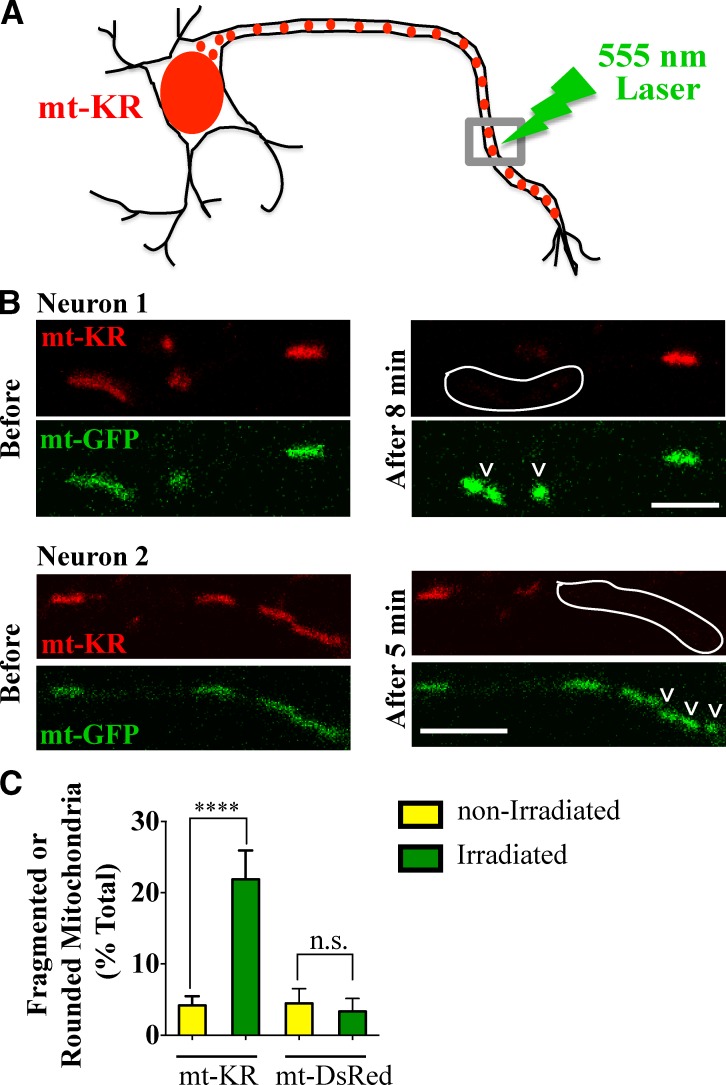
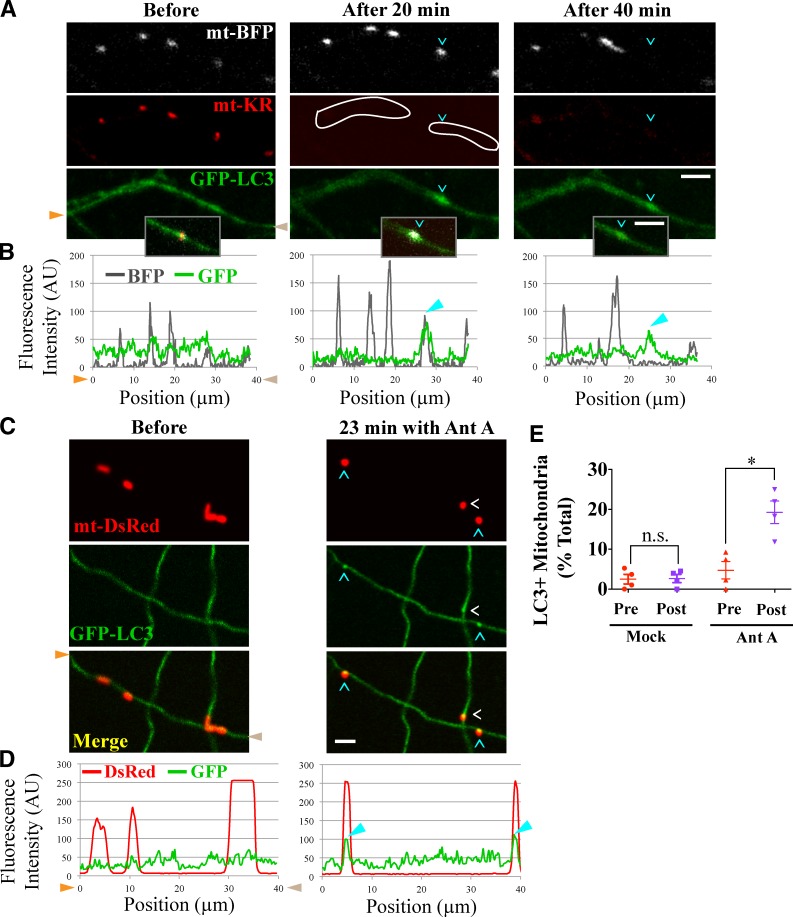
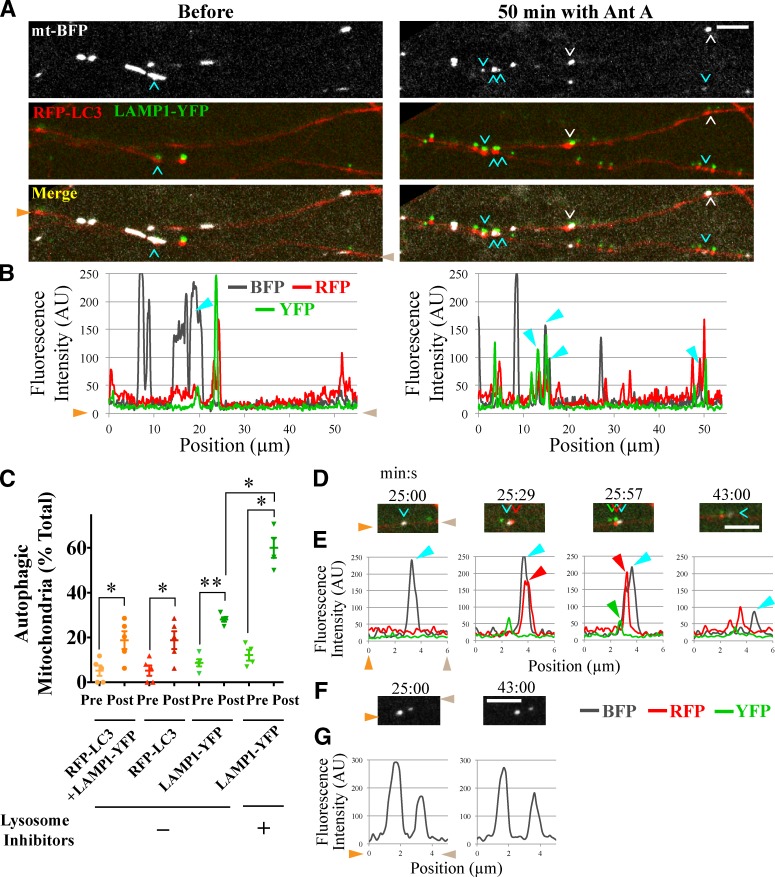
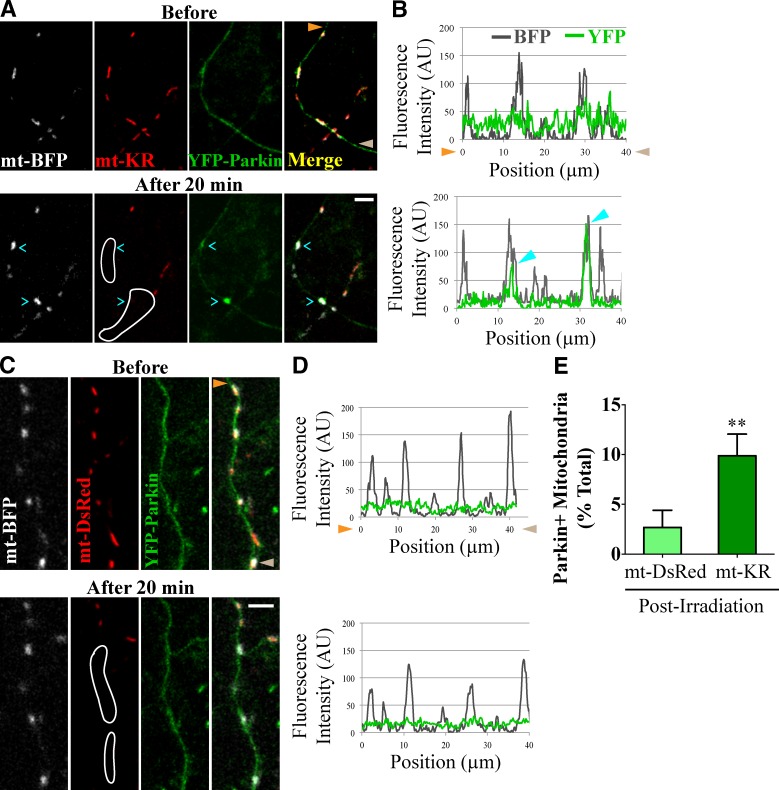
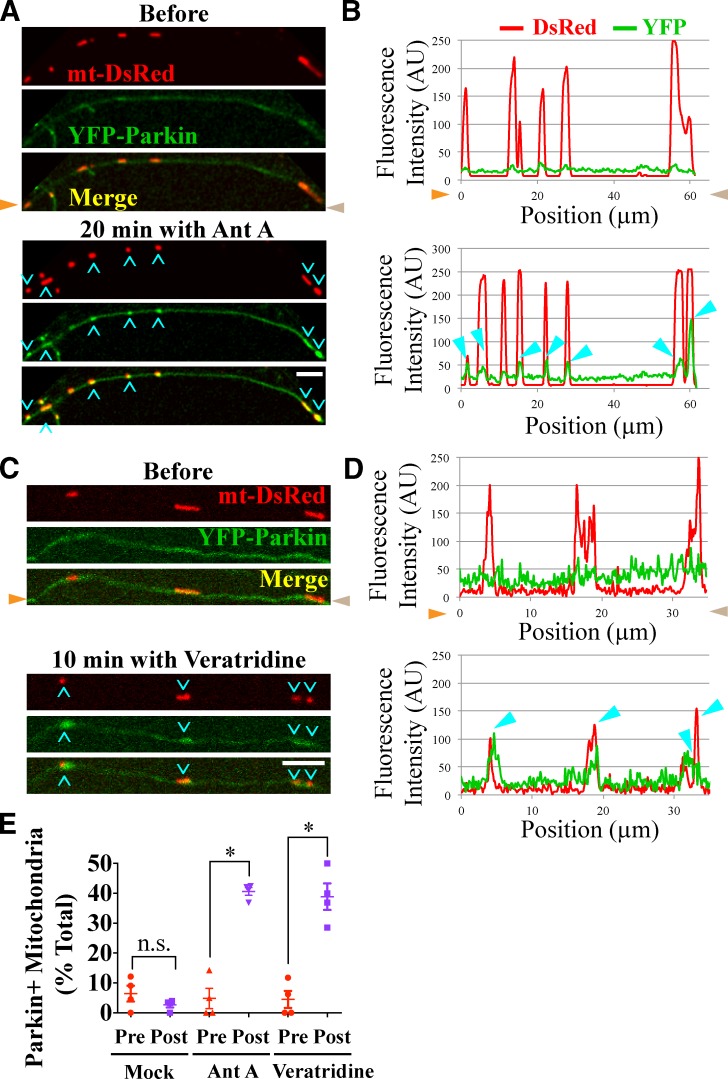
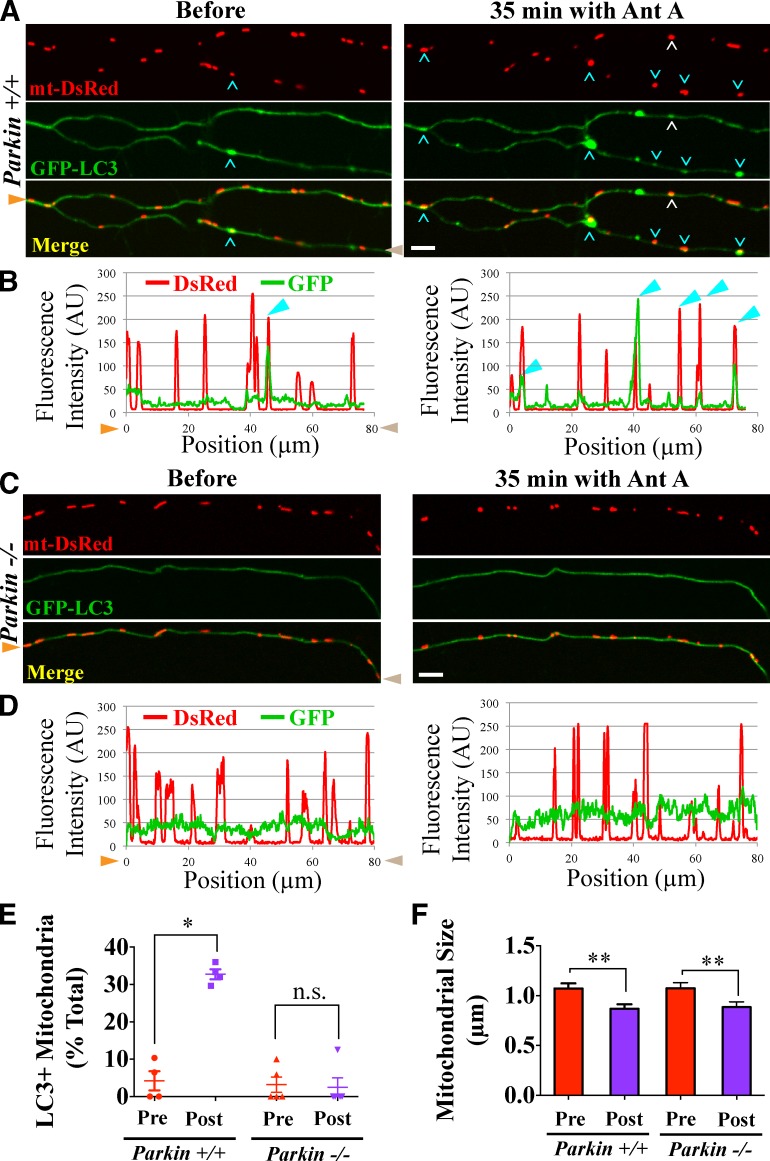
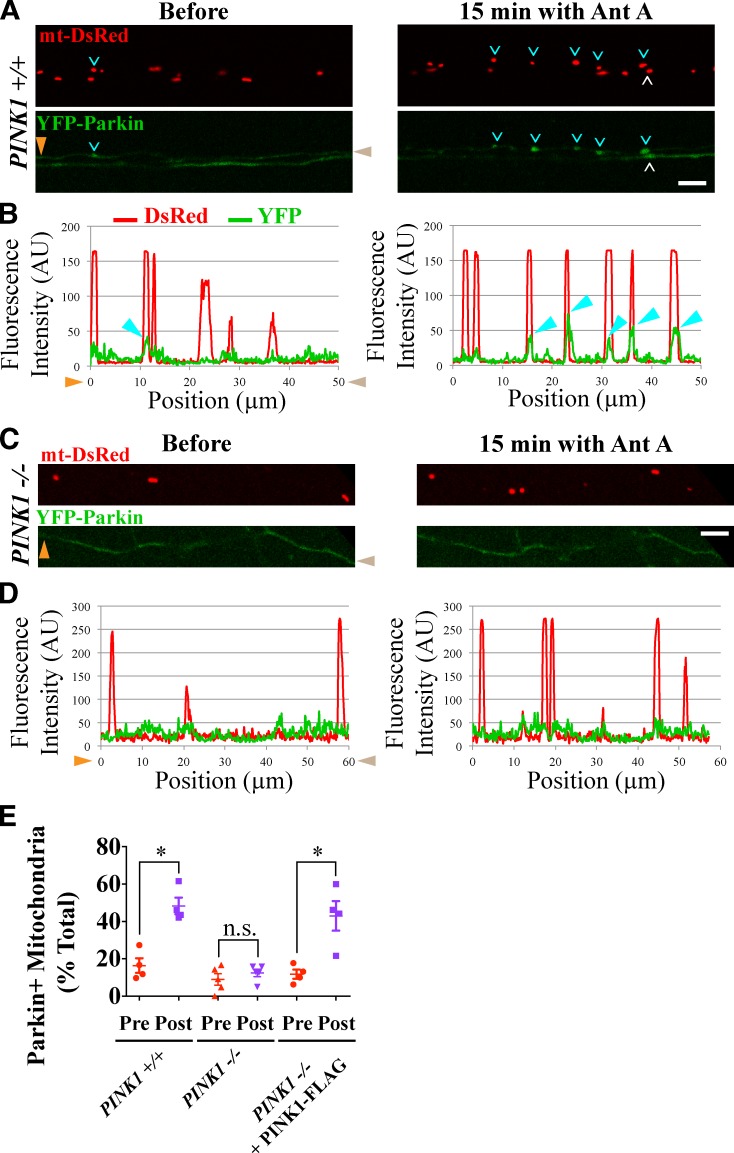
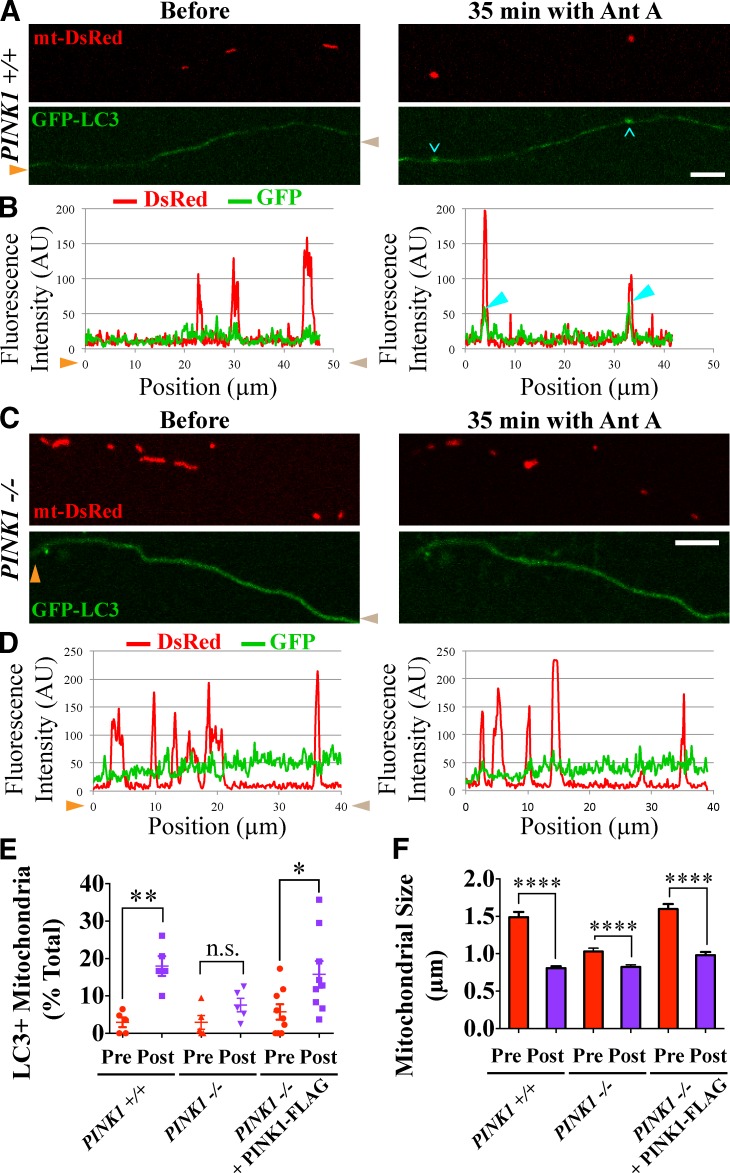
To minimize oxidative damage to the cell, malfunctioning mitochondria need to be removed by mitophagy. In neuronal axons, mitochondrial damage may occur in distal regions, far from the soma where most lysosomal degradation is thought to occur. In this paper, we report that PINK1 and Parkin, two Parkinson’s disease–associated proteins, mediate local mitophagy of dysfunctional mitochondria in neuronal axons. To reduce cytotoxicity and mimic physiological levels of mitochondrial damage, we selectively damaged a subset of mitochondria in hippocampal axons. Parkin was rapidly recruited to damaged mitochondria in axons followed by formation of LC3-positive autophagosomes and LAMP1-positive lysosomes. In PINK1−/− axons, damaged mitochondria did not accumulate Parkin and failed to be engulfed in autophagosomes. Similarly, initiation of mitophagy was blocked in Parkin−/− axons. Our findings demonstrate that the PINK1–Parkin-mediated pathway is required for local mitophagy in distal axons in response to focal damage. Local mitophagy likely provides rapid neuroprotection against oxidative stress without a requirement for retrograde transport to the soma.
Overview
The claims and statistics of this paper haven’t been checked yet.
Run the check — free, no account needed. It reads the open-access text and checks the sources it cites.
Integrity signals
Registry
Cites
Statistics
Figures
Verification
Claims the paper makes
The claims and statistics of this paper haven’t been checked yet.
Run the check — free, no account needed. It reads the open-access text and checks the sources it cites.
Claims other papers make about this one
Each is checked against this paper’s own text: does it say what the citing paper says it does?
The cited source says what the claim attributes to it.
In the citing paper
“Axonal autophagy is dependent on specialized enzymatic apparatuses, including the PINK1-PRKN complex for localized mitophagy [24], KIF1A/UNC-104 for autophagosome formation at the synapse [22,25], and the HTT-HAP1 complex and MAPK8IP1/JIP1 for retrograde transport of autophagosomes [23,26].”
From Autophagy and ALS: mechanistic insights and therapeutic implications (2022) · cites this paper as [22]
Self-check
Percentages, sums and reported differences re-computed from the paper’s own numbers.
The self-check needs the paper’s full text.
Citations
Cites
NIH Image to ImageJ: 25 years of image analysis
Schneider, C. A., Rasband, W. S., & Eliceiri, K. W. (2012) · Nature Methods · doi:10.1038/nmeth.2089 · Cited by 64,638 · cited 1×
“…of Parkin on mitochondria before and after 15–20 min of Antimycin A (or mock) treatment, plots of fluorescence intensity versus distance along the axon were generated for both DsRed (mitochondria) and YFP (Parkin) channels using the line scan function of ImageJ software (Schneider et al., 2012).”
Autophagy: Renovation of Cells and Tissues
Mizushima, N., & Komatsu, M. (2011) · Cell · doi:10.1016/j.cell.2011.10.026 · Cited by 6,615 · cited 1×
“GFPLC3 is a cytosolic protein, but upon induction of autophagy, it gets lipidated and incorporated into autophagosomes forming distinct puncta (Mizushima and Komatsu, 2011).”
BackgroundParkin is recruited selectively to impaired mitochondria and promotes their autophagy
Narendra, D., Tanaka, A., Suen, D.-F., & Youle, R. J. (2008) · The Journal of Cell Biology · doi:10.1083/jcb.200809125 · Cited by 4,026 · cited 4×
“Unlike many cell lines where the entire mitochondrial network can be cleared by mitophagy (Narendra et al., 2008, 2010; Geisler et al., 2010), neurons are strictly dependent on mitochondrial ATP production (Almeida et al., 2001, 2004).”
InfluentialChronic systemic pesticide exposure reproduces features of Parkinson's disease
Betarbet, R. S., Sherer, T., MacKenzie, G. M., Garcia‐Osuna, M., Panov, A. V., & Greenamyre, J. T. (2000) · Nature Neuroscience · doi:10.1038/81834 · Cited by 3,770 · cited 1×
“…2006; Navarro et al., 2009) and PDlike symptoms caused by mitochondrial drugs, such as Rotenone and MPTP (1methyl4phenyl1,2,3,6tetrahydro pyridine; Betarbet et al., 2000; Przedborski et al., 2004), were the first lines of evidence linking mitochondrial dysfunction to the pathology of PD.”
Youle, R. J., & Narendra, D. P. (2011) · Nature Reviews Molecular Cell Biology · doi:10.1038/nrm3028 · Cited by 3,273 · cited 1×
“The final step of mitophagy involves of autophagosome/ lysosome fusion and enzymatic degradation of the mitochon drion (Youle and Narendra, 2011).”
Wallace, D. C. (2005) · Annual Review of Genetics · doi:10.1146/annurev.genet.39.110304.095751 · Cited by 3,185 · cited 1×
“Mitochondria, particularly when dysfunctional, produce excessive reactive oxygen species (ROS; Wallace, 2005) and must be removed by quality control pathways.”
PINK1 Is Selectively Stabilized on Impaired Mitochondria to Activate Parkin
Narendra, D. P., Jin, S. M., Tanaka, A., Suen, D.-F., Gautier, C. A., Shen, J., Cookson, M. R., & Youle, R. J. (2010) · PLoS Biology · doi:10.1371/journal.pbio.1000298 · Cited by 2,944 · cited 5×
“Therefore, to rescue the recruitment of Parkin to depolarized mitochon dria in PINK1/ axons, we expressed PINK1FLAG at low mitochondrial depolarization (Narendra et al., 2010).”
BackgroundInfluentialPINK1/Parkin-mediated mitophagy is dependent on VDAC1 and p62/SQSTM1
Geisler, S., Holmström, K. M., Skujat, D., Fiesel, F. C., Rothfuss, O. C., Kahle, P. J., & Springer, W. (2010) · Nature Cell Biology · doi:10.1038/ncb2012 · Cited by 2,835 · cited 3×
“Unlike many cell lines where the entire mitochondrial network can be cleared by mitophagy (Narendra et al., 2008, 2010; Geisler et al., 2010), neurons are strictly dependent on mitochondrial ATP production (Almeida et al., 2001, 2004).”
Autophagosome formation: core machinery and adaptations
Xie, Z., & Klionsky, D. J. (2007) · Nature Cell Biology · doi:10.1038/ncb1007-1102 · Cited by 2,237 · cited 1×
“Degradation of autophagosomal cargoes requires fusion of au tophagosomes with lysosomes to form autolysosomes (Xie and Klionsky, 2007), and it was suggested that autophagosomes would have to translocate to neuronal soma to fuse with ly sosomes (Cai et al., 2012).”
Drosophila pink1 is required for mitochondrial function and interacts genetically with parkin
Clark, I. E., Dodson, M. W., Jiang, C., Cao, J. H., Huh, J. R., Seol, J. H., Yoo, S. J., Hay, B. A., & Guo, M. (2006) · Nature · doi:10.1038/nature04779 · Cited by 1,788 · cited 1×
“Genetic studies have indicated that PINK1 acts upstream of Parkin in the regulation of mitochondrial integrity (Clark et al., 2006; Park et al., 2006), and stabilization of PINK1 on the outer mitochondrial membrane is essential for Parkin re cruitment in nonneuronal cells (Geisler et al., 2010;…”
Cited by
Sorted by citations
Guidelines for the use and interpretation of assays for monitoring autophagy (4th edition) 1
Klionsky, D. J., Abdel-Aziz, A. K., Abdelfatah, S., Abdellatif, M., Abdoli, A., Abel, S., Abeliovich, H., Abildgaard, M. H., Abudu, Y. P., Acevedo-Arozena, A., et al. (2021) · Autophagy · doi:10.1080/15548627.2020.1797280 · Cited by 2,897
The Roles of PINK1, Parkin, and Mitochondrial Fidelity in Parkinson’s Disease
Pickrell, A. M., & Youle, R. J. (2015) · Neuron · doi:10.1016/j.neuron.2014.12.007 · Cited by 2,310
“Physiological Triggers of Parkin Translocation beyond CCCP It is experimentally convenient in cultured cell lines, in primary neurons (Ashrafi et al., 2014) and in induced pluripotent stem cells (iPSCs) differentiated into neurons (Rakovic et al.”
BackgroundMolecular mechanisms and physiological functions of mitophagy
Onishi, M., Yamano, K., Sato, M., Matsuda, N., & Okamoto, K. (2021) · The EMBO Journal · doi:10.15252/embj.2020104705 · Cited by 1,469
“Because CCCP is highly toxic and induces non-physiological levels of mitochondrial damage especially in neurons, antimycin A is often used to induce mitophagy in neuronal cells (Cai et al , 2012; Ashrafi et al , 2014).”
Selective neuronal vulnerability in Parkinson disease
Surmeier, D. J., Obeso, J. A., & Halliday, G. M. (2017) · Nature Reviews Neuroscience · doi:10.1038/nrn.2016.178 · Cited by 1,116
Compromised autophagy and neurodegenerative diseases
Menzies, F. M., Fleming, A., & Rubinsztein, D. C. (2015) · Nature Reviews Neuroscience · doi:10.1038/nrn3961 · Cited by 851
Metadata
- Authors
- Ashrafi, G., Schlehe, J. S., LaVoie, M. J., & Schwarz, T. L.
- Affiliations
- Boston Children's Hospital (US)
- Brigham and Women's Hospital (US)
- Corresponding author
- Schwarz, Thomas L.
- Venue
- Journal of Cell Biology
- Publisher
- Rockefeller University Press
- Published
- 2014-08-25
- Volume
- 206
- Issue
- 5
- Pages
- 655-670
- ISSN
- 0021-9525 (ISSN-L)
- 1540-8140
- PMC
- PMC4151150
- OpenAlex
- W1992264711
- Cited by
- 502
- References
- 65
- Citations by year
- 2026: 18 · 2025: 22 · 2024: 39 · 2023: 25 · 2022: 39 · 2021: 53 · 2020: 53 · 2019: 51 · 2018: 49 · 2017: 49 · 2016: 51 · 2015: 46 · 2014: 7
- FWCI
- 38.33
- Type
- journal article
- Language
- en
- Open access
- hybrid
- doi.org
- Licence
- cc-by-nc-sa
- Locations
- The Journal of Cell Biology (publishedVersion, cc-by-nc-sa)
- PubMed Central (publishedVersion, cc-by-nc-sa)
- PubMed (publishedVersion)
- Digital Access to Scholarship at Harvard (DASH) (Harvard University) (submittedVersion, cc-by)
- Funders
- National Institute of General Medical Sciences (GM069808, R01GM069808)
- National Institute of Neurological Disorders and Stroke (R21NS069949, R01NS065013, NS065013, NS069949)
- Eunice Kennedy Shriver National Institute of Child Health and Human Development (HD-01866, P30HD018655)
- Topics
- Life Sciences › Biochemistry, Genetics and Molecular Biology › Cell Biology › Autophagy in Disease and Therapy
- Health Sciences › Medicine › Clinical Neurology › Parkinson's Disease Mechanisms and Treatments
- Life Sciences › Biochemistry, Genetics and Molecular Biology › Molecular Biology › Ubiquitin and proteasome pathways
- Keywords
- mitophagy, PINK1, Parkin, axons, mitochondrial damage, Parkinson's disease, autophagosomes, lysosomes, oxidative stress, neuroprotection, hippocampal neurons, retrograde transport, mitochondrial quality control
- MeSH terms
- PTEN-Induced Putative Kinase, Animals, Antimycin A, Autophagy, Axons, Cells, Cultured, Female, Lysosomes, Mice, Inbred C57BL, Microtubule-Associated Proteins, Mitochondria, Phagosomes, Protein Kinases, Veratridine, Rats, Sprague-Dawley, Mice, Knockout, Rats, Long-Evans, Protein Transport, Ubiquitin-Protein Ligases, Mice, Rats, Membrane Potential, Mitochondrial, Mice, 129 Strain, Mitophagy
About these checks
Registry, retraction, Cites and statistics results are computed, not judged, with one exception: a printed reference that no index lists is read once by a model before it counts as a citation error. Claims are extracted by a model and kept only when their quote appears verbatim in the text; each cited source is then checked, with a model’s help, for whether it says what the claim relies on. Those verdicts can be wrong — read the claim’s quote and the cited source before relying on one.
Statistics and arithmetic are recomputed, not judged.
Confidence bands are shown only for fields calibrated on our annotated test set. None is calibrated yet, so no band is shown.
What counts as a claim ›How we measure confidence ›How we check this ›
Are you an author, or do you see a problem with this page? Request a review
