

The DOI matches its Crossref record; 35 of the 35 references it cites were found in a registry or an index.
Interleukin-18 (Interferon-γ–inducing Factor) Is Produced by Osteoblasts and Acts Via Granulocyte/Macrophage Colony-stimulating Factor and Not Via Interferon-γ to Inhibit Osteoclast Formation
Open accessAbstract
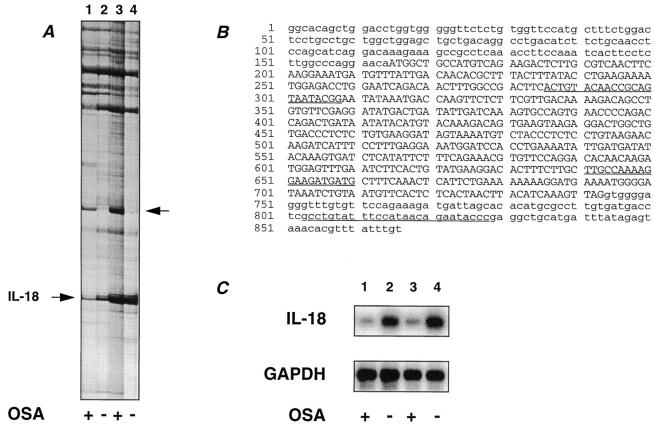
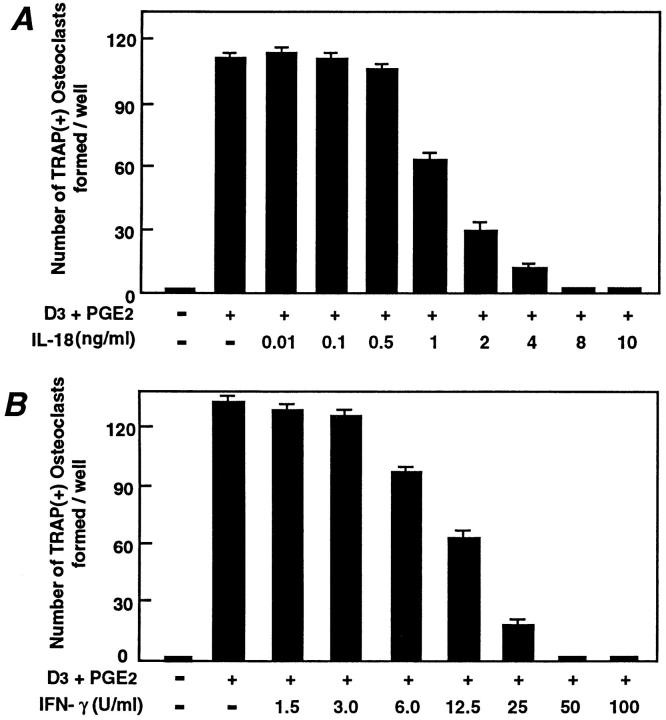
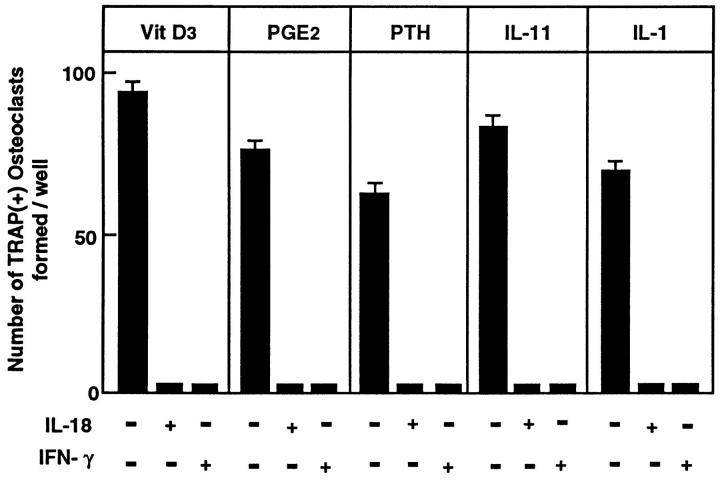
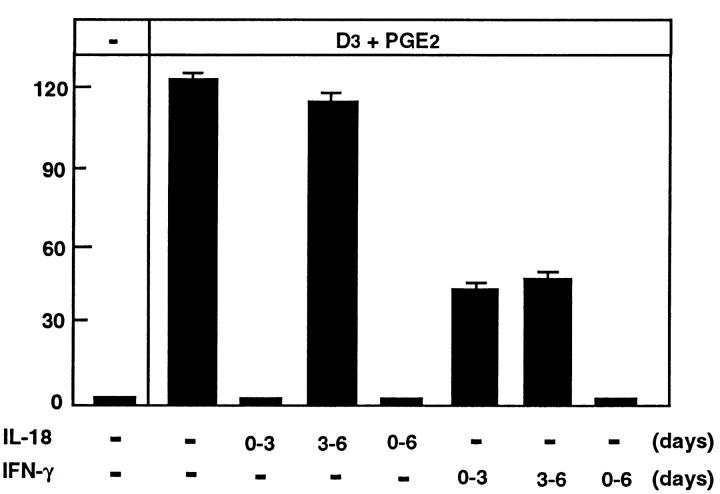
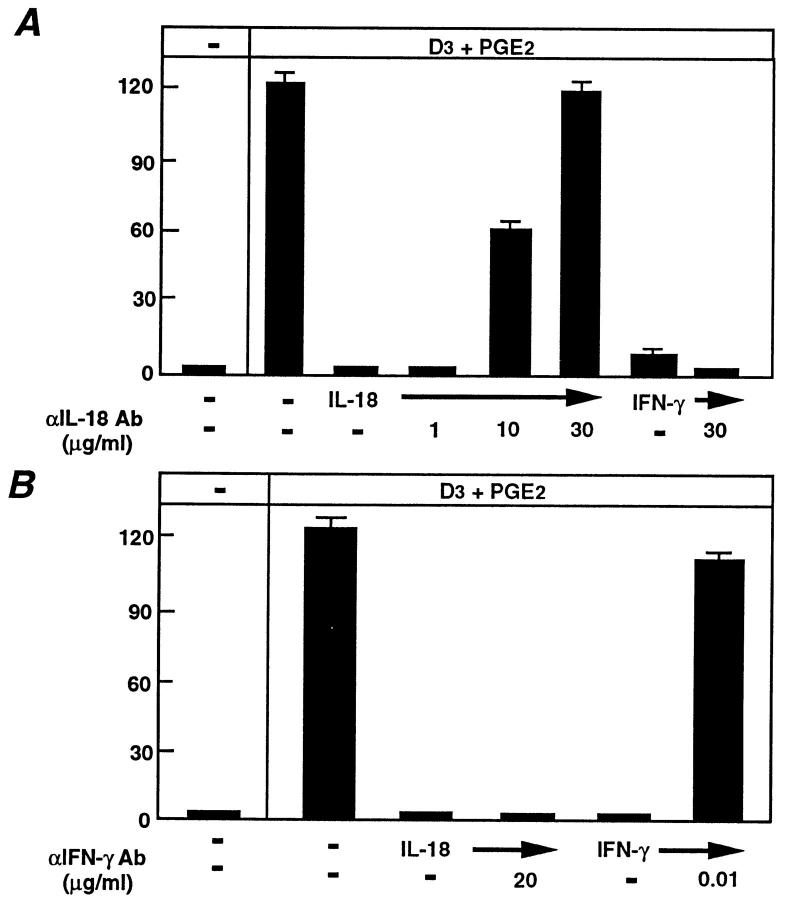
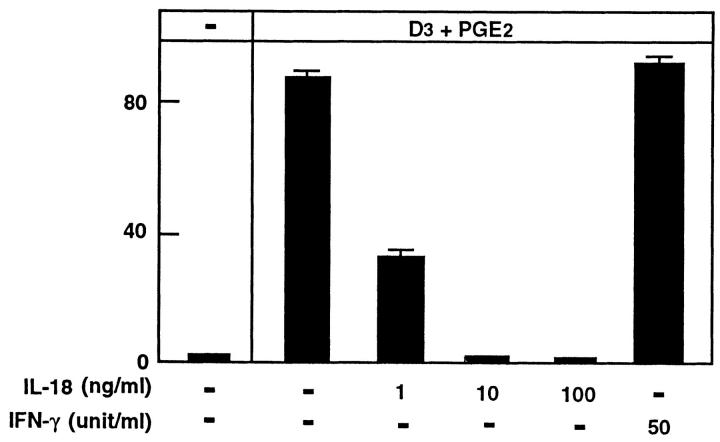
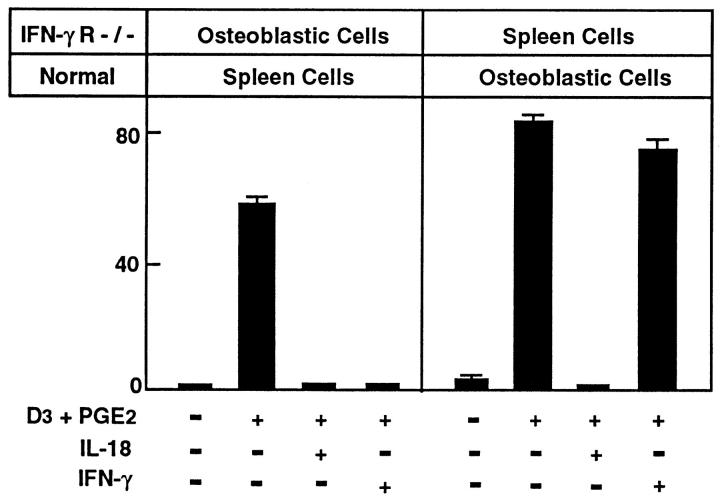
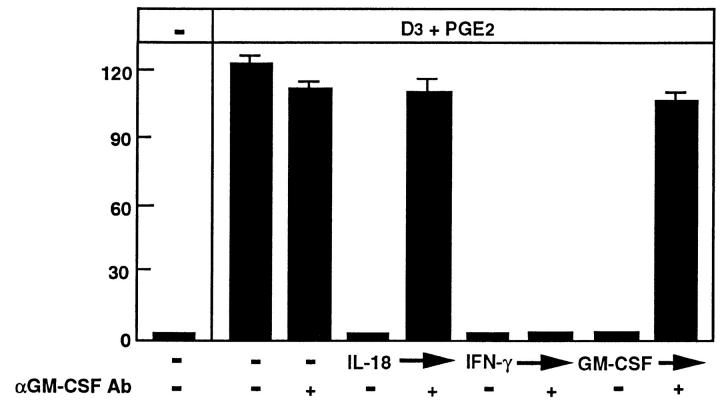
We have established by differential display polymerase chain reaction of mRNA that interleukin (IL)-18 is expressed by osteoblastic stromal cells. The stromal cell populations used for comparison differed in their ability to promote osteoclast-like multinucleated cell (OCL) formation. mRNA for IL-18 was found to be expressed in greater abundance in lines that were unable to support OCL formation than in supportive cells. Recombinant IL-18 was found to inhibit OCL formation in cocultures of osteoblasts and hemopoietic cells of spleen or bone marrow origin. IL-18 inhibited OCL formation in the presence of osteoclastogenic agents including 1α,25-dihydroxyvitamin D3, prostaglandin E2, parathyroid hormone, IL-1, and IL-11. The inhibitory effect of IL-18 was limited to the early phase of the cocultures, which coincides with proliferation of hemopoietic precursors. IL-18 has been reported to induce interferon-γ (IFN-γ) and granulocyte/macrophage colony-stimulating factor (GM–CSF) production in T cells, and both agents also inhibit OCL formation in vitro. Neutralizing antibodies to GM–CSF were able to rescue IL-18 inhibition of OCL formation, whereas neutralizing antibodies to IFN-γ did not. In cocultures with osteoblasts and spleen cells from IFN-γ receptor type II–deficient mice, IL-18 was found to inhibit OCL formation, indicating that IL-18 acted independently of IFN-γ production: IFN-γ had no effect in these cocultures. Additionally, in cocultures in which spleen cells were derived from receptor-deficient mice and osteoblasts were from wild-type mice and vice versa, we identified that the target cells for IFN-γ inhibition of OCL formation were the hemopoietic cells. The work provides evidence that IL-18 is expressed by osteoblasts and inhibits OCL formation via GM–CSF production and not via IFN-γ production.
Overview
The claims and statistics of this paper haven’t been checked yet.
Run the check — free, no account needed. It reads the open-access text and checks the sources it cites.
Integrity signals
Registry
Cites
Statistics
Figures
Verification
Claims the paper makes
The claims and statistics of this paper haven’t been checked yet.
Run the check — free, no account needed. It reads the open-access text and checks the sources it cites.
Claims other papers make about this one
Each is checked against this paper’s own text: does it say what the citing paper says it does?
The cited source doesn’t support the claim as written.
In the citing paper
“Using co-cultures of osteoblasts and hematopoietic cells, Udagawa and associates found that IL-18 inhibited osteoclastogenesis by downregulating osteoblast production of M-CSF [48].”
From Osteoclasts and Microgravity (2020) · cites this paper as [48]
Checked by a reasoning model — may be wrong.
Experimental — accuracy not yet measured
Self-check
Percentages, sums and reported differences re-computed from the paper’s own numbers.
The self-check needs the paper’s full text.
Citations
Cites
Differential Display of Eukaryotic Messenger RNA by Means of the Polymerase Chain Reaction
Liang, P., & Pardee, A. B. (1992) · Science · doi:10.1126/science.1354393 · Cited by 4,964 · cited 3×
“To identify stromal cell genes potentially involved in osteoclastogenesis, we have used differential display of eukaryotic mRNA (ddPCR) (21) to identify genes differentially expressed between osteoclastogenic supportive and nonsupportive stromal cell lines.”
BackgroundMethodCloning of a new cytokine that induces IFN-γ production by T cells
Okamura, H., Tsutsui, H., Komatsu, T., Yutsudo, M., Hakura, A., Tanimoto, T., Torigoe, K., Okura, T., Nukada, Y., Hattori, K., et al. (1995) · Nature · doi:10.1038/378088a0 · Cited by 2,602 · cited 7×
“Recombinant mouse IL-18 dose-dependently inhibited OCL formation, giving maximal inhibition at 8 ng/ml (Fig. 2 A); this dose response to IL-18 is very similar to that in other biological systems ( 22 ).”
BackgroundMethodInfluentialSelf-citationTso, J. Y., Sun, X.-H., Kao, T., Reece, K. S., & Wu, R. (1985) · Nucleic Acids Research · doi:10.1093/nar/13.7.2485 · Cited by 1,791
Immune Response in Mice that Lack the Interferon-γ Receptor
Huang, S., Hendriks, W. J. A. J., Althage, A., Hemmi, S., Bluethmann, H., Kamijo, R., Vilček, J., Zinkernagel, R. M., & Aguet, M. (1993) · Science · doi:10.1126/science.8456301 · Cited by 1,551 · cited 2×
“We thank Professor M. Auget (Swiss Institute for Experimental Cancer Research, Switzerland) and Dr. P. Tipping (Monash Medical Centre, Australia) for access to the IFN- g type II receptor knockout mice (IFN- g R 2 / 2 ) ( 24 ).”
MethodModulation of Osteoclast Differentiation
Suda, T., Takahashi, N., & Martin, T. J. (1992) · Endocrine Reviews · doi:10.1210/edrv-13-1-66 · Cited by 1,004 · cited 2×
“These cells are multinucleated and express the OCL characteristics of TRAP activity and calcitonin receptors, and have the capacity to resorb bone (8).”
BackgroundSelf-citationOSTEOBLASTIC CELLS ARE INVOLVED IN OSTEOCLAST FORMATION
Takahashi, N., Akatsu, T., Udagawa, N., Sasaki, T., Yamaguchi, A., Moseley, J. M., Martin, T. J., & Suda, T. (1988) · Endocrinology · doi:10.1210/endo-123-5-2600 · Cited by 934 · cited 2×
“The expression of calcitonin receptors was also assessed by autoradiography using [ 125 I]salmon calcitonin as described ( 25 ).”
MethodSelf-citationSoluble interleukin-6 receptor triggers osteoclast formation by interleukin 6.
Tamura, T., Udagawa, N., Takahashi, N., Miyaura, C., Tanaka, S., Yamada, Y., Koishihara, Y., Ohsugi, Y., Kumaki, K., & Taga, T. (1993) · Proceedings of the National Academy of Sciences · doi:10.1073/pnas.90.24.11924 · Cited by 828
Self-citationUshio, S., Namba, M., Okura, T., Hattori, K., Nukada, Y., Akita, K., Tanabe, F., Konishi, K., Micallef, M. J., Fujii, M., et al. (1996) · The Journal of Immunology · doi:10.4049/jimmunol.156.11.4274 · Cited by 624
Self-citationAdvances in Bone Biology: The Osteoclast*
Roodman, G. D. (1996) · Endocrine Reviews · doi:10.1210/edrv-17-4-308 · Cited by 553 · cited 3×
“Although IFN-g is known to inhibit osteoclast formation in vitro ( 4 ), the present experiments exclude IFN-g as an intermediate in the inhibitory effect of IL-18 on osteoclast formation, for a number of reasons.”
BackgroundResultInfluentialUdagawa, N., Takahashi, N., Akatsu, T., Sasaki, T., Yamaguchi, A., KODAMA, H., Martin, T. J., & Suda, T. (1989) · Endocrinology · doi:10.1210/endo-125-4-1805 · Cited by 492 · cited 1×
“We previously reported that bone marrow–derived stromal cell lines, MC3T3-G2/PA6 and ST2, had the capacity to support OCL formation in cocultures with hemopoietic cells (18).”
BackgroundSelf-citation
Cited by
Sorted by citations
Manolagas, S. C. (2000) · Endocrine Reviews · doi:10.1210/edrv.21.2.0395 · Cited by 2,639
Cytokines in the pathogenesis of rheumatoid arthritis
McInnes, I. B., & Schett, G. A. (2007) · Nature reviews. Immunology · doi:10.1038/nri2094 · Cited by 2,576
Genetic regulation of osteoclast development and function
Teitelbaum, S. L., & Ross, F. P. (2003) · Nature Reviews Genetics · doi:10.1038/nrg1122 · Cited by 1,720
Kotake, S., Udagawa, N., Takahashi, N., Matsuzaki, K., Itoh, K., Ishiyama, S., Saito, S., Inoue, K., Kamatani, N., Gillespie, M. T., et al. (1999) · Journal of Clinical Investigation · doi:10.1172/jci5703 · Cited by 1,709
“Adherent cells were fixed and stained for TRAP, and the number of TRAP-positive OCLs was scored as described (34).”
BackgroundMethodInfluentialSelf-citationThe Role of Inflammatory and Anti-Inflammatory Cytokines in the Pathogenesis of Osteoarthritis
Wojdasiewicz, P., Poniatowski, Ł. A., & Szukiewicz, D. (2014) · Mediators of Inflammation · doi:10.1155/2014/561459 · Cited by 1,608
Metadata
- Authors
- Udagawa, N., Horwood, N. J., Elliott, J., Mackay, A., Owens, J., Okamura, H., Kurimoto, M., Chambers, T. J., Martin, T. J., & Gillespie, M. T.
- Affiliations
- Hyogo Medical University (JP)
- Venue
- The Journal of Experimental Medicine
- Publisher
- Rockefeller University Press
- Published
- 1997-03-17
- Volume
- 185
- Issue
- 6
- Pages
- 1005-1012
- ISSN
- 0022-1007 (ISSN-L)
- 1540-9538
- PMC
- PMC2196233
- OpenAlex
- W2119656862
- Cited by
- 378
- References
- 35
- Citations by year
- 2026: 1 · 2025: 2 · 2024: 5 · 2023: 7 · 2022: 2 · 2021: 6 · 2020: 7 · 2019: 3 · 2018: 3 · 2017: 4 · 2016: 7 · 2015: 3 · 2014: 10 · 2013: 9 · 2012: 13
- FWCI
- 9.02
- Type
- journal article
- Language
- en
- Open access
- green
- www.ncbi.nlm.nih.gov
- Licence
- cc-by-nc-sa
- Locations
- The Journal of Experimental Medicine (publishedVersion)
- PubMed Central (publishedVersion, cc-by-nc-sa)
- PubMed (publishedVersion)
- St George's Online Research Archive (St George's University of London) (acceptedVersion)
- Minerva Access (University of Melbourne) (submittedVersion, cc-by-nc-sa)
- UEA Digital Repository (University of East Anglia) (submittedVersion)
- Topics
- Life Sciences › Biochemistry, Genetics and Molecular Biology › Molecular Biology › Bone Metabolism and Diseases
- Health Sciences › Medicine › Rheumatology › Rheumatoid Arthritis Research and Therapies
- Health Sciences › Medicine › Rheumatology › Osteomyelitis and Bone Disorders Research
- Keywords
- IL-18, osteoblasts, osteoclastogenesis, osteoclast-like multinucleated cells, GM-CSF, interferon-gamma, bone remodeling, osteoclastogenesis inhibition
- MeSH terms
- Interferon gamma Receptor, Animals, Animals, Newborn, Base Sequence, Bone Marrow Cells, Cell Differentiation, Interferon-gamma, Male, Mice, Inbred C57BL, Molecular Sequence Data, Osteoblasts, Osteoclasts, Recombinant Proteins, RNA, Messenger, Transcription, Genetic, Polymerase Chain Reaction, Granulocyte-Macrophage Colony-Stimulating Factor, Cytokines, Interleukin-11, Receptors, Interferon, Mice, Knockout, Coculture Techniques, Interleukin-18, Mice
About these checks
Registry, retraction, Cites and statistics results are computed, not judged, with one exception: a printed reference that no index lists is read once by a model before it counts as a citation error. Claims are extracted by a model and kept only when their quote appears verbatim in the text; each cited source is then checked, with a model’s help, for whether it says what the claim relies on. Those verdicts can be wrong — read the claim’s quote and the cited source before relying on one.
Statistics and arithmetic are recomputed, not judged.
Confidence bands are shown only for fields calibrated on our annotated test set. None is calibrated yet, so no band is shown.
What counts as a claim ›How we measure confidence ›How we check this ›
Are you an author, or do you see a problem with this page? Request a review
