

The DOI matches its Crossref record; 41 of the 44 references it cites were found in a registry or an index.
Synergism of cytotoxic T lymphocyte-associated antigen 4 blockade and depletion of CD25+ regulatory T cells in antitumor therapy reveals alternative pathways for suppression of autoreactive cytotoxic T lymphocyte responses
Open accessAbstract
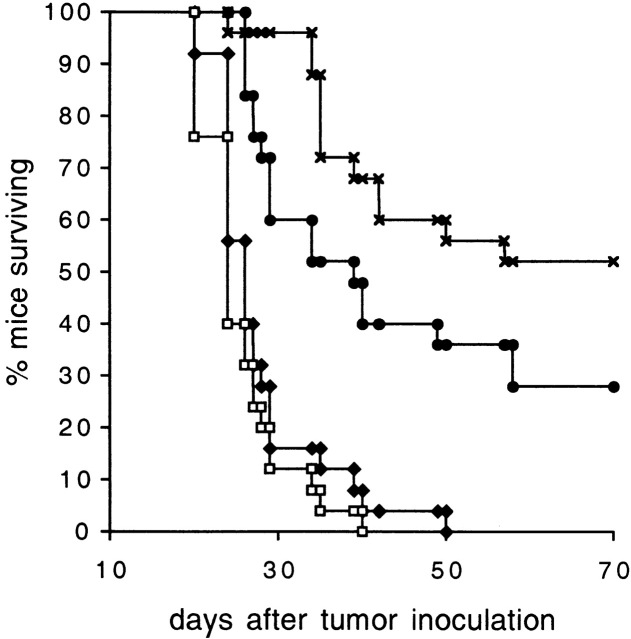
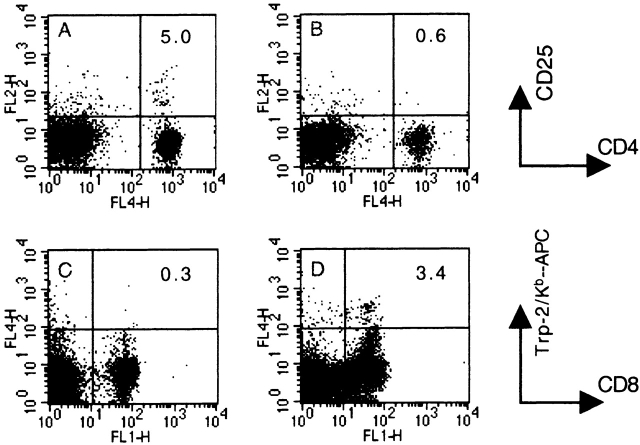
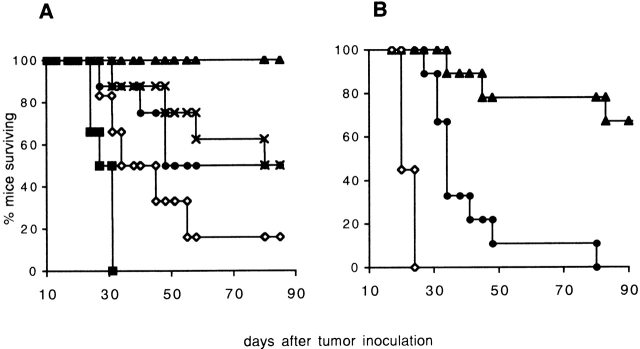
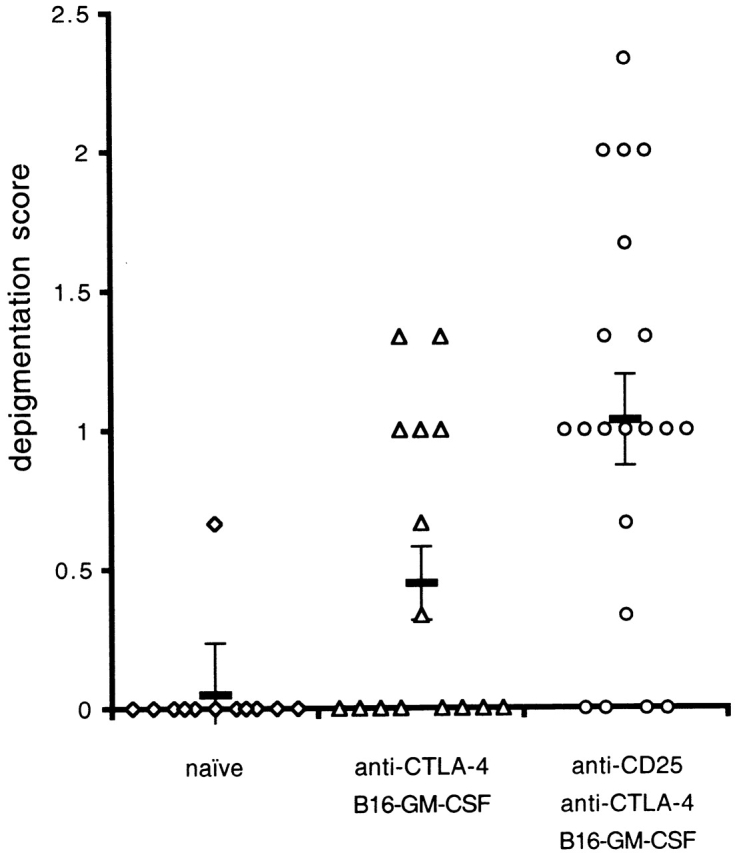
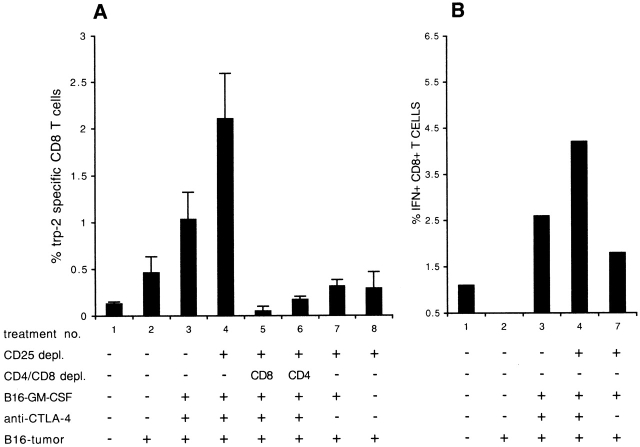
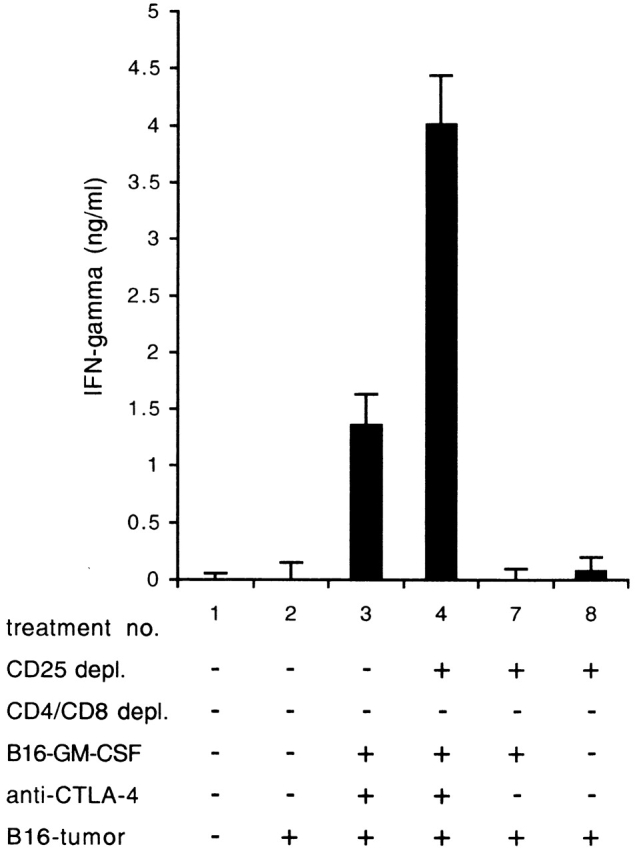
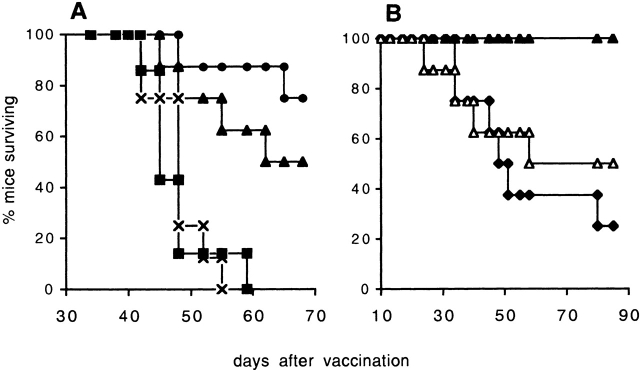
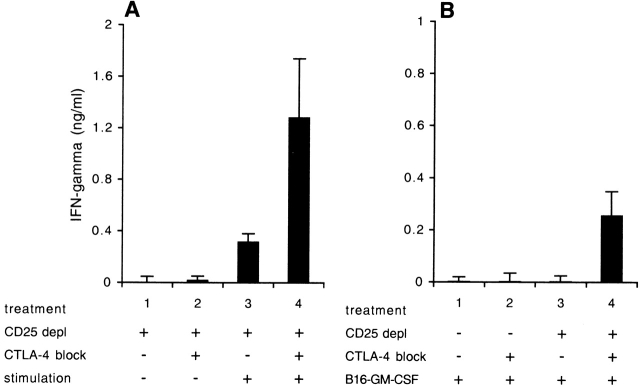
Therapeutic efficacy of a tumor cell–based vaccine against experimental B16 melanoma requires the disruption of either of two immunoregulatory mechanisms that control autoreactive T cell responses: the cytotoxic T lymphocyte–associated antigen (CTLA)-4 pathway or the CD25+ regulatory T (Treg) cells. Combination of CTLA-4 blockade and depletion of CD25+ Treg cells results in maximal tumor rejection. Efficacy of the antitumor therapy correlates with the extent of autoimmune skin depigmentation as well as with the frequency of tyrosinase-related protein 2180–188–specific CTLs detected in the periphery. Furthermore, tumor rejection is dependent on the CD8+ T cell subset. Our data demonstrate that the CTL response against melanoma antigens is an important component of the therapeutic antitumor response and that the reactivity of these CTLs can be augmented through interference with immunoregulatory mechanisms. The synergism in the effects of CTLA-4 blockade and depletion of CD25+ Treg cells indicates that CD25+ Treg cells and CTLA-4 signaling represent two alternative pathways for suppression of autoreactive T cell immunity. Simultaneous intervention with both regulatory mechanisms is therefore a promising concept for the induction of therapeutic antitumor immunity.
Overview
The claims and statistics of this paper haven’t been checked yet.
Run the check — free, no account needed. It reads the open-access text and checks the sources it cites.
Integrity signals
Registry
Cites
Statistics
Figures
Verification
Claims the paper makes
The claims and statistics of this paper haven’t been checked yet.
Run the check — free, no account needed. It reads the open-access text and checks the sources it cites.
Claims other papers make about this one
Each is checked against this paper’s own text: does it say what the citing paper says it does?
In the citing paper
“CD8+ T cells and CD4+ effector T cells have demonstrated anti-cancer potential, while regulatory T cells (CD4+ CD25+ Tregs) have been shown to be able to contribute to the attenuated immune response exhibited in cancer [65,66].”
From Current and Future Trends of Colorectal Cancer Treatment: Exploring Advances in Immunotherapy (2024) · cites this paper as [66]
Self-check
Percentages, sums and reported differences re-computed from the paper’s own numbers.
The self-check needs the paper’s full text.
Citations
Cites
Park, J., Adoro, S., Guinter, T. I., Erman, B., Alag, A., Catálfamo, M., Kimura, M. Y., Cui, Y., Lucas, P. J., Gress, R. E., et al. (2010) · Nature Immunology · doi:10.1038/ni.1840 · Cited by 5,835
Sakaguchi, S., Sakaguchi, N., Asano, M., Itoh, M., & Toda, M. (1995) · The Journal of Immunology · doi:10.4049/jimmunol.155.3.1151 · Cited by 5,608
Phenotypic Analysis of Antigen-Specific T Lymphocytes
Altman, J. D., Moss, P. A. H., Goulder, P. J. R., Barouch, D. H., McHeyzer-Williams, M. G., Bell, J. I., McMichael, A. J., & Davis, M. M. (1996) · Science · doi:10.1126/science.274.5284.94 · Cited by 3,544 · cited 1×
“H-2K b tetramers were produced as described previously (20, 21) and stored frozen in Tris-buffered saline/16% glycerol/0.”
MethodThornton, A. M., & Shevach, E. M. (1998) · The Journal of Experimental Medicine · doi:10.1084/jem.188.2.287 · Cited by 2,637
CD28 and CTLA-4 have opposing effects on the response of T cells to stimulation.
Krummel, M. F., & Allison, J. P. (1995) · The Journal of experimental medicine · doi:10.1084/jem.182.2.459 · Cited by 2,245 · cited 2×
“Anderson Cancer Center, Houston, TX), GM-CSF‐producing B16 cell lines BL6/GM-E, BL6/GM18 (18), B16/B7.1 (18), 9H10 ( 19 ), and PC61 (American Type Culture Collection) were cultured in Iscove’s IMDM (BioWhittaker) supplemented with 1 U/ml penicillin, 1 � g/ml streptomycin, 2 � M L -glutamine, 20 � M � -mercaptoethanol…”
MethodSelf-citationTakahashi, T., Tagami, T., Yamazaki, S., Uede, T., Shimizu, J., Sakaguchi, N., Mak, T. W., & Sakaguchi, S. (2000) · The Journal of Experimental Medicine · doi:10.1084/jem.192.2.303 · Cited by 2,233
CTLA-4 can function as a negative regulator of T cell activation
Walunas, T. L., Lenschow, D. J., Bakker, C. Y., Linsley, P. S., Freeman, G. J., Green, J. M., Thompson, C. B., & Bluestone, J. A. (1994) · Immunity · doi:10.1016/1074-7613(94)90071-x · Cited by 2,222
Read, S., Malmström, V., & Powrie, F. M. (2000) · The Journal of Experimental Medicine · doi:10.1084/jem.192.2.295 · Cited by 2,206
Salomon, B. L., Lenschow, D. J., Rhee, L., Ashourian, N., Singh, B., Sharpe, A. H., & Bluestone, J. A. (2000) · Immunity · doi:10.1016/s1074-7613(00)80195-8 · Cited by 2,058
Takahashi, T., Kuniyasu, Y., Toda, M., Sakaguchi, N., Itoh, M., Iwata, M., Shimizu, J., & Sakaguchi, S. (1998) · International Immunology · doi:10.1093/intimm/10.12.1969 · Cited by 1,566
Cited by
Sorted by citations
Sakaguchi, S. (2003) · Annual Review of Immunology · doi:10.1146/annurev.immunol.21.120601.141122 · Cited by 3,315
Sakaguchi, S. (2005) · Nature Immunology · doi:10.1038/ni1178 · Cited by 2,669
TRANSFORMING GROWTH FACTOR-β REGULATION OF IMMUNE RESPONSES
Li, M. O., Wan, Y. Y., Sanjabi, S., Robertson, A.-K. L., & Flavell, R. A. (2005) · Annual Review of Immunology · doi:10.1146/annurev.immunol.24.021605.090737 · Cited by 2,264
CD4+CD25+ suppressor T cells: more questions than answers
Shevach, E. M. (2002) · Nature reviews. Immunology · doi:10.1038/nri821 · Cited by 2,097
Regulatory T cells, tumour immunity and immunotherapy
Zou, W. (2006) · Nature reviews. Immunology · doi:10.1038/nri1806 · Cited by 2,135
Metadata
- Authors
- Sutmuller, R. P. M., van Duivenvoorde, L. M., van Elsas, A., Schumacher, T. N. M., Wildenberg, M. E., Allison, J. P., Toes, R. E. M., Offringa, R., & Melief, C. J. M.
- Affiliations
- Leiden University Medical Center (NL)
- aDepartment of Immunohematology and Blood Transfusion, Tumor Immunology Lab, E3-Q, Leiden University Medical Center, 2300 RC Leiden, Netherlands
- The Netherlands Cancer Institute (NL)
- University of California, Berkeley (US)
- Venue
- The Journal of Experimental Medicine
- Publisher
- Rockefeller University Press
- Published
- 2001-09-17
- Volume
- 194
- Issue
- 6
- Pages
- 823-832
- ISSN
- 0022-1007 (ISSN-L)
- 1540-9538
- PMC
- PMC2195955
- OpenAlex
- W2148911309
- Cited by
- 1,008
- References
- 44
- Citations by year
- 2026: 3 · 2025: 7 · 2024: 8 · 2023: 12 · 2022: 15 · 2021: 15 · 2020: 18 · 2019: 11 · 2018: 12 · 2017: 25 · 2016: 22 · 2015: 36 · 2014: 26 · 2013: 48 · 2012: 41
- FWCI
- 13.30
- Type
- journal article
- Language
- en
- Open access
- green
- www.ncbi.nlm.nih.gov
- Licence
- cc-by-nc-sa
- Locations
- The Journal of Experimental Medicine (publishedVersion)
- PubMed Central (publishedVersion, cc-by-nc-sa)
- PubMed (publishedVersion)
- Data Archiving and Networked Services (DANS) (submittedVersion)
- Pure Amsterdam UMC (submittedVersion)
- Topics
- Life Sciences › Immunology and Microbiology › Immunology › T-cell and B-cell Immunology
- Health Sciences › Medicine › Oncology › Cancer Immunotherapy and Biomarkers
- Life Sciences › Immunology and Microbiology › Immunology › Immunotherapy and Immune Responses
- Keywords
- CTLA-4 blockade, CD25+ regulatory T cells, Treg depletion, antitumor immunity, B16 melanoma, CD8+ T cells, tyrosinase-related protein 2, immune regulation, tumor rejection
- MeSH terms
- Abatacept, Animals, Antibodies, Monoclonal, Antigens, Differentiation, Antigens, Neoplasm, Female, Immunotherapy, Lymphocyte Depletion, Melanoma, Experimental, Mice, Inbred C57BL, Mice, Nude, T-Lymphocytes, Cytotoxic, Tumor Cells, Cultured, Receptors, Interleukin-2, Biomarkers, CD4-Positive T-Lymphocytes, Antigens, CD, Immunoconjugates, Intramolecular Oxidoreductases, Mice, CTLA-4 Antigen
About these checks
Registry, retraction, Cites and statistics results are computed, not judged, with one exception: a printed reference that no index lists is read once by a model before it counts as a citation error. Claims are extracted by a model and kept only when their quote appears verbatim in the text; each cited source is then checked, with a model’s help, for whether it says what the claim relies on. Those verdicts can be wrong — read the claim’s quote and the cited source before relying on one.
Statistics and arithmetic are recomputed, not judged.
Confidence bands are shown only for fields calibrated on our annotated test set. None is calibrated yet, so no band is shown.
What counts as a claim ›How we measure confidence ›How we check this ›
Are you an author, or do you see a problem with this page? Request a review
