

The DOI matches its Crossref record; 42 of the 42 references it cites were found in a registry or an index.
Heat Shock Protein 70 Promotes Cell Survival by Inhibiting Lysosomal Membrane Permeabilization
Open accessAbstract
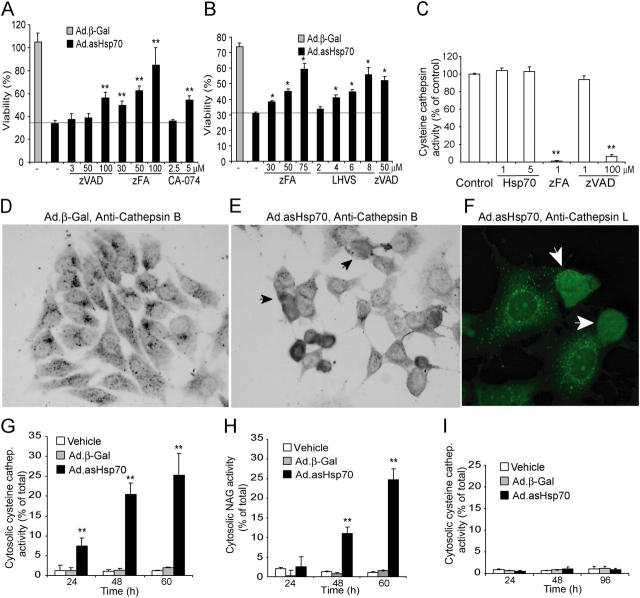
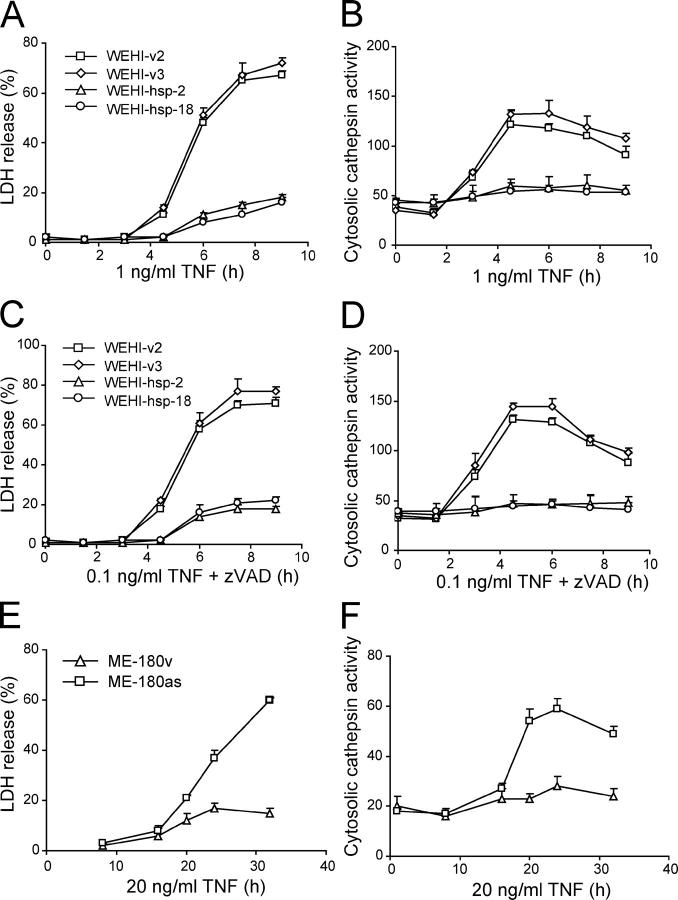
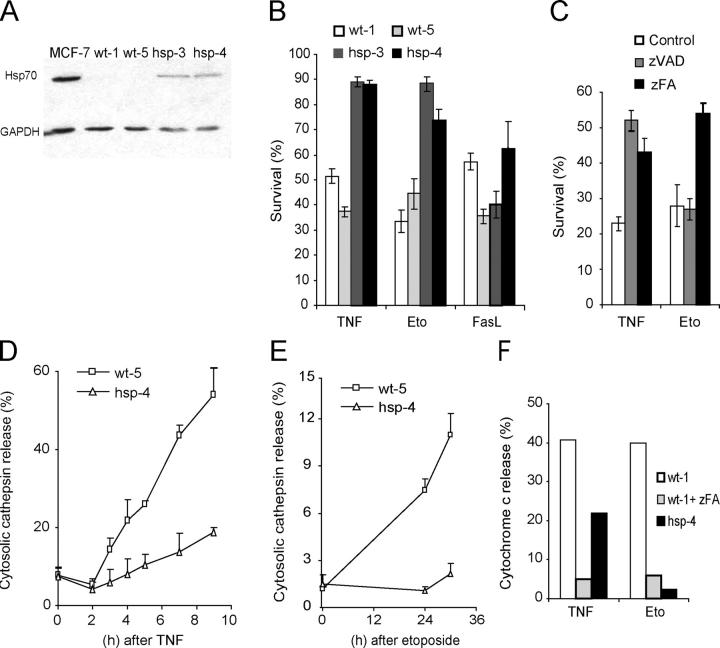
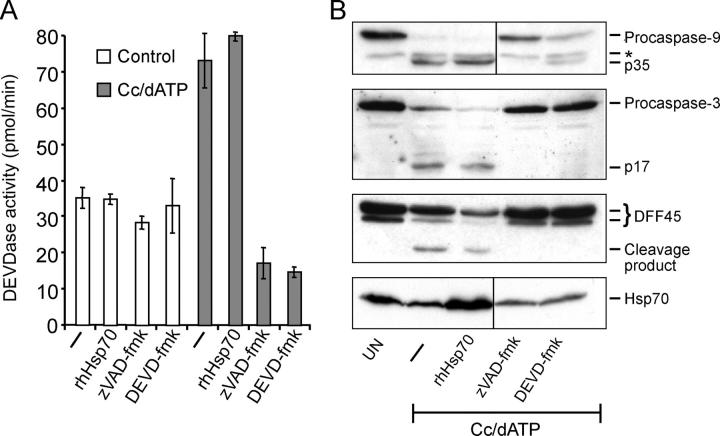
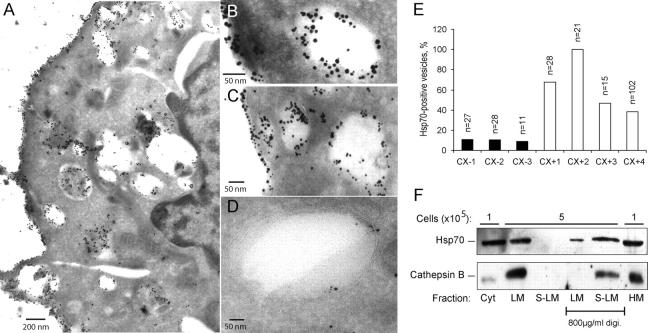
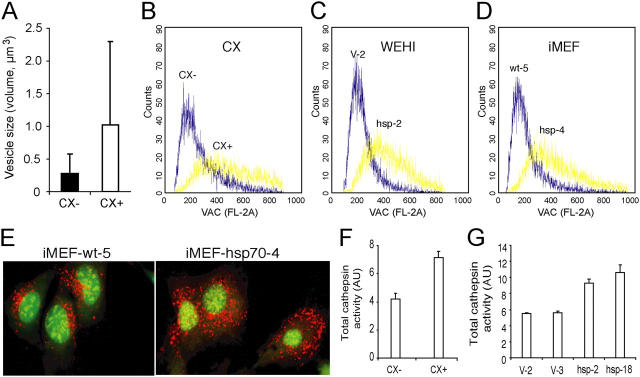
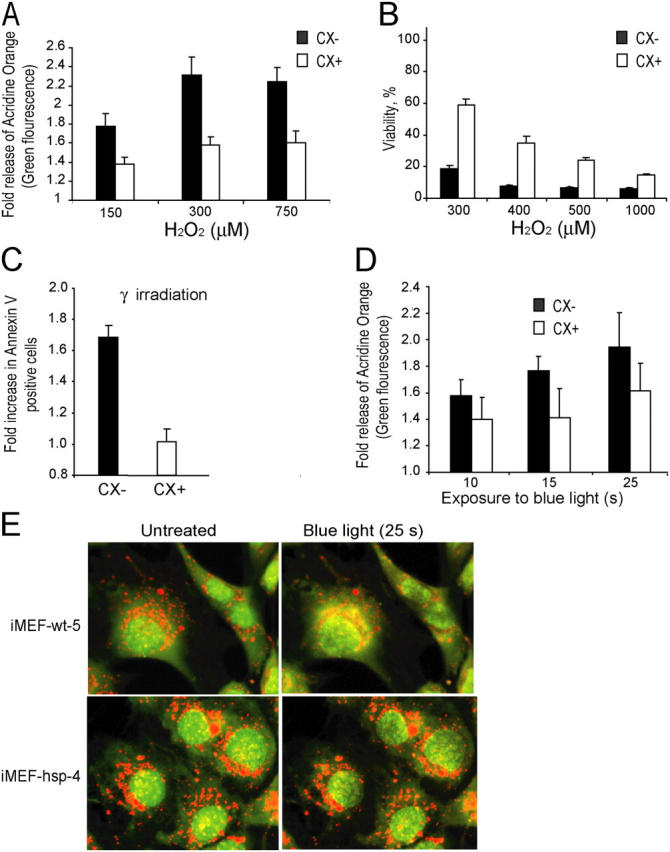
Heat shock protein 70 (Hsp70) is a potent survival protein whose depletion triggers massive caspase-independent tumor cell death. Here, we show that Hsp70 exerts its prosurvival function by inhibiting lysosomal membrane permeabilization. The cell death induced by Hsp70 depletion was preceded by the release of lysosomal enzymes into the cytosol and inhibited by pharmacological inhibitors of lysosomal cysteine proteases. Accordingly, the Hsp70-mediated protection against various death stimuli in Hsp70-expressing human tumor cells as well as in immortalized Hsp70 transgenic murine fibroblasts occurred at the level of the lysosomal permeabilization. On the contrary, Hsp70 failed to inhibit the cytochrome c–induced, apoptosome-dependent caspase activation in vitro and Fas ligand–induced, caspase-dependent apoptosis in immortalized fibroblasts. Immunoelectron microscopy revealed that endosomal and lysosomal membranes of tumor cells contained Hsp70. Permeabilization of purified endo/lysosomes by digitonin failed to release Hsp70, suggesting that it is physically associated with the membranes. Finally, Hsp70 positive lysosomes displayed increased size and resistance against chemical and physical membrane destabilization. These data identify Hsp70 as the first survival protein that functions by inhibiting the death-associated permeabilization of lysosomes.
Overview
The claims and statistics of this paper haven’t been checked yet.
Run the check — free, no account needed. It reads the open-access text and checks the sources it cites.
Integrity signals
Registry
Cites
Statistics
Figures
Verification
Claims the paper makes
The claims and statistics of this paper haven’t been checked yet.
Run the check — free, no account needed. It reads the open-access text and checks the sources it cites.
Claims other papers make about this one
Each is checked against this paper’s own text: does it say what the citing paper says it does?
In the citing paper
“Moreover, under physiological conditions, lysosomal membranes can be stabilized by altering lysosomal cholesterol content [788] or by boosting endogenous activity of heat shock protein family A (Hsp70) member 1A (HSPA1A; best known as HSP70) [789, 790].”
From Molecular mechanisms of cell death: recommendations of the nomenclature committee on cell death 2018. (2018) · cites this paper as [790]
Self-check
Percentages, sums and reported differences re-computed from the paper’s own numbers.
The self-check needs the paper’s full text.
Citations
Cites
Hanahan, D., & Weinberg, R. A. (2000) · Cell · doi:10.1016/s0092-8674(00)81683-9 · Cited by 29,219
Control of inositol 1,4,5-trisphosphate-induced Ca2+ release by cytosolic Ca2+
Bootman, M. D., Missiaen, L., Parys, J. B., SMEDT, H. D., & Casteels, R. (1995) · Biochemical Journal · doi:10.1042/bj3060445 · Cited by 5,131
Four deaths and a funeral: from caspases to alternative mechanisms
Leist, M., & Jäättelä, M. (2001) · Nature Reviews Molecular Cell Biology · doi:10.1038/35085008 · Cited by 1,600
Organelle-specific initiation of cell death pathways
Ferri, K. F., & Kroemer, G. (2001) · Nature Cell Biology · doi:10.1038/ncb1101-e255 · Cited by 1,455
A Role for a 70-Kilodalton Heat Shock Protein in Lysosomal Degradation of Intracellular Proteins
Chiang, H.-L., Terlecky, S. R., Plant, C. P., & Dice, J. F. (1989) · Science · doi:10.1126/science.2799391 · Cited by 982
Heat-shock protein 70 antagonizes apoptosis-inducing factor
Ravagnan, L., Gurbuxani, S. K., Susín, S. A., Maisse, C., Daugas, É., Zamzami, N., Mak, T. W., Jäättelä, M., Penninger, J. M., Garrido, C., et al. (2001) · Nature Cell Biology · doi:10.1038/ncb0901-839 · Cited by 859
The Chaperone Function of hsp70 Is Required for Protection against Stress-Induced Apoptosis
Mosser, D., Caron, A., Bourget, L., Meriin, A. B., Sherman, M., Morimoto, R., & Massie, B. (2000) · Molecular and Cellular Biology · doi:10.1128/mcb.20.19.7146-7159.2000 · Cited by 768
Guicciardi, M. E., Deussing, J. M., Miyoshi, H., Bronk, S. F., Svingen, P. A., Peters, C., Kaufmann, S. H., & Gores, G. J. (2000) · Journal of Clinical Investigation · doi:10.1172/jci9914 · Cited by 710
Hsp70 exerts its anti‐apoptotic function downstream of caspase‐3‐like proteases
Jäättelä, M., Wissing, D., Kokholm, K., Kallunki, T., & Egeblad, M. (1998) · The EMBO Journal · doi:10.1093/emboj/17.21.6124 · Cited by 679
Foghsgaard, L., Wissing, D., Mauch, D., Lademann, U. A., Bastholm, L., Boes, M. L., Elling, F., Leist, M., & Jäättelä, M. (2001) · The Journal of Cell Biology · doi:10.1083/jcb.153.5.999 · Cited by 629
Self-citationVinyl Sulfones as Mechanism-Based Cysteine Protease Inhibitors
Palmer, J. T., Rasnick, D., Klaus, J. L., & Brömme, D. (1995) · Journal of Medicinal Chemistry · doi:10.1021/jm00017a002 · Cited by 511
Lysosomal Membrane Permeabilization Induces Cell Death in a Mitochondrion-dependent Fashion
Boya, P., Andreau, K., Poncet, D., Zamzami, N., Perfettini, J.-L., Metivier, D., Ojcius, D. M., Jäättelä, M., & Kroemer, G. (2003) · The Journal of Experimental Medicine · doi:10.1084/jem.20021952 · Cited by 483
Heat shock proteins as cellular lifeguards
Jäättelä, M. (1999) · Annals of Medicine · doi:10.3109/07853899908995889 · Cited by 482
Bidère, N., Lorenzo, H. K., Carmona, S., Laforge, M., Harper, F., Dumont, C., & Senik, A. (2003) · Journal of Biological Chemistry · doi:10.1074/jbc.m301911200 · Cited by 435
Nylandsted, J., Rohde, M., Brand, K., Bastholm, L., Elling, F., & Jäättelä, M. (2000) · Proceedings of the National Academy of Sciences · doi:10.1073/pnas.97.14.7871 · Cited by 393
Self-citationHeat shock protein 72 on tumor cells: a recognition structure for natural killer cells
Multhoff, G., Botzler, C., Jennen, L., Schmidt, J., Ellwart, J. W., & Issels, R. D. (1997) · The Journal of Immunology · doi:10.4049/jimmunol.158.9.4341 · Cited by 387
Self-citationCaspase-independent cell death in T lymphocytes
Jäättelä, M., & Tschopp, J. (2003) · Nature Immunology · doi:10.1038/ni0503-416 · Cited by 373
The Hsp110 and Grp170 stress proteins: newly recognized relatives of the Hsp70s
Easton, D. P., Kaneko, Y., & Subjeck, J. R. (2000) · Cell Stress and Chaperones · doi:10.1379/1466-1268(2000)005 · Cited by 328
Self-citationAtractyloside‐induced release of cathepsin B, a protease with caspase‐processing activity
Vancompernolle, K., Herreweghe, F. V., PYNAERT, G. N., de Craen, M. V., Vos, K. J. D., Totty, N., Sterling, A., Fiers, W., Vandenabeele, P., & Grooten, J. (1998) · FEBS Letters · doi:10.1016/s0014-5793(98)01275-7 · Cited by 304
Vargas-Roig, L. M., Gago, F. E., Tello, O. M., Aznar, J. C., & Ciocca, D. R. (1998) · International Journal of Cancer · doi:10.1002/(sici)1097-0215(19981023)79:5 · Cited by 302
Multiple cell death pathways as regulators of tumour initiation and progression
Jäättelä, M. (2004) · Oncogene · doi:10.1038/sj.onc.1207513 · Cited by 285
Photo-Oxidative Disruption of Lysosomal Membranes Causes Apoptosis of Cultured Human Fibroblasts
Brunk, U. T., Dalen, H., Roberg, K. B., & Hellquist, H. B. (1997) · Free Radical Biology and Medicine · doi:10.1016/s0891-5849(97)00007-5 · Cited by 283
Lysosomal involvement in apoptosis
Brunk, U. T., Neužil, J., & Eaton, J. W. (1998) · Pathophysiology · doi:10.1016/s0928-4680(98)80586-5 · Cited by 232
Lysosomal destabilization in p53-induced apoptosis
Yuan, X., Li, W., Dalen, H., Lotem, J., Kama, R., Sachs, L., & Brunk, U. T. (2002) · Proceedings of the National Academy of Sciences · doi:10.1073/pnas.092135599 · Cited by 230
Pericellular cathepsin B and malignant progression
Roshy, S., Sloane, B. F., & Moin, K. (2003) · Cancer and Metastasis Reviews · doi:10.1023/a:1023007717757 · Cited by 224
Triggering of apoptosis by cathepsins
Leist, M., & Jäättelä, M. (2001) · Cell Death and Differentiation · doi:10.1038/sj.cdd.4400859 · Cited by 208
Bröker, L. E., Huisman, C., Span, S. W., Rodríguez, J. A., Kruyt, F. A. E., & Giaccone, G. (2004) · Cancer Research · doi:10.1158/0008-5472.can-03-3060 · Cited by 206
Heat Shock Protein 70 Inhibits Caspase-Dependent and -Independent Apoptosis in Jurkat T Cells
Creagh, E. M., Carmody, R. J., & Cotter, T. G. (2000) · Experimental Cell Research · doi:10.1006/excr.2000.4856 · Cited by 197
Microinjection of Cathepsin D Induces Caspase-Dependent Apoptosis in Fibroblasts
Roberg, K. B., Kågedal, K., & Öllinger, K. M. (2002) · American Journal Of Pathology · doi:10.1016/s0002-9440(10)64160-0 · Cited by 194
Brunk, U. T., & Svensson, I. (1999) · Redox Report · doi:10.1179/135100099101534675 · Cited by 184
Gabai, V. L., Mabuchi, K., Mosser, D. D., & Sherman, M. Y. (2002) · Molecular and Cellular Biology · doi:10.1128/mcb.22.10.3415-3424.2002 · Cited by 172
Over‐expression of hsp70 confers tumorigenicity to mouse fibrosarcoma cells
Jäättelä, M. (1995) · International Journal of Cancer · doi:10.1002/ijc.2910600520 · Cited by 170
Heat-shock proteins as death determinants
Xanthoudakis, S., & Nicholson, D. W. (2000) · Nature Cell Biology · doi:10.1038/35023643 · Cited by 158
Gabai, V. L., Yaglom, J. A., Volloch, V., Meriin, A. B., Force, T. L., Koutroumanis, M., Bernard Massie, B., Mosser, D. D., & Sherman, M. Y. (2000) · Molecular and Cellular Biology · doi:10.1128/mcb.20.18.6826-6836.2000 · Cited by 158
Triggering caspase-independent cell death to combat cancer
Mathiasen, I. S., & Jäättelä, M. (2002) · Trends in Molecular Medicine · doi:10.1016/s1471-4914(02)02328-6 · Cited by 155
Sensitization to the Lysosomal Cell Death Pathway upon Immortalization and Transformation
Fehrenbacher, N., Gyrd‐Hansen, M., Poulsen, B., Felbor, U., Kallunki, T., Boes, M. L., Weber, E., Leist, M., & Jäättelä, M. (2004) · Cancer Research · doi:10.1158/0008-5472.can-04-1427 · Cited by 144
Self-citationEradication of glioblastoma, and breast and colon carcinoma xenografts by Hsp70 depletion.
Nylandsted, J., Wick, W., Hirt, U. A., Brand, K., Rohde, M., Leist, M., Weller, M., & Jäättelä, M. (2002) · PubMed · Cited by 141
Self-citationGehrmann, M., Schmetzer, H. M., Eißner, G., Haferlach, T., Hiddemann, W., & Multhoff, G. (2003) · PubMed · Cited by 71
Self-citationLademann, U. A., Cain, K., Gyrd‐Hansen, M., Brown, D., Peters, D., & Jäättelä, M. (2003) · Molecular and Cellular Biology · doi:10.1128/mcb.23.21.7829-7837.2003 · Cited by 55
Self-citationEkdahl, C. T., Mohapel, P., Weber, E., Bahr, B. A., Blomgren, K., & Lindvall, O. (2002) · European Journal of Neuroscience · doi:10.1046/j.1460-9568.2002.02202.x · Cited by 39
Self-citationSánchez (2002) · doi:10.1379/1466-1268(2002)007
- Self-citation
Research works printed but not linked: 7
- 2001, Nat. Rev. Mol. Cell Biol., 2, 589
- 2002, Cancer Res., 62, 7139
- 1998, Int. J. Cancer., 73, 468
- 1996, Transgenics., 2, 111
- 2004, Cancer Res., In press
- 2001, Redox Rep., 6, 91, 10.1179/135100001101536094 · DOI
- 2003, Haematologica., 88, 474
Cited by
Sorted by citations
Galluzzi, L., Vitale, I., Aaronson, S. A., Abrams, J. M., Adam, D., Agostinis, P., Alnemri, E. S., Altucci, L., Amelio, I., Andrews, D. W., et al. (2018) · Cell Death & Differentiation · doi:10.1038/s41418-017-0012-4 · Cited by 6,680
Self-citationMolecular mechanisms of necroptosis: an ordered cellular explosion
Vandenabeele, P., Galluzzi, L., Vanden Berghe, T., & Kroemer, G. (2010) · Nature Reviews Molecular Cell Biology · doi:10.1038/nrm2970 · Cited by 2,382
Lysosomal membrane permeabilization in cell death
Boya, P., & Kroemer, G. (2008) · Oncogene · doi:10.1038/onc.2008.310 · Cited by 1,456
Lysosomes and autophagy in cell death control
Kroemer, G., & Jäättelä, M. (2005) · Nature reviews. Cancer · doi:10.1038/nrc1738 · Cited by 1,322
The heat shock protein 70 family: Highly homologous proteins with overlapping and distinct functions
Daugaard, M., Rohde, M., & Jäättelä, M. (2007) · FEBS Letters · doi:10.1016/j.febslet.2007.05.039 · Cited by 1,177
Self-citation
Metadata
- Authors
- Nylandsted, J., Gyrd-Hansen, M., Danielewicz, A., Fehrenbacher, N., Lademann, U., Høyer-Hansen, M., Weber, E., Multhoff, G., Rohde, M., & Jäättelä, M.
- Affiliations
- Danish Cancer Society (DK)
- 1Department of Apoptosis, Institute for Cancer Biology, Danish Cancer Society, DK-2100 Copenhagen, Denmark
- Martin Luther University Halle-Wittenberg (DE)
- University Hospital Regensburg (DE)
- Venue
- The Journal of Experimental Medicine
- Publisher
- Rockefeller University Press
- Published
- 2004-08-16
- Volume
- 200
- Issue
- 4
- Pages
- 425-435
- ISSN
- 0022-1007 (ISSN-L)
- 1540-9538
- PMC
- PMC2211935
- OpenAlex
- W2108205327
- Cited by
- 545
- References
- 42
- Citations by year
- 2026: 6 · 2025: 15 · 2024: 13 · 2023: 20 · 2022: 17 · 2021: 29 · 2020: 20 · 2019: 13 · 2018: 22 · 2017: 23 · 2016: 30 · 2015: 35 · 2014: 33 · 2013: 45 · 2012: 20
- FWCI
- 10.32
- Type
- journal article
- Language
- en
- Open access
- bronze
- doi.org
- Locations
- The Journal of Experimental Medicine (publishedVersion)
- PubMed Central (publishedVersion, cc-by-nc-sa)
- PubMed (publishedVersion)
- University of Regensburg Publication Server (University of Regensburg) (acceptedVersion)
- Funders
- Kræftens Bekæmpelse
- Sundhed og Sygdom, Det Frie Forskningsråd
- European Commission
- Medical Research Council
- Topics
- Life Sciences › Biochemistry, Genetics and Molecular Biology › Molecular Biology › Heat shock proteins research
- Life Sciences › Biochemistry, Genetics and Molecular Biology › Molecular Biology › Cell death mechanisms and regulation
- Life Sciences › Biochemistry, Genetics and Molecular Biology › Cell Biology › Autophagy in Disease and Therapy
- Keywords
- HSP70, lysosomal membrane permeabilization, cell survival, lysosomal cysteine proteases, lysosomal enzyme release, caspase-independent cell death, apoptosis, endosomal membrane, cancer cell death
- MeSH terms
- Animals, Cathepsins, Cell Membrane Permeability, Cell Survival, HeLa Cells, Humans, Lysosomes, Tumor Cells, Cultured, Immunoblotting, Microscopy, Immunoelectron, Apoptosis, HSP70 Heat-Shock Proteins, Caspases, Mice
About these checks
Registry, retraction, Cites and statistics results are computed, not judged, with one exception: a printed reference that no index lists is read once by a model before it counts as a citation error. Claims are extracted by a model and kept only when their quote appears verbatim in the text; each cited source is then checked, with a model’s help, for whether it says what the claim relies on. Those verdicts can be wrong — read the claim’s quote and the cited source before relying on one.
Statistics and arithmetic are recomputed, not judged.
Confidence bands are shown only for fields calibrated on our annotated test set. None is calibrated yet, so no band is shown.
What counts as a claim ›How we measure confidence ›How we check this ›
Are you an author, or do you see a problem with this page? Request a review
