

Quantum algorithms for classical lattice models
Open accessThe DOI matches its Crossref record; 31 of the 32 references it cites were found in a registry or an index.
Abstract
We give efficient quantum algorithms to estimate the partition function of (i) the six-vertex model on a two-dimensional (2D) square lattice, (ii) the Ising model with magnetic fields on a planar graph, (iii) the Potts model on a quasi-2D square lattice and (iv) the Z 2 lattice gauge theory on a 3D square lattice.Moreover, we prove that these problems are BQP-complete, that is, that estimating these partition functions is as hard as simulating arbitrary quantum computation.The results are proven for a complex parameter regime of the models.The proofs are based on a mapping relating partition functions to quantum circuits introduced by Van den Nest et al (2009 Phys.Rev. A 80 052334) and extended here.
Overview
The claims and statistics of this paper haven’t been checked yet.
Free: it reads the open-access text and checks the first 5 claims that cite a source we can check. Create a free account to check every claim.
Integrity signals
Registry
Cites
Statistics
Figures

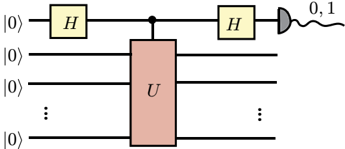
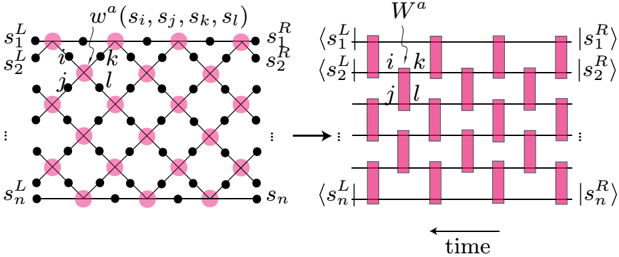
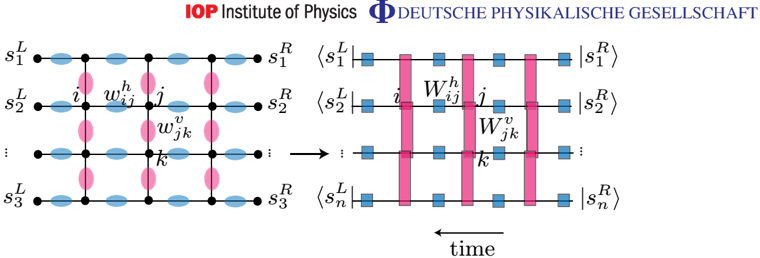
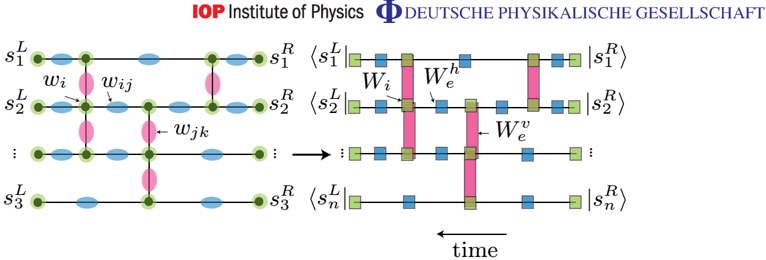


Verification
Claims the paper makes
The claims and statistics of this paper haven’t been checked yet.
Free: it reads the open-access text and checks the first 5 claims that cite a source we can check. Create a free account to check every claim.
Claims other papers make about this one
Each is checked against this paper’s own text: does it say what the citing paper says it does?
The cited source says what the claim attributes to it.
In the citing paper
“The inspiration for other quantum algorithms, not discussed here, includes topological quantum fi eld theory; 87 connections between quantum circuits and spin models; 88 the Elitzur -Vaidman quantum bomb tester; 89 and directly solving the semide fi nite programming problem characterising quantum query complexity. 90,91”
From Quantum algorithms: an overview (2016) · cites this paper as [88]
Self-check
Percentages, sums and reported differences re-computed from the paper’s own numbers.
The self-check needs the paper’s full text.
Citations
Cites
Algorithms for quantum computation: discrete logarithms and factoring
Shor, P. W. (2002) · Proceedings 35th Annual Symposium on Foundations of Computer Science · doi:10.1109/sfcs.1994.365700 · Cited by 8,713 · cited 1×
“Notably, the factoring problem is known to be feasible by a quantum computer [11], while it remains intractable in all known classical algorithms.”
BackgroundCrystal Statistics. I. A Two-Dimensional Model with an Order-Disorder Transition
Onsager, L. (1944) · Physical Review · doi:10.1103/physrev.65.117 · Cited by 6,510
The renormalization group: Critical phenomena and the Kondo problem
Wilson, K. G. (1975) · Reviews of Modern Physics · doi:10.1103/revmodphys.47.773 · Cited by 4,522
Spin Glass Theory and Beyond: An Introduction to the Replica Method and Its Applications
Mezard, M., Parisi, G., & Virasoro, M. (1986) · World Scientific Lecture Notes in Physics · doi:10.1142/0271 · Cited by 3,653
Wu, F. Y. (1982) · Reviews of Modern Physics · doi:10.1103/revmodphys.54.235 · Cited by 3,570
An introduction to lattice gauge theory and spin systems
Kogut, J. B. (1979) · Reviews of Modern Physics · doi:10.1103/revmodphys.51.659 · Cited by 2,029
DiVincenzo, D. P. (1995) · Science · doi:10.1126/science.270.5234.255 · Cited by 1,651
On the computational complexity of Ising spin glass models
Barahona, F. (1982) · Journal of Physics A: Mathematical and General · doi:10.1088/0305-4470/15/10/028 · Cited by 1,306
Duality in Generalized Ising Models and Phase Transitions without Local Order Parameters
Wegner, F. J. (1971) · Journal of Mathematical Physics · doi:10.1063/1.1665530 · Cited by 1,011
Universal quantum computation with the exchange interaction
DiVincenzo, D. P., Bacon, D., Kempe, J., Burkard, G., & Whaley, K. B. (2000) · Nature · doi:10.1038/35042541 · Cited by 924
Research works printed but not linked: 10
- Stanley H E 1971 Introduction to Phase Transitions and Critical Phenomena (Oxford: Oxford University Press)
- Baxter R J 1982 Exactly Solvable Models in Statistical Mechanics (San Diego, CA: Academic)
- Mézard M, Parisi G and Virasoro M A 1987 Spin Glass Theory and Beyond (Teaneck, NJ: World Scientific)
- Schulz M 2003 Statistical Physics and Economics: Concepts, Tools and Applications (Berlin: Springer)
- Pathria R K 1996 Statistical Mechanics 2nd edn (Amsterdam: Elsevier)
- Papadimitriou C M 1995 Computational Complexity (Reading, MA: Addison-Wesley)
- Aharonov D, Arad I, Eban E and Landau Z 2007 arXiv:quant-ph/0702008 · arXiv
- Nishimori H and Ortiz G 2011 Elements of Phase Transitions and Critical Phenomena (Oxford: Oxford University Press)
- Aharonov D, Jones V and Landau Z 2006 Proc. 38th ACM Symp. Theory of Computing p 427
- Smith J and Mosca M 2010 arXiv:1001.0767 · arXiv
Cited by
Quantum algorithms: an overview
Montanaro, A. (2016) · npj Quantum Information · doi:10.1038/npjqi.2015.23 · Cited by 1,071
“…quantum algorithms, not discussed here, includes topological quantum (cid:12)eld theory [43]; connections between quantum circuits and spin models [32]; the Elitzur-Vaidman quantum bomb tester [63]; and directly solving the semide(cid:12)nite programming problem characterising quantum query…”
Quantum speedup of Monte Carlo methods
Montanaro, A. (2015) · Proceedings of the Royal Society A: Mathematical, Physical and Engineering Sciences · doi:10.1098/rspa.2015.0301 · Cited by 334
“The following result was shown by Dyer & Frieze [31] (see [4] for the statement here).”
ResultA quantum–quantum Metropolis algorithm
Yung, M.-H., & Aspuru-Guzik, A. (2012) · Proceedings of the National Academy of Sciences · doi:10.1073/pnas.1111758109 · Cited by 149
Computational advantage of quantum random sampling
Hangleiter, D., & Eisert, J. (2023) · Reviews of Modern Physics · doi:10.1103/revmodphys.95.035001 · Cited by 145
Quantum machine learning: from physics to software engineering
Melnikov, A. A., Kordzanganeh, M., Alodjants, A. P., & Lee, R. (2023) · Advances in Physics X · doi:10.1080/23746149.2023.2165452 · Cited by 182
Architectures for Quantum Simulation Showing a Quantum Speedup
Bermejo-Vega, J., Hangleiter, D., Schwarz, M., Raussendorf, R., & Eisert, J. (2018) · Physical Review X · doi:10.1103/physrevx.8.021010 · Cited by 99
“To illustrate the difference, note that there exist quantum algorithms for approximating (normalized) Ising partition functions up to polynomially small additive errors [94, 95], while the latter are”
MethodQuantum Computation with Topological Codes: From Qubit to Topological Fault-Tolerance
Fujii, K. (2015) · SpringerBriefs in mathematical physics · doi:10.1007/978-981-287-996-7 · Cited by 112
Variational Inference with a Quantum Computer
Benedetti, M., Coyle, B., Fiorentini, M., Lubasch, M., & Rosenkranz, M. (2021) · Physical Review Applied · doi:10.1103/physrevapplied.16.044057 · Cited by 73
Commuting quantum circuits and complexity of Ising partition functions
Fujii, K., & Morimae, T. (2017) · New Journal of Physics · doi:10.1088/1367-2630/aa5fdb · Cited by 48
“Recently, quantum algorithms for approximating Jones polynomial [2, 3], Tutte polynomial [4], and Ising partition functions [5–7] have been found, and they are shown to beBQP-complete in certain parameter regions.”
MethodThe Complexity of Approximating complex-valued Ising and Tutte partition functions
Goldberg, L. A., & Guo, H. (2017) · computational complexity · doi:10.1007/s00037-017-0162-2 · Cited by 49
Digital quantum simulation of the statistical mechanics of a frustrated magnet
Zhang, J., Yung, M.-H., Laflamme, R., Aspuru-Guzik, A., & Baugh, J. (2012) · Nature Communications · doi:10.1038/ncomms1860 · Cited by 58
QUANTUM DISCORD AND QUANTUM COMPUTING — AN APPRAISAL
Datta, A., & Shaji, A. (2011) · International Journal of Quantum Information · doi:10.1142/s0219749911008416 · Cited by 57
Classical Simulation of Short-Time Quantum Dynamics
Wild, D. S., & Alhambra, A. M. (2023) · PRX Quantum · doi:10.1103/prxquantum.4.020340 · Cited by 70
Computing partition functions in the one-clean-qubit model
Chowdhury, A. C. N., Somma, R. D., & Subaşı, Y. (2021) · Physical Review A · doi:10.1103/physreva.103.032422 · Cited by 47
Sampling, rates, and reaction currents through reverse stochastic quantization on quantum computers
Mazzola, G. (2021) · Physical Review A · doi:10.1103/physreva.104.022431 · Cited by 25
Fundamental thresholds of realistic quantum error correction circuits from classical spin models
Vodola, D., Rispler, M., Kim, S., & Müller, M. (2022) · Quantum · doi:10.22331/q-2022-01-05-618 · Cited by 25
“[6] G.”
MethodQuantum algorithm for an additive approximation of Ising partition functions
Matsuo, A., Fujii, K., & Imoto, N. (2014) · Physical Review A · doi:10.1103/physreva.90.022304 · Cited by 18
Xu, Y., Cuevas, G. D. L., Dür, W., Briegel, H. J., & Martin-Delgado, M. A. (2011) · Journal of Statistical Mechanics Theory and Experiment · doi:10.1088/1742-5468/2011/02/p02013 · Cited by 18
Self-citationTwins Percolation for Qubit Losses in Topological Color Codes
Vodola, D., Amaro, D., Martin-Delgado, M. A., & Müller, M. (2018) · Physical Review Letters · doi:10.1103/physrevlett.121.060501 · Cited by 17
Self-citationLow depth quantum circuits for Ising models
Iblisdir, S., Cirio, M., Boada, O., & Brennen, G. K. (2013) · Annals of Physics · doi:10.1016/j.aop.2013.11.001 · Cited by 18
Dual correspondence between classical spin models and quantum Calderbank-Shor-Steane states
Zarei, M. H., & Montakhab, A. (2018) · Physical Review A · doi:10.1103/physreva.98.012337 · Cited by 16
Approximation Algorithms for Complex-Valued Ising Models on Bounded Degree Graphs
Mann, R. L., & Bremner, M. J. (2019) · Quantum · doi:10.22331/q-2019-07-11-162 · Cited by 14
Power of uninitialized qubits in shallow quantum circuits
Takahashi, Y., & Tani, S. (2020) · Theoretical Computer Science · doi:10.1016/j.tcs.2020.11.039 · Cited by 14
Low depth quantum circuits for Ising modelsPreprint
Iblisdir, S., Cirio, M., Boada, O., & Brennen, G. K. (2014) · Cited by 13
Emulating Quantum Circuits With Generalized Ising Machines
Chowdhury, S., Camsari, K. Y., & Datta, S. (2023) · IEEE Access · doi:10.1109/access.2023.3323847 · Cited by 15
“In the spirit of earlier works [24], [25], [26], [27], [28], [29], [30], [31], we can view this structure as a Boltzmann machine whose states each represent a Feynman path leading from an initial configuration of qubits to a final configuration, via specific intermediate configurations.”
BackgroundPartition-function estimation: Quantum and quantum-inspired algorithms
Jackson, A., Kapourniotis, T., & Datta, A. (2023) · Physical Review A · doi:10.1103/physreva.107.012421 · Cited by 12
Sampling and the complexity of nature
Hangleiter, D. (2020) · arXiv (Cornell University) · doi:10.17169/refubium-28790 · Cited by 10
Phase transition in a noisy Kitaev toric code model
Zarei, M. H., & Montakhab, A. (2019) · Physical Review A · doi:10.1103/physreva.99.052312 · Cited by 9
A quantum information approach to statistical mechanics
Cuevas, G. D. L. (2013) · Journal of Physics B Atomic Molecular and Optical Physics · doi:10.1088/0953-4075/46/24/243001 · Cited by 10
Analytical percolation theory for topological color codes under qubit loss
Amaro, D., Bennett, J., Vodola, D., & Müller, M. (2020) · Physical Review A · doi:10.1103/physreva.101.032317 · Cited by 7
Lee–Yang zeros and the complexity of the ferromagnetic Ising model on bounded-degree graphs
Buys, P., Galanis, A., Patel, V., & Regts, G. (2022) · Forum of Mathematics Sigma · doi:10.1017/fms.2022.4 · Cited by 7
“Complex parameters for the Ising model have been studied in the computation of probability amplitudes of quantum circuits; see, for example, [12, 36, 8].”
Computing Classical Partition Functions: From Onsager and Kaufman to Quantum Algorithms
Gargiulo, R., Rizzi, M., & Zeier, R. (2024) · doi:10.1145/3665870.3665878 · Cited by 4
“We imagine that the approaches considered, e.g., in [72] will help to determine which cases admit similar mappings.”
InfluentialExponentially improved classical and quantum algorithms for three-body Ising models
den Nest, M. V., & Dür, W. (2014) · Physical Review A · doi:10.1103/physreva.89.012334 · Cited by 4
Self-citationSystematic study of the completeness of two-dimensional classical ϕ4 theory
Zarei, M. H., & Khalili, Y. (2017) · International Journal of Quantum Information · doi:10.1142/s0219749917500514 · Cited by 3
“Meeting between quantum information theory and classical statistical mechanics is a recent field of research that has received a great deal of interest during the past decade [1, 2, 3, 4, 5, 6, 7].”
BackgroundQuantum Information and Statistical Mechanics: An Introduction to Frontier
Fujii, K. (2013) · Interdisciplinary Information Sciences · doi:10.4036/iis.2013.1 · Cited by 3
Alan Turing y los orígenes de la complejidad
Martin-Delgado, M. A. (2013) · Arbor · doi:10.3989/arbor.2013.764n6006 · Cited by 2
Self-citationCharacterization and implementation of robust quantum information processing
Fernandez, D. (2020) · Cronfa (Swansea University) · doi:10.23889/suthesis.56913 · Cited by 1
Quantum computation and combinatorial structures
Mann, R. L. (2019) · OPUS - Open Publications of UTS Scholars (University of Technology Sydney) · Cited by 2
Alan Turing and the Origins of Complexity
Martin-Delgado, M.-A. (2013) · Arbor · doi:10.3989/arbor.2013.i764
Self-citationModern Approaches to Topological Quantum Error Correction
Parrado-Rodríguez, P. (2022) · Cronfa (Swansea University) · doi:10.23889/suthesis.60302
New Planar Algorithms and a Full Complexity Classification of the Eight-Vertex Model
Cai, J., Fan, A. Z., Shao, S., & Tang, Z. (2026) · ACM Symposium on Theory of Computing (STOC) · doi:10.1145/3798129.3800810
Metadata
- Authors
- De las Cuevas, G., Dür, W., Van den Nest, M., & Martin-Delgado, M. A.
- Affiliations
- Universität Innsbruck (AT)
- Universidad Complutense de Madrid (ES)
- ORCID
- Dür, W
- Venue
- New Journal of Physics
- Publisher
- IOP Publishing
- Published
- 2011-09-09
- Volume
- 13
- Issue
- 9
- Pages
- 093021
- ISSN
- 1367-2630 (ISSN-L)
- OpenAlex
- W2026428220
- Semantic Scholar
- 15c0c0a003488042a53a5d06a958c758b52eb8d6
- Cited by
- 40
- References
- 30
- Citations by year
- 2026: 1 · 2023: 5 · 2022: 3 · 2021: 4 · 2020: 3 · 2019: 2 · 2018: 3 · 2017: 3 · 2016: 1 · 2015: 2 · 2014: 4 · 2013: 5 · 2012: 2
- FWCI
- 3.83
- Type
- journal article
- Language
- en
- Open access
- gold
- doi.org
- Licence
- cc-by
- Locations
- New Journal of Physics (publishedVersion, cc-by)
- arXiv (Cornell University) (submittedVersion)
- Docta Complutense (Universidad Complutense de Madrid) (submittedVersion, other-oa)
- Max Planck Institute for Plasma Physics (submittedVersion)
- MPG.PuRe (Max Planck Society) (submittedVersion)
- Repositori digital de la UPF (Universitat Pompeu Fabra) (submittedVersion, cc-by)
- arXiv (Cornell University)
- Funders
- European Commission
- Austrian Science Fund
- Ministerio de Ciencia e Innovación (QUITEMAD S2009-ESP-1594)
- Topics
- Physical Sciences › Computer Science › Artificial Intelligence › Quantum Computing Algorithms and Architecture
- Physical Sciences › Physics and Astronomy › Atomic and Molecular Physics, and Optics › Quantum many-body systems
- Physical Sciences › Physics and Astronomy › Atomic and Molecular Physics, and Optics › Quantum Information and Cryptography
- Keywords
- quantum algorithms, partition function estimation, six-vertex model, Ising model, Potts model, Z2 lattice gauge theory, BQP-completeness, quantum circuit mapping, planar graphs, computational complexity
About these checks
Registry, retraction, Cites and statistics results are computed, not judged, with one exception: a printed reference that no index lists is read once by a model before it counts as a citation error. Claims are extracted by a model and kept only when their quote appears verbatim in the text; each cited source is then checked, with a model’s help, for whether it says what the claim relies on. Those verdicts can be wrong — read the claim’s quote and the cited source before relying on one.
Statistics and arithmetic are recomputed, not judged.
Confidence bands are shown only for fields calibrated on our annotated test set. None is calibrated yet, so no band is shown.
What counts as a claim ›How we measure confidence ›How we check this ›
Are you an author, or do you see a problem with this page? Request a review
Data sources
Bibliographic data: Semantic Scholar, OpenAlex, Crossref.
Contains information from the Semantic Scholar Academic Graph Datasets, made available under the ODC Attribution License (ODC-BY 1.0).
Semantic Scholar’s data is described in: Kinney, R., et al. (2023). The Semantic Scholar Open Data Platform. arXiv:2301.10140.
