

Arbitrary quantum control of qubits in the presence of universal noise
Open accessThe DOI matches its Crossref record; 47 of the 47 references it cites were found in a registry or an index.
Abstract
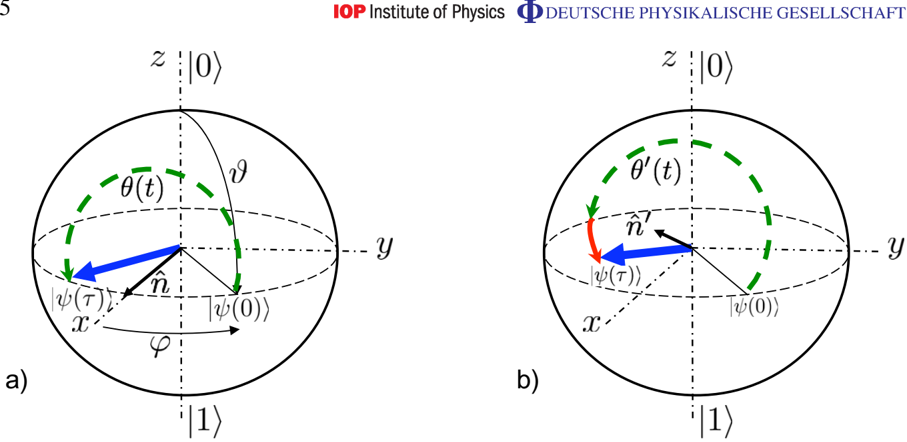
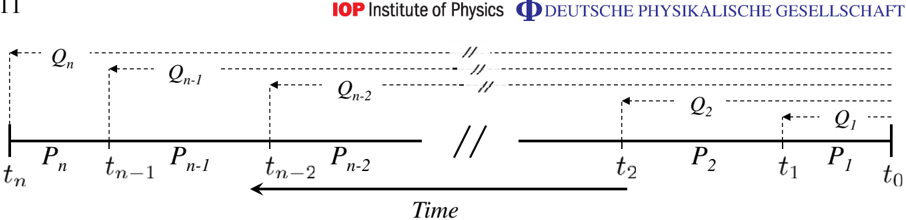
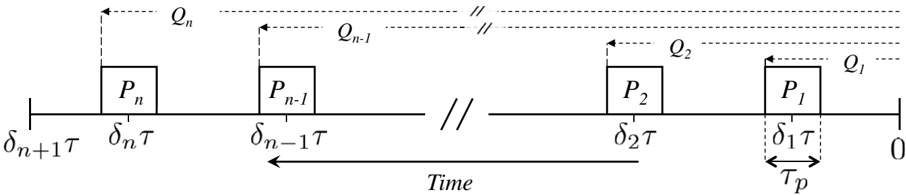
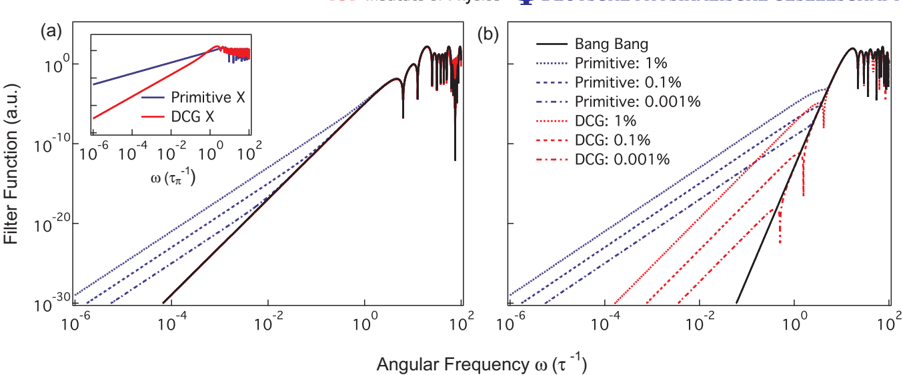
We address the problem of deriving analytic expressions for calculating universal decoherence-induced errors in qubits undergoing arbitrary, unitary, time-dependent quantum control protocols. We show that the fidelity of a control operation may be expressed in terms of experimentally relevant spectral characteristics of the noise and of the control, over all Cartesian directions. We formulate control matrices in the time domain to capture the effects of piecewise-constant control, and convert them to generalized Fourier-domain filter functions. These generalized filter functions may be derived for complex temporally modulated control protocols, accounting for susceptibility to rotations of the qubit state vector in three dimensions. Taken together, we show that this framework provides a computationally efficient means to calculate the effects of universal noise on arbitrary quantum control protocols, producing results comparable with those obtained via time-consuming simulations of Bloch vector evolution. As a concrete example, we apply our method to treating the problem of dynamical decoupling incorporating realistic control pulses of arbitrary duration or form, including the replacement of simple π -pulses with complex dynamically corrected gates.
Overview
The claims and statistics of this paper haven’t been checked yet.
Free: it reads the open-access text and checks the first 5 claims that cite a source we can check. Create a free account to check every claim.
Integrity signals
Registry
Cites
Statistics
Figures

Verification
Claims the paper makes
The claims and statistics of this paper haven’t been checked yet.
Free: it reads the open-access text and checks the first 5 claims that cite a source we can check. Create a free account to check every claim.
Claims other papers make about this one
Each is checked against this paper’s own text: does it say what the citing paper says it does?
The cited source says what the claim attributes to it.
In the citing paper
“has produced noteworthy advances in quantum random walks, 38,39 quantum control, 40 open quantum systems, 41 and pioneering work on quantum neural networks, 42 quantum machine learning, 43 and quantum processes in the brain.44”
From Toward a quantum future for South Africa (2021) · cites this paper as [40]
Self-check
Percentages, sums and reported differences re-computed from the paper’s own numbers.
The self-check needs the paper’s full text.
Citations
Cites
Quantum Computation and Quantum Information: 10th Anniversary Edition
Nielsen, M. A., & Chuang, I. L. (2012) · doi:10.1017/cbo9780511976667 · Cited by 8,436
Effects of Diffusion on Free Precession in Nuclear Magnetic Resonance Experiments
Carr, H. Y., & Purcell, E. M. (1954) · Physical Review · doi:10.1103/physrev.94.630 · Cited by 6,466
Hahn, E. L. (1950) · Physical Review · doi:10.1103/physrev.80.580 · Cited by 5,085
On the exponential solution of differential equations for a linear operator
Magnus, W. (1954) · Communications on Pure and Applied Mathematics · doi:10.1002/cpa.3160070404 · Cited by 2,433
Dynamical Decoupling of Open Quantum Systems
Viola, L., Knill, E., & Lloyd, S. (1999) · Physical Review Letters · doi:10.1103/physrevlett.82.2417 · Cited by 1,808
Dynamical suppression of decoherence in two-state quantum systems
Viola, L., & Lloyd, S. (1998) · Physical Review A · doi:10.1103/physreva.58.2733 · Cited by 1,575
The Magnus expansion and some of its applications
Blanes, S., Casas, F., Oteo, J. A., & Ros, J. (2009) · Physics Reports · doi:10.1016/j.physrep.2008.11.001 · Cited by 1,157
Noise spectroscopy through dynamical decoupling with a superconducting flux qubit
Bylander, J., Gustavsson, S., Yan, F., Yoshihara, F., Harrabi, K., Fitch, G., Cory, D. G., Nakamura, Y., Tsai, J.-S., & Oliver, W. D. (2011) · Nature Physics · doi:10.1038/nphys1994 · Cited by 864
Universal Dynamical Decoupling of a Single Solid-State Spin from a Spin Bath
de Lange, G., Wang, Z. H., Ristè, D., Dobrovitski, V. V., & Hanson, R. (2010) · Science · doi:10.1126/science.1192739 · Cited by 802
Levitt, M. H. (1986) · Progress in Nuclear Magnetic Resonance Spectroscopy · doi:10.1016/0079-6565(86)80005-x · Cited by 776
Research works printed but not linked: 5
- Wiseman H M and Milburn G J 2010 Quantum Measurement and Control (Cambridge: Cambridge University Press)
- Schlosshauer M 2008 Decoherence and the Quantum-to-Classical Transition (Berlin: Springer)
- Breuer H and Petruccione F 2002 The Theory of Open Quantum Systems (Oxford: Oxford University Press)
- Khodjasteh K, Biercuk M J and Viola L 2012 arXiv:1206.6087 · arXiv
- Spindler K 1994 Abstract Algebra with Applications vol 1 (New York: Dekker)
Cited by
Items 101–200 of 210
Multiple classical noise mitigation by multiobjective robust quantum optimal control
Shao, B., Yang, X., Liu, R., Zhai, Y., Lu, D., Xin, T., & Li, J. (2024) · Physical Review Applied · doi:10.1103/physrevapplied.21.034042 · Cited by 9
“For convenience, we move to frequency domain using the filter-function formalism [59, 60].”
MethodNeural-network-designed three-qubit gates robust against charge noise and crosstalk in silicon
Kanaar, D. W., & Kestner, J. P. (2024) · Quantum Science and Technology · doi:10.1088/2058-9565/ad3d06 · Cited by 8
A self-referenced optical phase noise analyzer for quantum technologies
Freund, R., Marciniak, C. D., & Monz, T. (2024) · Review of Scientific Instruments · doi:10.1063/5.0183502 · Cited by 8
Berberich, J., Kosut, R. L., & Schulte‐Herbrüggen, T. (2024) · IEEE Conference on Decision and Control (CDC) · doi:10.1109/cdc56724.2024.10886787 · Cited by 8
An automated geometric space curve approach for designing dynamically corrected gates
Piliouras, E., Lucarelli, D. G., & Barnes, E. (2026) · npj Quantum Information · doi:10.1038/s41534-026-01190-6 · Cited by 8
“Next, we introduce the adjoint representation [95] (also known as the control matrix [82]) to streamline the process of gate-fixing in SCQC.”
Dynamical quantum maps for single-qubit gates under universal non-Markovian noise
Velázquez, J. M. S., Steiner, A., Freund, R., Guevara-Bertsch, M., Marciniak, C. D., Monz, T., & Bermúdez, A. (2025) · Physical Review Research · doi:10.1103/physrevresearch.7.013008 · Cited by 8
Measuring and Suppressing Error Correlations in Quantum CircuitsPreprint
Edmunds, C., Hempel, C., Harris, R., Ball, H., Frey, V., Stace, T. M., & Biercuk, M. J. (2017) · arXiv (Cornell University) · doi:10.48550/arxiv.1712.04954 · Cited by 8
Self-citationSilicon edge-dot architecture for quantum computing with global control and integrated trimmingPreprint
Fogarty, M. A. (2022) · arXiv (Cornell University) · doi:10.48550/arxiv.2208.09172 · Cited by 8
“in detuning F (1) z [67] as seen in Fig.”
MethodQuantum Error Correction and Dynamical Decoupling: Better Together or Apart?Preprint
Kasatkin, V., Morford-Oberst, M., Vezvaee, A., & Lidar, D. A. (2026) · arXiv (Cornell University) · doi:10.48550/arxiv.2602.19042 · Cited by 8
“We use this only as a formal benchmark, not as implying error-free evolution; in any realistic implementation one expects 1 > p DD > 0 due to finite pulse widths, calibration/control errors, and finite-bandwidth filtering [30– 32].”
Adaptive denoising quantum state preparation in a dynamic environment
Wang, Z.-M., & Chen, T.-Z. (2024) · Physical Review Research · doi:10.1103/physrevresearch.6.043195 · Cited by 7
Two-qubit sweet spots for capacitively coupled exchange-only spin qubits
Feng, M., Zaw, L. H., & Koh, T. S. (2021) · npj Quantum Information · doi:10.1038/s41534-021-00449-4 · Cited by 7
D’Arrigo, A., Piccitto, G., Falci, G., & Paladino, E. (2024) · Scientific Reports · doi:10.1038/s41598-024-67503-x · Cited by 7
“The DD sequences we considered are routinely used in different platforms, see 10–14 ,18 , 22, 30, (cid:31) (cid:30) Due to higher order filtering properties, Uhrig dynamical control on the two-qubit gate is a potential tool to distinguish quasi-static Gaussian noise, leading to an error scaling as…”
Sastrawan, J., Jones, C., Akhalwaya, I., Uys, H., & Biercuk, M. J. (2016) · Physical review. E · doi:10.1103/physreve.94.022204 · Cited by 7
Self-citationEngineering precise and robust effective Hamiltonians
Chen, J., & Cory, D. G. (2026) · Physical Review A · doi:10.1103/j65l-f8lf · Cited by 6
“In particular, the representation in C ( g pri ,H pert ) is analogous to the control matrix [168, 170] and superoperator cumulant coefficients [171, 172] in filter-function formalism, the frame matrix in Hamiltonian engineering of multi-spin systems [107– 109], and expansion coefficients in Floquet…”
Characterizing the magnetic noise power spectrum of dark spins in diamond
Williams, E. Q., & Ramanathan, C. (2025) · New Journal of Physics · doi:10.1088/1367-2630/adb2b8 · Cited by 6
Completely Positive Map for Noisy Driven Quantum Systems Derived by Keldysh Expansion
Huang, Z., Lu, Y., Grassellino, A., Romanenko, A., Koch, J., & Zhu, S. (2023) · Quantum · doi:10.22331/q-2023-11-03-1158 · Cited by 6
“[6, 14] to quantum noise.”
BackgroundMethodFast high-fidelity geometric gates for singlet-triplet qubits
Chen, M., Zhang, C., & Xue, Z. (2022) · Physical Review A · doi:10.1103/physreva.105.022620 · Cited by 6
Quantum gates robust to secular amplitude drifts
Su, Q. D., Bruinsma, R., & Campbell, W. C. (2021) · Physical Review A · doi:10.1103/physreva.104.052625 · Cited by 6
A Fundamental Bound for Robust Quantum Gate ControlPreprint
Kosut, R. L., Lidar, D. A., & Rabitz, H. (2025) · arXiv (Cornell University) · doi:10.48550/arxiv.2507.01215 · Cited by 6
“Before describing our theoretical framework, we note that robust quantum control has a rich literature, including dynamical decoupling [28–32], geometric methods [33–35], and many pulse-shaping and optimization strategies tailored to specific uncertainty classes [36–49].”
Unifying adiabatic state-transfer protocols with $(α, β)$-hypergeometriesPreprint
Meinersen, C. V., Fernández-Fernández, D., Platero, G., & Rimbach-Russ, M. (2025) · arXiv (Cornell University) · doi:10.48550/arxiv.2504.08031 · Cited by 5
Hardware-Tailored Resource Estimation for Magic-State Distillation on Silicon Spin QubitsPreprint
Yang, S., Long, C. K., Otxoa, R. M., Murali, P., Barnes, C. H. W., & Arvidsson-Shukur, D. R. M. (2026) · arXiv (Cornell University) · doi:10.48550/arxiv.2605.28936 · Cited by 5
Error correction of quantum system dynamics via measurement–feedback control
Ran, D., Shi, Z., Yang, Z., Song, J., & Xia, Y. (2019) · Journal of Physics B Atomic Molecular and Optical Physics · doi:10.1088/1361-6455/ab2e85 · Cited by 4
Ghost factors in Gauss-sum factorization with transmon qubits
Zaw, L. H., Tan, Y. P., Nguyen, L. H., Budoyo, R. P., Park, K. H., Koh, Z. Y., Landra, A., Hufnagel, C., Yap, Y. S., Koh, T. S., et al. (2021) · Physical Review A · doi:10.1103/physreva.104.062606 · Cited by 4
A Cryo-CMOS, Low-Power, Low-Noise, Phase-Locked Loop Design for Quantum Computers
Xin, K., Lai, M., Lv, F., Guo, K., Pang, Z., Xu, C., Zhang, G., Wang, W., & Li, M. (2023) · Electronics · doi:10.3390/electronics12153237 · Cited by 4
Kanaar, D. W., & Kestner, J. P. (2024) · Physical Review A · doi:10.1103/physreva.109.032605 · Cited by 4
Functional Basis for Efficient Physical Layer Classical Control in Quantum Processors
Ball, H., Nguyen, T., Leong, P. H. W., & Biercuk, M. J. (2016) · Physical Review Applied · doi:10.1103/physrevapplied.6.064009 · Cited by 4
Self-citationQuantum Sensing of Fast Time-Varying Magnetic Field With Daubechies Wavelets
Kiang, C.-W., Ding, J., & Kiang, J. (2024) · IEEE Access · doi:10.1109/access.2024.3364817 · Cited by 4
“More complex orthogonal basis functions can be used to modulate the MW control sequences exerted on qubits [19].”
BackgroundCoherent control of nuclear and electron spins for quantum information processing
Park, K. (2015) · UWSpace (University of Waterloo) · Cited by 4
Provably Optimal Control for Multiplicative Amplitude Control NoisePreprint
Trout, C. J., Schultz, K., Titum, P., Norris, L., Quiroz, G., & Clader, A. B. D. (2022) · arXiv (Cornell University) · doi:10.48550/arxiv.2205.06741 · Cited by 4
Spin-orbit-enabled realization of arbitrary two-qubit gates on moving spinsPreprint
Fernández-Fernández, D., Matsumoto, Y., Vandersypen, L. M. K., Platero, G., & Bosco, S. (2025) · arXiv (Cornell University) · doi:10.48550/arxiv.2508.08394 · Cited by 4
Improving Dynamical Decoupling for Trapped-Ion QCCD Quantum ComputersPreprint
Watkins, W. M., Norris, L., Hutson, R. B., Urmey, M. D., Siegfried, P., & Baldwin, C. H. (2026) · arXiv (Cornell University) · doi:10.48550/arxiv.2607.14441 · Cited by 4
“Dynamics in the toggling frame are generated by the Hamiltonian, where the control matrix element [5, 11, 22] changes sign from ± 1 to ∓ 1 each time a π -pulse is applied.”
Matsuoka, R., Wachi, Y., Tsuchiya, R., Mizuno, H., & Kodera, T. (2025) · Japanese Journal of Applied Physics · doi:10.35848/1347-4065/adeb23 · Cited by 3
Hybrid Acousto-Optical Spin Control in Quantum Dots
Kuniej, M., Machnikowski, P., & Gawełczyk, M. (2025) · Physical Review Letters · doi:10.1103/tbfh-t2q5 · Cited by 3
qopt: An experiment-oriented Qubit Simulation and Quantum Optimal Control Package
Teske, J. D., & Bluhm, H. (2021) · IEEE International Conference on Quantum Computing and Engineering (QCE) · doi:10.1109/qce52317.2021.00069 · Cited by 3
Robust Quantum Control for Set-Membership Hamiltonian Uncertainty
Kosut, R. L., & RABITZ, H. A. (2023) · IEEE International Conference on Quantum Computing and Engineering (QCE) · doi:10.1109/qce57702.2023.00147 · Cited by 3
Classical Non-Markovian Noise in Symmetry-Preserving Quantum Dynamics
Watkins, W. M., & Quiroz, G. (2025) · Physical Review Letters · doi:10.1103/t78h-c9s3 · Cited by 3
“Usually the FFs (and control matrices) are calculated with the n -qubit Pauli group [37, 64].”
Stroboscopically robust gates for capacitively coupled singlet-triplet qubits
Colmenar, R. K., & Kestner, J. P. (2019) · Physical Review A · doi:10.1103/physreva.99.012347 · Cited by 3
Engineering Effective Hamiltonians for Magnetic Resonance
Haas, H. (2019) · UWSpace (University of Waterloo) · Cited by 4
Electronic Noise Considerations for Designing Integrated Solid‐State Quantum Memories
Huang, T., Hopper, D. A., Omirzakhov, K., Idjadi, M. H., Breitweiser, S. A., Aflatouni, F., & Bassett, L. C. (2025) · Advanced Quantum Technologies · doi:10.1002/qute.202400472 · Cited by 2
“…, the central spin dephasing after time τ is determined by the phase variance, ⟨ φ 2 ( τ ) ⟩ [24]: where χ ( τ ) denotes the decay envelope [20, 36], Here, F ( ωτ ) is the square modulus of the frequency-domain control vector [37], and S z ( ω ) is the dephasing noise power spectral density (PSD).”
Autonomously designed pulses for robust, site-selective control of atomic qubits
Park, S., Lee, S., Lee, K., Kim, M., & Kim, D. (2026) · Physical Review Applied · doi:10.1103/dspx-fgp2 · Cited by 2
“By using the Magnus expansion [S5], we find that where”
Jiang, Y., Rudolph, J., & Hogan, J. M. (2026) · Physical Review A · doi:10.1103/tqrf-42yp · Cited by 2
Noise-protected two-qubit gate using anisotropic exchange interaction
Wu, Z., & Rimbach-Russ, M. (2026) · Physical Review Applied · doi:10.1103/dwjs-7p9k · Cited by 2
“We further investigate the robustness of our SCROFULOUS gate against arbitrary spectral noise using the filter function formalism [70].”
Crosstalk-robust dynamical decoupling for bipartite-topology quantum processors
Hickman, E., Wu, X., & Quiroz, G. (2026) · Physical Review Applied · doi:10.1103/r75m-b2d9 · Cited by 2
Anonymous, Calarco, T., & Muratori, A. (2026) · Physical Review Research · doi:10.1103/t2zk-4nxh · Cited by 2
“For each of these models, the smallest subsystem was sought that – when acted upon by Zeeman-type external controls – renders the entire chain completely controllable.”
Harris, V. G., & Andalib, P. (2024) · Frontiers in Materials · doi:10.3389/fmats.2024.1343005 · Cited by 2
Binary Quantum Control Optimization with Uncertain Hamiltonians
Fei, X., Brady, L. T., Larson, J. M., Leyffer, S., & Shen, S. (2024) · INFORMS journal on computing · doi:10.1287/ijoc.2024.0560 · Cited by 2
Temporal Coarse Graining for Classical Stochastic Noise in Quantum Systems
Albash, T., Young, S. M., & Jacobson, N. T. (2026) · Quantum · doi:10.22331/q-2026-06-15-2137 · Cited by 2
“This is accomplished by performing an ensemble average over the stochastic processes under suitable assumptions about the noise.”
Pulse‐Level Quantum Robust Control with Diffusion‐Based Reinforcement Learning
Zhang, Y., Shang, T., Zhang, C., & Guo, X. (2025) · Advanced Physics Research · doi:10.1002/apxr.202400159 · Cited by 2
Quantum interferometric protocol using spin-dependent displacements
Çelik, N., Özen, S. A., & Engin, B. (2025) · Physical Review A · doi:10.1103/hw3x-1lrm · Cited by 2
Bridging pulse and circuit levels: a geometric framework for deterministic error suppression
Zeng, J., Liang, H., Hai, Y.-J., & Deng, X. (2026) · Quantum Science and Technology · doi:10.1088/2058-9565/ae9b3b · Cited by 2
Universal Singlet‐Triplet Qubits Implemented Near the Transverse Sweet Spot
Xie, W., Zhang, C., & Xue, Z. (2021) · Annalen der Physik · doi:10.1002/andp.202100054 · Cited by 2
Anomalous behavior of control pulses in presence of noise with singular autocorrelation
Stanek, D., Fauseweh, B., Stihl, C., Pasini, S., & Uhrig, G. S. (2014) · Journal of Magnetic Resonance · doi:10.1016/j.jmr.2014.06.009 · Cited by 2
Controlled quantum dynamics of Nitrogen vacancy centers in diamond
Albrecht, A. (2016) · OPen Access Repositorium der Universität Ulm (OPARU) (Ulm University) · doi:10.18725/oparu-3319 · Cited by 2
“A very convenient and illustrative approach to analyze the impact of a control field on the quantum system evolution is provided by the filter formalism [69, 158, 38, 78, 114, 116, 273] (see chapter 3), allowing for a description in frequency space as an overlap between a control dependent filter and the system’s coup…”
BackgroundContinuous Unitary Designs for Universally Robust Quantum ControlPreprint
Yang, X., Leng, J., & Li, J. (2026) · arXiv · doi:10.48550/arxiv.2601.01988 · Cited by 3
“To verify this, we employ the filter function (FF) formalism [100], which quantifies a control pulse’s sensitivity to noise across different frequencies and thereby characterizes its impact on gate fidelity.”
Amezcua, M., Norris, L., Gilliss, T., Sitler, R., Shackford, J., Quiroz, G., & Schultz, K. (2026) · arXiv (Cornell University) · doi:10.48550/arxiv.2603.19373 · Cited by 2
Protecting Heisenberg scaling in quantum metrology via engineered dressed statesPreprint
Gorecki, W., & Koch, C. P. (2026) · arXiv (Cornell University) · doi:10.48550/arxiv.2604.14098 · Cited by 2
“In certain cases, suitably designed controls can restore unitary dynamics, for example through noise filtering [51], dynamical de-coupling [52, 53], continuous dynamical decoupling [54, 55], dressed states induced by micro-or radio-frequency driving [56–59] or static external fields [24], as well…”
Suppressing spin qubit decoherence during shuttling via confinement modulationPreprint
Nguyen, D. Q. L., Rimbach-Russ, M., & Bosco, S. (2026) · arXiv (Cornell University) · doi:10.48550/arxiv.2605.00611 · Cited by 2
“We use a simple driven spin Hamiltonian and filter function formalism to analyze the optimal driving regime to enhance coherence times in the presence of low-frequency noise [28, 29, 45].”
Separate Control of Transient Leakage Exposure and Endpoint Leakage in Fast Transmon GatesPreprint
Yang, H., Liu, F., Wang, W., Fei, Y., & Shan, Z. (2026) · arXiv (Cornell University) · doi:10.48550/arxiv.2607.05779 · Cited by 2
Control of noisy quantum systems: Field-theory approach to error mitigation
Hipolito, R., & Goldbart, P. M. (2016) · Physical Review A · doi:10.1103/physreva.93.042319 · Cited by 1
Using Optimal Control to Guide Neural-Network Interpolation of Continuously-Parameterized Gates
Bhattacharyya, B., An, F., Kozbiel, D., Goldschmidt, A. J., & Chong, F. T. (2024) · IEEE International Conference on Quantum Computing and Engineering (QCE) · doi:10.1109/qce60285.2024.00159 · Cited by 1
“Second, optimizing directly for linear interpolation results in control shapes that work well for this purpose; however, restriction to the class of linearly-interpolatable controls may cause tension when other shape requirements, such as noise robustness, are considered [25].”
Zhang, Z.-D., Yao, S., Dong, W.-Z., & Deng, X. (2025) · Quantum Science and Technology · doi:10.1088/2058-9565/adf915 · Cited by 1
Bian, J., Liu, T., Ding, M., Lao, Q., Zhang, H., Rao, X., Lu, P., & Luo, L. (2025) · New Journal of Physics · doi:10.1088/1367-2630/ae309f · Cited by 1
“…operation U relative to the ideal U id , the optimization task is therefore While there are many quantum optimal control algorithms developed in these years [63–65], we use the gradient ascent pulse engineering (GRAPE) algorithm [66], as it behaves well enough in accomplishing our tasks.”
Ultrafast optical spectroscopy with quantum light and quantum control
Fan, J., Deng, X., & Zhang, Z. (2026) · Progress in Quantum Electronics · doi:10.1016/j.pquantelec.2026.100613 · Cited by 1
High-Order Dynamical Decoupling in the Weak-Coupling Regime
Anonymous, & Marvian, M. (2026) · Physical Review Letters · doi:10.1103/bvkl-8pq2 · Cited by 1
“The same moment conditions apply to slowly varying classical Hamiltonian noise H n ( t ) = α ∈{ x,y,z } β α ( t ) σ α [33, 62].”
Xiong, F.-L., & Zhang, W.-M. (2021) · Physical Review A · doi:10.1103/physreva.104.062206 · Cited by 1
Efficient reverse engineering of one-qubit filter functions with dynamical invariants
Colmenar, R. K., & Kestner, J. P. (2022) · Maryland Shared Open Access Repository (USMAI Consortium) · doi:10.13016/m2g6wj-afad · Cited by 1
Dynamical decoupling of interacting dipolar spin ensemblesPreprint
Petersen, E. S., Tyryshkin, A. M., Itoh, K. M., Ager, J. W., Riemann, H. P., Abrosimov, N. V., Becker, P., Pohl, H. ‐., Thewalt, M. L. W., & Lyon, S. A. (2018) · arXiv (Cornell University) · doi:10.48550/arxiv.1807.04908 · Cited by 1
Carbon nanotube electromechanical systems: Non-linear dynamics and self-oscillation
Willick, K. (2020) · UWSpace (University of Waterloo) · Cited by 1
Highly resilient, error-protected quantum gates in a solid-state quantum network nodePreprint
Poem, E., Cohen, M. I., Blum, S., Minin, D., Korn, D., Heifler, O., Hamo, A., Bayn, I., Bar-Gill, N., Patel, R. L., et al. (2025) · arXiv (Cornell University) · doi:10.48550/arxiv.2512.05322 · Cited by 1
“…to conditional gates in multilevel, frequency-selective systems introduces additional constraints: one must preserve exact conditional logic (for example, a controlled-NOT gate) while simultaneously protecting both the “active” and “inactive” subspaces from amplitude and detuning noise [30], [31].”
Discrete and continuous variable systems: Properties, protocols, and applications
Iosue, J. T. (2025) · University Libraries (University of Maryland) · doi:10.13016/g7y1-xocn · Cited by 1
Hyperfine interactions in lanthanide-organic complexes for quantum information processing
Jankovic, D. (2024) · theses.fr (ABES) · doi:10.70675/2b9248f6z5878z4cfez87e7z58c87b2fe7eb · Cited by 1
Exchange-only qubit stabilized by a single-spin qubitPreprint
Heinz, I., Sharma, M., & Kattemölle, J. (2026) · Research Square · doi:10.21203/rs.3.rs-10700701/v1 · Cited by 1
Dynamics of quantum transitions in Magnus representation
Abovyan, G. A. (2015) · Journal of Contemporary Physics (Armenian Academy of Sciences) · doi:10.3103/s1068337215030020
Quantum control modeling beyond semiclassical approximation
Wu, R.-B., Zhang, J., & Tarn, T. (2015) · IEEE Conference on Decision and Control (CDC) · doi:10.1109/cdc.2015.7403342
Energy-Constrained Quantum Communication and Digital Dynamical Decoupling
Qi, H. (2017) · Louisiana State University · doi:10.31390/gradschool_dissertations.4131
“For the framework of DD in the frequency domain, please refer to [148, 149, 150, 151].”
BackgroundPrecise quantum control via unsharp measurements and feedback operationsPreprint
Ran, D., Chen, Y., Shi, Z., Yang, Z.-B., Song, J., & Xia, Y. (2018) · arXiv (Cornell University) · doi:10.48550/arxiv.1809.06725
Robotic control and machine learning for the characterization and control of qubits
Gupta, R. S. (2020) · The Sydney eScholarship Repository (The University of Sydney)
Quantum Firmware: Ingredients and Applications
Hempel, C. (2020) · Frontiers in Optics · doi:10.1364/fio.2020.jm4a.3
Morazotti, N. A. D. C., & Napolitano, R. D. J. (2021) · arXiv (Cornell University) · doi:10.48550/arxiv.2103.10375
Quantum Robust Control for Time-Varying Noises Based on Adversarial Learning
Ji, H.-T., Kuang, S., Dong, D., & Chen, C. (2024) · IEEE International Conference on Systems, Man and Cybernetics · doi:10.1109/smc54092.2024.10831431
Caspian, E. A. (2025) · SSRN Electronic Journal · doi:10.2139/ssrn.5793762
Scalable quantum control of solid-state qubit systems to counteract physical errors
Kanaar, D. W. (2024) · Maryland Shared Open Access Repository (USMAI Consortium) · doi:10.13016/m22hkv-yyqt
Robust Control of High-dimensional Quantum Systems against Coherent and Incoherent ErrorsPreprint
Fan, Y., & Wu, R. (2025) · arXiv · doi:10.48550/arxiv.2506.18590
“A similar concept has also been explored in the context of Dyson and Mag-nus expansions [22–29].”
Non-perturbative geometric framework for qubit gates under always-on couplings
Zeng, J., Chen, L., & Deng, X. (2026) · Quantum Science and Technology · doi:10.1088/2058-9565/aebdc3
Controlling Quantum Systems for Computation and Communication
Li, B. (2023) · VTechWorks (Virginia Tech)
Effect of Stochastic Charge Noise in Si/SiGe Quantum-Dot Spin QubitsPreprint
Chiu, W.-E., Huang, C.-H., Wu, Y.-H., & Goan, H. (2025) · arXiv (Cornell University) · doi:10.48550/arxiv.2510.22189
“The average gate fidelity that suffers from the classical dephasing noise is approximated in [62] and the decay rate of gate fidelity takes the form: where S z ( ω ) is the noise spectrum and is the filter function extracted from the control matrix i.e., the gate matrix in the Pauli transfer…”
Impact of control signal phase noise on qubit fidelityPreprint
Barsotti, A., Marconcini, P., Procissi, G., & Macucci, M. (2026) · arXiv (Cornell University) · doi:10.48550/arxiv.2601.09014
“Based on these assumptions, the theory of Dynamical Error Suppression (DES) was developed, which exploits a sequence of appropriately designed pulses to mitigate the effects of dephasing [18–24].”
Performance limits of a quantum receiver for detecting phase-modulated communication signalsPreprint
Watkins, W. M., Norris, L., & Titum, P. (2026) · arXiv (Cornell University) · doi:10.48550/arxiv.2602.07123
Superresolution in Quantum Noise Spectroscopy via Filter DesignPreprint
Iosue, J. T., Titum, P., Lin, T., Lau, C., & Norris, L. (2026) · arXiv (Cornell University) · doi:10.48550/arxiv.2602.11275
Agnostic Dynamical Decoupling for Single-Qubit GatesPreprint
Rendon, G. (2026) · arXiv (Cornell University) · doi:10.48550/arxiv.2603.13477
“In [7], [8], [9], [10], [11], [12], [13], [14], [15], [16], [17], [18], this idea is extended for rotations to qubit states while cancelling out errors.”
Quantum noise suppression at scale with crosstalk-robust gate sets
Goldschmidt, A. J., Peláez, E., Sitler, R., Olsson, K., Smith, K. N., & Quiroz, G. (2026) · Physical Review Applied · doi:10.1103/psqn-dt4d
Impact of control signal phase noise on qubit fidelityPreprint
Barsotti, A., Marconcini, P., Procissi, G., & Macucci, M. (2026) · Research Square · doi:10.21203/rs.3.rs-9150191/v1
Robust Parametric Quantum Gate Against Stochastic Time-Varying NoisePreprint
He, Y., Zhang, Z., & Miao, Z. (2026) · arXiv (Cornell University) · doi:10.48550/arxiv.2603.24345
“In this work, we extend the QCRL framework to address time-varying stochastic noise by integrating the filter function formalism [16–19], a powerful tool for quantifying the impact of stochastic noise processes on quantum gate performance.”
Universal Robust Quantum Gates via Doubly Geometric ControlPreprint
Xu, H., Chen, T., Zeng, J., Deng, X., Gao, F., Wang, X., Xue, Z.-Y., & Zhang, C. (2026) · arXiv (Cornell University) · doi:10.48550/arxiv.2604.02962
“The fidelity is defined as Tr [ 𝑈 † ideal · 𝑈 𝜖 / 𝛿 ]/ 2, where 𝑈 𝜖 / 𝛿 is the error-affected evolution operator.”
Robust optimization of two-qubit gates using the GRAPE algorithm in nitrogen−vacancy centers
Ding, J.-T., Zhao, X., Chen, Y., Shi, Z., & Xia, Y. (2026) · Frontiers of Physics · doi:10.15302/frontphys.2026.103202
Dwivedi, R., Miglani, A. S., & Poonia, V. S. (2026) · arXiv (Cornell University) · doi:10.48550/arxiv.2605.03056
“Filter functions [9]: Provide an analytic noise sensitivity measure under the linear-response assumption, which breaks down for σ J /J ≳ 5%.”
Robust two-qubit gates for semiconductor spin qubits based on dynamical dimensionality reduction
Anonymous, Zhou, J., & Xue, Z. (2026) · Physical Review A · doi:10.1103/gkrd-lm18
Zhu, H., Chen, X., Zhao, H., Wu, F., & Su, Z. (2026) · Entropy · doi:10.3390/e28080845
“This is the standard filter-function connection between a stationary noise spectrum, the temporal structure of the applied control, and the resulting phase fluctuations [9,17,18].”
Impact of control signal phase noise on qubit fidelity
Barsotti, A., Marconcini, P., Procissi, G., & Macucci, M. (2026) · EPJ Quantum Technology · doi:10.1140/epjqt/s40507-026-00546-3
“Based on these assumptions, the theory of Dynamical Error Suppression (DES) was developed, which exploits a sequence of appropriately designed pulses to mitigate the effects of dephasing [18–24].”
Revealing Noise in Axial Motion Through Quantum Noise Spectroscopy on a Trapped Ion ProcessorPreprint
Maloney, V., Chow, M. N. H., Norris, L., Revelle, M., Lobser, D., McFarland, B., Tortorici, E., Yale, C. G., Clark, S., & Quiroz, G. (2026) · arXiv (Cornell University) · doi:10.48550/arxiv.2608.04089
Metadata
- Authors
- Green, T. J., Sastrawan, J., Uys, H., & Biercuk, M. J.
- Affiliations
- The University of Sydney (AU)
- Corresponding author
- Biercuk, Michael J
- Venue
- New Journal of Physics
- Publisher
- IOP Publishing
- Published
- 2013-09-12
- Volume
- 15
- Issue
- 9
- Pages
- 095004
- ISSN
- 1367-2630 (ISSN-L)
- OpenAlex
- W2054475540
- Semantic Scholar
- 81038664039cf79b8ab536826729dc9756f20188
- Cited by
- 143
- References
- 46
- Citations by year
- 2026: 14 · 2025: 17 · 2024: 18 · 2023: 14 · 2022: 13 · 2021: 15 · 2020: 6 · 2019: 7 · 2018: 5 · 2017: 7 · 2016: 12 · 2015: 6 · 2014: 8 · 2013: 1
- FWCI
- 9.95
- Type
- journal article
- Language
- en
- Open access
- gold
- doi.org
- Licence
- cc-by
- iopscience.iop.org/info/page/text-and-data-mining (tdm)
- creativecommons.org/licenses/by/3.0/ (vor)
- Locations
- New Journal of Physics (publishedVersion, cc-by)
- arXiv (Cornell University) (submittedVersion)
- DOAJ (DOAJ: Directory of Open Access Journals) (submittedVersion)
- arXiv (Cornell University)
- Funders
- Office of the Director of National Intelligence
- Intelligence Advanced Research Projects Activity
- Army Research Office (W911NF-11-1-0068, W911NF, W911NF-11)
- Topics
- Physical Sciences › Computer Science › Artificial Intelligence › Quantum Computing Algorithms and Architecture
- Physical Sciences › Physics and Astronomy › Atomic and Molecular Physics, and Optics › Quantum Information and Cryptography
- Physical Sciences › Physics and Astronomy › Atomic and Molecular Physics, and Optics › Quantum Mechanics and Applications
- Keywords
- decoherence, qubit fidelity, filter functions, piecewise constant control, dynamical decoupling
About these checks
Registry, retraction, Cites and statistics results are computed, not judged, with one exception: a printed reference that no index lists is read once by a model before it counts as a citation error. Claims are extracted by a model and kept only when their quote appears verbatim in the text; each cited source is then checked, with a model’s help, for whether it says what the claim relies on. Those verdicts can be wrong — read the claim’s quote and the cited source before relying on one.
Statistics and arithmetic are recomputed, not judged.
Confidence bands are shown only for fields calibrated on our annotated test set. None is calibrated yet, so no band is shown.
What counts as a claim ›How we measure confidence ›How we check this ›
Are you an author, or do you see a problem with this page? Request a review
Data sources
Bibliographic data: Semantic Scholar, OpenAlex, Crossref.
Contains information from the Semantic Scholar Academic Graph Datasets, made available under the ODC Attribution License (ODC-BY 1.0).
Semantic Scholar’s data is described in: Kinney, R., et al. (2023). The Semantic Scholar Open Data Platform. arXiv:2301.10140.
