

Arbitrary quantum control of qubits in the presence of universal noise
Open accessThe DOI matches its Crossref record; 47 of the 47 references it cites were found in a registry or an index.
Abstract
We address the problem of deriving analytic expressions for calculating universal decoherence-induced errors in qubits undergoing arbitrary, unitary, time-dependent quantum control protocols. We show that the fidelity of a control operation may be expressed in terms of experimentally relevant spectral characteristics of the noise and of the control, over all Cartesian directions. We formulate control matrices in the time domain to capture the effects of piecewise-constant control, and convert them to generalized Fourier-domain filter functions. These generalized filter functions may be derived for complex temporally modulated control protocols, accounting for susceptibility to rotations of the qubit state vector in three dimensions. Taken together, we show that this framework provides a computationally efficient means to calculate the effects of universal noise on arbitrary quantum control protocols, producing results comparable with those obtained via time-consuming simulations of Bloch vector evolution. As a concrete example, we apply our method to treating the problem of dynamical decoupling incorporating realistic control pulses of arbitrary duration or form, including the replacement of simple π -pulses with complex dynamically corrected gates.
Overview
The claims and statistics of this paper haven’t been checked yet.
Free: it reads the open-access text and checks the first 5 claims that cite a source we can check. Create a free account to check every claim.
Integrity signals
Registry
Cites
Statistics
Figures

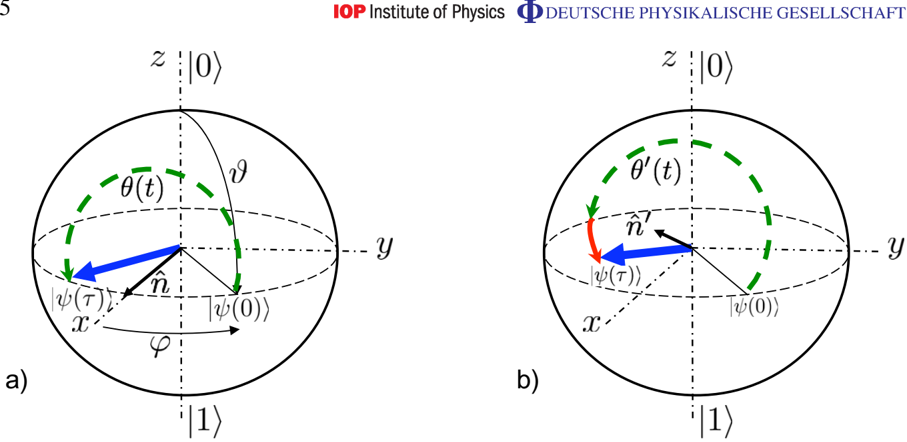
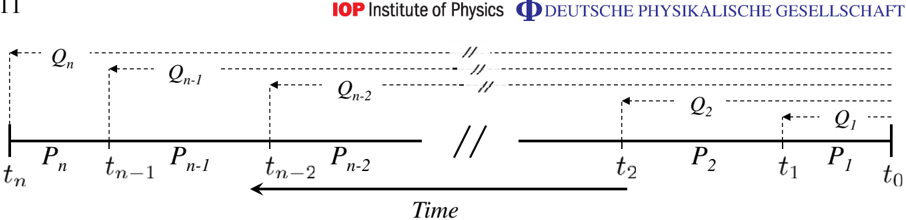
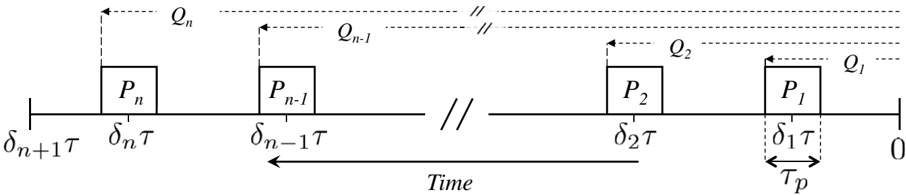
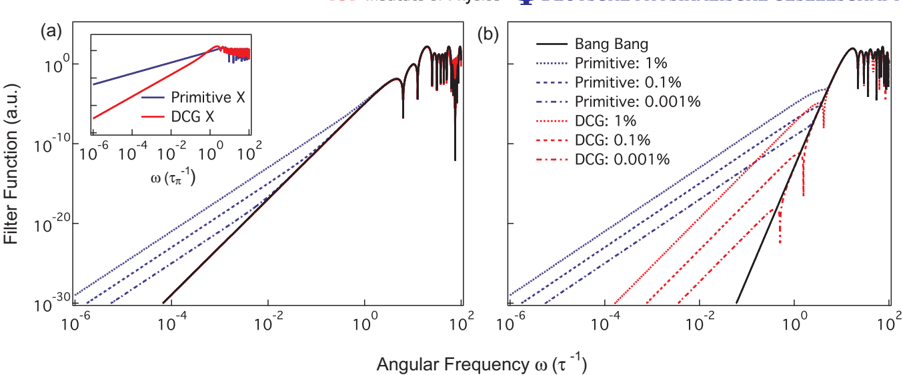
Verification
Claims the paper makes
The claims and statistics of this paper haven’t been checked yet.
Free: it reads the open-access text and checks the first 5 claims that cite a source we can check. Create a free account to check every claim.
Claims other papers make about this one
Each is checked against this paper’s own text: does it say what the citing paper says it does?
The cited source says what the claim attributes to it.
In the citing paper
“has produced noteworthy advances in quantum random walks, 38,39 quantum control, 40 open quantum systems, 41 and pioneering work on quantum neural networks, 42 quantum machine learning, 43 and quantum processes in the brain.44”
From Toward a quantum future for South Africa (2021) · cites this paper as [40]
Self-check
Percentages, sums and reported differences re-computed from the paper’s own numbers.
The self-check needs the paper’s full text.
Citations
Cites
Quantum Computation and Quantum Information: 10th Anniversary Edition
Nielsen, M. A., & Chuang, I. L. (2012) · doi:10.1017/cbo9780511976667 · Cited by 8,436
Effects of Diffusion on Free Precession in Nuclear Magnetic Resonance Experiments
Carr, H. Y., & Purcell, E. M. (1954) · Physical Review · doi:10.1103/physrev.94.630 · Cited by 6,466
Hahn, E. L. (1950) · Physical Review · doi:10.1103/physrev.80.580 · Cited by 5,085
On the exponential solution of differential equations for a linear operator
Magnus, W. (1954) · Communications on Pure and Applied Mathematics · doi:10.1002/cpa.3160070404 · Cited by 2,433
Dynamical Decoupling of Open Quantum Systems
Viola, L., Knill, E., & Lloyd, S. (1999) · Physical Review Letters · doi:10.1103/physrevlett.82.2417 · Cited by 1,808
Dynamical suppression of decoherence in two-state quantum systems
Viola, L., & Lloyd, S. (1998) · Physical Review A · doi:10.1103/physreva.58.2733 · Cited by 1,575
The Magnus expansion and some of its applications
Blanes, S., Casas, F., Oteo, J. A., & Ros, J. (2009) · Physics Reports · doi:10.1016/j.physrep.2008.11.001 · Cited by 1,157
Noise spectroscopy through dynamical decoupling with a superconducting flux qubit
Bylander, J., Gustavsson, S., Yan, F., Yoshihara, F., Harrabi, K., Fitch, G., Cory, D. G., Nakamura, Y., Tsai, J.-S., & Oliver, W. D. (2011) · Nature Physics · doi:10.1038/nphys1994 · Cited by 864
Universal Dynamical Decoupling of a Single Solid-State Spin from a Spin Bath
de Lange, G., Wang, Z. H., Ristè, D., Dobrovitski, V. V., & Hanson, R. (2010) · Science · doi:10.1126/science.1192739 · Cited by 802
Levitt, M. H. (1986) · Progress in Nuclear Magnetic Resonance Spectroscopy · doi:10.1016/0079-6565(86)80005-x · Cited by 776
Keeping a Quantum Bit Alive by Optimized π -Pulse Sequences
Uhrig, G. S. (2007) · Physical Review Letters · doi:10.1103/physrevlett.98.100504 · Cited by 716
Introduction to Quantum Control and Dynamics
D'Alessandro, D. (2007) · Chapman & Hall/CRC eBooks · doi:10.1201/9781584888833 · Cited by 680
Optimized dynamical decoupling in a model quantum memory
Biercuk, M. J., Uys, H., VanDevender, A. P., Shiga, N., Itano, W. M., & Bollinger, J. J. (2009) · Nature · doi:10.1038/nature07951 · Cited by 654
Self-citationDephasing time of GaAs electron-spin qubits coupled to a nuclear bath exceeding 200 μs
Bluhm, H., Foletti, S., Neder, I., Rudner, M., Mahalu, D., Umansky, V., & Yacoby, A. (2011) · Nature Physics · doi:10.1038/nphys1856 · Cited by 583
How to enhance dephasing time in superconducting qubits
Cywiński, Ł., Lutchyn, R. M., Nave, C. P., & Das Sarma, S. (2008) · Physical Review B · doi:10.1103/physrevb.77.174509 · Cited by 539
An Introduction to Quantum Filtering
Bouten, L., Van Handel, R., & James, M. R. (2007) · SIAM Journal on Control and Optimization · doi:10.1137/060651239 · Cited by 497
Tung, W.-K. (1985) · WORLD SCIENTIFIC eBooks · doi:10.1142/0097 · Cited by 494
On the controllability of quantum-mechanical systems
Huang, G. M., Tarn, T. J., & Clark, J. W. (1983) · Journal of Mathematical Physics · doi:10.1063/1.525634 · Cited by 403
Resilient quantum computation: error models and thresholds
Knill, E., Laflamme, R., & Zurek, W. H. (1998) · Proceedings of the Royal Society of London. Series A: Mathematical, Physical and Engineering Sciences · doi:10.1098/rspa.1998.0166 · Cited by 346
Zanardi, P. (1999) · Physics Letters A · doi:10.1016/s0375-9601(99)00365-5 · Cited by 318
Universal Dynamical Control of Quantum Mechanical Decay: Modulation of the Coupling to the Continuum
Kofman, A. G., & Kurizki, G. (2001) · Physical Review Letters · doi:10.1103/physrevlett.87.270405 · Cited by 316
Nurdin, H. I., James, M. R., & Petersen, I. R. (2009) · Automatica · doi:10.1016/j.automatica.2009.04.018 · Cited by 314
Using parity kicks for decoherence control
Vitali, D., & Tombesi, P. (1999) · Physical Review A · doi:10.1103/physreva.59.4178 · Cited by 305
Robust Dynamical Decoupling of Quantum Systems with Bounded Controls
Viola, L., & Knill, E. (2003) · Physical Review Letters · doi:10.1103/physrevlett.90.037901 · Cited by 280
Robust Dynamical Decoupling for Quantum Computing and Quantum Memory
Souza, A. M., Álvarez, G. A., & Suter, D. (2011) · Physical Review Letters · doi:10.1103/physrevlett.106.240501 · Cited by 276
Dynamically Error-Corrected Gates for Universal Quantum Computation
Khodjasteh, K., & Viola, L. (2009) · Physical Review Letters · doi:10.1103/physrevlett.102.080501 · Cited by 255
Unified Theory of Dynamically Suppressed Qubit Decoherence in Thermal Baths
Kofman, A. G., & Kurizki, G. (2004) · Physical Review Letters · doi:10.1103/physrevlett.93.130406 · Cited by 234
Single-ion quantum lock-in amplifier
Kotler, S., Akerman, N., Glickman, Y., Keselman, A., & Ozeri, R. (2011) · Nature · doi:10.1038/nature10010 · Cited by 218
Single-Spin Magnetometry with Multipulse Sensing Sequences
de Lange, G., Ristè, D., Dobrovitski, V. V., & Hanson, R. (2011) · Physical Review Letters · doi:10.1103/physrevlett.106.080802 · Cited by 209
Scaling of Dynamical Decoupling for Spin Qubits
Medford, J., Cywiński, Ł., Barthel, C., Marcus, C. M., Hanson, M. P., & Gossard, A. C. (2012) · Physical Review Letters · doi:10.1103/physrevlett.108.086802 · Cited by 191
Dynamical decoupling sequence construction as a filter-design problem
Biercuk, M. J., Doherty, A. C., & Uys, H. (2011) · Journal of Physics B: Atomic, Molecular and Optical Physics · doi:10.1088/0953-4075/44/15/154002 · Cited by 185
Self-citationExact results on dynamical decoupling by π pulses in quantum information processes
Uhrig, G. S. (2008) · New Journal of Physics · doi:10.1088/1367-2630/10/8/083024 · Cited by 169
Experimental Uhrig dynamical decoupling using trapped ions
Biercuk, M. J., Uys, H., VanDevender, A. P., Shiga, N., Itano, W. M., & Bollinger, J. J. (2009) · Physical Review A · doi:10.1103/physreva.79.062324 · Cited by 148
Self-citationPhoton-echo technique for reducing the decoherence of a quantum bit
Ban, M. (1998) · Journal of Modern Optics · doi:10.1080/09500349808231241 · Cited by 121
Combining dynamical decoupling with fault-tolerant quantum computation
Ng, H. K., Lidar, D. A., & Preskill, J. (2011) · Physical Review A · doi:10.1103/physreva.84.012305 · Cited by 113
Dynamical quantum error correction of unitary operations with bounded controls
Khodjasteh, K., & Viola, L. (2009) · Physical Review A · doi:10.1103/physreva.80.032314 · Cited by 113
Accuracy threshold for postselected quantum computation
Aliferis, P., Gottesman, D., & Preskill, J. (2008) · Quantum Information and Computation · doi:10.26421/qic8.3-4-1 · Cited by 96
High-Order Noise Filtering in Nontrivial Quantum Logic Gates
Green, T. J., Uys, H., & Biercuk, M. J. (2012) · Physical Review Letters · doi:10.1103/physrevlett.109.020501 · Cited by 90
Self-citationBang–Bang Operations from a Geometric Perspective
Byrd, M., & Lidar, D. A. (2002) · Quantum Information Processing · doi:10.1023/a:1019697017584 · Cited by 56
Modelling of quantum mechanical control systems
TARN, T. J., Huang, G. M., & Clark, J. W. (1980) · Mathematical Modelling · doi:10.1016/0270-0255(80)90011-1 · Cited by 56
Rigorous bounds on the performance of a hybrid dynamical-decoupling quantum-computing scheme
Khodjasteh, K., & Lidar, D. A. (2008) · Physical Review A · doi:10.1103/physreva.78.012355 · Cited by 48
Reducing sequencing complexity in dynamical quantum error suppression by Walsh modulation
Hayes, D., Khodjasteh, K., Viola, L., & Biercuk, M. J. (2011) · Physical Review A · doi:10.1103/physreva.84.062323 · Cited by 45
Self-citationClark, J. W., Lucarelli, D. G., & Tarn, T. (2003) · International Journal of Modern Physics B · doi:10.1142/s021797920302051x · Cited by 40
On the existence of the exponential solution of linear differential systems
Moan, P. C., Oteo, J. Á., & Ros, J. (1999) · Journal of Physics A Mathematical and General · doi:10.1088/0305-4470/32/27/311 · Cited by 32
Progress in compensating pulse sequences for quantum computationPreprint
Merrill, J. T., & Brown, K. R. (2012) · arXiv (Cornell University) · doi:10.48550/arxiv.1203.6392 · Cited by 27
Generalization of short coherent control pulses: extension to arbitrary rotations
Pasini, S., & Uhrig, G. S. (2008) · Journal of Physics A Mathematical and Theoretical · doi:10.1088/1751-8113/41/31/312005 · Cited by 20
Frequency-modulated pulses for quantum bits coupled to time-dependent baths
Fauseweh, B., Pasini, S., & Uhrig, G. S. (2012) · Physical Review A · doi:10.1103/physreva.85.022310 · Cited by 15
Research works printed but not linked: 5
- Wiseman H M and Milburn G J 2010 Quantum Measurement and Control (Cambridge: Cambridge University Press)
- Schlosshauer M 2008 Decoherence and the Quantum-to-Classical Transition (Berlin: Springer)
- Breuer H and Petruccione F 2002 The Theory of Open Quantum Systems (Oxford: Oxford University Press)
- Khodjasteh K, Biercuk M J and Viola L 2012 arXiv:1206.6087 · arXiv
- Spindler K 1994 Abstract Algebra with Applications vol 1 (New York: Dekker)
Cited by
Cryo-CMOS Circuits and Systems for Quantum Computing Applications
Patra, B., Incandela, R. M., van Dijk, J. P. G., Homulle, H. A. R., Song, L., Shahmohammadi, M., Staszewski, R. B., Vladimirescu, A., Babaie, M., Sebastiano, F., et al. (2018) · IEEE Journal of Solid-State Circuits · doi:10.1109/jssc.2017.2737549 · Cited by 551
“Therefore, the classical controller is also responsible for implementing qubit corrections, such as echo techniques [16], [22]–[24] and quantum error correction (QEC) schemes [25], designed to maintain the quantum state over longer periods.”
BackgroundColloquium: Protecting quantum information against environmental noise
Suter, D., & Álvarez, G. A. (2016) · Reviews of Modern Physics · doi:10.1103/revmodphys.88.041001 · Cited by 354
Digital zero noise extrapolation for quantum error mitigation
Giurgica-Tiron, T., Hindy, Y., LaRose, R., Mari, A., & Zeng, W. J. (2020) · 2020 IEEE International Conference on Quantum Computing and Engineering (QCE) · doi:10.1109/qce49297.2020.00045 · Cited by 241
“There are many examples of error-mitigating techniques, including probabilistic error cancellation [5], [6], randomized compiling [7], Pauli-frame randomization [8], dynamical decoupling [9]–[12], quantum optimal control [13], [14], etc.”
MethodDigital zero noise extrapolation for quantum error mitigation
Giurgica-Tiron, T., Hindy, Y., LaRose, R., Mari, A., & Zeng, W. J. (2020) · arXiv · doi:10.48550/arxiv.2005.10921 · Cited by 241
“There are many examples of error-mitigating techniques, including probabilistic error cancellation [5], [6], randomized compiling [7], Pauli-frame randomization [8], dynamical decoupling [9]–[12], quantum optimal control [13], [14], etc.”
MethodRobust Dynamic Hamiltonian Engineering of Many-Body Spin Systems
Choi, J., Zhou, H., Knowles, H. S., Landig, R., Choi, S., & Lukin, M. D. (2020) · Physical Review X · doi:10.1103/physrevx.10.031002 · Cited by 227
Metadata
- Authors
- Green, T. J., Sastrawan, J., Uys, H., & Biercuk, M. J.
- Affiliations
- The University of Sydney (AU)
- Corresponding author
- Biercuk, Michael J
- Venue
- New Journal of Physics
- Publisher
- IOP Publishing
- Published
- 2013-09-12
- Volume
- 15
- Issue
- 9
- Pages
- 095004
- ISSN
- 1367-2630 (ISSN-L)
- OpenAlex
- W2054475540
- Semantic Scholar
- 81038664039cf79b8ab536826729dc9756f20188
- Cited by
- 143
- References
- 46
- Citations by year
- 2026: 14 · 2025: 17 · 2024: 18 · 2023: 14 · 2022: 13 · 2021: 15 · 2020: 6 · 2019: 7 · 2018: 5 · 2017: 7 · 2016: 12 · 2015: 6 · 2014: 8 · 2013: 1
- FWCI
- 9.95
- Type
- journal article
- Language
- en
- Open access
- gold
- doi.org
- Licence
- cc-by
- iopscience.iop.org/info/page/text-and-data-mining (tdm)
- creativecommons.org/licenses/by/3.0/ (vor)
- Locations
- New Journal of Physics (publishedVersion, cc-by)
- arXiv (Cornell University) (submittedVersion)
- DOAJ (DOAJ: Directory of Open Access Journals) (submittedVersion)
- arXiv (Cornell University)
- Funders
- Office of the Director of National Intelligence
- Intelligence Advanced Research Projects Activity
- Army Research Office (W911NF-11-1-0068, W911NF, W911NF-11)
- Topics
- Physical Sciences › Computer Science › Artificial Intelligence › Quantum Computing Algorithms and Architecture
- Physical Sciences › Physics and Astronomy › Atomic and Molecular Physics, and Optics › Quantum Information and Cryptography
- Physical Sciences › Physics and Astronomy › Atomic and Molecular Physics, and Optics › Quantum Mechanics and Applications
- Keywords
- decoherence, qubit fidelity, filter functions, piecewise constant control, dynamical decoupling
About these checks
Registry, retraction, Cites and statistics results are computed, not judged, with one exception: a printed reference that no index lists is read once by a model before it counts as a citation error. Claims are extracted by a model and kept only when their quote appears verbatim in the text; each cited source is then checked, with a model’s help, for whether it says what the claim relies on. Those verdicts can be wrong — read the claim’s quote and the cited source before relying on one.
Statistics and arithmetic are recomputed, not judged.
Confidence bands are shown only for fields calibrated on our annotated test set. None is calibrated yet, so no band is shown.
What counts as a claim ›How we measure confidence ›How we check this ›
Are you an author, or do you see a problem with this page? Request a review
Data sources
Bibliographic data: Semantic Scholar, OpenAlex, Crossref.
Contains information from the Semantic Scholar Academic Graph Datasets, made available under the ODC Attribution License (ODC-BY 1.0).
Semantic Scholar’s data is described in: Kinney, R., et al. (2023). The Semantic Scholar Open Data Platform. arXiv:2301.10140.
