

Nuclear clocks for testing fundamental physics
Open accessThe DOI matches its Crossref record; 183 of the 183 references it cites were found in a registry or an index.
Abstract
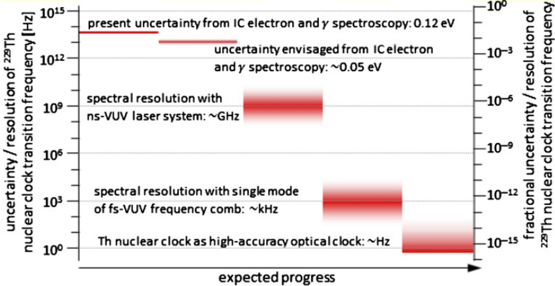
The low-energy, long-lived isomer in 229 Th, first studied in the 1970s as an exotic feature in nuclear physics, continues to inspire a multidisciplinary community of physicists. It has stimulated innovative ideas and studies that expand the understanding of atomic and nuclear structure of heavy elements and of the interaction of nuclei with bound electrons and coherent light. Using the nuclear resonance frequency, determined by the strong and electromagnetic interactions inside the nucleus, it is possible to build a highly precise nuclear clock that will be fundamentally different from all other atomic clocks based on resonant frequencies of the electron shell. The nuclear clock will open opportunities for highly sensitive tests of fundamental principles of physics, particularly in searches for violations of Einstein’s equivalence principle and for new particles and interactions beyond the standard model. It has been proposed to use the nuclear clock to search for variations of the electromagnetic and strong coupling constants and for dark matter searches. The 229 Th nuclear optical clock still represents a major challenge in view of the tremendous gap of nearly 17 orders of magnitude between the present uncertainty in the nuclear transition frequency (about 0.2 eV, corresponding to ∼48 THz) and the natural linewidth (in the mHz range). Significant experimental progress has been achieved in recent years, which will be briefly reviewed. Moreover, a research strategy will be outlined to consolidate our present knowledge about essential 229m Th properties, to determine the nuclear transition frequency with laser spectroscopic precision, realize different types of nuclear clocks and apply them in precision frequency comparisons with optical atomic clocks to test fundamental physics. Two avenues will be discussed: laser-cooled trapped 229 Th ions that allow experiments with complete control on the nucleus–electron interaction and minimal systematic frequency shifts, and Th-doped solids enabling experiments at high particle number and in different electronic environments.
Overview
The claims and statistics of this paper haven’t been checked yet.
Free: it reads the open-access text and checks the first 5 claims that cite a source we can check. Create a free account to check every claim.
Integrity signals
Registry
Cites
Statistics
Figures
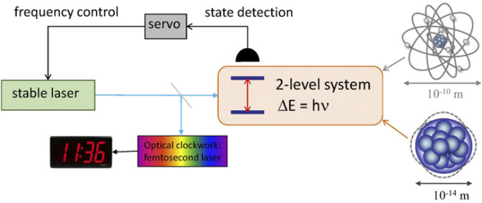
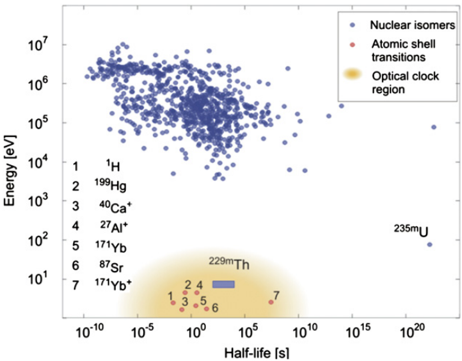
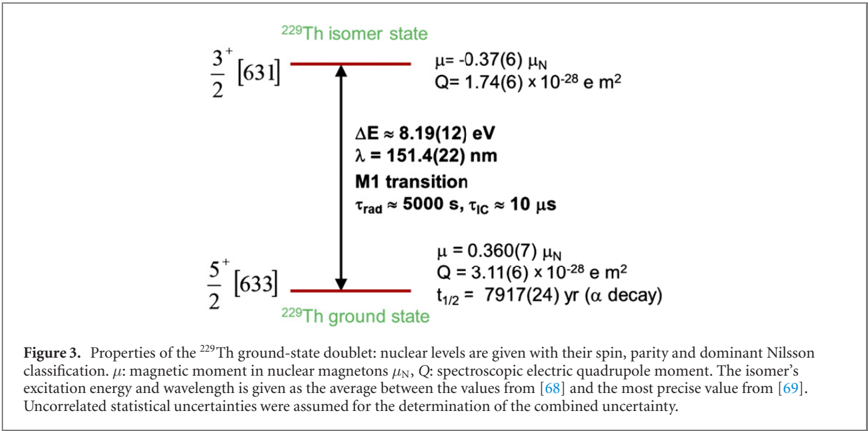
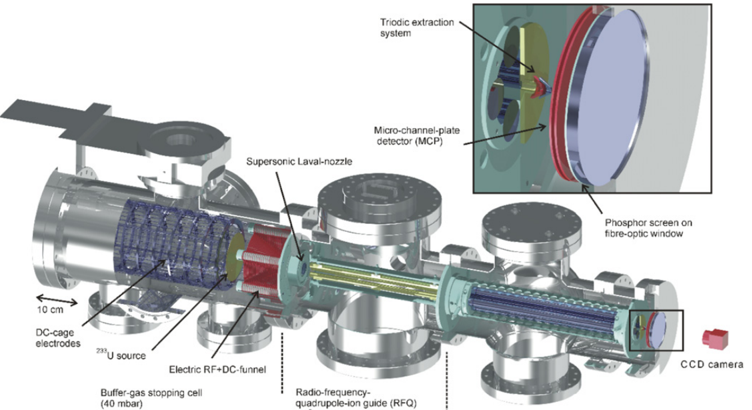
Verification
Claims the paper makes
The claims and statistics of this paper haven’t been checked yet.
Free: it reads the open-access text and checks the first 5 claims that cite a source we can check. Create a free account to check every claim.
Claims other papers make about this one
Each is checked against this paper’s own text: does it say what the citing paper says it does?
The cited source says what the claim attributes to it.
In the citing paper
“The assumption of a metric coupling is actually well tested in the Solar system through 4 types of experiments; see Will (1993Will ( , 2006) ) for a detailed discussion and Peik et al. (2021), Herrmann and Ra ¨tzel (2023) for recent developments on quantum tests of relativity.”
From Fundamental constants: from measurement to the universe, a window on gravitation and cosmology (2025) · cites this paper as Peik et al. 2021
Self-check
Percentages, sums and reported differences re-computed from the paper’s own numbers.
The self-check needs the paper’s full text.
Citations
Cites
From ultrasoft pseudopotentials to the projector augmented-wave method
Kresse, G., & Joubert, D. (1999) · Physical Review B · doi:10.1103/physrevb.59.1758 · Cited by 85,307
Ludlow, A. D., Boyd, M. M., Ye, J., Peik, E., & Schmidt, P. O. (2015) · Reviews of Modern Physics · doi:10.1103/revmodphys.87.637 · Cited by 2,385
Self-citationNIST Chemistry WebBook, NIST Standard Reference Database 69
Linstrom, P. J. (1997) · National Institute of Standards and Technology (NIST) · doi:10.18434/t4d303 · Cited by 1,665
Search for new physics with atoms and molecules
Safronova, M. S., Budker, D., DeMille, D., Kimball, D. F. J., Derevianko, A., & Clark, C. W. (2018) · Reviews of Modern Physics · doi:10.1103/revmodphys.90.025008 · Cited by 1,560
Self-citationDie Rotverschiebung von extragalaktischen Nebeln
Zwicky, F. (1933) · CaltechAUTHORS (California Institute of Technology) · doi:10.5169/seals-110267 · Cited by 1,327
Bertone, G., & Hooper, D. (2018) · Reviews of Modern Physics · doi:10.1103/revmodphys.90.045002 · Cited by 1,241
Planck 2015 results: I. Overview of products and scientific results
Planck Collaboration, Adam, R., Ade, P. A. R., Aghanim, N., Akrami, Y., Alves, M. I. R., Argüeso, F., Arnaud, M., Arroja, F., Ashdown, M., et al. (2016) · Astronomy & Astrophysics · doi:10.1051/0004-6361/201527101 · Cited by 1,014
Extreme ultraviolet high-harmonic spectroscopy of solids
Luu, T. T., Garg, M., Kruchinin, S. Y., Moulet, A., Hassan, M. T., & Goulielmakis, E. (2015) · Nature · doi:10.1038/nature14456 · Cited by 882
Varying Constants, Gravitation and Cosmology
Uzan, J.-P. (2011) · Living Reviews in Relativity · doi:10.12942/lrr-2011-2 · Cited by 740
(2019) · doi:10.1103/physrevlett.123.033201 · Cited by 711
Research works printed but not linked: 8
- Vorykhalov O V and Koltsov V V 1995 Bull. Russ. Acad. Sci.: Phys. 59 20
- Inamura T T and Mitsugashira T 2006 Laser 2004 (Berlin: Springer) pp 115-23
- Beck B R et al 2010 CERN-Proc.
- Moritz D 2020 Commissioning and characterization of the ion guide and mass selection system for the nuclear clock setup Master Thesis LMU Munich
- Krutov V A and Müller K 1958 Bull. Acad. Sci. USSR, Phys. Ser. 22 171
- Krutov V A and Müller K 1958 Bull. Acad. Sci. USSR, Phys. Ser. 22 161
- Strizhov V F and Tkalya E V 1991 Sov. Phys. -JETP 72 387
- Tkalya E V 1992 Sov. Phys. -JETP 75 200
Cited by
Multi-pass cells for post-compression of ultrashort laser pulses
Viotti, A.-L., Seidel, M., Escoto, E., Rajhans, S., Leemans, W. P., Hartl, I., & Heyl, C. M. (2022) · Optica · doi:10.1364/optica.449225 · Cited by 215
Frequency ratio of the 229mTh nuclear isomeric transition and the 87Sr atomic clock
Zhang, C., Ooi, T., Higgins, J. S., Doyle, J. F., von der Wense, L., Beeks, K., Leitner, A., Kazakov, G. A., Li, P., Thirolf, P. G., et al. (2024) · Nature · doi:10.1038/s41586-024-07839-6 · Cited by 194
“Akin to nuclear magnetic resonance, nuclear population in the ground and excited state manifold could be read out directly by using radiofrequency nuclear quadrupole resonance spectroscopy 8 , reducing the time needed for clock operation and thus achieving better clock stability.”
BackgroundMethodSelf-citationLaser Excitation of the Th-229 Nucleus
Tiedau, J., Okhapkin, M. V., Zhang, K., Thielking, J., Zitzer, G., Peik, E., Schaden, F., Pronebner, T., Morawetz, I., De Col, L. T., et al. (2024) · Physical Review Letters · doi:10.1103/physrevlett.132.182501 · Cited by 179
Self-citationObservation of the radiative decay of the 229Th nuclear clock isomer
Kraemer, S., Moens, J., Athanasakis-Kaklamanakis, M., Bara, S., Beeks, K., Chhetri, P., Chrysalidis, K., Claessens, A., Cocolios, T. E., Correia, J. G., et al. (2023) · Nature · doi:10.1038/s41586-023-05894-z · Cited by 181
Self-citationFilzinger, M., Dörscher, S., Lange, R., Klose, J., Steinel, M., Benkler, E., Peik, E., Lisdat, C., & Huntemann, N. (2023) · Physical Review Letters · doi:10.1103/physrevlett.130.253001 · Cited by 133
Self-citationEntanglement-enhanced quantum metrology: From standard quantum limit to Heisenberg limit
Huang, J., Zhuang, M., & Lee, C. (2024) · Applied Physics Reviews · doi:10.1063/5.0204102 · Cited by 160
Opportunities for fundamental physics research with radioactive molecules
Arrowsmith-Kron, G., Athanasakis-Kaklamanakis, M., Au, M., Ballof, J., Berger, R., Borschevsky, A., Breier, A. A., Buchinger, F., Budker, D., Caldwell, L., et al. (2024) · Reports on Progress in Physics · doi:10.1088/1361-6633/ad1e39 · Cited by 126
Self-citationDirect detection of ultralight dark matter bound to the Sun with space quantum sensors
Tsai, Y.-D., Eby, J., & Safronova, M. S. (2022) · Nature Astronomy · doi:10.1038/s41550-022-01833-6 · Cited by 65
“In addition to presently operating clocks, a number of new clocks are being developed, bases on molecules and molecular ions [95, 96], highly-charged ions (HCIs) [97], and (229)Th nucleus [98].”
BackgroundSelf-citationQuantum sensing for particle physics
Bass, S. D., & Doser, M. (2024) · Nature Reviews Physics · doi:10.1038/s42254-024-00714-3 · Cited by 96
“…sensing, the applications of quantum computing are also discussed in particle physics, for example, with processing of huge data sets or in improving trigger or data reconstruction performance in future collider experiments such as the high-luminosity upgrade of the Large Hadron Collider (LHC) 8 .”
Search for Dark-Matter-Induced Oscillations of Fundamental Constants Using Molecular Spectroscopy
Oswald, R., Nevsky, A., Vogt, V., Schiller, S., Figueroa, N. L., Zhang, K., Tretiak, O., Antypas, D., Budker, D., Banerjee, A., et al. (2022) · Physical Review Letters · doi:10.1103/physrevlett.129.031302 · Cited by 58
Laser spectroscopy of triply charged 229Th isomer for a nuclear clock
Yamaguchi, A., Shigekawa, Y., Haba, H., Kikunaga, H., Shirasaki, K., Wada, M., & Katori, H. (2024) · Nature · doi:10.1038/s41586-024-07296-1 · Cited by 88
“The low-energy nuclear transition between the ground state ( 229g Th) and isomer ( 229m Th) of 229 Th is regarded as a clock transition 1–4 .”
Physics Briefing Book: Input for the 2026 update of the European Strategy for Particle Physics
de Blas, J., Dunford, M., Bagnaschi, E., Freitas, A., Giardino, P. P., Grefe, C., Selvaggi, M., Taliercio, A., Bartels, F., Dainese, A., et al. (2025) · DESY Publication Database (PUBDB) (Deutsches Elektronen-Synchrotron) · doi:10.17181/cern.35ch.2o2p · Cited by 106
High-frequency gravitational wave detection via optical frequency modulation
Bringmann, T., Domcke, V., Fuchs, E., & Kopp, J. (2023) · Physical review. D/Physical review. D. · doi:10.1103/physrevd.108.l061303 · Cited by 72
“229 Th nuclear clocks [32, 33] are expected to reach even better precision.”
Background229ThF4 thin films for solid-state nuclear clocks
Zhang, C., von der Wense, L., Doyle, J. F., Higgins, J. S., Ooi, T., Friebel, H. U., Ye, J., Elwell, R., Terhune, J. E. S., Morgan, H. W. T., et al. (2024) · Nature · doi:10.1038/s41586-024-08256-5 · Cited by 77
Resonant X-ray excitation of the nuclear clock isomer 45Sc
Shvyd'ko, Y. V., Röhlsberger, R., Kocharovskaya, O. A., Evers, J., Geloni, G., Liu, P., Shu, D., Miceli, A., Stone, B., Hippler, W., et al. (2023) · Nature · doi:10.1038/s41586-023-06491-w · Cited by 61
Expanding Nuclear Physics Horizons with the Gamma Factory
Budker, D., Berengut, J. C., Flambaum, V. V., Gorchtein, M., Jin, J., Karbstein, F., Krasny, M. W., Litvinov, Y. A., Pálffy, A., Pascalutsa, V., et al. (2022) · Annalen der Physik · doi:10.1002/andp.202100284 · Cited by 60
Self-citationControlling 229Th isomeric state population in a VUV transparent crystal
Hiraki, T., Okai, K., Bartokos, M., Beeks, K., Fujimoto, H., Fukunaga, Y., Haba, H., Kasamatsu, Y., Kitao, S., Leitner, A., et al. (2024) · Nature Communications · doi:10.1038/s41467-024-49631-0 · Cited by 61
“This isomeric state can be excited by vacuum ultraviolet (VUV) lasers and 229 Th has been proposed as a reference transition for ultra-precise nuclear clocks.”
BackgroundSelf-citationFung, L. W. H., Li, L., Liu, T., Luu, H. N., Qiu, Y.-C., & Tye, S.-H. H. (2021) · Journal of Cosmology and Astroparticle Physics · doi:10.1088/1475-7516/2021/08/057 · Cited by 52
Thermal misalignment of scalar dark matter
Batell, B., & Ghalsasi, A. (2023) · Physical review. D/Physical review. D. · doi:10.1103/physrevd.107.l091701 · Cited by 44
Searching for Dark Matter with the Th 229 Nuclear Lineshape from Laser Spectroscopy
Fuchs, E., Kirk, F., Madge, E., Paranjape, C., Peik, E., Perez, G., Ratzinger, W., & Tiedau, J. (2025) · Physical Review X · doi:10.1103/physrevx.15.021055 · Cited by 52
“For comparison, current bounds from atomic clocks [29, 31–34] and other oscillators [30, 35, 36] are shown in dark and light cyan respectively, whereas a projection for a future quantum projection noise (QPN)-limited single-ion nuclear clock [11, 50, 51] is indicated by the blue line.”
Self-citationFine-structure constant sensitivity of the Th-229 nuclear clock transition
Beeks, K., Kazakov, G. A., Schaden, F., Morawetz, I., Col, L. T. D., Riebner, T., Bartokos, M., Šikorský, T., Schumm, T., Zhang, C., et al. (2025) · Nature Communications · doi:10.1038/s41467-025-64191-7 · Cited by 57
“This nucleus represents a unique opportunity to build a high-precision nuclear clock (see review [1] and references therein), as the transition is very narrow, insensitive to external perturbations, and within the range of tabletop narrow linewidth lasers.”
Self-citationTemperature Sensitivity of a Thorium-229 Solid-State Nuclear Clock
Higgins, J. S., Ooi, T., Doyle, J. F., Zhang, C., Ye, J., Beeks, K., Šikorský, T., & Schumm, T. (2025) · Physical Review Letters · doi:10.1103/physrevlett.134.113801 · Cited by 67
Self-citationFundamental constants: from measurement to the universe, a window on gravitation and cosmology
Uzan, J.-P. (2025) · Living Reviews in Relativity · doi:10.1007/s41114-025-00059-y · Cited by 36
An automatic frequency stabilized laser with hertz-level linewidth
Guo, X., Zhang, L., Liu, J., Chen, L., Fan, L., Xu, G., Liu, T., Dong, R., & Zhang, S. (2021) · Optics & Laser Technology · doi:10.1016/j.optlastec.2021.107498 · Cited by 37
The COSMIC WISPers White Paper: The physics case for Weakly Interacting Slim ParticlesPreprint
Arza, A., Aybas, D., Balaji, S., Balkin, R., Bartnick, K., Baynham, C. F. A., Bloch, I. M., Bonati, C., Budker, D., Burrage, C., et al. (2026) · arXiv (Cornell University) · doi:10.48550/arxiv.2603.03433 · Cited by 51
Sensitivity of nuclear clocks to new physics
Caputo, A., Gazit, D., Hammer, H. ‐., Kopp, J., Paz, G., Pérez, G., & Springmann, K. (2025) · Physical Review C · doi:10.1103/l29n-gt5j · Cited by 35
Quantum Sensors for High Energy PhysicsPreprint
Chou, A. S., Irwin, K. D., Maruyama, R. H., Baker, O. K., Bartram, C., Berggren, K. K., Cancelo, G. I., Carney, D., Chang, C. L., Cho, H.-M., et al. (2023) · arXiv (Cornell University) · doi:10.48550/arxiv.2311.01930 · Cited by 38
Self-citationPrecision Calculation of Hyperfine Constants for Extracting Nuclear Moments of Th 229
Porsev, S. G., Safronova, M. S., & Kozlov, M. (2021) · Physical Review Letters · doi:10.1103/physrevlett.127.253001 · Cited by 42
Self-citationShabaev, V. M., Glazov, D. A., Ryzhkov, A. M., Brandau, C., Plunien, G., Quint, W., Volchkova, A. M., & Zinenko, D. V. (2022) · Physical Review Letters · doi:10.1103/physrevlett.128.043001 · Cited by 32
Thirolf, P. G., Kraemer, S., Moritz, D., & Scharl, K. (2024) · The European Physical Journal Special Topics · doi:10.1140/epjs/s11734-024-01098-2 · Cited by 40
Self-citationTunable VUV frequency comb for 229m Th nuclear spectroscopy
Zhang, C., Li, P., Jiang, J., von der Wense, L., Doyle, J., Fermann, M. E., & Ye, J. (2022) · Optics Letters · doi:10.1364/ol.473006 · Cited by 36
Laser-induced quenching of the Th-229 nuclear clock isomer in calcium fluoride
Schaden, F., Riebner, T., Morawetz, I., Col, L. T. D., Kazakov, G. A., Beeks, K., Šikorský, T., Schumm, T., Zhang, K., Lal, V., et al. (2025) · Physical Review Research · doi:10.1103/physrevresearch.7.l022036 · Cited by 35
Self-citationFrequency reproducibility of solid-state thorium-229 nuclear clocks
Ooi, T., Doyle, J. F., Zhang, C., Higgins, J. S., Ye, J., Beeks, K., Šikorský, T., & Schumm, T. (2026) · Nature · doi:10.1038/s41586-025-09999-5 · Cited by 52
“This 229m Th transition has been proposed 17,18 for a next-generation optical clock 5,19,20 .”
Self-citationA thorium-229 optical nuclear clock with feedback loop
Col, L. T. D., Riebner, T., Morawetz, I., Schneider, F., Sempelmann, N., Schlachet-Lépinay, J., Schaden, F., Bartokos, M., Kazakov, G. A., Beeks, K., et al. (2026) · Nature · doi:10.1038/s41586-026-11084-4 · Cited by 33
“It is expected to be more robust against external perturbations 3,4 and to provide enhanced sensitivity in clock-based tests of the fundamental principles of physics 5,6 .”
Self-citationA nuclear clock synchronized to 229Th
Huang, B., Yan, G., Xiao, Q., Bu, W., Zhao, C., Zhang, Z., Yan, C., Chen, Z.-A., Zhang, P., Penyazkov, G., et al. (2026) · Nature · doi:10.1038/s41586-026-11122-1 · Cited by 29
“A nuclear clock transfers the frequency reference from an electronic to a nuclear transition, and the uniquely low-lying, laser-accessible isomeric transition in 229 Th currently offers the most practical route to compact, robust timekeeping and sensitive tests of fundamental physics 3–8 .”
Coherent fibre link for synchronization of delocalized atomic clocks
Cizek, M., Pravdova, L., Pham, T. M., Lesundak, A., Hrabina, J., Lazar, J., Pronebner, T., Aeikens, E., Premper, J., Havliš, O., et al. (2022) · Optics Express · doi:10.1364/oe.447498 · Cited by 27
Self-citationFrom axion quality and naturalness problems to a high-quality ZN QCD relaxion
Banerjee, A., Eby, J., & Pérez, G. (2023) · Physical review. D/Physical review. D. · doi:10.1103/physrevd.107.115011 · Cited by 26
Intensity interferometry for ultralight bosonic dark matter detection
Masia‐Roig, H., Figueroa, N. L., Bordon, A., Smiga, J. A., Stadnik, Y. V., Budker, D., Centers, G. P., Gramolin, A. V., Hamilton, P., Khamis, S., et al. (2023) · Physical review. D/Physical review. D. · doi:10.1103/physrevd.108.015003 · Cited by 26
“[110] Ekkehard Peik, Thorsten Schumm, MS Safronova, Adriana Palffy, Johannes Weitenberg, and Peter G Thirolf.”
BackgroundSearching for a fifth force with atomic and nuclear clocks
Brzemiński, D., Chacko, Z., Dev, A., Flood, I., & Hook, A. (2022) · Physical review. D/Physical review. D. · doi:10.1103/physrevd.106.095031 · Cited by 25
Deep-Learning Approach for the Atomic Configuration Interaction Problem on Large Basis Sets
Bilous, P. V., Pálffy, A., & Marquardt, F. (2023) · Physical Review Letters · doi:10.1103/physrevlett.131.133002 · Cited by 24
Self-citationDetection of bosenovae with quantum sensors on Earth and in space
Arakawa, J., Eby, J., Safronova, M. S., Takhistov, V., & Zaheer, M. H. (2024) · Physical review. D/Physical review. D. · doi:10.1103/physrevd.110.075007 · Cited by 27
“An alternate solid-state scheme has also been suggested which can not be implemented with atomic clocks (see the review [116] and references therein).”
BackgroundInfluentialSelf-citationDriven electronic bridge processes via defect states in Th229 -doped crystals
Nickerson, B. S., Pimon, M., Bilous, P. V., Gugler, J., Kazakov, G. A., Šikorský, T., Beeks, K., Grüneis, A., Schumm, T., & Pálffy, A. (2021) · Physical Review A · doi:10.1103/physreva.103.053120 · Cited by 25
“[5] E Peik, T Schumm, M Safronova, A Pálffy, J Weitenberg, and P Thirolf.”
BackgroundSelf-citationRelaxion dark matter from stochastic misalignment
Chatrchyan, A., & Servant, G. (2023) · Journal of Cosmology and Astroparticle Physics · doi:10.1088/1475-7516/2023/06/036 · Cited by 23
Optical atomic clocks: defining the future of time and frequency metrology
Fortier, T. M., Luiten, A. N., & Margolis, H. S. (2026) · Optica · doi:10.1364/optica.575770 · Cited by 45
Prospects of nuclear-coupled-dark-matter detection via correlation spectroscopy of I 2 + and Ca +
Madge, E., Pérez, G., & Meir, Z. (2024) · Physical review. D/Physical review. D. · doi:10.1103/physrevd.110.015008 · Cited by 24
“We further indicate the projected sensitivities of a molecular SrOH clock [40] (orange) and a hypothetical nuclear clock based on 229 m Th [7, 68, 69] (purple) by dashed lines, assuming a one-year campaign length in both.”
BackgroundScheme for the excitation of thorium-229 nuclei based on electronic bridge excitation
Li, L., Li, Z., Wang, C., Gan, W.-T., Hua, X., & Tong, X. (2023) · Nuclear Science and Techniques · doi:10.1007/s41365-023-01169-4 · Cited by 23
Low-repetition-rate optical frequency comb
Canella, F., Weitenberg, J., Thariq, M., Schmid, F., Dwivedi, P., Galzerano, G., Hänsch, T. W., Udem, T., & Ozawa, A. (2023) · Optica · doi:10.1364/optica.506353 · Cited by 23
Self-citationBeeks, K., Šikorský, T., Schaden, F., Pressler, M., Schneider, F., Koch, B., Pronebner, T., Werban, D., Hosseini, N., Kazakov, G. A., et al. (2024) · Physical review. B./Physical review. B · doi:10.1103/physrevb.109.094111 · Cited by 27
Self-citationNuclear coherent population transfer to the Th229m isomer using x-ray pulses
Kirschbaum, T., Minkov, N., & Pálffy, A. (2022) · Physical Review C · doi:10.1103/physrevc.105.064313 · Cited by 19
Self-citationEffects of Electrons on Nuclear Clock Transition Frequency in Th229 Ions
Dzuba, V. A., & Flambaum, V. V. (2023) · Physical Review Letters · doi:10.1103/physrevlett.131.263002 · Cited by 24
“Nucleus of the 229 Th isotope has a unique feature of having very low-energy excitation connected to the ground state by the magnetic dipole (M1) transition (see, e.g. Reviews [1, 2] and references therein).”
BackgroundRadiative decay of the Th 229 m nuclear clock isomer in different host materials
Pineda, S., Chhetri, P., Bara, S., Elskens, Y., Casci, S., Alexandrova, A. N., Au, M., Athanasakis-Kaklamanakis, M., Bartokos, M., Beeks, K., et al. (2025) · Physical Review Research · doi:10.1103/physrevresearch.7.013052 · Cited by 28
Self-citationNelson-Barr ultralight dark matter
Dine, M., Pérez, G., Ratzinger, W., & Savoray, I. (2025) · Physical review. D/Physical review. D. · doi:10.1103/physrevd.111.015049 · Cited by 19
Isomeric Population Transfer of the Th 229 Nucleus via Hyperfine Electronic Bridge
Wang, W., Zou, F., Fritzsche, S., & Li, Y. (2024) · Physical Review Letters · doi:10.1103/physrevlett.133.223001 · Cited by 21
Searching for coupled, hyperlight scalars across cosmic history
Baryakhtar, M., Simon, O., & Weiner, Z. J. (2025) · Physical review. D/Physical review. D. · doi:10.1103/pyls-gvyr · Cited by 19
Trap-Induced ac Zeeman Shift of the Thorium-229 Nuclear Clock Frequency
Beloy, K. (2023) · Physical Review Letters · doi:10.1103/physrevlett.130.103201 · Cited by 24
“The promise of unprecedented clock accuracy, coupled with the leverage such accuracy affords tests of fundamental physics [12, 13], has stimulated intense research into the development of this clock [14, 15].”
BackgroundExcitation and probing of low-energy nuclear states at high-energy storage rings
Jin, J., Bekker, H., Kirschbaum, T., Litvinov, Y. A., Pálffy, A., Sommerfeldt, J., Surzhykov, A., Thirolf, P. G., & Budker, D. (2023) · Physical Review Research · doi:10.1103/physrevresearch.5.023134 · Cited by 19
“This could be due to unexpected non-radiative decay processes in the crystal/solid-state environment of these experiments [6].”
BackgroundInfluentialSelf-citationSatellite-based positioning enhanced by quantum synchronization
Nande, S. S., Rossi, T., Habibie, M. I., Barhoumi, M., Palaparthy, K., Mansouri, W., Raju, A., Bassoli, R., Cianca, E., Fitzek, F. H. P., et al. (2024) · Computer Networks · doi:10.1016/j.comnet.2024.110734 · Cited by 19
Zitzer, G., Tiedau, J., Düllmann, C. E., Okhapkin, M. V., & Peik, E. (2025) · Physical Review A · doi:10.1103/physreva.111.l050802 · Cited by 21
Self-citationBosenovae with quadratically-coupled scalars in quantum sensing experiments
Arakawa, J., Zaheer, M. H., Eby, J., Takhistov, V., & Safronova, M. S. (2024) · Journal of High Energy Physics · doi:10.1007/jhep08(2024)222 · Cited by 17
Self-citationDzuba, V. A., Flambaum, V. V., & Mansour, A. J. (2024) · Physical review. D/Physical review. D. · doi:10.1103/physrevd.110.055022 · Cited by 15
Efficient production of Th 229 m via nuclear excitation by electron capture
Zhao, J., Pálffy, A., Keitel, C. H., & Wu, Y. (2024) · Physical Review C · doi:10.1103/physrevc.110.014330 · Cited by 15
Self-citationLi, F.-C., Qiao, H., Tang, Y.-B., & Shi, T.-Y. (2021) · Physical Review A · doi:10.1103/physreva.104.062808 · Cited by 16
Snowmass 2021: Quantum Sensors for HEP Science -- Interferometers, Mechanics, Traps, and ClocksPreprint
Buchmueller, O. L., Carney, D., Cecil, T., Ellis, J. R., Ruíz, R. F. G., Geraci, A. A., Hanneke, D., Hogan, J. M., Hutzler, N. R., Jayich, A. M., et al. (2022) · arXiv (Cornell University) · doi:10.48550/arxiv.2203.07250 · Cited by 18
Self-citationSubstantial Nuclear Hyperfine Mixing Effect in Boronlike Pb 205 Ions
Wang, W., & Wang, X. (2024) · Physical Review Letters · doi:10.1103/physrevlett.133.032501 · Cited by 13
Skyrme-Hartree-Fock-BCS approach to Th 229 m and neighboring nuclei
Minkov, N., Pálffy, A., Quentin, P., & Bonneau, L. (2024) · Physical Review C · doi:10.1103/physrevc.110.034327 · Cited by 17
Self-citationLow-lying energy levels of 229Th35+ and the electronic bridge process
Porsev, S. G., Cheung, C., & Safronova, M. S. (2021) · Quantum Science and Technology · doi:10.1088/2058-9565/ac08f1 · Cited by 14
Self-citationSympathetic cooling of trapped Th3+ alpha-recoil ions for laser spectroscopy
Zitzer, G., Tiedau, J., Okhapkin, M. V., Zhang, K., Mokry, C., Runke, J., Düllmann, C. E., & Peik, E. (2024) · Physical Review A · doi:10.1103/physreva.109.033116 · Cited by 13
Self-citationQuantum metrology algorithms for dark matter searches with clocks
Zaheer, M. H., Matjelo, N. J., Hume, D. B., Safronova, M. S., & Leibrandt, D. R. (2025) · Physical Review A · doi:10.1103/physreva.111.012601 · Cited by 17
Self-citationϕ-dwarfs: white dwarfs probe quadratically coupled scalars
Bartnick, K., Springmann, K., Stelzl, S., & Weiler, A. (2026) · Journal of High Energy Physics · doi:10.1007/jhep04(2026)061 · Cited by 14
Photoexcitation of the Th 229 nuclear clock transition using twisted light
Kirschbaum, T., Schumm, T., & Pálffy, A. (2024) · Physical Review C · doi:10.1103/physrevc.110.064326 · Cited by 14
Self-citationNuclear clock based on the Th v ion
Flambaum, V. V., Dzuba, V. A., & Peik, E. (2025) · Physical Review A · doi:10.1103/zcsk-3lw5 · Cited by 12
“The nucleus of the 229 Th isotope has the unique feature of having a very low-energy excited state connected to the ground state by a magnetic dipole (M1) transition (see, e.g. reviews [1, 2] and references therein).”
Self-citationXiao, Q., Penyazkov, G., Yu, R., Huang, B., Li, J., Shi, J., Yu, Y., Mo, Y., & Ding, S. (2026) · Physical Review Applied · doi:10.1103/cw5h-644b · Cited by 15
Si, R., Shi, C., Xue, N., Kong, X., Chen, C., Tu, B., & G., Y. (2025) · Science China Physics Mechanics and Astronomy · doi:10.1007/s11433-025-2675-4 · Cited by 11
Background-enhanced axion force by axion dark matter
Cheng, Y., & Ge, S. (2026) · Physical review. D/Physical review. D. · doi:10.1103/mzcz-n7r2 · Cited by 9
“Note added: Upon the completion of our manuscript, we note a paper [47] on the same topic is posted on arXiv.”
Solid-state Th229 nuclear laser with two-photon pumping
Xu, H., Tang, H., Wang, G., Li, C., Li, B., Cappellaro, P., & Li, J. (2023) · Physical Review A · doi:10.1103/physreva.108.l021502 · Cited by 12
“While 229 Th can be pumped with other schemes under development or operation [2], the nuclear laser pumping may have its own advantage.”
BackgroundTheory of Coulomb excitation of the Th229 nucleus by protons
Li, T., Zhang, H., & Wang, X. (2023) · Physical Review C · doi:10.1103/physrevc.108.l041602 · Cited by 9
Pr 10 + as a candidate for a high-accuracy optical clock for tests of fundamental physics
Porsev, S. G., Cheung, C., Safronova, M. S., Bekker, H., Rehbehn, N.-H., López-Urrutia, J. R. C., & Brewer, S. M. (2024) · Physical Review A · doi:10.1103/physreva.110.042823 · Cited by 10
Self-citationLaser assisted two-photon electron-nucleus resonance as applied to producing the Th 229 m isomer
Karpeshin, F. F. (2024) · Physical Review C · doi:10.1103/physrevc.110.054307 · Cited by 8
Morgan, H. W. T., Elwell, R., Terhune, J. E. S., Tan, H. B. T., Perera, U. C., Derevianko, A., Alexandrova, A. N., & Hudson, E. R. (2025) · Applied Physics Letters · doi:10.1063/5.0247867 · Cited by 8
Setup for the Ionic Lifetime Measurement of the 229mTh3+ Nuclear Clock Isomer
Scharl, K., Ding, S., Holthoff, G., Hussain, M. I., Kraemer, S., Löbell, L., Moritz, D., Rozibakieva, T., Seiferle, B., Zacherl, F., et al. (2023) · Atoms · doi:10.3390/atoms11070108 · Cited by 11
Self-citationMotional quantum metrology in a Penning trap
Cerrillo, J., & Rodríguez, D. (2021) · Europhysics Letters (EPL) · doi:10.1209/0295-5075/134/38001 · Cited by 12
Microscopic study of low-lying states in odd-mass nuclei for atomic electric dipole moment searchesPreprint
Zhou, E. F., & Yao, J. M. (2025) · arXiv (Cornell University) · doi:10.48550/arxiv.2511.05984 · Cited by 9
Nuclear interferometer for ultralight dark matter detection
Banks, H., Fuchs, E., & Mccullough, M. P. (2026) · Physical review. D/Physical review. D. · doi:10.1103/ntb7-6w5g · Cited by 9
“Frequency comparisons between nuclear and atomic optical clocks could offer a highly sensitive probe of ULDM in the near future [29, 65–68].”
Identification of highly forbidden optical transitions in highly charged ions
Chen, S., Spieß, L. J., Wilzewski, A., Wehrheim, M., Dietze, K., Vybornyi, I., Hammerer, K., López-Urrutia, J. R. C., & Schmidt, P. O. (2024) · Physical Review Applied · doi:10.1103/physrevapplied.22.054059 · Cited by 9
A cryogenic Paul trap for probing the nuclear isomeric excited state $$^{229\text {m}}$$Th$$^{3+}$$
Moritz, D., Scharl, K., Wiesinger, M., Holthoff, G., Teschler, T., Hussain, M. I., López-Urrutia, J. R. C., Dickel, T., Ding, S., Düllmann, C. E., et al. (2025) · The European Physical Journal D · doi:10.1140/epjd/s10053-025-01071-1 · Cited by 10
“The wavelength of these lasers provides sufficient separation from the 690 nm resonance transition 5f F 5 / 2 → 6d D 5 / 2 of 229(m) Th 3+ used for fluorescence detection of the isomer [63,64].”
Self-citationQuantum theory of isomeric excitation of Th229 in strong laser fields
Wang, W., & Wang, X. (2023) · Physical Review Research · doi:10.1103/physrevresearch.5.043232 · Cited by 7
The ticking of thorium nuclear optical clocks: a developmental perspective
Tong, X., Hua, L., Hua, X., & Liu, X. (2025) · National Science Review · doi:10.1093/nsr/nwaf083 · Cited by 8
Extending Our Knowledge about the 229Th Nuclear Isomer
Seiferle, B., Moritz, D., Scharl, K., Ding, S., Zacherl, F., Löbell, L., & Thirolf, P. G. (2022) · Atoms · doi:10.3390/atoms10010024 · Cited by 9
“It could especially be employed in the search for new physics beyond the standard model [5].”
BackgroundSelf-citationModeling frequency instability in high-quality resonant experiments
Cui, H.-R., Kalia, S., & Liu, Z. (2026) · Physical review. D/Physical review. D. · doi:10.1103/w43x-xwh9 · Cited by 6
“Precision sensing tools are utilized in a wide variety of applications, ranging from ultraprecise clocks [1, 2] to measurements of magnetic [3, 4] or gravitational fields [5] to searches for new particles [6–8].”
Nuclear excitation by near-resonant electron transitions in Th 39 + 229 ions
Kozioł, K., & Rzadkiewicz, J. (2025) · Physical Review C · doi:10.1103/physrevc.111.064302 · Cited by 6
Prompt Frequency Stabilization of Ultra-Stable Laser via Improved Mean Shift Algorithm
Fan, L., Jiao, D., Liu, J., Chen, L., Xu, G., Zhang, L., Liu, J., Dong, R., Liu, T., & Zhang, S. (2022) · Electronics · doi:10.3390/electronics11091319 · Cited by 6
Amiri, M., & Saadati-Niari, M. (2023) · The European Physical Journal A · doi:10.1140/epja/s10050-023-00954-4 · Cited by 6
Intra-oscillator high harmonic source reaching 100-eV photon energy
Drs, J., Trawi, F., Müller, M., Fischer, J., Wittwer, V. J., & Südmeyer, T. (2024) · Optics Express · doi:10.1364/oe.522104 · Cited by 6
Role of triple excitations in calculating different properties of Ba+
Porsev, S. G., & Safronova, M. S. (2021) · Physical Review A · doi:10.1103/physreva.103.042815 · Cited by 6
Self-citationCross section of the Coulomb excitation of by low energy muons *
Tkalya, E. V. (2021) · Chinese Physics C · doi:10.1088/1674-1137/ac0b3a · Cited by 6
New Developments in the Production and Research of Actinide Elements
Laatiaoui, M., & Raeder, S. (2022) · Atoms · doi:10.3390/atoms10020061 · Cited by 7
“have been proposed [86], although several open questions concerning this isotope are still being investigated [87,88].”
BackgroundZhang, J., Wei, Q., Fan, W., Cao, Z., Luo, K., Tan, C., Zhang, X. H., Deng, Z., Zhang, Z., Li, X., et al. (2023) · Frontiers in Astronomy and Space Sciences · doi:10.3389/fspas.2023.1265919 · Cited by 6
“Nuclear isomers have been widely studied due to their fascinating applications, including medical imaging (Habs et al., 2011; Pan et al., 2021), nuclear clocks (Peik et al., 2021), and nuclear batteries (Prelas et al., 2014).”
Prospects for detecting new dark physics with the next generation of atomic clocks
Elder, B., Mentasti, G., Pasatembou, E., Baynham, C. F. A., Buchmueller, O. L., Contaldi, C., de Rham, C., Hobson, R., & Tolley, A. J. (2025) · Physical review. D/Physical review. D. · doi:10.1103/vghm-4s5p · Cited by 9
Li, F.-C., Qiao, H., Tang, Y.-B., & Shi, T.-Y. (2022) · Journal of Quantitative Spectroscopy and Radiative Transfer · doi:10.1016/j.jqsrt.2022.108241 · Cited by 5
Calculation of energies and hyperfine-structure constants of U+233 and U233
Porsev, S. G., Cheung, C., & Safronova, M. S. (2022) · Physical Review A · doi:10.1103/physreva.106.042810 · Cited by 5
Self-citation
Metadata
- Authors
- Peik, E., Schumm, T., Safronova, M. S., Pálffy, A., Weitenberg, J., & Thirolf, P. G.
- Affiliations
- Physikalisch-Technische Bundesanstalt (DE)
- TU Wien (AT)
- University of Delaware (US)
- Friedrich-Alexander-Universität Erlangen-Nürnberg (DE)
- Max Planck Institute of Quantum Optics (DE)
- Ludwig-Maximilians-Universität München (DE)
- Corresponding author
- Thirolf, P G
- Venue
- Quantum Science and Technology
- Publisher
- IOP Publishing
- Published
- 2021-04-15
- Volume
- 6
- Issue
- 3
- Pages
- 034002
- ISSN
- 2058-9565 (ISSN-L)
- OpenAlex
- W3135052081
- Cited by
- 154
- References
- 183
- Citations by year
- 2026: 21 · 2025: 37 · 2024: 41 · 2023: 28 · 2022: 17 · 2021: 10
- FWCI
- 10.48
- Type
- journal article
- Language
- en
- Open access
- hybrid
- doi.org
- Licence
- cc-by
- creativecommons.org/licenses/by/4.0/ (vor)
- iopscience.iop.org/info/page/text-and-data-mining (tdm)
- Locations
- Quantum Science and Technology (publishedVersion, cc-by)
- OPUS FAU (Kooperativer Bibliotheksverbund Berlin-Brandenburg (KOBV), on behalf of the Universitätsbibliothek Erlangen-Nürnberg) (submittedVersion, cc-by)
- Funders
- European Association of National Metrology Institutes (EMPIR 17FUN07 ‘Coulomb Crystals for Clocks’)
- H2020 European Research Council (Synergy grant ‘ThoriumNuclearClock’ Grant Agreemen)
- Austrian Science Fund (P33627)
- Topics
- Physical Sciences › Physics and Astronomy › Atomic and Molecular Physics, and Optics › Advanced Frequency and Time Standards
- Physical Sciences › Physics and Astronomy › Atomic and Molecular Physics, and Optics › Atomic and Molecular Physics
- Physical Sciences › Physics and Astronomy › Nuclear and High Energy Physics › Nuclear physics research studies
- Keywords
- nuclear clock, thorium-229m, nuclear isomers, laser cooling of ions, fundamental physics tests, equivalence principle violation, beyond the Standard Model, dark matter searches, electron-nucleus interaction
About these checks
Registry, retraction, Cites and statistics results are computed, not judged, with one exception: a printed reference that no index lists is read once by a model before it counts as a citation error. Claims are extracted by a model and kept only when their quote appears verbatim in the text; each cited source is then checked, with a model’s help, for whether it says what the claim relies on. Those verdicts can be wrong — read the claim’s quote and the cited source before relying on one.
Statistics and arithmetic are recomputed, not judged.
Confidence bands are shown only for fields calibrated on our annotated test set. None is calibrated yet, so no band is shown.
What counts as a claim ›How we measure confidence ›How we check this ›
Are you an author, or do you see a problem with this page? Request a review
Data sources
Bibliographic data: Semantic Scholar, OpenAlex, Crossref.
Contains information from the Semantic Scholar Academic Graph Datasets, made available under the ODC Attribution License (ODC-BY 1.0).
Semantic Scholar’s data is described in: Kinney, R., et al. (2023). The Semantic Scholar Open Data Platform. arXiv:2301.10140.
