

Nuclear clocks for testing fundamental physics
Open accessThe DOI matches its Crossref record; 183 of the 183 references it cites were found in a registry or an index.
Abstract
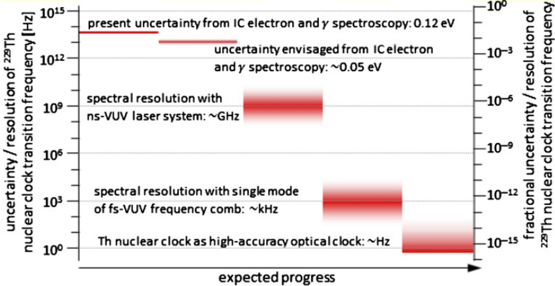
The low-energy, long-lived isomer in 229 Th, first studied in the 1970s as an exotic feature in nuclear physics, continues to inspire a multidisciplinary community of physicists. It has stimulated innovative ideas and studies that expand the understanding of atomic and nuclear structure of heavy elements and of the interaction of nuclei with bound electrons and coherent light. Using the nuclear resonance frequency, determined by the strong and electromagnetic interactions inside the nucleus, it is possible to build a highly precise nuclear clock that will be fundamentally different from all other atomic clocks based on resonant frequencies of the electron shell. The nuclear clock will open opportunities for highly sensitive tests of fundamental principles of physics, particularly in searches for violations of Einstein’s equivalence principle and for new particles and interactions beyond the standard model. It has been proposed to use the nuclear clock to search for variations of the electromagnetic and strong coupling constants and for dark matter searches. The 229 Th nuclear optical clock still represents a major challenge in view of the tremendous gap of nearly 17 orders of magnitude between the present uncertainty in the nuclear transition frequency (about 0.2 eV, corresponding to ∼48 THz) and the natural linewidth (in the mHz range). Significant experimental progress has been achieved in recent years, which will be briefly reviewed. Moreover, a research strategy will be outlined to consolidate our present knowledge about essential 229m Th properties, to determine the nuclear transition frequency with laser spectroscopic precision, realize different types of nuclear clocks and apply them in precision frequency comparisons with optical atomic clocks to test fundamental physics. Two avenues will be discussed: laser-cooled trapped 229 Th ions that allow experiments with complete control on the nucleus–electron interaction and minimal systematic frequency shifts, and Th-doped solids enabling experiments at high particle number and in different electronic environments.
Overview
The claims and statistics of this paper haven’t been checked yet.
Free: it reads the open-access text and checks the first 5 claims that cite a source we can check. Create a free account to check every claim.
Integrity signals
Registry
Cites
Statistics
Figures


Verification
Claims the paper makes
The claims and statistics of this paper haven’t been checked yet.
Free: it reads the open-access text and checks the first 5 claims that cite a source we can check. Create a free account to check every claim.
Claims other papers make about this one
Each is checked against this paper’s own text: does it say what the citing paper says it does?
The cited source says what the claim attributes to it.
In the citing paper
“The assumption of a metric coupling is actually well tested in the Solar system through 4 types of experiments; see Will (1993Will ( , 2006) ) for a detailed discussion and Peik et al. (2021), Herrmann and Ra ¨tzel (2023) for recent developments on quantum tests of relativity.”
From Fundamental constants: from measurement to the universe, a window on gravitation and cosmology (2025) · cites this paper as Peik et al. 2021
Self-check
Percentages, sums and reported differences re-computed from the paper’s own numbers.
The self-check needs the paper’s full text.
Citations
Cites
From ultrasoft pseudopotentials to the projector augmented-wave method
Kresse, G., & Joubert, D. (1999) · Physical Review B · doi:10.1103/physrevb.59.1758 · Cited by 85,307
Ludlow, A. D., Boyd, M. M., Ye, J., Peik, E., & Schmidt, P. O. (2015) · Reviews of Modern Physics · doi:10.1103/revmodphys.87.637 · Cited by 2,385
Self-citationNIST Chemistry WebBook, NIST Standard Reference Database 69
Linstrom, P. J. (1997) · National Institute of Standards and Technology (NIST) · doi:10.18434/t4d303 · Cited by 1,665
Search for new physics with atoms and molecules
Safronova, M. S., Budker, D., DeMille, D., Kimball, D. F. J., Derevianko, A., & Clark, C. W. (2018) · Reviews of Modern Physics · doi:10.1103/revmodphys.90.025008 · Cited by 1,560
Self-citationDie Rotverschiebung von extragalaktischen Nebeln
Zwicky, F. (1933) · CaltechAUTHORS (California Institute of Technology) · doi:10.5169/seals-110267 · Cited by 1,327
Bertone, G., & Hooper, D. (2018) · Reviews of Modern Physics · doi:10.1103/revmodphys.90.045002 · Cited by 1,241
Planck 2015 results: I. Overview of products and scientific results
Planck Collaboration, Adam, R., Ade, P. A. R., Aghanim, N., Akrami, Y., Alves, M. I. R., Argüeso, F., Arnaud, M., Arroja, F., Ashdown, M., et al. (2016) · Astronomy & Astrophysics · doi:10.1051/0004-6361/201527101 · Cited by 1,014
Extreme ultraviolet high-harmonic spectroscopy of solids
Luu, T. T., Garg, M., Kruchinin, S. Y., Moulet, A., Hassan, M. T., & Goulielmakis, E. (2015) · Nature · doi:10.1038/nature14456 · Cited by 882
Varying Constants, Gravitation and Cosmology
Uzan, J.-P. (2011) · Living Reviews in Relativity · doi:10.12942/lrr-2011-2 · Cited by 740
(2019) · doi:10.1103/physrevlett.123.033201 · Cited by 711
Precision lattice constant determination
Bond, W. L. (1960) · Acta Crystallographica · doi:10.1107/s0365110x60001941 · Cited by 701
Cosmological Relaxation of the Electroweak Scale
Graham, P. W., Kaplan, D. E., & Rajendran, S. (2015) · Physical Review Letters · doi:10.1103/physrevlett.115.221801 · Cited by 657
A frequency comb in the extreme ultraviolet
Gohle, C., Udem, T., Herrmann, M., Rauschenberger, J., Holzwarth, R., Schuessler, H. A., Krausz, F., & Hänsch, T. W. (2005) · Nature · doi:10.1038/nature03851 · Cited by 627
Hunting for topological dark matter with atomic clocks
Derevianko, A., & Pospelov, M. (2014) · Nature Physics · doi:10.1038/nphys3137 · Cited by 522
Solid-state harmonics beyond the atomic limit
Ndabashimiye, G., Ghimire, S., Wu, M., Browne, D. A., Schafer, K. J., Gaarde, M. B., & Reis, D. A. (2016) · Nature · doi:10.1038/nature17660 · Cited by 485
Direct frequency comb spectroscopy in the extreme ultraviolet
Cingöz, A., Yost, D. C., Allison, T. K., Ruehl, A., Fermann, M. E., Hartl, I., & Ye, J. (2012) · Nature · doi:10.1038/nature10711 · Cited by 477
Republication of: The redshift of extragalactic nebulae
Zwicky, F. (2009) · General Relativity and Gravitation · doi:10.1007/s10714-008-0707-4 · Cited by 454
Nuclear laser spectroscopy of the 3.5 eV transition in Th-229
Peik, E., & Tamm, C. (2003) · Europhysics Letters (EPL) · doi:10.1209/epl/i2003-00210-x · Cited by 435
Self-citationSearching for dilaton dark matter with atomic clocks
Arvanitaki, A., Huang, J., & Van Tilburg, K. (2015) · Physical Review D · doi:10.1103/physrevd.91.015015 · Cited by 404
Far-Ultraviolet Reflectance Spectra and the Electronic Structure of Ionic Crystals
Rubloff, G. W. (1972) · Physical Review B · doi:10.1103/physrevb.5.662 · Cited by 399
Varying Constants, Gravitation and Cosmology
Uzan, J. (2011) · DOAJ (DOAJ: Directory of Open Access Journals) · Cited by 392
Single-Ion Nuclear Clock for Metrology at the 19th Decimal Place
Campbell, C. J., Radnaev, A. G., Kuzmich, A., Dzuba, V. A., Flambaum, V. V., & Derevianko, A. (2012) · Physical Review Letters · doi:10.1103/physrevlett.108.120802 · Cited by 347
Application and Interpretation of Isomer Shifts
SHIRLEY, D. A. (1964) · Reviews of Modern Physics · doi:10.1103/revmodphys.36.339 · Cited by 314
Energy Splitting of the Ground-State Doublet in the NucleusTh229
Beck, B. R., Becker, J. A., Beiersdorfer, P., Brown, G. V., Moody, K. J., Wilhelmy, J. B., Porter, F. S., Kilbourne, C. A., & Kelley, R. L. (2007) · Physical Review Letters · doi:10.1103/physrevlett.98.142501 · Cited by 290
Nonlinear pulse compression in a multi-pass cell
Schulte, J., Sartorius, T., Weitenberg, J., Vernaleken, A., & Russbueldt, P. (2016) · Optics Letters · doi:10.1364/ol.41.004511 · Cited by 278
Self-citationOptical clock comparison for Lorentz symmetry testing
Sanner, C., Huntemann, N., Lange, R., Tamm, C., Peik, E., Safronova, M. S., & Porsev, S. G. (2019) · Nature · doi:10.1038/s41586-019-0972-2 · Cited by 275
Self-citationDirect detection of the 229Th nuclear clock transition
von der Wense, L., Seiferle, B., Laatiaoui, M., Neumayr, J. B., Maier, H.-J., Wirth, H.-F., Mokry, C., Runke, J., Eberhardt, K., Düllmann, C. E., et al. (2016) · Nature · doi:10.1038/nature17669 · Cited by 262
Self-citationFlambaum, V. V. (2006) · Physical Review Letters · doi:10.1103/physrevlett.97.092502 · Cited by 254
Search for Ultralight Scalar Dark Matter with Atomic Spectroscopy
Van Tilburg, K., Leefer, N., Bougas, L., & Budker, D. (2015) · Physical Review Letters · doi:10.1103/physrevlett.115.011802 · Cited by 253
Searching for Dark Matter and Variation of Fundamental Constants with Laser and Maser Interferometry
Stadnik, Y. V., & Flambaum, V. V. (2015) · Physical Review Letters · doi:10.1103/physrevlett.114.161301 · Cited by 234
Mass and shape of the Milky Way’s dark matter halo with globular clusters from Gaia and Hubble
Posti, L., & Helmi, A. (2019) · Astronomy & Astrophysics · doi:10.1051/0004-6361/201833355 · Cited by 233
Hees, A., Guéna, J., Abgrall, M., Bize, S., & Wolf, P. (2016) · Physical Review Letters · doi:10.1103/physrevlett.117.061301 · Cited by 230
Energy of the 229Th nuclear clock transition
Seiferle, B., von der Wense, L., Bilous, P. V., Amersdorffer, I., Lemell, C., Libisch, F., Stellmer, S., Schumm, T., Düllmann, C. E., Pálffy, A., et al. (2019) · Nature · doi:10.1038/s41586-019-1533-4 · Cited by 230
Self-citationKennedy, C. J., Oelker, E., Robinson, J. M., Bothwell, T., Kedar, D., Milner, W. R., Marti, G. E., Derevianko, A., & Ye, J. (2020) · Physical Review Letters · doi:10.1103/physrevlett.125.201302 · Cited by 219
Mapping the electron band structure by intraband high-harmonic generation in solids
Lanin, A. A., Stepanov, E. A., Fedotov, A. B., & Zheltikov, A. M. (2017) · Optica · doi:10.1364/optica.4.000516 · Cited by 210
Rellergert, W. G., DeMille, D., Greco, R. R., Hehlen, M. P., Torgerson, J. R., & Hudson, E. R. (2010) · Physical Review Letters · doi:10.1103/physrevlett.104.200802 · Cited by 197
Pitfalls in measuring work function using photoelectron spectroscopy
Helander, M. G., Greiner, M. T., Wang, Z. B., & Lu, Z. H. (2010) · Applied Surface Science · doi:10.1016/j.apsusc.2009.11.002 · Cited by 192
An excited state ofTh229at 3.5 eV
Helmer, R. G., & Reich, C. W. (1994) · Physical Review C · doi:10.1103/physrevc.49.1845 · Cited by 179
Features of the low-energy level scheme of 229Th as observed in the α-decay of 233U
Kroger, L. A., & Reich, C. W. (1976) · Nuclear Physics A · doi:10.1016/0375-9474(76)90494-2 · Cited by 174
Wigner Crystals of Th229 for Optical Excitation of the Nuclear Isomer
Campbell, C. J., Radnaev, A. G., & Kuzmich, A. (2011) · Physical Review Letters · doi:10.1103/physrevlett.106.223001 · Cited by 169
Roadmap on STIRAP applications
Bergmann, K., Nägerl, H.-C., Panda, C., Gabrielse, G., Miloglyadov, E., Quack, M., Seyfang, G., Wichmann, G., Ospelkaus, S., Kuhn, A., et al. (2019) · Journal of Physics B: Atomic, Molecular and Optical Physics · doi:10.1088/1361-6455/ab3995 · Cited by 165
Self-citationImproved Tests of Local Position Invariance Using Rb87 and Cs133 Fountains
Guéna, J., Abgrall, M., Rovera, D., Rosenbusch, P., Tobar, M. E., Laurent, P., Clairon, A., & Bize, S. (2012) · Physical Review Letters · doi:10.1103/physrevlett.109.080801 · Cited by 163
Lifetime Measurement of the Th 229 nuclear isomer
Seiferle, B., von der Wense, L., & Thirolf, P. G. (2017) · Physical Review Letters · doi:10.1103/physrevlett.118.042501 · Cited by 159
Self-citationLaser spectroscopic characterization of the nuclear-clock isomer 229mTh
Thielking, J., Okhapkin, M. V., Głowacki, P., Meier, D. M., von der Wense, L., Seiferle, B., Düllmann, C. E., Thirolf, P. G., & Peik, E. (2018) · Nature · doi:10.1038/s41586-018-0011-8 · Cited by 159
Self-citationNew bounds on dark matter coupling from a global network of optical atomic clocks
Wcisło, P., Ablewski, P., Beloy, K., Bilicki, S., Bober, M., Brown, R., Fasano, R., Ciuryło, R., Hachisu, H., Ido, T., et al. (2018) · Science Advances · doi:10.1126/sciadv.aau4869 · Cited by 159
Measurement of the Th 229 Isomer Energy with a Magnetic Microcalorimeter
Šikorský, T., Geist, J., Hengstler, D., Kempf, S., Gastaldo, L., Enss, C., Mokry, C., Runke, J., Düllmann, C. E., Wobrauschek, P., et al. (2020) · Physical Review Letters · doi:10.1103/physrevlett.125.142503 · Cited by 157
Self-citation80 W, 120 fs Yb-fiber frequency comb
Ruehl, A., Marcinkevičius, A., Fermann, M. E., & Hartl, I. (2010) · Optics Letters · doi:10.1364/ol.35.003015 · Cited by 153
Laser waveform control of extreme ultraviolet high harmonics from solids
You, Y. S., Wu, M., Yin, Y., Chew, A., Ren, X., Gholam-Mirzaei, S., Browne, D. A., Chini, M., Chang, Z., Schäfer, K. J., et al. (2017) · Optics Letters · doi:10.1364/ol.42.001816 · Cited by 153
Detecting dark-matter waves with a network of precision-measurement tools
Derevianko, A. (2018) · Physical Review A · doi:10.1103/physreva.97.042506 · Cited by 152
Excitation of the Isomeric Th229m Nuclear State via an Electronic Bridge Process in Th+229
Porsev, S. G., Flambaum, V. V., Peik, E., & Tamm, C. (2010) · Physical Review Letters · doi:10.1103/physrevlett.105.182501 · Cited by 147
Self-citationCorasaniti, P.-S., Agarwal, S., Marsh, D. J. E., & Das, S. (2017) · Physical review. D/Physical review. D. · doi:10.1103/physrevd.95.083512 · Cited by 146
Roberts, B. M., Delva, P., Al-Masoudi, A., Amy‐Klein, A., Bærentsen, C. Ø., Baynham, C. F. A., Benkler, E., Bilicki, S., Bize, S., Bowden, W., et al. (2020) · New Journal of Physics · doi:10.1088/1367-2630/abaace · Cited by 144
Self-citationSearch for domain wall dark matter with atomic clocks on board global positioning system satellites
Roberts, B. M., Blewitt, G., Dailey, C., Murphy, M., Pospelov, M., Rollings, A., Sherman, J., Williams, W., & Derevianko, A. (2017) · Nature Communications · doi:10.1038/s41467-017-01440-4 · Cited by 143
Russbueldt, P., Hoffmann, D., Höfer, M., Löhring, J., Luttmann, J., Meissner, A., Weitenberg, J., Traub, M., Sartorius, T., Esser, D., et al. (2014) · IEEE Journal of Selected Topics in Quantum Electronics · doi:10.1109/jstqe.2014.2333234 · Cited by 140
Self-citationCoulomb crystallization of highly charged ions
Schmöger, L., Versolato, O. O., Schwarz, M., Kohnen, M., Windberger, A., Piest, B., Feuchtenbeiner, S., Pedregosa-Gutierrez, J., Leopold, T., Micke, P., et al. (2015) · Science · doi:10.1126/science.aaa2960 · Cited by 137
Nuclear clocks based on resonant excitation of γ-transitions
Peik, E., & Okhapkin, M. V. (2015) · Comptes Rendus Physique · doi:10.1016/j.crhy.2015.02.007 · Cited by 136
Self-citationCosmological Higgs-Axion Interplay for a Naturally Small Electroweak Scale
Espinosa, J. R., Grojean, C., Panico, G., Alex Pomarol, A., Pujolàs, O., & Servant, G. (2015) · Physical Review Letters · doi:10.1103/physrevlett.115.251803 · Cited by 134
Performance of a229Thorium solid-state nuclear clock
Kazakov, G. A., Litvinov, A. N., Romanenko, V. I., Yatsenko, L. P., Romanenko, A. V., Schreitl, M., Winkler, G., & Schumm, T. (2012) · New Journal of Physics · doi:10.1088/1367-2630/14/8/083019 · Cited by 132
Self-citationBerengut, J. C., Dzuba, V. A., Flambaum, V. V., & Porsev, S. G. (2009) · Physical Review Letters · doi:10.1103/physrevlett.102.210801 · Cited by 127
The thorium-229 low-energy isomer and the nuclear clock
Beeks, K., Sikorsky, T., Schumm, T., Thielking, J., Okhapkin, M. V., & Peik, E. (2021) · Nature Reviews Physics · doi:10.1038/s42254-021-00286-6 · Cited by 127
Self-citationEnergy separation of the doublet of intrinsic states at the ground state of Th229
Reich, C. W., & Helmer, R. G. (1990) · Physical Review Letters · doi:10.1103/physrevlett.64.271 · Cited by 123
All-Order Methods for Relativistic Atomic Structure Calculations
Safronova, M. S., & Johnson, W. R. (2008) · Advances in atomic, molecular, and optical physics · doi:10.1016/s1049-250x(07)55004-4 · Cited by 120 · cited 1×
“11(6) eeb [98], were obtained from the Th3+ calculations using the linearized coupled-cluster method [102] combined with prior measurements [55].”
MethodSelf-citationJeet, J., Schneider, C., Sullivan, S. T., Rellergert, W. G., Mirzadeh, S., Cassanho, A., Jenssen, H. P., Tkalya, E. V., & Hudson, E. R. (2015) · Physical Review Letters · doi:10.1103/physrevlett.114.253001 · Cited by 118
Experimental constraint on dark matter detection with optical atomic clocks
Wcisło, P., Morzyński, P., Bober, M., Cygan, A., Lisak, D., Ciuryło, R., & Zawada, M. (2016) · Nature Astronomy · doi:10.1038/s41550-016-0009 · Cited by 116
Quantum technology: from research to application
Schleich, W. P., Ranade, K. S., Anton, C., Arndt, M., Aspelmeyer, M., Bayer, M., Berg, G., Calarco, T., Fuchs, H., Giacobino, E., et al. (2016) · Applied Physics B · doi:10.1007/s00340-016-6353-8 · Cited by 115
Extreme ultraviolet radiation with coherence time greater than 1 s
Benko, C., Allison, T. K., Cingöz, A., Hua, L., Labaye, F., Yost, D. C., & Ye, J. (2014) · Nature Photonics · doi:10.1038/nphoton.2014.132 · Cited by 114
Reduced Transition Probabilities for the Gamma Decay of the 7.8 eV Isomer in Th229
Minkov, N., & Pálffy, A. (2017) · Physical Review Letters · doi:10.1103/physrevlett.118.212501 · Cited by 113
Self-citationRadiative lifetime and energy of the low-energy isomeric level in Th 229
Tkalya, E. V., Schneider, C., Jeet, J., & Hudson, E. R. (2015) · Physical Review C · doi:10.1103/physrevc.92.054324 · Cited by 109
X-ray pumping of the 229Th nuclear clock isomer
Masuda, T., Yoshimi, A., Fujieda, A., Fujimoto, H., Haba, H., Hara, H., Hiraki, T., Kaino, H., Kasamatsu, Y., Kitao, S., et al. (2019) · Nature · doi:10.1038/s41586-019-1542-3 · Cited by 107
Self-citationTkalya, E. V., Zherikhin, A. N., & Zhudov, V. I. (2000) · Physical Review C · doi:10.1103/physrevc.61.064308 · Cited by 104
229 Thorium-doped calcium fluoride for nuclear laser spectroscopy
Dessovic, P., Mohn, P., Jackson, R. A., Winkler, G., Schreitl, M., Kazakov, G. A., & Schumm, T. (2014) · Journal of Physics Condensed Matter · doi:10.1088/0953-8984/26/10/105402 · Cited by 100
Self-citationLinear Paul trap design for an optical clock with Coulomb crystals
Herschbach, N., Pyka, K., Keller, J., & Mehlstäubler, T. E. (2011) · Applied Physics B · doi:10.1007/s00340-011-4790-y · Cited by 98
Banerjee, A., Kim, H., & Pérez, G. (2019) · Physical review. D/Physical review. D. · doi:10.1103/physrevd.100.115026 · Cited by 88
High-flux ultrafast extreme-ultraviolet photoemission spectroscopy at 18.4 MHz pulse repetition rate
Saule, T., Heinrich, S., Schötz, J., Lilienfein, N., Högner, M., de Vries, O., Plötner, M., Weitenberg, J., Esser, D., Schulte, J., et al. (2019) · Nature Communications · doi:10.1038/s41467-019-08367-y · Cited by 88
Self-citationMills, A. K., Zhdanovich, S., Na, M. X., Boschini, F., Razzoli, E., Michiardi, M., Sheyerman, A., Schneider, M., Hammond, T. J., Süss, V., et al. (2019) · Review of Scientific Instruments · doi:10.1063/1.5090507 · Cited by 88
Probing the relaxed relaxion at the luminosity and precision frontiers
Banerjee, A., Kim, H., Matsedonskyi, O., Perez, G., & Safronova, M. S. (2020) · Journal of High Energy Physics · doi:10.1007/jhep07(2020)153 · Cited by 88
Self-citationNuclear structure of229 Th from γ-ray spectroscopy study of233 U α-particle decay
Barci, V., Ardisson, G. J., Barci-Funel, G., Weiss, B., Samad, O. E., & Sheline, R. K. (2003) · Physical Review C · doi:10.1103/physrevc.68.034329 · Cited by 87
The Search for Variation of Fundamental Constants with Clocks
Safronova, M. S. (2019) · Annalen der Physik · doi:10.1002/andp.201800364 · Cited by 87
Self-citationSensitivity of Th229 nuclear clock transition to variation of the fine-structure constant
Fadeev, P., Berengut, J. C., & Flambaum, V. V. (2020) · Physical Review A · doi:10.1103/physreva.102.052833 · Cited by 87
Ruchowska, E., Płóciennik, W. A., Żylicz, J., Mach, H., Kvasil, J., Algora, A., Amzal, N., Bäck, T., Borge, M. G., Boutami, R., et al. (2006) · Physical Review C · doi:10.1103/physrevc.73.044326 · Cited by 86
Laser Spectroscopy on Forbidden Transitions in Trapped Highly Charged Ar13+ Ions
Mäckel, V., Klawitter, R., Brenner, G., López-Urrutia, J. R. C., & Ullrich, J. (2011) · Physical Review Letters · doi:10.1103/physrevlett.107.143002 · Cited by 82
Observation of Electromagnetic Radiation from Deexcitation of the 229 Th Isomer
Irwin, G. M., & Kim, K. H. (1997) · Physical Review Letters · doi:10.1103/physrevlett.79.990 · Cited by 79
Lasers as a bridge between atomic and nuclear physics
Matinyan, S. G. (1998) · Physics Reports · doi:10.1016/s0370-1573(97)00084-7 · Cited by 79
Energy of the Th229 Nuclear Clock Isomer Determined by Absolute γ -ray Energy Difference
Yamaguchi, A., Muramatsu, H., Hayashi, T., Yuasa, N., Nakamura, K., Takimoto, M., Haba, H., Konashi, K., Watanabe, M., Kikunaga, H., et al. (2019) · Physical Review Letters · doi:10.1103/physrevlett.123.222501 · Cited by 79
Hanna, S., Campuzano‐Jost, P., Simpson, E. A., Robb, D. B., Burak, I., Blades, M. W., Hepburn, J. W., & Bertram, A. K. (2008) · International Journal of Mass Spectrometry · doi:10.1016/j.ijms.2008.10.024 · Cited by 76
Processes of the nuclear isomer 229mTh(3/2+, 3.5 ± 1.0 eV) resonant excitation by optical photons
Tkalya, E. V., Varlamov, V. O., Lomonosov, V. V., & Nikulin, S. A. (1996) · Physica Scripta · doi:10.1088/0031-8949/53/3/003 · Cited by 75
Experimental search for the low-energy nuclear transition in229Th with undulator radiation
Yamaguchi, A., Kolbe, M., Kaser, H., Reichel, T., Gottwald, A., & Peik, E. (2015) · New Journal of Physics · doi:10.1088/1367-2630/17/5/053053 · Cited by 74
Self-citationElectronic bridge process in Th229 +
Porsev, S. G., & Flambaum, V. V. (2010) · Physical Review A · doi:10.1103/physreva.81.042516 · Cited by 73
Cryogenic linear Paul trap for cold highly charged ion experiments
Schwarz, M., Versolato, O. O., Windberger, A., Brunner, F., Ballance, T., Eberle, S. N., Ullrich, J., Schmidt, P. O., Hansen, A. K., Gingell, A. D., et al. (2012) · Review of Scientific Instruments · doi:10.1063/1.4742770 · Cited by 72
Impact of the electron environment on the lifetime of the 229Thm low-lying isomer
Karpeshin, F. F., & Trzhaskovskaya, M. B. (2007) · Physical Review C · doi:10.1103/physrevc.76.054313 · Cited by 71
Flambaum, V. V. (2016) · Physical Review Letters · doi:10.1103/physrevlett.117.072501 · Cited by 70
Reexamination of the Optical Gamma Ray Decay in T229h
Utter, S. B., Beiersdörfer, P., Barnes, A. V., Lougheed, R. W., López-Urrutia, J. R. C., Becker, J. A., & Weiss, M. S. (1999) · Physical Review Letters · doi:10.1103/physrevlett.82.505 · Cited by 68
Effect of atomic electrons on the 7.6 -eV nuclear transition in Th2293+
Porsev, S. G., & Flambaum, V. V. (2010) · Physical Review A · doi:10.1103/physreva.81.032504 · Cited by 67
Electronic Bridge Excitation in Highly Charged Th229 Ions
Bilous, P. V., Bekker, H., Berengut, J. C., Seiferle, B., von der Wense, L., Thirolf, P. G., Pfeifer, T., López-Urrutia, J. R. C., & Pálffy, A. (2020) · Physical Review Letters · doi:10.1103/physrevlett.124.192502 · Cited by 65
Self-citationA Laser Excitation Scheme for Th229m
von der Wense, L., Seiferle, B., Stellmer, S., Weitenberg, J., Kazakov, G. A., Pálffy, A., & Thirolf, P. G. (2017) · Physical Review Letters · doi:10.1103/physrevlett.119.132503 · Cited by 62
Self-citationEnergy of the 3/2+ state of Th229 reexamined
Guimarães-Filho, Z. O., & Helene, O. (2005) · Physical Review C · doi:10.1103/physrevc.71.044303 · Cited by 61
Magnetic dipole and electric quadrupole moments of the 229 Th nucleus
Safronova, M. S., Safronova, M. S., Radnaev, A. G., Campbell, C. J., & Kuzmich, A. (2013) · Physical Review A · doi:10.1103/physreva.88.060501 · Cited by 61
Self-citationSpontaneous Ultraviolet Emission from 233Uranium/T229horium Samples
Shaw, R. W., Young, J. P., Cooper, S. P., & Webb, O. F. (1999) · Physical Review Letters · doi:10.1103/physrevlett.82.1109 · Cited by 61
Scalar Dark Matter in the Radio-Frequency Band: Atomic-Spectroscopy Search Results
Antypas, D., Tretiak, O., Garcon, A., Ozeri, R., Pérez, G., & Budker, D. (2019) · Physical Review Letters · doi:10.1103/physrevlett.123.141102 · Cited by 61
Ozawa, A., Zhao, Z., Kuwata‐Gonokami, M., & Kobayashi, Y. (2015) · Optics Express · doi:10.1364/oe.23.015107 · Cited by 58
Ultraviolet Photon Emission Observed in the Search for the Decay of the 229Th Isomer
Richardson, D. S., Benton, D. M., Evans, D. E., Griffith, J. A. R., & Tungate, G. (1998) · Physical Review Letters · doi:10.1103/physrevlett.80.3206 · Cited by 58
Reactor production of Thorium-229
Hogle, S. L., Boll, R. A., Murphy, K., Denton, D., Owens, A., Haverlock, T. J., Garland, M. A., & Mirzadeh, S. (2016) · Applied Radiation and Isotopes · doi:10.1016/j.apradiso.2016.05.002 · Cited by 58
Weitenberg, J., Saule, T., Schulte, J., & Rusbuldt, P. (2017) · IEEE Journal of Quantum Electronics · doi:10.1109/jqe.2017.2761883 · Cited by 58
Self-citationAttempt to optically excite the nuclear isomer in Th229
Stellmer, S., Kazakov, G. A., Schreitl, M., Kaser, H., Kolbe, M., & Schumm, T. (2018) · Physical Review A · doi:10.1103/physreva.97.062506 · Cited by 58
Self-citationObservation of the Deexcitation of the Th229m Nuclear Isomer
Zhao, X., de Escobar, Y. N. M., Rundberg, R. S., Bond, E. M., Moody, A., & Vieira, D. J. (2012) · Physical Review Letters · doi:10.1103/physrevlett.109.160801 · Cited by 57
The nuclear structure of 229Th
Gulda, K., Kurcewicz, W., Aas, A. J., Borge, M. J. G., Burke, D. G., Fogelberg, B., Grant, I. S., Hagebø, E., Kaffrell, N., Kvasil, J., et al. (2002) · Nuclear Physics A · doi:10.1016/s0375-9474(01)01456-7 · Cited by 56
Cascaded harmonic generation from a fiber laser: a milliwatt XUV source
Comby, A., Descamps, D., Beauvarlet, S., Gonzalez, A. I., Guichard, F., Petit, S., Zaouter, Y., & Mairesse, Y. (2019) · Optics Express · doi:10.1364/oe.27.020383 · Cited by 56
Nuclear Excitation of the Th229 Isomer via Defect States in Doped Crystals
Nickerson, B. S., Pimon, M., Bilous, P. V., Gugler, J., Beeks, K., Sikorsky, T., Mohn, P., Schumm, T., & Pálffy, A. (2020) · Physical Review Letters · doi:10.1103/physrevlett.125.032501 · Cited by 54
Self-citation3.5-eV isomer of 229mTh: How it can be produced
Karpeshin, F. F., Band, I. M., & Trzhaskovskaya, M. B. (1999) · Nuclear Physics A · doi:10.1016/s0375-9474(99)00303-6 · Cited by 52
Nuclear Charge Radii of Th229 from Isotope and Isomer Shifts
Safronova, M. S., Porsev, S. G., Kozlov, M. G., Thielking, J., Okhapkin, M. V., Głowacki, P., Meier, D. M., & Peik, E. (2018) · Physical Review Letters · doi:10.1103/physrevlett.121.213001 · Cited by 49
Self-citationOptical pumping 229mTh through NEET as a new effective way of producing nuclear isomers
Karpeshin, F. F., Band, I. M., Trzhaskovskaya, M. B., & Listengarten, M. A. (1996) · Physics Letters B · doi:10.1016/0370-2693(96)00036-6 · Cited by 48
Safronova, M. S., Johnson, W. R., & Safronova, M. S. (2007) · Physical Review A · doi:10.1103/physreva.76.042504 · Cited by 48
Self-citationTheoretical Predictions for the Magnetic Dipole Moment of Th229m
Minkov, N., & Pálffy, A. (2019) · Physical Review Letters · doi:10.1103/physrevlett.122.162502 · Cited by 48
Self-citationEnergy levels of Th + between 7.3 and 8.3 eV
Herrera-Sancho, O. A., Nemitz, N., Okhapkin, M. V., & Peik, E. (2013) · Physical Review A · doi:10.1103/physreva.88.012512 · Cited by 47
Self-citationSensitivity of hyperfine structure to nuclear radius and quark mass variation
Dinh, T. H., Dunning, A., Dzuba, V. A., & Flambaum, V. V. (2009) · Physical Review A · doi:10.1103/physreva.79.054102 · Cited by 46
von der Wense, L., & Zhang, C. (2020) · The European Physical Journal D · doi:10.1140/epjd/e2020-100582-5 · Cited by 46
Additional evidence for the proposed excited state at ≤5 eV in Th229
Burke, D. G., Garrett, P. E., Qu, T., & Naumann, R. A. (1990) · Physical Review C · doi:10.1103/physrevc.42.r499 · Cited by 45
Excitation of the low-energy Th229m isomer in the electron bridge process via the continuum
Borisyuk, P. V., Kolachevsky, N., Тайченачев, А. В., Tkalya, E. V., TOLSTIKHINA, I. Y., & Yudin, V. I. (2019) · Physical Review C · doi:10.1103/physrevc.100.044306 · Cited by 45
Hehlen, M. P., Greco, R. R., Rellergert, W. G., Sullivan, S. T., DeMille, D. P., Jackson, R. A., Hudson, E. R., & Torgerson, J. R. (2011) · Journal of Luminescence · doi:10.1016/j.jlumin.2011.09.037 · Cited by 44
vuv frequency-comb spectroscopy of atomic xenon
Ozawa, A., & Kobayashi, Y. (2013) · Physical Review A · doi:10.1103/physreva.87.022507 · Cited by 43
Linear Paul trap design for an optical clock with Coulomb crystalsPreprint
Herschbach, N., Pyka, K., Keller, J., & Mehlstäubler, T. E. (2016) · Cited by 43
Zhang, C., Schoun, S. B., Heyl, C. M., Porat, G., Gaarde, M. B., & Ye, J. (2020) · Physical Review Letters · doi:10.1103/physrevlett.125.093902 · Cited by 42
Hayes, A. C., & Friar, J. L. (2007) · Physics Letters B · doi:10.1016/j.physletb.2007.05.021 · Cited by 40
von der Wense, L., Seiferle, B., Laatiaoui, M., & Thirolf, P. G. (2015) · The European Physical Journal A · doi:10.1140/epja/i2015-15029-8 · Cited by 38
Self-citationThe 229-thorium isomer: doorway to the road from the atomic clock to the nuclear clock
Thirolf, P. G., Seiferle, B., & von der Wense, L. (2019) · Journal of Physics B: Atomic, Molecular and Optical Physics · doi:10.1088/1361-6455/ab29b8 · Cited by 38
Self-citationTowards a 229Th-Based Nuclear Clock
von der Wense, L., Seiferle, B., & Thirolf, P. G. (2018) · Measurement Techniques · doi:10.1007/s11018-018-1337-1 · Cited by 38
Self-citationAccurate Prediction of Clock Transitions in a Highly Charged Ion with Complex Electronic Structure
Cheung, C., Safronova, M. S., Porsev, S. G., Kozlov, M. G., Tupitsyn, I. I., & Bondarev, A. I. (2020) · Physical Review Letters · doi:10.1103/physrevlett.124.163001 · Cited by 37
Self-citationBilous, P. V., Peik, E., & Pálffy, A. (2017) · New Journal of Physics · doi:10.1088/1367-2630/aa9cd9 · Cited by 36
Self-citationStadnik, Y. V. (2020) · Physical review. D/Physical review. D. · doi:10.1103/physrevd.102.115016 · Cited by 36
Properties of the optical transition in the 229 Th nucleus
Tkalya, E. V. (2003) · Physics-Uspekhi · doi:10.1070/pu2003v046n03abeh001379 · Cited by 35
Feasibility study of measuring the Th229 nuclear isomer transition with U233 -doped crystals
Stellmer, S., Schreitl, M., Kazakov, G. A., Sterba, J. H., & Schumm, T. (2016) · Physical Review C · doi:10.1103/physrevc.94.014302 · Cited by 35
Self-citationThirolf, P. G., Seiferle, B., & von der Wense, L. (2019) · Annalen der Physik · doi:10.1002/andp.201800381 · Cited by 35
Self-citationTowards a direct transition energy measurement of the lowest nuclear excitation in229Th
von der Wense, L., Thirolf, P. G., Kalb, D., & Laatiaoui, M. (2013) · Journal of Instrumentation · doi:10.1088/1748-0221/8/03/p03005 · Cited by 34
Self-citationPerformance of the MLL-IonCatcher
Neumayr, J. B., Thirolf, P. G., Habs, D., Heinz, S., Kolhinen, V. S., Sewtz, M., & Szerypo, J. (2006) · Review of Scientific Instruments · doi:10.1063/1.2213154 · Cited by 34
Self-citationTh229m isomer from a nuclear model perspective
Minkov, N., & Pálffy, A. (2021) · Physical Review C · doi:10.1103/physrevc.103.014313 · Cited by 34
Self-citationEnhancement cavities for few-cycle pulses
Lilienfein, N., Höfer, C., Holzberger, S., Matzer, C., Zimmermann, P., Trubetskov, M. K., Pervak, V., & Pupeza, I. (2017) · Optics Letters · doi:10.1364/ol.42.000271 · Cited by 33
229m Th(3/2+, 3.5 eV) and a check of the exponentiality of the decay law
Дыхне, А. М., & Tkalya, E. V. (1998) · Journal of Experimental and Theoretical Physics Letters · doi:10.1134/1.567724 · Cited by 31
Alternative approach to populate and study the Th229 nuclear clock isomer
Verlinde, M., Kraemer, S., Moens, J., Chrysalidis, K., Correia, J. G., Cottenier, S., Witte, H. D., Федоров, Д. В., Fedosseev, V. N., Ferrer, R., et al. (2019) · Physical Review C · doi:10.1103/physrevc.100.024315 · Cited by 31
Search for decay of the 3.5-eV level in 229Th
Browne, E., Norman, E. B., Canaan, R. D., Glasgow, D. C., Keller, J. M., & Young, J. P. (2001) · Physical Review C · doi:10.1103/physrevc.64.014311 · Cited by 30
Relativistic all-order calculations of Th, Th+ , and Th2+ atomic properties
Safronova, M. S., Safronova, M. S., & Clark, C. W. (2014) · Physical Review A · doi:10.1103/physreva.90.032512 · Cited by 29
Self-citationComment on “Observation of the Deexcitation of the Th229m Nuclear Isomer”
Peik, E., & Zimmermann, K. (2013) · Physical Review Letters · doi:10.1103/physrevlett.111.018901 · Cited by 29
Self-citationDFT calculation of 229 thorium-doped magnesium fluoride for nuclear laser spectroscopy
Pimon, M., Gugler, J., Mohn, P., Kazakov, G. A., Mauser, N. J., & Schumm, T. (2020) · Journal of Physics Condensed Matter · doi:10.1088/1361-648x/ab7c90 · Cited by 28
Self-citationPerturbation of the U235m Decay Rate by Implantation in Transition Metals
de Mévergnies, M. N. (1972) · Physical Review Letters · doi:10.1103/physrevlett.29.1188 · Cited by 27
Impact of the ionization of the atomic shell on the lifetime of the 229m Th isomer
Karpeshin, F. F., & Trzhaskovskaya, M. B. (2017) · Nuclear Physics A · doi:10.1016/j.nuclphysa.2017.10.003 · Cited by 26
Fifty years of atomic time-keeping: 1955 to 2005
Quinn, T. (2005) · Metrologia · doi:10.1088/0026-1394/42/3/e01 · Cited by 25
Hyperfine Structure in Th229g3+ as a Probe of the Th229g→Th229m Nuclear Excitation Energy
Beloy, K. (2014) · Physical Review Letters · doi:10.1103/physrevlett.112.062503 · Cited by 25
Alpha-decay from the 3.5 eV isomer of 229Th
Mitsugashira, T., Hara, M., Ohtsuki, T., Yuki, H., Takamiya, K., Kasamatsu, Y., Shinohara, A., Kikunaga, H., & Nakanishi, T. (2003) · Journal of Radioanalytical and Nuclear Chemistry · doi:10.1023/a:1022267428310 · Cited by 24
Jackson, R. A., Amaral, J. B., Valério, M. E. G., DeMille, D. P., & Hudson, E. R. (2009) · Journal of Physics Condensed Matter · doi:10.1088/0953-8984/21/32/325403 · Cited by 24
Resonant Electronic-Bridge Excitation of the U235 Nuclear Transition in Ions with Chaotic Spectra
Berengut, J. C. (2018) · Physical Review Letters · doi:10.1103/physrevlett.121.253002 · Cited by 24
Seres, J., Seres, E., Serrat, C., Young, E. C., Speck, J. S., & Schumm, T. (2019) · Optics Express · doi:10.1364/oe.27.006618 · Cited by 24
Self-citationChemical Effect on the Half-Life of U235m
de Mévergnies, M. N. (1969) · Physical Review Letters · doi:10.1103/physrevlett.23.422 · Cited by 21
Feasibility study of internal conversion electron spectroscopy of 229mTh
Seiferle, B., von der Wense, L., & Thirolf, P. G. (2017) · The European Physical Journal A · doi:10.1140/epja/i2017-12294-5 · Cited by 20
Self-citationNon-perturbative generation of DUV/VUV harmonics from crystal surfaces at 108 MHz repetition rate
Seres, J., Seres, E., Serrat, C., & Schumm, T. (2018) · Optics Express · doi:10.1364/oe.26.021900 · Cited by 20
Self-citationObservation of an unexpected negative isotope shift in Th+229 and its theoretical explanation
Okhapkin, M. V., Meier, D. M., Peik, E., Safronova, M. S., Kozlov, M. G., & Porsev, S. G. (2015) · Physical Review A · doi:10.1103/physreva.92.020503 · Cited by 19
Self-citationOn the Theory of the Recoil in β -Decay
Kofoed-Hansen, O. (1948) · Physical Review · doi:10.1103/physrev.74.1785 · Cited by 19
Excitation of the 229m Th nuclear isomer via resonance conversion in ionized atoms
Karpeshin, F. F., & Trzhaskovskaya, M. B. (2015) · Physics of Atomic Nuclei · doi:10.1134/s1063778815060125 · Cited by 19
Out-of-the-box baryogenesis during relaxation
Abel, S. A., Gupta, R. S., & Scholtz, J. (2019) · Physical review. D/Physical review. D. · doi:10.1103/physrevd.100.015034 · Cited by 19
Search for the decay of 229mTh by photon detection
Kasamatsu, Y., Kikunaga, H., Takamiya, K., Mitsugashira, T., Nakanishi, T., Ohkubo, Y., Ohtsuki, T., Sato, W., & Shinohara, A. (2005) · Radiochimica Acta · doi:10.1524/ract.2005.93.9-10.511 · Cited by 18
The stability of fundamental constants
Uzan, J.-P. (2015) · Comptes Rendus. Physique · doi:10.1016/j.crhy.2015.03.007 · Cited by 17
Wakui, K., Hayasaka, K., & Ido, T. (2014) · Applied Physics B · doi:10.1007/s00340-014-5914-y · Cited by 17
Condensed Matter Physics Using Nuclear Resonant Scattering
Seto, M. (2013) · Journal of the Physical Society of Japan · doi:10.7566/jpsj.82.021016 · Cited by 17
Nuclear resonant scattering experiment with fast time response: Photonuclear excitation of Hg201
Yoshimi, A., Hara, H., Hiraki, T., Kasamatsu, Y., Kitao, S., Kobayashi, Y., Konashi, K., Masuda, R., Masuda, T., Miyamoto, Y., et al. (2018) · Physical Review C · doi:10.1103/physrevc.97.024607 · Cited by 17
Self-citationElectronic level structure of Th+ in the range of the Th229m isomer energy
Meier, D. M., Thielking, J., Głowacki, P., Okhapkin, M. V., Müller, R. A., Surzhykov, A., & Peik, E. (2019) · Physical Review A · doi:10.1103/physreva.99.052514 · Cited by 17
Self-citationCharge exchange and chemical reactions with trapped Th3+
Churchill, L., DePalatis, M. V., & Chapman, M. (2011) · Physical Review A · doi:10.1103/physreva.83.012710 · Cited by 16
Three decades of research using IGISOL technique at the University of Jyväskylä
Aysto, J. H., Eronen, T., Jokinen, A., Kankainen, A., Moore, I. D., & Penttilä, H. (2014) · Springer eBooks · doi:10.1007/978-94-007-5555-0 · Cited by 16
Nonradiative decay of the low-lying nuclear isomer 229m Th(3.5 eV) in a metal
Tkalya, E. V. (1999) · Journal of Experimental and Theoretical Physics Letters · doi:10.1134/1.568182 · Cited by 15
Seiferle, B., von der Wense, L., Amersdorffer, I., Arlt, N., Kotulski, B., & Thirolf, P. G. (2019) · Nuclear Instruments and Methods in Physics Research Section B Beam Interactions with Materials and Atoms · doi:10.1016/j.nimb.2019.03.043 · Cited by 15
Self-citationRadioactive Origin of Emissions Observed from Uranium Compounds and Their Silica Cells
Young, J. P., Shaw, R. W., & Webb, O. F. (1999) · Inorganic Chemistry · doi:10.1021/ic990558b · Cited by 13
Resonance conversion as a dominant decay mode for the 3.5-eV isomer in 229m Th
Karpeshin, F. F., & Trzhaskovskaya, M. B. (2006) · Physics of Atomic Nuclei · doi:10.1134/s106377880604003x · Cited by 12
The Practice of Naturalness: A Historical-Philosophical Perspective
Borrelli, A., & Castellani, E. (2019) · Foundations of Physics · doi:10.1007/s10701-019-00287-7 · Cited by 12
Bilous, P. V., Peik, E., & Pálffy, A. (2018) · Max Planck Digital Library · Cited by 11
Self-citationSearch for α-decay of 229mTh produced from 229Ac β-decay following 232Th(γ, p2n) reaction
Kikunaga, H., Kasamatsu, Y., Takamiya, K., Mitsugashira, T., Hara, M., Ohtsuki, T., Yuki, H., Shinohara, A., Shibata, S., Kinoshita, N., et al. (2005) · Radiochimica Acta · doi:10.1524/ract.2005.93.9-10.507 · Cited by 10
Predicting quasibound states of negative ions: La− as a test case
Safronova, M. S., Cheung, C., Kozlov, M. G., Spielman, S. E., Gibson, N. D., & Walter, C. W. (2021) · Physical Review A · doi:10.1103/physreva.103.022819 · Cited by 10
Self-citationMeasurement of the 7p2P3/2 state branching fractions in Ra+
Fan, M., Holliman, C. A., Porsev, S. G., Safronova, M. S., & Jayich, A. M. (2019) · Physical Review A · doi:10.1103/physreva.100.062504 · Cited by 8
Self-citationAbsolute X-ray energy measurement using a high-accuracy angle encoder
Masuda, T., Watanabe, T., Beeks, K., Fujimoto, H., Hiraki, T., Kaino, H., Kitao, S., Miyamoto, Y., Okai, K., Sasao, N., et al. (2020) · Journal of Synchrotron Radiation · doi:10.1107/s1600577520014526 · Cited by 8 · cited 1×
“The absolute energy of the x-ray excitation beam was monitored by measuring a pair of Bragg angles on the left/right side of the beam using a Si(440) reference crystal (bond method) [87, 88].”
MethodSelf-citationBilous, P. V., & Яценко, Л. П. (2015) · Ukrainian Journal of Physics · doi:10.15407/ujpe60.04.0371 · Cited by 6
Re-evaluation of the Beck et al. data to constrain the energy of the Th-229 isomerPreprint
Kazakov, G. A., Schumm, T., & Stellmer, S. (2017) · arXiv (Cornell University) · doi:10.48550/arxiv.1702.00749 · Cited by 6
Self-citationPreparing an Isotopically Pure 229Th Ion Beam for Studies of 229mTh
von der Wense, L., Seiferle, B., Amersdorffer, I., & Thirolf, P. G. (2019) · Journal of Visualized Experiments · doi:10.3791/58516 · Cited by 5
Self-citationCharacterization of the Th-229 nuclear clock transition
Seiferle, B. (2019) · Electronic Theses of LMU Munich (Ludwig-Maximilians-Universität München) · doi:10.5282/edoc.25340 · Cited by 5
The Practice of Naturalness: A Historical-Philosophical PerspectivePreprint
Borrelli, A., & Castellani, E. (2019) · PhilSci-Archive (University of Pittsburgh) · Cited by 5
Method of the production and trapping of thorium ions for nuclear transition investigation
Borisyuk, P. V., Derevyashkin, S. P., Khabarova, K. Y., Kolachevsky, N., Lebedinskiǐ, Y. Y., Poteshin, S. S., Sysoev, A. A., Tkalya, E. V., Tregubov, D. O., Troyan, V. I., et al. (2017) · Journal of Physics Conference Series · doi:10.1088/1742-6596/941/1/012107 · Cited by 4
Towards a nuclear clock with the 229Th isomeric transition
Bilous, P. V. (2018) · Max Planck Digital Library · doi:10.17617/2.3026914 · Cited by 4 · cited 1×
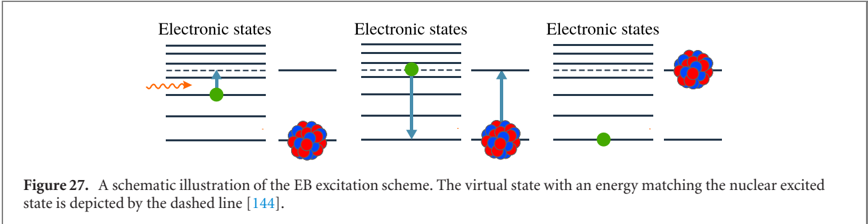
“The virtual state with an energy matching the nuclear excited state is depicted by the dashed line [138].”
BackgroundMerle, A., & Tommy Ohlsson, B. (2012) · Nature Physics · doi:10.1038/nphys2382 · Cited by 1
Research works printed but not linked: 5
- Vorykhalov, 1995, Bull. Russ. Acad. Sci.: Phys., 59, 20
- Krutov, 1958, Bull. Acad. Sci. USSR, Phys. Ser., 22, 171
- Krutov, 1958, Bull. Acad. Sci. USSR, Phys. Ser., 22, 161
- Strizhov, 1991, Sov. Phys. - JETP, 72, 387
- Tkalya, 1992, Sov. Phys. - JETP, 75, 200
Cited by
Multi-pass cells for post-compression of ultrashort laser pulses
Viotti, A.-L., Seidel, M., Escoto, E., Rajhans, S., Leemans, W. P., Hartl, I., & Heyl, C. M. (2022) · Optica · doi:10.1364/optica.449225 · Cited by 215
Frequency ratio of the 229mTh nuclear isomeric transition and the 87Sr atomic clock
Zhang, C., Ooi, T., Higgins, J. S., Doyle, J. F., von der Wense, L., Beeks, K., Leitner, A., Kazakov, G. A., Li, P., Thirolf, P. G., et al. (2024) · Nature · doi:10.1038/s41586-024-07839-6 · Cited by 194
“Akin to nuclear magnetic resonance, nuclear population in the ground and excited state manifold could be read out directly by using radiofrequency nuclear quadrupole resonance spectroscopy 8 , reducing the time needed for clock operation and thus achieving better clock stability.”
BackgroundMethodSelf-citationLaser Excitation of the Th-229 Nucleus
Tiedau, J., Okhapkin, M. V., Zhang, K., Thielking, J., Zitzer, G., Peik, E., Schaden, F., Pronebner, T., Morawetz, I., De Col, L. T., et al. (2024) · Physical Review Letters · doi:10.1103/physrevlett.132.182501 · Cited by 179
Self-citationObservation of the radiative decay of the 229Th nuclear clock isomer
Kraemer, S., Moens, J., Athanasakis-Kaklamanakis, M., Bara, S., Beeks, K., Chhetri, P., Chrysalidis, K., Claessens, A., Cocolios, T. E., Correia, J. G., et al. (2023) · Nature · doi:10.1038/s41586-023-05894-z · Cited by 181
Self-citationFilzinger, M., Dörscher, S., Lange, R., Klose, J., Steinel, M., Benkler, E., Peik, E., Lisdat, C., & Huntemann, N. (2023) · Physical Review Letters · doi:10.1103/physrevlett.130.253001 · Cited by 133
Self-citation
Metadata
- Authors
- Peik, E., Schumm, T., Safronova, M. S., Pálffy, A., Weitenberg, J., & Thirolf, P. G.
- Affiliations
- Physikalisch-Technische Bundesanstalt (DE)
- TU Wien (AT)
- University of Delaware (US)
- Friedrich-Alexander-Universität Erlangen-Nürnberg (DE)
- Max Planck Institute of Quantum Optics (DE)
- Ludwig-Maximilians-Universität München (DE)
- Corresponding author
- Thirolf, P G
- Venue
- Quantum Science and Technology
- Publisher
- IOP Publishing
- Published
- 2021-04-15
- Volume
- 6
- Issue
- 3
- Pages
- 034002
- ISSN
- 2058-9565 (ISSN-L)
- OpenAlex
- W3135052081
- Cited by
- 154
- References
- 183
- Citations by year
- 2026: 21 · 2025: 37 · 2024: 41 · 2023: 28 · 2022: 17 · 2021: 10
- FWCI
- 10.48
- Type
- journal article
- Language
- en
- Open access
- hybrid
- doi.org
- Licence
- cc-by
- creativecommons.org/licenses/by/4.0/ (vor)
- iopscience.iop.org/info/page/text-and-data-mining (tdm)
- Locations
- Quantum Science and Technology (publishedVersion, cc-by)
- OPUS FAU (Kooperativer Bibliotheksverbund Berlin-Brandenburg (KOBV), on behalf of the Universitätsbibliothek Erlangen-Nürnberg) (submittedVersion, cc-by)
- Funders
- European Association of National Metrology Institutes (EMPIR 17FUN07 ‘Coulomb Crystals for Clocks’)
- H2020 European Research Council (Synergy grant ‘ThoriumNuclearClock’ Grant Agreemen)
- Austrian Science Fund (P33627)
- Topics
- Physical Sciences › Physics and Astronomy › Atomic and Molecular Physics, and Optics › Advanced Frequency and Time Standards
- Physical Sciences › Physics and Astronomy › Atomic and Molecular Physics, and Optics › Atomic and Molecular Physics
- Physical Sciences › Physics and Astronomy › Nuclear and High Energy Physics › Nuclear physics research studies
- Keywords
- nuclear clock, thorium-229m, nuclear isomers, laser cooling of ions, fundamental physics tests, equivalence principle violation, beyond the Standard Model, dark matter searches, electron-nucleus interaction
About these checks
Registry, retraction, Cites and statistics results are computed, not judged, with one exception: a printed reference that no index lists is read once by a model before it counts as a citation error. Claims are extracted by a model and kept only when their quote appears verbatim in the text; each cited source is then checked, with a model’s help, for whether it says what the claim relies on. Those verdicts can be wrong — read the claim’s quote and the cited source before relying on one.
Statistics and arithmetic are recomputed, not judged.
Confidence bands are shown only for fields calibrated on our annotated test set. None is calibrated yet, so no band is shown.
What counts as a claim ›How we measure confidence ›How we check this ›
Are you an author, or do you see a problem with this page? Request a review
Data sources
Bibliographic data: Semantic Scholar, OpenAlex, Crossref.
Contains information from the Semantic Scholar Academic Graph Datasets, made available under the ODC Attribution License (ODC-BY 1.0).
Semantic Scholar’s data is described in: Kinney, R., et al. (2023). The Semantic Scholar Open Data Platform. arXiv:2301.10140.
