

Building blocks of a flip-chip integrated superconducting quantum processor
Open accessThe DOI matches its Crossref record; 40 of the 40 references it cites were found in a registry or an index.
Abstract
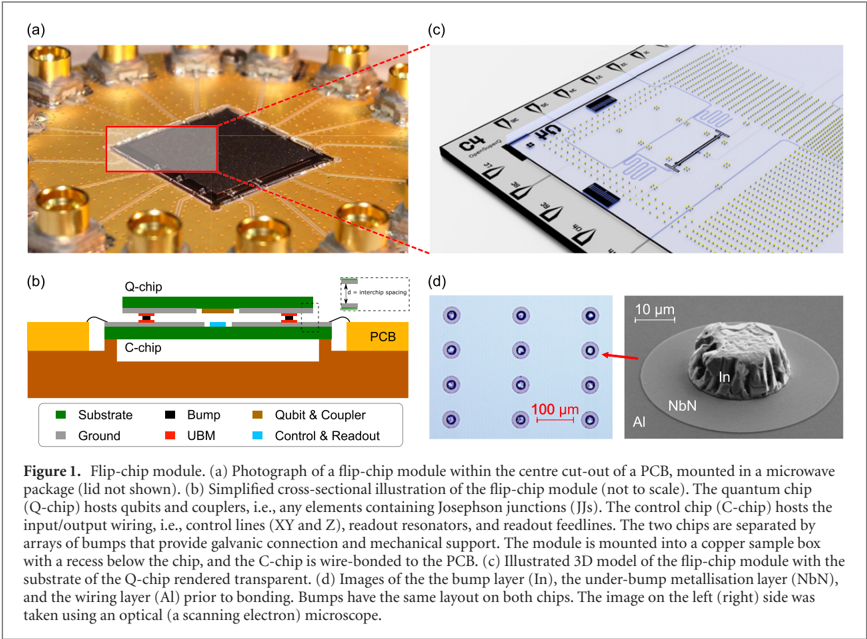
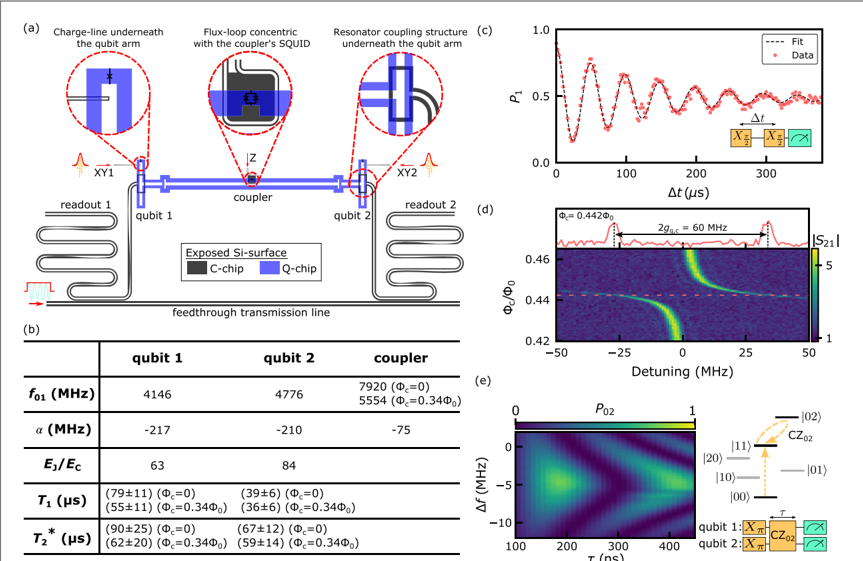
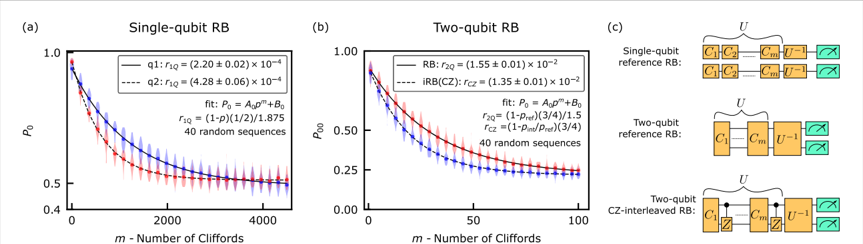
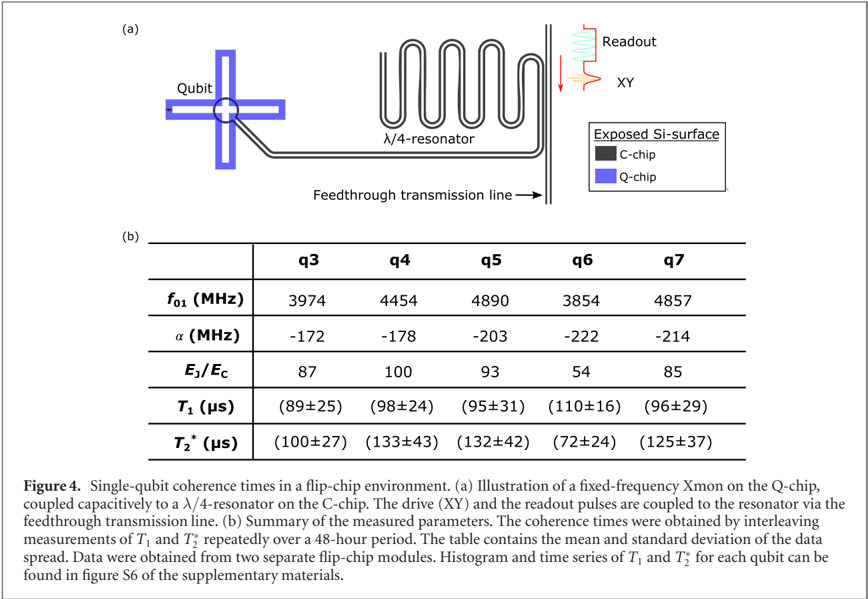
We have integrated single and coupled superconducting transmon qubits into flip-chip modules. Each module consists of two chips—one quantum chip and one control chip—that are bump-bonded together. We demonstrate time-averaged coherence times exceeding 90 μs, single-qubit gate fidelities exceeding 99.9%, and two-qubit gate fidelities above 98.6%. We also present device design methods and discuss the sensitivity of device parameters to variation in interchip spacing. Notably, the additional flip-chip fabrication steps do not degrade the qubit performance compared to our baseline state-of-the-art in single-chip, planar circuits. This integration technique can be extended to the realisation of quantum processors accommodating hundreds of qubits in one module as it offers adequate input/output wiring access to all qubits and couplers.
Overview
The claims and statistics of this paper haven’t been checked yet.
Free: it reads the open-access text and checks the first 5 claims that cite a source we can check. Create a free account to check every claim.
Integrity signals
Registry
Cites
Statistics
Figures
Verification
Claims the paper makes
The claims and statistics of this paper haven’t been checked yet.
Free: it reads the open-access text and checks the first 5 claims that cite a source we can check. Create a free account to check every claim.
Claims other papers make about this one
Each is checked against this paper’s own text: does it say what the citing paper says it does?
The cited source says what the claim attributes to it.
In the citing paper
“Moreover, it offers the potential for further upscaling through three-dimensional integration5 and more process optimization.”
From Advanced CMOS manufacturing of superconducting qubits on 300 mm wafers (2024) · cites this paper as [5]
The cited source says what the claim attributes to it.
In the citing paper
“Our initial result showcases a leap forward in the potential fabrication volume and yield of high-coherence superconducting qubits, which, together with three-dimensional integration developments5,31, could meet the stringent fabrication demands of a future million-qubit processor.”
From Advanced CMOS manufacturing of superconducting qubits on 300 mm wafers (2024) · cites this paper as [5]
Self-check
Percentages, sums and reported differences re-computed from the paper’s own numbers.
The self-check needs the paper’s full text.
Citations
Cites
Quantum supremacy using a programmable superconducting processor
Arute, F., Arya, K., Babbush, R., Bacon, D., Bardin, J. C., Barends, R., Biswas, R., Boixo, S., Brandao, F. G. S. L., Buell, D. A., et al. (2019) · Nature · doi:10.1038/s41586-019-1666-5 · Cited by 7,720
Charge-insensitive qubit design derived from the Cooper pair box
Koch, J., Yu, T. M., Gambetta, J., Houck, A. A., Schuster, D. I., Majer, J., Blais, A., Devoret, M. H., Girvin, S. M., & Schoelkopf, R. J. (2007) · Physical Review A · doi:10.1103/physreva.76.042319 · Cited by 3,351
A quantum engineer's guide to superconducting qubits
Krantz, P., Kjaergaard, M., Yan, F., Orlando, T. P., Gustavsson, S., & Oliver, W. D. (2019) · Applied Physics Reviews · doi:10.1063/1.5089550 · Cited by 2,004
Strong Quantum Computational Advantage Using a Superconducting Quantum Processor
Wu, Y., Bao, W.-S., Cao, S., Chen, F., Chen, M.-C., Chen, X., Chung, T.-H., Deng, H., Du, Y., Fan, D., et al. (2021) · Physical Review Letters · doi:10.1103/physrevlett.127.180501 · Cited by 1,059
Coherent Josephson Qubit Suitable for Scalable Quantum Integrated Circuits
Barends, R., Kelly, J., Megrant, A., Sank, D., Jeffrey, E., Chen, Y., Yin, Y., Chiaro, B., Mutus, J., Neill, C., et al. (2013) · Physical Review Letters · doi:10.1103/physrevlett.111.080502 · Cited by 779
Scalable and Robust Randomized Benchmarking of Quantum Processes
Magesan, E., Gambetta, J. M., & Emerson, J. (2011) · Physical Review Letters · doi:10.1103/physrevlett.106.180504 · Cited by 724
Place, A. P. M., Rodgers, L. V. H., Mundada, P., Smitham, B. M., Fitzpatrick, M., Leng, Z., Premkumar, A., Bryon, J., Vrajitoarea, A., Sussman, S., et al. (2021) · Nature Communications · doi:10.1038/s41467-021-22030-5 · Cited by 563
Characterizing quantum gates via randomized benchmarking
Magesan, E., Gambetta, J. M., & Emerson, J. (2012) · Physical Review A · doi:10.1103/physreva.85.042311 · Cited by 464
Decoherence benchmarking of superconducting qubits
Burnett, J. J., Bengtsson, A., Scigliuzzo, M., Niepce, D., Kudra, M., Delsing, P., & Bylander, J. (2019) · npj Quantum Information · doi:10.1038/s41534-019-0168-5 · Cited by 384
Self-citationQuantum walks on a programmable two-dimensional 62-qubit superconducting processor
Gong, M., Wang, S., Zha, C., Chen, M.-C., Huang, H.-L., Wu, Y., Zhu, Q., Zhao, Y., Li, S., Guo, S., et al. (2021) · Science · doi:10.1126/science.abg7812 · Cited by 331
Research works printed but not linked: 2
- Andersen C K et al 2021 APS March Meeting 2021 (March 15-19, 2021) 66 Abstract: C34.00001 https://meetings.aps.org/ Meeting/MAR21/Session/C34.1
- Abad T, Fernández-Pendás J, Kockum A F and Johansson G 2021 arXiv:2110.15883 · arXiv
Cited by
Noisy intermediate-scale quantum computers
Cheng, B., Deng, X., Gu, X. Q., He, Y., Hu, G., Huang, P., Li, J., Lin, B., Lu, D., Lu, Y., et al. (2023) · Frontiers of Physics · doi:10.1007/s11467-022-1249-z · Cited by 182
Low-loss interconnects for modular superconducting quantum processors
Niu, J., Zhang, L., Liu, Y., Qiu, J., Huang, W., Huang, J., Jia, H., Liu, J., Tao, Z., Wei, W., et al. (2023) · Nature Electronics · doi:10.1038/s41928-023-00925-z · Cited by 172
Chen, L., Li, H.-X., Lu, Y., Warren, C., Križan, C., Kosen, S., Rommel, M., Ahmed, S., Osman, A., Biznárová, J., et al. (2023) · npj Quantum Information · doi:10.1038/s41534-023-00689-6 · Cited by 151
“[38] with the circuit schematic shown in Fig.”
MethodSelf-citationBlueprint for a High-Performance Fluxonium Quantum Processor
Nguyen, L. B., Koolstra, G., Kim, Y., Morvan, A., Chistolini, T., Singh, S., Nesterov, K., Jünger, C., Chen, L., Pedramrazi, Z., et al. (2022) · PRX Quantum · doi:10.1103/prxquantum.3.037001 · Cited by 125
Self-citationLong-Distance Transmon Coupler with cz-Gate Fidelity above 99.8 %
Marxer, F., Vepsäläinen, A. P., Jolin, S. W., Tuorila, J., Landra, A., Ockeloen-Korppi, C. F., Liu, W., Ahonen, O., Auer, A., Belzane, L., et al. (2023) · PRX Quantum · doi:10.1103/prxquantum.4.010314 · Cited by 122
“1(e)], corresponding to a typical flip-chip topology [24] (for further details on the simulation, see Appendix C).”
BackgroundUniversal Fidelity Reduction of Quantum Operations from Weak Dissipation
Abad, T., Fernández-Pendás, J., Kockum, A. F., & Johansson, G. (2022) · Physical Review Letters · doi:10.1103/physrevlett.129.150504 · Cited by 107
Self-citationGraphical structures for design and verification of quantum error correction
Chancellor, N., Kissinger, A., Zohren, S., Roffe, J., & Horsman, D. C. (2023) · Quantum Science and Technology · doi:10.1088/2058-9565/acf157 · Cited by 86
“The greater efficiency of both non-topological CSS and LDPC codes is particularly important in the near term as, while we are at the point where devices are near or below error thresholds for QEC (for example superconducting [11] and transmon [23, 24] qubits), the overheads associated with QEC will form a large barrie…”
BackgroundAdvanced CMOS manufacturing of superconducting qubits on 300 mm wafers
Van Damme, J., Massar, S., Acharya, R., Ivanov, T., Perez Lozano, D., Canvel, Y., Demarets, M., Vangoidsenhoven, D., Hermans, Y., Lai, J. G., et al. (2024) · Nature · doi:10.1038/s41586-024-07941-9 · Cited by 63
“Moreover, it offers the potential for further upscaling through three-dimensional integration 5 and more process optimization.”
BackgroundSelf-citationMitigation of interfacial dielectric loss in aluminum-on-silicon superconducting qubits
Biznárová, J., Osman, A., Rehnman, E., Chayanun, L., Križan, C., Malmberg, P., Rommel, M., Warren, C., Delsing, P., Yurgens, A., et al. (2024) · npj Quantum Information · doi:10.1038/s41534-024-00868-z · Cited by 77
Self-citationHetEC: Architectures for Heterogeneous Quantum Error Correction Codes
Stein, S., Xu, S., Cross, A. W., Yoder, T. J., Javadi-Abhari, A., Liu, C., Liu, K., Zhou, Z., Guinn, C. R., Ding, Y., et al. (2025) · International Conference on Architectural Support for Programming Languages and Operating Systems (ASPLOS) · doi:10.1145/3676641.3716001 · Cited by 62
Path toward manufacturable superconducting qubits with relaxation times exceeding 0.1 ms
Verjauw, J., Acharya, R., Van Damme, J., Ivanov, T., Lozano, D. P., Mohiyaddin, F. A., Wan, D., Jussot, J., Vadiraj, A. M., Mongillo, M., et al. (2022) · npj Quantum Information · doi:10.1038/s41534-022-00600-9 · Cited by 45
Self-citationMitigation of frequency collisions in superconducting quantum processors
Osman, A., Fernández-Pendás, J., Warren, C., Kosen, S., Scigliuzzo, M., Frisk Kockum, A., Tancredi, G., Fadavi Roudsari, A., & Bylander, J. (2023) · Physical Review Research · doi:10.1103/physrevresearch.5.043001 · Cited by 41
Self-citationSignal Crosstalk in a Flip-Chip Quantum Processor
Kosen, S., Li, H.-X., Rommel, M., Rehammar, R., Caputo, M., Grönberg, L., Fernández-Pendás, J., Kockum, A. F., Biznárová, J., Chen, L., et al. (2024) · PRX Quantum · doi:10.1103/prxquantum.5.030350 · Cited by 61
“Our flip-chip fabrication process has been demonstrated to be compatible with qubit (transmon) coherence at the 100-µ s level [20].”
BackgroundMethodInfluentialSelf-citationAvoiding decoherence with giant atoms in a two-dimensional structured environment
Ingelsten, E. R., Kockum, A. F., & Soro, A. (2024) · Physical Review Research · doi:10.1103/physrevresearch.6.043222 · Cited by 41
“We note that arranging for the multiple coupling points in such a setup may be aided by flip-chip technology [92–94].”
Self-citationGoto, H. (2022) · Physical Review Applied · doi:10.1103/physrevapplied.18.034038 · Cited by 60
Single-shot readout of a superconducting qubit using a thermal detector
Gunyhó, A., Kundu, S., Ma, J., Liu, W., Niemelä, S., Catto, G., Vadimov, V., Vesterinen, V., Singh, P., Chen, Q., et al. (2024) · Nature Electronics · doi:10.1038/s41928-024-01147-7 · Cited by 54
Zikiy, E. V., Ivanov, A. I., Smirnov, N. S., Moskalev, D. O., Polozov, V. I., Matanin, A. R., Malevannaya, E. I., Echeistov, V. V., Константинова, Т. Г., & Rodionov, I. A. (2023) · Scientific Reports · doi:10.1038/s41598-023-42332-6 · Cited by 40
Muthusubramanian, N., Finkel, M. I., Duivestein, P., Zachariadis, C., van der Meer, S. L. M., Veen, H. M., Beekman, M., Stavenga, T., Bruno, A., & DiCarlo, L. (2023) · Quantum Science and Technology · doi:10.1088/2058-9565/ad199c · Cited by 39
“The latter motivates the active development of 3D integration strategies such as flip-chip [5–7] to avoid overcrowding of circuit elements and vertical routing [8–10] of input and output lines to circumvent the scaling limitations associated with lateral wirebonding.”
Background24 Days-Stable CNOT Gate on Fluxonium Qubits with Over 99.9% Fidelity
Lin, W.-J., Cho, H., Chen, Y., Vavilov, M., Wang, C., & Manucharyan, V. (2025) · PRX Quantum · doi:10.1103/prxquantum.6.010349 · Cited by 54
Enhancing the coherence of superconducting quantum bits with electric fields
Lisenfeld, J., Bilmes, A., & Ustinov, A. V. (2023) · npj Quantum Information · doi:10.1038/s41534-023-00678-9 · Cited by 41
Impact of decoherence on the fidelity of quantum gates leaving the computational subspace
Abad, T., Schattner, Y., Kockum, A. F., & Johansson, G. (2025) · Quantum · doi:10.22331/q-2025-04-03-1684 · Cited by 41
“An interesting case would be operations for continuous-variable quantum computation with superconducting microwave circuits, where logical qubit states are encoded in bosonic systems.”
Self-citationQubit-Compatible Substrates With Superconducting Through-Silicon Vias
Grigoras, K., Yurttagül, N., Kaikkonen, J.-P., Mannila, E. T., Eskelinen, P., Lozano, D. P., Li, H.-X., Rommel, M., Shiri, D., Tiencken, N., et al. (2022) · IEEE Transactions on Quantum Engineering · doi:10.1109/tqe.2022.3209881 · Cited by 31
“For comparison, widely reproduced relaxation times for transmon qubits on silicon substrates are near 50 μs [12], [13], [14], [15], [16], [17] .”
BackgroundSelf-citationSimulation of Quantum Computers: Review and Acceleration Opportunities
Cicero, A., Maleki, M. A., Azhar, M. W., Kockum, A. F., & Trancoso, P. (2025) · ACM Transactions on Quantum Computing · doi:10.1145/3762672 · Cited by 44
Self-citationUltralong-living magnons in the quantum limit
Serha, R. O., McAllister, K. H., Majcen, F., Knauer, S., Reimann, T., Dubs, C., Melkov, G. A., Serga, A. A., Tiberkevich, V. S., Chumak, A. V., et al. (2026) · Science Advances · doi:10.1126/sciadv.aee2344 · Cited by 25
“Example measurements of the linewidth of the Kittel’s mode in nonlinear regime are shown in Fig.”
Long-Range Z Z Interaction via Resonator-Induced Phase in Superconducting Qubits
Deng, X. B., Zheng, W., Liao, X., Zhou, H., Ge, Y., Zhao, J., Lan, D., Tan, X., Zhang, Y., Li, S., et al. (2025) · Physical Review Letters · doi:10.1103/physrevlett.134.020801 · Cited by 36
Distributed quantum information processing: a review of recent progress
Knörzer, J., Liu, X., Schiffer, B. F., & Tura, J. (2026) · Reports on Progress in Physics · doi:10.1088/1361-6633/ae74e0 · Cited by 29
Flip-Chip-Based Microwave Spectroscopy of Andreev Bound States in a Planar Josephson Junction
Hinderling, M., Sabonis, D., Paredes, S., Haxell, D. Z., Coraiola, M., ten Kate, S. C., Cheah, E., Křížek, F., Schott, R., Wegscheider, W., et al. (2023) · Physical Review Applied · doi:10.1103/physrevapplied.19.054026 · Cited by 22
HetArch: Heterogeneous Microarchitectures for Superconducting Quantum Systems
Stein, S., Sussman, S., Tomesh, T., Guinn, C. R., Türeci, E., Lin, S. F., Tang, W., Ang, J., Chakram, S., Li, A., et al. (2023) · IEEE/ACM International Symposium on Microarchitecture (MICRO) · doi:10.1145/3613424.3614300 · Cited by 28
“Once an algorithm has been broken down into these basic operations, design then proceeds ‘bottom-up,’ assembling devices into standard cells optimized for those basic operations, with standard cells then grouping into modules.”
MethodRealization of Fast All-Microwave Controlled-Z Gates with a Tunable Coupler
Li, S., Fan, D., Gong, M., Ye, Y., Chen, X., Wu, Y., Guan, H., Deng, H., Rong, H., Huang, H.-L., et al. (2022) · Chinese Physics Letters · doi:10.1088/0256-307x/39/3/030302 · Cited by 22
Dynamically Reconfigurable Photon Exchange in a Superconducting Quantum ProcessorPreprint
Marinelli, B., Luo, J., Ren, H., Niedzielski, B. M., Kim, D. K., Das, R. N., Schwartz, M. E., Santiago, D., & Siddiqi, I. A. (2023) · arXiv (Cornell University) · doi:10.48550/arxiv.2303.03507 · Cited by 17
“Since this device utilizes flip-chip integration there is additional ground metal immediately above the junction on the facing chip which may introduce the additional capacitance responsible for lowering EC [49].”
Resource analysis of quantum algorithms for coarse-grained protein folding models
Linn, H., Lyngfelt, I., García-Álvarez, L., & Johansson, G. (2024) · Physical Review Research · doi:10.1103/physrevresearch.6.033112 · Cited by 18
Self-citationSimulating open quantum systems with giant atoms
Chen, G., & Kockum, A. F. (2025) · Quantum Science and Technology · doi:10.1088/2058-9565/adb2bd · Cited by 23
“Here, the resonators and flux lines can go over the waveguide without crossing interrupting it by using air bridges [145] or multi-layer chips [134, 146, 147].”
Self-citationShape optimization of superconducting transmon qubits for low surface dielectric loss
Eun, S., Park, S. H., Seo, K., Choi, K., & Hahn, S. (2023) · Journal of Physics D Applied Physics · doi:10.1088/1361-6463/acf7cf · Cited by 19
Fluxonium qubits in a flip-chip package
Somoroff, A., Truitt, P., Weis, A. C., Bernhardt, J., Yohannes, D. T., Walter, J., Kalashnikov, K., Renzullo, M., Mencia, R., Vavilov, M., et al. (2024) · Physical Review Applied · doi:10.1103/physrevapplied.21.024015 · Cited by 20
FTCircuitBench: A Benchmark Suite for Fault-Tolerant Quantum Compilation and Architecture
Harkness, A., Kan, S., Liu, C., Wang, M., Martyn, J. M., Xu, S., Chamaki, D., Decker, E., Mao, Y., Zuluaga, L. F., et al. (2026) · ACM Transactions on Quantum Computing · doi:10.1145/3858421 · Cited by 16
Characterization of superconducting through-silicon vias as capacitive elements in quantum circuits
Hazard, T., Woods, W. H., Rosenberg, D., Das, R. N., Hirjibehedin, C. F., Kim, D. K., Knecht, J. M., Mallek, J., Melville, A. J., Niedzielski, B. M., et al. (2023) · Applied Physics Letters · doi:10.1063/5.0170055 · Cited by 22
Norris, G. J., Michaud, L., Pahl, D., Kerschbaum, M., Eichler, C., Besse, J.-C., & Wallraff, A. J. (2024) · EPJ Quantum Technology · doi:10.1140/epjqt/s40507-023-00213-x · Cited by 20
Self-citationChayanun, L., Biznárová, J., Zeng, L. J., Malmberg, P., Nylander, A., Osman, A., Rommel, M., Tam, P. L., Olsson, E., Delsing, P., et al. (2024) · APL Quantum · doi:10.1063/5.0208140 · Cited by 23
“We have combined some of these processes in a standard fabrication process for aluminum-on-silicon (Si-Al), discussed below, and it yields CPW resonators and qubits with TLS-limited internal quality factor Q i ≈ 1 × 10 6 or relaxation time T 1 ≈ 100 µ s ( 29–31 ).”
MethodSelf-citationFast, unconditional reset and leakage reduction in fixed-frequency transmon qubits
Chen, L., Fors, S. P., Yan, Z., Ali, A., Abad, T., Huang, T., Osman, A., Moschandreou, E., Lienhard, B., Kosen, S., et al. (2026) · npj Quantum Information · doi:10.1038/s41534-026-01356-2 · Cited by 16
“Each qubit is coupled with a strength g qr ≈ 50 MHz to a readout resonator R i of frequency ω R i = 2 π ¼ 6 : 752 and 6.308 GHz for i = 0 and 1, respectively.”
InfluentialSelf-citationNative three-body interactions in a superconducting lattice gauge quantum simulator
Busnaina, J., Shi, Z., Alcaine-Cuervo, J. M., Yang, C., Nsanzineza, I., Rico, E., & Wilson, C. M. (2025) · Physical review. B./Physical review. B · doi:10.1103/6prx-zmdz · Cited by 18
Performance characterization of a multi-module quantum processor with static inter-chip couplers
Norris, G. J., Dalton, K., Zanuz, D. C., Rommens, A. J., Flasby, A., Panah, M. B., Swiadek, F., Scarato, C., Hellings, C., Besse, J.-C., et al. (2026) · EPJ Quantum Technology · doi:10.1140/epjqt/s40507-026-00469-z · Cited by 27
“…of commercial two-chip 3D-integrated devices [4, 40, 41], and is comparable to other 3D-integrated qubits with known fabrication procedures—slightly below fixed-frequency qubits [38, 46] and matching or exceeding other frequency-tunable qubits [45, 60] including on other modular devices [13, 42].”
InfluentialSelf-citationJanzen, N., Kononenko, M., Ren, S., & Lupaşcu, A. (2022) · Applied Physics Letters · doi:10.1063/5.0103165 · Cited by 16
Quantum SWAP gate realized with CZ and iSWAP gates in a superconducting architecture
Križan, C., Biznárová, J., Chen, L., Hogedal, E., Osman, A., Warren, C., Kosen, S., Li, H.-X., Abad, T., Aggarwal, A., et al. (2025) · New Journal of Physics · doi:10.1088/1367-2630/adeba7 · Cited by 20
Self-citationLi, H.-X., Shiri, D., Kosen, S., Rommel, M., Chayanun, L., Nylander, A., Rehammar, R., Tancredi, G., Caputo, M., Grigoras, K., et al. (2023) · IEEE Transactions on Quantum Engineering · doi:10.1109/tqe.2023.3302371 · Cited by 15
“Flip-chip integration technology has been demonstrated to be compatible with high-quality qubits [3], [4], [5], [6], [7], [8], [9].”
BackgroundMethodInfluentialSelf-citationMaxwell-Schrödinger Modeling of a Superconducting Qubit Coupled to a Transmission Line Network
Roth, T. E., & Elkin, S. T. (2024) · IEEE journal on multiscale and multiphysics computational techniques · doi:10.1109/jmmct.2024.3349433 · Cited by 19
“Thisisnecessitatingtheexplo-rationofnewpackagingandintegrationstrategies[9],[10], [11],[12],whichiscomplicatedduetothestringentsystem requirements.”
Advances in Josephson Junction Materials and Processes Toward Practical Quantum Computing
Kim, H. L., Jang, G., Jin, S., An, J., Shin, H., Shin, H., Luo, J., Hashim, A., Siddiqi, I. A., Kim, Y., et al. (2026) · Advanced Science · doi:10.1002/advs.78427 · Cited by 12
“Flip-chip bump bonding requires specialized tools and techniques to deposit indium pillars and precisely align the chips [ 255 ].”
Zhu, W., Xiao, X.-Y., Chen, Z., Chen, G., Yan, Y., Wang, L., & Li, G.-L. (2022) · Advances in Manufacturing · doi:10.1007/s40436-022-00419-9 · Cited by 11
Investigating the Individual Performances of Coupled Superconducting Transmon Qubits
Ahmad, H. G., Jordan, C., van den Boogaart, R., Waardenburg, D., Zachariadis, C., Mastrovito, P., Georgiev, A. L., Montemurro, D., Pepe, G. P., Arthers, M., et al. (2023) · Condensed Matter · doi:10.3390/condmat8010029 · Cited by 11
“As a matter of fact, the circuital parameters of the module hosting the quantum processor (quantum chip) and the superconducting electronics module (carrier chip) are strictly dependent on each other [65].”
InfluentialThrough-silicon-via Architecture of 3D Integration for Superconducting Quantum Computing Application
Yu, J. Y., Wang, Q., Zheng, Y. R., Song, C., Fang, J., Li, T., Wu, H., Wang, Z., & Cai, J. (2023) · IEEE Electronic Components and Technology Conference (ECTC) · doi:10.1109/ectc51909.2023.00316 · Cited by 11
Paradkar, A., Nicaise, P., Dakroury, K., Resare, F., & Wieczorek, W. (2025) · Applied Physics Letters · doi:10.1063/5.0235266 · Cited by 8
“This technique is used in high-density three-dimensional packaging of integrated superconducting qubit processors, which require a small bump area to accommodate a large number of connections and a small (spacing ≤ 10 µ m) and uniform (tilt ≤ 100 µ rad) chip separation for scalability [4, 5].”
BackgroundMethodInfluentialRemote cross-resonance gate between superconducting fixed-frequency qubits
Ohfuchi, M., & Sato, S. (2024) · Quantum Science and Technology · doi:10.1088/2058-9565/ad3f47 · Cited by 10
Low crosstalk modular flip-chip architecture for coupled superconducting qubits
Ihssen, S., Geisert, S., Jaumà, G., Winkel, P., Spiecker, M., Zapata, N., Gosling, N., Paluch, P., Pino, M., Reisinger, T. J. G., et al. (2025) · Applied Physics Letters · doi:10.1063/5.0245667 · Cited by 13
Malik, S., Jiang, W., Mayor, F. M., Makihara, T., & Safavi‐Naeini, A. H. (2023) · Applied Physics Letters · doi:10.1063/5.0157516 · Cited by 7
Heralding entangled optical photons from a microwave quantum processor
Haug, T. H., Kockum, A. F., & Laer, R. V. (2024) · Physical Review Applied · doi:10.1103/physrevapplied.22.034068 · Cited by 8
Self-citationSmall Quantum Low Density Parity Check Codes for Near-Term ExperimentsPreprint
Andersen, C. K., & Greplová, E. (2025) · arXiv (Cornell University) · doi:10.48550/arxiv.2507.09690 · Cited by 7
Directional emission of a readout resonator for qubit measurement
Yen, A., Ye, Y., Peng, K., Wang, J., Cunningham, G., Gingras, M., Niedzielski, B. M., Stickler, H., Serniak, K., Schwartz, M. E., et al. (2024) · Physical Review Applied · doi:10.1103/physrevapplied.22.034035 · Cited by 6
Metamaterials in superconducting and cryogenic quantum technologies
Krasnok, A. (2026) · Applied Physics Reviews · doi:10.1063/5.0282013 · Cited by 5
Hughes, G. D., Peek, S. E., Shah, A., Hamilton, M. C., & Adams, M. L. (2024) · IEEE Transactions on Applied Superconductivity · doi:10.1109/tasc.2024.3351620 · Cited by 5
“Using a NbN UBM layer is one possible choice which has been used in other work [4].”
MethodLow-loss liquid metal interconnects for superconducting quantum circuits
Yao, Z., Sandberg, M., Abraham, D. W., & Bishop, D. J. (2024) · Applied Physics Letters · doi:10.1063/5.0211244 · Cited by 5
Resource-Efficient Cross-Platform Verification with Modular Superconducting Devices
Dalton, K., Knörzer, J., Hoehne, F., Song, Y., Flasby, A., Zanuz, D. C., Panah, M. B., Besedin, I. S., Besse, J.-C., & Wallraff, A. J. (2025) · PRX Quantum · doi:10.1103/czph-xpzs · Cited by 8
“These are comparable to error rates achieved in similar planar [57, 58] and 3D-integrated [10, 49, 59] devices.”
Self-citationDesign of Scalable Superconducting Quantum Circuits Using Flip-Chip Assembly
Park, S. H., Baek, D., Park, I., & Hahn, S. (2023) · IEEE Transactions on Applied Superconductivity · doi:10.1109/tasc.2023.3244142 · Cited by 5
“between qubits need to be considered in quantum hardware design [4], [5], [6], [7].”
BackgroundCompact superconducting transmon qubit circuits made of ultrathin NbN
Wei, X., Jiang, J., Xu, W., Guo, T., Zhang, K., Li, Z., Zhou, T., Sheng, Y., Cao, C., Sun, G., et al. (2023) · Applied Physics Letters · doi:10.1063/5.0170259 · Cited by 5
Fine pitch Nb-Nb Direct Bonding for quantum applications
Renaud, P., Dubarry, C., Bresson, N., Deschaseaux, E., Fournel, F., Morales, C., Abadie, K., Thomas, C., & Charbonnier, J. (2024) · IEEE Electronic Components and Technology Conference (ECTC) · doi:10.1109/ectc51529.2024.00076 · Cited by 5
A scalable routing method for superconducting quantum processor
Yang, T., Liang, C., Wang, W., Zhao, B., Wang, L., Xiong, Q., Feng, X., & Shan, Z. (2025) · EPJ Quantum Technology · doi:10.1140/epjqt/s40507-025-00320-x · Cited by 5
Thermal resistance in superconducting flip-chip assemblies
Hätinen, J., Mykkänen, E., Viisanen, K., Ronzani, A., Kemppinen, A., Lehtisyrjä, L., Lehtinen, J. S., & Prunnila, M. (2023) · Applied Physics Letters · doi:10.1063/5.0162409 · Cited by 6
“For superconducting quantum processors with large qubit counts, 3D integration is a must 2 and different realizations already exist 3,4 .”
BackgroundSelf-citationInvestigation of Aluminum and Gold Flip-Chip Bonding for Quantum Device Integration
Cirulis, I., Zschenderlein, U., Braun, S., Radestock, M., Pantou, R., Vogel, K., Selbmann, F., Kurth, S., Wunderle, B., & Kühn, H. (2023) · European Microelectronics and Packaging Conference · doi:10.23919/empc55870.2023.10418420 · Cited by 4
“Materials like Aluminum (Al), titanium nitride (TiN), and niobium (Nb), where substrate materials are silicon (Si) and sapphire (Al 2 O 3 ), are discussed and used in the scientific community for qubit chip fabrication and integration [1, 3].”
BackgroundMethodPure kinetic inductance coupling for cQED with flux qubits
Geisert, S., Ihssen, S., Winkel, P., Spiecker, M., Féchant, M., Paluch, P., Gosling, N., Zapata, N., Günzler, S., Rieger, D., et al. (2024) · Applied Physics Letters · doi:10.1063/5.0218361 · Cited by 4
Derivation of a Semiclassical Model for a Transmon Capacitively Coupled to a Transmission Line
Roth, T. E. (2022) · Digest - IEEE Antennas and Propagation Society. International Symposium · doi:10.1109/ap-s/usnc-ursi47032.2022.9886800 · Cited by 3
Techniques Toward Quantum Computing System Scaling
Liu, Q., Wang, S.-P., Liu, Y., Sun, H., Guo, Y., Jiang, H., & Li, T. (2024) · IEEE Nanotechnology Magazine · doi:10.1109/mnano.2023.3340392 · Cited by 3
Scalable interconnection using a superconducting flux qubit
Saida, D., Makise, K., & Hidaka, M. (2024) · Scientific Reports · doi:10.1038/s41598-024-65086-1 · Cited by 3
“The application of flip-chip bonding, where the qubit and the readout circuits are formed on separate chips and connected by bumps, has been reported 25–29 .”
Yu, J. Y., Wang, Q., Wu, H., Zheng, Y. R., Fang, J., Song, C., Wu, Y., Li, T., & Cai, J. (2024) · IEEE Electron Device Letters · doi:10.1109/led.2024.3441615 · Cited by 3
“Currently, the widely investigated approach primarily focuses on indium bumps prepared by evaporation method [11], [12], [13], [14].”
MethodProtocols for i SWAP gates using a fixed coupler driven by two microwave pulses
Xu, P., Zhang, H., & Wu, S. (2025) · Physical Review Applied · doi:10.1103/physrevapplied.23.034036 · Cited by 6
Single-Shot Readout of a Superconducting Qubit Using a Thermal DetectorPreprint
Gunyhó, A., Kundu, S., Ma, J., Liu, W., Niemelä, S., Catto, G., Vadimov, V., Vesterinen, V., Singh, P., Chen, Q., et al. (2023) · arXiv (Cornell University) · doi:10.48550/arxiv.2303.03668 · Cited by 4
Almost linear decoder for optimal geometrically local quantum codes
Eggerickx, Q., Wills, A., Lin, T.-C., Greve, K. D., & Hsieh, M.-H. (2025) · Physical Review Research · doi:10.1103/sxdx-qbcz · Cited by 3
“In this layout, qubits reside on the quantum chip, while readout resonators and control lines are housed on the control chip [15–17].”
Luo, Z., Richard, L., Tsitsilin, I., Schneider, C. M. F., Dietz, M., Filipp, S., & Hagelauer, A. (2025) · IEEE Transactions on Microwave Theory and Techniques · doi:10.1109/tmtt.2025.3578414 · Cited by 2
“While indium bumps are added along the side ground planes of the CPW line to equalize voltages, the finite ground plane between the resonator and feedline is too narrow to place indium bumps, which typically have a diameter of 10–20 µ m [26], [27].”
Dissipative charging of tight-binding quantum batteries
Xu, M., Liu, Y., Song, Y., Jiang, X.-P., & Pan, L. (2026) · APS Open Science · doi:10.1103/m26w-5539 · Cited by 3
Scaling superconducting quantum chip with highly integratable quantum building blocks
Cai, X. H., Zhou, B., Wu, Y., Li, S., Dong, Y., Feng, J., & Xiong, K. (2023) · Superconductor Science and Technology · doi:10.1088/1361-6668/acdafe · Cited by 2
Fine pitch superconducting interconnects obtained with Nb–Nb direct bonding
Thomas, C., Renaud, P., Guergour, M., Deschaseaux, E., Dubarry, C., Guillaume, J., Vermande, E., Campo, A., Fournel, F., Hijazi, H., et al. (2025) · Materials for Quantum Technology · doi:10.1088/2633-4356/adaeff · Cited by 2
Scalable quantum eraser with superconducting integrated circuits
Diniz, C. M., Villas-Bôas, C. J., & Santos, A. C. (2025) · Quantum Science and Technology · doi:10.1088/2058-9565/adbded · Cited by 5
Stability of the Superconducting β-Sn Phase at Low Temperature for 3D Cryogenic Packaging
Guergour, M., Feautrier, C., Gergaud, P., Vaxelaire, N., Freychet, G., Calvo-Muñoz, M.-L., Philip, P.-E., Deschaseaux, E., Thomas, C., & Charbonnier, J. (2025) · European Microelectronics and Packaging Conference · doi:10.23919/empc63132.2025.11222518 · Cited by 1
Quantum Digital Signature Based on Single‐Qubit Without a Trusted Third‐Party
Wang, W., & Hayashi, M. (2026) · Advanced Quantum Technologies · doi:10.1002/qute.202500828 · Cited by 1
“9% [ 44 ], due to exquisite quantum control in cryogenic environments.”
Anonymous, Kriheli, Y., Goldstein, S., Dahan, D., & Katz, N. Y. (2026) · Physical Review Applied · doi:10.1103/nf7j-841f · Cited by 1
Toward the optical control of cryogenic quantum technologies
Kemppinen, A., Bera, A., Delrosso, G., Nissilä, J., Senior, J., Mykkänen, E., Tappura, K., Vesterinen, V., Selvasundaram, P. B., Kohopää, K., et al. (2023) · IEEE/LEOS Summer Topical Meetings · doi:10.1109/sum57928.2023.10224386 · Cited by 1
“Here, VTT has demonstrated both the flip-chip integration of qubits [4], and superconducting through-silicon vias [5].”
BackgroundSelf-citationSensitivity Analysis of Manufacturing Uncertainty Errors in Superconducting Quantum Circuits
Park, S. H., Lee, B., Seo, K., & Hahn, S. (2024) · IEEE Transactions on Applied Superconductivity · doi:10.1109/tasc.2024.3350595 · Cited by 1
“Here, we assume silicon substrate and relative permittivity to be 11.45, as reported in [20], [21].”
MethodInfluentialTransient Thermodynamic Simulation of Micro LED Array Bonding
Pan, J., Zhou, H., Ji, X., Chen, L., Yin, L., & Zhang, J. (2023) · China International Forum on Solid State Lighting & International Forum on Wide Bandgap Semiconductors China (SSLChina: IFWS) · doi:10.1109/sslchinaifws60785.2023.10399648 · Cited by 1
Self-citationFlip‐Chip Integration of the Superconducting Quantum‐Classical Circuits: Coupling Types
Yusupov, R. D., Tikhonov, R. S., Lisitsyn, S. A., Nazhestkin, I. A., Khrenov, M. M., Tarasova, I. E., Egorov, S. V., Zhdanova, M., Antonov, V. N., Baranov, D. S., et al. (2025) · Advanced Quantum Technologies · doi:10.1002/qute.202500212 · Cited by 1
Chancellor, N. (2017) · Durham Research Online (Durham University) · doi:10.15128/r1bn999672k · Cited by 1
An, S., Li, Y., Wang, T., Hu, J., & Li, D. (2024) · Research Square · doi:10.21203/rs.3.rs-3785653/v1
Investigation of Aluminum and Gold Flip-Chip Bonding for Quantum Device Integration
Cirulis, I., Zschenderlein, U., Braun, S., Radestock, M., Pantou, R., Vogel, K., Selbmann, F., Kurth, S., Wunderle, B., & Kühn, H. (2024) · IMAPSource Proceedings · doi:10.4071/001c.94682 · Cited by 2
Ferry, D. K. (2024) · Synthesis lectures on engineering, science, and technology · doi:10.1007/978-3-031-62925-9_3
Simulation of Quantum Chip Packaging Based on Superconducting Material Interconnection System
Wang, J., Lin, P., Huang, Y., Xie, X., Xu, S., & Zhang, L. (2024) · International Conference on Electronic Packaging Technology (ICEPT) · doi:10.1109/icept63120.2024.10668742
“Another path is to borrow the packaging form of integrated circuits, with the increase of quantum chip integration using superconducting materials (e.g., Al, In) based on the lead bonding [6] , flip-flop soldering [7] , 2.5D integration [8] and other methods.”
BackgroundQuantum Chip Cuts Unintended Signals
Ehrenstein, D. (2024) · Physics · doi:10.1103/physics.17.s113
Efficient characterization of the coupler spectrum via sideband driving in superconducting qubits
Xu, J., 郭, R. 若. G., 郑, W. 文. Z., Zhang, Y., Zhao, J., Huang, Z., Wen, J., Zhang, R., Li, S., Tan, X., et al. (2025) · Chinese Physics B · doi:10.1088/1674-1056/ae00b0 · Cited by 1
Schneider, A. W., Koorikkat, A., Ariyathilaka, P., Acharya, N., Ratter, K., Chidambaram, V., Lipp, J., Reynolds, E. E., & French, M. J. (2025) · European Microelectronics and Packaging Conference · doi:10.23919/empc63132.2025.11222448
Designing lattice proteins with variational quantum algorithms
Anonymous, Knuthson, L., Irbäck, A., Mohanty, S., García-Álvarez, L., & Johansson, G. (2026) · Physical Review Applied · doi:10.1103/kpf7-fx7t · Cited by 1
“A biophysically relevant optimization problem that has been explored using digital VQAs [16–18] as well as analog quantum annealing [19–21] is the folding of lattice proteins, where the task is to find the minimum energy structure(s) for a given amino acid sequence.”
Self-citationIntegration Technology Challenges in Quantum Computers: The Size, Noise and Wires Matter
Ishihara, R. (2025) · IEEE Electron Devices Magazine · doi:10.1109/med.2025.3588563
“If the classical chip is flip-chipped on the qubit plane via superconducting micro-bumps [14], [19], [24], it will be even more scalable.”
Flip-chip architecture for graphene-based materials
Kekkonen, L. (2025) · Aaltodoc (Aalto University)
Fabrication of superconducting through-silicon vias with photoresist passivation technique
Xia, X., Sun, Y., Wang, Q., Xu, J., Xin, W., Yan, W., Lan, D., & Yu, Y. (2026) · Journal of Applied Physics · doi:10.1063/5.0294596
Tantalum as a base material for superconducting integrated circuits
Zikiy, E. V., Smirnov, N. S., Kotenkov, S. A., Stepanov, I. A., Agafonova, J. A., Moskaleva, D. A., Matanin, A. R., Ivanov, А. I., Moskalev, D. O., Kurochkina, J. A., et al. (2026) · Communications Materials · doi:10.1038/s43246-026-01352-1
Quantum Chip Paradigm FrameworkPreprint
Cai, Qiao, L., Yang, B., Luo, F., Guo, W., Zhang, G., Liu, X., Xu, F., Guo, Q., & Wu, B. (2026) · arXiv (Cornell University) · doi:10.48550/arxiv.2606.17899
Metadata
- Authors
- Kosen, S., Li, H.-X., Rommel, M., Shiri, D., Warren, C., Grönberg, L., Salonen, J., Abad, T., Biznárová, J., Caputo, M., Chen, L., Grigoras, K., Johansson, G., Kockum, A. F., Križan, C., Lozano, D. P., Norris, G. J., Osman, A., Fernández-Pendás, J., Ronzani, A., Roudsari, A. F., Simbierowicz, S., Tancredi, G., Wallraff, A., Eichler, C., Govenius, J., & Bylander, J.
- Affiliations
- Chalmers University of Technology (SE)
- VTT Technical Research Centre of Finland (FI)
- ETH Zurich (CH)
- Corresponding author
- Kosen, Sandoko
- ORCID
- Kosen, Sandoko
- Li, Hang-Xi
- Rommel, Marcus
- Shiri, Daryoush
- Warren, Christopher
- Grönberg, Leif
- Abad, Tahereh
- Biznárová, Janka
- Chen, Liangyu
- Grigoras, Kestutis
- Johansson, Göran
- Kockum, Anton Frisk
- Križan, Christian
- Lozano, Daniel Pérez
- Norris, Graham J
- Osman, Amr
- Fernández-Pendás, Jorge
- Ronzani, Alberto
- Roudsari, Anita Fadavi
- Tancredi, Giovanna
- Wallraff, Andreas
- Eichler, Christopher
- Govenius, Joonas
- Bylander, Jonas
- Venue
- Quantum Science and Technology
- Publisher
- IOP Publishing
- Published
- 2022-06-09
- Volume
- 7
- Issue
- 3
- Pages
- 035018
- ISSN
- 2058-9565 (ISSN-L)
- OpenAlex
- W4200628866
- Cited by
- 88
- References
- 38
- Citations by year
- 2026: 9 · 2025: 21 · 2024: 26 · 2023: 24 · 2022: 7
- FWCI
- 6.42
- Type
- journal article
- Language
- en
- Open access
- hybrid
- doi.org
- Licence
- cc-by
- creativecommons.org/licenses/by/4.0/ (vor)
- iopscience.iop.org/info/page/text-and-data-mining (tdm)
- Locations
- Quantum Science and Technology (publishedVersion, cc-by)
- Chalmers Research (Chalmers University of Technology) (submittedVersion)
- Repository for Publications and Research Data (ETH Zurich) (submittedVersion, cc-by)
- arXiv (Cornell University) (cc-by)
- ETH Zürich Research Collection
- Funders
- EU Flagship on Quantum Technology (H2020-FETFLAG-2018-03 project 802363)
- Chalmers Centre for Computational Science and Engineering (2018-05973)
- Wallenberg Centre for Quantum Technology
- Topics
- Physical Sciences › Physics and Astronomy › Atomic and Molecular Physics, and Optics › Quantum Information and Cryptography
- Physical Sciences › Engineering › Electrical and Electronic Engineering › Superconducting and THz Device Technology
- Physical Sciences › Computer Science › Artificial Intelligence › Quantum Computing Algorithms and Architecture
- Keywords
- flip-chip integration, superconducting quantum processors, transmon qubits, bump bonding, qubit coherence time, gate fidelity, device design
About these checks
Registry, retraction, Cites and statistics results are computed, not judged, with one exception: a printed reference that no index lists is read once by a model before it counts as a citation error. Claims are extracted by a model and kept only when their quote appears verbatim in the text; each cited source is then checked, with a model’s help, for whether it says what the claim relies on. Those verdicts can be wrong — read the claim’s quote and the cited source before relying on one.
Statistics and arithmetic are recomputed, not judged.
Confidence bands are shown only for fields calibrated on our annotated test set. None is calibrated yet, so no band is shown.
What counts as a claim ›How we measure confidence ›How we check this ›
Are you an author, or do you see a problem with this page? Request a review
Data sources
Bibliographic data: Semantic Scholar, OpenAlex, Crossref.
Contains information from the Semantic Scholar Academic Graph Datasets, made available under the ODC Attribution License (ODC-BY 1.0).
Semantic Scholar’s data is described in: Kinney, R., et al. (2023). The Semantic Scholar Open Data Platform. arXiv:2301.10140.
