

The DOI matches its Crossref record; 1 of the 1 references it cites were found in a registry or an index.
Genetically modified pigs as donors of cells, tissues, and organs for xenotransplantation
Overview
The claims and statistics of this paper haven’t been checked yet.
Run the check — free, no account needed. It reads the open-access text and checks the sources it cites.
Integrity signals
Registry
Cites
Statistics
Figures
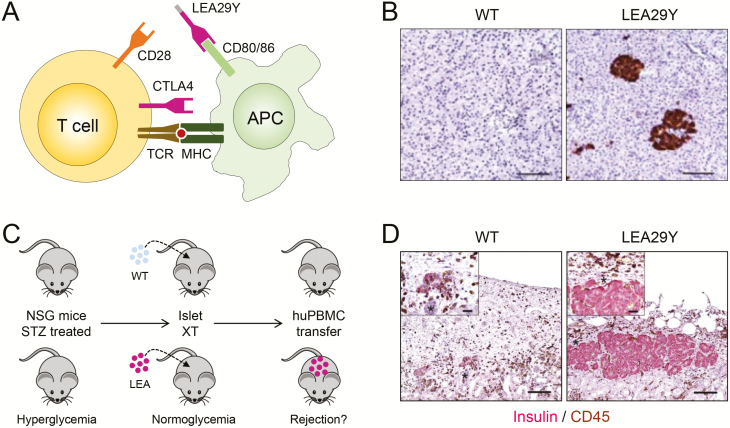
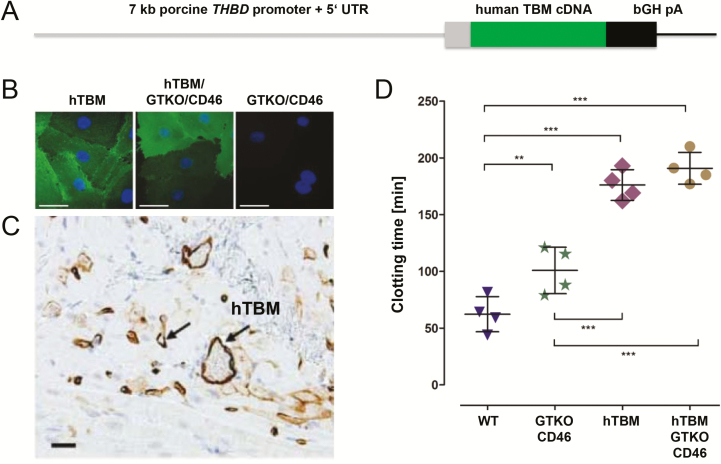
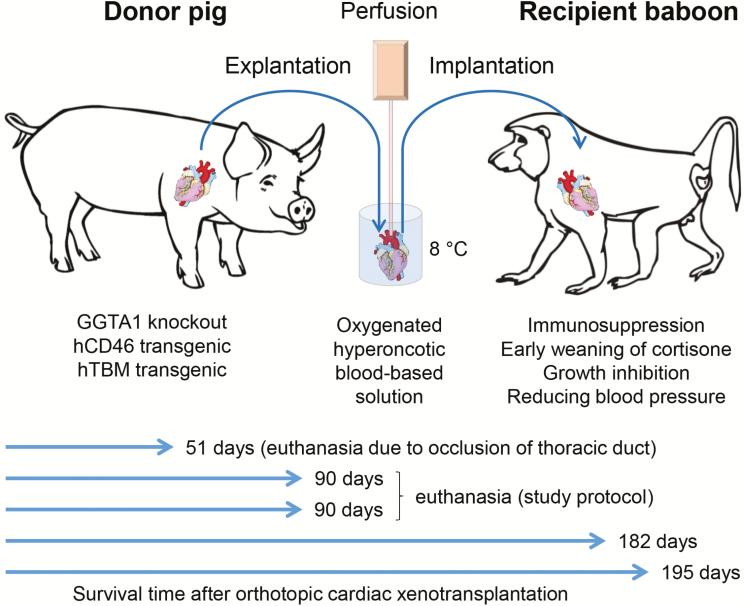
Verification
Claims the paper makes
The claims and statistics of this paper haven’t been checked yet.
Run the check — free, no account needed. It reads the open-access text and checks the sources it cites.
Claims other papers make about this one
Each is checked against this paper’s own text: does it say what the citing paper says it does?
The cited source says what the claim attributes to it.
In the citing paper
“Substantial molecular incompatibilities exist between pigs and humans.”
From Design and testing of a humanized porcine donor for xenotransplantation (2023) · cites this paper as [14]
Self-check
Percentages, sums and reported differences re-computed from the paper’s own numbers.
The self-check needs the paper’s full text.
Citations
Cites
Lutz, A. J., Li, P., Estrada, J. L., Sidner, R. A., Chihara, R. K., Downey, S. M., Burlak, C., Wang, Z., Reyes, L. M., Ivary, B., et al. (2013) · Xenotransplantation · doi:10.1111/xen.12019 · Cited by 294
Research works printed but not linked: 54
- Aron Badin, 2016, Cell therapy for parkinson’s disease: a translational approach to assess the role of local and systemic immunosuppression, Am. J. Transplant, 16, 2016, 10.1111/ajt.13704 · DOI
- Bähr, 2016, Ubiquitous LEA29Y expression blocks T cell co-stimulation but permits sexual reproduction in genetically modified pigs, Plos One, 11, e0155676, 10.1371/journal.pone.0155676 · DOI
- Bartlett, 2016, Report from IPITA-TTS opinion leaders meeting on the future of β-cell replacement, Transplantation, 100, S1, 10.1097/TP.0000000000001055 · DOI
- Bottino, 2014, Pig-to-monkey islet xenotransplantation using multi-transgenic pigs, Am. J. Transplant, 14, 2275, 10.1111/ajt.12868 · DOI
- Buermann, 2018, Pigs expressing the human inhibitory ligand PD-L1 (CD 274) provide a new source of xenogeneic cells and tissues with low immunogenic properties, Xenotransplantation, 25, e12387, 10.1111/xen.12387 · DOI
- Byrne, 2015, Recent investigations into pig antigen and anti-pig antibody expression, Int. J. Surg, 23, 223, 10.1016/j.ijsu.2015.07.724 · DOI
- Cooper, 2016, The role of genetically engineered pigs in xenotransplantation research, J. Pathol, 238, 288, 10.1002/path.4635 · DOI
- Cowan, 2015, Progress towards overcoming coagulopathy and hemostatic dysfunction associated with xenotransplantation, Int. J. Surg, 23, 296, 10.1016/j.ijsu.2015.07.682 · DOI
- Cozzi, 1995, The generation of transgenic pigs as potential organ donors for humans, Nat. Med, 1, 964, 10.1038/nm0995-964 · DOI
- Denner, 2018, Why was PERV not transmitted during preclinical and clinical xenotransplantation trials and after inoculation of animals?, Retrovirology, 15, 28, 10.1186/s12977-018-0411-8 · DOI
- Diamond, 2001, A human CD46 transgenic pig model system for the study of discordant xenotransplantation, Transplantation, 71, 132, 10.1097/00007890-200101150-00021 · DOI
- Dieckhoff, 2008, Knockdown of porcine endogenous retrovirus (PERV) expression by PERV-specific shrna in transgenic pigs, Xenotransplantation, 15, 36, 10.1111/j.1399-3089.2008.00442.x · DOI
- Egerer, 2018, Early weaning completely eliminates porcine cytomegalovirus from a newly established pig donor facility for xenotransplantation, Xenotransplantation, 25, e12449, 10.1111/xen.12449 · DOI
- Estrada, 2015, Evaluation of human and non-human primate antibody binding to pig cells lacking GGTA1/CMAH/β4galnt2 genes, Xenotransplantation, 22, 194, 10.1111/xen.12161 · DOI · Paper page
- Fischer, 2016, Efficient production of multi-modified pigs for xenotransplantation by ‘combineering’, gene stacking and gene editing, Sci. Rep, 6, 29081, 10.1038/srep29081 · DOI
- Fishman, 2018, Infectious disease risks in xenotransplantation, Am. J. Transplant, 18, 1857, 10.1111/ajt.14725 · DOI
- Fodor, 1994, Expression of a functional human complement inhibitor in a transgenic pig as a model for the prevention of xenogeneic hyperacute organ rejection, Proc. Natl. Acad. Sci. U S A, 91, 11153, 10.1073/pnas.91.23.11153 · DOI
- Hara, 2013, Human dominant-negative class II transactivator transgenic pigs - effect on the human anti-pig T-cell immune response and immune status, Immunology, 140, 39, 10.1111/imm.12107 · DOI
- Hauschild, 2011, Efficient generation of a biallelic knockout in pigs using zinc-finger nucleases, Proc. Natl. Acad. Sci. U S A, 108, 12013, 10.1073/pnas.1106422108 · DOI
- Hawthorne, 2014, Control of IBMIR in neonatal porcine islet xenotransplantation in baboons, Am. J. Transplant, 14, 1300, 10.1111/ajt.12722 · DOI
- Iwase, 2014, Regulation of human platelet aggregation by genetically modified pig endothelial cells and thrombin inhibition, Xenotransplantation, 21, 72, 10.1111/xen.12073 · DOI
- Kemter, 2017, INS-eGFP transgenic pigs: a novel reporter system for studying maturation, growth and vascularisation of neonatal islet-like cell clusters, Diabetologia, 60, 1152, 10.1007/s00125-017-4250-2 · DOI
- Kemter, 2018, Will genetic engineering carry xenotransplantation of pig islets to the clinic?, Curr. Diab. Rep, 18, 103, 10.1007/s11892-018-1074-5 · DOI
- Kemter, 2018, Recent progress in porcine islet isolation, culture and engraftment strategies for xenotransplantation, Curr. Opin. Organ Transplant, 23, 633, 10.1097/MOT.0000000000000579 · DOI
- Kim, 2019, Long-term survival of pig-to-rhesus macaque renal xenografts is dependent on CD4 T cell depletion, Am. J. Transplant, 10.1111/ajt.15329 · DOI · Paper page
- Klose, 2005, Expression of biologically active human TRAIL in transgenic pigs, Transplantation, 80, 222, 10.1097/01.TP.0000164817.59006.C2 · DOI
- Klymiuk, 2010, Genetic modification of pigs as organ donors for xenotransplantation, Mol. Reprod. Dev, 77, 209, 10.1002/mrd.21127 · DOI
- Klymiuk, 2012, Xenografted islet cell clusters from INSLEA29Y transgenic pigs rescue diabetes and prevent immune rejection in humanized mice, Diabetes, 61, 1527, 10.2337/db11-1325 · DOI
- Kwon, 2017, Generation of α-1,3-galactosyltransferase knocked-out transgenic cloned pigs with knocked-in five human genes, Transgenic Res, 26, 153, 10.1007/s11248-016-9979-8 · DOI
- Kwon, 2013, Production of biallelic CMP-Neu5Ac hydroxylase knock-out pigs, Sci. Rep, 3, 1981, 10.1038/srep01981 · DOI
- Längin, 2018, Consistent success in life-supporting porcine cardiac xenotransplantation, Nature, 564, 430, 10.1038/s41586-018-0765-z · DOI
- Le Bas-Bernardet, 2011, Xenotransplantation of galactosyl-transferase knockout, CD55, CD59, CD39, and fucosyl-transferase transgenic pig kidneys into baboons, Transplant. Proc, 43, 3426, 10.1016/j.transproceed.2011.09.024 · DOI
- Lee, 2017, Production and breeding of transgenic cloned pigs expressing human CD73, Dev. Reprod, 21, 157, 10.12717/DR.2017.21.2.157 · DOI
- Lin, 2010, Atorvastatin or transgenic expression of TFPI inhibits coagulation initiated by anti-nongal igg binding to porcine aortic endothelial cells, J. Thromb. Haemost, 8, 2001, 10.1111/j.1538-7836.2010.03950.x · DOI
- Martin, 2005, Transgenic expression of CTLA4-ig by fetal pig neurons for xenotransplantation, Transgenic Res, 14, 373, 10.1007/s11248-004-7268-4 · DOI
- Miyagawa, 2005, Prevention of PERV infections in pig to human xenotransplantation by the RNA interference silences gene, J. Biochem, 137, 503, 10.1093/jb/mvi059 · DOI
- Mohiuddin, 2016, Chimeric 2C10R4 anti-CD40 antibody therapy is critical for long-term survival of GTKO.hcd46.htbm pig-to-primate cardiac xenograft, Nat. Commun, 7, 11138, 10.1038/ncomms11138 · DOI
- Mulder, 2010, Human monoclonal HLA antibodies reveal interspecies crossreactive swine MHC class I epitopes relevant for xenotransplantation, Mol. Immunol, 47, 809, 10.1016/j.molimm.2009.10.004 · DOI
- Niu, 2017, Inactivation of porcine endogenous retrovirus in pigs using CRISPR-cas9, Science, 357, 1303, 10.1126/science.aan4187 · DOI · Paper page
- Oropeza, 2009, Transgenic expression of the human A20 gene in cloned pigs provides protection against apoptotic and inflammatory stimuli, Xenotransplantation, 16, 522, 10.1111/j.1399-3089.2009.00556.x · DOI · Paper page
- Petersen, 2011, Transgenic expression of human heme oxygenase-1 in pigs confers resistance against xenograft rejection during ex vivo perfusion of porcine kidneys, Xenotransplantation, 18, 355, 10.1111/j.1399-3089.2011.00674.x · DOI · Paper page
- Phelps, 2009, Production and characterization of transgenic pigs expressing porcine CTLA4-ig, Xenotransplantation, 16, 477, 10.1111/j.1399-3089.2009.00533.x · DOI
- Phelps, 2003, Production of alpha 1,3-galactosyltransferase-deficient pigs, Science, 299, 411, 10.1126/science.1078942 · DOI
- Ramsoondar, 2009, Production of transgenic pigs that express porcine endogenous retrovirus small interfering rnas, Xenotransplantation, 16, 164, 10.1111/j.1399-3089.2009.00525.x · DOI
- Reyes, 2014, Creating class I MHC-null pigs using guide RNA and the cas9 endonuclease, J. Immunol, 193, 5751, 10.4049/jimmunol.1402059 · DOI
- Tena, 2014, Transgenic expression of human CD47 markedly increases engraftment in a murine model of pig-to-human hematopoietic cell transplantation, Am. J. Transplant, 14, 2713, 10.1111/ajt.12918 · DOI
- Vadori, 2015, The immunological barriers to xenotransplantation, Tissue Antigens, 86, 239, 10.1111/tan.12669 · DOI
- Wang, 2015, Transgenic expression of human cytoxic T-lymphocyte associated antigen4-immunoglobulin (hCTLA4Ig) by porcine skin for xenogeneic skin grafting, Transgenic Res, 24, 199, 10.1007/s11248-014-9833-9 · DOI
- Weiss, 2009, HLA-E/human beta2-microglobulin transgenic pigs: protection against xenogeneic human anti-pig natural killer cell cytotoxicity, Transplantation, 87, 35, 10.1097/TP.0b013e318191c784 · DOI
- Wheeler, 2012, Transgenic swine: expression of human CD39 protects against myocardial injury, J. Mol. Cell. Cardiol, 52, 958, 10.1016/j.yjmcc.2012.01.002 · DOI
- Wolf-van Buerck, 2017, LEA29Y expression in transgenic neonatal porcine islet-like cluster promotes long-lasting xenograft survival in humanized mice without immunosuppressive therapy, Scientific Reports, 7, 3572, 10.1038/s41598-017-03913-4 · DOI
- Wuensch, 2014, Regulatory sequences of the porcine THBD gene facilitate endothelial-specific expression of bioactive human thrombomodulin in single- and multitransgenic pigs, Transplantation, 97, 138, 10.1097/TP.0b013e3182a95cbc · DOI
- Yan, 2016, Beneficial effects of the transgenic expression of human stnf-αr-fc and HO-1 on pig-to-mouse islet xenograft survival, Transpl. Immunol, 34, 25, 10.1016/j.trim.2016.01.002 · DOI
- Yang, 2015, Genome-wide inactivation of porcine endogenous retroviruses (pervs), Science, 350, 1101, 10.1126/science.aad1191 · DOI
Cited by
Sorted by citations
Design and testing of a humanized porcine donor for xenotransplantation
Anand, R. P., Layer, J. V., Heja, D., Hirose, T., Lassiter, G., Firl, D. J., Paragas, V. B., Akkad, A., Chhangawala, S., Colvin, R. B., et al. (2023) · Nature · doi:10.1038/s41586-023-06594-4 · Cited by 302
Metadata
- Authors
- Wolf, E., Kemter, E., Klymiuk, N., & Reichart, B.
- Venue
- Animal Frontiers
- Publisher
- Oxford University Press (OUP)
- Published
- 2019-06-25
- Volume
- 9
- Issue
- 3
- Pages
- 13-20
- ISSN
- 2160-6056
- 2160-6064
- PMC
- PMC6951927
- Cited by
- 61
- References
- 1
- Language
- en
About these checks
Registry, retraction, Cites and statistics results are computed, not judged, with one exception: a printed reference that no index lists is read once by a model before it counts as a citation error. Claims are extracted by a model and kept only when their quote appears verbatim in the text; each cited source is then checked, with a model’s help, for whether it says what the claim relies on. Those verdicts can be wrong — read the claim’s quote and the cited source before relying on one.
Statistics and arithmetic are recomputed, not judged.
Confidence bands are shown only for fields calibrated on our annotated test set. None is calibrated yet, so no band is shown.
What counts as a claim ›How we measure confidence ›How we check this ›
Are you an author, or do you see a problem with this page? Request a review
