

The DOI matches its Crossref record; 48 of the 48 references it cites were found in a registry or an index.
The relation between information provision and health-related quality of life, anxiety and depression among cancer survivors: a systematic review
Open accessAbstract
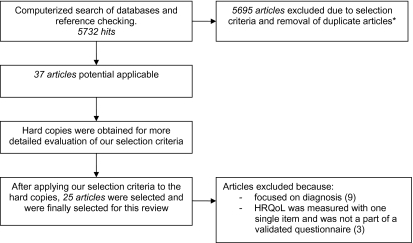
BACKGROUND: Providing information that is congruent with patients' needs is an important determinant for patient satisfaction and might also affect health-related quality of life (HRQoL) and anxiety and depression levels of cancer survivors. DESIGN: The authors systematically reviewed the available literature on the relationship between information provision and HRQoL, anxiety and depression. A PubMed literature search for original articles published until February 2010 was carried out. Twenty-five articles, all conducted between 1996 and 2009, which met the predefined inclusion criteria, were subjected to a quality checklist. RESULTS: Satisfied patients, patients with fulfilled information needs, and patients who experience less information barriers, in general have a better HRQoL and less anxiety and depression. Out of eight intervention studies that aimed to improve information provision, only one showed a positive association with better HRQoL. CONCLUSION: Health care providers must pay more attention to patient-centred information provision. Additional research is needed to make definitive conclusions about information interventions as most results did not reach statistical significance due to methodological constraints. The quick development of the relatively young research field of patient-reported outcomes in cancer survivorship will make it possible to conduct better quality studies in the future.
Overview
The claims and statistics of this paper haven’t been checked yet.
Run the check — free, no account needed. It reads the open-access text and checks the sources it cites.
Integrity signals
Registry
Cites
Statistics
Figures
Verification
Claims the paper makes
The claims and statistics of this paper haven’t been checked yet.
Run the check — free, no account needed. It reads the open-access text and checks the sources it cites.
Claims other papers make about this one
Each is checked against this paper’s own text: does it say what the citing paper says it does?
The source backs part of the claim, not all of it — or backs it for a different population, condition or comparison.
In the citing paper
“Psychological interventions before surgery have been observed to be a better coping strategy.”
From Coping in Post-Mastectomy Breast Cancer Survivors and Need for Intervention: Systematic Review. (2023) · cites this paper as [31]
Experimental — accuracy not yet measuredThe source backs part of the claim, not all of it — or backs it for a different population, condition or comparison.
In the citing paper
“Similarly, providing sufficient information to breast cancer patients helps them to understand the various aspects related to trauma and anxiety, and they are more prepared for better HRQoL when compared with women who do not have information.”
From Coping in Post-Mastectomy Breast Cancer Survivors and Need for Intervention: Systematic Review. (2023) · cites this paper as [31]
Experimental — accuracy not yet measured
Self-check
Percentages, sums and reported differences re-computed from the paper’s own numbers.
The self-check needs the paper’s full text.
Citations
Cites
What are the unmet supportive care needs of people with cancer? A systematic review
Harrison, J. D., Young, J. M., Price, M. A., Butow, P. N., & Solomon, M. J. (2009) · Supportive Care in Cancer · doi:10.1007/s00520-009-0615-5 · Cited by 905 · cited 1×
“However, the results of a systematic review show that 6–93% of the cancer patients report adequate information provision as an unmet need throughout their cancer experience [2].”
BackgroundCancer patients' information needs and information seeking behaviour: in depth interview study
Leydon, G. (2000) · BMJ · doi:10.1136/bmj.320.7239.909 · Cited by 860 · cited 1×
“However, some information can elevate patients’ distress levels [39].”
BackgroundInformation needs of patients with cancer: results from a large study in UK cancer centres
Jenkins, V, Fallowfield, L., & Saul, J. (2001) · British Journal of Cancer · doi:10.1054/bjoc.2000.1573 · Cited by 845 · cited 2×
“Patients frequently report barriers to receive the information needed [3].”
BackgroundQuinten, C., Coens, C., Mauer, M. E. L., Comte, S., Sprangers, M. A. G., Cleeland, C. S., Osoba, D., Bjordal, K., & Bottomley, A. (2009) · The Lancet Oncology · doi:10.1016/s1470-2045(09)70200-1 · Cited by 663 · cited 1×
“HRQoL parameters providing prognostic information can facilitate clinical decision making in terms of better treatment selection for cancer patients [6–8].”
BackgroundQuality of life among long-term breast cancer survivors: A systematic review
Mols, F., Vingerhoets, A. J. J. M., Coebergh, J. W., & van de Poll-Franse, L. V. (2005) · European Journal of Cancer · doi:10.1016/j.ejca.2005.05.017 · Cited by 585 · cited 1×
“independently assessed by all three investigators based on established criteria for systematic reviews (Table 1) [37, 38].”
MethodSelf-citationGodwin, M. S., Rühland, L., Casson, I., MacDonald, S., Delva, D., Birtwhistle, R., Lam, M., & Seguin, R. (2003) · BMC Medical Research Methodology · doi:10.1186/1471-2288-3-28 · Cited by 507
Rehse, B., & Pukrop, R. (2003) · Patient Education and Counseling · doi:10.1016/s0738-3991(02)00149-0 · Cited by 486 · cited 1×
“A recent meta-analysis showed that psychosocial interventions should last 12 weeks or more to improve HRQoL [42].”
MethodMills, M. E., & Sullivan, K. (1999) · Journal of Clinical Nursing · doi:10.1046/j.1365-2702.1999.00296.x · Cited by 377 · cited 1×
“The information needs of cancer patients vary by gender, age, cultural background, educational level, cancer type, stage of disease and coping style [4, 5].”
BackgroundBrown, L. F., Kroenke, K., Theobald, D. E., Wu, J., & Tu, W. (2010) · Psycho-Oncology · doi:10.1002/pon.1627 · Cited by 295 · cited 1×
“Cancer survivors experience high levels of psychological distress, a range of feelings and emotions that people experience in reaction to cancer including depression and anxiety, with an important impact on HRQoL [10, 11].”
Background
Cited by
Sorted by citations
Items 201–300 of 535
Barriers to information provision regarding breast cancer and its treatment
Campbell‐Enns, H. J., Woodgate, R. L., & Chochinov, H. M. (2017) · Supportive Care in Cancer · doi:10.1007/s00520-017-3730-8 · Cited by 15
Mosleh, S. M. (2018) · European Journal of Cancer Care · doi:10.1111/ecc.12866 · Cited by 15
Kerai, G. P., Harcourt, D. M., Rumsey, N., & Naqvi, H. (2015) · Diversity & Equality in Health and Care · doi:10.21767/2049-5471.100024 · Cited by 15
“These have been reported to be beneficial in overcoming literacy barriers and deemed an effective mode of delivering information to patients with LEP (Husson et al, 2010).”
BackgroundMosleh, S. M., Alja'afreh, M., Alnajar, M. K., & Subih, M. M. (2018) · European Journal of Oncology Nursing · doi:10.1016/j.ejon.2018.01.006 · Cited by 15
“Anxiety and other negative emotions are common among cancer survivors and their social networks (Husson et al., 2011).”
BackgroundProvider Information Provision and Breast Cancer Patient Well-Being
Venetis, M. K., Staples, S., Robinson, J. D., & Kearney, T. J. (2018) · Health Communication · doi:10.1080/10410236.2018.1454254 · Cited by 15
“PCC assumptions would urge providers to anticipate these informational needs (Husson et al., 2011), allowing providers to address these needs before patients seek the information (e.g., Robinson et al., 2016).”
Backgroundde Hosson, L. D., Bouma, G., Stelwagen, J., van Essen, H., de Bock, G. H., de Groot, D. J. A., de Vries, E. G. E., & Walenkamp, A. (2019) · Orphanet Journal of Rare Diseases · doi:10.1186/s13023-019-1035-3 · Cited by 15
Cappelletti, E. R., Greco, A., Maloberti, A., Giannattasio, C., Steca, P., & D’Αddario, M. (2020) · BMC Public Health · doi:10.1186/s12889-020-8421-6 · Cited by 15
Cancer related information that cancer patients need
Osowiecka, K., Rucińska, M., Abe, T., Gwara, A., Szwiec, M., Kurowicki, M., Kieszkowska-Grudny, A., Kołb-Sielecki, J., & Hagihara, A. (2025) · Scientific Reports · doi:10.1038/s41598-025-99498-4 · Cited by 14
“Adequate cancer-related information provided to patients might relate to their lower anxiety, depression, and quality of life (QOL), treatment compliance, active role in treatment decision-making, more realistic patients’ expectations, and feelings of safety 19,27,28 .”
Factors influencing supportive care needs of multiple myeloma patients treated with chemotherapy
Cho, Y.-R., & Yoo, Y. (2019) · Supportive Care in Cancer · doi:10.1007/s00520-019-04984-x · Cited by 14
Entrustment in physician-patient communication: a modified Delphi study using the EPA approach
Younas, A., Khan, R. A., & Yasmeen, R. (2021) · BMC Medical Education · doi:10.1186/s12909-021-02931-1 · Cited by 16
Vromans, R., Hommes, S., Clouth, F. J., Lo‐Fo‐Wong, D. N. N., Verbeek, X. A. A. M., van de Poll-Franse, L. V., Pauws, S. C., & Krahmer, E. (2022) · BMC Medical Informatics and Decision Making · doi:10.1186/s12911-022-02005-2 · Cited by 14
Diaz, A., McErlane, J., Jeon, M. H., Cunningham, J., Sullivan, V., & Garvey, G. (2023) · JCO Global Oncology · doi:10.1200/go.22.00361 · Cited by 14
“Provision of high-quality health information is critical for patient-centered care,(53) as it empowers patients to make informed decisions about their cancer care and treatment and may reduce psychologic distress associated with this phase of the cancer trajectory.(9,54) Good-quality information on cancer, cancer trea…”
BackgroundZheng, R., Johnson, J. J., Wang, Q., & Hu, J. (2014) · Supportive Care in Cancer · doi:10.1007/s00520-014-2226-z · Cited by 14
D’Souza, V., Blouin, E., Zeitouni, A. G., Muller, K., & Allison, P. J. (2013) · Oral Oncology · doi:10.1016/j.oraloncology.2013.06.005 · Cited by 15
“Those patients who are satisfied with information they receive, have a better quality of life and lower levels of anxiety and depression [15].”
BackgroundLevesque, J. V., Lambert, S., Girgis, A., Turner, J., McElduff, P., & Kayser, K. (2015) · Asia-Pacific Journal of Oncology Nursing · doi:10.4103/2347-5625.160969 · Cited by 14
“Evidence suggests that appropriate information can reduce anxiety, facilitate a sense of control and coping, increase treatment adherence, improve engagement in shared decision-making, and enhance self-care self-efficacy.([25-31])”
BackgroundGynecological Cancer Survivors’ Experiences and Desire for Follow-up After Recent Treatment
Breistig, S., Thorkildsen, K. M., & Sekse, R. J. T. (2023) · Cancer Nursing · doi:10.1097/ncc.0000000000001252 · Cited by 13
Majumder, K., Brandberg, Y., Johansson, H., Nilsson, S. F., & Bergenmar, M. (2013) · Clinical Genitourinary Cancer · doi:10.1016/j.clgc.2013.11.001 · Cited by 13
Cabilan, C. J., Boyde, M. S., & Currey, E. (2019) · Patient Education and Counseling · doi:10.1016/j.pec.2019.01.020 · Cited by 13
Unmet Supportive Care Needs of Survival Patients with Nasopharyngeal Carcinoma
Lin, Y., Chuang, C., Hsieh, V. C., Tsai, M.-S., Liu, Y.-F., Chen, X., & Shieh, S. (2020) · International Journal of Environmental Research and Public Health · doi:10.3390/ijerph17103519 · Cited by 13
“Qiu et al. [32] investigated 159 patients with NPC who experienced significant weight loss after receiving radiation therapy had been suffered from malnutrition, poor QoL associated with advanced cancer stages, insomnia, and fatigue.”
BackgroundInfluentialBrusniak, K., Feißt, M., Sebesteny, L., Hartkopf, A. D., Graf, J., Engler, T., Schneeweiß, A., Wallwiener, M., & Deutsch, T. M. (2021) · JMIR Cancer · doi:10.2196/25776 · Cited by 11
“Moreover, patients with fulfilled information needs or higher satisfaction with the received information may also display a higher degree of HRQoL [6].”
BackgroundOsteoarthritis medical labelling and health-related quality of life in the general population
Lourenço, S., Lucas, R., Araújo, F., Bogas, M., Santos, R. A., & Barros, H. (2014) · Health and Quality of Life Outcomes · doi:10.1186/s12955-014-0146-8 · Cited by 13
“Cancer labelling has been particularly investigated, showing that the awareness of disease presence and severity significantly worsened the perception of health-related quality of life [32-35].”
BackgroundFactors That Predict Overall Patient Satisfaction With Oncology Hospital Care in Bulgaria
Djambazov, S., Giammanco, M. D., & Gitto, L. (2019) · Value in Health Regional Issues · doi:10.1016/j.vhri.2018.11.006 · Cited by 21
Lancellotta, V., Sanctis, V. D., Cornacchione, P., Barbera, F., Fusco, V., Vidali, C., Scalise, S., Panza, G., Tenore, A., Colloca, G. A., et al. (2019) · Journal of Contemporary Brachytherapy · doi:10.5114/jcb.2019.91222 · Cited by 13
“Thus, it is fundamental to explore the patients’ values and perspectives, as these are associated with treatment satisfaction, improved disease perception, anxiety, depression, improved quality and quantity of life [15,16,17,18].”
BackgroundParental Cancer: Acceptance and Usability of an Information Booklet for Affected Parents
Melchiors, L., Geertz, W., & Inhestern, L. (2022) · Frontiers in Psychology · doi:10.3389/fpsyg.2022.769298 · Cited by 14
Verweij, L., Ector, G. I. C. G., Smit, Y., van Vlijmen, B., van der Reijden, B. A., Hermens, R., & Blijlevens, N. M. A. (2023) · BMC Health Services Research · doi:10.1186/s12913-023-09153-9 · Cited by 12
Zhuo, Q., Ma, F., Cui, C., Bai, Y., Hu, Q., Hanum, A. L., Wei, W., & Liang, H. (2023) · International Journal of Nursing Sciences · doi:10.1016/j.ijnss.2023.03.015 · Cited by 12
“Consistent with our results, a previous systematic review indicated that patient-centered information tailored to information-seeking styles plays an important role in decreasing the depression levels of cancer patients [38].”
ResultChemotherapy-induced hair loss
van den Hurk, C. J. G., Breed, W. P. M., & Mols, F. (2011) · Human health handbooks · doi:10.3920/978-90-8686-728-8_20 · Cited by 63
Self-citationAfiyanti, Y., Milanti, A., Rosdiana, M., & Juliastuti, D. (2021) · Seminars in Oncology Nursing · doi:10.1016/j.soncn.2021.151206 · Cited by 12
AYAs ' online information and eHealth needs: A comparison with healthcare professionals' perceptions
van de Graaf, D. L., Vlooswijk, C. C. P., Bol, N., Krahmer, E., Bijlsma, R. M., Kaal, S. E. J., Sleeman, S. H. E., van der Graaf, W. T. A., Husson, O., & van Eenbergen, M. C. H. J. (2022) · Cancer Medicine · doi:10.1002/cam4.5048 · Cited by 12
Self-citationThiessen, M., Bouchal, S. R., Tang, P., & Sinclair, S. (2022) · JMIR Cancer · doi:10.2196/41740 · Cited by 10
“A systematic review explored the link between information and physical and psychosocial outcomes in patients with cancer [16].”
InfluentialLehmann‐Laue, A., Ernst, J., Mehnert, A., Taubenheim, S., Lordick, F., & Götze, H. (2019) · PPmP - Psychotherapie · Psychosomatik · Medizinische Psychologie · doi:10.1055/a-0959-5834 · Cited by 12
Benzo, R. M., Tetrick, M. K., Krok‐Schoen, J. L., Brasky, T. M., Washington, P. Y., Paskett, E. D., Penedo, F. J., Singh, R., Shechtman, M., Fernández, S., et al. (2025) · Journal of Cancer Survivorship · doi:10.1007/s11764-025-01927-w · Cited by 11
Communicating bad news to patients and families in African oncology settings
Lounsbury, D. W., Nichols, S. D., Asuzu, C. C., Odiyo, P., Alis, A., Qadir, M., Nichols, S., Parker, P. A., & Henry, M. (2022) · Psycho-Oncology · doi:10.1002/pon.6025 · Cited by 12
Tagliaferri, L., Mancini, S., Lancellotta, V., Dinapoli, L., Capocchiano, N. D., Cornacchione, P., Scalise, S., Autorino, R., Campitelli, M., Colloca, G. A., et al. (2023) · Current Radiopharmaceuticals · doi:10.2174/0118744710247426230925054848 · Cited by 11
Şahin, T. K., Şahin, E. A., Gungor, H. N., Güven, D. C., Barışta, İ., & Akın, S. (2025) · Cancer Medicine · doi:10.1002/cam4.70561 · Cited by 11
Brunet, J., Saunders, S., Gifford, W., Thomas, R. L., & Hamilton, R. A. (2017) · Disability and Rehabilitation · doi:10.1080/09638288.2017.1283714 · Cited by 11
“, improve health-related quality of life, engage in physical activity) [28,29].”
BackgroundKaiser, M., Adami, S., Lucius-Hoene, G., Müller‐Nordhorn, J., Goerling, U., Breuning, M., & Holmberg, C. (2021) · BMJ Open · doi:10.1136/bmjopen-2020-038460 · Cited by 11
Step, M. M., Kypriotakis, G., & Rose, J. H. (2013) · Journal of Psychosocial Oncology · doi:10.1080/07347332.2012.761318 · Cited by 11
“Rather, there are interesting associations with cognition, such as illness appraisals or coping strategies, that seem to mediate adjustment to a cancer diagnosis (Husson et al., 2011; Rose et al., 2004; Tomich & Helgeson, 2006; Yang, Brothers, et al., 2008).”
BackgroundInformation Needs of Women with Breast Cancer: A Review of the Literature
Sheikhtaheri, A., Nahvijou, A., & Mashoof, E. (2020) · Frontiers in Health Informatics · doi:10.30699/fhi.v9i1.216 · Cited by 11
“, providing information to patients is one of the important factors in support of cancer care and leads to increased ability to cope with the disease and improve, prepare patients for treatment, and increase adherence to treatment [11].”
Backgroundde Ridder, W. A., van Kooij, Y. E., Slijper, H. P., Arends, G. R., de Roode, A., MacDermid, J. C., Vermeulen, G. M., Hovius, S. E. R., Selles, R. W., Hand-Wrist Study Group, et al. (2023) · Plastic & Reconstructive Surgery · doi:10.1097/prs.0000000000011199 · Cited by 10
Pradhan, P., Sharman, A. R., Palme, C. E., Elliott, M., Clark, J. R., & Venchiarutti, R. L. (2024) · Psycho-Oncology · doi:10.1002/pon.9311 · Cited by 10
WHITE, V. M., Lisy, K., Ward, A. C., Ristevski, E., Clode, M., Webber, K., Emery, J. D., IJzerman, M. J., Afshar, N., Millar, J. L., et al. (2022) · Supportive Care in Cancer · doi:10.1007/s00520-022-06914-w · Cited by 10
Amiri, P., Mohammadi, A., Bahaadinbeigy, K., Khandani, B. K., & Maazed, V. (2022) · Health Science Reports · doi:10.1002/hsr2.914 · Cited by 10
Sangeorzan, I., Andriopoulou, P., Davies, B. M., & McNair, A. (2023) · PLoS ONE · doi:10.1371/journal.pone.0285334 · Cited by 9
Shay, L. A., Schmidt, S., Cornell, S. D., & Parsons, H. M. (2017) · Journal of Cancer Education · doi:10.1007/s13187-017-1256-x · Cited by 12
Melhem, S. J., Nabhani‐Gebara, S., & Kayyali, R. (2024) · Health Promotion Perspectives · doi:10.34172/hpp.42682 · Cited by 10
“23,24 25-27 A considerable gap exists in understanding how Arabic-speaking breast cancer patients, part of the approximately 440 million Arabic-speaking population who utilise the Arabic internet, interact with digital resources throughout their cancer care.”
BackgroundDower, K., Halkett, G. K. B., Dhillon, H. M., Naehrig, D. N., & O’Connor, M. (2024) · Journal of Medical Radiation Sciences · doi:10.1002/jmrs.790 · Cited by 9
The information and communication needs of patients with advanced incurable cancer: A rapid review
Holland‐Hart, D., Silvia, G., Hope, I., & Mala, M. (2024) · Patient Education and Counseling · doi:10.1016/j.pec.2024.108559 · Cited by 9
Communicating cancer treatment with pictogram-based timeline visualizations
Jambor, H. K., Ketges, J., Otto, A. L., von Bonin, M., Trautmann‐Grill, K., Teipel, R., Middeke, J. M., Uhlig, M., Eichler, M., Pannasch, S., et al. (2024) · Journal of the American Medical Informatics Association · doi:10.1093/jamia/ocae319 · Cited by 9
Shahnam, A., Nindra, U., Hitchen, N., Tang, J., Hong, M., Hong, J. H., Au‐Yeung, G., Chua, W. M., Ng, W. L., Hopkins, A. M., et al. (2025) · JCO Clinical Cancer Informatics · doi:10.1200/cci-24-00323 · Cited by 10
Giannopoulos, P., Mertens, Y. J., Secomandi, L. E., Olsder, L., & van Leeuwen, B. L. (2021) · Patient Education and Counseling · doi:10.1016/j.pec.2021.02.045 · Cited by 10
Kim, O., & Heo, N. (2022) · International Journal of Environmental Research and Public Health · doi:10.3390/ijerph19074183 · Cited by 9
“[19] reported that providing information to cancer survivors can also improve the quality of life.”
BackgroundSchmidt, T. J., Sellin, J., Molderings, G. J., Conrad, R., & Mücke, M. (2022) · Orphanet Journal of Rare Diseases · doi:10.1186/s13023-022-02439-x · Cited by 11
Driehuis, E., de Heus, E., Schrieks, M., Engelen, V., Buffart, T. E., Vink, G. R., & Duijts, S. F. A. (2022) · Journal of Cancer Survivorship · doi:10.1007/s11764-022-01324-7 · Cited by 9
“An association between satisfaction with information and a better QoL has been supported by previous studies [15, 16].”
BackgroundResultSmith, M. D., Manning, J., Nielsen, M., Hayes, S. C., Plinsinga, M. L., & Coppieters, M. W. (2023) · Frontiers in Pain Research · doi:10.3389/fpain.2023.1095377 · Cited by 9
“There is evidence that cancer survivors who receive appropriate patientcentred information report better health-related quality of life and lower levels of anxiety and depression (26) and improvements in treatment-related side effects, including pain (27).”
BackgroundDetermining the Concerns of Breast Cancer Survivors to Inform Practice
Chua, G. P., Ng, Q. S., Tan, H. K., & Ong, W. S. (2020) · Asia-Pacific Journal of Oncology Nursing · doi:10.4103/apjon.apjon_26_20 · Cited by 9
“With growing evidence that well‐informed patients are more satisfied with their care and do better clinically,([40]) efforts are needed to improve the content and delivery of cancer‐related information to breast cancer survivors.”
BackgroundPapadakos, J., Giannopoulos, E., Forbes, L. M., Fox, C. J., Jain, P., McBain, S., Mittman, N., Moody, L., Samoil, D., & McLeod, R. S. (2020) · Patient Education and Counseling · doi:10.1016/j.pec.2020.11.017 · Cited by 9
An Exploration On-demand Article Recommender System for Cancer Patients Information Provisioning
Afsar, M. M., Crump, T., & Far, B. H. (2021) · Proceedings of the ... International Florida Artificial Intelligence Research Society Conference · doi:10.32473/flairs.v34i1.128339 · Cited by 9
Wang, D. C., Guo, C., Peng, X., & Su, Y. (2014) · Psycho-Oncology · doi:10.1002/pon.3512 · Cited by 9
“in a recent systematic review concluded that there was a positive relation between information provision and mental health [10].”
BackgroundDumitra, S. A., Jones, V., Rodriguez, J., Bitz, C., Polamero, E., Loscalzo, M. J., Kruper, L. L., & Warner, S. G. (2018) · Surgery · doi:10.1016/j.surg.2017.11.022 · Cited by 9
Saygılı, M. (2019) · Ağrı - The Journal of The Turkish Society of Algology · doi:10.14744/agri.2019.95770 · Cited by 9
A feasibility study to evaluate breast cancer patients’ knowledge of their diagnosis and treatment
Smith, S. M., Balise, R. R., Norton, C., Chen, M. M., Flesher, A. N., & Guardino, A. E. (2012) · Patient Education and Counseling · doi:10.1016/j.pec.2012.08.015 · Cited by 9
“Importantly, patients tend to be more satisfied if their information needs are met [9] and if they feel more informed and have higher levels of patient–clinician information engagement and exchange [10].”
BackgroundLewis, L., Marcu, A., Whitaker, K., & Maguire, R. (2018) · European Journal of Cancer Care · doi:10.1111/ecc.12745 · Cited by 8
Frølund, J. C., Løkke, A., Jensen, H. I., & Farver-Vestergaard, I. (2024) · International Journal of Environmental Research and Public Health · doi:10.3390/ijerph21060746 · Cited by 8
“Patient information materials serve as valuable tools in empowering patients to actively participate in their healthcare decisions and enhance overall health literacy [4–7].”
BackgroundVlooswijk, C. C. P., Janssen, S. H. M., Sleeman, S. H. E., Pluis, J., van der Graaf, W. T. A., van de Poll-Franse, L. V., Husson, O., & van Eenbergen, M. C. H. J. (2024) · Journal of Cancer Survivorship · doi:10.1007/s11764-024-01679-z · Cited by 12
Self-citationHerbert, S.-L., Payerl, A. S., Prange, M., Löb, S., Büchel, J., Scherer-Quenzer, A. C., Kiesel, M., Wöckel, A., Faller, H., & Meng, K. (2024) · Archives of Gynecology and Obstetrics · doi:10.1007/s00404-024-07805-7 · Cited by 8
“Appropriate information provision can improve the sense of control and health-related quality of life (HRQoL) [38].”
Nicolaije, K. A. H., Ezendam, N. P. M., Pijnenborg, J. M. A., Boll, D., Vos, M. C., Kruitwagen, R. F. P. M., & van de Poll-Franse, L. V. (2016) · Journal of Medical Internet Research · doi:10.2196/jmir.4914 · Cited by 8
“Information provision has been demonstrated to play an essential role in the support for cancer survivors [1,2].”
Hacke, C., Knuth, J., Bucher, M., Weisser, B., & Schmidt, T. (2023) · The Journal of Strength and Conditioning Research · doi:10.1519/jsc.0000000000004396 · Cited by 8
“The diagnosis of cancer confronts the patients with a life-threatening condition, and treatment of cancer is associated with impairment at the physical and at the psychological level (16).”
BackgroundChapman, K., & James, S. (2016) · Radiography · doi:10.1016/j.radi.2016.01.003 · Cited by 8
Brunet, J., Wurz, A. J., Nader, P. A., & Bélanger, M. F. (2020) · Patient Education and Counseling · doi:10.1016/j.pec.2020.02.002 · Cited by 11
Putting Evidence Into Practice: Evidence-Based Interventions for Depression
Fulcher, C. D., Kim, H., Smith, P. R., & Sherner, T. L. (2014) · Clinical journal of oncology nursing · doi:10.1188/14.cjon.s3.26-37 · Cited by 10
de Rooij, B. H., Ikiz, H., Boll, D., Pijnenborg, J. M. A., Pijlman, B. M., Kruitwagen, R. F. P. M., van de Poll-Franse, L. V., Vos, M. C., & Ezendam, N. P. M. (2018) · International Journal of Gynecological Cancer · doi:10.1097/igc.0000000000001204 · Cited by 8
Hilger, C., Otto, I., Hill, C., Huber, T. F., & Kendel, F. (2018) · Der Urologe · doi:10.1007/s00120-018-0769-1 · Cited by 9
Meghani, S. H., Levoy, K. N., Magan, K. C., Starr, L. T., Yocavitch, L., & Barg, F. K. (2020) · American Journal of Hospice and Palliative Medicine® · doi:10.1177/1049909120969121 · Cited by 8
Clay, F., Collie, A., & McClure, R. (2012) · Journal of Rehabilitation Medicine · doi:10.2340/16501977-0980 · Cited by 7
Mayo, S. J., Panesar, P., Edwards, B. Q., & Howell, D. (2023) · Patient Education and Counseling · doi:10.1016/j.pec.2023.107970 · Cited by 7
Unmet care needs of women who have undergone breast cancer surgery: A scoping review
Ke, Q., Timmins, F., Furlong, E., & Stokes, D. (2023) · Journal of Advanced Nursing · doi:10.1111/jan.15953 · Cited by 8
Gamberini, L., Haywood, K., Schnaubelt, S., Thyssens, M., Semeraro, F., & Monsieurs, K. (2025) · Resuscitation Plus · doi:10.1016/j.resplu.2025.100986 · Cited by 53
“However, looking further afield at organisations which provide support and activities such as peer support 28–30 and information provision in conditions such as cancer or chronic neurologic diseases suggest that these activities 31,32 can have significant benefits.”
Park, M., Kwon, S. Y., Yun, H., Lyu, C. J., Han, J. W., Hahn, S. M., Jung, M., Rha, S. Y., Beom, S., Lee, C., et al. (2022) · Journal of Adolescent and Young Adult Oncology · doi:10.1089/jayao.2022.0030 · Cited by 7
“30 These characterize AYAs with cancer who wished to be actively involved in their treatment.”
León‐Salas, B., Álvarez‐Pérez, Y., Ramos‐García, V., Trujillo‐Martín, M. M., y Medina, A. M. D. P., Esteva, M., Brito-García, N., González-Hernández, N., Bohn‐Sarmiento, U., Biurrun‐Martínez, M. C., et al. (2022) · European Journal of Cancer Care · doi:10.1111/ecc.13730 · Cited by 7
Punnett, G., Fenemore, J., Blackhall, F. H., & Yorke, J. (2023) · European Journal of Oncology Nursing · doi:10.1016/j.ejon.2023.102325 · Cited by 7
Exploring women’s experiences of breast or trunk lymphoedema following treatment for breast cancer
Ulman, J., Serrant, L., Dunham, M., & Probst, H. (2023) · Journal of Psychosocial Oncology · doi:10.1080/07347332.2023.2218374 · Cited by 7
“20,21 In the present research, none of the participants could recall being told about BTL as a potential side-effect of treatment.”
BackgroundGedik, A., van Meerten, E., Reuvers, M. J. P., Husson, O., & van der Graaf, W. T. A. (2023) · Journal of Cancer Policy · doi:10.1016/j.jcpo.2023.100455 · Cited by 7
Self-citationTop Information Need Priorities of Older Adults Newly Diagnosed With Active Myeloma
Tariman, J. D. (2015) · Journal of the Advanced Practitioner in Oncology · doi:10.6004/jadpro.2015.6.1.2 · Cited by 7
Molisani, A., Dumenci, L., & Matsuyama, R. K. (2013) · Journal of Cancer Education · doi:10.1007/s13187-013-0564-z · Cited by 7
Satisfaction with information provided to Danish cancer patients: Validation and survey results
Ross, L., Petersen, M. A., Johnsen, A. T., Lundstrøm, L. H., & Grøenvold, M. (2013) · Patient Education and Counseling · doi:10.1016/j.pec.2013.05.018 · Cited by 7
“Patients with fulfilled information needs generally have a better mental health-related quality of life and less anxiety and depression [7,8] although the causal relationship has not been established.”
Wo suchen und finden Krebspatienten verlässliche Informationen?
Gaisser, A., Sonnet, M., & Weg‐Remers, S. (2016) · Forum · doi:10.1007/s12312-015-0010-8 · Cited by 7
Experiences of Self-management Support among Breast Cancer Survivors
Heo, S., & Heo, N. (2016) · Korean Journal of Adult Nursing · doi:10.7475/kjan.2016.28.4.470 · Cited by 7
Mammadzada, G., & Münir, K. (2017) · Psycho-Oncology · doi:10.1002/pon.4436 · Cited by 7
“Converging evidence from studies in Europe and United States shows that awareness of disease is in fact a long‐term positive indicator of mental well‐being and higher quality of life.(8) In these settings, standards of informed consent, privacy, as well as legal mandates to ensure patient knowledge and empowerment in…”
BackgroundDonald, G., Scott, S., Broadfield, L., Harding, C., & Meade, A. (2017) · Journal of Oncology Pharmacy Practice · doi:10.1177/1078155217732400 · Cited by 7
“The literature is clear that providing appropriate education to patients receiving chemotherapy reduces anxiety around treatment, improves compliance, and increases patient satisfaction.(7,8) Yet cancer patients often report that they receive inadequate information about their treatments.”
BackgroundRoohi, S., Salehi, J., Mahmoodzadeh, H., & Morovati, Z. (2020) · Iranian Red Crescent Medical Journal · doi:10.5812/ircmj.98347 · Cited by 8
“The results showed that health literacy had a significant negative relationship with functional disability in cancer patients, which is consistent with the findings of previous studies (14, 26, 28).”
BackgroundResultPersakis, E., & Κωσταγιόλας, Π. (2020) · Advances in experimental medicine and biology · doi:10.1007/978-3-030-32637-1_6 · Cited by 7
Patient evaluation of gynaecological information provision and preferences
Williams, N., Griffin, G., Wall, M., Watson, S., Warland, J., & Bradfield, Z. (2023) · Journal of Advanced Nursing · doi:10.1111/jan.15866 · Cited by 6
Perceived social support and quality of life in endometrial cancer patients: a longitudinal study
Mandato, V. D., Paterlini, M., Torricelli, F., Rabitti, E., Mastrofilippo, V., & Aguzzoli, L. (2024) · Frontiers in Oncology · doi:10.3389/fonc.2024.1447644 · Cited by 6
Aubin, M., & Egan, D. (2018) · British Journal of Nursing · doi:10.12968/bjon.2018.27.17.s18 · Cited by 6
Herbert, S.-L., Wöckel, A., Kreienberg, R., Kühn, T., Flock, F., Felberbaum, R. E., Janni, W., Curtaz, C. J., Kiesel, M., Stüber, T. N., et al. (2020) · Breast Cancer Research and Treatment · doi:10.1007/s10549-020-05974-y · Cited by 6
Hack, T. F., Ruether, J. D., Pitz, M. W., Thiessen, B. A., Degner, L. F., & Chateau, D. (2021) · Supportive Care in Cancer · doi:10.1007/s00520-021-06038-7 · Cited by 6
Robbel, C., Vesel, L., Ernst, E. M., He, Y., & Vesel, T. (2022) · JCO Oncology Practice · doi:10.1200/op.22.00047 · Cited by 6
“An emphasis on cross-cultural communication between physicians and patients is crucial to improve cancer care outcomes for Chinese Americans, including function, pain control, emotional health, and healthrelated quality of life.(6-8) Effective patient-centered communication increases patient satisfaction and trust in…”
BackgroundRutherford, C., Ju, A., Kim, B., Wiltink, L. M., Acret, L., & White, K. (2023) · Supportive Care in Cancer · doi:10.1007/s00520-023-07713-7 · Cited by 6
Voigt, K. R., de Bruijn, E., Wullaert, L., Witteveen, L., Verhoef, C. K., Husson, O., & Grünhagen, D. J. (2024) · Supportive Care in Cancer · doi:10.1007/s00520-024-08401-w · Cited by 6
“Patients in general experience an improved health-related quality of life (HRQoL) when their information needs are fulfilled and when they experience less barriers [10].”
Self-citation
Metadata
- Authors
- Husson, O., Mols, F., & van de Poll-Franse, L. V.
- Affiliations
- Tilburg University (NL)
- Corresponding author
- Husson, O.
- ORCID
- Venue
- Annals of Oncology
- Publisher
- Elsevier BV
- Published
- 2011-04
- Volume
- 22
- Issue
- 4
- Pages
- 761-772
- ISSN
- 0923-7534 (ISSN-L)
- PMC
- PMC3065875
- OpenAlex
- W2126686082
- Cited by
- 535
- References
- 48
- Citations by year
- 2026: 24 · 2025: 37 · 2024: 54 · 2023: 50 · 2022: 40 · 2021: 44 · 2020: 41 · 2019: 33 · 2018: 35 · 2017: 40 · 2016: 29 · 2015: 37 · 2014: 28 · 2013: 24 · 2012: 12
- FWCI
- 1.50
- Type
- journal article
- Language
- en
- Open access
- hybrid
- doi.org
- Licence
- Locations
- Annals of Oncology (publishedVersion, other-oa)
- Europe PMC (PubMed Central) (publishedVersion, cc-by-nc)
- PubMed Central (publishedVersion, cc-by-nc)
- Research portal (Tilburg University) (publishedVersion, other-oa)
- PubMed (publishedVersion)
- Data Archiving and Networked Services (DANS) (submittedVersion, other-oa)
- HighWire Press Open Archive (submittedVersion)
- Funders
- Cancer Research Award from the Dutch Cancer Society (UVT-2009-4349)
- Topics
- Health Sciences › Medicine › Oncology › Cancer survivorship and care
- Health Sciences › Health Professions › General Health Professions › Patient-Provider Communication in Healthcare
- Health Sciences › Health Professions › General Health Professions › Health Literacy and Information Accessibility
- Keywords
- information provision, cancer survivors, health-related quality of life, anxiety, depression, patient-centered care, patient satisfaction, information needs, information barriers, patient-reported outcomes, cancer survivorship
- MeSH terms
- Anxiety, Depression, Health Status, Humans, Neoplasms, Quality of Life, Survivors, Information Literacy
About these checks
Registry, retraction, Cites and statistics results are computed, not judged, with one exception: a printed reference that no index lists is read once by a model before it counts as a citation error. Claims are extracted by a model and kept only when their quote appears verbatim in the text; each cited source is then checked, with a model’s help, for whether it says what the claim relies on. Those verdicts can be wrong — read the claim’s quote and the cited source before relying on one.
Statistics and arithmetic are recomputed, not judged.
Confidence bands are shown only for fields calibrated on our annotated test set. None is calibrated yet, so no band is shown.
What counts as a claim ›How we measure confidence ›How we check this ›
Are you an author, or do you see a problem with this page? Request a review
