

The DOI matches its Crossref record; 48 of the 48 references it cites were found in a registry or an index.
The relation between information provision and health-related quality of life, anxiety and depression among cancer survivors: a systematic review
Open accessAbstract
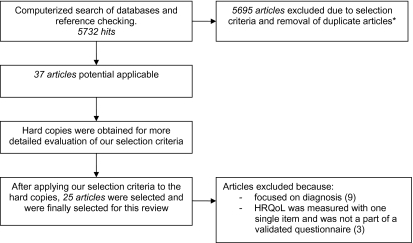
BACKGROUND: Providing information that is congruent with patients' needs is an important determinant for patient satisfaction and might also affect health-related quality of life (HRQoL) and anxiety and depression levels of cancer survivors. DESIGN: The authors systematically reviewed the available literature on the relationship between information provision and HRQoL, anxiety and depression. A PubMed literature search for original articles published until February 2010 was carried out. Twenty-five articles, all conducted between 1996 and 2009, which met the predefined inclusion criteria, were subjected to a quality checklist. RESULTS: Satisfied patients, patients with fulfilled information needs, and patients who experience less information barriers, in general have a better HRQoL and less anxiety and depression. Out of eight intervention studies that aimed to improve information provision, only one showed a positive association with better HRQoL. CONCLUSION: Health care providers must pay more attention to patient-centred information provision. Additional research is needed to make definitive conclusions about information interventions as most results did not reach statistical significance due to methodological constraints. The quick development of the relatively young research field of patient-reported outcomes in cancer survivorship will make it possible to conduct better quality studies in the future.
Overview
The claims and statistics of this paper haven’t been checked yet.
Run the check — free, no account needed. It reads the open-access text and checks the sources it cites.
Integrity signals
Registry
Cites
Statistics
Figures
Verification
Claims the paper makes
The claims and statistics of this paper haven’t been checked yet.
Run the check — free, no account needed. It reads the open-access text and checks the sources it cites.
Claims other papers make about this one
Each is checked against this paper’s own text: does it say what the citing paper says it does?
The source backs part of the claim, not all of it — or backs it for a different population, condition or comparison.
In the citing paper
“Psychological interventions before surgery have been observed to be a better coping strategy.”
From Coping in Post-Mastectomy Breast Cancer Survivors and Need for Intervention: Systematic Review. (2023) · cites this paper as [31]
Experimental — accuracy not yet measuredThe source backs part of the claim, not all of it — or backs it for a different population, condition or comparison.
In the citing paper
“Similarly, providing sufficient information to breast cancer patients helps them to understand the various aspects related to trauma and anxiety, and they are more prepared for better HRQoL when compared with women who do not have information.”
From Coping in Post-Mastectomy Breast Cancer Survivors and Need for Intervention: Systematic Review. (2023) · cites this paper as [31]
Experimental — accuracy not yet measured
Self-check
Percentages, sums and reported differences re-computed from the paper’s own numbers.
The self-check needs the paper’s full text.
Citations
Cites
What are the unmet supportive care needs of people with cancer? A systematic review
Harrison, J. D., Young, J. M., Price, M. A., Butow, P. N., & Solomon, M. J. (2009) · Supportive Care in Cancer · doi:10.1007/s00520-009-0615-5 · Cited by 905 · cited 1×
“However, the results of a systematic review show that 6–93% of the cancer patients report adequate information provision as an unmet need throughout their cancer experience [2].”
BackgroundCancer patients' information needs and information seeking behaviour: in depth interview study
Leydon, G. (2000) · BMJ · doi:10.1136/bmj.320.7239.909 · Cited by 860 · cited 1×
“However, some information can elevate patients’ distress levels [39].”
BackgroundInformation needs of patients with cancer: results from a large study in UK cancer centres
Jenkins, V, Fallowfield, L., & Saul, J. (2001) · British Journal of Cancer · doi:10.1054/bjoc.2000.1573 · Cited by 845 · cited 2×
“Patients frequently report barriers to receive the information needed [3].”
BackgroundQuinten, C., Coens, C., Mauer, M. E. L., Comte, S., Sprangers, M. A. G., Cleeland, C. S., Osoba, D., Bjordal, K., & Bottomley, A. (2009) · The Lancet Oncology · doi:10.1016/s1470-2045(09)70200-1 · Cited by 663 · cited 1×
“HRQoL parameters providing prognostic information can facilitate clinical decision making in terms of better treatment selection for cancer patients [6–8].”
BackgroundQuality of life among long-term breast cancer survivors: A systematic review
Mols, F., Vingerhoets, A. J. J. M., Coebergh, J. W., & van de Poll-Franse, L. V. (2005) · European Journal of Cancer · doi:10.1016/j.ejca.2005.05.017 · Cited by 585 · cited 1×
“independently assessed by all three investigators based on established criteria for systematic reviews (Table 1) [37, 38].”
MethodSelf-citationGodwin, M. S., Rühland, L., Casson, I., MacDonald, S., Delva, D., Birtwhistle, R., Lam, M., & Seguin, R. (2003) · BMC Medical Research Methodology · doi:10.1186/1471-2288-3-28 · Cited by 507
Rehse, B., & Pukrop, R. (2003) · Patient Education and Counseling · doi:10.1016/s0738-3991(02)00149-0 · Cited by 486 · cited 1×
“A recent meta-analysis showed that psychosocial interventions should last 12 weeks or more to improve HRQoL [42].”
MethodMills, M. E., & Sullivan, K. (1999) · Journal of Clinical Nursing · doi:10.1046/j.1365-2702.1999.00296.x · Cited by 377 · cited 1×
“The information needs of cancer patients vary by gender, age, cultural background, educational level, cancer type, stage of disease and coping style [4, 5].”
BackgroundBrown, L. F., Kroenke, K., Theobald, D. E., Wu, J., & Tu, W. (2010) · Psycho-Oncology · doi:10.1002/pon.1627 · Cited by 295 · cited 1×
“Cancer survivors experience high levels of psychological distress, a range of feelings and emotions that people experience in reaction to cancer including depression and anxiety, with an important impact on HRQoL [10, 11].”
Background
Cited by
Sorted by citations
Items 301–400 of 535
Topf, C., Scholl, I., & Hahlweg, P. (2024) · Frontiers in Psychology · doi:10.3389/fpsyg.2024.1378854 · Cited by 6
Information preferences of patients with chronic blood cancer: A qualitative investigation
Howell, D. A., McCaughan, D., Smith, A., Patmore, R. D., & Roman, E. (2024) · PLoS ONE · doi:10.1371/journal.pone.0293772 · Cited by 6
Rood, J. A. J., Lissenberg-Witte, B. I., Eeltink, C., Stam, F., van Zuuren, F. J., Zweegman, S., & Leeuw, I. M. V. (2018) · PLoS ONE · doi:10.1371/journal.pone.0201699 · Cited by 6
Simensen, V. C., Smeland, K. B., Kiserud, C. E., Dahl, A. A., Bersvendsen, H. S., Fluge, Ø., Fagerli, U., & Fosså, A. (2019) · Acta Oncologica · doi:10.1080/0284186x.2019.1637538 · Cited by 6
“Additionally, the reverse association is hypothesized; lack of information can lead to insecurity and mental distress such as depression and anxiety [6,30].”
BackgroundAbdullah, N. N., Idris, I. B., Shamsuddin, K., & Abdullah, N. M. A. (2019) · Supportive Care in Cancer · doi:10.1007/s00520-019-05007-5 · Cited by 5
Maravic, Z., Rawicka, I. M., Benedict, Á., Wyrwicz, L. S., Horváth, A., Fotaki, V., Carrato, A., Borràs, J. M., Ruiz‐Casado, A., Petrányi, Á., et al. (2020) · ESMO Open · doi:10.1136/esmoopen-2020-000850 · Cited by 6
Gruters, A. A. A., Ramakers, I. H. G. B., Stiekema, A. P. M., Verhey, F. R. J., Kessels, R. P. C., & de Vugt, M. E. (2020) · Journal of Alzheimer s Disease · doi:10.3233/jad-201128 · Cited by 6
“…tailored and high-quality information remains important because it can give patients the opportunity to take more responsibility for their health, respond better to health-related problems [53], feel more in control [54], and participate in a more active manner in shared decision making [55].”
BackgroundAlsirafy, S. A., Abdel-Aziz, H. I., Abdel-Aal, H. H., El-Sherief, W. A., & Farag, D. E. (2022) · JCO Global Oncology · doi:10.1200/go.22.00080 · Cited by 6
“203), HADS-Depression (median [IQR] = 8 [4-12] and 8 [4-11], P = .”
BackgroundDevelopment of Podcasts in a Hospital Setting: A User-Centered Approach
Frølund, J. C., Løkke, A., Jensen, H. I., & Farver-Vestergaard, I. (2024) · Journal of Health Communication · doi:10.1080/10810730.2024.2321385 · Cited by 6
Ladd, D. (2015) · Journal of Hospital Librarianship · doi:10.1080/15323269.2015.1014762 · Cited by 6
Information Needs of Breast Cancer Patients at Cancer Diseases Hospital, Lusaka, Zambia
Namushi, B. L., Makukula, M. K., & Katowa-Mukwato, P. (2020) · Advances in Breast Cancer Research · doi:10.4236/abcr.2020.92004 · Cited by 6
“These include patients’ improved adherence to therapy, increased abilities to cope with the illness and more appropriate use of health service resources [9] [11].”
BackgroundWalming, S., Angenete, E., Bock, D., Block, M., de la Croix, H., Wedin, A., & Haglind, E. (2021) · Journal of Cancer Education · doi:10.1007/s13187-020-01951-7 · Cited by 6
Psychological Issues and Care of Cancer Survivors
Zomerdijk, N., & Turner, J. (2021) · Springer eBooks · doi:10.1007/978-3-030-78648-9_17 · Cited by 5
Yamaki, C., Takayama, T., Hayakawa, M., & Wakao, F. (2021) · BMJ Open Quality · doi:10.1136/bmjoq-2021-001635 · Cited by 6
Kirsch, M., Crombez, P., Calza, S., Eeltink, C., & Johansson, E. K. (2011) · Bone Marrow Transplantation · doi:10.1038/bmt.2011.223 · Cited by 6
A Literature Review of Patient Education: Is IT Time to Move Forward?
McIntyre, R., & Craig, A. (2015) · Journal of medical imaging and radiation sciences · doi:10.1016/j.jmir.2015.04.010 · Cited by 7
Hamama‐Raz, Y., Shrira, A., Ben‐Ezra, M., & Palgi, Y. (2015) · European Journal of Cancer Care · doi:10.1111/ecc.12300 · Cited by 6
“This can be accomplished by engaging multi-disciplinary oncology teams (Husson et al. 2011).”
BackgroundBillman, E., Smith, S. M., & Jain, S. L. (2022) · Journal of Cancer Education · doi:10.1007/s13187-022-02240-1 · Cited by 5
Schneider, N., Bäcker, A., Strauss, B. M., Hübner, J., Rubai, S., Wagner, S., Schwarz-Fedrow, D., Hager, L., Brenk-Franz, K., Keinki, C., et al. (2023) · Supportive Care in Cancer · doi:10.1007/s00520-023-07781-9 · Cited by 5
Katalan, A., Drach‐Zahavy, A., & Dagan, E. (2023) · European Journal of Oncology Nursing · doi:10.1016/j.ejon.2023.102484 · Cited by 5
Lukac, S., Griewing, S., Leinert, E., Dayan, D., Heitmeir, B., Wallwiener, M., Janni, W., Fink, V., & Ebner, F. K. (2024) · Clinics and Practice · doi:10.3390/clinpract15010008 · Cited by 5
“It is known that the burden of the diagnosis and prospect of CTX leads to fear, anxiety, panic, and other understandably negative reactions in many patients, as the side effects of systemic therapy cause changes in the quality of life [5].”
Redesigning Rural Acute Stroke Care: A Person-Centered Approach
Prior, S. J., Mather, C. A., & Campbell, S. J. (2023) · International Journal of Environmental Research and Public Health · doi:10.3390/ijerph20021581 · Cited by 5
“Specific, high-quality information can allow patients to take more responsibility for their health, respond actively to arising health issues [27], feel like they have more control [28], create positive attitudes toward their illness, and participate effectively in decision-making processes [29].”
BackgroundWeis, J., Wolf, L., Boerries, M., Kassahn, D., Boeker, M., & Dresch, C. (2023) · JMIR Cancer · doi:10.2196/40891 · Cited by 5
“It is important to meet these information needs, as access to health information has a significant effect on reducing anxiety and depression [37,38].”
BackgroundGrenot, M., Vandenbroucke, T., Bucau, M., & Koskas, M. (2024) · Journal of Gynecology Obstetrics and Human Reproduction · doi:10.1016/j.jogoh.2024.102722 · Cited by 5
Saffar, H. A., Thomson, A., Tan, J. S., Wang, Q., Birch, E., Koschel, S. G., Medhurst, E., Jobson, D., Ong, S., Moon, D. A., et al. (2024) · BJUI Compass · doi:10.1002/bco2.322 · Cited by 5
Abdulbaki, H., Ha, P. K., Knott, P. D., Park, A. M., Seth, R., Heaton, C. M., & Wai, K. C. (2024) · Head & Neck · doi:10.1002/hed.27728 · Cited by 5
“35 Specifically among patients undergoing surgical resection for head and neck cancer, one study found that anxiety peaks on postoperative day 4.”
Sweileh, W. M. (2024) · Journal of Evaluation in Clinical Practice · doi:10.1111/jep.13988 · Cited by 6
Parhar, S., Rogers, S. N., & Lowe, D. (2015) · British Journal of Oral and Maxillofacial Surgery · doi:10.1016/j.bjoms.2015.07.015 · Cited by 5
López, B. M., Tomás, M. Á. C., & Escolar, A. C. (2015) · Actas Urológicas Españolas · doi:10.1016/j.acuro.2015.08.008 · Cited by 5
Risk communication with Arab patients with cancer: a qualitative study of nurses and pharmacists
Wilbur, K., Babiker, A., Alokka, M. R. S., Jumat, E., Al‐Yafei, S. A., & Nashwan, A. J. (2015) · BMJ Open · doi:10.1136/bmjopen-2014-006890 · Cited by 5
Medication risk communication with cancer patients in a Middle East cancer care setting
Wilbur, K., Alokka, M. R. S., Jumat, E., Eissa, N., Elbashir, M., & Al‐Yafei, S. A. (2016) · Patient Preference and Adherence · doi:10.2147/ppa.s99718 · Cited by 5
Wippold, G. M., Nmezi, N. A., Williams, J. L., Butler, J., & Hodge, T. M. (2020) · Journal of Primary Care & Community Health · doi:10.1177/2150132720949412 · Cited by 5
Machine learning in oncology—Perspectives in patient-reported outcome research
Lehmann, J., Cofala, T., Tschuggnall, M., Giesinger, J. M., Rumpold, G., & Holzner, B. (2021) · Der Onkologe · doi:10.1007/s00761-021-00916-9 · Cited by 7
Jenkins, W. D., Zahnd, W. E., Spenner, A., Wiley, C., Roles, R., Potini, Y., & Jones, L. S. (2015) · Journal of Cancer Education · doi:10.1007/s13187-015-0816-1 · Cited by 5
Waalboer‐Spuij, R., Hollestein, L. M., Nijsten, T. E. C., & L Group (2019) · Acta Dermato Venereologica · doi:10.2340/00015555-3226 · Cited by 5
“In other cancer patients it was shown that better information provision is associated with better HRQoL (4).”
BackgroundTREATMENT DECISION-MAKING IN OLDER ADULTS NEWLY DIAGNOSED WITH MYELOMA
Tariman, J. D. (2011) · ProQuest Demo Repository · Cited by 5
Stringer, E. J., Rio, L. H., Leitz, L., Prisman, E., Borycki, E. M., Kushniruk, A. W., Livergant, J., & Smith, S. (2025) · JMIR Cancer · doi:10.2196/64108 · Cited by 4
“…information provision (satisfaction with the received information, fulfilled informational needs, high quality and clear information) and mental and global health-related quality of life and a negative relationship between appropriate information provision and depression and anxiety” [7].”
Non-use of cancer information services among people experiencing cancer in Ireland
Sheridan, A., Kemple, M., Hyde, A., Fox, P., Furlong, E., Coughlan, B., Bell, M., Naughton, C., Carberry, S., & Drennan, J. (2019) · European Journal of Oncology Nursing · doi:10.1016/j.ejon.2019.101700 · Cited by 4
Karimi, N., Moore, A. R., Jones, A., Lukin, A., Pipicella, J. L., Williams, A., Ng, W., Kanazaki, R., Kariyawasam, V. C., Mitrev, N., et al. (2024) · Patient Education and Counseling · doi:10.1016/j.pec.2024.108487 · Cited by 4
“Furthermore, research has shown that more information is what most patients desire and that information provision is linked to improved health-related quality of life and mental health [40,41].”
Gómez-Veiga, F., Silmi-Moyano, A., Günthner, S., Pallás, M. P., & Cozar-Olmo, J. M. (2013) · Actas Urológicas Españolas · doi:10.1016/j.acuro.2013.09.003 · Cited by 4
Mizuno, M., Kataoka, J., & Oishi, F. (2017) · Asia-Pacific Journal of Oncology Nursing · doi:10.4103/2347-5625.199072 · Cited by 4
“Moreover, a systematic review showed that providing information that is congruent with patients’ needs is an important determinant of patient satisfaction.([15])”
BackgroundGrabbe, P., Gschwendtner, K. M., Maatouk, I., Strobel, S. B., Salzmann, M., Bossert, J., Eich, W., Wild, B., Meier, F. E., Hassel, J. C., et al. (2021) · Trials · doi:10.1186/s13063-021-05234-4 · Cited by 4
“A fulfilled need for information is associated with lower anxiety and depression levels in cancer patients [52].”
BackgroundChemotherapy and Related Female Sexual Dysfunction: A Review of Literature
Sodeifian, F., Mokhlesi, A., & Allameh, F. (2022) · International Journal of Cancer Management · doi:10.5812/ijcm-120549 · Cited by 4
“Despite these centers, many cancer survivors rarely intend to discuss sexual issues or problems (4).”
BackgroundHautefeuille, V., Walter, T., Cao, C. D., Coriat, R., Dominguez, S., Mineur, L., Cadiot, G., Terrebonne, É., Sobhani, I., Gueguen, D., et al. (2023) · European Journal of Endocrinology · doi:10.1093/ejendo/lvad094 · Cited by 4
Design and implementation of a prototype radiotherapy menu in a patient portal
O'Sullivan‐Steben, K., Galarneau, L., Judd, S., Laizner, A. M., Williams, T., & Kildea, J. (2023) · Journal of Applied Clinical Medical Physics · doi:10.1002/acm2.14201 · Cited by 3
“6,11,13,14 It is, therefore, imperative that patients are appropriately informed about their radiation treatment in a way that demystifies the process and addresses any concerns they may have about it.”
BackgroundTilahun, S. W., Deribe, L., & Yusuf, N. T. (2023) · BMC Women s Health · doi:10.1186/s12905-023-02805-2 · Cited by 4
“…patients’ anxiety about learning devastating news related to their illness, leading to a substantial improvement in their quality of life [23, 39, 40], and it can also allow a change in the patient’s disease trajectory to improve their well-being and its persistence until the end of life [11,…”
BackgroundNursing interventions to improve bowel function after rectal cancer treatment
Taylor, C., Bradshaw, E., Walker, J., & Wood, T. (2013) · Gastrointestinal Nursing · doi:10.12968/gasn.2013.11.5.16 · Cited by 4
Liska, A., Lamontagne, A., Sambrooke, K., Snowdon, A. W., & Mitchell, F. (2020) · Journal of medical imaging and radiation sciences · doi:10.1016/j.jmir.2020.08.008 · Cited by 4
Making the Brain Accessible with Comics
Farinella, M., & Mbakile‐Mahlanza, L. (2019) · World Neurosurgery · doi:10.1016/j.wneu.2019.10.168 · Cited by 4
Yao, H., Zhang, X., Hou, Y., Lai, A. H. Y., & Zhang, Q. (2022) · Cancer Nursing · doi:10.1097/ncc.0000000000001084 · Cited by 4
Setoyama, Y., & Nakayama, K. (2011) · Iryo To Shakai · doi:10.4091/iken.21.325 · Cited by 4
Measuring the Benefits of Decision Aids for Economic Evaluation
Butt, T. (2018) · PharmacoEconomics - Open · doi:10.1007/s41669-018-0087-y · Cited by 4
“Meanwhile, in a review of the impact of information provision on the health-related quality of life (HRQoL) of cancer survivors, only one of eight studies of interventions to increase health information showed a positive impact on HRQoL [5].”
BackgroundThiessen, M. H., Harris, D., Tang, P. A., Bouchal, S. R., & Sinclair, S. (2023) · Palliative & Supportive Care · doi:10.1017/s1478951523001232 · Cited by 3
Fortini, C., & Daeppen, J. (2023) · PEC Innovation · doi:10.1016/j.pecinn.2023.100222 · Cited by 3
“How information is delivered and received can have a considerable impact on treatment adherence and engagement in healthcare decisions [6,7], as well as on health and quality of life [8,9].”
BackgroundNyeko, R., Okello, N., Abeja, C. J., Adyanga, P., Apio, B., Nabasirye, C. K., Aol, P., Angom, R., Geriga, F., & Buser, J. M. (2024) · Journal of Adolescent and Young Adult Oncology · doi:10.1089/jayao.2023.0184 · Cited by 3
“28 Three subscales of reproductive concern have previously been established by the validation of the mRCS instrument.”
Labarta, C. R. S., Zalabardo, D. S., & Cárdenas, Á. D. P. (2015) · Anales del Sistema Sanitario de Navarra · doi:10.4321/s1137-66272015000200003 · Cited by 3
Providing prostate cancer survivorship care in Japan: Implications from the USA care model
Osawa, T., Wittmann, D. A., Jimbo, M., Keller, E. T., Namiki, S., Abe, T., Shinohara, N., & Skolarus, T. A. (2016) · International Journal of Urology · doi:10.1111/iju.13186 · Cited by 3
Labarta, C. R. S., Zalabardo, D. S., & Cárdenas, Á. D. P. (2015) · Anales del Sistema Sanitario de Navarra · doi:10.23938/assn.0068 · Cited by 3
Carey, M. L., Uchida, M., Zucca, A. C., Okuyama, T., Akechi, T., & Sanson‐Fisher, R. (2021) · Journal of Patient Experience · doi:10.1177/23743735211007690 · Cited by 3
“5033 Median (Q1, Q3) 6 (4, 9) 7 (3, 12) 6 (3, 10) Past 3 months how many appointments has the patient had with the doctor they are seeing today? n 200 192 392 Median (min, max) 3 (0, 32) 4 (0, 45) 4 (0, 45) .”
BackgroundInfluentialWuensch, A., Boden, M. J., Pärschke, P. P., Peltzer, S., de Figueiredo, M. N., Bylund, C. L., Zimmer, H., & Vitinius, F. (2022) · European Journal of Cancer Care · doi:10.1111/ecc.13684 · Cited by 3
Offenbacher, R., Briggs, J., Ronca, K., Uong, A. M., Ogidan‐Odeseye, O., Kim, M., & Weiser, D. A. (2022) · Pediatric Blood & Cancer · doi:10.1002/pbc.30045 · Cited by 3
Akakura, K., Uemura, H., Kawakami, S., Yokomizo, A., Nakamura, M., Nishimura, K., Komori, T., & Ledesma, D. A. (2024) · Future Oncology · doi:10.2217/fon-2023-0870 · Cited by 2
Wang, D. Y., Wong, E. L., Cheung, A. W.-L., Tang, K., & Yeoh, E. (2024) · JMIR Aging · doi:10.2196/60506 · Cited by 3
“Insufficient knowledge is associated with their suboptimal adherence to treatment [5,6], an elevated likelihood of adverse events [7], increased readmissions and emergency department visits [8], and burden on the health care system [9].”
Pretransplant Psychological Assessment for Stem Cell Treatment
Thilges, S., Bolton, C. J., & Mumby, P. B. (2018) · Journal of Health Service Psychology · doi:10.1007/bf03544671 · Cited by 3
Jung, H.-O., & Han, S.-W. (2022) · International Journal of Occupational Safety and Health · doi:10.3126/ijosh.v12i1.41030 · Cited by 3
Cancer de l’adolescent et du jeune adulte : repères pour une annonce humaine et efficace
Ezhova, I., Martinez, N., Ciais, C., Fogliarini, A., Chérikh, F., Coso, D., & Peyrade, F. (2014) · Bulletin du Cancer · doi:10.1684/bdc.2014.1920 · Cited by 3
Strategies to improve quality of life in bladder cancer patients
Roaldsen, M., Aarsæther, E., Knutsen, T., & PATEL, H. R. H. (2014) · Expert Review of Pharmacoeconomics & Outcomes Research · doi:10.1586/14737167.2014.917967 · Cited by 3
“Patients experiencing that the demand for information has been met, have been reported to exhibit better health-related quality of life and lower levels of depression and anxiety [5].”
BackgroundRonde-Schoone, L. J. M., Pek, C. J., Swijnenburg, R., & Pieterse, A. H. (2017) · Applied cancer research/Applied Cancer Research · doi:10.1186/s41241-017-0038-4 · Cited by 3
“Information can also reduce anxiety and depression [10], improve treatment compliance, create more realistic expectations about the treatment, promote self-care and participation in one’s care, and generate feelings of safety and security [7].”
BackgroundBoyer, L., Fernandes, S., Tran, B. X., & Fond, G. B. (2022) · Journal of Clinical Medicine · doi:10.3390/jcm11226687 · Cited by 3
“In particular, we confirmed that information experience was slightly and positively correlated to quality of life, which has been shown in other chronic severe illnesses, such as cancer [58].”
BackgroundNiscola, P., Siniscalchi, A., Tendas, A., de Fabritiis, P., Caravita, T., & Efficace, F. (2015) · Supportive Care in Cancer · doi:10.1007/s00520-015-2868-5 · Cited by 3
Surviving Cervical Cancer: Experiences of Women in the Accra Metropolis
Hobenu, K. A. (2015) · Cited by 3
The effect of telenursing on care of patients with cancer: a systematic reviewPreprint
Jafarpoor, H., Rahimnejad, M., & Mostafazadeh‐Bora, M. (2022) · Research Square · doi:10.21203/rs.3.rs-1401341/v1 · Cited by 3
Cheon, J., Choi, Y., Kim, J. S., Ko, B. K., Kim, C. R., Kim, J. H., & Koh, S. (2020) · Journal of Cancer Education · doi:10.1007/s13187-020-01888-x · Cited by 2
Informational Needs of Surgical Oncology Patients: A Cross-Sectional Patient Survey
Moyer, A. M., Madsen, H. J., Johnson, J., Chiaro, M. D., Gleisner, A., Lieu, C. H., Tevis, S. E. A., & Stewart, C. L. (2022) · Journal of Surgical Research · doi:10.1016/j.jss.2022.11.027 · Cited by 2
Ažukaitis, K., Puronaitė, R., Vaitkevičienė, G. E., Trinkūnas, J., Jankauskienė, A., & Jankauskienė, D. (2023) · Children · doi:10.3390/children10071245 · Cited by 2
Schneider, N., Altmann, U., Brandt, F., Hübner, J., Strauss, B. M., & Keinki, C. (2024) · Supportive Care in Cancer · doi:10.1007/s00520-024-08725-7 · Cited by 2
“Information can help to reduce anxiety [2] and to make decisions more thoughtfully [3].”
BackgroundGlioblastoma Patient and Caregiver Perspectives of Treatment Side-Effects and Information Provision
Fernandez, S., Short, S. C., & Boele, F. W. (2025) · Journal of Patient Experience · doi:10.1177/23743735251331770 · Cited by 2
“32”
Crook, C. R., Sandell, T., Taylor, E. V., & Thompson, S. (2025) · The Lancet Regional Health - Western Pacific · doi:10.1016/j.lanwpc.2025.101552 · Cited by 2
Xiong, Y., Li, H., Yu, M., Li, J., & Ye, Z. (2025) · Measurement and Evaluations in Cancer Care · doi:10.1016/j.ymecc.2025.100021 · Cited by 2
Huang, W., Zheng, Y., Guo, J., & Luo, C. (2026) · Frontiers in Endocrinology · doi:10.3389/fendo.2026.1743676 · Cited by 2
“Additionally, a prospective longitudinal study by Koo et al. (2022) followed papillary thyroid carcinoma patients for fi ve years and found that sleep quality declined signi fi cantly following RAI therapy, with persistent disturbances observed during long-term follow-up (11).”
InfluentialMaas, A., Bertolini, E., Ostheim, K., Lie, H. C., Demoor-Goldschmidt, C., Garami, M., Michel, G., & Ilic, A. (2026) · Patient Education and Counseling · doi:10.1016/j.pec.2026.109506 · Cited by 2
Gómez-Veiga, F., Silmi-Moyano, A., Günthner, S., Pallás, M. P., & Cozar-Olmo, J. M. (2014) · Actas Urológicas Españolas (English Edition) · doi:10.1016/j.acuroe.2014.01.003 · Cited by 2
Rozany, F., Winarni, I., & Wardhani, V. (2019) · JMMR (Jurnal Medicoeticolegal dan Manajemen Rumah Sakit) · doi:10.18196/jmmr.8299 · Cited by 2
“The information provided in detail can reduce the level of anxiety about the procedure performed.(22) Fatigue experienced by doctors can reduce empathy and inhibit the provision of information.”
BackgroundFlight, I. H. K., Chapman, J., Harrison, N. J., Bull, J. A., Christensen, C., Koczwara, B., & Wilson, C. J. (2020) · Journal of Cancer Education · doi:10.1007/s13187-020-01862-7 · Cited by 2
Howell, D. A., McCaughan, D., Sheridan, R., Patmore, R. D., & Roman, E. (2024) · European Journal of Cancer Care · doi:10.1155/2024/9999977 · Cited by 2
VALIDATION OF AN EDUCATIONAL TECHNOLOGY FOR CAPECITABINE-INDUCED HAND-FOOT SYNDROME
Ezequiel, B. S., Spin, M., Cessel, F. C. B., de Lima, T. O., Lemos, C. D. S., Cyrino, C. M. S., Lima, S. A. M., & Freitas, K. A. B. D. S. (2024) · Texto & Contexto - Enfermagem · doi:10.1590/1980-265x-tce-2023-0319en · Cited by 2
Cheng, C., Zheng, M., Fan, Y., Wu, Y., Li, T., Cao, Z., Yue, J., Chen, P., Zheng, Z., Fan, T., et al. (2024) · Scientific Reports · doi:10.1038/s41598-024-69027-w · Cited by 2
“A systematic review indicates a negative correlation between psychological distress levels in cancer patients and their QoL, implying that heightened severity of PD correlates with a decline in overall QoL 20 .”
BackgroundWilson, A., Huang, G. C., Kueppers, G. C., Dwyer, L. A., Han, P. K. J., & Vanderpool, R. C. (2024) · Supportive Care in Cancer · doi:10.1007/s00520-024-09089-8 · Cited by 2
Theilmann, M., Mani, S. S., Geldsetzer, P., Patel, S. A., Ali, M. K., Thirumurthy, H., Narayan, K. M. V., Mohan, V., Tandon, N., Prabhakaran, D., et al. (2025) · BMJ Global Health · doi:10.1136/bmjgh-2024-017167 · Cited by 2
“7 10 The main theory of change behind such home-based screening efforts, which can be considered ‘information interventions’, 11–13 is that making individuals aware that they may have hypertension and referring them to the health system for follow-up will encourage individuals to seek formal…”
Topf, C., Buzo, M., Hahlweg, P., & Scholl, I. (2025) · BMC Medical Education · doi:10.1186/s12909-025-07460-9 · Cited by 2
“Beyond that, research has demonstrated that patients with fulfilled information needs experience better health-related quality of life and less anxiety and depression [9].”
Unmet Supportive Care Needs in Adults With Li–Fraumeni Syndrome: A Mixed‐Methods Study
Kiermeier, S., Maatouk, I., Nees, J., Keymling, M., Richter, J., Dutzmann, C. M., Silchmüller, F., Kratz, C. P., & Schott, S. (2025) · European Journal of Cancer Care · doi:10.1155/ecc/3342369 · Cited by 2
Rosenkranz, S. H., Holmberg, T., Jørgensen, S. M. B., Johnsen, N. F., Wichmand, C. H., Bjerre, J., Sindet‐Pedersen, C., Wagner, M. K., Christensen, J., Andersen, M. P., et al. (2025) · European Journal of Cardiovascular Nursing · doi:10.1093/eurjcn/zvaf157 · Cited by 2
Patient satisfaction with information on chemotherapy
Oosterhof, P., Sombroek, M., & Crul, M. (2019) · European Journal of Oncology Pharmacy · doi:10.1097/op9.0000000000000015 · Cited by 2
Thiessen, M. H., Harris, D., Tang, P. A., Bouchal, S. R., & Sinclair, S. (2022) · JMIR Research Protocols · doi:10.2196/35639 · Cited by 2
“When information needs are addressed, patients are more likely to be active participants in decision-making [3], have better health-related quality of life, and lower rates of anxiety and depression [4,5].”
BackgroundHermansen-Kobulnicky, C. J., & Purtzer, M. A. (2013) · Palliative & Supportive Care · doi:10.1017/s1478951513000308 · Cited by 2
Assessment of preoperative counselling and quality of life of patients with endometrial cancer
Trawińska, J., Skręt-Magierło, J. E., Raś, R., Gawlik, B., Skręt, A., & Barnaś, E. (2017) · Ginekologia Onkologiczna/Current Gynecologic Oncology · doi:10.15557/cgo.2017.0017 · Cited by 2
Giammanco, M. D., & Gitto, L. (2019) · Essentials · doi:10.1007/978-3-030-06022-0_23 · Cited by 2
Assessment of an evidence-based laryngeal cancer fact sheet: A mixed methods study
Jabbour, J., Shepherd, H. L., Beddow, T., Sundaresan, P., Milross, C. G., Palme, C. E., Clark, J. R., & Dhillon, H. M. (2021) · Health Informatics Journal · doi:10.1177/1460458221989403 · Cited by 2
Yemm, H., Peel, E., & Brooker, D. J. R. (2022) · Working with Older People · doi:10.1108/wwop-08-2022-0035 · Cited by 2
Ndungu, A., Nellums, L. B., & Bramley, L. (2023) · Journal of Racial and Ethnic Health Disparities · doi:10.1007/s40615-023-01713-3 · Cited by 2
“Provision of health information that is consistent with peoples’ needs is an important determinant for satisfaction and is linked to a better health-related quality of life [23].”
Metadata
- Authors
- Husson, O., Mols, F., & van de Poll-Franse, L. V.
- Affiliations
- Tilburg University (NL)
- Corresponding author
- Husson, O.
- ORCID
- Venue
- Annals of Oncology
- Publisher
- Elsevier BV
- Published
- 2011-04
- Volume
- 22
- Issue
- 4
- Pages
- 761-772
- ISSN
- 0923-7534 (ISSN-L)
- PMC
- PMC3065875
- OpenAlex
- W2126686082
- Cited by
- 535
- References
- 48
- Citations by year
- 2026: 24 · 2025: 37 · 2024: 54 · 2023: 50 · 2022: 40 · 2021: 44 · 2020: 41 · 2019: 33 · 2018: 35 · 2017: 40 · 2016: 29 · 2015: 37 · 2014: 28 · 2013: 24 · 2012: 12
- FWCI
- 1.50
- Type
- journal article
- Language
- en
- Open access
- hybrid
- doi.org
- Licence
- Locations
- Annals of Oncology (publishedVersion, other-oa)
- Europe PMC (PubMed Central) (publishedVersion, cc-by-nc)
- PubMed Central (publishedVersion, cc-by-nc)
- Research portal (Tilburg University) (publishedVersion, other-oa)
- PubMed (publishedVersion)
- Data Archiving and Networked Services (DANS) (submittedVersion, other-oa)
- HighWire Press Open Archive (submittedVersion)
- Funders
- Cancer Research Award from the Dutch Cancer Society (UVT-2009-4349)
- Topics
- Health Sciences › Medicine › Oncology › Cancer survivorship and care
- Health Sciences › Health Professions › General Health Professions › Patient-Provider Communication in Healthcare
- Health Sciences › Health Professions › General Health Professions › Health Literacy and Information Accessibility
- Keywords
- information provision, cancer survivors, health-related quality of life, anxiety, depression, patient-centered care, patient satisfaction, information needs, information barriers, patient-reported outcomes, cancer survivorship
- MeSH terms
- Anxiety, Depression, Health Status, Humans, Neoplasms, Quality of Life, Survivors, Information Literacy
About these checks
Registry, retraction, Cites and statistics results are computed, not judged, with one exception: a printed reference that no index lists is read once by a model before it counts as a citation error. Claims are extracted by a model and kept only when their quote appears verbatim in the text; each cited source is then checked, with a model’s help, for whether it says what the claim relies on. Those verdicts can be wrong — read the claim’s quote and the cited source before relying on one.
Statistics and arithmetic are recomputed, not judged.
Confidence bands are shown only for fields calibrated on our annotated test set. None is calibrated yet, so no band is shown.
What counts as a claim ›How we measure confidence ›How we check this ›
Are you an author, or do you see a problem with this page? Request a review
