

Farming for Ecosystem Services: An Ecological Approach to Production Agriculture
Open accessThe DOI matches its Crossref record; 62 of the 66 references it cites were found in a registry or an index.
Abstract
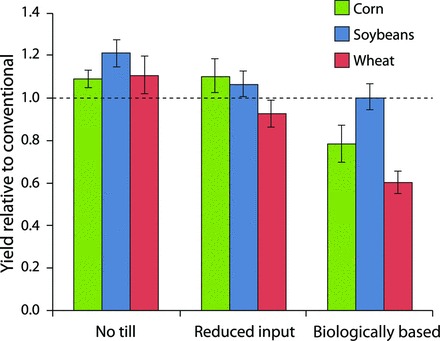
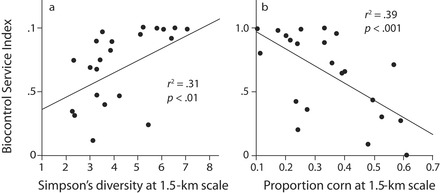
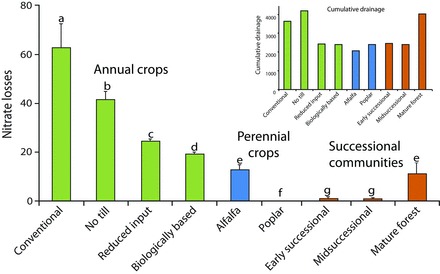
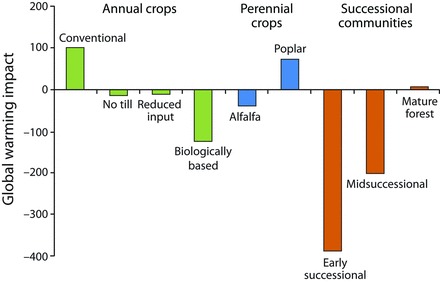
A balanced assessment of ecosystem services provided by agriculture requires a systems-level socioecological understanding of related management practices at local to landscape scales. The results from 25 years of observation and experimentation at the Kellogg Biological Station long-term ecological research site reveal services that could be provided by intensive row-crop ecosystems. In addition to high yields, farms could be readily managed to contribute clean water, biocontrol and other biodiversity benefits, climate stabilization, and long-term soil fertility, thereby helping meet society's need for agriculture that is economically and environmentally sustainable. Midwest farmers-especially those with large farms-appear willing to adopt practices that deliver these services in exchange for payments scaled to management complexity and farmstead benefit. Surveyed citizens appear willing to pay farmers for the delivery of specific services, such as cleaner lakes. A new farming for services paradigm in US agriculture seems feasible and could be environmentally significant.
Overview
The claims and statistics of this paper haven’t been checked yet.
Free: it reads the open-access text and checks the first 5 claims that cite a source we can check. Create a free account to check every claim.
Integrity signals
Registry
Cites
Statistics
Figures
Verification
Claims the paper makes
The claims and statistics of this paper haven’t been checked yet.
Free: it reads the open-access text and checks the first 5 claims that cite a source we can check. Create a free account to check every claim.
Claims other papers make about this one
Each is checked against this paper’s own text: does it say what the citing paper says it does?
The cited source says what the claim attributes to it.
In the citing paper
“Doing so requires a system-level understanding of the ecological and management processes that underpin biological interactions occurring within crop fields [49].”
The cited source says what the claim attributes to it.
In the citing paper
“In fact, recent quantitative research shows that agroecology can conciliate food provision with bundles of other ESs [60-64].”
From How Are Landscapes under Agroecological Transition Perceived and Appreciated? A Belgian Case Study (2020) · cites this paper as [61]
Self-check
Percentages, sums and reported differences re-computed from the paper’s own numbers.
The self-check needs the paper’s full text.
Citations
Cites
Spreading dead zones and consequences for marine ecosystems
Diaz, R. J., & Rosenberg, R. (2008) · Science · doi:10.1126/science.1156401 · Cited by 6,626
Use of U.S. Croplands for Biofuels Increases Greenhouse Gases Through Emissions from Land-Use Change
Searchinger, T., Heimlich, R., Houghton, R. A., Dong, F., Elobeid, A., Fabiosa, J., Tokgoz, S., Hayes, D., & Yu, T.-H. (2008) · Science · doi:10.1126/science.1151861 · Cited by 4,888
Land Clearing and the Biofuel Carbon Debt
Fargione, J., Hill, J., Tilman, D., Polasky, S., & Hawthorne, P. (2008) · Science · doi:10.1126/science.1152747 · Cited by 3,902
Habitat management to conserve natural enemies of arthropod pests in agriculture
Landis, D. A., Wratten, S. D., & Gurr, G. M. (2000) · Annual Review of Entomology · doi:10.1146/annurev.ento.45.1.175 · Cited by 3,100
Self-citationEthanol Can Contribute to Energy and Environmental Goals
Farrell, A. E., Plevin, R. J., Turner, B. T., Jones, A. D., O'Hare, M., & Kammen, D. M. (2006) · Science · doi:10.1126/science.1121416 · Cited by 2,823
Ecosystem services and agriculture: tradeoffs and synergies
Power, A. G. (2010) · Philosophical Transactions of the Royal Society B: Biological Sciences · doi:10.1098/rstb.2010.0143 · Cited by 2,334
Soil Organic Carbon Sequestration Rates by Tillage and Crop Rotation: A Global Data Analysis
West, T. O., & Post, W. M. (2002) · Soil Science Society of America Journal · doi:10.2136/sssaj2002.1930 · Cited by 2,215 · cited 1×
“That the no-till system accumulated carbon and primarily in larger, more vulnerable aggregates is no surprise (West and Post 2002, Six et al.”
BackgroundRobertson, G. P., Paul, E. A., & Harwood, R. R. (2000) · Science · doi:10.1126/science.289.5486.1922 · Cited by 1,358
Self-citationLegume-based cropping systems have reduced carbon and nitrogen losses
Drinkwater, L. E., Wagoner, P., & Sarrantonio, M. (1998) · Nature · doi:10.1038/24376 · Cited by 1,186
Nitrogen in agriculture: balancing the cost of an essential resource
Robertson, G. P., & Vitousek, P. M. (2009) · Annual Review of Environment and Resources · doi:10.1146/annurev.environ.032108.105046 · Cited by 1,177 · cited 1×
“Another might be to more precisely estimate or meet crop nitrogen needs in order to avoid excess nitrogen fertilizer additions (Robertson and Vitousek 2009).”
BackgroundSelf-citation
Research works printed but not linked: 8
- Barker T Metz B Davidson OR Bosch P Dave R Meyer L Technical summary Climate Change 2007: Mitigation. Intergovernmental Panel on Climate Change 2007 Cambridge University Press 25 93
- [ERS] Economic Research Service ARMS farm financial and crop production practices. US Department of Agriculture 2013 (18 February 2014; www.ers.usda.gov/data-products/arms-farm-financial-and-crop-production-practices.aspx#.UVCOT1d3dI110.1093/biosci/biu037.html) · doi:10.1093/biosci/biu037.html
- Fox J Gardner RC Maki T Stacking opportunities and risks in environmental credit markets Environmental Law Reporter 2011 41 10121 10125
- Gelfand I Robertson GP Hamilton SK Doll JE Robertson GP Mitigation of greenhouse gases in agricultural ecosystems The Ecology of Agricultural Ecosystems: Long-Term Research on the Path to Sustainability 2014 Forthcoming Oxford University Press
- [MA] Millennium Ecosystem Assessment Ecosystems and Human Well-Being: Our Human Planet 2005 Island Press
- [NASS] National Agricultural Statistics Service Crop Production 2012 Summary. US Department of Agriculture 2013a (18 February 2014; http://usda.mannlib.cornell.edu/MannUsda/viewDocumentInfo.do?documentID=104710.1093/biosci/biu037.html) · doi:10.1093/biosci/biu037.html
- Robertson GP Hamilton SK Hamilton SK Doll JE Robertson GP Conceptual and experimental approaches to long-term ecological research at the Kellogg Biological Station The Ecology of Agricultural Ecosystems: Long-Term Research on the Path to Sustainability 2014 Forthcoming Oxford University Press
- Smith P Metz B Davidson OR Bosch P Dave R Meyer L Agriculture Climate Change 2007: Mitigation. Intergovernmental Panel on Climate Change 2007 Cambridge University Press 498 540
Cited by
Future threats to biodiversity and pathways to their prevention
Tilman, D., Clark, M., Williams, D. R., Kimmel, K., Polasky, S., & Packer, C. (2017) · Nature · doi:10.1038/nature22900 · Cited by 1,341
Global food system emissions could preclude achieving the 1.5° and 2°C climate change targets
Clark, M. A., Domingo, N. G. G., Colgan, K., Thakrar, S. K., Tilman, D., Lynch, J., Azevedo, I. L., & Hill, J. D. (2020) · Science · doi:10.1126/science.aba7357 · Cited by 1,116
Grasslands—more important for ecosystem services than you might think
Bengtsson, J., Bullock, J. M., Egoh, B., Everson, C., Everson, T., O'Connor, T., O'Farrell, P. J., Smith, H. G., & Lindborg, R. (2019) · Ecosphere · doi:10.1002/ecs2.2582 · Cited by 1,097
Soil Degradation, Land Scarcity and Food Security: Reviewing a Complex Challenge
Gomiero, T. (2016) · Sustainability · doi:10.3390/su8030281 · Cited by 817
Global meta-analysis of the relationship between soil organic matter and crop yields
Oldfield, E. E., Bradford, M. A., & Wood, S. A. (2019) · SOIL · doi:10.5194/soil-5-15-2019 · Cited by 802
Biomass Production and Carbon/Nitrogen Ratio Influence Ecosystem Services from Cover Crop Mixtures
Finney, D. M., White, C. M., & Kaye, J. P. (2016) · Agronomy Journal · doi:10.2134/agronj15.0182 · Cited by 557
“One potential strategy to augment services from row crops is to increase plant diversity (Robertson et al., 2014).”
BackgroundCellulosic biofuel contributions to a sustainable energy future: Choices and outcomes
Robertson, G. P., Hamilton, S. K., Barham, B. L., Dale, B. E., Izaurralde, R. C., Jackson, R. D., Landis, D. A., Swinton, S. M., Thelen, K. D., & Tiedje, J. M. (2017) · Science · doi:10.1126/science.aal2324 · Cited by 440
Self-citationControls and Adaptive Management of Nitrification in Agricultural Soils
Norton, J., & Ouyang, Y. (2019) · Frontiers in Microbiology · doi:10.3389/fmicb.2019.01931 · Cited by 404
“These are important considerations for agricultural and environmental policy especially as global climate change intensifies (Schlesinger, 2009; Cavigelli et al., 2012; Robertson et al., 2014).”
What is sustainable intensification? Views from experts
Petersen, B., & Snapp, S. (2015) · Land Use Policy · doi:10.1016/j.landusepol.2015.02.002 · Cited by 271
Self-citationDisentangling the Pathways and Effects of Ecosystem Service Co-Production
Palomo, I., Felipe-Lucia, M. R., Bennett, E. M., Martín-López, B., & Pascual, U. (2016) · Advances in Ecological Research · doi:10.1016/bs.aecr.2015.09.003 · Cited by 270
Crop yield gap and stability in organic and conventional farming systems
Schrama, M., de Haan, J. J., Kroonen, M., Verstegen, H., & Van der Putten, W. H. (2018) · Agriculture, Ecosystems & Environment · doi:10.1016/j.agee.2017.12.023 · Cited by 265
Agri-Food Markets towards Sustainable Patterns
Borsellino, V., Schimmenti, E., & El Bilali, H. (2020) · Sustainability · doi:10.3390/su12062193 · Cited by 244
“There is ample scientific evidence on the positive effects per unit area of organic farming practices compared to conventional agriculture, not only in terms of reducing pollution and environmental degradation, and of safeguarding biodiversity and soil conservation [345–349], but also in terms of lower ammonia and nit…”
BackgroundDevelopment pathways toward “zero hunger”
Blesh, J., Hoey, L., Jones, A. D., Friedmann, H., & Perfecto, I. (2019) · World Development · doi:10.1016/j.worlddev.2019.02.004 · Cited by 181
Direct effects of soil organic matter on productivity mirror those observed with organic amendments
Oldfield, E. E., Wood, S. A., & Bradford, M. A. (2017) · Plant and Soil · doi:10.1007/s11104-017-3513-5 · Cited by 160
Mosier, S. L., Córdova, S. C., & Robertson, G. P. (2021) · Frontiers in Sustainable Food Systems · doi:10.3389/fsufs.2021.706142 · Cited by 171
Field-scale experiments reveal persistent yield gaps in low-input and organic cropping systems
Kravchenko, A., Snapp, S. S., & Robertson, G. P. (2017) · Proceedings of the National Academy of Sciences · doi:10.1073/pnas.1612311114 · Cited by 153
Self-citationPeng, J., Liu, Y., Liu, Z., & Yang, Y. (2017) · Agriculture Ecosystems & Environment · doi:10.1016/j.agee.2017.06.007 · Cited by 129
Linking crop- and soil-based approaches to evaluate system nitrogen-use efficiency and tradeoffs
Martinez‐Feria, R. A., Castellano, M. J., Dietzel, R. N., Helmers, M. J., Liebman, M., Huber, I., & Archontoulis, S. V. (2018) · Agriculture Ecosystems & Environment · doi:10.1016/j.agee.2018.01.002 · Cited by 143
Organic and Conventional Agriculture: A Useful Framing?
Shennan, C., Krupnik, T. J., Baird, G., Cohen, H., Forbush, K., Lovell, R. J., & Olimpi, E. M. (2017) · Annual Review of Environment and Resources · doi:10.1146/annurev-environ-110615-085750 · Cited by 151
“The time frame of comparisons is also important, given that organic systems may require multi-year rotations to achieve stable weed control (76), and effective biological control requires sufficient time to develop stable predator/parasitoid populations (77).”
BackgroundAchieving Diverse Cover Crop Mixtures: Effects of Planting Date and Seeding Rate
Murrell, E. G., Schipanski, M. E., Finney, D. M., Hunter, M. C., Burgess, M., LaChance, J. C., Baraibar, B., White, C. M., Mortensen, D. A., & Kaye, J. P. (2017) · Agronomy Journal · doi:10.2134/agronj2016.03.0174 · Cited by 117
Quantifying direct yield benefits of soil carbon increases from cover cropping
Vendig, I., Guzman, A., Cerda, G. D. L., Esquivel, K., Mayer, A. C., Ponisio, L. C., & Bowles, T. M. (2023) · Nature Sustainability · doi:10.1038/s41893-023-01131-7 · Cited by 146
Pollinator monitoring more than pays for itself
Breeze, T. D., Bailey, A., Balcombe, K., BRERETON, T. M., Comont, R., Edwards, M., Garratt, M. P. D., Harvey, M. C., Hawes, C., Isaac, N. J. B., et al. (2020) · Journal of Applied Ecology · doi:10.1111/1365-2664.13755 · Cited by 136
Advancing the Sustainability of US Agriculture through Long‐Term Research
Kleinman, P. J. A., Spiegal, S. A., Rigby, J. R., Goslee, S., Baker, J. M., Bestelmeyer, B. T., Boughton, R. K., Bryant, R. B., Cavigelli, M. A., Derner, J., et al. (2018) · Journal of Environmental Quality · doi:10.2134/jeq2018.05.0171 · Cited by 134
Interplay between the potential of photovoltaic systems and agricultural land use
Dias, L. P., Gouveia, J. P., Lourenço, P., & Seixas, J. (2018) · Land Use Policy · doi:10.1016/j.landusepol.2018.11.036 · Cited by 110
Cropping System Diversity Effects on Nutrient Discharge, Soil Erosion, and Agronomic Performance
Hunt, N. D., Hill, J., & Liebman, M. (2019) · Environmental Science & Technology · doi:10.1021/acs.est.8b02193 · Cited by 123
Carrière, Y., Brown, Z. S., Downes, S. J., Gujar, G., Epstein, G., Omoto, C., Storer, N. P., Mota-Sanchez, D., Søgaard Jørgensen, P., & Carroll, S. P. (2020) · Ambio · doi:10.1007/s13280-019-01167-0 · Cited by 100
Invited review: Sustainable forage and grain crop production for the US dairy industry
Martin, N. P., Russelle, M. P., Powell, J. M., Sniffen, C. J., Smith, S., Tricárico, J. M., & Grant, R. J. (2017) · Journal of Dairy Science · doi:10.3168/jds.2017-13080 · Cited by 126
“However, we agree with Robertson et al. (2014), that cropland management that takes into consideration clean water, biodiversity benefits, climate stabilization, and long-term soil fertility must become the norm.”
BackgroundLiu, L., & Basso, B. (2020) · PLoS ONE · doi:10.1371/journal.pone.0225433 · Cited by 105
“Field experiments in the Midwest showed that no-till fields were able to produce higher grain yield and to store more carbon compared to the conventionally tilled fields [13, 14, 15].”
BackgroundA conceptual framework for the governance of multiple ecosystem services in agricultural landscapes
Vialatte, A., Barnaud, C., Blanco, J., Ouin, A., Choisis, J., Andrieu, É., Sheeren, D., Ladet, S., Deconchat, M., Clément, F., et al. (2019) · Landscape Ecology · doi:10.1007/s10980-019-00829-4 · Cited by 103
Impact of farming systems on soil ecological quality: a meta-analysis
Christel, A., Maron, P., & Ranjard, L. (2021) · Environmental Chemistry Letters · doi:10.1007/s10311-021-01302-y · Cited by 115
Ditzler, L., van Apeldoorn, D. F., Schulte, R. P. O., Tittonell, P. A., & Rossing, W. A. H. (2020) · European Journal of Agronomy · doi:10.1016/j.eja.2020.126197 · Cited by 102
Gelfand, I., Shcherbak, I., Millar, N., Kravchenko, A., & Robertson, G. P. (2016) · Global Change Biology · doi:10.1111/gcb.13426 · Cited by 94
“Annual crop yields for this period (Robertson et al., 2014) are similar to or exceed Michigan and average US yields (Robertson & Hamilton, 2015).”
ResultContribution of agroecological farming systems to the delivery of ecosystem services
Boeraeve, F., Dendoncker, N., Cornélis, J.-T., Degrune, F., & Dufrêne, M. (2020) · Journal of Environmental Management · doi:10.1016/j.jenvman.2019.109576 · Cited by 83
“Robertson et al. (2014) report from 25 years of experimentation and observation of notill, reduced input and organic systems which provide high yields and water pollution control, pest control and biodiversity support.”
BackgroundBabu, S., Singh, R., Avasthe, R. K., Yadav, G. S., Das, A., Singh, V. K., Mohapatra, K. P., Rathore, S. S., Chandra, P., & Kumar, A. (2020) · Scientific Reports · doi:10.1038/s41598-020-73072-6 · Cited by 112
Gomiero, T. (2015) · Sustainability · doi:10.3390/su7078491 · Cited by 90
“Therefore, in order to reduce the impact of agricultural activities on natural resources, reduce contamination and prevent a major collapse of biodiversity at a global scale, there is a call for adopting farming practices that are more agroecological, which may preserve biodiversity-related ecosystem services [15,17,7…”
BackgroundBerti, M. T., Johnson, B. L., Ripplinger, D., Gesch, R. W., & Aponte, A. (2017) · Agricultural Systems · doi:10.1016/j.agsy.2017.05.012 · Cited by 82
Farmer Participatory Research Advances Sustainable Agriculture: Lessons from Michigan and Malawi
Snapp, S. S., DeDecker, J., & Davis, A. S. (2019) · Agronomy Journal · doi:10.2134/agronj2018.12.0769 · Cited by 78
“One long-term experiment in Southwest Michigan has demonstrated that soybean yields can be superior under no-till, given the right conditions (Robertson et al., 2014).”
BackgroundMethodSelf-citationEcosystem Services in Working Lands of the Southeastern USA
Coffin, A. W., Sclater, V. L., Swain, H. M., Ponce‐Campos, G. E., & Seymour, L. (2021) · Frontiers in Sustainable Food Systems · doi:10.3389/fsufs.2021.541590 · Cited by 76
“Regulating services are coincident with supporting services, such as habitat essential to pollinators that, in turn, improve local production–a coupled synergistic relationship (Robertson et al., 2014).”
BackgroundWang, T., Jin, H., Fan, Y., Obembe, O. S., & Li, D. (2021) · Journal of Environmental Management · doi:10.1016/j.jenvman.2021.112903 · Cited by 82
Robertson, G. P. (2015) · Daedalus · doi:10.1162/daed_a_00355 · Cited by 88
Oldfield, E. E., Wood, S. A., & Bradford, M. A. (2020) · Ecological Applications · doi:10.1002/eap.2073 · Cited by 79
Achieving Sustainable Phosphorus Use in Food Systems through Circularisation
Withers, P. J. A., Doody, D. G., & Sylvester-Bradley, R. (2018) · Sustainability · doi:10.3390/su10061804 · Cited by 78
“Whilst some storage of plant-available P in soil (typically measured as soil test P, STP) is necessary to optimise agricultural productivity and encourage biodiversity and carbon sequestration [5,35], legacy soil P is an endemic source of bioavailable and particulate P losses from land to water that poses a major thre…”
BackgroundSamarappuli, D. P., & Berti, M. T. (2018) · Journal of Cleaner Production · doi:10.1016/j.jclepro.2018.05.083 · Cited by 70
McGill, B. M., Hamilton, S. K., Millar, N., & Robertson, G. P. (2018) · Global Change Biology · doi:10.1111/gcb.14472 · Cited by 71
Self-citationCristache, S. E., Vuță, M., Marin, E., Cioacã, S.-I., & Vuță, M. (2018) · Sustainability · doi:10.3390/su10114279 · Cited by 79
An economic analysis of integrated crop-livestock systems in Iowa, U.S.A.
Poffenbarger, H., Artz, G. M., Dahlke, G. R., Edwards, W. M., Hanna, M., Russell, J. R., Sellers, H. J., & Liebman, M. (2017) · Agricultural Systems · doi:10.1016/j.agsy.2017.07.001 · Cited by 87
“…environment: irrigation depletes limited water resources, reactive nitrogen and phosphorus pollute surface and coastal waters and contaminate groundwater, pesticides kill non-target organisms, and altered patterns of carbon and nitrogen cycling contribute to climate change (Robertson et al., 2014).”
BackgroundLal, R. (2019) · Journal of Soil and Water Conservation · doi:10.2489/jswc.74.3.55a · Cited by 69
“The need for a paradigm shift in agroecosystems (Fedoroff et al. 2010) can be met through EI (Hochman et al. 2013) by farming for ecosystem services (Robertson et al. 2014) while advancing the SDGs (figure 2).”
BackgroundBengtsson, J. (2015) · Ecological Entomology · doi:10.1111/een.12247 · Cited by 77
“That aspects other than yield were not included is problematic, especially when discussing ecosystem management, because many ES are related to each other forming synergies and trade-offs among them (Raudsepp-Hearne et al., 2010; Gamfeldt et al., 2013; Lele et al., 2013; Robertson et al., 2014).”
BackgroundCropping pattern changes diminish agroecosystem services in North and South Dakota, USA
O’Brien, P. L., Hatfield, J. L., Dold, C., Kistner, E. J., & Wacha, K. M. (2020) · Agronomy Journal · doi:10.1002/agj2.20001 · Cited by 61
Hill, J. M., Egan, J. F., Stauffer, G. E., & Diefenbach, D. R. (2014) · PLoS ONE · doi:10.1371/journal.pone.0098064 · Cited by 58
Dispersal alters soil microbial community response to drought
Evans, S. E., Bell‐Dereske, L. P., Dougherty, K., & Kittredge, H. A. (2019) · Environmental Microbiology · doi:10.1111/1462-2920.14707 · Cited by 58
Abraha, M., Gelfand, I., Hamilton, S. K., Chen, J., & Robertson, G. P. (2018) · Ecological Applications · doi:10.1002/eap.1745 · Cited by 54
Self-citationA socio-ecological framework supporting catchment-scale water resource stewardship
Everard, M. (2018) · Environmental Science & Policy · doi:10.1016/j.envsci.2018.10.017 · Cited by 63
“Further progress is seen in agricultural practices aimed at multiple potential beneficial outcomes (clean water, biocontrol, biodiversity benefits, climate stabilisation and long-term soil fertility) using novel practices as part of profitable agricultural practices (Foley et al., 2011; Robertson et al., 2014).”
BackgroundWeed Diversity Affects Soybean and Maize Yield in a Long Term Experiment in Michigan, USA
Ferrero, R., Lima, M., Davis, A. S., & Andújar, J. L. G. (2017) · Frontiers in Plant Science · doi:10.3389/fpls.2017.00236 · Cited by 59
“One promising approach to sustainable intensification is to assess, and make use of agroecosystem services that enhanced biodiversity might provide (Vandermeer et al., 1998; Swift et al., 2004; Cardinale et al., 2012; Robertson et al., 2014).”
BackgroundA Framework to Consider Soil Ecosystem Services in Territorial Planning
Fossey, M., Angers, D. A., Bustany, C., Cudennec, C., Durand, P., Gascuel, C., Jaffrézic, A., Pérès, G., Besse, C., & Walter, C. A. (2020) · Frontiers in Environmental Science · doi:10.3389/fenvs.2020.00028 · Cited by 58
“Despite the recognition of soil management in agroecosystems as a powerful mechanism for addressing environmental challenges (Robertson et al., 2014; Schulte et al., 2014; Ruhl, 2016), few studies have focussed specifically on soil-centered assessment of ES within agroecosystems (Greiner et al.”
BackgroundNitrous Oxide (N2O) Emissions from Subsurface Soils of Agricultural Ecosystems
Shcherbak, I., & Robertson, G. P. (2019) · Ecosystems · doi:10.1007/s10021-019-00363-z · Cited by 47
“We used soil profile gas probes that are fully described in Shcherbak and Robertson (2014).”
BackgroundMethodInfluentialBaur, P. (2020) · Agriculture and Human Values · doi:10.1007/s10460-020-10123-8 · Cited by 57
MODELING NO-TILL ADOPTION BY CORN AND SOYBEAN PRODUCERS: INSIGHTS INTO SUSTAINED ADOPTION
Wade, T., & Claassen, R. (2017) · Journal of Agricultural and Applied Economics · doi:10.1017/aae.2016.48 · Cited by 46
Full-Season Cover Crops and Their Traits That Promote Agroecosystem Services
Wagg, C., van Erk, A., Fava, E., Comeau, L., Mitterboeck, T. F., Goyer, C., Li, S., McKenzie‐Gopsill, A., & Mills, A. A. S. (2021) · Agriculture · doi:10.3390/agriculture11090830 · Cited by 54
Nature-based agricultural solutions: Scaling perennial grains across Africa
Peter, B. G., Mungai, L. M., Messina, J. P., & Snapp, S. S. (2017) · Environmental Research · doi:10.1016/j.envres.2017.08.011 · Cited by 43
“At the same time, there are a number of sustainability principles about which consensus is emerging that can be followed regardless of the type of agriculture deployed (Robertson et al., 2014).”
BackgroundSelf-citationAligning Land Use with Land Potential: The Role of Integrated Agriculture
Liebig, M. A., Herrick, J. E., Archer, D. W., Dobrowolski, J., Duiker, S. W., Franzluebbers, A. J., Hendrickson, J., Mitchell, R. B., Mohamed, A. I., Russell, J. R., et al. (2017) · Agricultural & Environmental Letters · doi:10.2134/ael2017.03.0007 · Cited by 43
“Moreover, emergent conservation, climate-smart, and farming-for-services paradigms underscore the potential role of IAS to create more productive, resilient, and environmentally sound agroecosystems (Robertson et al., 2014; Steenwerth et al., 2014).”
BackgroundBarnes, A., Thompson, B., & Toma, L. (2022) · Current Research in Environmental Sustainability · doi:10.1016/j.crsust.2022.100125 · Cited by 56
Towards ecologically sustainable crop production: A South African perspective
van der Laan, M., Bristow, K. L., Stirzaker, R. J., & Annandale, J. G. (2016) · Agriculture Ecosystems & Environment · doi:10.1016/j.agee.2016.11.014 · Cited by 46
“In addition to the 25.9% of the region that has already been transformed due to agriculture and forestry (urban areas cover 1.6%), Rouget et al. (2003) estimate that over 30% of currently remaining natural vegetation in the Cape Floristic Region is under threat from further transformation by as…”
BackgroundInfluentialPrairie Strips and Lower Land Use Intensity Increase Biodiversity and Ecosystem Services
Kemmerling, L. R., Rutkoski, C. E., Evans, S. E., Helms, J. A., Cordova-Ortiz, E. S., Smith, J. D., Custodio, J. A. V., Vizza, C., & Haddad, N. M. (2022) · Frontiers in Ecology and Evolution · doi:10.3389/fevo.2022.833170 · Cited by 43
“Prairie strips, no till management, and cover crops are Frontiers in Ecology and Evolution | www.frontiersin.org 5 May 2022 | Volume 10 | Article 833170 among management practices that have the potential to sequester carbon in cropping systems (Robertson et al., 2000; Gelfand and Robertson, 2015).”
BackgroundHess, L. J. T., Hinckley, E. S., Robertson, G. P., Hamilton, S. K., & Matson, P. A. (2018) · Vadose Zone Journal · doi:10.2136/vzj2018.07.0128 · Cited by 42
“Increased water-holding capacity (Robertson et al., 2014) and higher infiltration rates (Strudley et al.”
BackgroundSelf-citationIverson, A. L., Gonthier, D. J., Pak, D., Ennis, K. K., Burnham, R. J., Perfecto, I., Ramos, M., & Vandermeer, J. H. (2019) · Biological Conservation · doi:10.1016/j.biocon.2019.07.024 · Cited by 45
“…and synergies) between ecosystem services or biodiversity indicators (Balvanera et al., 2014; Clough et al., 2011; Karp et al., 2015; Kragt and Robertson, 2014; Kremen and Miles, 2012; Power, 2010; RaudseppHearne et al., 2010), leading to inaccurate conclusions or misguided management…”
BackgroundOn Quantifying Water Quality Benefits of Healthy Soils
Zimnicki, T., Boring, T. J., Evenson, G. R., Kalcic, M. M., Karlen, D. L., Wilson, R. S., Zhang, Y., & Blesh, J. (2020) · BioScience · doi:10.1093/biosci/biaa011 · Cited by 48
O’Neill, B., Sprunger, C. D., & Robertson, G. P. (2021) · Soil Science Society of America Journal · doi:10.1002/saj2.20233 · Cited by 43
“J. 2021;85:903–918. wileyonlinelibrary.com/journal/saj2 903 maintain crop productivity while also delivering a range of ecosystem services both on-farm and to society at large (Power, 2010; Robertson et al., 2014).”
BackgroundHow to make regenerative practices work on the farm: A modelling framework
Schreefel, L., de Boer, I. J. M., Timler, C. J., Groot, J. C. J., Zwetsloot, M. J., Creamer, R., Pas, A., van Zanten, H. H. E., & Schulte, R. P. O. (2022) · Agricultural Systems · doi:10.1016/j.agsy.2022.103371 · Cited by 49
THE YIELD GAP: CLOSING THE GAP BY WIDENING THE APPROACH
Snyder, K. A., Miththapala, S., Sommer, R., & Braslow, J. (2016) · Experimental Agriculture · doi:10.1017/s0014479716000508 · Cited by 44
“Thus, for many costly (in labour, delayed benefits) changes in management practices, their research found that it is clear ‘that the provision of ecosystem services in agriculture will require incentives’ (Robertson et al., 2014).”
BackgroundInfluentialThe Strong Perennial Vision: A Response
Crews, T. E., & DeHaan, L. R. (2015) · Agroecology and Sustainable Food Systems · doi:10.1080/21683565.2015.1008777 · Cited by 42
Adhikari, S., Adhikari, A., Weaver, D. K., Bekkerman, A., & Menalled, F. D. (2019) · Sustainability · doi:10.3390/su11113223 · Cited by 40
Farmer and Farmland Owner Views on Spatial Targeting for Soil Conservation and Water Quality
Zimmerman, E. K., Tyndall, J., Moore, L. A. S., & Larsen, G. (2019) · Water Resources Research · doi:10.1029/2018wr023230 · Cited by 40
Carbon Dynamics in Salt-affected Soils
Datta, A., Setia, R. K., Barman, A., Guo, Y., & Basak, N. (2019) · Springer eBooks · doi:10.1007/978-981-13-5832-6_12 · Cited by 38
Landscape-scale cropping changes in the High Plains: economic and environmental implications
Rosenzweig, S. T., & Schipanski, M. E. (2019) · Environmental Research Letters · doi:10.1088/1748-9326/ab5e8b · Cited by 38
Bruni, E., Guenet, B., Clivot, H., Kätterer, T., Martin, M. P., Virto, I., & Chenu, C. (2022) · Frontiers in Environmental Science · doi:10.3389/fenvs.2022.824724 · Cited by 34
“For instance, through increased water retention and soil fertility (Reeves, 1997; Robertson et al., 2014), EOM may reduce soil erosion and increase crop productivity, indirectly enhancing a virtuous C cycle.”
BackgroundAdaptive management of ecosystem services across different land use regimes
Ruhl, J. B. (2016) · Journal of Environmental Management · doi:10.1016/j.jenvman.2016.07.066 · Cited by 35
Lehnhoff, E. A., Miller, Z., Miller, P. R., Johnson, S. P., Scott, T., Hatfield, P. G., & Menalled, F. D. (2017) · Agriculture · doi:10.3390/agriculture7040033 · Cited by 40
“For organic agriculture to meet the growing demand for food, while sustaining the environment’s ability to provide for social and ecological services, it is necessary to achieve a systems-level understanding of the linkages among biophysical processes, human activities, and socioeconomic goals [7,8].”
BackgroundStubenrauch, J., Ekardt, F., Heyl, K., Garske, B., Schott, V. L., & Ober, S. (2021) · Sustainable Production and Consumption · doi:10.1016/j.spc.2021.06.006 · Cited by 36
“Thirdly, more importance should be given to maintaining or strengthening ecosystem services – although organic farming already incorporates this dimension into their practice (Bommarco et al., 2018; Ewel et al., 2019; Philip Robertson et al., 2014).”
BackgroundOrganic farming positively affects the vitality of passerine birds in agricultural landscapes
Moreau, J., Monceau, K., GONNET, G., Pfister, M., & Bretagnolle, V. (2022) · Agriculture Ecosystems & Environment · doi:10.1016/j.agee.2022.108034 · Cited by 37
Klinnert, A., Barbosa, A., Catarino, R., Fellmann, T., Baldoni, E., Beber, C. L., Hristov, J., Paracchini, M. L., Rega, C., Weiß, F., et al. (2024) · Nature Communications · doi:10.1038/s41467-024-48311-3 · Cited by 48
“To better control for factorssuchassoil quality, water availability, natural constraints and other local factors 63,81,82 ,we also include sub-regional (NUTS3), and altitude dummies.”
Soil and crop management to save food and enhance food security
Gomiero, T. (2019) · Elsevier eBooks · doi:10.1016/b978-0-12-815357-4.00002-x · Cited by 37
AgriLOVE: Agriculture, land-use and technical change in an evolutionary, agent-based model
Coronese, M., Occelli, M., Lamperti, F., & Roventini, A. (2023) · Ecological Economics · doi:10.1016/j.ecolecon.2023.107756 · Cited by 40
Exploring the motivations and problems of farmers for conversion to organic farming in Iran
Veisi, H., Carolan, M., & Alipour, A. (2017) · International Journal of Agricultural Sustainability · doi:10.1080/14735903.2017.1312095 · Cited by 34
“Sustainable intensification, among proponents at least, is said to promote food outputs and economic benefit without harm to the environment, while increasing the flow of beneficial environmental services, like those enhanced through organic farming (Robertson et al., 2014).”
BackgroundIntensified Agroecosystems and Their Effects on Soil Biodiversity and Soil Functions
Dornbush, M. E., & von Haden, A. C. (2017) · Elsevier eBooks · doi:10.1016/b978-0-12-805317-1.00008-7 · Cited by 33
A Systems Comparison of Contrasting Organic Weed Management Strategies
Brown, B., & Gallandt, E. R. (2017) · Weed Science · doi:10.1017/wsc.2017.34 · Cited by 28
“In addition to profitability, farmers consider the ecological effects of management (Robertson et al. 2014).”
BackgroundA holistic framework to assess the sustainability of irrigated agricultural systems
Antunes, P., Santos, R. F., Cosme, I., Osann, A., Calera, A., Ketelaere, D. D., Spiteri, A., Mejuto, M. F., Andreu, J., Momblanch, A., et al. (2017) · Cogent Food & Agriculture · doi:10.1080/23311932.2017.1323542 · Cited by 31
“More recently, the role that agroecosystems can play in providing essential ecosystem services, such as regulation of soil fertility, water quality, carbon sequestration, support for biodiversity and cultural services has been emphasized (Dale & Polasky, 2007; Philip Robertson et al., 2014; Plieninger et al., 2012; Pl…”
BackgroundInfluential‘Decoupling’ land productivity and greenhouse gas footprints: A review
Wang, L., Cutforth, H. W., Lal, R., Chai, Q., Zhao, C., Gan, Y., & Siddique, K. H. M. (2018) · Land Degradation and Development · doi:10.1002/ldr.3172 · Cited by 30
“From an ecosystem perspective, there are tradeoffs among individual components—a particular component that benefits ecosystem productivity may do so at the expense of benefits from other components (Robertson et al., 2014).”
BackgroundBethwell, C., Sattler, C., & Stachow, U. (2022) · Ecosystem Services · doi:10.1016/j.ecoser.2021.101402 · Cited by 31
Keren, I. N., Menalled, F. D., Weaver, D. K., & Robison-Cox, J. F. (2015) · PLOS ONE · doi:10.1371/journal.pone.0118111 · Cited by 25
“Doing so requires a system-level understanding of the ecological and management processes that underpin biological interactions occurring within crop fields [49].”
BackgroundSoil protein: A key indicator of soil health and nitrogen management
Naasko, K., Martin, T. K., Mammana, C., Murray, J., Mann, M., & Sprunger, C. D. (2023) · Soil Science Society of America Journal · doi:10.1002/saj2.20600 · Cited by 37
Jones, J., Benucci, G. M. N., & Evans, S. E. (2025) · Soil Biology and Biochemistry · doi:10.1016/j.soilbio.2025.109787 · Cited by 30
Hudson, A. R., Peters, D. P. C., Blair, J. M., Childers, D. L., Doran, P. T., Geil, K. L., Gooseff, M. N., Gross, K. L., Haddad, N. M., Pastore, M. A., et al. (2022) · BioScience · doi:10.1093/biosci/biab134 · Cited by 29
“…in observational and experimental grass-land ANPP was positively related to growing season precipitation variability as observed over the 1984–1999 study period; however, short-term experiments that imposed twice the observed precipitation variability identified a negative response in ANPP.”
Self-citationWater availability dominated vegetation productivity of Inner Mongolia grasslands from 1982 to 2015
Gao, B., Ye, X., Ding, L., Zhang, P., Wang, Y., & Xiao, L. (2023) · Ecological Indicators · doi:10.1016/j.ecolind.2023.110291 · Cited by 26
Denashurya, N. I., Nurliza, N., Dolorosa, E., Kurniati, D., & Suswati, D. (2023) · Sustainability · doi:10.3390/su152316507 · Cited by 45
Soil carbon change in intensive agriculture after 25 years of conservation management
Córdova, S. C., Kravchenko, A., Miesel, J., & Robertson, G. P. (2024) · Geoderma · doi:10.1016/j.geoderma.2024.117133 · Cited by 31
Degrune, F., Boeraeve, F., Dufrêne, M., Cornelis, J., Frey, B., & Hartmann, M. (2019) · Frontiers in Ecology and Evolution · doi:10.3389/fevo.2019.00261 · Cited by 27
Eeswaran, R., Nejadhashemi, A. P., Alves, F. C., & Saravi, B. (2020) · Soil and Tillage Research · doi:10.1016/j.still.2020.104818 · Cited by 30
Crop yield and economics of cropping systems involving different rotations, tillage, and cover crops
Singh, J., Wang, T., Kumar, S., Xu, Z., Sexton, P. J., Davis, J., & Bly, A. (2021) · Journal of Soil and Water Conservation · doi:10.2489/jswc.2021.00117 · Cited by 25
Persistence in tillage decisions: Aggregate data analysis
Tran, D. Q., & Kurkalova, L. A. (2019) · International Soil and Water Conservation Research · doi:10.1016/j.iswcr.2019.03.002 · Cited by 25
Metadata
- Authors
- Philip Robertson, G., Gross, K. L., Hamilton, S. K., Landis, D. A., Schmidt, T. M., Snapp, S. S., & Swinton, S. M.
- Affiliations
- University of Michigan (US)
- Venue
- BioScience
- Publisher
- Oxford University Press (OUP)
- Published
- 2014-04-08
- Volume
- 64
- Issue
- 5
- Pages
- 404-415
- ISSN
- 0006-3568 (ISSN-L)
- 1525-3244
- PMC
- PMC4776676
- OpenAlex
- W2131593118
- Cited by
- 267
- References
- 66
- Citations by year
- 2026: 11 · 2025: 23 · 2024: 16 · 2023: 28 · 2022: 32 · 2021: 26 · 2020: 27 · 2019: 22 · 2018: 19 · 2017: 30 · 2016: 15 · 2015: 14 · 2014: 4
- FWCI
- 17.36
- Type
- journal article
- Language
- en
- Open access
- green
- www.ncbi.nlm.nih.gov
- Licence
- cc-by
- Locations
- BioScience (publishedVersion)
- PubMed Central (publishedVersion, cc-by)
- PubMed (publishedVersion)
- HighWire Press Open Archive (submittedVersion)
- Funders
- National Science Foundation (1027253)
- Michigan State University
- College of Engineering, Michigan State University
- Topics
- Physical Sciences › Environmental Science › Global and Planetary Change › Land Use and Ecosystem Services
- Social Sciences › Economics, Econometrics and Finance › Economics and Econometrics › Socioeconomics of Resources and Conservation
- Life Sciences › Agricultural and Biological Sciences › Agronomy and Crop Science › Sustainable Agricultural Systems Analysis
- Keywords
- ecosystem services, row crop agriculture, long-term ecological research, water quality, biological control, biodiversity, climate stabilization, soil fertility, sustainable agriculture, payment for ecosystem services, farmers' willingness to pay, Kellogg Biological Station, agricultural management practices
About these checks
Registry, retraction, Cites and statistics results are computed, not judged, with one exception: a printed reference that no index lists is read once by a model before it counts as a citation error. Claims are extracted by a model and kept only when their quote appears verbatim in the text; each cited source is then checked, with a model’s help, for whether it says what the claim relies on. Those verdicts can be wrong — read the claim’s quote and the cited source before relying on one.
Statistics and arithmetic are recomputed, not judged.
Confidence bands are shown only for fields calibrated on our annotated test set. None is calibrated yet, so no band is shown.
What counts as a claim ›How we measure confidence ›How we check this ›
Are you an author, or do you see a problem with this page? Request a review
Data sources
Bibliographic data: Semantic Scholar, OpenAlex, Crossref.
Contains information from the Semantic Scholar Academic Graph Datasets, made available under the ODC Attribution License (ODC-BY 1.0).
Semantic Scholar’s data is described in: Kinney, R., et al. (2023). The Semantic Scholar Open Data Platform. arXiv:2301.10140.
