

The DOI matches its Crossref record; 66 of the 66 references it cites were found in a registry or an index.
Artificial intelligence classifies primary progressive aphasia from connected speech
Open accessAbstract
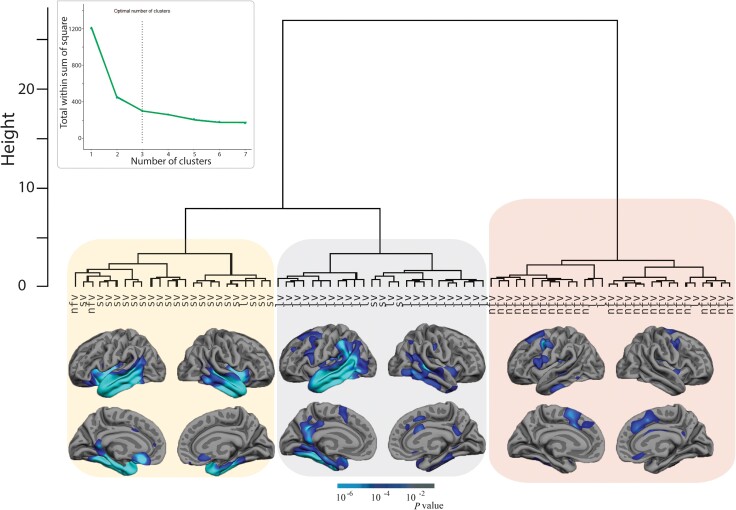
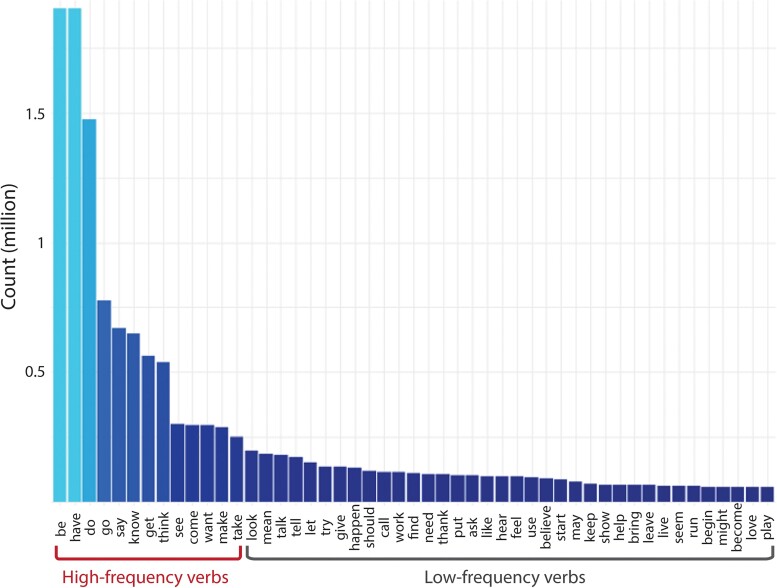
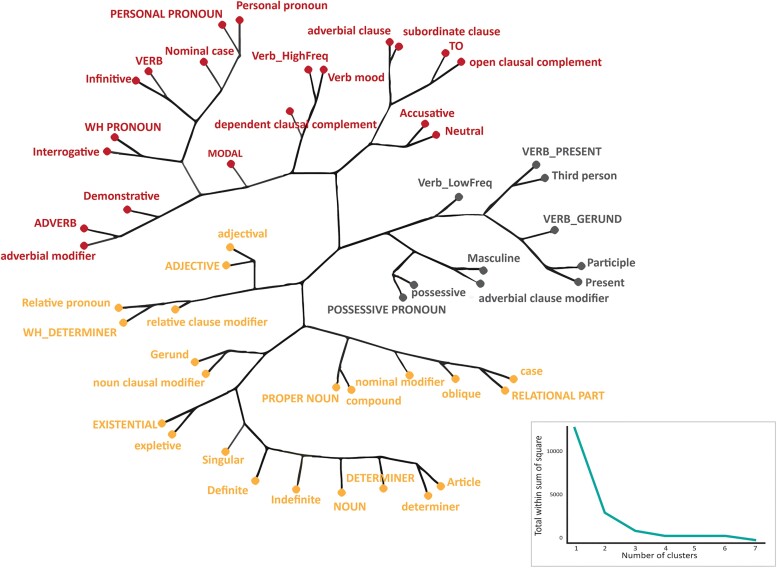
Neurodegenerative dementia syndromes, such as primary progressive aphasias (PPA), have traditionally been diagnosed based, in part, on verbal and non-verbal cognitive profiles. Debate continues about whether PPA is best divided into three variants and regarding the most distinctive linguistic features for classifying PPA variants. In this cross-sectional study, we initially harnessed the capabilities of artificial intelligence and natural language processing to perform unsupervised classification of short, connected speech samples from 78 pateints with PPA. We then used natural language processing to identify linguistic features that best dissociate the three PPA variants. Large language models discerned three distinct PPA clusters, with 88.5% agreement with independent clinical diagnoses. Patterns of cortical atrophy of three data-driven clusters corresponded to the localization in the clinical diagnostic criteria. In the subsequent supervised classification, 17 distinctive features emerged, including the observation that separating verbs into high- and low-frequency types significantly improved classification accuracy. Using these linguistic features derived from the analysis of short, connected speech samples, we developed a classifier that achieved 97.9% accuracy in classifying the four groups (three PPA variants and healthy controls). The data-driven section of this study showcases the ability of large language models to find natural partitioning in the speech of patients with PPA consistent with conventional variants. In addition, the work identifies a robust set of language features indicative of each PPA variant, emphasizing the significance of dividing verbs into high- and low-frequency categories. Beyond improving diagnostic accuracy, these findings enhance our understanding of the neurobiology of language processing.
Overview
The claims and statistics of this paper haven’t been checked yet.
Free: it reads the open-access text and checks the first 5 claims that cite a source we can check. Create a free account to check every claim.
Integrity signals
Registry
Cites
Statistics
Figures


Verification
Claims the paper makes
The claims and statistics of this paper haven’t been checked yet.
Free: it reads the open-access text and checks the first 5 claims that cite a source we can check. Create a free account to check every claim.
Claims other papers make about this one
Each is checked against this paper’s own text: does it say what the citing paper says it does?
The source backs part of the claim, not all of it — or backs it for a different population, condition or comparison.
In the citing paper
“Even in dementia syndromes where language symptoms are not dominant, such as the behavioral variant of frontotemporal dementia, automated speech analysis can detect subtle linguistic and acoustic patterns that reflect underlying cognitive, behavioral, or socio-emotional changes.91,92”
From Review of Artificial Intelligence for Clinical Use in Alzheimer's Disease and Related Dementias (2026) · cites this paper as [92]
Experimental — accuracy not yet measured
Self-check
Percentages, sums and reported differences re-computed from the paper’s own numbers.
The self-check needs the paper’s full text.
Citations
Cites
Scikit-learn: Machine Learning in Python
Pedregosa, F., Varoquaux, G., Gramfort, A., Michel, V., Thirion, B., Grisel, O., Blondel, M., Müller, A., Nothman, J., Louppe, G., et al. (2012) · arXiv · doi:10.48550/arxiv.1201.0490 · Cited by 71,016
Exploring the Limits of Transfer Learning with a Unified Text-to-Text Transformer
Raffel, C., Shazeer, N., Roberts, A., Lee, K., Narang, S., Matena, M., Zhou, Y., Li, W., & Liu, P. J. (2019) · arXiv · doi:10.48550/arxiv.1910.10683 · Cited by 10,929
(1995) · Cited by 6,864
Classification of primary progressive aphasia and its variants
Gorno-Tempini, M. L., Hillis, A. E., Weintraub, S., Kertesz, A., Mendez, M., Cappa, S. F., Ogar, J. M., Rohrer, J. D., Black, S., Boeve, B. F., et al. (2011) · Neurology · doi:10.1212/wnl.0b013e31821103e6 · Cited by 5,141
(2006) · Cited by 3,931
An improved Bonferroni procedure for multiple tests of significance
SIMES, R. J. (1986) · Biometrika · doi:10.1093/biomet/73.3.751 · Cited by 2,396
The spatial and temporal signatures of word production components
Indefrey, P., & Levelt, W. J. M. (2004) · Cognition · doi:10.1016/j.cognition.2002.06.001 · Cited by 2,144
Thorndike, R. L. (1953) · Psychometrika · doi:10.1007/bf02289263 · Cited by 2,051
Qualitative Assessment of Verbal Fluency Performance in Frontotemporal Dementia
van den Berg, E., Jiskoot, L. C., Grosveld, M. J. H., van Swieten, J. C., & Papma, J. M. (2017) · Dementia and Geriatric Cognitive Disorders · doi:10.1159/000477538 · Cited by 2,046
Fischl, B., Liu, A., & Dale, A. M. (2001) · IEEE Transactions on Medical Imaging · doi:10.1109/42.906426 · Cited by 1,751
Research works printed but not linked: 2
- Grimshaw, 1993, Semantic structure and semantic content in lexical representation
- Jackendoff, 1990, Semantic structures
Cited by
Large language models for disease diagnosis: a scoping review
Zhou, S., Xu, Z., Zhang, M., Xu, C., Guo, Y., Zhan, Z., Fang, Y., Ding, S., Wang, J., Xu, K., et al. (2025) · npj Artificial Intelligence · doi:10.1038/s44387-025-00011-z · Cited by 242
Artificial Intelligence in Psychiatry: A Review of Biological and Behavioral Data Analyses
BAYDİLİ, I., Taşçı, B., & Taşçı, G. (2025) · Diagnostics · doi:10.3390/diagnostics15040434 · Cited by 88
Large Language Models in Medical Diagnostics: Scoping Review With Bibliometric Analysis
Su, H., Sun, Y., Li, R., Zhang, A., Yang, Y., Xiao, F., Duan, Z., Chen, J., Hu, Q., Yang, T., et al. (2025) · Journal of Medical Internet Research · doi:10.2196/72062 · Cited by 79
Zhong, G., Liu, Q., Huang, Y., Geng, H., & Xu, T. (2025) · Advanced Materials · doi:10.1002/adma.202508206 · Cited by 26
Advanced AI techniques for classifying Alzheimer’s disease and mild cognitive impairment
Tascedda, S., Sarti, P., Rivi, V., Guerrera, C. S., Platania, G. A., Santagati, M., Caraci, F., & Blom, J. M. C. (2024) · Frontiers in Aging Neuroscience · doi:10.3389/fnagi.2024.1488050 · Cited by 18
Metadata
- Authors
- Rezaii, N., Hochberg, D., Quimby, M., Wong, B., Brickhouse, M., Touroutoglou, A., Dickerson, B. C., & Wolff, P.
- Affiliations
- Harvard University (US)
- Emory University (US)
- Corresponding author
- Rezaii, Neguine
- ORCID
- Venue
- Brain
- Publisher
- Oxford University Press (OUP)
- Published
- 2024-06-24
- Volume
- 147
- Issue
- 9
- Pages
- 3070-3082
- ISSN
- 0006-8950 (ISSN-L)
- 1460-2156
- PMC
- PMC11370793
- OpenAlex
- W4399973052
- Cited by
- 44
- References
- 62
- Citations by year
- 2026: 25 · 2025: 14 · 2024: 5
- FWCI
- 12.93
- Type
- journal article
- Language
- en
- Open access
- hybrid
- doi.org
- Licence
- Locations
- Brain (publishedVersion, cc-by-nc)
- PubMed Central (publishedVersion, cc-by-nc)
- PubMed (publishedVersion)
- Funders
- National Institute on Deafness and Other Communication Disorders (R01 DC014296, R21 DC019567)
- National Institute on Aging (R21 AG073744)
- National Institute of Neurological Disorders and Stroke (NS131395)
- Primary Care Innovation Fund (2023A063002)
- Athinoula A. Martinos Center for Biomedical Imaging
- Center for Functional Neuroimaging Technologies (P41EB015896)
- National Institute of Biomedical Imaging and Bioengineering
- National Institutes of Health (S10RR021110, S10RR023043, S10RR023401)
- Topics
- Health Sciences › Medicine › Psychiatry and Mental health › Dementia and Cognitive Impairment Research
- Life Sciences › Neuroscience › Cognitive Neuroscience › Neurobiology of Language and Bilingualism
- Health Sciences › Health Professions › Speech and Hearing › Voice and Speech Disorders
- Keywords
- primary progressive aphasia, connected speech, large language models, natural language processing, unsupervised classification, cortical atrophy, linguistic features, verb frequency, speech-based diagnosis, neurodegenerative dementia
- MeSH terms
- Aged, Artificial Intelligence, Atrophy, Cross-Sectional Studies, Female, Humans, Male, Middle Aged, Natural Language Processing, Speech, Aphasia, Primary Progressive
About these checks
Registry, retraction, Cites and statistics results are computed, not judged, with one exception: a printed reference that no index lists is read once by a model before it counts as a citation error. Claims are extracted by a model and kept only when their quote appears verbatim in the text; each cited source is then checked, with a model’s help, for whether it says what the claim relies on. Those verdicts can be wrong — read the claim’s quote and the cited source before relying on one.
Statistics and arithmetic are recomputed, not judged.
Confidence bands are shown only for fields calibrated on our annotated test set. None is calibrated yet, so no band is shown.
What counts as a claim ›How we measure confidence ›How we check this ›
Are you an author, or do you see a problem with this page? Request a review
How to cite
Cite CoChat for the checks on this page, and the paper for its own findings.
- This page
- CoChat. (2026). Citation check: Artificial intelligence classifies primary progressive aphasia from connected speech. https://app.cochat.ai/papers/10.1093/brain/awae196
- The paper
- Rezaii, N., Hochberg, D., Quimby, M., Wong, B., Brickhouse, M., Touroutoglou, A., Dickerson, B. C., & Wolff, P. (2024). Artificial intelligence classifies primary progressive aphasia from connected speech. Brain. https://doi.org/10.1093/brain/awae196
Data sources
Bibliographic data: Semantic Scholar, OpenAlex, Crossref.
Contains information from the Semantic Scholar Academic Graph Datasets, made available under the ODC Attribution License (ODC-BY 1.0).
Semantic Scholar’s data is described in: Kinney, R., et al. (2023). The Semantic Scholar Open Data Platform. arXiv:2301.10140.
